You can brush your teeth twice a day, floss carefully, and still feel like your mouth is working against you if your meals are mostly sweet drinks, sticky snacks, and quick bites eaten between meetings. I do not say that to make food sound scary. Food is not the enemy. But your teeth and gums do live with the choices you make all day, not only with the two minutes you spend at the sink.
That is why foods for healthy teeth and gums deserve a place in everyday cooking. Not as a strict “dental diet,” and definitely not as a replacement for brushing, flossing, or seeing your dentist. Think of it more like quiet support. Crunchy vegetables help your mouth feel fresher. Dairy foods bring calcium and protein into simple meals. Fruit adds brightness, but it works better when you eat it thoughtfully instead of grazing on it for hours. Water, honestly, does more than people give it credit for.
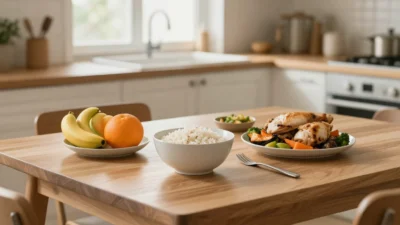
The good news is that tooth-friendly eating does not have to look clinical or boring. You do not need a plate of plain celery and a glass of milk for every meal. A Greek yogurt bowl with berries, a broccoli and cheese baked potato, a crunchy chicken salad, or a salmon rice bowl with cucumber and greens can all fit beautifully into a normal week.
I like this approach because it is realistic. You are not trying to “hack” your oral health with one miracle ingredient. You are simply cooking in a way that gives your teeth and gums a better environment: less constant sugar exposure, more minerals, more texture, and more water between meals.
And yes, you can still enjoy dessert. You can still drink coffee. You can still cook food that tastes like real life. The goal is not perfection. It is learning which foods help your smile feel cleaner, stronger, and better cared for, one meal at a time.
Why food matters for your teeth and gums
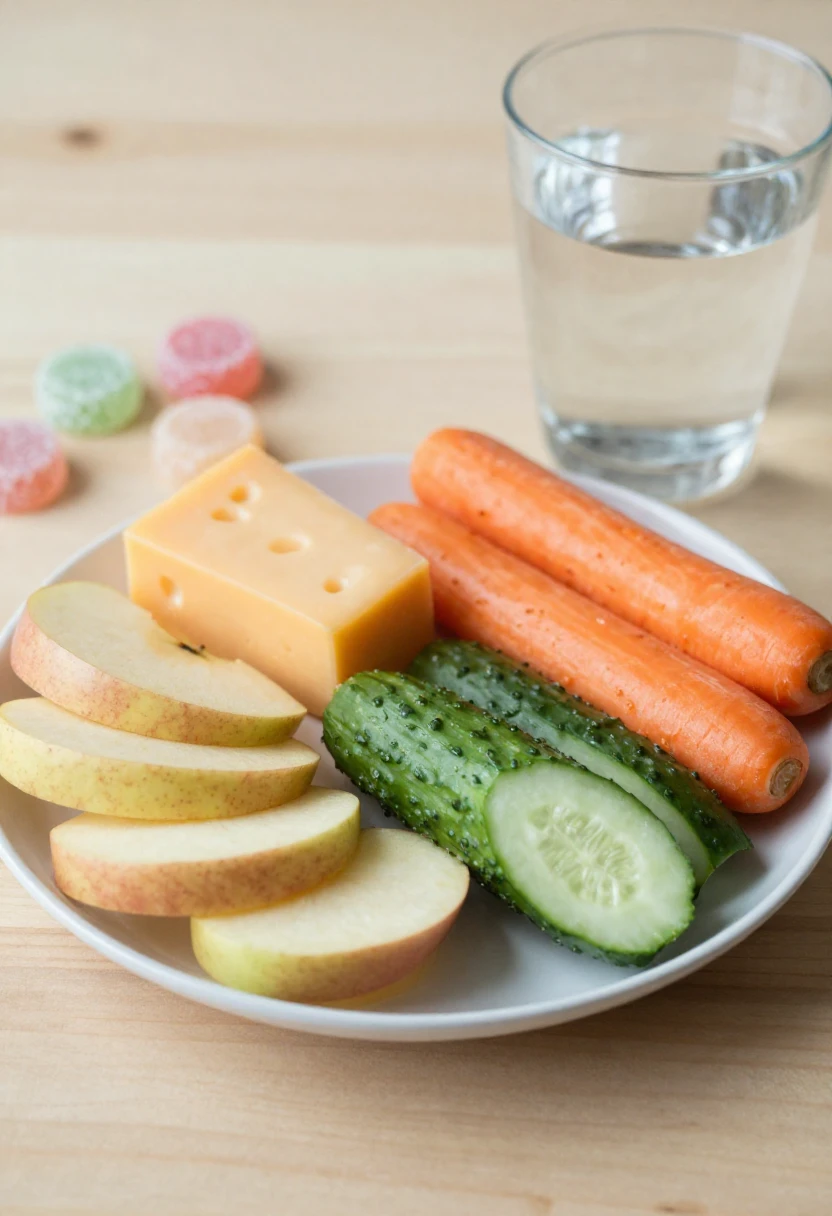
Your mouth is not just a place food passes through. It reacts to what you eat, how often you eat it, and what stays behind after the meal is over.
That sounds obvious, but most of us think about oral health only at the bathroom sink. Brush, floss, rinse, done. Then the rest of the day happens: coffee with sugar, a handful of crackers, a few dried fruits, a soda with lunch, maybe a cookie in the afternoon. None of those things is a disaster on its own. The pattern matters more.
Your mouth changes after every meal
After you eat, tiny bits of food can stay on your teeth, between teeth, or along the gumline. Bacteria in the mouth feed on some of those leftovers, especially sugars and refined starches. That process can create acids, and those acids are not exactly friendly to enamel.
This is where saliva does some quiet, underrated work. It helps wash away food particles, softens the effect of acids, and keeps the mouth from feeling dry. That is one reason a meal with texture and water-rich foods often feels better than a sticky snack that clings to your teeth.
Think about the difference between eating apple slices with cheese and slowly chewing gummy candy. One feels fresh and clean. The other seems to hang around long after you have swallowed it.
The timing of sugar matters
Sugar is not only about how much you eat. It is also about how often your teeth meet it.
A sweet dessert after dinner is one thing. Sipping a sweet drink for three hours is different. Grazing on small sugary snacks all afternoon keeps restarting the same cycle in your mouth. Your teeth never really get a break.
That does not mean you have to panic over every bite of fruit or every spoonful of honey. It simply means that your teeth usually do better when sweet foods are part of a meal, not a constant background habit.
For example, berries in a yogurt bowl at breakfast make sense. A smoothie slowly sipped from 9 a.m. until noon is less ideal. Same ingredients, different effect.
Food can support your routine, not replace it
I like talking about foods for healthy teeth and gums because it makes oral care feel more practical. You can build helpful habits into meals you already eat.
But food is not a toothbrush.
A carrot stick will not clean your molars perfectly. Cheese will not cancel out never flossing. And a beautiful salmon bowl will not replace dental checkups if something already hurts.
What food can do is make your daily routine work a little harder for you. A plate with protein, crunchy vegetables, calcium-rich foods, and water gives your mouth a better starting point. It is not dramatic. It is just useful.
Nutrients that support a healthier smile
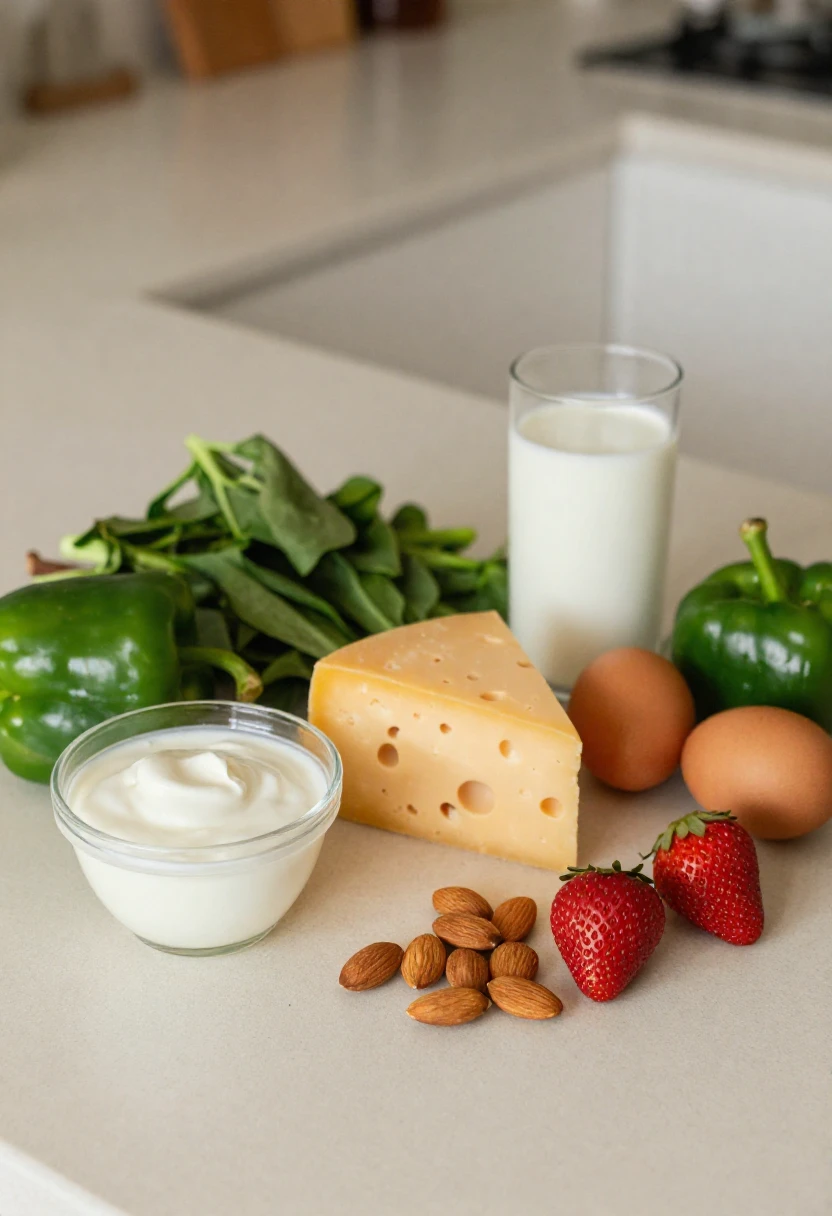
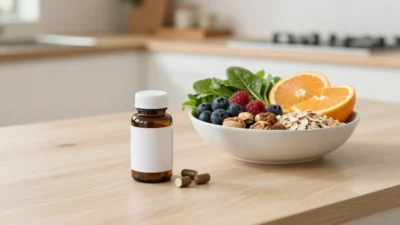
A tooth-friendly meal does not need to be complicated, but it does help to know what you are aiming for. Some nutrients show up again and again in foods that support teeth, gums, and a healthier mouth overall.
I would not build meals around a spreadsheet of vitamins. Nobody wants dinner to feel like homework. But once you know the basics, it becomes easier to choose ingredients that do more than simply fill the plate.
Calcium and phosphorus for enamel support
Calcium is the nutrient most people connect with strong teeth, and for good reason. Teeth and bones both need minerals, and calcium-rich foods are an easy place to start.
Dairy foods are the obvious option:
- Plain yogurt
- Milk
- Cheese
- Cottage cheese
- Kefir
But dairy is not the only way to bring calcium into meals. You can also use leafy greens, almonds, canned salmon with soft bones, tofu made with calcium, or fortified plant milk if that fits your diet better.
Phosphorus matters too, and it is found in many protein-rich foods. Eggs, fish, poultry, beans, lentils, nuts, and seeds can all help make a meal more supportive for your teeth.
The easiest way to use this in real cooking? Add one calcium-rich ingredient to something you already eat. Sprinkle cheese over eggs. Stir Greek yogurt into a sauce. Use milk in oatmeal. Add almonds to a breakfast bowl. Small moves count.
Vitamin C for gum-friendly meals
Gums need care too. When people think about oral health, they usually picture white teeth, but healthy gums are just as important. They should not feel like an afterthought.
Vitamin C-rich foods are a good habit here because they fit naturally into fresh, colorful meals. Think:
- Bell peppers
- Strawberries
- Kiwi
- Oranges
- Broccoli
- Cabbage
- Brussels sprouts
- Potatoes
I especially like bell peppers for this because they are easy. Slice them raw for lunch, toss them into eggs, roast them with chicken, or add them to a rice bowl. They give you crunch, color, and a little sweetness without turning the meal into dessert.
Citrus is useful too, but I would treat it with a little common sense. Enjoy oranges, grapefruit, lemon, and lime with meals. Drink water afterward. You do not need to avoid acidic foods; just do not let them sit on your teeth all afternoon.
Vitamin A and colorful vegetables
Vitamin A often shows up in orange and dark green foods, which makes it easy to spot on the plate. Carrots, sweet potatoes, pumpkin, spinach, kale, eggs, and liver are all examples.
For everyday cooking, I would focus on the simple options: roasted sweet potatoes, carrot sticks, spinach in eggs, kale in soup, pumpkin blended into a creamy sauce. These foods make meals feel warmer and more satisfying, especially when the weather is cold or you want something cozy.
A bowl of soup with carrots, lentils, and greens will not feel like “oral health food.” It will just taste like dinner. That is the sweet spot.
Protein helps meals feel complete
Protein does not get talked about as much in oral-health articles, but it makes a big difference in how your meals behave. A snack with protein usually keeps you full longer than a snack made only from crackers, juice, or sweets.
That matters because constant snacking is hard on your teeth. If a meal keeps you satisfied, you are less likely to keep reaching for little bites every hour.
Good options include:
- Eggs
- Greek yogurt
- Cottage cheese
- Fish
- Chicken
- Turkey
- Beans
- Lentils
- Tofu
- Nuts and seeds
You do not need a huge portion. Even a boiled egg with fruit, or yogurt with nuts, can feel much more balanced than fruit alone.
Water is part of the meal too
This sounds too simple, but water deserves a place in the conversation.
A glass of water after coffee, fruit, dessert, or a salty snack can help your mouth feel cleaner. It is not fancy. It will not replace brushing. But it is one of those tiny habits that makes sense immediately once you start doing it.
I like keeping water next to anything sweet or acidic. Coffee with breakfast? Water after. Berries in yogurt? Water after. A cookie in the afternoon? Enjoy the cookie, then drink water. No guilt spiral needed.
Best foods for healthy teeth and gums
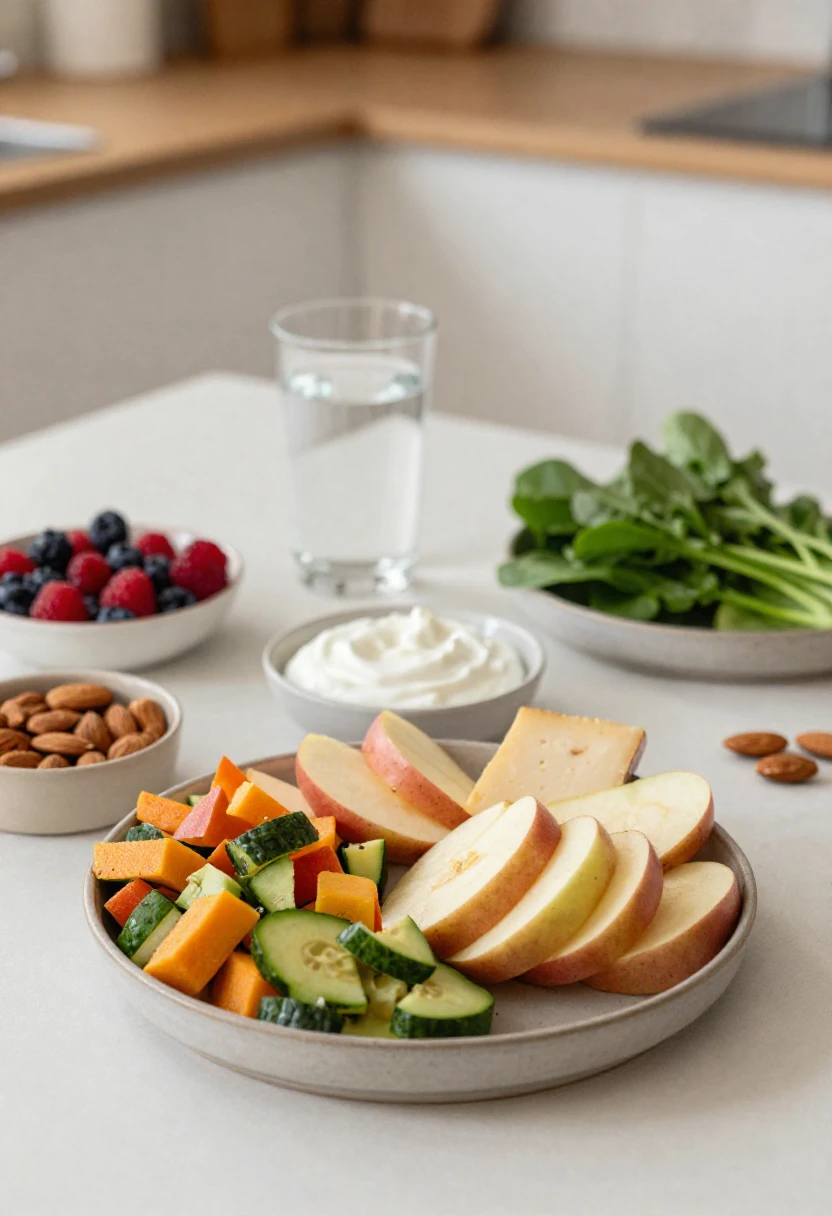
The best foods for your mouth are usually the ones that make sense for the rest of your body too: simple proteins, crunchy vegetables, dairy or calcium-rich alternatives, fresh fruit, nuts, seeds, and plenty of water.
Nothing here needs to feel like a special “oral health menu.” I would rather build meals that taste good first, then quietly make them more tooth-friendly.
Crunchy vegetables that make your mouth feel fresher
Crunchy vegetables are useful because they bring water, fiber, and texture to the plate. They also make a snack feel more complete than something soft and sticky.
Good options include:
- Carrots
- Celery
- Cucumber
- Bell peppers
- Radishes
- Broccoli
- Cabbage
- Snap peas
A plate of raw vegetables can be boring if you treat it like punishment. Add a dip and it changes completely. I like Greek yogurt with garlic, lemon, salt, and a little olive oil. It tastes like something you actually want to eat, not like the sad corner of a diet plan.
You can also add crunchy vegetables to meals you already make. Put cucumber and cabbage into rice bowls. Add bell pepper to eggs. Serve carrot sticks next to sandwiches. Toss shredded cabbage into tacos or wraps. Small texture changes make food more satisfying.
Dairy foods that are easy to cook with
Dairy foods can be helpful because they bring calcium, protein, and a creamy texture without much effort. Plain yogurt, cheese, cottage cheese, and milk are the ones I use most often.
A few easy ideas:
- Greek yogurt with berries and nuts
- Cottage cheese on toast with tomato and black pepper
- Scrambled eggs with a little cheese and spinach
- Broccoli soup finished with milk
- Yogurt sauce for chicken, fish, potatoes, or grain bowls
Cheese is especially practical because a little goes a long way. You do not need to bury everything under it. A small amount can make vegetables more appealing, which matters if you are trying to eat more of them consistently.
If you do not eat dairy, look for calcium-fortified plant milk or calcium-set tofu. The goal is not to force one food group. It is to make sure your meals still bring enough minerals and protein.
Fruits that add freshness without constant snacking
Fruit belongs in a tooth-friendly diet, but the way you eat it matters.
Apples, berries, kiwi, oranges, pears, peaches, and melon can all fit beautifully into meals and snacks. The trick is to avoid turning fruit into an all-day grazing habit. Your teeth usually prefer clear meal moments over constant little bites.
Some easy pairings:
- Apple slices with cheese
- Berries with Greek yogurt
- Kiwi with cottage cheese
- Orange slices with eggs and toast
- Pear with walnuts
- Melon with plain yogurt
I would rather eat fruit with something filling than eat it alone and feel hungry again 20 minutes later. Protein and fat slow things down and make the snack feel like real food.
Nuts and seeds for a more filling bite
Nuts and seeds are not magic for oral health, but they are useful in everyday eating. They add minerals, healthy fats, and crunch. They also make snacks more satisfying, which can help you avoid constant nibbling.
Try almonds, walnuts, pumpkin seeds, chia seeds, flaxseed, or sesame seeds. Add them to yogurt, oatmeal, salads, roasted vegetables, or homemade trail mix.
One note from real life: nuts can get stuck between teeth. That does not make them bad. It just means water and floss still have a job to do.
Water is the easiest habit to keep
Water may be the least exciting item on this list, but it is probably the easiest one to use.
Drink water after coffee. Drink it after fruit. Drink it after dessert. Drink it after anything sticky, salty, or sweet. You do not need to make a ceremony out of it. Just take a few sips and move on.
Tooth-friendly breakfast ideas
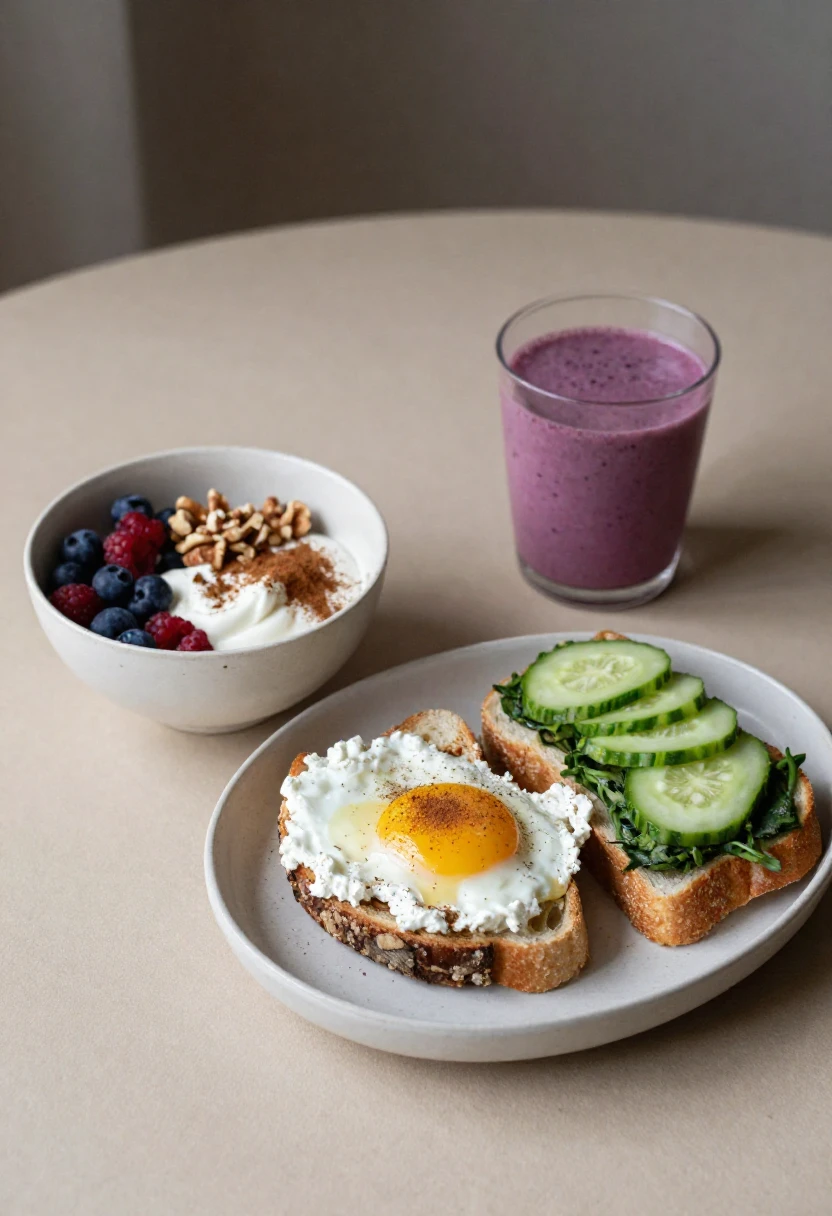
Breakfast is where tooth-friendly eating can either feel easy or strangely difficult. A lot of quick breakfasts are soft, sweet, and easy to eat in a hurry: pastries, sweet cereal, juice, flavored yogurt, granola bars, coffee with syrup. They are convenient, yes, but they can also leave your mouth feeling sticky before the day has properly started.
A better breakfast does not have to be complicated. I usually think in three parts: protein, something fresh, and a little texture. That combination keeps you full longer and makes the meal feel more balanced for your teeth and gums.
Greek yogurt bowl with berries and nuts
This is one of the easiest breakfasts to make tooth-friendly without making it boring.
Use plain Greek yogurt as the base, then add berries, chopped nuts, and a little cinnamon. If you need sweetness, a small drizzle of honey is fine, but I would keep it light. The berries already bring plenty of flavor, especially if they are ripe or slightly thawed from frozen.
A good bowl might look like this:
- Plain Greek yogurt
- Blueberries or strawberries
- Chopped almonds or walnuts
- Chia seeds or ground flaxseed
- Cinnamon
- A small spoon of honey, if needed
The yogurt brings protein and calcium. The berries add freshness. The nuts give crunch. It feels like breakfast, not like something you are eating because you “should.”
One small trick: if your berries are frozen, let them sit for five minutes before adding them. They release a little juice, and suddenly the yogurt tastes more like a simple berry cream than plain yogurt with fruit thrown on top.
Egg and spinach toast
Eggs are a breakfast classic for a reason. They are filling, quick, and easy to pair with vegetables.
For a simple tooth-friendly breakfast, cook eggs with spinach and serve them on whole-grain toast. Add a little cheese if you like. A few tomato slices or cucumber on the side make it feel fresher.
You can scramble the eggs, fry them, or make a quick omelet. No need to overthink it.
I like spinach here because it wilts fast and disappears into the eggs without much effort. If you have bell pepper, mushrooms, or leftover roasted vegetables, add those too. Breakfast is a good place to use small bits from the fridge before they get forgotten.
Cottage cheese toast with cucumber and black pepper
Cottage cheese toast does not look exciting until you season it properly. Then it becomes one of those breakfasts you can make in three minutes and still feel good about.
Spread cottage cheese over toasted bread, then add cucumber slices, black pepper, and a tiny pinch of salt. You can add tomato, avocado, dill, or a boiled egg on top if you want it more filling.
It works because it has that mix of creamy and crunchy textures. The cottage cheese gives protein and calcium. The cucumber makes the whole thing feel clean and fresh.
This is also a nice option when you do not want something sweet in the morning. Not every breakfast needs to taste like dessert.
A smoothie that is not just fruit juice in disguise
Smoothies can be helpful, but they can also become a sugar-heavy drink if they are mostly juice, banana, and sweet fruit. That does not mean smoothies are bad. It means they need structure.
A better smoothie starts with protein and something creamy:
- Plain yogurt or kefir
- Milk or fortified plant milk
- Frozen berries
- A spoon of chia seeds or flaxseed
- Optional spinach
- A few oats if you want it thicker
Skip the fruit juice and use milk or yogurt instead. It makes the smoothie more filling and less like a sweet drink.
And one practical thing: drink it with breakfast rather than sipping it all morning. Your teeth prefer one clear eating moment over a long, slow sugar bath. That sounds dramatic, but it is true. Drink it, enjoy it, rinse with water, and get on with your day.
Lunch and dinner ideas for oral health
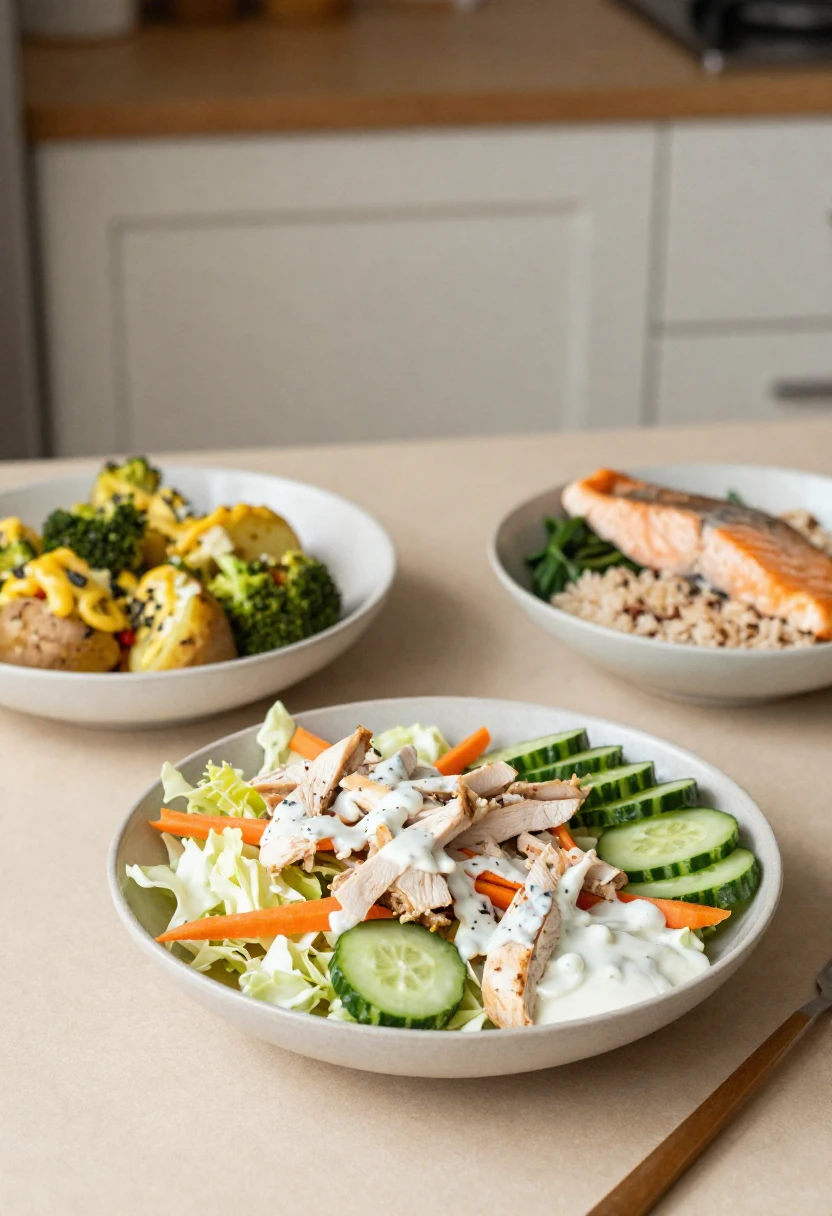
Lunch and dinner are where you can do the most good without thinking too much about it. A full meal gives you room to add protein, crunchy vegetables, calcium-rich foods, and water without making anything feel forced.
I like meals that look normal on the plate. No one wants to sit down to “oral hygiene dinner.” But a crunchy salad with chicken, a baked potato with broccoli and cheese, or a rice bowl with salmon and cucumber? That feels like food you would eat anyway.
Crunchy vegetable salad with protein
A good salad for teeth and gums should not be a pile of soft lettuce with dressing. It needs crunch, protein, and enough flavor to make you want another bite.
Start with a base like shredded cabbage, romaine, cucumber, carrots, bell peppers, or radishes. Then add chicken, tuna, boiled eggs, chickpeas, beans, turkey, tofu, or leftover salmon.
For dressing, I like something creamy but simple:
- Plain Greek yogurt
- Lemon juice
- Olive oil
- Garlic
- Salt and pepper
- A little mustard, if you like sharper flavor
The yogurt gives the dressing body without making the salad heavy. The vegetables bring crunch. The protein makes it lunch, not a side dish pretending to be a meal.
If you are packing this for work, keep the dressing separate until you eat. Soggy salad is one of those small disappointments that can ruin your lunch before you even start.
Broccoli and cheese baked potatoes
This is comfort food with a tooth-friendly angle, and I mean that in the best way.
Bake a potato until the skin is crisp and the inside is fluffy. Add steamed or roasted broccoli, a little cheese, and a spoonful of Greek yogurt instead of sour cream. Finish with black pepper and maybe some chopped green onion.
It is warm, filling, and easy to make with basic groceries. The broccoli adds texture and vitamin C. The cheese and yogurt bring calcium and protein. The potato makes it feel like a proper meal, especially on a cold evening when salad sounds a little too optimistic.
You can also add tuna, shredded chicken, beans, or an egg on top if you want more protein.
Salmon or egg rice bowl with greens
Rice bowls are one of my favorite “use what you have” dinners. They are forgiving, which is exactly what I want on a tired weeknight.
Start with rice, quinoa, or another grain. Add salmon, eggs, tofu, chicken, or beans. Then bring in something green and something crunchy: spinach, kale, cucumber, cabbage, edamame, carrots, or snap peas.
A simple bowl could be:
- Warm rice
- Flaked salmon or a soft-boiled egg
- Cucumber slices
- Shredded cabbage
- Spinach or steamed greens
- Sesame seeds
- A yogurt, tahini, or soy-ginger sauce
The contrast matters. Warm rice, cool cucumber, creamy sauce, a little crunch from cabbage or seeds. That is what makes a bowl feel satisfying instead of random.
After eating, drink water. Rice and sauces can cling a little, and water is the easiest reset.
Vegetable-packed pasta sauce
Pasta can absolutely fit into a tooth-friendly meal, especially when you build the sauce around vegetables instead of only cream or sugar-heavy jarred sauces.
Start with onion, carrot, celery, garlic, and tomato. Let everything cook until soft, then blend the sauce if you want it smooth. This is especially useful if you are cooking for kids or picky eaters who object to visible vegetable pieces.
You can add:
- Lentils for protein
- Ground turkey or chicken
- Spinach stirred in at the end
- A little cheese on top
- Fresh basil or parsley
The sauce becomes sweeter naturally as the vegetables cook down, so you do not need much added sugar, if any. Serve it with a side salad or cucumber slices to bring in crunch.
I would not call pasta a “dental health food,” because that sounds ridiculous. But pasta with a vegetable-rich sauce, protein, and water on the side is a much better choice than a bowl of plain refined carbs eaten alone.
Soup with carrots, lentils, and greens
Soup is underrated for this topic. It can be soft, yes, but it is also one of the easiest ways to get protein, vegetables, and minerals into one bowl.
A lentil soup with carrots, onion, celery, tomatoes, and spinach is simple and filling. Add a spoonful of yogurt on top if you like a creamy finish. Serve it with whole-grain toast or a small cheese toast if you want something more substantial.
The nice thing about soup is that it reheats well. Make a pot once, and lunch is easier for the next two days.
And if you are tired, soup is kind. It does not ask for much. Just a bowl, a spoon, and maybe five quiet minutes.
Snacks that are kinder to your teeth
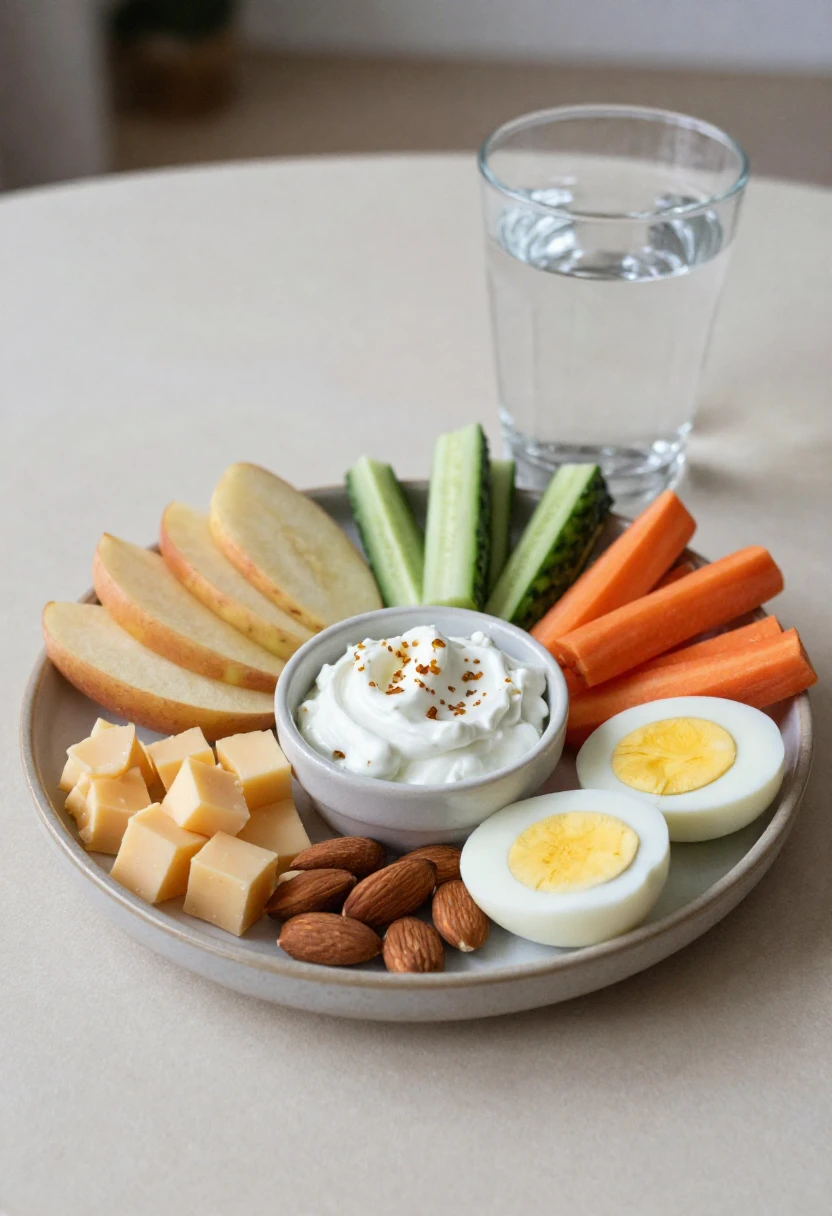
Snacks are tricky because they often happen when you are distracted. You grab something while answering a message, pour a drink while cooking dinner, or take a bite of something sweet every time you walk through the kitchen. I have done all of this. Most people have.
For your teeth, the snack itself matters, but the pattern matters too. A balanced snack eaten once is very different from little bites of sticky or sugary food stretched across the whole afternoon.
The best snacks for healthy teeth and gums usually have a few things in common: they are not too sticky, they are not mostly sugar, and they give you some protein, fat, fiber, or crunch.
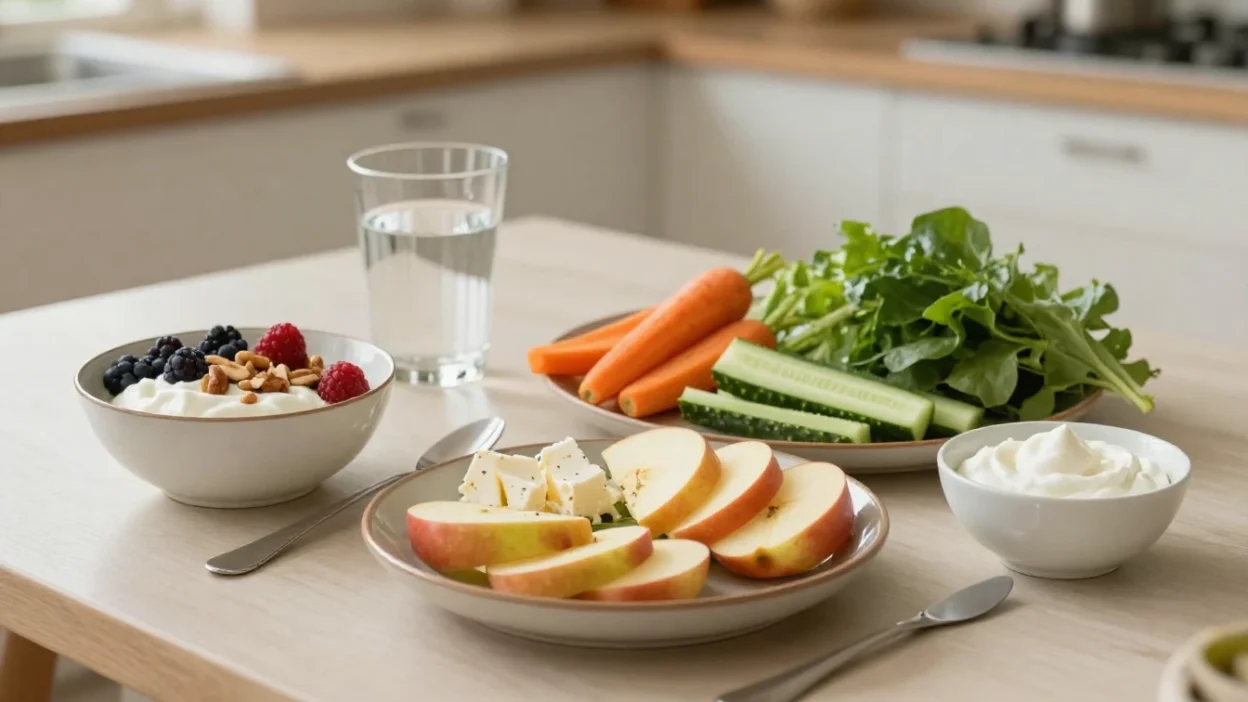
Cheese, nuts, and apple slices
This is one of the easiest snack plates to make when you want something fresh but filling.
Slice an apple, add a few pieces of cheese, and finish with a small handful of nuts. The apple gives you crisp sweetness. The cheese brings calcium and protein. The nuts make the snack feel more complete, so you are not hungry again ten minutes later.
You can use:
- Cheddar with apple slices
- Mozzarella with pear
- Cottage cheese with berries
- Walnuts with apple or peach
- Almonds with a few cubes of cheese
I like this kind of snack because it feels casual. You can put it together on a small plate and eat it slowly without turning it into a dessert moment.
If apple skins tend to get stuck between your teeth, drink water afterward. Simple fix.
Yogurt dip with raw vegetables
Raw vegetables are much easier to love when there is a good dip involved. Plain carrot sticks can feel like homework. Carrots with a garlicky yogurt dip? Much better.
Mix plain Greek yogurt with grated garlic, lemon juice, salt, pepper, and a little olive oil. If you have dill, parsley, or chives, add them. The dip keeps for a couple of days in the fridge, which makes snacking easier later.
Serve it with:
- Carrot sticks
- Cucumber slices
- Bell pepper strips
- Celery
- Snap peas
- Radishes
- Broccoli florets
The crunch is satisfying, and the yogurt makes the snack more filling. It is also a nice thing to put out before dinner when everyone is hungry and the main meal is not ready yet.
Boiled eggs with cucumber or tomato
Boiled eggs are not glamorous, but they are useful. They are quick, filling, and easy to keep in the fridge.
Pair one or two boiled eggs with cucumber slices, cherry tomatoes, or a few pieces of cheese. Add salt, pepper, or a little paprika. That is enough.
This snack works especially well when you are trying to avoid the “I just need something sweet” loop in the afternoon. Sometimes you do not need sugar. You need actual food.
Popcorn, but keep it simple
Plain popcorn can be a decent snack when you want something crunchy and light. I would keep it simple: popcorn, a little salt, maybe a small amount of butter or olive oil. Skip the sticky caramel versions if you are thinking about your teeth.
One honest warning: popcorn hulls love to hide between teeth. That does not mean popcorn is off-limits. It just means you may want water nearby and floss later if something gets stuck.
What to be careful with
Some snacks sound healthy but can be rough on your teeth when you eat them often or slowly.
Dried fruit is the big one. Raisins, dried mango, dates, and fruit leathers are sweet and sticky, so they can cling to teeth. Granola bars can do the same, especially the chewy ones with syrup or dried fruit.
Juice is another one. Even when it is “natural,” it still bathes your teeth in sugar and acid. If you want fruit, eating whole fruit with a meal or balanced snack is usually a better choice.
And if you do eat something sticky or sweet, do not turn it into a guilt event. Enjoy it, drink water afterward, and move on. Your daily pattern matters more than one snack.
Foods and habits to limit for better oral health
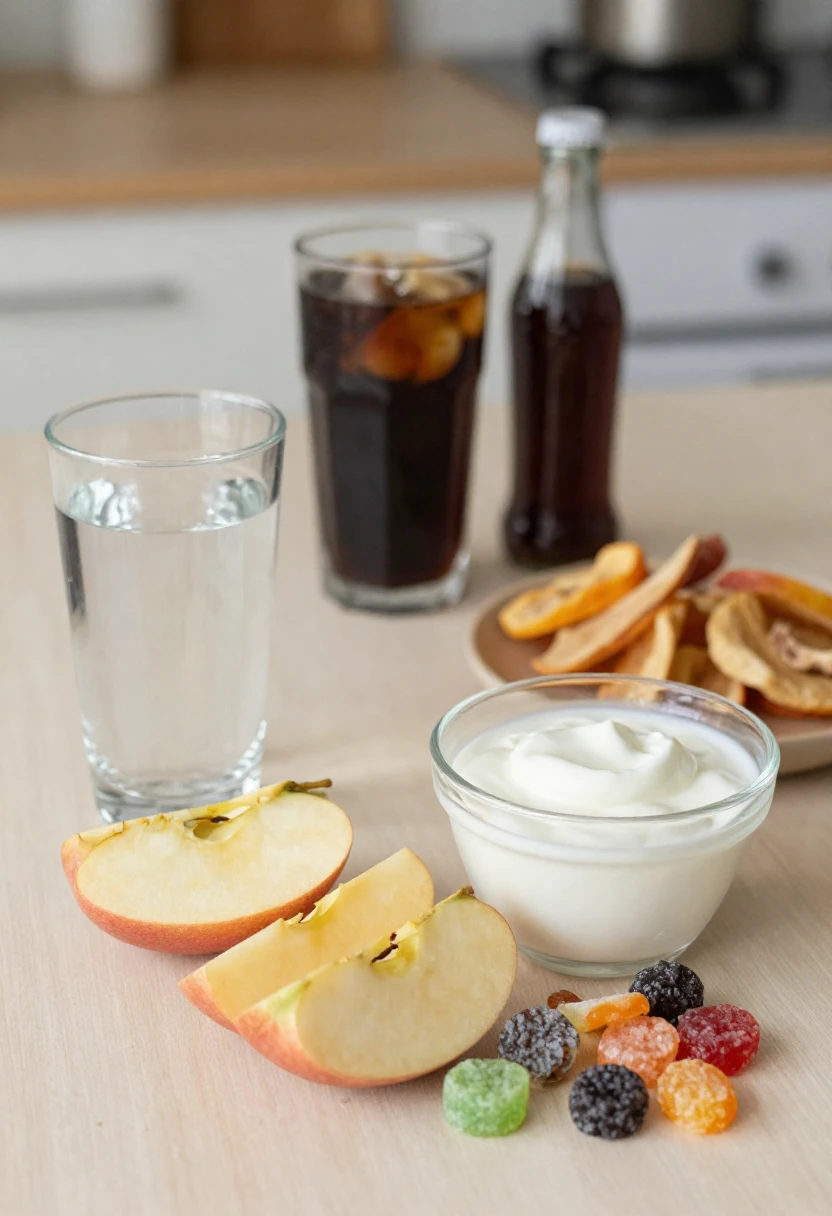
I do not like turning food into a list of villains. It makes people anxious, and it usually backfires. The point is not to fear sugar, fruit, coffee, or sour foods. The point is to notice which foods tend to cling, sip, coat, or hang around your teeth longer than you realize.
A few small changes can make a big difference without making your meals feel joyless.
Sticky sweets are harder on your teeth
Sticky sweets are tricky because they do not disappear quickly. They settle into grooves, cling around teeth, and stay there while you continue with your day.
Things like chewy candy, caramel, gummies, fruit snacks, taffy, and sticky granola bars are the obvious examples. Dried fruit can act this way too. Dates, raisins, dried mango, and fruit leather may sound more natural than candy, but they are still sweet and sticky.
That does not mean you can never eat them. Just treat them like sweets, not like harmless all-day snacks.
If you want dried fruit, pair a small amount with nuts or yogurt and drink water afterward. Better yet, use fresh fruit most of the time. An apple or a bowl of berries is usually kinder to your teeth than something chewy that sticks around.
Frequent sipping keeps your teeth busy
Sweet drinks are not only about sugar. They are about time.
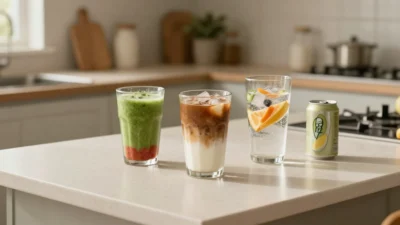
A soda with lunch is one thing. A bottle of soda slowly sipped for hours is another. The same goes for sweet coffee drinks, energy drinks, sweet tea, sports drinks, lemonade, and juice.
Your teeth do better when drinks have a beginning and an end. Have the drink with a meal, then switch to water. It sounds almost too simple, but it helps.
Coffee deserves a special mention because many people drink it slowly. Plain coffee is different from a caramel latte with whipped cream, of course, but both can leave your mouth feeling dry or coated. I still drink coffee. I just try to follow it with water instead of pretending it does not count.
Acidic foods are not bad, but timing matters
Citrus, vinegar, tomatoes, pickles, kombucha, sparkling water, and sour candies can all be acidic. That does not make them forbidden. Lemon juice on fish, vinegar in salad dressing, tomatoes in pasta sauce, and oranges at breakfast can all fit into a good diet.
The problem usually comes from constant exposure.
If you love lemon water, try not to sip it all day. If you eat citrus, enjoy it with a meal. If you drink something acidic, have water afterward. Your teeth appreciate the break.
One practical habit: after acidic foods or drinks, rinse your mouth with water and wait a bit before brushing. Brushing immediately after a very acidic snack can feel like the “clean” thing to do, but giving your mouth a little time first is usually gentler.
Refined starches can behave like sugar
Crackers, chips, white bread, pretzels, and plain pasta do not always taste sweet, so they can seem harmless. But refined starches break down in the mouth and can get stuck between teeth.
Again, this is not a reason to panic over toast or pasta. I eat both. The smarter move is to make these foods part of a balanced meal instead of using them as constant snacks.
For example:
- Add cheese, eggs, avocado, or tuna to toast
- Pair crackers with cottage cheese or hummus
- Eat pasta with vegetables and protein
- Choose popcorn or nuts instead of chips sometimes
- Drink water after starchy snacks
The goal is not to remove every carb. It is to stop refined starches from becoming the thing you graze on all day.
“Healthy” does not always mean tooth-friendly
This is the part that surprises people. Some foods with a healthy image can still be rough on teeth if you use them in the wrong pattern.
A smoothie can be great, but not if you sip it slowly all morning. Granola can be useful, but some versions are basically sticky clusters of sugar. Dried fruit is nutritious in some ways, but it still clings. Juice has vitamins, but it also brings sugar and acid without the chewing and fiber of whole fruit.
I do not think you need to avoid these foods completely. Just be honest about how you eat them.
Have the smoothie with breakfast. Use a small amount of granola over yogurt instead of eating handfuls from the bag. Keep dried fruit occasional. Choose whole fruit more often than juice.
Small adjustments. That is usually where the real progress lives.
How to build a tooth-friendly plate
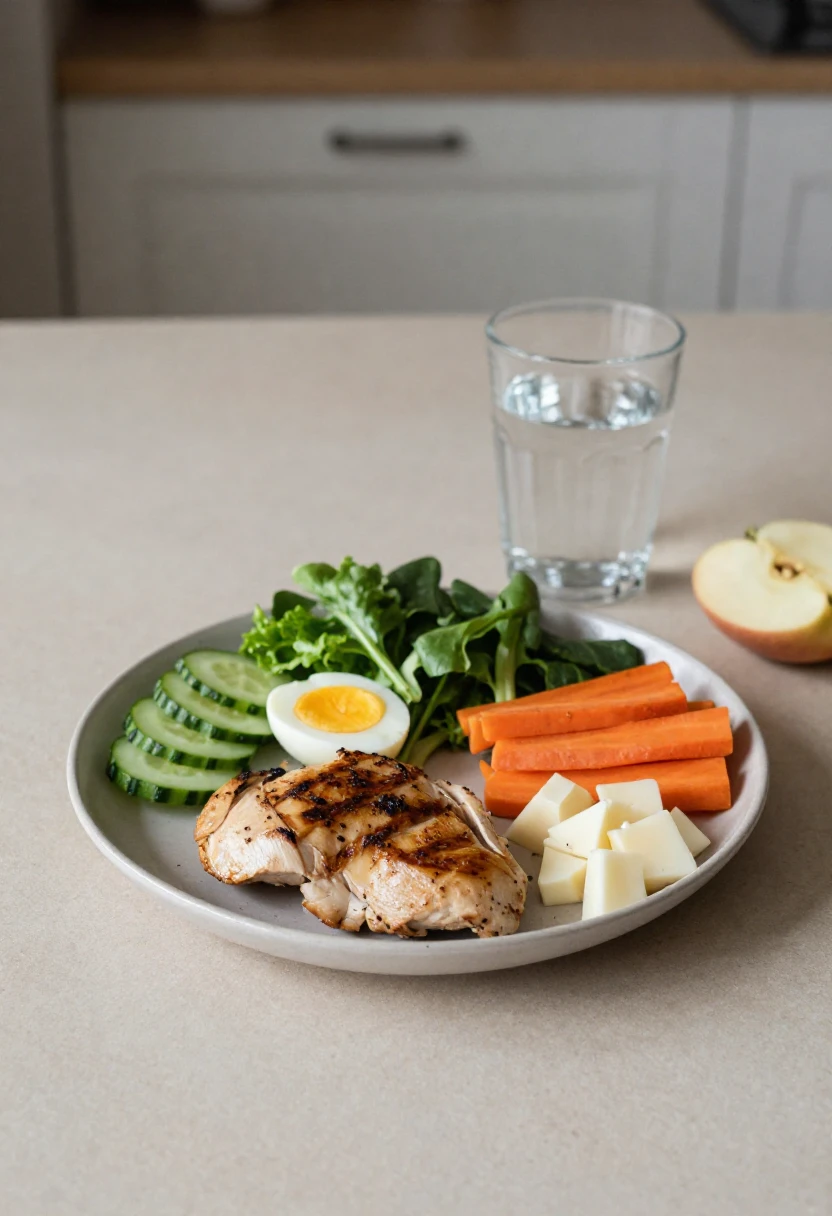
A tooth-friendly plate does not need to look special. Most of the time, it looks like a normal meal with a few smarter choices built in.
I usually think of it this way: protein first, something crunchy, something mineral-rich, and water on the side. That small formula works for breakfast, lunch, dinner, and snacks.
It also keeps you from obsessing over every single ingredient. You are not trying to make the perfect dental-health meal. You are just giving your teeth and gums a little more support with food you would already eat.
Start with protein
Protein makes a meal feel finished. Without it, you can eat a big plate of food and still feel snacky an hour later.
Good options include:
- Eggs
- Greek yogurt
- Cottage cheese
- Chicken
- Turkey
- Fish
- Beans
- Lentils
- Tofu
- Nuts and seeds
Protein helps you stay full, which matters because frequent snacking can be harder on your teeth than one balanced meal. A lunch with chicken, beans, eggs, or yogurt sauce is more likely to carry you through the afternoon than crackers and fruit alone.
For example, if you are making toast, add eggs or cottage cheese. If you are making a salad, add chicken, tuna, chickpeas, or tofu. If you are making pasta, add lentils, fish, or ground turkey to the sauce.
Small upgrades, big difference.
Add something crunchy
Crunchy foods make a plate feel fresher and more satisfying. They also encourage you to chew, which is one reason raw vegetables are so useful in everyday meals.
Try adding:
- Cucumber
- Carrots
- Bell pepper
- Cabbage
- Celery
- Radishes
- Snap peas
- Apples
This does not mean every meal needs a giant salad. Sometimes it is just cucumber slices next to eggs, shredded cabbage inside a wrap, or carrot sticks with lunch.
I like keeping washed vegetables in the fridge where I can see them. Not hidden in the back drawer, where good intentions go to die. If the cucumber is already sliced, I am much more likely to eat it.
Add calcium-rich foods when they fit
Calcium-rich foods are easy to add without changing the whole meal.
You can use:
- Cheese in eggs or baked potatoes
- Greek yogurt in sauces and dips
- Milk in oatmeal or soup
- Cottage cheese on toast
- Fortified plant milk in smoothies
- Calcium-set tofu in stir-fries
- Almonds in yogurt bowls or salads
The point is not to cover every dish in cheese. It is to notice where a calcium-rich ingredient naturally belongs.
A baked potato with broccoli and a little cheese feels complete. A yogurt dressing makes a cabbage salad better. A smoothie with fortified milk and yogurt is more filling than one made with juice.
Keep sweet foods with meals when possible
This is one of the most practical habits for oral health. If you want something sweet, it is usually better to enjoy it with or after a meal instead of grazing on it all afternoon.
Fruit with breakfast? Great. A cookie after lunch? Fine. A small dessert after dinner? Enjoy it.
The harder pattern is constant sweet exposure: a sip of sweet coffee here, a dried fruit bite there, a few candies every time you pass the desk. Your teeth never get a quiet break.
I do not think food should be policed every minute of the day. But if you often snack on sweet things, try giving them a clear place: with a meal, followed by water.
Finish with water
Water is the easiest final step.
After coffee, drink water. After fruit, drink water. After dessert, drink water. After sticky or salty snacks, drink water.
It is not dramatic, and it will not replace brushing or flossing. But it helps your mouth feel cleaner and makes the whole habit more realistic.
A tooth-friendly plate does not have to be perfect. It just needs a little structure: protein, crunch, minerals, and water. Do that most of the time, and your meals start supporting your smile without turning eating into a set of rules.
A simple one-day tooth-friendly meal plan
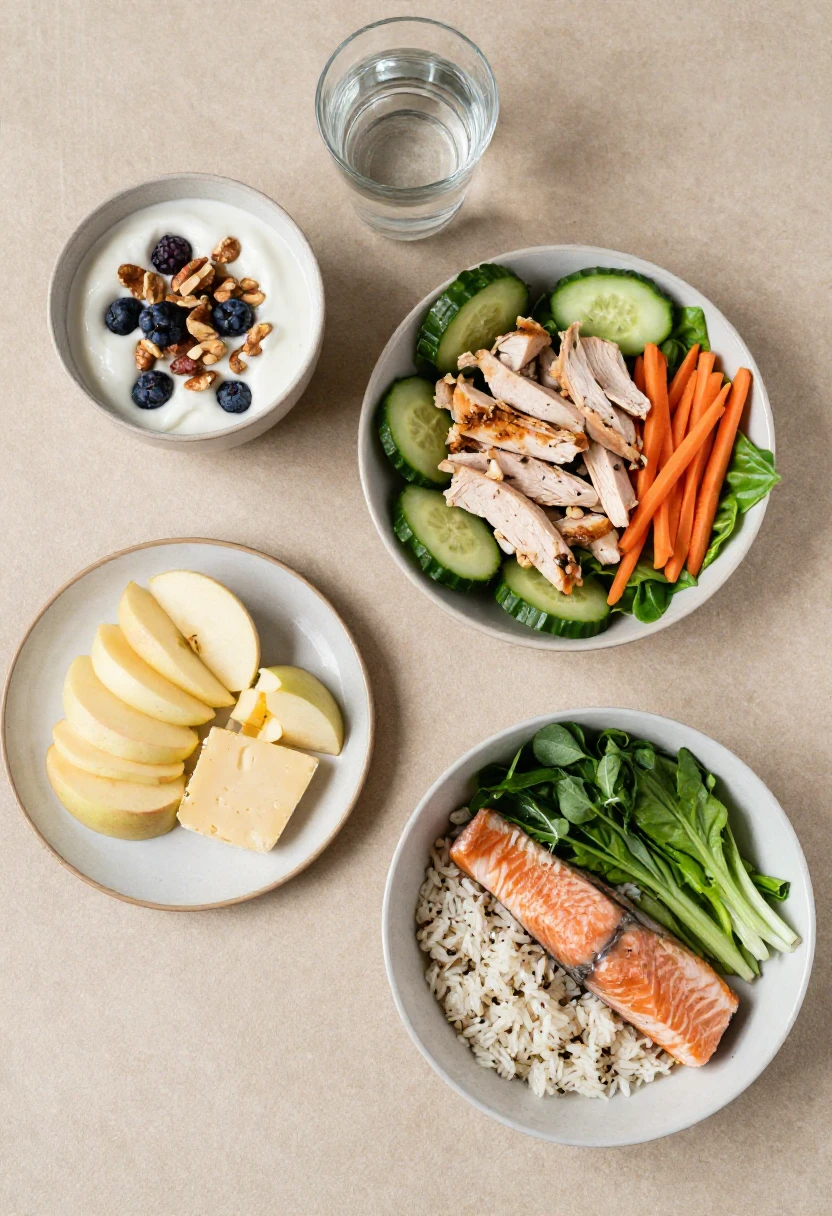
A meal plan for healthy teeth and gums should feel like normal food. I am not interested in a perfect menu that looks nice on paper but falls apart the moment you have a busy morning or a tired evening.
This one-day plan is simple on purpose. It gives you protein, crunchy foods, calcium-rich ingredients, fruit in a sensible way, and water after meals. Nothing strange. Nothing that requires a special grocery store.
Breakfast: Greek yogurt bowl with berries and nuts
Start with plain Greek yogurt, then add berries, chopped almonds or walnuts, and a little cinnamon. If you want it sweeter, add a small drizzle of honey, but do not turn the whole bowl into dessert.
A good bowl could include:
- Plain Greek yogurt
- Blueberries or strawberries
- Chopped almonds
- Chia seeds
- Cinnamon
- A few spoonfuls of oats, if you want it thicker
This breakfast works because it is creamy, fresh, and crunchy at the same time. The yogurt brings calcium and protein. The berries give you sweetness without needing much added sugar. The nuts make it feel more filling.
Drink water afterward, especially if you also had coffee.
Lunch: crunchy chicken or chickpea salad
For lunch, make a salad that actually has texture. Use cabbage, cucumber, carrots, bell pepper, and romaine as the base. Then add grilled chicken, chickpeas, tuna, boiled eggs, or tofu.
For dressing, mix plain Greek yogurt with lemon juice, garlic, olive oil, salt, and pepper. It tastes creamy and bright without needing a heavy bottled dressing.
This is the kind of lunch that keeps your mouth feeling fresh because it has so much crunch. It also keeps you full because there is real protein in it. A salad without protein is usually just a promise of hunger later.
If you are packing it ahead, keep the dressing separate until lunchtime.
Snack: apple slices with cheese or nuts
For a snack, keep it simple: apple slices with cheese, or apple slices with a handful of nuts.
The apple gives you crisp sweetness. The cheese or nuts make the snack more balanced. This is much better than eating fruit alone and then needing another snack twenty minutes later.
You can also swap the apple for pear, berries, or cucumber slices. The idea is the same: pair something fresh with something filling.
And yes, drink water after. Apple skin and nuts can get stuck between teeth, and water is the easiest first step before you get to floss later.
Dinner: salmon rice bowl with greens and cucumber
For dinner, build a bowl with warm rice, salmon, greens, cucumber, and a simple sauce.
You can use:
- Brown rice, white rice, or quinoa
- Baked or pan-cooked salmon
- Spinach, kale, or steamed broccoli
- Cucumber slices
- Shredded cabbage or carrots
- Sesame seeds
- Yogurt sauce, tahini sauce, or a light soy-ginger dressing
This dinner feels satisfying because there is contrast. Warm rice, cool cucumber, soft fish, crunchy cabbage, and a creamy or salty sauce. That mix matters more than people think.
If salmon is not available, use eggs, tofu, chicken, tuna, or beans. The plate still works.
Dessert: keep it clear and simple
You do not have to skip dessert to care about your teeth. Just avoid dragging dessert out for half the evening.
A few squares of dark chocolate, yogurt with berries, or fruit after dinner is fine. Eat it, enjoy it, drink water afterward, and move on.
The less helpful pattern is wandering back to the kitchen for little sweet bites again and again. Your teeth handle dessert better when it has a clear beginning and end.
Common mistakes people make with “healthy” foods and teeth
This is where oral-health eating gets a little sneaky. Some foods look healthy, sound healthy, and still may not be the best choice for your teeth when you eat them in the wrong way.
That does not make them bad foods. It just means the pattern matters.
A smoothie at breakfast is different from a smoothie you sip until lunch. A handful of dried fruit in yogurt is different from chewing sticky fruit leather all afternoon. Granola over plain yogurt is different from eating sweet clusters straight from the bag every time you pass the pantry.
Grazing on fruit all day
Fruit is good food. I want to say that clearly because people get nervous around fruit for no reason.
Apples, berries, oranges, kiwi, melon, peaches, and pears all bring flavor, fiber, and useful nutrients. The issue is not fruit itself. The issue is turning fruit into an all-day snack that keeps your teeth exposed to sugar and acid again and again.
A bowl of berries with breakfast is fine. Apple slices with cheese in the afternoon are fine. Picking at grapes every twenty minutes while you work is a different habit.
A better approach is simple: eat fruit with meals or pair it with something filling, like yogurt, nuts, cheese, or cottage cheese. You will enjoy it more, and your teeth get longer breaks between eating.
Drinking smoothies too slowly
Smoothies can be helpful, especially when they include yogurt, milk, berries, seeds, and maybe a little spinach. I make them too. They are easy, cold, and forgiving when breakfast feels like too much effort.
But smoothies are still something your teeth have to deal with.
The mistake is sipping one slowly for hours. Even a smoothie made with “good” ingredients can keep bathing your teeth in fruit sugars and acids if you carry it around all morning.
Drink your smoothie with a meal or as a clear snack. Then rinse with water. That is much better than treating it like a desk drink.
Assuming natural sugar does not count
Honey, maple syrup, coconut sugar, agave, fruit juice, dried fruit, and date syrup all have a healthier image than regular sugar. Some of them may bring a little extra flavor or nutrients, sure. But for your teeth, sugar is still sugar.
I am not saying you should never use them. A little honey in yogurt or maple syrup in oatmeal can make food more enjoyable. Just do not pretend they are invisible.
Use small amounts. Keep sweet foods with meals when possible. Drink water afterward. Boring advice, maybe, but it works better than trying to find a “perfect” sweetener.
Forgetting about texture
Soft foods are not bad, but a diet full of soft, sticky, or mushy foods can leave your mouth feeling coated.
Think of sweet cereal, soft bread, granola bars, muffins, dried fruit, crackers, and pastries. They are easy to chew quickly, and some of them cling to teeth more than you might expect.
Adding texture helps. Put cucumber next to your sandwich. Add cabbage to wraps. Eat berries with yogurt and nuts. Serve raw carrots with dinner. Add apple slices to a snack plate.
Crunch does not magically clean your teeth, but it does make meals feel fresher and more balanced.
Thinking one “good” food cancels out the rest
A salad at lunch does not cancel out sipping sweet coffee for four hours. A glass of milk does not cancel out never flossing. Carrots after dinner do not erase sticky candy stuck between your molars.
I know that sounds blunt, but it is freeing too. You do not need to find a magical food. You need a rhythm that works most days.
Brush. Floss. Drink water. Eat balanced meals. Keep sweet and sticky foods from becoming constant background noise. That is the boring little system that helps.
Conclusion
Eating for healthier teeth and gums does not have to feel strict. Most of it comes down to small choices you can repeat without thinking too much: add protein, bring in crunchy vegetables, use calcium-rich foods where they fit, keep sweet snacks from stretching across the whole day, and drink water after meals.
I like this approach because it does not ask you to give up real food. You can still enjoy pasta, fruit, coffee, dessert, and cozy dinners. You are just paying a little more attention to how those foods show up in your day.
A better smile is not built from one perfect ingredient. It is built from the quiet habits that happen again and again: yogurt with berries instead of a sugary bar, cucumber next to lunch, cheese with apple slices, water after coffee, floss at night even when you are tired.
Not glamorous. Very useful.
FAQ
What foods are best for healthy teeth and gums?
Some of the best everyday foods for healthy teeth and gums include plain yogurt, cheese, milk, eggs, fish, leafy greens, carrots, celery, cucumbers, bell peppers, apples, berries, nuts, and seeds. Focus on meals that include protein, crunchy vegetables, calcium-rich foods, and water.
Is fruit bad for your teeth?
No, fruit is not bad for your teeth. The issue is usually frequency. Eating fruit with breakfast or as part of a balanced snack is very different from grazing on fruit all day. Pair fruit with yogurt, cheese, nuts, or cottage cheese, and drink water afterward.
Are dairy foods good for oral health?
Dairy foods like plain yogurt, cheese, cottage cheese, and milk can support oral health because they provide calcium and protein. They also fit easily into normal meals, from breakfast bowls to sauces, dips, soups, and baked potatoes.
Can food replace brushing and flossing?
No. Food can support your oral health routine, but it cannot replace brushing, flossing, fluoride toothpaste, or dental checkups. Think of tooth-friendly eating as extra support, not a substitute for basic dental care.