There is a very specific kind of hunger that shows up between meals. Not the dramatic, fridge-opening kind. More like a quiet pull in the background. You are working, driving, answering messages, packing lunches, or standing in the kitchen wondering whether coffee counts as food.
That is where healthy snacks that keep you full without ruining your appetite can make the day feel much easier.
A good snack should not feel like a punishment. It also should not turn into a full meal by accident. The best ones sit somewhere in the middle: enough protein, fiber, or healthy fat to take the edge off, but not so much food that dinner suddenly sounds impossible.
I think snacking gets unfairly blamed because so many snacks are built to be easy to overeat. A bowl of chips disappears before your brain catches up. A sweet coffee drink feels satisfying for ten minutes, then leaves you hunting for something else. A random cookie from the office kitchen is fine, but it rarely solves actual hunger.
The better approach is simpler: build small snacks that have a little structure.
That might mean Greek yogurt with berries and walnuts. Apple slices with peanut butter. Hummus with cucumber and pita. Cottage cheese with tomatoes and pepper. A boiled egg with crackers and fruit. Nothing fancy. Nothing that needs a full recipe card.
The point is not to snack all day. The point is to avoid getting so hungry that every choice feels urgent. Because when you wait too long, baby carrots are not competing with chips on equal terms. They never were.
Smart snacking gives you a buffer. It helps you make it from breakfast to lunch, or from lunch to dinner, without feeling shaky, distracted, or ready to eat the first thing you see. And when it is done well, it protects your appetite instead of flattening it.
Why smart snacking can help your day feel easier
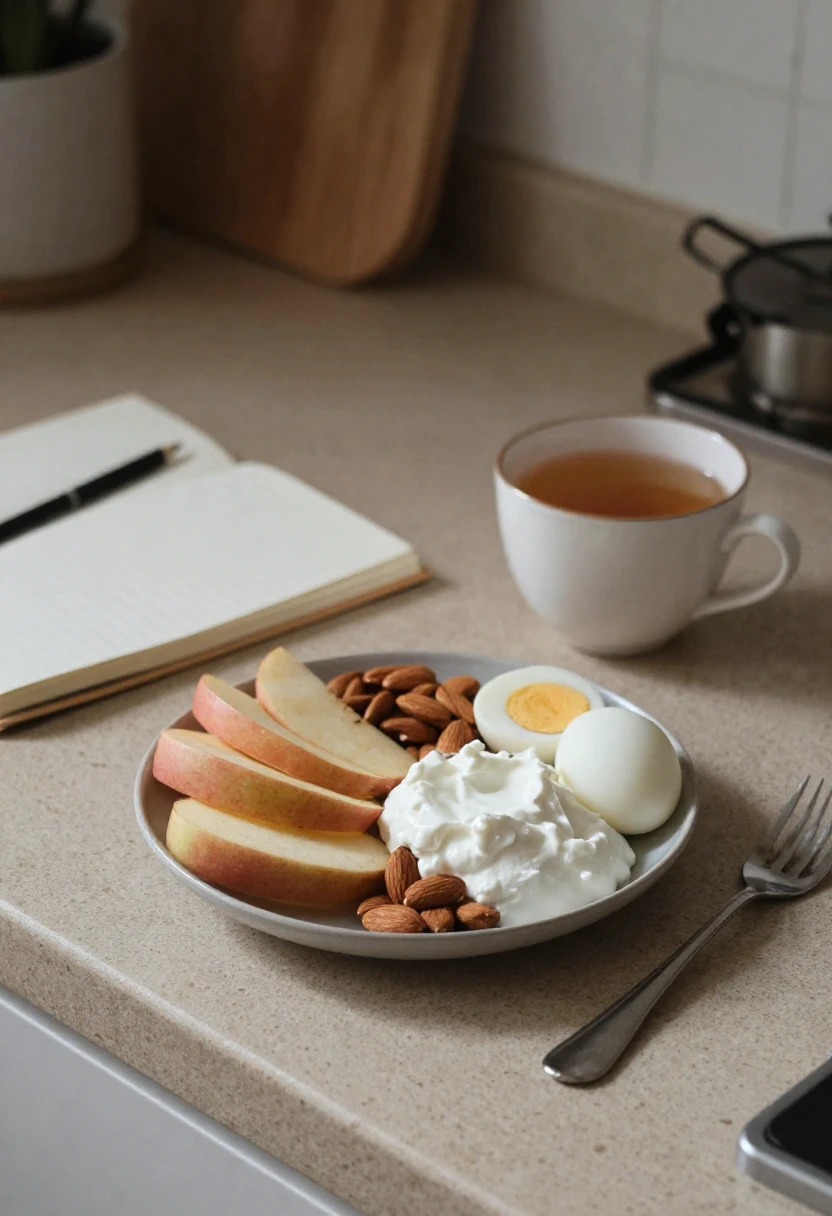
Snacking works best when it has a job.
Sometimes that job is to stop you from walking into lunch already irritated. Sometimes it is to keep your energy steady during a long afternoon. Sometimes it is just there because dinner is still two hours away and you know yourself well enough to avoid arriving at the table starving.
That is not a failure of discipline. That is just a normal day.
Food works better when it is spaced out
Your body can handle big meals, of course. There is nothing wrong with a slow weekend brunch or a big family dinner. But on an ordinary workday, waiting too long between meals can make eating feel more chaotic than it needs to be.
You skip breakfast because the morning is busy. Then lunch comes late. By the time you eat, you are not choosing what sounds good anymore. You are choosing what is fastest, closest, and most comforting.
A small snack can interrupt that pattern.
Even something simple like yogurt with fruit, a boiled egg, or a handful of nuts with an apple can make a difference. It gives your body something to work with without turning the whole afternoon into one long grazing session.
The problem with saving all your hunger for one big meal
I used to think skipping snacks was the “cleaner” way to eat. Fewer decisions. Fewer calories. Less fuss.
But honestly, it often backfires.
When you save all your hunger for one big meal, you tend to eat faster. You stop noticing when you are comfortably full. You may also reach for heavier foods because your body is asking for quick energy right now, not a balanced plate in twenty minutes.
That is how a normal dinner can turn into a little food emergency.
A good snack prevents that. It takes the panic out of hunger. You still want dinner, but you do not arrive at dinner ready to eat bread, cheese, leftovers, and half the salad before the main dish is even warm.
A good snack is not a mini dessert
There is a difference between a snack that helps and a snack that just tastes nice for a moment.
A mini dessert can absolutely have a place. A piece of chocolate after lunch, a cookie with tea, a small sweet bite in the afternoon. No drama.
But if you are actually hungry, sugar alone usually does not last. You get a quick lift, then the same hunger comes back, sometimes louder.
That is why the best filling snacks usually include at least one of these:
- protein, like Greek yogurt, eggs, cottage cheese, hummus, tuna, or turkey
- fiber, like fruit, vegetables, oats, beans, or whole grains
- healthy fat, like nuts, seeds, avocado, olives, or nut butter
You do not need all three every time. But having at least one or two gives the snack staying power.
A banana is fine. A banana with peanut butter is better if you need it to hold you for a while. Crackers are fine. Crackers with hummus or cheese will do more for your appetite. Fruit is lovely, but fruit with yogurt turns into something that actually feels like food.
That is the small shift: stop thinking of snacks as random bites, and start thinking of them as tiny support meals. Not big. Not complicated. Just useful.
What makes a snack actually satisfying
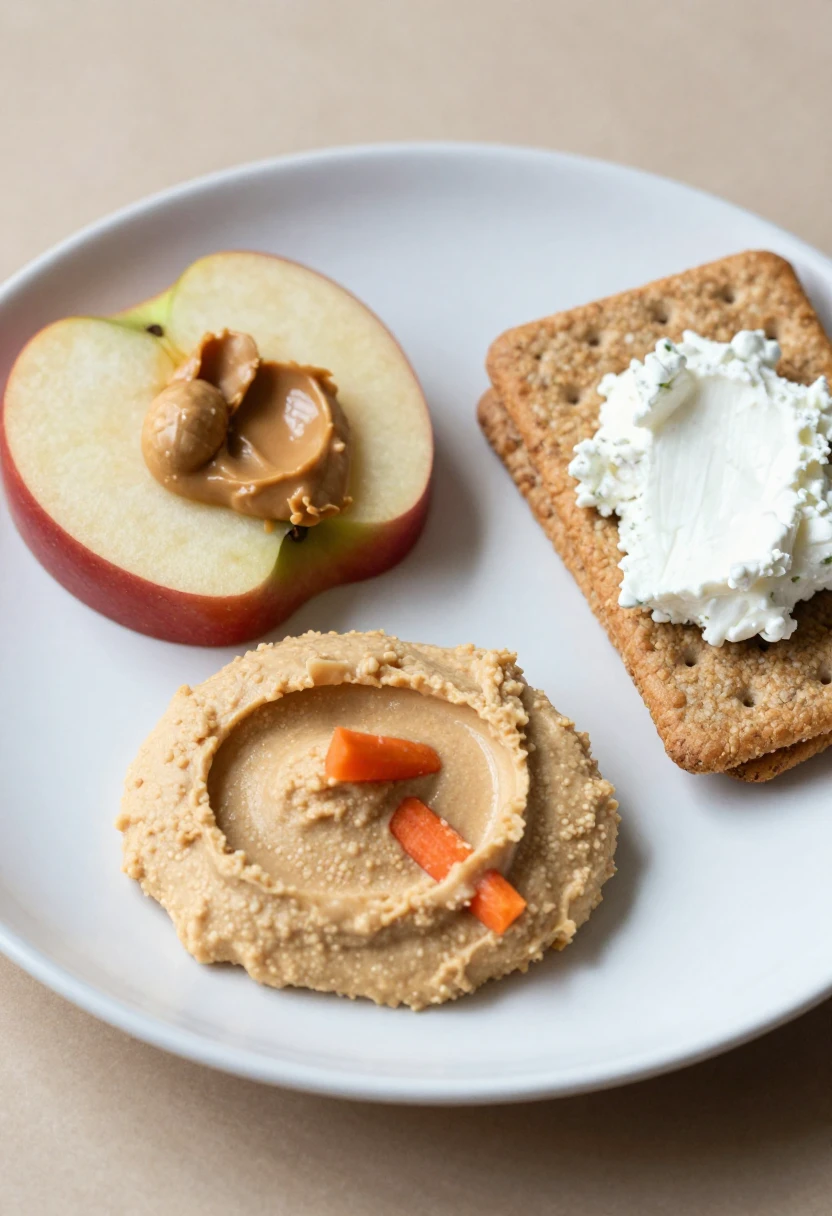
A snack can be small and still do its job. The trick is giving it something more useful than quick sugar or empty crunch.
I do not mean every snack needs to look like it came from a wellness café. Most of mine are very normal: yogurt, fruit, nuts, toast, eggs, hummus, crackers, cheese. The difference is in the pairing.
A plain handful of crackers might taste good, but it usually does not stay with you. Add hummus, cheese, tuna, or avocado, and suddenly it feels like real food.
Protein helps the snack last longer
Protein is what turns a snack from “I ate something” into “I can wait until dinner.”
That is why Greek yogurt works better than a few spoonfuls of jam. A boiled egg works better than a plain rice cake. Cottage cheese with tomatoes feels more filling than tomatoes alone.
Some easy protein options:
- Greek yogurt
- cottage cheese
- boiled eggs
- hummus
- tuna or chicken
- turkey slices
- cheese
- edamame
- roasted chickpeas
You do not need a huge amount. Even a small scoop of cottage cheese or a little hummus can make vegetables, fruit, or crackers feel more complete.
Fiber slows things down in a good way
Fiber is one of the reasons fruit, vegetables, oats, beans, and whole grains make better snacks than most ultra-processed bites.
It gives your body something to work through. That means the snack does not disappear from your system quite as fast.
This is why an apple can feel more satisfying than apple juice. Same general flavor, completely different effect. One makes you chew. One is gone in three seconds.
Good fiber-rich snack ingredients include:
- apples
- berries
- pears
- carrots
- cucumbers
- bell peppers
- oats
- chia seeds
- beans
- whole grain toast
- whole grain crackers
If you want a snack to keep you full, pair fiber with protein or fat. Apple with peanut butter. Carrots with hummus. Oats with yogurt. Whole grain toast with egg.
Simple, but it works.
Healthy fats make small portions feel fuller
Fat gets a weird reputation, but a little of it can make snacks much more satisfying.
Think of almond butter on banana slices, avocado on toast, walnuts in yogurt, or olives with cheese and crackers. These are not huge portions, but they feel more complete because fat adds richness.
The only thing to watch is portion size. Nuts are a perfect example. A small handful is a great snack. Eating from the bag while answering emails is a completely different sport.
I like portioning nuts into a small bowl because it gives the snack a beginning and an end. Otherwise, somehow, magically, the cashews vanish.
A little crunch matters more than you think
Sometimes hunger is real. Sometimes you just want texture.
That is not a bad thing. Crunch is satisfying. It wakes up a snack and makes it feel less dull. The goal is not to pretend you never want chips. The goal is to have other crunchy options that still leave you feeling good afterward.
Try:
- carrots with hummus
- cucumber slices with cottage cheese
- apple slices with peanut butter
- roasted chickpeas
- seed crackers with avocado
- bell pepper strips with tuna salad
- celery with cream cheese or nut butter
A snack with crunch, protein, and a little freshness usually feels better than something soft and sweet eaten too quickly. It gives your mouth something to do, which sounds silly, but it matters.
Healthy snack ideas for busy mornings
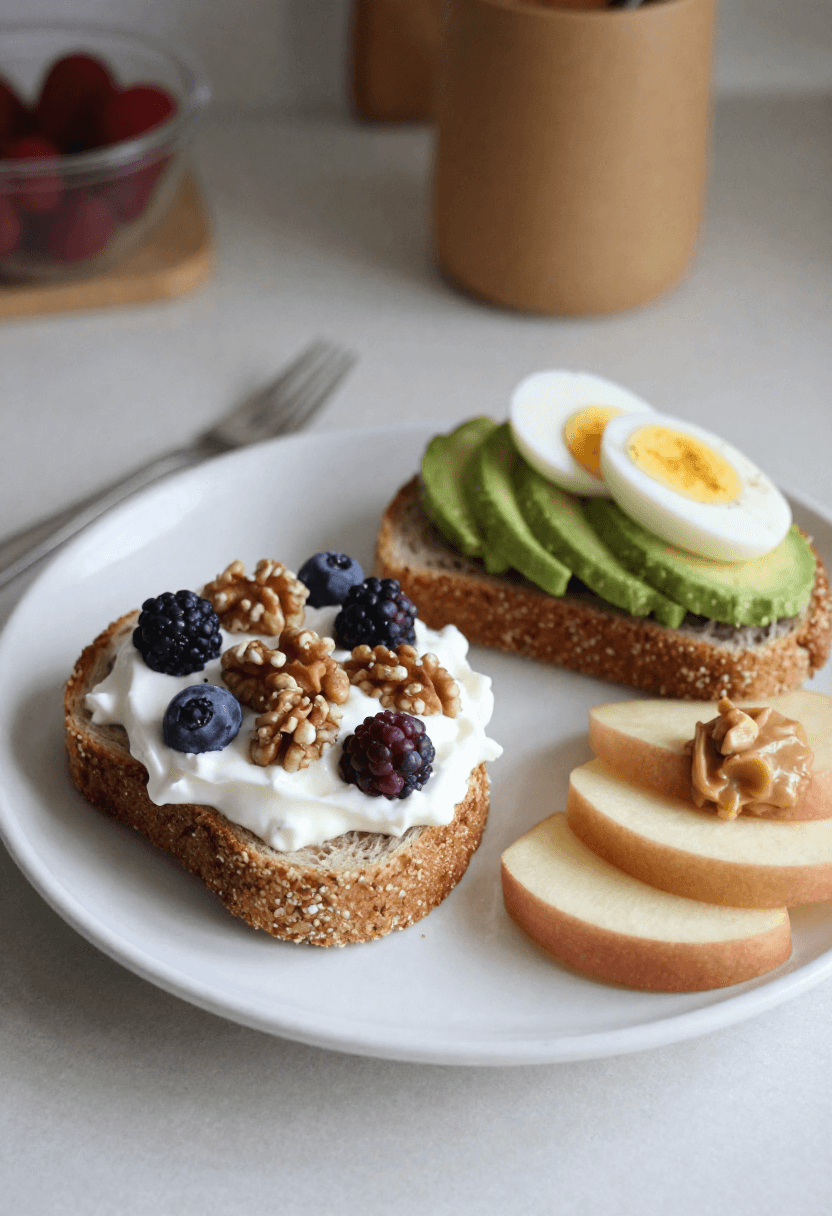
Morning snacks are useful when breakfast was too small, too early, or honestly just didn’t happen.
Some mornings start with coffee and good intentions. Then suddenly it is 10:30, your stomach is making decisions for you, and the easiest option is whatever is closest. That is usually not the moment when anyone lovingly assembles a balanced snack.
So morning snacks should be simple. Very simple. Ideally something you can grab from the fridge, pack in a container, or make in two minutes without turning the kitchen into a project.
Greek yogurt with berries and nuts
Greek yogurt is one of the easiest morning snacks because it already brings protein. Add berries for sweetness and fiber, then sprinkle walnuts, almonds, pumpkin seeds, or granola on top.
I like this snack because it feels fresh but still filling. The berries keep it from tasting too heavy, and the nuts add enough crunch to make it feel finished.
A good basic bowl:
- Greek yogurt
- blueberries or sliced strawberries
- chopped walnuts or almonds
- a little cinnamon
- a small drizzle of honey, if you want it sweeter
If you are packing it for later, keep the nuts separate until you eat. Soggy nuts are not the kind of softness anyone asked for.
Whole grain toast with avocado or nut butter
Toast is underrated as a snack. It is quick, warm, and easy to adjust depending on what you need.
For a savory version, use avocado, salt, pepper, and a squeeze of lemon. Add a boiled egg if you want more protein. For a sweet version, spread peanut butter or almond butter over the toast and add banana slices or chia seeds.
The key is using toast as the base, not the whole snack. Plain toast disappears fast. Toast with fat, protein, or fiber holds up better.
Good combinations:
- avocado + boiled egg
- peanut butter + banana
- cottage cheese + tomato
- hummus + cucumber
- almond butter + sliced apple
This is also a good option when you want something that feels like breakfast but smaller.
Apple slices with peanut butter
This one is basic for a reason. It works.
Apple slices give you sweetness and crunch. Peanut butter adds richness and makes the snack last longer. Together, they are much more satisfying than either one alone.
For a little extra texture, sprinkle cinnamon, chia seeds, or crushed walnuts over the peanut butter. You can also use almond butter or sunflower seed butter if that is what you have.
If you are packing it, rub the apple slices with a tiny bit of lemon juice so they do not brown too quickly. Or just pack the whole apple and slice it when you are ready. Less pretty, less fuss.
Egg and veggie snack box
A boiled egg can save a chaotic morning. Add a few vegetables and something crunchy, and you have a snack that feels intentional without needing much work.
Try a small container with:
- one boiled egg
- cucumber slices
- cherry tomatoes
- carrot sticks
- a few whole grain crackers
- a pinch of salt or everything bagel seasoning
This is the kind of snack that keeps you from buying a pastry just because it is there. Nothing against pastries. But if you are hungry and need steady energy, an egg and veggie box will treat you better.
You can boil a few eggs at the start of the week and keep them in the fridge. Then the snack takes about one minute to assemble, which is exactly the amount of effort a weekday morning deserves.
Healthy snack ideas for afternoon energy
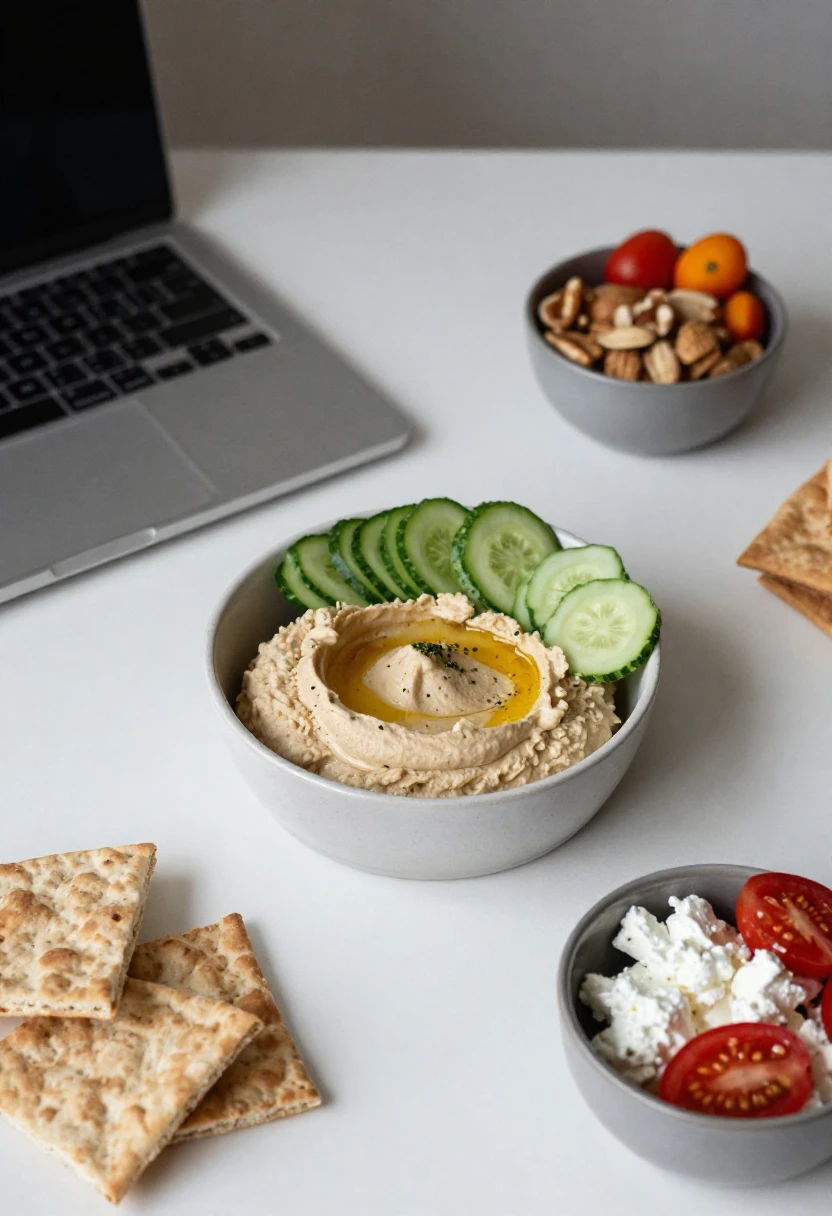
Afternoon hunger has its own personality.
Morning hunger is usually practical. You need something small and steady. Afternoon hunger is sneakier. It arrives with low patience, tired eyes, and the sudden belief that a sweet coffee and something crunchy will fix everything.
Sometimes they do. For about fifteen minutes.
A better afternoon snack should feel a little more grounded. It should wake you up without making you feel heavy, and it should leave enough room for dinner later.
Hummus with vegetables and pita
Hummus is one of my favorite afternoon snacks because it checks several boxes without trying too hard. It has protein, fiber, creaminess, and enough savory flavor to make raw vegetables much more appealing.
You can keep it simple:
- hummus
- cucumber slices
- carrot sticks
- bell pepper strips
- a few pieces of whole wheat pita
The pita matters, at least for me. Vegetables alone can feel too light when you are properly hungry. Add a small amount of pita, and the snack feels more like food.
You can also change the flavor so it does not get boring. Try roasted red pepper hummus, garlic hummus, or a sprinkle of smoked paprika and olive oil on top.
Cottage cheese with fruit or tomatoes
Cottage cheese is one of those foods people either forget about or have strong opinions about. I get it. The texture is not for everyone.
But if you like it, it makes a very useful snack.
For a sweet version, add berries, peach slices, pineapple, or a little cinnamon. For a savory version, add cherry tomatoes, cucumber, black pepper, and a drizzle of olive oil.
The savory version tastes almost like a lazy little salad bowl. Not glamorous, but very satisfying.
A few easy combinations:
- cottage cheese + strawberries + cinnamon
- cottage cheese + peach + chopped walnuts
- cottage cheese + tomato + cucumber + pepper
- cottage cheese + avocado + everything bagel seasoning
It is especially good when you want something cold, creamy, and filling without making a full meal.
Nuts with fresh fruit
Fruit is refreshing, but it does not always hold you for long on its own. Nuts help with that.
An apple with almonds. A pear with walnuts. Grapes with pistachios. Banana with peanuts. These pairings are simple, portable, and easy to keep at your desk or in your bag.
The only real rule is to avoid eating nuts straight from the bag. I say this from experience. A “small handful” can become half a bag when your attention is on a screen.
Portion them into a small container if you can. You still get the richness and crunch, but the snack has a natural stopping point.
Tuna or chicken on whole grain crackers
This is the snack I would choose when lunch was too light or dinner is still far away.
Tuna or chicken on whole grain crackers feels more like a mini-meal, but it does not have to be huge. Mix tuna or shredded chicken with Greek yogurt, a little mayo, lemon juice, mustard, or chopped pickles. Spoon it onto crackers, cucumber rounds, or toast.
Good add-ins:
- celery
- green onion
- dill
- black pepper
- pickles
- lemon juice
- a little hot sauce
It is salty, filling, and more useful than another handful of something from the pantry.
Just keep the portion moderate. The goal is to get through the afternoon, not accidentally eat dinner at 3:30.
Sweet snacks that still feel balanced
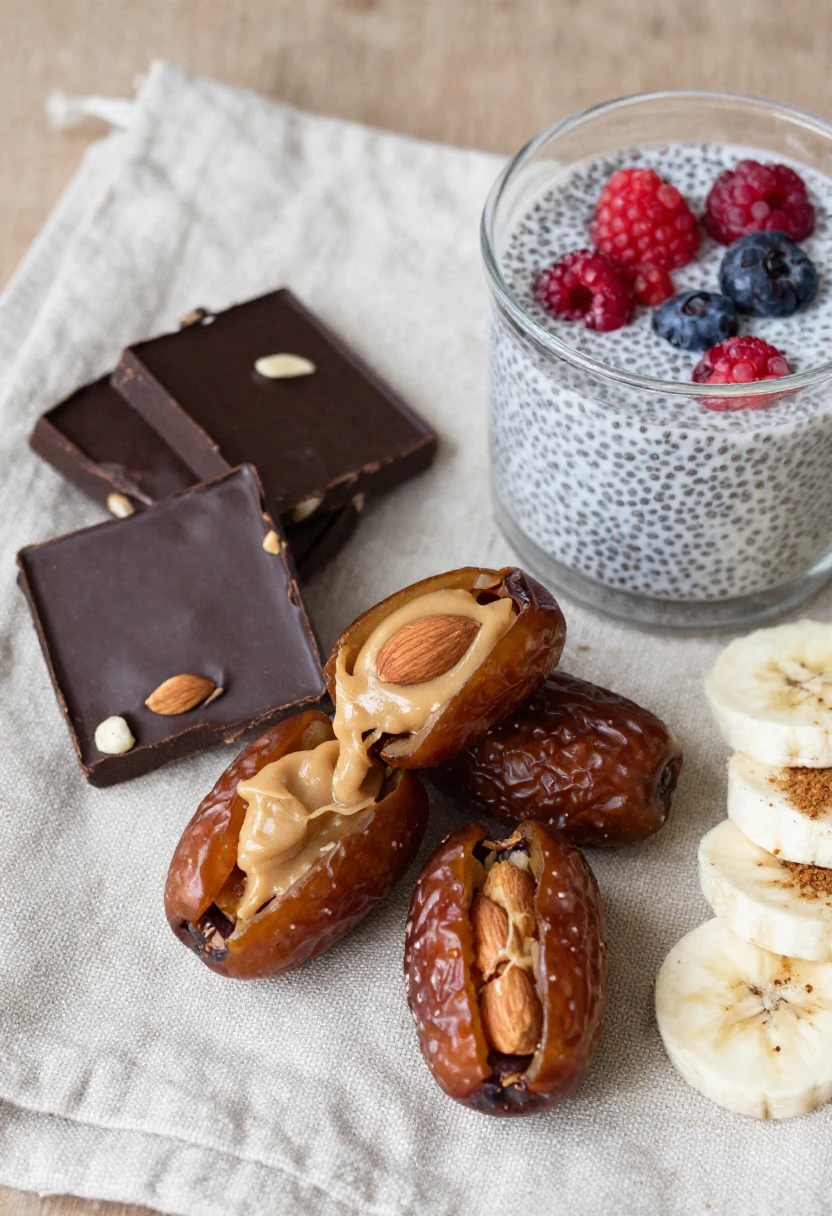
Sweet snacks are not the problem. The problem is when a sweet snack is only sugar and air, so you enjoy it for a few minutes and then feel hungry again almost immediately.
I like sweet snacks more when they have something steady underneath them. Fruit with yogurt. Dates with nut butter. Chocolate with almonds. Something creamy, crunchy, or rich enough to slow the whole thing down.
You still get the sweet bite. You just do not get that empty “why am I still hungry?” feeling afterward.
Dates with nut butter
Dates are very sweet, almost caramel-like, so a little goes a long way. Split one or two dates open, remove the pit, and fill them with peanut butter, almond butter, or tahini.
Add a pinch of flaky salt if you have it. That tiny salty edge makes the whole thing taste more like a real treat.
You can also add:
- chopped walnuts
- cinnamon
- chia seeds
- a thin drizzle of melted dark chocolate
- crushed pistachios
This snack is small but rich, which is exactly why it works. It gives you sweetness without needing a whole plate of dessert.
Dark chocolate with almonds
Dark chocolate and almonds are a very good pair when you want something sweet after lunch or in the late afternoon.
The chocolate gives you that dessert feeling. The almonds add crunch, fat, and a little protein, so the snack feels more complete. I would rather have two squares of chocolate with a few almonds than keep going back for random sweet bites from the kitchen.
Keep it simple:
- 1–2 squares of dark chocolate
- a small handful of almonds
- strawberries or orange slices, if you want something fresh with it
This is not about turning chocolate into a health assignment. It is still chocolate. That is the point. You enjoy it, pair it with something more filling, and move on.
Chia pudding with berries
Chia pudding is helpful because you make it ahead, and future-you gets a ready snack from the fridge.
Mix chia seeds with milk or a dairy-free milk, add a little vanilla, and let it thicken. The texture becomes creamy and spoonable, almost like a soft pudding. Add berries on top for brightness.
A basic version:
- 2 tablespoons chia seeds
- 1/2 cup milk
- a little vanilla
- cinnamon or cocoa powder
- berries on top
If you want it sweeter, add a small spoon of honey or maple syrup. Just do not overdo it, because the berries already bring plenty of sweetness.
This is a good snack when you want something cold and dessert-like but still filling.
Banana with yogurt and cinnamon
A banana with yogurt is one of those snacks that looks too simple to be useful, but it works surprisingly well.
Slice a banana into a bowl, add Greek yogurt, sprinkle cinnamon over the top, and add a few crushed nuts if you want crunch. It tastes soft, sweet, and cozy, almost like a lazy breakfast bowl.
You can make it more filling with:
- peanut butter
- walnuts
- oats
- chia seeds
- a spoon of cottage cheese mixed into the yogurt
This snack is especially good when you want something sweet but not dry. It feels comforting without being heavy, and it usually leaves enough room for a proper meal later.
Savory snacks when you are tired of sweet food
Sweet snacks are easy to reach for, but they are not always what you want.
Some afternoons call for something salty, crunchy, creamy, or a little tangy. Not a candy bar. Not another banana. Something that feels closer to real food without becoming a full meal.
Savory snacks are especially useful when you know dinner is coming, but you need something with more backbone than fruit.
Cheese with whole grain crackers
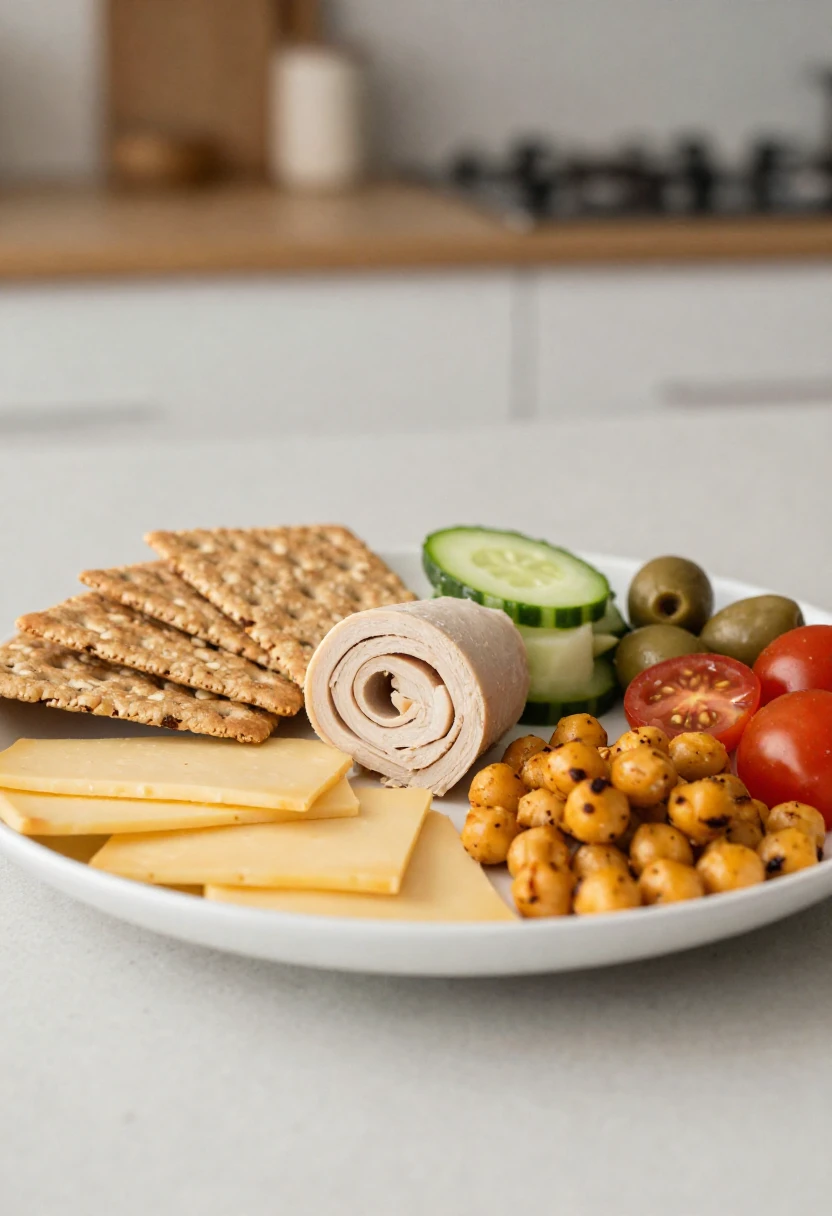
Cheese and crackers can be a perfectly good snack when you keep it simple and build a small plate instead of grazing from the box.
Try a few whole grain crackers with cheddar, mozzarella, goat cheese, or whatever you already have. Add cucumber slices, cherry tomatoes, apple slices, or grapes if you want something fresh on the side.
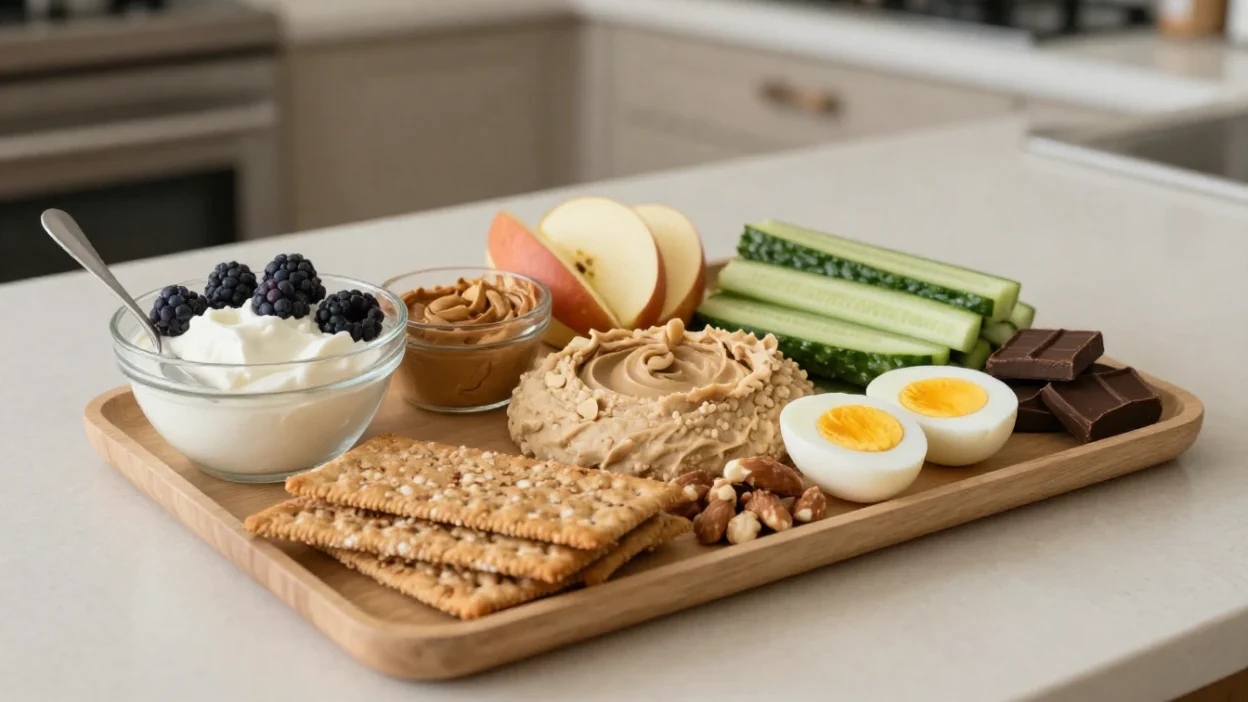
A small snack plate might look like this:
- whole grain crackers
- a few slices of cheese
- cucumber or tomato
- olives or grapes
It feels a little more grown-up than grabbing chips, but it takes almost the same amount of effort.
Roasted chickpeas
Roasted chickpeas are great when you want crunch. They are also easy to season, which helps when your snack routine starts feeling boring.
Drain canned chickpeas, dry them well, toss them with olive oil, salt, and spices, then roast until crisp. Smoked paprika, garlic powder, cumin, chili powder, or curry powder all work well.
The drying part matters. If the chickpeas go into the oven too wet, they steam instead of crisping. I learned that the annoying way.
Eat them on their own, sprinkle them over a small salad, or pack them in a container for a crunchy desk snack.
Turkey roll-ups with cucumber
Turkey roll-ups are useful when you need protein but do not want to cook anything.
Take a few slices of turkey, roll them around cucumber sticks, avocado, cheese, or lettuce, and you are done. Add mustard, hummus, or a little cream cheese if you want more flavor.
Good combinations:
- turkey + cucumber + mustard
- turkey + avocado + black pepper
- turkey + cheese + lettuce
- turkey + hummus + bell pepper
They are quick, clean, and filling without being heavy. This is the kind of snack that works well before dinner because it takes the edge off without stealing your appetite.
Mini salad cups
A mini salad cup sounds fancier than it is. It is really just a small bowl of fresh things with one filling ingredient.
Start with greens, cucumber, tomatoes, or shredded carrots. Add boiled egg, beans, chickpeas, tuna, cheese, or leftover chicken. Finish with olive oil, lemon juice, salt, and pepper.
You do not need a full salad. Just enough to feel refreshed and steady.
A few easy ideas:
- greens + boiled egg + cherry tomatoes
- cucumber + chickpeas + feta
- tuna + lettuce + lemon
- beans + avocado + tomato
- chicken + greens + olive oil
This is also a good way to use leftovers that are too small for lunch but too good to throw away. A few spoonfuls of beans, half an avocado, one boiled egg, a little leftover chicken. Suddenly it becomes a snack instead of fridge clutter.
Snacks to pack for work, school, or errands
A snack that only works at home is not always helpful.
Most real snack emergencies happen somewhere else: at your desk, in the car, between appointments, after school pickup, during a long shopping trip, or right before you walk into a meeting and realize lunch was four hours ago.
That is why packable snacks matter. They do not need to be perfect. They just need to be easy, sturdy, and filling enough to stop you from buying whatever is closest.
What survives well in a bag
Some snacks can sit in your bag for a few hours without becoming sad or unsafe. These are the ones I like to keep around for busy days because they do not need a fridge or much attention.
Good options include:
- whole apples, pears, bananas, or clementines
- small packs of nuts or trail mix
- roasted chickpeas
- whole grain crackers
- seed crackers
- nut butter packets
- dried fruit, ideally paired with nuts
- simple protein bars
- rice cakes with a small nut butter packet
The trick is to avoid packing only dry carbs. Crackers alone might help for ten minutes, but crackers with a nut butter packet or a small bag of almonds will last longer.
I also like snacks that do not make a mess. A ripe peach in a laptop bag sounds romantic until it becomes peach jam on your charger.
What needs a cooler bag
Some of the best filling snacks need to stay cold. If you are going to be out for a while, a small cooler bag or lunch pouch makes more options possible.
Pack these with an ice pack:
- Greek yogurt
- cottage cheese
- boiled eggs
- cheese sticks or cheese cubes
- hummus
- turkey slices
- chicken salad
- tuna salad
- cut vegetables
- grapes or berries
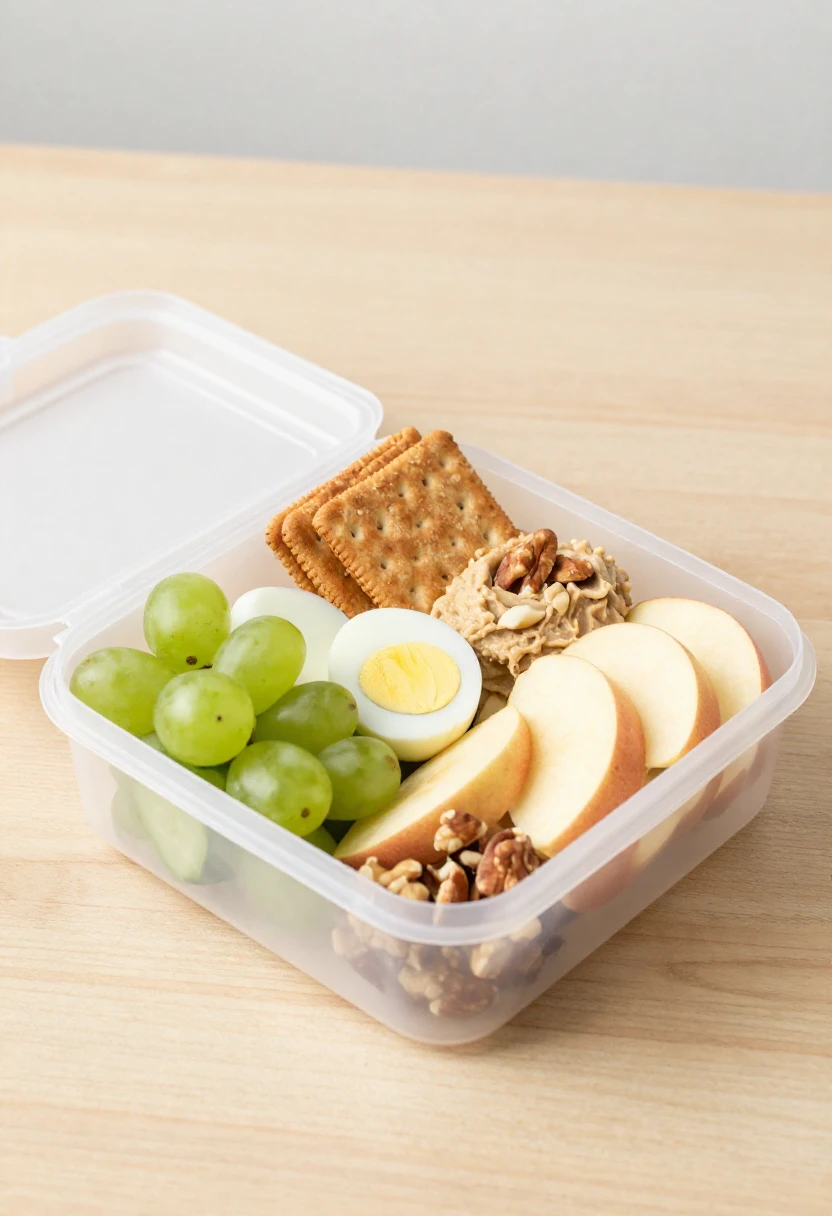
This is where snack boxes are useful. You can put a few small things together and make the snack feel more complete without adding much volume.
For example, pack hummus with cucumber, carrots, and pita. Or a boiled egg with grapes and crackers. Or cheese cubes with apple slices and walnuts.
Small, but not random.
How to build a simple snack box
A good snack box does not need ten ingredients. Actually, that usually makes it more annoying to prepare.
Use this easy formula:
protein + fiber + crunch + something fresh
That might look like:
- boiled egg + whole grain crackers + cucumber
- hummus + carrots + pita
- cottage cheese + berries + walnuts
- turkey slices + bell pepper + seed crackers
- cheese + apple slices + almonds
- tuna salad + cucumber rounds + crackers
The goal is to make the snack feel satisfying from different angles. Protein keeps it steady. Fiber helps it last. Crunch makes it enjoyable. Something fresh keeps it from feeling heavy.
And please, make it realistic. If you know you will not wash and chop three kinds of vegetables on a Monday morning, do not build a snack routine around that fantasy. Buy baby carrots. Use cherry tomatoes. Grab a whole apple. Good enough snacks are the ones you actually pack.
Common snacking mistakes
Snacking gets messy when it stops being intentional.
And I do not mean every snack needs to be portioned into tiny glass containers with matching lids. That is not real life for most people. But there is a big difference between choosing a snack because you are hungry and slowly eating random things because they are open, nearby, and easy.
Most snacking mistakes are not about the food itself. They are about timing, portions, and whether the snack has enough staying power.
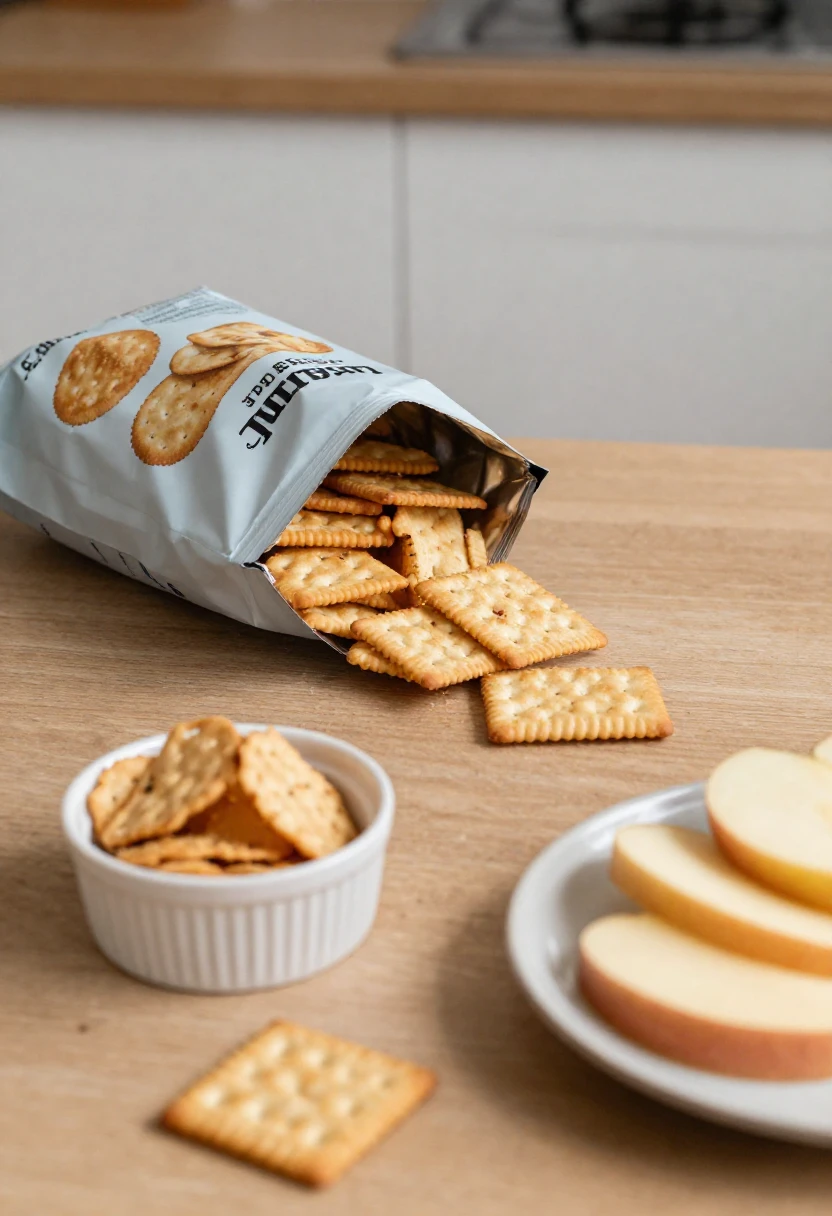
Eating from the bag
This is probably the easiest mistake to make.
You open a bag of crackers, nuts, granola, chips, or dried fruit and tell yourself you will only have a little. Then your hand keeps going back while you read, work, cook dinner, or scroll on your phone.
No judgment. It happens because eating from the bag has no natural stop.
Pour the snack into a small bowl or container first. That one tiny step changes the whole experience. You can still enjoy the crackers or nuts, but now the snack has a beginning and an end.
This matters even more with foods that are easy to overeat, like:
- nuts
- trail mix
- granola
- crackers
- chips
- dried fruit
- chocolate pieces
A snack should feel satisfying, not mysterious. If you finish it and think, “Wait, how much did I just eat?” the bag was probably the problem.
Choosing only carbs
Carbs are not bad. Let’s get that out of the way.
Fruit, toast, crackers, oats, pita, rice cakes, and granola can all fit into a good snack. The issue is when the snack is only carbs and nothing else, especially if you need it to hold you for more than twenty minutes.
A plain rice cake is light. Maybe too light. Add peanut butter or cottage cheese, and it becomes useful. Crackers are fine, but crackers with hummus, tuna, cheese, or avocado are better if you are actually hungry.
Try upgrading simple carb snacks like this:
- banana + peanut butter
- toast + egg
- crackers + hummus
- apple + cheese
- pita + turkey
- oats + Greek yogurt
- rice cake + avocado
You do not need to remove the carbs. Just give them a partner.
Waiting until you are too hungry
This is the mistake that makes every other mistake easier.
When you wait until you are extremely hungry, your brain does not want a balanced snack. It wants the fastest possible answer. Something salty. Something sweet. Something that requires no washing, chopping, or thinking.
That is why timing matters.
If you know lunch is always late, pack a morning snack. If dinner tends to happen after 7, plan something small in the afternoon. If you always come home hungry and start eating while cooking, put a snack plate together before you start dinner.
Even a few bites can help:
- a boiled egg
- a handful of almonds
- yogurt
- hummus and cucumber
- cheese and apple slices
- a small piece of toast with avocado
You are not spoiling your appetite. You are calming the hunger down so dinner does not start before dinner.
Treating snacks like a full meal
Some snacks slowly grow until they are basically lunch.
A few crackers become crackers, cheese, nuts, fruit, yogurt, chocolate, and then maybe another handful of something because everything still feels snack-sized. Individually, none of it looks like much. Together, it can become more food than you meant to eat.
That is not always a problem. Sometimes you need a mini-meal. Maybe lunch was tiny, maybe dinner is late, maybe you had a harder workout than usual.
But be honest about what you are making.
If it is a snack, keep it simple: one or two main items. If you need something bigger, make it a small meal and sit down for it. There is nothing wrong with that.
The trouble starts when you keep calling it “just a snack” while eating enough to replace dinner and still expecting to be hungry later. A good snack should take the edge off, not erase the next meal completely.
How to make snacking easier during the week
The best snacks are usually the ones you prepare before you are hungry.
Not in a perfect meal-prep way. I do not mean spending Sunday afternoon lining up tiny containers like you are opening a snack café. I mean doing a few small things that make better choices easier when the day gets busy.
Because when the good snack takes more work than the random snack, the random snack usually wins.
Prep two or three snack bases
You do not need to prep everything. Just choose a few basics that can become different snacks during the week.
A good starting point:
- boil a few eggs
- wash berries or grapes
- slice carrots, cucumbers, or bell peppers
- portion nuts into small containers
- keep hummus or cottage cheese in the fridge
- make a small batch of chia pudding
- roast chickpeas for crunch
This gives you pieces to combine quickly.
Boiled egg with crackers. Hummus with vegetables. Yogurt with berries. Cottage cheese with tomatoes. Nuts with fruit. Nothing feels like a big task because half the work is already done.
I especially like prepping vegetables right after grocery shopping. If they go into the fridge unwashed and forgotten, they become refrigerator decoration. If they are already washed and easy to grab, they actually get eaten.
Keep emergency snacks where you need them
Snacks are more useful when they live where hunger actually happens.
Keep a few shelf-stable options in your desk, bag, car, or pantry. Not a huge stash. Just enough to save you from that “I need food now” moment.
Good emergency snacks:
- almonds or walnuts
- roasted chickpeas
- whole grain crackers
- nut butter packets
- protein bars with simple ingredients
- dried fruit paired with nuts
- seed crackers
- shelf-stable tuna packets
The point is not to snack constantly. The point is to have a better backup than whatever happens to be nearby.
If you work at a desk, keep something salty and something slightly sweet. That covers most cravings. For me, that might be almonds and dark chocolate, or crackers and a nut butter packet.
Make the better choice visible
This sounds almost too obvious, but it works: put the snacks you want to eat where you can see them.
Fruit in a bowl on the counter. Yogurt near the front of the fridge. Cut vegetables at eye level. Nuts in a small jar instead of hidden behind baking supplies.
The opposite is also true. If the easiest snack to see is cookies, chips, or candy, that is probably what you will grab first. Not because you failed. Because it is right there.
A few tiny changes help:
- keep washed fruit on the counter or front shelf
- portion nuts before the week gets busy
- place hummus next to cut vegetables
- store sweets in a less visible spot
- keep a “snack box” in the fridge with easy pairings
This is less about willpower and more about layout. Your kitchen should help you a little.
Build snacks around your real routine
A snack plan only works if it matches your actual day.
If your mornings are rushed, do not plan snacks that require chopping. Choose yogurt cups, bananas, boiled eggs, or apple slices with nut butter.
If you get hungry at work, keep shelf-stable snacks at your desk.
If you come home starving before dinner, prepare a small plate before you start cooking: cheese and cucumber, hummus and carrots, or a boiled egg with tomatoes. That is better than eating straight from the fridge while the pan heats up.
And if you tend to lose your appetite after a snack, make the snack smaller. A few bites may be enough.
That is the point of healthy snacks that keep you full without ruining your appetite. They should support the meal coming next, not compete with it.
Conclusion
Healthy snacking works best when it feels ordinary.
You do not need perfect snack boxes, expensive ingredients, or a fridge full of tiny containers. You need a few reliable combinations that help you get through the day without arriving at meals overly hungry.
Think protein, fiber, a little healthy fat, and enough texture to make the snack satisfying. Greek yogurt with berries. Apple with peanut butter. Hummus with vegetables. Cheese with crackers. A boiled egg with tomatoes. Dark chocolate with almonds when you want something sweet.
Small choices like that add up. They keep hunger calmer, energy steadier, and meals more enjoyable.
A good snack should leave you thinking, “Okay, I can wait for dinner now.” Not stuffed. Not still searching. Just steady.
FAQ
What snacks keep you full the longest?
Snacks with protein, fiber, and healthy fats usually keep you full the longest. Good examples include Greek yogurt with berries and nuts, apple slices with peanut butter, hummus with vegetables and pita, cottage cheese with tomatoes, or a boiled egg with whole grain crackers.
Can snacks ruin your appetite?
Yes, if they are too large or too close to your next meal. A snack should take the edge off hunger, not replace lunch or dinner. If you often lose your appetite after snacking, make the portion smaller or choose something lighter, like fruit with a few nuts or vegetables with hummus.
Is it better to snack or wait until the next meal?
It depends on your hunger and schedule. If your next meal is soon and you feel fine, you may not need a snack. But if dinner is still hours away and you are already distracted, tired, or very hungry, a small balanced snack can help you make better choices later.
What is a healthy snack when you want something sweet?
Try banana with Greek yogurt and cinnamon, dates with nut butter, dark chocolate with almonds, chia pudding with berries, or apple slices with peanut butter. These still taste sweet, but they have enough protein, fat, or fiber to feel more satisfying.