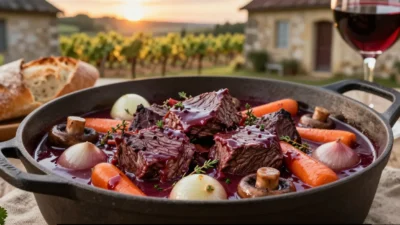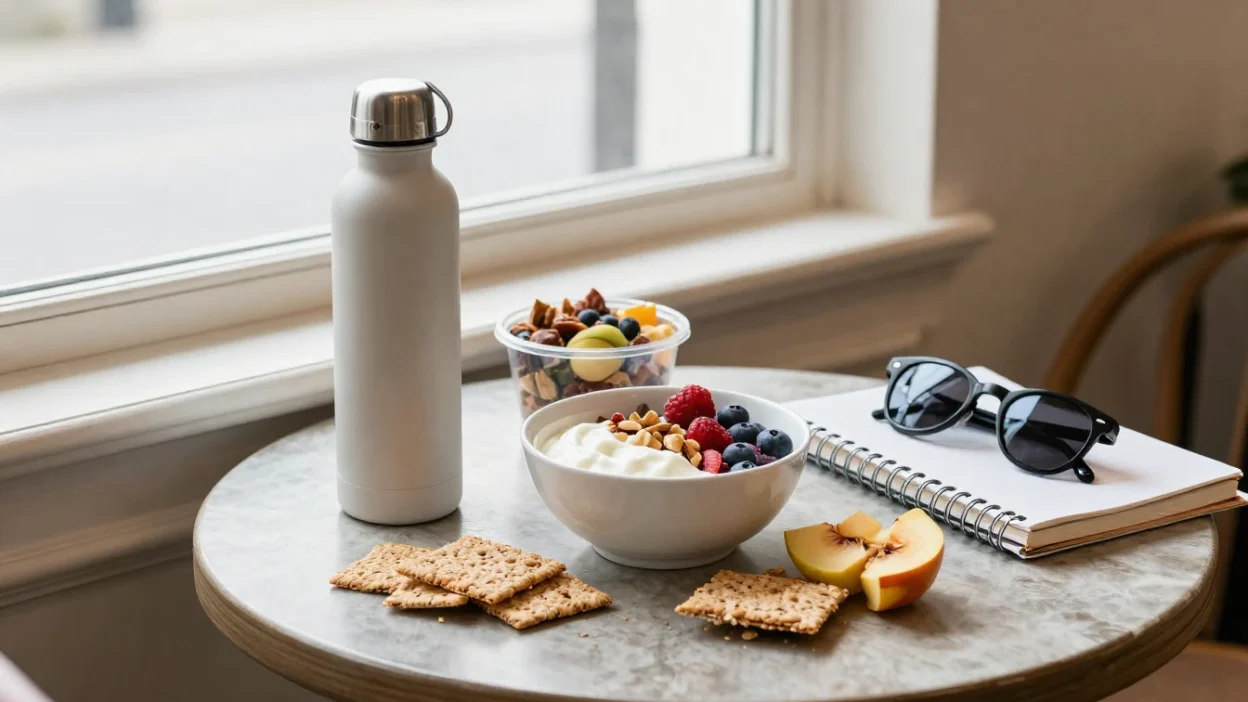
Travel has a funny way of changing the rules around food.
At home, you might have your usual breakfast, your favorite coffee mug, a fridge with a few reliable ingredients, and some kind of dinner rhythm, even if it is not perfect. Then you leave for a trip, and suddenly lunch is whatever looks decent near gate B12, dinner happens two hours later than planned, and the “quick snack” you bought at the gas station somehow turns into your main meal.
That does not mean healthy eating while traveling is impossible. It just means it needs to be more flexible.
The goal is not to pack your whole kitchen, skip every dessert, or pretend you do not want the warm croissant, the beachside tacos, or the gelato everyone else is getting. Food is part of travel. Sometimes it is the best part.
A better goal is this: eat in a way that helps you feel good enough to enjoy the trip. Less bloated, less tired, less dependent on random snacks, and more able to say yes to the foods that actually feel worth it.
Why healthy eating feels harder when you travel
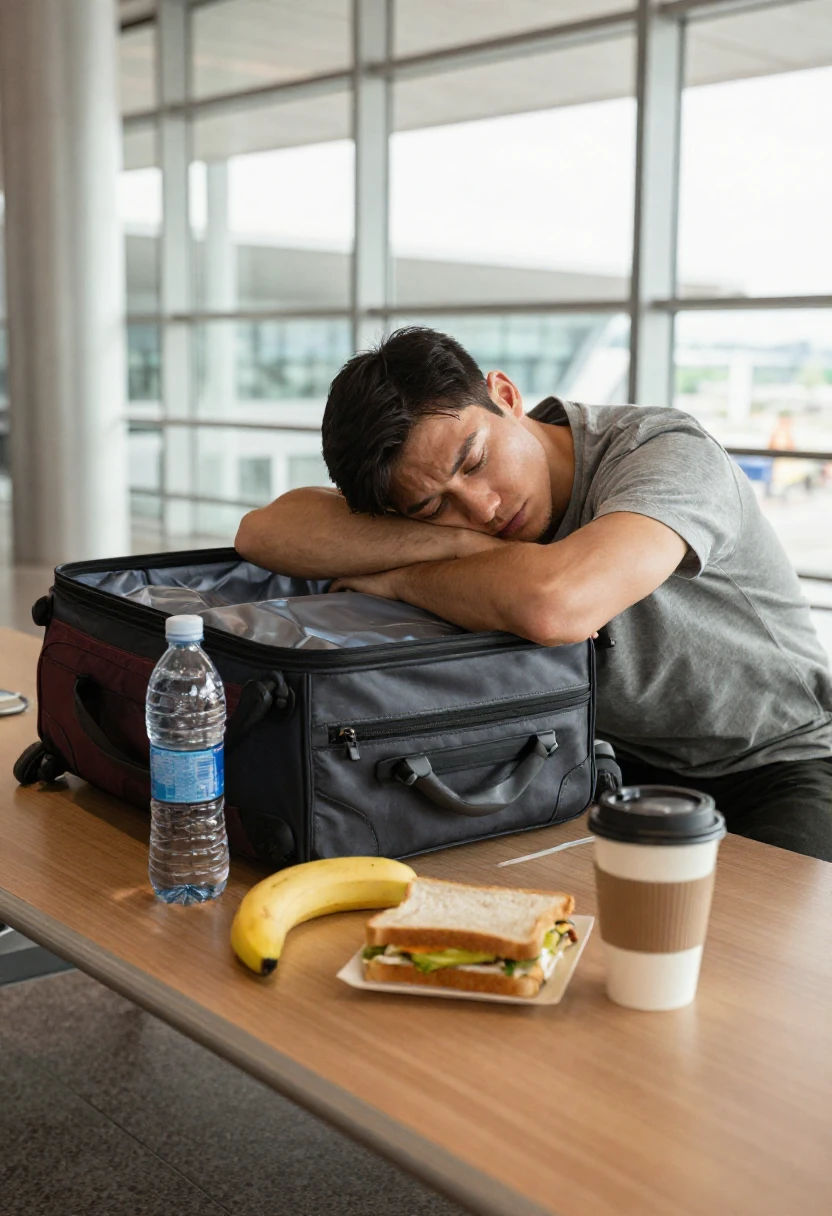
Healthy eating is easier when your day has some kind of shape. Travel takes that shape and shakes it around.
You wake up early for a flight. You drink coffee before water. You sit for hours. You get to the hotel tired and hungry, then choose dinner from the first place that still has a table. None of this is unusual. It is just travel.
And honestly, this is why strict food rules rarely work on trips. A perfect plan falls apart the moment there is a delay, a missed train, or a restaurant kitchen that closes earlier than expected.
Your schedule changes before your appetite does
One of the hardest parts of eating well while traveling is that your body is still asking for food on its normal schedule, even when your day is not normal at all.
Maybe breakfast is too early. Maybe lunch gets skipped because you are sightseeing. Maybe dinner becomes a late, heavy meal because it is the first real food you have had all day.
That is usually when travel eating starts to feel chaotic. Not because you lack discipline, but because you waited too long.
A small snack in your bag can make a huge difference here. So can drinking water before you reach the point where everything in the airport looks tempting. You do not need a complicated meal plan. You just need a little buffer.
Travel food is often chosen when you are already too hungry
Most people do not make their best food choices when they are starving. I definitely do not.
When you are overly hungry, you are not thinking, “What meal will keep my energy steady for the next few hours?” You are thinking, “What can I eat right now?”
That is how you end up ordering too much, eating too fast, or buying a snack you do not even like that much. It happens.
The easiest fix is to avoid reaching that desperate-hungry stage. A handful of nuts, a banana, a boiled egg, a yogurt cup, or a simple sandwich can keep you steady until you find a real meal.
The goal is not perfect eating
Healthy travel food should not feel like punishment.
You can eat vegetables and still enjoy dessert. You can drink water and still have wine with dinner. You can choose a lighter breakfast because you know you want a richer lunch later.
That kind of balance works better than trying to be “good” all day and then feeling guilty when you eat something fun.
A trip is not a nutrition exam. It is a real-life situation with changing plans, local food, limited options, and moments you want to remember. The point is to support your body without removing the joy from the table.
Pack snacks that actually make sense for travel
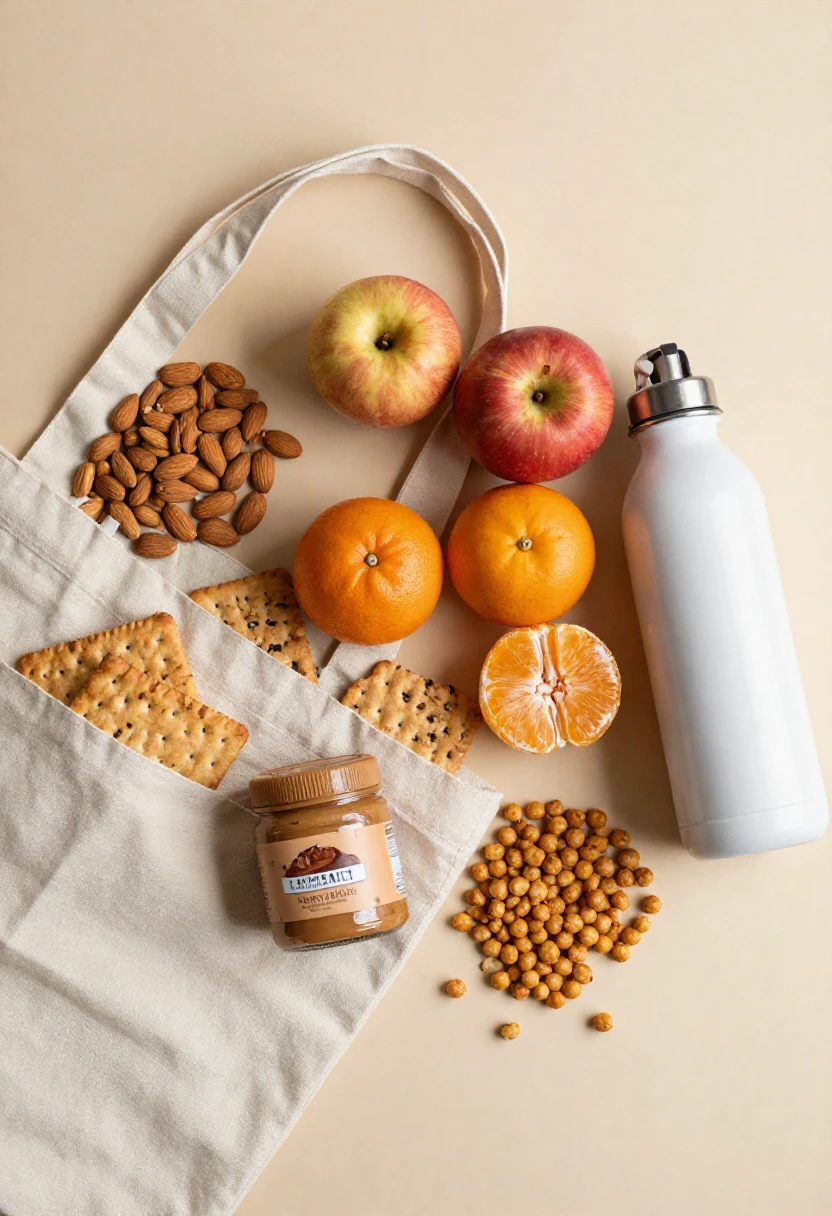
Travel snacks are not about eating every hour. They are about having something decent when your options are bad, overpriced, or too far away.
I like snacks that can survive being tossed into a bag. Nothing too delicate. Nothing that smells strong enough to annoy the whole row on a plane. Nothing that melts into a sad mess before lunch.
Good travel snacks should do three things: keep you full, be easy to carry, and not make you feel worse afterward.
Best snacks for flights and long drives
For flights, trains, and long car rides, go for snacks that are simple but filling. A bag of chips might taste good for five minutes, but it usually does not hold you for long.
Better options include:
- Nuts or trail mix
- Apples, mandarins, or bananas
- Whole-grain crackers
- Roasted chickpeas
- Protein bars with a short ingredient list
- Nut butter packets
- Beef or turkey jerky
- Dried fruit, ideally paired with nuts
- Oat bars
- Rice cakes with single-serve nut butter
If you have a small cooler bag for a road trip, you get even more options. Cheese sticks, Greek yogurt, hummus cups, boiled eggs, grapes, baby carrots, and turkey roll-ups all work well when they stay cold.
The trick is to pack snacks that feel like real food, not just something to chew because you are bored.
What to avoid packing
Some foods are technically healthy but terrible for travel.
A delicate salad in a flimsy container sounds nice until it leaks dressing into your bag. A ripe peach is lovely until it bruises and turns sticky. Tuna may be nutritious, but opening it on a plane should probably be illegal.
I would avoid:
- Foods with strong smells
- Anything that needs a fork and perfect conditions
- Very crumbly snacks
- Chocolate or yogurt-coated bars that melt easily
- Overly salty snacks that make you thirsty
- Foods that need refrigeration unless you have a cooler
This is one of those times when practical beats perfect. A simple granola bar that stays intact is better than a “better” snack that becomes impossible to eat.
A simple snack formula
The best travel snacks usually have at least two of these: protein, fiber, and fat.
That combination keeps you full longer and helps you avoid the snack spiral, where you eat one sweet thing, then another, then suddenly you are hunting for coffee because your energy crashed.
Try combinations like:
- Apple + peanut butter
- Crackers + cheese
- Greek yogurt + nuts
- Banana + almonds
- Hummus + carrots
- Jerky + fruit
- Oat bar + unsweetened coffee or tea
You do not need to make it fancy. Even a handful of nuts and a piece of fruit can save you from buying the first oversized muffin you see just because your stomach is getting loud.
Build better airport and gas station meals
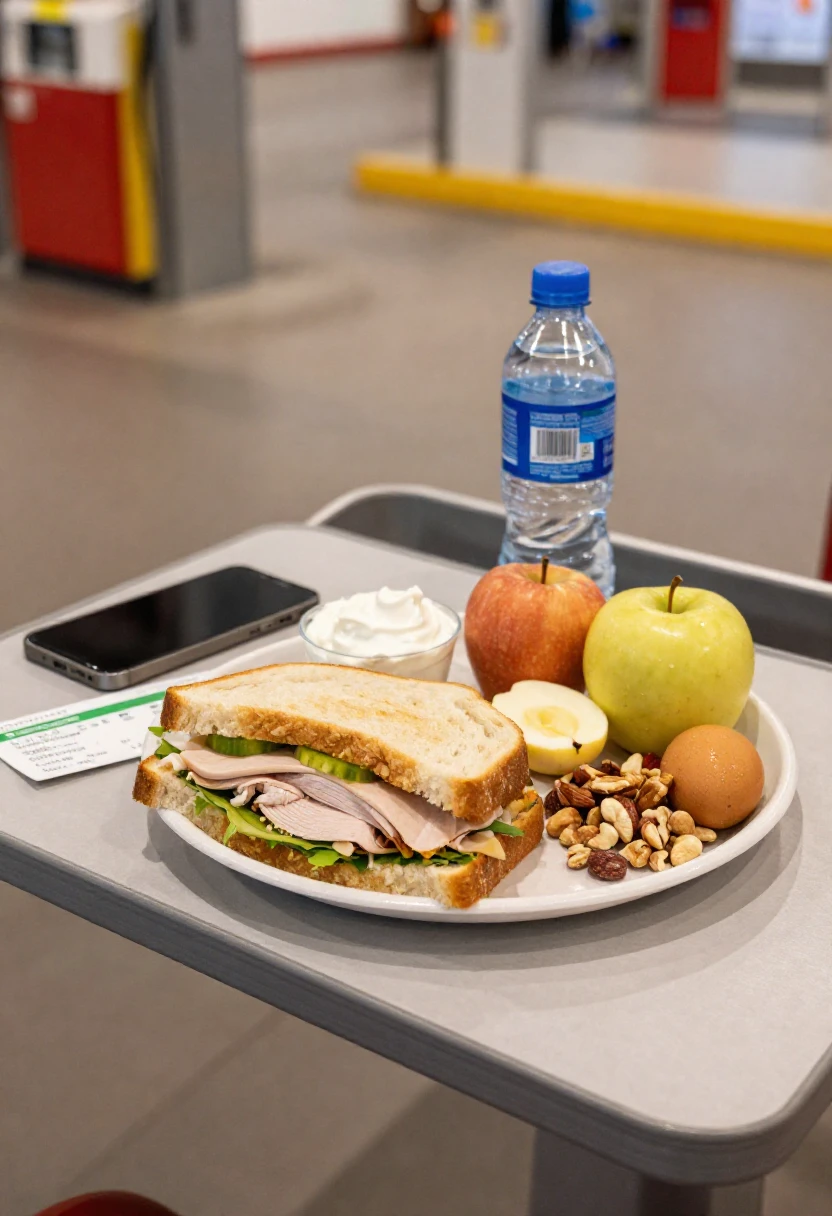
Airport and gas station food has improved a lot, but it is still a strange little world. You can find Greek yogurt next to candy bars, bananas beside hot dogs, and a decent-looking salad that somehow costs more than dinner.
The trick is not to find the perfect meal. The trick is to build the best option from what is there.
When choices are limited, I usually look for one thing first: protein. It makes the meal feel more like a meal and less like a pile of snacks.
What to look for when choices are limited
If you are at an airport café, convenience store, train station, or gas station, scan for simple foods first.
Good options can include:
- Greek yogurt
- Boiled eggs
- Fresh fruit
- Nuts or trail mix
- Turkey or chicken sandwiches
- Hummus cups
- Cheese sticks
- Salads with chicken, eggs, beans, or tuna
- Oatmeal cups
- Unsweetened iced tea or sparkling water
- Whole-grain wraps
- Soup, if there is a fresh café nearby
A sandwich can be a perfectly fine travel meal. So can yogurt with nuts and fruit. So can eggs, crackers, and an apple if that is what the store has.
It does not have to look like a carefully planned lunch. It just needs to keep you steady.
How to make a basic meal feel more balanced
A lot of travel meals are heavy on refined carbs and light on everything else. That is why you can eat a big pastry and still feel hungry an hour later.
A simple way to balance your meal is to ask: What can I add?
If you buy a sandwich, add fruit or yogurt. If you get coffee, drink water with it. If you buy crackers, pair them with cheese, hummus, or jerky. If the only real option is a fast-food meal, choose the version that gives you some protein and does not leave you feeling sleepy for the next three hours.
A few easy combinations:
- Turkey sandwich + apple + water
- Greek yogurt + nuts + banana
- Egg bites + fruit cup
- Chicken salad + whole-grain crackers
- Hummus cup + carrots + cheese stick
- Oatmeal + nut butter packet
- Burger + side salad or fruit instead of fries, if that feels better for you
And if fries are what you really want, have the fries. Just do not let every rushed meal become the heaviest option by default.
The “better than nothing” mindset
One of the best things you can bring on a trip is a flexible mindset.
Sometimes the healthiest available choice is not very exciting. Sometimes the salad looks tired, the fruit is overpriced, and the only thing that makes sense is a plain sandwich and a bottle of water. That still counts.
I think people give up too quickly because the available food does not match the perfect version they had in mind. But healthy eating while traveling is often built from small, imperfect choices.
You drink water before coffee. You add fruit to a snacky lunch. You choose grilled chicken because you know you have a richer dinner planned. You eat something small before you become so hungry that every decision feels urgent.
Not glamorous. Very useful.
Eat well at restaurants without turning dinner into homework
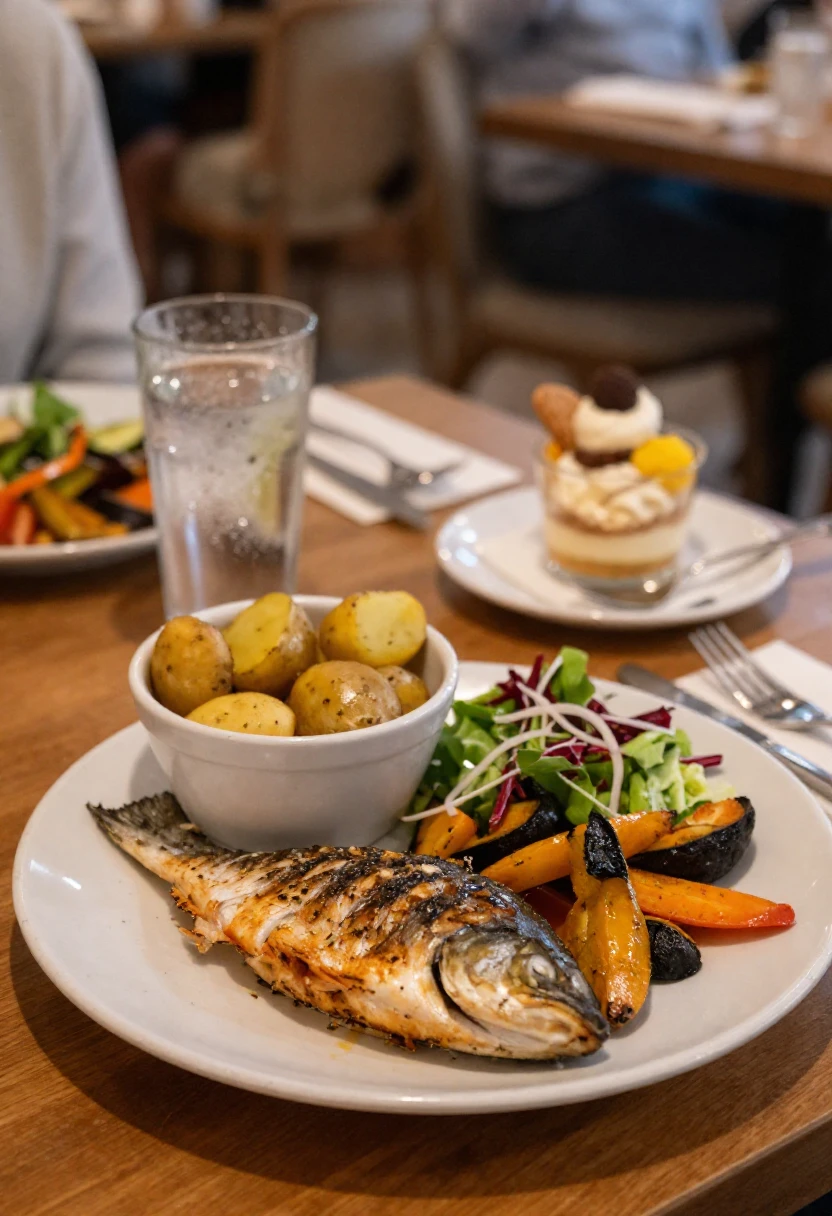
Restaurant meals are part of travel, and I do not think they should feel like a problem to solve.
You are in a new place. Maybe the menu has local seafood, handmade pasta, smoky grilled meat, or a dessert everyone keeps recommending. That is not the moment to sit there calculating every bite.
At the same time, eating every meal like a celebration can catch up with you fast. After a few days, you may start to feel heavy, tired, puffy, or just a little off.
The sweet spot is choosing meals that feel good now and later.
Choose meals that have protein and vegetables
When I look at a restaurant menu while traveling, I usually start with meals that include protein and some kind of vegetable. Not because I am trying to be strict, but because those meals tend to leave me feeling better.
Good choices might be:
- Grilled fish with potatoes and salad
- Chicken with roasted vegetables
- Eggs with avocado and whole-grain toast
- Bean soup with bread
- Steak with vegetables
- Shrimp tacos with slaw
- Pasta with seafood or vegetables
- A large salad with chicken, eggs, beans, or cheese
This does not mean you need to order the plainest thing on the menu. A meal can be healthy and still have sauce, seasoning, olive oil, cheese, or a good piece of bread on the side.
The point is to give your body something useful, not just something fried and beige at every meal.
Smart swaps that do not ruin the meal
Some swaps make sense. Others make the meal sad.
I am not a fan of replacing every enjoyable thing with the “lighter” version if the lighter version leaves you disappointed. But small adjustments can help, especially on longer trips.
You might:
- Ask for dressing or sauce on the side
- Choose grilled or roasted foods more often than fried foods
- Swap fries for vegetables when you do not actually care about the fries
- Share a richer appetizer
- Order one dessert for the table
- Choose water first, then another drink if you want it
- Stop eating when the meal stops tasting as good as the first few bites
That last one sounds simple, but it helps. Restaurant portions are often larger than what you would serve at home, and travel already makes digestion a little slower for many people.
You do not have to finish everything just because it is there.
Leave room for local food
Healthy eating while traveling should still leave room for the foods that make the place memorable.
If you are in Italy, eat the pasta. If you are near the sea, enjoy the seafood. If the city is known for a certain pastry, try it while it is fresh, not as a sad packaged version from the airport later.
The trick is to spend your appetite on food that actually matters to you.
A fresh local dish eaten slowly at a small café is different from grabbing random sweets from a hotel lobby just because they are free. One feels like part of the trip. The other is just background snacking.
I would rather enjoy the food I came for and keep the rest of the day simple: fruit at breakfast, water in my bag, maybe a lighter lunch if dinner is going to be big.
That way, food stays joyful without making the whole trip feel like one long recovery meal.
Enjoy treats without eating like every meal is the last meal of the trip
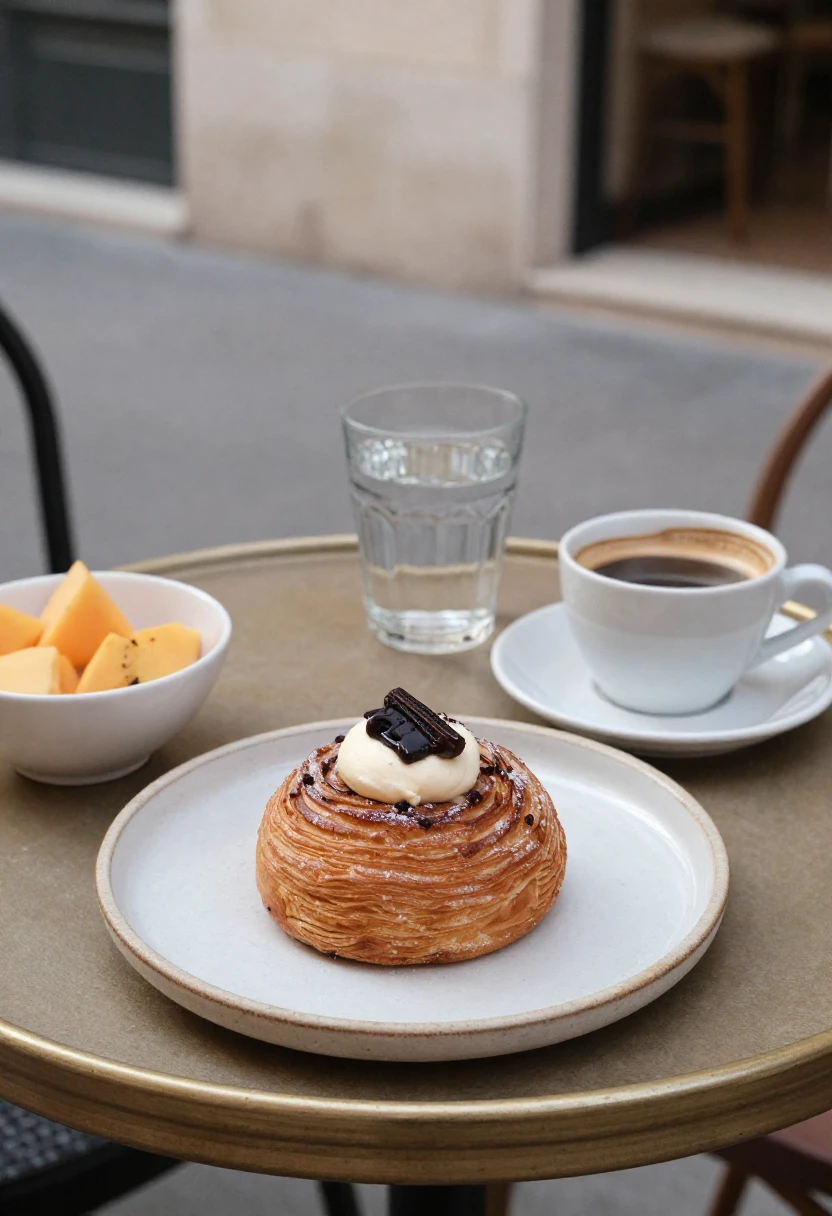
Travel can make food feel urgent.
You pass a bakery and think, “I may never be here again.” Then there is a famous ice cream shop, a hotel breakfast buffet, a cute café, a night market, and suddenly every food choice feels like a once-in-a-lifetime opportunity.
Some of them are worth it. Some are just there.
That is the difference I try to pay attention to.
Pick the foods that are actually worth it
There is nothing wrong with enjoying treats while traveling. In fact, I think skipping all of them can make a trip feel oddly flat.
Food carries a lot of memory. You may forget the exact street name, but you remember the warm cinnamon pastry you ate while walking in the cold, or the first bite of grilled fish after a long beach day.
So yes, enjoy the foods that feel special.
That might be:
- A local dessert you cannot easily find at home
- Fresh bread from a real bakery
- Handmade pasta in a small restaurant
- Street food with a long line for a good reason
- Ice cream or gelato from a place people actually talk about
- A regional dish you have wanted to try for years
These foods are part of the trip. Eat them slowly. Sit down if you can. Notice the texture, the smell, the little details.
That sounds dramatic for a pastry, I know. But it helps you enjoy the food instead of just consuming it while rushing to the next thing.
Skip the forgettable extras
The trouble usually comes from the treats you do not even care about.
The airport cookie that tastes like cardboard. The random candy from the hotel minibar. The second dessert at dinner because everyone else kept ordering. The buffet muffin you grabbed only because it was there.
Those foods do not add much joy. They just pile up.
A simple question helps: Do I actually want this, or am I just tired, bored, or surrounded by food?
Sometimes the answer is yes, I want it. Great. Eat it.
Sometimes the answer is no, not really. In that case, save your appetite for something better later. Travel gives you plenty of chances to eat interesting food, so you do not need to say yes to every average snack along the way.
Use the “one memorable treat” idea
On days when food choices feel endless, I like the idea of choosing one treat that feels memorable.
Not as a rule. More like a gentle anchor.
Maybe you have a lighter breakfast, a normal lunch, plenty of water, and then enjoy the dessert you were actually excited about after dinner. Or maybe the treat happens earlier: a buttery croissant in the morning, then simpler meals for the rest of the day.
This approach works because it does not turn travel into restriction. You are not saying no to pleasure. You are making room for the kind of pleasure that feels worth it.
And that is usually what people want anyway. Not five random sweets eaten while distracted, but one really good thing they remember later.
Hydration matters more than people think
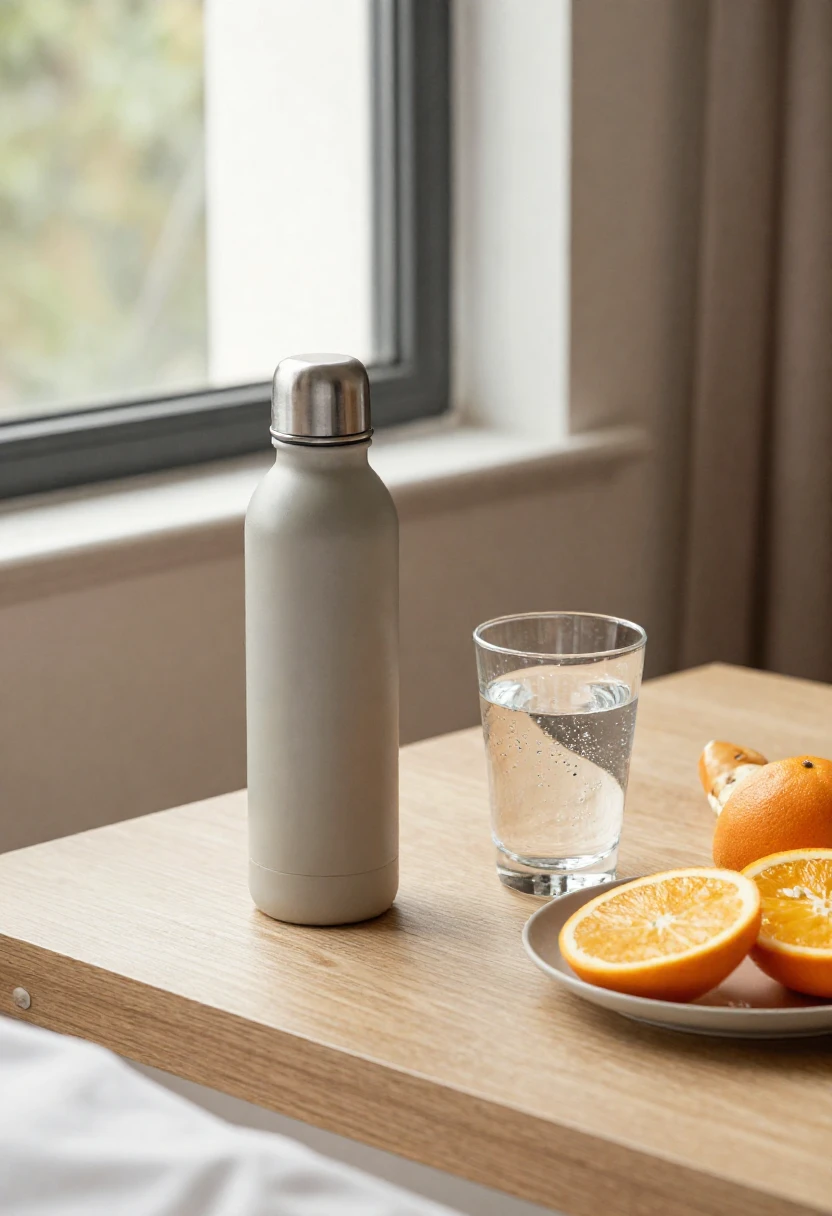
Water is not the most exciting travel tip, but it is one of the first things I notice when I ignore it.
A long flight, salty airport food, extra coffee, a glass of wine with dinner, more walking than usual, and suddenly you feel tired in a way that snacks do not fix. Your head feels heavy. Your skin feels dry. You keep reaching for something sweet.
Sometimes you are hungry.
Sometimes you are just thirsty and a little worn out.
Why travel makes you feel dried out
Travel quietly pulls water out of your routine.
On a normal day, you may drink water without thinking much about it. At home, your glass is nearby. At work, maybe you refill a bottle. But during travel days, water becomes oddly inconvenient. You cannot bring a full bottle through airport security. You do not want to stop too often on a road trip. You keep choosing coffee because you are tired.
Then there is the food. Restaurant meals and packaged snacks are often saltier than what you would eat at home. That does not make them bad, but it does mean your body may need more water than usual.
And if you are flying, cabin air can make you feel dry before you even arrive.
Easy ways to drink more water while traveling
The easiest habit is to carry a reusable bottle and refill it whenever you can. Not a huge one that becomes annoying after an hour. Just something you will actually keep with you.
A few small habits help too:
- Drink water before your first coffee of the day
- Buy a bottle after airport security if you forgot to bring one
- Keep water near your hotel bed
- Order water with restaurant meals, even if you also want wine, beer, or soda
- Choose sparkling water when plain water sounds boring
- Drink extra water after salty meals or long walks
I also like having water before I go out for the day. It sounds almost too simple, but it helps. Once you are walking around a city, standing in lines, taking photos, checking maps, and figuring out lunch, it is easy to forget.
Signs you are mistaking thirst for hunger
Thirst does not always feel like thirst. Sometimes it shows up as low energy, a dull headache, dry lips, or a weird snack craving that does not go away after eating.
If you have been grazing for an hour and still do not feel satisfied, try water before buying another snack.
Not as a diet trick. Just as a check-in.
Your body may be asking for something very basic. A quiet moment, a glass of water, and maybe a real meal instead of another handful of something from your bag.
Make hotel rooms and rentals work for you
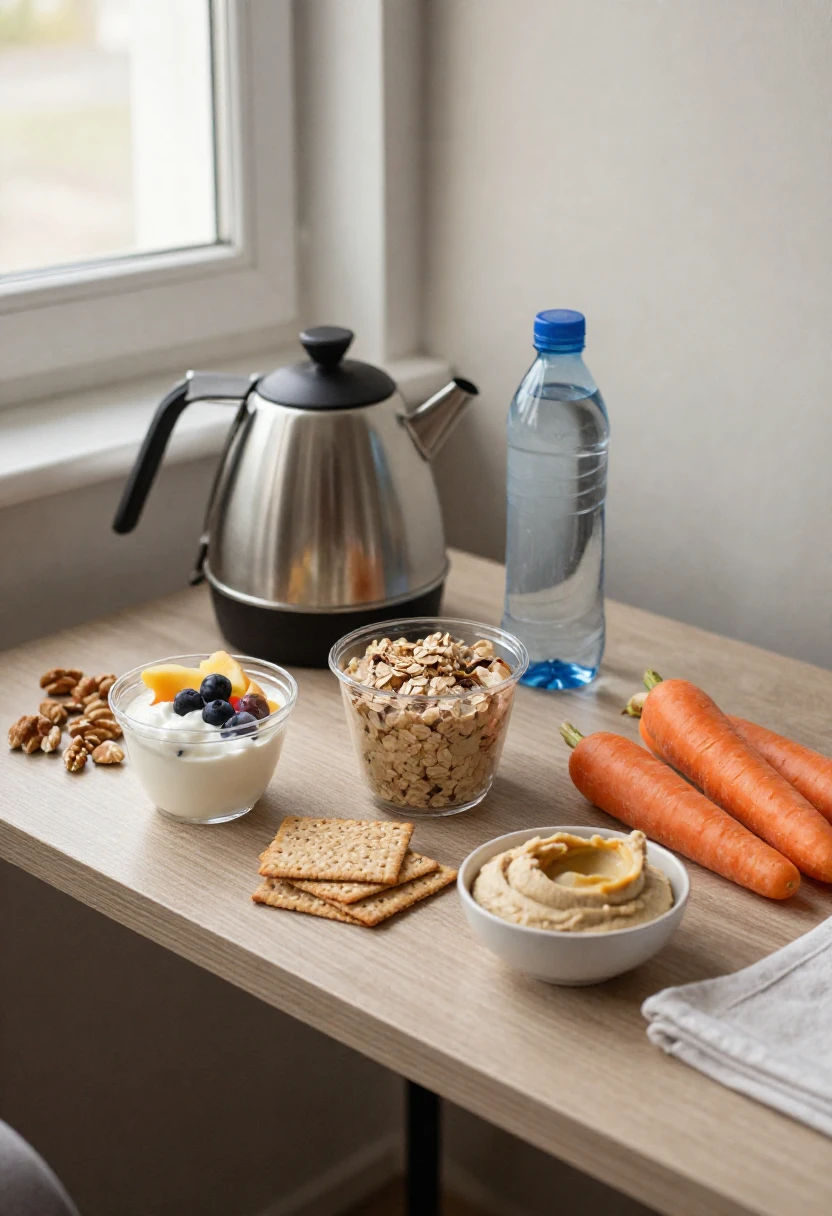
A hotel room does not need to become a mini kitchen, but it can still help you eat better.
Even a tiny fridge, a kettle, or a corner of the desk can make travel meals feel less random. This is especially useful on longer trips, family trips, or work travel where eating out three times a day starts to feel expensive and exhausting.
I like having a few simple foods in the room so every meal is not a decision.
Easy foods to keep in a hotel room
You do not need much. Just enough to cover breakfast, snacks, or the moment when you get back tired and do not want to hunt for food.
Good hotel-room foods include:
- Greek yogurt
- Fruit
- Cheese sticks
- Nuts
- Whole-grain crackers
- Instant oatmeal cups
- Nut butter packets
- Hummus
- Baby carrots
- Hard-boiled eggs
- Bottled water
- Herbal tea
- Dark chocolate
If your room has a fridge, yogurt, hummus, cheese, eggs, and fruit are easy wins. If there is no fridge, stick with nuts, crackers, oatmeal, apples, bananas, nut butter, and shelf-stable snacks.
This kind of food will not replace every meal, and it does not have to. It just gives you a backup.
What to buy from a local grocery store
One of my favorite first stops on a trip is a small grocery store. Not for a full shop. Just for the basics that make the next few days easier.
For a short trip, I would buy:
- A few pieces of fruit
- Yogurt or kefir
- Nuts or trail mix
- Whole-grain bread or crackers
- Cheese or eggs
- A simple salad kit if there is a fridge
- Water or sparkling water
- Something small and sweet that actually looks good
For a rental apartment, you can go a little further. Eggs, oats, vegetables, rice, soup ingredients, or pasta can cover easy breakfasts and one or two simple dinners.
The point is not to cook like you do at home. It is to reduce the number of times you have to rely on whatever is closest when you are already hungry.
How to avoid relying on restaurants for every bite
Eating out is fun until it becomes the only option.
After a few days, restaurant meals can start to feel heavy, even when the food is good. Portions are bigger, sauces are richer, and meals take longer. Sometimes you just want something simple in your room: yogurt, fruit, tea, and quiet.
A few easy hotel-room meals:
- Oatmeal with nut butter and banana
- Greek yogurt with nuts and fruit
- Whole-grain crackers with cheese and apple slices
- Hummus with carrots and pita
- Boiled eggs with fruit and toast
- Salad kit with rotisserie chicken, if you have a fridge
These meals are not glamorous, but they help your body catch its breath between restaurant dinners. And honestly, eating a simple breakfast in your room before a busy day can feel calmer than standing in a crowded café line while everyone is still half-asleep.
What to eat on different types of trips
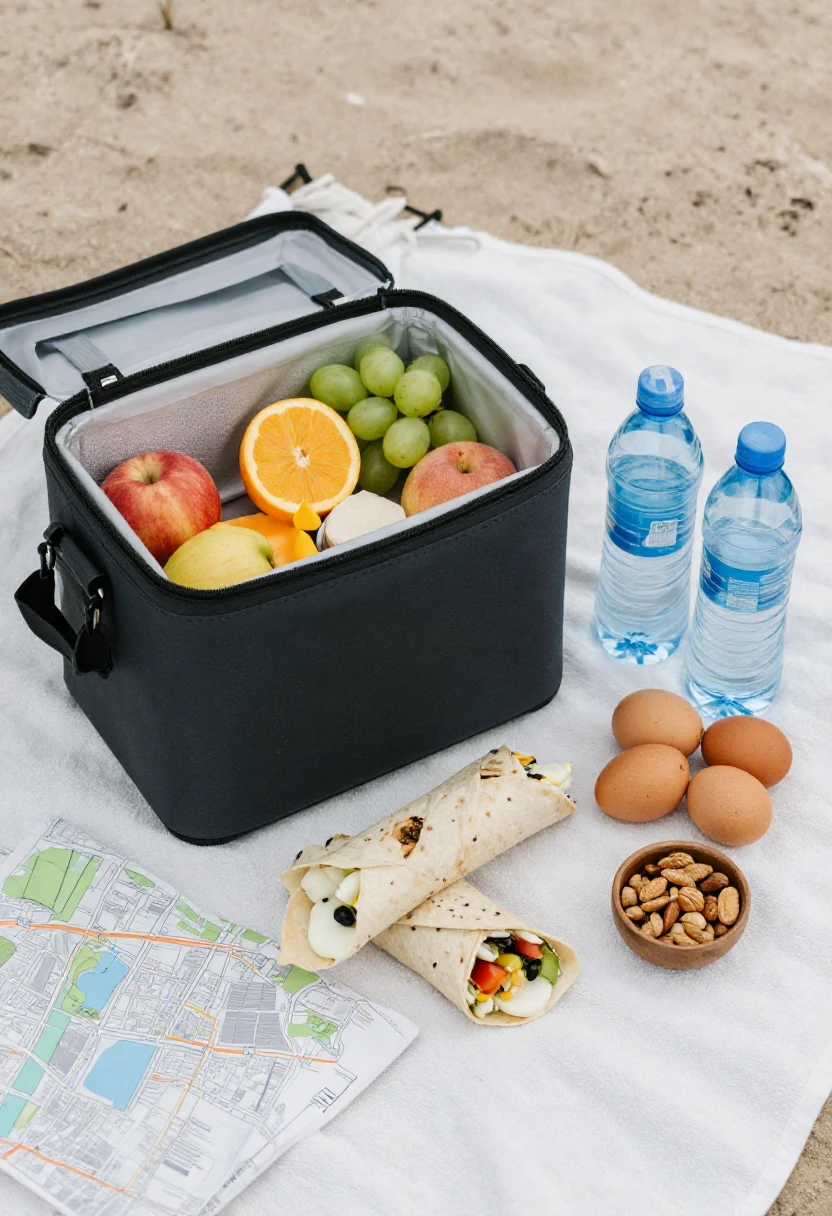
Not every trip needs the same food plan.
A road trip with a cooler is different from a flight day. A beach vacation is different from a city break where you walk 20,000 steps without noticing until your feet complain. The more your food fits the type of trip, the less you have to think about it.
Healthy eating while traveling gets easier when you stop trying to use one rule for every situation.
Flights and airport days
Flight days are usually the messiest food days. You are dealing with early alarms, security lines, dry cabin air, delays, and meals served at strange times.
For flights, I like to keep food simple and not too salty. Anything that leaves you thirsty, bloated, or sticky is probably not worth it.
Good flight-day options:
- Oatmeal or eggs before leaving home
- A banana or apple in your bag
- Nuts or trail mix
- A protein bar
- Turkey sandwich or hummus wrap
- Greek yogurt after security
- Water or sparkling water
- Herbal tea instead of a second coffee, if you already feel jittery
If you have a morning flight, eat something small before you leave, even if it is just toast with peanut butter. Waiting until the airport often means paying too much for food you do not even want.
And always bring a snack. Even a short flight can turn into a long day when delays get involved.
Road trips
Road trips are easier because you can pack more, but they come with a different problem: constant grazing.
When snacks are within arm’s reach for hours, it is easy to eat because the road is boring, not because you are hungry. I have definitely done the “just one more handful” thing until the bag is mysteriously empty.
For road trips, a small cooler helps a lot.
Pack things like:
- Cheese sticks
- Boiled eggs
- Grapes or berries
- Baby carrots
- Hummus cups
- Yogurt
- Turkey roll-ups
- Apples
- Nuts
- Whole-grain crackers
- Plenty of water
For meals, try to stop and eat instead of snacking through the whole drive. Even 15 minutes at a picnic table or rest stop can make lunch feel more like a real meal.
A simple road trip lunch could be a turkey sandwich, fruit, carrots with hummus, and water. Nothing fancy, but it beats arriving tired, over-snacked, and still somehow hungry.
City breaks
City trips can be surprisingly physical. You walk all day, climb stairs, get lost, find a café, walk again, and then wonder why you are starving by 4 p.m.
For city breaks, breakfast matters. A sweet pastry and coffee can be lovely, but if you are walking for hours, you may need something more substantial too.
Try:
- Eggs with toast
- Greek yogurt with fruit and nuts
- Oatmeal with banana
- Avocado toast with eggs
- A simple sandwich from a bakery
- Coffee plus water, not coffee instead of water
Lunch can be flexible. A soup, salad with protein, rice bowl, wrap, or sandwich is usually enough to keep you going without slowing you down.
Then dinner can be where you enjoy the place more fully. Local dishes, a glass of wine, dessert if it looks worth it. A city trip should still feel like a city trip.
Beach or resort trips
Beach and resort food has its own rhythm. There may be buffets, cocktails, ice cream, salty snacks, and long sunny days where you do not feel very hungry until suddenly you are ravenous.
Start with hydration. Sun, swimming, alcohol, and salty foods can dry you out quickly.
At buffets, I like to do a quick walk-through before filling a plate. It helps you choose what actually looks good instead of taking a little of everything just because it is there.
A balanced resort plate might include:
- Grilled fish, chicken, eggs, beans, or yogurt
- Fresh fruit
- Salad or cooked vegetables
- Rice, potatoes, or bread
- One thing that feels fun and local
For beach snacks, choose foods that are refreshing and easy: fruit, nuts, yogurt, wraps, cut vegetables, cold water, or sparkling water.
And if you want ice cream after swimming, have it. Just maybe not as a replacement for lunch every single day, unless you want your energy to crash before dinner.
Simple travel meal ideas
Travel meals do not need to be impressive. They need to be easy to find, easy to eat, and steady enough to carry you through the next part of the day.
I usually think in loose categories: breakfast that keeps me full, lunch that does not slow me down, and dinner that lets me enjoy the place without feeling uncomfortable afterward.
Nothing strict. Just useful.
Easy breakfasts
Breakfast can shape the whole travel day, especially if you know lunch might happen late.
A sweet coffee drink and a pastry can be lovely, but on a busy travel day, I usually need something with more staying power. Otherwise, I am hungry again before I have even figured out where I am going.
Good travel breakfasts include:
- Greek yogurt with fruit and nuts
- Oatmeal with banana and nut butter
- Eggs with toast
- Avocado toast with egg
- Cottage cheese with fruit
- Whole-grain toast with peanut butter
- A breakfast sandwich with eggs
- Smoothie with protein, if it is not too sugary
If you are staying in a hotel, instant oatmeal can be surprisingly useful. Add hot water, stir in peanut butter, slice a banana on top, and you have a simple breakfast that feels much better than starting the day with only coffee.
Easy lunches
Lunch while traveling should not make you want to nap for two hours.
I like lunches that are filling but not too heavy, especially on days with walking, sightseeing, meetings, or driving. Protein helps. So does some kind of vegetable or fruit.
Easy travel lunch ideas:
- Chicken or turkey wrap
- Grain bowl with vegetables and protein
- Soup with bread
- Salad with eggs, chicken, beans, tuna, or cheese
- Hummus plate with pita and vegetables
- Rice bowl with chicken, tofu, beans, or fish
- Turkey sandwich with fruit
- Omelet with salad
- Tacos with grilled fish, chicken, or beans
If lunch options are limited, build something from smaller foods. Yogurt, nuts, fruit, and crackers can work. So can boiled eggs, cheese, carrots, and hummus.
It may not look like a normal lunch, but it keeps you from running on coffee and crumbs until dinner.
Easy dinners
Dinner is often where travel food becomes more fun. This is the meal where you may want the local dish, the nice restaurant, or the thing you have been thinking about all day.
You can still keep it balanced without making it boring.
Good dinner options include:
- Grilled fish with potatoes and vegetables
- Chicken with rice and salad
- Pasta with seafood or vegetables
- Stir-fry with tofu, chicken, shrimp, or beef
- Bean chili or lentil soup
- Steak with roasted vegetables
- Sushi with miso soup and edamame
- Tacos with grilled protein and salsa
- Vegetable curry with rice
- Big salad with protein and bread on the side
A helpful dinner habit is to decide what you care about most. If the pasta is the reason you chose the restaurant, enjoy it. Maybe start with a salad or share dessert. If dessert is the thing you want most, keep dinner a little simpler.
That way, you still get the joy of the meal without stacking every rich option onto one plate just because you are traveling.
Common mistakes that make healthy travel eating harder
Most travel food problems do not come from one big meal.
They come from little things stacking up: not drinking enough water, waiting too long to eat, living on coffee, saying yes to every random snack, then feeling uncomfortable and wondering what happened.
The good news is that these are easy to adjust. You do not need strict rules. You just need to notice the patterns before they run the whole trip.
Waiting too long to eat
This is probably the biggest one.
You skip breakfast because you are rushing. Then lunch gets delayed because you are on a tour, in a meeting, driving, or trying to find the “right” place to eat. By the time food finally appears, you are too hungry to care what it is.
That is when you order too much or eat too fast.
A small snack can prevent this. Not a full meal. Just something that keeps your hunger from turning into an emergency.
Keep one of these with you:
- A protein bar
- Nuts
- A banana or apple
- Whole-grain crackers
- Trail mix
- Jerky
- Nut butter packet
- Roasted chickpeas
It sounds boring until the day it saves you from eating a giant airport pretzel as lunch and then feeling awful two hours later.
Drinking too much coffee and too little water
Coffee is almost part of travel. Early airport? Coffee. Long drive? Coffee. Cute café? Coffee again.
I love coffee, but it cannot do water’s job.
Too much coffee and too little water can leave you jittery, tired, headachy, and weirdly hungry. Add salty restaurant meals and dry airplane air, and your body starts asking for help.
A simple rhythm works well:
- Water before your first coffee
- Water with every restaurant meal
- Extra water after flights
- Sparkling water when you want something more interesting
- Herbal tea at night if you feel dried out
You do not have to track every ounce. Just make water visible. Keep it in your bag, near your bed, or on the restaurant table.
Thinking one imperfect meal ruined the day
This mindset makes travel eating harder than it needs to be.
Maybe breakfast was pastries. Maybe lunch was fries. Maybe dinner was richer than expected. That does not mean the whole day is ruined, and it definitely does not mean the whole trip is ruined.
Just return to normal at the next meal.
Have water. Add fruit. Choose something with protein. Order vegetables if they sound good. Take a walk if you want to. No drama.
Healthy eating while traveling is not about never making a messy choice. It is about not letting one messy choice turn into “whatever, I give up.”
Conclusion
Eating healthy while traveling is not about controlling every meal. That would make most trips miserable, and honestly, it would miss the point.
A better approach is to give yourself a few steady habits: drink enough water, carry a snack that actually helps, choose protein when you can, and let the special foods be special. That leaves room for the warm pastry, the long dinner, the street food you found by accident, and the dessert you will still think about months later.
Travel should feel good while it is happening, not just after you “get back on track.”
So pack the almonds. Buy the water. Eat the local food. Skip the forgettable snacks. And when one meal turns out heavier, sweeter, or messier than planned, just move on.
The next meal is always a chance to feel a little better.
FAQ
What are the best healthy snacks for travel?
The best healthy travel snacks are easy to carry, not too messy, and filling enough to help between meals. Good options include nuts, fruit, protein bars, roasted chickpeas, whole-grain crackers, nut butter packets, jerky, and trail mix. For road trips, a small cooler lets you bring yogurt, cheese sticks, hummus, boiled eggs, and cut vegetables.
How can I eat healthy at the airport?
Look for simple foods with protein and fiber. Greek yogurt, boiled eggs, fruit, turkey sandwiches, hummus cups, oatmeal, salads with chicken or beans, and nuts are usually better choices than relying only on pastries, chips, or candy. Also, buy water after security or refill a bottle before boarding.
Is it okay to enjoy desserts and local food while traveling?
Yes. Local food is part of the joy of travel. The key is to choose the foods that actually feel worth it instead of eating every random sweet or snack just because it is there. Enjoy the fresh pastry, handmade gelato, local seafood, or street food you were excited about, then keep other meals simple.
What should I buy from a grocery store while traveling?
For a hotel room, buy easy basics like fruit, Greek yogurt, nuts, whole-grain crackers, cheese, oatmeal cups, nut butter packets, hummus, carrots, and bottled water. If you are staying in a rental with a kitchen, add eggs, rice, vegetables, soup ingredients, pasta, or salad kits for simple meals.