Eating more fruits and vegetables sounds like the easiest health advice in the world, right up until you open the fridge at 8 p.m. and find one tired cucumber, half a lemon, and a bag of spinach that looks like it has given up on life.
I get it. Most people do not struggle with fruits and vegetables because they hate them. They struggle because life gets busy, groceries get forgotten, and convenience wins. Crackers are ready. Cookies are ready. A banana with peanut butter is also ready, but only if you remember the banana exists before it turns brown.
That is why the best way to eat more fruits and vegetables every day is not to build a perfect meal plan or force yourself into giant salads. It is to make produce easier to see, easier to grab, and easier to add to the meals you already like.
This is less about discipline and more about kitchen setup. A bowl of washed grapes in the fridge. Frozen peas ready for pasta. A handful of spinach in eggs. Tomato slices in a sandwich. Roasted vegetables tucked into dinner because they taste good, not because you are punishing yourself with “healthy food.”
Small things count. Actually, small things are usually what stick.
Why eating more fruits and vegetables feels hard
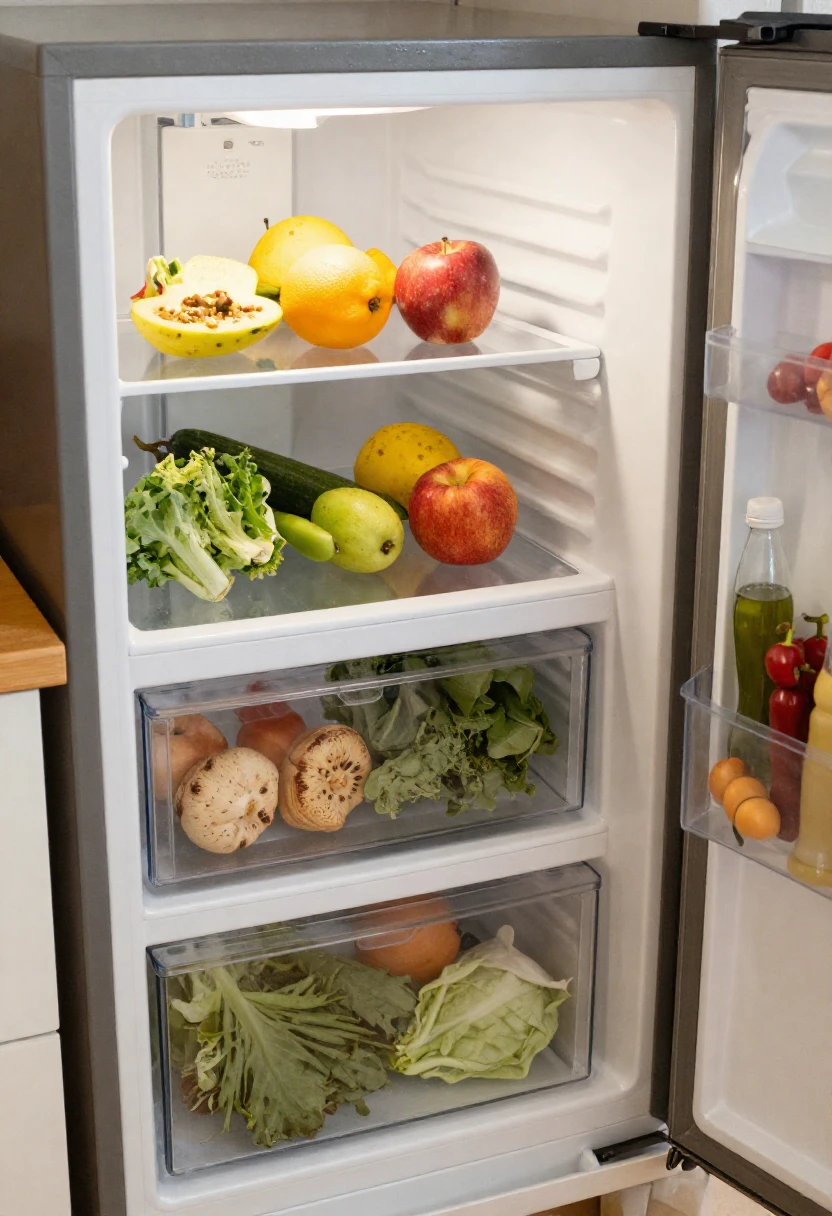
The problem is rarely knowledge. Most of us already know we “should” eat more produce. The harder part is making it happen on a normal day, especially when you are hungry, tired, or choosing between cooking and doing absolutely nothing.
You forget about them until they go bad
There is a very specific guilt that comes from throwing away slimy greens. Or berries you were excited about two days ago. Or a zucchini that somehow disappeared behind the yogurt and returned as a science project.
Produce is easy to waste because it often needs a little help before you eat it. You have to wash it, cut it, cook it, or at least think about what to do with it. That tiny bit of effort is enough to make you choose something easier.
A good fix is to make some fruits and vegetables “ready food” as soon as they come home.
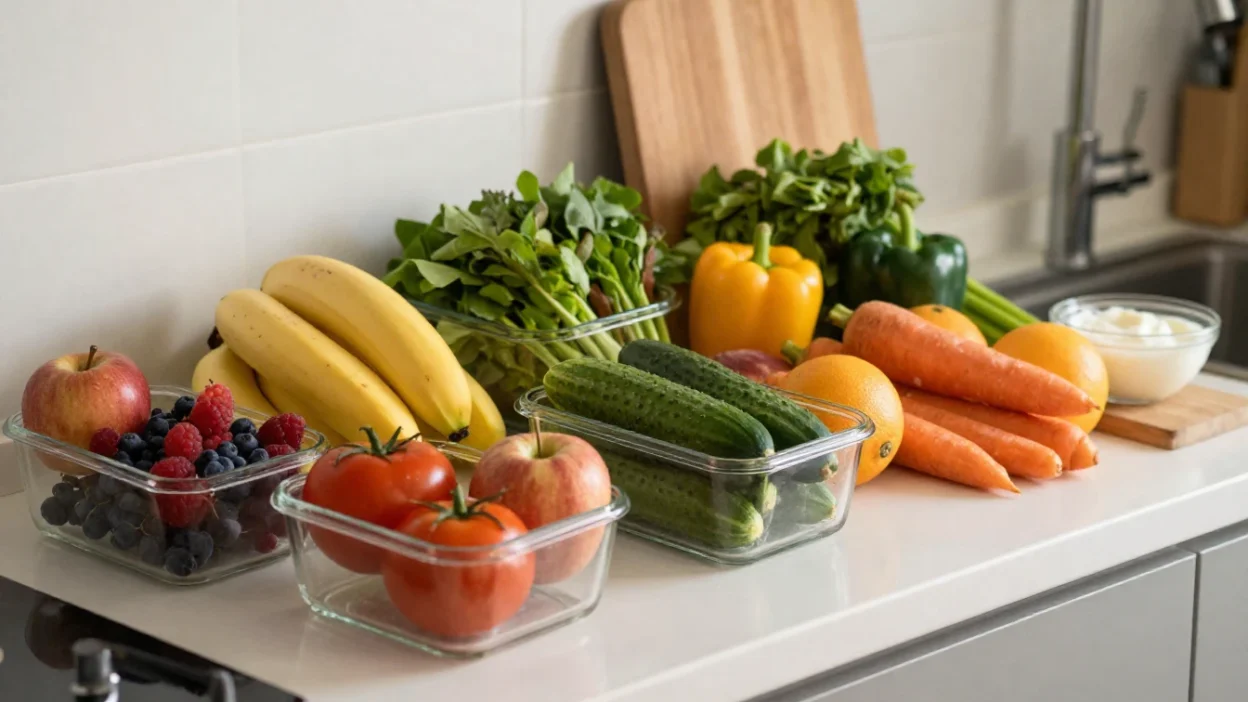
Wash the grapes. Slice the melon. Cut the carrots. Rinse the berries and dry them well. Put cucumber sticks in a clear container. It sounds almost too simple, but visibility matters. If you can open the fridge and immediately see something crisp, sweet, or colorful, you are much more likely to eat it.
You think it has to mean big salads
A lot of people hear “eat more vegetables” and picture a huge bowl of raw greens with a sad dressing on top. No wonder it feels like a chore.
But vegetables do not need to show up as salad. They can be warm, roasted, blended, sautéed, grilled, or folded into food you already love.
You can add spinach to scrambled eggs. Toss frozen peas into pasta. Roast carrots until the edges get sweet and brown. Add mushrooms and peppers to pizza. Stir zucchini into soup. Blend roasted vegetables into a sauce.
Fruit is the same. It does not have to be a plain apple eaten at your desk. It can be berries in yogurt, banana on toast, mango with cottage cheese, apple slices with cheddar, or peaches warmed in a pan with cinnamon.
Once you stop treating fruits and vegetables like a separate “healthy eating project,” they become much easier to use.
Convenience usually wins
This is the honest part: if your fruits and vegetables are buried, unwashed, or require a knife and cutting board, they are competing badly against snacks that need no effort.
So make the healthy choice the lazy choice.
Keep a fruit bowl where you actually walk past it. Put washed berries at eye level in the fridge. Keep frozen vegetables in the freezer for nights when fresh food is not happening. Buy pre-cut vegetables sometimes if that is what helps you eat them.
Yes, cutting your own produce is usually cheaper. But throwing away whole vegetables you never used is not exactly a win either.
The goal is not to do everything perfectly. The goal is to make fruits and vegetables normal enough that they stop feeling like extra work.
Start with meals you already eat
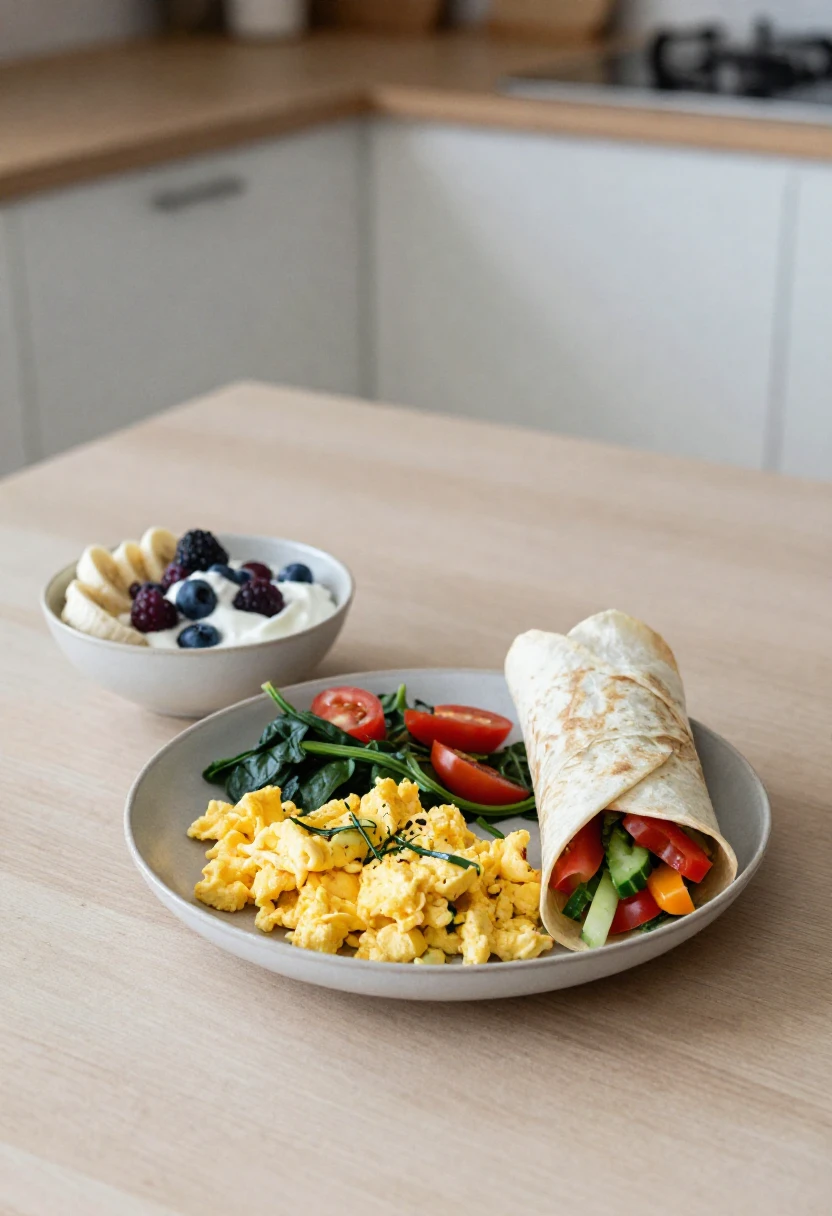
The easiest place to add more fruits and vegetables is not in some brand-new recipe you found while feeling motivated at midnight.
Start with what you already eat.
Your breakfast, your usual lunch, your favorite pasta, your eggs, your sandwiches, your rice bowls, your soup. Those meals already have a place in your life, which means you do not have to build a new habit from scratch. You just have to add one thing.
A handful of berries. A sliced tomato. A few leaves of spinach. Roasted peppers. Frozen peas. Chopped apple. Nothing dramatic.
Add fruit to breakfast
Breakfast is one of the simplest places to bring in fruit because sweet flavors already make sense there.
If you eat oatmeal, add sliced banana, berries, grated apple, or chopped dates. I like berries because they soften into the oats and make the whole bowl taste brighter, especially if you add a little cinnamon or lemon zest.
If you eat yogurt, add fruit before you think about granola. Greek yogurt with blueberries and a spoonful of peanut butter is filling in a way that plain yogurt never is. Cottage cheese works too, especially with peaches, pineapple, strawberries, or sliced pear.
Toast is another easy one. Peanut butter toast with banana is basic for a reason. Cream cheese with strawberries also works. Ricotta with figs or berries feels a little fancier, but it is still just toast.
A few easy breakfast ideas:
- Oatmeal with banana and walnuts
- Greek yogurt with berries and chia seeds
- Cottage cheese with pineapple or peaches
- Peanut butter toast with apple slices
- Scrambled eggs with tomatoes and spinach
- Smoothie with berries, yogurt, and a handful of greens
You do not need a perfect “balanced breakfast bowl.” Just add fruit to something you already like.
Add vegetables to lunch
Lunch can be tricky because it often happens fast. You may be eating between meetings, reheating leftovers, packing something the night before, or grabbing whatever is closest.
This is where small vegetable upgrades help.
A sandwich becomes better with tomato, cucumber, spinach, roasted peppers, or shredded carrots. A wrap gets more crunch from lettuce, cabbage, bell pepper, or pickled onions. Leftover rice becomes more filling with frozen peas, corn, chopped cucumber, or roasted vegetables.
Even a very plain lunch can handle one fresh thing.
If you are making tuna salad, add chopped celery or grated carrot. If you are eating hummus, add cucumber, tomatoes, and peppers instead of only crackers. If you are reheating soup, toss in spinach at the end so it wilts into the bowl.
Some easy lunch add-ins:
- Spinach or arugula in sandwiches
- Cucumber and tomato in wraps
- Shredded carrot in tuna or chicken salad
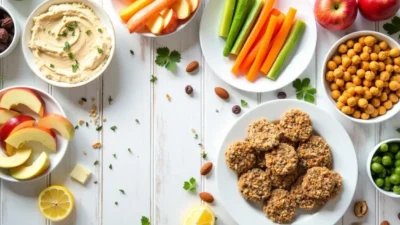
- Bell pepper strips with hummus
- Frozen peas in rice or pasta
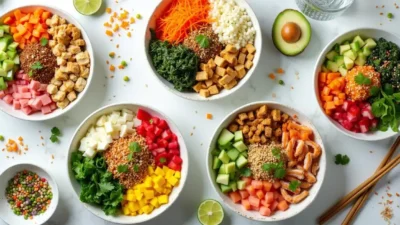
- Leftover roasted vegetables in grain bowls
This is not about turning every lunch into a salad. It is about adding color, crunch, and freshness without making lunch feel like homework.
Add extra produce to dinner
Dinner is where vegetables can disappear into meals in the best way.
Pasta can take spinach, mushrooms, zucchini, tomatoes, peas, broccoli, or roasted peppers. Soup can take almost anything. Tacos can take cabbage, salsa, avocado, peppers, onions, or corn. Pizza can carry mushrooms, onions, tomatoes, spinach, arugula, or grilled zucchini.
And honestly, roasted vegetables solve a lot.
Put carrots, potatoes, broccoli, cauliflower, zucchini, onions, or peppers on a sheet pan with olive oil, salt, garlic, and whatever spice you like. Roast until the edges brown. That little bit of browning changes everything. Vegetables stop tasting like an obligation and start tasting like something you want to pick off the pan before dinner is even served.
Fruit can show up at dinner too, especially if you like sweet and savory together.
Try mango salsa with chicken or fish. Add apple slices to a salad with cheese and nuts. Put pineapple in a rice bowl. Toss grapes into a chicken salad. Add pomegranate seeds to roasted vegetables if you have them.
A few dinner ideas that make this easy:
- Pasta with spinach, peas, and roasted tomatoes
- Tacos with cabbage, salsa, avocado, and peppers
- Rice bowls with roasted vegetables and a fried egg
- Soup with carrots, celery, greens, and beans
- Pizza with mushrooms, peppers, onions, and arugula
- Chicken with mango salsa or apple slaw
The trick is to stop asking, “What vegetable side dish should I make?” and start asking, “What fruit or vegetable can I add to what I am already cooking?”
Make fruits and vegetables easier to grab
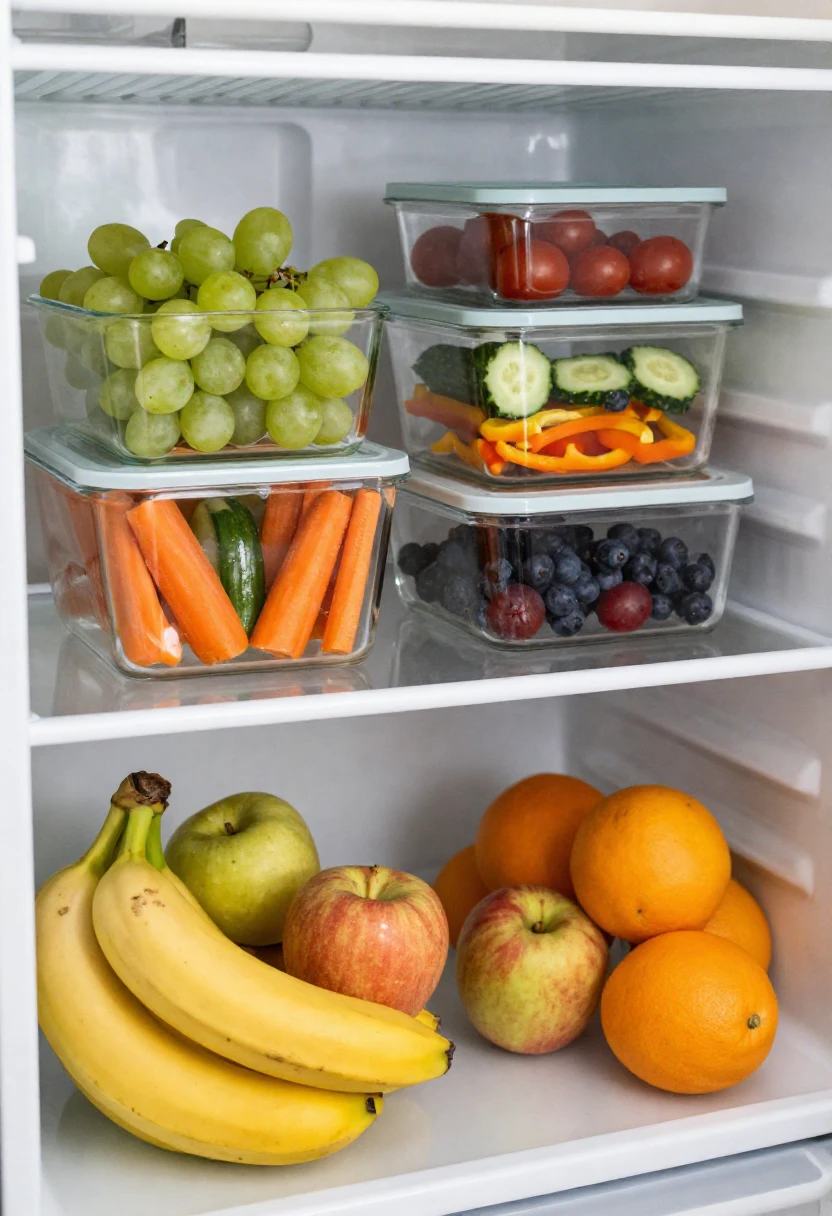
Fruits and vegetables get eaten faster when they are ready before you are hungry.
That sounds obvious, but it is the whole game. When you come home tired, you are probably not going to lovingly wash lettuce, peel carrots, slice peppers, and build a beautiful snack plate. You are going to grab whatever asks the least from you.
So make produce ask less.
Wash and cut a few things right after shopping
I do not believe in prepping every single vegetable the minute you get home. That can turn grocery shopping into a second job. But prepping two or three things makes a huge difference.
Pick the produce you are most likely to snack on or forget.
Good options:
- Grapes
- Strawberries or blueberries
- Cucumber sticks
- Carrot sticks
- Bell pepper strips
- Celery sticks
- Melon cubes
- Washed lettuce or spinach
- Cherry tomatoes
The key is to dry things well before storing them. Wet berries spoil faster. Wet lettuce turns sad. I usually line containers with a paper towel or clean kitchen towel so extra moisture does not sit on the produce.
You do not need fancy containers. Clear ones help, though. If you can see the food, you remember it exists.
Keep produce where you can see it
The fridge drawer is where good intentions go to disappear.
It is useful for some vegetables, yes, but if you always forget what is in there, move your most fragile or snackable produce to eye level. Put berries in a clear container near the front. Keep cucumber slices or carrots where you can grab them. Store washed greens in a visible spot, not buried under leftovers.
Fruit can live on the counter if it does not need refrigeration yet. Bananas, apples, oranges, pears, peaches, nectarines, and avocados are much more likely to be eaten when they are sitting in front of you.
A fruit bowl is not decoration. It is a reminder.
And if fruit starts getting too ripe, move it into a “use today” plan:
- Soft bananas go into oatmeal, smoothies, pancakes, or the freezer
- Ripe berries go into yogurt or a quick sauce
- Peaches or apples can be sliced and warmed with cinnamon
- Citrus can become dressing, marinade, or a squeeze over roasted vegetables
That small shift helps you waste less and eat more.
Use frozen fruits and vegetables without guilt
Frozen produce is one of the easiest ways to eat more fruits and vegetables every day, especially if your schedule is unpredictable.
Fresh produce is lovely when you have a plan. Frozen produce is there when the plan falls apart.
Frozen berries are perfect for smoothies, oatmeal, yogurt bowls, and quick fruit compotes. Frozen spinach can go into soups, eggs, pasta sauces, curries, and casseroles. Frozen peas cook in minutes and make pasta or rice feel more complete. Frozen broccoli, cauliflower, mixed vegetables, and green beans can rescue dinner when the fridge looks empty.
And no, using frozen vegetables is not “cheating.” It is practical.
A few easy ways to use them:
- Add frozen peas to pasta during the last minute of cooking
- Stir frozen spinach into soup or tomato sauce
- Roast frozen broccoli on a hot sheet pan
- Blend frozen berries into a smoothie
- Add frozen mixed vegetables to fried rice
- Toss frozen cauliflower into curry or stew
One tip: do not overcrowd the pan when roasting frozen vegetables. They release water as they cook. Give them space, use a hot oven, and let the edges brown instead of steam.
Frozen fruits and vegetables remove pressure. You do not have to use them by Thursday. You do not have to throw them away because you had a busy week. They wait for you, which is exactly why they belong in a real kitchen.
Build better snacks around produce
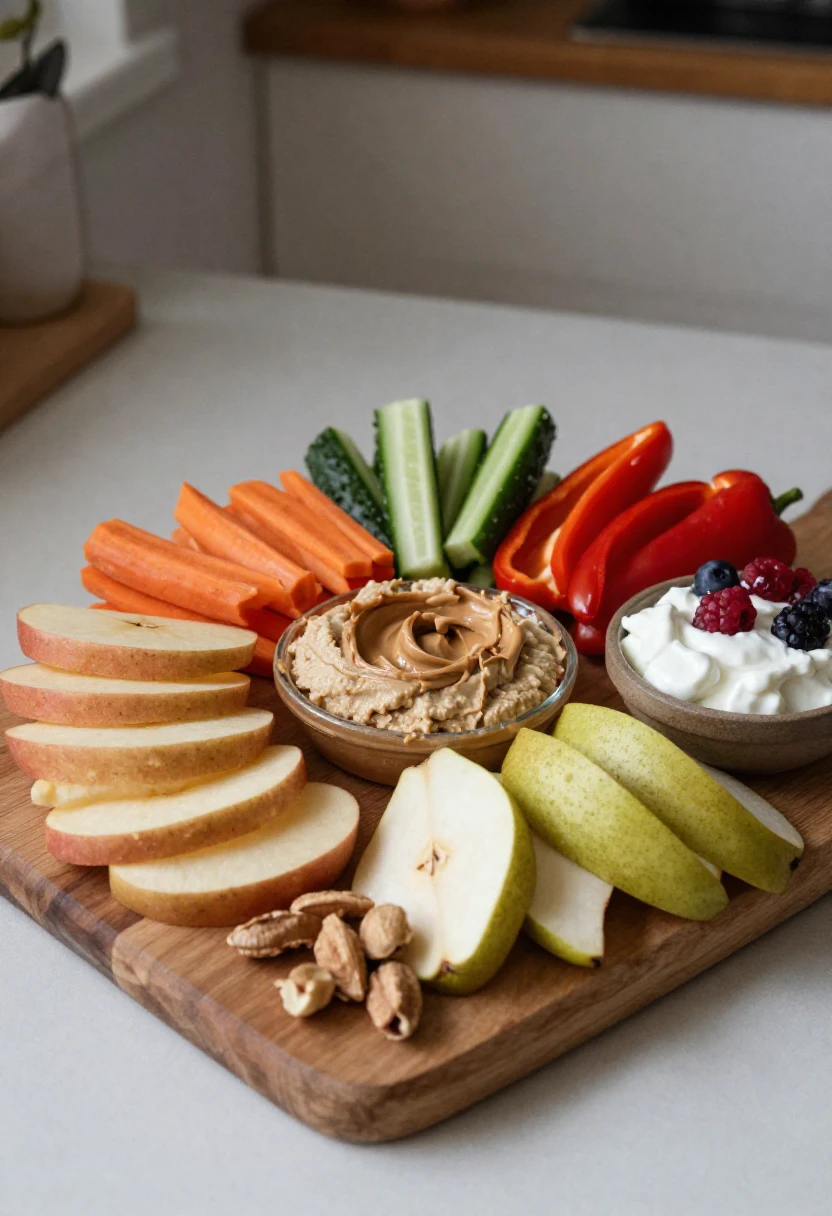
Snacks are where fruits and vegetables can quietly save the day.
Not in a strict, “replace everything fun with celery” way. That never lasts. But if you build snacks that actually taste good and keep you full, produce starts showing up more often without feeling like a rule.
A plain apple might not be enough when you are hungry. An apple with peanut butter? Much better. Carrots alone can feel a little too virtuous. Carrots with hummus or a creamy yogurt dip are a different story.
The produce is the base. The protein, fat, crunch, or dip is what makes it satisfying.
Pair fruit with something filling
Fruit is sweet, juicy, and easy to grab, but by itself it may not keep you full for long. Pair it with something that has protein or fat, and it becomes a real snack.
Try:
- Apple slices with peanut butter
- Pear with cheese
- Banana with walnuts or almonds
- Berries with Greek yogurt
- Grapes with cottage cheese
- Orange slices with a handful of pistachios
- Dates with almond butter
- Peach slices with ricotta
This is especially helpful in the afternoon, when you want something sweet but do not want to crash an hour later.
I like fruit snacks that feel a little “assembled,” not complicated. A sliced apple, a spoonful of peanut butter, a sprinkle of cinnamon. It takes two minutes, but it feels more intentional than eating random bites straight from the pantry.
Make vegetables less boring
Raw vegetables need help. Some people love plain cucumber and carrots, and good for them. I need a dip.
That does not mean the snack is unhealthy. It means it has flavor.
Keep one or two dips around so vegetables feel easy:
- Hummus
- Tzatziki
- Guacamole
- Salsa
- Cottage cheese dip
- Greek yogurt with garlic and lemon
- Bean dip
- Peanut sauce
- Whipped feta-style dip
A small plate of bell peppers, cucumber, cherry tomatoes, and hummus can feel fresh and filling. Celery with peanut butter is still underrated. Carrots with guacamole are better than they sound.
And roasted vegetables count too. Leftover roasted sweet potatoes, cauliflower, or zucchini can become a snack with a little sauce. Cold roasted carrots dipped into yogurt sauce? Honestly, very good.
Replace candy sometimes, not always
Fruit can help with sweet cravings, but it does not need to become a moral replacement for dessert.
Sometimes you want chocolate. Have the chocolate.
But sometimes you just want something sweet, and fruit works beautifully. Grapes from the fridge. A cold orange. Strawberries with yogurt. Banana with cocoa powder and peanut butter. Warm apple slices with cinnamon.
Dried fruit can also help, especially dates, apricots, raisins, prunes, or dried mango. Just remember that dried fruit is more concentrated than fresh fruit, so a small amount goes a long way.
A few easy sweet snack ideas:
- Greek yogurt with berries and honey
- Frozen grapes
- Banana with peanut butter and cocoa
- Apple slices warmed with cinnamon
- Dates with nut butter
- Cottage cheese with pineapple
- Strawberries dipped in dark chocolate
This is the kind of habit that works because it does not feel like punishment. You are not removing joy from your day. You are just giving yourself more options before the cookie jar becomes the only answer.
Drink your produce, but do it smartly
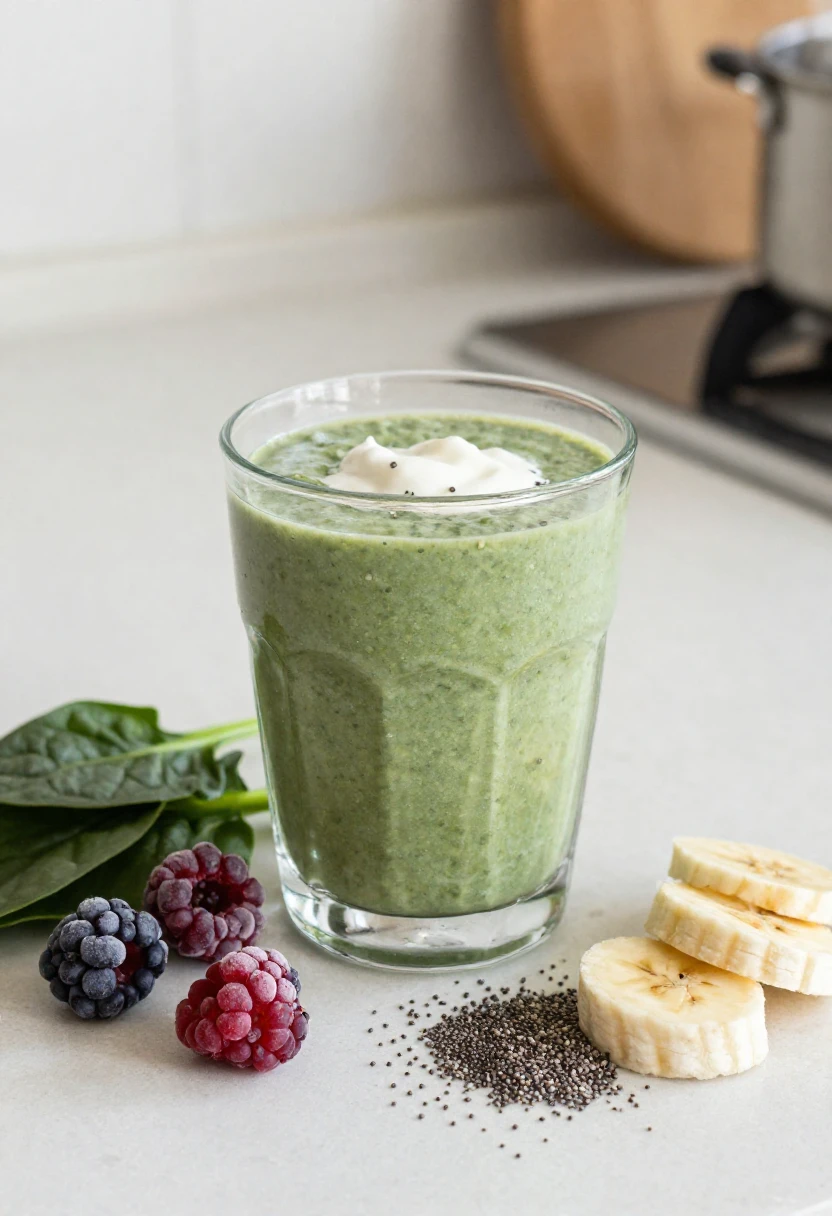
Smoothies can be a very useful way to eat more fruits and vegetables, especially on mornings when chewing a full breakfast feels like too much work.
I know smoothies get treated like either miracle health food or sugar bombs, but the truth is more ordinary. A smoothie is only as good as what you put in it. If it is mostly fruit juice and three kinds of fruit, it may taste great, but it probably will not keep you full for long. If you build it with fruit, something creamy, a little protein, and maybe a handful of greens, it can be a genuinely helpful meal or snack.
The best smoothie is the one you enjoy enough to make again.
Smoothies can be helpful when you build them well
A good smoothie usually needs four things: fruit, liquid, something filling, and maybe a vegetable that does not fight the flavor.
Fruit gives sweetness. Banana makes it creamy. Berries make it bright. Mango makes it taste like sunshine, especially when it is frozen. Peaches, pineapple, cherries, and oranges all work too.
For the liquid, you can use milk, kefir, unsweetened almond milk, oat milk, coconut water, or plain water. I like milk or kefir when I want the smoothie to feel more like breakfast instead of a drink I finish and immediately forget.
Then add something that helps it stick with you:
- Greek yogurt
- Cottage cheese
- Peanut butter or almond butter
- Chia seeds
- Ground flaxseed
- Oats
- Protein powder, if you use it
- Avocado for creaminess
Vegetables can fit in quietly. Spinach is the easiest because it blends well and does not have much flavor. Frozen cauliflower can make a smoothie thicker without tasting like much. Carrot works nicely with mango or orange. Cucumber is refreshing with pineapple, lime, and mint.
Start small. A giant handful of kale in your first smoothie might make you abandon the whole idea by Tuesday.
Juice is not the same as whole fruit
Juice can absolutely fit into your life, but it is not the same as eating whole fruit.
Whole fruit gives you fiber, texture, and more fullness. An orange takes time to peel and eat. A glass of orange juice disappears in seconds. That does not make juice “bad,” but it does make it easier to drink a lot without noticing.
If you love juice, keep it. Just treat it more like a drink you enjoy, not your main fruit habit.
You can also use a splash of juice in a smoothie for flavor instead of making juice the whole base. A little orange juice with mango and yogurt tastes great. A bit of apple juice with spinach, cucumber, and lemon can make a green smoothie more pleasant. The amount matters.
For everyday fruit, whole fruit usually wins.
Easy smoothie combinations
You do not need complicated smoothie recipes. Start with combinations that make sense and adjust from there.
Try these:
- Frozen berries, banana, Greek yogurt, milk, and spinach
- Mango, carrot, orange, yogurt, and chia seeds
- Banana, peanut butter, cocoa powder, oats, and milk
- Pineapple, cucumber, spinach, lime, and coconut water
- Peach, kefir, oats, and cinnamon
- Blueberries, cottage cheese, banana, and ground flaxseed
- Cherries, Greek yogurt, almond butter, and milk
One small trick: use frozen fruit instead of ice. Ice can make smoothies watery. Frozen fruit keeps them thick and cold, with better flavor.
And do not be afraid to make a smoothie bowl if you prefer eating with a spoon. Pour the smoothie into a bowl, add berries, sliced banana, nuts, seeds, or a little granola. It feels more like breakfast and less like something you drink while standing by the sink.
A smoothie will not fix your whole diet. But on a busy morning, it can get fruit, greens, protein, and fiber into one glass. That is useful.
Add produce to comfort foods
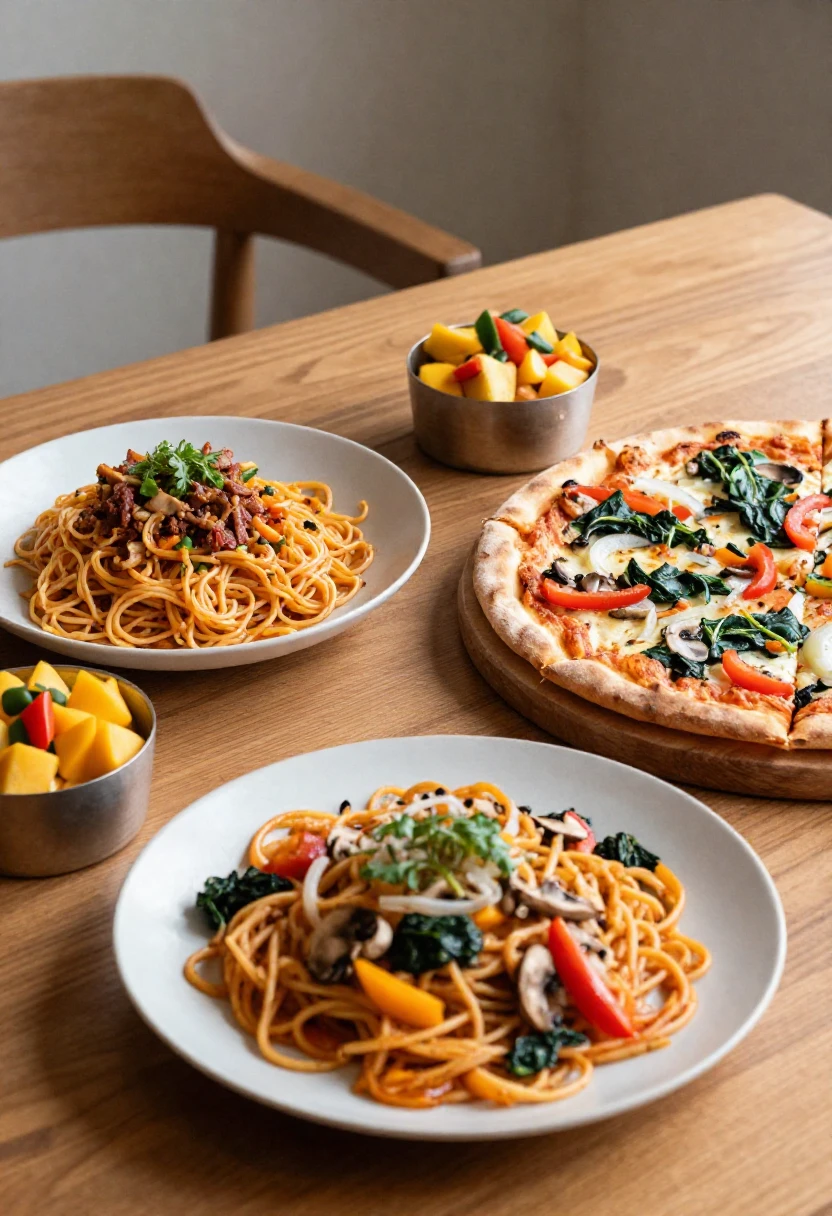
One of the best ways to eat more fruits and vegetables every day is to stop separating “healthy food” from “food you actually want.”
Vegetables belong in comfort food too. Not as a punishment. Not as a way to ruin the dish. They can make pasta sweeter, pizza better, tacos fresher, and rice bowls more colorful. Fruit can do the same in savory meals if you like a little sweet contrast.
The trick is to add produce in a way that matches the meal, not fights it.
Make pizza more colorful
Pizza is already a perfect place for vegetables because the cheese, sauce, and crust do half the work for you.
Mushrooms get savory. Bell peppers stay sweet. Onions soften. Cherry tomatoes burst a little. Spinach wilts into the cheese. Zucchini works well if you slice it thin. Arugula is best added after baking, when the pizza is hot but out of the oven.
Good pizza toppings to try:
- Mushrooms
- Bell peppers
- Red onion
- Spinach
- Cherry tomatoes
- Zucchini
- Artichokes
- Olives
- Arugula
- Roasted garlic
If watery vegetables make your pizza soggy, cook them first or slice them thin. Mushrooms, zucchini, and spinach all release water, so a quick sauté can save the crust.
And no, vegetables do not need to replace pepperoni, sausage, or cheese. They can sit next to them. A pizza with mushrooms, peppers, onion, and a little pepperoni still gives you more produce than plain cheese pizza.
That counts.
Add vegetables to pasta without ruining it
Pasta is one of the easiest meals to upgrade because vegetables can blend into the sauce, roast on the side, or cook right in the pot.
Frozen peas are the lazy hero here. Add them during the last minute of boiling the pasta, then drain everything together. Spinach is just as easy. Stir it into hot pasta and sauce until it wilts.
For deeper flavor, roast vegetables first. Cherry tomatoes, zucchini, eggplant, peppers, mushrooms, broccoli, and cauliflower all work well. Roasted tomatoes with garlic and olive oil can become a sauce almost on their own.
A few easy pasta ideas:
- Tomato pasta with spinach and mushrooms
- Pesto pasta with peas and broccoli
- Mac and cheese with cauliflower or roasted broccoli
- Pasta with roasted tomatoes, zucchini, and garlic
- Creamy pasta with peas and asparagus
- Lasagna with spinach, mushrooms, or roasted vegetables
Blended vegetable sauces are useful too. Roasted red peppers blend into a sweet, silky sauce. Butternut squash makes pasta creamy. Carrots can soften the sharpness of tomato sauce. Cauliflower can disappear into a cheese sauce if you blend it well enough.
The point is not to hide vegetables because they are shameful. It is to make them taste like they belong.
Use fruit in savory meals
Fruit in savory food can sound strange until you remember how many classic combinations already do this.
Apple with pork. Cranberries with turkey. Pineapple with ham. Mango with fish tacos. Grapes in chicken salad. Lemon on almost everything.
Fruit adds sweetness, acidity, and freshness. It can make a heavy meal feel less flat.
Try these combinations:
- Mango salsa with chicken, shrimp, or fish
- Apple slices in chicken salad
- Pear with arugula, walnuts, and cheese
- Pineapple in rice bowls or stir-fries
- Pomegranate seeds over roasted vegetables
- Orange segments in salads
- Grapes in tuna or chicken salad
- Raisins or dried apricots in couscous
- Peach salsa with grilled chicken
Start with fruit that has a little acidity. Mango, pineapple, apple, orange, and pomegranate are easier to use than very soft, sweet fruit.
And keep the pieces small. You want little bites of sweetness, not a whole fruit salad sitting on your dinner plate looking confused.
Use dips, salsas, and sauces
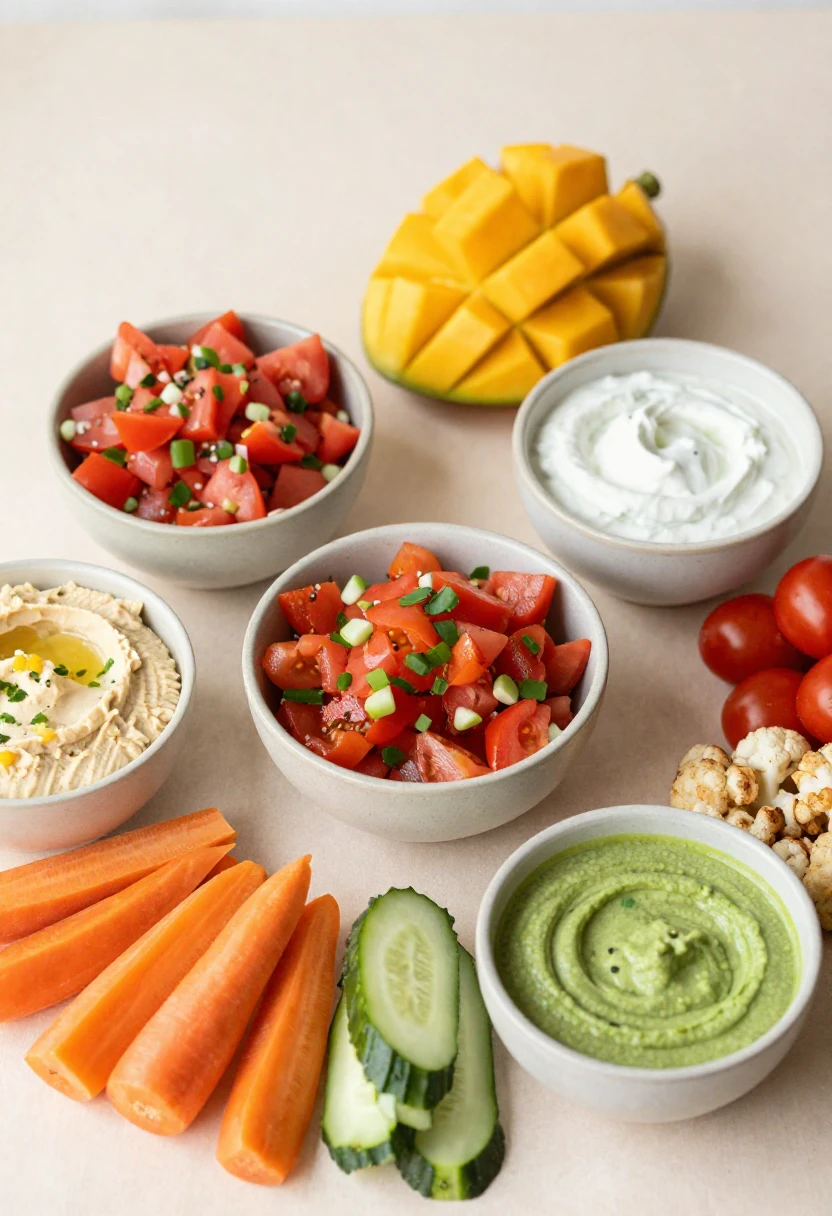
Sometimes the fastest way to eat more vegetables is to stop serving them plain.
A plate of raw carrots can feel like something you packed for a school lunch. Add hummus, and suddenly it works. Roasted broccoli can taste fine on its own, but with a garlicky yogurt sauce or lemony tahini, it becomes the part of dinner everyone keeps picking at.
Sauces are not a trick. They are how a lot of good food becomes good food.
Fresh salsa makes simple meals better
Salsa is one of the easiest ways to add more produce because it brings flavor, texture, and brightness at the same time.
A basic tomato salsa can go on eggs, tacos, grilled chicken, rice bowls, potatoes, beans, fish, or even a simple cheese quesadilla. Mango salsa works beautifully with chicken, shrimp, salmon, tofu, or black beans. Corn salsa makes almost any bowl feel more complete.
Try simple combinations like:
- Chopped tomatoes, red onion, cilantro, lime, and salt
- Mango, cucumber, red onion, lime, and chili
- Corn, bell pepper, tomato, green onion, and lime
- Avocado, tomato, cucumber, and lemon juice
- Pineapple, jalapeño, cilantro, and lime
You do not need a perfect recipe. Chop something juicy, add something sharp, add herbs if you have them, then finish with citrus and salt.
That last part matters. A little lime or lemon wakes everything up.
Dips help vegetables disappear faster
If you want vegetables to become an easy snack, keep dip in the fridge.
Hummus is the classic choice because it works with almost everything: carrots, cucumbers, peppers, celery, cherry tomatoes, snap peas, even roasted vegetables. Tzatziki is fresh and cooling. Guacamole makes raw vegetables feel more like a real snack. Greek yogurt with garlic, lemon, salt, and herbs takes two minutes and tastes better than many store-bought dips.
A few dip ideas:
- Hummus with cucumber and bell pepper
- Tzatziki with carrots and cherry tomatoes
- Guacamole with celery and radishes
- Greek yogurt dip with roasted vegetables
- Cottage cheese blended with herbs and lemon
- White bean dip with raw or roasted vegetables
- Salsa with baked tortilla chips and sliced peppers
This is also where leftovers help. If you roasted vegetables for dinner, save a few for dipping the next day. Cold roasted sweet potatoes with yogurt sauce sound odd until you try them. They are sweet, creamy, tangy, and very easy to eat straight from the fridge.
Sauces can carry roasted vegetables
Roasted vegetables are good. Roasted vegetables with sauce are better.
A sauce gives them contrast. Creamy sauce makes charred edges taste richer. Acidic sauce keeps sweet vegetables from feeling heavy. Herb sauces make a basic tray of carrots, cauliflower, or potatoes taste fresher.
Here are a few easy sauces that work with almost any vegetable:
- Greek yogurt, garlic, lemon juice, salt, and dill
- Tahini, lemon juice, warm water, garlic, and salt
- Olive oil, parsley, garlic, vinegar, and chili flakes
- Pesto loosened with a little lemon juice
- Peanut butter, soy sauce, lime, garlic, and warm water
- Olive oil, balsamic vinegar, mustard, and honey
You can keep sauce simple. It does not need fifteen ingredients. Most of the time, you need something creamy or rich, something acidic, and enough salt to make the vegetables taste like themselves.
That is often the missing piece. Not more willpower. Better sauce.
Cook vegetables in ways that actually taste good
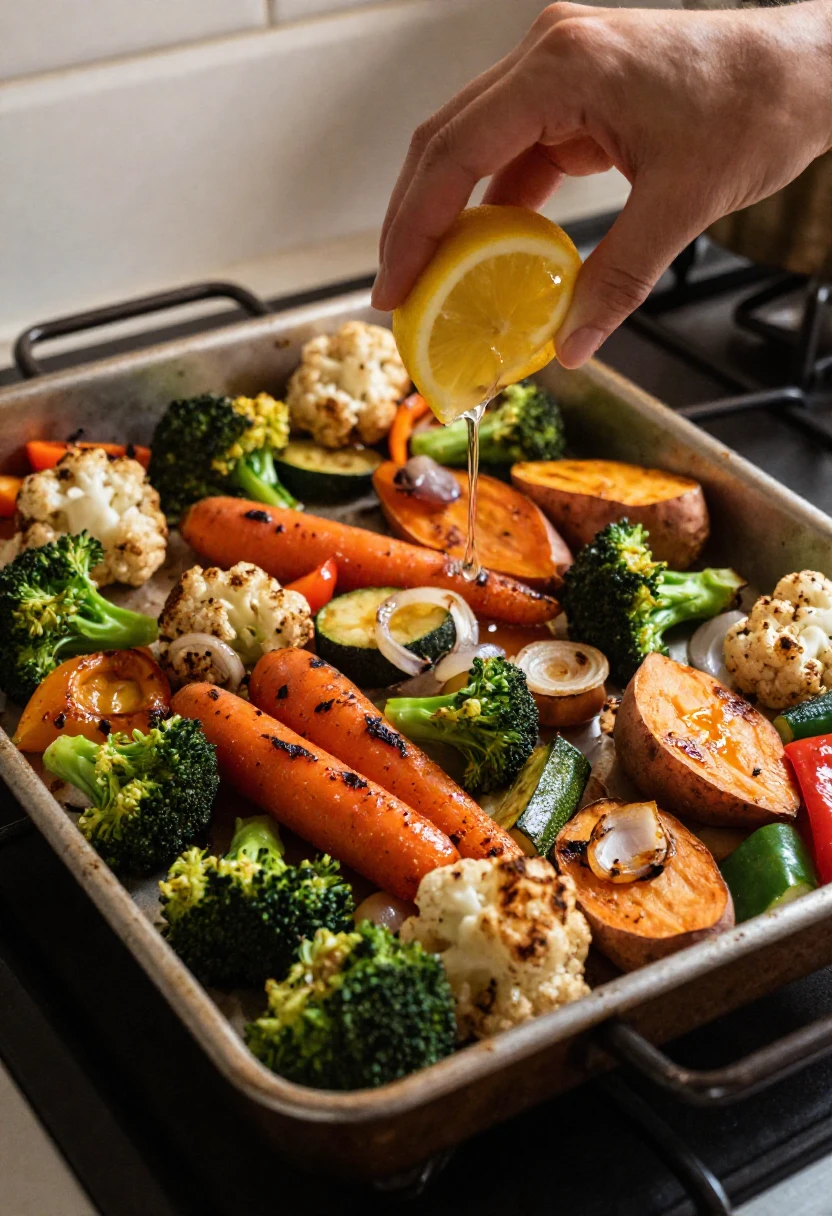
A lot of people think they do not like vegetables because they have only had them cooked in the most depressing way possible.
Boiled until soft. Steamed with no salt. Limp broccoli. Watery zucchini. Carrots that taste like nothing. I would not be excited either.
Vegetables need flavor just like everything else. They need heat, salt, fat, acid, texture, and sometimes a little patience. Once you cook them in a way that brings out sweetness, browning, and crunch, they stop feeling like the “healthy side” and start feeling like part of the meal.
Roast them until the edges brown
Roasting is probably the easiest way to make vegetables taste better.
High heat pulls out moisture, browns the edges, and makes many vegetables sweeter. Broccoli gets crispy tips. Carrots turn soft and caramelized. Cauliflower becomes nutty. Brussels sprouts lose that harsh cabbage smell and get little charred leaves that are honestly the best part.
The basic method is simple:
- Cut vegetables into similar-sized pieces
- Toss with olive oil, salt, and pepper
- Spread them out on a sheet pan
- Roast at a hot temperature until browned
- Finish with lemon juice, herbs, cheese, or sauce
Do not crowd the pan. This is where many roasted vegetables go wrong. If the pieces are packed too tightly, they steam instead of brown. Use two pans if you need to.
Good vegetables for roasting:
- Broccoli
- Cauliflower
- Carrots
- Sweet potatoes
- Potatoes
- Brussels sprouts
- Zucchini
- Bell peppers
- Onions
- Eggplant
- Mushrooms
I like roasting vegetables a little longer than recipes usually say. Not burned, just deeply browned at the edges. That is where the flavor is.
Grill vegetables and fruit
Grilling makes produce feel less like a side dish and more like something you planned on purpose.
Zucchini, eggplant, peppers, onions, corn, asparagus, and mushrooms all do well on the grill. Brush them with olive oil, season them well, and cook until they have grill marks and soften without collapsing.
Fruit can go on the grill too, and it is so good. Pineapple gets sweeter and a little smoky. Peaches soften and turn juicy. Watermelon gets a strange but pleasant savory edge. Even halved lemons can be grilled and squeezed over vegetables, fish, or chicken.
A few easy grilled produce ideas:
- Grilled zucchini with lemon and parmesan
- Grilled corn with lime and chili
- Grilled peppers and onions for tacos
- Grilled eggplant with yogurt sauce
- Grilled pineapple with chicken or rice bowls
- Grilled peaches with yogurt or ricotta
- Grilled tomatoes with olive oil and herbs
If you do not have an outdoor grill, a grill pan works. A hot skillet also works. You may not get the same smoky flavor, but you still get browning, and browning is what makes produce taste better.
Add flavor at the end
This is the little step people forget.
You cook the vegetables, put them on the plate, and they taste fine but flat. Usually they need one finishing touch.
Lemon juice. Vinegar. Fresh herbs. Chili flakes. A drizzle of olive oil. Toasted nuts. Parmesan. Feta. Sesame seeds. A spoonful of yogurt sauce. Something sharp, salty, crunchy, or creamy.
Try this:
- Broccoli with lemon juice and parmesan
- Roasted carrots with yogurt sauce and dill
- Cauliflower with tahini and chili flakes
- Zucchini with basil and toasted pine nuts
- Green beans with garlic, almonds, and lemon
- Sweet potatoes with lime and Greek yogurt
- Roasted peppers with balsamic vinegar
Acid is especially helpful. Lemon juice or vinegar can make vegetables taste brighter in seconds. Add it at the end, not before roasting, so the flavor stays fresh.
And please salt your vegetables. Not aggressively, not wildly, just enough. Unsalted vegetables are the reason too many people think they hate vegetables.
Try one new fruit or vegetable each week
You do not need to overhaul your grocery cart to eat more fruits and vegetables.
Actually, that is one of the fastest ways to waste money. You get excited, buy twelve different things, then spend the week trying to figure out what to do with fennel, eggplant, kale, pears, herbs, and a pineapple that suddenly feels like a commitment.
Start smaller.
Pick one fruit or vegetable you do not usually buy. Try it in one simple way. If you like it, repeat it. If you hate it, fine. You learned something.
Keep it low-pressure
Trying new produce should not feel like a challenge from a cooking show.
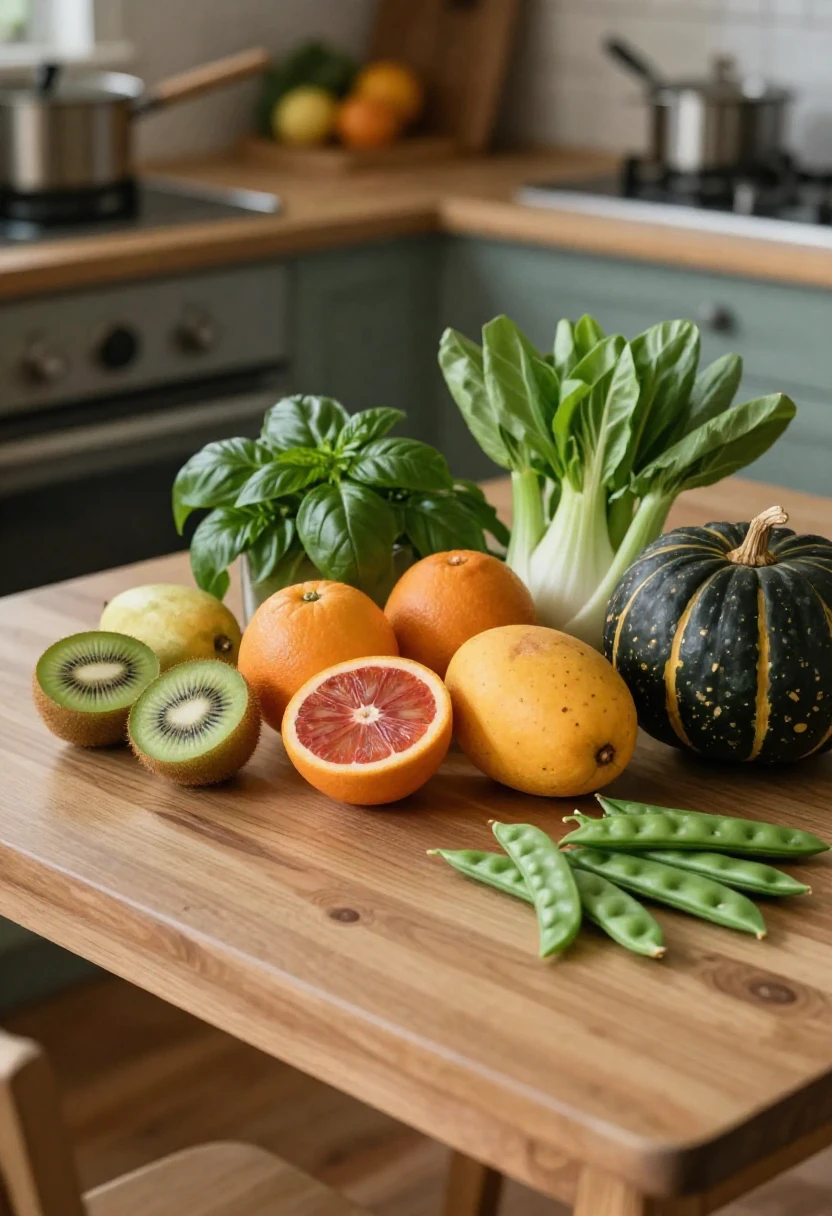
You do not need rare tropical fruit or vegetables that require a full tutorial before you can even cut them. A new apple variety counts. So does a different kind of squash, a bunch of fresh herbs, frozen edamame, or a bag of baby bok choy.
The point is to slowly build your own list of fruits and vegetables you actually enjoy.
That matters because “eat more vegetables” is too vague. But “I like roasted carrots, cucumber with hummus, spinach in eggs, frozen peas in pasta, and mango in yogurt” is useful. Now you have a real system.
Start with easy wins
Some fruits and vegetables are easier to love than others.
If you are trying to make produce feel more normal in your meals, start with options that do not need much convincing.
Try:
- Kiwi sliced into yogurt
- Blood oranges as a snack
- Mango with cottage cheese
- Sugar snap peas with hummus
- Baby spinach in eggs or pasta
- Cherry tomatoes with olive oil and salt
- Delicata squash roasted with olive oil
- Fresh basil in sandwiches or pasta
- Baby bok choy quickly sautéed with garlic
- Fennel sliced thin with lemon and parmesan
Delicata squash is a good example. It sounds a little fancy, but you do not even have to peel it. Slice it into half-moons, scoop out the seeds, toss it with olive oil and salt, then roast until the edges brown.
That kind of discovery changes your grocery habits more than forcing yourself through a giant salad ever will.
Repeat what you like
The goal is not variety for the sake of variety. The goal is to find repeatable favorites.
If you discover that you love roasted broccoli with lemon and parmesan, make it often. If berries in yogurt work for you, keep berries around. If your family eats more vegetables when there is ranch, hummus, or garlic yogurt sauce on the table, use the dip.
There is no prize for making healthy eating harder than it needs to be.
Once you find a few produce habits that feel easy, stack them slowly:
- One fruit at breakfast
- One vegetable at lunch
- One vegetable with dinner
- One produce-based snack
- One new fruit or vegetable each week
That is enough. More than enough, honestly.
Small repeats build the kind of healthy eating routine that survives busy weeks, low-energy nights, and the occasional grocery trip where you forget half your list.
A realistic one-day example
Sometimes it helps to see what this looks like in a normal day.
Not a perfect day. Not a “wellness routine” with tiny jars of chia pudding and someone calmly drinking lemon water at sunrise. Just a regular day where you want to eat more fruits and vegetables without turning every meal into a project.
Here is one simple version.
Breakfast
Start with something you already like and add fruit.
Greek yogurt with berries and sliced banana is easy. Add a spoonful of oats, chia seeds, or nuts if you want it to keep you full longer. If you prefer something warm, oatmeal with apple, cinnamon, and walnuts works well too.
You could also do eggs with spinach and tomatoes. The spinach wilts quickly, the tomatoes soften, and suddenly breakfast has vegetables without feeling like a salad at 8 a.m.
A few easy breakfast options:
- Greek yogurt with berries and banana
- Oatmeal with apple, cinnamon, and walnuts
- Scrambled eggs with spinach and tomatoes
- Peanut butter toast with sliced banana
- Cottage cheese with peaches or pineapple
One fruit at breakfast is a small thing, but it sets the tone. You have already started.
Lunch
Lunch does not need to be complicated. A wrap or sandwich can carry more produce than people give it credit for.
Try a turkey wrap with spinach, cucumber, tomato, and bell pepper. Or a hummus wrap with shredded carrot, lettuce, cucumber, and pickled onions. If you have leftovers, put them over rice with a handful of greens and something crunchy on top.
A good lunch has contrast. Soft wrap, crisp cucumber. Creamy hummus, juicy tomato. Warm rice, cold salsa. That is what makes vegetables feel like part of the meal instead of something you added because you felt guilty.
Simple lunch ideas:
- Turkey sandwich with tomato, spinach, and cucumber
- Hummus wrap with carrot, pepper, and lettuce
- Rice bowl with roasted vegetables and avocado
- Soup with extra spinach stirred in at the end
- Tuna salad with celery, apple, and cucumber slices
If lunch is usually where your produce habits disappear, keep one “easy vegetable” ready. For me, cucumber or cherry tomatoes are the easiest. No cooking, no drama.
Snack
A produce-based snack works best when it has something filling with it.
An apple is fine. An apple with peanut butter is better. Carrots are fine. Carrots with hummus are much more likely to feel satisfying.
Try one of these:
- Apple slices with peanut butter
- Carrots and bell peppers with hummus
- Greek yogurt with berries
- Pear with cheese
- Frozen grapes
- Banana with walnuts
- Cucumber slices with cottage cheese dip
This is also a good place to use fruit that is getting too ripe. Soft banana? Slice it into yogurt. Berries looking tired? Warm them in a small pan until they turn saucy. Apple a little bruised? Cut off the sad part and cook the rest with cinnamon.
Not glamorous. Very useful.
Dinner
Dinner is where you can bring in vegetables without making a separate side dish.
Make pasta and add roasted vegetables. Cook tacos and add cabbage, salsa, avocado, and peppers. Make rice bowls with whatever vegetables are left in the fridge. Stir spinach into soup. Add frozen peas to pasta during the last minute of cooking.
Here is an easy dinner idea: pasta with roasted vegetables.
Roast cherry tomatoes, zucchini, mushrooms, and onions with olive oil, garlic, salt, and pepper. Toss them with pasta, a little pasta water, parmesan, and lemon juice. Add spinach at the end if you have it.
It tastes like dinner, not a health assignment.
Other dinner ideas:
- Pasta with roasted vegetables and spinach
- Tacos with cabbage, salsa, peppers, and avocado
- Rice bowl with broccoli, carrots, and a fried egg
- Chicken with mango salsa and roasted sweet potatoes
- Soup with beans, carrots, celery, and greens
Then add fruit if you want something sweet after dinner. Orange slices, berries, grapes, or a peach can be enough. And if you still want dessert after that, have dessert. Fruit does not need to carry the emotional weight of replacing cake forever.
Common mistakes to avoid
Eating more fruits and vegetables gets easier when you stop making it harder than it needs to be.
That sounds a little obvious, but this is where people often trip themselves up. They buy too much. They choose produce they do not actually like. They forget about flavor. Then the whole thing starts to feel like one more failed health habit.
It does not have to go that way.
Buying too much at once
This is the classic mistake.
You go grocery shopping while feeling inspired and come home with kale, berries, melon, broccoli, herbs, cucumbers, apples, cabbage, zucchini, carrots, and three things you are not totally sure how to cook.
For two days, everything feels possible.
By day five, the berries are soft, the herbs are black at the edges, and the cucumbers are judging you from the crisper drawer.
Buy less than you think you need, especially at first. It is better to finish four fruits and vegetables than throw away twelve.
A good starter list might look like this:
- One easy fruit for breakfast
- One snackable fruit
- One raw vegetable for lunches or snacks
- One cooking vegetable for dinner
- One frozen fruit or vegetable as backup
That could mean bananas, apples, cucumbers, broccoli, and frozen berries. Simple. Usable. Not dramatic.
Once you know what you actually eat, then you can add more.
Forcing foods you hate
Please do not build your healthy eating routine around vegetables you secretly hate.
If kale makes you feel like you are chewing a houseplant, skip it. If celery tastes like wet string to you, fine. If grapefruit is too bitter, there are other fruits.
You have options.
Try different cooking methods before giving up on a vegetable completely. Maybe you hate steamed broccoli but love roasted broccoli. Maybe raw tomatoes are not your thing, but slow-roasted tomatoes with garlic are perfect. Maybe plain spinach feels boring, but spinach folded into eggs or pasta is easy.
Still hate it? Move on.
There are enough fruits and vegetables in the world. You do not need to suffer through the ones that make you miserable.
Forgetting texture and flavor
This might be the biggest one.
People often treat vegetables like they should taste good with almost no help. Then they are disappointed when plain steamed cauliflower does not excite anyone.
Of course it does not.
Vegetables need the same attention as the rest of your food. Salt. Olive oil. Lemon juice. Garlic. Herbs. Heat. Crunch. Sauce. Something.
Think about balance:
- Soft vegetables often need crunch
- Sweet vegetables often need acid
- Bitter greens often need fat and salt
- Mild vegetables often need garlic, spices, or sauce
- Roasted vegetables often need a fresh finish
A tray of roasted carrots with olive oil and salt is good. Add lemony yogurt sauce and dill, and it becomes something you want to eat again.
Same carrot. Better treatment.
Making it all-or-nothing
You do not have to eat fruits and vegetables at every single meal to make progress.
Some days will be better than others. Some days breakfast is coffee, lunch is whatever you can grab, and dinner is toast because life got weird. That does not erase the habits you are building.
Just come back to one small action.
Add spinach to eggs tomorrow. Put an apple in your bag. Buy frozen broccoli. Slice cucumbers before they get forgotten. Make pasta and toss in peas.
Healthy eating works better when it has room for real life. And real life is messy, busy, snacky, and occasionally very low on clean dishes.
Conclusion
Eating more fruits and vegetables every day does not have to start with a dramatic fridge makeover.
Start smaller. Add berries to breakfast. Keep cucumbers where you can see them. Toss peas into pasta. Roast broccoli until the edges brown. Put fruit next to something filling so it feels like a real snack.
The best habits are the ones you can repeat when life is busy, your motivation is low, and dinner needs to happen soon.
So do not overthink it. Pick one fruit. Pick one vegetable. Make them easier to eat this week than they were last week.
That is where it starts.
FAQ
How many fruits and vegetables should you eat per day?
A simple goal is around five servings of fruits and vegetables per day, but you do not need to hit that perfectly every single day. Start by adding one serving to a meal you already eat, then build from there.
For example, add berries to breakfast, cucumber to lunch, and roasted vegetables to dinner. That already gets you moving in the right direction.
Is frozen produce as good as fresh?
Yes, frozen fruits and vegetables can be a great option. They are picked and frozen when ripe, they last longer, and they make healthy cooking easier on busy weeks.
Frozen berries, spinach, peas, broccoli, cauliflower, and mixed vegetables are especially useful to keep around.
Are smoothies a good way to eat more fruits and vegetables?
Smoothies can help, especially if you build them with whole fruit, protein, and fiber. A good smoothie might include berries, banana, Greek yogurt, milk, spinach, and chia seeds.
Try not to make juice the main ingredient every time. Whole fruit and yogurt will usually keep you fuller.
What is the easiest vegetable to add to meals?
Spinach might be the easiest because it cooks down quickly and fits into eggs, pasta, soup, wraps, and rice bowls. Frozen peas, cherry tomatoes, cucumbers, carrots, and bell peppers are also easy starters.
Choose vegetables that require the least effort for your real routine. That matters more than picking the “perfect” vegetable.