I’ve never been entirely convinced that people fall in love with Mediterranean food because of the ingredients alone.
The tomatoes matter. Good olive oil definitely matters. Fresh feta can turn an average salad into a very good one. But if that were the whole story, every salad made with those ingredients would feel exactly the same, and somehow they don’t.
I think part of the appeal has more to do with the feeling Mediterranean food creates.
Every year, somewhere around late spring, the same thing happens in my kitchen. Heavy dinners start sounding a little less appealing. The grill gets pulled out more often. Windows stay open later in the evening. And without anyone really planning it, bowls of salad start appearing on the table several nights a week.
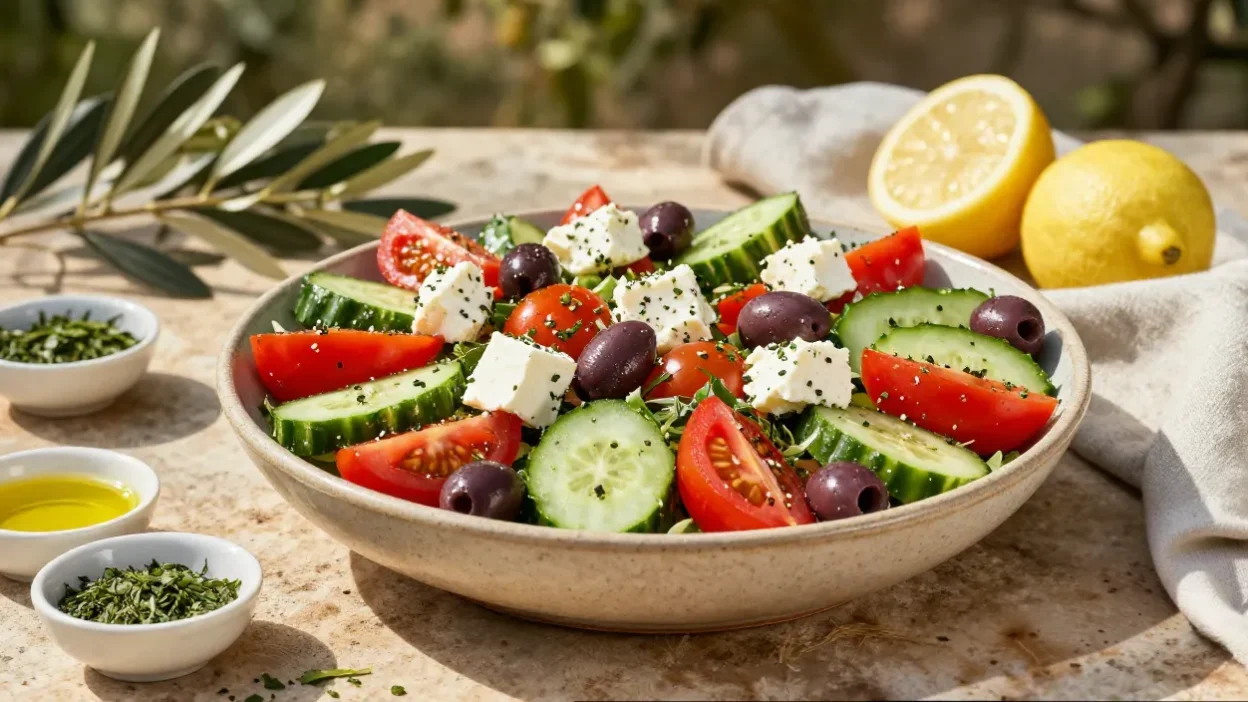
This is usually one of them.
Not because it’s exciting in some dramatic way. Actually, that’s part of its charm. Nobody gathers around the table talking about the salad before dinner starts. Nobody takes ten photos of it before serving. It simply sits there beside grilled chicken, seafood, or a loaf of crusty bread and quietly makes the entire meal feel fresher.
I’ve noticed that Mediterranean salads have a habit of fitting into almost any situation. They work during casual weeknight dinners when nobody feels like cooking anything complicated. They work at backyard gatherings where people are helping themselves to whatever happens to be on the table. They even work during those strange evenings when dinner starts with one plan and somehow turns into something completely different because friends decided to stay longer than expected.
A few things that make Mediterranean salads so easy to return to:
- They come together quickly.
- Most ingredients require very little preparation.
- They pair with almost anything.
- They feel light without feeling unsatisfying.
- They work equally well as a side dish or a simple meal.
The internet tends to celebrate recipes that feel bigger, richer, and more impressive every year. But everyday cooking usually works differently. Most people aren’t looking for a recipe that changes their life on a random Wednesday. They just want something fresh, reliable, and genuinely enjoyable to eat.
That’s where this salad shines.
It isn’t trying to steal the spotlight.
It’s simply trying to make dinner better.
And somehow, it succeeds almost every time.
Every ingredient has a purpose, but none of them steals the spotlight 🥒
One thing I genuinely appreciate about Mediterranean salad is how balanced it feels.
A lot of recipes lean heavily on one ingredient. Take it away and the entire dish suddenly feels incomplete. Mediterranean salad doesn’t really work that way. Every ingredient contributes something important, but none of them carries the whole recipe on its own.
The cucumber brings freshness and crunch. Tomatoes add sweetness and juiciness. Red onion contributes just enough sharpness to wake everything up. The olives bring that unmistakable salty depth, while the feta softens the stronger flavors and makes the salad feel more satisfying.
| Ingredient | What it contributes |
|---|---|
| Cucumber | Fresh crunch and cooling texture |
| Tomatoes | Sweetness and juiciness |
| Red onion | Sharp contrast |
| Kalamata olives | Salty depth |
| Feta cheese | Creamy richness |
| Parsley | Bright herbal freshness |
| Olive oil | Smooth Mediterranean character |
| Lemon juice | Clean acidity and balance |
What’s interesting is that none of these ingredients look particularly impressive sitting on a cutting board.
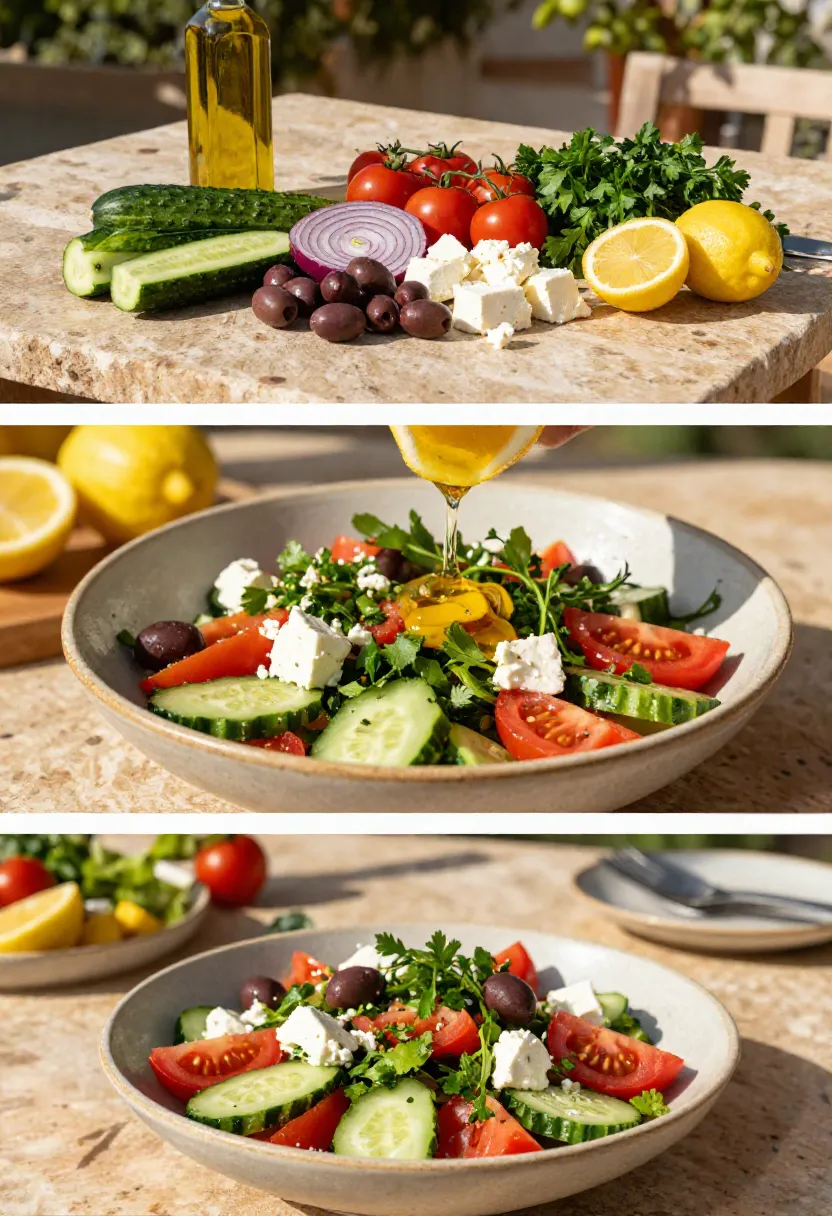
A cucumber is just a cucumber.
A handful of tomatoes doesn’t seem very exciting.
Even feta and olives by themselves don’t suggest anything remarkable is about to happen.
Then everything lands in the same bowl.
The tomato juices begin mixing with the dressing. The feta softens slightly. The herbs spread their aroma through the salad. The lemon brightens everything without drawing attention to itself. Suddenly the ingredients stop feeling separate and start feeling connected.
Texture matters just as much as flavor here.
A really good bite usually contains several things at once: crunchy cucumber, juicy tomato, creamy feta, a little olive, maybe some onion, and a touch of fresh parsley. Every forkful ends up slightly different from the one before it, which is probably one reason the salad never becomes boring.
The funny thing is that none of this feels complicated while you’re eating it.
It simply tastes fresh.
Sometimes that’s enough.
Sometimes the simplest dressing is the smartest one 🍋
Years ago, I used to think every great salad needed a complicated dressing.
If the ingredient list didn’t contain at least six or seven things, it felt unfinished somehow. Surely there should be honey. Maybe Dijon mustard. Perhaps a special spice blend or some secret ingredient that would transform the whole bowl.
Over time, I’ve become less convinced.
In fact, some of the best salads I’ve ever eaten were dressed with little more than good olive oil, fresh lemon juice, garlic, salt, and pepper. Mediterranean salad is a perfect example of why that approach works.
The dressing isn’t trying to become the star of the meal.
Its job is much simpler than that.
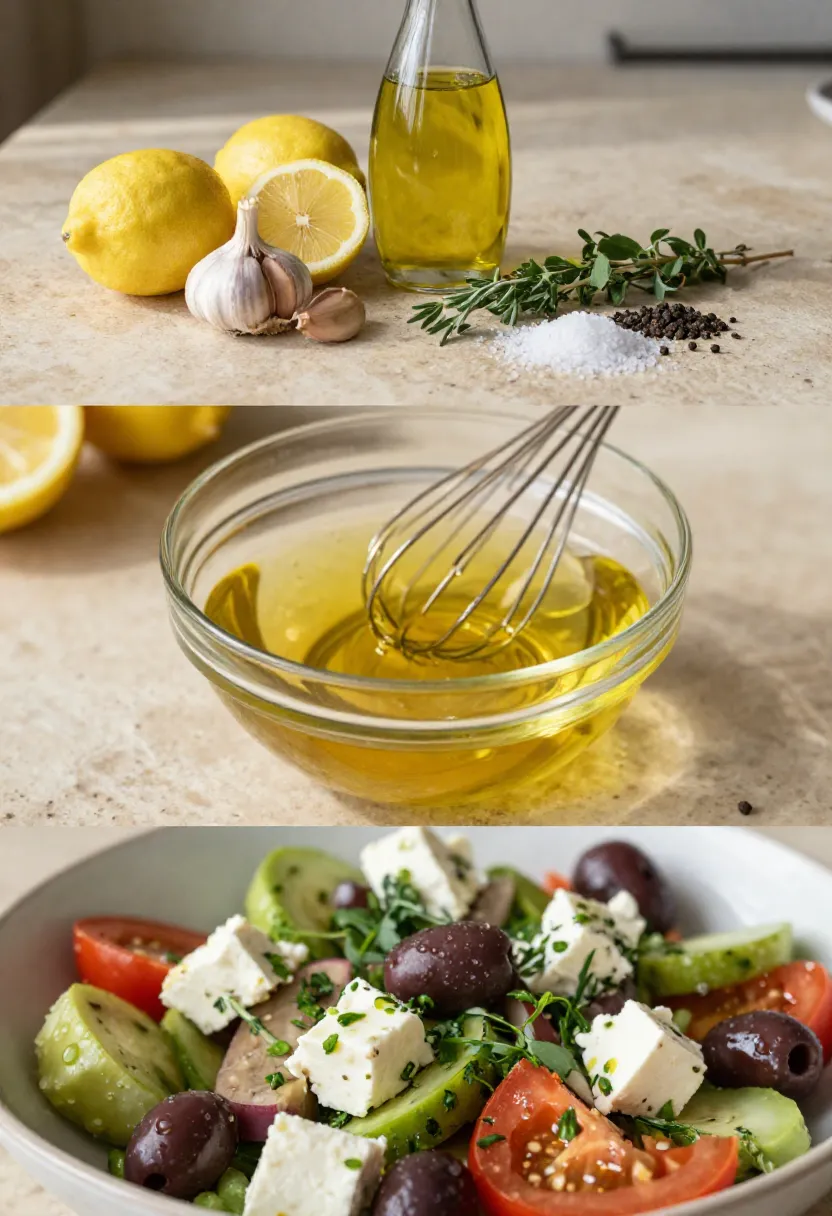
It helps the vegetables taste more like themselves.
The lemon brightens the tomatoes. The olive oil softens the bite of the onion. The garlic adds depth without overwhelming the fresh ingredients. Everything stays recognizable, which is exactly what makes the salad feel so refreshing.
I’ve also noticed that simple dressings tend to age better than complicated ones. There are plenty of trendy dressings that seem exciting the first time you try them but become tiring after a few weeks. A basic lemon and olive oil dressing never really has that problem. It works today, it worked ten years ago, and it will probably work ten years from now.
That’s part of what makes it useful beyond this particular recipe.
The same dressing works beautifully on:
- Roasted vegetables
- Chickpea salads
- Grain bowls
- Pasta salads
- Grilled fish
- Chicken
- Roasted potatoes
Eventually it becomes one of those recipes you stop measuring altogether. You squeeze a lemon, pour some olive oil, add a little garlic, and somehow it turns out right almost every time.
Those are often the recipes worth keeping.
Not because they’re complicated.
Because they quietly make everything around them taste better.
Everyday mediterranean salad recipe 🥗
Mediterranean salad is one of those recipes that quietly earns a permanent place in your rotation.
At first glance, it seems almost too simple to be memorable. There are no complicated techniques, no lengthy cooking times, and no ingredients that require a special trip across town to find. It’s just fresh vegetables, herbs, olives, feta, and a bright homemade dressing. Yet somehow, once it lands on the table, people keep coming back for another spoonful.
I think part of the reason is that it feels refreshing without feeling boring. Some salads seem like an obligation — something healthy that sits next to the main dish. Mediterranean salad never really falls into that category. The juicy tomatoes, crisp cucumbers, creamy feta, and salty olives make every bite feel balanced and satisfying.
I’ve also noticed that it’s one of those rare side dishes that adapts to almost any meal. It works beautifully next to grilled chicken, seafood, lamb, roasted vegetables, or even a simple loaf of crusty bread. During the summer, I’ve occasionally turned it into lunch with nothing more than a few extra pieces of feta and some warm pita on the side.
The dressing deserves a little credit too.
It’s incredibly simple, but that’s exactly why it works. The lemon brightens the vegetables, the olive oil adds richness, and the herbs quietly bring everything together. Nothing feels heavy. Nothing gets buried beneath layers of flavor.
And perhaps that’s why this salad has remained popular for so long.
It doesn’t rely on trends.
It simply relies on ingredients that taste good together.
Ingredients
For the salad
- 2 large cucumbers, diced
- 1 pint cherry tomatoes, halved
- 1 small red onion, thinly sliced
- 1 cup Kalamata olives
- 200 g feta cheese, crumbled
- 1/2 cup fresh parsley, chopped
- 1/4 cup fresh mint, chopped (optional)
For the dressing
- 1/4 cup extra-virgin olive oil
- Juice of 1 lemon
- 1 garlic clove, finely minced
- 1 teaspoon dried oregano
- 1/2 teaspoon sea salt
- 1/4 teaspoon black pepper
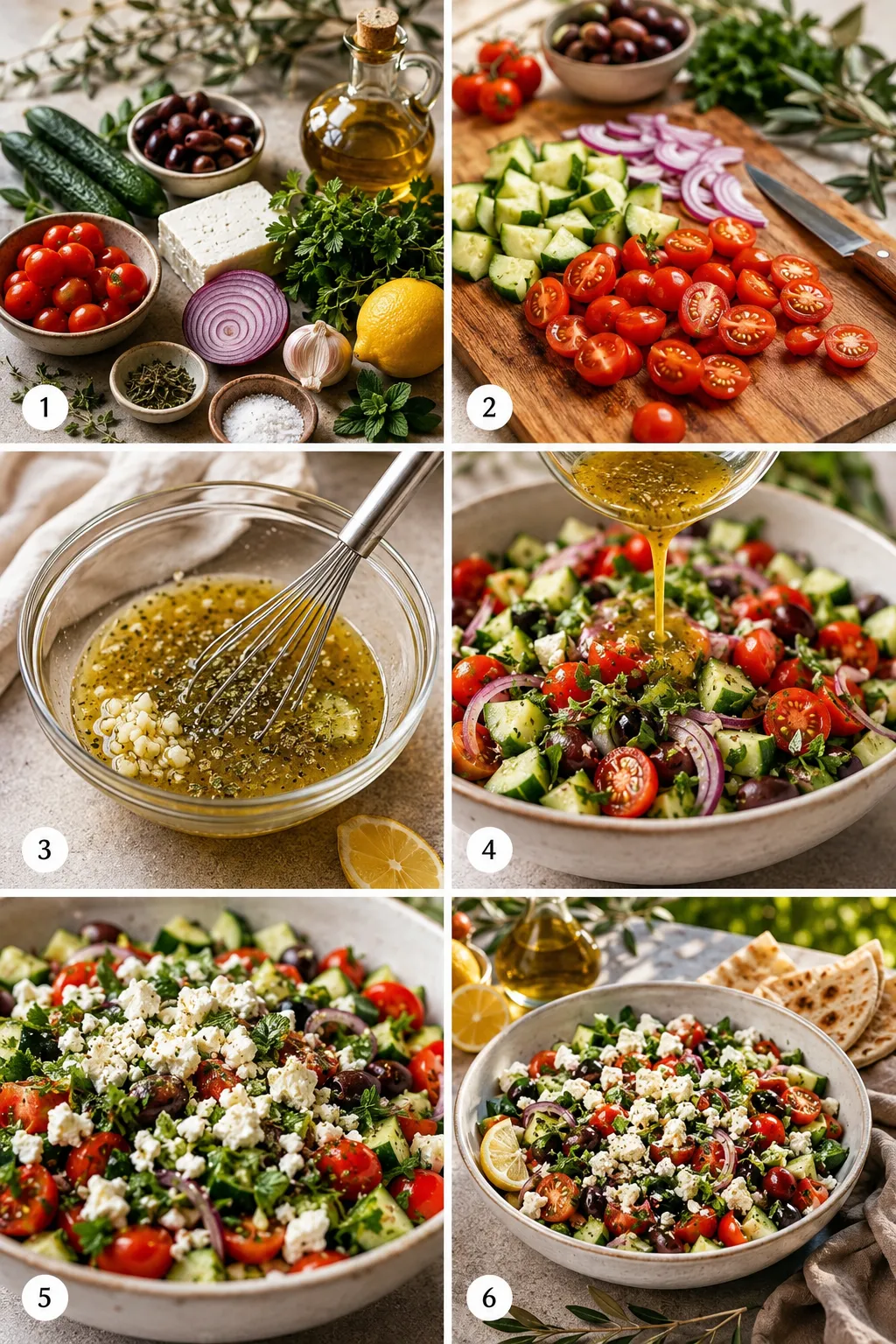
How to make everyday mediterranean salad 🥒
Prepare the vegetables 🔪
Wash and dry all of the vegetables thoroughly. Dice the cucumbers into bite-sized pieces, halve the cherry tomatoes, and thinly slice the red onion. If the onion tastes particularly strong, soak the slices in cold water for about 10 minutes before adding them to the salad. This simple step helps soften the sharpness while keeping the flavor intact.
Transfer all of the prepared vegetables to a large serving bowl.
Add the olives and herbs 🌿
Add the Kalamata olives, chopped parsley, and mint if you’re using it. The herbs might seem like a small addition, but they bring a freshness that helps tie the entire salad together and give it that unmistakable Mediterranean character.
Make the dressing 🍋
In a small bowl or jar, combine the olive oil, lemon juice, minced garlic, oregano, salt, and black pepper. Whisk or shake vigorously until everything is fully combined and slightly emulsified.
Before pouring it over the salad, give it a quick taste. Sometimes an extra squeeze of lemon or a pinch of salt is all it needs.
Combine everything 🥗
Pour the dressing evenly over the vegetables, olives, and herbs. Toss gently until everything is lightly coated. Try not to rush this step. You want the dressing distributed throughout the salad without crushing the tomatoes or bruising the vegetables.
As everything mixes together, some of the tomato juices will naturally blend with the dressing, creating even more flavor.
Add the feta 🧀
Sprinkle the crumbled feta cheese over the salad. You can gently fold some of it into the vegetables while leaving the rest on top. This creates little pockets of creamy, tangy feta throughout the bowl while still giving the salad a beautiful presentation.
Let the flavors mingle ⏳
If time allows, let the salad rest for about 10–15 minutes before serving. While this step isn’t essential, it gives the dressing time to work its way into the vegetables and allows the flavors to come together more naturally.
It’s a small step, but one that often makes a noticeable difference.
Serve and enjoy ☀️
Give the salad one final gentle toss and bring it to the table. Serve alongside grilled chicken, seafood, lamb, roasted vegetables, warm pita bread, or simply enjoy it on its own as a light and refreshing lunch.
Finish with a little extra feta, a handful of fresh herbs, or one final squeeze of lemon for the freshest flavor. 🍋🥗✨
A final sprinkle of feta, a handful of fresh herbs, or an extra squeeze of lemon just before serving is always a good idea. 🍋🥗✨
A few helpful tips 👀
- Use the ripest tomatoes you can find.
- Good olive oil makes a noticeable difference here.
- Soak red onions briefly if you prefer a milder flavor.
- Add chickpeas for extra protein and a heartier salad.
- Keep the dressing separate if preparing the salad far in advance.
- Fresh herbs make the salad significantly brighter and more flavorful.
- Leftovers are still delicious the next day, though the vegetables will soften slightly.
Why this salad somehow tastes even better outdoors ☀️🥗
I’ve noticed something over the years: certain foods seem to change depending on where you eat them.
A bowl of soup belongs on a cold evening. A slow-cooked stew feels right when the weather turns gloomy. Mediterranean salad, meanwhile, seems happiest outdoors.
I’m not entirely sure why.
Maybe it’s because the ingredients already feel connected to sunshine. Tomatoes taste brighter. Cucumbers seem crisper. Even the lemon dressing somehow feels more refreshing when there’s a warm breeze and a table set outside.
Whatever the reason, this is one of those dishes that appears constantly during outdoor meals. It shows up at backyard barbecues, family picnics, weekend lunches on the patio, and casual gatherings where nobody has a strict schedule. The salad fits naturally into those moments because it never feels heavy or demanding.
I’ve also noticed that people tend to keep returning to it throughout the meal. Someone takes a spoonful with grilled chicken. Later they come back for a little more alongside bread. Then another spoonful somehow ends up on the plate before dessert arrives.

That rarely happens by accident.
Part of the appeal is that the flavors stay refreshing from the first bite to the last. The vegetables remain crisp, the feta adds richness without becoming overwhelming, and the lemon dressing keeps everything feeling bright. Even after a generous portion, the salad never leaves you feeling weighed down.
A few occasions where this salad feels especially at home:
- Summer cookouts and backyard dinners
- Picnics and outdoor lunches
- Weekend family gatherings
- Light weekday dinners
- Potlucks and shared meals
- Meals centered around grilled foods
The funny thing is that nobody usually plans for the salad to become one of the most popular dishes on the table.
It just quietly happens.
Easy ways to make the salad your own 🌿
One reason Mediterranean salad has remained popular for so long is that it adapts beautifully to whatever happens to be available.
The foundation stays the same, but small adjustments can make the salad feel completely new without changing its personality. That’s especially useful during busy weeks when the refrigerator contains a random collection of ingredients that need to be used.
I’ve made dozens of slightly different versions over the years, and very few of them turned out badly.
Sometimes I’ll add chickpeas when I want something more filling. Other times grilled chicken ends up on top because there happened to be leftovers from dinner the night before. I’ve even thrown in roasted vegetables that needed a purpose, and somehow the salad still felt exactly like Mediterranean salad.
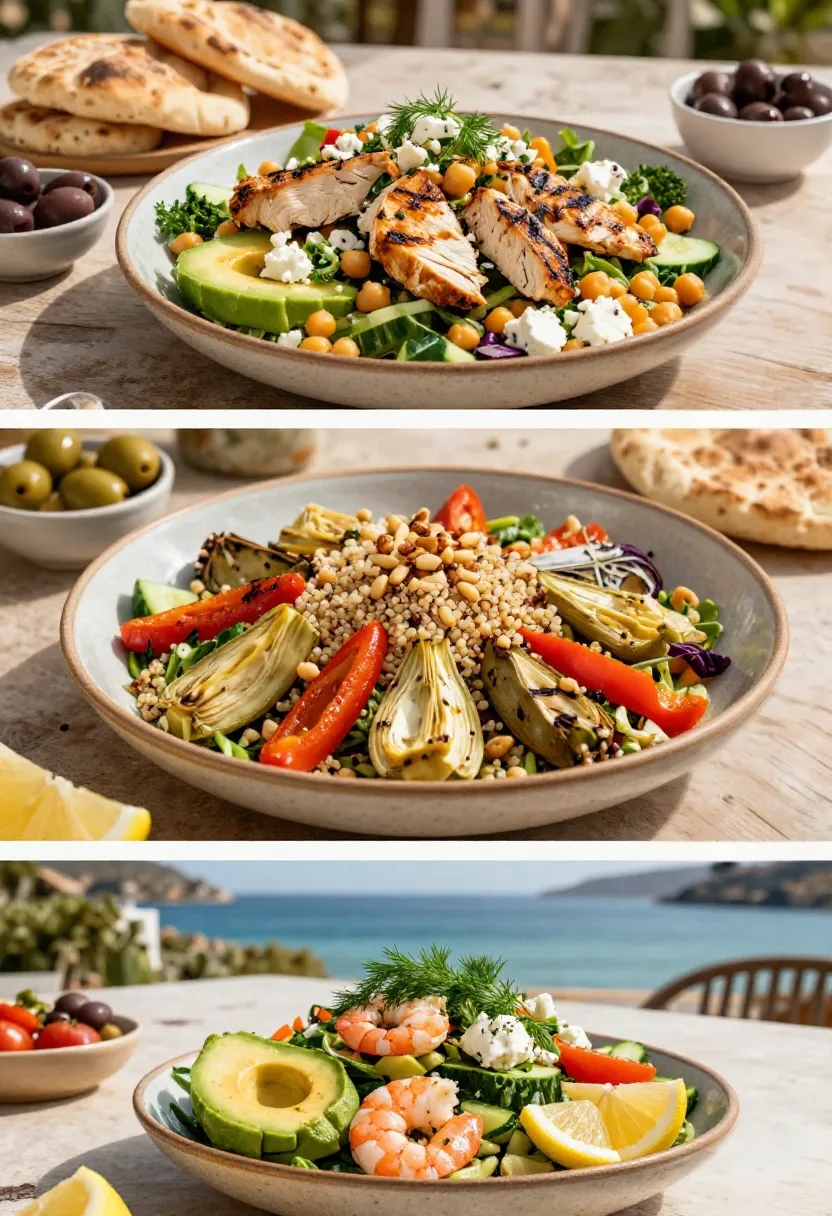
The same flexibility applies to the herbs and vegetables. Parsley is traditional, but mint adds extra freshness. Bell peppers bring sweetness and crunch. Artichokes add another layer of Mediterranean flavor. Even avocado works surprisingly well if you’re looking for a creamier texture.
Some easy variations worth trying include:
- Add chickpeas for extra protein
- Include diced bell peppers for more crunch
- Toss in artichoke hearts
- Add grilled chicken or shrimp
- Include avocado for extra creaminess
- Use fresh dill alongside parsley
- Add toasted pine nuts for texture
- Mix in quinoa for a heartier meal
The best part is that the salad never feels fussy about these changes.
It simply adapts.
And honestly, those are often the recipes people keep making for years because they work with real life rather than demanding perfect conditions every time.
Why simple salads create some of the best food memories ✨
Years from now, most people probably won’t remember exactly how much oregano went into the dressing.
They won’t remember whether the cucumbers were diced perfectly or whether there was slightly more feta than usual. They almost certainly won’t remember the precise ratio of olive oil to lemon juice.
That’s rarely how food memories work.
What people tend to remember is everything happening around the meal.
They remember carrying dishes outside on a warm evening. They remember conversations stretching long after dinner should have ended. They remember someone reaching for the last spoonful of salad while insisting they were already full. They remember the sunlight, the laughter, the music playing quietly somewhere in the background.
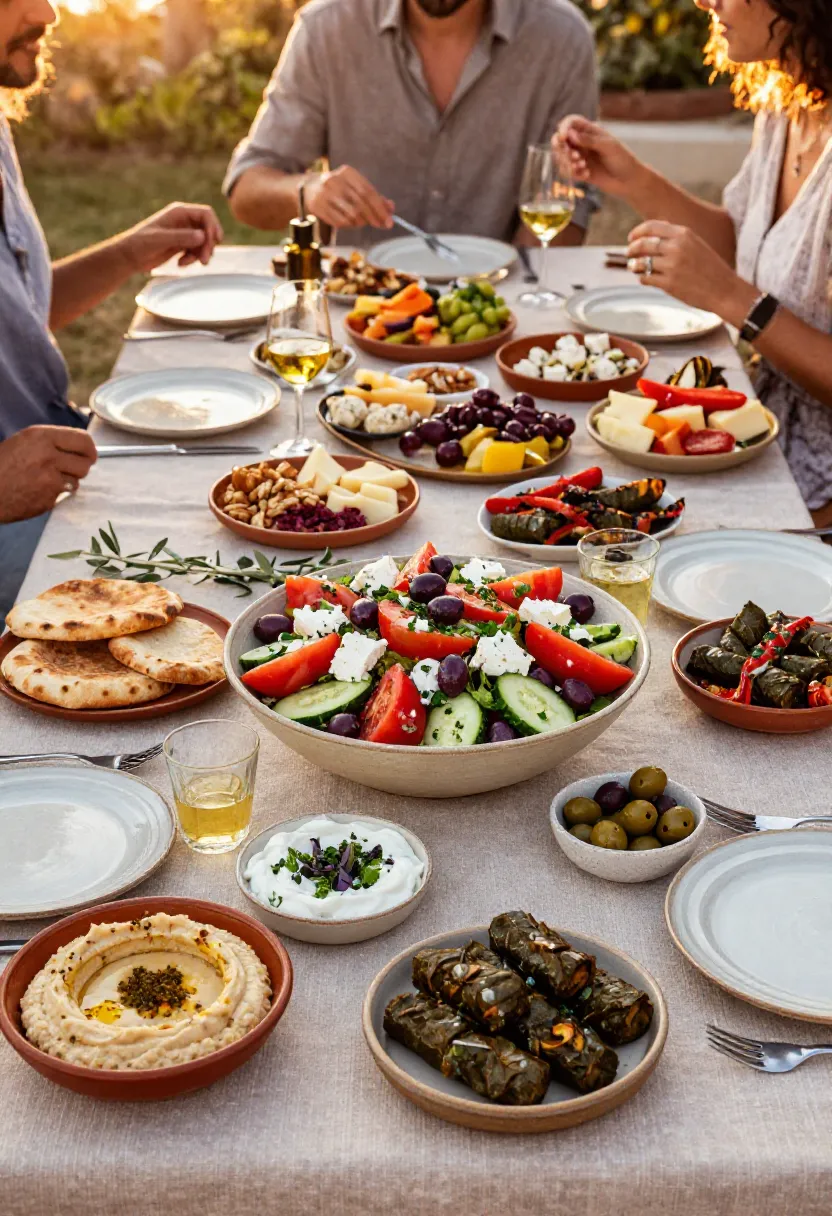
The recipe becomes attached to the moment.
I’ve eaten Mediterranean salads in restaurants I can barely remember, yet I still remember meals shared with family and friends where a simple bowl of salad happened to be sitting in the middle of the table. The ingredients themselves weren’t what stayed with me. The atmosphere did.
That’s one reason recipes like this survive for decades.
They’re not built around trends. They’re not trying to impress anyone for a few minutes before being replaced by the next popular dish. Instead, they quietly become part of everyday life. They appear at family gatherings, holiday lunches, backyard dinners, and ordinary weeknights when nobody feels like cooking anything complicated.
Those meals may not seem particularly important at the time.
But years later, they’re often the ones people remember most.
And somehow, a simple Mediterranean salad has a way of finding its place in those memories.