There are certain foods that seem permanently connected to a season.
Pumpkin pie belongs to autumn. Gingerbread somehow arrives with winter whether we plan for it or not. Fresh strawberries announce spring in many parts of the world. And when summer temperatures start climbing, frozen desserts suddenly become far more appealing than anything that requires an oven.
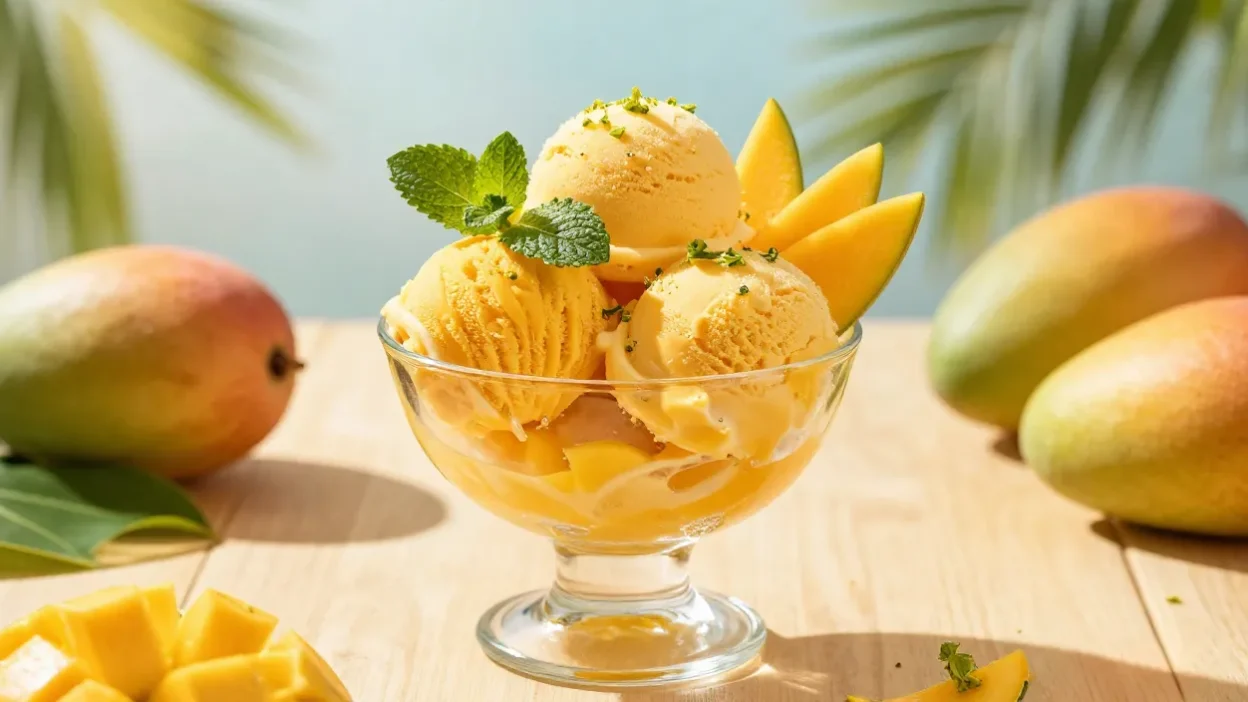
Mango sorbet falls squarely into that category.
Part of the appeal comes from its simplicity. Unlike many frozen desserts, it doesn’t rely on cream, eggs, or a long list of ingredients. Instead, it leans almost entirely on the fruit itself. When the mangoes are ripe and sweet, they do most of the work before the recipe even begins.
That’s something I appreciate more and more these days.
Some desserts seem determined to transform their ingredients into something completely different. Mango sorbet takes the opposite approach. It celebrates the fruit rather than disguising it. The goal isn’t to cover the mango flavor with layers of richness or decoration. It’s to make that flavor even more noticeable.
And honestly, that’s what makes it so refreshing.
The first spoonful tastes intensely fruity, almost as if somebody managed to freeze the feeling of biting into a perfectly ripe mango on a hot afternoon. There’s sweetness, of course, but there’s also brightness. A little tang. A freshness that keeps the dessert from feeling heavy even after a generous serving.
That’s probably one reason sorbet has remained popular for so long.
It satisfies the desire for dessert without carrying the richness of ice cream. After a large meal, a bowl of sorbet often feels exactly right. Cooling, light, and surprisingly cleansing on the palate.
Summer gatherings seem to understand this instinctively.
A rich chocolate cake can feel overwhelming when the temperature climbs. A frozen fruit dessert, on the other hand, disappears quickly. People who claimed they were too full for dessert somehow find room for a scoop or two.
The atmosphere around mango sorbet tends to be different as well.
It’s the kind of dessert that appears during warm evenings on patios, backyard dinners that stretch beyond sunset, and weekends when nobody wants to spend hours baking. It asks very little from the cook while delivering exactly the kind of freshness people are usually looking for.
A few reasons mango sorbet feels perfectly suited to summer:
- It highlights seasonal fruit at its peak.
- It feels refreshing rather than heavy.
- It requires very few ingredients.
- It can be prepared ahead of time.
- It works equally well after casual lunches or larger dinners.
Maybe that’s why recipes like this tend to return every year.
Not because they’re trendy.
Not because they’re complicated.
Simply because when the weather gets hot, they make perfect sense. 🥭☀️
🌞 The surprising difference ripe mangoes make
If there’s one ingredient that determines whether mango sorbet becomes unforgettable or merely acceptable, it’s the mango itself.
That might sound obvious, but it’s more important here than in many other desserts.
In a cake, average fruit can sometimes hide behind frosting, spices, or fillings. In a pie, sugar and butter often help carry the flavor. Sorbet doesn’t really have those luxuries. The fruit stands directly in the spotlight from the first spoonful to the last.
Which means the quality of the mango matters enormously.
A perfectly ripe mango brings natural sweetness, floral notes, and a rich tropical flavor that almost feels creamy despite containing no dairy at all. An underripe mango, by comparison, can produce a sorbet that tastes flatter and less satisfying no matter how carefully it’s prepared.
I’ve always found that fascinating.
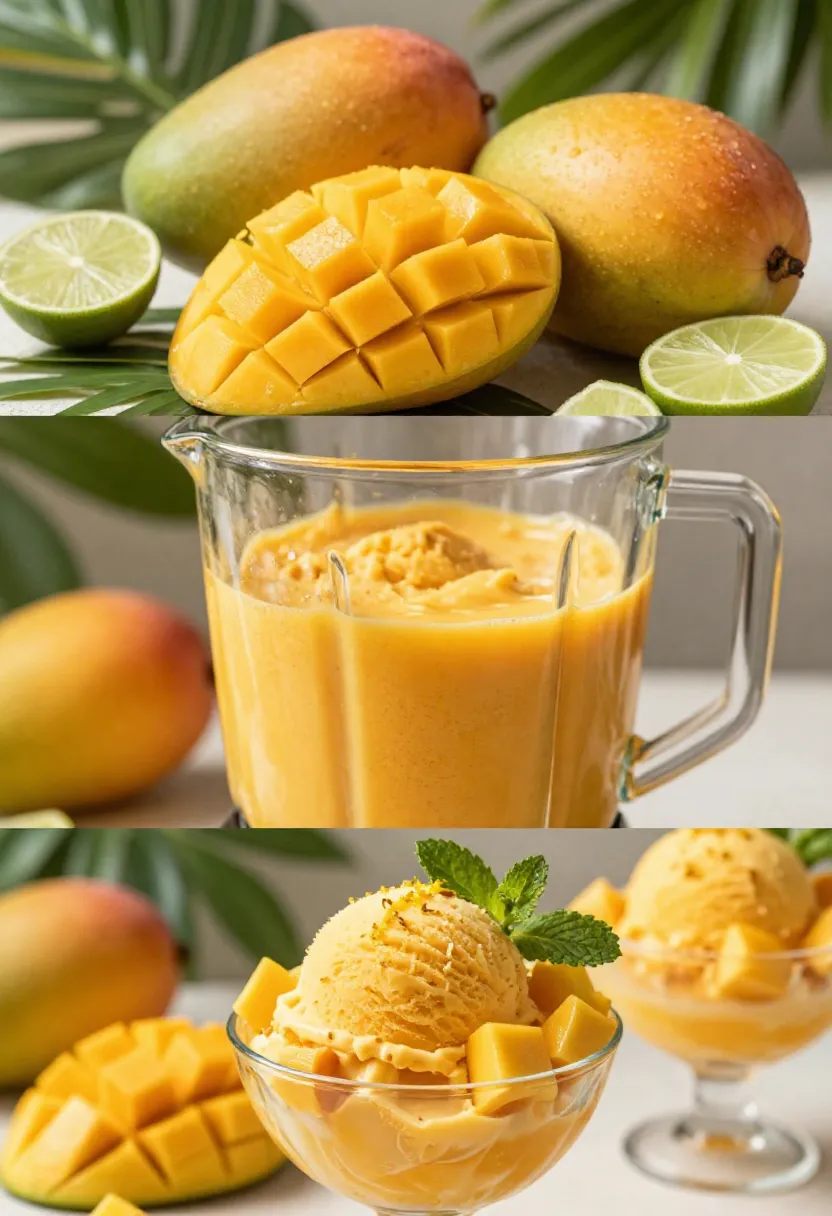
Few ingredients transform a dessert so dramatically simply by being allowed to reach their peak ripeness.
The texture changes too.
As mangoes ripen, their flesh becomes softer and silkier, which helps create the smooth consistency people love in sorbet. That’s one reason mango often produces a creamier frozen dessert than many other fruits despite containing no cream whatsoever.
A little citrus usually helps as well.
Lime or lemon doesn’t make the sorbet taste noticeably sour. Instead, it sharpens the fruit flavor and keeps the sweetness from becoming overwhelming. It’s one of those ingredients people don’t always notice directly, but they would almost certainly notice if it were missing.
Here’s how the main ingredients contribute to the final result:
| Ingredient | What it contributes | Why it matters | Final result |
|---|---|---|---|
| Mango | Sweet tropical flavor | Main ingredient | Bright fruity base |
| Lime juice | Fresh acidity | Balances sweetness | Cleaner finish |
| Sugar | Sweetness and texture | Improves freezing | Smoother sorbet |
| Water | Consistency | Helps blending | Balanced texture |
One thing I like about mango sorbet is that it manages to feel indulgent without relying on richness.
The flavor is intense enough to feel like a treat, yet the dessert remains remarkably light. That balance is harder to achieve than it sounds. Many desserts lean heavily toward richness in order to feel satisfying. Sorbet finds satisfaction through flavor instead.
And when the mangoes are especially good, that’s more than enough.
✨ Why simplicity works so well in desserts like this
Some recipes become better every time another ingredient gets added.
Mango sorbet isn’t one of them.
In fact, one of its greatest strengths is knowing when to stop.
The ingredient list is usually short. The method is straightforward. There aren’t layers to assemble or decorations to pipe. Most of the effort goes into choosing good fruit and allowing it to shine.
That restraint is part of what makes the dessert feel so elegant.
Professional pastry chefs often talk about balance. Not every dessert needs more sweetness, more richness, or more complexity. Sometimes the most memorable desserts are the ones that focus on doing a few things exceptionally well.
Mango sorbet follows that philosophy beautifully.

The fruit provides most of the flavor. A little citrus adds brightness. A small amount of sugar helps create the proper texture. Beyond that, there isn’t much left to improve.
And honestly, that’s refreshing.
We spend so much time surrounded by recipes that promise bigger flavors, longer ingredient lists, and increasingly elaborate presentations. Mango sorbet quietly moves in the opposite direction. It trusts the ingredients.
That’s probably why it feels so timeless.
The recipe works just as well for a casual weekday dessert as it does for a summer dinner party. It can be served in elegant bowls with fresh fruit or scooped into simple glasses for an afternoon treat. Either way, the dessert feels complete without requiring much decoration.
A few occasions where mango sorbet always seems to fit naturally:
- Summer dinners on the patio
- Weekend barbecues and cookouts
- Poolside gatherings
- Afternoon treats on hot days
- Holiday meals that need a lighter dessert
- Brunches featuring fresh seasonal fruit
The older I get, the more I appreciate recipes like this.
Not because they’re impressive.
Because they’re dependable.
Good fruit. Simple preparation. Bright flavor.
Sometimes that’s all a dessert really needs. 🥭✨
🥭 Mango Sorbet Recipe
Mango sorbet is one of those desserts that feels almost too simple to be this good.
There are no complicated techniques, no long ingredient lists, and no need for fancy equipment beyond a blender or food processor. Yet somehow a handful of ripe mangoes can transform into a frozen dessert that tastes bright, refreshing, and intensely fruity.
That’s part of the recipe’s charm.
Unlike ice cream, which relies heavily on cream and eggs for its character, mango sorbet allows the fruit to take center stage. Every spoonful tastes like mango — not mango flavoring, not mango syrup, but actual ripe mangoes at their best.
It’s also the kind of dessert that feels right almost any time the weather turns warm. Serve it after a backyard barbecue, a family dinner, or a lazy weekend lunch, and people rarely turn it down. In fact, it’s usually the opposite. Even those who claim they’re “too full for dessert” somehow manage to find room for a scoop.
The secret isn’t complexity.
It’s starting with sweet, ripe mangoes and letting them do what they already do well.
🛒 Ingredients
For the sorbet
- 4 cups ripe mango chunks (about 3–4 large mangoes)
- ⅓ cup granulated sugar
- 2 tablespoons fresh lime juice
- ¼ cup water
- Pinch of salt
Optional for serving
- Fresh mango slices
- Lime zest
- Mint leaves
- Toasted coconut flakes
- Fresh berries
👨🍳 Step-by-step Instructions
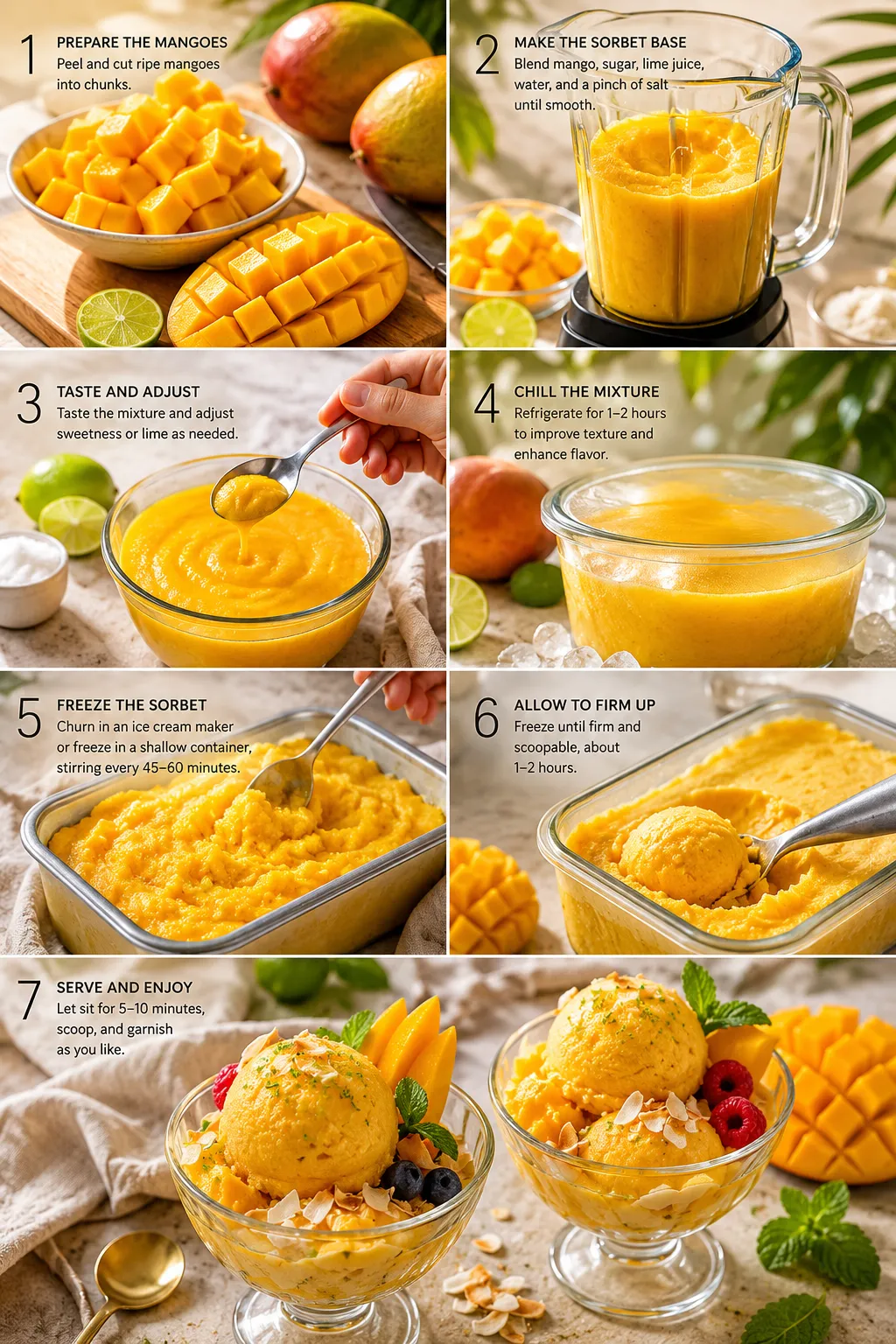
1. Prepare the mangoes
Start by peeling the mangoes and carefully slicing the flesh away from the pits. Cut the fruit into medium-sized chunks and measure approximately 4 cups. Since mango is the star of this recipe, choosing ripe fruit makes a huge difference. The mangoes should feel slightly soft when gently pressed and have a sweet, fragrant aroma. If they’re underripe, the sorbet may taste less vibrant and require additional sugar to balance the flavor.
Take a moment to remove any fibrous pieces before blending. The smoother the fruit is at this stage, the silkier the finished sorbet will be.
2. Make the sorbet base
Place the mango chunks into a blender or food processor along with the sugar, fresh lime juice, water, and a pinch of salt.
Blend everything on high speed until completely smooth. Stop occasionally to scrape down the sides of the blender to ensure no small pieces of fruit remain. The mixture should become thick, glossy, and beautifully fragrant, with a bright tropical aroma that immediately hints at the finished dessert.
The pinch of salt may seem insignificant, but it helps enhance the natural sweetness of the mango and creates a more balanced flavor overall.
3. Taste and adjust the flavor
Before moving on, taste the mango mixture carefully.
This is one of the most important steps because mangoes vary greatly in sweetness depending on the variety and ripeness. If the fruit tastes slightly tart or lacks sweetness, add a little more sugar and blend again. If the mixture feels overly sweet, an extra squeeze of fresh lime juice can brighten the flavor and add more balance.
Think of this stage as fine-tuning the sorbet. Once frozen, flavors become slightly less intense, so the mixture should taste a little brighter and sweeter than you ultimately want the finished dessert to be.
4. Chill the mixture
Pour the blended mango mixture into a bowl or airtight container and place it in the refrigerator for at least 1–2 hours.
Although it’s tempting to skip this step, chilling the base before freezing helps improve the final texture. A cold mixture freezes more evenly, which can result in a smoother sorbet with fewer ice crystals. It also gives the flavors a little time to settle and blend together.
While the mixture chills, you’ll probably notice the aroma becoming even more pronounced.
5. Freeze the sorbet
If you’re using an ice cream maker, pour the chilled mixture into the machine and churn according to the manufacturer’s instructions. Continue churning until the sorbet becomes thick, smooth, and has a soft-serve consistency.
If you don’t have an ice cream maker, simply pour the mixture into a shallow freezer-safe container and place it in the freezer. Allow it to freeze for approximately 4–5 hours. During the first few hours, remove the container every 45–60 minutes and stir vigorously with a fork or whisk. This helps break up developing ice crystals and creates a smoother texture.
Each time you stir, you’ll notice the mixture becoming thicker and more sorbet-like.
6. Allow the sorbet to firm up
Once the sorbet has finished churning or fully freezing, transfer it to an airtight container if necessary.
For a firmer, more scoopable texture, return it to the freezer for another 1–2 hours. This final resting period allows the sorbet to stabilize and develop the consistency most people expect when serving.
The texture should remain smooth and easy to scoop rather than icy or hard.
7. Serve and enjoy
About 5–10 minutes before serving, remove the sorbet from the freezer and allow it to sit at room temperature. This short wait makes scooping much easier and helps the flavors become more noticeable.
Scoop the sorbet into chilled bowls, dessert glasses, or small serving cups. For an extra-special presentation, garnish with fresh mango slices, finely grated lime zest, mint leaves, toasted coconut flakes, or a few fresh berries.
The finished sorbet should be bright, refreshing, and intensely fruity, with a smooth texture and pure mango flavor in every spoonful. It’s exactly the kind of dessert that feels especially welcome on a warm afternoon or at the end of a summer meal. 🥭❄️✨
🔥 Small tricks that make a noticeable difference
- Use very ripe mangoes for the sweetest and most intense flavor.
- Fresh lime juice tastes brighter than bottled juice.
- A small pinch of salt enhances the fruit flavor without being noticeable.
- Chilling the mixture before freezing improves texture.
- Freeze the sorbet in a shallow container for faster and more even freezing.
- Let the sorbet sit at room temperature for a few minutes before scooping.
- Toasted coconut makes an excellent garnish and pairs beautifully with mango.
- If the sorbet freezes very hard, allow it to soften slightly before serving.
The finished mango sorbet should be bright, refreshing, naturally fruity, and exactly the kind of dessert that disappears quickly on a hot summer day. 🥭❄️✨
🌴 Simple variations that make every batch feel different
One of the things I love most about mango sorbet is how easily it adapts to small changes.
The classic version is wonderfully simple, but it’s also the kind of recipe that encourages experimentation. Once you’ve made it once or twice, it’s hard not to start wondering what would happen if you added another fruit, changed the citrus, or introduced a new flavor alongside the mango.
The good news is that mango is surprisingly cooperative.
Its naturally sweet, tropical flavor pairs well with a wide range of ingredients without losing its identity. Even when other fruits are added, the mango usually remains the star of the show.
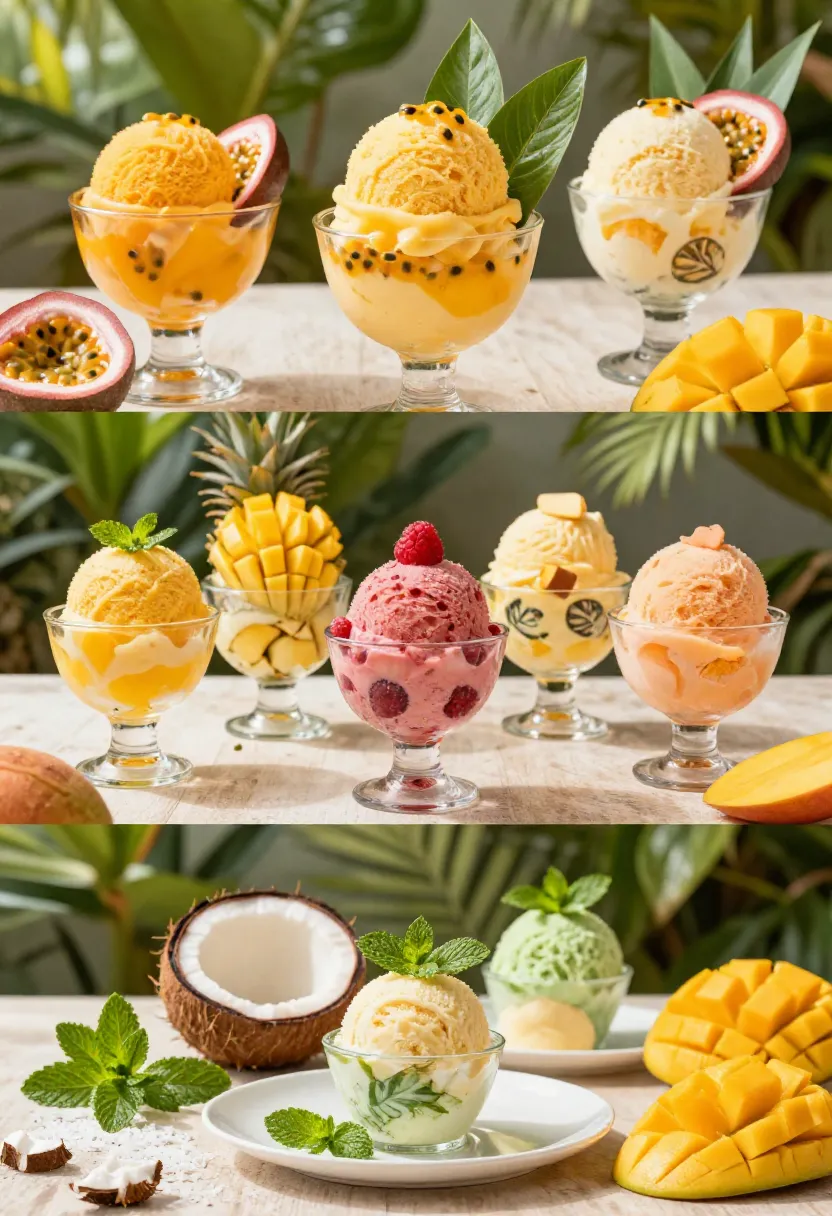
Some of my favorite variations include:
- Mango and passion fruit sorbet for extra tropical flavor
- Mango and pineapple sorbet with a brighter, tangier finish
- Mango-lime sorbet with additional citrus zest
- Mango and coconut sorbet for a more island-inspired feel
- Mango and raspberry sorbet with beautiful color contrast
- Mango and peach sorbet for extra sweetness
- Mango sorbet with fresh mint for a cooling finish
Fresh herbs can be surprisingly effective too.
A few mint leaves blended into the mixture create a fresher flavor that’s particularly refreshing during the hottest months of the year. Basil can work beautifully as well, although it creates a more unexpected and slightly sophisticated flavor profile.
The key is keeping the balance intact.
Mango should still be the first thing people taste. The additional ingredients should support the fruit rather than compete with it. When that balance is maintained, even small changes can make the recipe feel completely new.
And honestly, that’s one reason recipes like this remain favorites for so long. They’re familiar enough to be comforting, yet flexible enough that they never become boring.
🍽️ Easy ways to serve mango sorbet
One of the biggest advantages of mango sorbet is that it doesn’t need much help.
A simple scoop in a bowl is already delicious. The flavor is bright, the texture is refreshing, and the color alone makes it feel like a dessert worth looking forward to.
That said, a few thoughtful additions can make it feel even more special.
Fresh fruit is usually the easiest place to start. Slices of mango, pineapple, kiwi, or berries create a colorful presentation while reinforcing the fresh flavors already present in the sorbet.

Some serving ideas that work especially well include:
- Served with fresh mango slices and lime zest
- Paired with toasted coconut flakes
- Topped with fresh berries
- Served alongside shortbread cookies
- Added to fruit platters for summer gatherings
- Scooped into chilled glasses for elegant presentation
- Served between courses as a palate cleanser
- Paired with grilled tropical fruit
What I find interesting is how different the dessert can feel depending on how it’s served.
A scoop in a small bowl feels casual and relaxed. Served in a chilled glass with fresh fruit and mint, it suddenly feels like something from a restaurant menu. The recipe itself doesn’t change, but the experience does.
And because the flavor is so clean and refreshing, it works equally well after a light lunch, a backyard barbecue, or a large holiday meal when people want dessert but not necessarily something heavy.
That’s a surprisingly useful quality for a frozen dessert to have.
☀️ Why desserts like this become part of summer memories
Years from now, most people won’t remember exactly how much lime juice went into the blender.
They won’t remember whether the sorbet froze for four hours or five. They probably won’t remember the exact amount of sugar or how many mangoes were used in a particular batch.
That’s rarely the part that stays.
What people remember is everything happening around the dessert.
They remember sitting outside long after dinner ended because the evening was too pleasant to leave. They remember hearing ice clink in glasses while somebody carried bowls of sorbet out to the patio. They remember the relief of eating something cold after spending the day in the summer heat.

Food memories tend to work that way.
The recipe quietly becomes attached to the moment.
Some of my favorite summer memories involve surprisingly simple foods. Fresh watermelon on a hot afternoon. Homemade lemonade shared with friends. Ice cream melting faster than anyone could eat it. None of those memories depend on complicated recipes. They’re memorable because of the situations surrounding them.
Mango sorbet feels perfectly suited to those kinds of moments.
Partly because it’s refreshing, but also because it encourages people to slow down for a few minutes. A bowl of sorbet isn’t something people usually rush through. They sit, talk, enjoy the evening, and let the dessert do what it’s supposed to do.
Maybe that’s why recipes like this tend to return every summer.
Not because they’re fashionable.
Not because they’re difficult.
Simply because they fit naturally into the season.
A ripe mango, a warm evening, a scoop of something cold, and people you enjoy spending time with.
Sometimes that’s all a summer memory really needs. 🥭☀️✨