Some mornings are not made for cooking.
You wake up already thinking about emails, school drop-off, traffic, laundry, or the meeting you forgot to prepare for. Breakfast sounds nice in theory, but standing at the stove? Not happening.
That is where an easy breakfast smoothie earns its place. You can make it in a few minutes, drink it while getting ready, and still feel like you gave your body something better than coffee on an empty stomach.
The best part is that a smoothie does not need to taste “too healthy.” You do not have to force down something grassy or chalky just because it has spinach in it. With banana, frozen fruit, and a splash of milk, even a green smoothie can taste sweet, creamy, and fresh.
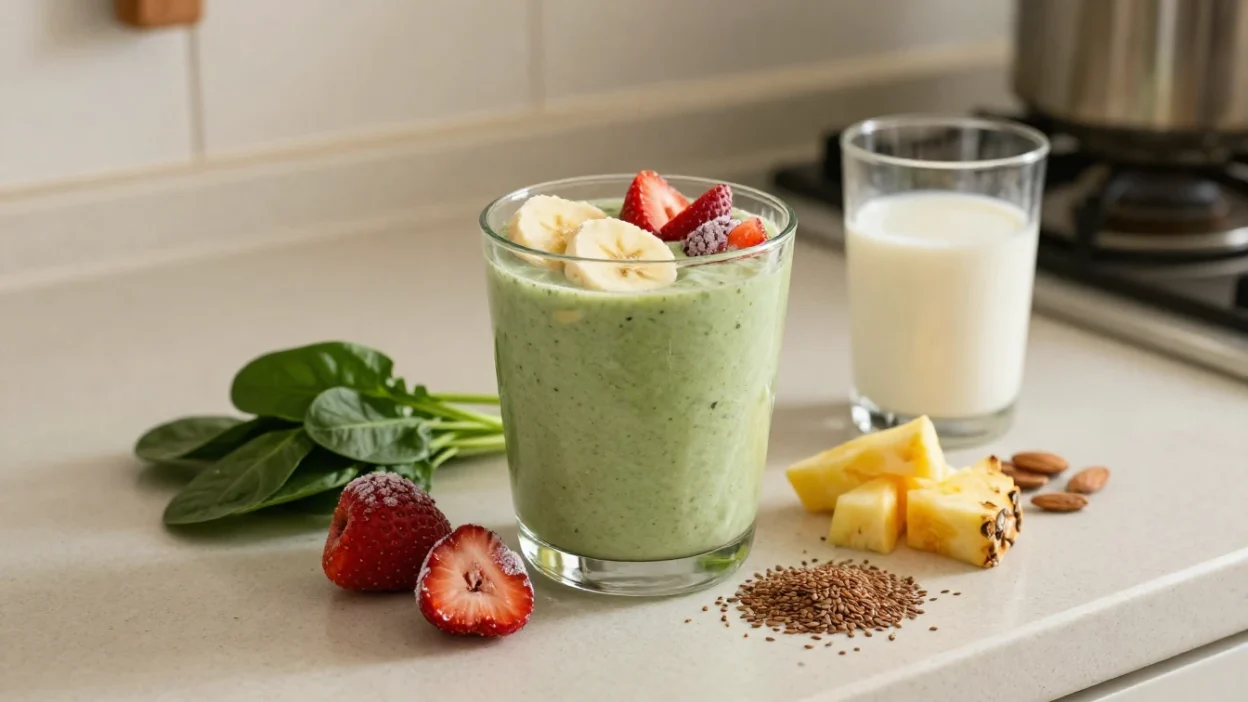
This recipe is simple on purpose: banana for creaminess, frozen strawberries for a cold fruity texture, pineapple for brightness, spinach for greens, almond milk to blend everything together, and ground flaxseed for extra fiber. It is the kind of breakfast you can make once, learn by heart, and adjust depending on what is sitting in your freezer.
Why a breakfast smoothie works so well in the morning
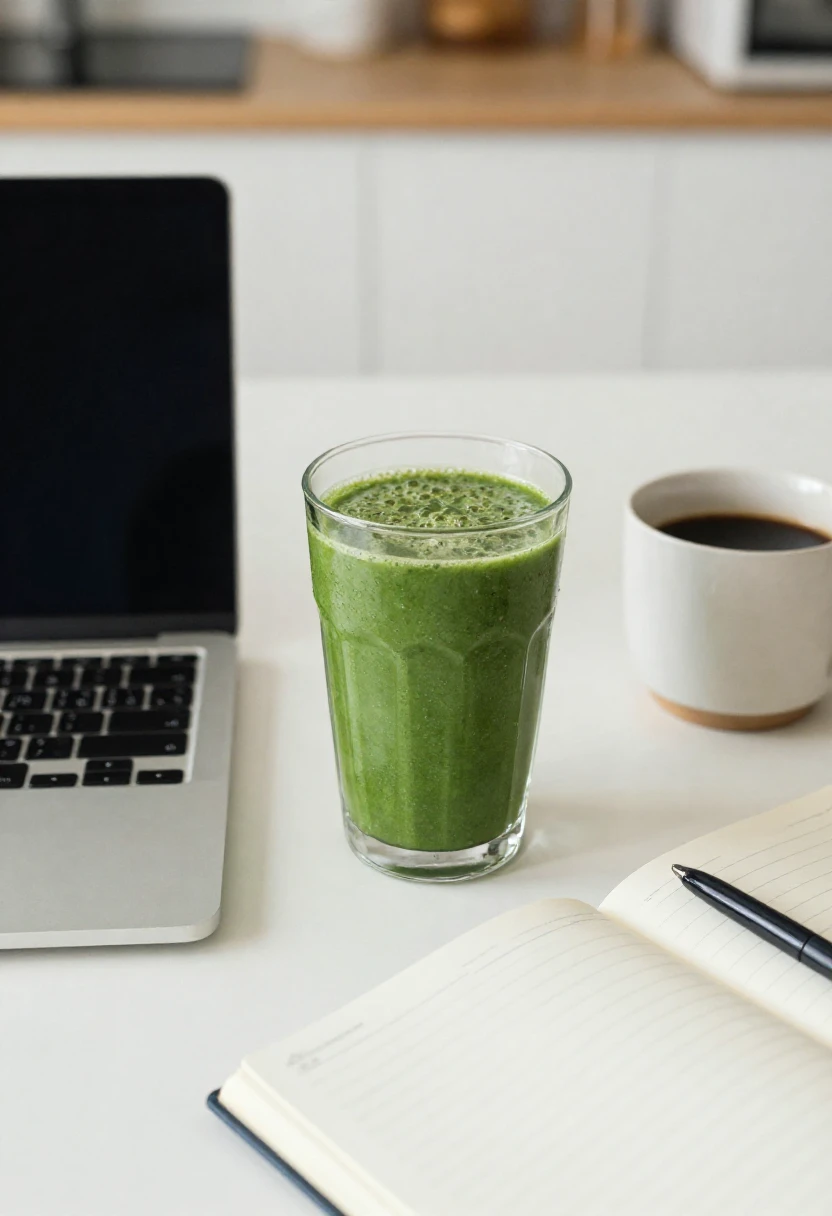
A breakfast smoothie is one of those small habits that can make mornings feel a little less chaotic. Not perfect. Just easier.
You do not need a cutting board covered in crumbs, a pan to wash, or ten minutes of deciding what to eat. You add everything to the blender, press the button, and breakfast is basically done.
That matters on real mornings.
The rushed ones.
The sleepy ones.
The ones where you are hungry but nothing sounds good yet.
A smoothie also makes it easier to add fruit and greens without turning breakfast into a project. A handful of spinach disappears into the blender with banana and berries. You still get that fresh green color, but the flavor stays fruity and mild.
And if you build it the right way, it can be more than a light drink. Add something with fiber, protein, or healthy fat, and the smoothie becomes much more satisfying.
For example:
- Ground flaxseed adds a soft, nutty note and helps thicken the texture.
- Greek yogurt makes it creamier and more filling.
- Oats give it a breakfast-like body.
- Nut butter turns it into something closer to a full meal.
The trick is not to throw everything in at once. That is how you end up with a smoothie that tastes like a confused salad.
Start with a good base. Then add one or two extras depending on what you need that morning.
A quick smoothie before a walk? Keep it light.
A smoothie that has to hold you until lunch? Add protein and a little fat.
That flexibility is what makes it useful. You can make the same basic breakfast smoothie all week and still change the flavor enough that it does not feel boring by Wednesday.
The best ingredients for an easy breakfast smoothie
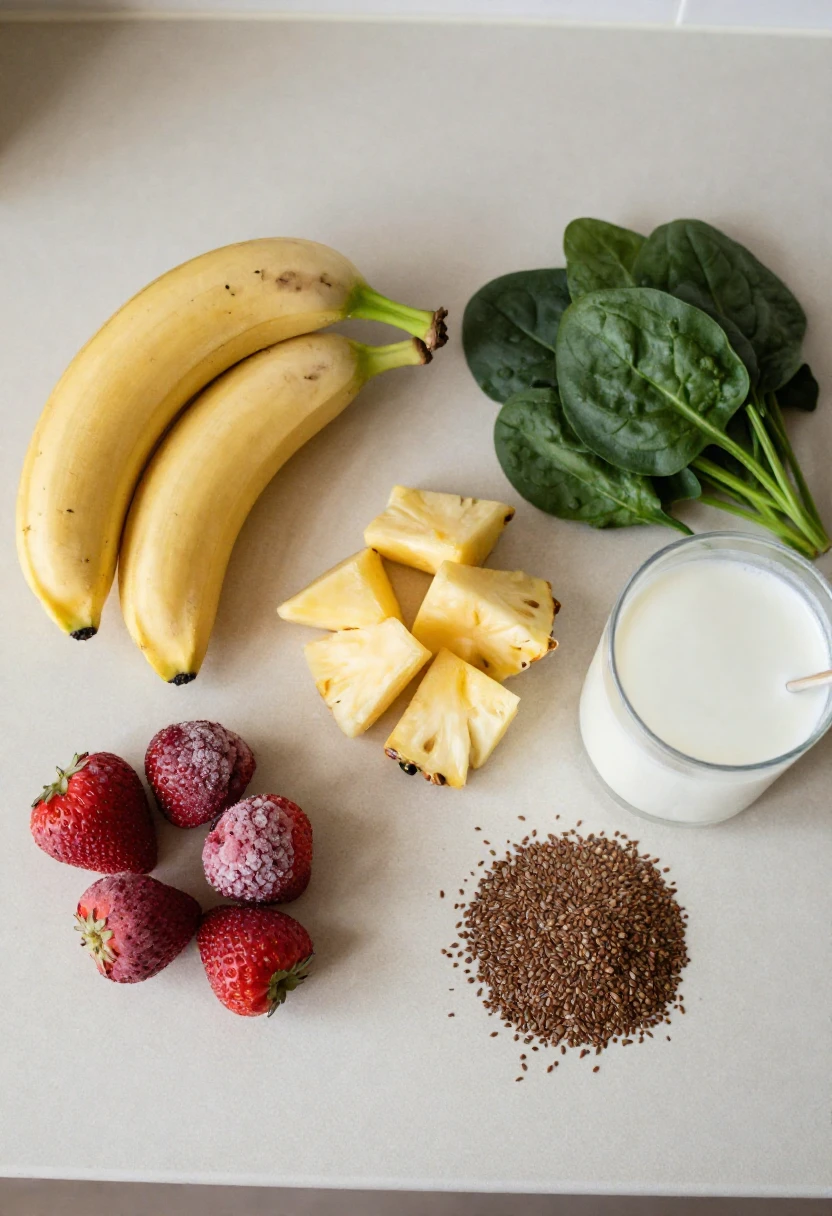
A good breakfast smoothie starts with ingredients that do more than just blend together. You want creaminess, sweetness, freshness, and enough substance that you are not hungry again twenty minutes later.
This is why I like building the smoothie around a few reliable pieces: banana, frozen fruit, spinach, milk, and one filling add-in. Nothing complicated. Just ingredients that behave well in a blender.
Banana for creaminess
Banana is the ingredient that makes a smoothie feel smooth instead of thin and watery.
A ripe banana adds natural sweetness, but it also gives the drink that soft, almost milkshake-like texture. If you freeze the banana first, even better. Frozen banana makes the smoothie colder and thicker without needing ice, which can water everything down.
I usually peel bananas before freezing them. It sounds obvious, but if you have ever tried to peel a frozen banana with cold fingers in the morning, you only make that mistake once.
For the best texture, slice the banana before freezing and keep the pieces in a freezer bag or container. Then you can grab what you need without fighting with one frozen banana brick.
Frozen fruit for flavor and texture
Frozen fruit is what makes this smoothie feel bright and refreshing.
Strawberries are a safe starting point because they taste familiar and blend well with banana. Pineapple adds a little tropical sharpness, which is useful if the smoothie tastes too flat or too “green.”
You can also use:
- Frozen mango for a creamy, sunny flavor
- Blueberries for a deeper berry taste
- Mixed berries if you like a slightly tangy smoothie
- Frozen peaches for something softer and more mellow
One small tip: if you use mostly berries, the smoothie may taste less sweet than expected. Berries can be tart, especially when frozen. Banana or pineapple helps balance that out.
Baby spinach for gentle greens
Spinach is the easiest green to add to a breakfast smoothie because it does not take over the flavor.
Kale can be a little bossy. Parsley tastes fresh but strong. Chard can feel earthy. Spinach, especially baby spinach, blends into the background when you pair it with sweet fruit.
Start with one small handful. Once you get used to it, add more.
If you are making a smoothie for someone who is suspicious of green drinks, use berries with the spinach. The color may turn darker and less obviously green, and the flavor stays fruity.
Almond milk or another liquid base
Almond milk works well here because it is light and mild. It helps everything blend without making the smoothie too heavy.
But you do not have to use almond milk. Use what you already like.
Good options include:
- Dairy milk for a classic creamy taste
- Oat milk for a slightly sweeter, thicker smoothie
- Coconut milk beverage for a soft tropical flavor
- Kefir for tang and extra protein
- Plain water if you want something lighter
Start with less liquid than you think you need. You can always add more after blending, but you cannot easily fix a smoothie that turns too thin.
Ground flaxseed for fiber
Ground flaxseed is one of those ingredients that disappears into a smoothie in the best way.
It adds a mild nutty taste, thickens the texture slightly, and gives the smoothie more fiber. I prefer ground flaxseed over whole flaxseed because whole seeds often pass through without blending properly. They also tend to sink or stick around in the glass.
One tablespoon is enough for most smoothies. More than that can make the texture a little too thick, especially if the smoothie sits for a few minutes.
Optional sweetener
If your banana is ripe and your fruit is sweet, you may not need any sweetener at all.
But if the smoothie tastes too tart, add a small amount of honey, maple syrup, or a pinch of stevia. Go slowly. Smoothies can go from pleasantly sweet to candy-sweet very fast.
I would blend first, taste, then decide. Morning-you deserves that tiny bit of patience.
Easy breakfast smoothie recipe
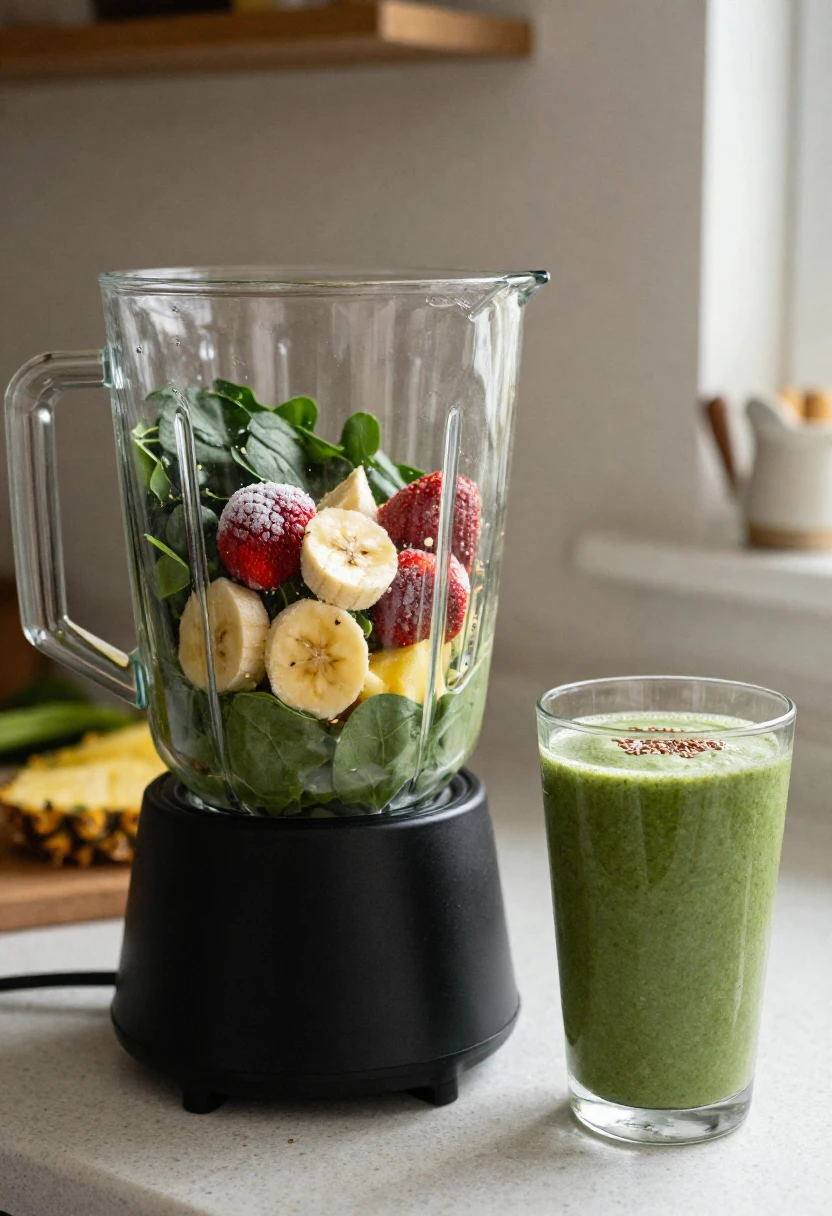
This is the kind of smoothie recipe you can make half-asleep, which is exactly what I want from breakfast on a busy morning.
It is fruity, creamy, lightly green, and flexible enough that you can swap ingredients without ruining it. The spinach blends in quietly. The banana does the heavy lifting for texture. The pineapple keeps the flavor bright so the smoothie does not taste flat.
Ingredients
For one large smoothie, you will need:
- 1 ripe banana, fresh or frozen
- 1 cup frozen strawberries
- 1/2 cup frozen pineapple
- 1 small handful baby spinach
- 1 cup unsweetened almond milk
- 1 tablespoon ground flaxseed
- Optional: 1 teaspoon honey, maple syrup, or a pinch of stevia
If your blender is small, reduce the frozen fruit slightly or add the ingredients in two rounds. A crowded blender can turn a simple smoothie into a noisy battle.
Step-by-step directions
Add the almond milk and spinach to the blender first.
Blend for 15–20 seconds, until the spinach breaks down into the liquid. This little step makes a big difference. If you throw spinach on top of frozen fruit, it can cling to the sides or leave tiny green pieces in the smoothie.
Next, add the banana, frozen strawberries, frozen pineapple, and ground flaxseed.
Blend again until smooth and creamy. If the blender struggles, stop and scrape down the sides. Add a splash more almond milk if needed, but go slowly. Too much liquid will make the smoothie thin.
Taste before adding sweetener.
A ripe banana may be enough. Pineapple also brings natural sweetness, especially when it is fully ripe before freezing. If the smoothie tastes too tart, add a little honey, maple syrup, or stevia and blend again for a few seconds.
Pour into a glass and drink right away while it is cold and thick.
Texture tips
Smoothies are easy, but texture can be weird if the balance is off. Too thick, too icy, too watery, too foamy. I have made all of them.
If your smoothie is too thick, add a splash of almond milk and blend again.
If it is too thin, add a few more frozen strawberries, a piece of frozen banana, or a spoonful of oats.
If it tastes too icy, use frozen banana instead of ice next time. Ice makes smoothies cold, but it does not add creaminess.
If it tastes too green, add more pineapple or banana. You can also use a smaller handful of spinach until you get used to the flavor.
If it tastes flat, add a tiny squeeze of lemon or a pinch of salt. Not enough to make it salty. Just enough to wake up the fruit.
Quick recipe card
Easy breakfast smoothie recipe
Prep time: 5 minutes
Servings: 1 large smoothie
Ingredients:
- 1 ripe banana
- 1 cup frozen strawberries
- 1/2 cup frozen pineapple
- 1 small handful baby spinach
- 1 cup unsweetened almond milk
- 1 tablespoon ground flaxseed
- Optional sweetener, to taste
Directions:
- Blend almond milk and spinach first until smooth.
- Add banana, frozen strawberries, pineapple, and ground flaxseed.
- Blend until creamy.
- Taste and add sweetener only if needed.
- Pour into a glass and drink right away.
This is the base recipe. Once you make it a few times, you will probably stop measuring. That is usually when a smoothie becomes part of your real morning routine.
How to make your smoothie taste better
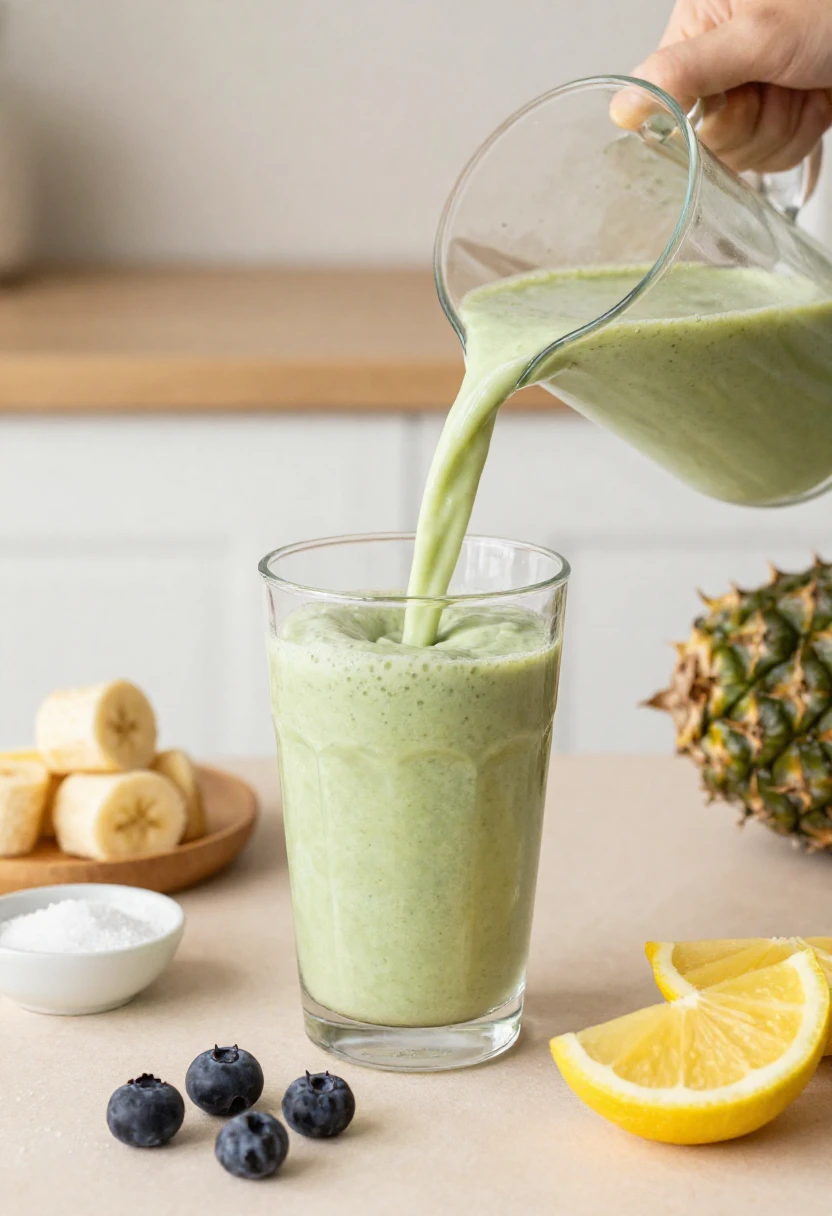
A breakfast smoothie should not feel like a punishment for trying to eat something healthy.
If it tastes grassy, watery, or oddly sour, you will probably make it once and then forget about it. The good news is that most smoothie problems are easy to fix. You do not need a new recipe every time. You just need a better balance.
Use at least one frozen ingredient
A room-temperature smoothie is hard to love.
Frozen fruit gives the smoothie that cold, thick texture that makes it feel refreshing instead of dull. Frozen banana is especially useful because it makes the drink creamy without ice cream, yogurt, or extra sweetener.
If you only have fresh fruit, that is fine. Add a few ice cubes, but do not overdo it. Too much ice can make the smoothie taste thin and watered down.
My favorite easy combination is:
- frozen banana for creaminess
- frozen strawberries for fruitiness
- frozen pineapple for brightness
That mix gives you a smoothie that tastes fresh, sweet, and a little tropical without needing much else.
Balance sweet and fresh flavors
Smoothies can go wrong in two directions.
Sometimes they are too sweet, almost like melted fruit candy. Other times they taste flat, even when the ingredients are good.
Banana adds sweetness and body, but too much banana can make every smoothie taste the same. Pineapple helps because it brings a sharper, fresher flavor. Berries add tartness. A squeeze of lemon can make the whole glass taste cleaner.
And here is the tiny trick people forget: add a small pinch of salt.
Not enough to taste salty. Just a few grains. It can make the fruit taste more like itself, especially if you are using frozen berries that are a little bland.
Do not add too many strong greens at first
Spinach is gentle. That is why it works so well in a beginner green smoothie.
Kale, parsley, celery leaves, and chard can be great in the right drink, but they are louder. They taste greener. They need more balancing from fruit, citrus, ginger, or something creamy.
If you are new to green smoothies, start with baby spinach and keep the handful small. You can always add more later.
A smoothie that you actually enjoy is better than one packed with greens that you never want to drink again.
Make the texture creamy, not slushy
A smoothie needs body.
If it feels like icy juice, add one creamy ingredient. Banana is the easiest, but you can also use Greek yogurt, avocado, oats, or nut butter.
If you want a lighter smoothie, keep it fruit-based. If you want it to feel more like breakfast, add something that gives it a little weight.
Good creamy add-ins include:
- 1/2 frozen banana
- 2–3 tablespoons Greek yogurt
- 1 tablespoon peanut butter or almond butter
- 1/4 avocado
- 2 tablespoons oats
You do not need all of them. Pick one.
That is usually enough to turn a thin smoothie into something that feels smooth, cold, and satisfying.
Taste before you pour
This sounds small, but it saves a lot of disappointing smoothies.
Blend, taste, then adjust.
If it is too thick, add more liquid.
If it is too thin, add frozen fruit.
If it is too tart, add banana or a little honey.
If it tastes too green, add pineapple.
If it tastes boring, add lemon or a tiny pinch of salt.
After a while, you stop following exact measurements and start fixing the smoothie by taste. That is the point where breakfast gets easy.
How to make a breakfast smoothie more filling
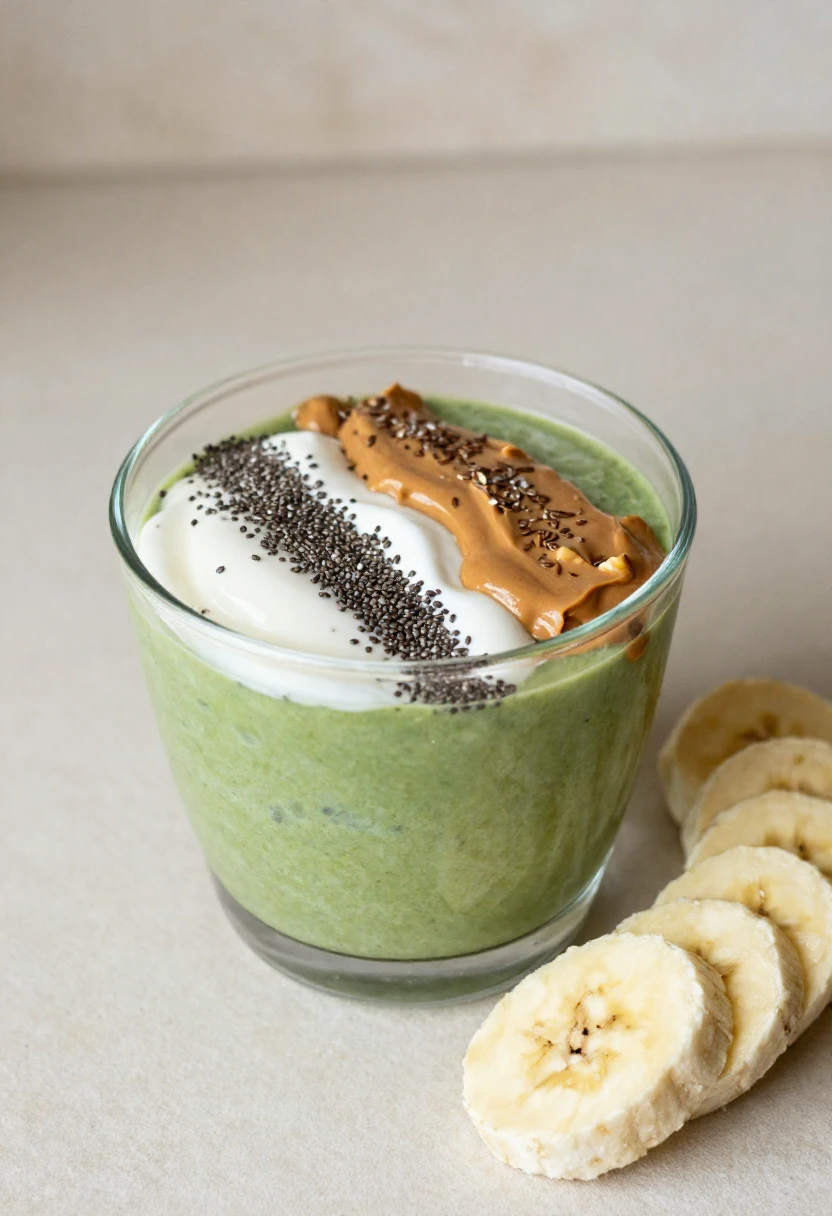
A smoothie can be a quick breakfast, but it should not leave you hungry before your cup of coffee is finished.
Fruit and greens are great, but on their own they often digest quickly. If you want your breakfast smoothie to keep you full longer, you need to add something with protein, fat, fiber, or slow carbs.
Not all at once. That can turn a fresh smoothie into a heavy one. But one or two smart add-ins can make a big difference.
Add protein
Protein is usually the missing piece in a light fruit smoothie.
Without it, the smoothie may taste good but feel more like a snack than breakfast. Adding protein gives it more staying power, especially if you are drinking it before work, after a morning walk, or between errands.
Good protein add-ins include:
- Greek yogurt
- Plain kefir
- Cottage cheese
- Protein powder
- Silken tofu
- Milk instead of water or thin plant milk
Greek yogurt is my favorite for a creamy breakfast smoothie because it blends easily and adds a slight tang. Cottage cheese also works better than people expect. It sounds strange, I know, but once blended with banana and berries, it makes the smoothie creamy without tasting cheesy.
If you use protein powder, start with half a scoop. Some powders are very sweet or chalky, and they can take over the whole drink.
Add healthy fats
A little fat makes a smoothie feel more satisfying.
This does not mean turning it into a dessert. It just means adding something that slows things down a bit and gives the texture more body.
Try one of these:
- 1 tablespoon peanut butter
- 1 tablespoon almond butter
- 1 tablespoon chia seeds
- 1 tablespoon ground flaxseed
- 1–2 tablespoons hemp seeds
- 1/4 avocado
Avocado is especially good if you want creaminess without making the smoothie taste like peanut butter. It blends into the background and gives the smoothie a silky texture.
Nut butter is stronger. I love it with banana, cocoa powder, or oats, but I would not add it to every fruit smoothie. Peanut butter and pineapple, for example, are not always friends.
Add slow carbs
If you need your smoothie to act like a real breakfast, add a small amount of oats.
Oats make the smoothie thicker and more filling, and they work especially well with banana, berries, cinnamon, peanut butter, or yogurt. You do not need much. Two or three tablespoons can change the whole texture.
You can use:
- Rolled oats
- Quick oats
- Soaked oats
- A spoonful of cooked oatmeal
Rolled oats give a little more texture. Quick oats blend smoother. If your blender is not very powerful, soak the oats in milk for 5–10 minutes before blending.
This is also a good trick if you are making a smoothie for someone who says, “I don’t feel like I ate breakfast.” Oats make it feel more like food.
Do not overload the blender
There is a point where a smoothie stops being balanced and turns into a beige health paste.
Banana, berries, spinach, flaxseed, oats, yogurt, protein powder, nut butter, chia seeds, avocado, cinnamon, almond milk. Technically healthy? Sure. Pleasant to drink? Maybe not.
A better formula is:
- fruit
- one green
- one liquid
- one protein or fat
- one small fiber add-in
For example, banana, strawberries, spinach, almond milk, Greek yogurt, and ground flaxseed. That is enough.
You can always make a different version tomorrow.
Make it match your morning
The best filling smoothie depends on what your morning looks like.
If you are having breakfast before a workout, you may want banana, oats, and yogurt.
If you want something light but not empty, use berries, spinach, almond milk, and flaxseed.
If you need a smoothie that keeps you full until lunch, add Greek yogurt and nut butter, or yogurt and oats.
There is no perfect formula. Just a base recipe you can adjust.
That is what makes smoothies useful in the first place.
Common smoothie mistakes to avoid
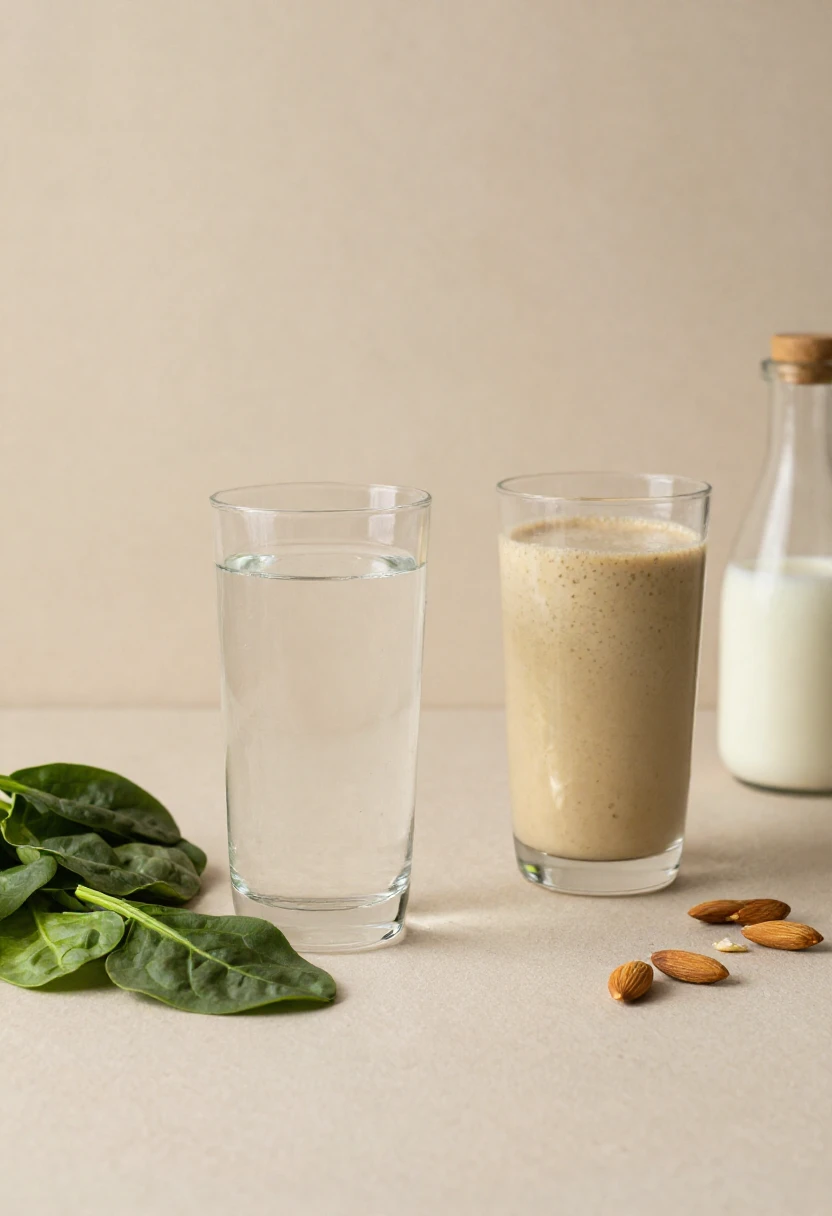
Smoothies look almost impossible to mess up. You put fruit in a blender, add liquid, press a button, and hope for the best.
Most of the time, that works.
But if your smoothie keeps turning out watery, bitter, too sweet, or strangely chunky, there is usually a small reason behind it. The fix is simple once you know what is going wrong.
Adding greens last
This is one of the easiest mistakes to make.
If you add spinach on top of frozen fruit, the leaves can stick to the sides of the blender or spin around without fully breaking down. Then you end up with tiny green pieces in an otherwise smooth drink.
Blend the liquid and spinach first.
Just almond milk and spinach for 15–20 seconds. Once the greens are broken down, add the banana, frozen fruit, flaxseed, and anything else.
It feels like an extra step, but it makes the smoothie much smoother.
Using too much fruit juice
Fruit juice sounds like it belongs in a smoothie, but it can make breakfast too sweet very quickly.
A little orange juice or pineapple juice can brighten the flavor, especially in a tropical smoothie. But if juice becomes the main liquid, the smoothie often turns into a sweet drink instead of a filling breakfast.
For a morning smoothie, I usually prefer:
- almond milk
- dairy milk
- oat milk
- kefir
- plain water with a splash of juice
That way, you still get the fruit flavor without making the whole glass taste like dessert.
Forgetting about texture
Flavor matters, but texture is what makes you want to finish the smoothie.
A good breakfast smoothie should be cold, smooth, and thick enough to feel satisfying. If it is too thin, it feels like juice. If it is too thick, you have to fight it with a straw. If it is too icy, it loses that creamy feel.
The easiest texture formula is:
- one creamy fruit, like banana or mango
- one frozen fruit, like strawberries or pineapple
- enough liquid to blend
- one small thickener, like flaxseed, oats, yogurt, or chia seeds
Once you understand that balance, you can change the fruit without losing the texture.
Making it too complicated
This is the smoothie mistake I see the most.
People try to make the “perfect” healthy smoothie and add everything: greens, berries, banana, protein powder, collagen, chia, flax, oats, nut butter, spirulina, cinnamon, ginger, avocado, and three kinds of milk.
Then it tastes muddy.
A smoothie does not need fifteen ingredients to be good. In fact, it usually tastes better with fewer.
Start with this:
- fruit
- greens
- liquid
- one filling add-in
That is enough for a busy morning.
You can make it more interesting later, but the base should be easy enough to remember when you are still half awake.
Not tasting before serving
Smoothie recipes are helpful, but fruit changes.
One banana may be sweet and soft. Another may be pale and barely ripe. Frozen strawberries can be bright and juicy one week, then tart and bland the next.
So taste before you pour.
If it needs sweetness, add banana, pineapple, or a small drizzle of honey.
If it tastes too sweet, add lemon juice or more greens.
If it tastes flat, add a pinch of salt.
If it tastes too thick, add a splash of milk.
That quick taste check is the difference between “fine” and “actually good.”
Easy smoothie variations
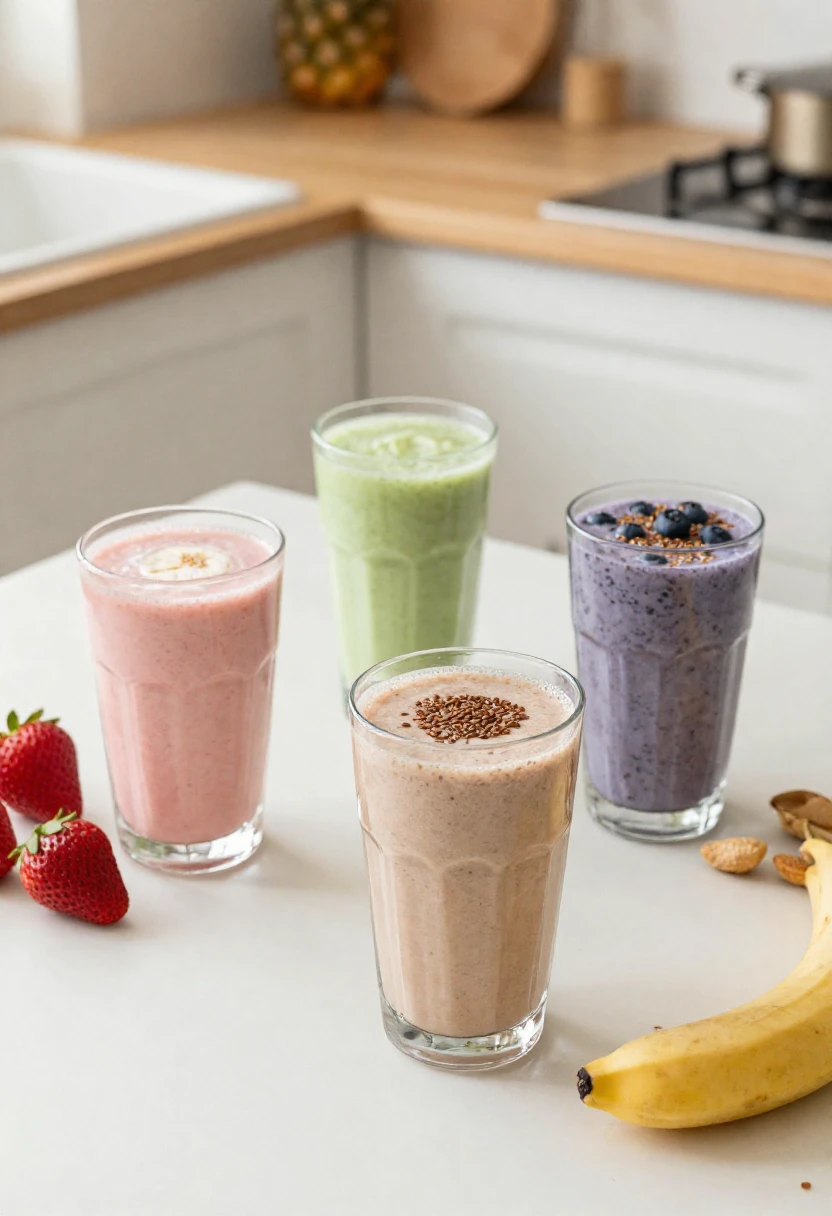
Once you know the basic breakfast smoothie formula, you can change the flavor without starting from zero every time.
That is what makes smoothies practical. You do not need a new recipe for every morning. You need a few combinations that work, taste good, and use ingredients you probably already have.
Strawberry banana spinach smoothie
This is the easiest version if you are just getting used to green smoothies.
Strawberry and banana cover the spinach well, so the flavor stays sweet and familiar. The color may turn a little muted depending on how much spinach you use, but the taste is soft and fruity.
Use:
- 1 banana
- 1 cup frozen strawberries
- 1 small handful baby spinach
- 1 cup almond milk
- 1 tablespoon ground flaxseed
If you want it creamier, add Greek yogurt. If you want it colder and thicker, use a frozen banana instead of a fresh one.
This is the smoothie I would give to someone who says they do not like green smoothies. Start here. No kale, no spirulina, no dramatic green powder situation.
Pineapple green smoothie
Pineapple makes a green smoothie taste brighter.
It has enough sweetness and acidity to balance spinach, and it works beautifully with banana. This version feels a little more tropical, especially if you use coconut milk beverage instead of almond milk.
Use:
- 1 banana
- 1 cup frozen pineapple
- 1 small handful baby spinach
- 1 cup almond milk or coconut milk beverage
- 1 tablespoon chia seeds or ground flaxseed
- Optional: squeeze of lime
The lime is not required, but I like it. It makes the pineapple taste sharper and fresher, almost like the smoothie woke up a little.
Blueberry flax breakfast smoothie
Blueberries make a smoothie deeper and less candy-sweet.
This one is good if you want something fruity but not too bright or tropical. It also works well with oats, yogurt, and flaxseed, so it can be a more filling breakfast.
Use:
- 1/2 banana
- 1 cup frozen blueberries
- 1/2 cup Greek yogurt
- 3/4 cup almond milk or dairy milk
- 1 tablespoon ground flaxseed
- Optional: 2 tablespoons oats
Blueberries can be tart, especially frozen ones. If the smoothie tastes too sharp, add the other half of the banana or a small drizzle of honey.
A pinch of cinnamon also works here. Not too much. Just enough to make it feel cozy.
Creamy peanut butter banana smoothie
This one is more filling and less refreshing, in a good way.
It tastes closer to a breakfast shake, especially if you add oats. I like it on mornings when I know lunch will be late or when I want something more substantial than fruit and greens.
Use:
- 1 frozen banana
- 1 tablespoon peanut butter
- 2 tablespoons oats
- 1 cup milk or almond milk
- 1 tablespoon ground flaxseed
- Optional: 1 teaspoon cocoa powder
You can add spinach to this one too, but keep it small. Peanut butter has a strong flavor, and too many greens can make the smoothie taste a little muddy.
If you want it thicker, add less milk at first. Blend, check the texture, then add more only if the blender needs help.
Mango yogurt smoothie
Mango gives a smoothie that soft, sunny flavor that feels almost creamy even before you add yogurt.
This version is nice when you want something smooth and mellow instead of berry-tart.
Use:
- 1 cup frozen mango
- 1/2 banana
- 1/2 cup Greek yogurt
- 3/4 cup almond milk or dairy milk
- 1 tablespoon ground flaxseed
- Optional: small squeeze of lemon
Mango can be very sweet, so taste before adding honey or maple syrup. Most of the time, you will not need it.
Apple cinnamon oat smoothie
This one tastes more like breakfast than a fruit drink.
It is not as bright as a berry smoothie, but it is cozy and filling. Use a sweet apple and blend it well, especially if your blender is not very powerful.
Use:
- 1 small apple, chopped
- 1/2 frozen banana
- 2 tablespoons oats
- 3/4 cup milk or almond milk
- 1/4 teaspoon cinnamon
- 1 tablespoon ground flaxseed
- Optional: 2 tablespoons Greek yogurt
If the apple skin bothers you, peel it first. I usually leave it on, but texture matters. A smoothie should not feel like work to drink.
The easiest way to use these variations is to keep one base and change only the fruit. Banana, spinach, milk, and flaxseed can stay the same. Strawberries one day, pineapple the next, blueberries after that.
Small changes are enough.
How to prep smoothies ahead of time
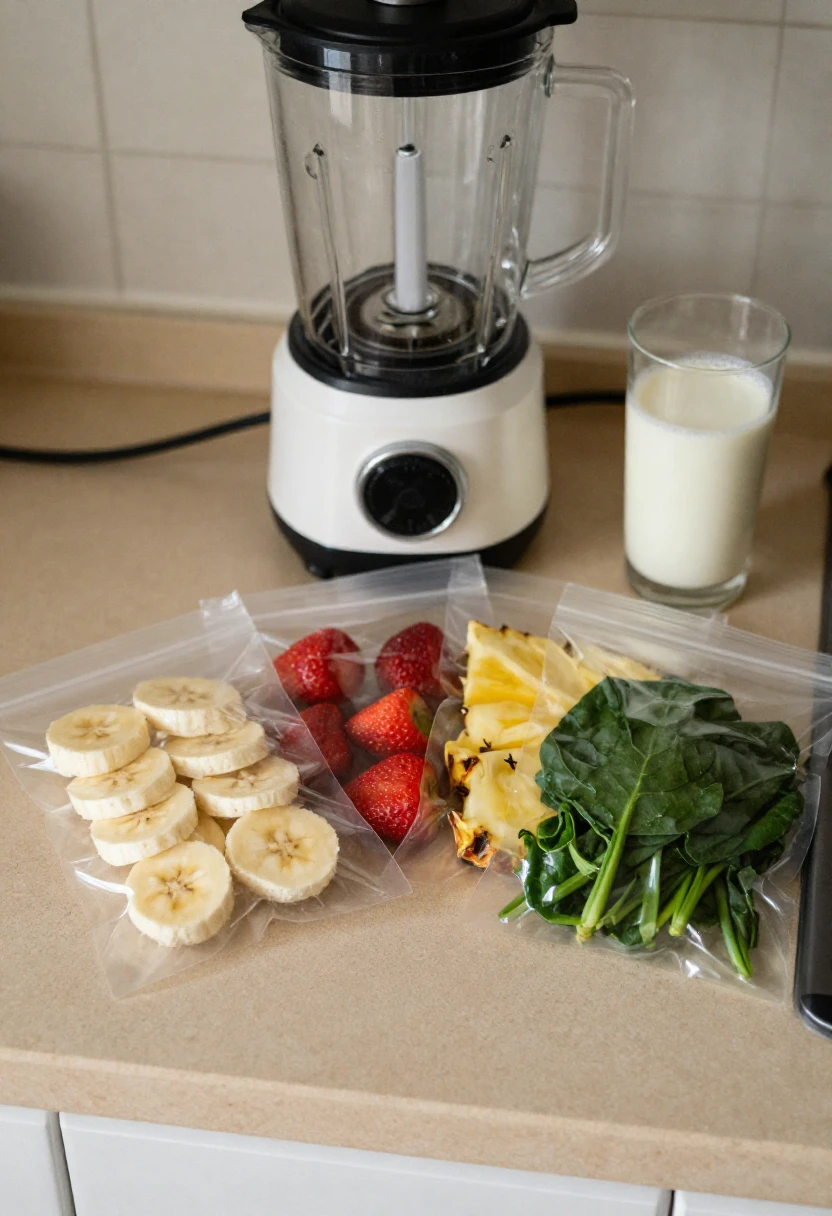
Smoothies are already quick, but they get even easier when the ingredients are waiting for you.
I like smoothie prep because it removes the tiny morning decisions. No opening five bags of frozen fruit. No wondering if the spinach is still good. No measuring flaxseed while half-awake.
You do a little prep once, and the blender does the rest.
Make freezer smoothie packs
Freezer smoothie packs are the easiest way to prepare breakfast smoothies ahead of time.
You add the fruit and greens to a freezer-safe bag or container, then store several packs in the freezer. In the morning, you empty one pack into the blender, add liquid, add any fresh extras, and blend.
For one basic pack, add:
- 1 sliced banana
- 1 cup strawberries
- 1/2 cup pineapple
- 1 small handful spinach
That is it.
Do not add the almond milk yet. Liquid belongs in the blender, not the freezer pack. It freezes into a block and makes blending harder than it needs to be.
If you want to make five packs for the week, line them up on the counter and fill them assembly-line style. Banana first, then fruit, then spinach on top. Press out extra air before sealing so the fruit does not get too frosty.
Freeze bananas the right way
Bananas are the one ingredient I would always prep ahead.
Peel them first, slice them, and freeze the pieces in a single layer if you have time. Once frozen, move them into a bag or container.
If you throw whole peeled bananas into one bag, they can freeze together into a stubborn lump. Still usable, just annoying.
And if you freeze bananas with the peel on, future-you will not be grateful.
A frozen banana makes the smoothie thick and creamy, so it is worth keeping a small stash in the freezer. I usually freeze bananas when they get too ripe for snacking but are still perfect for blending.
What not to freeze
Most fruit and greens freeze well for smoothies, but not every add-in belongs in a freezer pack.
I would not freeze:
- almond milk or other liquid
- ground flaxseed
- chia seeds
- protein powder
- nut butter
- yogurt, unless you do not mind a slightly different texture
These are better added fresh when you blend.
Flaxseed and chia seeds can thicken once they touch liquid, and protein powder sometimes clumps if it sits with frozen fruit. Nut butter just sticks to the bag and makes everything messier.
Keep those extras near the blender instead. Then you can add one spoonful in the morning without thinking too much.
How long smoothie packs last
Smoothie packs are best within about one to two months.
They will not instantly go bad after that, but the fruit can start to collect freezer frost, and the flavor may get a little tired. Berries especially can lose some of their bright taste if they sit too long.
Label the bag with the date if you are making a big batch. Nothing fancy. A piece of tape and a marker works.
If you only prep a few at a time, you probably will not need labels. They will be gone before you forget what they are.
Can you make the whole smoothie ahead?
Yes, but the texture is better fresh.
A blended smoothie can sit in the fridge overnight, especially if you store it in a jar with a lid. It may separate, and that is normal. Shake it well or blend it again for a few seconds before drinking.
The flavor is usually fine the next day, but the texture is thinner and less frosty. If you love a cold, thick smoothie, freezer packs are better than fully blending ahead.
If you still want to make it the night before, use a little less liquid so it does not become too thin by morning. You can always add a splash more after shaking.
Keep one backup smoothie combo
This sounds silly, but it helps.
Have one smoothie combination you can make even when groceries are low. Mine is frozen banana, frozen berries, spinach, almond milk, and flaxseed. It is not exciting every time, but it works.
That backup recipe saves breakfast on the mornings when the fridge looks sad and you are one decision away from skipping food completely.
A smoothie does not need to be special every day. Sometimes it just needs to be ready.
Is a breakfast smoothie enough for breakfast?
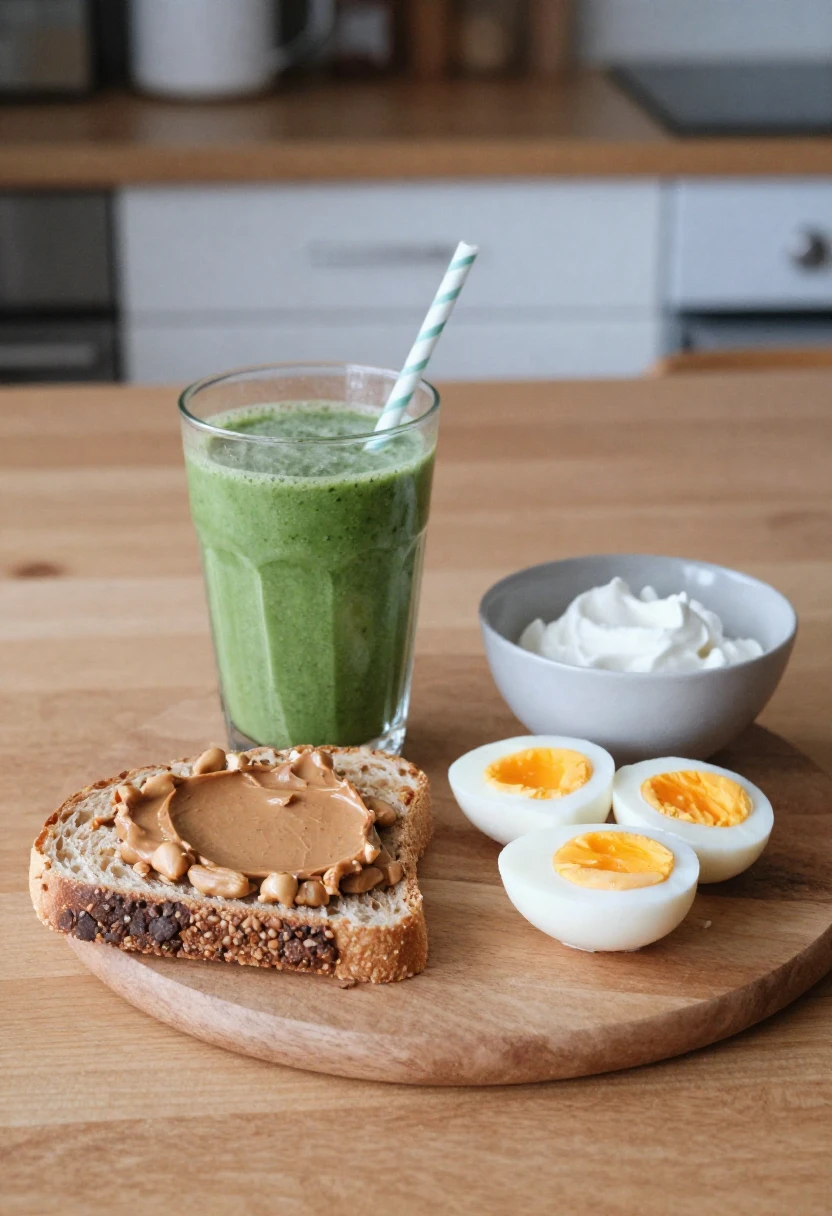
A breakfast smoothie can be enough for breakfast, but it depends on what you put in it.
A glass of blended fruit with a handful of spinach is fresh and delicious, but it may not keep you full for long. That does not mean it is “bad.” It just means it is more of a light breakfast or snack unless you build it with a little more balance.
For a smoothie to feel like a real morning meal, it usually needs more than fruit.
When it works as a full meal
A smoothie works best as breakfast when it has a mix of fiber, protein, and healthy fat.
Fruit gives you quick energy. Greens add freshness. But protein and fat help the smoothie stay with you longer, especially if your morning is busy and lunch is still hours away.
A more complete breakfast smoothie might include:
- banana or berries
- spinach or another mild green
- almond milk, dairy milk, kefir, or oat milk
- Greek yogurt or protein powder
- ground flaxseed, chia seeds, or nut butter
- oats if you want it thicker and more filling
That kind of smoothie feels different from a fruit-only one. It has more body. You drink it slower. It sits more like food.
One of my favorite filling combinations is banana, frozen berries, spinach, Greek yogurt, almond milk, and ground flaxseed. It still tastes like a berry smoothie, but it does not leave me hunting for a second breakfast right away.
When to pair it with something else
Some mornings, a smoothie alone is not enough. And that is fine.
If you drink your smoothie and feel hungry soon after, pair it with something simple instead of forcing the smoothie to do all the work.
Good options include:
- whole-grain toast with peanut butter
- boiled eggs
- Greek yogurt with granola
- cottage cheese
- oatmeal
- a handful of nuts
- avocado toast
- a small breakfast wrap
This is especially helpful if your smoothie is mostly fruit and greens. Pairing it with toast, eggs, or yogurt turns it into a more complete breakfast without making the smoothie itself heavy.
I like this approach when I want something cold and fresh but still need a proper meal. A green smoothie with peanut butter toast is easy, quick, and much more satisfying than either one alone.
Listen to how your morning feels
There is no one-size-fits-all smoothie rule.
Some people feel great with a lighter smoothie in the morning. Others need more protein. Some need oats or toast. Some are perfectly happy drinking a smoothie after coffee and eating a bigger lunch later.
Pay attention to what happens after breakfast.
If you feel good and stay full, your smoothie is doing its job.
If you are hungry again in thirty minutes, add protein, fat, or a small side next time.
If it feels too heavy, simplify it.
Breakfast should help your morning, not turn into another thing to manage.
A smoothie is just a tool. A very useful one, especially when the blender is easier than the stove.
Conclusion
An easy breakfast smoothie does not need to be perfect, expensive, or packed with every “healthy” ingredient in the kitchen.
Start with a base that works: banana, frozen fruit, spinach, almond milk, and ground flaxseed. Blend the greens with the liquid first, add the fruit, taste, and adjust from there.
Some mornings, keep it light. Other mornings, make it more filling with Greek yogurt, oats, nut butter, or chia seeds. That is the nice thing about smoothies. They can change with your appetite, your schedule, and whatever fruit you have left in the freezer.
And honestly, that is what makes this breakfast worth repeating. It is simple enough for a rushed morning, but still feels fresh, cold, and good when you finally take that first sip.
FAQ
Can I make a breakfast smoothie the night before?
Yes, you can make a breakfast smoothie the night before and keep it in the fridge in a sealed jar or bottle. It may separate overnight, so shake it well before drinking.
The texture is usually better when freshly blended, though. If you like your smoothie thick and frosty, prep freezer smoothie packs instead and blend them in the morning.
What is the best liquid for a breakfast smoothie?
Unsweetened almond milk is a good everyday option because it is light and mild. Dairy milk, oat milk, kefir, coconut milk beverage, and soy milk can also work well.
If you want the smoothie to be more filling, choose a liquid with some protein, like dairy milk, soy milk, or kefir. If you want it lighter, almond milk or water works fine.
Can I use kale instead of spinach?
Yes, but kale has a stronger flavor and a tougher texture than baby spinach.
If you use kale, remove the thick stems and start with a small amount. Pair it with sweet fruit like banana, mango, or pineapple so the smoothie does not taste too bitter or earthy.
For beginners, spinach is usually the easier green.
How do I make my smoothie less sweet?
Use less banana, skip sweeteners, and choose berries instead of very sweet fruits like mango or pineapple.