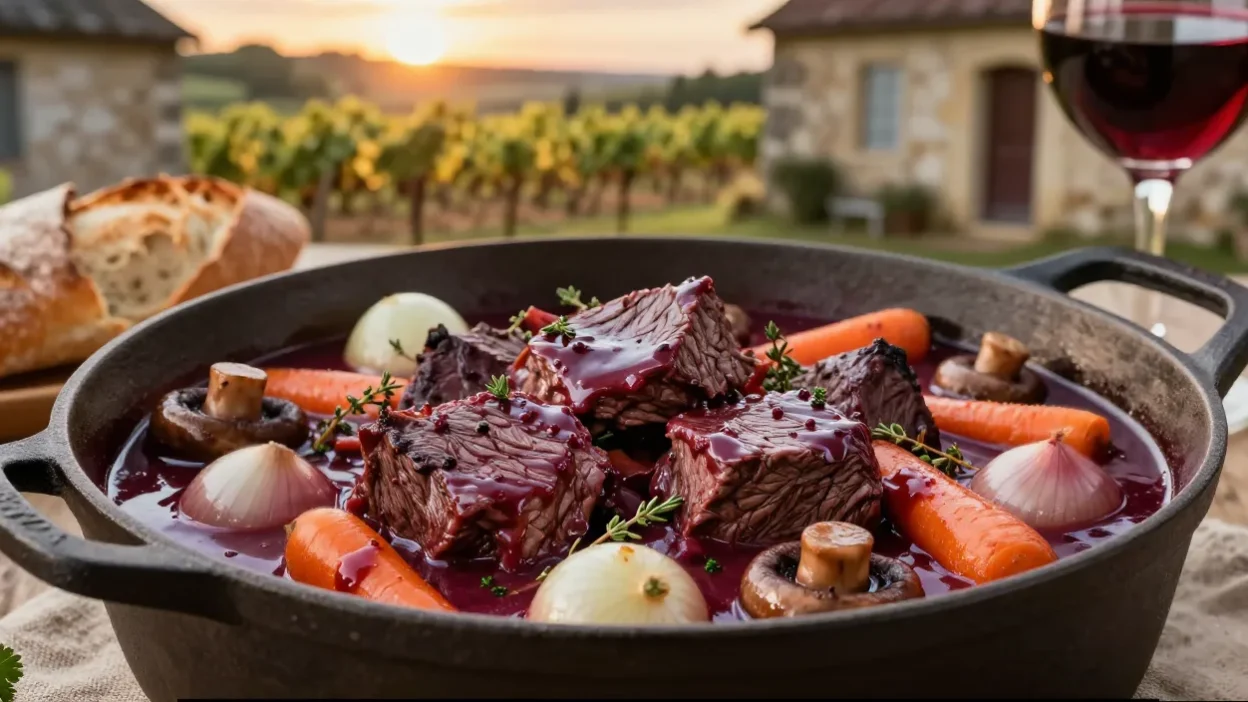
Some recipes become famous because they’re quick. Others because they’re extravagant enough to impress guests. Beef Bourguignon has managed to earn a place in both worlds at the same time. It’s respected enough to appear on restaurant menus, yet familiar enough that many people still think of it as comfort food.
The funny thing is that if you strip away the French name, the recipe sounds surprisingly ordinary.
You’re talking about beef, onions, carrots, mushrooms, stock, wine, and a few herbs. That’s hardly the sort of ingredient list people expect from one of the most famous dishes in French cooking. There aren’t any complicated techniques hiding in the background either. Most home cooks already know how to brown meat and simmer a pot on the stove.
What makes Beef Bourguignon special isn’t complexity.
It’s patience.
I’ve always thought that’s one of the reasons people become attached to this recipe after making it a few times. It gives you a front-row seat to one of the most satisfying transformations in cooking. At the beginning, everything feels separate. The beef is just beef. The vegetables are simply vegetables. The wine smells bold and a little sharp. Nothing about the pot suggests what dinner will eventually become.
Then the hours start passing.
The first time I made Beef Bourguignon, I probably checked on it every half hour. Looking back, there was absolutely no reason to do that. Nothing dramatic was happening. Yet I couldn’t help myself. The smell kept changing, and every time I lifted the lid the stew looked slightly different from before.
At first, the sauce seemed fairly thin. A little later, it began to darken and thicken. The vegetables softened. The beef started relaxing into the liquid around it. Somewhere along the way, the individual ingredients stopped feeling like separate things and started behaving like a single dish.
That’s the moment where Beef Bourguignon becomes difficult to compare to an ordinary stew.
Not because the ingredients are different, but because the flavors have had enough time to settle into one another. The wine no longer tastes like wine. The onions don’t taste distinctly like onions. Even the mushrooms seem to disappear into the sauce while somehow making it taste richer at the same time.
One thing I’ve noticed is that people often expect the wine to dominate the recipe. They imagine a strongly wine-forward sauce that overshadows everything else. In reality, the opposite tends to happen. After several hours of cooking, the wine becomes part of the background. It’s still there, of course, but it’s contributing depth rather than demanding attention.
The best way I’ve found to describe Beef Bourguignon is that it tastes complete.
A lot of dishes have one flavor that stands out above everything else. This isn’t really one of them. Instead, every ingredient contributes something small until the final result feels balanced from the first bite to the last.
And honestly, that’s probably why the recipe has survived for so many generations.
People don’t fall in love with it because it’s flashy. They fall in love with it because it consistently delivers the kind of meal that feels a little more special than an ordinary weeknight dinner without becoming intimidating to make.
There’s also something satisfying about serving a dish that clearly took time, even if most of that time involved doing very little yourself. Once the stew starts simmering, the hard work is mostly over. The pot takes care of the rest. Yet when you finally bring it to the table, people often assume far more effort went into it than actually did.
That’s never a bad outcome for a cook.
🇫🇷 A French classic built on patience rather than complexity
One thing that surprises people about Beef Bourguignon is how approachable it actually is once you get past the name.
I think the French title does the recipe both a favor and a disservice. On one hand, it gives the dish a certain charm and sense of history. On the other, it convinces a lot of home cooks that they’re about to tackle something extremely technical. I’ve spoken to more than one person who assumed Beef Bourguignon belonged firmly in the “special occasion only” category until they actually looked at the recipe.
The reality is much friendlier.
Most of the work happens during the first stage of cooking. You brown the beef, prepare the vegetables, and build the foundation of the sauce. After that, the recipe becomes surprisingly relaxed. Once everything is simmering away, there’s very little left to do except occasionally check on it and enjoy the increasingly incredible smell coming from the pot.
I’ve always appreciated recipes that reward patience more than perfection.
There are dishes where every small mistake feels disastrous. Cook something for thirty seconds too long and the texture changes. Miss a step and the whole thing feels off. Beef Bourguignon isn’t really like that. It wants time far more than it wants technical precision.
That’s probably why so many people eventually develop confidence making it.
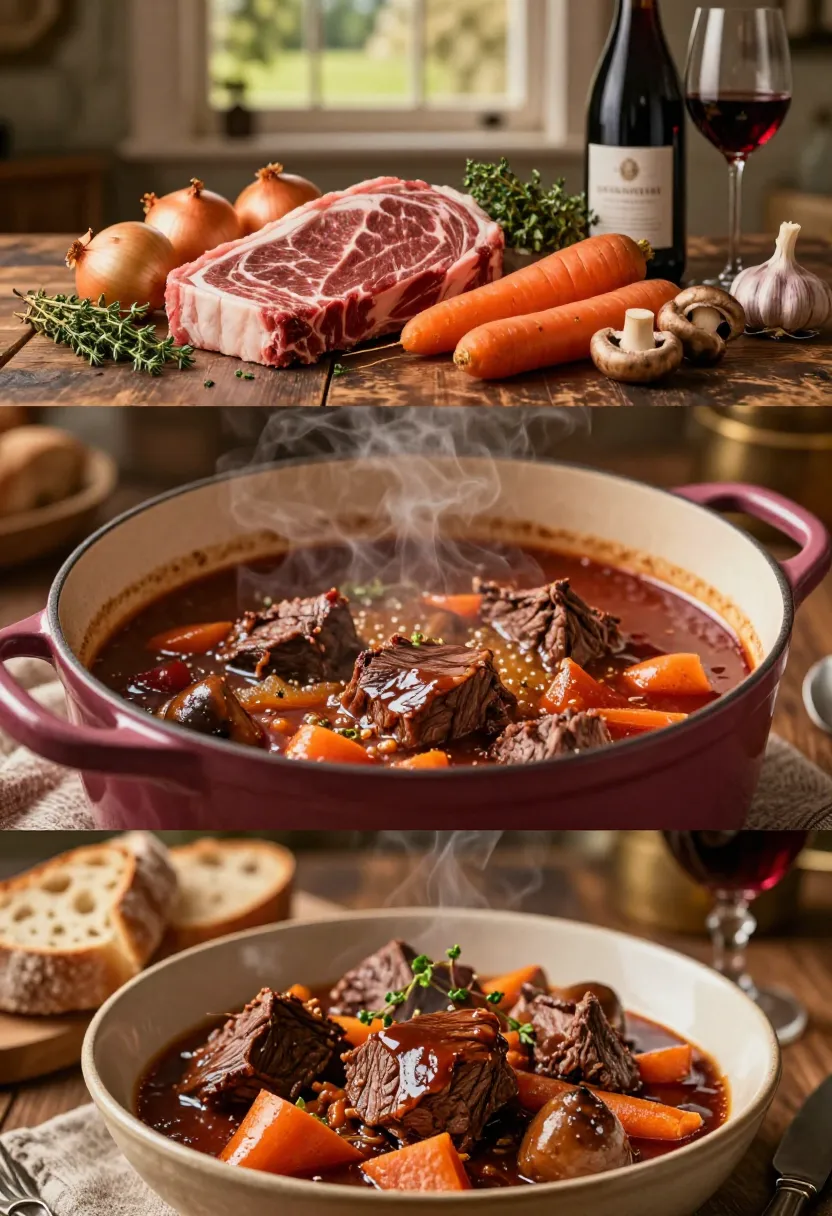
The slow cooking process helps every ingredient contribute something meaningful. Beef chuck, which starts out relatively tough, gradually becomes one of the most tender pieces of meat you can put on a fork. Carrots release sweetness into the sauce. Onions soften and almost melt into the background. Mushrooms absorb flavor while adding their own earthy character.
One thing I didn’t fully appreciate when I first started making dishes like this was how much the vegetables matter.
It’s easy to think of them as supporting ingredients while the beef gets all the attention. But if you’ve ever tasted a version with too few vegetables, the difference becomes obvious immediately. The sauce feels flatter somehow. Less complete. The vegetables aren’t there simply to fill space. They’re helping create the final flavor just as much as the meat is.
Here’s how some of the key ingredients shape the finished dish:
| Ingredient | What it adds | Texture | Flavor contribution |
|---|---|---|---|
| Beef chuck | Richness and body | Tender | Deep savory flavor |
| Red wine | Structure and depth | Silky sauce | Complex richness |
| Mushrooms | Earthiness | Soft and meaty | Balanced umami |
| Pearl onions | Sweetness | Tender | Gentle contrast |
The wine is probably the ingredient people ask about most often.
The assumption is usually that the finished dish will taste strongly of wine, especially because the recipe uses a fairly generous amount. What’s interesting is that the opposite tends to happen. After several hours of cooking, the wine stops standing out as a separate flavor. Instead, it becomes part of the overall character of the sauce.
I’ve made the mistake before of tasting the sauce too early and wondering whether I’d added too much wine.
A couple of hours later, the concern had completely disappeared.
That’s one of the lessons Beef Bourguignon teaches surprisingly well: some flavors simply need time. Not everything can be judged halfway through the process.
By the end, the sauce becomes smooth, rich, and deeply savory without feeling heavy. The wine contributes depth rather than dominance, which is exactly what makes the dish work so well.
And honestly, that’s why shortcuts rarely deliver quite the same result.
Time isn’t just part of the cooking process here.
It’s one of the ingredients.
🍞 Why Beef Bourguignon somehow tastes even better the next day
One thing I learned after making Beef Bourguignon a few times is that leftovers aren’t really leftovers in the traditional sense.
They’re more like a second version of the recipe.
The first time somebody told me the stew would taste better the next day, I assumed they were exaggerating. People say that about almost every soup, stew, and braise. Sometimes it’s true. Sometimes it’s not.
In this case, I think they were right.
Something happens overnight.
The sauce settles. The flavors seem to blend together more completely. The vegetables absorb additional richness, and the beef somehow becomes even more tender than it was the night before. Nothing changes dramatically, but everything feels slightly more cohesive.
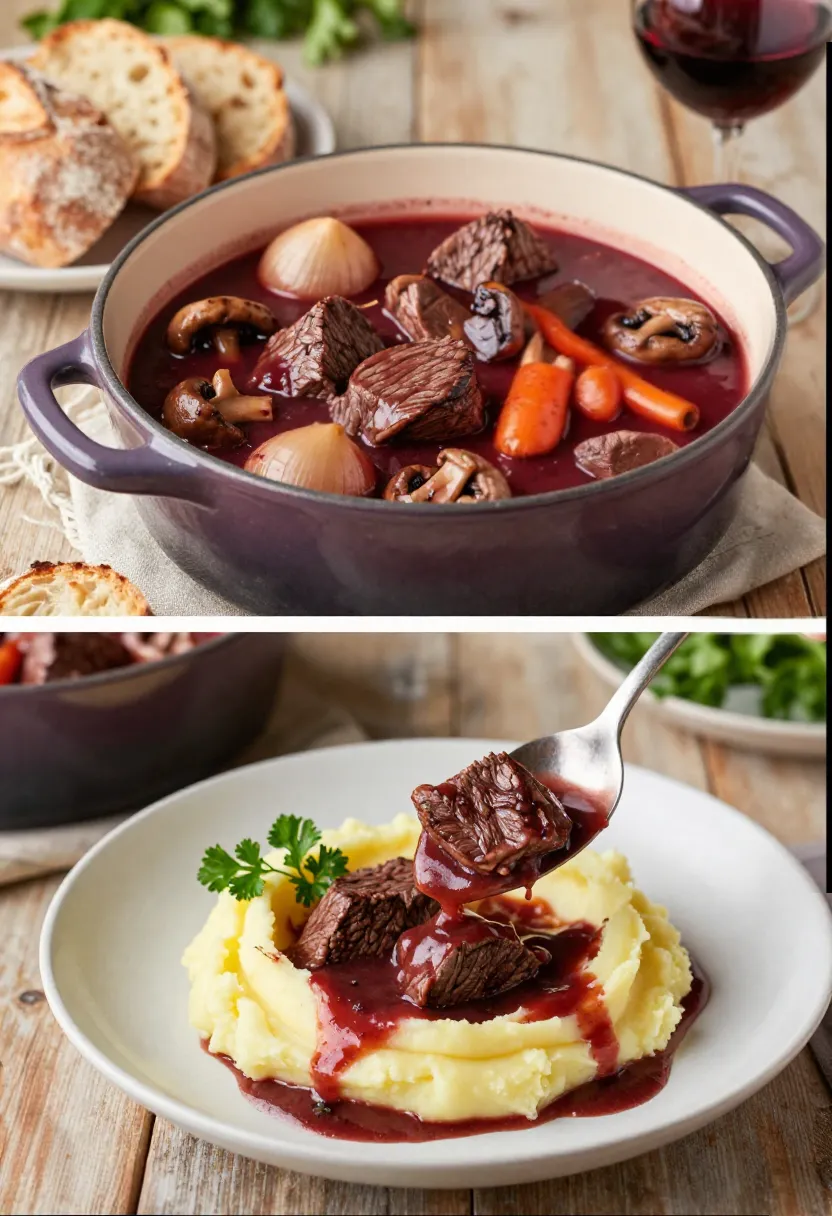
I’ve actually caught myself looking forward to the leftovers before dinner was even finished.
That’s usually a good sign.
The next day is also when the sauce really shines. If the first evening is all about the aroma and anticipation, day two is about depth. Every ingredient has had extra time to mingle together, and the result often tastes richer without becoming heavier.
There are plenty of ways to enjoy leftovers too:
- Served over mashed potatoes 🥔
- Spooned onto buttered toast
- Paired with fresh pasta
- Served alongside roasted vegetables
- Enjoyed with crusty bread and a simple salad
- Reheated gently for an easy next-day dinner
One of my favorite versions happened entirely by accident. There wasn’t enough stew left for a full dinner, so I served it over creamy mashed potatoes and called it lunch. It ended up feeling every bit as satisfying as the original meal.
That’s another reason this recipe has remained popular for so long.
It doesn’t stop being useful once dinner is over.
The leftovers become tomorrow’s lunch, another family dinner, or a quick meal when nobody feels like cooking again. In a world full of recipes that are best eaten immediately, there’s something refreshing about a dish that seems perfectly happy to wait until tomorrow.
And honestly, if a recipe can deliver two excellent meals from one afternoon of cooking, it’s easy to understand why people keep making it year after year. 🍷🥘🥖
🍷 Beef Bourguignon Recipe
I’ll admit that Beef Bourguignon intimidated me a little the first time I made it.
Not because the recipe looked particularly difficult, but because it had such a reputation. It was one of those dishes that always seemed to belong in cookbooks with glossy photos or on restaurant menus where somebody else did the cooking.
Then I actually looked at the ingredients.
The funny thing is that Beef Bourguignon is built from things most people already know how to cook. Beef, onions, carrots, mushrooms, stock, wine, and herbs. There aren’t any secret techniques hiding in the background. What makes the dish special is simply giving everything enough time to come together.
And that’s probably why people fall in love with it.
The transformation is incredibly satisfying to watch. The beef becomes tender enough to cut with a spoon, the vegetables soften into the sauce, and the wine gradually turns into something rich and deeply savory rather than something you can immediately identify.
The first time I served it, I remember worrying that I had spent too much time on what was essentially a stew.
Then everyone started reaching for more bread so they could mop up the sauce.
That usually tells you everything you need to know.
This version stays fairly traditional while remaining approachable for home cooks. It’s rich without being heavy, impressive without being complicated, and exactly the sort of meal that makes a cold evening feel considerably better.
Ingredients
For the stew
- 2½ pounds (1.1 kg) beef chuck, cut into large cubes
- 6 slices thick-cut bacon, diced
- 2 tablespoons olive oil
- 1 large yellow onion, diced
- 3 carrots, sliced
- 4 garlic cloves, minced
- 2 tablespoons tomato paste
- 2 tablespoons all-purpose flour
- 2 cups dry red wine 🍷
- 2 cups beef stock
- 2 bay leaves
- 4–5 sprigs fresh thyme
- 1 teaspoon black pepper
- Salt, to taste
For the vegetables
- 8 ounces pearl onions
- 10 ounces mushrooms, halved or quartered
- 1 tablespoon butter
- 1 tablespoon olive oil
- Fresh parsley, chopped, for serving
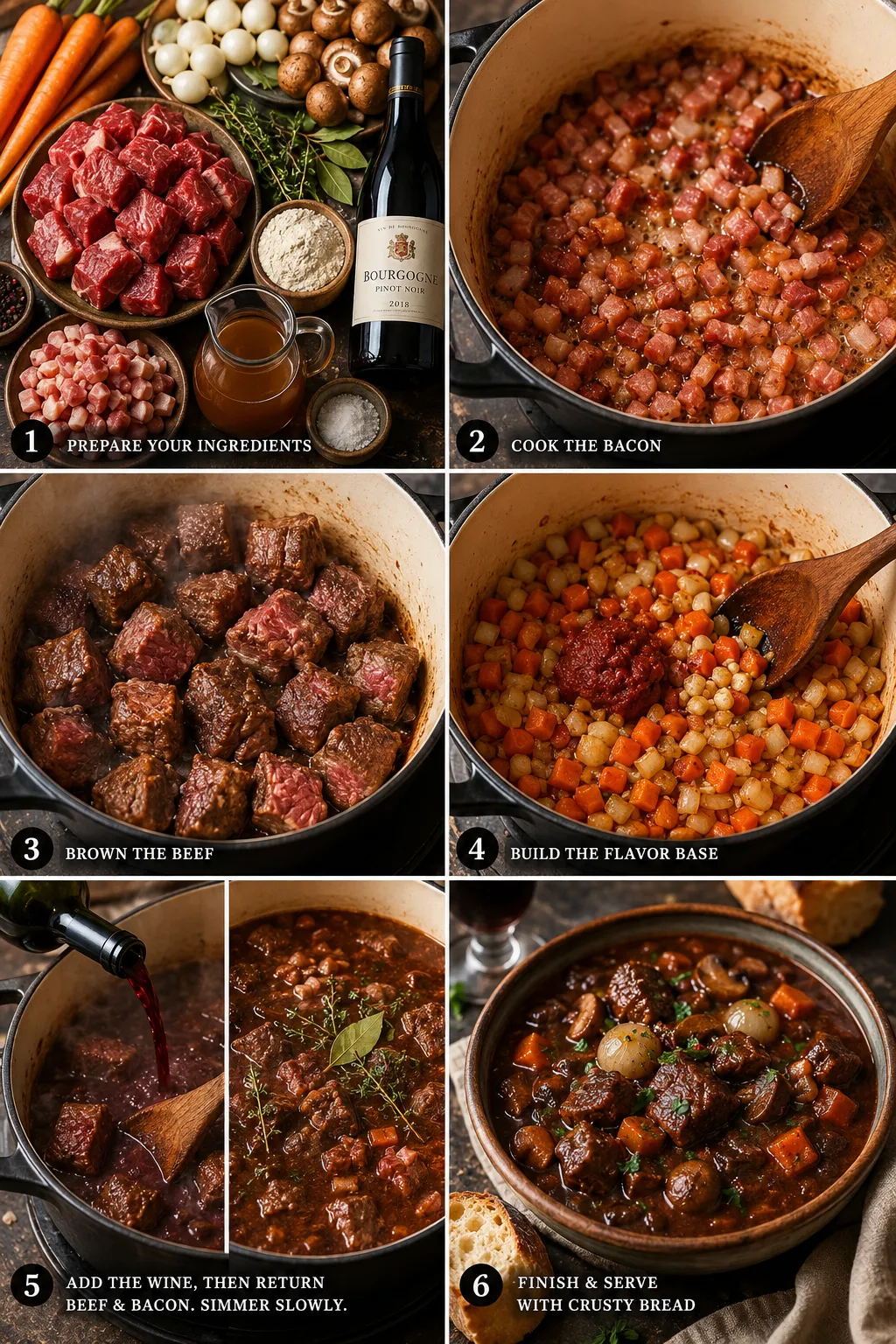
Instructions 👩🍳
- Prepare the beef.
Pat the beef dry with paper towels before you begin. This step feels small, but it makes a noticeable difference when browning. Season the meat lightly with salt and pepper. - Cook the bacon.
In a large Dutch oven or heavy pot, cook the diced bacon over medium heat until crisp and golden. Transfer it to a plate, leaving the rendered fat behind in the pot. - Brown the beef in batches.
Add a little olive oil if needed, then brown the beef on all sides. Try not to crowd the pot. I know it’s tempting to rush this stage, but giving the meat enough space helps create the deep flavor that the finished sauce depends on. Transfer the browned beef to the plate with the bacon. - Build the flavor base.
Add the diced onion and carrots to the same pot. Cook for 6–8 minutes until they begin softening and picking up some color. Stir in the garlic and cook for another minute until fragrant. - Add the tomato paste.
Stir in the tomato paste and cook for about 2 minutes. It should darken slightly and begin coating the vegetables. - Sprinkle in the flour.
Add the flour and stir continuously for about a minute. This helps create a sauce with more body later on. - Pour in the wine.
Slowly add the red wine while scraping the bottom of the pot with a wooden spoon. All those browned bits stuck to the bottom contain a surprising amount of flavor and are absolutely worth rescuing. - Return the beef and bacon.
Add the browned beef and bacon back into the pot along with the beef stock, thyme, bay leaves, and black pepper. The liquid should mostly cover the meat. - Begin the slow cook.
Bring everything to a gentle simmer, then cover and transfer to a 325°F (165°C) oven for about 2½–3 hours. If you’re cooking on the stovetop, keep the heat very low and stir occasionally. - Prepare the mushrooms and pearl onions.
About 45 minutes before the stew finishes, heat the butter and olive oil in a skillet. Add the mushrooms and pearl onions and cook until lightly browned and caramelized. This extra step takes a little time but gives the vegetables much better texture than simply tossing them into the stew raw. - Finish the stew.
Stir the mushrooms and onions into the pot during the final 30 minutes of cooking. By this point the beef should be extremely tender and the sauce noticeably thicker. - Taste and adjust.
Remove the thyme stems and bay leaves. Taste the sauce and adjust the seasoning if necessary. Sometimes it needs a little extra salt, sometimes it doesn’t. Let the stew tell you what it needs. - Serve.
Spoon the Beef Bourguignon into warm bowls and finish with chopped parsley. Serve with mashed potatoes, buttered noodles, or plenty of crusty bread for soaking up every last bit of sauce. 🥖
✨ Small tips that make a big difference
- Don’t rush the browning stage. Most of the stew’s depth starts there.
- Use a wine you’d actually enjoy drinking. It doesn’t need to be expensive, but it should taste good.
- If the sauce feels thin near the end, let it simmer uncovered for 10–15 minutes.
- Mushrooms taste noticeably better when browned separately rather than boiled in the stew.
- The stew often tastes even better the next day after the flavors have had time to settle together.
- Fresh parsley right before serving adds more freshness than people expect.
- A loaf of crusty bread is rarely optional once people smell this cooking. 🍞
🍄 Small variations that make the dish feel completely different
One of the things I appreciate most about Beef Bourguignon is that it stays recognizable even when you start making small changes.
Some recipes fall apart the moment you move away from the original version. This one is surprisingly forgiving. The foundation remains the same — beef, wine, vegetables, and slow cooking — but there is plenty of room to adapt it to your own preferences.
I’ve noticed that most people eventually develop their own version without even planning to.
Maybe it starts because the grocery store didn’t have pearl onions that day. Maybe there were extra mushrooms sitting in the refrigerator. Maybe somebody in the family loves carrots and keeps asking for more of them. Small adjustments happen naturally, and after a while those changes become part of the recipe itself.
The first time I added extra mushrooms wasn’t because I was trying to improve the dish. I simply bought too many for another recipe and needed to use them. The result ended up being one of my favorite versions. The mushrooms absorbed so much of the sauce that every bite seemed a little richer.
The same thing happened when I tried adding a handful of parsnips one winter. They brought a subtle sweetness that worked beautifully with the wine and beef. The stew still tasted like Beef Bourguignon, but it felt slightly more rustic and comforting somehow.
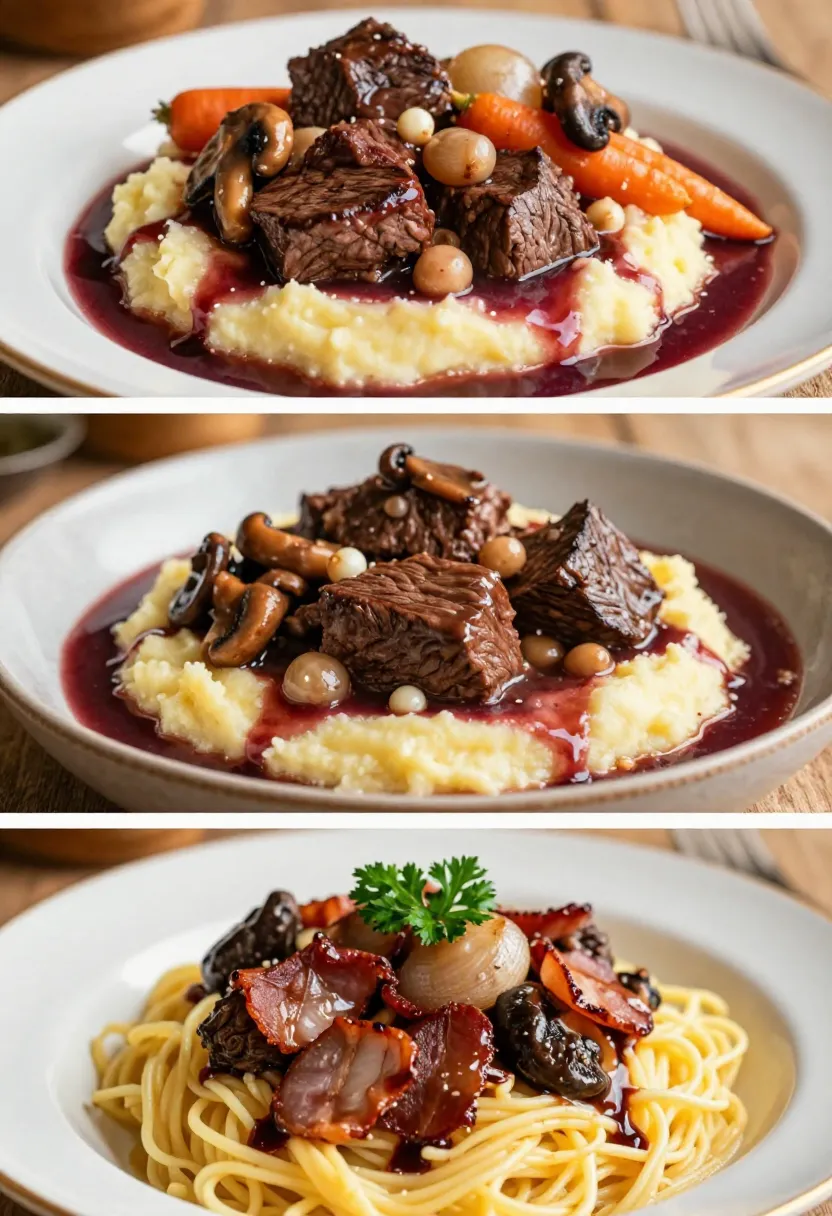
A few variations that work particularly well include:
- Extra mushrooms for a deeper earthy flavor 🍄
- Parsnips alongside the carrots
- Small potatoes added directly to the stew
- A few sprigs of rosemary with the thyme
- Shallots instead of pearl onions
- A splash of brandy for additional richness
- Smoked bacon for a slightly bolder flavor
- Additional carrots for a sweeter sauce
One thing I would avoid, though, is changing too many things at once.
Part of what makes Beef Bourguignon special is its balance. Every ingredient has a role to play, and none of them are trying to dominate the dish. Small adjustments can be wonderful. Completely reinventing it often takes away some of the qualities that made people fall in love with the recipe in the first place.
That’s probably why the classic version has survived for so long.
It already works remarkably well.
🍽️ The best ways to serve Beef Bourguignon
I’ve always thought Beef Bourguignon is one of those dishes that becomes even better when you have something nearby to soak up the sauce.
And trust me, you’re going to want every last drop of that sauce.
The first few times I made this recipe, I served it with mashed potatoes because that seemed like the obvious choice. The combination was excellent. The potatoes absorbed the sauce beautifully and turned the entire meal into the kind of dinner people start talking about halfway through eating it.
Since then, I’ve tried plenty of other combinations.
Some worked better than others, but it’s surprisingly difficult to go completely wrong. The stew is rich enough to carry the meal on its own, yet flexible enough to pair with all sorts of side dishes.
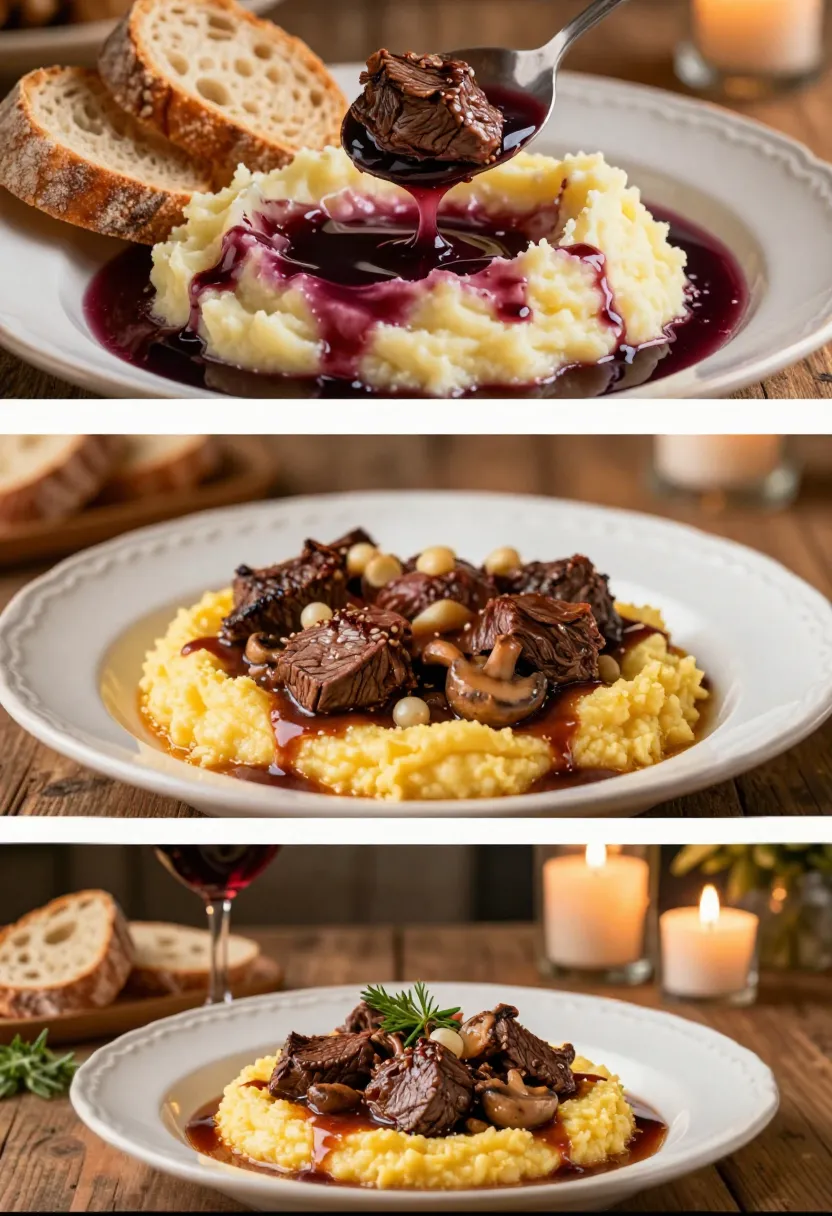
A few of my favorite serving options include:
- Creamy mashed potatoes 🥔
- Buttered egg noodles
- Crusty artisan bread 🥖
- Parmesan polenta
- Roasted root vegetables
- Simple green salad
- Garlic mashed cauliflower
- Buttered green beans
One thing I’ve noticed is that the atmosphere around the meal changes depending on what you serve alongside it.
A bowl with mashed potatoes feels cozy and traditional. Beef Bourguignon served over buttered noodles feels slightly more casual. Pair it with a good loaf of bread and a bottle of wine, and suddenly dinner starts feeling like something you’d happily order at a small countryside restaurant.
And honestly, this is one of those meals that seems to encourage people to linger at the table.
Nobody rushes through it.
The sauce slows people down. The bread basket keeps making another trip around the table. Somebody decides they need one more spoonful before the pot goes back into the kitchen.
Those are usually the dinners I remember most.
Not necessarily because the recipe was extraordinary, but because nobody seemed in a hurry for the evening to end.
🍷 Why dishes like this become comfort food classics
It’s interesting how certain recipes earn a permanent place in people’s lives.
Not because they’re trendy.
Not because they’re difficult.
And usually not because they’re the absolute best thing anyone has ever eaten.
More often, it’s because they consistently deliver exactly what people hope they’ll deliver.
Beef Bourguignon is a good example of that.
Every time I make it, I know roughly how the evening is going to unfold. The kitchen will smell incredible for hours. Somebody will wander in to ask how much longer dinner is going to take. Bread will appear on the counter long before it’s needed. And by the end of the meal, there probably won’t be much sauce left in the pot.
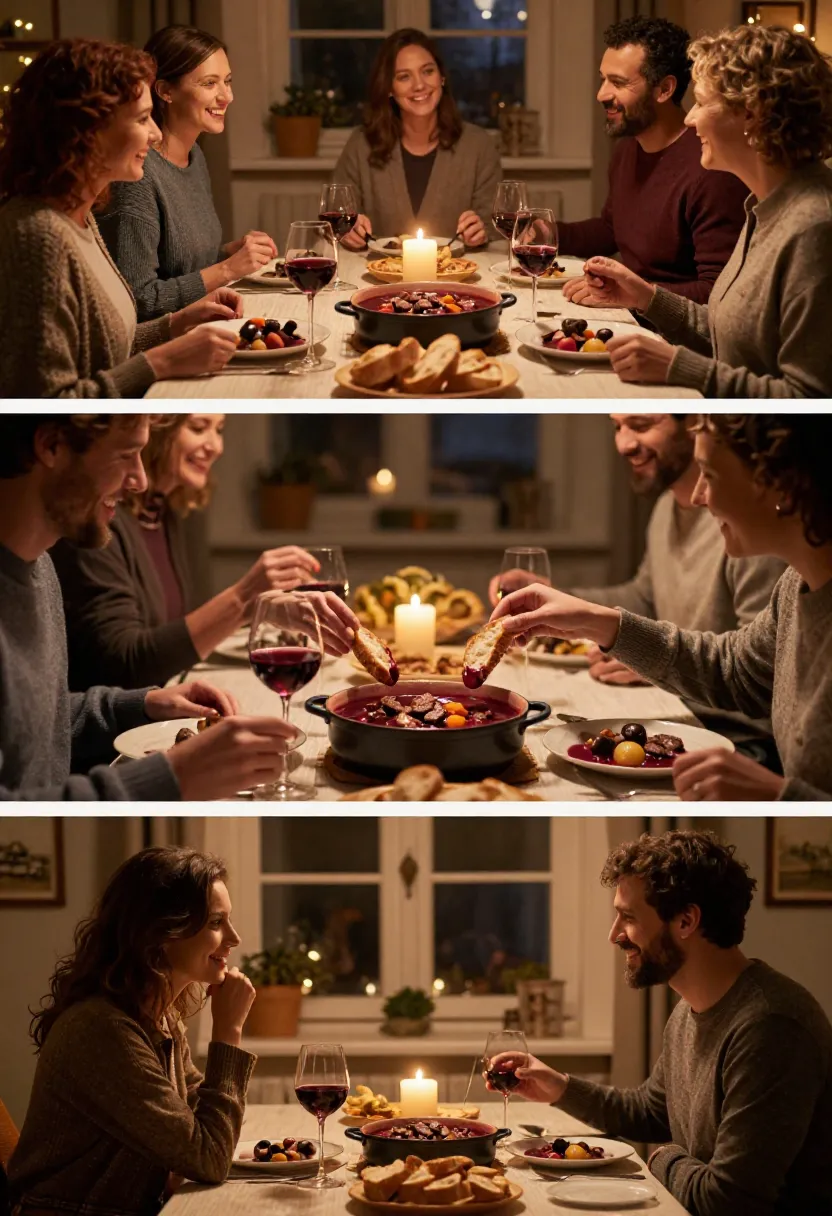
The funny thing is that those little moments become part of the recipe over time.
Years later, most people won’t remember the exact amount of wine they used or whether the stew cooked for two and a half hours or three. That’s rarely the part that sticks.
What they remember is the atmosphere.
They remember making it on a cold weekend when everyone happened to be home. They remember serving it during a holiday gathering. They remember the smell filling the house while the weather outside made staying indoors feel like the right decision.
I’ve noticed that the dishes people return to year after year usually share one thing in common: they fit naturally into real life.
Beef Bourguignon does exactly that.
It’s impressive enough for guests, comforting enough for family dinners, and reliable enough that you never really worry about whether people will enjoy it. The recipe asks for some patience, but it gives a lot back in return.
And maybe that’s why it has remained popular for so long.
Long after people forget where they first found the recipe, they keep making it anyway. The instructions might change slightly, the side dishes might vary, but the stew remains.
At that point, it stops being just a recipe.
It becomes one of those meals people associate with home. 🍷🥘✨