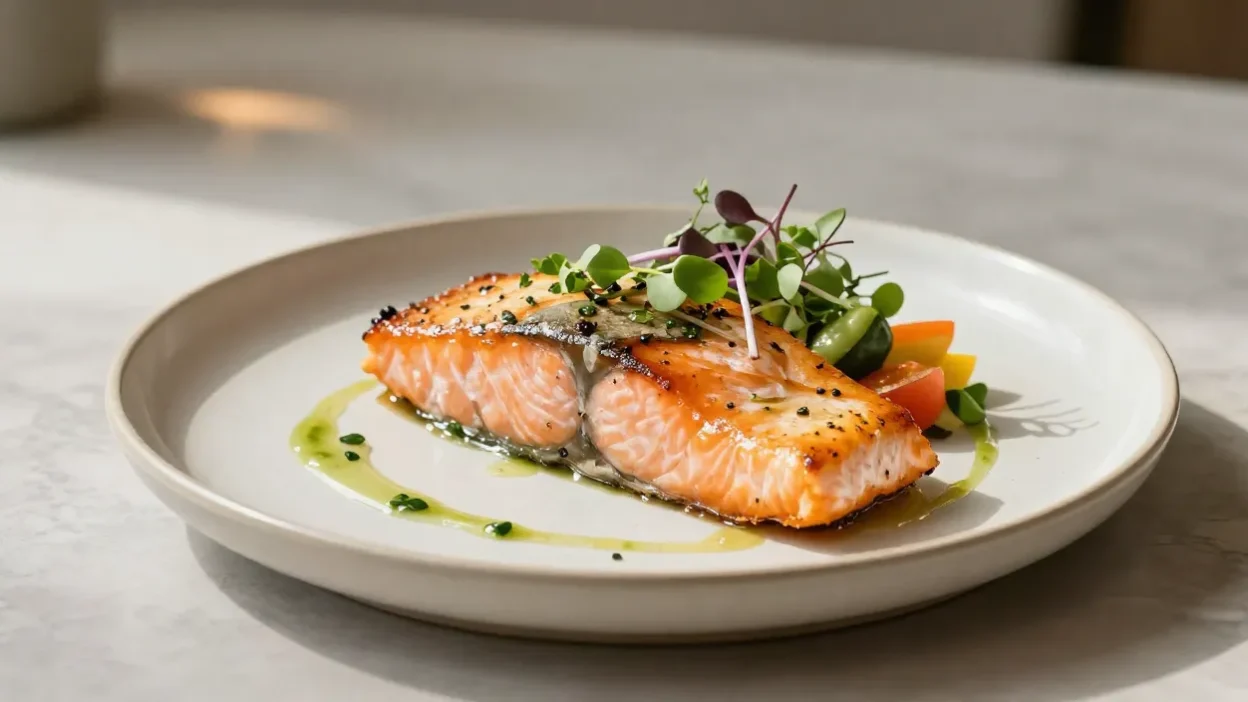
There’s a certain kind of food that doesn’t try too hard to impress—and somehow ends up being the one you come back to over and over again. Baked salmon fits into that category almost perfectly.
At first glance, it feels almost too simple. You take a piece of fish, add a bit of seasoning, place it in the oven, and wait. There’s no complicated preparation, no techniques that require practice, and no long list of ingredients to manage. It’s the kind of dish people make when they’re tired, short on time, or simply not in the mood to overthink dinner.
And yet, despite all that simplicity, it rarely feels like a compromise.
When baked salmon turns out well, it doesn’t feel like a shortcut. It feels balanced and complete. It sits comfortably somewhere between a quick everyday meal and something you could serve with a bit more intention. It doesn’t try to stand out, but it doesn’t feel boring either. That quiet reliability is a big part of its appeal.
The interesting part is that salmon itself is quite forgiving—but only to a certain extent. You can keep things simple and still get a good result, but small changes make a noticeable difference. A few extra minutes in the oven can dry it out. Skipping fat can make the texture less pleasant. Missing acidity can leave the flavor feeling flat. None of these mistakes ruin the dish completely, but they change the experience in ways that are easy to notice once you’ve paid attention a few times.
Over time, cooking baked salmon becomes less about following a recipe and more about understanding these small adjustments.
There’s also a subtle rhythm to the process. You season the fish, place it in the oven, and wait just long enough to start checking. Then comes the moment that really matters—when you test it with a fork. If the fish flakes easily and still looks slightly moist inside, that’s when you know it’s ready. It’s a small detail, but it defines the entire result.
Another reason baked salmon remains so popular is its adaptability. It doesn’t lock you into a single version of the dish. On some days, it’s just salt, pepper, and olive oil—nothing more. On others, it becomes richer, with butter, garlic, or a glaze that adds depth. Neither approach is better. They simply create different outcomes depending on what you want at the moment.
This flexibility also prevents it from becoming repetitive. Even though the base stays the same, the final result can feel slightly different every time. That’s why people tend to return to it without getting tired of it.
There’s also a balance in how it feels after eating. It’s satisfying without being heavy, rich without being overwhelming. That combination is harder to achieve than it seems, but baked salmon manages it naturally.
If you look at the dish more closely, it becomes clear that it’s not just about the fish itself. It’s about how a few simple elements interact and support each other without any one of them becoming too dominant.
🔍 What Actually Makes Baked Salmon Work
| Component | Role in the Dish | Common Options | Subtle Variations You Can Try | What You Notice If It’s Missing or Off |
|---|---|---|---|---|
| Main Protein | Provides structure, flavor, and overall identity | Salmon fillet (skin-on or skinless) | Thick vs thin cuts, fresh vs frozen | Feels incomplete or lacks depth |
| Fat Element | Keeps the fish moist and prevents dryness | Butter, olive oil, ghee | Herb butter, infused oils | Dry, slightly tough texture |
| Acid Balance | Cuts richness and adds brightness | Lemon, lime, vinegar | Citrus zest, mild fruit acids | Flat or overly heavy flavor |
| Seasoning Base | Enhances natural flavor without overpowering | Salt, pepper | Flaky salt, smoked salt | Bland, muted taste |
| Aromatics | Add depth and subtle layers | Garlic, shallots, herbs | Roasted garlic, fresh herbs | One-dimensional flavor |
| Glaze / Coating | Creates contrast and surface flavor | Honey, mustard, soy, maple | Spicy or citrus-based glazes | Feels plain or unfinished |
| Moisture Control | Prevents overcooking and drying | Foil, parchment, natural fat | Covered vs uncovered baking | Uneven or dry result |
| Cooking Temperature | Controls doneness and texture | Medium heat (180–200°C) | Lower for softness, higher for slight crust | Overcooked or undercooked fish |
| Cooking Time | Determines flakiness and moisture | 10–20 minutes | Adjusted by thickness | Inconsistent texture |
| Resting Time | Allows juices to settle | 3–5 minutes after baking | Covered resting | Slight dryness or uneven interior |
| Texture Contrast | Adds interest beyond softness | Crispy skin, toppings | Seeds, crumbs, light crust | Too soft, slightly monotonous |
| Finishing Touch | Final adjustment of flavor | Herbs, lemon juice, oil | Chili flakes, zest | Feels incomplete |
When these elements come together—even in a simple way—the result feels effortless. Not because it requires no thought, but because everything works in balance.
That’s likely the real reason baked salmon remains so popular. It doesn’t require complexity to feel complete. It just requires a bit of attention in the right places.
And once you get used to that, you naturally stop relying on exact instructions. You start adjusting things based on instinct—slightly changing the timing, the seasoning, or the finish.
That’s usually when the dish turns out best. Not when everything is followed perfectly, but when it feels a bit more natural. 🧡
🐟 Top 10 Baked Salmon Variations Worth Trying
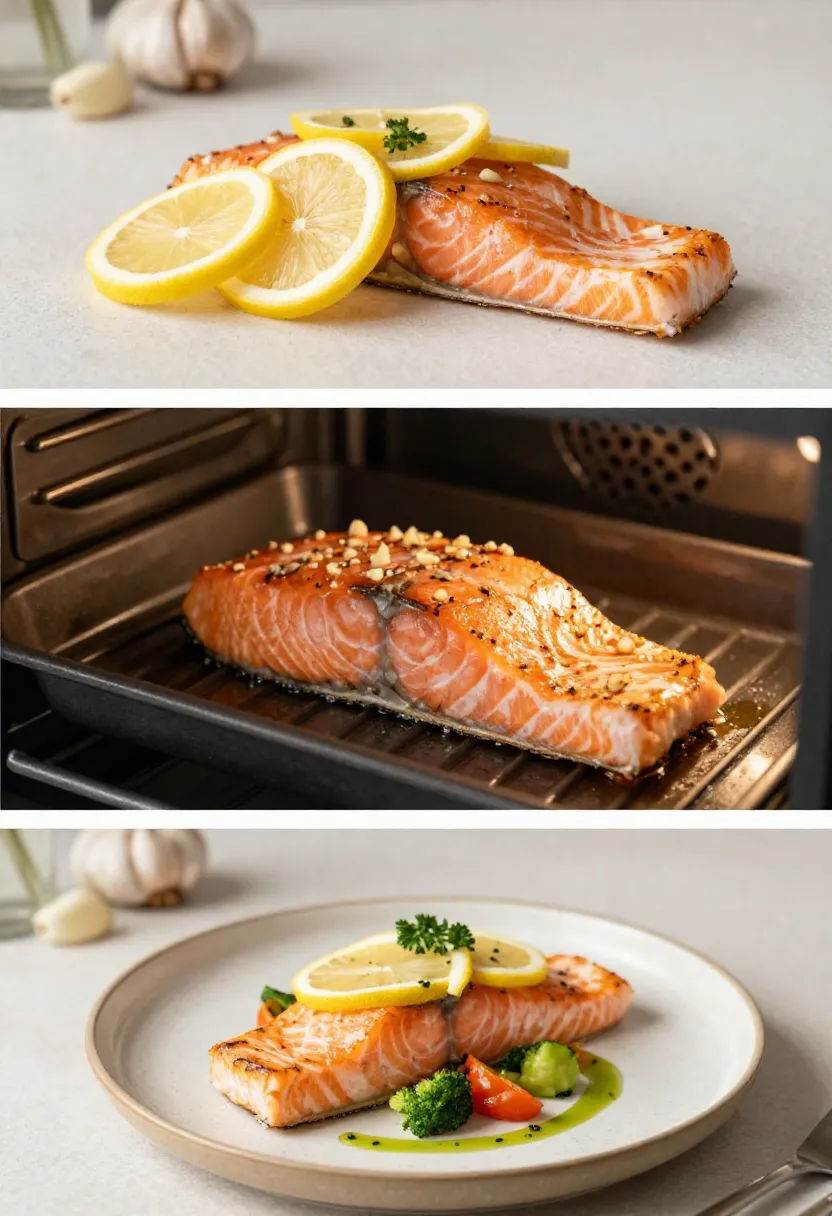
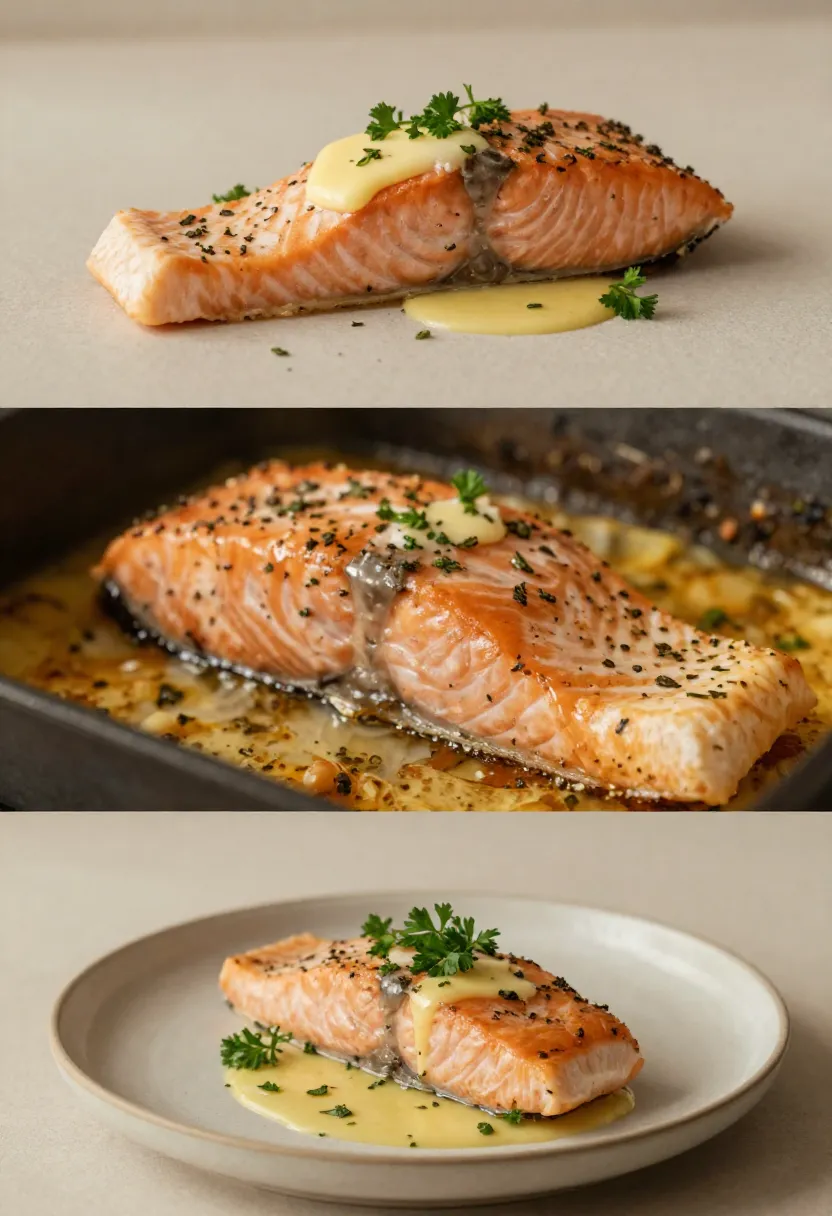
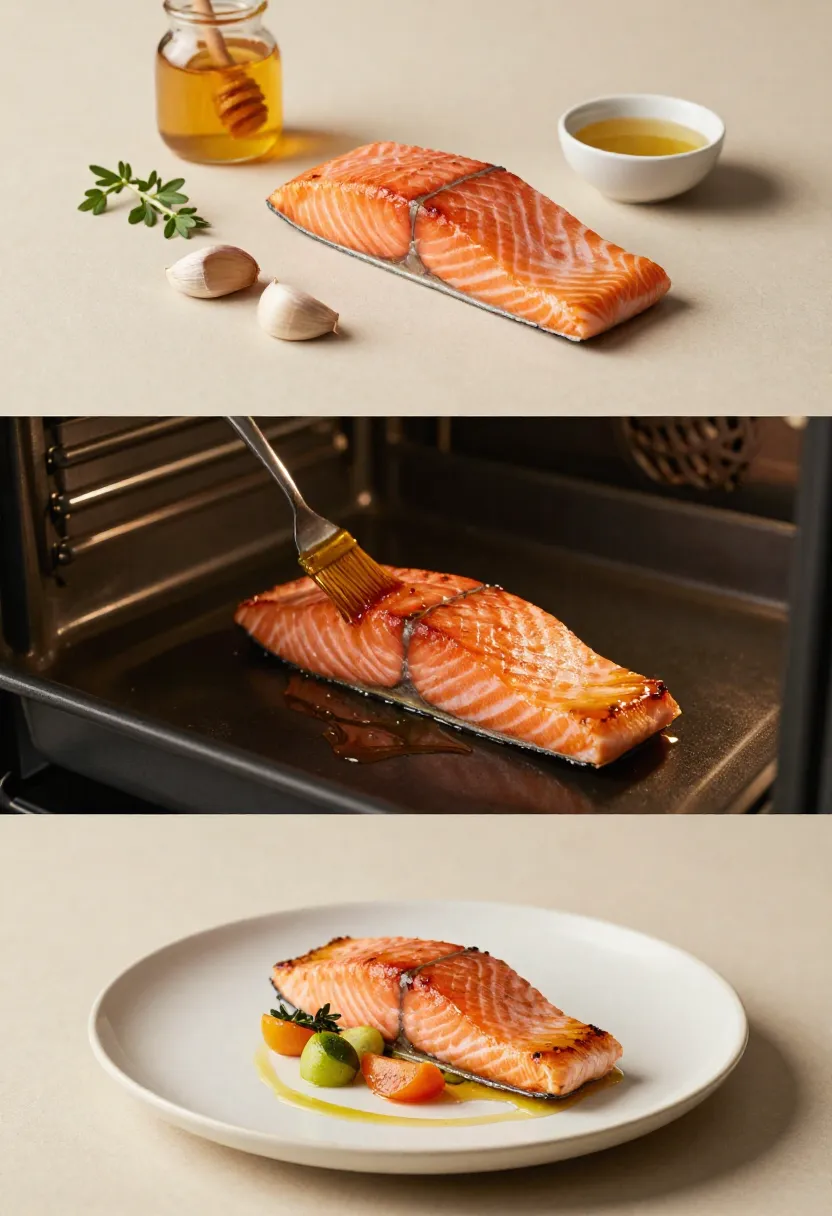
4. 🌶️ Spicy Glazed Salmon
This version usually comes in when you’re a bit tired of everything tasting too… predictable. Not boring exactly, just a little too soft, too smooth, too safe. And that’s where spice starts to make sense.
It’s important to understand that this isn’t really about making the dish “spicy” in a dramatic way. The heat isn’t the main goal. What it actually does is create contrast. Salmon, by nature, is rich and soft, and without something to balance that, it can sometimes feel a bit one-dimensional. Spice adds a slight edge—it sharpens things just enough to keep your attention.
What’s interesting is how quickly the balance can shift here. A small amount of heat makes the dish feel more dynamic. A bit too much, and suddenly you stop noticing the salmon altogether. It becomes about the spice instead of the whole dish, which isn’t really the point.
The glaze plays a big role in how this version feels. As it cooks, it thickens slightly and settles onto the surface of the fish. It’s not heavy, but it creates a thin layer that changes both texture and flavor at the same time. You get something a bit more structured on the outside, while the inside stays soft and flaky.
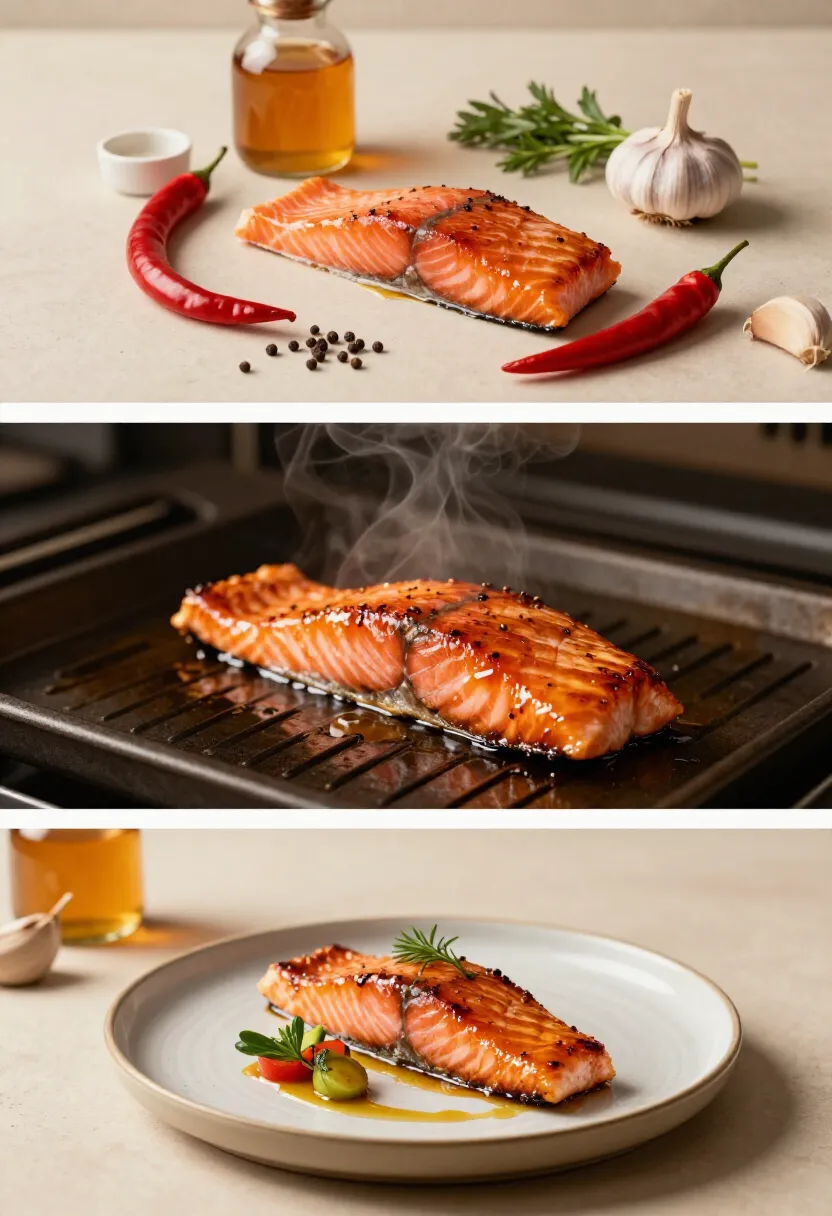
There’s also a certain unpredictability to this version, especially if you’re adjusting it on the fly. The same amount of spice can feel different depending on what else is there—more fat softens it, more acid sharpens it, more sweetness balances it. It’s not always obvious until you taste it.
If you start paying attention, you’ll notice that this version is really about interaction between elements rather than any one ingredient standing out.
- a little heat → wakes up the dish without dominating
- heat + sweetness → more balanced, slightly rounded
- heat + acid → sharper, more defined flavor
- too much of everything → the dish starts to lose clarity
Another small detail people often miss is how the texture changes as it cools slightly. Right out of the oven, the glaze feels softer and more fluid. After a few minutes, it settles, becomes a bit more concentrated, and the flavor feels stronger even though nothing new was added.
This version is still simple, but it asks for just a bit more awareness. Not strict control—just paying attention to how things come together in real time.
💡 Tip: Always balance spice with something slightly sweet or acidic—otherwise it can quickly feel overwhelming.
5. 🥬 Pesto Baked Salmon
Pesto completely shifts how the dish behaves. It’s one of those ingredients that does almost everything at once, which is both convenient and slightly deceptive.
Instead of building flavor step by step, you’re essentially applying a finished combination—herbs, oil, depth, a bit of texture—all in one layer. That’s why this version feels more “complete” right away. You don’t need to think too much about what else to add.
But at the same time, that simplicity can be a bit misleading. Because everything is already concentrated in the pesto, small adjustments matter more than they seem.
One of the first things you notice is how it sits on the fish. Unlike butter, which melts and blends in, pesto stays more defined. It creates a soft layer on top, which gives the dish a slightly different structure. You don’t just taste salmon—you taste salmon with something on it, which changes the experience.
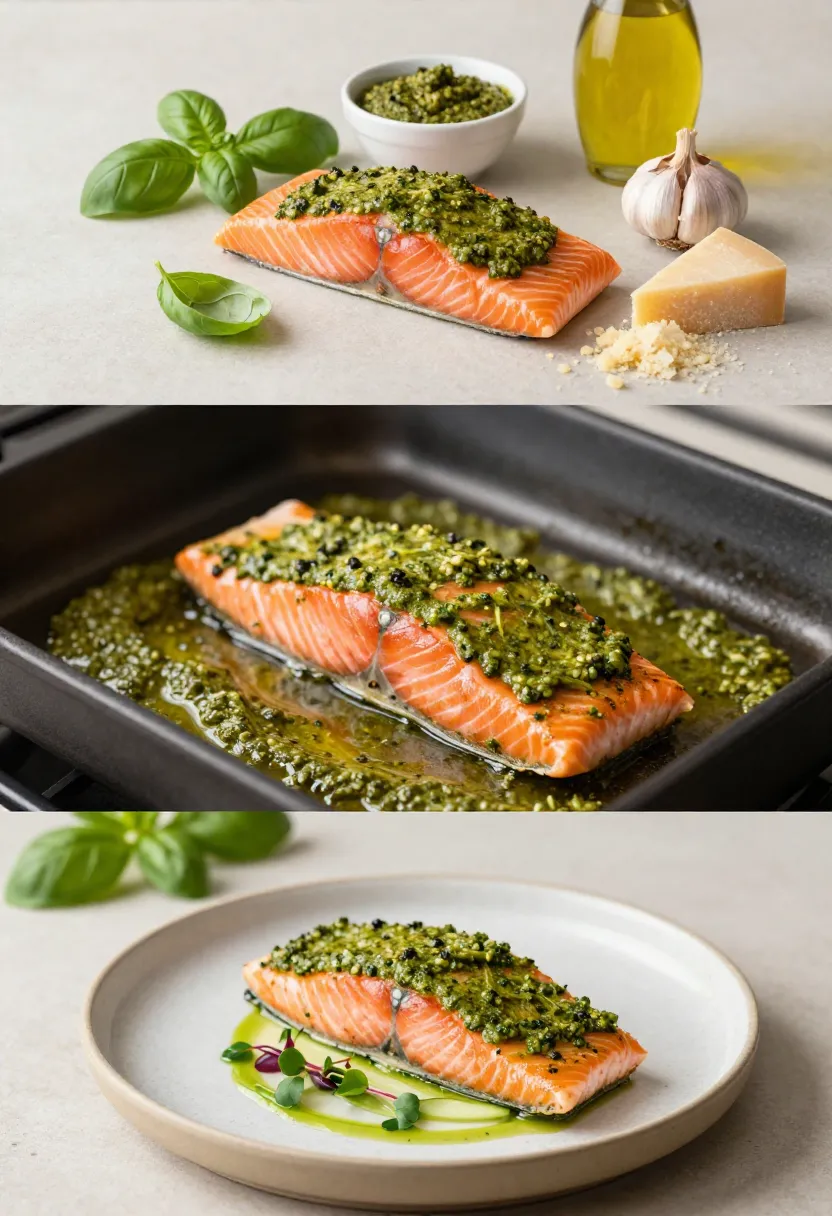
The balance here is surprisingly delicate:
- too much pesto → it starts to feel heavy and slightly overwhelming
- too little → it doesn’t fully cover the fish, and the effect feels incomplete
- baked too long → the herbs lose brightness, flavor becomes duller
- added later → stays fresher, more vibrant, slightly lighter overall
Another thing worth noticing is how this version feels visually. It looks more finished, more intentional, almost like something you’d expect in a restaurant. And that’s interesting, because the effort doesn’t really increase—you just change one element.
It’s also one of those dishes that can feel very different depending on your mood. Sometimes it feels rich and satisfying. Other times, especially if you keep the layer light, it can still feel relatively fresh.
There’s a bit of flexibility here, but not as much as in simpler versions. Pesto has a strong identity, so instead of adjusting everything, you’re mostly adjusting how much of it you use and when you add it.
💡 Tip: Add pesto toward the end of baking so it keeps its color and doesn’t lose its fresh, herbal flavor.
6. 🍊 Citrus Baked Salmon
This version moves in a completely different direction—lighter, cleaner, and a bit more subtle overall.
Instead of building richness, citrus shifts the focus toward balance and freshness. It doesn’t remove the natural richness of salmon, but it changes how you perceive it. The dish feels easier, less heavy, almost like it clears itself as you eat.
What makes this version more interesting is that not all citrus behaves the same way. At first, it might seem like a small detail, but once you try a few variations, the difference becomes quite noticeable.
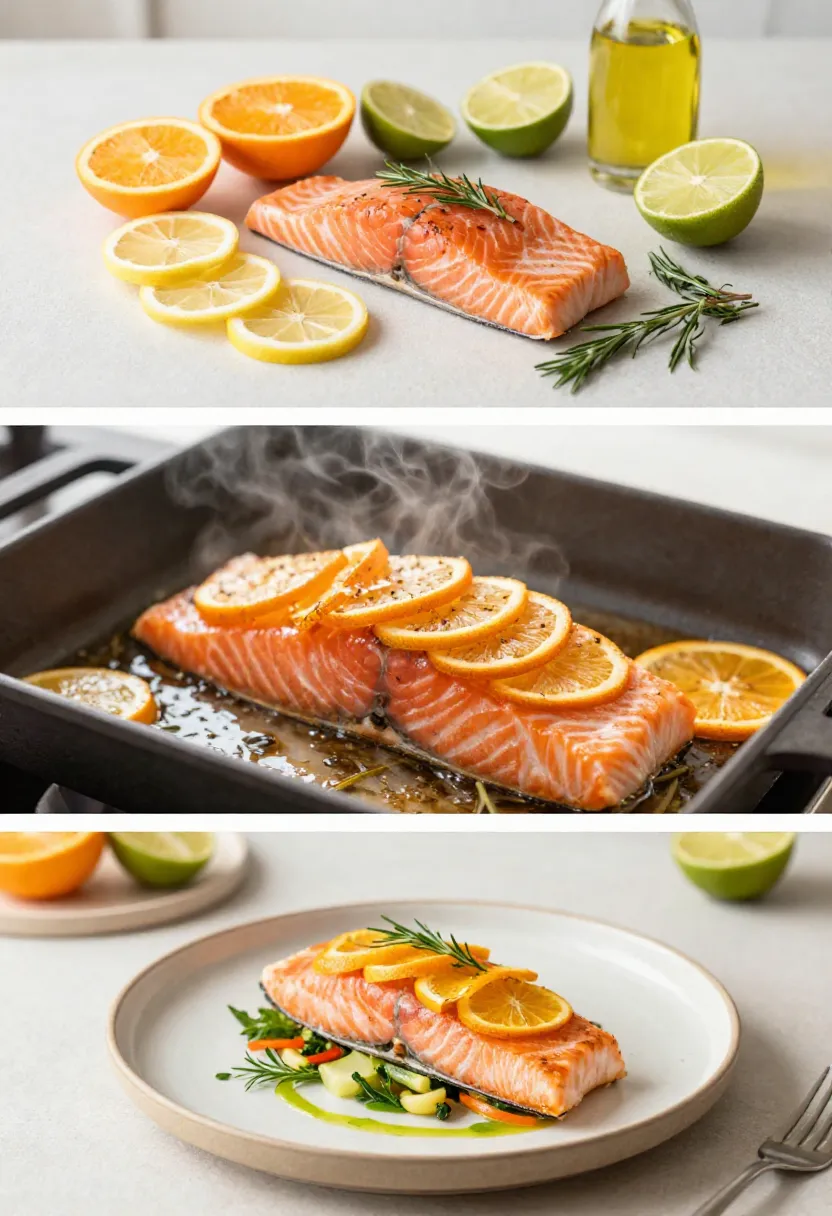
- lemon → direct, bright, slightly sharp
- orange → softer, a bit sweeter, more rounded
- lime → sharper and slightly more intense
On their own, each one works fine. But combining them often creates something more layered, where no single flavor feels too dominant. It’s not a dramatic difference—but it’s enough to make the dish feel more thought-out.
Another thing that stands out is how this version feels after eating. It doesn’t sit heavily. You don’t get that “full” feeling in the same way you might with richer variations. Instead, it feels lighter, more balanced, and easier to come back to.
There’s also a subtle difference in texture. Citrus slightly firms up the surface of the fish, especially if it’s added before baking, which creates a contrast with the softer interior. It’s not something you immediately notice, but it contributes to the overall feel.
This version is also one of the most flexible. You can adjust it without thinking too much—change the citrus, add a bit of oil, maybe include herbs—and it still holds together without falling apart.
💡 Tip: Use a combination of citrus (like lemon and orange) to create a more balanced and layered flavor.
7. 🧄 Creamy Garlic Salmon
This is where the dish clearly moves into a richer, more indulgent direction—and you feel that shift almost immediately.
Adding a creamy element doesn’t just change the flavor, it changes the entire structure of the dish. Everything becomes softer, more blended, more cohesive. The sharp edges disappear, and instead of distinct layers, you get something that feels smooth and unified. It’s comforting in a very direct way, almost instinctively so.
But this is also where things become a bit tricky.
Cream has a tendency to slowly take over without you noticing. At first, it feels like it’s improving everything—making the fish more tender, the flavor more rounded. But then there’s a point, and it’s not always obvious, where the balance shifts. Suddenly, the salmon is no longer the focus. It’s there, but it feels secondary, almost like it’s just part of the sauce.
That’s why garlic matters so much in this version.
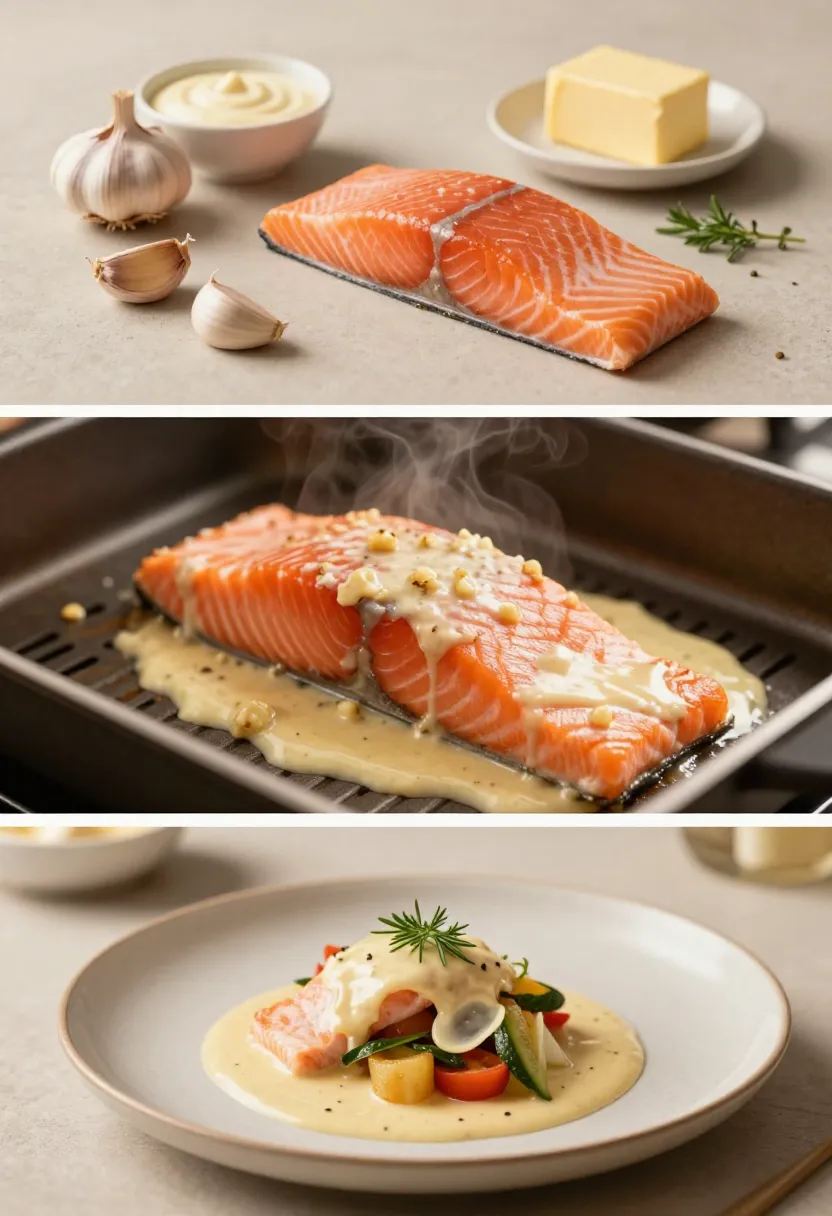
Garlic adds structure back into the dish. It gives the flavor something to hold onto. Without it, everything becomes too soft, too neutral, almost a bit forgettable. With it, you get a clearer direction—something that keeps the richness from becoming overwhelming.
There’s also a noticeable difference depending on how you approach the sauce itself. Even small adjustments change the final result more than you might expect:
- lighter cream → softer and more balanced, salmon still stands out
- thicker sauce → richer and more indulgent, but closer to being overpowering
- more garlic → sharper structure, more defined flavor
- less garlic → smoother, but risks becoming too flat
Another detail that often gets overlooked is how this dish evolves after cooking. Right out of the oven, it feels rich and slightly heavy, almost like everything is still settling. Give it a few minutes, though, and something shifts. The sauce relaxes, the flavors integrate, and the whole dish becomes more balanced without any extra effort.
Texture also plays a bigger role than it seems. Cream doesn’t just coat the fish—it changes how it breaks apart. The salmon becomes more delicate, softer to the point where it almost melts slightly as you eat it. That can be great, but it also means there’s less contrast, which is why keeping the sauce controlled is so important.
This is the kind of version you turn to when you want comfort, but not something overwhelming. When it’s done right, it feels rich but still balanced enough that you can actually enjoy the whole portion without feeling tired of it halfway through.
💡 Tip: Keep the sauce light and slightly loose—if it starts to feel heavy, it’s probably already too much.
8. 🍯 Soy Glazed Salmon
This version shifts things into a deeper, more concentrated flavor profile—something that feels a bit more intentional and slightly more serious.
Soy sauce doesn’t just add salt. It adds weight. It brings a kind of depth that changes how everything else is perceived. The salmon feels richer, the overall flavor becomes more grounded, and the dish starts to feel more structured compared to lighter variations.
But soy on its own can be a bit too direct. That’s why it almost always works best when balanced with something else—usually a bit of sweetness. Not enough to make the dish sweet, just enough to soften the edges and keep everything from feeling too sharp.
As the salmon bakes, the glaze develops in a very specific way. It thickens slightly, becomes more concentrated, and forms a thin layer on the surface. That layer changes the texture in a subtle but noticeable way. The outside becomes a bit firmer, more defined, while the inside stays soft and flaky.
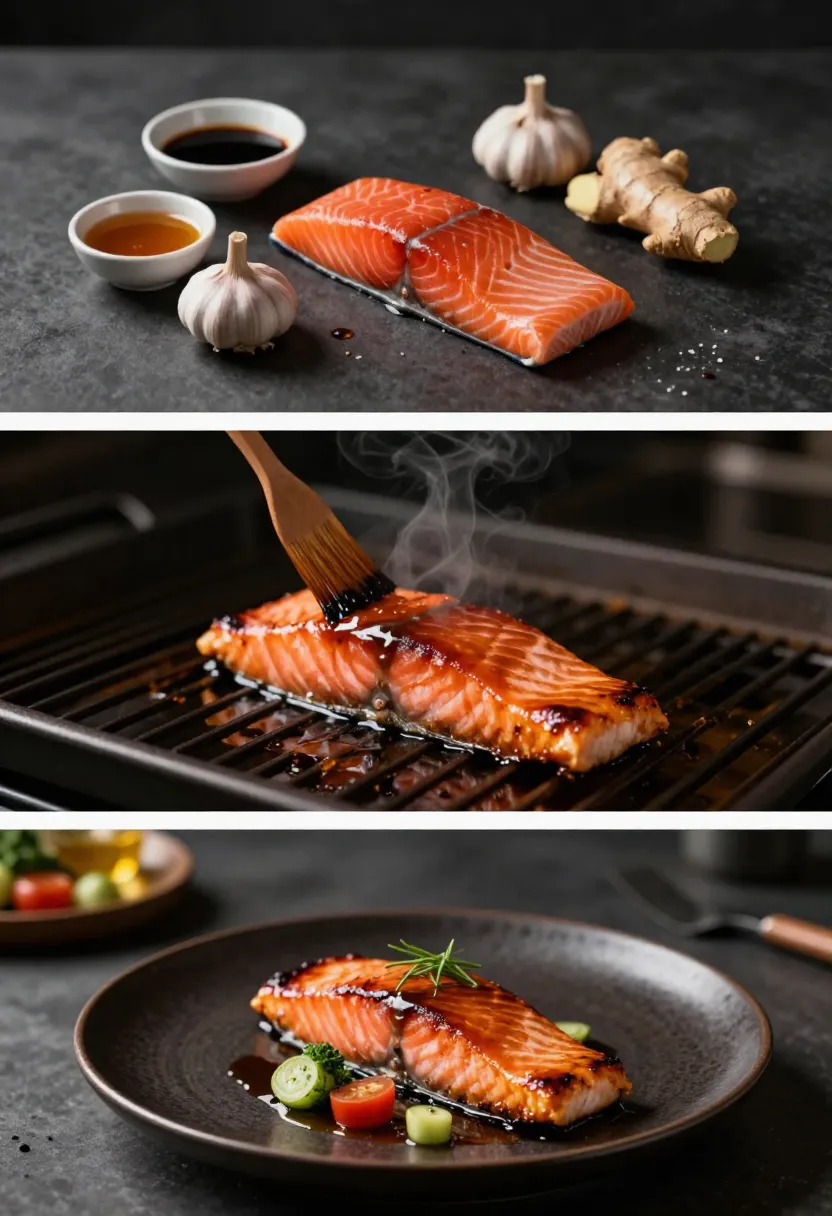
That contrast is what makes this version feel complete.
At the same time, this is one of those variations where it’s easy to lose balance without realizing it immediately:
- too much soy → overly salty, dominates everything
- not enough sweetness → feels sharp and slightly harsh
- too much glaze → covers the fish instead of enhancing it
- high heat → glaze reduces too quickly and becomes too intense
Another interesting detail is how the flavor develops after cooking. Right out of the oven, it feels bold and slightly aggressive. After resting for a few minutes, it settles. The intensity softens, and the flavors feel more integrated, more controlled.
This version also tends to feel more “complete” on its own. It doesn’t need much else on the plate, because the flavor already has enough depth and contrast built in.
It’s still simple, but it feels more deliberate—like you had a clearer idea of what you wanted the dish to be.
💡 Tip: Use low-sodium soy sauce so you can build flavor gradually instead of trying to fix it later.
9. 🌿 Mediterranean Style Salmon
This version feels the most natural and unforced out of all of them.
There’s no single dominant flavor here, and that’s exactly why it works. Instead of building around one strong element, it relies on balance between smaller components—olive oil, herbs, maybe tomatoes, maybe olives. Each one adds something, but none of them try to take over.
The result is a dish that feels relaxed. Not minimal, not complex—just steady and well-balanced.
What makes this version interesting is how it builds flavor quietly. You don’t get a strong first impression. Instead, everything unfolds gradually. You notice the freshness from the herbs, the softness from the oil, the slight acidity from tomatoes, the sharper notes from olives—if they’re there.
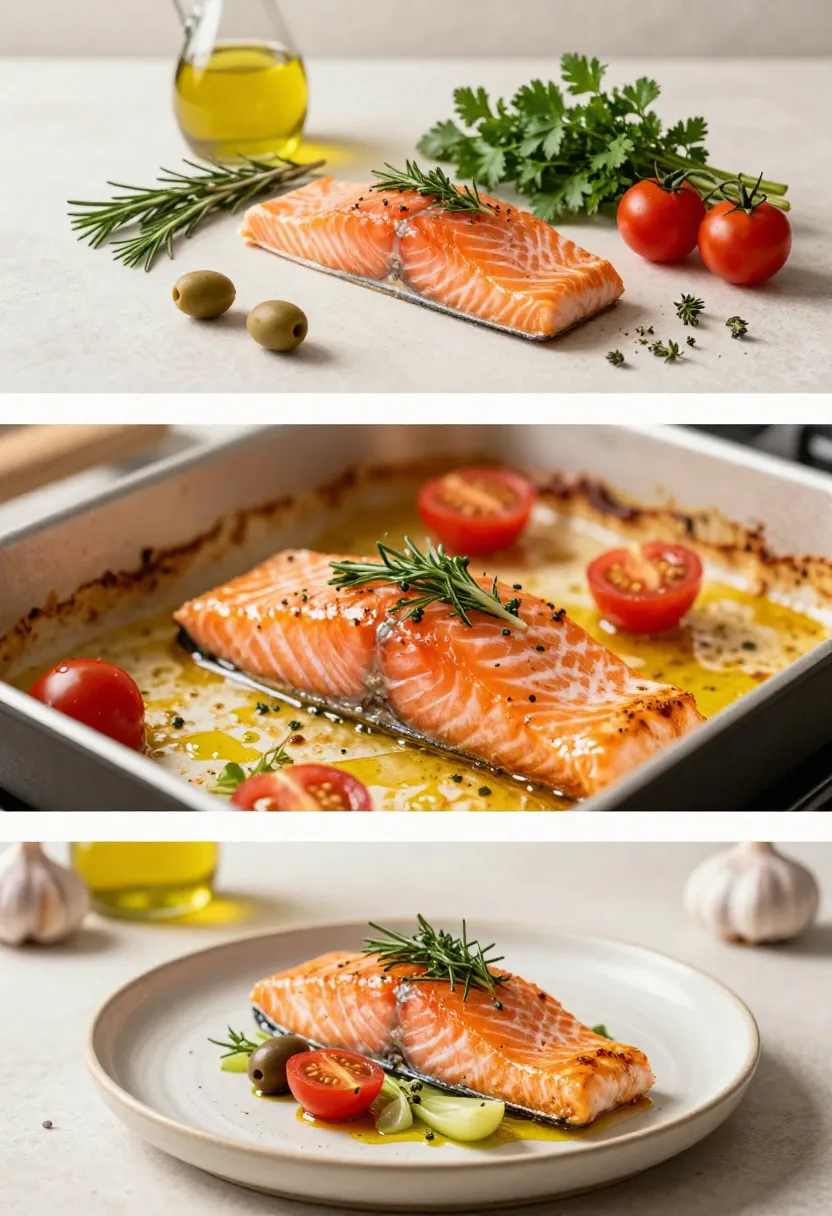
It’s less about impact and more about cohesion.
Texture is also slightly different here compared to other variations. It’s not as smooth as creamy versions, and not as structured as glazed ones. It feels more natural, with small variations throughout—some softer bites, some slightly firmer ones, depending on what’s included.
Small adjustments can shift the balance without changing the overall identity:
- more olive oil → richer, smoother texture
- more herbs → brighter, fresher feel
- adding tomatoes → softer, more moisture
- adding olives → sharper contrast, more definition
Another thing that stands out is how easy it is to eat. It doesn’t feel heavy, even though it’s still satisfying. It’s the kind of dish you don’t get tired of quickly, because nothing is pushing too hard in any direction.
It also doesn’t try to impress—and that’s probably why it works so well.
💡 Tip: Keep the ingredient list focused—adding too much at once breaks the balance.
10. 🧂 Classic Simple Baked Salmon
And then there’s the simplest version—the one that looks the easiest but ends up being the most revealing.
No glaze, no sauce, no extra layers. Just salmon, salt, pepper, maybe a bit of oil. That’s it.
And because of that, every small detail becomes more visible.
There’s nothing to cover mistakes here. If the fish is slightly overcooked, you notice immediately. If the seasoning is off, there’s nothing to balance it. If the texture isn’t right, it stands out right away.
This is where timing becomes everything.
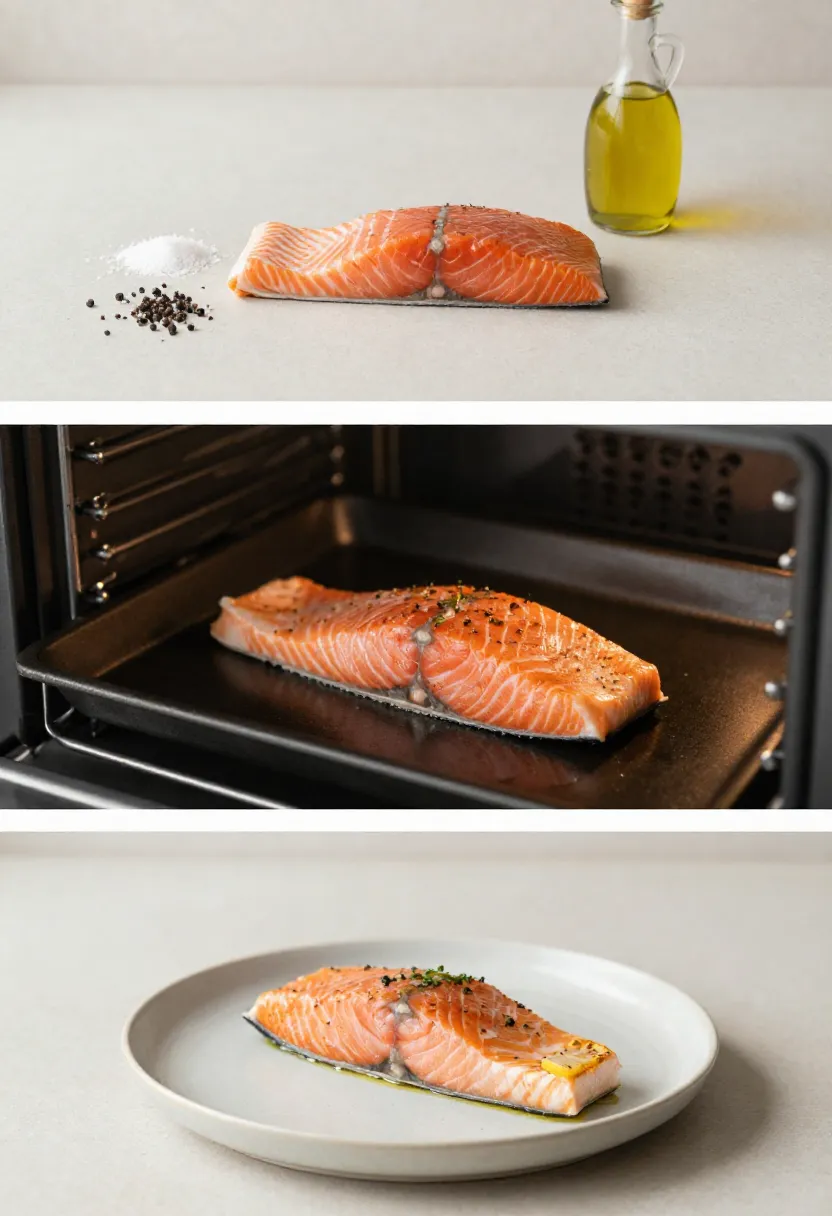
A minute too long, and the salmon loses moisture. A minute too short, and the texture feels slightly underdone. There’s no margin for hiding those differences behind other flavors.
At the same time, this version teaches you more than any other. It forces you to pay attention—not in a technical way, but in a practical, almost intuitive way.
You start noticing things you might ignore otherwise:
- how thickness affects cooking time
- how the fish flakes when it’s ready
- how much seasoning is actually enough
- how the texture changes within a minute or two
Another interesting thing is how satisfying this version can be when it’s done right. Without distractions, you actually taste the fish itself. The flavor feels clean, direct, and surprisingly complete.
It’s not exciting, but it’s very clear. And sometimes that’s exactly what you want.
Over time, this becomes a kind of reference point. Once you understand how this version works, everything else becomes easier to control. You start recognizing when something is overdone, under-seasoned, or just slightly off.
💡 Tip: Focus on timing and texture above everything else—this version depends on them completely.
🌿 Final Thoughts: Why Baked Salmon Always Finds Its Place
Baked salmon doesn’t try to be the center of attention—and that’s probably its biggest strength.
It doesn’t rely on complicated techniques or long ingredient lists. It doesn’t need a special occasion. Most of the time, it’s just there in the background of everyday cooking, quietly doing its job. And somehow, that’s exactly what makes it so easy to come back to.
It fits into real life in a way that a lot of dishes don’t.
You can make it when you’re tired, when your fridge isn’t fully stocked, or when you just don’t feel like thinking too much about what to cook. It doesn’t demand energy or focus. And still, more often than not, it turns out good enough—and sometimes better than expected.
There’s also something interesting about how forgiving it is, but not completely.
It allows small mistakes. You can be slightly off with timing, a bit uneven with seasoning, and still end up with something enjoyable. But at the same time, it quietly rewards attention. If you take just a little more care—watch the timing more closely, adjust the balance, stop cooking at the right moment—the difference becomes noticeable.
Not dramatic, but real.
That balance between “easy” and “worth doing properly” is actually quite rare. A lot of dishes fall into one side or the other. This one somehow sits right in the middle.
Another reason baked salmon keeps coming back is how flexible it is without losing its identity. You can completely change the direction—make it lighter, richer, fresher, or more intense—and it still feels like the same dish at its core. It adapts without falling apart.
- simple seasoning → clean and direct
- creamy or buttery → softer and more comforting
- glazed versions → more structured and layered
- citrus or herb-based → lighter and more refreshing
And then, over time, something subtle shifts in how you approach it.
At first, you follow recipes. You check timing, measure ingredients, try to get everything “right.” But after a while, you stop thinking about it that way. You start adjusting things without really noticing—adding a bit more salt, pulling it out a minute earlier, changing how you finish it.
It becomes less about instructions and more about instinct.
You don’t always get it perfect—and that’s kind of the point. It doesn’t need to be perfect to work. It just needs a bit of attention in the right places.
And honestly, that’s where cooking usually becomes more enjoyable. Not when everything is precise, but when it starts to feel natural—like you’re not following something, just responding to it.
And baked salmon fits that way of cooking almost perfectly. 🧡