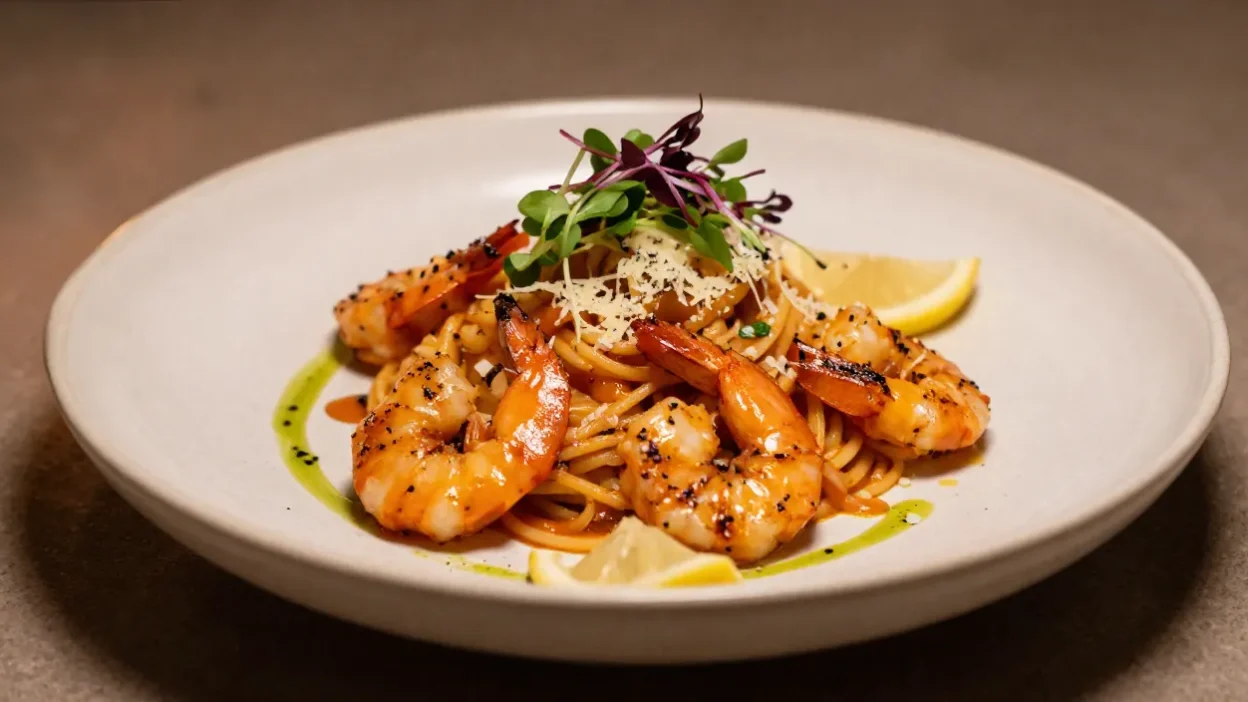
Shrimp pasta is one of those dishes that quietly earns a permanent place in your kitchen 🍤 Not because it’s trendy or complicated, but because it consistently delivers. You can make it when you’re tired, when you’re short on time, or even when you just don’t feel like thinking too much about dinner — and somehow, it still turns out satisfying.
It’s hard to explain at first why this combination works so well. On paper, it’s simple. Pasta is something most people already have at home. Shrimp, whether fresh or frozen, don’t take much effort to prepare. The rest usually comes down to a handful of ingredients — garlic, oil or butter, maybe a bit of lemon or tomato. Nothing about it feels complicated or intimidating.
And yet, when everything comes together, it rarely feels like a “basic” meal.
Part of that comes down to timing. Shrimp cook incredibly fast, which changes the entire cooking process. You don’t have long waiting periods or complicated steps. Everything moves quickly, almost naturally. Pasta boils, the sauce builds in a pan, shrimp go in for just a few minutes — and before you know it, you’re done. It’s a kind of cooking rhythm that feels easy to fall into, even if you’re not paying full attention.
Another part of it is balance. Shrimp have a light, slightly sweet flavor with a subtle ocean note that doesn’t overpower the dish. Pasta acts as a neutral base, absorbing whatever sauce you create and giving the whole thing structure. The sauce itself is what ties everything together, and this is where shrimp pasta becomes surprisingly flexible.
Depending on what you add, the same dish can feel completely different. A simple combination of olive oil, garlic, and lemon creates something fresh and light. Swap that for butter or cream, and it becomes richer, softer, more comforting. Add tomatoes and chili, and suddenly it’s deeper and a bit more intense. You’re not changing the foundation — just the direction.
That’s why shrimp pasta is less about following a fixed recipe and more about understanding a few simple ideas. Once you get comfortable with those, you start making small decisions without even noticing. Maybe you add a little more lemon because it feels too heavy. Maybe you throw in herbs at the end because something seems missing. These small adjustments are what make the dish feel personal rather than mechanical.
It also helps that most of the ingredients are easy to find and often already in your kitchen. You don’t need anything overly specific or expensive to make it work. In fact, shrimp pasta is one of those meals that can come together from what feels like random ingredients — and still turn out well.
If you break it down, the dish is really built on a few core components. Each one has a clear role, and when one of them is missing or off, the whole thing feels slightly unbalanced. When they work together, though, everything clicks into place without much effort.
Here’s a more detailed look at how these elements function in a typical shrimp pasta:
| Component | Role in the Dish | Common Options | Why It Matters |
|---|---|---|---|
| Shrimp 🍤 | Main protein, delicate texture, quick cooking | Fresh, frozen, peeled | Adds sweetness and keeps the dish light |
| Pasta 🍝 | Base and structure | Spaghetti, linguine, penne | Holds the sauce and gives body |
| Fat 🧈 | Flavor carrier and richness | Olive oil, butter | Creates a smooth, cohesive texture |
| Aromatics 🧄 | Flavor foundation | Garlic, shallots, onion | Builds depth from the very beginning |
| Acid 🍋 | Balancing element | Lemon juice, wine, tomatoes | Cuts through richness and adds brightness |
| Herbs & Spice 🌿 | Adds freshness and personality | Parsley, basil, chili flakes | Makes the dish feel more dynamic |
| Liquid 💧 | Sauce builder | Pasta water, cream, broth | Helps everything bind together |
| Texture 🔥 | Contrast | Breadcrumbs, toasted toppings | Prevents the dish from feeling too soft |
| Finish ✨ | Final adjustment | Olive oil, zest, cheese | Brings everything together at the end |
What’s interesting is that none of these elements are complicated on their own. There’s no single “secret ingredient” that makes or breaks the dish. Instead, it’s the way they interact — the balance between richness and freshness, softness and texture, simplicity and flavor.
Once you start noticing that, cooking shrimp pasta feels different. You’re not just following steps anymore. You’re paying attention. Tasting as you go. Adjusting small things without overthinking them.
And that’s probably the point where it becomes more than just a quick dinner.
It becomes something you actually enjoy making.
🍽️ Top 10 Shrimp Pasta Variations You Should Try
1. 🍋 Garlic Lemon Shrimp Pasta
This is usually the version people try first, and it’s not by accident. It’s simple in a very honest way. Nothing is hidden, nothing is overloaded. You’re working with just a few ingredients, and because of that, every small detail becomes noticeable.
It often starts the same way: you heat olive oil, add garlic, and almost immediately the kitchen fills with that familiar smell. Not too strong, not overwhelming — just enough to signal that something good is happening. At this point, it already feels like you’re on track, even though the dish is far from finished.
Then come the shrimp, and this is where timing becomes important. They cook fast — faster than most people expect. You add them to the pan, they start turning pink, you flip them once, maybe twice, and that’s it. If you hesitate or try to “play it safe” by cooking them longer, the texture changes in a way you can’t really fix afterward.
The final step is where everything comes together. Lemon juice goes in right at the end, not earlier. And the effect is immediate. The oil feels lighter, the garlic sharpens slightly, and the shrimp taste cleaner and more defined. It’s a small adjustment, but it shifts the entire dish from something good to something that feels complete.
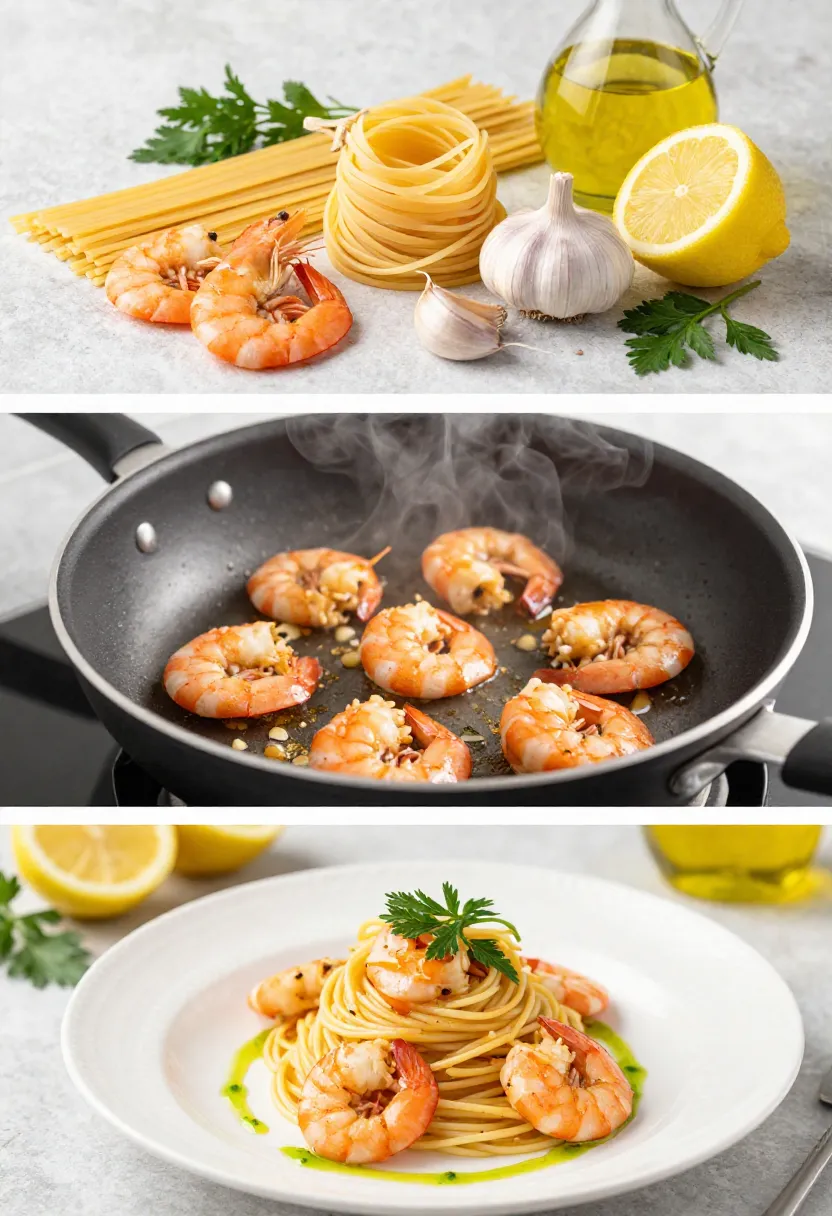
What makes this version stand out is how exposed everything is. There’s no cream, no thick sauce, no extra layers to balance things out if something goes wrong. That can feel a bit unforgiving at first, but it also makes the dish more rewarding when you get it right.
You start noticing things you might usually ignore. How long the garlic cooks actually matters. When you add the lemon matters. Even the amount of salt can change the whole perception of the dish. It’s not complicated, but it does require a bit of attention.
At the same time, it never feels stressful. It’s more like you’re adjusting things as you go, reacting to what you see and taste rather than following a strict plan. And that’s probably why this version is so satisfying — it teaches you how small changes affect the final result.
It also has a certain lightness to it. You finish eating, and you don’t feel weighed down. It’s filling, but not heavy. Clean, but not boring. That balance is hard to get right, but when it works, it feels effortless.
- Pay attention to timing — shrimp should be cooked just until they turn opaque
- Add lemon at the very end to keep its brightness
- Taste before serving and adjust salt if needed
Tip: Add a pinch of salt right after the lemon juice — it enhances the citrus and makes the flavors feel more defined.
2. 🧈 Classic Butter Shrimp Pasta
This version moves in a completely different direction. Where the lemon pasta feels fresh and sharp, this one is softer, rounder, and more comforting. It doesn’t try to wake you up — it settles you down.
Butter changes everything. As it melts, it creates a smooth base that coats the pasta in a way olive oil doesn’t. The texture becomes richer, slightly heavier, but also more cohesive. Every bite feels consistent, almost calm.
Shrimp behave differently here as well. Instead of standing out with contrast, they blend into the sauce. Their sweetness becomes part of the overall flavor rather than something separate. It’s less about contrast and more about harmony.
That said, this version can easily become too heavy if you’re not careful. Butter on its own doesn’t bring much contrast, so the dish can start to feel flat. That’s why even small additions matter more than you might expect.
You don’t need to complicate it, but a few subtle elements help keep everything balanced:
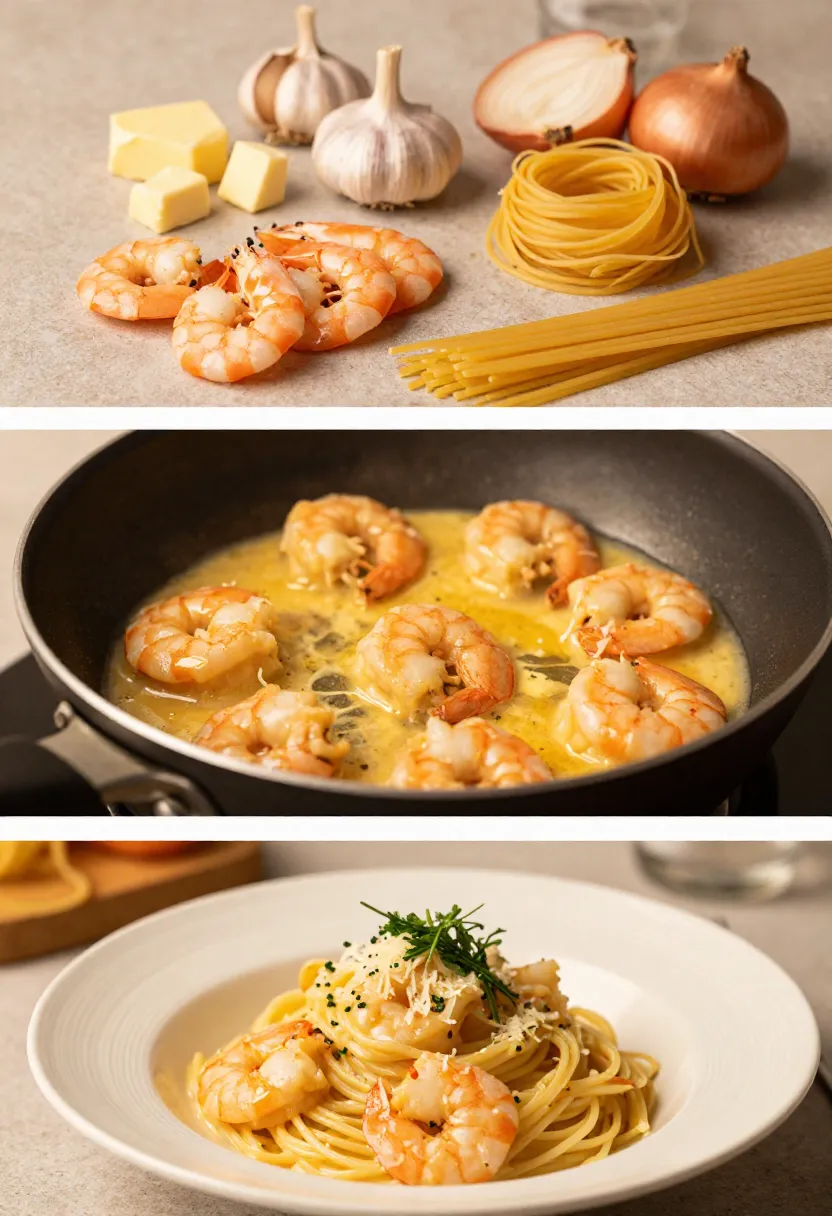
- garlic to build a base flavor at the beginning
- shallots for a softer, slightly sweet depth
- a splash of white wine to introduce just enough acidity
These don’t need to stand out individually. They work quietly in the background, preventing the dish from becoming too one-dimensional.
The cooking process also feels slightly different. You can’t rush it too much, even though it’s still a quick recipe. Butter reacts badly to high heat — it separates, becomes oily, and loses that smooth texture you’re aiming for. So you end up lowering the heat, paying a bit more attention, adjusting as you go.
It’s not difficult, but it requires a different kind of awareness.
This is the kind of pasta you make when you want something steady. Not exciting, not surprising — just reliably good. The kind of meal you don’t have to think about too much while eating, but still enjoy from start to finish.
- Use moderate heat to keep the butter stable
- Add small amounts of liquid if the sauce feels too thick
- Don’t overload it with ingredients — simplicity works better here
Tip: Keep the heat lower than you think you need — butter sauces can break quickly if overheated.
3. 🌶️ Spicy Tomato Shrimp Pasta
This version brings more energy into the dish. It’s not subtle, and it doesn’t try to be. Compared to the previous ones, it feels more dynamic, a bit louder, and definitely more layered.
It starts with tomatoes, which immediately change the structure of the sauce. Unlike oil or butter, tomato-based sauces have body. They thicken as they cook, cling to the pasta differently, and create a more substantial base.
At the beginning, the sauce can taste slightly sharp or acidic. That’s normal. Tomatoes need time to settle. As they simmer, their flavor softens, the sweetness becomes more noticeable, and everything starts to feel more balanced.
Then comes the heat. Chili flakes are the easiest option, but the exact amount depends on what you’re aiming for. A small pinch adds warmth. A larger amount turns the dish into something more intense. Either way, the spice should feel integrated, not overwhelming.
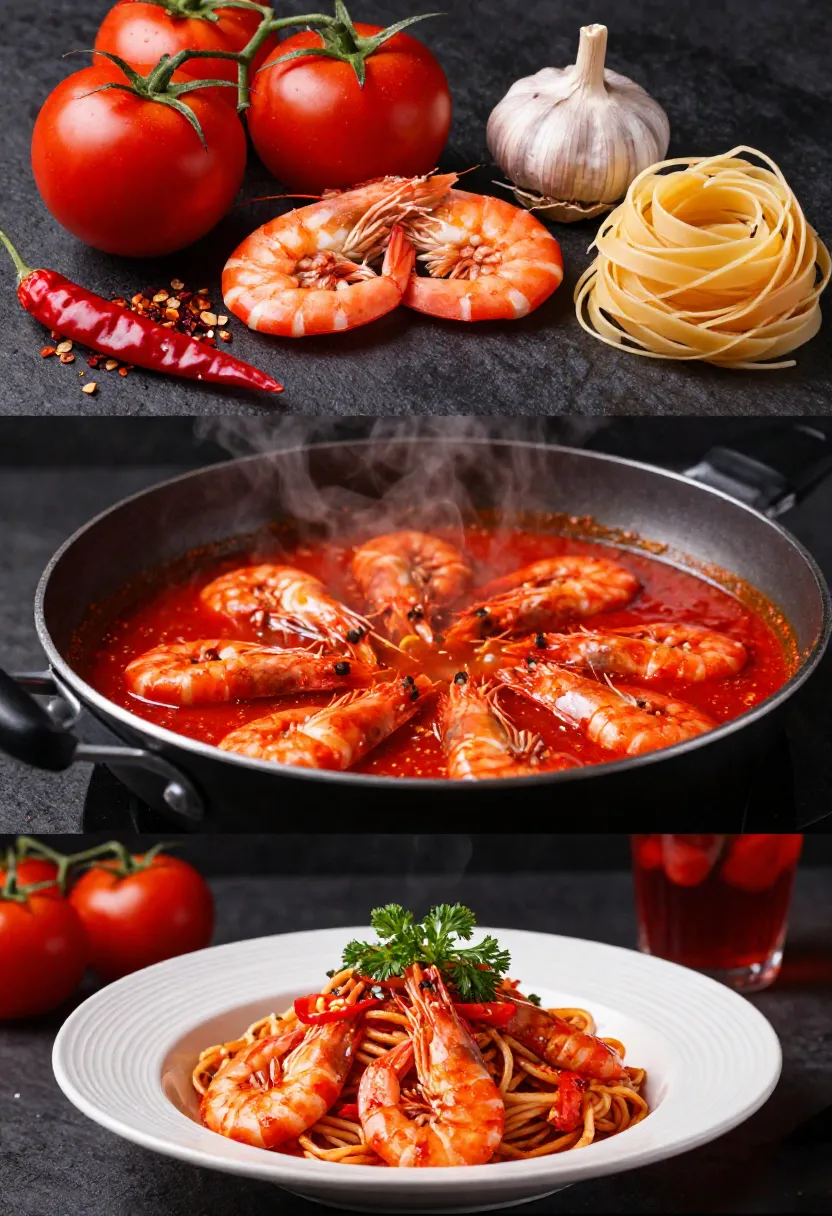
The interesting part is how the shrimp interact with this kind of sauce. Their natural sweetness acts as a counterbalance to both the acidity and the heat. Without them, the dish might feel too aggressive. With them, it becomes more rounded.
This version is also more forgiving than lighter ones. If you add a bit too much garlic or slightly overcook something, the sauce tends to absorb those mistakes. It doesn’t fall apart easily.
The texture is different too. Thicker, more coating, slightly heavier. It sticks to the pasta in a way that feels more substantial, which makes the dish feel more filling overall.
What makes this variation enjoyable is that it doesn’t feel predictable. Each bite can shift slightly depending on how the sauce settled, where the shrimp are, or how the spice distributes. It keeps your attention without being overwhelming.
- Let the sauce simmer long enough to soften acidity
- Adjust spice gradually instead of adding too much at once
- Taste during cooking — the flavor changes as it develops
Tip: Give the sauce a few extra minutes on low heat — it deepens the flavor more than you might expect.
4. 🧄 Creamy Garlic Shrimp Pasta
This is the version people turn to when they want something comforting without thinking too hard about it. Not flashy, not complicated — just smooth, rich, and reliable in a way that feels almost automatic. It’s the kind of dish you make when you’re tired but still want something that feels like a proper meal.
The moment cream hits the pan, the whole direction of the dish changes. Everything softens. Garlic loses its sharp edge and becomes rounder, more mellow. The sauce thickens slowly, coating the shrimp and pasta in a way that feels consistent from the first bite to the last.
Shrimp behave differently here compared to lighter versions. Instead of standing out, they blend in. Their sweetness becomes part of the background, woven into the cream rather than sitting on top of it. You don’t get strong contrast — you get a kind of steady, unified flavor that doesn’t shift too much.
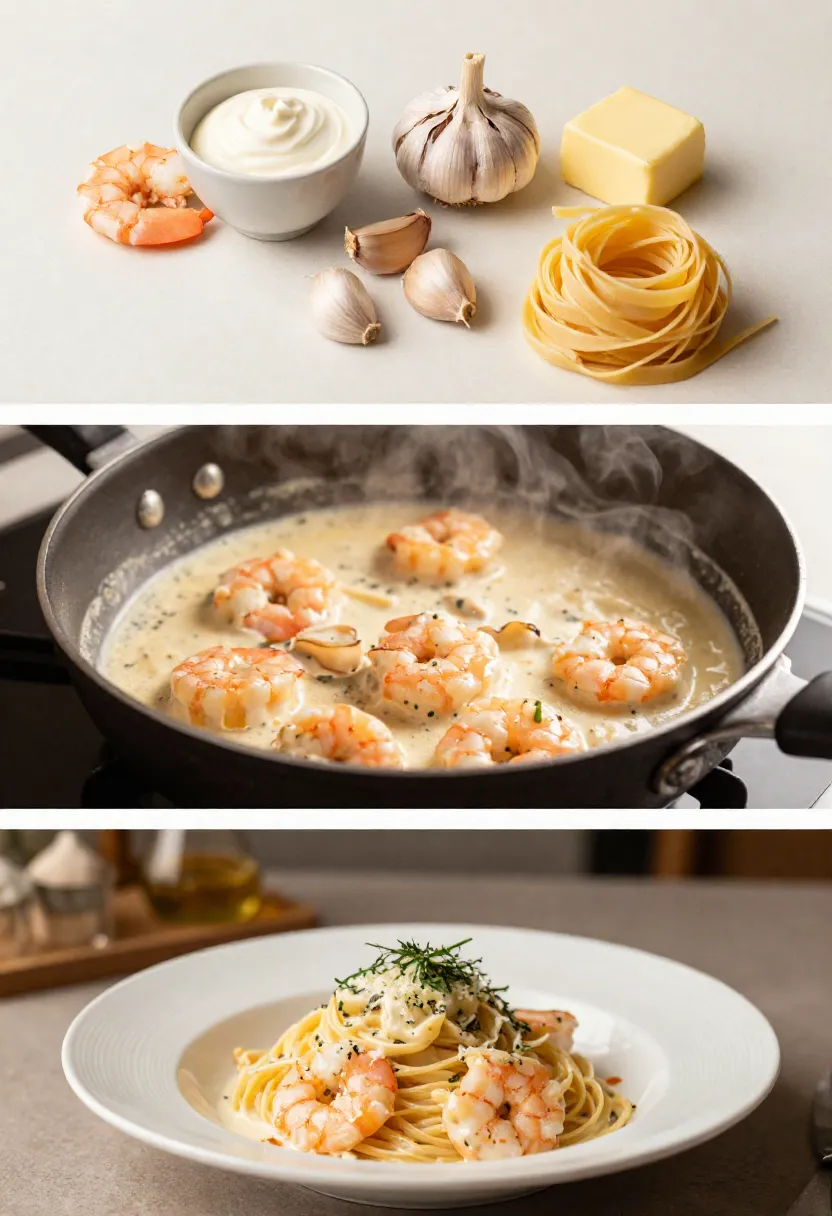
That’s exactly why this version can be so satisfying, but also why it can go wrong if you’re not paying attention. Cream has a way of taking over. If there’s too much of it, the dish starts to feel heavy halfway through. Not unpleasant — just tiring.
So even though the dish feels simple, there’s still a bit of balance happening behind the scenes. You don’t necessarily notice it when it’s right, but you definitely notice when it’s missing.
A few small things help keep everything in check:
- add garlic early, but don’t let it brown too much
- keep the heat moderate so the cream doesn’t reduce too aggressively
- introduce a small amount of acidity (wine, lemon, or even cheese)
- adjust texture at the end if the sauce becomes too thick
Another thing people often underestimate is how the sauce changes after cooking. Cream thickens as it cools, so what feels perfect in the pan might become slightly too dense once plated. That’s why small adjustments at the end make a big difference.
This dish doesn’t try to surprise you. It’s steady, predictable, and that’s exactly why it works. You know what you’re getting, and sometimes that’s all you want — something warm, smooth, and easy to enjoy.
Tip: If the sauce feels too heavy or thick, a small splash of pasta water can bring it back to a smoother consistency without weakening the flavor.
5. 🌿 Herb-Forward Shrimp Pasta
This one feels lighter from the very beginning. Not just in texture, but in the way the whole dish comes together. Instead of building around richness, everything is centered on freshness and aroma.
Herbs take the lead here, and that changes the entire experience. They don’t just sit on top as decoration — they shape the flavor. And what’s interesting is how much the result depends on which herbs you choose.
Parsley keeps things clean and simple. Basil adds a slightly sweet, softer note. Dill brings a sharper, more distinctive edge. Even small differences in quantity can shift the dish in noticeable ways.
The base is usually minimal — olive oil, garlic, maybe a bit of citrus. Nothing that competes too much. That allows the herbs to stay in focus instead of getting lost in heavier elements.
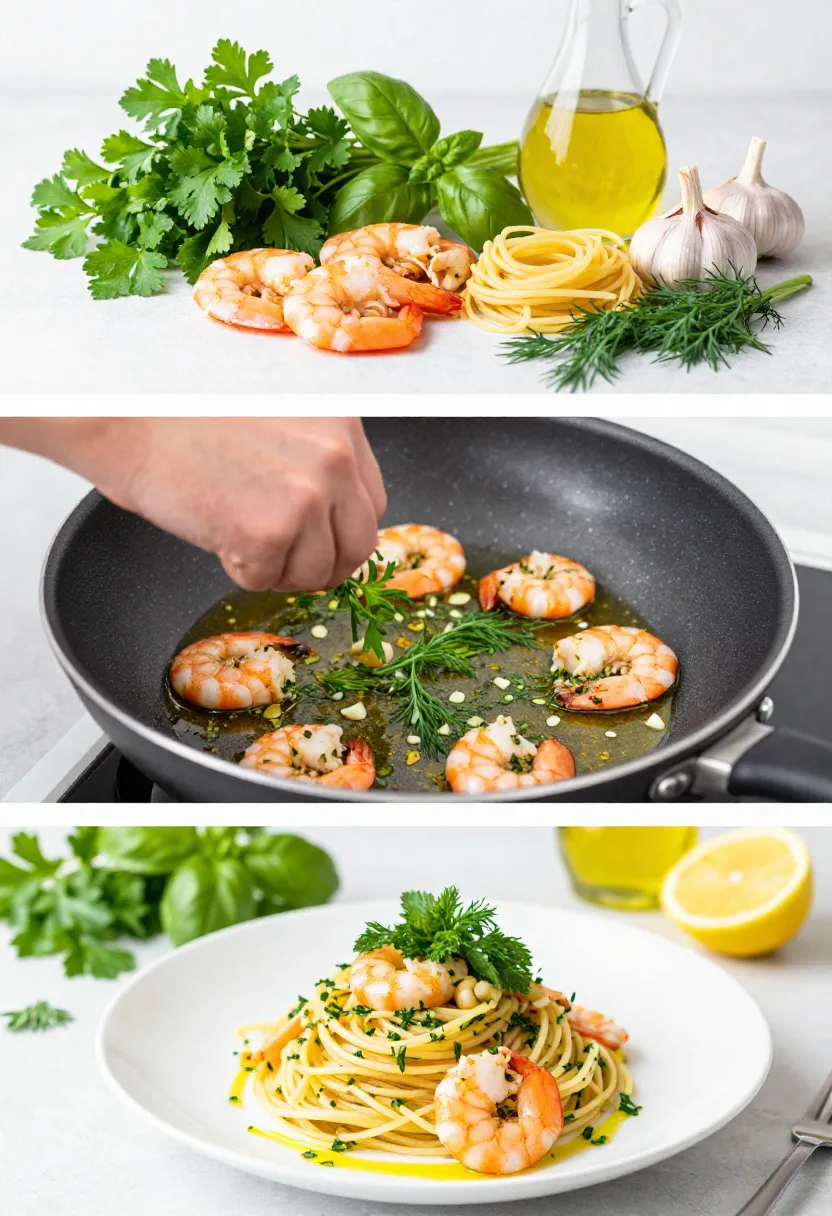
Shrimp fit naturally into this style. Their flavor is light enough to work with herbs instead of overpowering them. The result is a dish that feels fresh, almost airy, but still filling enough to feel like a proper meal.
Timing matters more here than it seems at first. Herbs are delicate. If they cook too long, they lose their aroma and become dull. If they’re added at the right moment, the difference is noticeable immediately.
There’s also a bit more flexibility in this version compared to others. You can adjust the balance easily, change combinations, or even improvise based on what you have available. It’s less rigid, more open.
- use fresh herbs whenever possible — they make a noticeable difference
- add most herbs at the end to preserve their aroma
- avoid overloading the dish with too many different herbs
- taste as you go — the flavor can shift quickly
This is the kind of pasta that feels good to eat when you don’t want anything heavy or overwhelming. It’s clean, slightly unpredictable, and a bit more “alive” than richer versions.
Tip: Chop herbs right before adding them — it keeps their flavor sharper and more noticeable.
6. 🍅 Roasted Tomato Shrimp Pasta
This version brings a different kind of depth. It’s still tomato-based, but it doesn’t have that sharp, fresh acidity you get from quickly cooked sauces. Roasting changes everything — the flavor, the texture, even the way the sauce feels.
When tomatoes roast, they lose moisture and concentrate. Their natural sweetness becomes more noticeable, and the edges start to caramelize slightly. It’s not something dramatic, but it adds a level of depth that’s hard to get otherwise.
Once those tomatoes are turned into a sauce, the texture feels thicker and more grounded. It’s not as smooth as cream and not as light as oil-based versions. It sits somewhere in between — more substantial, more structured.
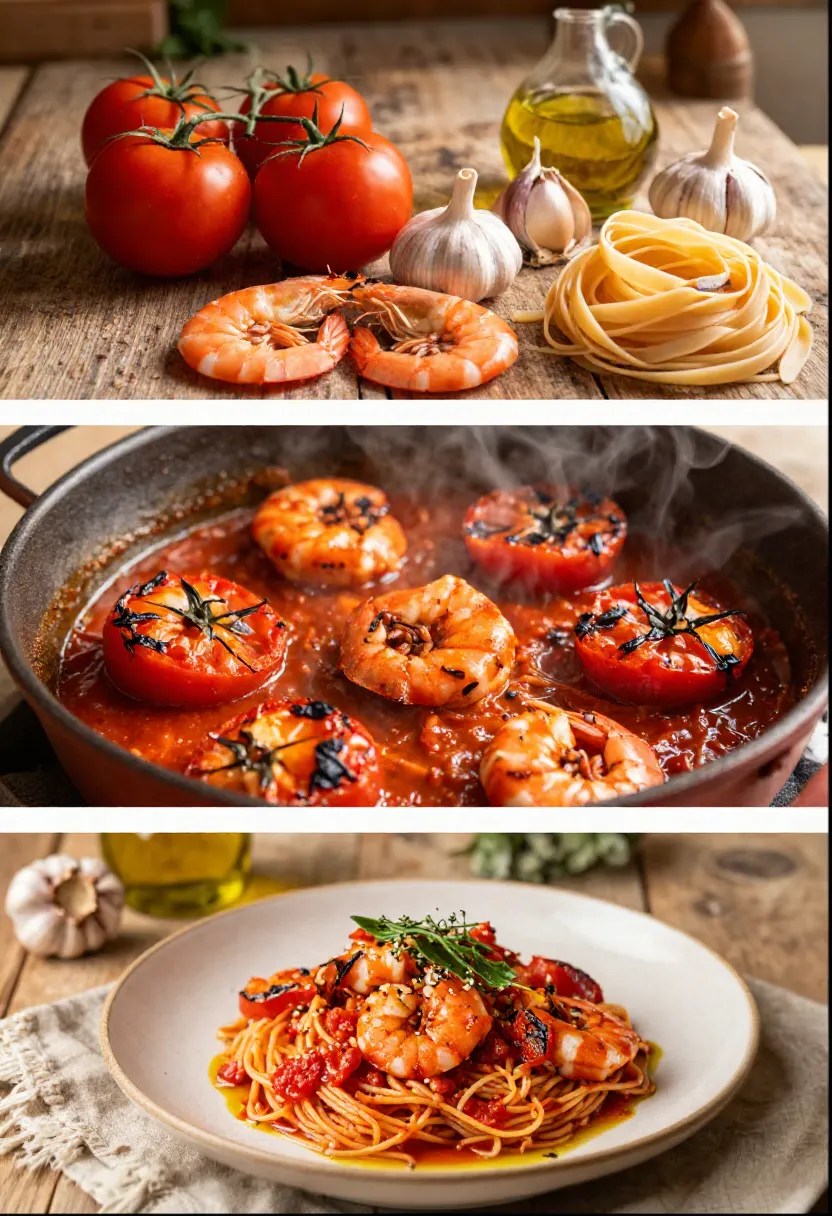
Shrimp work well here because they balance that depth. Their lighter, slightly sweet flavor cuts through the richness of the roasted tomatoes, preventing the dish from feeling too heavy.
There’s also something about this version that feels less polished — in a good way. The sauce isn’t perfectly smooth, the texture is slightly uneven, and that makes it feel more real. Less like something from a restaurant, more like something made at home without trying too hard.
The key is giving the tomatoes enough time. If they’re under-roasted, the flavor stays flat. If they’re done properly, everything else becomes easier.
- roast tomatoes until they soften and develop slight browning
- use olive oil during roasting to help bring out flavor
- don’t rush the sauce — let it come together gradually
- taste before combining with pasta to adjust seasoning
This version is a good middle ground. It has depth, but it’s not too heavy. It feels comforting, but not overwhelming.
Tip: Let the tomatoes roast a bit longer than you think — that extra time adds noticeable depth to the final dish.
7. 🌮 Mexican-Inspired Shrimp Pasta
This variation feels like stepping slightly outside the usual comfort zone — but not in a risky way, more like in a “this is interesting, I didn’t expect that” kind of way. It takes familiar elements and shifts them just enough that the dish feels new without becoming confusing.
The biggest change here is how the flavor is built. Instead of relying on richness or depth from long cooking, everything is driven by brightness and contrast. Lime plays a central role. It’s sharper than lemon, a bit more aromatic, and it lingers differently. You notice it not just at the start of a bite, but even after.
Then comes the heat. Chili doesn’t just add spice — it changes how you experience the dish. It makes everything feel more active, more layered. But the goal isn’t to make it overly spicy. It’s more about creating that gentle tension between warmth and freshness.
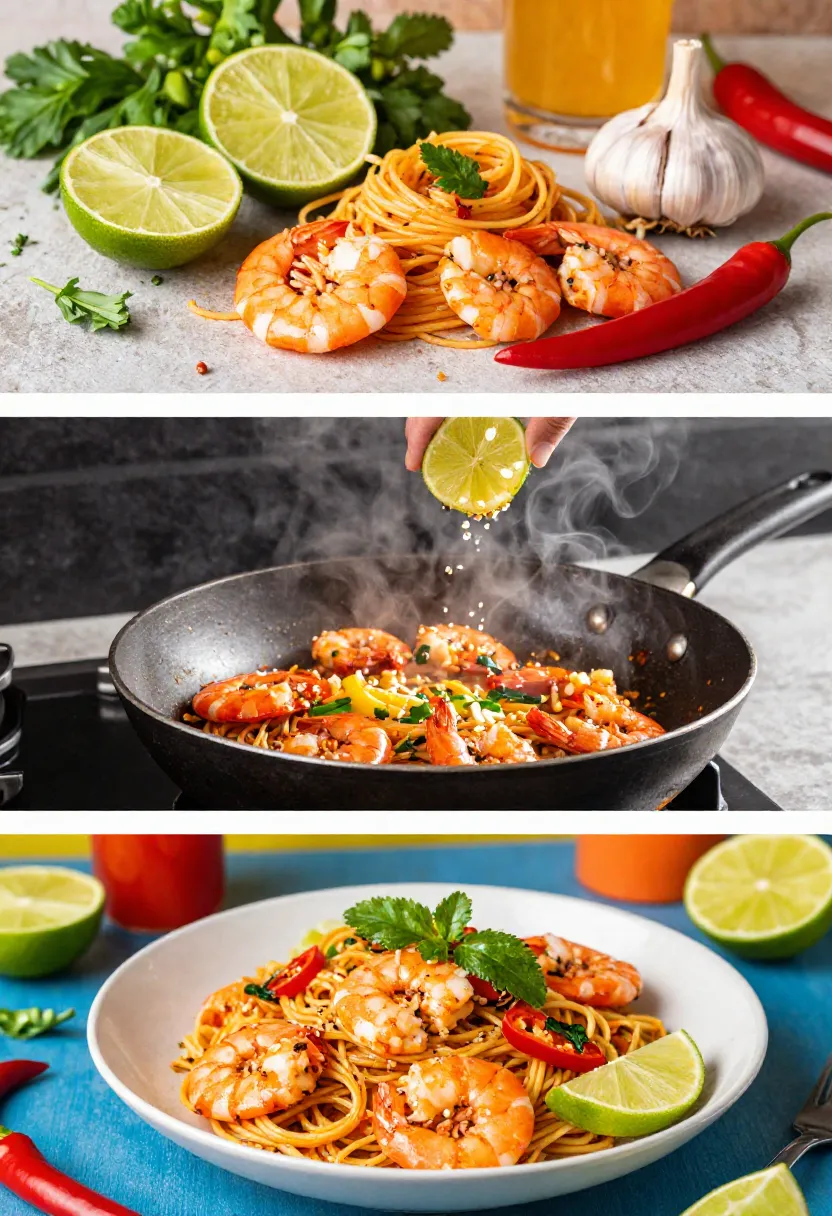
What makes this work surprisingly well is how shrimp fit into the picture. They soften the edges of the dish. Without them, the combination of lime and chili could feel too aggressive or disconnected from the pasta. But shrimp bring it back together. Their natural sweetness rounds everything out and makes the whole thing feel intentional.
Another thing that stands out is how flexible this version is. It doesn’t demand precision. You can adjust it easily depending on your taste. Some days you might want it brighter, other days a bit more spicy. It responds well to small changes.
At the same time, it’s important not to overload it. This kind of dish works best when it stays relatively simple. Too many ingredients, and you lose that clarity that makes it interesting in the first place.
- use fresh lime juice and add it gradually
- control the heat by adding chili in small amounts
- keep the base light so the flavors stay clear
- finish with fresh herbs to maintain brightness
It’s a version that feels alive. Not heavy, not predictable — something that keeps your attention without trying too hard.
Tip: Add lime zest at the end to deepen the citrus aroma without increasing acidity too much.
8. 🥖 Shrimp Pasta with Crispy Breadcrumbs
This variation doesn’t change the core recipe as much as it changes how you experience it. And that difference turns out to be bigger than it sounds.
Most shrimp pasta dishes lean heavily on smooth textures. Soft pasta, tender shrimp, sauce that coats everything evenly. It works, but after a while, it can start to feel a bit too consistent. Everything blends together in a way that’s pleasant, but not especially exciting.
Adding crispy breadcrumbs shifts that balance immediately.
It introduces contrast. Not just visually, but in every bite. You go from soft to crunchy, from smooth to slightly textured, and that change keeps the dish from feeling repetitive. It adds a kind of rhythm to eating that you don’t usually notice until it’s there.
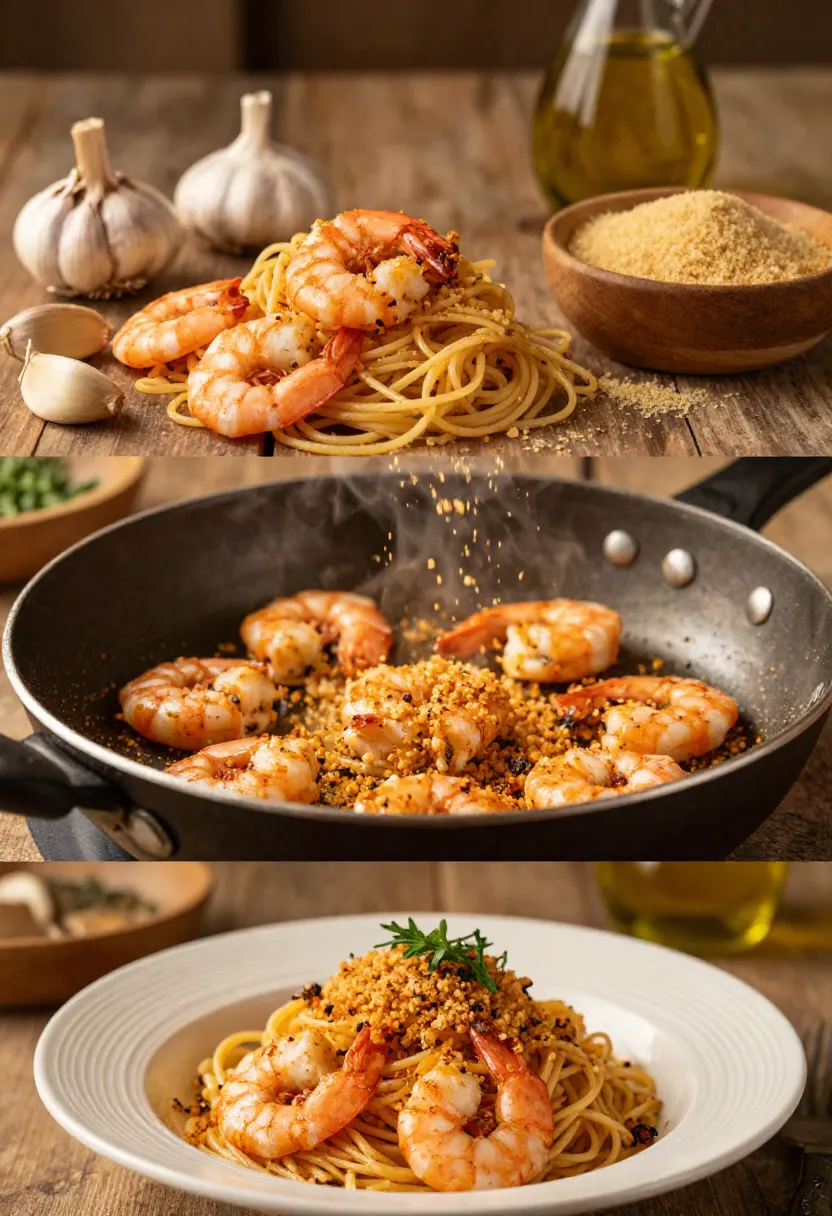
The interesting part is that breadcrumbs don’t need to be the focus. They don’t dominate the flavor. Instead, they sit on top, quietly changing the way everything else feels. It’s a small addition that has a surprisingly strong effect.
You also have a lot of freedom with how you prepare them. They can be simple, just toasted in oil, or slightly more complex with added garlic or herbs. Either way, they bring something extra without making the dish more complicated.
Timing matters here more than anything. If you add them too early, they lose their texture and blend into the sauce. If you add them at the right moment, they stay crisp and noticeable.
- toast breadcrumbs slowly for even color and flavor
- use oil or butter to enhance their richness
- consider adding garlic or herbs for extra depth
- add them right before serving to preserve texture
This is one of those small changes that makes the dish feel more complete. Not because it adds flavor, but because it adds contrast.
Tip: Keep breadcrumbs separate until the last moment — even a short time in the sauce can make them lose their crunch.
9. 🍷 White Wine Shrimp Pasta
This version feels more subtle than the others. It doesn’t rely on strong flavors or heavy ingredients. Instead, it builds complexity in a quieter way.
White wine is the key element here, but its role isn’t obvious at first. When you add it to the pan, it smells sharp and slightly aggressive. It doesn’t immediately feel like it belongs. But as it cooks, that sharpness fades. What’s left is softer, more integrated — a gentle acidity and a faint aromatic layer that sits in the background.
It’s not something you notice in one bite. It’s something you notice over time, as the dish feels more balanced than expected.
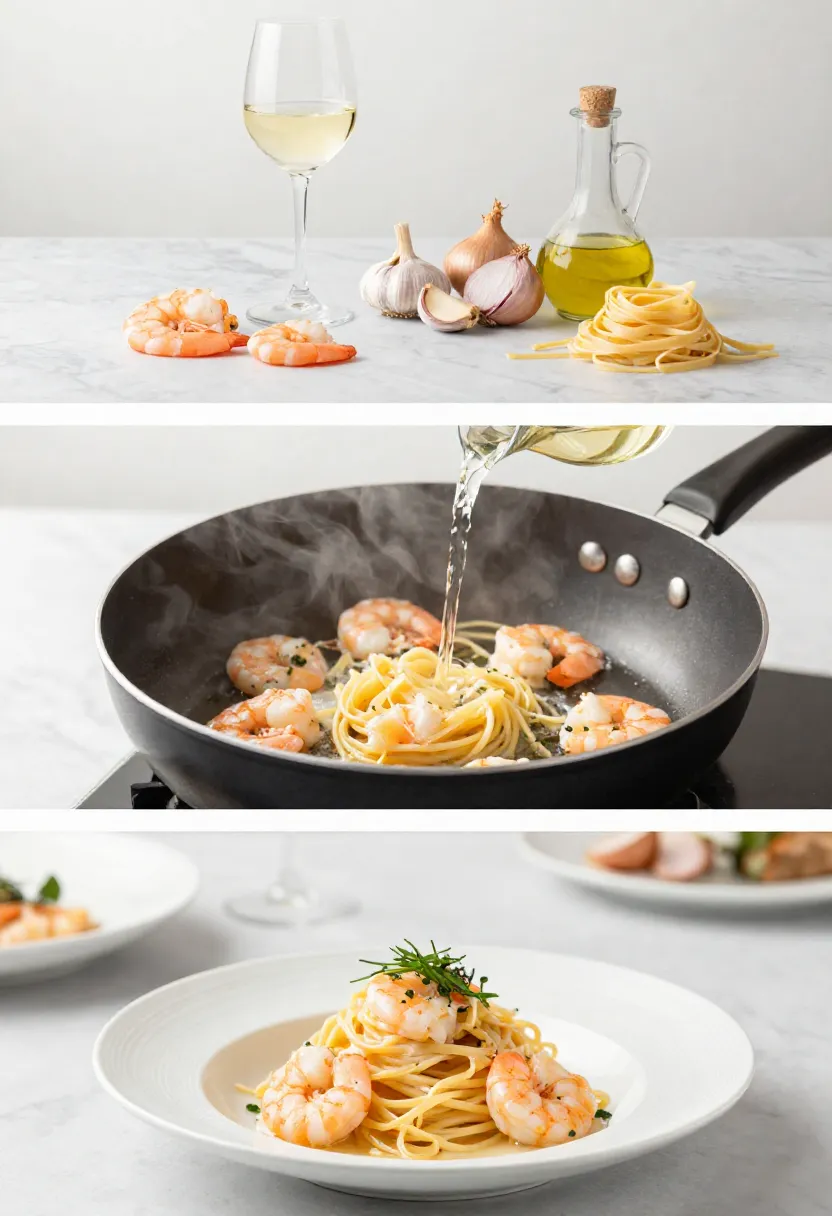
Shrimp work particularly well in this kind of setting because they don’t compete with the wine. Their flavor stays clear, slightly sweet, and the wine enhances it rather than covering it up.
This version often ends up feeling a bit more refined, even though the process is still simple. It’s not about adding more ingredients — it’s about letting fewer ingredients develop properly.
The most important step is giving the wine time to reduce. If you rush it, the sauce keeps that sharp edge. If you let it cook down, everything becomes smoother and more cohesive.
- allow the wine to reduce before adding other liquids
- avoid using too much — balance matters more than intensity
- build a base with garlic or shallots first
- taste before finishing to adjust acidity
The final result feels calm and controlled. Nothing stands out too strongly, but everything works together in a way that feels complete.
Tip: Choose a wine you actually enjoy drinking — its flavor will carry through into the dish.
10. 🍲 One-Pan Shrimp Pasta
This version is built around simplicity, but not in a way that feels like cutting corners. It’s more about changing the method to make the process smoother and, in some ways, more intuitive.
Instead of cooking everything separately, you build the dish step by step in one pan. The pasta cooks directly in the liquid, absorbing flavor as it softens. That alone changes the final result more than you might expect.
Because the pasta releases starch into the same pan, the sauce naturally thickens. You don’t need as much cream or extra ingredients to create that “coated” texture. It happens on its own.
There’s also a different flow to cooking this way. You’re not juggling multiple pots or worrying about timing everything perfectly. You stay in one place, adjust as needed, and watch the dish come together gradually.
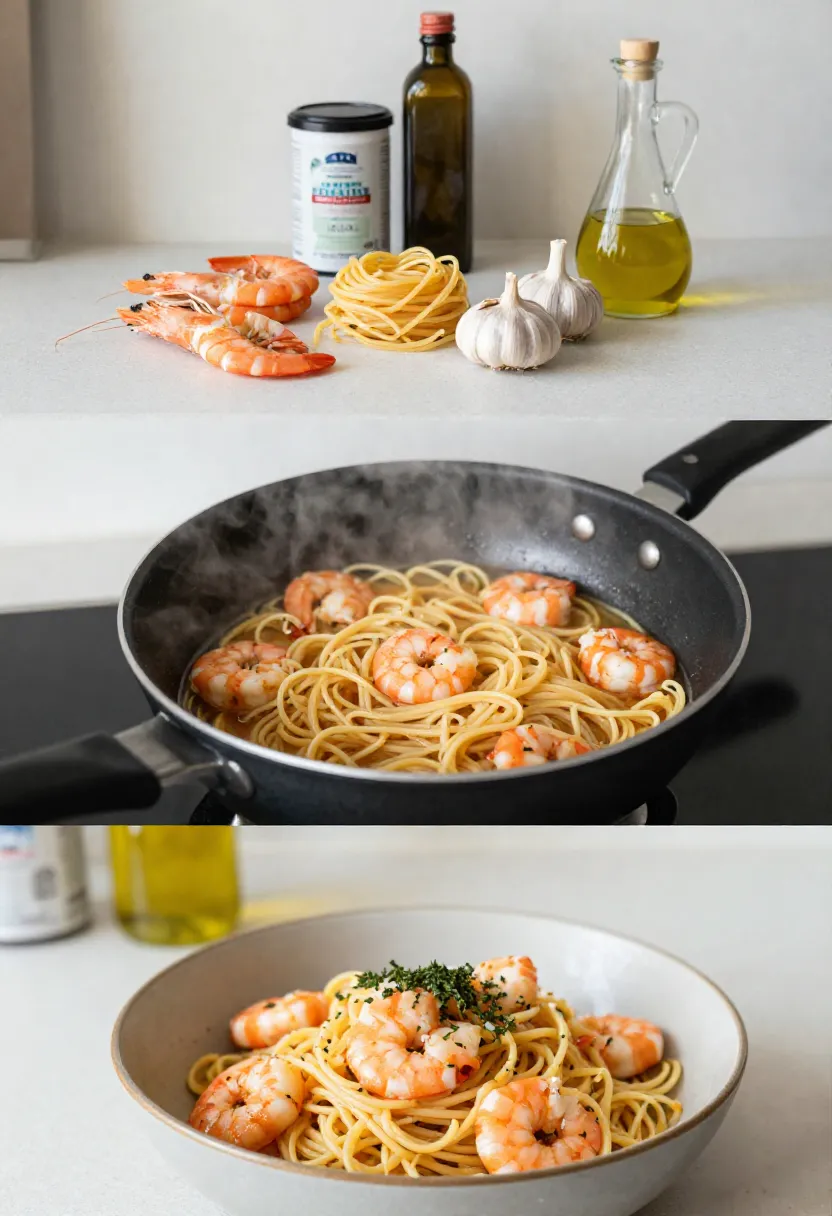
That said, it does require attention in a different way. Since everything is happening in one pan, small things matter more. Liquid levels can change quickly, pasta can stick, and shrimp still need to be added at the right moment.
Once you get used to it, though, it becomes one of the easiest ways to cook shrimp pasta without sacrificing quality.
- stir regularly, especially in the early stages
- monitor liquid levels as the pasta cooks
- add shrimp toward the end to avoid overcooking
- taste throughout the process and adjust seasoning
What you get in the end is a dish that feels unified. Not separated into layers, but fully integrated. It’s practical, but also surprisingly satisfying.
Tip: Stir more often than you think at the beginning — it helps prevent sticking and ensures even cooking.
🍤 Why Shrimp Pasta Always Finds Its Way Back
Shrimp pasta isn’t just something you cook when you’re short on time. It’s one of those dishes that quietly settles into your routine and stays there. Not because it’s the most exciting or the most impressive, but because it works in a way that feels almost effortless.
At first, it might seem very straightforward. A few ingredients, a quick process, nothing too technical. But the more you come back to it, the more you start noticing how much is actually going on beneath the surface. It’s not complicated, but it’s not as simple as it looks either.
What really makes shrimp pasta stand out is how naturally it pulls you into the cooking process. You don’t need to follow rigid steps or measure everything perfectly. In fact, the dish often turns out better when you rely a bit more on instinct.
You start noticing things without trying too hard. The way shrimp change color in seconds. The moment garlic goes from fragrant to slightly too dark. The way a splash of lemon or wine can shift the entire balance of the dish. These are small details, but once you see them, you can’t really ignore them anymore.
Over time, shrimp pasta becomes less about following a recipe and more about understanding how things connect. You begin to adjust automatically, sometimes without even thinking about it.
- you taste and realize it needs a bit more acidity
- you notice the sauce is too thick and loosen it slightly
- you stop cooking earlier because you recognize the right texture
- you add something small at the end that suddenly makes everything feel complete
None of this feels forced. It just happens as you get more comfortable.
There’s also something interesting about how this dish exists across different styles of cooking. You’ll find versions that are light and minimal, built around olive oil and herbs. Others lean toward richness, using butter or cream to create something softer and heavier. And then there are variations that don’t really follow any single tradition, mixing flavors in ways that feel unexpected but still somehow work.
Despite all these differences, the core idea doesn’t change. It’s always about balance. About taking a few simple ingredients and letting them support each other instead of compete.
Another thing that becomes clear over time is that shrimp pasta doesn’t need to be perfect to be good. In fact, slight imperfections often make it feel more real. Maybe the sauce is a little looser than you planned. Maybe the seasoning isn’t exactly precise. But somehow, it still comes together in a way that feels satisfying.
That’s part of its strength. It doesn’t demand precision. It allows for small mistakes and still delivers something enjoyable.
It also fits easily into everyday life. You don’t need to plan much ahead. You don’t need a long list of ingredients. You can make it when you’re tired, when you’re in a hurry, or even when you just want something familiar without putting in too much effort.
And yet, it never really feels like a compromise.
In a way, shrimp pasta is less about the final result and more about the experience of making it. It’s about getting comfortable with small decisions, learning to adjust as you go, and realizing that good cooking doesn’t always come from strict rules.
Sometimes it comes from paying attention.
Sometimes it comes from keeping things simple.
And sometimes, it comes from dishes like this — the ones you don’t have to think too hard about, but still enjoy every single time.
Because in the end, the meals that stay with you aren’t always the most elaborate ones.
They’re the ones that quietly become part of your routine… and never really leave.