There’s a certain category of meals that almost never gets the spotlight. They don’t trend, they’re not especially photogenic, and no one really calls them “impressive.” You won’t see people showing them off or talking about them like some kind of culinary achievement. And still—these are exactly the dishes people end up cooking the most.
Which is kind of ironic.
These are the meals that quietly survive past the usual phase of excitement. You know the one—where you save a recipe, feel inspired for a moment, maybe even plan to make it… and then forget about it a few days later. These dishes don’t disappear like that. They stick. They move from “that looks good” to “I’ll just make this again” without making a big deal about it.
If you really think about your own cooking habits, there’s usually a pattern hiding there. Most people don’t cook something completely new every day. In reality, it’s more like a small rotation of meals that just keep coming back.
It’s not about variety all the time. It’s more about reliability.
Usually, those repeat meals have a few things in common:
- they don’t require too much thinking
- the ingredients are easy to find (or already in your kitchen)
- you can make them even when you’re a bit tired or distracted
- and most importantly—they turn out good almost every time
And that last one matters more than people think.
Because after a long day, no one really wants to experiment. You don’t want surprises. You don’t want to follow a complicated process step by step. You just want something that works. Something you can trust.
That’s where these kinds of meals sit—in this middle space between practicality and comfort.
On one hand, they’re flexible. You can swap ingredients, skip something, adjust the seasoning without everything falling apart. Missing one element doesn’t ruin the whole dish. That kind of freedom makes a huge difference in everyday cooking.
On the other hand, they’re structured enough to feel dependable. There’s a clear base, a logic behind how everything comes together. So even if you improvise a little, the result still feels complete.
And maybe that’s the real reason they stick.
They don’t demand perfection. They don’t expect precision. They just give you enough guidance to get something solid on the table.
If you try to break it down, most of these repeatable meals tend to share a similar set of qualities—not in a strict way, but enough to notice a pattern:
| Category | What It Looks Like in Practice 🍳 | Why It Matters in Everyday Cooking |
|---|---|---|
| Simplicity | Straightforward steps, no complicated techniques | Reduces friction, especially on busy days |
| Ingredient Flexibility | Easy substitutions (different proteins, vegetables, grains) | Makes the dish usable in real-life conditions |
| Time Adaptability | Can be made quickly or allowed to simmer longer | Works for both rushed and relaxed cooking |
| Flavor Depth | Tastes layered without requiring dozens of ingredients | Creates satisfaction without complexity |
| Cost Efficiency | Built on affordable staples like beans, pasta, eggs | Keeps cooking sustainable long-term |
| Storage & Reheating | Holds up well in the fridge or freezer | Encourages batch cooking and planning ahead |
| Texture Variety | Combines soft, creamy, and sometimes crispy elements | Keeps the dish interesting across multiple servings |
| Nutritional Balance | Includes protein, carbs, and vegetables | Supports regular, balanced eating |
| Emotional Comfort | Feels familiar and grounding | Reduces decision fatigue and stress |
| Scalability | Easy to cook for one or many people | Useful for both solo meals and sharing |
| Customization | Can be adjusted (spice level, richness, ingredients) | Prevents boredom over time |
| Reliability | Produces consistent results without precision | Builds confidence in the kitchen |
| Accessibility | Uses ingredients available in most stores | Removes barriers to cooking |
| Leftover Potential | Often tastes better the next day | Adds value beyond a single meal |
| Effort-to-Reward Ratio | Feels “worth it” compared to the work involved | This is what ultimately makes a dish repeatable |
When a dish hits enough of these points, something interesting happens. You stop thinking of it as a recipe you need to follow—and it becomes something you just know how to make.
You don’t measure as carefully. You don’t check instructions. You just start cooking.
And at that point, it’s no longer about trying something new.
It’s about having something reliable.
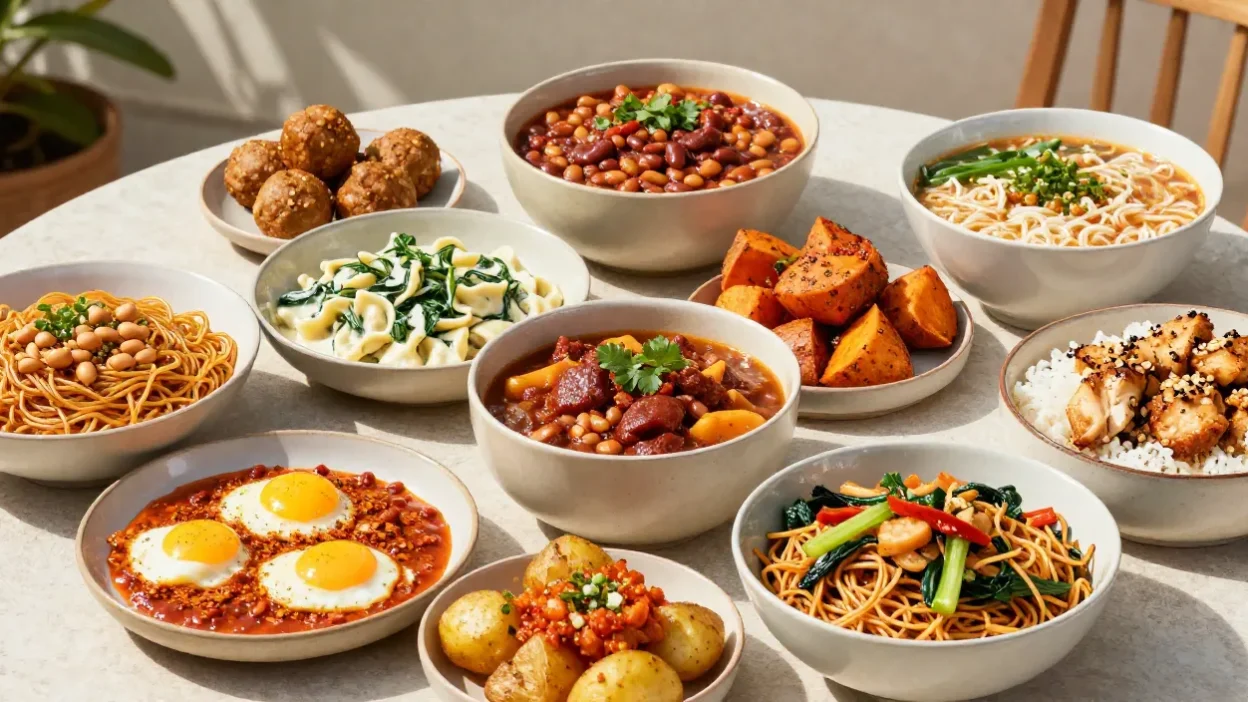
The meals in this list are built around that idea. They’re not perfect, they’re not fancy, and they’re definitely not trying to impress anyone.
They just work—and honestly, that’s more than enough 🍽️
🍜 Top 10 Meals You’ll Actually Cook Again
1. Peanut Butter Noodles 🥜🍜
At first, this dish doesn’t seem like something you’d take seriously. It sounds more like a quick fix than a proper meal—something you throw together when the fridge is nearly empty and you’re not in the mood to think too much. But that’s exactly where it surprises you.
Because once you actually make it, you realize it’s not just “good for how easy it is.” It’s just… good.
The strength of this dish is in how a few basic ingredients interact. Peanut butter gives you that thick, slightly heavy base, but it never gets overwhelming because it’s balanced out almost immediately. Soy sauce cuts through the richness, adding salt and depth. Garlic brings in that familiar savory note, and if you add even a small amount of heat, the whole thing starts to feel more layered and intentional.
It’s not a complex dish in the traditional sense. There are no techniques to master, no precise timing that can ruin everything. But somehow, it still manages to feel complete.
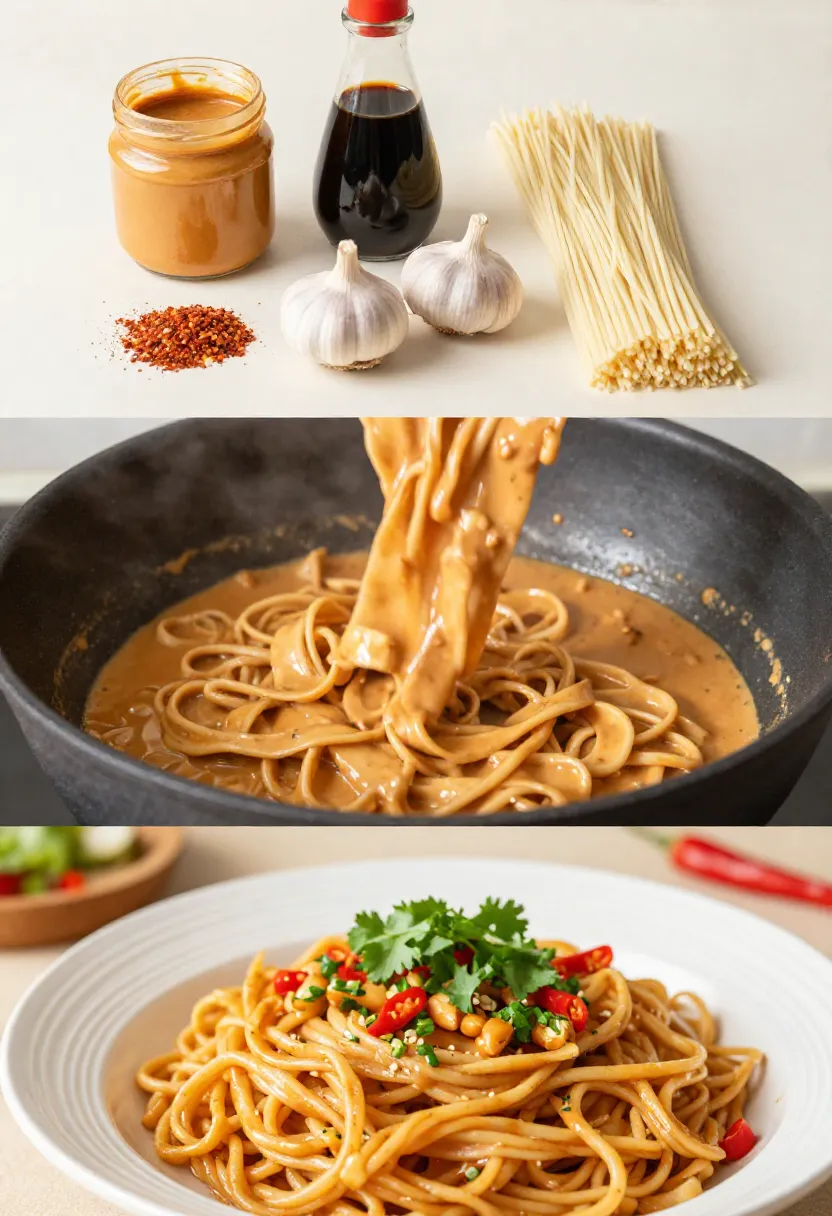
Another reason people keep coming back to it is how forgiving it is. You don’t need the exact same ingredients every time. You don’t even need the same proportions. Some days it turns out thicker, almost like a coating. Other times it’s smoother, more like a sauce that clings lightly to the noodles. Both versions work.
And that flexibility makes a difference. It means you can cook it when:
- you’re low on groceries
- you don’t feel like measuring anything
- you just want something fast that won’t disappoint
It also works with almost any type of noodle, which removes another layer of friction. You don’t need to plan ahead or buy something specific. Whatever you already have is usually enough.
Over time, this dish stops being something you “follow” and becomes something you just make. You don’t think about steps—you just start mixing things together, tasting, adjusting, and finishing it almost without noticing.
That’s usually the point where a recipe becomes part of your routine.
Tip: Add hot noodle water slowly while mixing the sauce—it helps everything blend into a smooth, glossy texture instead of staying thick and heavy.
2. Eggs in Spiced Sauce 🍳
Eggs are one of those ingredients that people tend to underestimate. They’re often treated as something basic, almost like a fallback option when there’s nothing else to cook. But when you put them into the right context, they shift completely.
Cooking eggs in a spiced sauce turns them from something simple into something that feels intentional.
The sauce itself does most of the heavy lifting. Whether it’s based on tomatoes or something richer like coconut milk, it creates a foundation that’s warm, slightly bold, and full of flavor. The spices build slowly, not in an aggressive way, but enough to give the dish depth.
Then the eggs go in, and everything changes a bit. They don’t overpower the dish—they soften it. Their texture contrasts with the sauce, and if the yolk stays just slightly runny, it blends into everything in a way that makes each bite feel richer without becoming too heavy.
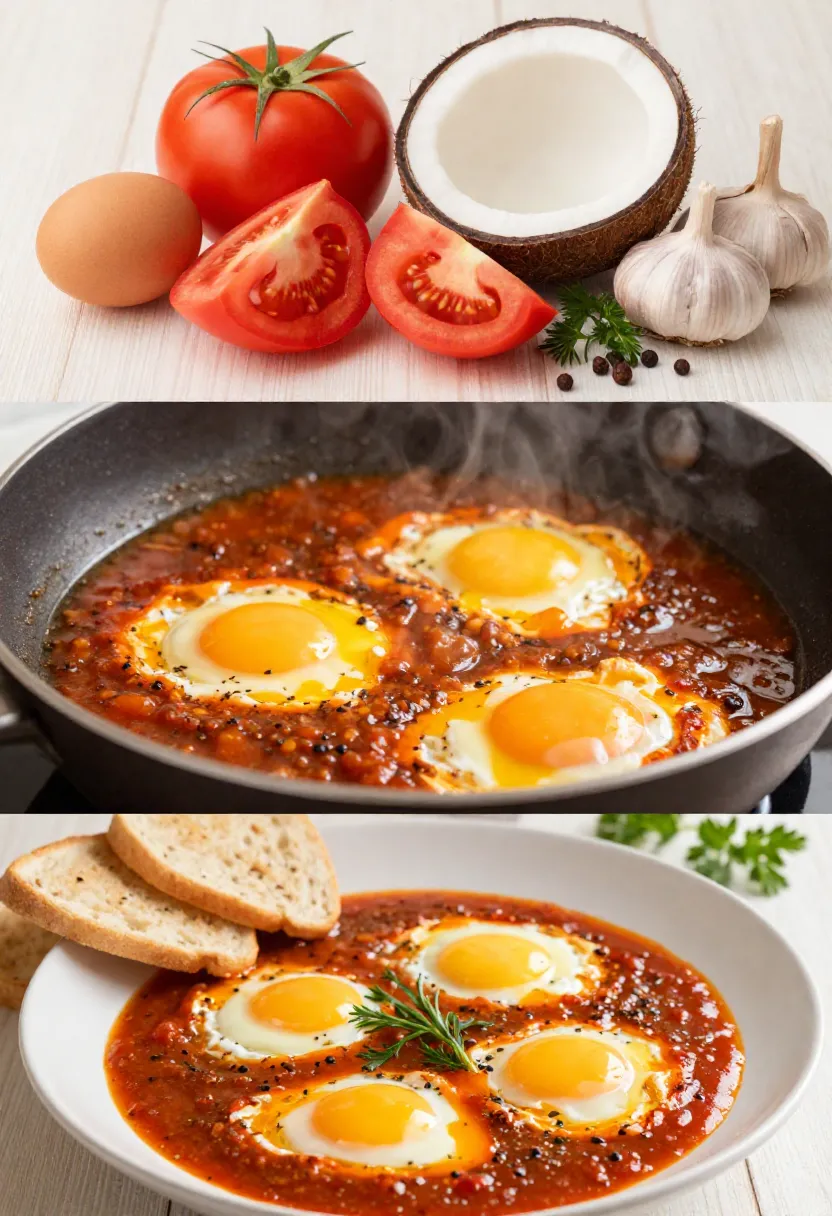
It’s a very balanced kind of comfort.
What makes this dish especially reliable is how little it actually demands from you. You don’t need many ingredients. You don’t need perfect timing, as long as you don’t rush the final step. And you don’t need to build a full meal around it—it already feels complete.
Most people naturally pair it with something simple, just enough to carry the sauce:
- bread, which lets you scoop everything directly
- rice, which absorbs the flavors and makes it more filling
- or flatbread, which sits somewhere in between
But even that part feels flexible. There’s no strict rule here.
This is also one of those meals that feels slightly more special than it really is. It looks like something you put effort into. It smells like something that took time. But in reality, it comes together quite easily—as long as you give it a bit of patience.
And that’s probably why it stays in rotation. It offers more than it asks for.
Tip: Once the eggs are added, lower the heat and let them cook gently—this is what keeps the texture soft and prevents them from turning rubbery.
3. Italian-Style Meatballs 🍝
There’s something about meatballs that makes them feel immediately familiar, even if you didn’t grow up eating them regularly. They fall into that category of food that just makes sense—filling, warm, and easy to build a meal around.
But what keeps people coming back to them isn’t just familiarity. It’s how adaptable they are once you understand the basics.
A good meatball has a very specific texture. It should hold together, but not feel compact. It should be tender, not dense. And when it’s cooked properly, it almost feels lighter than you expect. Getting to that point doesn’t require anything complicated, but it does require a bit of attention.
Cooking them in sauce changes the entire dish. Instead of sitting separately, the meatballs slowly absorb the surrounding flavors while also releasing some of their own richness into the sauce. Over time, everything becomes more cohesive.
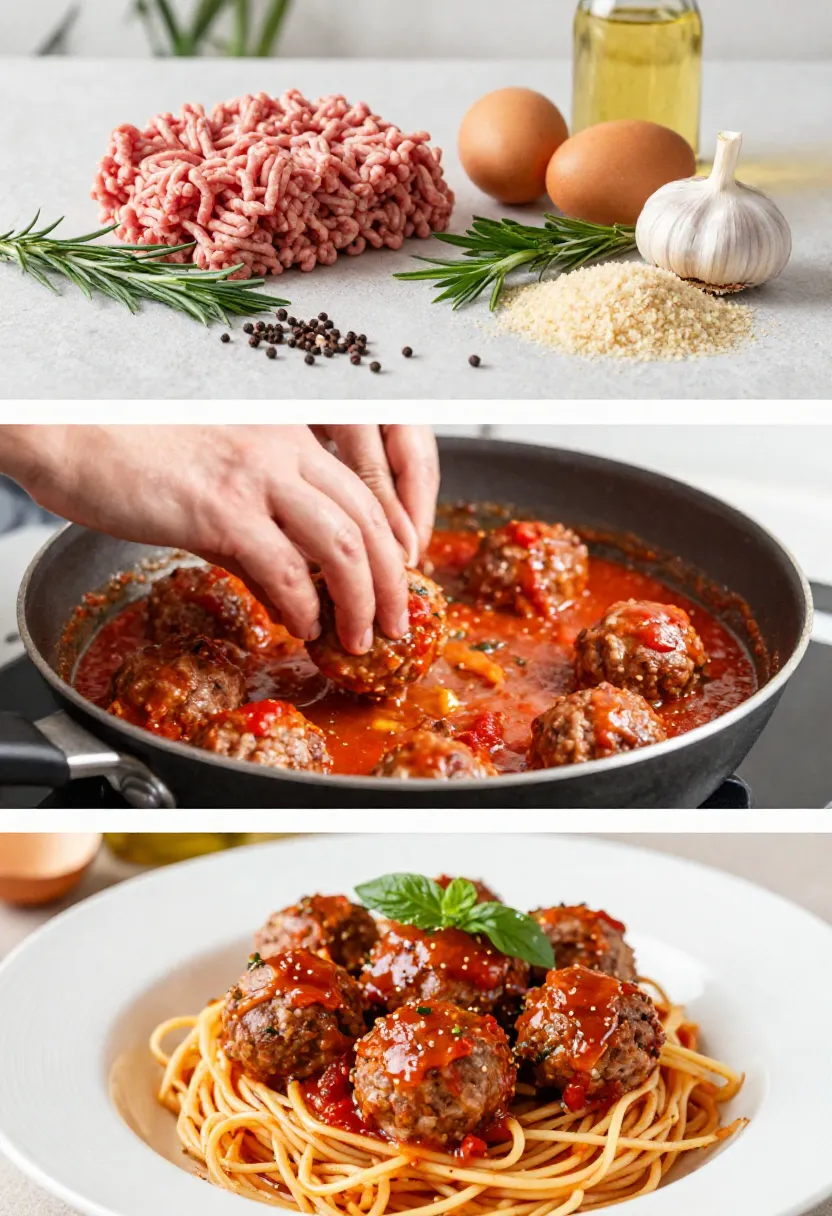
And the longer they sit—especially if you’re not in a rush—the better they tend to taste.
One of the biggest advantages of this dish is how many directions it can go in after it’s done. You’re not limited to one way of serving it, which makes it easier to keep in rotation without getting bored.
It can be:
- paired with pasta for a classic, balanced meal
- turned into a sandwich for something more casual
- served alongside vegetables for a lighter option
There’s also a practical side to it that people don’t always think about at first. Meatballs are one of those dishes that actually benefit from making more than you need. A larger batch means you can store part of it, reheat it later, or even freeze it for another time.
And importantly—it holds up well. The texture doesn’t fall apart, and the flavor often improves after a day.
Over time, this becomes less about following a specific recipe and more about adjusting it to your own taste. You might change the seasoning slightly, try different herbs, or tweak the texture without really thinking about it.
That’s when it becomes yours.
Tip: Mix the meat just until combined—going further than that is what usually leads to dense, heavy meatballs instead of soft, tender ones.
4. Hearty Bean Stew 🌱
Bean-based dishes have this reputation of being simple to the point of being forgettable. People often associate them with something basic, something you cook when you don’t have many options. But in practice, they end up being the kind of meals that stick with you the longest.
A well-made bean stew doesn’t try to impress you right away. In fact, at the beginning, it can feel almost underwhelming. You’re just looking at a pot with beans, some vegetables, maybe a few spices—nothing dramatic, nothing that feels like it’s going to turn into something special.
But then you give it time.
As it cooks, the beans begin to soften and release starch, which naturally thickens the stew. The liquid changes texture—it becomes smoother, slightly creamy, more cohesive. At the same time, the flavors start to blend together in a way that’s hard to rush. The spices settle, the aromatics deepen, and everything slowly moves from being separate elements into one unified dish.
It’s not about bold flavor hitting you all at once. It’s more gradual than that. You take a spoonful, then another, and only after a few bites you realize—it’s actually really satisfying.
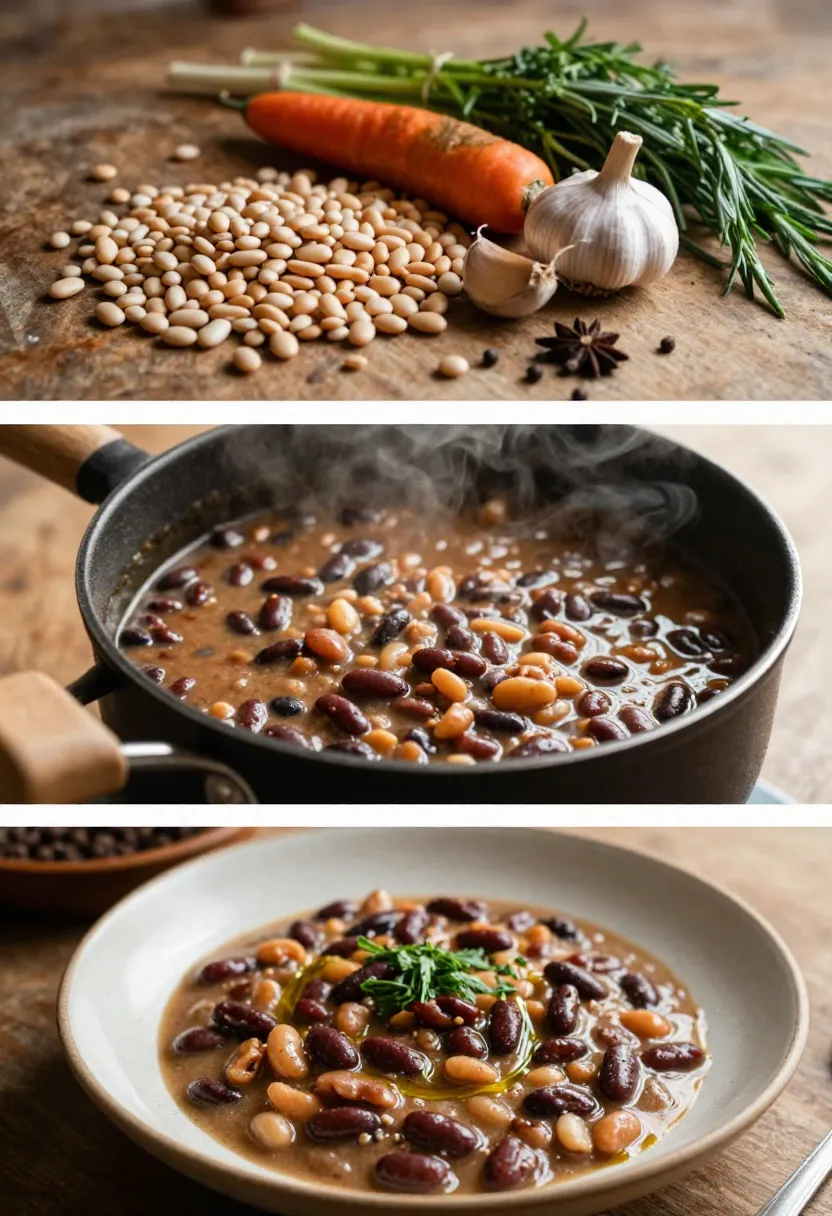
That’s part of the appeal. It doesn’t overwhelm you. It grows on you.
This is also one of those meals that rewards patience in a very real, noticeable way. If you stop cooking it as soon as it’s technically “done,” it will still be fine. But if you let it go a bit longer, or even just allow it to sit after cooking, something shifts. The flavors settle, the texture improves, and the whole dish feels more complete.
There’s also a practical side to it that makes it hard to replace. Bean stew fits into real life cooking almost perfectly:
- it’s inexpensive and built from ingredients you probably already have
- it scales easily without adding complexity
- it holds up well in the fridge and reheats without losing quality
- and in many cases, it actually tastes better the next day
That last part matters more than it seems. It turns cooking from a one-time effort into something that pays off over multiple meals.
Over time, this kind of dish becomes less about following a specific recipe and more about instinct. You start adjusting things without thinking—adding more liquid, changing spices, letting it cook a bit longer depending on how it looks and smells.
And that’s when it really becomes part of your routine.
Tip: Let the stew sit for at least 10–15 minutes before serving—it gives the texture time to settle and the flavors to come together more fully.
5. Miso Butter Noodles 🍜🧈
At first glance, this dish almost feels too minimal to be interesting. The ingredient list is short, the process is simple, and there’s nothing particularly technical about it. But once you taste it, it becomes clear that something more is happening.
Miso on its own has a very distinct character. It’s savory, slightly intense, and carries that deep umami flavor that makes food feel more satisfying. But it can also be a bit sharp if left on its own. Butter changes that completely.
When you combine the two, the butter softens the edges of the miso. It rounds out the intensity and turns it into something smoother, more balanced. The result isn’t heavy in the usual sense—it’s more like a quiet richness that builds slowly as you eat.
And that’s what makes this dish work so well. It doesn’t overwhelm you. It just holds your attention.
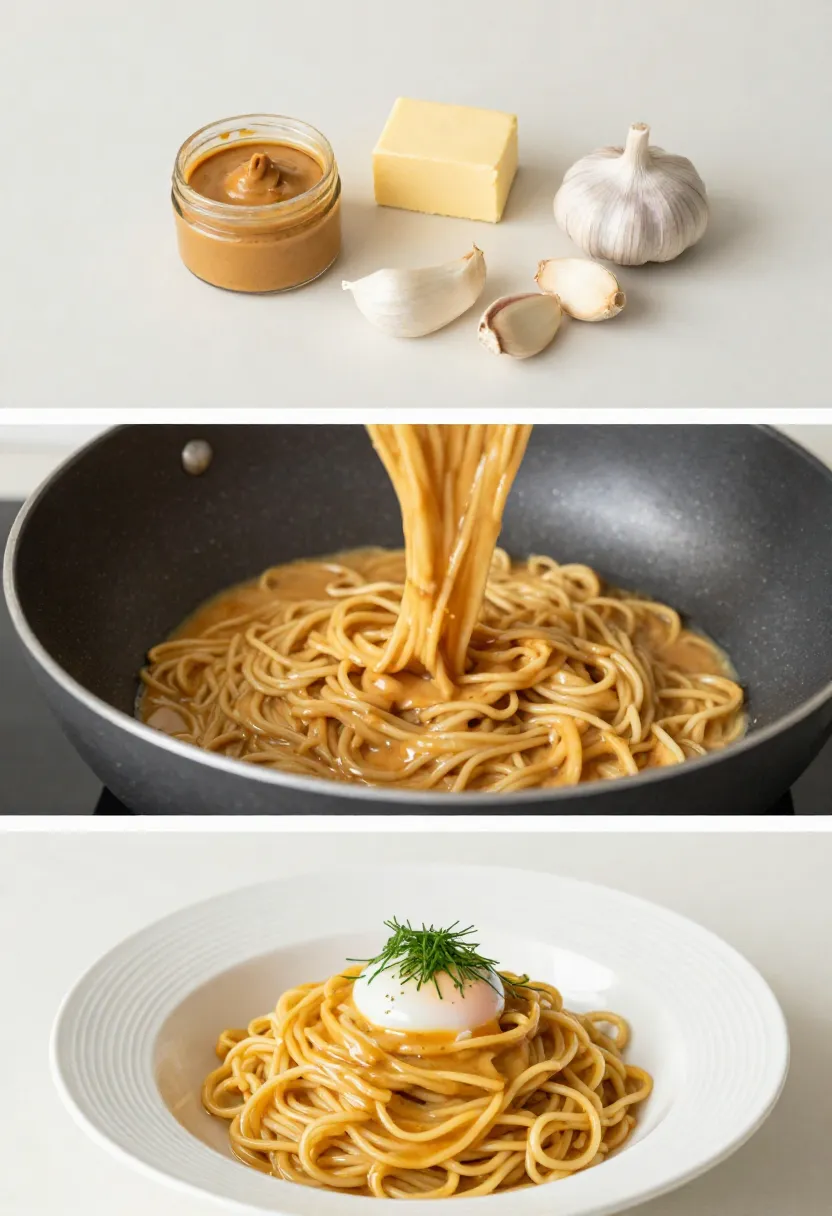
Another reason it becomes a repeat meal is how easily it adapts to different situations. You can keep it as simple as possible—just noodles and sauce—and it still feels complete. But if you have extra ingredients, it’s very easy to build on top of it.
For example, it works naturally with:
- soft-boiled or fried eggs, which add extra richness
- leafy greens, which bring a bit of freshness and contrast
- leftover vegetables or proteins that need to be used up
But the important part is that none of those additions are required. The base is strong enough on its own.
This is also the kind of dish you make when your energy is low but you still want something that feels like a proper meal. There’s no pressure to get it exactly right. You don’t need to follow precise measurements. You just bring things together, taste, adjust slightly, and it works.
Over time, it becomes less of a recipe and more of a default option—something you fall back on without thinking too much about it.
And honestly, those are usually the best kinds of meals.
Tip: Always dissolve the miso in a small amount of warm liquid before adding it to the noodles—this prevents uneven flavor and helps everything come together smoothly.
6. Sauerkraut Goulash 🥬
This is one of those dishes that doesn’t immediately win people over—and that’s part of what makes it interesting.
Most comfort meals lean heavily into richness. They’re warm, filling, and often quite heavy. Sauerkraut goulash takes a slightly different approach. It still has that richness, but it introduces something else alongside it: acidity.
That sharp, tangy flavor from the sauerkraut changes how the dish feels as a whole. Instead of becoming too dense or overwhelming, it stays balanced. The acidity cuts through the richness and keeps everything from feeling too heavy after a few bites.
The first time you try it, it might feel unusual. The flavor combination isn’t what most people expect, especially if they’re used to more straightforward comfort food. But if you give it a bit of time, it starts to make sense.
And then, at some point, it becomes something you actually crave.
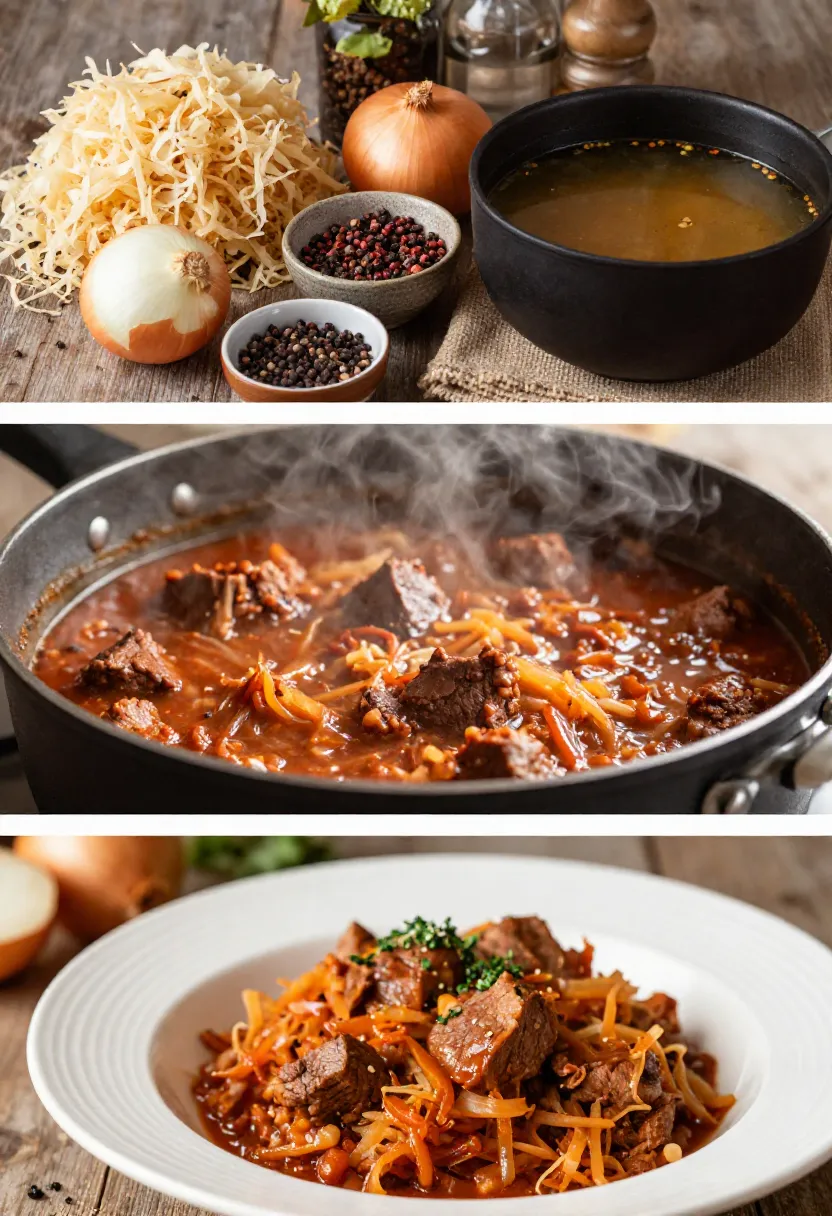
What’s interesting is how the dish evolves as it sits. Right after cooking, the flavors can feel a bit sharp, slightly separate. But after a few hours—or even the next day—they start to blend. The acidity softens just enough, the richness becomes more integrated, and the overall taste feels more balanced.
That makes it especially well-suited for real-life cooking:
- it works well in larger batches
- it stores easily and reheats without losing quality
- and it often improves rather than declines over time
There’s also something satisfying about how distinct it is. It doesn’t taste like everything else. It stands out just enough to feel different, but not so much that it becomes difficult to return to.
And that balance is probably why people who get used to it tend to keep it in rotation.
Tip: Add sauerkraut gradually and taste as you go—once the acidity is too strong, it’s much harder to balance it back out.
10. Simple Homemade Ramen 🍜
Homemade ramen has this reputation that honestly scares people off before they even try it. It’s often associated with long-simmered broths, precise techniques, and ingredients you don’t just casually have at home. And while that version absolutely exists, it’s not the only way to approach it.
In reality, ramen can be much simpler—and still deeply satisfying.
At its core, it’s just a structure. A good broth, noodles, and a few additions that make the bowl feel complete. That’s it. The difference between something forgettable and something you actually want to make again usually comes down to how those parts work together.
The broth is the foundation, and it matters more than anything else. It doesn’t need to be perfect or overly complex, but it does need to have some depth. Even a relatively quick broth—made with garlic, a bit of seasoning, maybe something umami-rich—can feel warm and comforting if you give it a little attention.
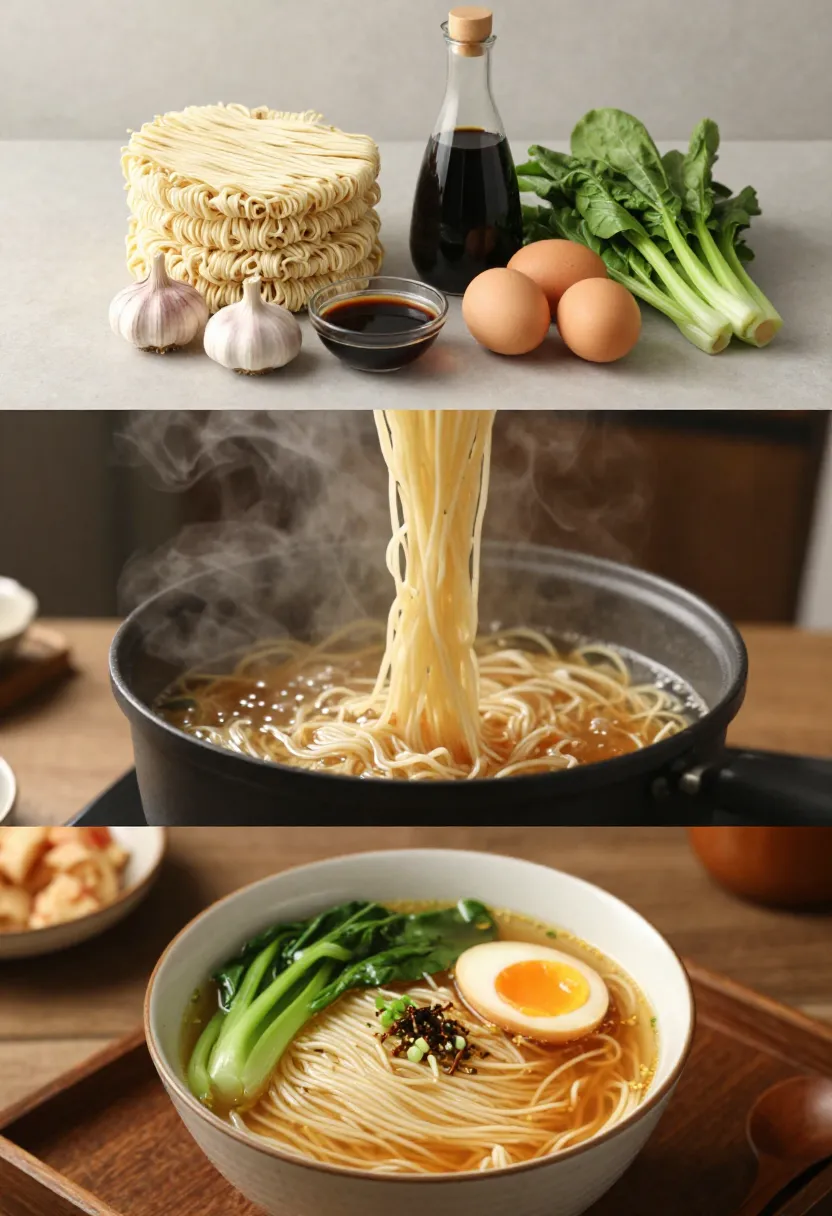
It’s less about technique and more about intention.
Once you have that base, everything else becomes easier to build. The noodles bring structure. They make the dish feel substantial, like a proper meal rather than just something light. And then come the additions—not too many, just enough to create contrast and interest.
You might go for something simple, like:
- a soft-boiled egg that adds richness
- a handful of greens for freshness
- leftover meat or tofu for extra substance
- or even just a drizzle of oil or sauce to finish it
What’s important is restraint. It’s very easy to overdo ramen, especially at home. Too many toppings, too many competing flavors—and suddenly it feels messy instead of balanced.
The best bowls are usually the simplest ones.
Another thing that makes ramen so repeatable is how it naturally adapts to your mood. Some days you want something light and brothy. Other days you want it richer, a bit heavier, more filling. You can adjust it without changing the structure.
Over time, it becomes less of a recipe and more of a habit. You stop thinking in terms of steps and start thinking in terms of components. You build it based on what you have, how you feel, and how much effort you want to put in.
And that’s when it really becomes part of your routine.
Tip: If the broth tastes good on its own, the final dish will almost always work—don’t try to fix it later with toppings.
11. Garlic Butter Chicken with Rice 🍗🍚
There’s something about this dish that feels immediately satisfying, even before you start eating. Maybe it’s the smell of garlic cooking in butter, or the way the chicken turns golden in the pan. It’s simple, but it creates that feeling of “this is going to be good” without much effort.
And most of the time, it is.
Chicken is one of those ingredients that doesn’t need much help, but it does benefit from being treated properly. When you cook it just right—letting it develop that golden, slightly crisp exterior—it already feels like a solid base for a meal.
Then the garlic butter comes in and pulls everything together.
It’s not complicated, but it adds a lot. The butter gives the dish richness, making it feel more complete and comforting. The garlic adds aroma and depth, something that spreads through the entire dish and makes it feel more intentional.
Nothing here is trying too hard—and that’s exactly why it works.
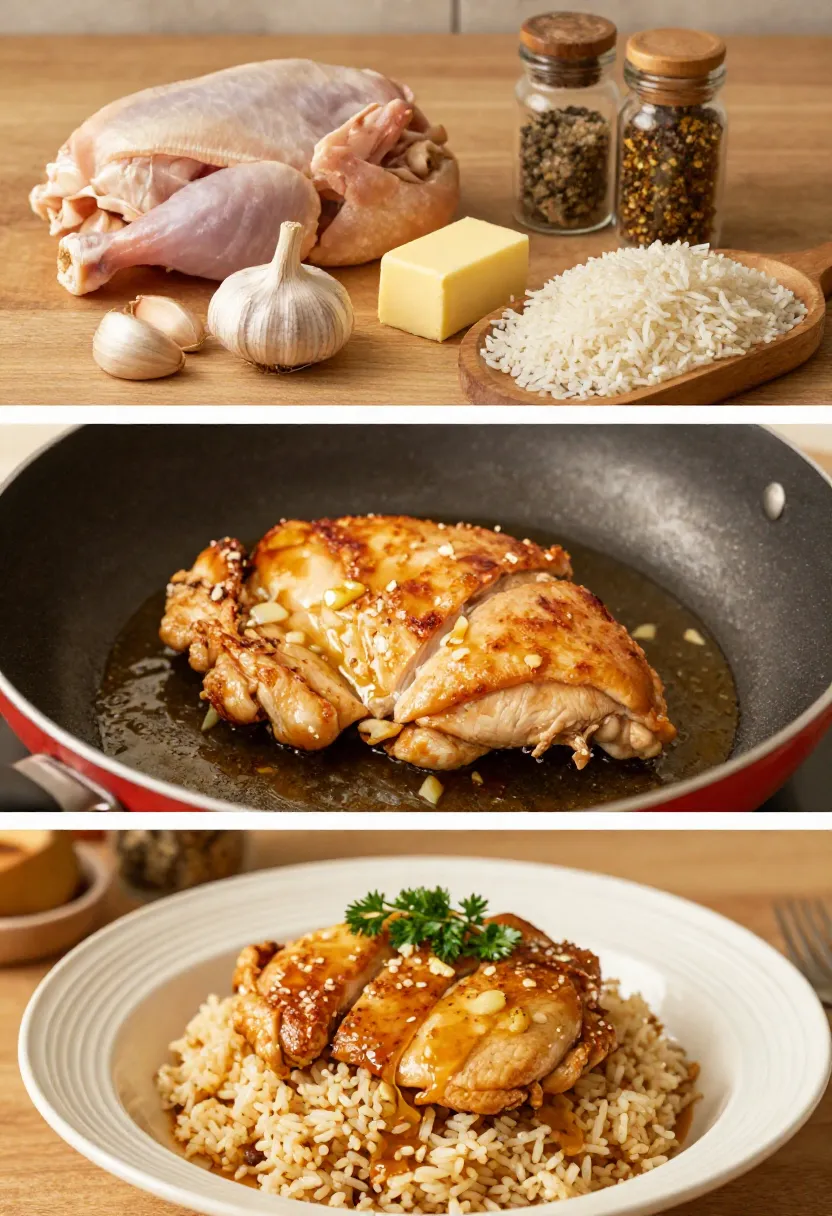
Serving it with rice makes the whole thing feel finished. The rice absorbs the sauce, softens the richness slightly, and creates that balance between something rich and something neutral. Without it, the dish might feel too heavy. With it, everything settles into place.
This is also one of those meals that fits easily into different situations. You can cook it quickly after a long day when you don’t have much energy, or you can make a larger batch and rely on it for the next couple of days.
It holds up well, reheats well, and doesn’t lose much in the process. That alone makes it incredibly practical.
Another reason it stays in rotation is how easy it is to adjust without overthinking it. You don’t need to follow a strict version every time.
For example:
- you might add vegetables if you want something lighter
- adjust the seasoning depending on what you’re in the mood for
- or even switch the protein if you feel like changing things up
But even if you don’t change anything, it still works exactly as it is.
And that’s usually the strongest quality a meal can have.
Tip: Let the chicken rest for a few minutes before cutting into it—this helps keep it juicy and prevents it from drying out.
12. Stir-Fried Vegetables with Noodles 🥦🍜
This is one of those dishes that doesn’t rely on a plan—and that’s exactly why it’s so useful.
There are days when you open the fridge and nothing immediately stands out. A few vegetables here, something half-used there, maybe some noodles in the pantry. Not enough for a “recipe,” but too much to ignore.
This is where stir-frying makes sense.
It gives you a structure without forcing you into anything specific. You don’t need the exact ingredients. In fact, it works better when you stop trying to follow something precisely and just work with what you have.
The process itself is fast, and that’s part of what makes it effective. High heat, quick cooking, constant movement—everything comes together in minutes. The vegetables soften slightly but keep some of their texture, which makes a big difference.
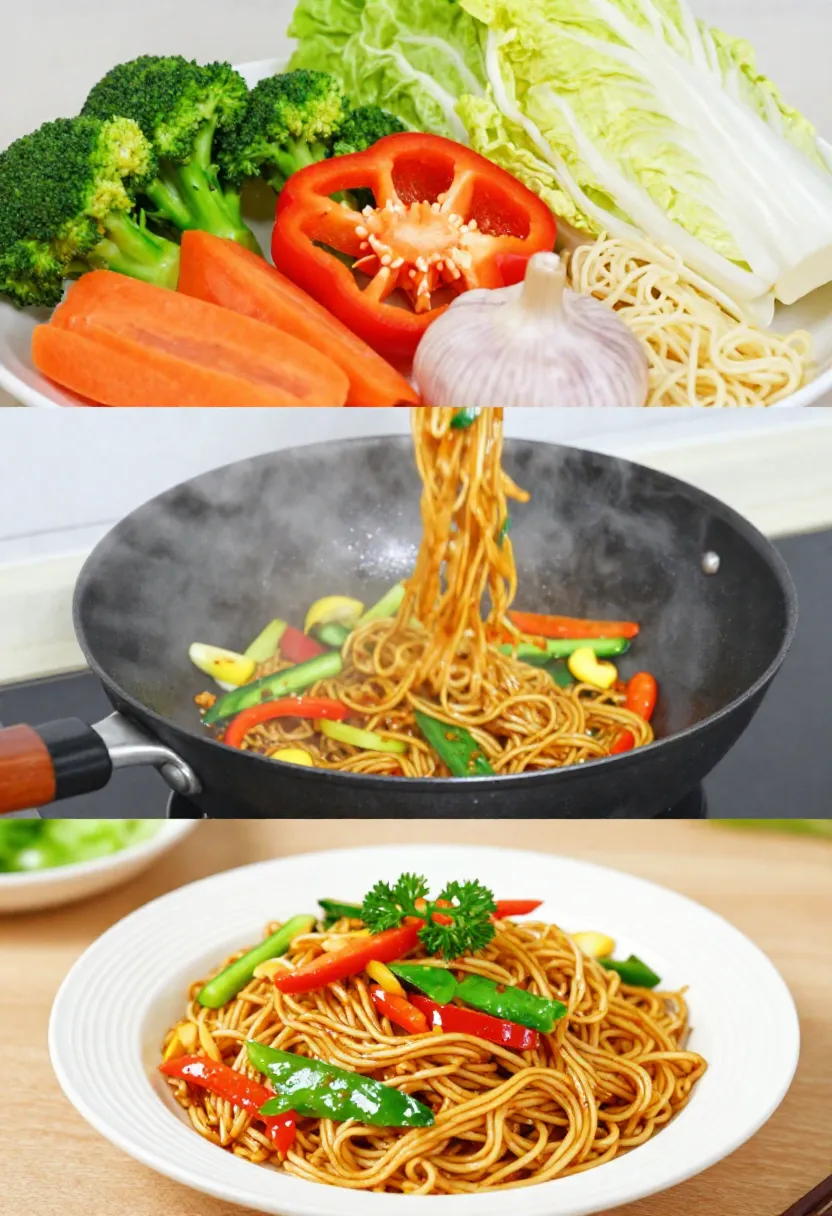
If they cook too long, everything becomes soft and a bit dull. But if you get it right, you end up with that mix of:
- slight crispness
- light tenderness
- and just enough bite to keep it interesting
Noodles turn it into a proper meal. They absorb the sauce, connect everything together, and give the dish substance. Without them, it might feel incomplete. With them, it feels balanced.
The sauce is simple, and it should stay that way. A combination of soy sauce, garlic, and oil is often enough. You can adjust it slightly depending on your taste, but it doesn’t need to be complicated to work.
What makes this dish especially repeatable is how little pressure it puts on you. You don’t need to plan ahead. You don’t need perfect ingredients. You don’t need exact measurements.
You just start cooking.
And over time, that becomes something you rely on. Not because it’s exciting—but because it solves a problem quickly and consistently.
It’s the kind of meal that fits into real life without asking for much in return.
Tip: Keep the heat high and cook in batches if needed—overcrowding the pan is what usually turns everything soft instead of properly cooked.