There’s a reason nachos show up pretty much everywhere — from quiet movie nights on the couch to loud, slightly chaotic game-day gatherings where everyone talks at once and no one really follows the rules. They don’t try to impress anyone, and that’s probably exactly why they work so well. There’s no pressure with nachos. No expectation that everything has to look perfect or be served a certain way.
You just place a tray in the middle of the table, and something shifts almost instantly. People lean in without thinking, someone grabs a chip a little too early and regrets it, someone else starts commenting on the toppings. It becomes interactive in a way most dishes aren’t. And before you know it, the tray starts emptying faster than expected.
It’s not just about eating — it’s about the atmosphere that comes with it. Nachos create this relaxed, easygoing moment where no one is overthinking anything 🧀
Part of what makes them so appealing is how approachable they are. You don’t need advanced cooking skills or expensive ingredients to make something that feels satisfying. At the same time, when you pay attention to a few details, nachos can feel surprisingly well put together — warm, crispy, rich, and just indulgent enough to feel like a proper treat.
There’s also something unpredictable about them, in a good way. Even if you follow the same idea every time, the result always ends up slightly different. Sometimes the cheese melts just right, sometimes the toppings land perfectly, and sometimes it’s a bit messier — but still great. That unpredictability is part of the charm.
Why Some Nachos Are Amazing (and Others Just Don’t Work) 😅
Bad nachos are easy to spot, even before you finish a few bites. At first, they might look fine, but then you notice the problems. Some chips are completely bare, others are overloaded to the point where they break immediately, and the cheese isn’t really doing its job. Instead of bringing everything together, it just sits there in uneven patches.
After a few minutes, things usually get worse. The chips start to soften, everything feels heavier, and what should have been a simple, enjoyable snack turns into something slightly disappointing.
Good nachos don’t rely on anything complicated. They come down to a few simple ideas that are easy to overlook but make a big difference when you get them right.
Balance is probably the most important one. Every chip should feel like part of the whole, not just filler at the bottom. That doesn’t mean every single chip needs to be perfect, but it does mean avoiding extremes — not too much in one place, not too little in another. When everything is spread out thoughtfully, you don’t have to search for the “good bites.” They’re just there.
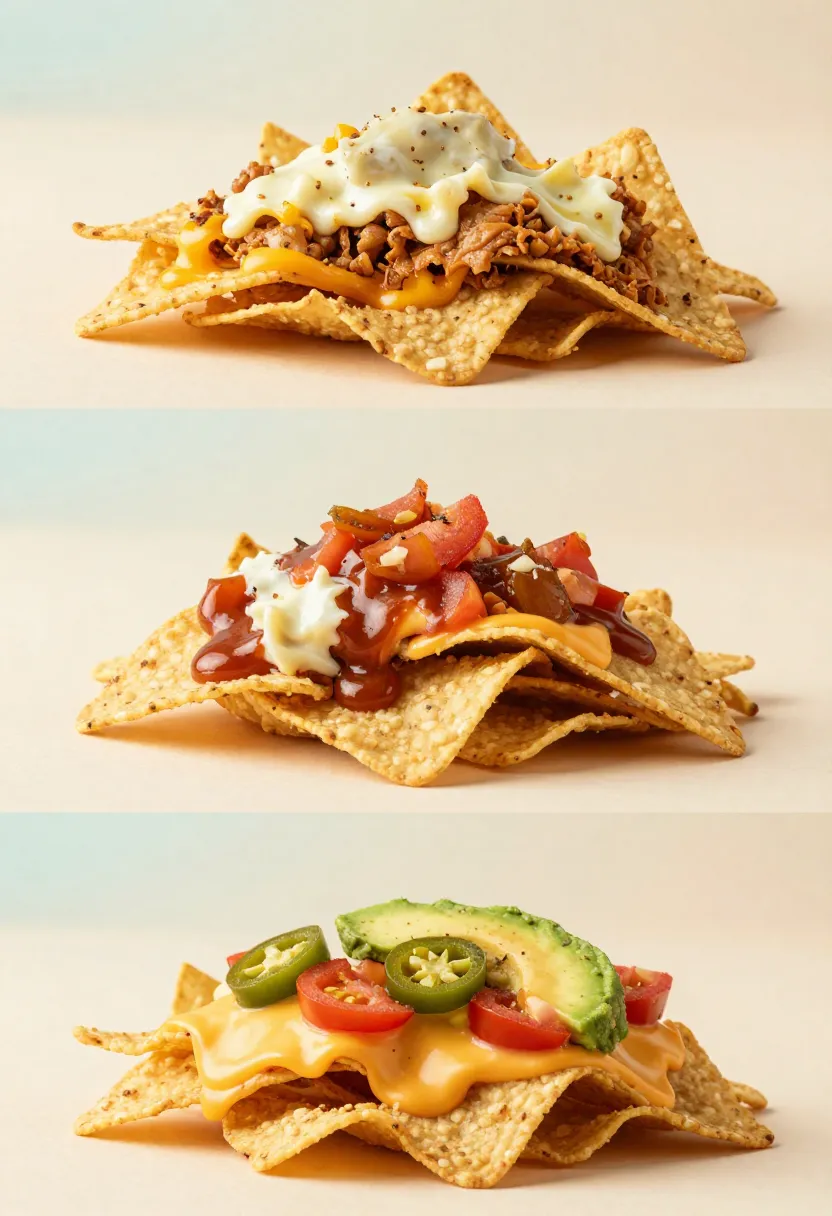
Texture also plays a much bigger role than people expect. Flavor is important, of course, but texture is what keeps things interesting from start to finish. When everything feels too soft or too heavy, it quickly becomes less enjoyable, even if the taste is fine.
A well-balanced tray usually includes:
- chips that stay crisp and hold their shape
- cheese that melts smoothly without overwhelming everything
- fresh elements that add a bit of contrast and keep things from feeling too rich
Another thing that often gets ignored is restraint. It’s easy to assume that adding more toppings automatically makes nachos better, but that’s not always true. Too much weight can cause the chips to collapse, and too many flavors can start blending together instead of standing out.
The best nachos feel generous, but not overloaded. There’s enough happening to make each bite interesting, but not so much that everything turns into one heavy layer.
The Small Details That Change Everything ✨
The difference between decent nachos and really memorable ones usually comes down to small details. Nothing complicated — just a series of choices that, together, improve the overall experience.
Temperature contrast is one of those things people don’t always think about, but once you notice it, it’s hard to ignore. Warm chips and melted cheese create the base, but adding cooler ingredients at the end changes how everything feels. That slight contrast keeps each bite from feeling flat or repetitive.
The way ingredients are prepared also matters more than it seems at first. Smaller pieces tend to distribute more evenly, which means you get a more consistent bite across the tray. Large chunks might look appealing, but in practice, they often lead to uneven results — one chip gets too much, another gets nothing.
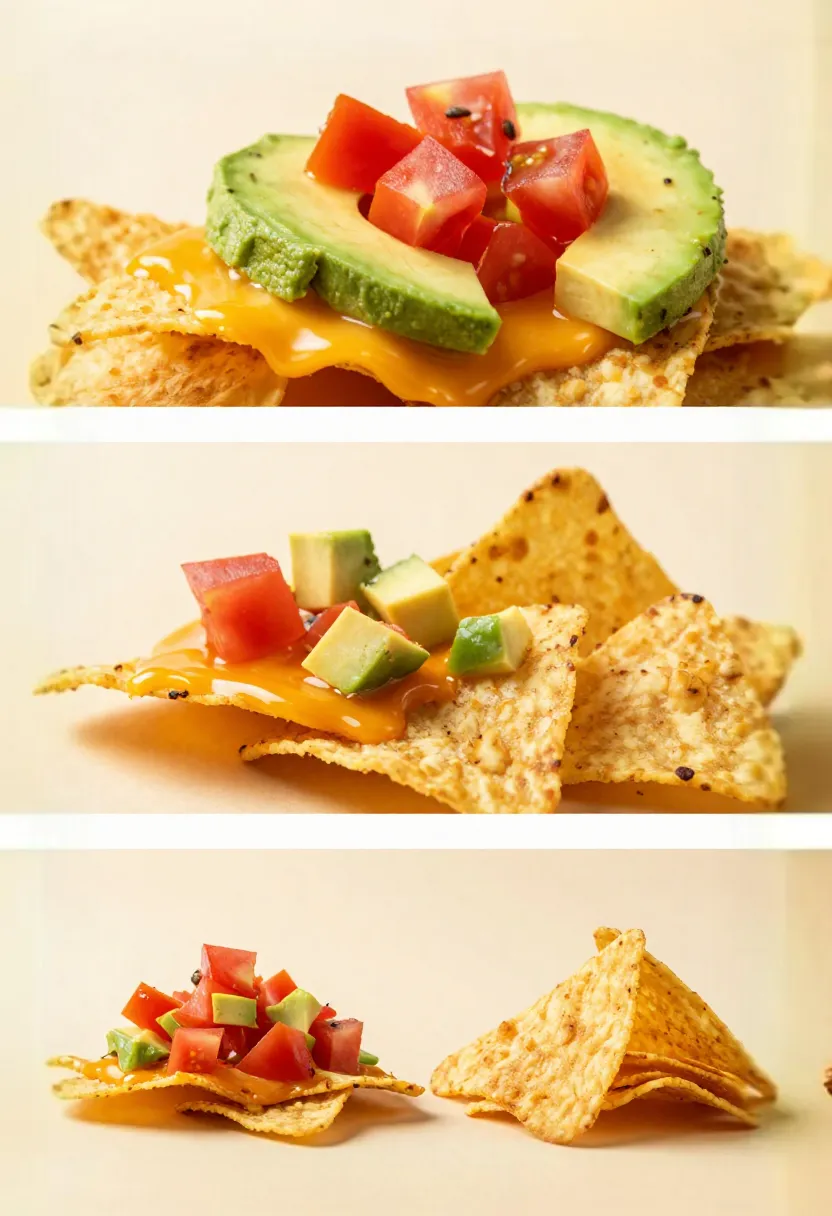
Even the choice of chips can make a noticeable difference. Some chips simply aren’t designed to handle toppings, and it becomes obvious pretty quickly once everything is assembled.
Here’s a simple comparison that highlights the difference:
| Feature | Thin Chips | Sturdy Chips |
|---|---|---|
| Texture | Light, fragile | Firm, structured |
| Holding toppings | Unreliable | Consistent |
| After baking | Softens quickly | Holds shape longer |
| Overall result | Less stable | More balanced experience |
Timing is another detail that often gets overlooked. Nachos don’t improve with time — they’re at their best right after they’re prepared. If they sit too long, the texture starts to change in ways that aren’t ideal. Chips lose their crispness, cheese thickens, and fresh toppings lose some of their brightness.
That’s why nachos are best served immediately. Not perfectly arranged, not carefully styled — just brought to the table while they’re still warm, slightly messy, and ready to be enjoyed.
🍽️ Nachos Recipe: Crispy, Cheesy, and Fully Loaded
This is the kind of dish that doesn’t pretend to be complicated, but still manages to deliver a lot. Good nachos hit that perfect middle ground — they’re casual, a little messy, but incredibly satisfying when everything comes together the way it should.
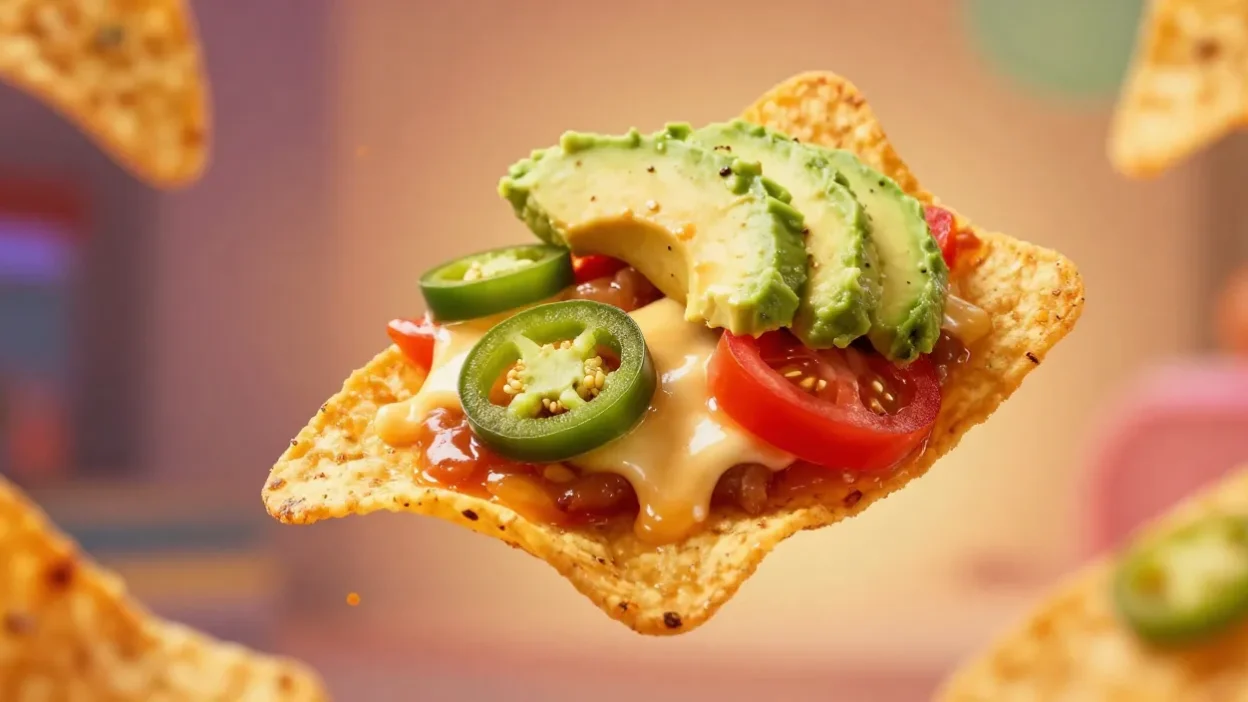
What you’re aiming for here isn’t just melted cheese on chips. It’s that combination of textures and flavors that makes you go back for “just one more” until the tray is suddenly empty. You get the crunch first, then the warmth of the cheese, followed by something fresh, maybe a bit spicy, maybe a little creamy. It’s layered, but not in an overthought way.
This version leans into all of that. It’s rich without being too heavy, flexible enough to adjust depending on what you have at home, and simple enough that you don’t feel like you’re cooking something complicated. You can keep it basic or build it up — both ways work. The important part is that every bite feels balanced, not random.
Ingredients
- 1 large bag of sturdy tortilla chips
- 1½–2 cups shredded cheese (cheddar, Monterey Jack, or a mix)
- 1 cup cheese sauce (optional, but it really makes a difference)
- 2 medium tomatoes, diced
- 1 avocado, sliced or mashed
- 1 small red onion, finely chopped
- 1 jalapeño, thinly sliced
- ¼ cup fresh cilantro, chopped
Optional additions:
- 1 cup cooked ground beef or shredded chicken
- 1 cup black beans (drained and rinsed)
- ½ cup corn
- Sour cream
- Salsa or hot sauce
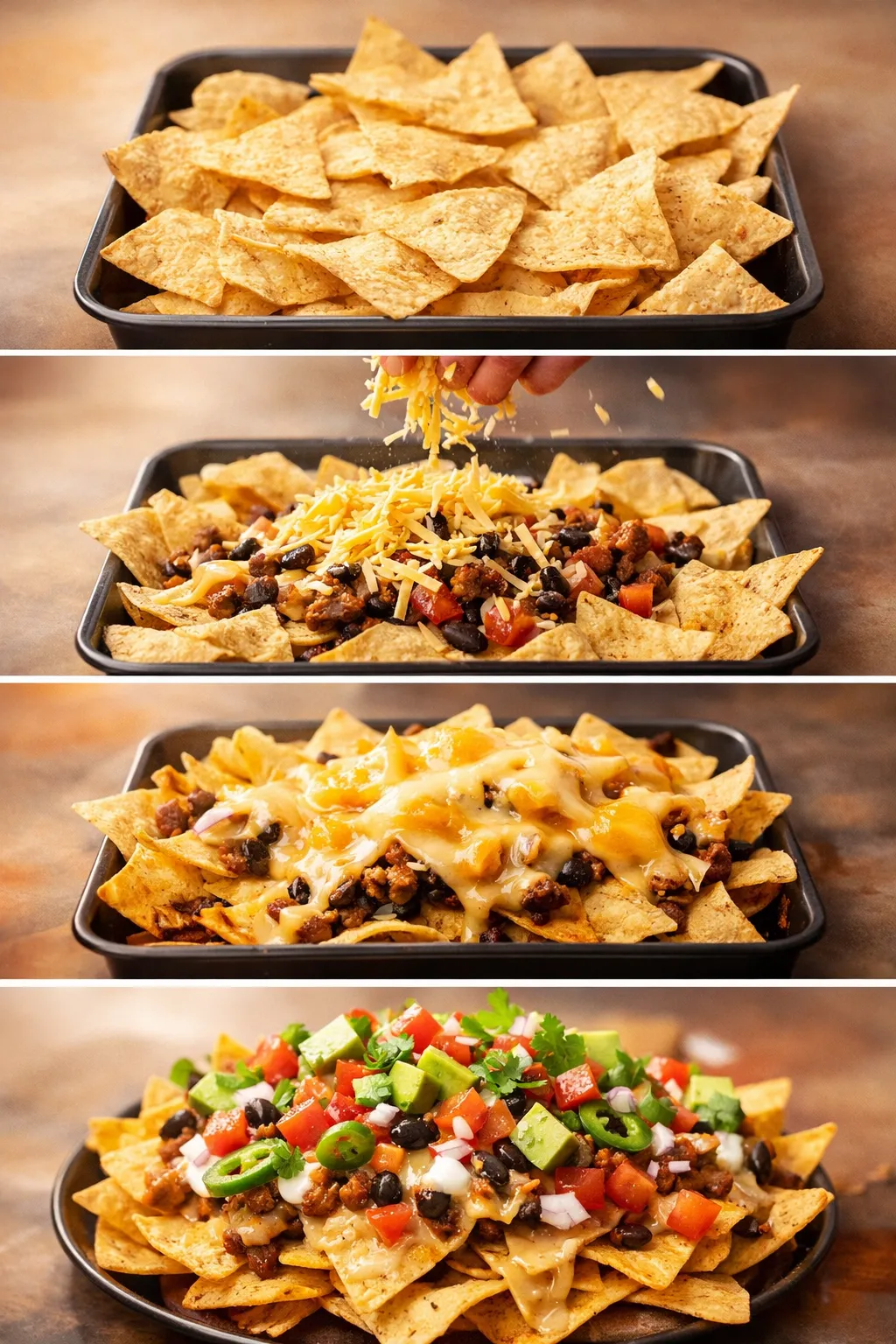
Instructions
- Preheat your oven to 180°C (350°F). Give it a few minutes to fully heat — it helps everything melt more evenly.
- Spread a layer of tortilla chips across a large baking tray. Try to keep them mostly in one layer so the toppings distribute better.
- Add a portion of shredded cheese over the chips, then lightly drizzle some cheese sauce if you’re using it. This creates a base that holds everything together.
- Scatter some toppings over the layer — beans, meat, or a bit of onion. Don’t overload it, just enough to add flavor.
- Add another layer of chips on top and repeat the process with cheese and toppings. This helps avoid the “all the good stuff on top” problem.
- Finish with a final layer of cheese. This top layer is what melts and gives that classic nacho look.
- Place the tray in the oven and bake for about 5–10 minutes. Keep an eye on it — once the cheese is melted and slightly bubbling, it’s ready.
- Take the tray out and immediately add fresh toppings like tomatoes, avocado, onion, and cilantro. This step really changes the overall feel of the dish.
- Serve right away while everything is still warm. Add sour cream, salsa, or hot sauce on the side so people can adjust to their taste.
Quick Tips & Little Hacks 💡
- Use thicker chips — they hold up better and don’t break halfway through
- Don’t skip layering, even if you’re in a hurry — it makes a big difference
- Add fresh ingredients only after baking to keep their texture
- Warm your cheese sauce slightly before using — it spreads more evenly
- Serve immediately — nachos are at their best right out of the oven
🌮 Making Nachos Your Own
One of the best things about nachos is how naturally they adapt to whatever you feel like eating at the moment. There’s no pressure to follow a strict formula, and honestly, that freedom is part of what makes them so enjoyable. You can keep things simple and familiar, or take a slightly different direction and end up with something that feels completely new — even if the base stays the same.
Some days you want something light and easy, where the chips stay crisp and the toppings feel fresh. Other times, you’re clearly in the mood for something more filling — extra cheese, maybe a warm protein, something that leans closer to a full meal than a snack. Nachos handle both without any problem, which is why people keep coming back to them.
What’s interesting is how small changes can shift the whole experience. Adding more fresh ingredients, like tomatoes or avocado, makes everything feel brighter and a bit more balanced. Going heavier on cheese and sauces creates a richer, more indulgent version. Neither approach is better — it just depends on what you’re in the mood for.
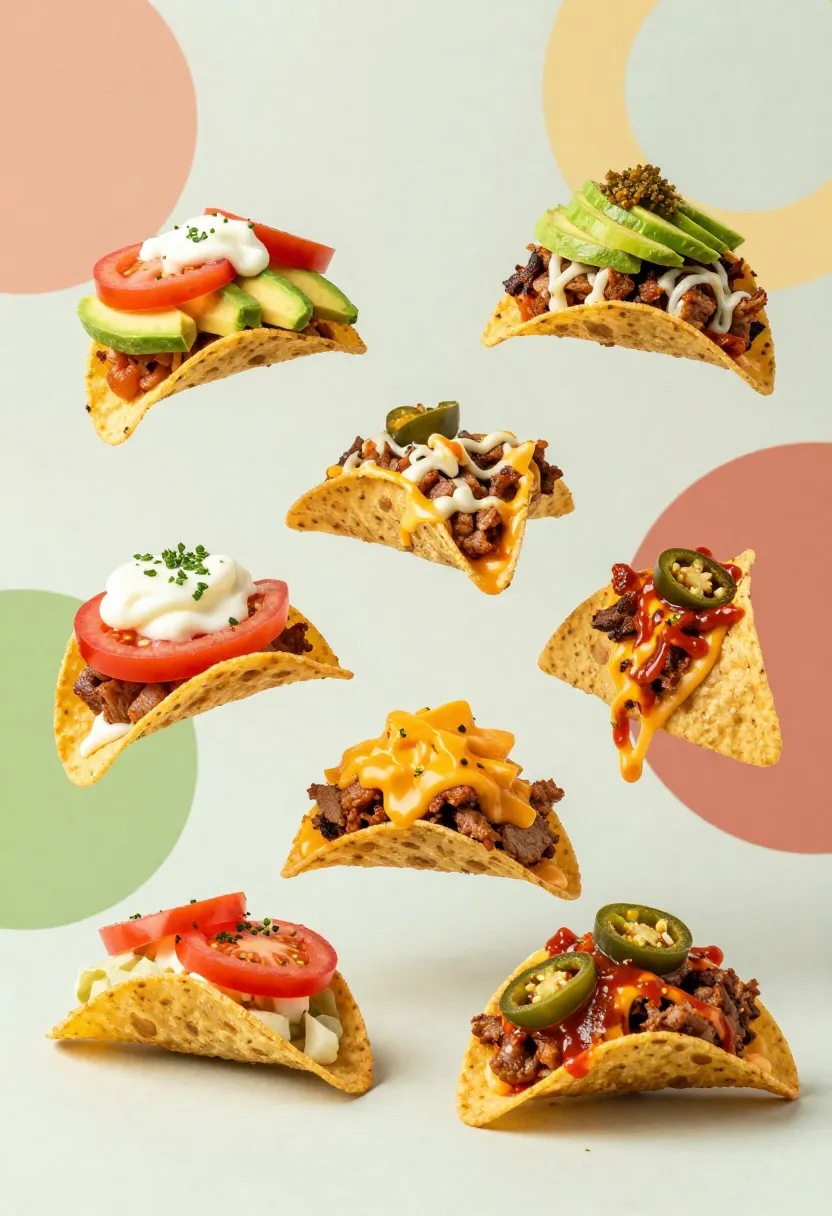
And then there’s the fun part — experimenting a little. Nachos are surprisingly forgiving, so you can try combinations without worrying too much about getting it “wrong.” Sometimes it’s the unexpected details that stand out the most:
- a slightly smoky flavor that adds depth
- a bit of heat that builds slowly instead of hitting all at once
- something acidic or pickled that cuts through the richness
Not every combination will be perfect, and that’s completely fine. Some trays turn out better than others, but even the imperfect ones are still enjoyable. That’s kind of the beauty of it — nachos don’t need to be precise to work well.
In the end, the best version is usually the one that matches your mood. You don’t need to follow trends or stick to traditional combinations. If it tastes good to you, that’s enough.
🎉 Serving Ideas That Actually Work
Serving nachos is one of those things that’s easy to overthink, even though it really doesn’t need to be. In most cases, the simplest approach is also the best one. Just bring the tray to the table while it’s still warm and let people dig in. That’s part of the experience — casual, a bit messy, and completely relaxed.
There’s something about that informal style that works in their favor. No one expects perfect portions or neat presentation. People reach in, pick what they like, and it all feels natural. It’s not the kind of dish where everything has to be controlled.
If you do want to make things a little more interesting without complicating anything, adding a few sides can help. Not in a way that takes attention away from the nachos, but just enough to give people options. It also helps balance the richness of the dish.
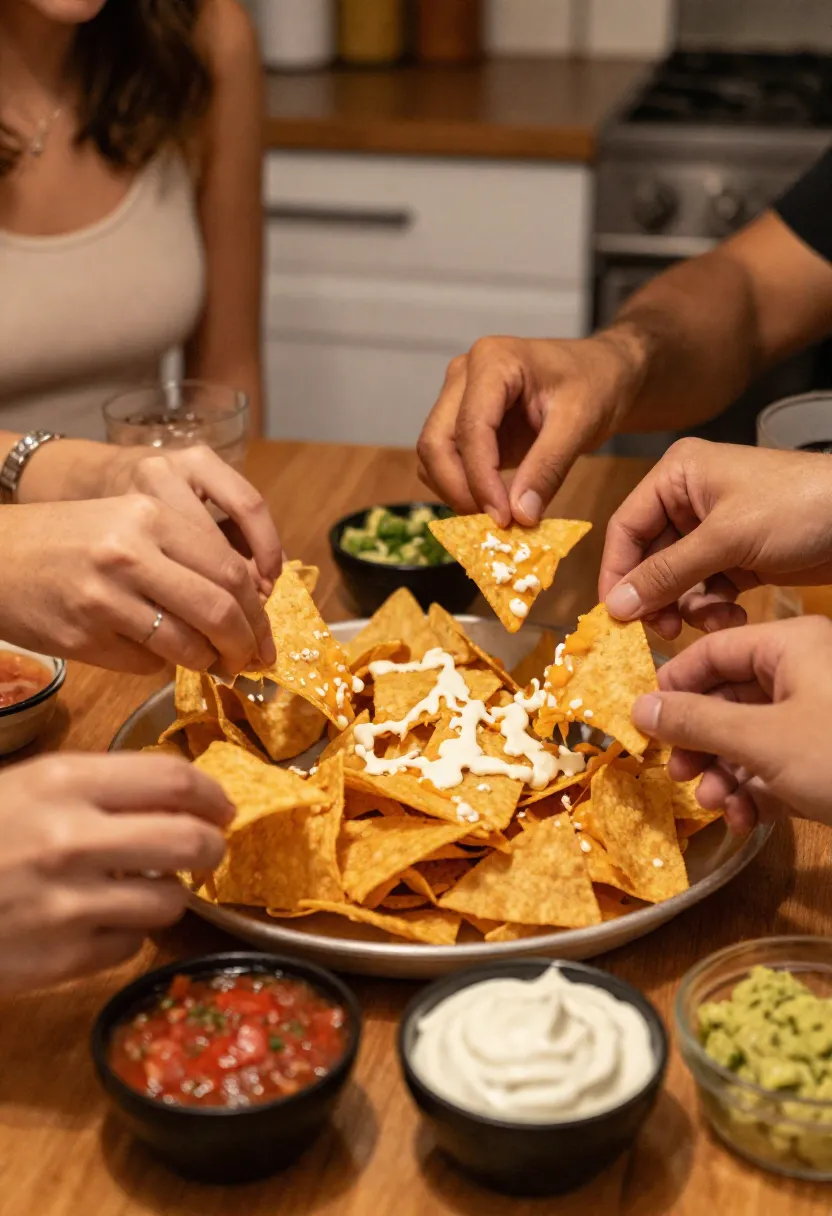
A few simple additions that tend to work well:
- something fresh, like salsa
- something creamy, like sour cream
- something smooth and slightly rich, like guacamole
Another small detail that often gets overlooked is how nachos pair with drinks. Since they’re usually warm, cheesy, and a bit heavy, having something cold and refreshing on the side makes a noticeable difference. It doesn’t need to be anything special — just something that helps balance the overall feel.
Timing, though, is probably the most important part. Nachos don’t really hold up over time. If they sit too long, even for a short while, the texture starts to change. Chips lose their crispness, cheese firms up, and the whole dish feels less fresh.
That’s why it’s always better to serve them right away. Straight from the oven, still warm, slightly uneven, and ready to be shared — that’s when nachos feel the most enjoyable.
🔥 Why Nachos Keep Coming Back to the Table
There’s a reason nachos never really go out of style. They’re simple, but not boring. Familiar, but never exactly the same twice. You can make them quickly without much planning, or take a bit more time and turn them into something that feels more thought-out. Either way, they work.
Part of their appeal is how low-pressure they are. You don’t need everything to be perfect. In fact, nachos often feel better when they’re a little uneven, a little unpredictable. That slight imperfection makes them feel more real, less like something you’re trying too hard to get right.

They also have a way of fitting into different situations without needing to change much. A quick snack, a casual dinner, something to share with friends — the same basic idea works in all of those settings. You just adjust a few details, and it fits.
And then there’s the experience itself. Nachos aren’t just about eating — they’re about how people interact around them. Reaching across the table, picking your favorite pieces, maybe arguing a little about toppings… it all adds something extra that you don’t get with more structured dishes.
At the end of the day, nachos are a reminder that good food doesn’t have to be complicated to be memorable. A few ingredients, a bit of attention to detail, and the willingness to keep things simple — that’s usually enough.
And once you find a version you really like, it’s almost guaranteed you’ll come back to it again. Maybe not exactly the same way, but close enough to feel familiar — and different enough to stay interesting ❤️