Comfort food means something different to everyone, but steak pie seems to earn its place on almost every list. Maybe it is because there is nothing complicated about it. You cut through the pastry and find exactly what you expected: tender beef, rich gravy, soft vegetables, and a crisp golden crust sitting on top. No surprise ingredients. No modern twist. Just a dish that knows what it is and does it well.
I think that simplicity is a big part of the appeal. We spend so much time seeing recipes reinvented, upgraded, or turned into something barely recognizable that there is something refreshing about a meal that stays true to itself. Steak pie does not need much explaining. One look at it and most people already know they are going to enjoy dinner.
It also feels like a dish that belongs to a certain time of year. You can make it whenever you want, but it always seems more satisfying once the weather starts cooling down. Rain tapping against the windows, an early sunset, a quiet weekend afternoon when there is nowhere important to be. Those are the moments when steak pie feels most at home. It fits naturally into the season when people start reaching for heavier pans, slower recipes, and meals that spend a little longer in the oven.
The smell alone can change the mood of the house. As the beef simmers with onions, garlic, herbs, and gravy, the aroma slowly drifts from room to room. It is the kind of smell that makes people wander into the kitchen without really meaning to. Someone asks how much longer dinner needs. Someone lifts the lid for a quick look even though nothing has changed in the last ten minutes. By the time the pie is ready, everyone is paying attention.
That is another thing I have always liked about steak pie. It rarely feels rushed. Even when dinner starts as an ordinary weeknight meal, it often turns into something a little slower. People linger at the table. Someone reaches for another spoonful of gravy. Someone else decides they only want a “small piece” of pastry and somehow ends up taking more than that. Bread appears to mop up the sauce. Conversations stretch out. Before long, an hour has passed and nobody seems particularly interested in getting up.
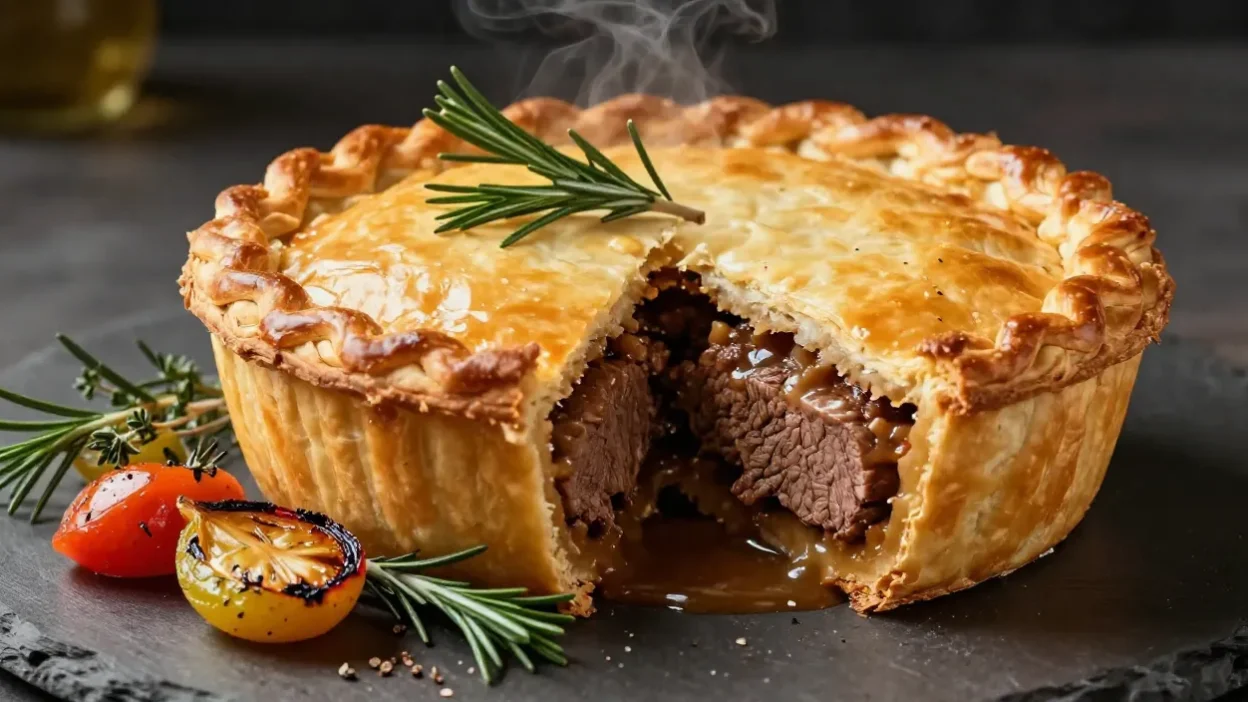
Part of that comes from the way the pie is served. A whole steak pie sitting in the middle of the table naturally becomes the center of attention. The pastry is golden and slightly uneven from baking, the filling bubbles quietly underneath, and the first cut releases a burst of steam carrying all those slow-cooked aromas with it. There is a certain satisfaction in that moment. You have not even taken a bite yet, but you already know the wait was worth it.
The history behind steak pie probably helps explain why it has remained popular for so long. Meat pies have been around for centuries, originally serving a practical purpose as a way to cook, protect, and preserve food. Over time they became part of everyday cooking, especially throughout Britain, where hearty dishes built around affordable ingredients were valued for obvious reasons. Steak pie stood out because it could turn tougher cuts of beef into something deeply comforting. The method was simple: cook the meat slowly, build a rich gravy around it, cover it with pastry, and let time do most of the work.
What I find interesting is how little that formula has changed. Food trends come and go. Ingredients become fashionable, disappear for a while, then suddenly return as if they never left. Entire styles of cooking rise in popularity before fading into the background again. Steak pie has mostly ignored all of that. The core idea remains exactly the same because it never really needed fixing.
Maybe that consistency is what keeps people coming back to it. There are recipes you make once because they are interesting, and then there are recipes you return to year after year because they deliver exactly what you want. Steak pie belongs firmly in the second group. It is dependable. You know how it will smell while it cooks. You know what the first bite will taste like. You know the gravy will find its way across the plate and into every corner of the pastry.
And honestly, there is something comforting about that predictability. Not every meal has to be exciting. Sometimes dinner simply needs to be good, satisfying, and generous enough to bring people together for a while. Steak pie has been doing that for generations without making a fuss about it.
That might be the real reason it has lasted so long. It is not chasing attention or trying to become the next big food trend. It takes ordinary ingredients, gives them patience and care, and turns them into a meal people genuinely enjoy sharing. Some recipes need a story to make them memorable. Steak pie has never really needed one. The pie itself does most of the talking.
🥩 The slow-cooked filling that makes the whole pie work
Most people notice the pastry first. That’s understandable. A golden crust fresh from the oven tends to steal attention before anyone has even picked up a fork.
But the filling is where the pie either succeeds or falls apart.
A steak pie with average pastry can still be excellent if the filling underneath is rich and flavorful. The opposite rarely works. Nobody gets excited about cutting through beautiful pastry only to find bland gravy and chewy beef underneath.
The funny thing is that the best fillings usually start with meat that doesn’t look particularly impressive. Chuck steak, braising steak, and similar cuts are often sitting quietly beside the more expensive options at the butcher counter. They’re tougher, less glamorous, and exactly what this recipe needs.
For the first hour, it honestly doesn’t look like much is happening.
The beef browns. The onions soften. The stock simmers quietly in the background. If someone walked into the kitchen at that point, they probably wouldn’t be especially impressed. It looks more like an ordinary pot of stew than the base of something memorable.
Then things begin changing almost without warning.
The gravy darkens. The smell becomes deeper. The beef starts losing that firm texture it had earlier. Every time the lid comes off, the filling seems slightly further along than it was before.
That’s the part I enjoy most.
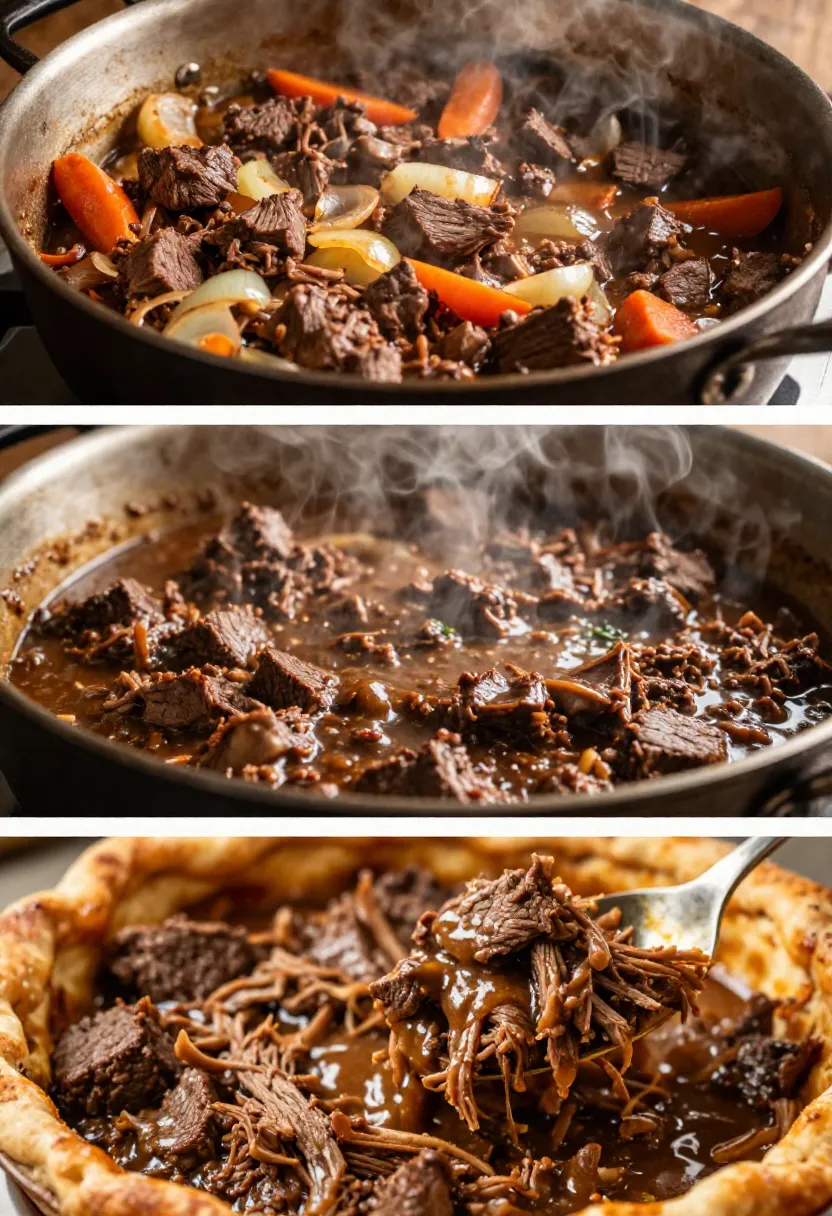
Not because it’s dramatic. Actually, it’s the opposite. Nothing spectacular happens. The filling just gets steadily better the longer it cooks.
The onions slowly disappear into the sauce. Carrots soften enough to blend into the gravy while still keeping a little texture. Even the celery, which almost nobody talks about when discussing steak pie, adds something useful. Leave it out and the filling still tastes good. Leave it in and everything feels a little more rounded.
The gravy eventually reaches a point where you know it’s ready before tasting it. It clings to the spoon instead of running off immediately. The beef breaks apart with very little effort. The entire pot smells richer than it did an hour earlier.
A few things help along the way:
- Brown the beef properly before adding liquid.
- Avoid crowding the pot.
- Keep the simmer gentle.
- Let the sauce reduce naturally if it feels thin.
- Give the beef more time than you think it needs.
Most mistakes happen because people rush the process.
Steak pie is one of those recipes that doesn’t respond well to impatience. The filling gets better right up until the end, and every extra half hour seems to help.
By the time it’s finished, you could easily serve the filling on its own with bread and call it dinner. In fact, I’ve done exactly that more than once when I couldn’t be bothered making pastry.
That’s usually a good sign.
The pastry should feel like a bonus, not a rescue mission.
🥕 The ingredients that quietly do all the work
If there’s one thing steak pie proves, it’s that a recipe doesn’t need an impressive ingredient list to be impressive on the plate.
Look at what goes into it. Beef. Onions. Carrots. Celery. A few herbs. Stock. Pastry. Most of these ingredients have been sitting in home kitchens for generations. There isn’t a secret ingredient hiding in the background or some unexpected flavor that changes everything at the last minute. In fact, if you saw the ingredients laid out before cooking, you might wonder what all the fuss is about.
Then the cooking starts.
| Ingredient | Purpose | Flavor Contribution | Texture Contribution |
|---|---|---|---|
| Beef chuck | Main filling component | Deep savory richness | Tender after slow cooking |
| Onion | Flavor foundation | Natural sweetness | Melts into gravy |
| Carrot | Balance and sweetness | Mild sweetness | Soft texture |
| Celery | Supporting ingredient | Earthy depth | Gentle structure |
| Garlic | Background flavor | Savory warmth | Fully incorporated |
| Beef stock | Sauce base | Rich body and depth | Creates gravy |
| Rosemary & thyme | Aromatic layer | Herbal warmth | Flavor only |
| Puff pastry | Finishing element | Buttery richness | Crisp flaky crust |
What I’ve always found interesting about steak pie is that the ingredients people talk about the least are often the ones doing the most work.
Nobody sits down at the table and says, “The onions were excellent tonight.”
Nobody talks about the celery.
Most people barely notice the carrots.
Yet try making the pie without them and the difference becomes obvious pretty quickly.
The onions are probably the best example. At the start they’re everywhere. By the end they’re almost nowhere to be seen. They slowly melt into the gravy during cooking until they become part of the sauce itself. You don’t bite into them. You don’t really notice them. But they’re responsible for much of the sweetness and body that make the filling feel rich rather than watery.
The same thing happens with carrots. Their job isn’t to make the pie sweet. They’re there because beef, stock, and pastry can become quite rich together. The carrots quietly soften some of those heavier flavors. Most people wouldn’t identify that contribution while eating, but take them out and the balance changes.
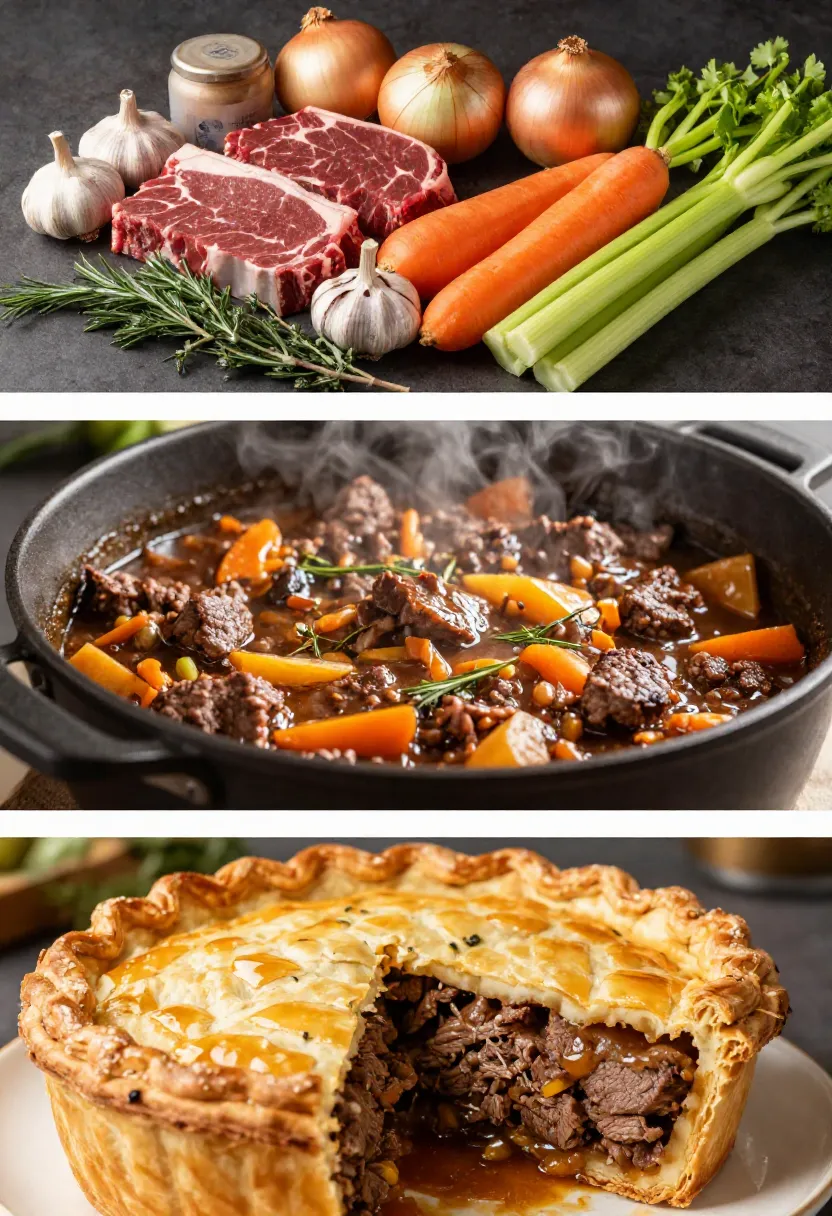
I actually think celery gets the roughest deal of all.
It’s one of those ingredients that people buy reluctantly and often forget in the refrigerator drawer. If a recipe calls for one stalk, you’re suddenly left wondering what to do with the rest of the bunch. Because of that, celery is usually the first ingredient people consider skipping.
I’ve done it myself.
The pie was still good.
The beef was tender.
The pastry was crisp.
Everything looked right.
But the filling tasted slightly less complete. Not dramatically worse. Just missing a little background depth that was difficult to describe until I made the recipe again with celery included.
That’s the thing about ingredients like celery. Their value often becomes obvious only when they’re missing.
Stock works in a similar way. People tend to focus on the meat because it’s visible, but the gravy is what brings the filling together. After several hours of cooking, the stock becomes part of everything. It carries the flavor of the beef, the vegetables, and the herbs through the entire pie. If the stock starts out bland, there’s only so much the filling can do to compensate later.
Then there are the herbs.
Rosemary and thyme aren’t loud ingredients. They’re not supposed to be. You shouldn’t take a bite and immediately think about rosemary. Instead, they sit quietly in the background making everything smell and taste more familiar. They’re part of the reason a steak pie filling smells so good when you lift the lid after a long simmer. Without them, the pie still works. It just loses a little of its personality.
And then, of course, there’s the pastry.
The funny thing is that the filling underneath is already a perfectly good meal before the pastry even enters the picture. Spoon it over mashed potatoes and people would happily eat it. Serve it with bread and nobody would complain. But the pastry changes the mood of the dish completely.
There’s something satisfying about cutting through that golden crust and hearing it crack slightly under the knife. The steam escapes, the gravy appears underneath, and suddenly the whole thing feels more special than it did five seconds earlier.
Maybe that’s why steak pie has survived for so long. Not because any single ingredient is extraordinary, but because every ingredient knows its role. Nothing tries to steal attention. Nothing feels unnecessary. The beef brings richness, the vegetables create balance, the stock ties everything together, and the pastry finishes the job.
Separately, they’re ordinary ingredients sitting on a kitchen counter.
A few hours later, they’re dinner. And somehow that’s where the magic happens.
Steak pie recipe 🥧
Steak pie has never been the most exciting thing on the menu. Nobody talks about it the way they talk about fancy steaks or elaborate holiday roasts. It’s just a pie. Beef, vegetables, gravy, pastry. That’s the whole idea.
And yet somehow it keeps surviving every food trend that comes and goes.
The filling starts out fairly ordinary. Chunks of beef, onions, carrots, celery, a few herbs. Leave everything alone long enough, though, and it slowly changes. The vegetables soften into the gravy, the sauce thickens, and the beef reaches that point where it barely holds its shape when you press it with a fork. There’s no shortcut to that part. If the filling tastes good, it’s usually because somebody gave it time.
The pastry gets all the attention in the end anyway.
You pull the pie from the oven and that’s the first thing people notice. The top is golden, flaky, and slightly uneven in the best possible way. Maybe one corner rose higher than the rest. Maybe there’s a crack where a little gravy bubbled through. Honestly, those imperfections usually make it look better.
Then comes the moment of cutting into it.
The crust breaks apart, the steam escapes, and the filling settles onto the plate in a way that never looks particularly elegant. That’s part of the charm. Steak pie isn’t neat food. The gravy spreads where it wants to spread. It ends up on the mashed potatoes, around the vegetables, sometimes halfway across the plate.
Nobody really seems to mind.
What I like about steak pie is that it doesn’t ask much from the person eating it. It isn’t trying to surprise anyone. There are no unusual ingredients, no dramatic presentation, no story about reinventing a classic. It’s simply a dish that knows exactly what it is.
Maybe that’s why people keep making it.
On cold evenings especially, when dinner needs to feel substantial rather than impressive, steak pie makes perfect sense. A crisp pastry lid, tender beef underneath, and enough rich gravy to justify an extra spoonful of mashed potatoes. Sometimes that’s all a meal needs to be. It doesn’t have to be clever. It just has to be good.
Ingredients
For the filling
- 900 g beef chuck steak, cut into chunks
- 2 tbsp flour
- 2 tbsp butter
- 1 tbsp olive oil
- 1 large onion, diced
- 2 carrots, diced
- 2 celery stalks, diced
- 3 garlic cloves, minced
- 2 cups beef stock
- 1 tbsp tomato paste
- 1 tsp fresh rosemary
- 1 tsp fresh thyme
- Salt and black pepper to taste
For the pastry
- 1 sheet puff pastry
- 1 egg, beaten
Instructions
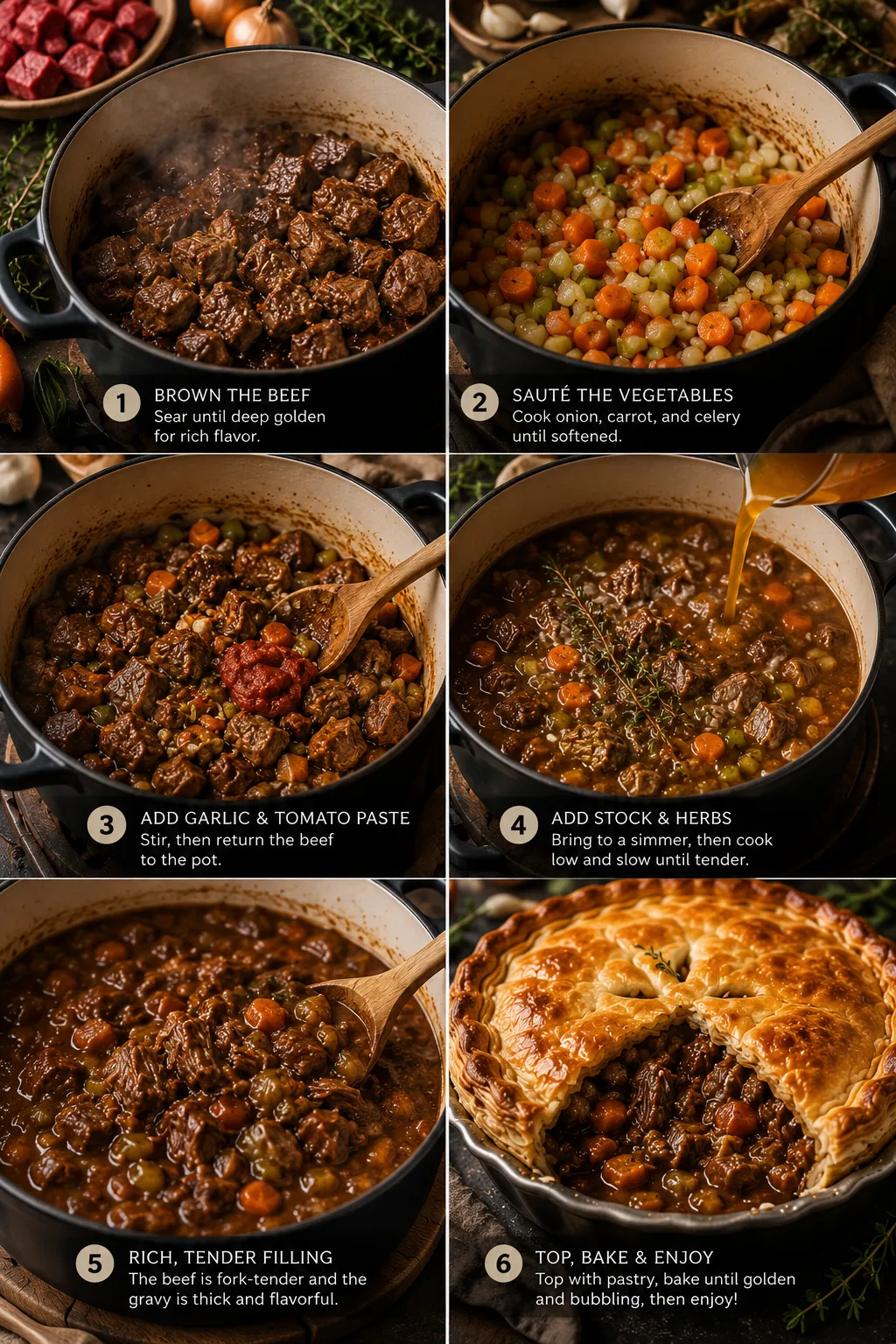
- Place the beef chunks in a large bowl and season them with salt and black pepper. Sprinkle the flour over the meat and toss everything together until each piece is lightly coated. The flour will help create a richer gravy later while also encouraging a beautiful crust when the beef is browned.
- Heat the butter and olive oil in a large heavy-bottomed pot or Dutch oven over medium-high heat. Once the butter has melted and starts to foam slightly, add the beef in batches. Avoid overcrowding the pot, as too much meat at once will cause it to steam rather than brown.
- Cook the beef for several minutes on each side until a deep golden-brown crust develops. This step builds a significant amount of flavor, so take your time. Transfer the browned beef to a plate and repeat with the remaining pieces.
- In the same pot, add the diced onion, carrots, and celery. Cook for 7–8 minutes, stirring occasionally, until the vegetables soften and the onions become translucent. As they cook, they will absorb the flavorful browned bits left behind by the beef.
- Stir in the minced garlic and tomato paste. Continue cooking for about 1 minute, stirring constantly, until fragrant. This brief step helps deepen the flavor of the tomato paste and prevents the garlic from tasting raw in the finished filling.
- Return the browned beef and any accumulated juices back to the pot. Stir everything together so the meat is evenly coated with the vegetables and tomato mixture.
- Pour in the beef stock and add the chopped rosemary and thyme. Stir well, scraping the bottom of the pot to release any remaining caramelized bits that may be stuck to the surface.
- Bring the mixture to a gentle simmer. Once small bubbles begin to appear around the edges, reduce the heat to low and cover the pot with a lid.
- Allow the filling to cook slowly for 2 to 2½ hours, stirring occasionally. During this time, the beef will become increasingly tender while the vegetables gradually break down into the gravy, creating a rich and flavorful sauce.
- During the final 20 minutes of cooking, remove the lid if the gravy appears too thin. Letting some of the liquid evaporate will help create a thicker filling that works better inside the pie.
- Once the beef is fork-tender and the gravy has reached a rich consistency, remove the pot from the heat. Allow the filling to cool for about 15–20 minutes. This helps prevent excess steam from softening the pastry during baking.
- Transfer the cooled filling into a large pie dish or baking dish, spreading it into an even layer.
- Roll out the puff pastry if needed, then carefully place it over the filling. Trim away any excess pastry around the edges and press gently to seal.
- Brush the entire surface of the pastry with beaten egg. This will help create a glossy, deeply golden finish once baked.
- Using a small knife, cut a few slits in the center of the pastry. These vents allow steam to escape while the pie bakes and help keep the crust crisp.
- Bake in a preheated oven at 200°C (400°F) for 30–35 minutes, or until the pastry has puffed up and turned beautifully golden brown.
- Remove the pie from the oven and allow it to rest for about 10 minutes before serving. This short resting time helps the filling settle slightly and makes the pie easier to portion while still remaining warm and comforting.
Kitchen tips 🔪
- Brown the beef properly for a richer gravy.
- Let the filling cool before adding pastry.
- Simmer uncovered if the sauce needs thickening.
- A splash of Worcestershire sauce adds extra depth.
🥔 What to serve with steak pie
Steak pie is already a substantial meal, so the best side dishes are usually the ones that know their place. They don’t need to steal attention from the pie. Their job is simple: catch some of the gravy, add a bit of contrast, and make the plate feel complete.
Mashed potatoes are the obvious choice, and honestly, there’s a good reason they’ve been paired with steak pie for so long. Once the pastry is cut and the gravy starts finding its way across the plate, those potatoes become part of the meal rather than something sitting beside it. Some people like them extra creamy, others prefer a chunkier texture with plenty of black pepper. Either way, it’s hard to imagine a more natural match.
Vegetables help break up the richness. Buttered peas are probably the most traditional option, but they aren’t the only one. Roasted carrots, parsnips, and Brussels sprouts work particularly well when the weather starts turning colder. The slight sweetness from roasted vegetables balances the savory filling without making the meal feel heavy or repetitive.
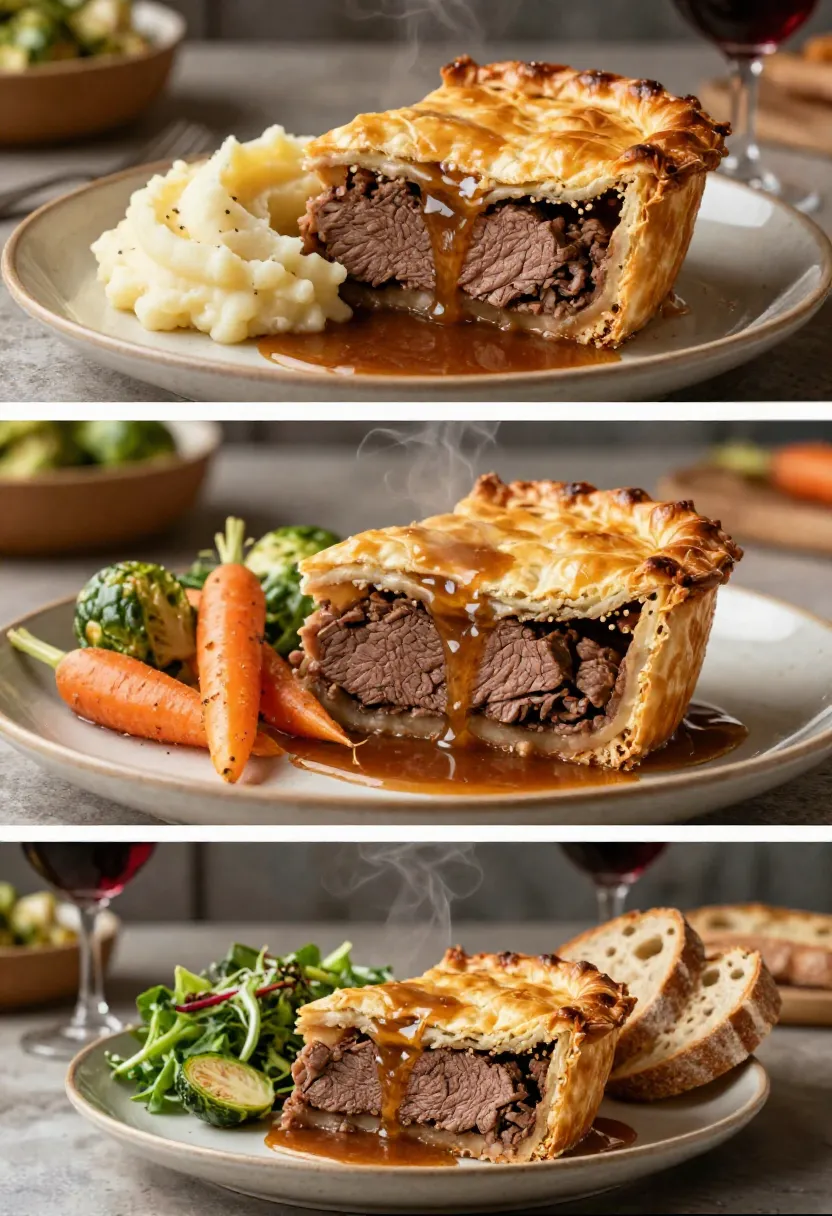
A few sides that work especially well with steak pie include:
- Creamy mashed potatoes
- Buttered peas
- Roasted carrots and parsnips
- A crisp green salad
- Warm crusty bread
The salad surprises people sometimes.
Steak pie isn’t usually associated with lighter side dishes, but a simple bowl of greens dressed with a sharp vinaigrette can make a noticeable difference. After a few bites of rich gravy and flaky pastry, something fresh and slightly acidic helps reset your palate. Nothing complicated is needed. Mixed leaves, a squeeze of lemon, maybe a little mustard in the dressing. That’s enough.
Bread deserves a mention too, even if it feels slightly excessive alongside a pastry-topped pie. Then again, anyone who’s eaten a really good steak pie knows what happens when there’s gravy left on the plate. A chunk of crusty sourdough or a warm dinner roll suddenly starts making a lot of sense.
The same idea applies to drinks. A dark ale works naturally with the slow-cooked beef, while a medium-bodied red wine complements the richness without dominating it. If alcohol isn’t part of the plan, sparkling water with lemon or a cold apple cider keeps things feeling fresh and balanced.
What I enjoy most about serving steak pie is how it tends to slow dinner down. People don’t usually rush through meals like this. Someone goes back for another spoonful of potatoes, somebody else tears off another piece of bread, and the conversation keeps going a little longer than expected. The side dishes aren’t there just to fill space on the plate. They’re part of what turns a good pie into the kind of dinner people remember afterward.
🍺 Easy ways to make the recipe your own
Every family seems to have its own version of steak pie.
The basic idea rarely changes. There is still slow-cooked beef, rich gravy, and a layer of pastry on top. But once you start looking at different recipes, small differences appear everywhere. One person adds mushrooms because that’s how their grandmother made it. Someone else swears the pie isn’t complete without a splash of ale in the gravy. After a while, those little changes stop feeling like variations and simply become the recipe.
Mushrooms are probably the addition I see most often. They make sense in a dish like this. As they cook, they soak up the gravy and lose a lot of their texture, leaving behind a deeper, earthier flavor. By the time the pie reaches the table, they’re almost impossible to pick out individually. You just notice that the filling tastes a little richer.
A few popular twists show up again and again:
- Mushrooms for extra depth
- Dark ale in the gravy
- Smoked bacon mixed into the filling
- Shortcrust pastry instead of puff pastry
- Seasonal vegetables such as peas or parsnips
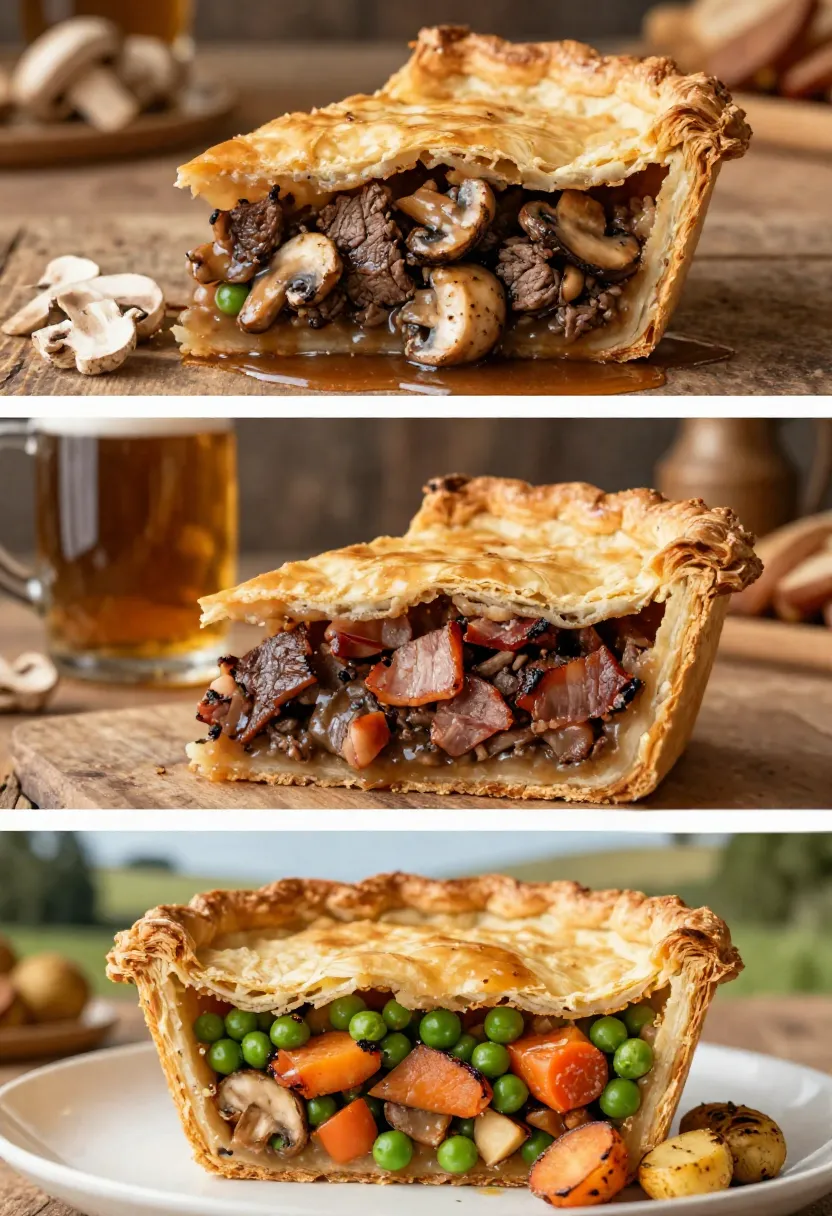
Ale is one of those ingredients that sounds more dramatic than it actually is. The pie doesn’t suddenly taste like beer. Most of what remains after a long simmer is a slightly darker gravy and a bit more complexity in the background. It’s subtle, but enough that people notice something different without immediately knowing what it is.
Bacon works in a similar way. A handful cooked with the onions at the beginning can change the whole character of the filling. Not by much. Just enough. The gravy ends up with a faint smokiness that makes each bite feel a little fuller somehow. The same thing happens with Worcestershire sauce. Plenty of people add it, and plenty of people forget to mention they’re adding it.
Then there’s the pastry debate.
Some cooks wouldn’t use anything except puff pastry. Others prefer shortcrust because it’s sturdier and feels less delicate once the gravy starts bubbling underneath. And if you ask whether pastry belongs only on top or around the entire pie, be prepared for strong opinions from people who normally don’t care much about food arguments.
The filling changes with the seasons too. During colder months, extra root vegetables seem to find their way into the pot. Parsnips, turnips, even squash occasionally. None of them completely change the pie, but they nudge it in a slightly different direction. In spring, peas often appear for no other reason than they taste good and add a bit of color to an otherwise brown dinner.
That’s probably what keeps steak pie interesting after all these years. The recipe leaves room for people to make it their own. The details shift. Ingredients come and go. But once that golden pastry is broken and the gravy starts spilling onto the plate, it still feels like steak pie. And honestly, that’s all most people want it to be.
🕯️ Why meals like this create lasting memories
Food has an unusual relationship with memory. Years after a meal has been eaten, people rarely remember exact ingredient quantities, oven temperatures, or cooking times. Instead, they remember how the meal fit into a particular moment. They remember who was sitting at the table, what the weather looked like outside the window, and how the kitchen smelled while dinner was cooking.
Steak pie seems especially good at creating those memories.
Part of that comes from the amount of time involved. The recipe does not appear suddenly. It announces itself hours before dinner is served. The aroma develops gradually as the filling cooks. First come the onions and garlic. Then the smell of browned beef begins filling the kitchen. Later, rosemary and thyme join the mixture, creating the unmistakable scent of something warm and comforting slowly making its way toward the dinner table.
For many people, the memories associated with dishes like this include:
- The smell of pastry baking in the oven
- Family conversations around the dinner table
- Steam rising from the first slice
- Leftovers enjoyed the following day
- Recipes passed from one generation to the next

The meal itself also encourages a slower pace. Few people rush through steak pie. The rich filling, flaky crust, and generous portions naturally invite people to settle in and stay awhile. Conversations tend to stretch longer when dishes like this are on the table. Someone reaches for another spoonful of gravy. Someone else cuts a second piece of pastry. Before long, dinner becomes less about eating and more about spending time together.
That sense of occasion is becoming increasingly valuable. Modern life often feels rushed. Meals are squeezed between work, errands, appointments, and countless distractions. Recipes that require patience create a different experience. They remind people that cooking can be enjoyable, not just practical. The anticipation becomes part of the reward.
There is also something reassuring about the consistency of dishes like steak pie. Food trends change constantly. New ingredients become fashionable and then disappear. Entire styles of cooking rise and fall in popularity. Steak pie remains largely unchanged. The same combination of beef, vegetables, herbs, gravy, and pastry continues delivering comfort decade after decade.
Perhaps that reliability explains why so many families continue making recipes like this. They connect generations in a way that newer dishes often do not. A recipe that was cooked by grandparents can still appear on the table today with very few changes. The flavors remain familiar. The aromas remain familiar. Even the experience of gathering around the table feels familiar.
Long after the meal has ended, those impressions tend to linger. The scent of pastry remains faintly in the kitchen. The memory of the evening stays fresh. The leftovers waiting in the refrigerator somehow feel reassuring rather than repetitive. And for a little while, the entire house feels warmer than it did before dinner began.
For a dish built from such straightforward ingredients, that is a remarkable achievement. Steak pie does not rely on novelty or complexity to make an impression. Instead, it succeeds through warmth, generosity, and the simple pleasure of sharing good food with people you care about. That is exactly the kind of recipe that tends to survive long enough to become part of family history.