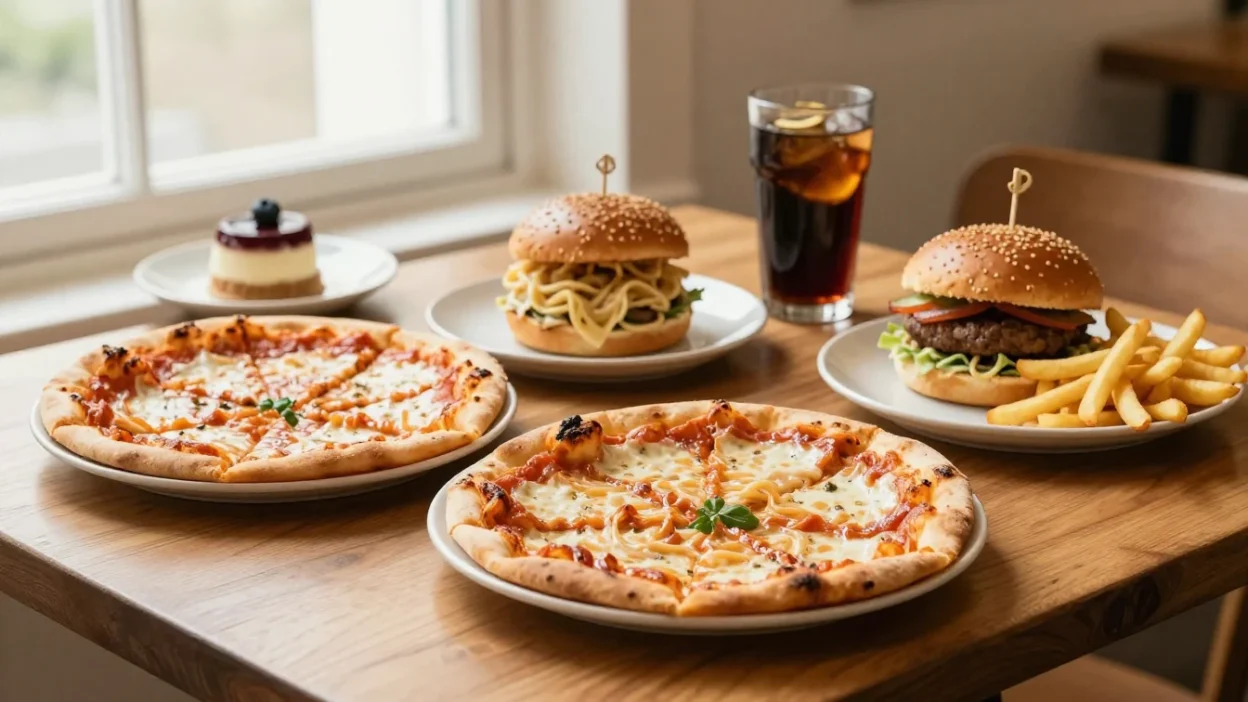
You know that feeling when a meal sounds absolutely perfect in the moment, then sits in your stomach like a brick an hour later?
Maybe it is pizza and soda during a movie night. Maybe it is a big brunch with eggs, bacon, and buttery toast. Maybe it is one of those comfort-food dinners that feels warm, satisfying, and a little impossible to resist — until the bloating, heaviness, and deep uncomfortable fullness kick in.
The truth is, digestion is not only about what you eat. It is also about how foods come together on your plate, how rich the meal is, how fast you eat, and how your own body responds. Some pairings can feel especially hard to handle, especially when they combine fat, sugar, refined carbs, carbonation, or large portions all at once.
That does not mean you need to fear food or start overthinking every meal.
It simply means paying attention.
Because once you notice which combinations leave you feeling puffy, sluggish, gassy, or uncomfortably full, it gets much easier to make small changes that help you enjoy your food and feel better afterward. No strict food rules. No panic. Just a smarter, more realistic way to eat for comfort.
In this article, we are going to look at 10 heavy food pairings that often leave people feeling bloated and uncomfortable, why they can be difficult to digest, and how to enjoy them in a way that feels a little gentler on your stomach. Based on the reference angle you shared.
Why Some Food Combinations Feel Harder to Digest
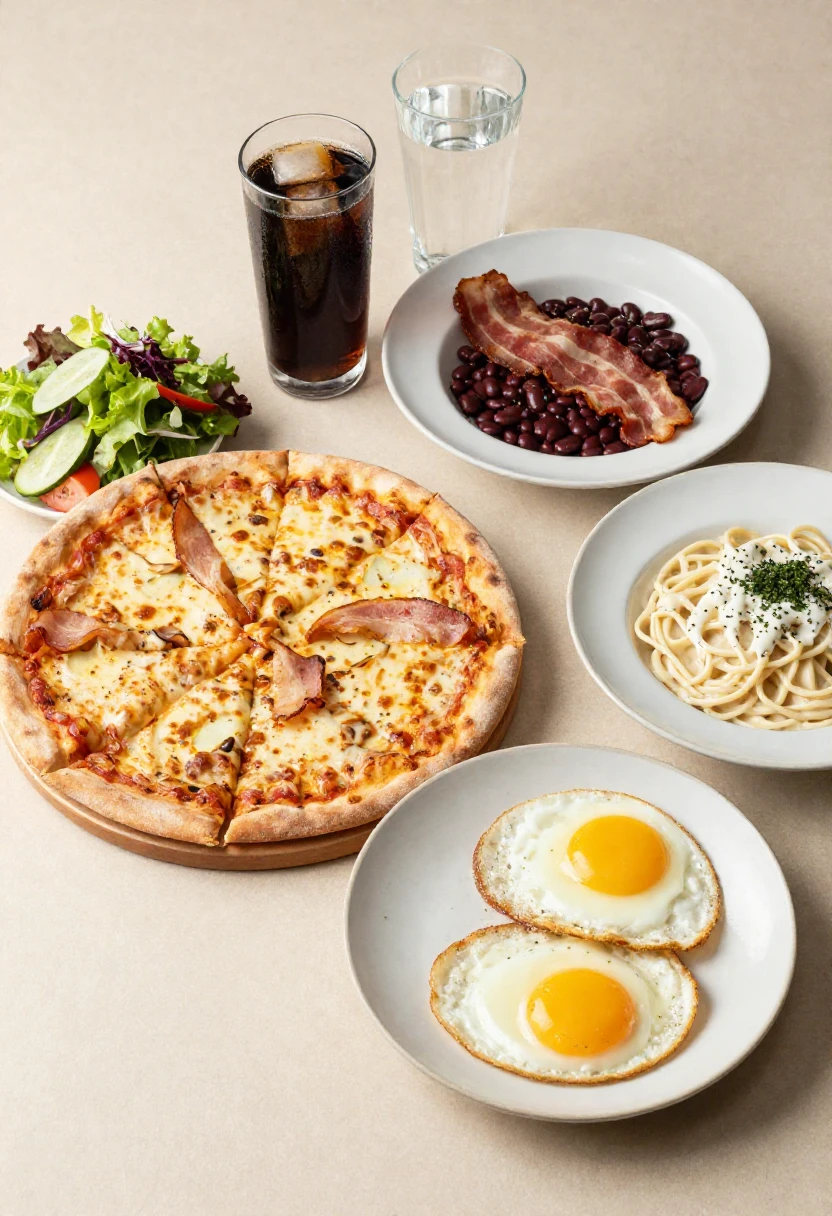
It is easy to blame one ingredient when your stomach feels off. But in real life, digestive discomfort is usually more layered than that.
Often, it is not that two foods are “wrong” together. It is that the meal becomes too rich, too heavy, too fast, or too much for your body to handle comfortably in one sitting.
It is often about more than the pairing
A meal can feel hard to digest when it stacks several things at once:
- High fat
- Large portions
- Refined carbs
- Sugary drinks
- Very little fiber
- Fast eating
Think about a typical heavy comfort meal. It may include melted cheese, fried food, white bread, a sweet drink, and a dessert right after. None of those foods automatically guarantees indigestion on its own, but together they can create that familiar “why do I feel so swollen?” moment.
Fat is one reason. Rich foods can slow stomach emptying, which may leave you feeling full for longer than you want. Carbonated drinks can add pressure and bloating. Big portions make everything feel more intense. And when you eat quickly, you often swallow more air and miss the point where your body quietly says, that is enough.
Your body responds differently from someone else’s
This is where things get personal.
Your friend may eat a cheeseburger, fries, and a milkshake and feel completely fine. You may eat the same meal and want to lie down in regret for the next two hours.
That does not mean your body is broken. It usually means you have your own set of digestive triggers.
Some common reasons include:
- Lactose sensitivity, which can make creamy or cheesy meals harder to tolerate
- Acid reflux, which may flare up after fatty, fried, or acidic foods
- IBS tendencies, where certain meals trigger bloating, cramping, or gas
- Sensitivity to spicy foods, especially when paired with grease or large portions
- Stress or rushed eating, which can make even normal meals feel worse
Sometimes the meal is not the whole story. Sometimes it is the meal plus the pace of your day, how hungry you were, whether you ate too quickly, or whether your stomach was already irritated.
The goal is comfort, not perfection
This part matters.
You do not need to start fearing every rich dinner or memorizing rigid food-combining rules. Food should still feel enjoyable, social, and satisfying.
What helps most is learning your patterns.
Maybe you do fine with pizza, but not pizza and soda. Maybe beans are fine for you, but beans plus cheese plus a huge portion is where things go sideways. Maybe dessert is no problem on its own, but dessert right after a very heavy dinner pushes you over the edge.
That kind of awareness is far more useful than food fear.
A few simple questions can help you notice what is really going on:
- Was the meal very rich or very large?
- Did you eat quickly?
- Was there a fizzy or sugary drink involved?
- Did the meal include foods you already know you are sensitive to?
- Do you feel this way every time, or only in certain situations?
The reference article focuses on familiar rich pairings such as pizza and soda, beans and cheese, and eggs with bacon, which makes sense because these meals often combine exactly the factors that can leave people feeling heavy and uncomfortable afterward.
10 Food Combinations That May Trigger Indigestion
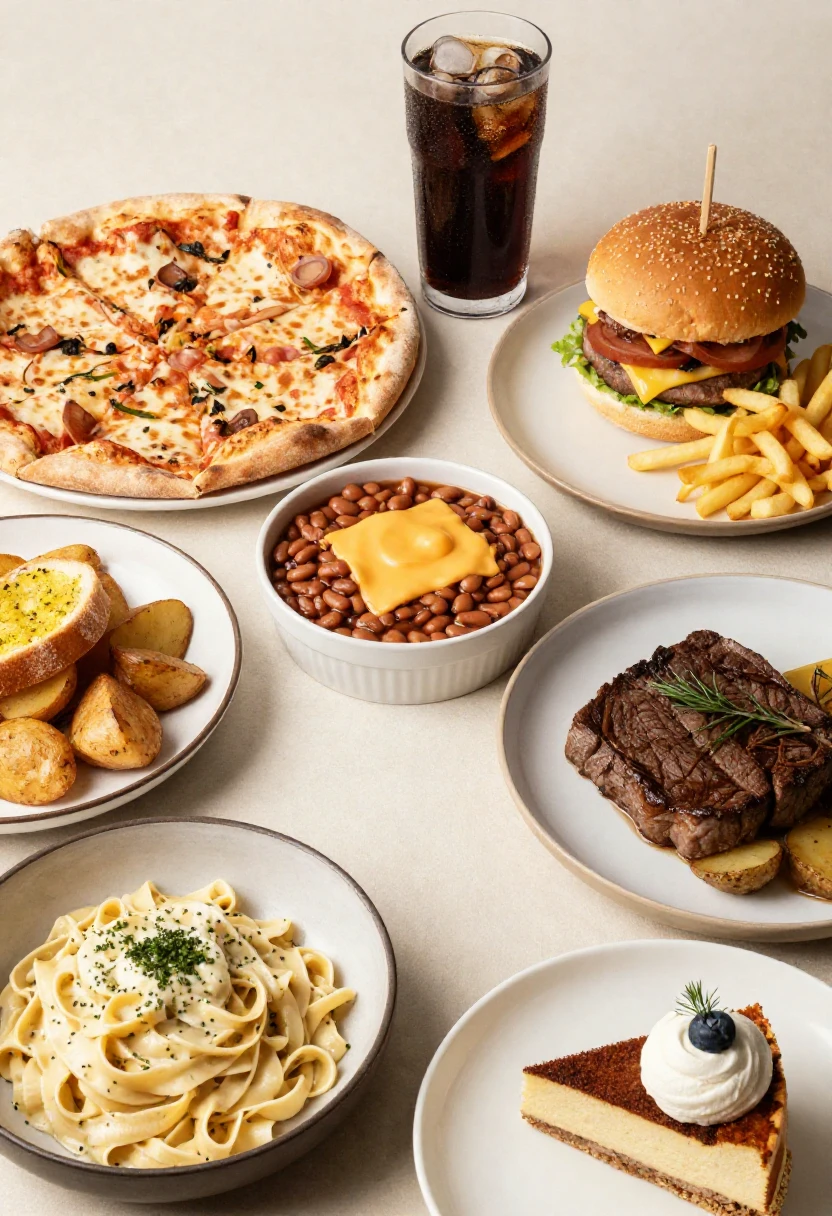
Not every stomach reacts the same way, but these pairings are common troublemakers because they tend to combine richness, heaviness, volume, or ingredients that many people already struggle with. The reference article also centers on familiar examples like pizza and soda, eggs and bacon, beans and cheese, meat and potatoes, and yogurt with fruit.
1. Pizza and soda
This one is almost too easy to recognize.
Pizza already brings together cheese, refined crust, salty toppings, and often a fair amount of fat. Add soda, and suddenly you have carbonation, extra sugar, and even more pressure in your stomach. It is the kind of meal that feels fun and comforting in the moment, then leaves you loosening your jeans on the couch.
Why it can feel rough:
- Cheese and fatty toppings may feel heavy
- Refined crust can make the meal feel dense
- Carbonation may increase bloating and belching
- Large portions are very easy to overdo
A gentler way to enjoy it:
- Have a couple of slices instead of turning it into a challenge
- Pair it with water or still iced tea instead of soda
- Add a side salad or vegetables to lighten the overall feel
2. Beans and cheese
Beans can be incredibly nutritious, but that does not mean they are always easy on the stomach. For some people, beans already bring gas and bloating. Adding a generous layer of cheese can make the meal feel even heavier.
Why it can feel rough:
- Beans may increase gas and abdominal pressure
- Cheese adds fat and richness
- Large burritos, nachos, or bean bakes often come in huge portions
- The meal may also include onions, salsa, sour cream, or spice, which adds another layer
A gentler way to enjoy it:
- Start with a smaller amount of beans
- Use a lighter sprinkle of cheese instead of a thick blanket
- Eat slowly and notice when you are satisfied, not stuffed
3. Fried eggs and bacon
This breakfast smells amazing. It also happens to be one of those meals that can sit very heavily, especially first thing in the morning when your stomach is not in the mood for a lot of grease.
Why it can feel rough:
- Bacon and fried eggs can create a high-fat meal
- It is often served with toast, hash browns, or butter, which adds even more heaviness
- Greasy breakfasts may leave some people feeling sluggish or mildly nauseous
A gentler way to enjoy it:
- Choose poached or boiled eggs
- Have a smaller portion of bacon
- Add fruit, greens, or whole-grain toast for better balance
4. Meat and potatoes
This classic comfort-food combo feels hearty, filling, and familiar. But when both parts are served in rich forms — like steak with buttery mashed potatoes or roast meat with creamy sides — the meal can become overwhelmingly dense.
Why it can feel rough:
- It is usually a large, heavy dinner
- Rich cooking methods add butter, oil, gravy, or cream
- There may be very little fiber or freshness on the plate
- You may finish dinner feeling full long before your body can actually process it comfortably
A gentler way to enjoy it:
- Keep the meat portion moderate
- Choose roasted potatoes over very creamy ones
- Add vegetables to bring some lightness and texture
5. Burger and fries
There is a reason this meal is famous for the afternoon crash.
A burger and fries combo stacks fat, salt, refined bread, fried potatoes, sauces, and usually a large portion all in one sitting. It tastes satisfying, but it can also leave you feeling overly full, puffy, and tired.
Why it can feel rough:
- Fried foods may feel especially heavy
- The bun, sauces, and sides turn one sandwich into a very rich meal
- Fast-food versions are often eaten quickly, which makes discomfort worse
A gentler way to enjoy it:
- Skip the oversized combo
- Pair the burger with a salad or baked side
- Slow down enough to actually notice fullness
6. Pasta with creamy sauce and garlic bread
This is one of those meals that looks cozy and generous and somehow keeps encouraging one more bite. Creamy pasta is rich on its own. Add garlic bread, and the meal becomes a soft, dense, carb-heavy comfort bomb.
Why it can feel rough:
- Cream sauces can be high in fat
- Pasta and bread together create a very heavy starch load
- Big restaurant portions make it easy to eat far beyond comfort
A gentler way to enjoy it:
- Choose either pasta or garlic bread as the main comfort piece, not both in large amounts
- Add vegetables or a lighter protein
- Stop before you get to that “I should not have finished this” stage
7. Yogurt and fruit for sensitive stomachs
This pairing sounds innocent, and for many people it is perfectly fine. But for others, especially those who are sensitive to dairy, certain fruits, or large breakfasts eaten in a rush, it can cause discomfort.
Why it can feel rough:
- Yogurt may bother people with lactose sensitivity
- Some fruits can feel irritating when eaten quickly or in large amounts
- Very cold yogurt and fruit first thing in the morning does not feel great for everyone
A gentler way to enjoy it:
- Try lactose-free yogurt if dairy is the issue
- Choose softer, easier fruits
- Eat a moderate portion instead of a huge parfait loaded with extras
8. Fried chicken and sweet drinks
This is the kind of meal that tastes exciting and leaves your body quietly asking for mercy later.
Fried chicken is already rich and salty. Add a sugary drink, and now you have a combination that can feel both heavy and oddly unsatisfying at the same time.
Why it can feel rough:
- Fried coating adds fat and heaviness
- Sugary drinks may make the meal feel even more overwhelming
- Salty, greasy food plus sweet liquid can leave you feeling bloated and thirsty
A gentler way to enjoy it:
- Pair fried foods with water
- Add something fresh on the side, like slaw or vegetables
- Keep portions realistic, especially if you know fried foods do not sit well with you
9. Spicy foods with creamy cheese-heavy toppings
Think loaded nachos, extra cheesy jalapeño dishes, or spicy tacos piled high with sauce, cheese, and sour cream. Delicious, yes. Gentle on digestion, not always.
Why it can feel rough:
- Spice may trigger discomfort for people prone to reflux or irritation
- Cheese and creamy toppings add richness
- These meals are often eaten in large, snacky portions that quietly become a full feast
A gentler way to enjoy it:
- Reduce either the spice or the rich toppings
- Add beans, lettuce, or fresh salsa for balance
- Notice whether the issue is the spice, the dairy, or simply the amount
10. Dessert right after a very heavy meal
Sometimes it is not the dessert itself. It is the timing.
After a rich dinner, your stomach may already feel stretched and slow. Adding cake, ice cream, pastries, or another sweet finish on top can take you from pleasantly full to deeply uncomfortable.
Why it can feel rough:
- You are adding fat, sugar, or dairy on top of an already heavy meal
- The body is already busy handling dinner
- This is where that “too full to relax” feeling often shows up
A gentler way to enjoy it:
- Wait a little before dessert
- Share it instead of ordering a full portion
- Choose something lighter when dinner was already very rich
These pairings are not “bad.” They are simply meals that can become a lot for your stomach when rich ingredients, big portions, and fast eating all show up together.
Signs a Meal Is Not Sitting Well With You

Sometimes digestive discomfort is obvious. Other times, it sneaks in slowly.
You finish eating, feel fine for twenty minutes, and then it starts — that tightness in your stomach, the strange pressure under your ribs, the burping, the puffiness, the feeling that your meal is just sitting there doing absolutely nothing helpful.
That is usually your body asking you to pay attention.
Common symptoms to notice
A meal that does not sit well can show up in different ways depending on the person, the portion, and the ingredients involved. The reference article frames this around indigestion, bloating, gas, and discomfort after certain rich pairings, which is a useful lens for this section too.
Some of the most common signs include:
- Bloating that makes your stomach feel stretched or swollen
- Burping or a fizzy, pressurized feeling in your upper stomach
- Gas that builds up after eating
- Heartburn or reflux, especially after fatty, spicy, or acidic meals
- A heavy “brick in your stomach” feeling
- Mild nausea or queasiness
- Cramping or stomach discomfort
- Feeling unusually tired or sluggish after eating
Sometimes it feels like your jeans suddenly got tighter. Sometimes it feels like you need to sit very still and regret your choices in silence. And sometimes it is just that unpleasant sense of being too full in a way that does not feel normal or satisfying.
That difference matters.
There is a big difference between feeling pleasantly full after a good meal and feeling so weighed down that your body seems to be protesting.
When it is probably a pattern, not a one-time fluke
Everyone overeats sometimes. Everyone has the occasional meal that does not land well.
But if the same kind of discomfort keeps showing up after similar meals, that is usually not random.
You may be noticing a pattern if:
- You feel bloated every time you drink soda with a heavy meal
- Cheese-rich meals regularly leave you uncomfortable
- Fried foods make you feel sluggish or nauseated
- Large restaurant meals almost always trigger reflux
- You feel much worse when you eat quickly or late at night
This is where a little curiosity can help more than strict rules.
Instead of thinking, What food is bad?, try asking:
- What exactly did I eat?
- How much did I eat?
- Did I eat too fast?
- Was I stressed, distracted, or overly hungry?
- Did this feel worse than usual because the meal was especially rich?
Those questions can help you spot whether the problem is really the food itself, the combination, the portion, or just the overall eating situation.
A simple way to notice your own triggers
You do not need a complicated food journal unless you want one.
Even a quick mental note can help:
- What meal left you uncomfortable?
- How long after eating did symptoms start?
- What kind of discomfort did you feel?
- Has this happened before?
Over time, your body gets easier to read.
You might realize that burgers are fine, but burgers and fries are too much. Or that dessert is fine, but only when dinner was lighter. Or that dairy is not always a problem, but dairy plus greasy food is where things get messy.
That kind of awareness is powerful because it helps you make practical choices without turning eating into a stressful math problem.
How to Make Heavy Meals Easier to Digest
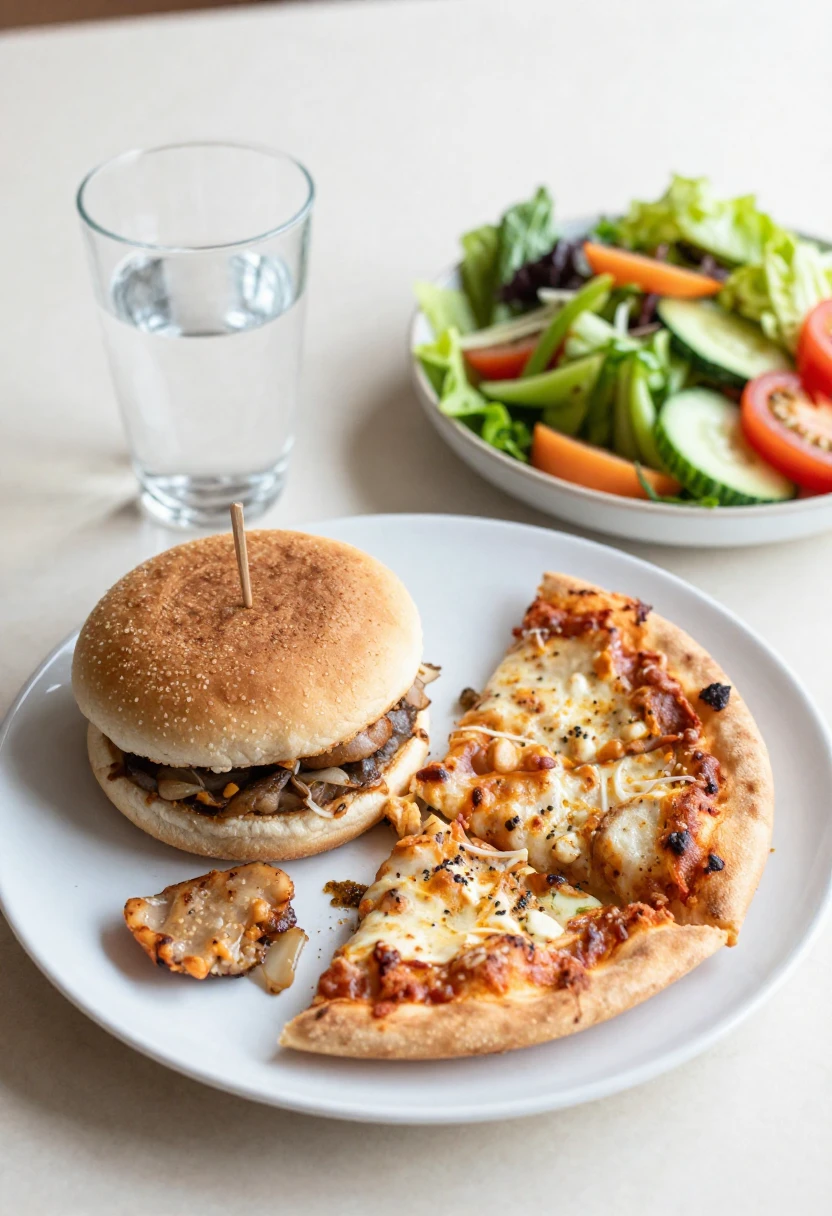
The good news is that you usually do not need to give up the foods you love.
Most of the time, digestive comfort comes down to how you eat, how much you eat, and what you pair together. A few simple adjustments can make a rich meal feel much more manageable without turning dinner into a sad plate of steamed nothing.
Adjust the portion before you cut the food
This is often the biggest difference-maker.
A lot of heavy meals become uncomfortable not because they are forbidden, but because they are too large for one sitting. The reference article points to rich combinations like pizza and soda, meat and potatoes, and beans with cheese — and in real life, these meals are often served in portions that are far bigger than your stomach really wants.
A few simple habits help:
- Start with a smaller serving
- Pause halfway through and check in with your body
- Eat slowly enough to notice when you feel satisfied
- Stop at comfortably full, not “I can barely move”
That last part is not always easy, especially when the food is warm, salty, cheesy, crispy, or all of the above. But it matters.
There is a huge difference between finishing a meal and thinking, That was so good, and finishing a meal and thinking, Why did I do this to myself?
Add balance to the plate
Heavy meals often feel better when there is something fresh, light, or fiber-rich on the plate.
That does not mean forcing yourself to eat a plain salad while everyone else enjoys dinner. It just means giving your meal a little breathing room.
Helpful ways to balance a rich meal:
- Add vegetables to bring freshness and texture
- Include fiber-rich foods that help the meal feel less one-note
- Go a little lighter on extra cheese, creamy sauces, or fried add-ons
- Pair rich foods with water instead of soda or sweet drinks
For example, pizza may feel easier with a crisp salad and water than with soda and garlic knots. A burger may sit better with a side salad or roasted potatoes than with fries and a milkshake. Small shifts like that can change the whole experience afterward.
Choose simple swaps that still feel satisfying
You do not need perfect swaps. You need realistic ones.
The best changes are the ones that still feel enjoyable enough that you will actually keep doing them.
Some easy examples:
- Water or still drinks instead of soda with heavy meals
- Roasted or baked sides instead of fried ones
- Lighter sauces instead of extra creamy or buttery toppings
- Moderate cheese portions instead of piling it on by default
- One rich element on the plate instead of three or four
This works especially well when you focus on the parts of the meal you care about most.
If the burger is what you are really craving, keep the burger and simplify the side. If pasta is the comfort food you want, maybe skip the garlic bread and go lighter on the sauce. You still get satisfaction, but without that overloaded feeling afterward.
Slow down more than you think you need to
This sounds almost too simple, but it matters.
When you eat quickly, you often:
- Swallow more air
- Miss fullness cues
- Eat more than you meant to
- Put extra stress on your digestion
Heavy meals become even harder to handle when they disappear in ten rushed minutes.
Try this instead:
- Put your fork down for a moment between bites
- Sip water slowly
- Let the meal last a little longer
- Notice when the pleasure of eating starts turning into automatic overeating
Sometimes bloating is not just about the meal. It is about the speed.
Give dessert a little space
Dessert is not the enemy. But timing can make a difference.
If dinner was already rich, sweet, and filling, adding dessert immediately can push your stomach from satisfied to overwhelmed. Waiting a bit, sharing dessert, or choosing something lighter can help you enjoy it without the regret.
That way, dessert still feels like a treat instead of the final straw.
Make peace with experimenting
Your stomach does not need rigid food rules. It needs honesty.
You may discover that some heavy pairings are totally fine in small amounts. Others may only bother you when you eat them late at night, too fast, or with soda. And some may simply never feel worth it.
That is normal.
The goal is not to build a perfect diet. The goal is to understand what helps you feel good after eating, not just during the first five delicious bites.
Food Combining Myths vs What Actually Matters
When people start noticing bloating or indigestion, it is very tempting to look for a simple rule.
Maybe you have heard things like:
- Never mix protein and carbs
- Fruit should only be eaten alone
- Certain foods “cancel each other out”
- Your stomach cannot handle mixed meals properly
These ideas sound neat and convincing. They also make eating feel far more complicated than it needs to be.
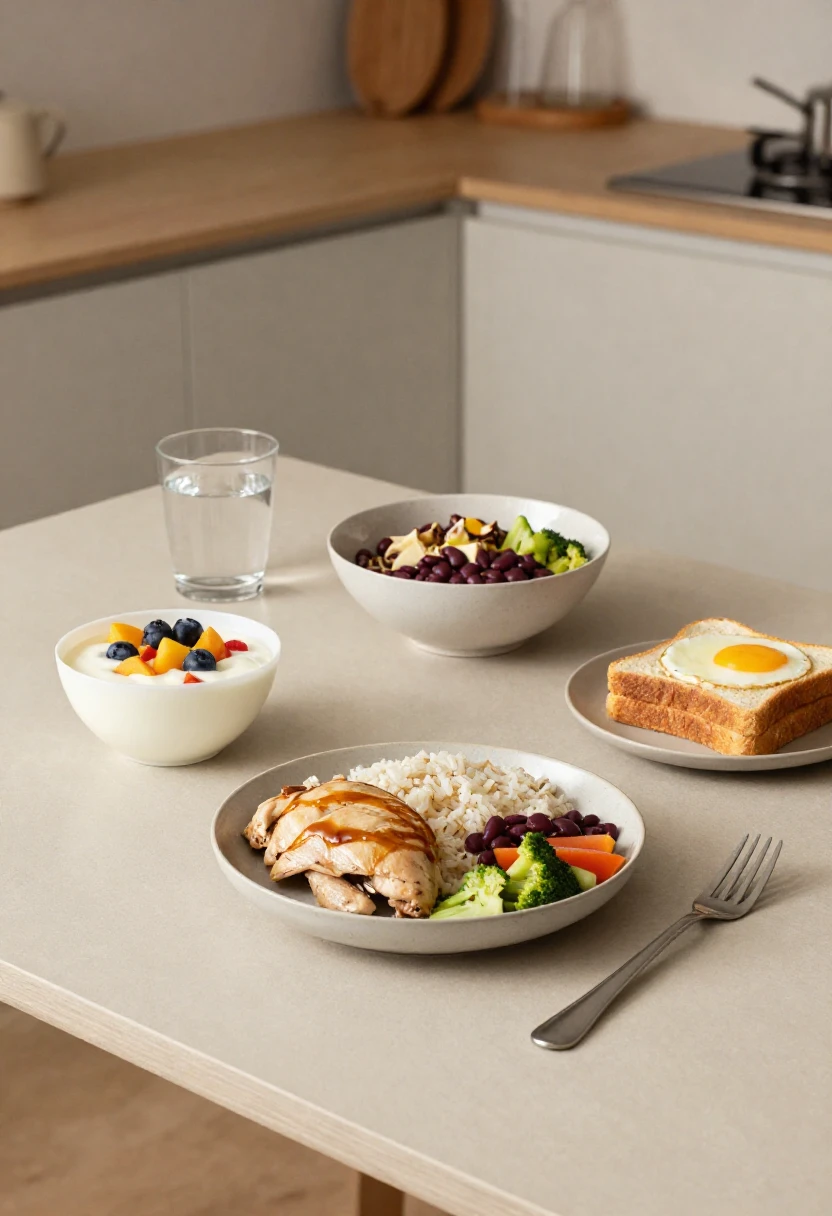
The truth is, most healthy digestive systems are built to handle mixed meals. Your body does not panic because you ate rice with chicken or yogurt with fruit. The reference article uses examples of common pairings that may feel uncomfortable for some people, but that is different from saying all food combinations are universally harmful.
You do not need to fear normal meals
This part is worth saying clearly: most food combinations are completely normal.
People all over the world eat meals that combine:
- Protein and starch
- Fat and fiber
- Dairy and fruit
- Beans and grains
- Meat and vegetables
And in many cases, those meals are nourishing, balanced, and satisfying.
What usually causes trouble is not the fact that foods are mixed. It is more often that the meal is:
- Too large
- Too rich
- Too greasy
- Too fast
- Too heavily processed
- A poor fit for your personal digestion
That is a very different message from rigid food-combining myths.
Because once you understand that, you can stop fearing ordinary meals and start paying attention to what actually affects how you feel.
What really makes the biggest difference
If a meal leaves you bloated and uncomfortable, these factors usually matter more than old-school “never eat this with that” rules.
Portion size
A moderate meal and an oversized meal do not land the same way.
Even foods you tolerate well can become uncomfortable when the portion is huge. That is especially true with meals that are already rich in fat, cheese, fried foods, or refined carbs.
Richness of the meal
A dinner with several heavy elements at once can be a lot for your stomach.
Think:
- Fried main dish
- Creamy side
- Sweet drink
- Dessert right after
That kind of layering is often more important than any single pairing.
Speed of eating
When you rush through a meal, you may swallow more air, miss fullness signals, and end up feeling much worse than you expected.
Sometimes the issue is not the burger. It is the burger eaten in eight distracted minutes.
Personal tolerance
This is the big one.
Some people do just fine with dairy. Others do not. Some people can enjoy spicy food without a problem. Others feel reflux almost immediately. Some can eat beans daily. Others need smaller amounts and more care.
Your body has its own preferences, and those matter more than internet food rules.
Meal timing and context
A rich lunch after a long walk may feel completely different from the same meal eaten late at night, under stress, or after skipping meals all day.
Context changes digestion more than people realize.
A better way to think about food combinations
Instead of asking, Are these foods allowed together?, try asking:
- Does this meal usually feel good in my body?
- Is this portion realistic for me right now?
- Am I stacking too many rich elements at once?
- Would I feel better with a lighter drink, smaller portion, or fresher side?
- Is this a true trigger, or just an occasional indulgence that I do better with in moderation?
That shift makes eating feel calmer and smarter.
You are no longer chasing perfect rules. You are building trust with your own body.
And honestly, that is a much better long-term strategy than memorizing a list of dramatic food myths.
Who Should Pay Extra Attention to Certain Food Pairings
Not everyone reacts to heavy meals in the same way.
Some people can eat a rich dinner and move on with their day without thinking twice. Others feel bloated, sluggish, crampy, or uncomfortable after just a few bites of the same meal. The reference article builds on this idea by pointing to common pairings that may be more likely to cause indigestion for certain people, not necessarily for everyone.
That is why it helps to know whether you fall into a group that may need a little more awareness around rich, heavy, or trigger-prone combinations.
People with IBS or frequent bloating
If you deal with IBS symptoms, bloating, gas, or an unpredictable stomach, heavy pairings can feel especially frustrating.
Meals that combine several rich or gas-producing elements at once may be harder to tolerate, such as:
- Beans with cheese
- Fried foods with sugary drinks
- Large creamy pasta meals
- Very spicy meals with lots of toppings
For someone with a sensitive gut, it is often not one ingredient alone. It is the stacking effect that causes trouble.
A meal may become much harder to handle when it includes:
- A large portion
- Lots of fat
- Dairy
- Spice
- Carbonation
- Fast eating
If that sounds familiar, simpler meals or smaller portions may make a noticeable difference.
People with acid reflux or heartburn
If you are prone to reflux, some food combinations can feel like a direct invitation for discomfort.
This is especially true when meals are:
- Fatty
- Fried
- Spicy
- Acidic
- Very large
- Eaten late at night
A cheesy pizza with soda, a greasy burger and fries, or spicy loaded nachos may be perfectly manageable for one person and a total reflux trigger for another.
If you often feel:
- Burning in your chest
- Food coming back up
- Pressure after meals
- Worse symptoms when lying down
then heavy pairings may deserve a closer look.
People with lactose sensitivity
Dairy is one of those ingredients that can seem harmless until it keeps showing up in meals that leave you miserable.
If you are sensitive to lactose, pairings like these may hit harder:
- Beans and cheese
- Creamy pasta and garlic bread
- Ice cream after a large dinner
- Yogurt with fruit, especially in large portions
You may notice:
- Bloating
- Gas
- Cramping
- Stomach rumbling
- Urgent bathroom trips
This does not always mean you need to avoid all dairy forever. Sometimes it simply means certain forms or amounts do not work well for you, especially when combined with other heavy foods.
People recovering from digestive upset
When your stomach has already been irritated — maybe after a stomach bug, stress, overeating, travel, or a few days of eating off schedule — rich food pairings can feel even more intense.
This is not the best time for:
- Greasy takeout
- Fried foods and soda
- Huge restaurant portions
- Spicy cheese-heavy meals
- Dessert piled on top of a large dinner
When your digestion feels delicate, simple and lighter meals often work better until your body settles down again.
People who eat quickly, under stress, or on the go
This group gets overlooked all the time.
You may not have a sensitive stomach in general. But if you regularly eat while distracted, rushing, driving, working, or trying to squeeze lunch into ten chaotic minutes, even a normal meal can feel much worse.
Stress and speed can make heavy food pairings even harder to tolerate because they often lead to:
- Faster eating
- Less chewing
- More swallowed air
- Larger portions
- Poor awareness of fullness
So sometimes the issue is not only the pizza, burger, or pasta. It is the fact that you barely tasted it before your stomach had to deal with all of it at once.
You do not need a diagnosis to pay attention
Even if you do not have IBS, reflux, or lactose intolerance, your body may still have limits.
You might simply notice that:
- Fried food makes you feel awful
- Soda with meals always leaves you bloated
- Dessert after a heavy dinner is never worth it
- Cheese-rich meals feel better in smaller amounts
- Late-night takeout hits differently than the same meal at lunch
That still counts.
You do not need a formal label to listen to your body. You just need enough honesty to notice what leaves you feeling good and what leaves you wishing you had stopped a little sooner.
A Gentle Takeaway for Everyday Eating
If you have ever ended a meal feeling bloated, heavy, or strangely uncomfortable, it does not mean your body is difficult. It usually means your body is giving you useful information.
And honestly, that is a good thing.
The goal is not to become someone who overanalyzes every bite. It is not to fear pizza, avoid every rich dinner, or memorize a dramatic list of “bad” food combinations. The reference article uses familiar examples of rich pairings that may cause indigestion, but the more helpful takeaway is that comfort matters more than rigid food rules.
What matters most is learning what helps you feel good after eating.
Maybe that means:
- Skipping soda with heavy meals
- Ordering a smaller portion when food is especially rich
- Choosing either fries or dessert instead of both
- Eating more slowly when you are starving
- Noticing that certain dairy-heavy meals simply do not feel worth it
Those are not punishments. They are small, kind adjustments.
Because food should do more than taste good in the moment. It should also leave you feeling reasonably comfortable, energized, and at ease in your own body afterward.
That is the sweet spot.
Not perfection. Not restriction. Just awareness.
The more you notice your patterns, the easier it becomes to build meals that still feel satisfying without tipping into that overfull, puffy, regret-heavy zone. And once you get there, eating starts to feel a lot less confusing.
You trust yourself more.
You trust your body more.
And that is a much calmer, more sustainable way to eat.
Conclusion
Some food pairings feel comforting on the plate but much less comforting an hour later.
That does not mean those meals are forbidden. It simply means that rich combinations, large portions, carbonation, dairy, fried foods, and fast eating can sometimes add up to more digestive stress than your body wants to handle. The reference article uses several classic examples of these heavier combinations, and that general idea is a helpful starting point.
The best approach is not strict food fear. It is awareness.
When you pay attention to which meals leave you feeling bloated, overly full, gassy, or sluggish, you can start making simple changes that actually help — a smaller portion, a lighter drink, fewer rich add-ons, or just a slower pace at the table.
That way, you still get to enjoy food.
You just feel better afterward, too.
FAQ
Can certain food combinations really cause indigestion?
Yes, they can for some people. Usually, though, it is not because the foods are magically “wrong” together. It is more often because the meal is too rich, too large, too greasy, or too fast-eaten, which can make bloating and discomfort more likely.
Are heavy food pairings bad for everyone?
No. A meal that feels fine for one person may feel awful for another. Your digestion depends on factors like portion size, food sensitivities, reflux, lactose tolerance, stress, and eating speed.
What are the most common signs that a meal did not sit well?
Common signs include:
- Bloating
- Gas
- Burping
- Heartburn
- Cramping
- A heavy, overfull feeling
- Sluggishness after eating
If the same symptoms show up after similar meals, it may be worth noticing the pattern.
How can I enjoy rich foods without feeling miserable afterward?
A few simple strategies help a lot:
- Eat smaller portions
- Slow down while eating
- Drink water instead of soda
- Avoid stacking too many rich foods in one meal
- Save dessert for later or share it
- Pay attention to your personal trigger foods
These small shifts often make a bigger difference than cutting out entire foods.
Is this the same as food-combining theory?
Not really. Food-combining theory tends to make broad rules about which foods should never be eaten together. This article takes a more practical view: some meals feel heavier because of richness, quantity, and individual tolerance, not because normal mixed meals are inherently harmful.