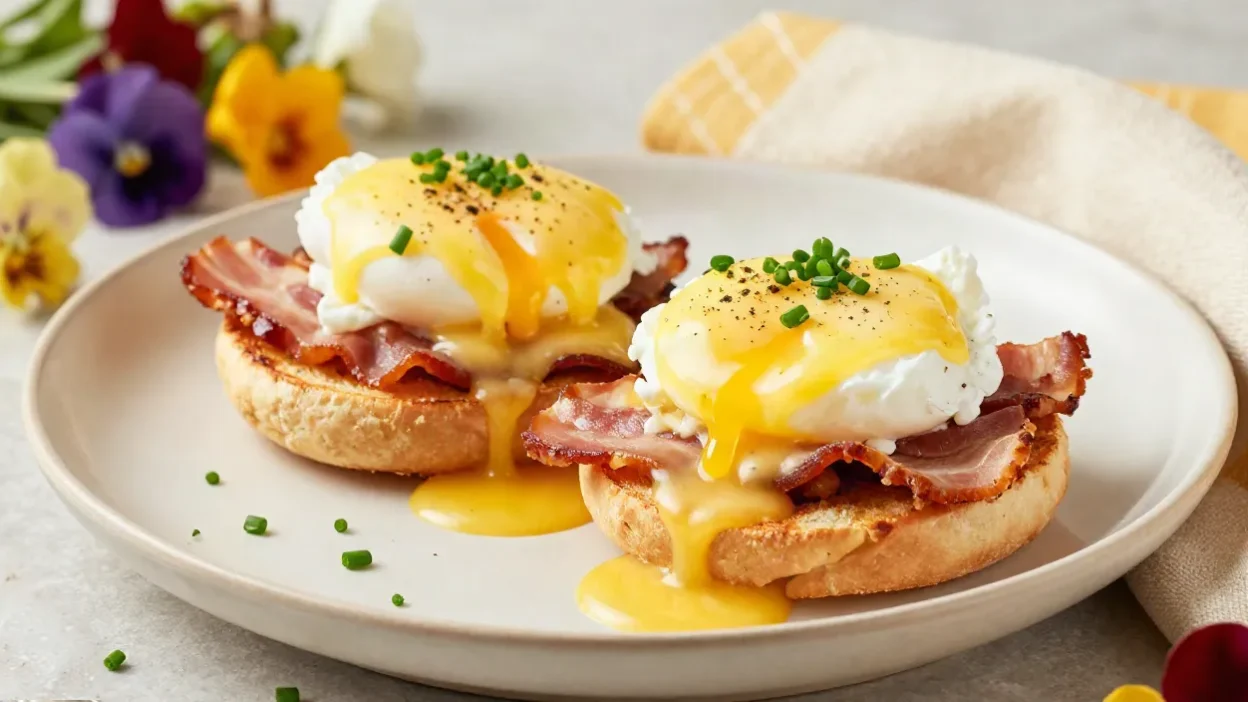
Some breakfasts are made simply to get you through the morning. Others make you want to sit down, take your time, and enjoy every bite. Eggs Benedict definitely belongs in the second category. A toasted English muffin, a slice of warm, savory ham, a perfectly poached egg, and a generous spoonful of buttery hollandaise sauce — it’s a simple combination on paper, but somehow it feels like something you’d order at a lovely little brunch spot on a lazy Sunday.
There’s something almost theatrical about the moment Eggs Benedict arrives at the table. The muffin sits underneath the ham, the poached egg rests on top, and the hollandaise is poured over everything in a smooth, golden layer. It looks elegant without being overly complicated. And then you cut into it. The yolk slowly spills across the muffin, mixing with the sauce and creating that rich, creamy bite that makes this breakfast so memorable. It’s a little messy, perhaps, but that’s part of its charm.
The flavors are familiar, which is probably one reason the dish feels so comforting. The English muffin has a mild, toasted flavor and a slightly chewy texture. The ham adds saltiness and a savory depth, while the egg brings a delicate softness. Hollandaise is rich and buttery, but a little lemon juice gives it a bright, tangy edge. Nothing tastes out of place, and each ingredient has a role to play.
Eggs Benedict is also a breakfast that invites you to slow down. It’s not quite the sort of thing you make while rushing out the door with a cup of coffee in your hand. It feels more suited to a weekend morning, a leisurely brunch, or one of those days when you want to make something a little more thoughtful for yourself or someone else. You can take your time with the preparation, pour another cup of coffee, and enjoy the process instead of treating breakfast as just another task.
And although it often appears on restaurant menus as a polished, almost luxurious dish, the ingredients themselves are wonderfully familiar. Eggs, bread, ham, butter, and lemon are hardly exotic. The special feeling comes from the way they’re prepared and brought together. A few simple components, handled with a little care, can create a meal that feels far more elaborate than the ingredient list might suggest.
Of course, Eggs Benedict does ask for a bit of coordination. The muffins should be toasted, the ham warmed, the eggs poached, and the hollandaise prepared while everything is still at its best. That might sound like a lot when you’re making it for the first time, especially if poaching eggs feels unfamiliar. But there’s no need to rush or aim for restaurant-perfect presentation. Once you understand the basic steps, the process becomes much more manageable.
One of the nicest things about making Eggs Benedict at home is that you can adjust it to suit your own taste. You might prefer a little extra ham, a slightly more lemony hollandaise, or an English muffin toasted until its edges are especially crisp. Some people like to keep the dish traditional, while others enjoy experimenting with different toppings. The classic version is a wonderful place to start, but it doesn’t have to be the only version you ever make.
There’s a reason this breakfast has remained a familiar sight on brunch menus for so long. It combines comfort and indulgence in a way that feels easy to understand. The ingredients are simple, the flavors are balanced, and the finished dish feels like a small occasion. Whether you’re making it for a special morning or just because you’re craving something delicious, Eggs Benedict has a way of making breakfast feel worth sitting down for.
And there’s another little detail that makes this dish especially interesting: it has a history of its own. Eggs Benedict is often associated with New York in the late 19th century, and several stories attempt to explain how it first came together. The accounts differ, and the exact origin remains uncertain, but they add a bit of character to a breakfast that might otherwise seem like a straightforward combination of eggs, bread, and sauce.
So before we get into the recipe, it’s worth taking a moment to look at the stories behind this classic. Because Eggs Benedict isn’t just a dish that looks beautiful on a brunch plate — it’s also a breakfast with a past, a few competing origin stories, and a place in the long tradition of restaurant cooking.
Two New York stories, one famous breakfast 🗽
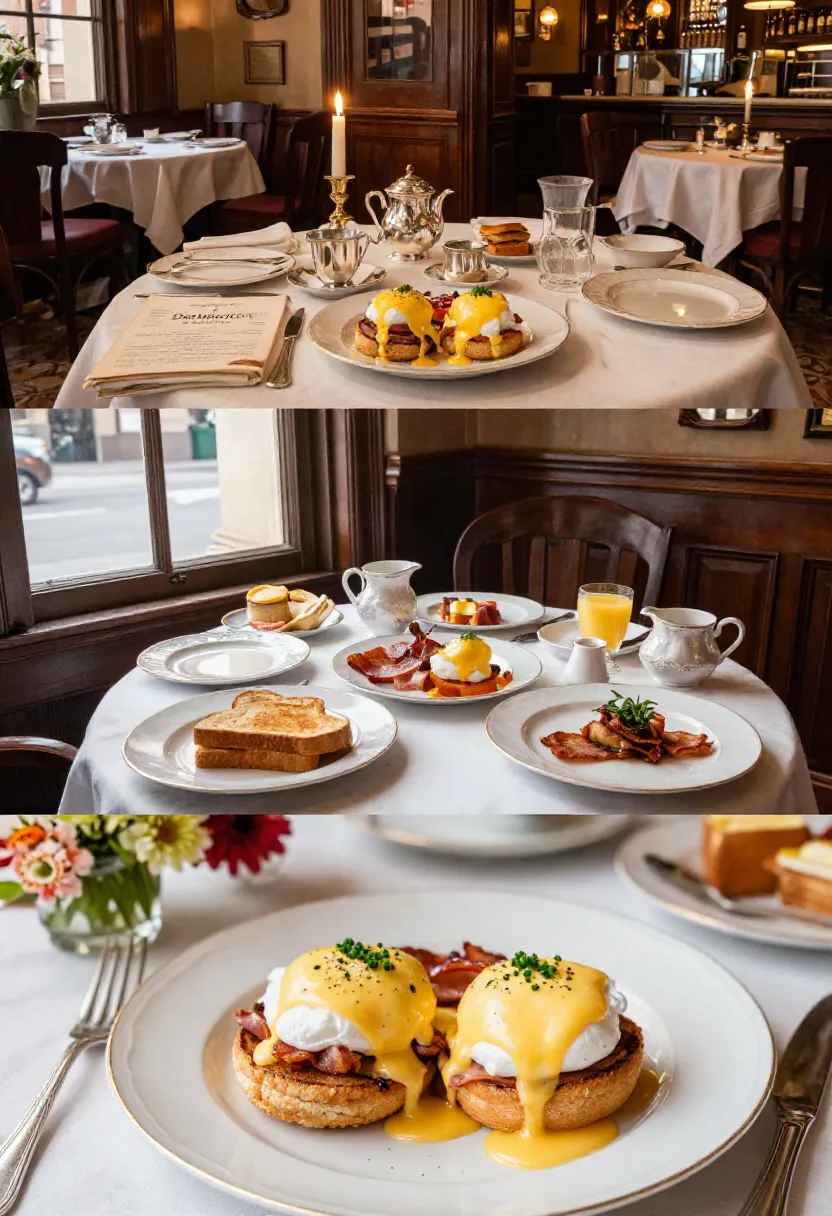
Like many dishes that have been around for generations, Eggs Benedict has more than one origin story. Its beginnings are commonly associated with New York in the late 1800s, but the details vary depending on which account you come across. Two stories appear particularly often: one connected to Delmonico’s restaurant and another involving the Waldorf Hotel. Both are entertaining, though neither should be treated as a completely settled historical fact.
The Delmonico’s story centers on a regular customer named Mrs. LeGrand Benedict. According to the account, she wanted something different from the usual menu, and the restaurant’s chef, Charles Ranhofer, created a dish featuring toasted bread, ham, poached eggs, and hollandaise sauce. Ranhofer later included a recipe called “Eggs à la Benedick” in his cookbook The Epicurean, published in 1894. The resemblance to the name we use today is one reason this version continues to be associated with the dish.
The other story takes us to the Waldorf Hotel, also in New York. In 1894, a retired Wall Street broker named Lemuel Benedict reportedly arrived for breakfast after a night out. He ordered buttered toast, bacon, poached eggs, and hollandaise sauce. The story goes that the hotel’s maître d’hôtel enjoyed the combination and adapted it for the menu, using an English muffin and ham instead.
The details are different, but both stories share a similar setting: New York dining culture at a time when restaurants and hotels were becoming important places for people to enjoy meals outside the home. They also point to a familiar idea in cooking — a dish can develop from a customer’s request, a chef’s improvisation, or a small change to something that already exists.
The two origin stories at a glance
Detail | Delmonico’s story | Waldorf Hotel story |
|---|---|---|
Location | Delmonico’s, New York | Waldorf Hotel, New York |
Person associated with it | Mrs. LeGrand Benedict | Lemuel Benedict |
Approximate period | Late 19th century | 1894 |
What reportedly happened | A customer requested a different dish | A guest ordered toast, bacon, poached eggs, and hollandaise |
Historical connection | Chef Charles Ranhofer and The Epicurean | A hotel maître d’hôtel reportedly adapted the order |
What remains uncertain | Whether this was the original Eggs Benedict | Whether this account describes the dish’s actual creation |
It’s tempting to choose one story and call it the answer, especially when one sounds more convincing than the other. But the history is not quite that tidy. The Delmonico’s account has a connection to Ranhofer’s published recipe, while the Waldorf version has become a popular part of the dish’s origin lore. The available accounts don’t establish beyond doubt which person or restaurant first created the breakfast.
And perhaps the uncertainty is part of the charm. Eggs Benedict has become much bigger than either story. It’s now recognized as a classic brunch dish, with versions appearing on menus far beyond New York. The original details may be debated, but the combination of bread, egg, savory toppings, and hollandaise has clearly stood the test of time.
There’s also something lovely about how the dish has travelled from restaurant stories into home kitchens. It still feels a little luxurious, but the ingredients are simple enough to find in an ordinary grocery store. You can serve it at a special brunch or make it on a quiet weekend morning when you have a little extra time. Either way, you’re taking part in a tradition that has been adapted and enjoyed for generations.
What makes Eggs Benedict so irresistible? 🥚
At first glance, Eggs Benedict seems almost too simple to be such a celebrated breakfast. It usually has just a few main components, and none of them is particularly unusual on its own. But the magic comes from how they work together. The toasted muffin provides a sturdy base, the ham adds a savory layer, the poached egg brings a soft center, and the hollandaise wraps everything in a rich, buttery sauce.
The English muffin might seem like a small detail, but it does a lot of work. When toasted, its cut sides become lightly crisp while the inside stays tender. That texture helps it hold the toppings without becoming completely soggy the moment the sauce and egg are added. You want it warm and golden, not so hard that it’s difficult to cut through with a fork.
The ham — or Canadian bacon in many American-style versions — brings a salty, savory flavor that balances the richness of the egg and sauce. It’s usually warmed before serving, sometimes with a quick sear in a skillet to give it a little color. There’s no need to overcomplicate this part. A few minutes of heat is often enough to make it taste freshly prepared.
Then comes the poached egg, which is arguably the moment everyone waits for. A well-poached egg has a tender white wrapped around a soft yolk. When you cut into it, the yolk flows over the muffin and ham, blending with the hollandaise. That’s what gives the dish its wonderfully rich texture without needing cheese or a heavy filling.
The hollandaise is the final layer, and it’s what makes Eggs Benedict instantly recognizable. Traditionally made with egg yolks, butter, and lemon juice, it’s smooth and rich, with a little acidity to keep the buttery flavor from becoming overwhelming. It should be thick enough to coat the egg, but still soft enough to spoon over the top. When the sauce is made well, it doesn’t overpower the other ingredients; it brings them together.
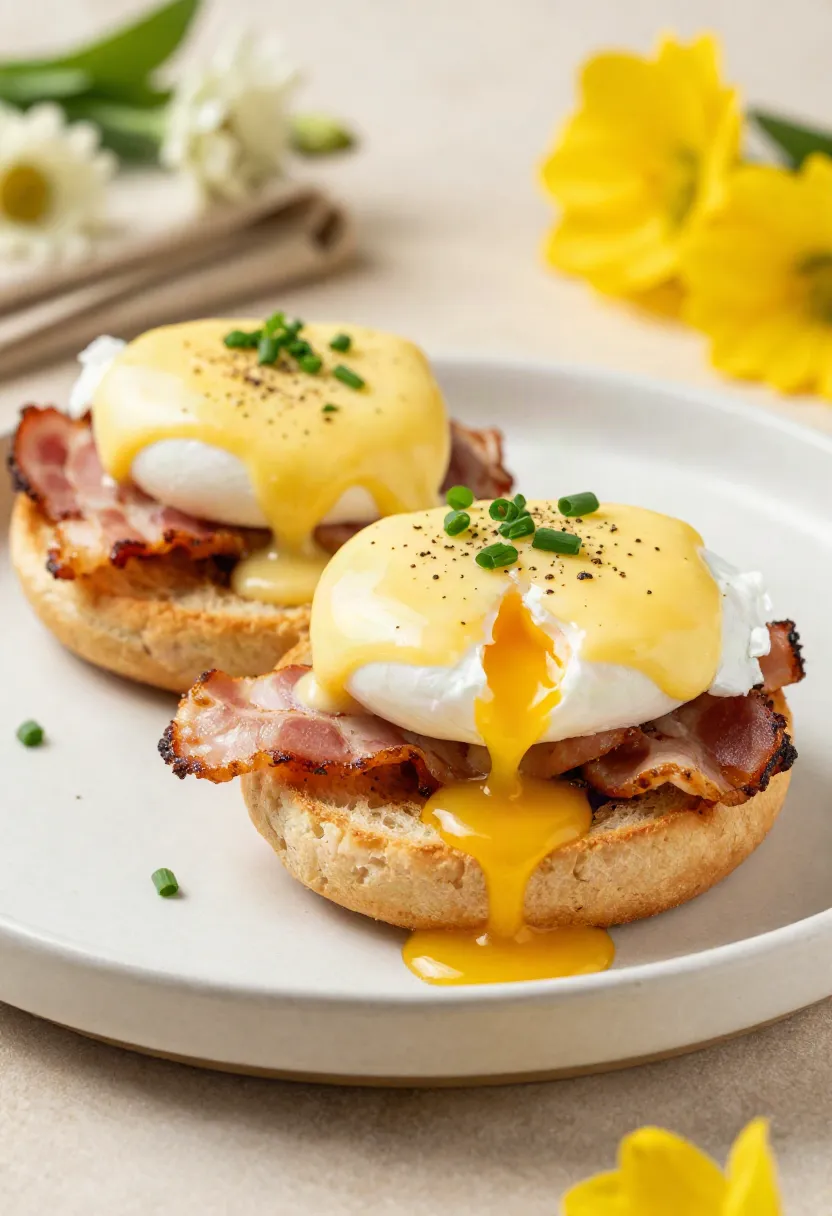
What I particularly like about this dish is the contrast. The muffin has a little crispness, the ham is savory, the egg is delicate, and the sauce is creamy. The lemon adds a fresh note that cuts through the richness, so the final bite doesn’t feel flat or overly heavy. Each ingredient has its own character, but none of them has to compete for attention.
The timing matters, too. Eggs Benedict is best assembled just before serving, while the muffin is still warm, the ham has just been heated, and the eggs are freshly poached. Hollandaise is happiest when it’s warm rather than piping hot, so it’s worth preparing the components with a little coordination. It may sound like a lot at first, but once you’ve made the dish a couple of times, the rhythm becomes easier.
A few small details can make the difference between a good plate and one that feels especially satisfying:
Toast the English muffins shortly before serving so they stay warm and lightly crisp.
Warm the ham in a skillet rather than adding it straight from the refrigerator.
Let poached eggs drain briefly before assembling, so excess water doesn’t thin the hollandaise.
Keep the sauce gently warm, avoiding high heat that could cause it to separate.
Assemble the dish at the last minute to preserve the contrast between the crisp muffin and soft toppings.
You don’t need every layer to look perfect, either. Homemade Eggs Benedict can be a little messy, especially when that yolk breaks and runs across the plate — and honestly, that’s part of the pleasure. The important thing is getting the textures and flavors to work together. Once you understand what each ingredient brings to the dish, it becomes easier to prepare and even easier to enjoy.
Classic Eggs Benedict recipe 🍳
Eggs Benedict is one of those breakfasts that feels wonderfully indulgent without needing a long list of ingredients. A toasted English muffin forms the base, warm ham adds a savory bite, and a softly poached egg brings that lovely golden yolk. The finishing touch is hollandaise sauce — buttery, silky, and brightened with a little lemon juice. When you cut into the egg, the yolk mingles with the sauce and soaks into the muffin. Honestly, that first bite is what makes all the little steps worthwhile.
This homemade version keeps things classic and approachable. The key is to prepare the components in a sensible order and bring them together just before serving, while everything is warm and the sauce is still smooth.
Ingredients
For the Eggs Benedict:
2 English muffins, split in half
4 large eggs
4 slices of ham or Canadian bacon
1 teaspoon white vinegar, for poaching (optional)
Salt and freshly ground black pepper, to taste
Chopped chives or parsley, for garnish (optional)
For the hollandaise sauce:
3 large egg yolks
½ cup (115 g) unsalted butter, melted
1 tablespoon fresh lemon juice, plus more to taste
1 tablespoon warm water, if needed
A small pinch of salt
A pinch of cayenne pepper, optional

Instructions
1. Prepare the hollandaise ingredients. Separate the eggs, placing the yolks in a heatproof bowl. Melt the butter and let it cool slightly so it is warm but not piping hot. Squeeze the lemon juice and keep it nearby.
2. Make the hollandaise sauce. Set the bowl of egg yolks over a saucepan containing gently simmering water. Make sure the bottom of the bowl does not touch the water. Whisk the yolks until they become slightly lighter and begin to thicken. Slowly drizzle in the melted butter while whisking continuously. Add the butter gradually rather than all at once, giving the sauce time to emulsify. Stir in the lemon juice and a pinch of salt. If the sauce is too thick, whisk in a little warm water until it reaches a smooth, pourable consistency. Add cayenne if you like a gentle hint of heat.
3. Keep the sauce warm. Remove the bowl from the heat and cover it loosely. Set it somewhere warm while you prepare the remaining ingredients. Hollandaise is delicate, so avoid letting it get too hot or placing it directly over a strong heat source.
4. Toast the English muffins. Split the muffins and toast them until their cut sides are golden and lightly crisp. You can use a toaster or place them under a grill. Arrange the toasted halves on serving plates, cut side up.
5. Warm the ham. Heat a skillet over medium heat. Add the ham slices and cook for about 1–2 minutes per side, just until warmed through and lightly browned around the edges. Place one slice on each toasted muffin half.
6. Poach the eggs. Fill a wide saucepan with water and bring it to a gentle simmer. Add the vinegar if using. Crack each egg into a small cup first, then carefully slide it into the water. Cook for about 3–4 minutes, or until the whites are set while the yolks remain soft. If cooking several eggs at once, leave enough space between them so they don’t stick together.
7. Drain the eggs. Lift each egg out with a slotted spoon and let it drain briefly over the pan or on a clean paper towel. This helps prevent excess water from thinning the hollandaise.
8. Assemble the Eggs Benedict. Place one poached egg on each ham-topped muffin half. Spoon warm hollandaise over the eggs, letting a little sauce run down the sides. Finish with freshly ground black pepper and chopped chives or parsley, if desired.
9. Serve immediately. Bring the plates to the table while the muffins are still warm, the eggs are soft, and the sauce is silky. Eggs Benedict is best enjoyed freshly assembled, when all the textures come together.
A few helpful tips ❤️
Keep the water at a gentle simmer. Vigorous boiling can break apart the egg whites and make poaching more difficult.
Use fresh eggs when possible. Their whites tend to hold together better in the water.
Add the butter slowly. Pouring it in gradually while whisking helps the hollandaise become smooth and creamy.
Don’t let the sauce overheat. Too much heat can cause it to separate or become grainy.
Make the components in advance only where practical. You can prepare the ingredients and toast the muffins close to serving time, but poach the eggs and finish the sauce shortly before assembling for the best texture.
A brunch classic you’ll want to make again 🍳
There’s a reason Eggs Benedict continues to feel special, even after all these years. It takes a handful of familiar ingredients and turns them into a breakfast that feels thoughtful, comforting, and just a little indulgent. The toasted English muffin, warm ham, softly poached egg, and buttery hollandaise each bring something different to the plate. None of the ingredients is particularly complicated on its own, but together they create a combination that feels like much more than an ordinary breakfast.
For me, the real charm is in the way the dish changes with every bite. At first, you get the slightly crisp muffin and savory ham, followed by the delicate egg white and that rich, golden yolk. Then comes the hollandaise, with its buttery flavor and gentle hint of lemon. When everything mixes together, the result is creamy, savory, and wonderfully satisfying. It’s the kind of breakfast where you don’t mind taking a little extra time at the table.
Of course, Eggs Benedict does require a bit more attention than scrambled eggs or a bowl of oatmeal. You’re preparing several components, and the timing matters if you want everything to arrive at the table warm. But I wouldn’t let that discourage you. The recipe is built around straightforward techniques, and once you’ve tried it a couple of times, the process becomes much easier to manage. You’ll start to find your own rhythm, whether you make the hollandaise first or prepare the eggs while the muffins are toasting.

Your first attempt doesn’t need to look like a restaurant plate, either. Maybe one egg spreads a little more than you expected, or the sauce turns out thicker than planned. That’s perfectly fine. The most important thing is that the eggs are cooked the way you like them, the muffins have a little crunch, and the sauce tastes rich and fresh. A delicious homemade breakfast doesn’t need to be picture-perfect.
Eggs Benedict is also a lovely recipe to keep in mind for occasions when you want to make breakfast feel more thoughtful. It works beautifully for a slow weekend brunch, a birthday morning, a holiday breakfast, or a cozy meal for two. You can prepare the ingredients ahead of time, set everything out, and enjoy the cooking process without turning the morning into a stressful kitchen project.
And once you’ve mastered the classic version, it becomes a useful starting point for other brunch ideas. You might swap the ham for smoked salmon, add sautéed spinach, or try mushrooms for a more earthy flavor. The basic combination of toasted bread, poached eggs, and hollandaise is wonderfully adaptable, so you can keep returning to it while changing a few details depending on what you have in the fridge.
What makes this dish worth learning is that it offers both comfort and a little sense of occasion. It’s familiar enough to feel satisfying, but special enough that you might not make it every day. And sometimes, that’s exactly what makes a recipe memorable: not that it’s difficult or extravagant, but that it gives you a reason to slow down and enjoy a meal.
Make it your own ❤️
The traditional combination of English muffin, ham, poached eggs, and hollandaise is a wonderful place to start, but Eggs Benedict is also one of those dishes that welcomes a little creativity. The basic structure is simple: a toasted base, something savory, a soft poached egg, and a rich sauce. Change one of those layers, and you can give the breakfast a completely different personality without losing what makes it recognizable.
If you’re making Eggs Benedict for the first time, I’d suggest trying the classic version before experimenting too much. It helps you understand how the flavors and textures work together. Once you know what you enjoy about the original, it becomes easier to decide whether you want something fresher, smokier, more substantial, or a little more vegetable-forward.

A few delicious ways to change things up
Eggs Florentine: Replace the ham with sautéed spinach. The greens bring a fresh, slightly earthy flavor that works beautifully with the creamy hollandaise. You can use fresh spinach, cook it briefly in a skillet, and season it lightly with salt and pepper before adding it to the muffin.
Smoked salmon Benedict: Swap the ham for smoked salmon if you enjoy a more delicate, savory flavor. The salmon pairs especially well with lemon, so a little extra brightness in the hollandaise can be a lovely finishing touch.
Mushroom Benedict: Use sautéed mushrooms for a hearty, earthy variation. Brown them in a skillet until they release their moisture and develop a little color. Their savory flavor makes this version feel substantial, even without ham.
Avocado Benedict: Add slices of ripe avocado beneath the poached egg or alongside the ham. It brings a creamy texture and a fresh flavor, although you may want to use a slightly lighter hand with the hollandaise so the dish doesn’t become too rich.
A little spicy: If you enjoy some heat in the morning, add a pinch of cayenne pepper to the hollandaise or finish the plate with a few drops of your favorite hot sauce. Start small, especially if you want the lemon and butter flavors to remain noticeable.
You can also adjust the smaller details. A sprinkle of chopped chives adds a mild onion flavor and makes the finished plate look fresh. Parsley works well, too, especially if you want something simple. A little freshly ground black pepper gives the eggs a gentle bite, while a few extra drops of lemon juice can brighten the sauce.
The bread is another place where you can experiment. English muffins are the familiar choice, but some people enjoy using toasted sourdough or another sturdy bread. If you go that route, choose something that can hold the egg and sauce without becoming too soft immediately. A good base should support the toppings while still being easy to cut with a fork.
You don’t have to change everything at once. In fact, it’s often more enjoyable to make one small adjustment and see how you like it. Try spinach one weekend, mushrooms the next, or simply add a little more lemon to the sauce. Eggs Benedict is rich enough to feel like a treat, but flexible enough to suit different tastes and occasions.
One thing I’d keep in mind is balance. Hollandaise already brings plenty of buttery richness, so toppings with freshness, acidity, or a little earthy flavor can help round out the plate. If you’re adding something creamy, like avocado, you may prefer a smaller amount of sauce. If you’re using smoked salmon, a touch of lemon and fresh herbs can keep the flavors lively.
And if you’re cooking for more than one person, variations are a fun way to make brunch feel a little more personal. You can prepare the same muffin-and-egg base, then offer different toppings so everyone can choose what they like. It’s a relaxed approach that feels generous without requiring you to prepare several completely different meals.
A little indulgence for your morning table ✨
Eggs Benedict may have its roots in restaurant dining, but it doesn’t need to stay a restaurant-only treat. Making it at home gives you the chance to enjoy the dish at your own pace, whether you’re preparing a relaxed brunch for friends, a special breakfast for two, or simply something delicious on a quiet morning.
There’s something lovely about bringing a plate of freshly made Eggs Benedict to the table. The muffins are still warm, the hollandaise is soft and golden, and the poached eggs are waiting to be cut open. It’s not the sort of breakfast that needs much decoration. A little chopped chive, a few twists of black pepper, and perhaps some fresh fruit on the side are more than enough.
It also makes a nice change from the breakfasts we tend to repeat without thinking. Toast, cereal, yogurt, and scrambled eggs all have their place, of course, but every now and then it’s enjoyable to make something that asks for a little more attention. Eggs Benedict is a good example of how a few familiar ingredients can feel different when you prepare them with care.

If you’re serving it for brunch, you can keep the rest of the meal fairly simple. Fresh fruit, a light green salad, roasted tomatoes, or a few sautéed mushrooms can sit alongside the eggs without competing with the hollandaise. Coffee, tea, or freshly squeezed juice completes the table nicely. There’s no need to prepare an enormous spread when the main dish already feels so satisfying.
For a slower morning, you might even make the preparation part of the occasion. Set out the ingredients, put on some music, and take your time with the sauce and eggs. If you’re cooking with someone else, one person can toast the muffins and warm the ham while the other takes care of the hollandaise. It can turn an ordinary breakfast into a small shared activity rather than a rushed job.
Of course, homemade Eggs Benedict can be a little unpredictable, especially at first. Hollandaise may need a splash of warm water to loosen it, or a poached egg may not look quite as neat as the ones you see in restaurant photos. Don’t worry too much about that. The dish is meant to be eaten warm and enjoyed, not admired from across the room for ten minutes while it gets cold.
The best approach is to prepare the components with a little care and assemble everything just before serving. That way, the muffin keeps some of its crispness, the egg stays tender, and the sauce remains smooth. If you’re making several portions, it helps to have your plates ready and your toppings organized before you start poaching the eggs. A little preparation makes the final few minutes much less hectic.
And remember, Eggs Benedict is not limited to special occasions. You might make it for a birthday or holiday breakfast, but it can also be a lovely weekend treat simply because you feel like it. There’s no rule saying you need a celebration to enjoy a plate of warm muffins, poached eggs, and buttery sauce.
So the next time you’re craving a breakfast that feels a little more memorable, give Eggs Benedict a try. It has an interesting history, a satisfying combination of flavors and textures, and plenty of room for your own favorite variations. Whether you keep it traditional or add a new topping, it’s a classic that makes a morning feel just a bit more special.