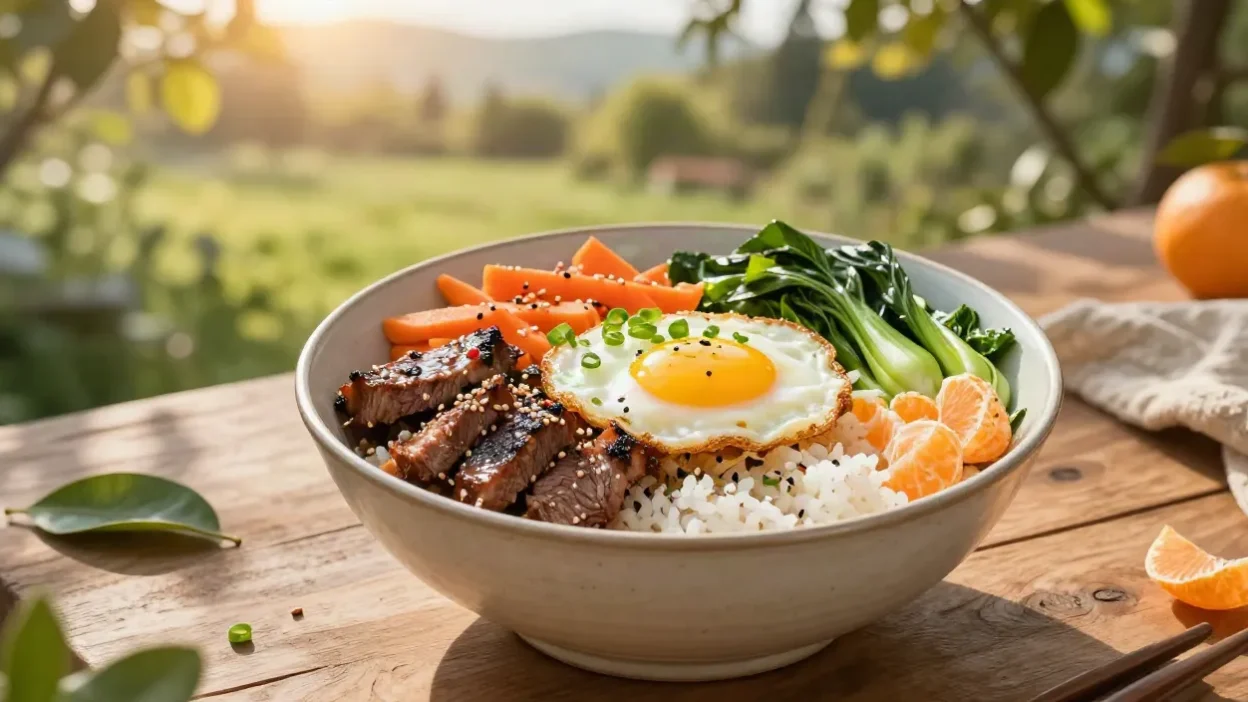
Some meals are good because they are simple. Others are good because every bite seems to bring something slightly different to the table. This Korean beef rice bowl definitely belongs in the second category.
At first glance, it looks like a fairly straightforward bowl of rice, beef, vegetables, and an egg. But once you get into it, there is much more happening. The beef is thinly sliced and marinated in a mixture of mandarin juice and zest, ginger, garlic, chili, honey, and soy sauce, so it comes out savory, lightly sweet, citrusy, and wonderfully fragrant. Then there is charred baby bok choy, a fresh carrot and sesame salad, steamed rice, and a fried egg with a soft golden yolk.
Honestly, that is a lot of personality for one bowl.
What I particularly like is that none of the components feel unnecessary. The rice gives you something warm and neutral to soak up all those juices. The beef brings the deeper savory flavor, while the mandarin keeps it from becoming too heavy. Bok choy adds that slightly smoky, tender-crisp element, and the carrot salad brings freshness and crunch right when you need it.
Then the egg gets involved.
A fried egg might seem like a small addition, but once that yolk breaks over the warm rice and beef, it becomes part of the sauce almost instantly. You get creamy richness without needing to make another dressing or complicated topping. A handful of spring onion curls over the top finishes everything with a fresh bite.
The beauty of a bowl like this is that you can eat a little bit of everything with each forkful. A piece of beef, some rice, carrot, bok choy, and a little egg yolk. Then another bite that is heavier on the vegetables. Then, inevitably, you go back for the beef because that mandarin marinade has done its job.
It is filling, but it does not feel weighed down.
And that balance is probably what makes this recipe so appealing. There are several flavors and textures happening at once, but the bowl still feels coherent rather than busy. The citrusy marinade ties the savory elements together, while the fresh vegetables keep the whole thing bright.
It is the sort of dinner that looks impressive once everything is arranged in the bowl, even though most of the individual components are surprisingly uncomplicated.
The secret is in the mandarin marinade 🍊
The most unexpected ingredient in this bowl is probably the mandarin.
You might expect soy sauce, ginger, garlic, or chili in a beef marinade like this one. Mandarin is a little less obvious, and that is exactly why it works so well. The recipe uses both the finely chopped rind and the juice, which gives the beef a much more noticeable citrus character than juice alone would provide.
There is sweetness from the mandarin and honey, saltiness from the soy sauce, warmth from ginger and chili, and a gentle savory depth from the garlic. Together, they create a marinade that manages to be bright without tasting like a sweet sauce.
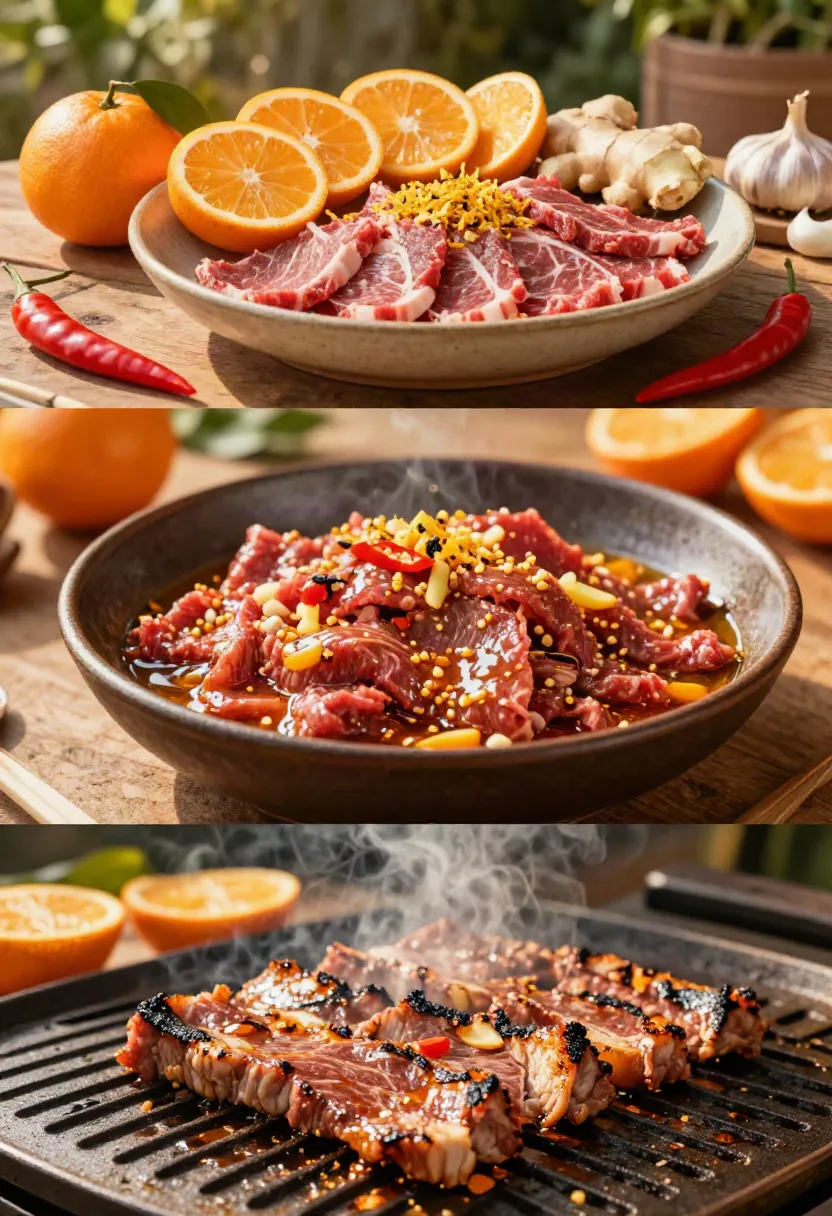
The beef is cut very thinly against the grain before marinating. That detail matters more than it might seem. Thin slices absorb the marinade quickly, and cutting against the grain helps keep the cooked beef tender rather than chewy. The original recipe then uses a quick, high-heat char-grill, cooking the beef in batches for only about 30 seconds per side to develop those little grilled edges while keeping the meat around medium-rare.
There is also a useful little rhythm to the marinade itself. Part of it goes onto the beef before cooking, while the rest is reserved for finishing the cooked meat and the bok choy. That means the citrus, ginger, garlic, and soy flavors show up in more than one place instead of disappearing entirely into the cooking process.
| Ingredient | What it tastes like | Why it matters here |
|---|---|---|
| Mandarin | Sweet, juicy, citrusy | Brightens the beef and adds a fresh twist |
| Soy sauce | Salty, savory, deeply seasoned | Gives the marinade its savory backbone |
| Ginger | Warm, fresh, slightly peppery | Adds fragrance and a little heat |
| Garlic | Savory and aromatic | Makes the marinade fuller and deeper |
| Birdseye chili | Fresh, sharp heat | Keeps the sweetness from becoming too obvious |
| Honey | Mild, rounded sweetness | Balances the soy and citrus |
| Sesame oil | Toasted and nutty | Gives the carrot salad a distinctly Asian-inspired finish |
One thing I would not rush is the marinating time. The beef needs at least an hour in the refrigerator, and that gives the thin slices plenty of opportunity to pick up the flavor. It is also a good time to get the other ingredients ready, because once the grill is hot, the beef cooks remarkably quickly.
That quick cooking is important, too. You want those slightly charred edges without turning the slices dry. Because the pieces are so thin, there is not much room between beautifully grilled and overcooked. A hot grill and small batches make a big difference.
And once the beef comes off the grill, give it a couple of minutes to rest before cutting it into bite-sized pieces. It is a tiny pause, but it gives you a chance to finish the bok choy and carrot salad while the meat settles.
The result is beef that tastes much more layered than the ingredient list might suggest. You get the first hit of savory soy, then the sweetness and acidity of mandarin, followed by ginger, garlic, and a little chili warmth. It is bright enough to keep you reaching for another bite, which, to be fair, is exactly what a good rice bowl should do.
Why the vegetables are doing more work than you think 🌿🥕
It would be easy for the beef to become the entire focus of this bowl. It has the marinade, the charred edges, and all those bold flavors. But the vegetables are what keep the dish from becoming too rich.
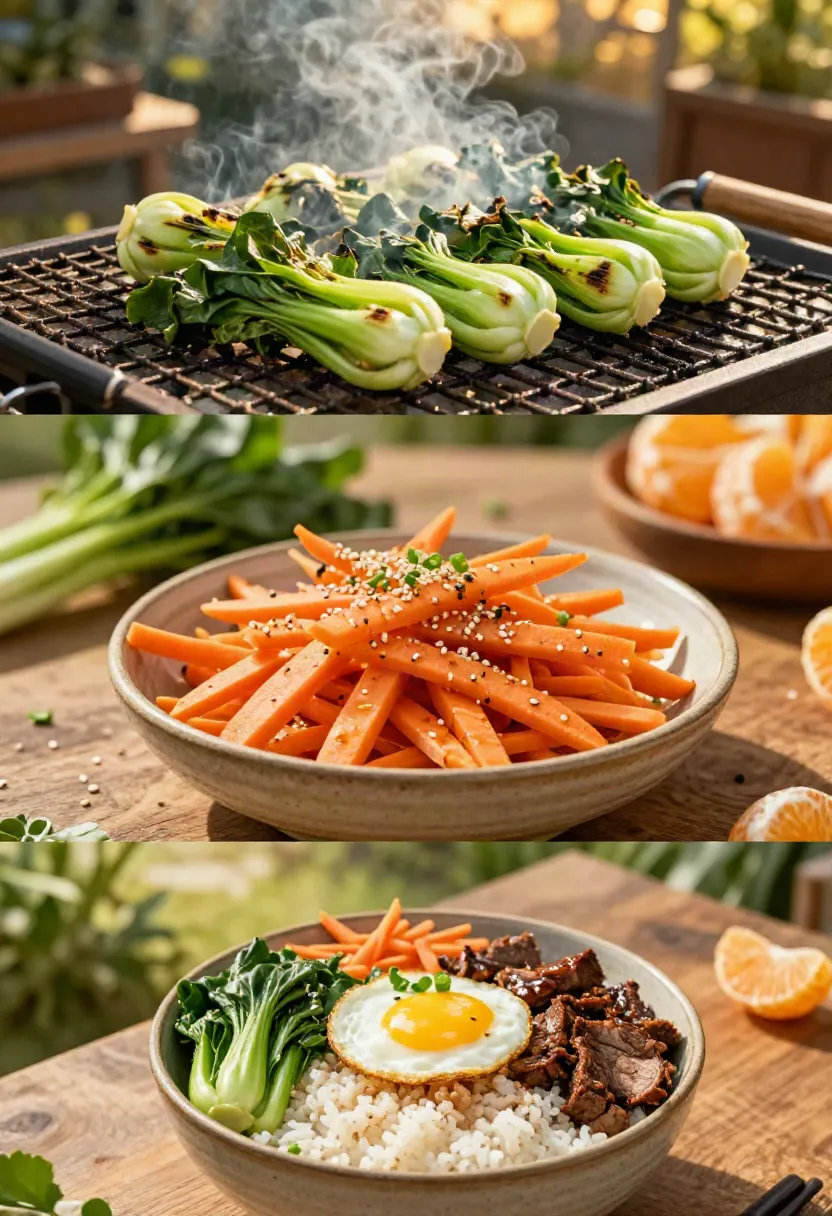
The baby bok choy is quickly char-grilled rather than simply boiled or steamed. That gives the leaves a tender texture while adding little smoky marks to the surface. It is cooked for roughly a minute on each side, just long enough to develop those grill marks, and then the cores are removed before the bok choy is tossed with some of the reserved mandarin mixture.
That last step is worth noticing. The vegetables are not just there for color. They pick up the same citrusy, savory flavors as the beef, so they actually connect the different parts of the bowl.
Then comes the carrot salad, which is almost comically simple: carrots cut into thin matchsticks, toasted sesame seeds, and sesame oil. But that simplicity is useful here. The carrots stay raw and crisp, giving you a completely different texture from the tender beef, soft rice, and cooked bok choy.
This is one of those cases where you really do not need to add more ingredients just for the sake of it.
The bowl already has a nice progression:
- soft, fluffy rice underneath;
- tender beef with lightly charred edges;
- juicy, smoky bok choy;
- crisp carrot and toasted sesame;
- creamy fried egg on top;
- fresh spring onion to finish.
And then there is the contrast in temperature. The rice and beef are warm, the vegetables are freshly cooked, while the carrot salad stays cool and crisp. It makes the bowl feel much more dynamic than a plate where everything has the same texture and temperature.
The carrot salad also has a quiet little trick of its own. Toasted sesame seeds bring nuttiness without making the salad heavy, while sesame oil gives the carrots a deeper aroma. You only need two teaspoons of sesame seeds and sesame oil for the amount used in this recipe, but that is enough to make the carrots taste like an intentional part of the dish rather than something added because the bowl needed another vegetable.
I think that is the real strength of this recipe. Nothing is especially complicated on its own. The magic happens when everything lands in the same bowl.
The sweet citrus beef needs something fresh beside it. The crisp carrots need something warm. The rice needs all those flavorful juices. The bok choy needs the brightness of the mandarin mixture. And the fried egg brings the creamy richness that ties the whole thing together.
Suddenly, what looked like a simple beef-and-rice dinner has become a proper little meal with layers of flavor, texture, and color.
Korean beef rice bowl 🍚🥢
This Korean beef rice bowl is one of those meals where every part brings something different to the finished dish. You have warm, fluffy rice underneath, thin slices of beef quickly cooked over high heat until the edges are lightly charred, and a mandarin marinade that brings together savory soy sauce, fresh ginger, garlic, honey, and a little birdseye chili. The citrus gives the beef a bright flavor that keeps the marinade from feeling too heavy or overly sweet.
But the beef is only part of what makes this bowl so good. Char-grilled baby bok choy adds a smoky, slightly crisp vegetable element, while the carrot and sesame salad brings freshness, crunch, and a little nuttiness. Everything is arranged over the rice rather than mixed together, so you get a different combination with every bite.
And then there is the fried egg.
A soft yolk sitting on top might look like a simple finishing touch, but once you break it open, it runs into the warm rice and beef and creates a rich, creamy sauce of its own. Spring onion curls add a fresh final note, while the sesame and mandarin flavors keep the whole bowl bright and aromatic.
The recipe does involve a few separate components, but none of them are particularly complicated. The beef does most of its work while it marinates, the vegetables cook quickly, and the rice can be prepared while you get everything else ready. Once the grill is hot, the beef only needs a short cooking time, which means the final assembly comes together surprisingly fast.
The best way to eat it is to dig right through the bowl and get a little of everything on your fork — tender beef, fluffy rice, crisp carrot, smoky bok choy, and some of that golden egg yolk. It is colorful, filling, and full of contrasting textures without feeling overly heavy.
Ingredients
For the beef marinade:
- 500 g beef fillet, very thinly sliced against the grain
- 1 mandarin, finely chopped rind and juice
- 2 tsp fresh ginger, finely grated
- 2 garlic cloves, finely chopped
- 1 birdseye chili, finely chopped
- 1 tbsp honey
- 2 tbsp soy sauce
For the bowl:
- 2 baby bok choy, halved lengthways
- 2 carrots, cut into thin matchsticks
- 2 tsp sesame seeds, toasted
- 2 tsp sesame oil
- 4 cups steamed rice
- 4 eggs
- 2 spring onions, cut into thin curls
- Extra soy sauce, if needed
Instructions
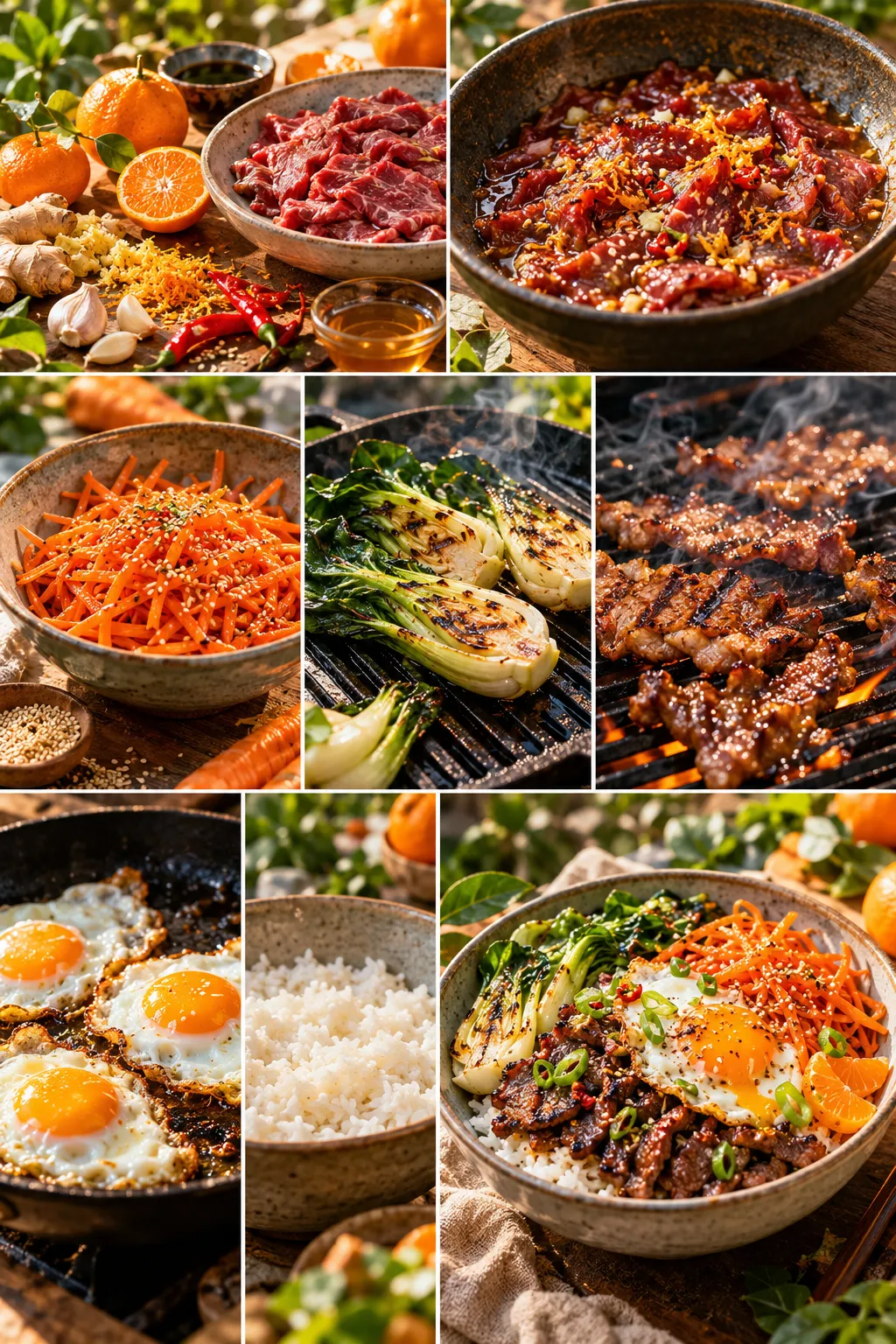
- Place the thinly sliced beef in a bowl. Add the mandarin rind and juice, grated ginger, garlic, chopped chili, honey, and soy sauce. Toss thoroughly so every piece of beef is coated in the marinade. Cover and refrigerate for at least 1 hour.
- While the beef is marinating, prepare the vegetables. Cut the carrots into thin matchsticks and set them aside. Toast the sesame seeds in a dry pan until lightly golden and fragrant, then allow them to cool.
- Combine the carrots with the toasted sesame seeds and sesame oil. Toss gently and set aside while you finish the rest of the bowl.
- Prepare the rice and keep it warm. The rice should be ready before you start grilling the beef, as the remaining components cook quite quickly.
- Heat a char-grill or heavy grill pan until very hot. Cook the baby bok choy cut-side down for about 1 minute, then turn and cook briefly on the other side. You want the leaves tender with visible charred marks while the thicker stems retain a little bite.
- Remove the bok choy from the grill. Toss it gently with some of the reserved mandarin marinade, making sure it is lightly coated.
- Grill the marinated beef in small batches. Because the slices are very thin, they only need around 30 seconds per side over high heat to develop a little char while staying tender. Avoid overcrowding the grill, as too much moisture will prevent the beef from browning properly.
- Transfer the cooked beef to a plate and allow it to rest for a couple of minutes. Cut the larger pieces into bite-sized portions if necessary.
- Fry the eggs in a little oil until the whites are cooked and the edges are lightly crisp while the yolks remain soft. The runny yolk will become part of the sauce when the bowl is assembled.
- Divide the steamed rice between four bowls. Arrange the grilled beef, charred bok choy, and sesame carrot salad around the rice.
- Place a fried egg on top of each bowl and finish with curls of spring onion. Add a little extra soy sauce if desired and serve immediately while the rice and beef are still warm.
Tips for a better bowl
- Slice the beef very thinly and against the grain. This makes a noticeable difference to the final texture.
- Keep the grill extremely hot and cook the beef in batches so it chars instead of steaming.
- Do not skip the mandarin rind. The zest brings a much more concentrated citrus aroma than the juice alone.
- Keep the carrot salad crisp by preparing it shortly before serving.
- Leave the egg yolks soft if you can. Once broken over the hot rice, they add a rich, creamy finish to the bowl.
- If you prefer less heat, reduce the birdseye chili rather than removing the ginger or mandarin. The chili should add warmth, not overpower the citrusy marinade.
Serve the bowls immediately, while the rice is fluffy, the beef is still warm, and the egg yolk is ready to run into everything underneath it. The best bite is usually a little bit of all of it at once — rice, beef, carrot, bok choy, and that golden yolk.
The kind of dinner that fixes the boring day 🥢✨
There are evenings when you want to cook, but you do not necessarily want to make a whole production out of dinner. You want something that feels like a proper meal, something warm and satisfying, but the idea of washing half the kitchen afterwards is not exactly inspiring.
That is where a bowl like this comes in.
You open the refrigerator, look at what you have, and the idea of making several separate things sounds slightly ridiculous. But then you remember that a good bowl does not really work that way. A few ingredients can become something much more interesting once they are given different textures and a little contrast.
That is exactly what happens here.
The beef is bold and fragrant, the rice is soft and comforting, the carrots are cool and crisp, the bok choy brings a little char, and the egg adds that rich, almost luxurious finish. None of these things needs to dominate the bowl. They simply make the other ingredients taste better.
And because the beef is marinated with mandarin, ginger, garlic, soy, honey, and chili, there is a brightness running through the whole thing that keeps the bowl from feeling too heavy. You get those deeper savory flavors first, then a little sweetness, citrus, and warmth in the background. It is the kind of combination that makes you take another bite before you have really decided whether you are hungry for it.
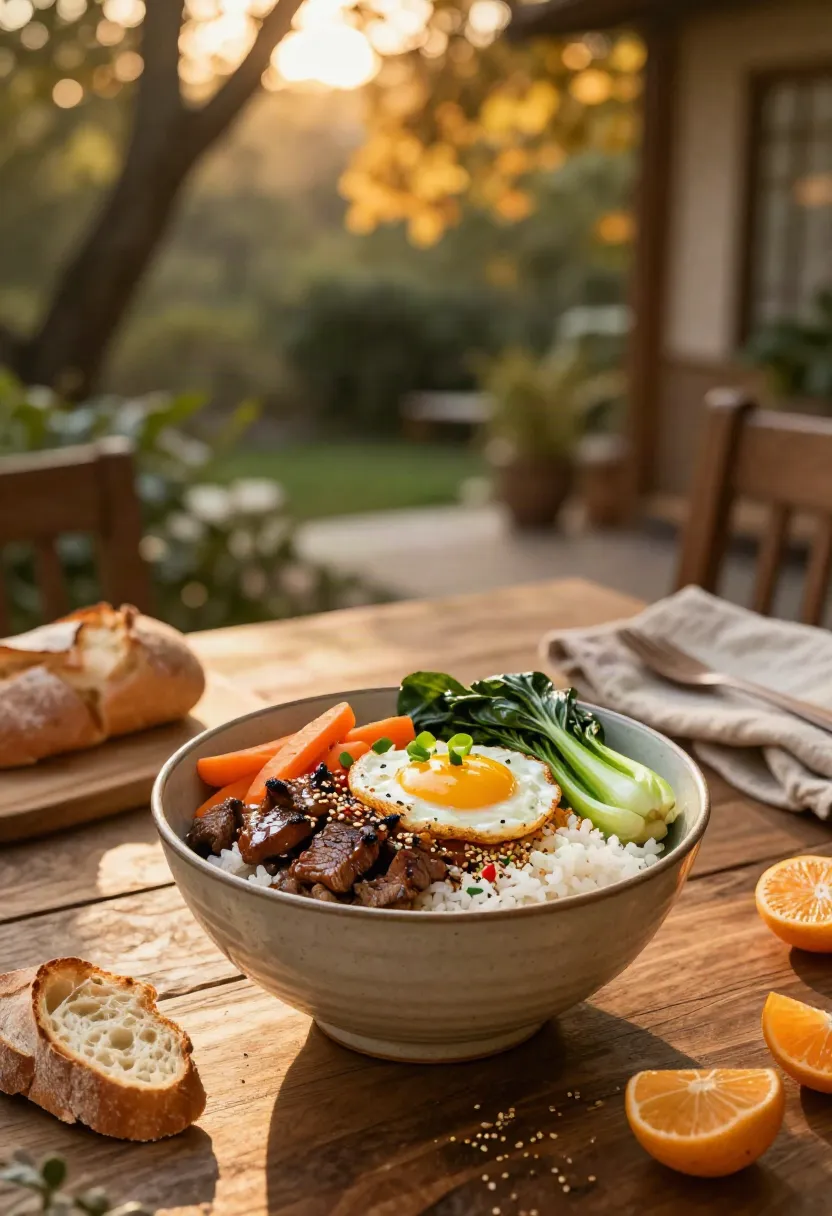
I think that is why rice bowls are so good on ordinary evenings. They have enough going on to keep dinner interesting without asking you to create a complicated menu. You can eat slowly and pick your way through all the different textures, or mix everything together until the egg yolk and beef juices coat the rice.
Either way, the result feels considerably more exciting than the amount of effort would suggest.
There is also something wonderfully forgiving about the way this bowl comes together. The rice does not need any attention once it is cooked. The carrot salad takes only a few minutes. The bok choy needs just enough time on the grill to pick up some color, and the beef cooks remarkably quickly because it is sliced so thinly.
So even though the finished bowl looks like you have carefully assembled a dozen different things, the actual cooking is much more manageable.
And there is something especially satisfying about sitting down with a bowl that looks this colorful. The bright orange carrot, green bok choy, golden egg, dark caramelized beef, and white rice almost make the meal feel cheerful before you have taken the first bite.
Sometimes that is enough.
A grey, ordinary evening suddenly has a little more color. Dinner feels less like something you have to get through and more like something you actually want to sit down and enjoy.
One bowl, several little surprises 🍊🍳
The fun part of this recipe is that the best bites are not necessarily the ones you expect.
Maybe you get a piece of beef with a slightly charred edge, followed by a crunchy strand of sesame-coated carrot. Maybe the next forkful catches some runny egg yolk, which disappears into the rice and changes the whole texture. Then you find a piece of bok choy that has picked up a little of the mandarin marinade and tastes smoky, savory, and unexpectedly fresh.
It is almost like the bowl keeps changing as you eat it.
That is something I really enjoy about meals built this way. A plate with one main component tends to give you a fairly predictable bite from beginning to end. Here, you are constantly deciding what to combine. More beef this time. More carrot next time. A little extra egg yolk. A bite that is mostly rice and bok choy.
You are technically eating the same dinner, but it never feels exactly the same.
The textures are a big part of that. The rice is soft enough to catch all the flavorful juices, but the carrots give you something crisp to bite through. The bok choy is tender around the leaves while still keeping some structure through the stems, and the beef has those slightly browned edges that make each piece more interesting.
Then there is the egg, sitting somewhere between everything.
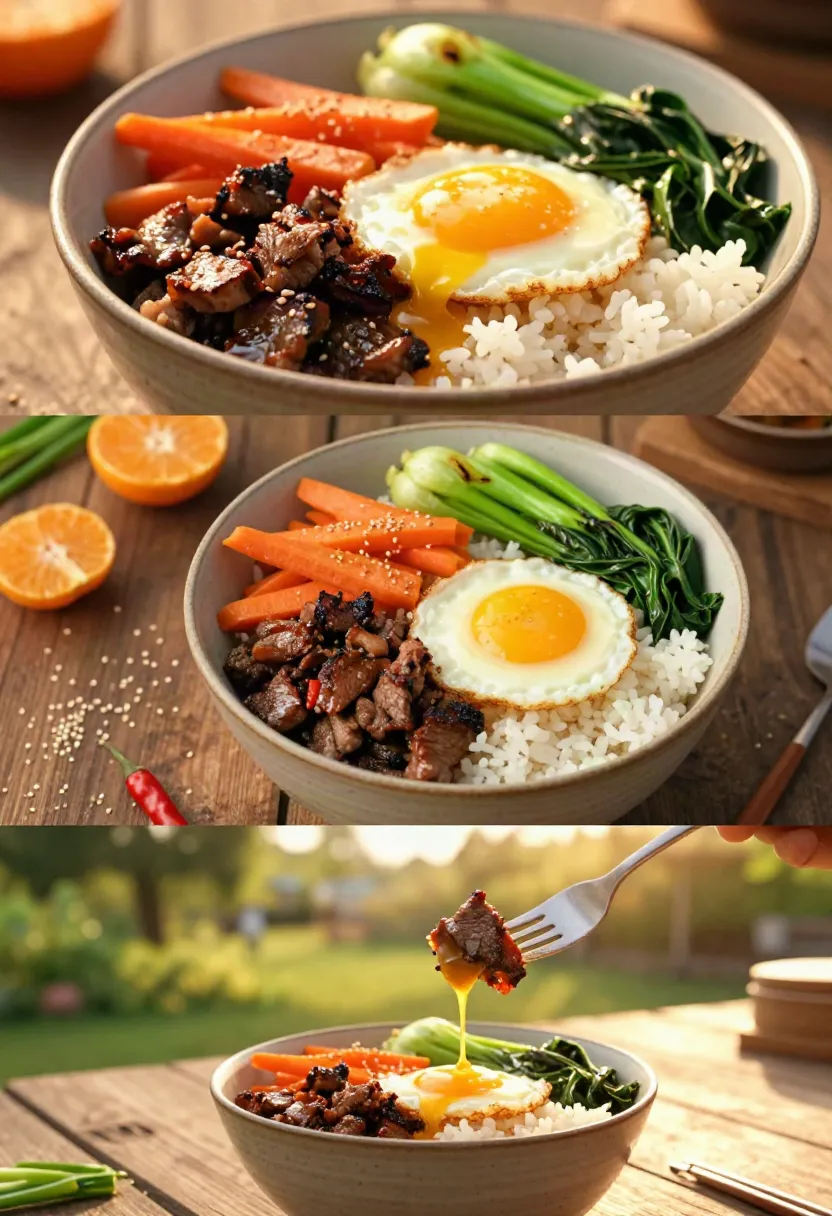
Once the yolk breaks, it changes the character of the bowl almost immediately. The rice becomes richer, the beef tastes even more savory, and the vegetables get coated in that creamy golden sauce. It is such a small addition, but it changes the whole experience of eating the dish.
The mandarin helps with that, too. It is not the loudest flavor in the bowl, yet you notice it in the background. There is a little sweetness, a little acidity, and a fresh citrus aroma underneath the deeper soy, ginger, garlic, and chili flavors.
It gives the beef a lighter personality.
Without it, the bowl could easily become rich and heavy. With it, everything feels a little brighter. The citrus also creates a nice bridge between the savory beef and the fresh vegetables, which is why the separate components taste so natural together once they are finally in the same bowl.
And then the egg does what eggs do best: makes everything feel slightly more indulgent than it actually is.
There is no complicated sauce to prepare. No elaborate garnish. Just a soft yolk breaking over warm rice and finding its way into the beef and vegetables.
I also like that you can control how much of each flavor reaches your fork. If you want a bite that feels fresh, go heavier on the carrot and bok choy. If you are in the mood for something richer, get plenty of beef and egg yolk with the rice. If you want the full experience, mix a little bit of everything together.
That makes the bowl feel surprisingly personal, even though everyone starts with the same ingredients.
Sometimes the simplest trick is the one you remember.
Sometimes the simplest trick is the one you remember.
When dinner stops being a recipe and becomes an idea ❤️
The recipes that stay useful are not always the ones you make exactly as written.
Sometimes they give you an idea that you end up using somewhere else.
This bowl has plenty of those little ideas tucked inside it. Marinate thinly sliced beef with citrus and soy. Add something crisp beside something tender. Char a vegetable instead of simply cooking it. Put a fried egg on top of rice and let the yolk become part of the sauce.
Once you see how well those pieces work together, you start noticing possibilities.
The next time you have leftover roast vegetables, they might end up beside rice and a fried egg. A different cut of beef could take on the same ginger-soy marinade. The carrot salad could become a side dish on its own. Even the basic idea of keeping one element fresh and crunchy while another is smoky and savory can change the way you build a quick dinner.
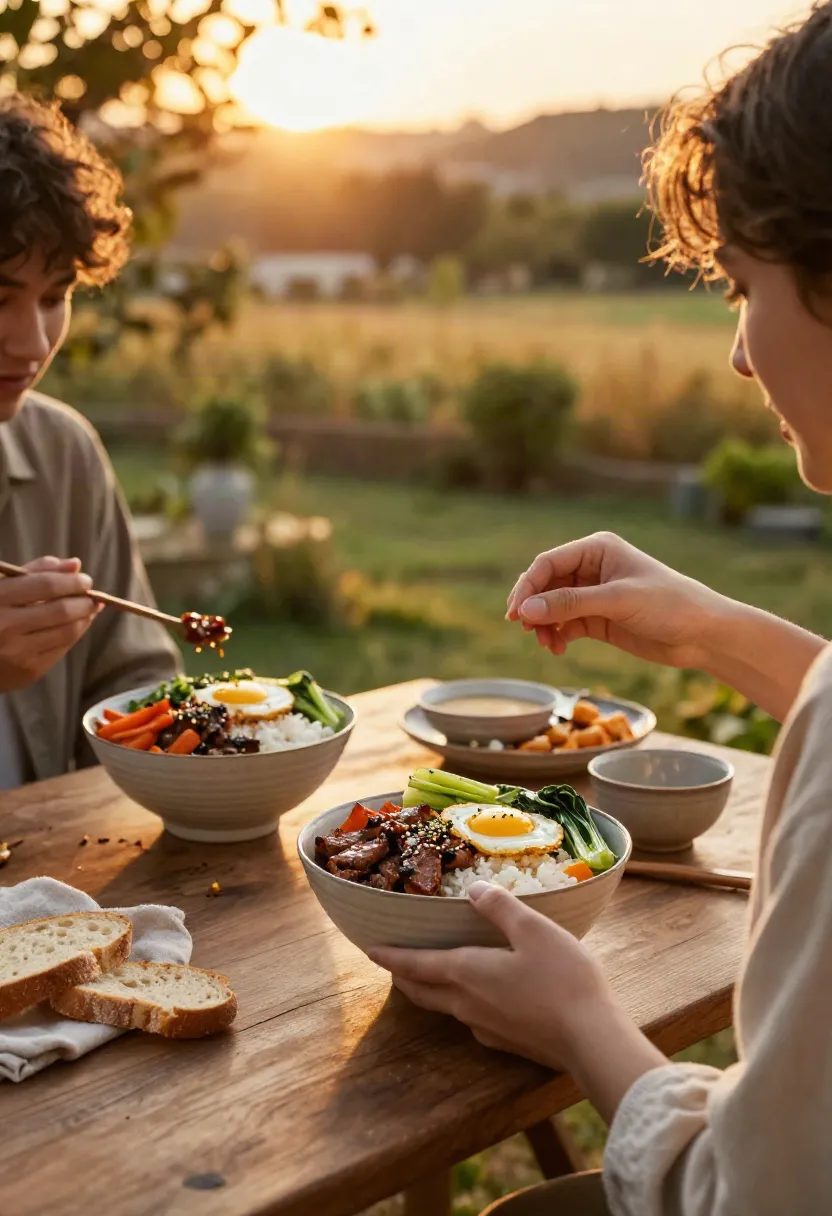
And there are so many little directions you could take the same idea:
- Make the marinade a little hotter with extra birdseye chili.
- Swap the beef for another protein that works well with ginger, soy, and citrus.
- Turn the sesame carrots into a larger crunchy salad.
- Add extra charred vegetables when you want a more generous bowl.
- Let the egg edges get properly crisp while keeping the yolk soft.
That is probably my favorite thing about this kind of cooking.
You do not have to follow every step forever.
You make the bowl once, learn what makes it work, and then the recipe becomes a starting point rather than a set of rules. Maybe you make it spicier next time. Maybe you add more mandarin. Maybe the egg gets an extra-crispy edge because that happens to be your favorite part.
The important thing is that the balance remains: something savory, something fresh, something soft, something crisp, and one little element that makes you think, “Oh, that is good.”
And this bowl has plenty of those moments.
It starts with beef and rice, but somewhere between the citrus marinade, charred bok choy, sesame carrots, and that golden egg, it turns into the sort of dinner you remember.
Not because it was complicated.
Because it was really, really satisfying. 🥢🍚