There are certain vegetables that spend most of their lives trying to recover from bad first impressions, and cauliflower is probably somewhere near the top of that list.
A surprising number of people grew up eating versions that were boiled until soft, drained until flavorless, and served more out of obligation than excitement. It became one of those vegetables that quietly appeared on dinner plates while everyone focused on something else. If there was roast chicken, people talked about the chicken. If there were potatoes, the potatoes usually won. Cauliflower often felt like the thing you ate because it happened to be there.🥦
Which is a shame, because it might be one of the most adaptable vegetables in the entire kitchen.
The problem was rarely the ingredient itself. More often, it was the way it was treated. Cauliflower doesn’t respond particularly well to being overcooked and forgotten. Give it enough heat, however, and it starts behaving very differently. The edges turn golden, the surface develops crisp little corners, and the natural sweetness hidden inside becomes much more noticeable. Instead of tasting flat or watery, it suddenly develops depth, texture, and personality.
That’s exactly what makes recipes like this so satisfying.
Rather than trying to disguise the cauliflower beneath heavy sauces or complicated techniques, the dish allows it to become the most interesting thing on the plate. The vegetable stays recognizable, but it also feels transformed. Some florets become deeply caramelized. Others stay slightly softer in the center. Every piece develops its own balance of sweetness and roasted flavor.
I think that’s one of the reasons cauliflower has become so popular over the last decade. People finally started cooking it in ways that actually suited the vegetable. Roasting, grilling, frying, and charring revealed qualities that had always been there but were rarely given the opportunity to shine.
The funny thing is that once someone experiences properly roasted cauliflower, they often struggle to look at it the same way again. A vegetable that once felt forgettable suddenly becomes something worth building an entire meal around.
And honestly, that’s one of my favorite things about cooking in general. Sometimes the biggest surprises don’t come from rare ingredients or complicated recipes. They come from ordinary ingredients being treated with a little more care than usual.
A head of cauliflower sitting on a grocery store shelf doesn’t look particularly exciting. Then it spends half an hour in a hot oven and somehow becomes the thing everybody keeps reaching for first.
That’s a pretty impressive transformation for such a humble vegetable.
✨ Why texture can completely change the way a dish feels
One of the things I find most interesting about cooking is how often people assume flavor is the entire story.
It isn’t.
Flavor matters, obviously. Nobody is pretending otherwise. But texture quietly influences almost every meal we eat, often without us even noticing. It’s the reason fresh bread with a crisp crust feels different from soft sandwich bread, even when both taste good. It’s why roasted potatoes usually disappear before boiled ones. And it’s exactly why this dish works so much better than it might look on paper.
At first glance, the ingredient list seems fairly simple. Cauliflower. Celeriac. A little saffron. Some seasoning. Nothing particularly dramatic.
But then the textures arrive.
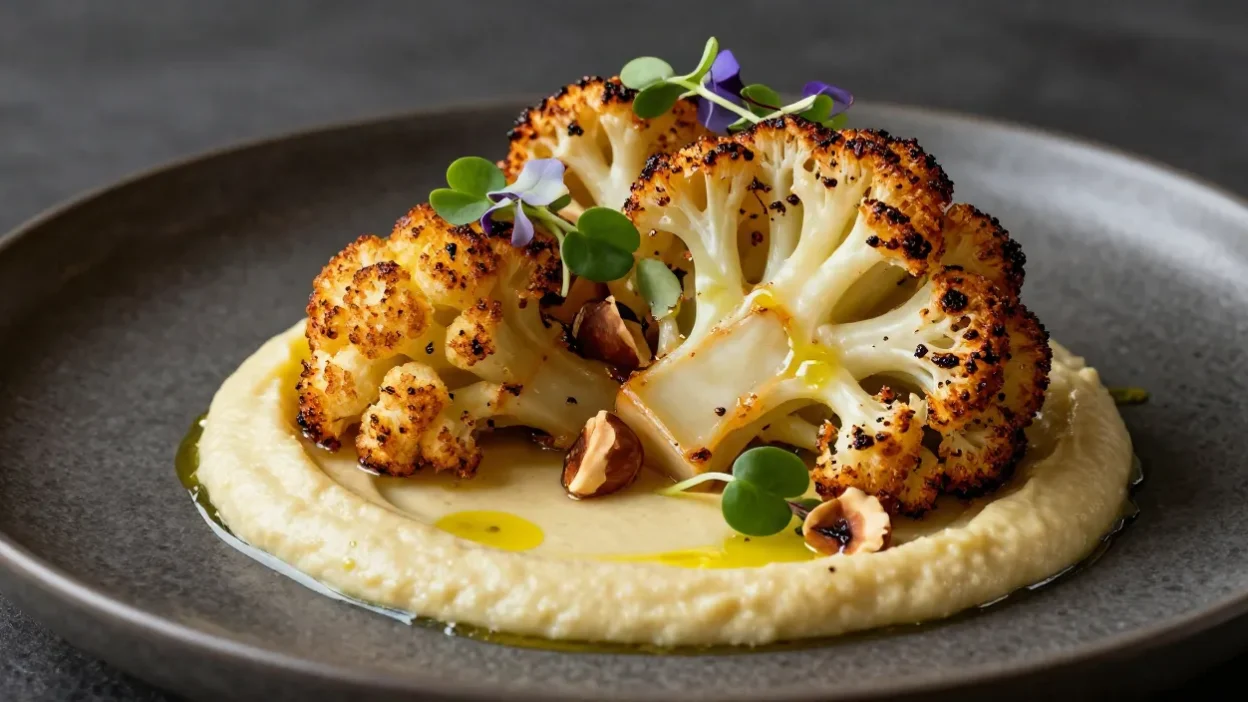
The cauliflower comes out of the oven with deeply golden edges and those little crispy corners that people inevitably start picking at before the plate ever reaches the table. Meanwhile, the celeriac purée does the exact opposite. Smooth, silky, and almost impossibly soft, it spreads across the plate like velvet.
Put the two together and suddenly the dish feels much bigger than the sum of its parts.
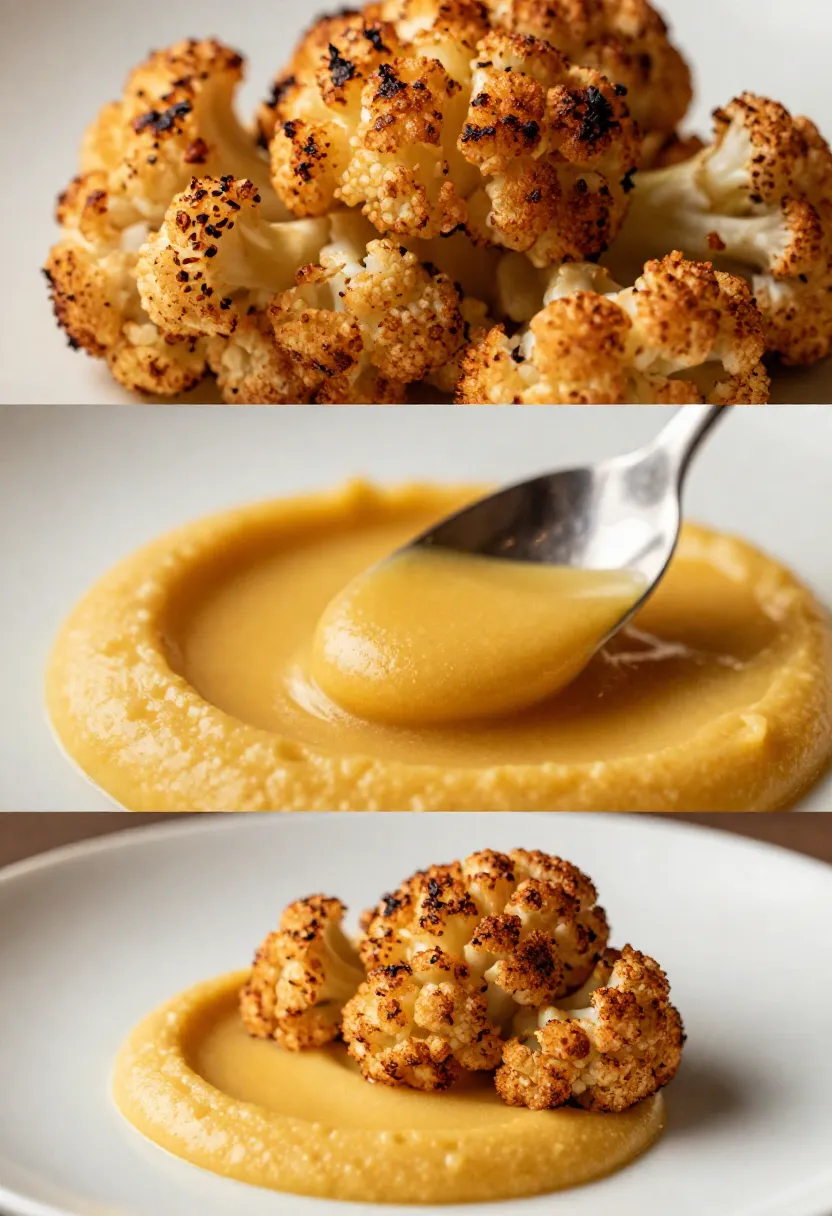
That’s something good chefs have understood forever. Contrast creates interest. When everything on a plate feels the same, even great ingredients can become a little forgettable after a few bites. But when one element crunches lightly beneath the fork and another melts almost instantly, your attention stays engaged.
And honestly, this isn’t limited to restaurant food.
Think about some of the meals people love most. Crispy toast with soft scrambled eggs. Apple pie with flaky pastry and tender fruit. A baked potato with a crisp skin and fluffy center. We naturally gravitate toward foods that give us more than one texture at a time.
This dish follows that same idea.
The cauliflower provides structure and bite. The purée brings comfort and richness. The saffron quietly ties everything together in the background.
Here’s how each component contributes to the final plate:
| Element | What it contributes | Why it matters | Final result |
|---|---|---|---|
| Crispy cauliflower | Roasted flavor and texture | Creates contrast and depth | Golden, savory bites |
| Celeriac purée | Smoothness and richness | Balances the crisp vegetables | Silky, comforting base |
| Saffron | Subtle aroma and warmth | Adds complexity without overpowering | Elegant finish |
| Olive oil and seasoning | Depth and balance | Connects all flavors together | Cohesive final dish |
The older I get, the more I appreciate dishes that don’t try to impress through excess. Not more ingredients. Not more garnishes. Not more sauce.
Just a few things doing their jobs exceptionally well.
That’s exactly what’s happening here. The cauliflower isn’t trying to become something else. The celeriac isn’t disguised beneath layers of cream or butter. Every ingredient still tastes like itself. It just happens to be the best version of itself.
And maybe that’s why plates like this feel so satisfying.
Nothing is competing for attention.
Everything is working together.
🌾 Why this dish feels much more satisfying than it sounds
If somebody handed you a menu and asked you to guess which dish people were most excited about, there’s a good chance roasted cauliflower with celeriac purée wouldn’t be your first choice.
Most of us naturally gravitate toward ingredients we already know and trust. A perfectly cooked steak is easy to understand. Fresh pasta sells itself. Even a simple roast chicken rarely struggles to find fans. Vegetables often have to work a little harder to earn the same level of enthusiasm, especially when they’re vegetables that spent years being treated as side dishes rather than the main event.
That’s part of what makes this combination so satisfying.
Neither cauliflower nor celeriac sounds particularly glamorous when you read the ingredient list. In fact, celeriac is one of those vegetables that many people walk past in the produce section without ever considering putting it in their shopping basket. Its rough exterior doesn’t exactly inspire confidence, and it certainly isn’t winning any beauty contests sitting next to colorful peppers or bunches of fresh herbs.
The interesting part happens once it reaches the kitchen.
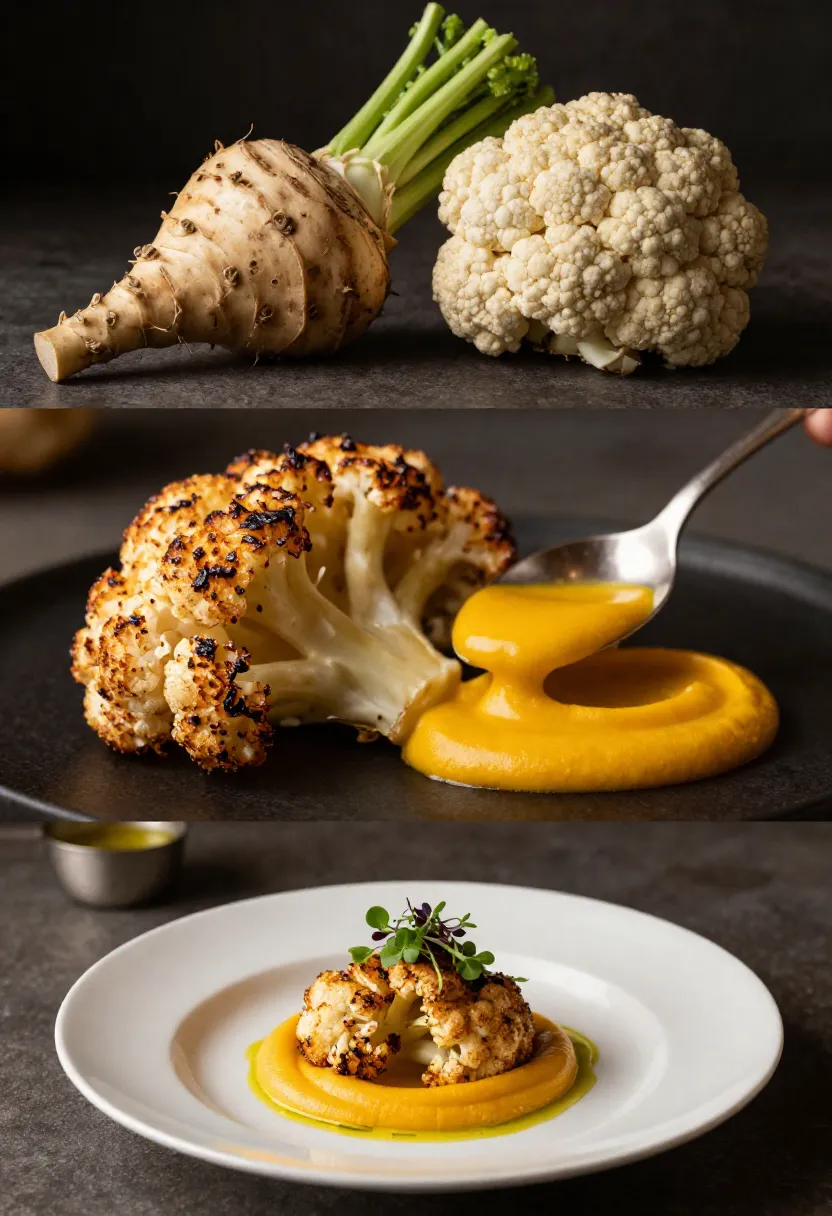
Cooked slowly and blended into a purée, celeriac develops a texture that feels incredibly smooth and comforting. People often compare it to mashed potatoes, which makes sense as a starting point, but the flavor is noticeably different. There’s a gentle earthiness underneath that gives the purée more personality without making it heavy. It feels familiar enough to be comforting, but different enough to keep your attention.
The cauliflower goes through a similar transformation.
When roasted at a high temperature, the vegetable starts developing flavors that simply aren’t there when it’s steamed or boiled. The edges become deeply golden, some of the smaller florets turn wonderfully crisp, and the natural sweetness becomes much more noticeable. Instead of fading into the background of the plate, the cauliflower suddenly becomes something you actively want another bite of.
What makes the dish work isn’t that either ingredient is extraordinary on its own. It’s the way they balance one another once they meet on the plate. The purée brings softness and richness. The cauliflower contributes texture and roasted flavor. One keeps the dish from feeling too heavy, while the other prevents it from feeling too delicate.
Even the saffron follows that same philosophy.
A lot of people expect saffron to dominate a recipe because of its reputation, but that’s rarely its job in dishes like this. Here it’s simply adding another layer to the purée. The flavor remains subtle, but it helps round out the earthiness of the celeriac and adds a gentle warmth that becomes more noticeable as you continue eating.
That’s something I appreciate more and more these days.
Some recipes try very hard to impress you from the first bite. They pile on ingredients, strong flavors, or elaborate presentations. This dish takes a quieter approach. It relies on good ingredients cooked properly and trusts that the combination will speak for itself.
And honestly, that’s probably why it tends to surprise people.
By the time the plate is empty, most diners aren’t talking about saffron or wondering how the purée was made. They’re usually talking about the cauliflower. More specifically, they’re wondering why cauliflower doesn’t taste this good more often.
For a vegetable that spent years being overlooked, that’s a pretty nice comeback.
🥦 Crispy Cauliflower and Saffron Celeriac Purée Recipe
Some recipes sound much more complicated than they actually are.
This is one of them.
“Crispy cauliflower with saffron celeriac purée” has the kind of name that feels like it belongs on a restaurant menu, written underneath a list of ingredients most people wouldn’t immediately think to combine at home. But once you break the dish down into its individual parts, it’s surprisingly approachable.
At its core, the recipe is built around a simple idea: contrast.
The cauliflower is roasted until deeply golden and crisp around the edges, developing a rich flavor that feels far more substantial than most people expect from a vegetable. Underneath sits a smooth celeriac purée infused with saffron, creating a creamy base that balances all that roasted texture. Neither element tries to dominate the plate. Instead, they make each other more interesting.
What I particularly like about this dish is that it doesn’t rely on complicated techniques or a long list of ingredients to feel special. Most of the work comes from patience. Giving the cauliflower enough time to caramelize properly. Allowing the celeriac to become completely tender before blending. Letting the saffron gently infuse the purée rather than forcing its way into the recipe.
The result is a meal that feels elegant without feeling fussy.
It’s the kind of dish that works equally well as a light dinner, part of a larger meal, or something you make simply because you want to prove to yourself that vegetables can be every bit as satisfying as more traditional centerpieces.
🛒 Ingredients
For the crispy cauliflower
- 1 large head cauliflower, cut into florets
- 2 tablespoons olive oil
- 1 teaspoon sea salt
- ½ teaspoon freshly ground black pepper
- ½ teaspoon smoked paprika (optional)
For the saffron celeriac purée
- 1 medium celeriac, peeled and diced
- 1 medium potato, peeled and diced
- 1 cup milk
- 1 cup vegetable stock
- Pinch of saffron threads
- 2 tablespoons butter
- Salt, to taste
- Black pepper, to taste
To finish
- Fresh herbs (parsley, chives, or microgreens)
- Extra virgin olive oil
- Toasted nuts or seeds (optional)
👨🍳 Step-by-step instructions
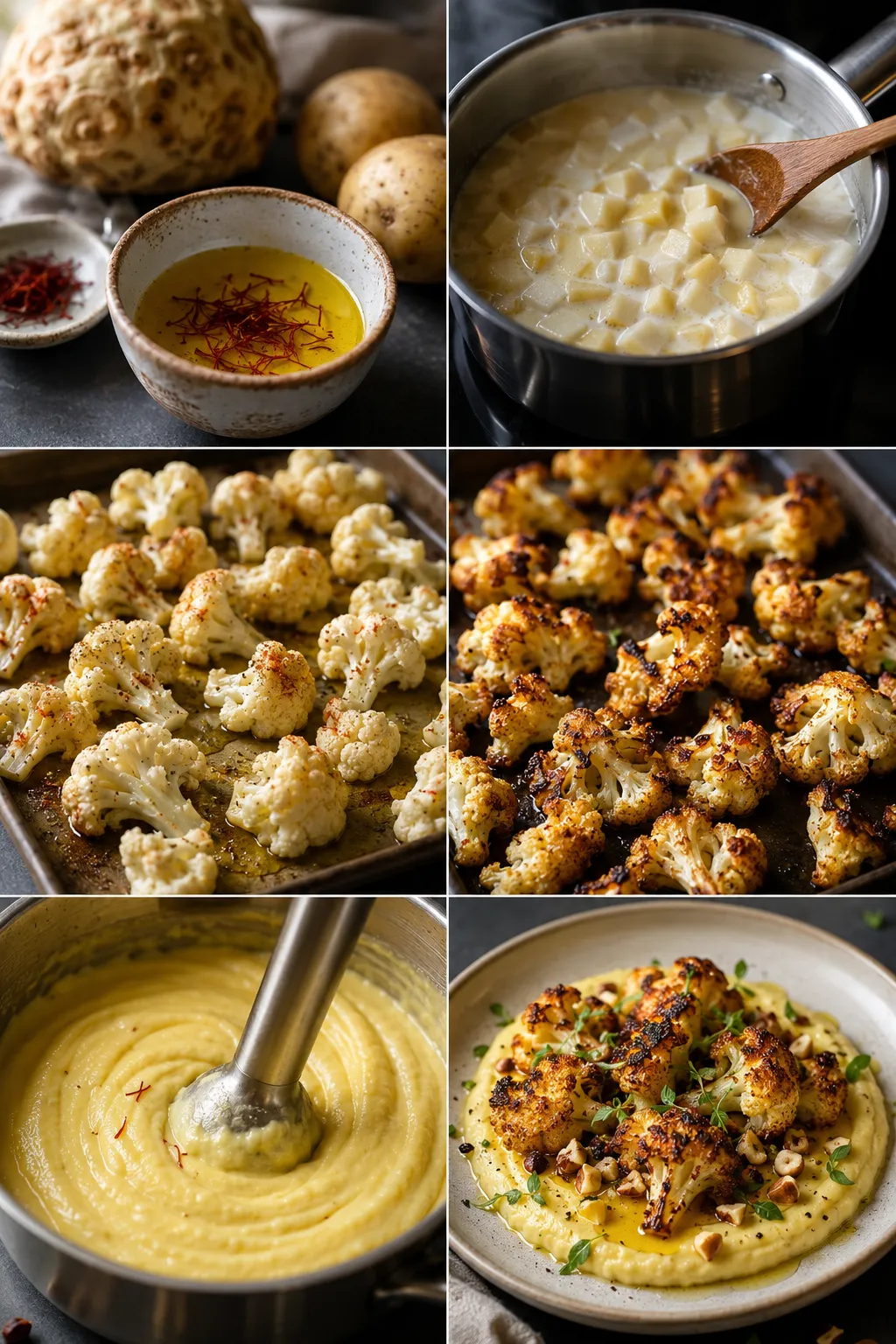
- Prepare the saffron infusion
Place the saffron threads in a small bowl and pour over two tablespoons of warm water. Let them soak for about 10 minutes while you prepare the remaining ingredients. This simple step helps release the saffron’s color, aroma, and flavor, allowing it to blend more evenly into the purée later. - Cook the celeriac and potato
Add the diced celeriac, potato, milk, and vegetable stock to a medium saucepan. Place the pan over medium heat and bring everything to a gentle simmer. Once bubbling lightly, reduce the heat and cook for approximately 20–25 minutes, stirring occasionally. The vegetables should become completely tender and easy to pierce with a fork. If the liquid reduces too quickly during cooking, add a small splash of stock to keep the mixture creamy and prevent sticking. - Prepare and roast the cauliflower
While the celeriac is cooking, preheat your oven to 220°C (425°F). Arrange the cauliflower florets on a large baking tray and drizzle with olive oil. Season with salt, black pepper, and smoked paprika if using. Toss thoroughly until every floret is lightly coated. Spread the cauliflower into a single layer, leaving space between the pieces so they roast rather than steam. Bake for 25–35 minutes, turning once halfway through cooking. The florets should develop deep golden edges, crispy tips, and plenty of caramelized spots. Some smaller pieces may become darker than others, which adds even more flavor. - Blend the saffron celeriac purée
Once the celeriac and potato are fully tender, remove the saucepan from the heat. Add the soaked saffron along with its liquid and the butter. Using a blender or immersion blender, purée the mixture until completely smooth and silky. The finished texture should feel rich and velvety, almost like a fine-dining restaurant purée. Season with salt and pepper to taste. If the purée feels too thick, gradually add a little warm milk or stock until you reach your preferred consistency. - Taste and make final adjustments
Before assembling the dish, taste both the roasted cauliflower and the purée separately. This is often where small adjustments make a big difference. You may find the cauliflower needs an extra pinch of salt, or the purée could benefit from a little more black pepper. Taking a minute to fine-tune the seasoning helps bring the entire dish together. - Assemble the plates
Spoon a generous layer of saffron celeriac purée onto each serving plate. Use the back of a spoon to spread it slightly into a smooth base. Arrange the roasted cauliflower over the purée, placing some florets upright so their crispy golden edges remain visible. The contrast between the silky purée and the deeply roasted cauliflower creates a beautiful presentation without requiring any complicated plating techniques. - Finish and serve immediately
Scatter fresh herbs over the top and drizzle lightly with good-quality olive oil. If desired, add a handful of toasted nuts or seeds for extra crunch and texture. Serve immediately while the cauliflower is still crisp and the purée remains warm, smooth, and aromatic. This is when the contrast between the two components is at its absolute best.
🔥 Small cooking tricks that make a noticeable difference
- Give the cauliflower plenty of room on the baking tray to encourage caramelization.
- Don’t rush the roasting process. The darker edges add much of the dish’s flavor.
- Soak the saffron before using it to release maximum aroma and color.
- Blend the purée longer than you think necessary for the smoothest texture.
- Taste both components separately before plating and adjust seasoning if needed.
- A drizzle of high-quality olive oil at the end makes the whole dish feel more complete.
- Toasted hazelnuts, almonds, or pumpkin seeds add a wonderful contrast to the creamy purée and roasted vegetables.
🌿 Simple variations that are actually worth trying
One of the things I appreciate most about this dish is that it gives you plenty of room to experiment without losing what makes it special in the first place.
Some recipes are surprisingly fragile. Change one ingredient and suddenly the entire dish feels like something else. Crispy cauliflower and celeriac purée isn’t really like that. The foundation is strong enough that small adjustments can create new flavors while keeping the same balance of textures that makes the original version so satisfying.
The easiest place to start is with the cauliflower itself.
Different spices and seasonings can completely change the personality of the dish. A little cumin adds warmth and earthiness. Za’atar introduces a more Mediterranean feel. Smoked paprika brings a subtle smokiness that works beautifully with the caramelized edges of the cauliflower.
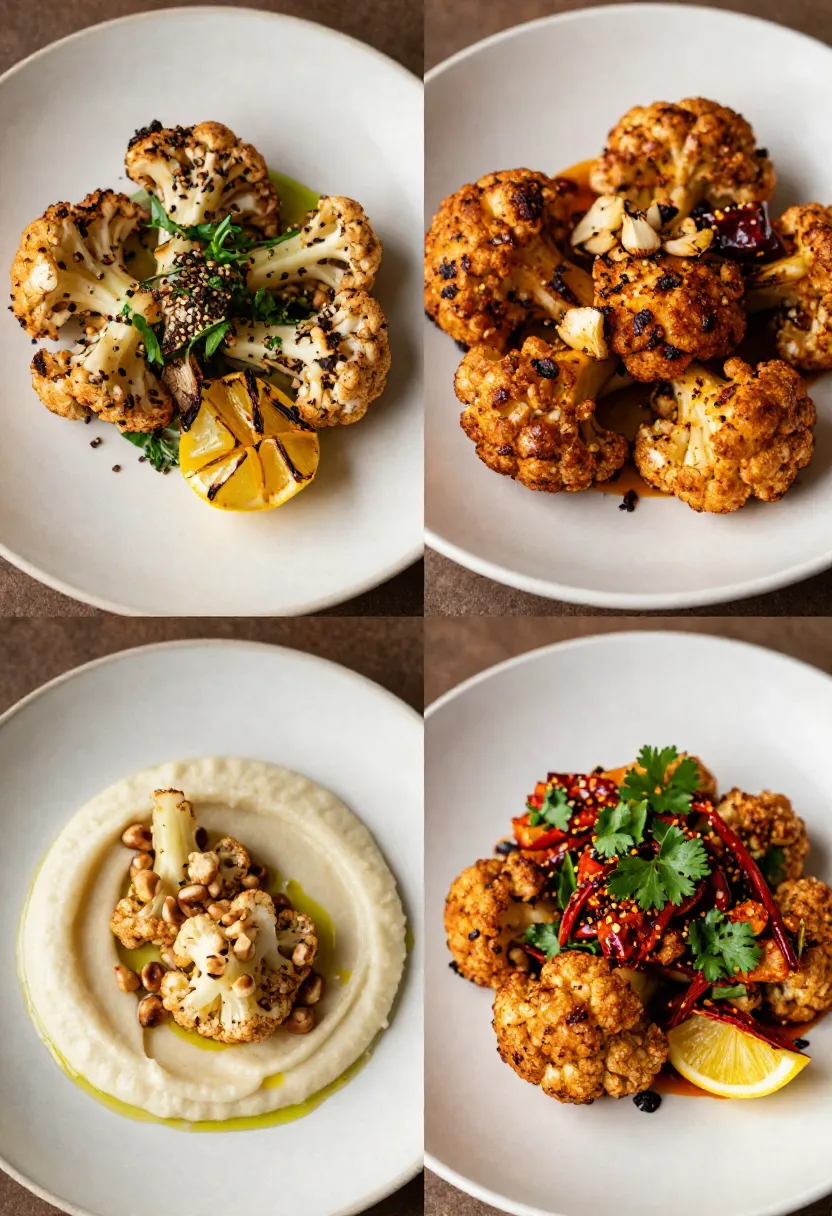
A few variations that work especially well include:
- Roasted cauliflower with za’atar and lemon
- Crispy cauliflower with smoked paprika and garlic
- Cauliflower finished with toasted hazelnuts
- Cauliflower with fresh parsley and preserved lemon
- Roasted cauliflower with chili flakes for gentle heat
The purée can evolve too.
While saffron and celeriac create a beautiful combination, adding a small amount of roasted garlic brings extra depth without overpowering the dish. Some people like incorporating a little parsnip alongside the celeriac for added sweetness, while others prefer a splash of cream for an even silkier finish.
The key is not trying to change everything at once.
What makes this dish work so well is its restraint. Every ingredient has space to contribute something meaningful. Once too many additions start competing for attention, the balance begins to disappear.
And honestly, that’s often true of good cooking in general. A few thoughtful changes usually go much further than a dozen dramatic ones.
🍽️ Serving ideas that let the vegetables shine
One thing I noticed after making this dish several times is that it doesn’t really need a lot of help.
The cauliflower already provides texture. The purée already brings richness. Together they create a plate that feels complete despite being built almost entirely around vegetables.
That said, the right accompaniments can make the meal feel slightly different depending on the occasion.
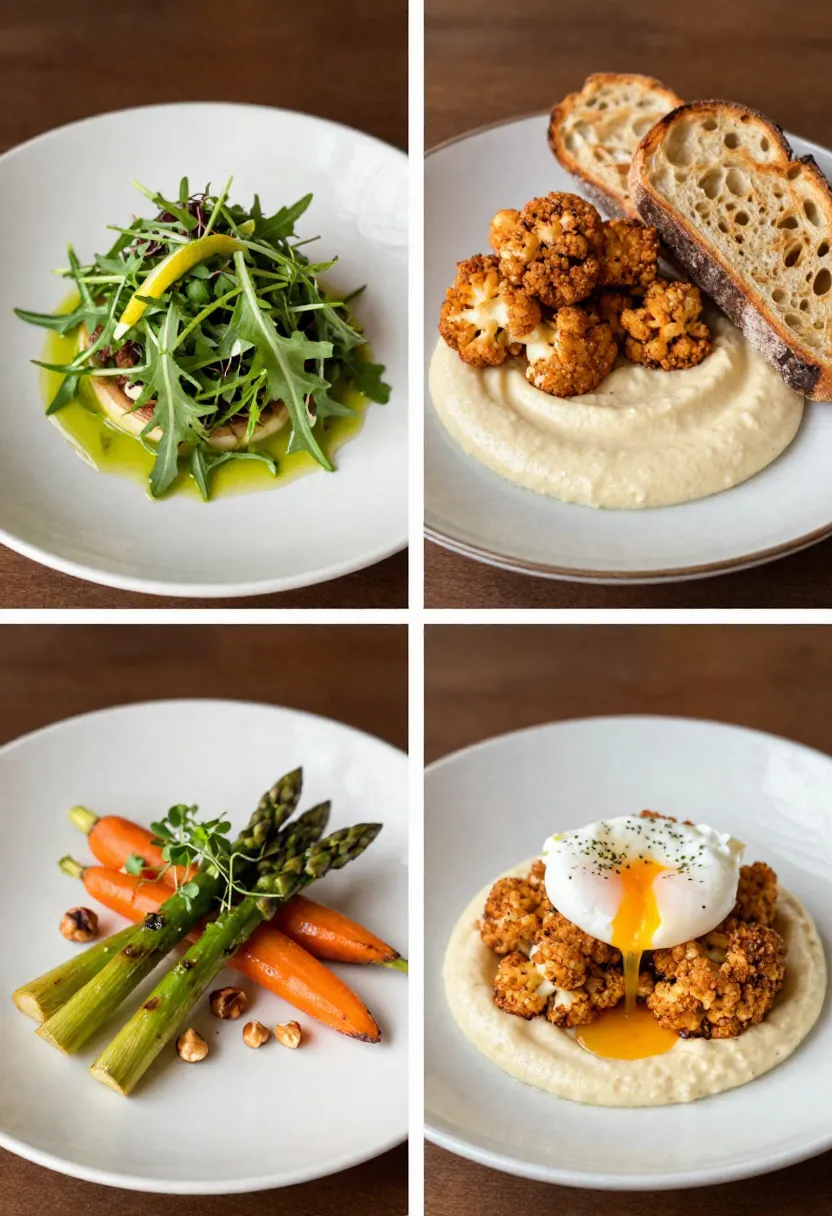
For a light lunch, I love serving it alongside a simple green salad dressed with lemon and olive oil. The freshness cuts through the richness of the purée and keeps everything feeling bright. For dinner, a piece of crusty sourdough works beautifully, especially for scooping up any purée left behind on the plate.
A few pairings that work particularly well include:
- Peppery rocket salad with lemon vinaigrette
- Warm sourdough or artisan bread
- Grilled asparagus
- Roasted carrots
- Fresh herbs and microgreens
- Toasted almonds or hazelnuts
- A soft-poached egg for extra richness
What I like most is that the dish feels equally comfortable in different settings.
It can be plated elegantly for guests and look like something from a restaurant. But it also works perfectly well on a quiet evening when you’re simply cooking for yourself and want something satisfying without feeling overly heavy.
That’s a surprisingly difficult balance to achieve.
Many vegetable-focused meals lean too far in one direction. They either feel overly simple or unnecessarily complicated. This one somehow manages to sit comfortably in the middle.
☀️ Why dishes like this stay with people longer than expected
Years from now, most people won’t remember exactly how long the cauliflower roasted.
They won’t remember whether they used one pinch of saffron or two. They probably won’t remember the exact consistency of the purée or how many minutes it spent simmering on the stove.
That’s rarely the part of cooking that sticks.
What people remember is everything happening around the meal.
They remember walking into the kitchen and noticing the smell of cauliflower slowly caramelizing in the oven. They remember wondering how a vegetable they normally ignored could suddenly smell so good. They remember scraping the last bit of purée from the plate because leaving it behind somehow felt wrong.

Food memories have a funny way of working like that.
The details fade surprisingly quickly, but the feeling stays.
Some of my favorite meals over the years weren’t attached to expensive ingredients or special occasions. They were ordinary evenings when a simple recipe exceeded expectations. A bowl of soup on a rainy night. Fresh bread still warm from the oven. A vegetable dish that completely changed the way I thought about a particular ingredient.
This recipe belongs in that category.
Partly because it proves that vegetables can be every bit as satisfying as more traditional centerpieces. But mostly because it reminds us that good cooking doesn’t always require complicated techniques or long ingredient lists.
Sometimes it comes from paying a little more attention to ingredients that have been overlooked for years.
Maybe that’s why dishes like this tend to surprise people.
They arrive at the table looking relatively simple. Then the first bite happens, and suddenly everyone is talking about cauliflower.
For a vegetable that spent decades being the least exciting thing on many dinner plates, that’s a pretty remarkable achievement. 🥦✨