Some recipes are simply meals.
Others tell a story long before you take the first bite.
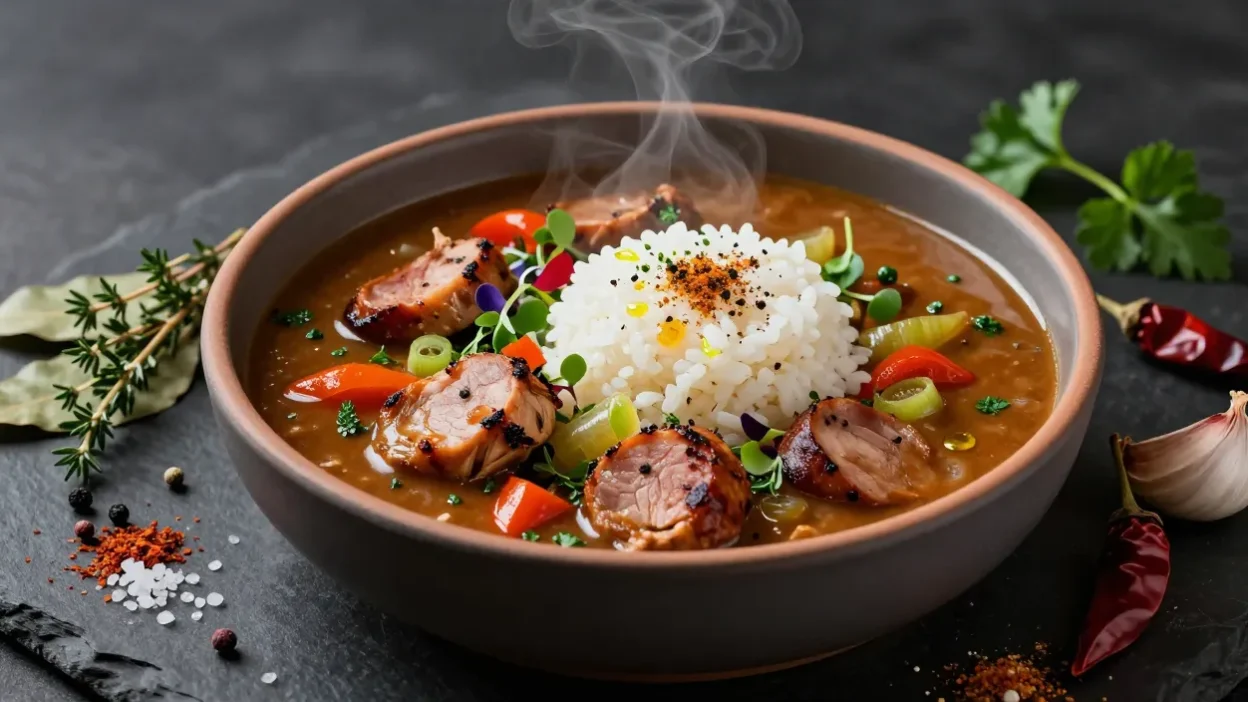
Gumbo has always felt like one of those recipes to me. The moment a pot begins simmering on the stove, the entire kitchen changes. Butter slowly browns into a deep, nutty roux, onions, celery, and bell peppers soften into an aromatic base, and before long the rich scent of smoky sausage, seasoned chicken, garlic, and spices fills every corner of the house. It’s the kind of meal that naturally draws people into the kitchen asking, “Is it ready yet?”
One of the things I love most about gumbo is how comforting it feels without being complicated. At first glance, it may look like an ordinary stew, but every spoonful tells a different story. Tender chicken, slices of smoky sausage, and a deeply flavorful broth come together in a way that somehow feels both rustic and incredibly satisfying. Served over fluffy white rice, it’s warm, hearty, and exactly the kind of meal that makes everyone linger at the table just a little longer.
What makes gumbo even more special is the tradition behind it. This Louisiana classic has been passed from one kitchen to another for generations, with every family adding its own personal touch. Some versions include seafood, others rely on chicken and sausage, while many home cooks proudly guard their own blend of seasonings. There isn’t one single “correct” recipe, and that’s part of its charm. Gumbo evolves with every household while still holding onto the comforting soul that has made it a Southern favorite for decades.
I’ve also learned that gumbo is one of those dishes that somehow improves with time. The first bowl is wonderfully rich, but after spending a night in the refrigerator, the flavors deepen even further. The smoky sausage becomes more pronounced, the spices mellow into the broth, and everything tastes even better the next day. It’s one of the few recipes I secretly hope will leave enough leftovers for tomorrow’s lunch.
Whether you’re cooking for a relaxed Sunday dinner, feeding a crowd during football season, or simply looking for a cozy meal on a chilly evening, gumbo always seems to rise to the occasion. It’s hearty without feeling overly heavy, deeply flavorful without relying on complicated techniques, and satisfying enough to become the centerpiece of any family gathering.
🥘 Why you’ll love this gumbo recipe
There are countless gumbo recipes out there, but this one strikes a wonderful balance between traditional Southern flavor and approachable home cooking. It delivers everything people love about classic Louisiana gumbo—rich broth, smoky sausage, tender chicken, and bold seasoning—without requiring a full day in the kitchen. The ingredients are easy to find, the steps are straightforward, and the results taste like they’ve been simmering for generations.
The first thing you’ll notice is the depth of flavor.
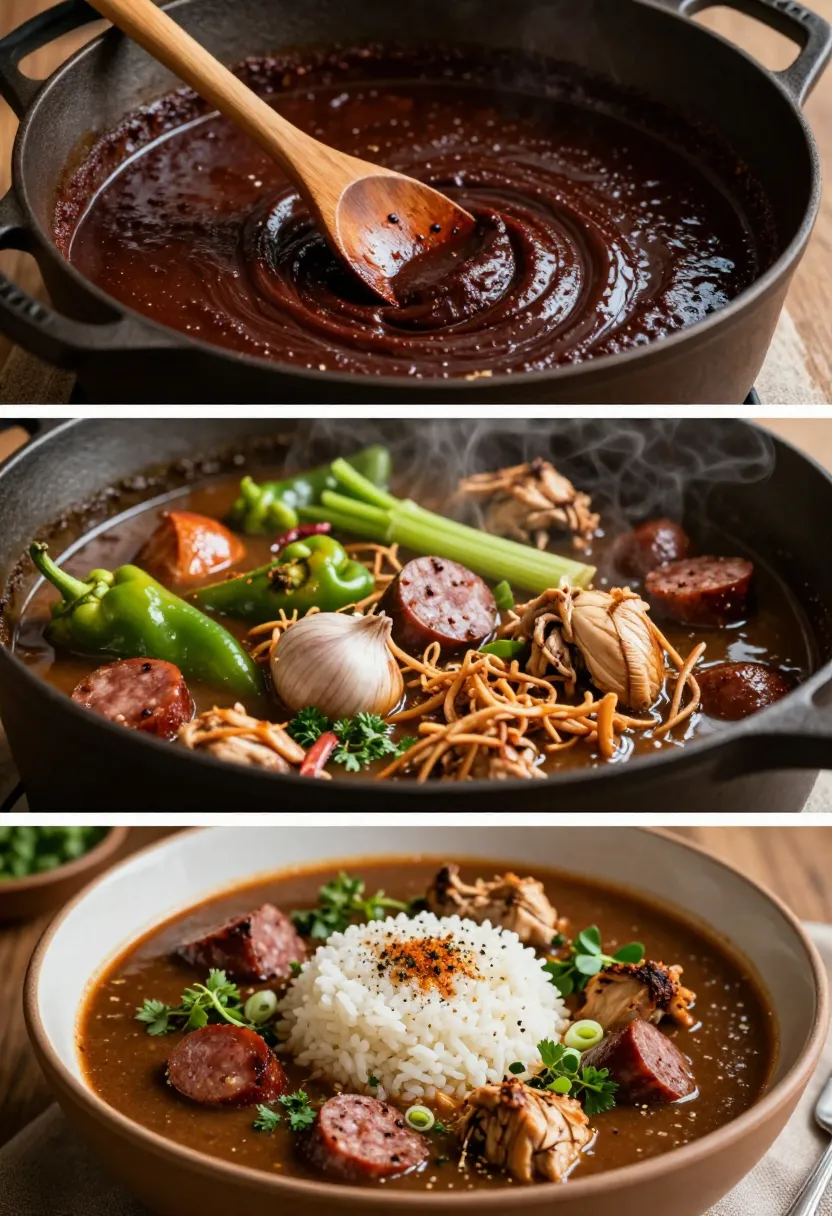
Everything begins with a properly cooked roux, the foundation of nearly every great gumbo. Taking a little extra time to slowly cook the butter and flour until they reach a deep caramel color rewards you with an incredible richness that simply can’t be rushed. That nutty base gives the entire pot its unmistakable character and creates the silky texture that makes gumbo so comforting.
The combination of chicken and smoked sausage is another reason this recipe never disappoints.
Juicy chicken becomes incredibly tender as it simmers, while slices of smoky sausage release savory spices into the broth. Together they create layers of flavor that make every spoonful feel hearty and satisfying without becoming overwhelming.
🥣 Here’s why this gumbo deserves a spot in your dinner rotation:
- rich, slow-developed flavor from a deeply browned roux;
- juicy chicken and smoky sausage in every bowl;
- easy-to-find ingredients that come together beautifully;
- even better leftovers the next day;
- perfect for family dinners, game days, and meal prep.
The vegetables quietly do their part too.
The classic “Holy Trinity” of onion, celery, and bell pepper forms the backbone of the recipe, adding sweetness, freshness, and plenty of aroma. Garlic, herbs, and Cajun seasoning build on that foundation, creating a broth that’s bold yet beautifully balanced.
One of my favorite things about this recipe is how well it fits into real life.
It can be prepared ahead of time, freezes beautifully, and often tastes even better after a night in the refrigerator. That makes it perfect for meal prep, family dinners, game days, or any time you want comforting homemade food without cooking at the last minute.
By the time the gumbo has finished simmering, the broth has become velvety, the chicken is fork-tender, the sausage is perfectly juicy, and every ingredient has absorbed the smoky, savory flavors surrounding it. Served over warm rice with a sprinkle of fresh parsley or green onions, it’s exactly the kind of meal that leaves everyone asking for another bowl.
🔥 What makes gumbo so special
At first glance, gumbo may seem like a hearty soup or stew.
Spend a little time with it, though, and you’ll quickly realize it’s something entirely its own.
Every bowl is built on layers of flavor that develop slowly, beginning with one of the most important ingredients in Southern cooking—the roux. Butter and flour are patiently stirred until they turn a rich chocolate-brown color, creating a deeply nutty base that gives gumbo its signature flavor and silky body. It’s a simple technique, but it’s also the heart of the entire recipe.
Then comes the famous Holy Trinity.
Instead of carrots, traditional Louisiana cooking relies on onion, celery, and green bell pepper to build its aromatic foundation. As these vegetables soften in the roux, they release natural sweetness that balances the smoky sausage, savory chicken, garlic, and Cajun spices that follow. Together they create a broth that feels rich without becoming too heavy.
Protein plays an equally important role.
Tender chicken keeps the gumbo hearty and comforting, while slices of smoked andouille sausage add bold, peppery flavor with just the right amount of spice. As everything simmers together, the meats slowly season the broth from within, creating the kind of complexity that’s impossible to achieve in a hurry.
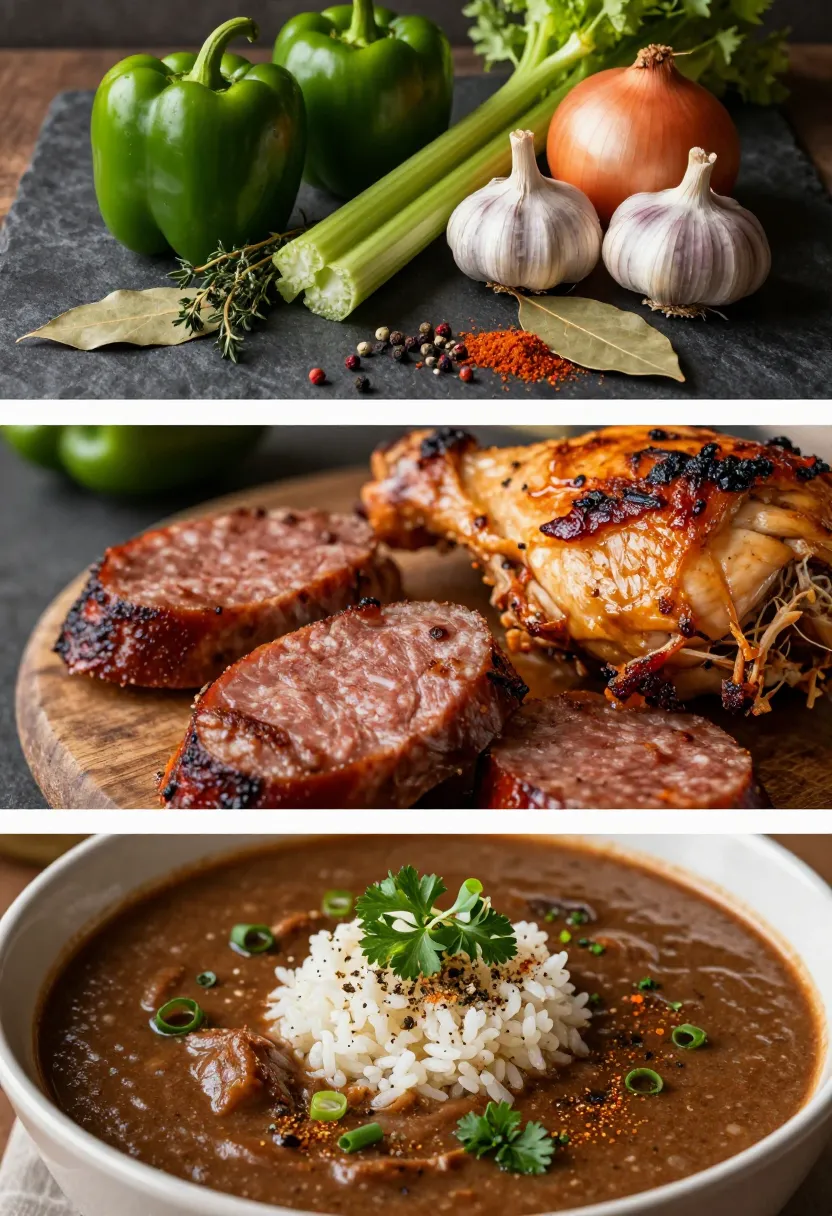
🌶️ Every bowl of classic gumbo is built around a few essential ingredients:
| Ingredient | Why it’s important | Texture | Flavor contribution |
|---|---|---|---|
| Dark roux | Builds the foundation | Smooth and velvety | Deep, nutty richness |
| Chicken | Hearty protein | Tender and juicy | Savory comfort |
| Smoked andouille sausage | Classic Southern flavor | Firm and juicy | Smoky, peppery richness |
| Onion, celery & bell pepper | The Holy Trinity | Soft | Sweet aromatic base |
| Garlic & Cajun seasoning | Layers of flavor | Smooth | Warm, savory spice |
| Chicken broth | Creates the soup base | Silky | Rich, comforting depth |
| White rice | Traditional accompaniment | Light and fluffy | Balances the rich gumbo |
And then there’s the rice.
Rather than being stirred directly into the pot, fluffy white rice is traditionally served underneath the gumbo, soaking up the rich broth while giving the meal even more substance. It’s a simple finishing touch, but one that completes the dish beautifully.
Looking into a steaming bowl of gumbo, it’s easy to understand why this Louisiana classic has remained a favorite for generations.
Every spoonful delivers smoky sausage, tender chicken, velvety broth, and bold Southern flavor—a comforting combination that somehow feels both humble and unforgettable.
🍚 Gumbo recipe
Some recipes ask for precision. Gumbo asks for a little patience—and that’s exactly what makes it so rewarding. It all starts with a dark, carefully cooked roux, the heart and soul of this Louisiana classic. Watching butter and flour slowly transform into a rich, chocolate-brown base might seem like a simple step, but it’s where the deep, nutty flavor that defines great gumbo is born. Once the vegetables hit the pot, followed by smoky andouille sausage, tender chicken, fragrant garlic, and a blend of Cajun spices, the kitchen begins to smell like you’ve been cooking all day.
As the gumbo gently simmers, every ingredient has time to do its part. The sausage releases its smoky richness into the broth, the chicken becomes incredibly tender, and the vegetables soften until they almost melt into the sauce. Little by little, the broth thickens into a velvety, deeply savory base that’s packed with layers of flavor. You don’t need complicated techniques or expensive ingredients—just a little time and an occasional stir while everything slowly comes together.
One of the reasons I keep coming back to this recipe is how effortlessly it brings people together. A big pot of gumbo bubbling on the stove has a way of making everyone wander into the kitchen to see how much longer dinner will be. It’s hearty enough for a chilly evening, comforting enough for a family Sunday meal, and impressive enough to serve when friends come over. Best of all, it’s one of those rare dishes that somehow tastes even richer the next day, after all the flavors have had another night to mingle.
Serve each bowl over fluffy white rice and finish it with a sprinkle of fresh parsley or sliced green onions for a little brightness. Add warm cornbread or a slice of crusty bread on the side, and you’ll have the kind of meal that encourages everyone to slow down, go back for seconds, and savor every last bite. It’s classic Southern comfort food at its finest—rich, satisfying, and the kind of recipe you’ll find yourself making again and again.
Ingredients
- 2 pounds boneless, skinless chicken thighs, cut into bite-sized pieces
- 14 ounces smoked andouille sausage, sliced into rounds
- ½ cup unsalted butter
- ½ cup all-purpose flour
- 1 large onion, diced
- 2 celery stalks, diced
- 1 large green bell pepper, diced
- 4 garlic cloves, minced
- 8 cups chicken broth
- 1 (14-ounce) can diced tomatoes
- 2 bay leaves
- 2 teaspoons Cajun seasoning
- 1 teaspoon smoked paprika
- 1 teaspoon dried thyme
- 1 teaspoon Worcestershire sauce
- Salt and freshly ground black pepper, to taste
- 2 cups cooked white rice, for serving
- Chopped parsley or sliced green onions, for garnish
Instructions
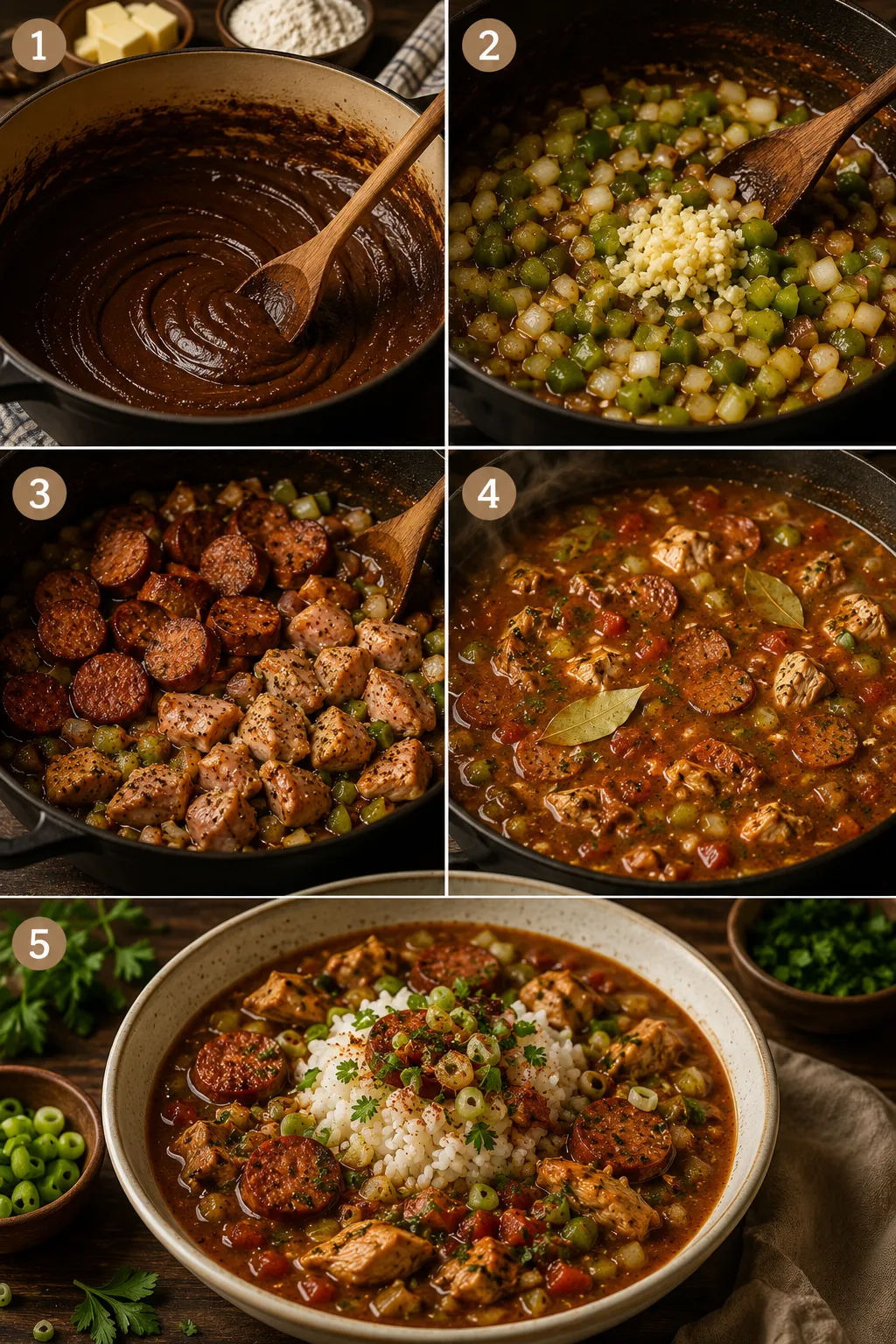
- In a large Dutch oven or heavy-bottomed pot, melt the butter over medium heat. Sprinkle in the flour and whisk constantly until the roux turns a deep caramel or chocolate-brown color. This usually takes 20 to 30 minutes. Stir continuously to prevent it from burning.
- Add the onion, celery, and bell pepper to the hot roux. Cook for about 5 minutes, stirring often, until the vegetables soften. Stir in the minced garlic and cook for another minute until fragrant.
- Add the sliced andouille sausage and cook for several minutes, allowing it to brown slightly and release some of its smoky flavor into the vegetables.
- Stir in the chicken pieces, then pour in the chicken broth. Add the diced tomatoes, bay leaves, Cajun seasoning, smoked paprika, thyme, Worcestershire sauce, and a generous pinch of salt and black pepper. Stir well to combine everything.
- Bring the gumbo to a gentle boil, then reduce the heat to low. Cover partially and let it simmer for 45 to 60 minutes, stirring occasionally, until the chicken is tender and the broth has thickened into a rich, velvety consistency.
- Taste the gumbo and adjust the seasoning if needed. Add a little more Cajun seasoning, salt, or black pepper until the flavors are balanced to your liking.
- Spoon warm cooked rice into individual serving bowls, then ladle the hot gumbo over the top. Finish with chopped parsley or sliced green onions and serve immediately while everything is piping hot.
👩🍳 Helpful tips
- Stir the roux constantly while it cooks. A dark roux gives gumbo its signature flavor, but it can burn quickly if left unattended.
- Chicken thighs stay juicier than chicken breasts during the long simmer, making them the better choice for gumbo.
- If you like extra heat, add a pinch of cayenne pepper or a few dashes of your favorite hot sauce before serving.
- Gumbo tastes even better the next day after the flavors have had time to develop, making it a great make-ahead meal.
- Leftovers keep well in the refrigerator for up to 4 days and freeze beautifully for up to 3 months.
🍽️ What to serve with gumbo
One of the things I love most about gumbo is that it doesn’t ask for much once it’s ready. The pot itself does most of the work. Rich, hearty, and packed with flavor, it’s already satisfying enough to stand on its own. Still, choosing the right sides can make the whole meal feel even more inviting, especially if you’re serving it for a family dinner or a table full of friends.
The classic choice has always been fluffy white rice, and honestly, it’s hard to imagine gumbo without it. The rice slowly soaks up that deeply savory broth, giving every bite the perfect balance of tender chicken, smoky sausage, vegetables, and silky sauce. Some people like serving the rice directly in the bowl before ladling the gumbo over the top, while others keep it on the side so everyone can decide how much they want. Either way works beautifully, and somehow every family seems to have its own little tradition.
Fresh bread is another must in my kitchen whenever gumbo is on the menu. A slice of warm French bread with a crisp crust is perfect for dipping into the broth, and homemade cornbread is just as delicious if you’re after something a little sweeter. It’s almost impossible not to wipe the bowl clean before dinner is over. That broth takes time to build, and every last spoonful is worth enjoying.
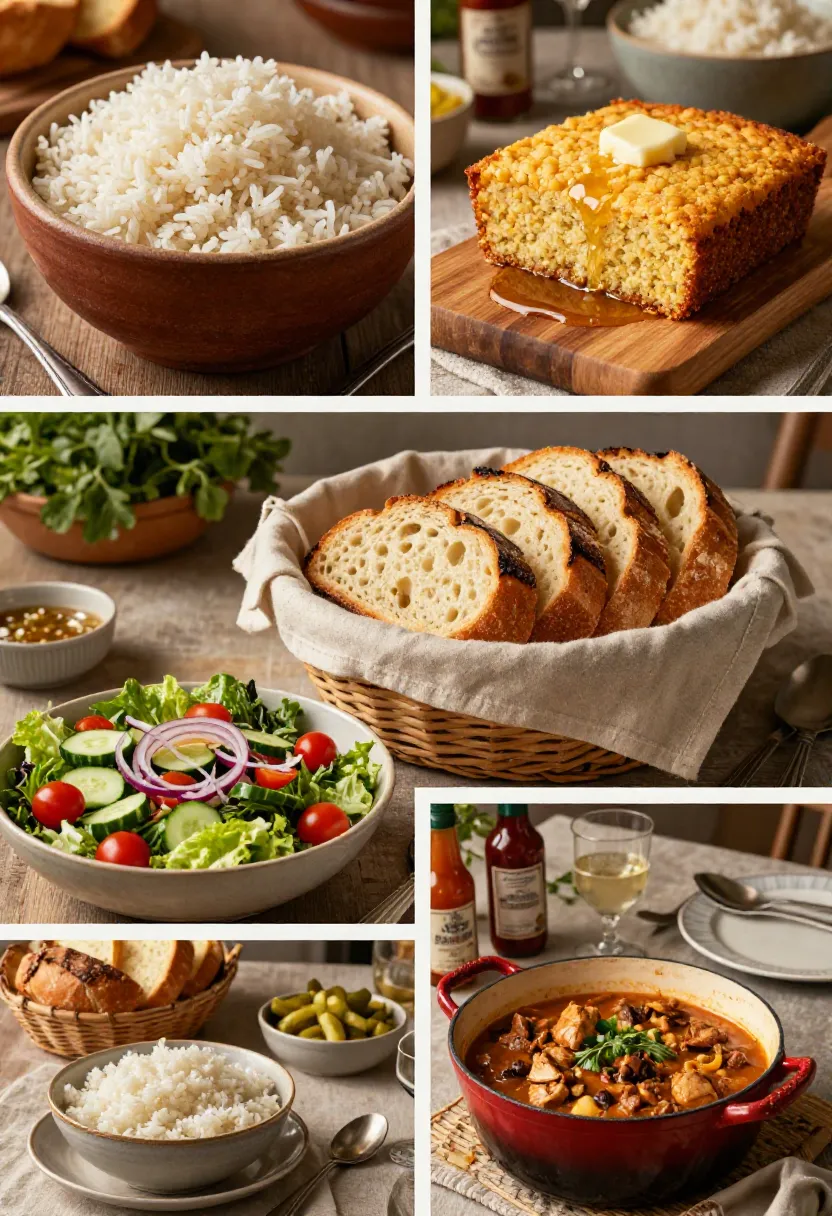
If you’re looking for a little contrast, a simple green salad can be exactly what the meal needs. Nothing fancy—just crisp lettuce, fresh cucumbers, a few tomatoes, and a light vinaigrette. The freshness cuts through the richness of the gumbo without taking attention away from it. Sometimes the simplest sides are the ones that work best.
For larger gatherings, I like putting everything in the center of the table and letting everyone help themselves. There’s something wonderfully relaxed about passing around bowls of rice, baskets of warm bread, and bottles of hot sauce while the gumbo stays warm in a big Dutch oven. Before long, people stop worrying about perfect table settings and simply enjoy the meal. That’s exactly the kind of atmosphere gumbo seems to create.
If you’re wondering what pairs especially well, here are a few favorites:
- 🍚 Steamed white rice for the traditional Southern presentation.
- 🌽 Warm cornbread with butter or a drizzle of honey.
- 🥖 Crusty French bread for soaking up every drop of broth.
- 🥗 A crisp garden salad with a light homemade vinaigrette.
- 🥒 Pickled vegetables for a bright, tangy contrast.
- 🌶️ Hot sauce served at the table for anyone who enjoys a little extra spice.
No matter what you decide to serve alongside it, gumbo naturally becomes the centerpiece of the meal. It has a way of slowing everyone down. Conversations last a little longer, bowls get refilled without anyone asking, and someone almost always reaches for one last piece of bread to catch the final spoonful of broth. Those little moments are part of what makes this dish so memorable.
🌶️ Easy ways to make it your own
One of the reasons gumbo has survived for generations isn’t because everyone follows the exact same recipe. It’s actually the opposite. Nearly every family has its own version, shaped by local ingredients, family traditions, or simply personal preference. Talk to a few home cooks from Louisiana and you’ll quickly discover that everyone swears theirs is the best—and somehow they’re probably all right.
Once you’ve made a traditional chicken and sausage gumbo, you’ll realize how easy it is to put your own spin on it without losing what makes the dish so special.
Seafood is one of the most popular additions. Shrimp blends beautifully with the rich broth, but it’s best added during the last few minutes of cooking so it stays tender and juicy. Lump crab meat is another favorite, adding a subtle sweetness that works surprisingly well with the smoky sausage. If you’re lucky enough to have access to fresh seafood, it’s an easy way to give the recipe a completely different personality.
Vegetables leave plenty of room for creativity, too. Okra is a classic addition in many Louisiana kitchens, bringing both flavor and natural thickening power. Some cooks add extra bell peppers or celery for a heartier texture, while others like stirring in mushrooms for a deeper earthy flavor. Even though the ingredients change slightly, the comforting character of gumbo always remains.
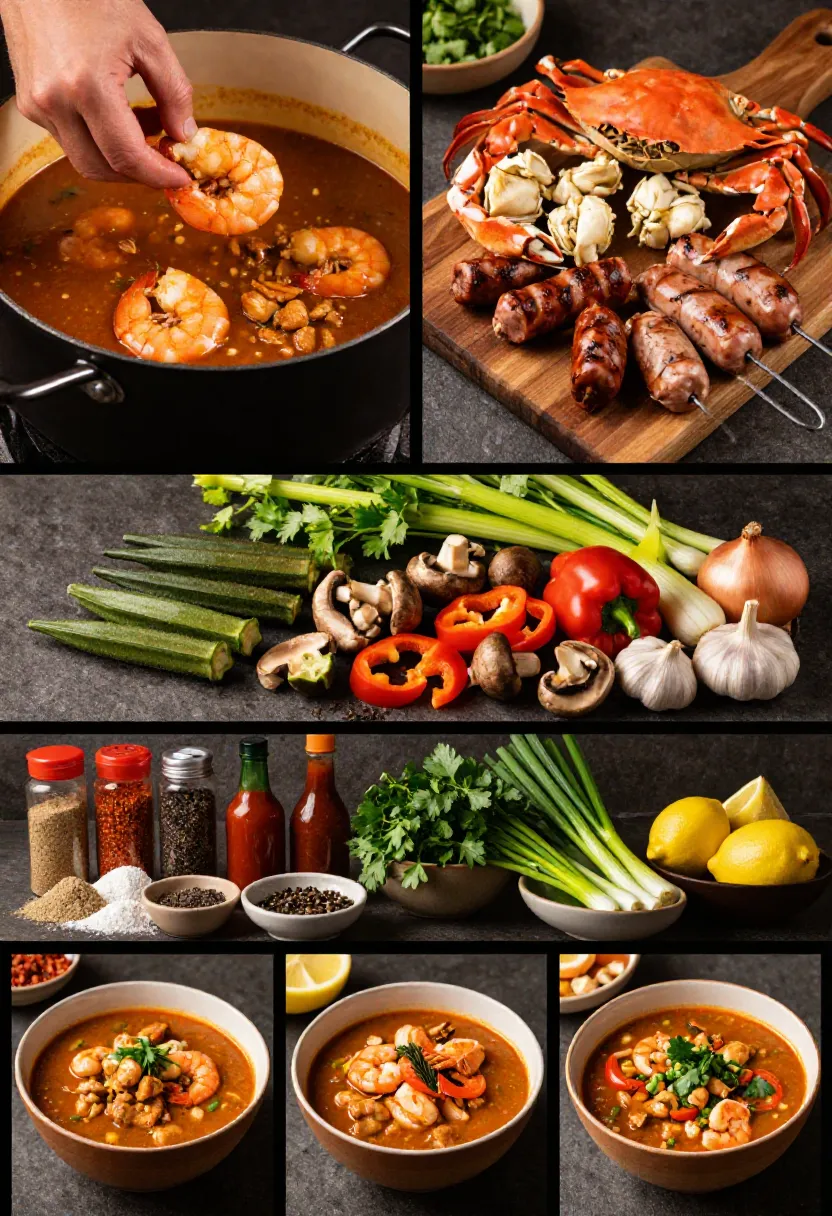
The spice level is another place where you can make the recipe your own. Every Cajun seasoning blend is a little different, so tasting as you cook is always a good idea. If your family enjoys bolder flavors, add an extra pinch of cayenne or place your favorite hot sauce on the table. If you prefer something milder, simply reduce the seasoning slightly and let everyone customize their own bowl.
You can also experiment with different proteins depending on what’s in your refrigerator. Chicken thighs stay wonderfully juicy during the long simmer, but chicken breast works just fine if that’s what you have available. Some people add extra slices of andouille sausage for even more smoky flavor, while others use smoked turkey sausage for a lighter variation. Gumbo has always been a practical recipe, and that’s part of its charm—it adapts beautifully without feeling like an entirely different dish.
The finishing touches might seem small, but they make every bowl feel fresh. A handful of chopped parsley, sliced green onions, or fresh chives adds color and brightness just before serving. Some families sprinkle a little filé powder over each bowl, while others prefer a squeeze of fresh lemon to wake up the rich broth. There isn’t one perfect finishing touch, only the one you enjoy most.
If you’d like to experiment, here are a few easy ideas:
- 🦐 Add shrimp during the final 5 minutes of cooking.
- 🦀 Stir in lump crab meat for a seafood-inspired version.
- 🥬 Include sliced okra for a classic Louisiana touch.
- 🌶️ Increase the Cajun seasoning or cayenne for extra heat.
- 🌿 Finish with parsley, green onions, or fresh chives.
- 🍋 Add a squeeze of lemon just before serving.
- 🥣 Prepare it a day ahead for even deeper flavor.
That’s what makes gumbo such a rewarding recipe. You don’t have to chase perfection or follow every step exactly as someone else does. Over time, the recipe naturally becomes your own. Maybe you’ll add a little more spice, swap one ingredient, or discover a combination your family absolutely loves. Before long, you’ll have a version that people begin requesting by name, and honestly, that’s how the best family recipes are born.
❤️ The comfort food everyone asks for again
Some recipes are fun to try once.
Others quietly become part of your regular dinner rotation without you even noticing.
Gumbo definitely belongs in the second group.
The first time you make it, you’re probably focused on getting the roux just right and making sure everything comes together the way it should. By the second or third time, though, the process starts feeling familiar. You know exactly when the onions should go into the pot, when the broth begins smelling just right, and when it’s finally time to serve. Before long, making gumbo becomes less about following a recipe and more about enjoying the ritual.
There’s something almost comforting about the entire experience. The slow stirring, the gentle simmer, the rich aroma filling the kitchen—it all encourages you to slow down for a while. In a world where so many dinners come together in thirty minutes or less, gumbo reminds us that some meals are worth taking a little extra time over.
Then comes the best part.
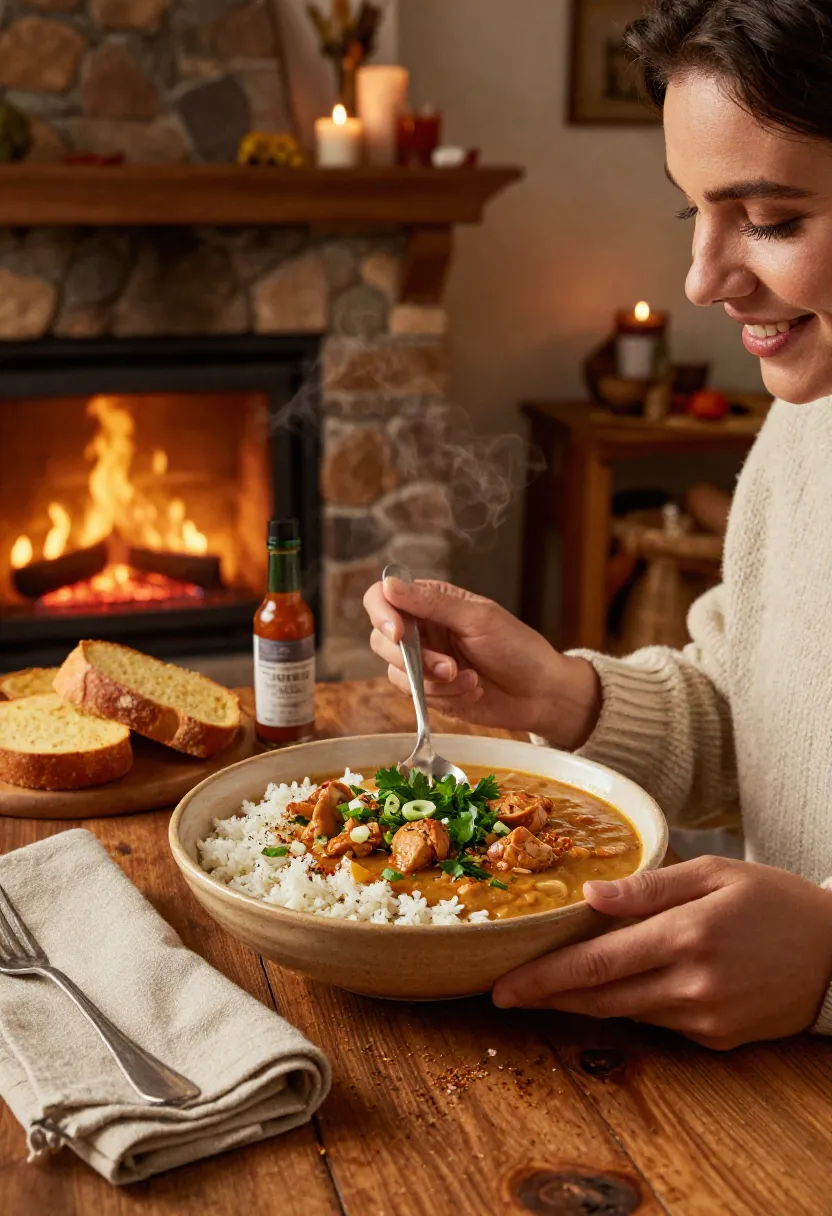
Everyone starts drifting into the kitchen.
Someone lifts the lid just to take another look. Someone else asks if dinner is almost ready because the house smells incredible. By the time the bowls are filled, people are already reaching for bread, passing the hot sauce, and talking about how hungry they are. Those little moments are difficult to recreate with ordinary weeknight meals, but gumbo seems to do it every single time.
The first bite explains why.
The broth is rich without feeling heavy, the chicken is tender enough to fall apart with your spoon, and the smoky sausage adds just enough spice to keep every bite interesting. The rice soaks up all those flavors, turning something simple into a meal that feels incredibly satisfying. It’s warm, filling, and exactly the kind of comfort food people crave when the weather turns cooler—or honestly, whenever they need a good homemade dinner.
Another reason I keep coming back to this recipe is how practical it is. One large pot feeds plenty of people, leftovers store beautifully, and the flavor somehow gets even better overnight. In fact, many gumbo lovers will tell you the second day’s bowl is their favorite because all the herbs, spices, and smoky flavors have had even more time to come together.
Whether you’re serving it for a casual family dinner, a football watch party, or inviting friends over on the weekend, gumbo never feels out of place. It’s comforting enough for quiet evenings at home but impressive enough that guests always ask for the recipe before they leave.
So don’t worry too much about making everything perfect the first time. Take your time with the roux, trust the process, and enjoy the incredible aromas that fill your kitchen along the way. Cooking gumbo is every bit as rewarding as eating it, and that’s part of what has kept this Louisiana classic alive for so many generations.
Some meals simply fill you up.
Gumbo goes a little further than that.
It brings people into the kitchen before dinner is ready, keeps everyone around the table a little longer, and creates the kind of memories that often become family traditions. And if your experience is anything like mine, it won’t be long before someone looks up from an empty bowl and asks the same question everyone eventually does: “When are you making gumbo again?”