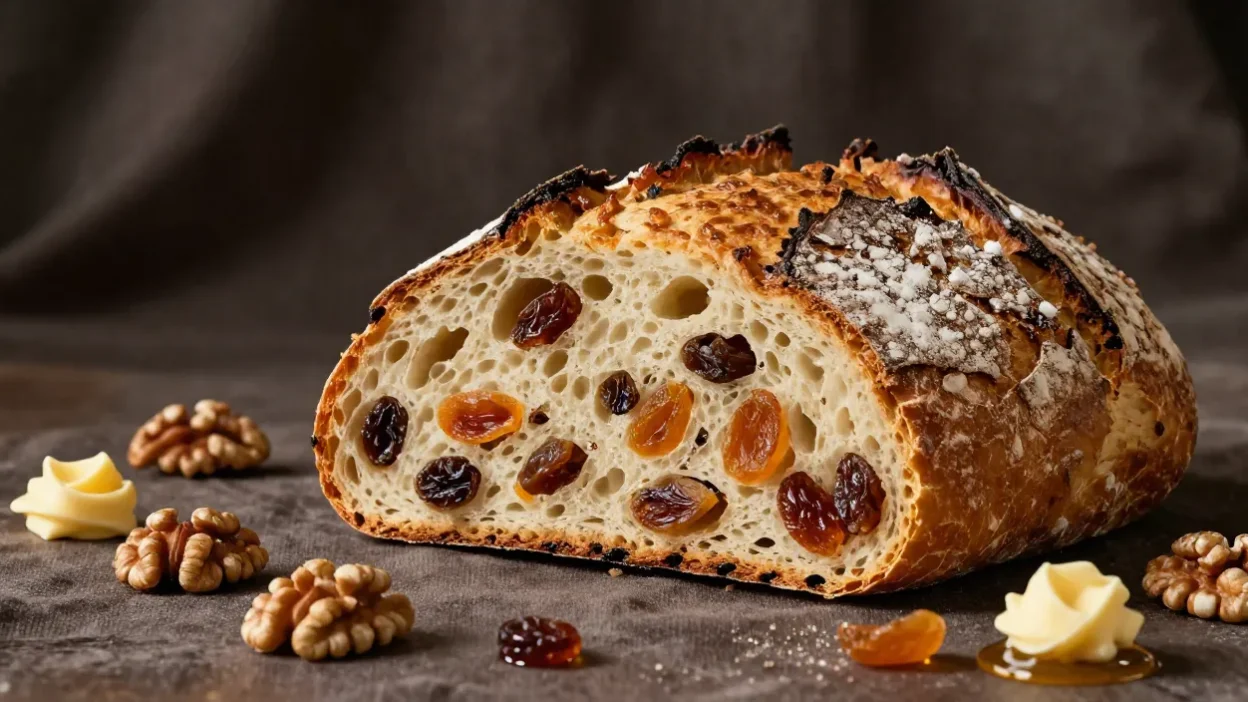
Fruit sourdough has a completely different atmosphere compared to regular homemade bread. Even the dough feels heavier in your hands while folding it. Slightly sticky from soaked raisins, soft around the edges because of the long fermentation, with that deep sour aroma that slowly fills the kitchen while the loaf rests overnight. 🍞
This is the kind of bread that naturally slows people down.
You notice it while shaping the dough, while waiting for the crust to darken in the oven, even while standing impatiently beside the cooling rack trying not to cut into the loaf too early. Plain sourdough already demands patience, but fruit sourdough somehow stretches time even more because the smell becomes impossible to ignore once the dried fruit starts caramelizing inside the crust.
The aroma changes gradually during baking too. First warm flour and fermentation, then toasted walnuts, then buttery sweetness from raisins and apricots once the heat fully reaches the center of the loaf. Toward the end, the crust develops this darker almost roasted smell that makes the whole kitchen feel like a small bakery on a cold morning. 🧈
And unlike soft commercial fruit bread, sourdough still keeps a rustic edge underneath the sweetness. The tangy crumb prevents the loaf from becoming cake-like, which is exactly why the balance works so well.
There’s also something oddly comforting about the imperfections in homemade fruit sourdough. Some loaves rise unevenly. Sometimes a raisin bursts through the crust and caramelizes darker than expected. Occasionally the scoring opens dramatically on one side while the other stays tight and compact. Bakery loaves often look cleaner and more symmetrical, but homemade versions usually feel warmer somehow because they look alive instead of factory-perfect.
The crust itself changes depending on how much fruit sits near the surface. Areas around exposed raisins become darker and shinier because of the natural sugars, while sections without fruit stay deeply crisp and rustic. Once sliced, the inside almost looks marbled with pockets of color scattered through the crumb.
And honestly, the sound matters too.
Fresh fruit sourdough crackles loudly while cooling. Tiny sharp cracking noises from the crust continue for nearly half an hour after baking, especially if the loaf developed good oven spring. That sound mixed with the smell of toasted walnuts and warm fermentation makes the whole kitchen feel calmer somehow.
🍇 Why dried fruit works so naturally inside sourdough
At first glance, sourdough and sweet fruit sound slightly mismatched. Sourdough usually gets connected to savory sandwiches, olive loaves, soups, and salty butter. But once fruit gets folded into the dough properly, the combination starts making perfect sense.
The acidity from fermentation needs contrast.
Raisins soften the sharper edges of the sourdough flavor while apricots bring little bright bursts of sweetness throughout the crumb. Dates create something deeper and richer because they almost melt slightly during baking. Cranberries stay sharper and more noticeable. Every fruit changes the bread differently depending on how much sugar and moisture it carries into the dough.
Walnuts matter just as much as the fruit itself.
Without nuts, fruit sourdough can become overly soft in flavor after a few slices. Toasted walnuts bring bitterness back into the bread, especially near the crust where they roast further during baking. Pecans create a milder loaf, while hazelnuts push the bread into something warmer and slightly more dessert-like.
One thing that surprises people the first time they bake fruit sourdough is how much the add-ins affect fermentation. Sugars from dried fruit speed things up slightly, especially in warm kitchens. A dough that behaves perfectly one week may suddenly ferment much faster the next time if the room temperature changes even a little.
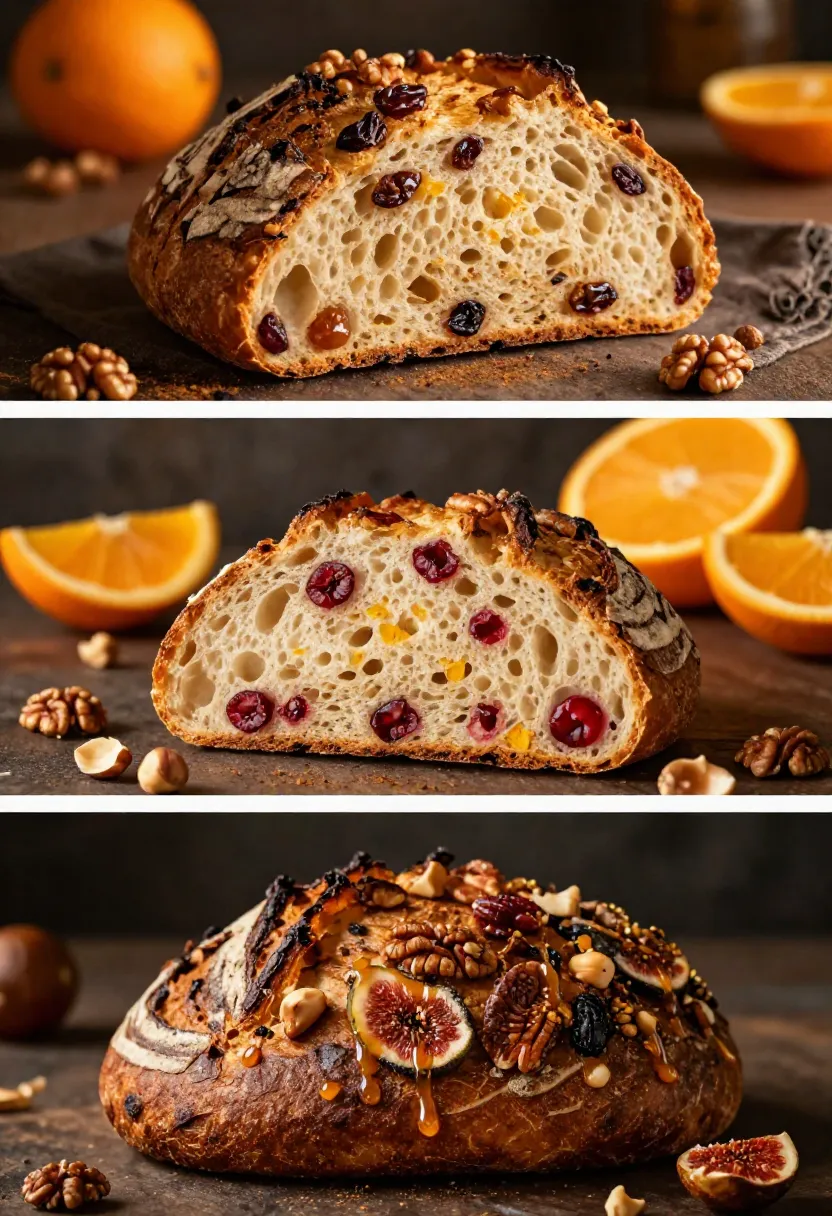
Actually, some of the best loaves end up being the slightly messy ones anyway. Fruit poking through the crust, uneven blistering, darker spots where raisins caramelized harder than expected. Perfectly uniform sourdough sometimes feels less alive somehow.
The choice of fruit changes the personality of the bread more than most people expect too. A loaf built around figs and walnuts feels deep and earthy, almost like something meant for late autumn dinners beside soup or wine. Cranberries and orange zest taste brighter and lighter, better for winter breakfasts or holiday tables. Dates create the richest crumb because they soften almost completely into the dough while baking.
Even the sweetness changes depending on the fruit.
Golden raisins stay lighter and softer in flavor, while dark raisins create deeper almost caramel-like notes throughout the bread. Chopped dried apples can work beautifully too, although they absorb a surprising amount of moisture and sometimes make the dough tighter during shaping.
A few combinations work especially well in fruit sourdough:
- Raisins + walnuts + cinnamon 🍇
- Cranberries + orange zest + pecans 🍊
- Dates + hazelnuts + cardamom 🌰
- Dried cherries + pistachios 🍒
- Figs + walnuts + honey 🍯
Actually, one of the best loaves I ever made happened almost by accident after mixing leftover dried cherries into the dough because I didn’t have enough raisins. The cherries became slightly jammy while baking and stained parts of the crumb deep red around the edges. The loaf looked chaotic honestly, but the flavor ended up incredible.
☕ The atmosphere around this bread matters too
Fruit sourdough feels tied to certain moods and seasons in a way plain bread usually doesn’t.
It belongs to rainy weekends, colder mornings, late autumn kitchens, oversized sweaters, slow breakfasts, and evenings where dinner quietly stretches longer than expected. Fresh slices beside coffee in the morning feel comforting in one way, while warm toasted pieces with sharp cheese and wine later at night feel completely different.
This is one of those breads that naturally gathers people around the table because the smell drifts through the entire house while baking. People start wandering into the kitchen “just to check on it,” even though everyone already knows exactly why they came in there. The crust crackling while the loaf cools somehow makes the room feel warmer too, especially when it’s cold or raining outside. 🌧️
And toasted fruit sourdough with butter is honestly hard to beat. The edges crisp up, the fruit softens again from the heat, and the walnuts become even more fragrant once warmed a second time.
The bread changes surprisingly well throughout the day too. Early in the morning it feels simple and comforting beside strong coffee or tea, especially when butter slowly melts into the warm crumb and disappears into little air pockets inside the bread. Later in the evening, the exact same loaf suddenly feels richer and more indulgent once paired with wine, soft cheese, roasted vegetables, or even dark fruit preserves.
Actually, fruit sourdough beside soup might be one of the most underrated combinations ever.
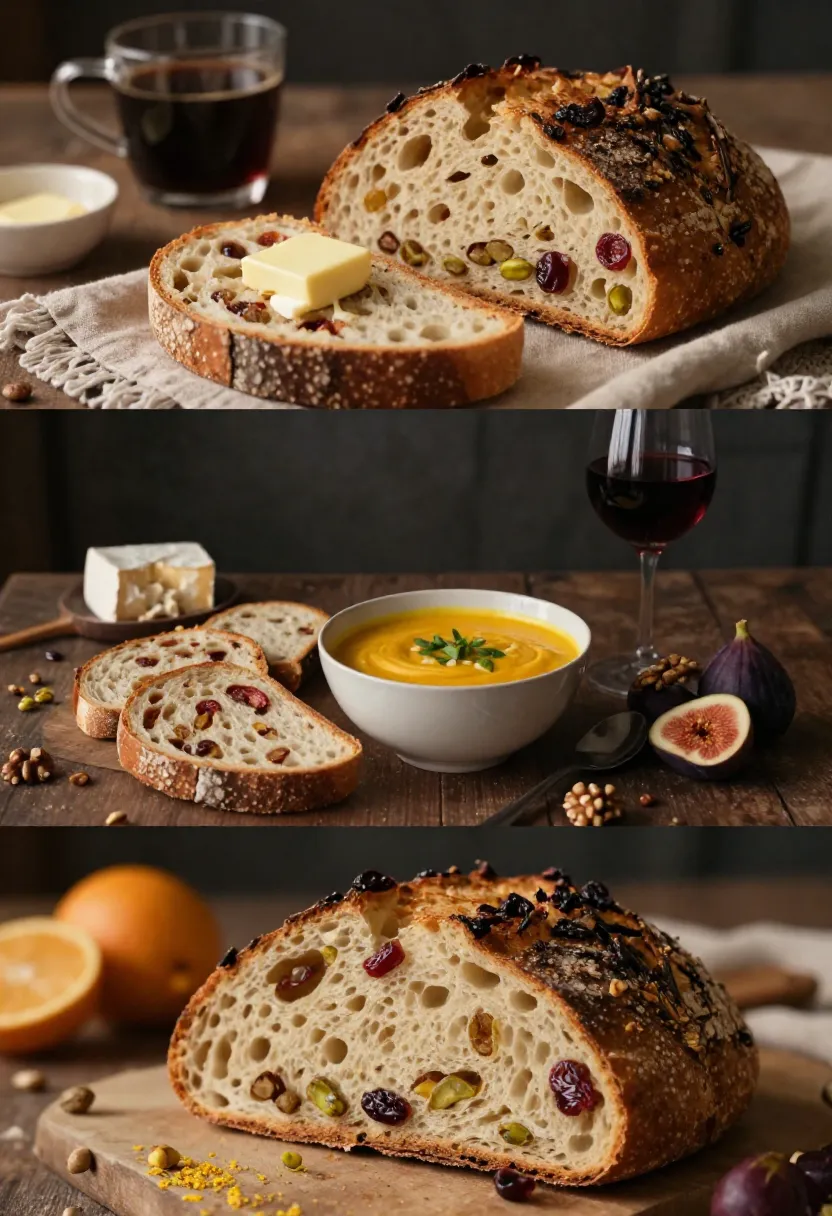
Creamy squash soup, mushroom soup, or roasted carrot soup all work beautifully because the slight sweetness in the bread balances earthy vegetables surprisingly well. The crust stays crisp enough for dipping while the fruit inside softens slightly from the steam rising off the bowl. A thick soup and a few warm slices of fruit sourdough somehow turn an ordinary dinner into something that feels slower and calmer without much effort.
The texture changes depending on how the bread is served too. Fresh slices stay chewy and slightly glossy inside, while toasted pieces become crisp around the edges with softer almost jam-like fruit hidden throughout the crumb. Some people prefer it fresh, but honestly I think fruit sourdough becomes even better once toasted the next day.
Some combinations work especially well with this kind of loaf:
| Pairing 🍽️ | Flavor balance | Texture combination | Best moment |
|---|---|---|---|
| Salted butter | Balances sweetness | Crisp crust + creamy butter | Morning breakfast |
| Blue cheese | Sharp contrast to fruit | Soft cheese + chewy crumb | Evening snack |
| Ricotta + honey | Light creamy sweetness | Airy ricotta + toasted bread | Weekend brunch |
| Roasted squash soup | Earthy and warm flavors | Thick soup + crunchy crust | Autumn dinner |
| Cream cheese + cinnamon | Warm bakery-style flavor | Smooth topping + soft fruit | Cozy afternoon coffee |
| Brie + walnuts | Rich and buttery contrast | Melted cheese + crisp crust | Holiday table |
| Goat cheese + figs | Tangy and slightly sweet | Creamy cheese + chewy crumb | Wine night |
| Apple butter | Deep caramel sweetness | Soft spread + crisp toast | Cold mornings |
One of my favorite versions used dried cherries and pistachios instead of raisins and walnuts. The loaf looked beautiful once sliced, although the dough became annoyingly difficult to shape because cherries kept tearing through the surface during folding. Still worth it honestly. The cherries darkened into almost jam-like pockets during baking while the pistachios stayed slightly crisp inside the crumb, which gave the whole loaf a completely different texture from more traditional versions.
I’ve also tried adding orange zest during colder months, especially around winter holidays, and the smell while baking becomes unbelievable. The citrus mixes with toasted nuts and sourdough fermentation in a way that makes the entire kitchen smell like an old bakery somewhere during December.
And maybe that’s part of why people become so attached to sourdough baking in general. The bread feels personal. Slightly unpredictable. Every loaf changes a little depending on the weather, fermentation, flour, hydration, or even how carefully the dough was folded that day.
Some loaves rise beautifully with dramatic blistered crusts. Others stay flatter but develop a softer richer crumb inside. Sometimes the fruit caramelizes more heavily near the edges and creates darker chewy spots around the crust that honestly taste incredible once toasted.
That unpredictability somehow makes the finished loaf feel even better once it finally comes out of the oven. It never feels factory-made or perfectly controlled. It feels homemade in the best possible way.
🍞 Fruit sourdough recipe
This fruit sourdough loaf lands somewhere between rustic artisan bread and something you’d want to eat slowly with coffee while the kitchen still smells warm from baking. The crust comes out dark and crackly, the inside stays chewy, and the dried fruit softens enough during baking that some pieces almost melt right into the crumb.
The sourdough tang matters here more than people expect.
Without it, the loaf would probably drift too far into sweet breakfast-bread territory. But the fermentation keeps everything balanced. You still taste toasted grain, slight acidity, roasted walnuts, and that deeper almost caramel-like flavor that develops around the raisins once they bake into the crust.
And honestly, the texture is probably my favorite part.
Some bites are mostly airy sourdough with crisp crust, then suddenly you hit a warm pocket of apricot or raisin hidden inside the loaf. The walnuts break things up too, especially after toasting because they stay slightly crunchy even after baking.
The overnight proof changes the bread completely as well. The crumb becomes more flavorful, the crust browns better, and the whole loaf gets that bakery-style smell that hangs around the kitchen for hours afterward. Toasted the next morning with salted butter? Even better somehow. 🧈
This also isn’t one of those overly sweet fruit breads that feel more like cake pretending to be bread. It still tastes rustic. Slightly uneven. A little chewy. The fruit supports the sourdough instead of overpowering it, which is exactly why the loaf stays interesting even after a few slices.
And if I’m honest, fruit sourdough usually tastes better on day two anyway. The flavors settle, the fruit softens more into the crumb, and toasted slices get these darker caramelized edges that are ridiculously good with coffee.
Ingredients 🥣
- 500 g bread flour
- 350 g water
- 100 g active sourdough starter
- 10 g salt
- 120 g raisins
- 80 g dried apricots, chopped
- 90 g walnuts, lightly toasted
- 20 g honey
- 1 tsp cinnamon
- 1 tsp orange zest
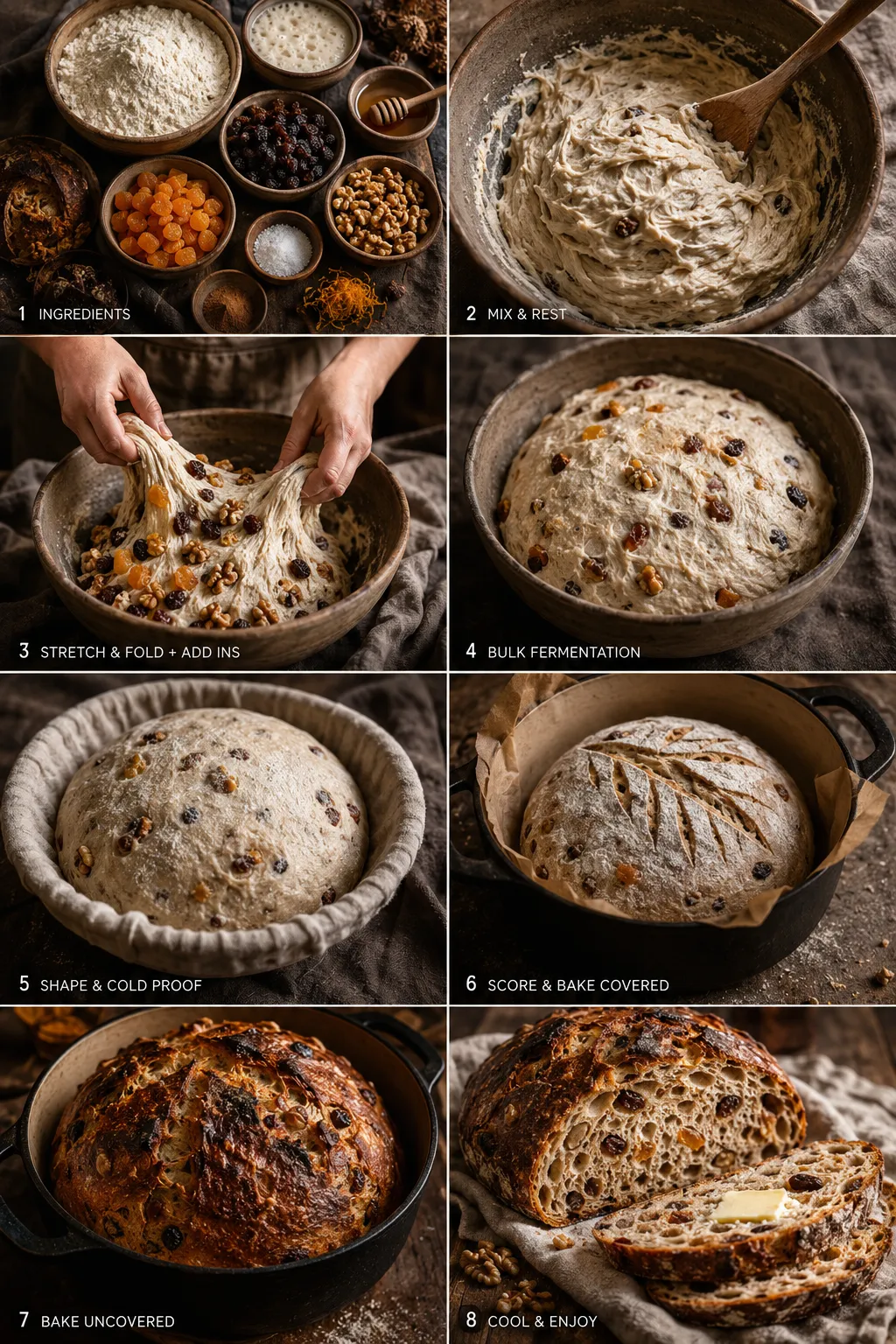
Instructions 👩🍳
🔥 Small cooking tips that help a lot
- Slightly wet hands make stretch-and-fold sessions much easier when working with sticky fruit dough. Otherwise the raisins and softer parts of the dough cling to your fingers constantly, which gets frustrating pretty quickly.
- Don’t overload the loaf with too much fruit or too many nuts. It sounds tempting at first, but heavy add-ins can weaken the dough structure and make the finished bread much denser instead of airy and chewy.
- Tea works beautifully for soaking raisins instead of plain water ☕ Black tea especially adds a deeper almost cozy flavor to the bread without making the loaf actually taste like tea.
- Toasted walnuts taste significantly better than raw ones inside sourdough. The flavor becomes warmer, richer, and slightly buttery after baking, while raw walnuts can sometimes taste flat once the loaf cools.
- If a few raisins peek through the surface during shaping, tuck them back inside gently before baking. Exposed fruit tends to caramelize very quickly in the oven and can burn before the crust fully finishes baking.
- Let the loaf cool longer than you think it needs. Warm fruit sourdough smells incredible fresh from the oven, but the crumb continues settling while cooling. Slicing too early can make the inside slightly gummy instead of properly chewy.
🧀 The best ways to serve fruit sourdough
Fresh fruit sourdough already tastes good on its own, but certain toppings completely change the mood of the bread depending on how it’s served.
Butter keeps things simple and warm. Cream cheese creates something softer and slightly richer. Sharp cheeses like aged cheddar or blue cheese pull the loaf toward savory territory and make the fruit taste deeper instead of sweeter. Even something as small as flaky sea salt on top of melted butter changes the whole balance of the bread and suddenly brings out more of the sourdough flavor underneath the fruit.
Toasted slices also work beautifully for breakfast boards with fruit, nuts, soft cheese, and coffee. The loaf feels rustic enough for casual mornings but still impressive enough for guests if arranged properly on a large wooden board. Actually, fruit sourdough tends to look better slightly messy anyway. Uneven slices, softened butter, scattered walnuts, maybe a spoonful of honey somewhere on the side. Too much perfection almost ruins the atmosphere.
And honestly, slightly burnt edges from the toaster taste weirdly good with this bread. The fruit caramelizes further and develops darker almost smoky sweetness around the crust.
One thing I noticed after making this loaf a few times is how differently it behaves depending on temperature. Fresh room-temperature slices stay chewy and soft, while toasted pieces become crisp around the edges with little jam-like pockets hidden inside the crumb. Warm fruit sourdough also smells dramatically stronger once reheated, especially if orange zest or cinnamon was added to the dough.
This bread works surprisingly well beyond breakfast too.
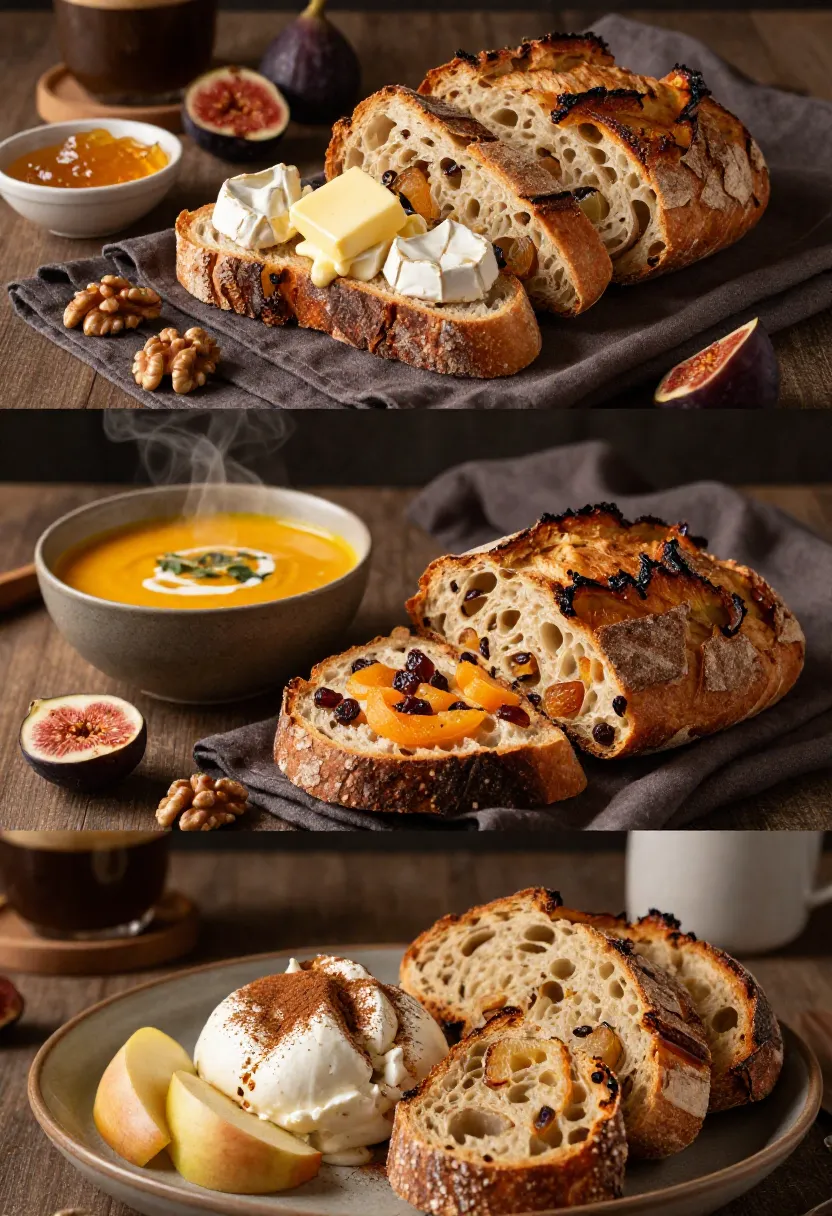
Serve it beside roasted vegetable soup and it suddenly feels hearty and rustic. Add soft brie and red wine, and the same loaf starts feeling almost restaurant-like. A thick slice with mascarpone and honey leans dessert-adjacent without becoming overly sweet. Even plain toasted slices with coffee late at night somehow feel comforting in a way ordinary bread usually doesn’t.
Some of the best serving combinations honestly happen accidentally. Whatever cheese is left in the fridge, leftover soup from dinner, fruit preserves sitting open on the counter. Fruit sourdough handles all of it surprisingly well because the sourness underneath keeps the bread balanced no matter what gets added on top.
A few combinations that work especially well:
- Salted butter and flaky sea salt 🧈
- Blue cheese with walnuts
- Ricotta and honey
- Brie with fig jam
- Sharp cheddar and apple slices 🍎
- Mascarpone with cinnamon
- Cream cheese and orange marmalade
- Toasted beside mushroom or squash soup 🍲
And if there’s leftover bread after a couple of days, fruit sourdough makes incredible French toast. Probably better than standard brioche honestly because the sourdough tang stops everything from becoming overwhelmingly sweet once syrup gets added.
🍷 Small variations that change the loaf completely
One of the best things about fruit sourdough is how flexible it becomes once you understand the basic dough structure.
Cranberries and orange zest create a brighter winter-style loaf. Dates and pecans feel softer and richer. Dried figs with hazelnuts make the bread almost taste Mediterranean somehow, especially with olive oil and cheese beside it.
Spices matter too.
A little cinnamon adds warmth without turning the loaf into dessert bread. Cardamom creates something more aromatic and unexpected. Nutmeg works in tiny amounts, although too much can overpower the sourdough flavor surprisingly fast.
Actually, even switching the honey changes the bread slightly. Darker honey creates deeper caramel notes while lighter honey keeps the loaf cleaner and fresher tasting.
And the flour changes things too, probably more than people expect at first.
A small amount of whole wheat flour makes the loaf feel earthier and heavier, especially paired with walnuts or dates. White bread flour keeps the crumb lighter and more open. Rye flour creates a darker almost old-world flavor that works beautifully with dried figs and toasted nuts during colder months.
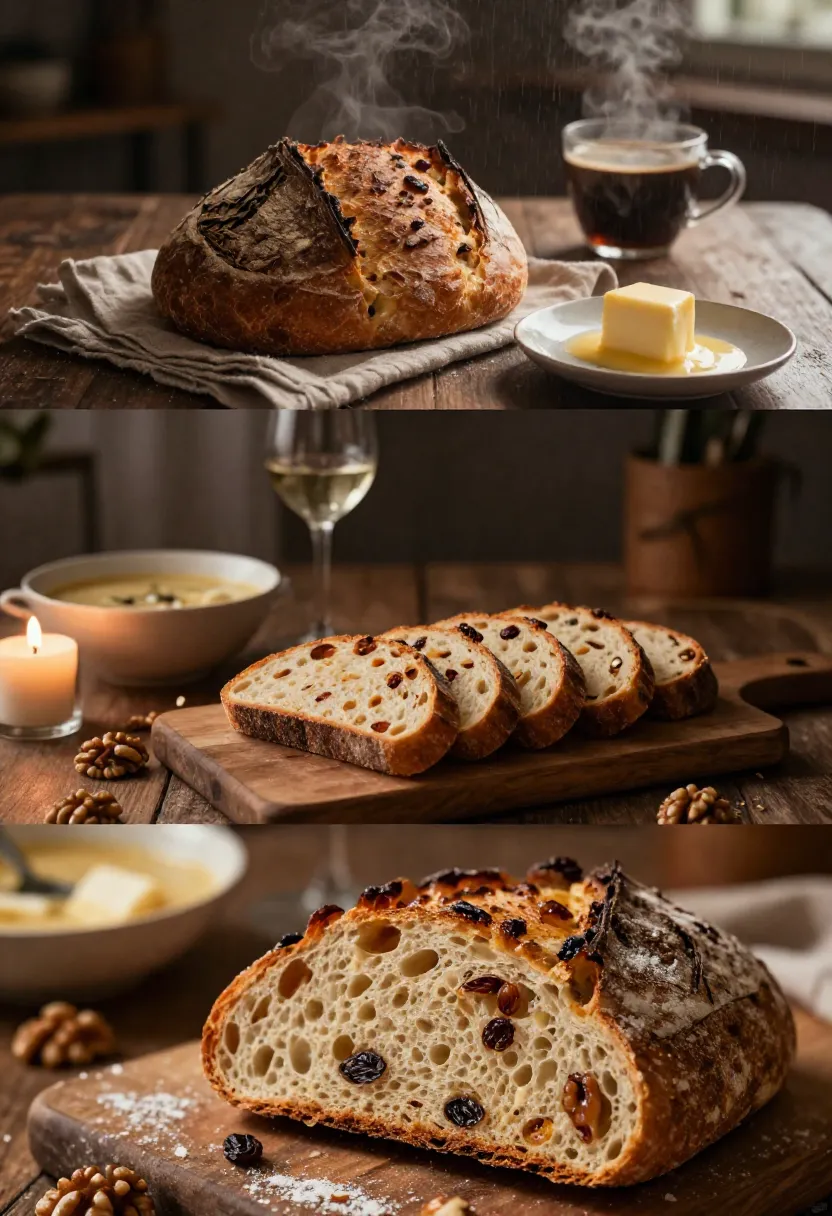
Even the fruit itself changes depending on how it’s prepared before mixing into the dough. Raisins soaked in black tea taste warmer and deeper than raisins soaked in plain water. Rum-soaked fruit creates a richer holiday-style loaf that almost feels festive once baked. Dried cherries become slightly jammy near the crust while apricots stay brighter and softer inside the crumb.
Some combinations feel completely different from one another even though the base dough barely changes:
| Fruit & nut combination 🍇 | Flavor profile | Best season | Overall mood |
|---|---|---|---|
| Raisins + walnuts | Classic and cozy | Autumn | Rustic breakfast loaf |
| Cranberries + orange zest | Bright and fresh | Winter | Holiday-style bread |
| Dates + pecans | Deep and rich | Late autumn | Evening coffee loaf |
| Figs + hazelnuts | Earthy and nutty | Cold months | Mediterranean feel |
| Cherries + pistachios | Slightly tart and buttery | Spring | Elegant brunch bread |
| Apples + cinnamon | Warm and nostalgic | Autumn | Comfort-food loaf |
One of my favorite accidental versions happened after adding too many dried cherries into the dough and assuming the loaf would turn out overly sweet. Somehow the opposite happened. The cherries caramelized harder around the crust and developed this darker almost wine-like flavor once baked. The loaf looked messy and uneven, but honestly tasted better than some carefully planned versions.
That unpredictability becomes part of the process eventually. Some loaves rise dramatically while others stay shorter and denser. Some develop huge blistered crusts while others stay softer outside with richer crumb inside. Sourdough never feels fully controlled, especially once fruit enters the equation.
And that’s probably why people get attached to it.
🌧️ Why this bread feels connected to colder seasons
Some foods naturally belong to certain weather, and fruit sourdough definitely feels like cold-season bread.
Not because you can’t eat it during summer. It just feels more satisfying once the air gets colder outside and people start craving slower comfort food again. The smell alone changes the atmosphere inside the house while the loaf bakes.
Rain outside, warm oven inside, butter slowly melting into toasted slices. Hard combination to dislike honestly.
And maybe that’s part of why sourdough baking became so addictive for so many people in the first place. The process itself forces a slower rhythm for a while. Mixing dough by hand, waiting through fermentation, listening to crust crackle while cooling on the counter.
The bread feels imperfect in a good way. A little uneven sometimes, slightly unpredictable, never identical from loaf to loaf.
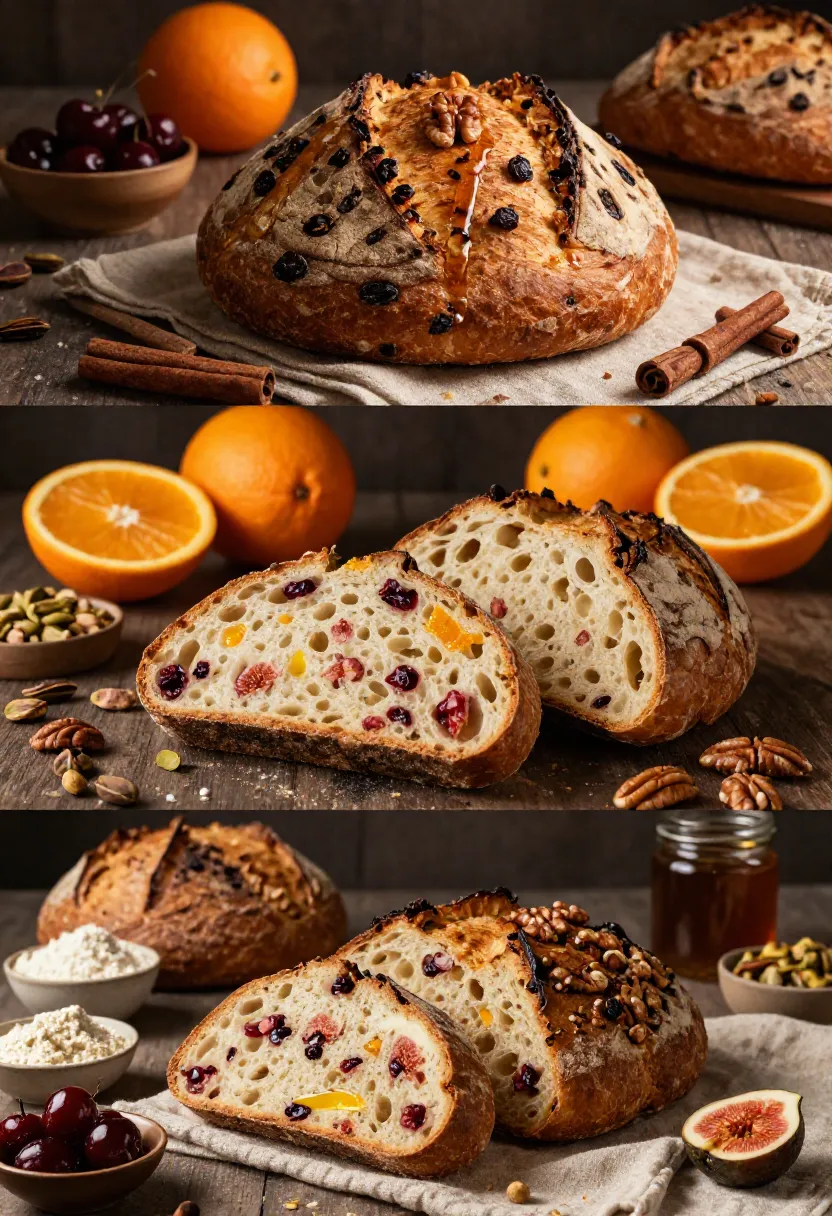
Actually, fruit sourdough almost feels better when it looks rustic instead of polished. Darker spots near the crust where raisins caramelized too much. Uneven scoring lines. Walnuts breaking through one side of the loaf unexpectedly. Those little imperfections somehow make the bread feel warmer and more homemade.
This is also the kind of baking that changes the atmosphere of an entire evening.
While the dough proofs overnight, the kitchen slowly fills with faint fermented sweetness from the fruit and starter. By morning, the smell becomes deeper and richer once the loaf hits the heat of the oven. Toasted walnuts, caramelized raisins, warm flour, slight acidity from the sourdough — all of it mixes together into something that feels unmistakably comforting.
Cold weather somehow amplifies the experience too.
There’s something about baking bread while the windows fog slightly from the oven heat that makes staying home feel significantly better. Especially on quiet weekends where breakfast drifts slowly into late morning without anyone really noticing the time.
Fruit sourdough also fits gatherings naturally. Big wooden boards with cheese, soup simmering on the stove, wine glasses sitting half-full while slices disappear faster than expected. It’s not flashy food, but people keep reaching for another piece anyway.
And honestly, I think part of the appeal comes from how physical sourdough baking feels compared to most modern cooking. Folding sticky dough by hand, flour dusted across the counter, checking fermentation by touch instead of timers. The process feels slower and more real somehow.
That’s exactly what makes it memorable.