Tofu scramble has a strange reputation.
People usually fall into two groups with it. They either love it immediately or spend years convinced it can never taste properly satisfying. I honestly understand both reactions because my first attempt at tofu scramble was… not great. Warm yellow crumbles, barely seasoned, weirdly dry around the edges and somehow watery in the middle at the same time. Technically edible. Completely forgettable.
For a long time, I assumed tofu scramble was one of those “healthy recipes” people pretended to enjoy more than they actually did.
What changed my mind was stopping the comparison with eggs altogether.
Because tofu is not eggs. It reacts differently to heat, absorbs seasoning differently, and behaves completely differently in a skillet. Once I stopped expecting it to imitate scrambled eggs perfectly, the whole recipe became easier to understand.
Now it has turned into one of those meals I make almost automatically. Especially on slower mornings when the kitchen still feels quiet and the coffee has not fully kicked in yet ☕.
A good tofu scramble should smell savory before you even sit down to eat it. Onion softening in olive oil, garlic warming in the pan, smoked paprika hitting the heat and turning fragrant almost immediately. Maybe cumin if you want something earthier. Maybe chili flakes if the morning feels especially slow and cold outside.
The smell changes the atmosphere in the kitchen completely.
And texture matters more than people realize.
The best tofu scramble is not perfectly uniform. Some pieces stay soft and creamy while smaller crumbles catch against the skillet and turn golden at the edges. That contrast keeps every bite from blending into one flat texture.
I also think tofu scramble works because it adapts so easily to real life.
It works on rushed weekday mornings when you barely have time to toast bread properly. But it also fits slower weekend breakfasts where everything stays on the table too long and somebody reheats their coffee three times before finishing it.
I have made versions packed with mushrooms and thyme during winter. Versions loaded with tomatoes and herbs in late summer. One especially good version happened almost by accident with leftover roasted sweet potatoes and a spoonful of chili crisp folded in at the end.
That flexibility is probably why people keep coming back to tofu scramble once they figure out their own rhythm with it.
Not every breakfast survives outside a recipe page. This one usually does.
Why tofu scramble works better than people expect 🍳
The biggest mistake with tofu scramble is trying too hard to make it behave exactly like scrambled eggs.
You can always tell when a recipe focuses more on appearance than flavor. The tofu gets mashed too finely, overloaded with turmeric for color, and cooked into tiny dry crumbles that somehow taste dusty and watery at the same time.
Good tofu scramble works differently.
Instead of copying eggs perfectly, it builds its own texture and flavor profile. Firm tofu gives structure while spices, aromatics, and fat create depth around it. Once you stop expecting an exact imitation, the dish starts making a lot more sense.
That is also why the cooking order matters more than people think.
If onions still taste sharp and undercooked when the tofu enters the skillet, the whole scramble feels unfinished. But when onions soften slowly and pick up golden edges first, they create a savory base that carries through the rest of the dish.
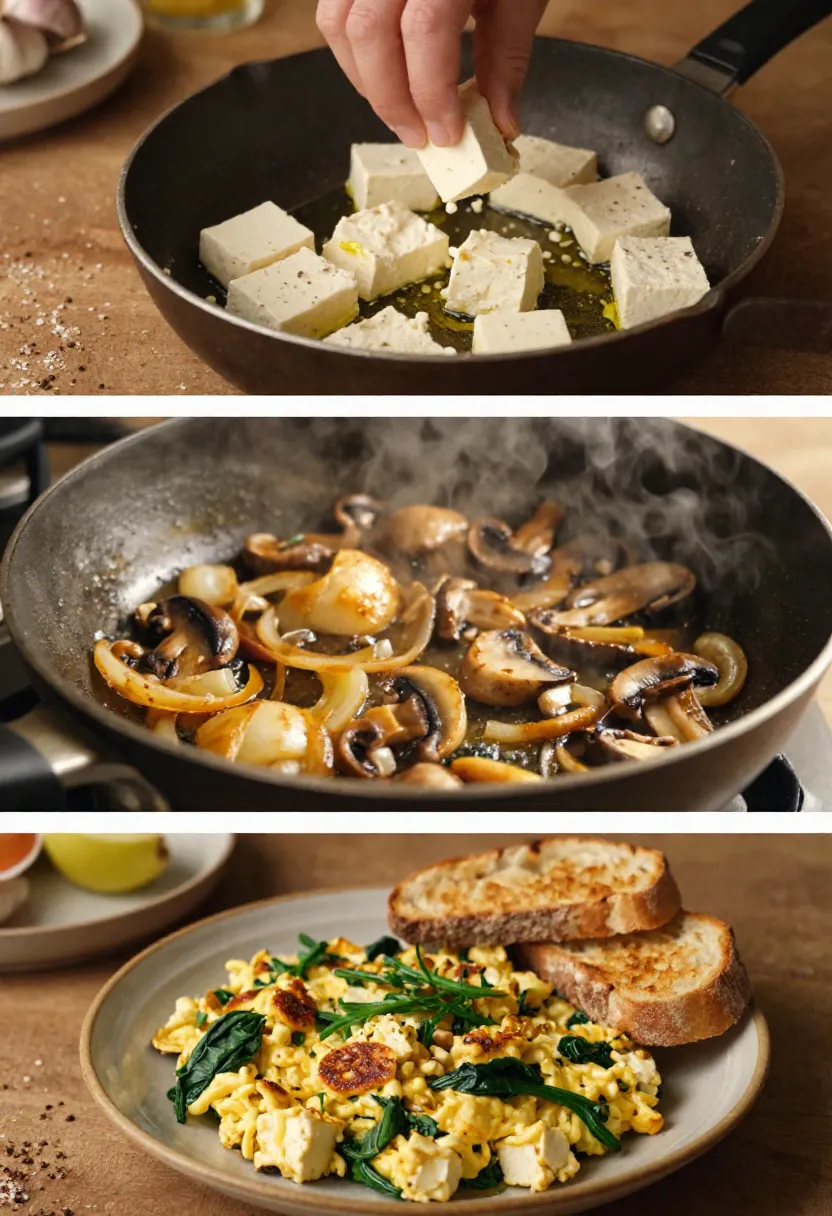
The same thing applies to garlic.
Garlic should smell mellow and warm, not harsh or aggressive. Sometimes thirty extra seconds in the pan changes the entire flavor of the scramble.
Moisture balance matters too, and a lot of recipes get that part wrong.
Some versions tell you to press tofu aggressively for thirty or forty minutes. That works for crispy baked tofu or stir-fries, but for scramble I actually prefer leaving a little moisture inside. Otherwise the tofu dries out before the edges have time to brown properly.
And browning matters more than people realize.
If you stir constantly, the tofu never develops texture. Letting it sit untouched for short stretches creates little crisp spots throughout the skillet, and those browned edges make the scramble feel much more substantial and satisfying.
Here is the balance I usually aim for when building tofu scramble:
| Ingredient | What it adds | Why it matters |
|---|---|---|
| Firm tofu | Soft texture with crisp edges | Holds flavor without falling apart |
| Onion | Sweetness and depth | Builds a savory base |
| Garlic | Warm sharpness | Keeps the scramble from tasting flat |
| Turmeric | Color and warmth | Adds earthiness without overpowering |
| Nutritional yeast | Nutty richness | Gives depth and slight creaminess |
| Olive oil or vegan butter | Better mouthfeel | Helps spices coat the tofu evenly |
| Spinach | Fresh contrast | Balances heavier flavors |
| Mushrooms | Meaty texture | Makes the scramble feel heartier |
| Cherry tomatoes | Sweet acidity | Brightens smoky spices |
| Black salt | Egg-like aroma | Adds familiar breakfast flavor |
| Fresh herbs | Clean finish | Cuts through richness |
Another thing people rarely mention is how well tofu scramble reheats.
The flavor actually deepens a little overnight, especially if the scramble includes onions, mushrooms, or roasted vegetables. I have eaten leftovers cold from the fridge standing in front of the open refrigerator door more than once 😄.
Still good.
And honestly, that says a lot about whether a recipe actually works in real life.
The kind of breakfast that slows the morning down 🥖
Some breakfasts feel purely functional.
Coffee. Toast. Something eaten quickly while standing near the sink because there is not enough time to sit down properly ☕.
Tofu scramble feels different when you let it become an actual meal instead of just a quick source of protein.
The smell alone changes the atmosphere in the kitchen. Garlic, onions, warm spices, toasted bread. Especially on colder mornings when the windows fog slightly while the skillet cooks and the coffee is still too hot to drink properly.
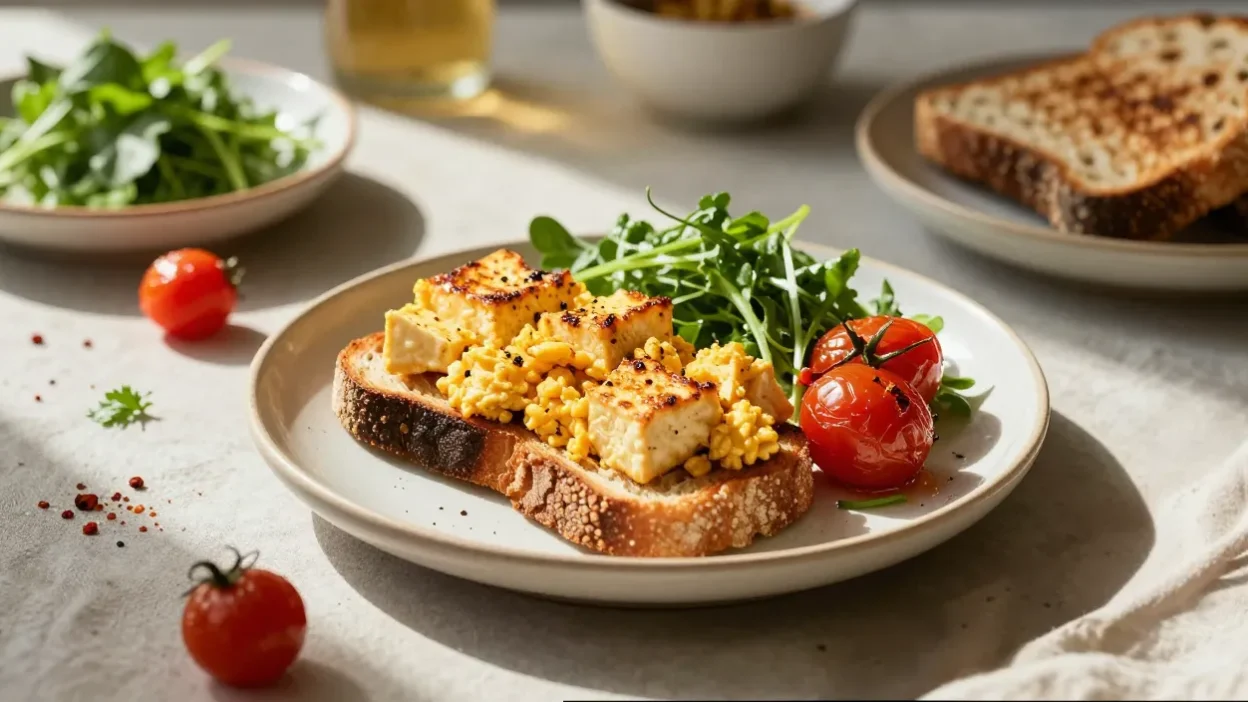
I usually serve tofu scramble with sourdough because the crunch balances the softer texture of the tofu. Avocado works well too, but honestly I prefer sharper flavors beside it. Pickled onions. Chili crisp. Lemon wedges squeezed over the top right before eating.
Fresh herbs help more than people expect.
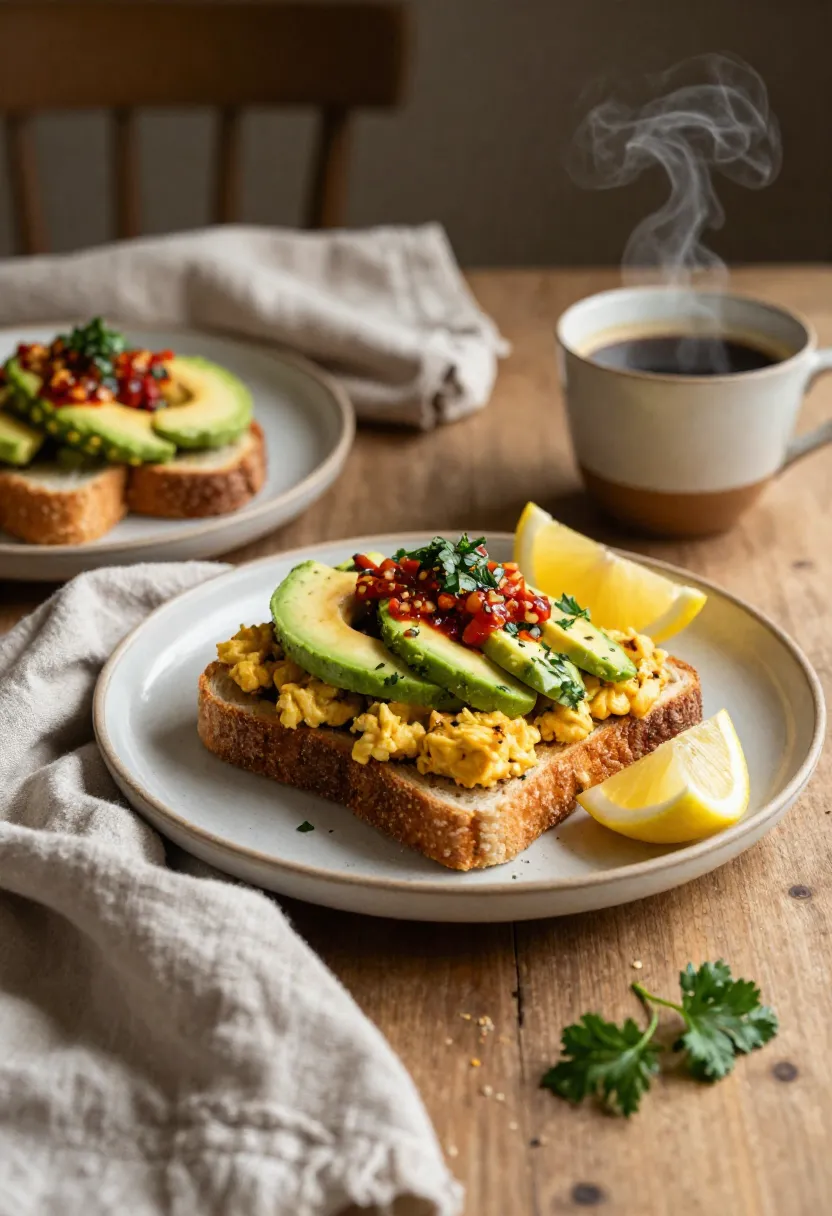
Parsley brightens the entire skillet. Chives make everything taste cleaner. Cilantro pushes the flavor into a more savory, almost taco-style direction. Even a small handful added at the end changes the scramble more than another spoonful of spice.
There is also something practical about tofu scramble that makes it easy to return to every week.
- it cooks quickly
- it uses inexpensive ingredients
- it works for breakfast, lunch, or dinner
- you can use leftover vegetables from the fridge
- the recipe changes easily with the seasons
That last part matters more than people think.
A lot of good home cooking starts with using what already exists in the kitchen instead of planning perfectly every single time. Half a zucchini sitting in the drawer? Slice it thin and cook it with the onions. A handful of spinach slightly past its best? Toss it in near the end. Leftover roasted potatoes from dinner the night before? They work surprisingly well beside smoky tofu scramble.
The recipe forgives small improvisations.
Which is probably why people end up developing their own versions after a while. Some make it spicy. Some load it with herbs. Some keep it simple with olive oil, black pepper, and toast.
That flexibility makes the whole dish feel more lived-in somehow.
Less like a trendy recipe online. More like an actual breakfast people continue making long after the photos disappear.
Tofu scramble recipe 🍽️
This tofu scramble stays soft in the center while getting slightly crisp around the edges. The onions cook low and slow first, which gives the whole dish more depth before the tofu even touches the pan. Garlic melts into the olive oil, smoked paprika warms everything up, and the spinach softens just enough to balance the richer flavors.
The texture is what makes the recipe work so well. Some pieces of tofu stay tender while smaller crumbles brown against the skillet and pick up a little crispness. That contrast keeps the scramble from feeling heavy or one-dimensional.
It is also the kind of breakfast that fills the kitchen with real cooking smells instead of just toasted bread and coffee ☕. Warm spices, onions turning golden, fresh herbs scattered over the top right before serving.
I especially like this version with thick sourdough toast because the crunch works perfectly beside the softer scramble. Avocado, roasted tomatoes, chili oil, sautéed mushrooms, or crispy potatoes all fit naturally alongside it depending on the mood or season.
And honestly, it does not feel like a “substitute” breakfast at all. It feels like its own thing. Savory, comforting, flexible, and filling enough to carry you through a slow weekend morning or a rushed weekday lunch without much effort.
Ingredients
- 400 g firm tofu
- 1 small yellow onion, finely sliced
- 2 garlic cloves, minced
- 1 small red pepper, sliced
- 2 cups spinach
- 2 tablespoons olive oil
- 1 tablespoon nutritional yeast
- 1/2 teaspoon turmeric
- 1/2 teaspoon smoked paprika
- 1/4 teaspoon cumin
- pinch of black salt or regular salt
- black pepper
- sourdough toast, for serving
- chili oil or fresh herbs, optional
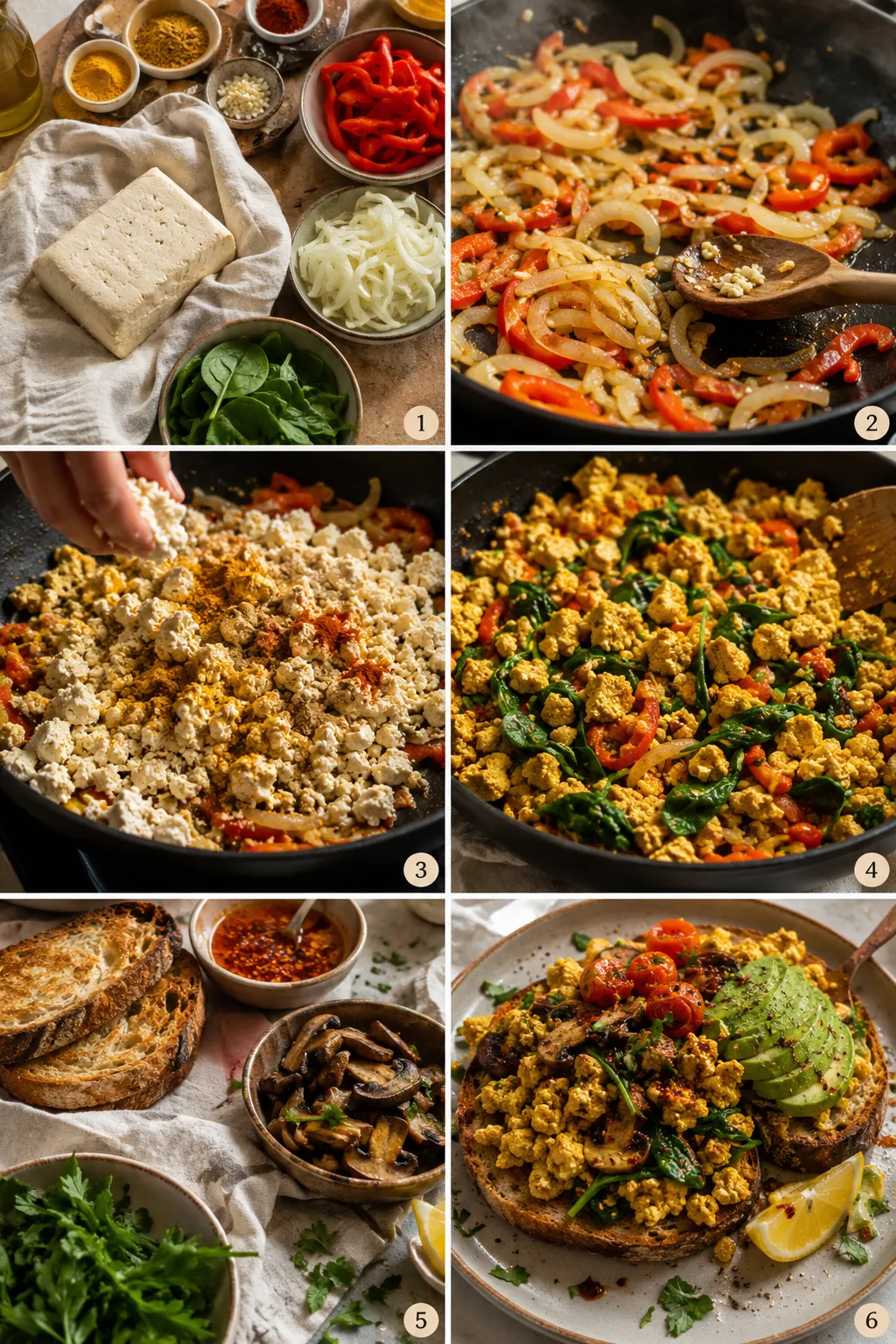
Instructions
- Wrap the tofu in paper towels or a clean kitchen towel and press gently for about 10–15 minutes. You do not need to remove every bit of moisture.
- Heat olive oil in a large skillet over medium heat. Add the onion and cook slowly until soft and slightly golden, around 7 minutes.
- Add garlic and red pepper. Cook for another 2–3 minutes until fragrant.
- Crumble the tofu directly into the pan using your hands. Some larger chunks are good. Perfectly even pieces make the texture boring.
- Add turmeric, smoked paprika, cumin, nutritional yeast, salt, and black pepper. Stir gently so the tofu stays textured.
- Let the scramble cook without moving it too much for a minute or two at a time. That is how you get browned edges.
- Add spinach near the end and cook just until wilted.
- Taste and adjust seasoning. More salt usually helps more than people expect.
- Serve hot with toasted sourdough, chili oil, herbs, or sliced avocado.
Cooking tips
- Use medium heat instead of high heat so the onions have time to soften properly.
- Do not overmix the tofu once it enters the skillet. Bigger pieces create better texture.
- Add black salt at the end if possible because some of the sulfur aroma fades during cooking.
- If the scramble tastes dull, add acid before adding more spices. Lemon juice usually fixes it.
- Let the tofu sit untouched occasionally so crispy edges can form naturally.
- Nutritional yeast works best when added during cooking instead of sprinkled over the top afterward.
- Leftover tofu scramble reheats well in a skillet with a tiny splash of water or plant milk.
- Fresh herbs should go in right before serving so the flavor stays bright.
Small cooking tricks that make tofu scramble better 🔥
The difference between decent tofu scramble and really good tofu scramble usually comes down to small details people tend to rush through.
Heat matters more than most recipes admit. If the skillet stays too cool, the tofu releases moisture and starts steaming instead of browning. Everything turns pale and soft in the wrong way. But if the pan gets too hot, garlic burns before the onions soften properly, and the spices start tasting bitter instead of warm. Medium heat gives the scramble time to develop flavor gradually.
I also think tofu scramble improves the moment you stop stirring it constantly.
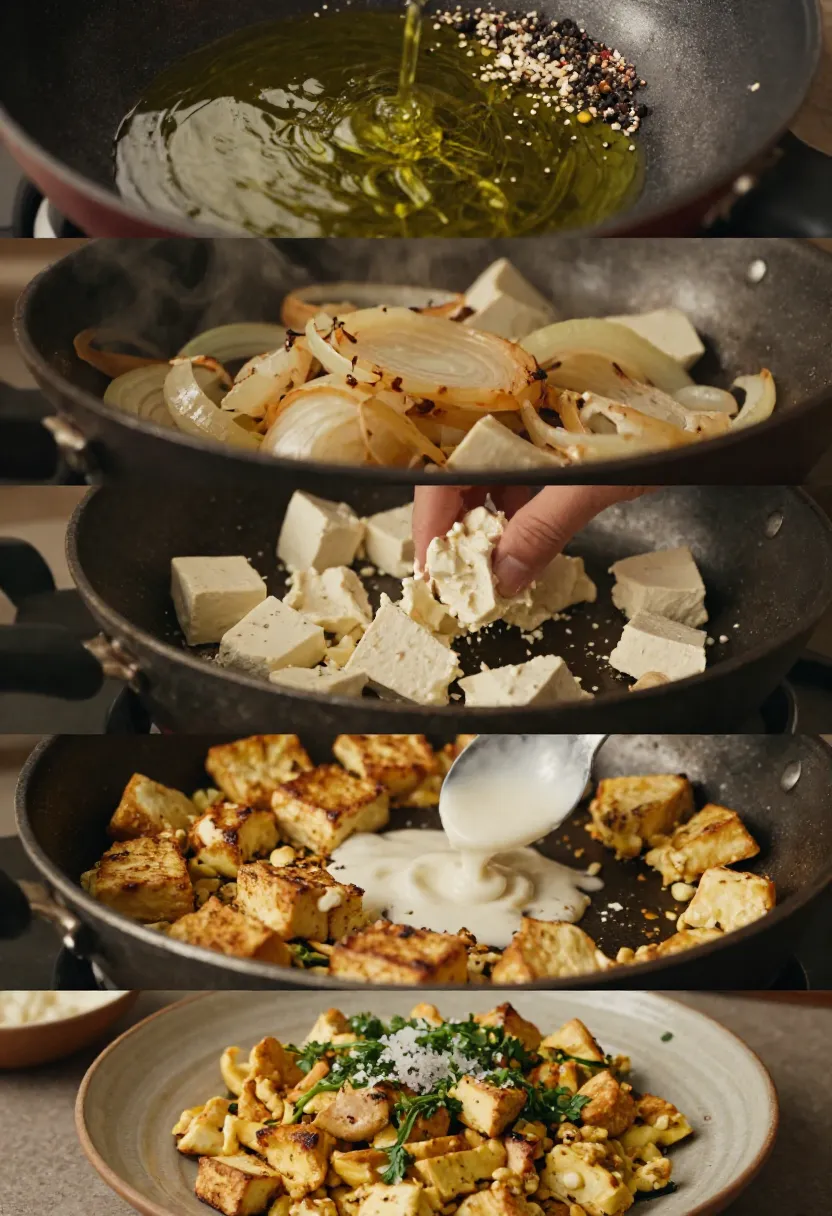
A lot of people keep moving the tofu around because they are worried it will stick. But letting parts of the scramble sit untouched for a minute or two creates crispy golden edges throughout the pan. Those little browned spots completely change the texture. Suddenly the scramble feels fuller and more satisfying instead of soft all the way through.
Seasoning matters too, probably more than anything else. Tofu absorbs flavor slowly, which means the scramble almost always needs slightly more seasoning than people expect at first taste. Salt wakes everything up. Acid helps too. If the pan tastes heavy or dull, lemon juice usually fixes the problem faster than throwing in more spices.
One thing I started doing recently is adding a small splash of oat milk or soy cream near the end of cooking. Not enough to make the scramble wet, just enough to soften everything slightly and give the texture a creamier finish. It works especially well if the tofu has browned properly around the edges.
A few small adjustments make the biggest difference:
- Add nutritional yeast during cooking so it melts into the scramble instead of sitting dry on top.
- Let onions cook slowly until they smell sweet before adding tofu.
- Use your hands to crumble the tofu for a more natural texture.
- Finish with herbs right before serving so the flavor stays fresh.
- Add black salt after cooking if you want a stronger egg-like aroma.
- Reheat leftovers in a skillet instead of a microwave whenever possible.
And honestly, tofu scramble gets better once you stop trying to make it perfect. A slightly uneven texture feels more natural anyway. Bigger chunks beside crispy little bits. Some spinach folded in properly, some still sitting bright green on top. It should look like real food cooked in a real kitchen.
Serving ideas for different moods and seasons 🌿
Tofu scramble changes depending on what kind of meal you want it to become, which is probably why people keep making it long after the novelty of “healthy breakfast recipes” disappears.
On slower weekends, I usually serve it piled onto thick sourdough toast with coffee strong enough to wake the entire apartment ☕. Maybe roasted tomatoes on the side. Maybe avocado with lemon and flaky salt if there is one sitting on the counter that finally ripened at the right moment. Those versions feel relaxed and a little slower, the kind of breakfast that stretches into late morning because nobody is in a hurry.
During colder months, the scramble becomes heavier and more savory almost automatically. Mushrooms cooked until dark around the edges, crispy potatoes straight from the oven, extra smoked paprika, maybe caramelized onions if there is enough patience for them. The whole plate feels warmer that way.
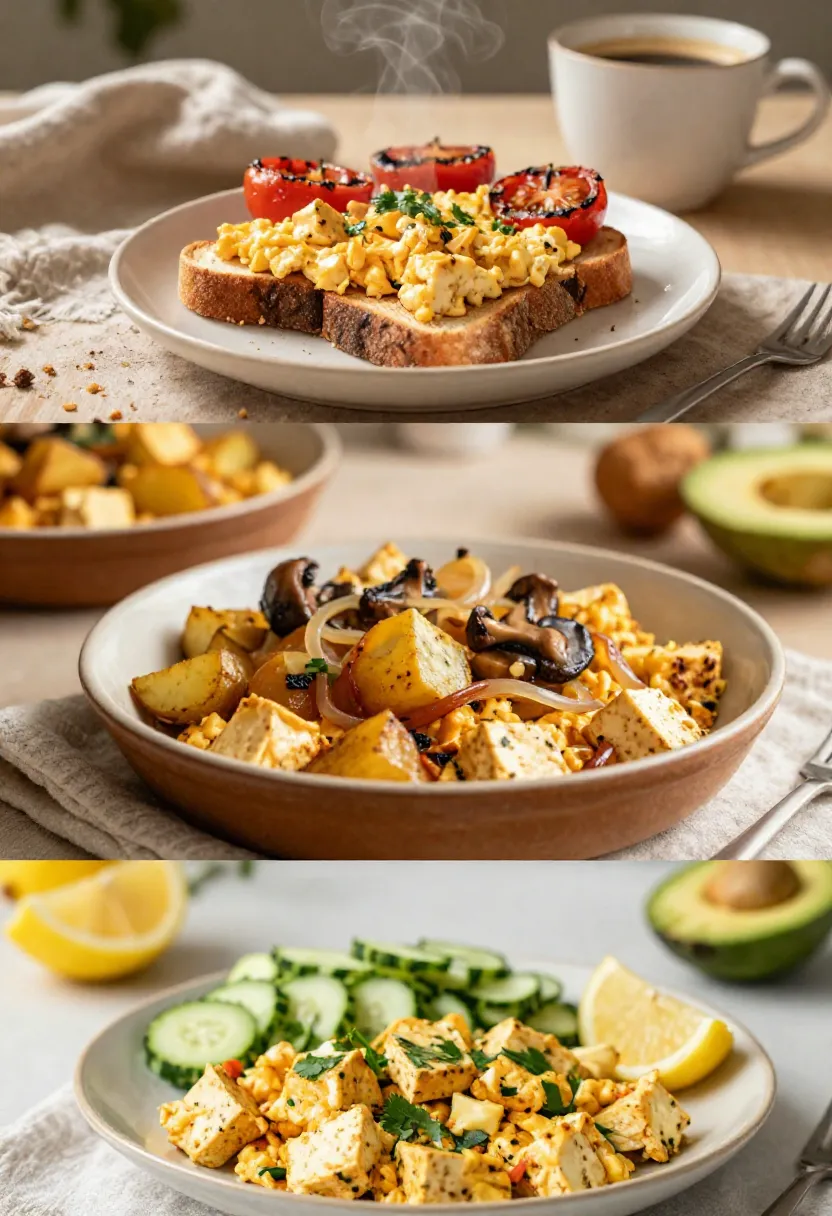
Summer versions usually move in the opposite direction. Fresh herbs, tomatoes, cucumber salad, parsley, lemon juice scattered over the top right before serving. The scramble tastes lighter even though the base recipe barely changes.
And honestly, tofu scramble works outside breakfast better than people expect. Wrapped into tortillas with hot sauce for quick lunches. Spooned into grain bowls with roasted vegetables. Eaten straight from the skillet late at night because you were too tired to make something complicated.
A few serving ideas work especially well depending on the mood:
- Crispy potatoes make the scramble feel cozy and heavier.
- Toasted sourdough adds crunch against the softer tofu.
- Chili crisp gives heat and extra texture.
- Fresh herbs brighten richer flavors instantly.
- Roasted tomatoes add sweetness and acidity at the same time.
- Avocado softens sharper spices and balances the plate.
I also think tofu scramble works best when the plate does not feel overly styled. Messy toast crumbs, steam still coming from the skillet, hot sauce already sitting on the table before the food arrives. That slightly imperfect feeling makes the meal more convincing somehow, like an actual breakfast people eat instead of one designed only for photos.
Why this tofu scramble stays on repeat ✨
Tofu scramble gets dismissed too quickly sometimes, usually by people who tried one bland version years ago and decided the entire idea was hopeless after that.
I understand the reaction. Bad tofu scramble exists everywhere. Dry tofu, weak seasoning, vegetables that barely touched heat before landing on the plate. It happens surprisingly often.
But when the pan is hot enough, the onions are cooked properly, and the seasoning actually has confidence behind it, tofu scramble becomes something completely different. Comfort food, honestly. The kind of meal that feels especially right on quiet mornings when there is nowhere urgent to be.
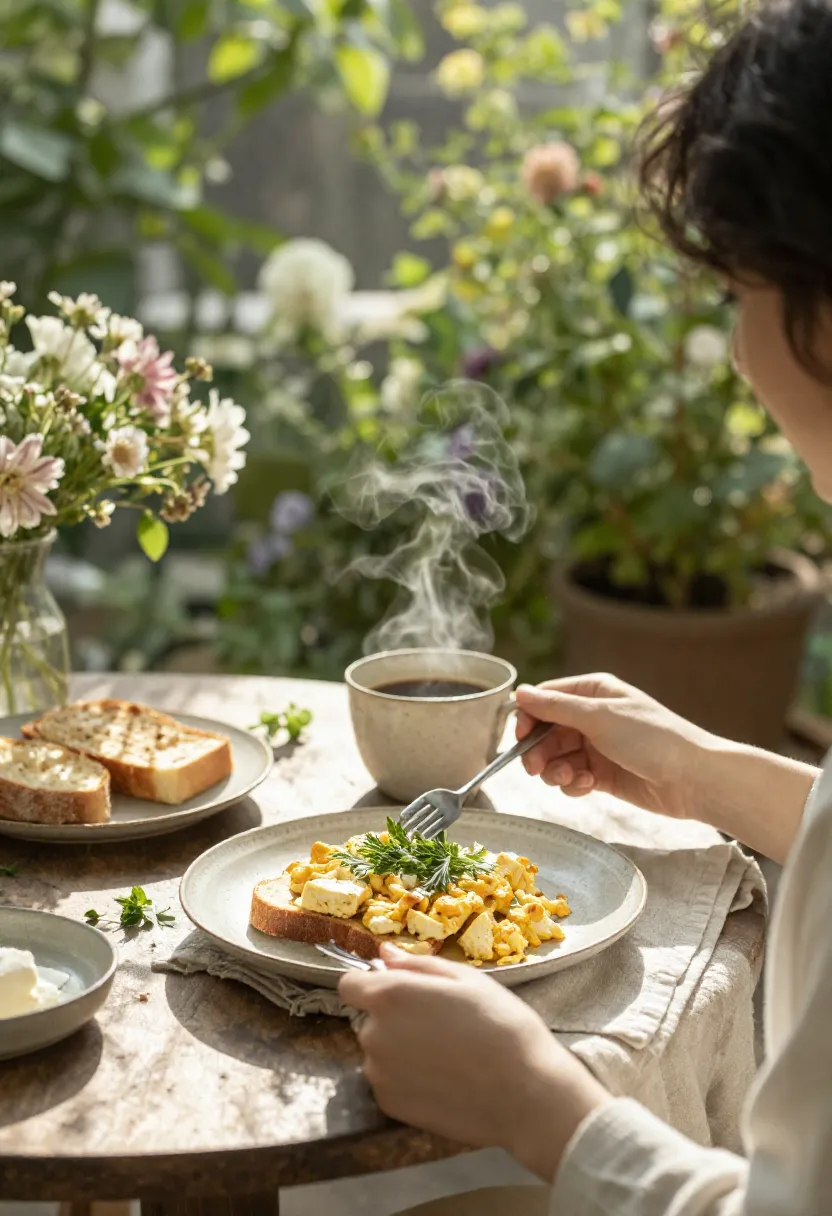
Part of the appeal is how forgiving it is. You do not need perfect measurements, and you can swap vegetables based on whatever is left in the fridge. Add more spice. Add herbs. Throw in roasted potatoes or beans and suddenly breakfast turns into dinner without much effort.
A lot of recipes online feel strangely fragile, like one wrong substitution ruins the entire dish. Tofu scramble is the opposite. It adapts surprisingly well 🌱.
Some mornings I make it heavily spiced with smoked paprika and chili oil. Other mornings I keep it simple with olive oil, herbs, and black pepper. During colder months I almost always add mushrooms because they make the whole skillet smell deeper and warmer.
And honestly, the leftovers might be my favorite part. Stuffed into tortillas with hot sauce. Piled onto toast the next morning. Eaten directly from the pan while waiting for coffee to finish brewing.
Those slightly messy, practical meals usually survive longer in real life than the perfect recipes people save and never cook. That is probably why tofu scramble stays useful.
It fits actual mornings.