
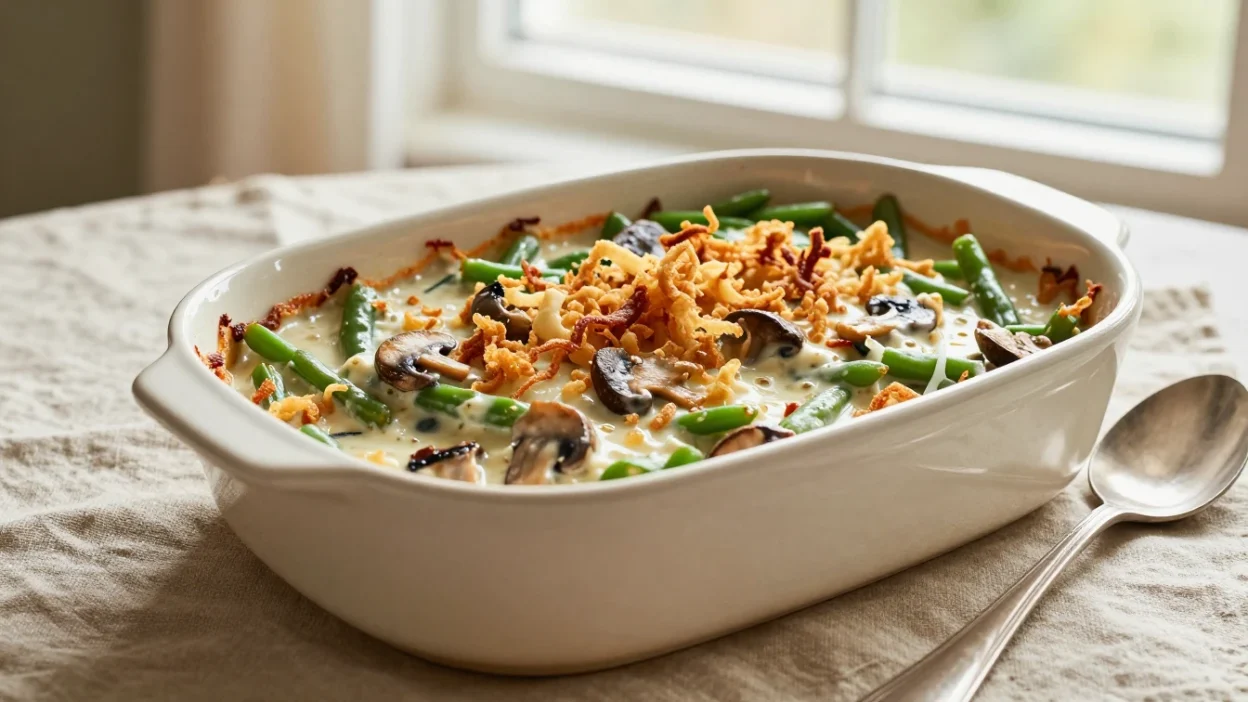
Green bean casserole is one of those dishes that can make a kitchen feel like a holiday before anyone even sits down. You know the smell: creamy mushroom sauce bubbling at the edges, green beans tucked underneath, crispy onions turning golden on top. It is simple, a little nostalgic, and somehow always the side dish people “just take a spoonful of” before going back for more.
But let’s be honest. Green bean casserole can go wrong fast.
Sometimes the beans are limp. Sometimes the sauce tastes flat. Sometimes the topping starts crisp and ends up soggy before the turkey is even carved. The good news is that you do not need to reinvent the whole dish to make it better. You only need to fix the small things: the beans, the sauce, the seasoning, and the timing of that crunchy topping.
The goal here is not to turn green bean casserole into something unrecognizable. No one wants a holiday table where every classic dish has been “modernized” until it loses the reason people loved it in the first place. This is still the creamy, savory, crunchy casserole you remember. Just with better texture, deeper flavor, and a few smart choices that make it taste homemade, even if you still use a shortcut or two.
Why green bean casserole became a holiday classic
Green bean casserole has a very practical beginning. Campbell’s says the dish was created in 1955 by Dorcas Reilly, a Campbell Test Kitchen manager, as a simple recipe built around ingredients many families already had at home: green beans, cream of mushroom soup, milk, and fried onions. (The Campbell’s Company)
That explains a lot about why it stuck.
It was not trying to be fancy. It did not ask anyone to hunt down expensive ingredients or spend half the day at the stove. It used canned soup as the sauce, green beans as the vegetable, and fried onions as the magic trick. The result was creamy, salty, soft in the middle, and crunchy on top. For a busy cook, especially during a holiday meal, that is a pretty strong argument.
And honestly, the original idea still makes sense.
A good holiday side dish has to do a few things well. It needs to taste good with turkey, ham, mashed potatoes, stuffing, gravy, and whatever else lands on the plate. It should hold up for a little while on the table. It should be easy to serve with a big spoon. Green bean casserole checks all of those boxes.
The comfort is in the contrast
The reason this casserole works is texture.
You get soft green beans, creamy sauce, and crispy onions in one bite. If one of those pieces is missing, the dish starts to feel dull. Too many casseroles turn into one soft, beige scoop. Green bean casserole avoids that when it is made well.
That is why the topping matters so much. Those fried onions are not decoration. They are the part that wakes everything up. Without them, the casserole would still taste fine, but it would feel heavy after a few bites.
The flavor is familiar, and that is the point
Mushroom sauce has a quiet flavor. It is savory, earthy, and mild enough to let the green beans stay in the center. That is also why this dish can handle little upgrades without losing itself.
A handful of browned mushrooms? Good.
A little garlic? Usually good.
A splash of white wine or a spoonful of parmesan? Also good.
But too much of anything can push it away from the classic taste. That is where people sometimes overdo it. They add so many “upgrades” that the casserole starts tasting like a different recipe wearing a green bean costume.
The best version keeps the spirit of the original: simple, creamy, cozy, and easy to love.
The secret is restraint
When I make green bean casserole better, I do not start by changing everything. I start by asking what bothered me last time.
Were the beans watery? Drain them better or switch to fresh.
Was the sauce bland? Brown the mushrooms and season more carefully.
Did the onions get soggy? Add the final layer near the end of baking.
That is the whole game. Small fixes. Big difference.
A classic dish does not need to be rescued. It just needs a little attention. Green bean casserole has lasted this long because the basic idea is good. Give it better texture and a more thoughtful sauce, and it still feels like the dish people expect, only better when they actually taste it.
What makes a good green bean casserole
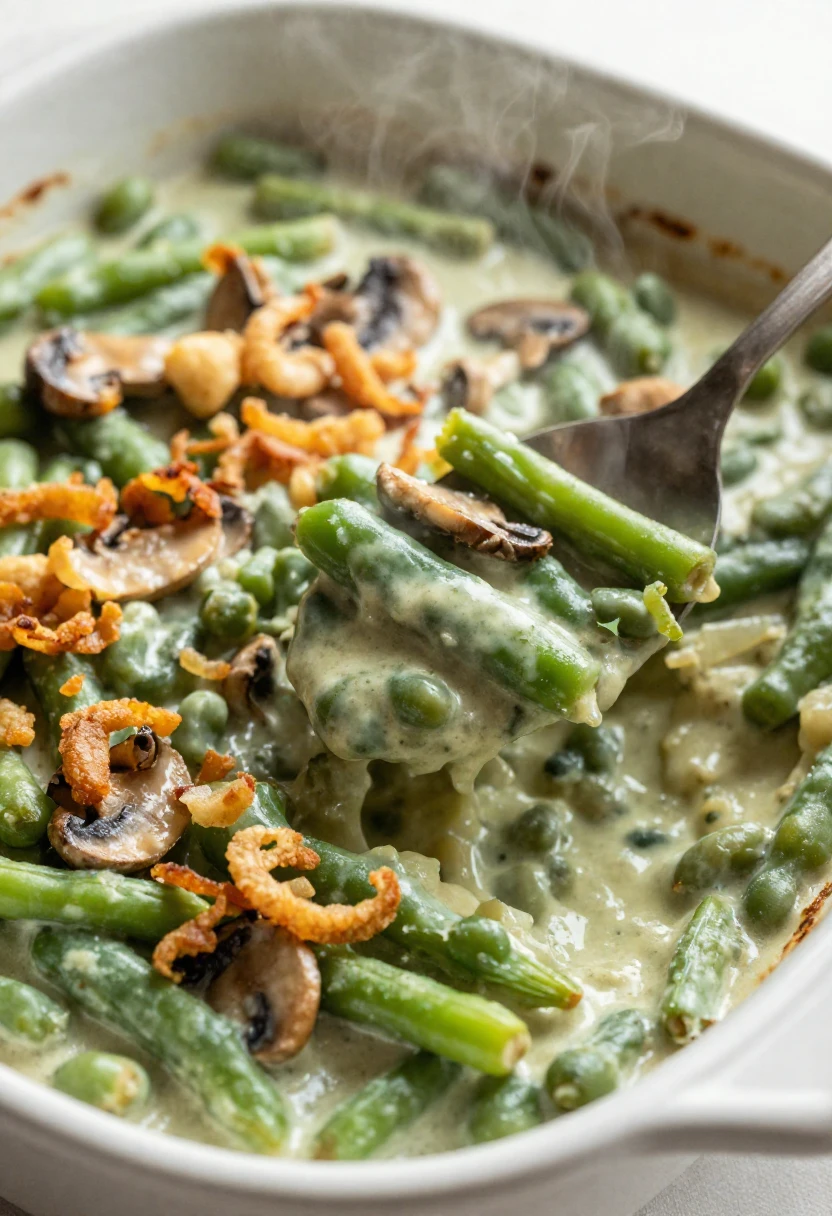
A good green bean casserole is not complicated. It comes down to three things: beans that still have some bite, a sauce that tastes creamy but not gluey, and a topping that actually crunches.
That sounds obvious until you have one of those casseroles where everything blends into the same soft spoonful. I have eaten plenty of those. They are not terrible, exactly. They are just tired. The flavor is there somewhere, but the texture has given up.
The better version still feels familiar, but every bite has a little more life.
The green beans need texture
Green beans are the heart of the dish, so they should not disappear into the sauce.
Fresh green beans give you the best texture. They stay brighter, taste cleaner, and hold their shape better after baking. The trick is to blanch them first. Boil them for a few minutes, just until they turn bright green and start to soften, then drain them well.
And I mean really well. Water is the enemy here.
If the beans carry too much moisture into the baking dish, the sauce turns thin at the bottom. That is how you end up with a casserole that looks creamy on top but watery underneath. After blanching, spread the beans on a clean towel for a few minutes. It feels like a small extra step, but it matters.
Frozen green beans can work too. They are convenient and usually better than people expect. Just thaw them first and pat them dry. Do not toss frozen beans straight into the casserole unless you want extra liquid sneaking into the sauce.
Canned green beans are the softest option. They give the casserole that old-school holiday texture, and honestly, some families prefer it that way. If you use canned beans, drain them very well and taste before adding much salt. They are usually already seasoned.
The sauce should be creamy, not heavy
The sauce is where green bean casserole can either taste cozy or strangely flat.
Classic cream of mushroom soup works because it is easy and salty and already thick. There is nothing wrong with using it, especially if you want the traditional flavor. But even the shortcut version tastes better when you help it a little.
A few easy upgrades:
- Stir in a splash of milk or half-and-half so the sauce loosens slightly.
- Add black pepper. More than you think, but not so much that it tastes sharp.
- Use a small spoonful of Dijon mustard or Worcestershire sauce for depth.
- Add sautéed mushrooms if you want a fuller, more homemade flavor.
- Taste before adding salt, especially if you are using canned soup and fried onions.
If you want to skip canned soup, make a quick mushroom sauce from scratch. Cook sliced mushrooms in butter until they release their moisture and start to brown. Add a little garlic or shallot, sprinkle in flour, then slowly whisk in milk, cream, or broth.
It does not need to be restaurant-level sauce. It just needs to taste like mushrooms, butter, and seasoning instead of plain cream.
One thing I would not do: make the sauce too rich. Heavy cream, cheese, butter, bacon, and fried onions all in one dish can get overwhelming. Green bean casserole is already a rich side dish. It needs balance more than it needs more fat.
The topping needs real crunch
The topping is the part everyone notices first.
Classic fried onions are popular for a reason. They are salty, crisp, and almost impossible not to snack on while you cook. I always buy more than the recipe says because somehow a handful disappears before the casserole goes into the oven.
But timing matters.
If you add all the fried onions at the beginning, they can darken too much or soften under the steam. A better way is to mix a small amount into the casserole for flavor, then save most of them for the last 8 to 10 minutes of baking. That gives them enough time to warm and crisp without turning sad.
You can also change the topping without losing the classic feel:
- Fried shallots give a slightly sweeter, more delicate crunch.
- Buttered panko adds a lighter crispness.
- Parmesan crumbs make the top more savory.
- Toasted almonds add crunch without making the dish feel heavier.
Still, for the most classic taste, fried onions win. They are part of the memory of the dish. The key is simply to treat them like a topping, not something that needs to bake for half an hour.
How to upgrade classic green bean casserole
The best upgrades for green bean casserole are the ones people notice without immediately pointing at them.
You do not want someone taking a bite and saying, “Oh, you changed it.” You want them saying, “This tastes really good this year.” That is the sweet spot.
Green bean casserole has a gentle flavor, so small changes show up quickly. A little more mushroom flavor helps. A little garlic helps. A salty, smoky note can help too. But once you add too many things, the casserole stops tasting like the dish everyone came for.
Add fresh mushrooms for deeper flavor
If your green bean casserole usually tastes a little flat, start with mushrooms.
Even if you use cream of mushroom soup, fresh mushrooms make the sauce taste more homemade. The trick is to cook them properly. Do not just throw raw mushrooms into the casserole. They will release water while baking and thin out the sauce.
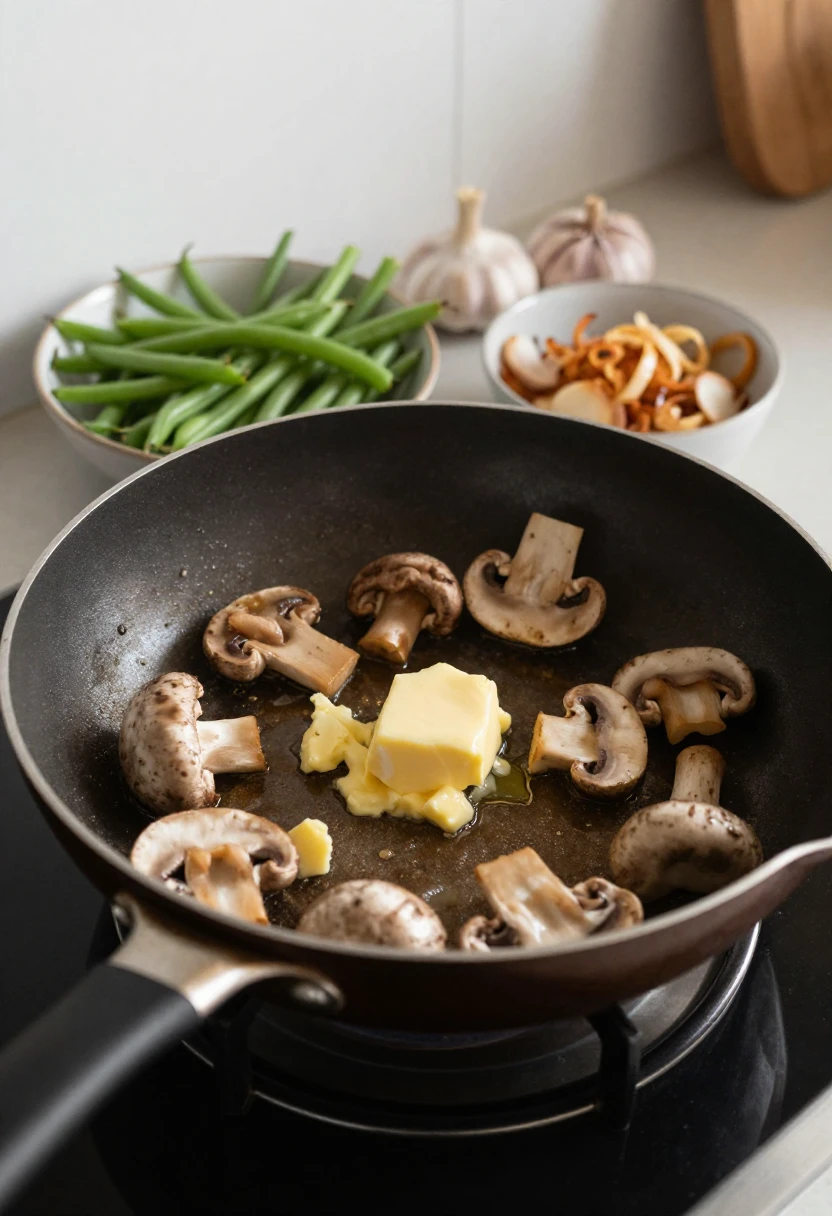
Slice them, add them to a hot pan with butter, and leave them alone for a minute. Mushrooms need time to lose their moisture before they brown. At first, they look like they are shrinking too much. Then the pan dries out a little, the edges darken, and the smell gets richer.
That is the moment you want.
Cremini mushrooms are my favorite here because they have more flavor than plain white button mushrooms but still taste familiar. White mushrooms work fine too. Shiitake mushrooms are stronger, so I would use them as part of a mix, not the whole thing.
A good amount is about 8 ounces of mushrooms for a standard 9×13 casserole. It is enough to make the sauce taste deeper without turning the dish into mushroom casserole with green beans hiding inside.
Use garlic, onions, or shallots carefully
Garlic belongs in green bean casserole, but it can get bossy.
One or two cloves are usually enough. Cook the garlic briefly in butter after the mushrooms have browned. You want it fragrant, not dark. Burnt garlic can make the whole casserole taste bitter, and there is no hiding it once it happens.
Shallots are a softer choice. They bring a little sweetness and work nicely with mushrooms. Yellow onion is fine too, especially if you want that classic casserole flavor. Just chop it small and cook it until soft before adding it to the sauce.
Raw onion in the casserole is not my favorite. It can stay sharp in the middle, especially if the bake time is short. Cook it first and the whole dish tastes rounder.
Add a salty, smoky note
A little smoky flavor can make green bean casserole taste more savory, especially if you are serving it with turkey or roast chicken.
Bacon is the obvious option. Cook it until crisp, crumble it, and stir some into the sauce or sprinkle it under the onion topping. Do not add too much. A few strips are enough. If bacon takes over, the green beans become background.
Smoked paprika is a quieter option. Just a pinch gives warmth without making the casserole taste smoky in an obvious way. Parmesan works too, especially in the topping. It adds salt and depth, and it browns nicely with panko or fried onions.
A tiny splash of Worcestershire sauce can also help. It makes the sauce taste more savory without announcing itself. Same with soy sauce, though you need to be careful because canned soup and fried onions already bring plenty of salt.
Add brightness so the casserole does not feel heavy
This part sounds strange until you try it.
A creamy casserole often needs a little brightness. Not enough to taste lemony. Just enough to keep the sauce from feeling dull.
A small squeeze of lemon juice at the end can help if you are making a homemade mushroom sauce. A splash of dry white wine while cooking the mushrooms is good too. Let it simmer down before adding milk or cream, so the flavor softens.
If you are using canned soup, go gently. A full squeeze of lemon can taste out of place. But a tiny bit of acid, even a few drops of vinegar or a small spoonful of Dijon, can wake up the sauce.
You should not taste “acid.” You should just taste a casserole that feels less heavy after the third bite.
Keep the classic flavor in charge
There are endless ways to dress up green bean casserole. Cheese, herbs, nuts, breadcrumbs, cream, bacon, roasted garlic, chili flakes. Some of them are good.
Not all of them belong together.
For a holiday table, I like choosing one main upgrade and maybe one small supporting flavor. Fresh mushrooms plus black pepper. Bacon plus shallots. Parmesan crumbs plus a little garlic. That is enough.
The casserole should still look like green bean casserole when it comes out of the oven: creamy underneath, golden and crisp on top, easy to scoop, and familiar enough that nobody hesitates before putting it on their plate.
Fresh vs canned green beans
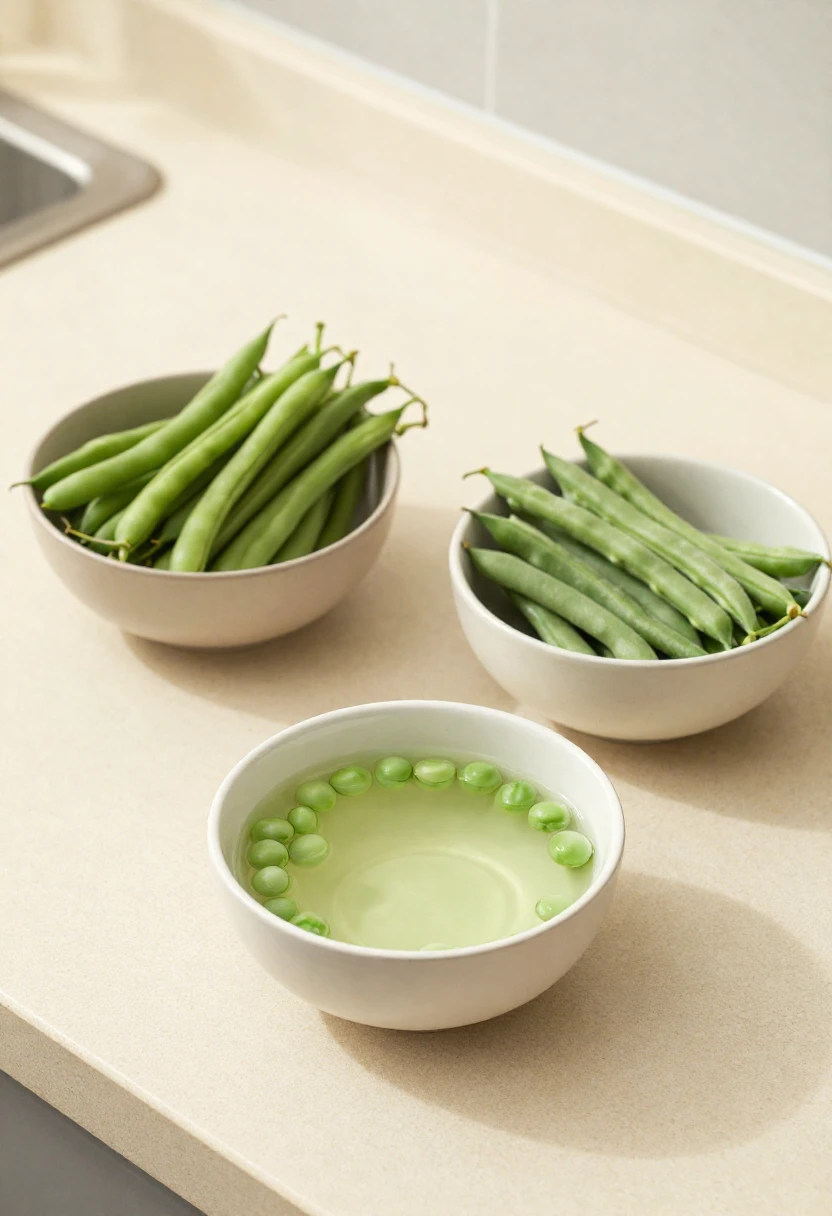
Green bean casserole can work with fresh, frozen, or canned green beans. The “best” choice depends on what kind of casserole you want.
Fresh beans give you a cleaner flavor and a firmer bite. Canned beans give you the soft, nostalgic version many people grew up eating. Frozen beans sit somewhere in the middle, which is why I like them for busy cooking days when the oven is already crowded and the sink is full.
The mistake is treating all three the same. They need different handling before they go into the casserole.
When fresh green beans are worth it
Fresh green beans are the best choice when you want the casserole to taste brighter and a little less heavy.
They hold their shape better, and they do not bring that soft, canned flavor into the sauce. If you are making green bean casserole for a holiday dinner and want it to feel a bit more special, fresh beans are worth the extra few minutes.
Start by trimming the ends. Then blanch the beans in salted boiling water for about 3 to 5 minutes, depending on how thick they are. They should turn bright green and feel slightly tender, but still have snap.
After that, drain them and cool them quickly. You can use an ice bath if you want to stop the cooking right away, but I often just spread them on a towel if I am not chasing perfect restaurant color. The important part is drying them well.
Wet beans make a thin sauce. Dry beans give you a casserole that stays creamy.
When canned green beans make sense
Canned green beans are not “wrong.” They are the classic choice for a reason.
They are soft, easy, affordable, and already cooked. If your family expects the casserole to taste exactly like the one from childhood, canned beans may be the right move. There is a certain comfort in that softer texture, especially next to mashed potatoes and gravy.
Just drain them well.
I like to let canned beans sit in a colander for a few minutes instead of opening the cans and dumping them straight into the bowl. You can even pat them gently with a clean towel if they look very wet. It sounds fussy, but it helps the sauce cling instead of sliding off.
Also taste before salting. Canned beans, canned soup, and fried onions can make the dish salty fast. Add seasoning slowly and trust your mouth more than the recipe card.
Frozen green beans as the middle option
Frozen green beans are the practical choice.
They usually taste fresher than canned beans, but they do not require trimming or blanching from scratch. For a weeknight casserole or a holiday meal where you are already making five other dishes, that matters.
The key is to thaw them first. Then drain and pat them dry.
If you add frozen beans straight to the casserole, they release water as they bake. The sauce loosens, the bottom turns watery, and the casserole never gets that thick, cozy texture you want.
Cut green beans work better than very long frozen beans because they are easier to scoop and mix with the sauce. French-cut green beans give a softer, more delicate casserole, but they can disappear into the sauce if you stir too much.
The simple choice guide
If you want the best texture, use fresh green beans.
If you want the most nostalgic flavor, use canned green beans.
If you want convenience without going fully old-school, use frozen green beans.
That is really it.
I would not overthink it. Green bean casserole is supposed to be comforting, not stressful. Choose the beans that fit your time, your table, and the people you are feeding. Then handle them properly so the sauce stays creamy and the topping gets to do its job.
A simple better green bean casserole method
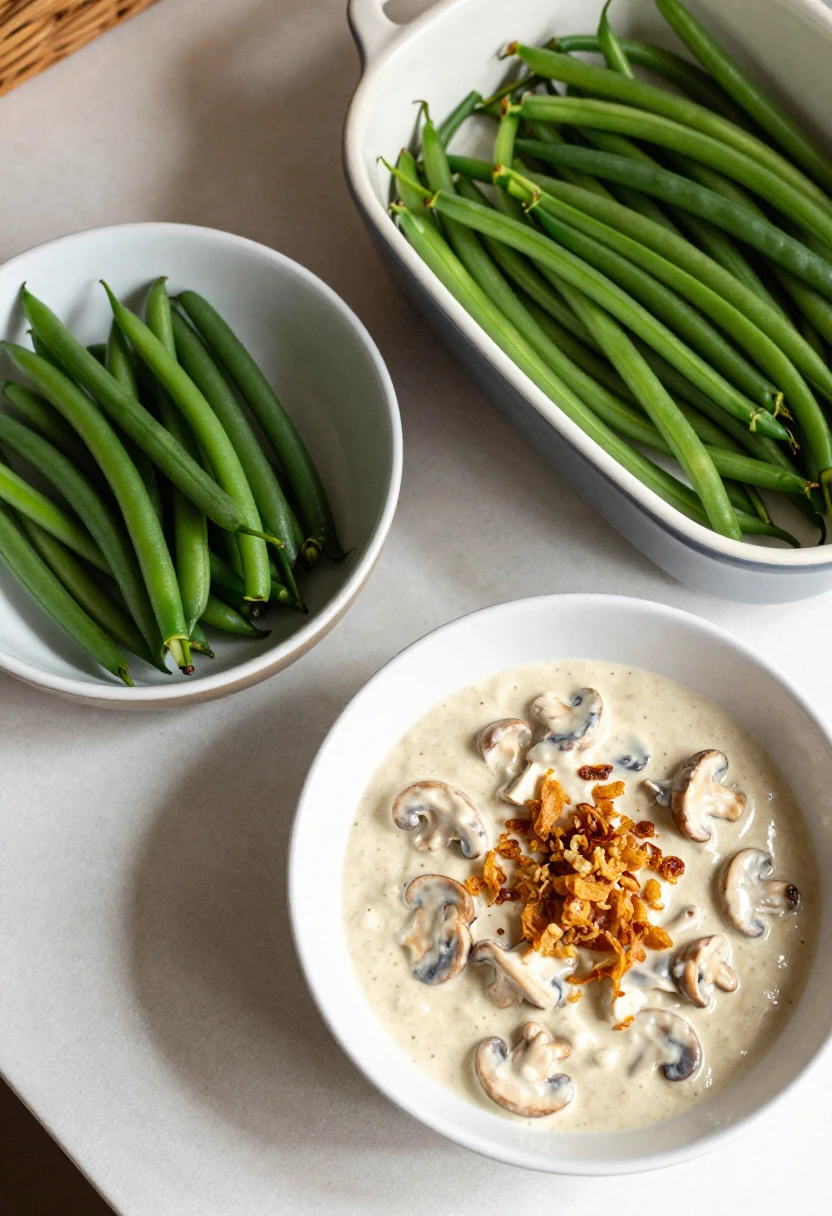
You do not need a complicated recipe to make green bean casserole taste better. The method matters more than the ingredient list.
A watery casserole usually starts with wet beans. A bland casserole usually starts with rushed mushrooms or under-seasoned sauce. A soggy casserole usually starts with onions that went on too early.
Fix those three things and the dish improves right away.
Step 1: prepare the beans
Start with about 1 1/2 to 2 pounds of green beans for a family-size casserole, or use two to three cans if you are going classic.
For fresh green beans, trim the ends and blanch them in salted boiling water until they are bright green and barely tender. Do not cook them until they are soft enough to eat on their own. They still need time in the oven.
Drain them well, then spread them out on a towel.
For frozen green beans, thaw them first. Press out extra moisture gently with a towel. You do not need to squeeze them like spinach, but you do want to remove the surface water.
For canned green beans, drain them in a colander and let them sit for a few minutes. This is not glamorous, but it helps. A casserole should not have a puddle hiding at the bottom.
Step 2: build the mushroom sauce
If you are using canned cream of mushroom soup, you can still make it taste better.
Stir the soup with milk or half-and-half until it loosens. Add black pepper, a small spoonful of Dijon or Worcestershire, and sautéed mushrooms if you have time. Taste it before adding salt.
If you are making the sauce from scratch, start with butter and mushrooms.
Cook the mushrooms until they release their liquid and begin to brown. This is where the flavor comes from. Add shallot or garlic near the end so it softens without burning. Sprinkle in flour and stir until it coats the mushrooms, then slowly add milk, broth, or a mix of both.
The sauce should look thick enough to coat a spoon, but not so thick that it sits in the bowl like paste. It will tighten more in the oven.
A little tip: season the sauce slightly more than you think you should. Once it coats all those beans, the flavor spreads out.
Step 3: mix without crushing everything
Add the beans to a large bowl, then pour the sauce over them.
Use a spatula or large spoon and fold gently. Fresh beans can handle more mixing. Canned beans are softer, so be careful or they will break apart.
I like adding a small handful of fried onions into the mixture. Not too much. Just enough to bring that onion flavor through the casserole instead of leaving all the crunch on top.
Then transfer everything to a baking dish and smooth it out lightly. Do not pack it down. A casserole should settle naturally, not feel pressed into the dish.
Step 4: bake until bubbling
Bake the casserole at 350°F / 175°C until the sauce is hot and bubbling around the edges. This usually takes about 25 to 30 minutes, depending on the size of your dish and whether the casserole was cold from the fridge.
Do not rush this part. If the middle is only warm, the texture feels wrong. You want the sauce fully heated so it wraps around the beans.
Once the edges are bubbling, add the final layer of fried onions.
Then bake for another 8 to 10 minutes, just until the topping is golden and crisp. Keep an eye on it. Fried onions can go from perfect to too dark quickly, especially near the edges of the pan.
Step 5: let it rest before serving
This is the step people skip because everyone is hungry.
Let the casserole sit for 5 to 10 minutes before serving. The sauce thickens slightly, the beans settle, and the first spoonful comes out cleaner.
It will still be hot. It will still be creamy. And the topping will have a better chance of staying crisp instead of sliding into the sauce.
A better green bean casserole is mostly about patience in small places: dry the beans, brown the mushrooms, season the sauce, and save the topping for the end. Nothing dramatic. Just better cooking.
Make-ahead tips for holidays
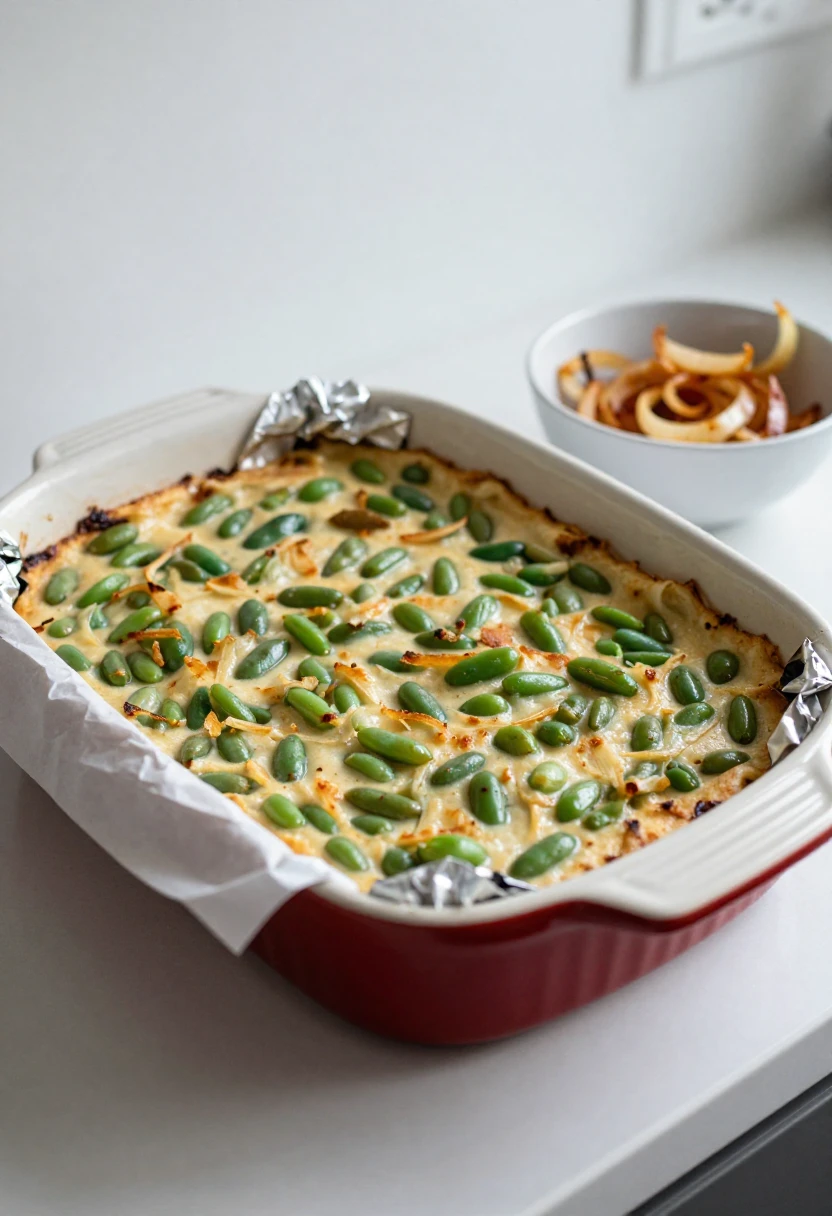
Green bean casserole is one of the better holiday dishes to make ahead, but there is one rule I would not break: do not add the final onion topping too early.
That topping is the whole reason the casserole feels lively. If it sits in the fridge overnight, it will soften. If it bakes too long, it can get too dark. Save most of the crispy onions for the end, and the casserole will taste much fresher than it actually is.
What you can prep the day before
You can prepare almost everything ahead.
If you are using fresh green beans, trim and blanch them the day before. Dry them well, then store them in a covered container in the fridge. I like placing a paper towel or clean kitchen towel underneath to catch any extra moisture.
You can also make the mushroom sauce ahead. Let it cool before storing it, otherwise steam will collect under the lid and water it down. If the sauce thickens in the fridge, that is fine. It will loosen again as it warms.
For a fully assembled make-ahead casserole, mix the beans and sauce, then spread everything into the baking dish. Cover it tightly and refrigerate.
Just leave the topping off.
A small amount of fried onions mixed inside the casserole is fine, but the top layer should wait until baking day. That is how you get the classic crunch instead of a soft onion blanket.
What to do before baking
Take the casserole out of the fridge about 30 minutes before baking if your schedule allows. You do not want to put an ice-cold ceramic dish straight into a hot oven. It can heat unevenly, and some dishes may crack.
If you forgot, do not panic. Just bake it a little longer and make sure the center is hot before adding the topping.
Covering the casserole loosely with foil for the first part of baking can help if it came straight from the fridge. Once it is hot and bubbling around the edges, remove the foil, add the onions, and finish baking uncovered.
That last uncovered stretch is where the casserole comes back to life.
How far ahead can you make it?
For the best texture, make it one day ahead.
Two days can work, especially if you use fresh green beans and a thicker sauce, but I would not push it much further. Green beans keep releasing moisture as they sit, and the sauce can start to loosen.
If you are planning a big holiday meal, one day ahead is already a win. It gives you one less thing to build from scratch when the oven is crowded and someone is asking where the serving spoons went.
How to reheat leftovers
Leftover green bean casserole tastes good, but the topping usually needs help.
The oven is better than the microwave if you care about texture. Put the leftovers in an oven-safe dish, add a fresh handful of fried onions on top, and warm at 325°F / 160°C until heated through.
The microwave works for a quick lunch. I use it when I am eating leftovers in a sweater the next day and not pretending the topping will stay crisp. The flavor will still be there, but the onions soften.
If the casserole looks too thick after sitting in the fridge, stir in a tiny splash of milk before reheating. Not much. Just enough to loosen the sauce without turning it soupy.
The best holiday timing
If I were making green bean casserole for Thanksgiving or Christmas dinner, I would do it like this:
- The day before: cook the beans, make the sauce, assemble without topping.
- About an hour before dinner: take it out of the fridge.
- While the turkey rests: bake the casserole.
- Right near the end: add the crispy onions and let them brown.
That timing keeps the casserole hot, creamy, and crisp on top. It also keeps you from fighting for oven space at the worst possible moment.
Green bean casserole should make the meal easier, not add another small crisis to the kitchen. A little planning does exactly that.
Common mistakes that ruin green bean casserole
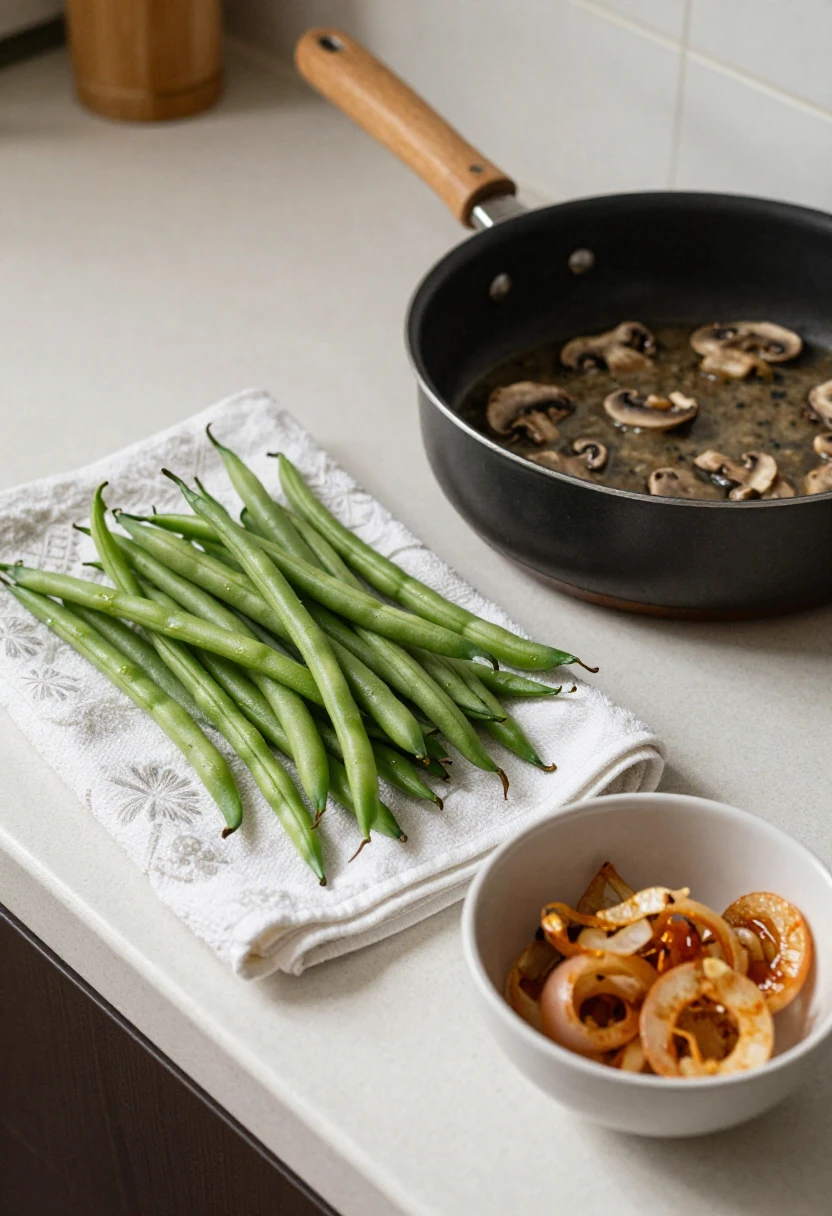
Green bean casserole is forgiving, but it is not magic. A few small mistakes can turn it from creamy and cozy into watery, bland, or strangely heavy.
Most of the problems happen before the casserole even goes into the oven. The beans are too wet. The sauce is not seasoned. The topping goes on too early. None of this is hard to fix, but you do have to pay attention.
Using watery beans
This is the biggest one.
Green beans carry more moisture than people expect, especially frozen beans. If that water goes into the baking dish, it has nowhere to go. It mixes into the sauce, pools at the bottom, and makes the whole casserole taste thinner.
Fresh beans should be drained and dried after blanching. Frozen beans should be thawed and patted dry. Canned beans should sit in a colander for a few minutes before you mix them with the sauce.
It feels boring. I know. Drying beans is not exactly the glamorous part of holiday cooking. But it is the difference between a sauce that clings and a sauce that slides off the spoon.
Adding the topping too early
Crispy onions are strong, but they are not invincible.
If they bake for the full time, they can burn around the edges or soften from the steam underneath. Either way, you lose the best part of the dish.
A better method is to mix a small amount of onions into the casserole, then save the rest for the end. Add the final topping when the casserole is already hot and bubbling. Give it 8 to 10 minutes in the oven, just enough time to turn golden.
And keep an eye on the corners. They brown first.
Forgetting to season the sauce
Creamy does not always mean flavorful.
This is where a lot of green bean casseroles fall flat. The sauce looks rich, but the flavor is quiet in the wrong way. Green beans need salt, pepper, and something savory to make them stand up to the creaminess.
Black pepper helps more than you think. Garlic, shallot, Dijon, Worcestershire, or a small splash of soy sauce can help too. If you are making mushroom sauce from scratch, season the mushrooms while they cook, not only at the end.
But go slowly with salt. Canned soup, canned green beans, parmesan, bacon, and fried onions can all bring salt to the dish. Taste as you go, especially before the casserole hits the oven.
Making the sauce too thick
A sauce that is too thin is a problem, but too thick is not great either.
If the sauce looks like paste before baking, it will only get heavier in the oven. You want it thick enough to coat the beans, but loose enough to move when you stir. Think creamy mushroom sauce, not wallpaper glue.
If it gets too thick, add a splash of milk or broth. Stir, wait a few seconds, and see how it looks. Small adjustments are safer than dumping in too much liquid at once.
Overloading the casserole with upgrades
This one is tempting.
You start with fresh mushrooms. Good. Then garlic. Good. Then bacon. Also good. Then parmesan, herbs, toasted nuts, breadcrumbs, chili flakes, extra cream, and suddenly the green beans are just trying to survive.
Green bean casserole works because it is simple. It can handle one or two upgrades, but it does not need every nice thing in the kitchen.
Choose the direction you want:
- more mushroom flavor
- smoky and salty
- lighter and fresher
- extra crispy topping
Pick one. Maybe two. Then stop.
Skipping the rest time
The casserole needs a few minutes after baking.
Right out of the oven, the sauce is bubbling and loose. If you scoop it immediately, it can spread all over the plate. Let it sit for 5 to 10 minutes, and the sauce thickens enough to hold together.
This also keeps people from burning their mouths on molten mushroom sauce, which feels like a small but worthy holiday goal.
Green bean casserole does not ask for perfection. It just asks you not to rush the boring parts. Drain well, season well, add the topping late, and give it a minute before serving. That alone fixes most of what usually goes wrong.
Cozy variations to try
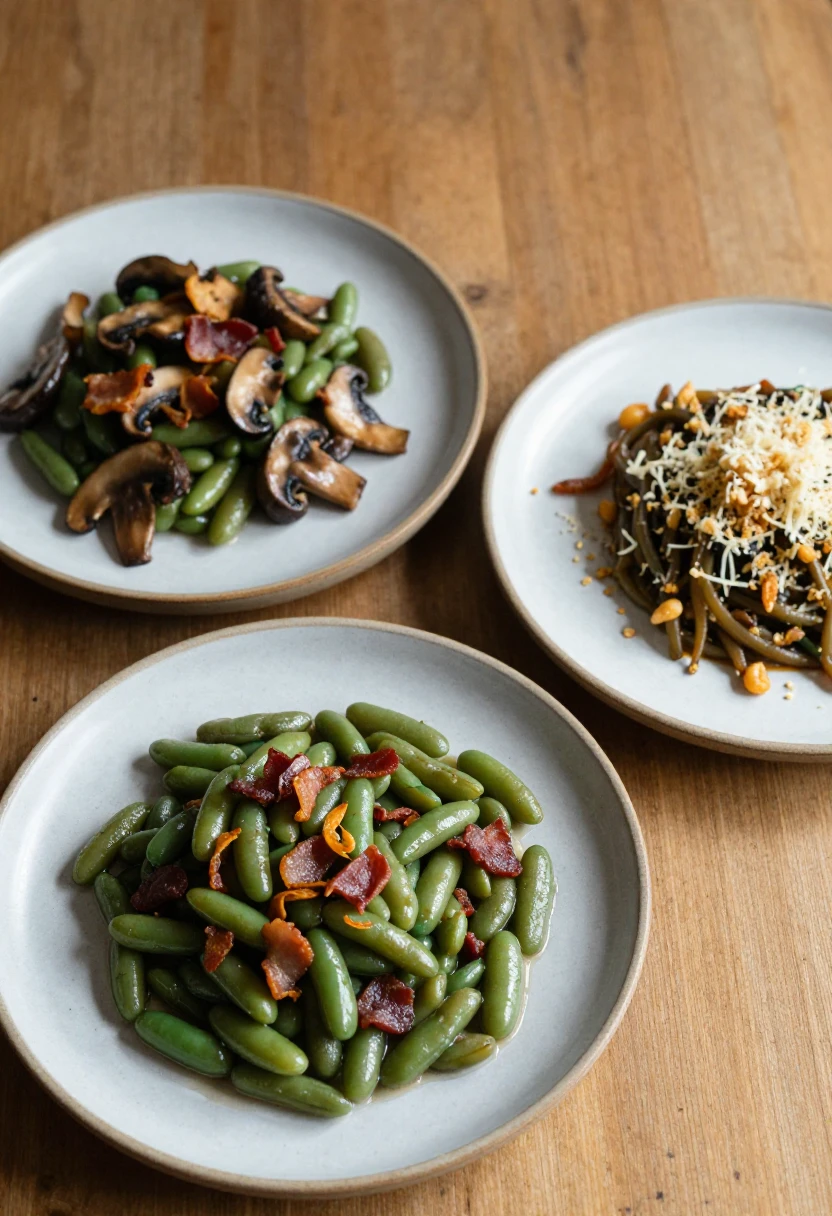
Once you know the basic method, green bean casserole becomes easy to adjust. You can make it richer, lighter, smokier, crunchier, or a little more grown-up without losing the familiar shape of the dish.
I like variations that still make sense on a holiday table. The casserole should not feel like it wandered in from another menu. It should still be creamy green beans under a crisp topping, just with a small twist that makes people pause after the first bite.
Extra mushroom green bean casserole
This is the version I would make for someone who likes the classic casserole but wants it to taste more homemade.
Use more fresh mushrooms than usual and take the time to brown them well. A mix of cremini and white mushrooms works nicely. Cremini bring deeper flavor, while white mushrooms keep things mild and familiar.
You can also add a small splash of dry white wine after the mushrooms brown. Let it cook down before adding the milk or cream. The wine should not taste sharp. It should just make the sauce feel less flat.
For the topping, keep the classic fried onions. They balance the earthy mushroom flavor and make the casserole feel like the dish everyone expects.
Bacon and crispy shallot version
Bacon makes green bean casserole feel a little more savory and cozy, especially with roast turkey, chicken, or ham.
Cook the bacon until crisp, then drain it well. Stir some into the sauce and save a little for the top. Do not use too much. Bacon is loud, and green bean casserole does not need to become a bacon dish with beans in it.
Crispy shallots are beautiful here. They are slightly sweeter than regular fried onions and feel a bit more special. You can use store-bought fried shallots or make your own if you have the patience and a quiet kitchen.
I usually do not make my own during a holiday rush. That is the truth. Store-bought is fine.
Lighter green bean casserole
A lighter green bean casserole should still taste creamy. Otherwise, it just feels like someone took away the fun.
Use fresh or frozen green beans, a mushroom sauce made with milk and broth, and a smaller amount of fried onions on top. You can skip heavy cream and still get a good texture if the sauce starts with properly browned mushrooms and a little butter-flour base.
A spoonful of Greek yogurt can add creaminess, but stir it in carefully and do not boil it hard. It can separate if overheated. Sour cream works too, especially if you like a slightly tangy sauce.
For this version, I like adding more black pepper and a tiny squeeze of lemon at the end. It keeps the casserole from feeling dull without making it taste “healthy” in the sad way.
Parmesan panko green bean casserole
If you want a topping that feels crisp but less salty than fried onions, try buttered panko with parmesan.
Melt a little butter, stir in panko crumbs and grated parmesan, then sprinkle it over the casserole near the end of baking. The topping turns golden and crumbly, with a nice savory edge.
This version works especially well with a homemade mushroom sauce. It tastes a little more like a baked vegetable gratin, but it still stays close enough to the original.
You can also mix fried onions and panko together. That might be my favorite compromise: the classic onion flavor, but with extra crunch.
Spicy green bean casserole
This is not the version I would serve to a very traditional crowd, but it is good for casual dinners.
Add a pinch of cayenne, a spoonful of chopped jalapeños, or a little pepper jack cheese to the sauce. Chili crisp can also work, but use a light hand. It brings oil, heat, garlic, and crunch all at once, so it can take over quickly.
If you go spicy, keep the rest simple. No bacon, no extra cheese, no complicated topping. Let the heat be the one twist.
Holiday herb version
Fresh herbs can make green bean casserole smell more festive, but they should stay in the background.
Thyme is the safest choice. It loves mushrooms and cream. A little parsley at the end can freshen the top. Rosemary is stronger, so chop it very finely and use less than you think.
Sage can be lovely if you are serving the casserole with turkey and stuffing. But again, go carefully. Too much sage makes everything taste like stuffing, and the casserole deserves its own lane.
The best variation is the one that fits the rest of your meal. If the table already has rich mashed potatoes, buttery rolls, and heavy gravy, maybe choose the lighter mushroom version. If dinner is simple roast chicken, the bacon-shallot casserole makes sense.
Green bean casserole is flexible. Just do not ask it to be everything at once.
What to serve with green bean casserole
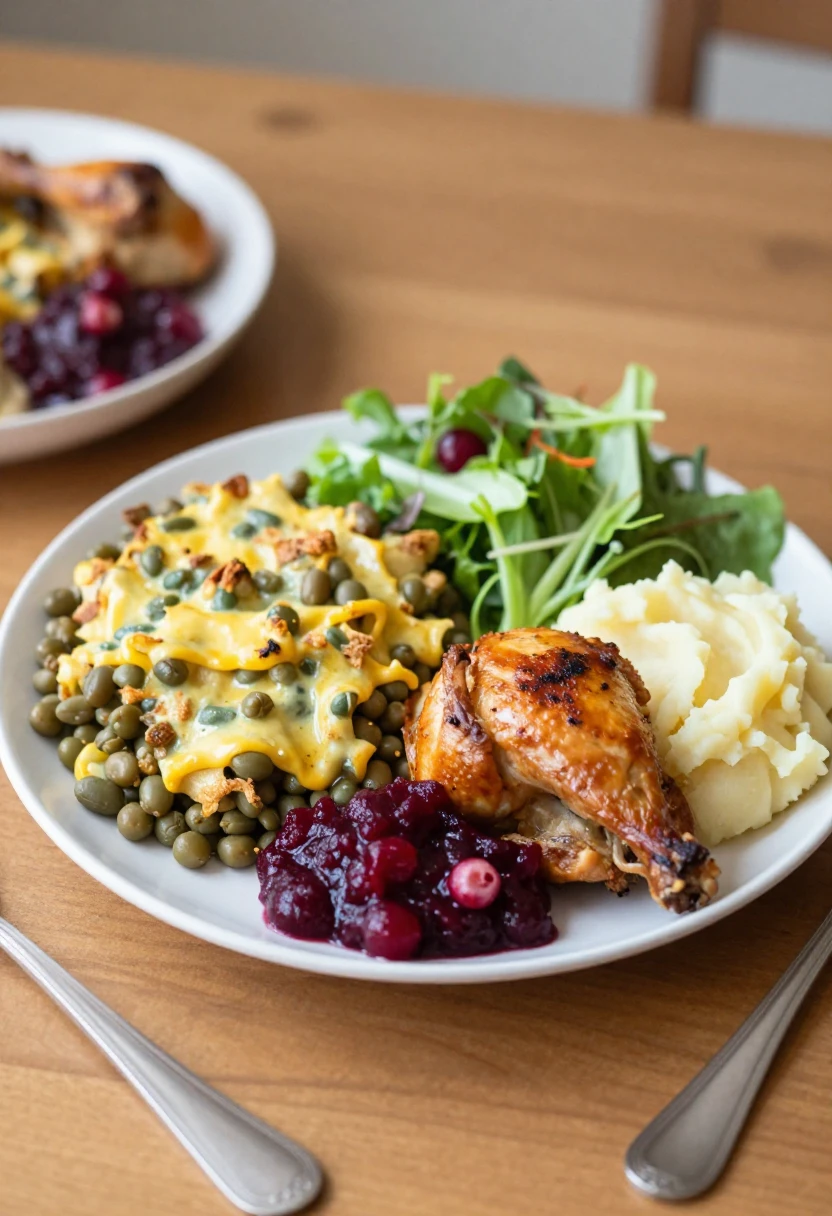
Green bean casserole is a side dish that knows its place. It does not need to be the star of the table, and that is part of why it works so well.
It brings creaminess, vegetables, and crunch, which means it pairs best with foods that are roasted, savory, or a little plain on their own. Think turkey, chicken, ham, potatoes, stuffing, rice, and simple proteins that need a cozy side next to them.
The only thing I would avoid is serving it with too many other creamy dishes at once. Creamed corn, mac and cheese, mashed potatoes with lots of gravy, and green bean casserole can make the plate feel heavy fast. Not bad. Just a lot.
Holiday pairings
Green bean casserole feels most at home on a holiday table.
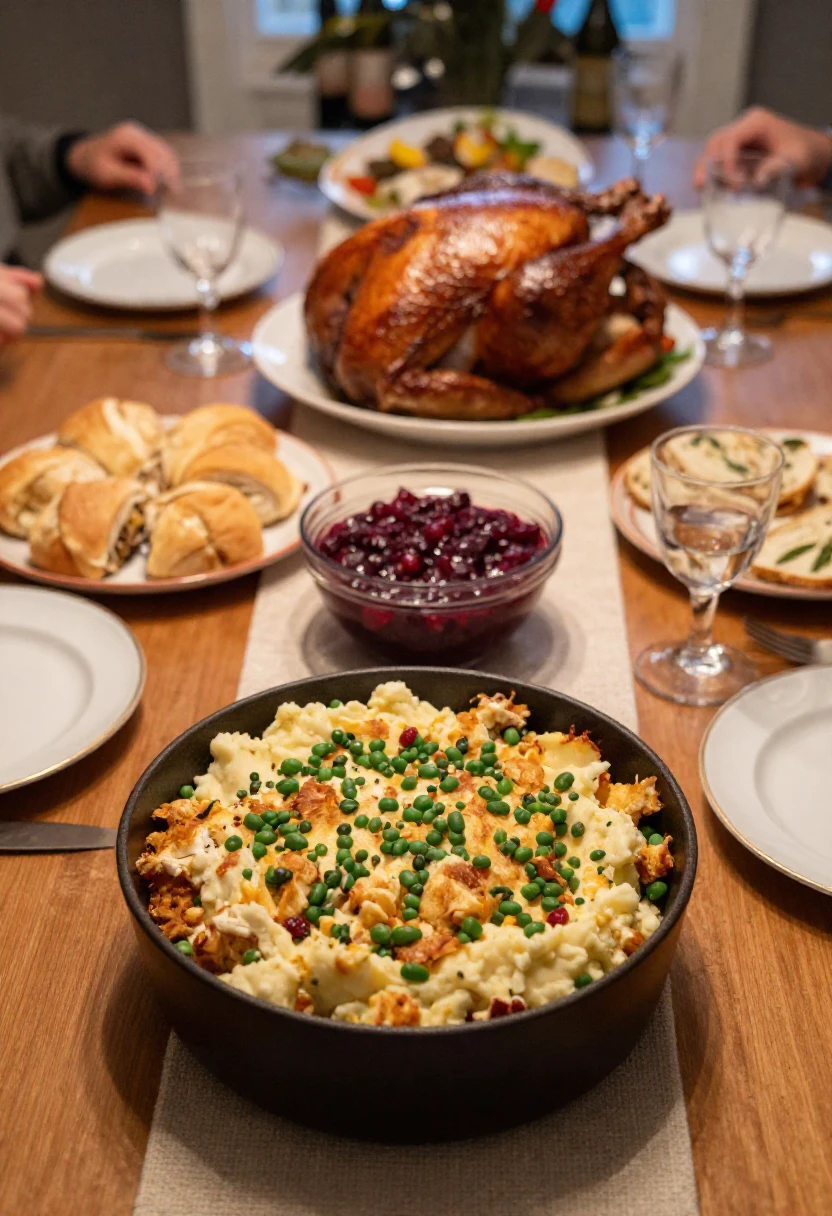
It works beautifully with roast turkey because the creamy mushroom sauce softens the lean meat, while the crispy onions add a little texture next to stuffing and mashed potatoes. Add cranberry sauce nearby, and you get that sweet-tart contrast that keeps the whole plate from feeling too rich.
It also pairs well with baked ham. The saltiness of ham and the creamy green beans make sense together, especially if the casserole has fresh mushrooms or a little Dijon in the sauce.
Good holiday pairings include:
- roast turkey with gravy
- baked ham
- mashed potatoes
- stuffing or dressing
- cranberry sauce
- roasted sweet potatoes
- dinner rolls
- simple green salad
That last one matters. A crisp salad with lemony dressing can balance a holiday plate better than another rich side. Even a bowl of romaine, cucumber, and vinaigrette helps.
Everyday dinner pairings
Green bean casserole does not have to wait for Thanksgiving.
A smaller version works well with roast chicken, pork chops, meatloaf, or even baked potatoes. If you make it with fresh or frozen green beans and a lighter sauce, it feels like a cozy weeknight vegetable side instead of a once-a-year dish.
For an easy dinner, I like it with roasted chicken thighs and rice. Nothing fancy. The rice catches the sauce, the chicken gives you something savory and simple, and the casserole makes the meal feel more finished.
It also works next to:
- meatloaf
- pork tenderloin
- grilled chicken
- baked chicken breasts
- roasted sausages
- rice pilaf
- baked potatoes
- simple egg noodles
If you are serving it outside the holidays, you can make the casserole less rich. Use more broth in the sauce, go lighter on the fried onions, and skip bacon or heavy cheese. It will still taste like green bean casserole, just not like it needs a nap afterward.
What drinks work with it
For a holiday meal, green bean casserole pairs nicely with crisp white wines like Sauvignon Blanc, Pinot Grigio, or dry Riesling. They cut through the creamy sauce without fighting the mushroom flavor.
If you prefer red wine, choose something lighter, like Pinot Noir. A heavy red can feel too strong next to the green beans and cream sauce.
For non-alcoholic options, sparkling water with lemon, iced tea, apple cider, or cranberry spritzers all work well. You want something fresh or lightly tart, not overly sweet.
How to build a balanced plate
Green bean casserole brings creamy and crunchy. So the rest of the plate should bring contrast.
Add something roasted, something fresh, and something with acidity if you can. That might look like turkey, green bean casserole, mashed potatoes, cranberry sauce, and salad. Or chicken, casserole, rice, and a quick cucumber salad.
The casserole will do its job better when it has something bright beside it.
That is the quiet trick with rich comfort food. You do not have to make it less comforting. You just have to give it the right neighbors.
Conclusion
Green bean casserole does not need a complete makeover to taste better. The classic version already has the right idea: tender green beans, creamy mushroom sauce, and that salty-crisp onion topping everyone steals from the pan.
The real improvement comes from small choices. Dry the beans well. Brown the mushrooms. Season the sauce before it goes into the oven. Add the final onions near the end so they stay crisp. Let the casserole rest for a few minutes before serving.
That is how you keep the familiar holiday taste while making the dish feel fresher, warmer, and more carefully cooked. Still classic. Just better.
FAQ
Can I make green bean casserole without canned soup?
Yes. Make a quick mushroom sauce with butter, fresh mushrooms, flour, milk, and broth. Cook the mushrooms until browned, add garlic or shallot if you like, then stir in flour and slowly whisk in the liquid. The sauce should be creamy enough to coat the beans but not so thick that it feels heavy.
Can I use fresh green beans instead of canned?
Yes, and fresh green beans give the casserole better texture. Blanch them in salted boiling water for 3 to 5 minutes, then drain and dry them well before mixing with the sauce. This keeps the casserole from turning watery.
How do I keep fried onions crispy?
Add most of the fried onions near the end of baking. Bake the casserole first until the sauce is hot and bubbling, then sprinkle the onions on top and bake for another 8 to 10 minutes. This keeps them golden instead of soggy.
Can green bean casserole be made ahead?
Yes. Assemble the beans and sauce up to one day ahead, cover, and refrigerate. Leave the final onion topping off until baking. When ready to serve, bake until hot, add the onions near the end, and let the casserole rest for a few minutes before serving.

Terrific work! That is the kind of information that are meant to be shared
across the web. Shame on the seek engines for not positioning this publish higher!
Come on over and consult with my site . Thanks =)