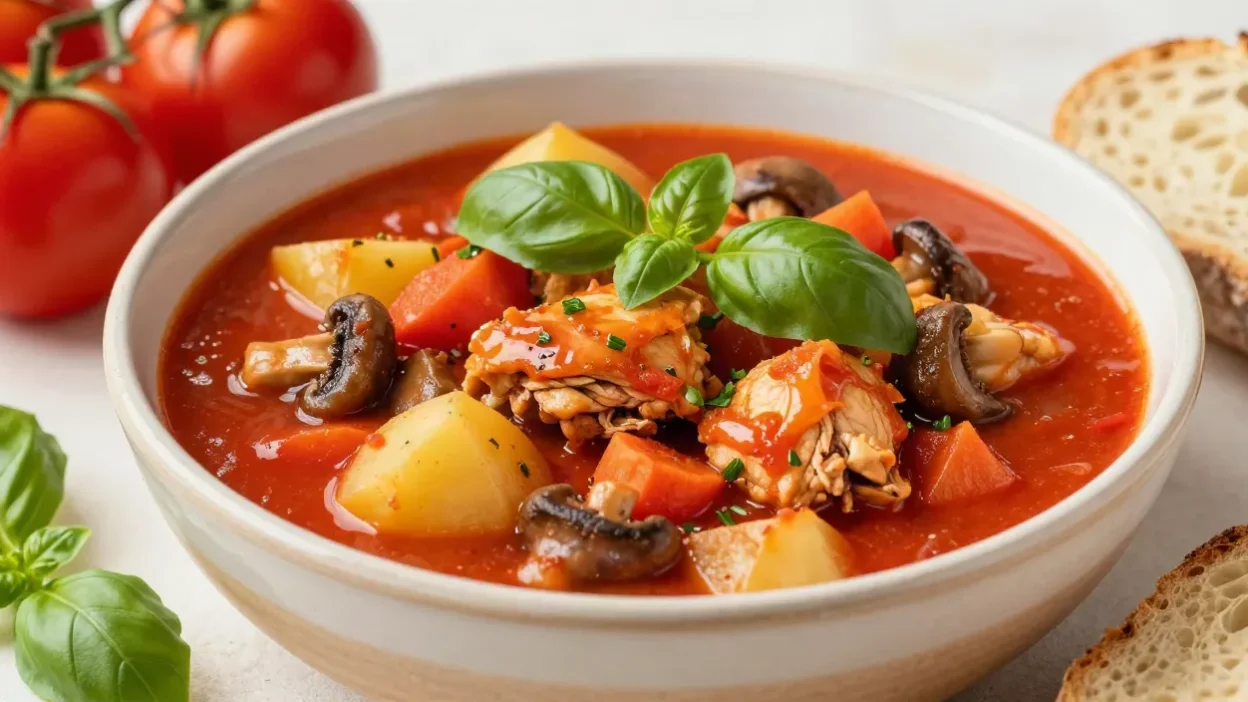
There’s something especially satisfying about sitting down to a big bowl of homemade stew at the end of the day. Not the kind of dinner that needs a lot of fuss or a carefully planned presentation, but something warm, hearty, and full of flavor. Tomato basil chicken stew fits that feeling beautifully. It has the familiar comfort of a slow-simmered meal, with tender chicken, vegetables, and a rich tomato broth that brings everything together. And honestly, sometimes that’s exactly what you want after a long day — a proper meal that feels like it’s been waiting for you.
The first thing you’ll notice is the aroma. As the onion and garlic soften in the pot, they start building that savory foundation, and once the tomatoes and herbs join in, the kitchen takes on a lovely Italian-inspired scent. There’s a little sweetness from the tomatoes, a gentle herbal note from the basil, and a deeper, more rounded flavor as everything simmers together. It’s the kind of smell that makes you wander back into the kitchen to see how dinner is coming along, even when you already know there’s still a little time to go. 🍃
What I particularly like about this kind of stew is the way its textures work together. The chicken makes it filling, the vegetables add their own character, and the broth is rich enough to feel satisfying without turning the whole dish into something heavy. Every spoonful can be a little different: a tender piece of chicken, a soft vegetable, a bit of tomato-rich broth. It’s simple food, but it doesn’t feel boring. The ingredients have enough room to bring their own flavor while still becoming part of one cozy, well-rounded dish.
And it’s wonderfully suited to a relaxed dinner at home. You can bring the pot straight to the table, set out a few bowls, and let everyone help themselves. There’s no need to make the meal feel formal; a loaf of crusty bread on the side is often all you need to make it feel complete. The bread is especially lovely for catching the last of the tomato broth, which, let’s be honest, is often the part nobody wants to leave behind. 🥖
This stew also has that comforting, familiar quality that makes it easy to return to. It works on a chilly evening when you want something warming, but it doesn’t have to be reserved for the coldest days of the year. The tomato and basil flavors feel bright and inviting, while the chicken and vegetables give it enough substance to stand on its own as dinner. It’s a nice middle ground between a light soup and a heavier casserole — hearty, but still full of freshness.
Serve it when you want a meal that feels generous without being complicated, whether you’re cooking for the family or simply making enough to enjoy another day. The leftovers can be just as welcome, especially when the flavors have had a little more time to mingle. And if you happen to have a quiet evening ahead, a warm bowl of this stew, some good bread, and a few minutes to slow down can feel like a small treat in itself. ❤️
When tomato soup turns into something heartier 🥣
Tomato soup and tomato stew may begin with similar flavors, but they offer quite different experiences at the table. A smooth tomato soup is often delicate and uniform, with the tomatoes taking center stage. This chicken stew is more substantial. The ingredients remain in recognizable pieces, so each spoonful brings a different combination of chicken, vegetables, and broth. It has the familiar comfort of tomato soup, but with enough texture and substance to stand on its own as dinner.
The chicken plays a big part in that. It gives the stew a satisfying, savory base, while the vegetables add different textures rather than simply blending into the liquid. Potatoes bring a soft, hearty bite; carrots offer a little sweetness; and mushrooms contribute an earthy note that works particularly well with tomatoes. None of these ingredients needs to dominate. Their flavors mingle as they cook, making the broth feel more complete than it would with tomatoes alone.
There’s a nice contrast between the soft vegetables and the brighter tomato flavor, too. Potatoes absorb some of the surrounding broth, so they taste seasoned all the way through rather than sitting separately in the bowl. Carrots keep a little sweetness, which can help balance the natural tang of tomatoes. Mushrooms bring a deeper, savory quality that gives the stew another layer. And the chicken ties everything together, especially when it has had enough time to become tender.
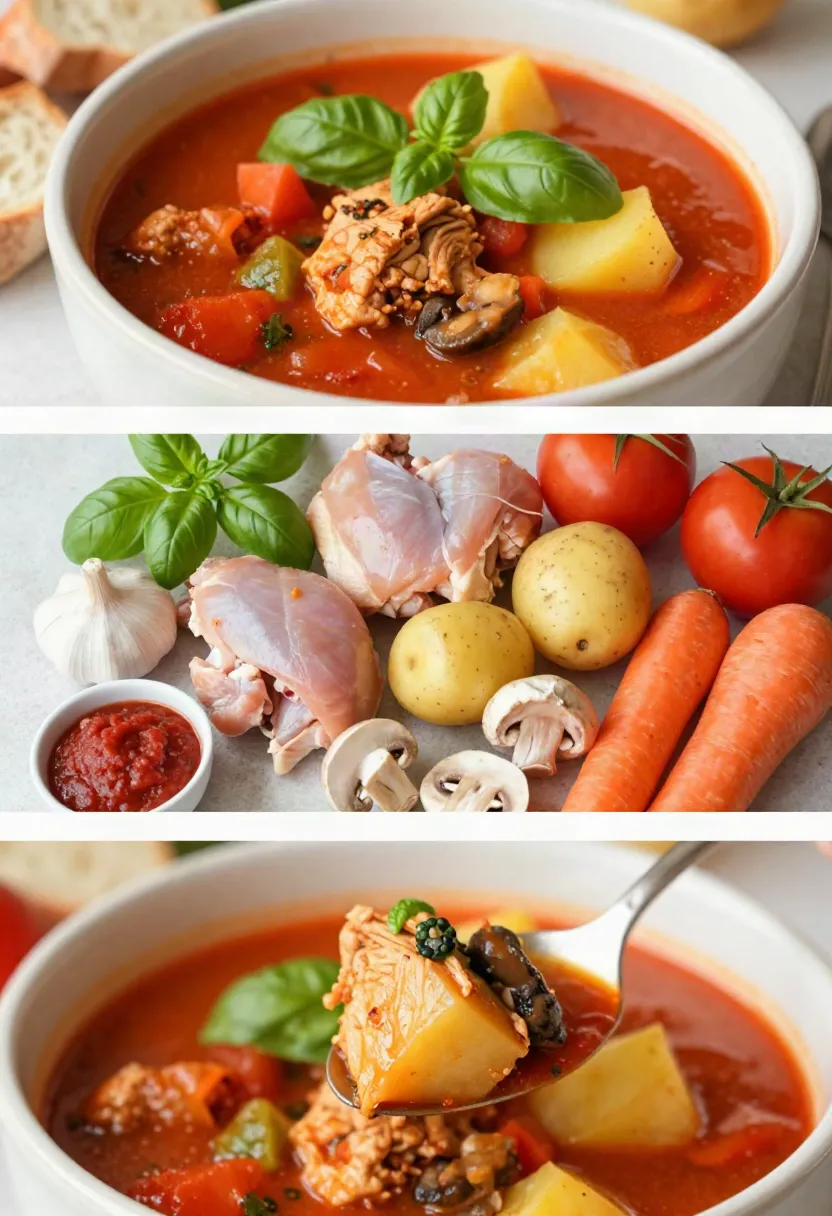
Here’s a closer look at the role each ingredient plays in the bowl:
Ingredient | Flavor and texture | What it contributes |
|---|---|---|
Chicken 🍗 | Tender, savory, and satisfying | Gives the stew substance and makes it feel like a complete meal |
Potatoes 🥔 | Soft and hearty when cooked through | Add body and soak up some of the tomato broth |
Carrots 🥕 | Mildly sweet with a tender bite | Balance the tomato’s acidity and add color |
Mushrooms 🍄 | Earthy and savory | Bring a deeper flavor that rounds out the broth |
Crushed tomatoes 🍅 | Bright, tangy, and juicy | Form the main flavor base and give the stew its distinctive character |
Chicken stock 🍲 | Savory and mellow | Adds depth and helps the ingredients come together |
Onion 🧅 | Sweet and mellow once softened | Builds the first layer of flavor |
Garlic 🧄 | Fragrant and savory | Gives the broth warmth and a familiar aromatic note |
Tomato paste 🍅 | Concentrated and deeply tomato-flavored | Adds richness and helps intensify the tomato base |
Oregano 🌿 | Earthy and gently herbal | Adds a savory background note |
Fresh basil 🌱 | Fragrant, fresh, and slightly sweet | Lifts the stew and gives it a fresh herbal finish |
Cream 🥛 | Smooth and mellow | Softens the acidity and gives the broth a silkier texture |
Olive oil 🫒 | Light and fruity | Helps soften the aromatics and carry their flavor |
Salt and black pepper 🧂 | Savory and gently warming | Bring the individual flavors into better balance |
The texture is worth thinking about when you serve it. You want enough broth to spoon up easily, but also enough chicken and vegetables that every bowl feels generous. If the liquid is too thin for your taste, letting the stew simmer uncovered for a little while can help it reduce. If it becomes thicker than you intended, a splash of stock can loosen it without changing the overall character too much.
And unlike a smooth soup, this stew gives you plenty of options for how to eat it. A spoon works perfectly well, of course, but a thick slice of bread makes a particularly good companion. The bread catches the tomato broth and gives you something to scoop up the last pieces of potato or chicken. You could also serve it over rice or alongside a small portion of pasta if you want to stretch the meal a little further.
The creamy finish, if you choose to include it, should complement the tomatoes rather than cover them up. The broth can remain bright and tomato-forward while gaining a softer, more rounded texture. Add the basil near the end, and its fragrance will still come through when you bring the bowls to the table. The result is a stew that feels hearty enough for dinner, but not so heavy that you lose the fresh character of the tomatoes and herbs. 🍅
The little things that make the broth special 🌿
The broth is where the different parts of this stew really come together. Chicken and vegetables make it hearty, but the flavor starts developing much earlier, with the ingredients that go into the pot first. Onion and garlic are a familiar starting point for a reason: when they soften in a little oil, their sharpness gives way to a gentler, sweeter aroma. They create a savory foundation that helps the tomatoes taste fuller once they’re added.
Tomato paste deserves a little attention here, too. It has a concentrated flavor, and giving it a brief chance to cook with the aromatics helps it blend into the base rather than tasting like something stirred in at the last minute. You don’t need to let it brown heavily; just cook it until it smells rich and tomatoey. That small step can make the broth taste deeper and more rounded.
Crushed tomatoes bring the bright, tangy character that defines the stew, while chicken stock adds a more savory background. The two balance each other: tomatoes give the broth its lively flavor, and stock keeps it from tasting one-dimensional. As the stew simmers, the chicken and vegetables contribute their own flavors, too. It’s a gradual process, not a dramatic transformation, but that gentle cooking time is what allows everything to taste connected.
The herbs have their own jobs. Oregano brings an earthy, savory note that works quietly in the background. Basil is different: fresh, fragrant, and a little sweeter, with a flavor that can lose some of its liveliness if it cooks for too long. Adding it closer to the end helps preserve that fresh herbal quality. You’ll notice it most when you lift the lid or take the first spoonful, when the aroma is still bright. 🌱
Then there’s the question of cream. Tomatoes can be naturally tangy, and a little cream can soften that edge while giving the broth a smoother mouthfeel. It shouldn’t turn the stew into a heavy, pale sauce. Think of it as rounding out the flavor rather than changing the whole dish. If you prefer a brighter, dairy-free version, you can leave it out and let the tomatoes, stock, and herbs do their thing.
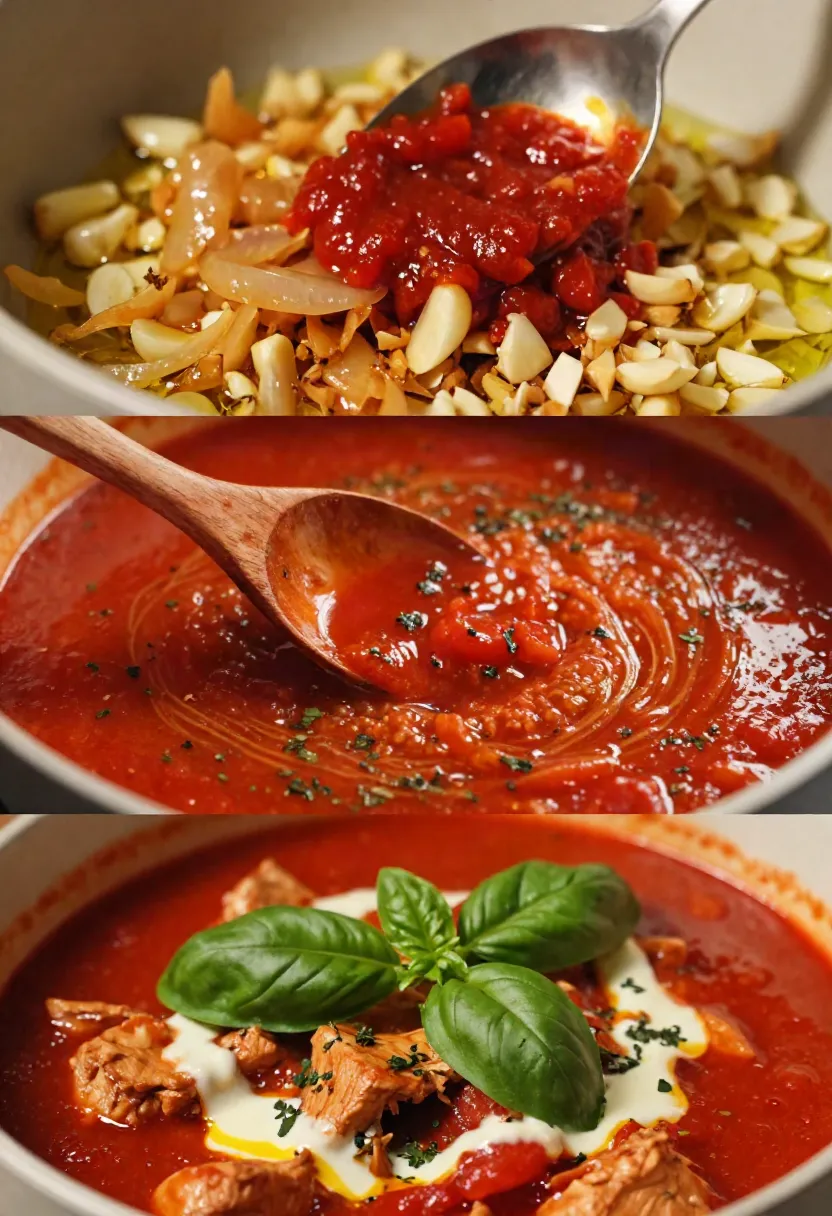
A few small choices can make a noticeable difference as the broth comes together:
Let the onion and garlic soften first 🧄. Give them a little time in the pot so their flavor becomes mellow and aromatic rather than sharp.
Cook the tomato paste briefly 🍅. Stir it through the aromatics until it smells deeper and blends into the base.
Keep the simmer gentle 🍲. A steady simmer gives the chicken and vegetables time to cook without making the broth boil aggressively.
Add fresh basil toward the end 🌿. This helps retain its fragrant, fresh character.
Stir in cream gently 🥛. Once it’s added, warm the stew through without letting it boil hard.
One thing I’d avoid is rushing the broth by turning the heat up too high. A vigorous boil can make the liquid reduce faster than expected, and it can be harder to keep the chicken tender. A gentle simmer gives you more control. It also makes it easier to check the potatoes as they cook, since you can test one without the pot bubbling away around your spoon.
Seasoning is best treated as something you adjust along the way. Stock can vary in saltiness, and tomatoes can vary in acidity, so the exact amount of salt needed may not be the same every time. Taste the broth once the ingredients have had time to simmer together, then adjust the seasoning near the end. If it tastes a little too sharp, a small amount of cream may help soften it; if it feels flat, a little more salt or freshly ground black pepper may be all it needs.
The goal is a broth that tastes tomato-rich and savory, with herbs you can actually notice and a texture that suits the way you like to eat stew. It doesn’t need an elaborate list of seasonings or complicated techniques. Just give the aromatics a little attention, let the ingredients simmer gently, and finish with the basil when the pot is nearly ready. That’s where the stew gets its particular character — hearty, fragrant, and bright enough to make you want another spoonful. ❤️
Tomato basil chicken stew recipe 🍅🍗
This tomato basil chicken stew is a hearty, comforting meal with tender pieces of chicken, soft potatoes, sweet carrots, and mushrooms simmered in a rich tomato broth. The tomatoes bring a gentle tanginess, while garlic, oregano, and fresh basil give the stew a lovely Italian-inspired flavor. A little cream stirred in at the end softens the acidity of the tomatoes and makes the broth taste rounder and more mellow, without turning it into a heavy, creamy soup.
The best part is how everything comes together in one pot. The chicken is browned first, giving it a little color and leaving behind flavorful bits that become part of the broth. The vegetables then have time to soften and release their flavor, while the potatoes make the stew substantial enough to serve as a full dinner. As it simmers, the tomato base becomes richer, the chicken grows tender, and the herbs gradually weave their way through the whole dish. It’s the sort of meal that feels like it took much more effort than it actually did.
Serve it piping hot in deep bowls, with plenty of crusty bread nearby to soak up the tomato-basil broth. A little freshly grated Parmesan and a few extra basil leaves make a lovely finishing touch. You can also spoon it over rice, egg noodles, or another grain if you’d like to stretch the meal a little further. And if you happen to have leftovers, they make a satisfying lunch the next day.
Ingredients
2 tablespoons olive oil
1½ pounds boneless, skinless chicken thighs or breasts, cut into bite-sized pieces
Fine sea salt and freshly ground black pepper, to taste
1 medium yellow onion, diced
2 medium carrots, diced
8 ounces baby bella (cremini) mushrooms, sliced
4 cloves garlic, minced
2 tablespoons tomato paste
1½ pounds Yukon Gold or red potatoes, cut into 1-inch cubes
1 (28-ounce) can crushed tomatoes
2 cups chicken stock
1 teaspoon dried oregano
1 bay leaf
½ teaspoon crushed red pepper flakes (optional)
½ cup chopped fresh basil, plus extra for garnish
½ cup heavy cream
Freshly grated Parmesan, for serving (optional)
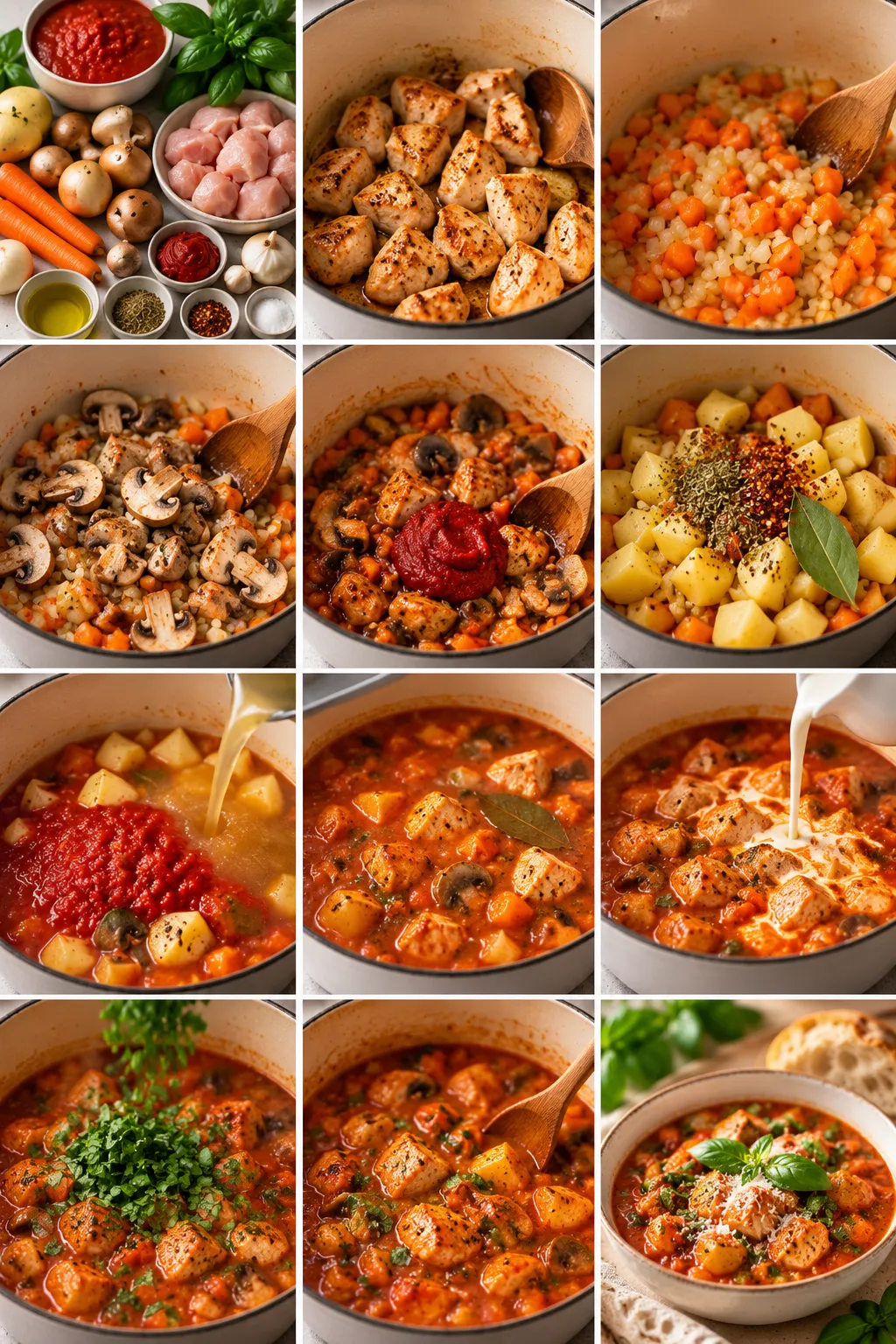
Instructions
1. Prepare and season the chicken. Pat the chicken dry with paper towels, then cut it into evenly sized, bite-sized pieces. Season all sides with salt and freshly ground black pepper. Cutting the chicken evenly helps it cook at a similar rate, while drying it first makes browning easier.
2. Brown the chicken. Heat the olive oil in a large Dutch oven or heavy-bottomed pot over medium-high heat. Once the oil is hot, add the chicken in a single layer, working in batches if needed. Cook for 3–4 minutes per side, until lightly golden. The chicken doesn’t need to be cooked through yet. Transfer it to a plate and leave the flavorful browned bits in the pot.
3. Soften the onion and carrots. Reduce the heat to medium and add the diced onion and carrots. Cook for about 5 minutes, stirring occasionally and scraping up the browned bits from the bottom. The onion should become soft and translucent, while the carrots begin to soften. If the pot looks too dry, add a small splash of chicken stock to prevent sticking.
4. Add the mushrooms and garlic. Stir in the sliced mushrooms and cook for about 3 minutes, allowing them to soften and release some moisture. Add the minced garlic and cook for another 30–60 seconds, stirring constantly until fragrant. Keep the garlic moving so it doesn’t burn.
5. Cook the tomato paste. Add the tomato paste and stir it through the vegetables. Cook for about 1 minute, allowing it to darken slightly and develop a deeper flavor. If it starts sticking to the bottom, lower the heat and stir more frequently.
6. Add the potatoes and broth ingredients. Stir in the cubed potatoes, crushed tomatoes, chicken stock, dried oregano, bay leaf, and red pepper flakes, if using. Scrape the bottom of the pot to loosen any remaining browned bits. Return the chicken and any juices from the plate to the pot, then stir gently to combine.
7. Bring the stew to a gentle simmer. Increase the heat until the mixture begins to boil, then reduce it to low and cover the pot. Simmer for 25–30 minutes, stirring occasionally to keep the ingredients from sticking. Aim for gentle bubbling rather than a vigorous boil, which can make the chicken tougher and cause the potatoes to break apart.
8. Check the chicken and potatoes. After about 25 minutes, test a potato with a fork. It should be tender without falling apart. Check a larger piece of chicken to make sure it’s cooked through. If either needs more time, cover the pot and simmer for another 5 minutes before checking again.
9. Stir in the basil and cream. Reduce the heat to low and add the chopped fresh basil and heavy cream. Stir gently until the cream is evenly incorporated into the tomato broth. Remove and discard the bay leaf, then let the stew warm for another minute or two. Avoid bringing it to a hard boil after adding the cream.
10. Taste and adjust the seasoning. Give the broth a taste and add more salt or black pepper if needed. If it seems thicker than you prefer, stir in a little extra chicken stock until it reaches your desired consistency. For a richer finish, you can add freshly grated Parmesan when serving.
11. Serve warm. Ladle the stew into bowls and garnish with extra fresh basil and Parmesan, if desired. Serve immediately with crusty bread for dipping, or spoon it over rice or egg noodles for an even heartier meal. ❤️
A few helpful tips 🌿
Brown the chicken in batches if needed. Crowding the pot can make the chicken steam instead of brown.
Cut the potatoes evenly. Similar-sized pieces are more likely to become tender at the same time.
Keep the simmer gentle. This helps the chicken stay tender and the potatoes hold their shape.
Add fresh basil near the end. It keeps its fresh, fragrant character better than if it simmers for the full cooking time.
Adjust the broth to your liking. A splash of stock can loosen a thick stew, while a little Parmesan adds extra savory flavor at the table.
Easy ways to make this stew your own 🌿
One of the things I enjoy about a good tomato-based stew is that it doesn’t have to taste exactly the same every time. The combination of chicken, tomatoes, vegetables, and herbs gives you a lovely foundation, but there’s plenty of room to adjust the details depending on what you have in the fridge or what sounds good that evening. Maybe you want a little extra heat, a deeper savory flavor, or simply a few more vegetables tucked into the pot. Small changes can make the dish feel new without turning dinner into a whole different cooking project.
The tomato and basil flavors are worth keeping at the center of the recipe. They give the stew its familiar Italian-inspired character, while the chicken and potatoes make it hearty enough to serve as a complete meal. From there, you can play around with the seasoning, the richness of the broth, or the way you serve it. I’d start with one small adjustment at a time, especially if you’re making the stew for the first time. That way, you’ll get a better sense of what each change brings to the finished dish.
If you enjoy a little warmth in your food, crushed red pepper flakes are an easy addition. You can add them while the broth simmers, allowing the heat to spread through the stew rather than concentrating in one bite. For a more pronounced kick, add a little extra at the table. I like this approach because everyone can adjust their own bowl, which is particularly useful when you’re cooking for people with different preferences.
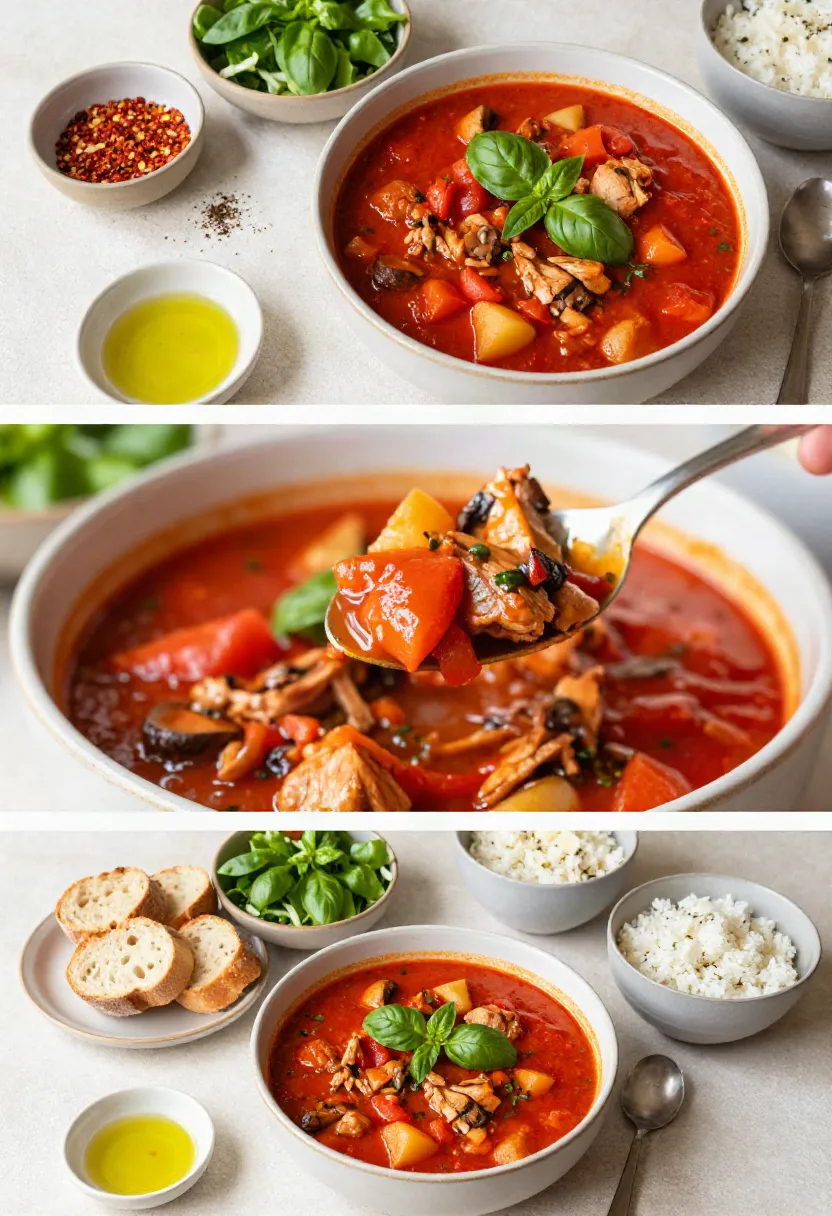
You can also play with the vegetables. A few extra mushrooms will bring a deeper, earthy flavor, while additional carrots add a gentle sweetness that works nicely with the tomatoes. Just keep in mind that adding a lot of extra vegetables can change the balance of the broth. If the pot starts looking crowded, you may want to add a little more stock so everything has enough room to simmer comfortably.
Here are a few simple ways to customize the stew:
For a little heat: Add crushed red pepper flakes or a pinch of chili flakes.
For a deeper savory flavor: Finish each bowl with freshly grated Parmesan.
For more vegetables: Add extra carrots or mushrooms, keeping the pieces similar in size.
For a lighter broth: Leave out the cream and let the tomatoes, stock, and herbs do the work.
For a fresher finish: Scatter torn basil leaves over the stew just before serving.
Another easy adjustment is the consistency. Some people love a stew with plenty of broth, while others prefer something thick enough to cling to a spoon. If you like yours a little looser, stir in a splash of chicken stock near the end of cooking. If you prefer a thicker texture, let it simmer uncovered for a few extra minutes, keeping an eye on the potatoes so they don’t become too soft. There’s no need to chase a perfect consistency — just aim for the kind you enjoy eating.
And then there’s the finishing touch. A sprinkle of Parmesan, a few fresh basil leaves, or a little black pepper can make the bowl feel more complete without adding much work. These small details are especially nice when you’re serving the stew to guests, but they’re just as welcome on an ordinary weeknight. Sometimes a simple garnish is all it takes to make a familiar dinner feel a little more special. ❤️
Making it ahead and enjoying leftovers 🍲
This stew is a lovely option when you want to get a little cooking done ahead of time. There’s something reassuring about knowing that a homemade dinner is already waiting in the fridge, especially on a busy day when the thought of starting from scratch feels less than appealing. Instead of chopping vegetables and watching a pot simmer after work, you can simply warm up a portion, add a little fresh garnish, and sit down to eat.
If you’re planning to make it ahead, prepare the stew as directed and allow it to cool before transferring it to airtight containers. Refrigerate it promptly, and use the leftovers within 3–4 days. It’s usually easiest to divide the stew into individual portions before storing it, particularly if you expect to take some for lunch. Smaller containers also make reheating more convenient because you only need to warm what you’re going to eat.
Once chilled, the broth may become thicker than it was when freshly cooked. The potatoes absorb some of the liquid as the stew rests, and the whole mixture can feel a little more compact straight from the refrigerator. That’s completely normal. Add a splash of chicken stock or water while reheating, stir gently, and give the broth a moment to loosen up. You don’t need to add much — start with a little and adjust until it looks right.
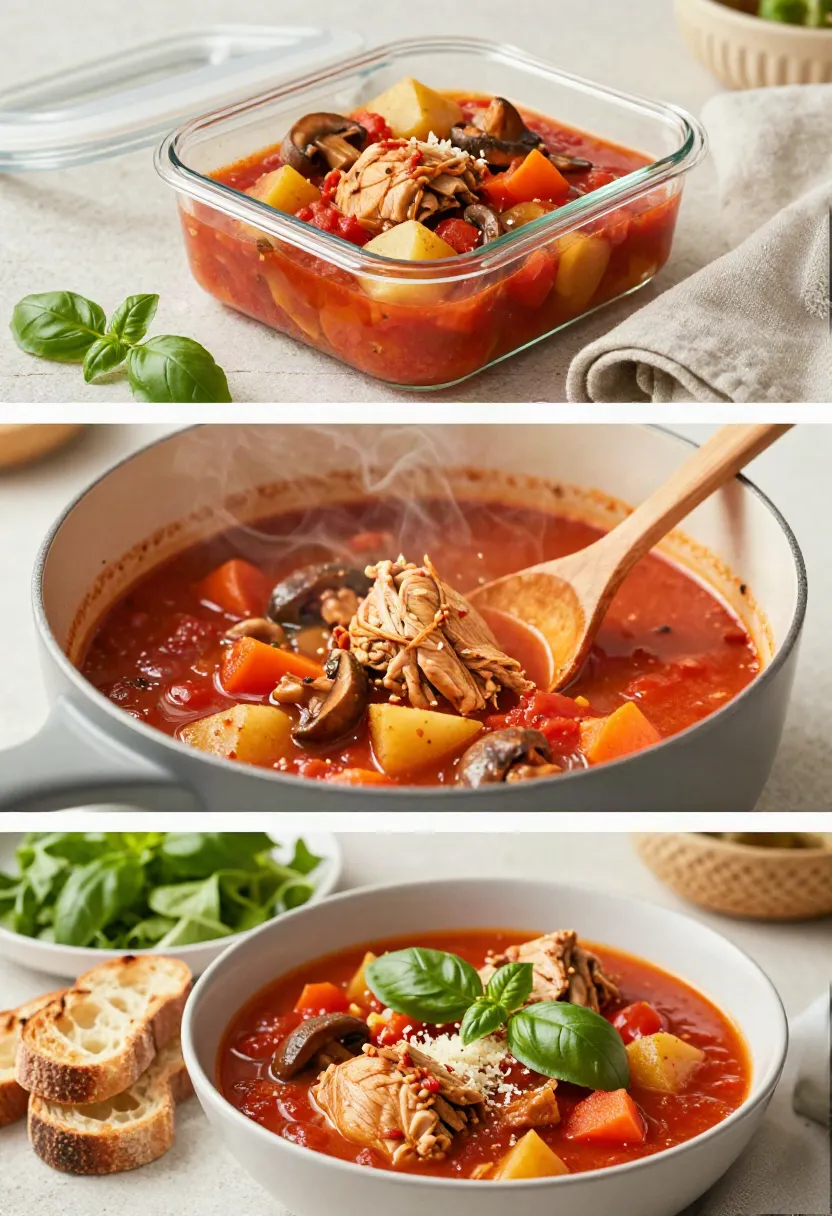
For reheating, place the portion you want in a saucepan over medium-low heat. Stir occasionally, making sure the bottom doesn’t catch as the stew warms. Heat it until it’s steaming hot throughout. If you’re using a microwave, place the stew in a microwave-safe bowl, cover it loosely, and heat in short intervals, stirring between them so the temperature is more even.
There are also a few easy ways to give leftovers a slightly different feel instead of eating the exact same bowl twice. You don’t need to reinvent the recipe; just change what you serve alongside it.
Make it a quick lunch: Warm up a bowl and enjoy it with toasted bread.
Serve it over rice: The grains soak up the tomato broth and make the meal extra filling.
Add egg noodles: Spoon the stew over freshly cooked noodles for a cozy, pasta-style dinner.
Pair it with a fresh salad: A crisp green salad adds a refreshing contrast to the rich, savory broth.
Refresh the garnish: Add a few basil leaves or a little Parmesan after reheating.
If you’re thinking about freezing the stew, keep in mind that potatoes can change texture after freezing and thawing, sometimes becoming softer or a little grainy. The stew may still be enjoyable, but it won’t necessarily have exactly the same texture as when freshly made. For that reason, I’d generally plan to enjoy refrigerated leftovers first, especially if you like your potatoes to hold their shape.
One last little tip: if you know you’ll be saving some for later, you can set aside a portion before adding all the fresh basil and cream. Then, when you reheat it, stir in those finishing ingredients just before serving. It’s not essential, but it can help the reheated stew taste a little fresher and keep the basil aroma noticeable. Either way, leftovers are a welcome bonus — especially when lunch is already taken care of. 🥣
A comforting dinner worth coming back to ❤️
Not every recipe needs to be a special occasion dish or something you make only when you have a whole afternoon to spare. Some meals earn their place in the kitchen simply because they’re satisfying, familiar, and easy to return to. Tomato basil chicken stew has that everyday appeal: straightforward ingredients, a pot that does most of the work once everything is simmering, and a generous dinner that feels like more than the sum of its parts.
It’s the kind of meal that can fit into different parts of the week. On a chilly evening, it’s lovely to have a warm pot on the stove while the kitchen fills with the smell of tomatoes, garlic, and herbs. On a busy weekday, it gives you a chance to make dinner without juggling several pans. And when friends or family are coming over, it’s easy to serve in a relaxed way — just bring the pot to the table, set out bowls, and let everyone help themselves.
I also like that the stew doesn’t need a complicated menu around it. The chicken, potatoes, and vegetables already make it substantial, so a few simple sides are more than enough. A loaf of crusty bread is an obvious choice, especially for anyone who likes to mop up the last of the broth. A green salad can bring a little freshness to the table, while rice or noodles are handy when you want to make the meal stretch a bit further.

For a casual dinner, you could keep things wonderfully simple:
A warm loaf of crusty bread or slices of toasted sourdough
A crisp green salad with a light dressing
Freshly grated Parmesan and extra basil for the table
A small dish of olive oil for dipping bread, if you like
The serving style can be just as relaxed as the cooking. There’s no need to arrange every piece of chicken or make the vegetables look perfectly placed. A deep bowl, a spoon, and a generous ladle of tomato broth are really all you need. A few basil leaves on top add a fresh pop of color, and Parmesan brings a salty, savory finish for anyone who wants it.
And honestly, the little moments around a meal like this are part of its charm. Someone reaches for another piece of bread. The last spoonful of broth gets passed around. A second helping appears even though everyone said they were full a few minutes earlier. It’s not fancy food, and that’s exactly why it feels so welcoming.
If you make this stew once and enjoy it, you may find yourself coming back to it when you need a dependable dinner. You can keep the recipe as it is, adjust the seasoning to suit your household, or change the sides depending on what you have available. It’s flexible without being complicated, and it gives you a satisfying meal with ingredients that work beautifully together.
So bring the pot to the table while it’s still warm, add a little fresh basil, and let dinner take its time. Whether you’re sharing it with people you love or enjoying a quiet bowl on your own, this tomato basil chicken stew is a comforting reminder that a good homemade meal doesn’t have to be complicated to feel special. 🍅❤️