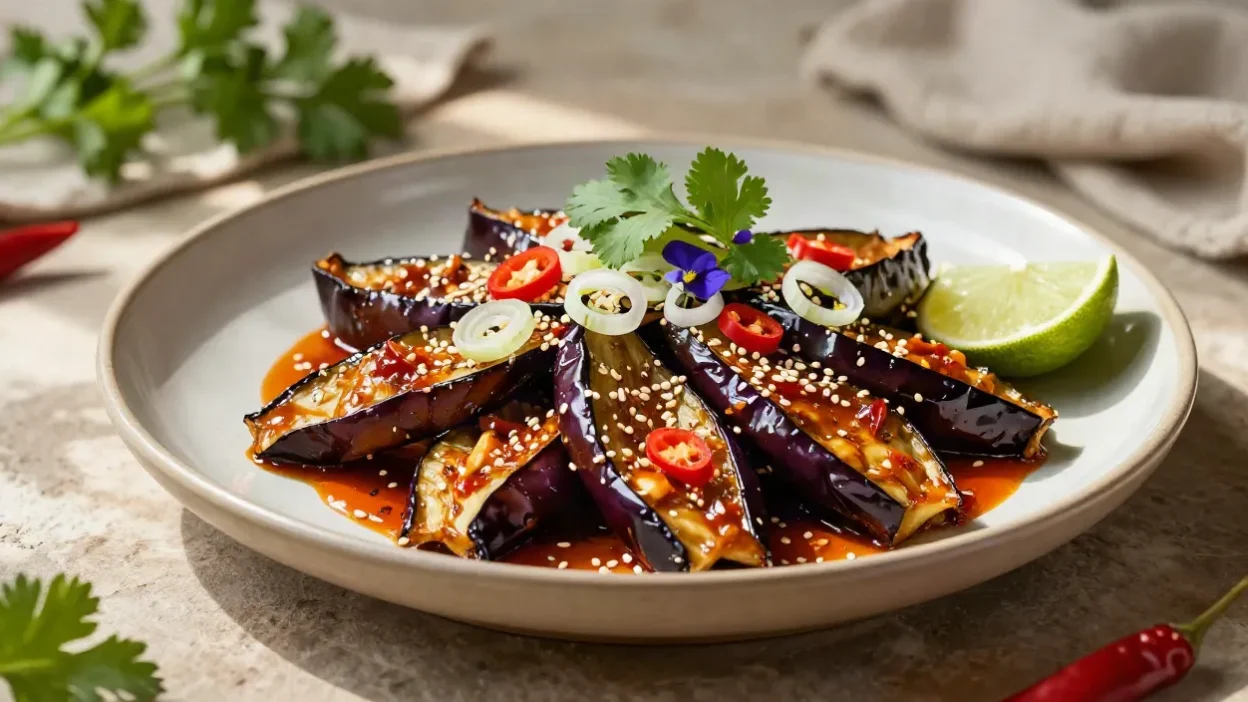
I’ll admit it—I ignored eggplants for years. They always seemed like one of those vegetables that required some secret technique I hadn’t figured out yet. Sometimes they’d turn out soft in the best possible way, almost creamy inside. Other times they were oddly spongy or soaked up so much oil that they became heavier than the meal itself. It wasn’t until I started cooking them over high heat that everything finally clicked. Once the outside developed deep golden edges and the inside turned silky and tender, I understood why eggplant has such a devoted following in kitchens all over the world.
That’s exactly why chilli eggplant has become one of those recipes I keep coming back to. It doesn’t try to hide the vegetable under thick sauces or piles of cheese. Instead, it lets the eggplant stay at the center of the plate while surrounding it with layers of bold, aromatic flavor. Garlic, ginger, fresh chilies, fragrant herbs, and just the right balance of sweetness and acidity create a sauce that’s vibrant without overpowering the main ingredient. Every bite still tastes unmistakably like eggplant—just a much more exciting version of it.
One thing I love about this dish is how quickly it fills the kitchen with incredible aromas. Before the eggplant even goes into the pan, the garlic begins to sizzle, the ginger releases its warmth, and the shallots slowly soften until they become sweet and fragrant. Add fresh chilies, and suddenly the whole room smells like dinner is going to be something special. It’s one of those meals that quietly pulls people into the kitchen long before you call everyone to the table.
The texture is just as satisfying as the flavor. Properly cooked eggplant almost melts when you cut into it, yet it still keeps enough structure to hold onto every spoonful of sauce. The outside becomes lightly caramelized while the inside stays soft and delicate. That contrast is what makes chilli eggplant so enjoyable to eat. Every bite feels rich without being heavy, bold without becoming overwhelming.
I also appreciate how approachable this recipe is. At first glance it looks like something you’d order at a restaurant, but the cooking itself is surprisingly straightforward. There aren’t endless steps to follow or complicated techniques to master. Once everything is chopped and ready, the dish comes together faster than most weeknight dinners. It’s proof that a handful of fresh ingredients, treated well, can easily compete with recipes that take hours to prepare.
Another reason this recipe earns a regular place on my table is its flexibility. Some evenings it becomes the entire meal with nothing more than a bowl of steamed jasmine rice. Other nights it joins grilled chicken, seafood, crispy tofu, or fresh vegetables as part of a larger dinner. It even tastes wonderful tucked into warm flatbread with fresh herbs and a spoonful of yogurt. However I serve it, it never feels out of place.
🌶️ Why you’ll love chilli eggplant:
- Tender eggplant with beautifully caramelized edges.
- A bold sauce full of garlic, ginger, and fresh chilies.
- Ready in around 30 minutes.
- Naturally vegetarian and easy to customize.
- Perfect for weeknight dinners or entertaining.
- Delicious with rice, noodles, or grilled dishes.
- Even better after the flavors have had time to settle.
✨ Some recipes impress because they’re complicated. Chilli eggplant does the opposite. It reminds me that a few fresh ingredients, cooked with a little care, can create something every bit as memorable as an elaborate restaurant meal.
Why eggplant works so well with chilli
Eggplant has a reputation for being difficult, but I honestly think it’s one of the most misunderstood vegetables you can cook. The trick isn’t finding a complicated recipe—it’s understanding what happens once heat starts working its magic. Raw eggplant is firm, slightly bitter, and fairly plain. Give it enough time in a hot pan or under the grill, though, and everything changes. The flesh softens into something silky, almost buttery, while the outside develops rich golden edges that add another layer of flavor before the sauce even enters the picture.
That’s exactly why chilli works so well alongside it. Eggplant acts almost like a sponge, but in the best possible way. Instead of competing with the sauce, it absorbs all those fragrant flavors while still keeping its own mild character. Every bite carries a little garlic, a touch of ginger, gentle sweetness from the shallots, warmth from the chilies, and the bright citrus notes of fresh herbs. Rather than tasting like separate ingredients, everything slowly blends into one balanced dish.
I always try to buy eggplants that feel firm, smooth, and surprisingly heavy for their size. The skin should look glossy without wrinkles or soft spots, and the stem should still appear fresh and green. Those little details usually tell me the eggplant will have fewer seeds and a creamier texture once it’s cooked. Older eggplants often become slightly bitter, while younger ones stay noticeably sweeter and softer.
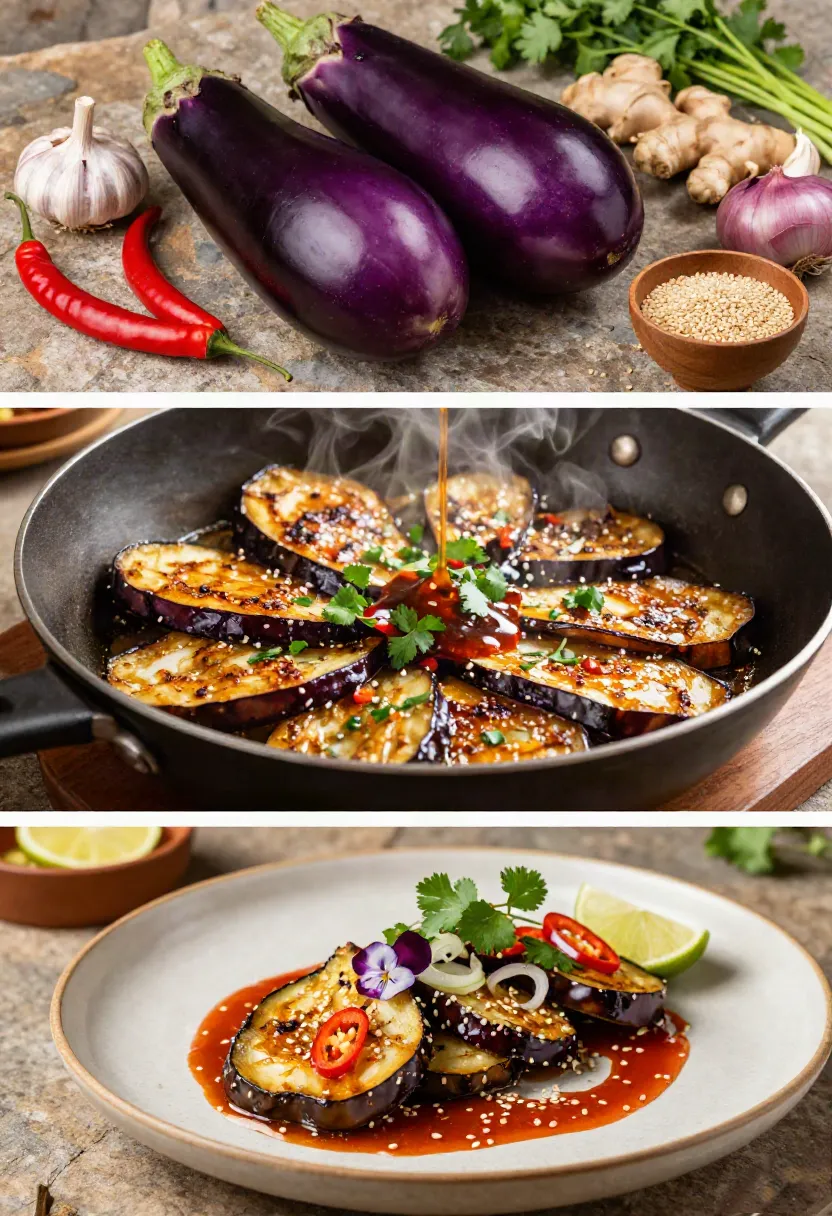
Cooking temperature matters just as much as choosing good produce. If the pan isn’t hot enough, the eggplant tends to absorb oil before it has a chance to brown. When the heat is right, the outside caramelizes first, locking in moisture while creating those deeply flavored edges that make the finished dish so satisfying. It’s one of those small kitchen details that’s easy to overlook until you see the difference for yourself.
The aromatics deserve just as much attention as the eggplant itself. Garlic brings savory depth, ginger adds gentle warmth, while fresh chilies wake up the entire dish. Shallots soften everything with a subtle sweetness, preventing the heat from becoming overwhelming. Fresh herbs add brightness right at the end, making every bite taste lighter than you’d expect from such a rich-looking sauce.
None of these ingredients try to dominate the plate. Instead, each one quietly supports the others. Remove one, and the dish still works. Get them all working together, though, and you end up with something far more interesting than the ingredient list would suggest.
🌿 Here’s how each ingredient contributes to the finished dish:
| Ingredient | What it adds | Texture | Flavor impact |
|---|---|---|---|
| Eggplant | The heart of the dish | Silky and creamy | Mild, rich, slightly earthy |
| Fresh chilies | Heat | Softens into the sauce | Bright, spicy warmth |
| Garlic | Savory depth | Melts into the sauce | Rich and aromatic |
| Ginger | Fresh warmth | Smooth | Light spice with citrus notes |
| Shallots | Natural sweetness | Tender | Balances the heat |
| Fresh herbs | Brightness | Delicate | Fresh, fragrant finish |
| Olive oil | Body | Velvety | Carries every flavor together |
One thing I’ve learned over time is not to rush the eggplant. It can be tempting to stir it constantly, but leaving it alone for a minute or two lets each side brown properly. Those caramelized edges become little pockets of flavor that soak up the sauce later without falling apart.
By the time everything comes together, the dish tastes surprisingly complex for something built from such everyday ingredients. That’s probably why chilli eggplant feels so satisfying. Nothing is hidden. Every ingredient gets its moment, yet they all work toward the same goal.
The secret to rich flavor without a long ingredient list
Some recipes seem to rely on an endless collection of spices, sauces, and pantry staples to create depth. Chilli eggplant takes a completely different path. Instead of piling on ingredient after ingredient, it focuses on getting the absolute best from a handful of fresh aromatics. That might sound almost too simple at first, but after making this dish a few times, it’s easy to understand why it works so well. Every ingredient has a purpose, and every step helps those flavors develop a little further before they finally come together.
The transformation starts the moment the aromatics hit the hot oil. Fresh garlic loses its sharp bite and becomes mellow and slightly sweet. Shallots soften until they almost melt into the sauce, adding just enough natural sweetness to balance the heat. Ginger begins with a bright, almost spicy kick, but after a few minutes it settles into something warmer and more rounded. Then come the chilies. Instead of delivering an overwhelming burst of heat, they slowly release both their spice and their subtle fruity flavor, creating a sauce that’s bold without becoming overpowering.
One of my favorite parts of making this recipe is watching that transformation happen right in the pan. At first, every ingredient seems determined to stand out. The garlic is the first thing you notice, the ginger follows immediately behind, and the chilies make it clear they’re there. Give everything another minute or two, though, and the whole mixture begins to change. Those individual flavors stop competing with one another and slowly become something much smoother. The oil turns glossy, the aroma becomes deeper, and suddenly the sauce tastes far more complex than you’d expect from such a short ingredient list.
I’ve learned that this isn’t the stage to rush. When I first started making chilli eggplant, I often hurried through the aromatics because I couldn’t wait to add the eggplant back into the pan. The dish still tasted good, but it always felt like something was missing. Now I happily give the garlic and shallots another minute to cook before moving on. It’s a tiny difference in time, yet it completely changes the final flavor. The garlic becomes sweeter, the ginger softens, and the chilies develop a richness that simply isn’t there if everything is rushed.
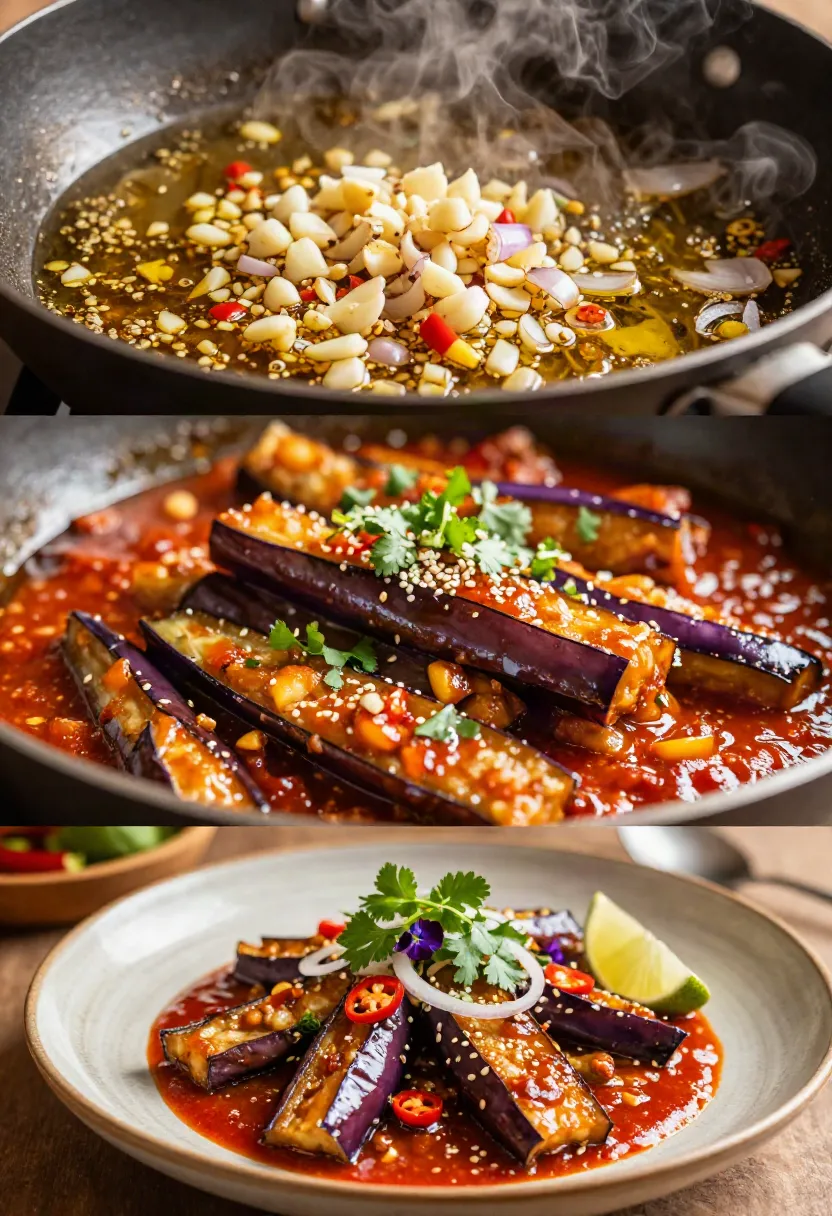
The oil deserves a little attention too because it’s doing much more than preventing the ingredients from sticking. As the aromatics cook, the oil quietly absorbs all those flavors. By the time the eggplant returns to the pan, it isn’t just coated in oil anymore. Every piece is covered in an aromatic mixture that’s been building flavor from the very beginning. That’s one reason the finished dish feels surprisingly rich without relying on butter, cream, or heavy sauces.
Heat is only one part of the equation. A really good chilli eggplant should never taste spicy for the sake of being spicy. The best versions have balance. A little sweetness softens the edges of the chilies, while a touch of acidity lifts the richer flavors and keeps the dish from feeling heavy. Salt quietly ties everything together, making every ingredient taste a little more like itself. None of these flavors should dominate the others. When they’re balanced properly, the sauce tastes lively instead of aggressive, and every bite encourages you to take another.
I’ve also noticed that the eggplant itself changes the sauce as much as the sauce changes the eggplant. As those tender pieces cook together, they slowly absorb the seasoned oil while still holding onto their silky texture. Instead of sitting underneath a layer of sauce, the flavors become part of the vegetable itself. That’s why every bite tastes fully seasoned without feeling coated or overloaded. The sauce clings to the eggplant rather than pooling at the bottom of the pan, allowing those beautifully caramelized edges to stay crisp enough to add a little texture.
One mistake I made more than once was adding too much liquid because I assumed more sauce would automatically mean more flavor. It actually did the opposite. The eggplant became softer than I wanted, the caramelized edges disappeared, and the whole dish lost some of its character. These days I look for a sauce that’s thick enough to coat every piece while still letting the eggplant remain the star of the plate. That balance makes all the difference.
🌶️ Simple ways to build even more flavor:
- Let the garlic and shallots cook until they smell sweet and fragrant.
- Give the sauce an extra minute before adding the eggplant back to the pan.
- Avoid overcrowding the pan so the eggplant browns instead of steaming.
- Taste and adjust the seasoning before serving.
- Finish with fresh herbs for a brighter, fresher flavor.
- Serve while the eggplant is still warm and silky.
Something else I’ve come to appreciate is that this recipe never tastes exactly the same twice. Fresh chilies vary throughout the season, ginger changes in intensity, and every batch of eggplant has its own texture. Instead of trying to make each pan identical, I’ve started enjoying those little differences. They remind me that cooking with fresh ingredients is always a little unpredictable, and honestly, that’s part of the appeal. Every version has its own personality while still feeling comfortingly familiar.
✨ That’s the real secret behind chilli eggplant. It isn’t a complicated technique or a long shopping list that makes this dish unforgettable. It’s the patience to let a few fresh ingredients develop naturally, the confidence to keep the sauce simple, and the understanding that great flavor often comes from knowing when to stop adding more. Somehow, those small details come together to create a dish that tastes far richer than its ingredient list would ever suggest.
My favorite chilli eggplant recipe
There’s something incredibly satisfying about a recipe that looks restaurant-worthy but comes together with surprisingly little effort. Chilli eggplant is exactly that kind of dish. Tender pieces of caramelized eggplant are coated in a glossy, aromatic sauce that’s layered with garlic, ginger, fresh chilies, and just the right balance of sweetness, saltiness, and acidity. Every bite is packed with bold flavor, yet the eggplant remains the star of the plate.
One of the things I appreciate most about this recipe is how quickly it comes together once everything is prepared. The sauce develops while the eggplant cooks, and when the two finally meet, they create a dish that’s rich without feeling heavy. It’s equally delicious served as a vegetarian main course over steamed jasmine rice or alongside grilled chicken, seafood, or tofu as part of a larger meal.
The secret is giving the eggplant enough time to brown properly before adding it to the sauce. Those golden edges add both texture and flavor, while the soft center absorbs every bit of the fragrant aromatics. Finish everything with fresh herbs and serve immediately while it’s still warm.
Ingredients
For the eggplant
- 2 medium eggplants, cut into large bite-sized pieces
- 3 tablespoons vegetable oil
- Salt, to taste
For the chilli sauce
- 4 garlic cloves
- 2 shallots, roughly chopped
- 2 red chilies (adjust to taste)
- 1 tablespoon grated fresh ginger
- 1 stalk lemongrass, white part only, finely chopped
- 2 kaffir lime leaves, finely sliced
- 1 tablespoon tamarind paste
- 1 tablespoon brown sugar
- 2 tablespoons soy sauce
- 2 tablespoons water
- 1 tablespoon vegetable oil
To finish
- Fresh coriander leaves
- Sliced spring onions
- Toasted sesame seeds (optional)
- Lime wedges, for serving
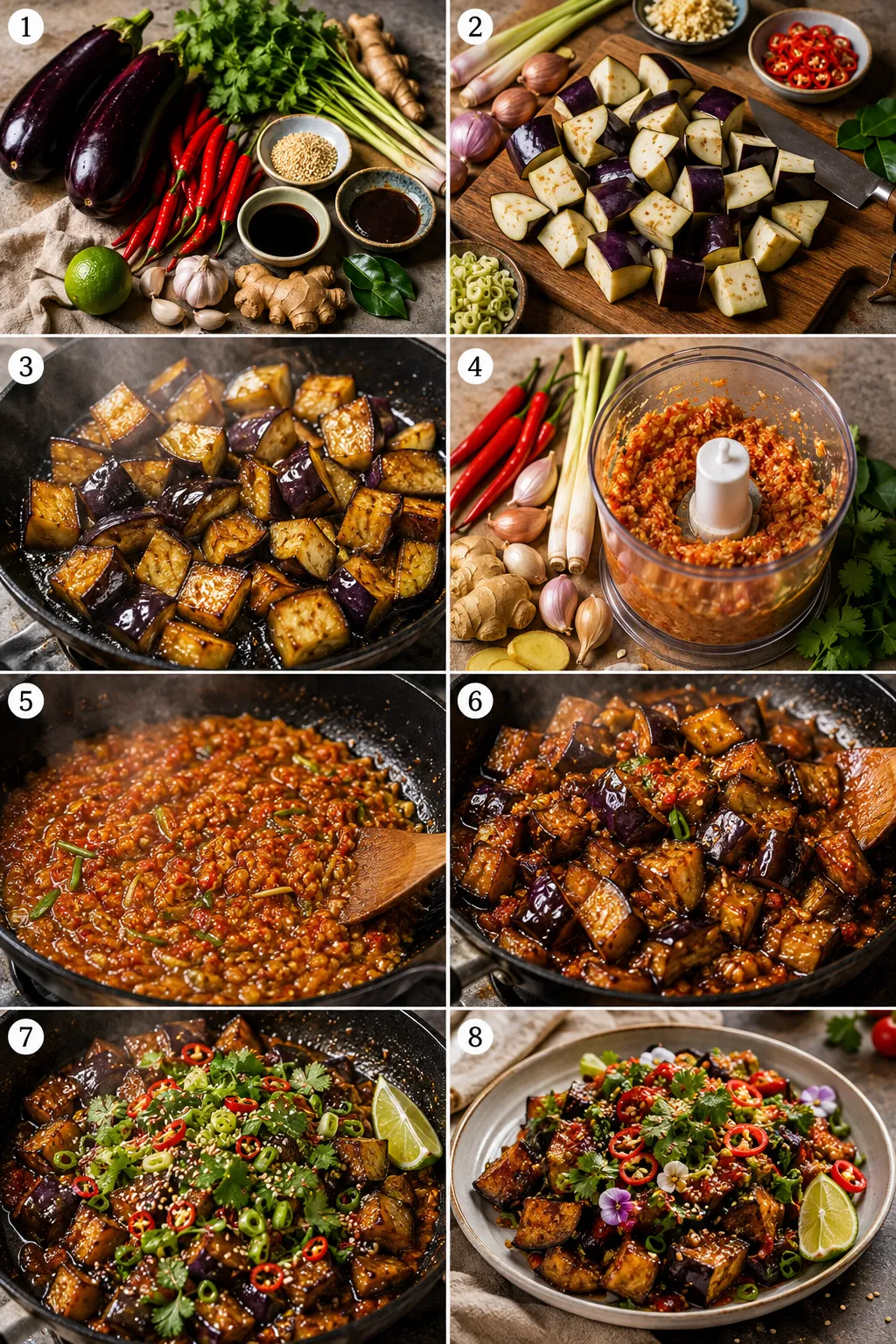
Instructions
- Cut the eggplants into evenly sized pieces and lightly season them with salt. Let them sit for about 15 minutes, then gently pat them dry with paper towels. This helps remove excess moisture and encourages better browning.
- Heat the vegetable oil in a large skillet or wok over medium-high heat. Add the eggplant in a single layer, working in batches if necessary. Cook for 8–10 minutes, turning occasionally, until the pieces are golden brown on the outside and soft in the center. Transfer them to a plate.
- While the eggplant cooks, place the garlic, shallots, chilies, ginger, and lemongrass in a food processor. Blend until a coarse paste forms. It doesn’t need to be perfectly smooth—a little texture adds character to the finished sauce.
- Return the pan to the heat and add another tablespoon of oil if needed. Spoon in the aromatic paste and cook for 2–3 minutes, stirring constantly. The mixture should become fragrant, slightly darker, and glossy as the garlic and shallots soften.
- Stir in the finely sliced kaffir lime leaves, tamarind paste, brown sugar, soy sauce, and water. Mix everything together until the sauce becomes smooth and lightly thickened. Taste it before moving on. If you’d like a little more sweetness or acidity, now is the easiest time to adjust the balance.
- Return the cooked eggplant to the pan and gently toss until every piece is evenly coated in the sauce. Continue cooking for another 2–3 minutes so the eggplant absorbs the flavors while staying tender.
- Remove the pan from the heat and scatter over fresh coriander, sliced spring onions, and toasted sesame seeds if using.
- Serve immediately with steamed jasmine rice, coconut rice, noodles, or warm flatbread. Add a squeeze of fresh lime just before eating if you’d like an extra burst of freshness.
Kitchen tips
🌶️ A few simple tricks make this recipe even better:
- Cook the eggplant in batches instead of overcrowding the pan.
- Use fresh ginger and garlic for the brightest flavor.
- Adjust the number of chilies to suit your preferred spice level.
- Taste the sauce before adding the eggplant back into the pan.
- Fresh herbs should always be added at the very end.
- Leftovers taste even better the next day as the flavors continue to develop.
What to serve with chilli eggplant
One of the reasons chilli eggplant has become such a regular part of my dinner rotation is that it works with almost everything I already enjoy cooking. Some recipes feel like they need an entire menu built around them, but this one slips naturally into all kinds of meals. It can be the centerpiece of a simple vegetarian dinner one evening and become a flavorful side dish beside grilled meat or seafood the next. That flexibility is one of the biggest reasons I keep coming back to it.
Most often, I serve it over freshly cooked jasmine rice. The rice quietly absorbs the glossy sauce, making sure none of those bold flavors are left behind in the pan. Coconut rice is another favorite when I’m in the mood for something slightly richer, while rice noodles create an entirely different meal with very little extra effort. Even a piece of warm flatbread works beautifully for scooping up the last few bites.
When I’m cooking for family or friends, I usually build the meal around contrast. The eggplant is rich, silky, and packed with aromatic flavor, so I like pairing it with lighter dishes that keep everything balanced. A crisp cucumber salad dressed with rice vinegar, fresh herbs, and sesame seeds adds welcome freshness. Steamed Asian greens with garlic are another easy side that never feels out of place. Even a bowl of lightly pickled vegetables brings enough acidity to brighten the whole table.
The dish also pairs surprisingly well with grilled proteins. Lemon chicken, grilled prawns, flaky salmon, or even thin slices of grilled beef all complement the sweet heat of the sauce without competing with it. If I’m keeping dinner vegetarian, crispy tofu is usually my first choice. Its crunchy exterior contrasts beautifully with the soft eggplant, while the sauce ties everything together into one satisfying meal.
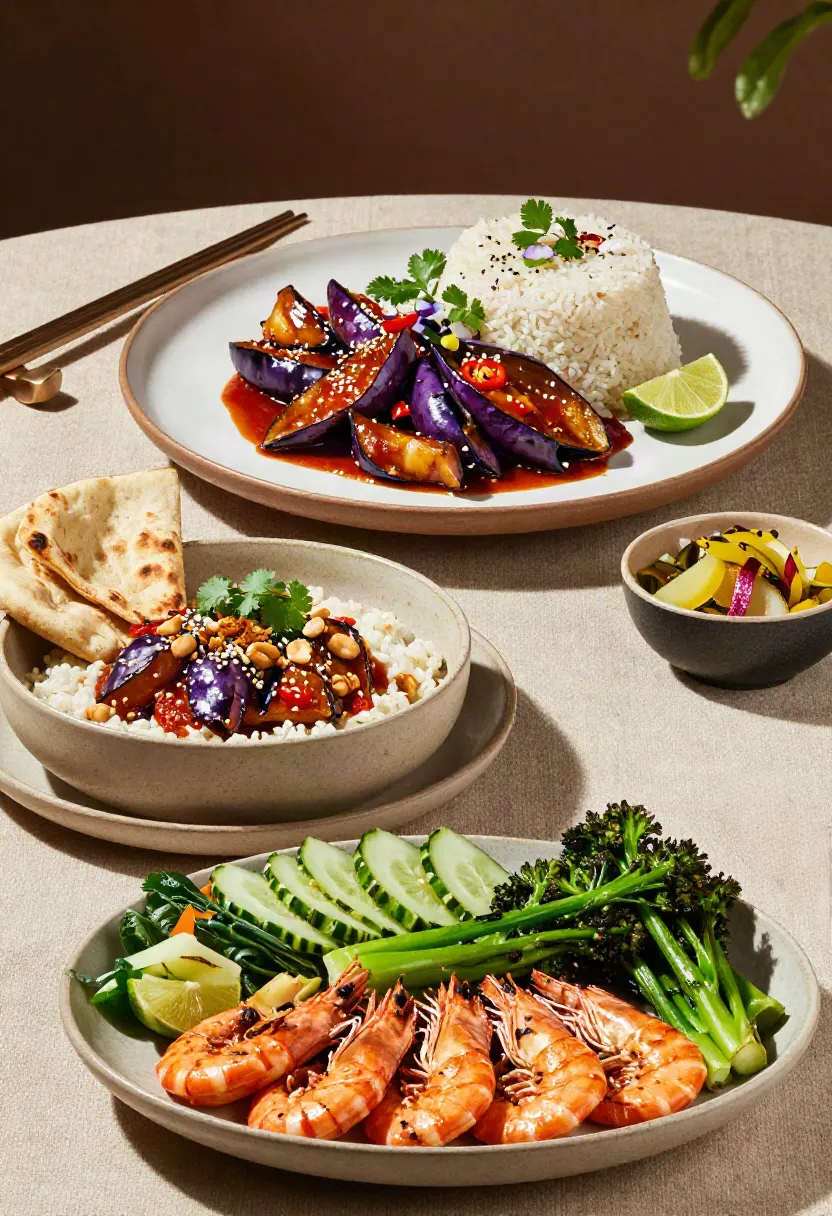
I also love serving chilli eggplant as part of a larger shared dinner. I’ll place the pan in the center of the table alongside bowls of rice, fresh herbs, lime wedges, roasted peanuts, and a couple of vegetable side dishes. Everyone builds their own plate, adding a little more chili here or another squeeze of lime there. Somehow meals served this way always last a little longer because nobody feels rushed to finish.
Another thing I’ve noticed is that chilli eggplant tastes just as good at casual gatherings as it does during more special occasions. I’ve served it at relaxed weeknight dinners, summer barbecues, and even small dinner parties where people expected something a little different. Every single time, someone asks for the recipe before the evening is over. I think that’s because the dish feels both familiar and unexpected at the same time. Most people recognize the ingredients, but they’re pleasantly surprised by how much flavor they create together.
🥢 My favorite pairings include:
- Steamed jasmine or coconut rice.
- Crispy tofu or grilled chicken.
- Garlic prawns or grilled salmon.
- Stir-fried Asian greens.
- Fresh cucumber salad.
- Warm flatbread or toasted sourdough.
- Lime wedges and fresh coriander.
- Sparkling water, iced tea, or a crisp white wine.
✨ Good side dishes should support the main recipe instead of competing with it. Chilli eggplant already brings plenty of bold flavor to the table, so all it really needs are a few fresh, simple accompaniments. Together they create the kind of relaxed meal that’s just as enjoyable on a quiet weeknight as it is when you’re sharing dinner with friends.
Easy ways to customize chilli eggplant
One of the things I enjoy most about cooking is that recipes naturally evolve over time. The first few times, I usually follow the ingredients closely. After that, I begin making small adjustments without even realizing it. Chilli eggplant is one of those dishes that welcomes exactly that kind of experimentation. The basic combination is wonderfully reliable, but there are plenty of little ways to make it feel different each time you cook it.
The easiest place to start is with the chilies. Some days I want a gentle warmth that lingers quietly in the background, while other evenings I prefer something with a little more kick. Fresh red chilies make it easy to control the heat, and removing the seeds creates a noticeably milder sauce without changing its overall flavor. If everyone around the table enjoys spicy food, adding another chili or two transforms the dish into something much bolder.
The type of eggplant you choose also changes the finished result more than you might expect. Large globe eggplants become wonderfully creamy and absorb plenty of sauce, while long Asian varieties stay slightly firmer and cook more quickly. Japanese eggplants are another favorite because they’re naturally sweeter and almost buttery once they’re cooked. I often buy whichever looks freshest rather than searching for one specific variety, and the recipe always turns out beautifully.
Fresh herbs are another easy way to change the personality of the dish. Coriander is the classic finishing touch, but Thai basil adds a gentle anise flavor that works beautifully with the chilies. Sliced spring onions bring freshness, while mint creates an unexpectedly cool contrast on warmer days. Sometimes I’ll use a combination of two herbs simply because I couldn’t decide between them.
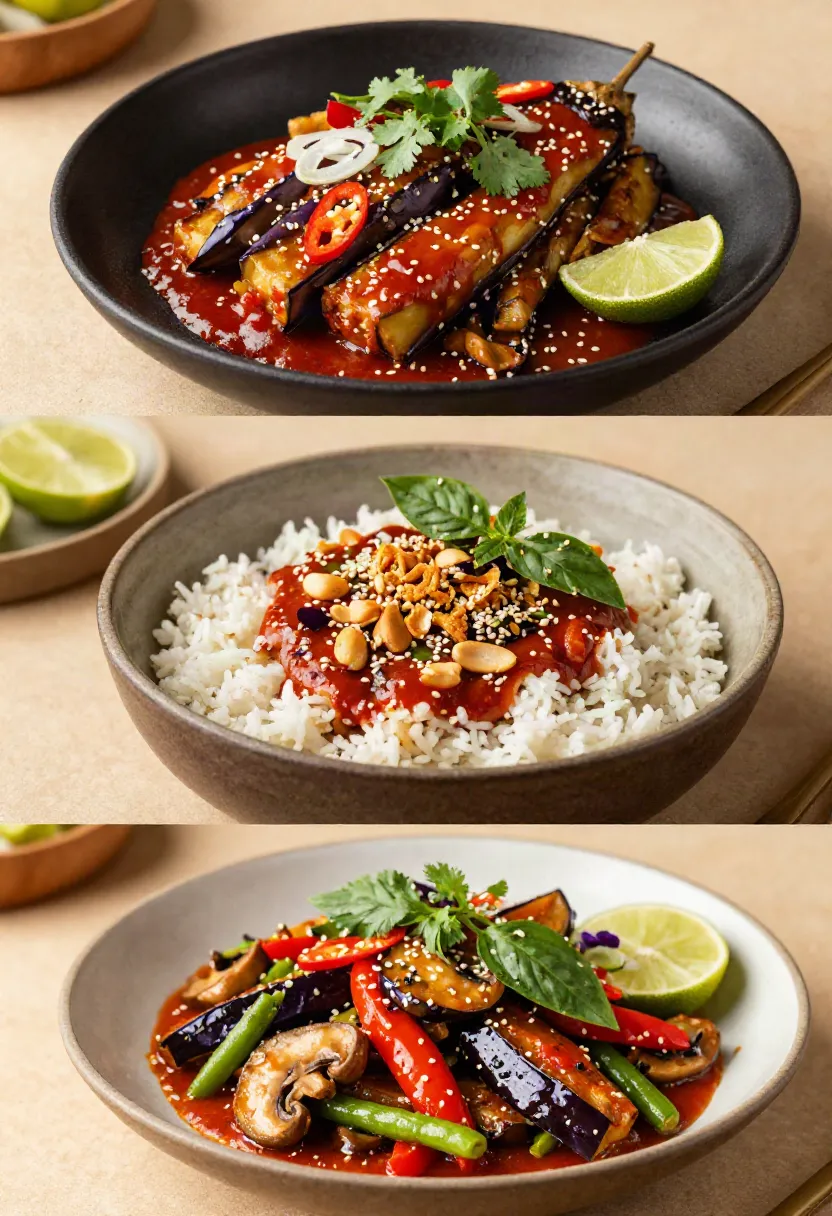
Texture is just as easy to adjust. Toasted sesame seeds add a gentle crunch, roasted peanuts make the dish heartier, and crispy fried shallots introduce another layer of flavor without requiring any extra cooking. If I happen to have roasted cashews in the pantry, I’ll scatter a handful over the top just before serving. Their buttery crunch works surprisingly well with the silky eggplant.
Another simple variation is adding extra vegetables. Mushrooms absorb the sauce beautifully, green beans add freshness, and thin slices of red bell pepper bring a little natural sweetness. None of these additions completely change the recipe. They simply stretch it into a slightly larger meal while adding more color to the pan.
🌶️ Easy ways to make it your own:
- Increase or reduce the chilies to suit your taste.
- Try Japanese or Chinese eggplants.
- Add mushrooms or green beans.
- Finish with Thai basil or fresh mint.
- Sprinkle over toasted sesame seeds or roasted peanuts.
- Add crispy fried shallots for extra texture.
- Serve over noodles instead of rice.
I’ve come to appreciate that every batch ends up a little different, and I actually think that’s part of the charm. Fresh produce changes with the seasons, chilies vary in heat, and even the eggplants themselves have their own personality. Rather than chasing perfect consistency, I’ve learned to enjoy those little differences. They remind me that home cooking isn’t supposed to feel identical every single time.
✨ That’s what makes this recipe so easy to keep in regular rotation. It gives you enough structure to feel familiar while leaving plenty of room to experiment. Every small adjustment teaches you something new, and before long you’ll have your own version that feels completely personal.
A simple dish that’s full of bold flavor
Some recipes stay in your collection because they’re perfect for special occasions. Others become favorites because you genuinely want to cook them again just a few days later. Chilli eggplant has become one of those recipes in my kitchen. It’s comforting without feeling heavy, packed with bold flavor without becoming complicated, and easy enough to make on an ordinary weeknight. Those are exactly the kinds of meals I find myself returning to throughout the year, no matter the season.
Every time I cook it, I’m reminded that great food doesn’t always come from doing more. Sometimes it comes from doing a few simple things really well. Eggplant doesn’t need a long list of seasonings or rich sauces to taste incredible. Once it’s beautifully browned, with silky flesh and lightly caramelized edges, it’s already halfway there. The aromatic sauce simply brings everything together, adding layers of garlic, ginger, and chili while still allowing the eggplant to remain the star of the plate. Nothing feels unnecessary, and that’s part of what makes every bite so satisfying.
I also love the atmosphere this dish creates around the table. It’s the kind of meal that encourages everyone to slow down a little. Someone reaches for another spoonful of rice to soak up the extra sauce. Someone else tears off another piece of bread before anyone starts clearing the plates. Conversations continue while people quietly help themselves to another serving, and somehow the meal always lasts a little longer than expected. Those moments usually tell me more than compliments ever could. When people keep going back for another bite, you know the recipe has done exactly what it was supposed to do.
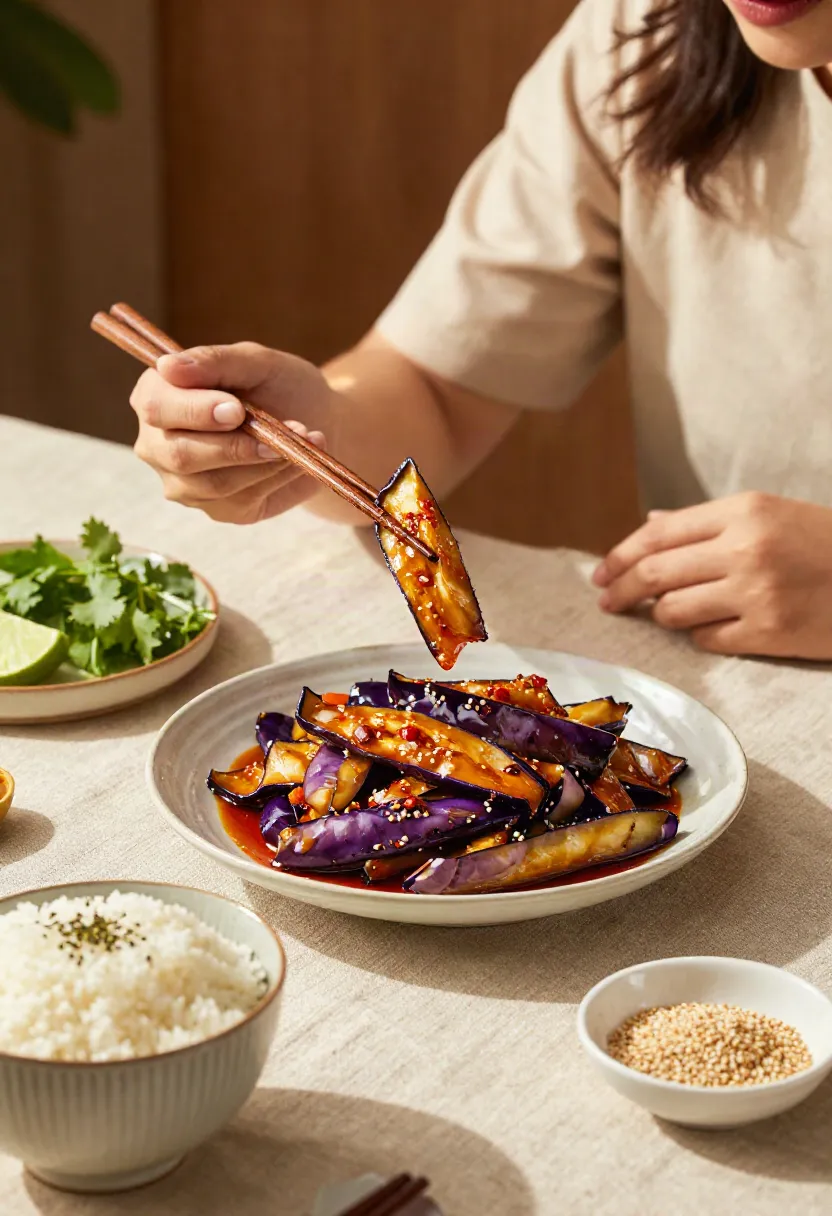
Another reason I keep making chilli eggplant is that it never feels repetitive. Some weeks the chilies are a little hotter, other times the eggplants are especially sweet and creamy, and every batch develops its own personality. Fresh ingredients naturally change with the seasons, and I actually enjoy those little differences. They remind me that home cooking isn’t supposed to be identical every single time. Part of the fun is working with what looks freshest and letting the recipe evolve just a little with every pan you make.
Leftovers are another welcome bonus. In fact, I often think the flavors become even better after a night in the refrigerator. The sauce settles into the eggplant, the aromatics mellow slightly, and everything tastes even more balanced the next day. A quick reheat, a handful of fresh herbs, and a bowl of steamed rice are usually all it takes to turn yesterday’s dinner into a lunch I’ll happily look forward to.
✨ If there’s one thing chilli eggplant has taught me, it’s that simple cooking never has to be ordinary. A few fresh ingredients, a hot pan, and a little patience can create a meal that’s every bit as satisfying as something much more elaborate. That’s probably why this recipe keeps finding its way back onto my table. Every time I spot beautiful eggplants at the market, I already know what’s for dinner—and somehow, I’m just as excited to make it as I was the very first time.