Some desserts are made to be eaten almost immediately. You pull them from the oven, wait just long enough that you won’t burn your tongue, cut a generous slice, and that’s it. This almond tart is different. It asks for a little patience, and honestly, I think that’s part of what makes it so good.
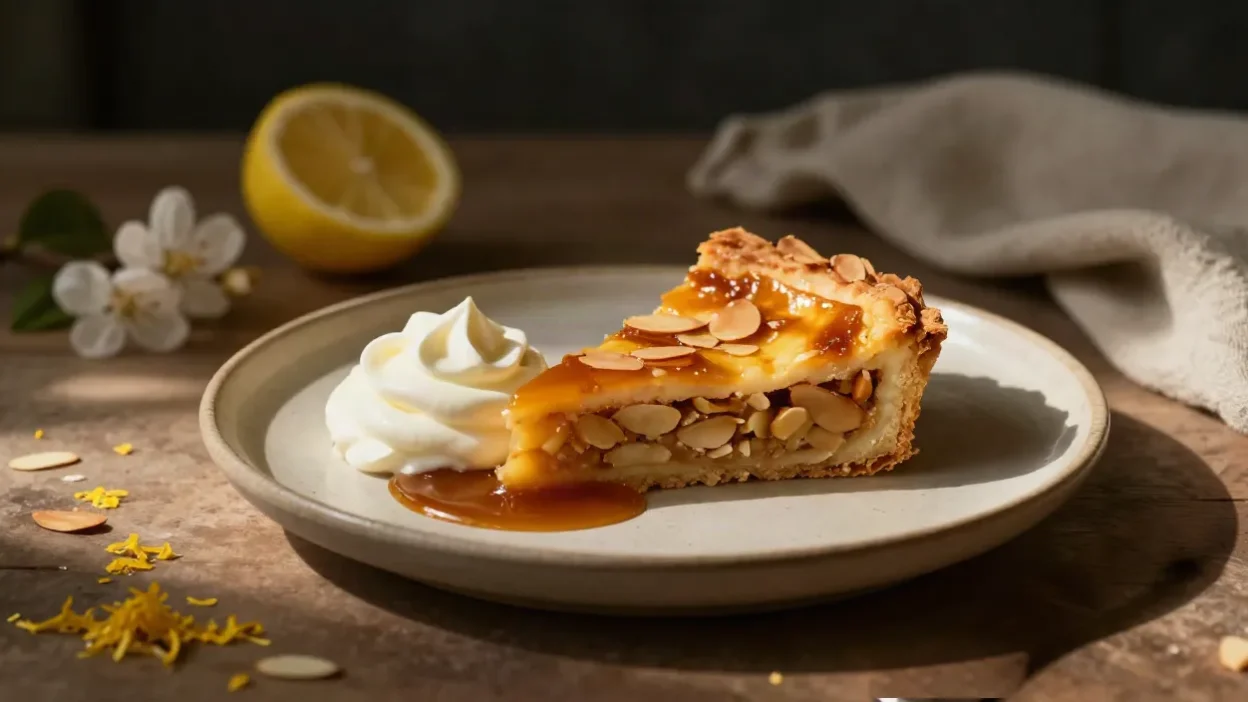
At first glance, it looks fairly simple. There’s a golden pastry shell, a deeply caramelised almond filling, and a little lemon caramel served alongside. Nothing about it screams complicated pastry project. But once you cut into it, you realise there’s much more going on. The base has a rich, almost cookie-like texture, while the filling is dense, soft, and incredibly rich from all those egg yolks. Then the lemon caramel comes in with a sharp, slightly bitter edge that keeps the whole dessert from becoming overwhelmingly sweet.
It’s the kind of tart that feels equally appropriate at the end of a long Sunday lunch or alongside coffee when you’ve invited a few friends over and want something that looks like you put considerably more effort into it than you actually did.
The recipe has Spanish roots, and there’s something wonderfully old-fashioned about the combination. Almonds, eggs, sugar, lemon—these aren’t unusual ingredients, but together they create a dessert with a very distinctive personality. It doesn’t rely on chocolate, cream, berries, or layers of decoration to make an impression. The flavor comes almost entirely from the ingredients themselves.
And then there are the twelve egg yolks.
Yes, twelve.
That number definitely makes you stop for a second. But the yolks are what give the filling its almost custard-like richness and deep golden color. They’re blended with a simple sugar syrup and almond meal, then baked gently until the surface becomes beautifully caramelised while the center still has a modest wobble. The goal isn’t a dry, completely firm filling. You actually want that little bit of movement in the middle.
It continues setting as the tart cools, and this is where the recipe becomes particularly interesting. Once chilled overnight, the filling develops a much denser, almost fudge-like texture. The pastry and filling settle together, making the tart easier to slice and giving every bite a wonderfully compact, rich texture.
I also love the fact that this tart gives leftover egg yolks a proper purpose. If you’ve ever made pavlova, meringues, macarons, or another dessert that leaves you staring at a bowl of yolks wondering what on earth you’re going to do with them, this is the kind of recipe worth keeping nearby.
Of course, twelve yolks isn’t exactly a casual leftover situation. But when you have them, this tart turns them into something impressive.
There is also a lovely contrast between the different textures when it’s served properly. The tart itself is chilled, the lemon caramel is glossy and intensely flavored, and the softly whipped sour cream adds a cool, tangy finish. You don’t need a mountain of cream or a dozen garnishes. A modest spoonful of each is enough.
🥧 What makes this tart so memorable:
- A rich almond pastry with a soft, cookie-like bite.
- A deeply golden filling made with egg yolks and almond meal.
- A slight almond texture rather than a completely smooth custard.
- A sharp lemon caramel that balances the sweetness.
- Softly whipped sour cream for a cool, tangy contrast.
- An overnight rest that transforms the filling into something almost fudge-like.
The first time you make it, the resting time might feel unusually long. You’re standing there with a perfectly good tart in front of you and being told to put it in the refrigerator until tomorrow. It’s not easy.
But the next day, when you slice it cold and see that dense golden center holding together beautifully, it makes sense.
This is not a dessert built around speed.
It’s built around contrast, patience, and really good ingredients.
The almond pastry is more important than it looks 🌰🥧
It’s easy to focus on the filling when you first read the recipe. Twelve egg yolks naturally steal the attention, and the dark lemon caramel sounds like the exciting finishing touch. But the pastry is doing a lot of work underneath everything.
It needs to be rich enough to stand up to the filling without becoming greasy, sturdy enough to hold a deep layer of custard, and tender enough that you don’t have to saw through it with a dessert fork. The almond meal helps achieve that balance, giving the pastry a subtle nuttiness and a texture that’s noticeably different from ordinary tart dough.
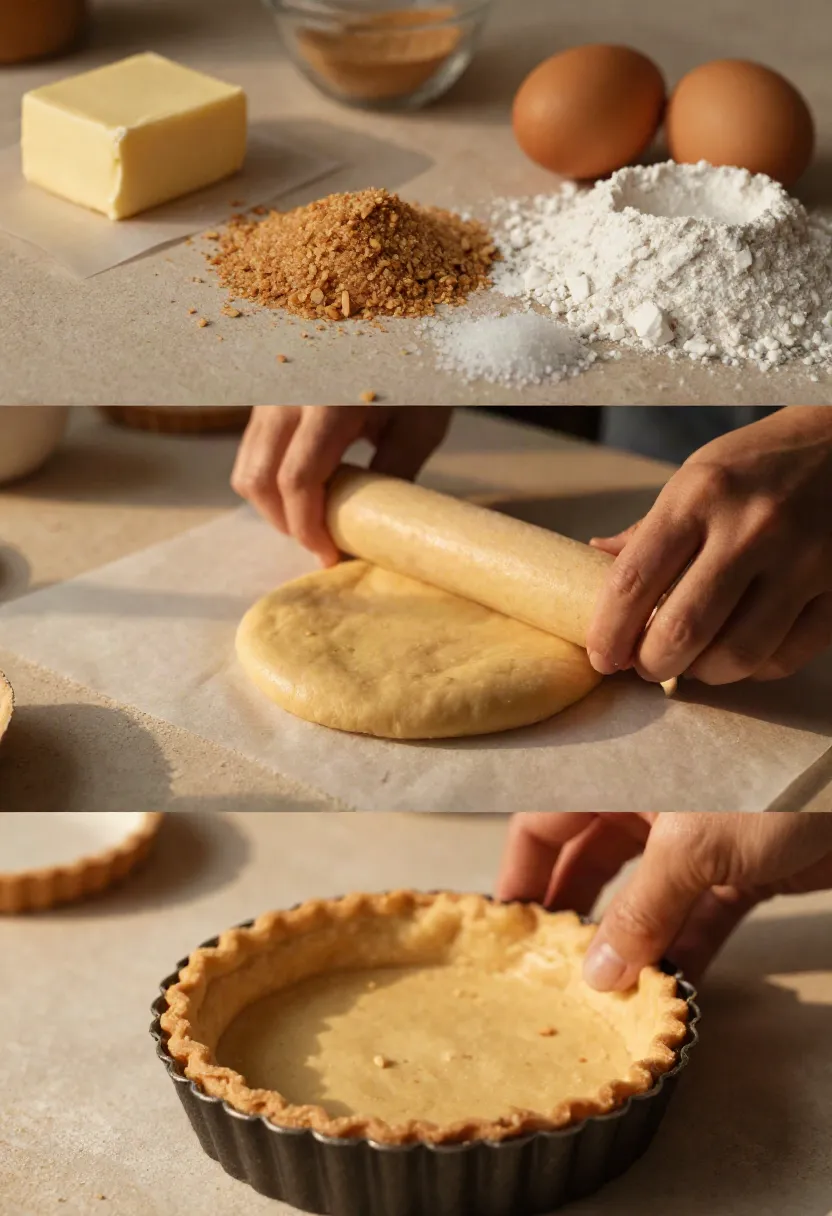
The dough starts with unsalted butter, firmly packed brown sugar, and flaky sea salt. They’re creamed together until the mixture becomes pale and smooth. That little change in texture is worth watching for because it tells you the butter and sugar have been properly combined before the eggs go in.
The eggs are added one at a time, and this is one of those places where rushing doesn’t really save you anything. The first egg should be completely incorporated before the second goes in. Once they’re mixed through, the almond meal, flour, and a small amount of baking powder are added at low speed.
You don’t want to beat the dough endlessly at this stage. The mixture only needs to come together. Once it does, stop. Overworking pastry is rarely a good idea, especially when you’re aiming for that tender, slightly crumbly texture.
The dough is then gently shaped into a ball, wrapped tightly, and chilled for an hour. That hour gives the butter time to firm back up, making the pastry much easier to handle later. And you’ll appreciate that cold butter when you’re rolling it.
Because this pastry contains a generous amount of butter, it can soften quickly once it starts warming up. Rolling it between two sheets of greased baking paper makes the whole job much less frustrating. It means you’re not covering the counter in flour or wrestling with a sticky piece of dough.
Aim for a round about 5 mm thick. It doesn’t have to be mathematically perfect. You’re going to fit it into a deep-sided 22 cm tart or pie tin, and the edges can be trimmed once the pastry is in place.
If the dough starts feeling too soft while you’re working with it, don’t keep rolling and hoping for the best. Put it back in the refrigerator for a few minutes. A short chill can make the difference between pastry that behaves beautifully and pastry that seems determined to stick to everything it touches.
Once the shell is fitted into the tin, trim away any excess around the edges. Small cracks or holes aren’t a disaster either. They can be patched with a little of the reserved egg yolk, gently pressing the pastry back together with your fingertip.
I actually like details like this in recipes because they make the process feel realistic. Pastry doesn’t always come out of the paper looking like it belongs in a professional kitchen. Sometimes it cracks. Sometimes an edge tears. Sometimes you need to patch a tiny hole.
That’s fine.
The tart will still be delicious.
🌰 What each part brings to the dessert
| Ingredient | What it does | Texture | Flavor |
|---|---|---|---|
| Butter | Adds richness and tenderness | Soft and crumbly | Deep, buttery |
| Brown sugar | Sweetens and helps with browning | Tender, cookie-like | Warm and caramel-like |
| Almond meal | Adds structure and nuttiness | Slightly coarse | Rich, toasted almond |
| Plain flour | Gives the pastry strength | Firm but tender | Mild |
| Egg yolks | Create the rich filling | Dense and silky | Deep, custardy |
| Lemon zest | Brightens the filling | Fine and delicate | Fresh and citrusy |
| Lemon caramel | Balances the richness | Glossy and fluid | Bitter-sweet and sharp |
| Sour cream | Cuts through the sweetness | Soft and creamy | Cool and tangy |
Once you look at the tart this way, the balance becomes much clearer. The pastry isn’t simply a container for the filling. It provides the buttery, slightly crisp foundation that the soft almond center needs.
The filling brings richness and density. The lemon caramel adds acidity and a touch of bitterness, while the sour cream cools everything down. No single component has to carry the entire dessert.
Any extra pastry can be brought together once more and frozen for later use. It’s a useful little bonus, especially if you don’t like throwing away perfectly good dough.
Once the pastry shell is ready, it gets another short chill before the filling goes in. That final rest helps the shell stay in place during baking and gives you a much better foundation for the generous almond filling.
When the tart eventually comes out of the oven, the pastry should be beautifully golden around the edges, tender underneath, and sturdy enough to support the dense filling without becoming hard.
That’s the texture you’re after.
Not brittle.
Not soft and underbaked.
Just rich, tender almond pastry with enough structure to hold everything together.
The rich filling and sharp lemon caramel need each other 🍋✨
The filling is where this tart really becomes something different.
There are no layers to assemble and no elaborate custard technique. Instead, the recipe takes a generous amount of caster sugar, twelve egg yolks, almond meal, lemon zest, and flaky sea salt and turns them into a dense, beautifully golden center. It sounds simple, but the texture depends on getting a few small details right.
The first step is making a basic sugar syrup. The caster sugar is dissolved in water over medium heat and then allowed to cool completely to room temperature. Don’t be tempted to pour hot syrup straight into the yolks. Giving it time to cool makes the blending process much easier and prevents the eggs from being exposed to unnecessary heat.
Once the syrup is cool, the egg yolks go into a blender and are mixed on low speed until combined. The syrup is then added and blended just until incorporated. Almond meal and flaky sea salt follow.
And here’s a detail I particularly like: the filling shouldn’t be blended completely smooth.
The mixture is blended only until it’s almost smooth, leaving some of the almond meal’s natural texture behind. That little bit of texture makes a difference.
A completely smooth filling would make the tart feel more like a conventional custard. The almond gives it something else—something denser and slightly rustic. You get that rich egg-yolk softness, but there’s still a subtle nuttiness underneath it.
The filling goes into the chilled pastry shell and bakes gently. You’re looking for a well-caramelised surface with the center mostly set but still showing a modest wobble.
Don’t wait for the middle to look completely firm.
That little wobble is exactly what you want.
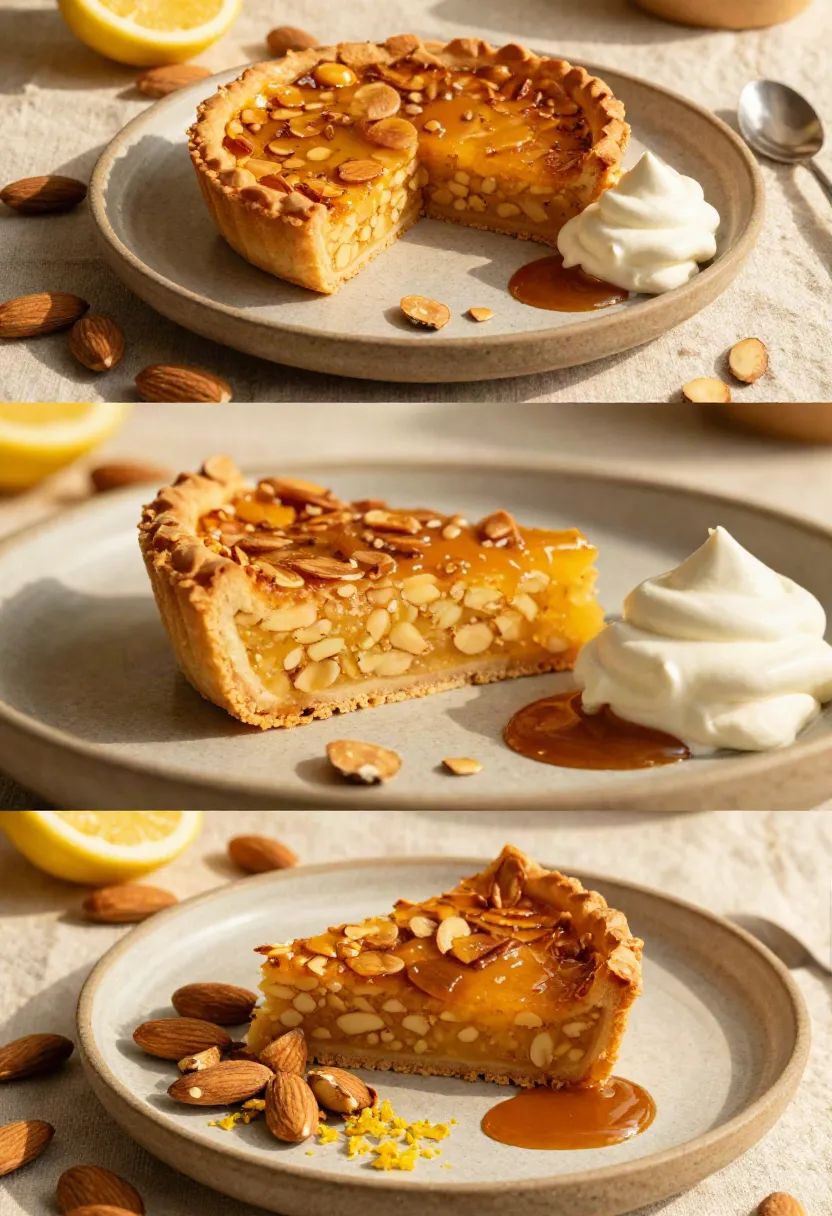
Once the tart comes out of the oven, it needs to cool to room temperature before being removed from the tin. From there, you can slice it—but if you have the patience, refrigerate it overnight. This is where the texture changes dramatically. The filling becomes denser and almost fudge-like, while the almond pastry and filling seem to become one unified dessert.
Then comes the lemon caramel.
And this is not a pale, delicate caramel.
You actually want it to become very dark.
Caster sugar is cooked with a little water in a heavy-based saucepan without stirring until it reaches a deep caramel stage. This is one moment when staying nearby is important. Caramel can go from beautifully dark to burnt in a surprisingly short time.
Once the caramel reaches the right stage, it is cooled quickly to stop the cooking before lemon juice is whisked in. It may seize or behave dramatically at first, but vigorous whisking brings it back together.
After cooling, the remaining lemon juice is incorporated.
The result is glossy, dark, intensely caramelised, and sharply lemony. It isn’t meant to taste like ordinary sweet caramel. That slight bitterness is part of its charm.
🍋 Why the finishing components matter:
- Dark lemon caramel cuts through the sweetness and richness of the tart.
- Whipped sour cream adds coolness and acidity.
- Almond pastry gives the soft filling something crisp and tender to contrast with.
- Almond meal keeps the center nutty rather than making it taste like plain custard.
- Lemon zest adds brightness directly into the filling.
This is why I wouldn’t serve the tart completely plain.
You can, of course, but you’ll miss the balance that makes the dessert work so well. A small pool of lemon caramel beside the slice and a spoonful of softly whipped sour cream are enough to completely change the experience.
The tart itself is rich.
The caramel is bitter and bright.
The sour cream is cool and tangy.
And suddenly, everything makes sense.
That’s the magic of this dessert. No single component has to do everything. Each part brings something different, and together they create a tart that’s much more interesting than its relatively short ingredient list would suggest.
Most importantly, don’t rush that final overnight rest.
Make the tart today.
Let it cool.
Put it in the refrigerator.
And tomorrow, when you cut into that dense golden center, you’ll understand why this recipe is worth planning ahead for. 🥧🍋
Egg yolk and almond tart 🥧🍋
This is the kind of tart that feels wonderfully old-fashioned in the best possible way. A rich almond pastry holds a deeply golden filling made with twelve egg yolks and almond meal, while a dark lemon caramel brings a sharp, slightly bitter contrast to all that buttery sweetness. The finished tart is dense, tender, and incredibly satisfying, especially after it has had plenty of time to chill.
The texture is what makes this dessert particularly memorable. The pastry has a delicate almond richness and a soft, almost cookie-like bite, while the filling becomes wonderfully compact after an overnight rest in the refrigerator. It isn’t quite a custard and it isn’t quite a cake. Somewhere in between, it develops an almost fudge-like consistency that makes every slice feel wonderfully indulgent.
The lemon caramel is an important part of the experience rather than just a decorative sauce. Its deep caramel flavor and bright lemon acidity cut through the richness of the almond filling, while softly whipped sour cream adds another cool, tangy contrast. Together, the three components create a dessert that feels rich without becoming overwhelmingly sweet.
This is definitely a recipe worth planning ahead for. The pastry needs time to chill, the baked tart needs to cool completely, and the best texture comes after an overnight rest. But there’s something lovely about having dessert already waiting in the refrigerator the next day. All you need to do is slice it, spoon over a little lemon caramel, add some softly whipped sour cream, and enjoy. 🥧
Ingredients
For the almond pastry
- 250 g unsalted butter, softened
- 220 g brown sugar, firmly packed
- 4 g flaky sea salt
- 2 large eggs
- 125 g almond meal
- 320 g plain flour
- ¼ teaspoon baking powder
- Vegetable oil spray, for greasing
- 1 extra egg yolk, for patching the pastry
For the almond filling
- 500 g caster sugar
- 12 egg yolks
- 240 g almond meal
- Finely grated zest of 1 lemon
- 5 g flaky sea salt
- 250 ml water
For the lemon caramel
- 150 g caster sugar
- 75 ml fresh lemon juice, divided
- 1 tablespoon water
For serving
- Lemon caramel
- Sour cream, whipped to soft peaks
Instructions
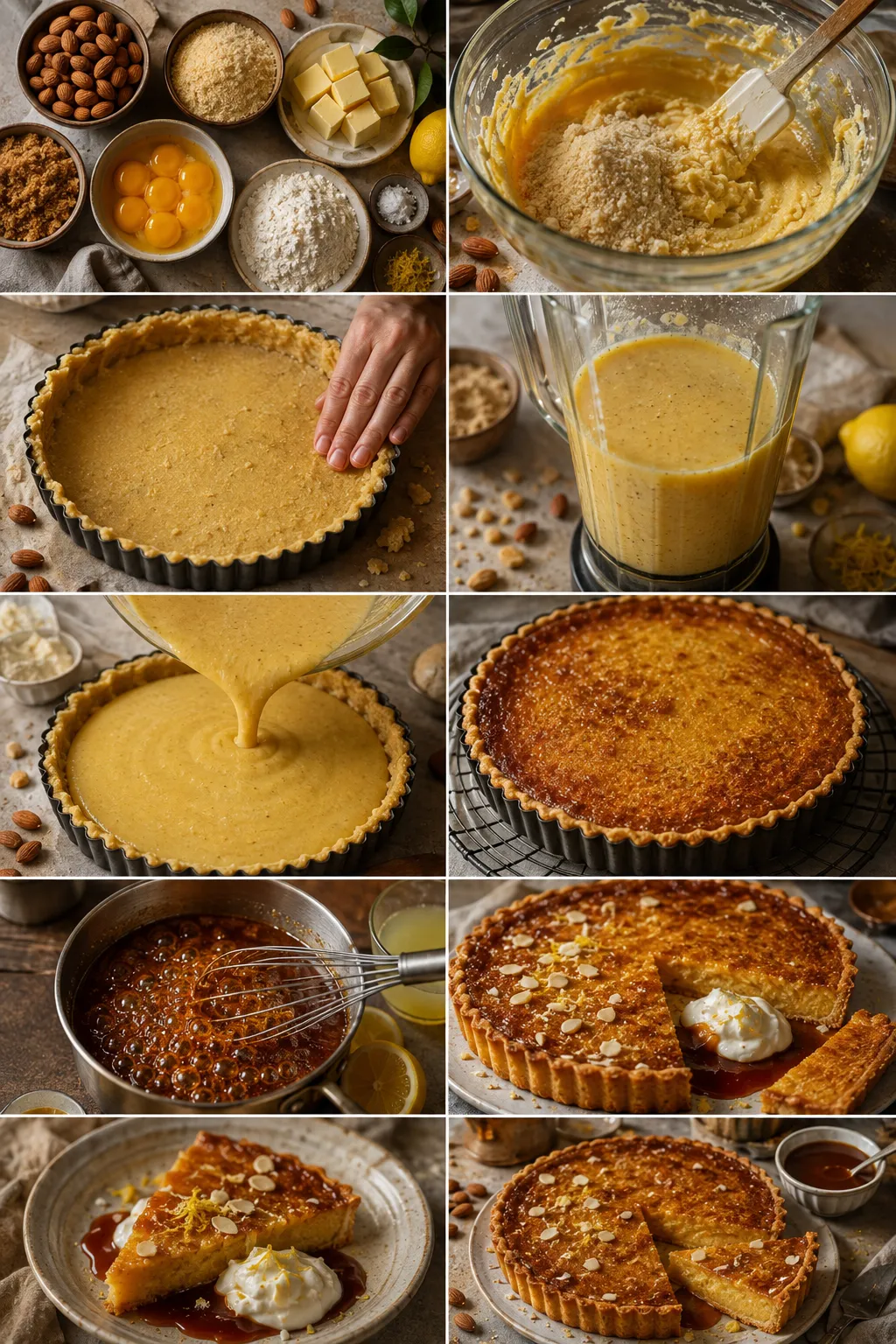
- Make the almond pastry. Add the softened butter, brown sugar, and flaky sea salt to the bowl of a stand mixer fitted with the paddle attachment. Beat on medium speed until the mixture becomes pale, smooth, and creamy. Add the eggs one at a time, allowing each egg to become fully incorporated before adding the next. Reduce the mixer speed to low and add the almond meal, plain flour, and baking powder. Mix only until the dough has just come together. Remove the dough from the mixer, gently shape it into a ball, wrap it tightly, and refrigerate for about 1 hour.
- Roll and shape the pastry. Remove the chilled pastry from the refrigerator and allow it to soften slightly until it becomes workable but remains cool. Place the dough between two sheets of lightly greased baking paper and roll it into a round approximately 5 mm thick. If the dough becomes soft or difficult to handle, return it to the refrigerator for several minutes before continuing. Lightly grease a deep-sided 22 cm tart or pie tin. Carefully transfer the pastry into the tin and gently press it into the bottom and sides without stretching it. Trim away any excess pastry around the edges. If small cracks or holes appear, patch them with a little of the extra egg yolk. Refrigerate the prepared tart shell for another 30 minutes.
- Prepare the sugar syrup. Place the caster sugar and water for the filling in a saucepan over medium heat. Stir gently until the sugar has completely dissolved and the mixture becomes a clear syrup. Remove the saucepan from the heat and allow the syrup to cool completely to room temperature. Don’t rush this step because the syrup needs to be cool before it is combined with the egg yolks.
- Make the almond filling. Preheat the oven to 150°C. Place the 12 egg yolks into a blender and blend on low speed until combined. Slowly add the cooled sugar syrup and blend just until incorporated. Add the almond meal, finely grated lemon zest, and flaky sea salt. Blend again until everything is well combined. Increase the blender speed and continue blending for approximately 30 seconds to 1 minute, until the mixture is almost smooth. Don’t blend it completely silky—the subtle texture from the almond meal is part of what makes the finished filling so good.
- Fill the tart shell. Remove the chilled pastry shell from the refrigerator and pour the almond filling evenly into the center. Gently smooth the surface if needed, but avoid shaking or moving the tart too much. The filling should sit evenly inside the pastry shell. Place the tart on the middle rack of the preheated oven.
- Bake the tart. Bake for approximately 30 minutes, or until the surface becomes deeply golden and caramelised. The center should be mostly set but still have a gentle wobble when the tin is moved slightly. Don’t wait for the filling to become completely firm in the oven because it will continue setting as it cools. Remove the tart from the oven and allow it to cool completely to room temperature before carefully removing it from the tin.
- Chill overnight. Once the tart has cooled, cover it and transfer it to the refrigerator. For the best texture, leave it to chill overnight. This resting time is important because the filling becomes noticeably denser and almost fudge-like, while the almond pastry and filling settle together beautifully. If you’re tempted to cut into it immediately, I understand. But this is one of those recipes where tomorrow’s slice really is better.
- Make the lemon caramel. Prepare a bowl of iced water large enough to cool the bottom of a small saucepan. Place the caster sugar and 1 tablespoon of water in a heavy-based saucepan over medium heat. Cook without stirring until the sugar develops a very dark caramel color. Keep a close eye on it during the final stage because the caramel can burn quickly. When it reaches the desired color and begins giving off little puffs of smoke, carefully place the base of the saucepan into the iced-water bath to stop the cooking.
- Add the lemon juice. While whisking vigorously, slowly add 45 ml of the lemon juice to the hot caramel. The caramel may seize and become quite thick when the lemon juice is added. Don’t panic—keep whisking until it begins to loosen and come together again. Allow the caramel to cool completely to room temperature, then whisk in the remaining lemon juice. The finished caramel should be dark, glossy, intensely caramelised, and pleasantly sharp from the lemon.
- Prepare the sour cream. Just before serving, whip the sour cream until it reaches soft peaks. You don’t want stiff, heavily whipped cream here. Keeping it soft and spoonable gives the dessert a lovely cool and tangy contrast without making the plate feel too heavy.
- Serve the tart. Remove the chilled tart from the refrigerator and cut it into clean, generous slices. Place each slice on a serving plate with a small pool or spoonful of lemon caramel alongside it. Add a dollop of softly whipped sour cream and serve chilled. The combination of dense almond filling, buttery pastry, bittersweet lemon caramel, and cool sour cream is what makes this dessert so special. Take your time with it—this is very much a slow-dessert kind of tart. 🍋🥧
Helpful tips 💡
- Keep the pastry chilled whenever it becomes too soft to handle.
- Don’t overmix the dough after adding the flour.
- Patch small pastry cracks instead of rerolling the dough.
- Make sure the sugar syrup has cooled completely before adding it to the egg yolks.
- Don’t blend the almond filling completely smooth; a little texture from the almond meal is desirable.
- Look for a gentle wobble in the center when the tart comes out of the oven.
- Let the tart cool completely before removing it from the tin.
- Chill the finished tart overnight for the best dense, fudge-like texture.
- Watch the caramel carefully because it becomes very dark very quickly.
- Add the lemon juice gradually while whisking to help the caramel come back together.
- Serve with both lemon caramel and softly whipped sour cream for the best balance of flavors.
A dessert worth planning ahead for ☕🥧
There are plenty of desserts you can decide to make at the last minute. This tart isn’t really one of them, and I think that’s part of its charm. The pastry needs time to chill, the filling needs a gentle bake, and the finished tart is at its best after spending a full night in the refrigerator. It sounds like a lot of waiting when you first look at the recipe, but most of that time doesn’t actually require you to do anything.
That’s what makes it surprisingly convenient when you’re entertaining. You can prepare the tart the day before, let it cool and chill overnight, and have the dessert completely ready before your guests even arrive. The lemon caramel can also be prepared ahead, so when dinner is finished, there’s no frantic whisking or last-minute baking happening in the kitchen.
Instead, you simply bring the tart out of the refrigerator, cut a few generous slices, add a spoonful of lemon caramel, and finish each plate with softly whipped sour cream.
I especially like serving it after a long, relaxed lunch. The kind where nobody is checking the clock and the coffee pot seems to stay on the table forever. The tart feels right in that setting because it’s rich enough to make the end of the meal feel special, but the lemon caramel keeps it from becoming too heavy.
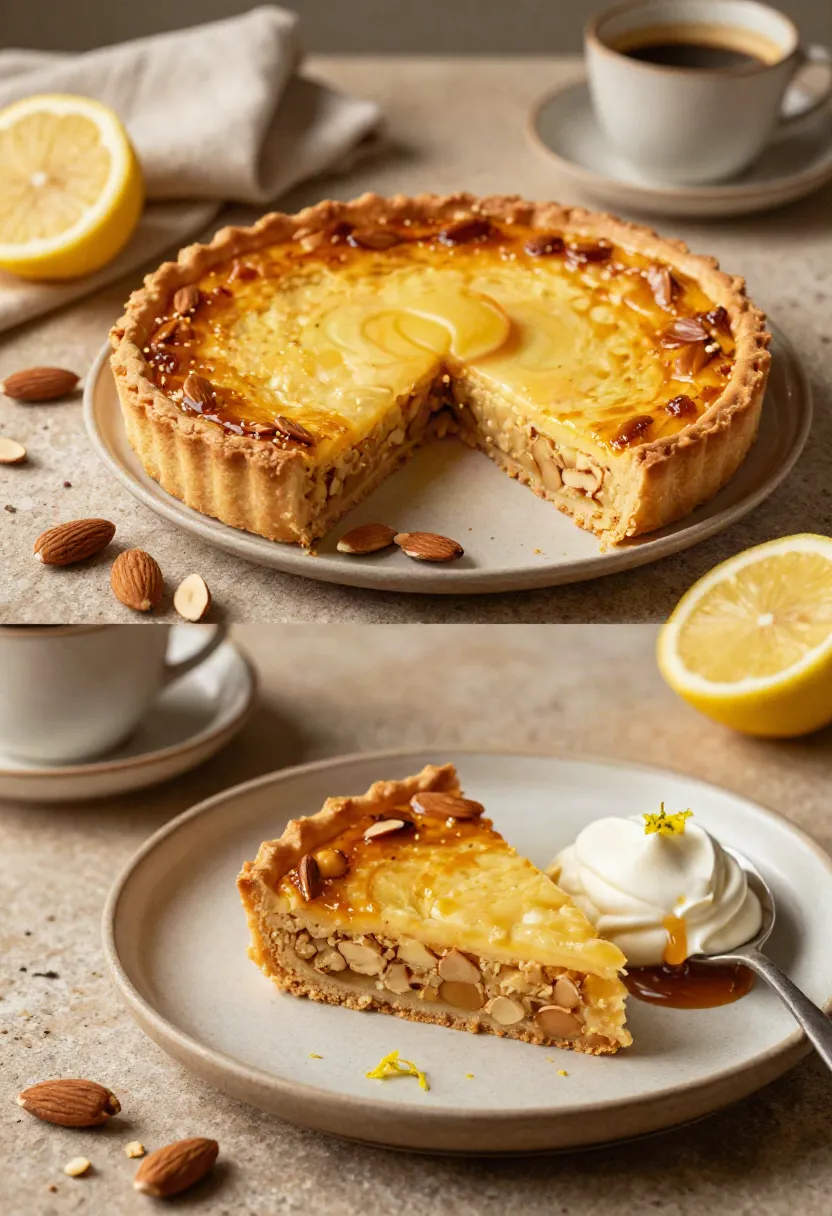
A small slice goes a surprisingly long way.
🥧 This tart works particularly well for:
- Long weekend lunches.
- Dinner parties with friends.
- Holiday dessert tables.
- Special family celebrations.
- Afternoon coffee gatherings.
- Almond and citrus lovers.
- Make-ahead entertaining.
There’s also something lovely about bringing the whole tart to the table rather than pre-plating every slice. Let everyone see that deeply golden surface before you cut into it. The first slice reveals the dense almond center, and that’s usually when someone asks what exactly is in it.
Then comes the lemon caramel.
A little drizzle over the top, a spoonful of sour cream on the side, and suddenly a fairly understated tart becomes a dessert that feels genuinely special.
This is the kind of recipe I would make when I want dessert to feel considered rather than complicated.
The beauty is in the contrast 🥧🍋
What makes this tart memorable isn’t one spectacular ingredient. It’s the way everything pushes against everything else.
The almond filling is rich and dense, almost luxurious in texture. The pastry has a buttery, slightly crumbly character that gives the soft center some structure. On its own, the tart would be wonderfully indulgent—but probably a little too much after a full meal.
That’s where the lemon caramel changes the picture.
Its deep caramel flavor brings a faint bitterness, while the lemon adds acidity and freshness. Instead of making the dessert taste simply sweeter, it makes the almond flavor feel more pronounced. One bite is rich, the next feels brighter, and somehow you keep going back for another.
Then there’s the sour cream.
It might sound like a very simple addition, but that cool tanginess is exactly what the dessert needs. A spoonful alongside the tart softens the richness and gives the palate somewhere to reset between bites.
It’s a small lesson in dessert-making, really. You don’t always need to make a sweet dessert lighter by removing the things that make it delicious. Sometimes it’s more interesting to balance richness with something sharp, cool, or slightly bitter.
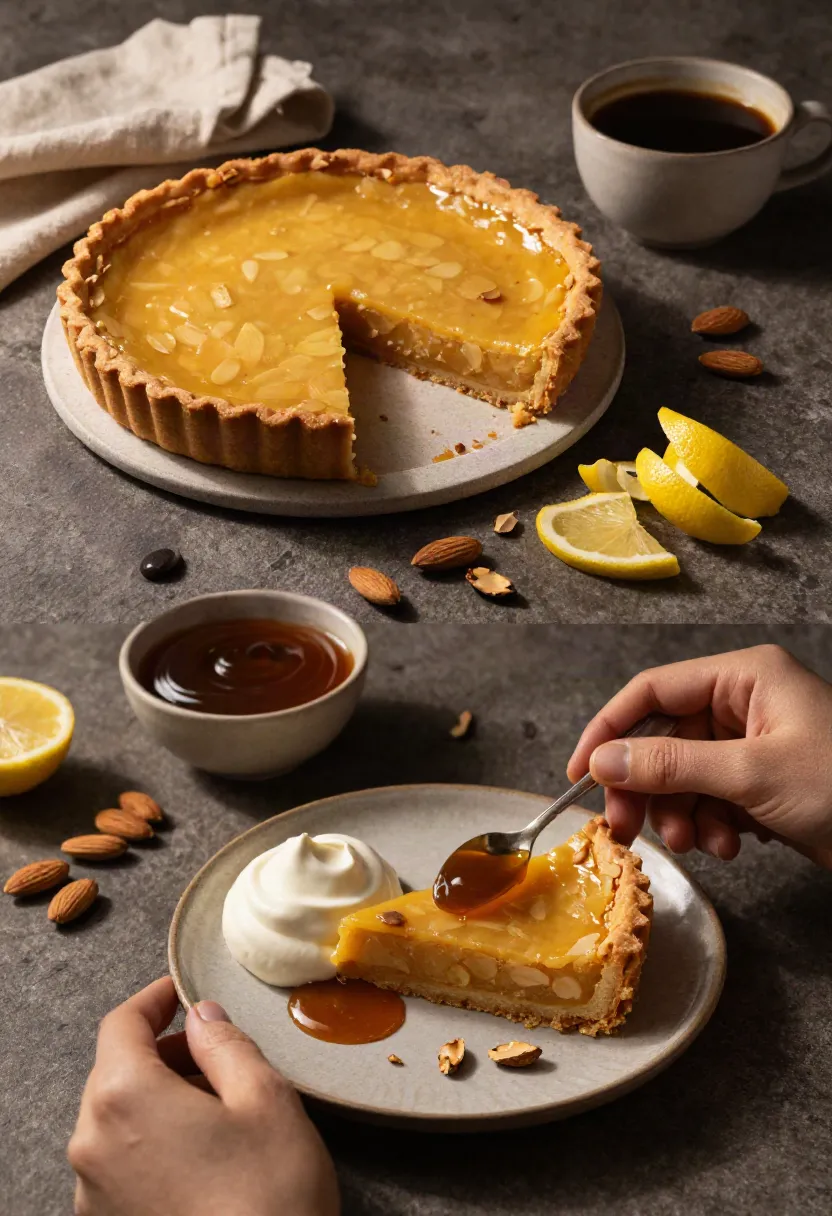
🌰 The finished dessert has a little bit of everything:
- Richness from the butter, egg yolks, almonds, and sugar.
- Texture from the almond meal and tender pastry.
- Bitterness from the deeply caramelised sugar.
- Brightness from fresh lemon juice and zest.
- Tanginess from the softly whipped sour cream.
That’s why I wouldn’t be tempted to make the lemon caramel overly pale or delicate. The darker it becomes, the more character it brings to the finished plate. You want that slightly bitter caramel note to stand up against the sweetness of the tart rather than disappear into it.
The same goes for the lemon. It shouldn’t be so subtle that you have to search for it. You want a clear citrus lift right at the end of the bite.
And then there’s the texture after chilling.
Straight from the refrigerator, the filling is wonderfully compact. A fork cuts through it cleanly, revealing a dense golden center that almost resembles a soft almond fudge. Let a slice sit at room temperature for a few minutes and it relaxes slightly, becoming softer and more yielding.
Both are worth trying.
I usually prefer the tart quite cold when serving it with lemon caramel and sour cream because the contrast feels particularly good. But if you’re having a slice with coffee in the afternoon, letting it warm just slightly makes the almond and brown sugar flavors come forward.
It’s a dessert with enough character that you don’t need to dress it up.
Just let the contrast do the work.
The tart you’ll remember long after the last slice 🥧✨
There are recipes that impress you because they’re complicated. Then there are recipes that stay with you because of one surprisingly good combination.
For me, this almond tart belongs firmly in the second category.
The pastry is rich and tender. The filling is dense, golden, and packed with egg-yolk and almond flavor. The lemon caramel brings a deep bittersweet note that keeps every bite interesting, while the sour cream adds just enough freshness to make you want another forkful.
Nothing feels unnecessary.
And that’s probably my favorite thing about it.
Even the twelve egg yolks, which initially seem like an almost ridiculous amount, have a clear purpose. They create the richness and structure that make the filling so distinctive. The almond meal adds texture and nuttiness. The lemon brings brightness. The caramel adds bitterness. The sour cream cools everything down.
Each component has a job.
Together, they make the tart feel much more complex than the preparation actually is.

✨ What makes this recipe worth keeping:
- The pastry can be prepared ahead.
- The tart is ideal for make-ahead entertaining.
- The filling becomes even better after an overnight chill.
- Lemon caramel balances the richness beautifully.
- A small slice is satisfying without needing lots of decoration.
- The dessert works equally well for casual coffee or a special dinner.
I also think this is one of those recipes that becomes more enjoyable once you’ve made it once. The first time, you’ll probably pay close attention to the pastry, watch the caramel nervously, and wonder whether the wobble in the center is really enough.
By the second time, you’ll know what you’re looking for.
You’ll know when the dough feels right.
You’ll know just how dark you want the caramel.
You’ll know that the tart doesn’t need to look completely firm when it comes out of the oven.
And, most importantly, you’ll know to leave it alone overnight.
That’s when the real transformation happens.
The next day, you open the refrigerator, cut through that beautifully chilled tart, and see the dense golden filling sitting neatly inside the almond pastry. Add the lemon caramel and a little sour cream, pour yourself a coffee, and suddenly all that waiting seems like a very reasonable trade.
Some desserts are about instant gratification.
This one is about knowing something wonderful is waiting for you tomorrow.
And honestly, those might be the desserts worth making most often. 🥧🍋☕