Most breakfasts disappear from memory almost as quickly as they are eaten. A piece of toast while checking messages, a bowl of cereal before rushing out the door, coffee finished somewhere between one task and the next. By lunchtime, it’s difficult to remember much about them at all. They do their job, fill a gap, and quietly fade into the background of the day.
Dosa feels different from the very beginning.
Part of that comes from the batter itself. Long before the skillet is heated, the recipe has already been quietly working away in the background. The rice and lentils spend hours soaking, then the batter rests overnight while fermentation slowly changes its flavor and texture. By morning, it smells slightly tangy and looks nothing like the mixture that went into the bowl the evening before. Tiny bubbles appear across the surface, the consistency becomes lighter, and there is a sense that something interesting has happened while nobody was paying attention.
I think that’s one reason dishes like this feel more rewarding than many quick breakfasts. There is anticipation built into the process. You know something good is waiting for you the next day. In a strange way, the recipe starts long before the meal itself. It begins when you decide to prepare the batter, knowing you’ll benefit from that decision hours later.
Then the cooking begins. The batter spreads into a thin circle across the hot surface of the pan. The edges begin drying almost immediately while tiny pockets of steam appear across the center. A minute later, the underside turns golden and crisp. There is always a small moment of satisfaction when the dosa lifts cleanly from the skillet. It never gets old. Even after making dosa several times, I still find myself checking underneath too early just to see whether that beautiful golden color has started to develop.
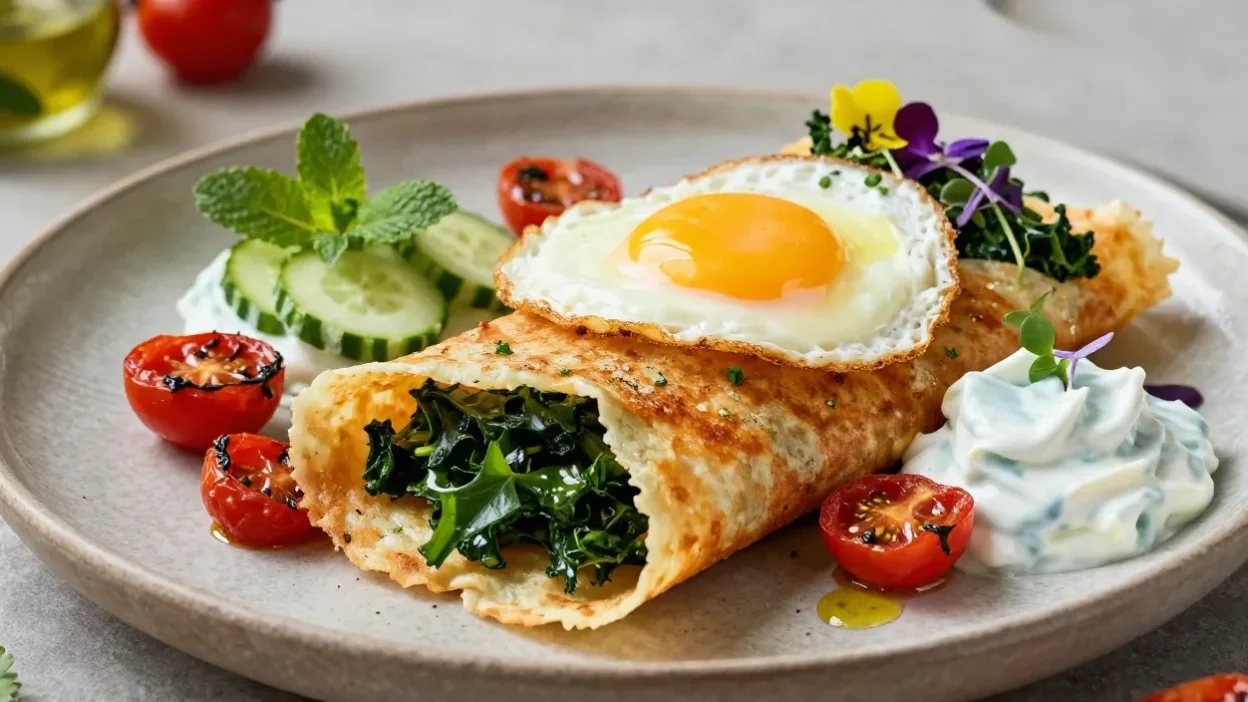
This particular version combines crispy dosa with sautéed kale, roasted tomatoes, and a cool cucumber raita. The ingredients sound simple, and they are, but simplicity often works in ways that more complicated recipes don’t. The kale brings enough substance to make the filling feel satisfying. The tomatoes soften and sweeten in the oven. The yogurt cools everything down and keeps the plate feeling fresh. Add a fried egg on top and suddenly the whole thing becomes the sort of meal that comfortably bridges breakfast and lunch.
What I like most is that nothing feels excessive. The flavors are distinct without competing. The vegetables remain recognizable. Every ingredient still tastes like itself. There is no heavy sauce covering everything up or distracting from what is happening underneath. Instead, the dish relies on contrast. Crisp and creamy. Warm and cool. Earthy and fresh. Those contrasts keep every bite interesting without making the meal feel complicated.
The meal feels thoughtful without trying too hard, and honestly, that balance is harder to achieve than people think. Plenty of healthy recipes focus so heavily on nutrition that they forget to be enjoyable. Others chase flavor so aggressively that they become unnecessarily rich. This dosa somehow finds a comfortable middle ground where both things can exist at the same time.
The long tradition behind a dish that still feels modern 🥣
Some recipes survive because they’re convenient. Others survive because they’re comforting. Dosa has managed to do both, which probably explains why it has remained part of everyday cooking for so long.
Although it’s now served everywhere from family kitchens to modern cafés, its roots stretch back centuries. Historians continue debating exactly where the first dosa originated, but most agree that fermented rice and lentil batters have been part of South Indian cooking for a very long time. What’s remarkable isn’t simply how old the recipe is. It’s how little the core idea has changed despite everything else around it changing dramatically.
The ingredients remain almost stubbornly simple. Rice, lentils, water, and a little patience have carried this dish through generations without needing much improvement. Modern kitchens may use electric blenders instead of traditional grinding stones, and non-stick skillets may have replaced older cooking surfaces, but the essential process remains nearly identical.
The fermentation process is what transforms those humble ingredients into something far more interesting. While the batter rests, natural microorganisms begin doing their work. Tiny bubbles form throughout the mixture. Acidity develops gradually. The flavor becomes deeper and more complex. None of these changes happen dramatically enough to notice hour by hour, but by the following morning the difference is obvious. The batter feels lighter, smells more interesting, and cooks in a completely different way.
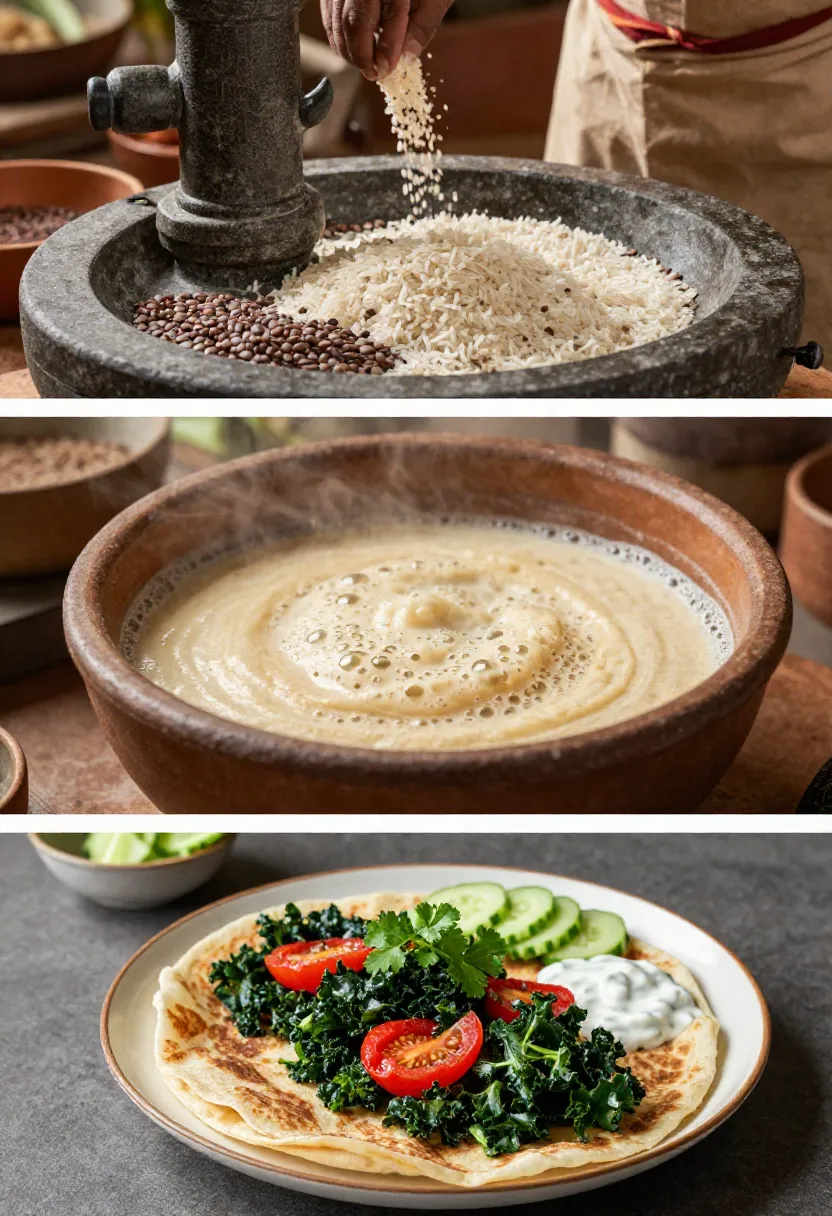
A properly fermented batter spreads more easily and develops a texture that’s difficult to achieve any other way. The edges become delicate and crisp while the center remains flexible enough to wrap around fillings. That’s one reason homemade dosa feels different from quick substitutes. The texture isn’t an accident. It’s the result of time doing its job.
Modern cooking often focuses on speed. Recipes promise dinner in thirty minutes. Appliances advertise shortcuts for nearly everything. There is nothing inherently wrong with convenience, but some foods simply benefit from moving at their own pace. Dosa is one of them. It asks for a little planning but very little effort. Most of the time involved is passive. Once the batter is prepared, nature handles the difficult part.
I think that’s why so many people are rediscovering fermented foods. There is something satisfying about participating in a process that can’t be rushed. Sourdough bread, yogurt, kimchi, miso, and dosa all share that characteristic. They reward patience in a way that instant recipes never can.
Another reason dosa continues to feel relevant is its flexibility. Traditional versions remain popular, but the basic batter can support countless variations. Different fillings, different vegetables, different spices, even different occasions. It works as breakfast, lunch, dinner, or brunch. Some people serve it with chutneys and sambar. Others build more modern versions around seasonal vegetables and fresh herbs. The foundation stays the same while the details evolve.
That adaptability is often what allows traditional foods to survive. A recipe that refuses to change eventually becomes a museum piece. A recipe that welcomes small changes continues living in real kitchens.
And dosa has been doing exactly that for a very long time.
Why kale, roasted tomatoes and cucumber raita work so well together 🥬🍅
The first time I saw kale paired with dosa, I wasn’t entirely convinced.
Kale has a strong personality compared to many other greens. It can easily dominate a dish if you’re not careful. My assumption was that the filling would become overly earthy and that the delicate dosa would struggle to compete. Instead, the opposite happened. The balance turned out to be one of the most interesting parts of the entire recipe.
The tomatoes ended up stealing part of the spotlight.
After twenty minutes in the oven, cherry tomatoes become surprisingly sweet. Their juices thicken slightly, the skins wrinkle, and the sharp acidity that fresh tomatoes sometimes have begins to mellow. They don’t collapse into sauce, at least not if you pull them out at the right moment. They simply become a richer, softer version of themselves. That sweetness changes the entire filling. Without the tomatoes, the kale would feel much earthier and heavier. With them, every bite feels brighter and more balanced.
One reason the combination works so well is that every ingredient brings something completely different to the table.
| Ingredient | Flavor contribution | Texture contribution | Why it matters |
|---|---|---|---|
| Kale | Earthy and slightly peppery | Tender with a little chew | Gives the filling substance |
| Roasted tomatoes | Sweet and lightly acidic | Soft and juicy | Balances the greens |
| Greek yogurt | Cool and tangy | Creamy | Refreshes the palate |
| Cucumber and mint | Fresh and herbal | Crisp and light | Keeps the dish feeling bright |
Kale itself deserves more credit than it usually gets. Spinach receives most of the attention because it’s quick and easy to cook, but spinach almost disappears once heat enters the equation. Kale behaves differently. It softens enough to become pleasant to eat while still maintaining enough texture to feel present. In a recipe built around contrasts, that’s exactly what you want. The filling should have some structure. It should feel like a collection of ingredients rather than a soft mixture hiding beneath the dosa.
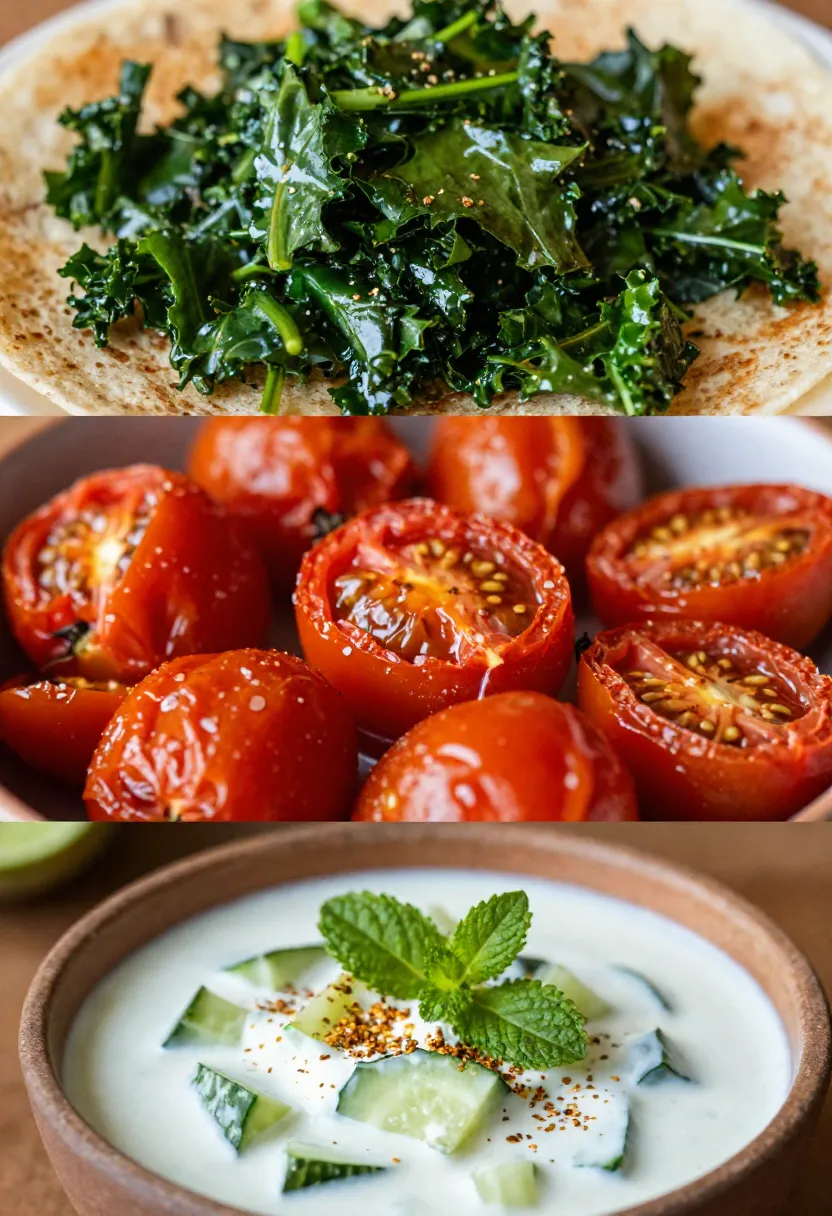
Then there is the raita, which might actually be the most important supporting player on the plate. To be honest, it’s usually the first thing I finish. Not because it’s the most exciting component, but because it quietly improves everything around it. Every time the dosa starts feeling a little rich from the egg or a little earthy from the kale, a spoonful of cold yogurt immediately resets the balance.
The cucumber adds freshness, the mint contributes a clean herbal note, and the cumin connects the sauce to the spices in the rest of the dish. Individually those details seem small. Together they completely change how the meal feels.
A few details make the raita even better:
- Squeeze excess water from the cucumber before mixing it into the yogurt.
- Let the raita rest in the refrigerator for at least fifteen minutes before serving.
- Chop the mint finely so its flavor spreads evenly throughout the sauce.
- Taste again just before serving, because cold yogurt sometimes needs a little extra seasoning.
Little details like that rarely receive much attention in recipes, yet they often separate a good dish from a memorable one.
What I enjoy most about this combination is that no ingredient feels like an afterthought. The crispy dosa, warm vegetables, cool yogurt, sweet tomatoes, and rich egg all contribute something different. The textures constantly shift from bite to bite. The temperatures change. The flavors move around without becoming confusing. One moment you notice the sweetness of the tomatoes, the next you’re focused on the freshness of the mint or the crunch around the edge of the dosa.
The meal never feels complicated.
It just feels complete, which is probably the highest compliment I can give a recipe like this. After all, most memorable dishes aren’t memorable because they contain dozens of ingredients or complicated techniques. They’re memorable because every part works together so naturally that it’s difficult to imagine removing anything without losing something important.
Crispy dosa with kale, roasted tomatoes and cucumber raita recipe 🍳
Golden fermented dosa filled with sautéed kale, roasted cherry tomatoes, cucumber raita, and a fried egg. If I’m being honest, this isn’t the sort of combination I would have come up with on my own. Kale doesn’t exactly have a reputation for being subtle, and dosa is usually the thing people focus on. But after making it once, the pairing started making a lot more sense.
The tomatoes do a surprising amount of heavy lifting here. Twenty minutes in the oven changes them completely. They soften, their sweetness becomes more noticeable, and those little bursts of juice end up everywhere once the dosa is folded. Mixed with the kale, they create a filling that feels far more comforting than a pan of greens has any right to feel. Not heavy. Just satisfying in that quiet way where you suddenly realize you’ve stopped thinking about side dishes because the main plate already has everything it needs.
The raita is the part I keep going back to. A forkful of warm dosa followed by cold yogurt and cucumber somehow makes the next bite taste even better. Then the mint shows up for a second, disappears again, and lets the vegetables take over. It’s not dramatic food. Nothing is fighting for attention. Everything just seems to land in the right place.
And then there’s the fried egg. You could leave it out, technically. The recipe would still work. But once the yolk breaks and starts running into the kale, tomatoes, and crispy folds of the dosa, it becomes very difficult to argue against keeping it. Some bites end up rich and messy, others stay crisp around the edges, and that’s part of the fun. The plate gets a little less tidy with every minute you spend eating it.
What I probably like most about this recipe is that it doesn’t feel like it’s trying to impress anyone. It’s made from simple ingredients. Nothing expensive. Nothing particularly trendy. Yet by the time you’re halfway through, you start noticing all the little things happening at once: the crunch around the edge of the dosa, the sweetness from a tomato that almost fell apart in the oven, the coolness of the yogurt, the earthy flavor of the greens underneath everything else. It’s the sort of meal that makes you slow down without realizing it.
The best way I can describe it is this: when the plate is empty, it feels like you’ve eaten something substantial, but you don’t immediately want to go lie down on the couch afterward. You’re comfortably full, still feel good, and maybe already thinking that making an extra batch of batter next time wouldn’t be the worst idea in the world.
Ingredients
For the dosa batter
- 330 g brown rice
- 190 g red lentils
- 900 mL water
- 1 teaspoon ground fenugreek
- 1 teaspoon cumin seeds
- 1/2 teaspoon turmeric
- 1 teaspoon salt
- Olive oil for cooking
For the filling
- 220 g kale
- 12 cherry tomatoes
- 3 French shallots
- 2 garlic cloves
- 1 tablespoon olive oil
- 1/2 teaspoon curry powder
- 1/2 tablespoon lime juice
- Salt to taste
For the raita
- 200 g Greek yogurt
- 1/2 Lebanese cucumber
- 7 mint leaves
- 1 small green chili
- 1/4 teaspoon cumin
- Salt and pepper
Optional
- 4 eggs
- Fresh cilantro
Instructions
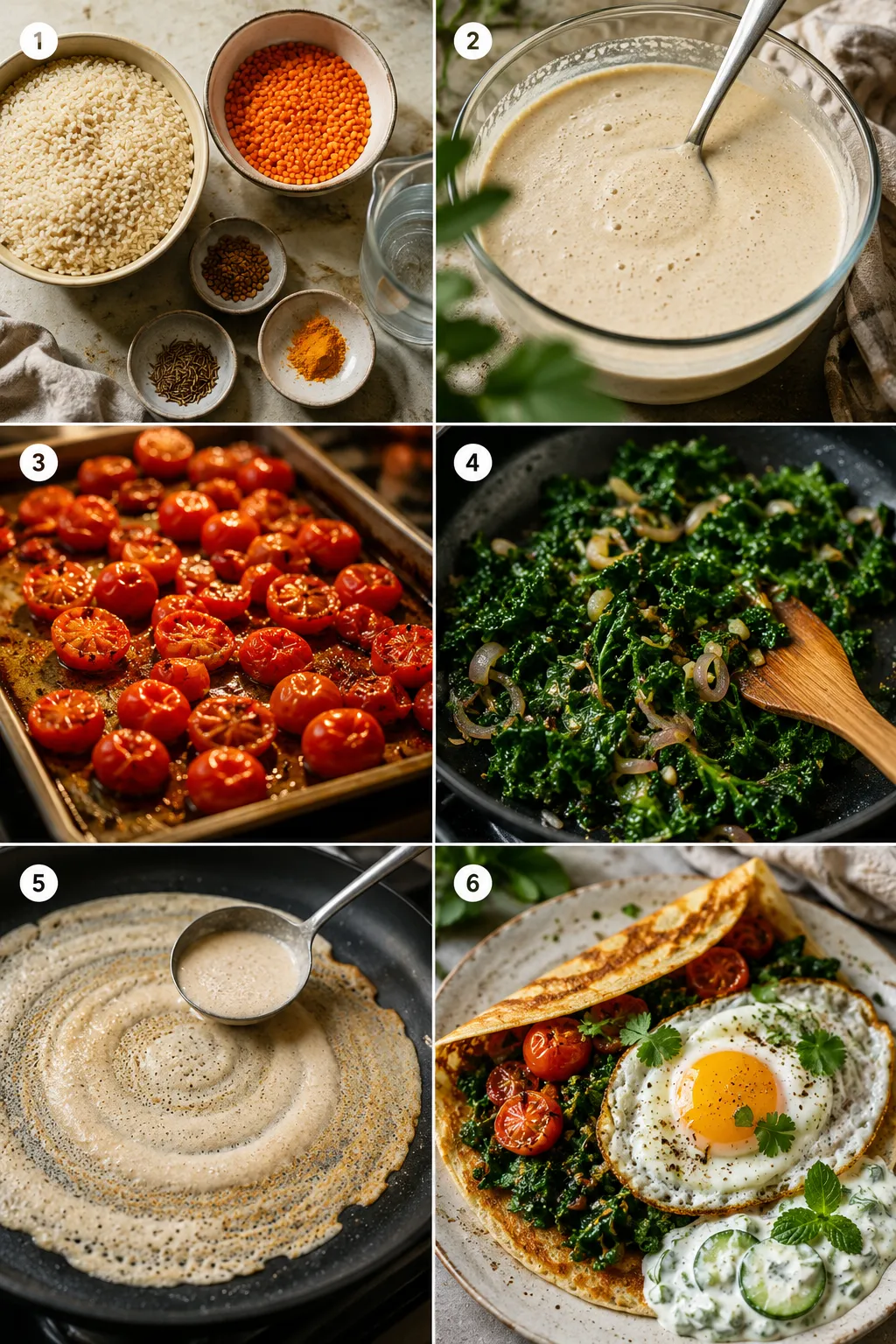
- Rinse the rice and lentils thoroughly under cold running water, then place them in a large bowl and cover generously with fresh water. Leave them to soak for 5–6 hours, or until the grains and lentils have softened noticeably.
- Drain the soaking water and transfer the rice and lentils to a blender. Add the water, fenugreek, cumin seeds, turmeric, and salt, then blend until the mixture becomes completely smooth. The batter should be pourable but still slightly thick, similar to a thin pancake batter.
- Pour the batter into a large bowl, cover loosely with a clean kitchen towel or lid, and leave it at room temperature overnight. After 10–12 hours, the batter should look slightly puffed and develop a mild tangy aroma from fermentation.
- Preheat the oven to 300°F (150°C). Arrange the cherry tomatoes on a baking tray, drizzle lightly with olive oil, and season with a pinch of salt and pepper. Roast for about 20 minutes, or until the tomatoes soften, wrinkle slightly, and begin releasing their juices.
- While the tomatoes roast, prepare the cucumber raita. Combine the Greek yogurt, grated cucumber, chopped mint, chili, cumin, salt, and pepper in a bowl. Stir until well combined, then refrigerate until needed. If the cucumber contains a lot of moisture, squeeze it lightly before adding it to the yogurt.
- Heat the olive oil in a large skillet over medium heat. Add the sliced shallots and cook for 2–3 minutes until softened and lightly translucent. Stir in the kale and cook for another few minutes until the leaves wilt and reduce in volume.
- Add the minced garlic, curry powder, lime juice, and a pinch of salt to the skillet. Stir everything together and cook for about 1 minute more, just until the garlic becomes fragrant. Remove from the heat and keep warm.
- Place a lightly oiled non-stick skillet or dosa pan over medium-high heat. Allow it to heat fully before adding the batter, as a properly heated pan helps create the characteristic crisp texture.
- Pour approximately 1/2 cup of batter into the center of the skillet. Using the back of a ladle or spoon, quickly spread it outward in circular motions to form a thin, even round.
- Cook for 2–3 minutes, or until the surface looks set and the edges become golden and crisp. If necessary, drizzle a few drops of oil around the edges to encourage browning.
- Carefully remove the cooked dosa from the pan and repeat the process with the remaining batter, stacking the finished dosas on a plate and keeping them warm while you cook the rest.
- If using eggs, fry them in a separate skillet until the whites are set but the yolks remain soft. Season lightly with salt and pepper.
- To assemble, place a portion of the warm kale mixture and several roasted tomatoes onto one half of each dosa. Fold or roll the dosa around the filling.
- Finish each serving with a generous spoonful of cucumber raita, fresh cilantro or herbs of choice, and a fried egg on top. Serve immediately while the dosa is still crisp and the filling is warm.
Kitchen tips 👨🍳
- Let the batter ferment in a warm place for the best texture.
- Squeeze excess moisture from the cucumber before making raita.
- Keep the skillet hot but not smoking.
- Roast tomatoes until softened, not collapsed.
Why this recipe feels perfect for weekend brunches ☕
Some recipes naturally belong to a particular moment of the week. This dosa is one of them.
Technically, there’s nothing stopping you from making it on a busy Wednesday morning. The recipe doesn’t require a special occasion, and the ingredients certainly aren’t reserved for weekends. But every time I make it, it feels like a meal that deserves a little extra time around it. Not because it’s difficult, but because rushing somehow takes away part of what makes it enjoyable in the first place.
Weekend mornings have a different rhythm. Nobody is standing by the door looking for their keys. Coffee can stay in the mug long enough to cool slightly before anyone remembers to drink it. The newspaper, if anyone still buys one, remains folded on the table while breakfast slowly comes together. Conversations wander from one topic to another without much direction. Somebody asks what’s for breakfast, disappears for twenty minutes, then comes back the exact moment the first dosa comes off the pan.
That’s usually how it goes in my kitchen anyway.
Part of the appeal comes from the cooking itself. Roasting tomatoes fills the room with a sweetness that’s hard to ignore. The batter makes that familiar sizzling sound the moment it touches the hot skillet. Fresh mint releases its aroma while being chopped for the raita. None of these things are particularly dramatic on their own, but together they create the feeling that breakfast is becoming an event rather than just another task to complete before the day begins.

I also think dosa naturally encourages people to linger. Unlike toast or cereal, it doesn’t disappear in five minutes. You sit down, cut into it, discover that the tomatoes are still warm from the oven, realize the raita is colder than expected, and suddenly start paying attention to what you’re eating. One bite is crisp around the edges. The next is filled with sweet tomatoes and creamy yogurt. Then the egg yolk finds its way into everything and changes the plate all over again.
Those little shifts keep the meal interesting.
And maybe that’s why recipes like this work so well for brunch. Brunch has never really been about efficiency. Nobody schedules brunch because they’re in a hurry. It’s one of the few meals where taking your time is almost part of the tradition. The food matters, but so does everything happening around it.
Some of my favorite weekend breakfasts haven’t been memorable because the recipe was extraordinary. They’ve been memorable because breakfast quietly stretched into late morning. Someone went back for another coffee. Somebody else stole the last roasted tomato from the serving plate. Plans for the rest of the day got discussed somewhere between bites.
This dosa fits naturally into that kind of morning.
The finished plate looks inviting without feeling overly styled. Bright green kale, golden dosa, roasted tomatoes, fresh herbs, cool white raita, and a fried egg create enough color that it almost looks festive. Yet nothing about it feels forced. It still looks like something that belongs on a real kitchen table rather than under studio lighting.
And honestly, those are often the recipes people end up making again. Not because they’re the most impressive, but because they create the kind of morning you’d like to repeat.
Small variations that completely change the experience 🌿
One reason dosa remains so popular after all these years is that it’s incredibly adaptable. Once you have a good batter, the possibilities start multiplying quickly. The basic structure remains the same, but the details can change depending on the season, what’s sitting in the refrigerator, or simply what sounds good that day.
That’s one of the things I enjoy most about cooking in general. A recipe doesn’t have to remain frozen forever. Sometimes the best versions happen because you run out of one ingredient and reach for another without overthinking it.
This particular filling is built around kale and roasted tomatoes, but it’s surprisingly forgiving. Different vegetables bring entirely different personalities to the dish without changing its overall character.
A few variations that work especially well include:
- Roasted sweet potatoes instead of tomatoes for a sweeter, heartier filling.
- Spinach in place of kale when you want something softer and more delicate.
- Avocado slices added just before serving for extra richness.
- Spicy mango chutney alongside the raita for a combination of heat and sweetness.
- Roasted mushrooms for a deeper, earthier flavor.
- Crumbled feta or goat cheese for a slightly tangy finish.
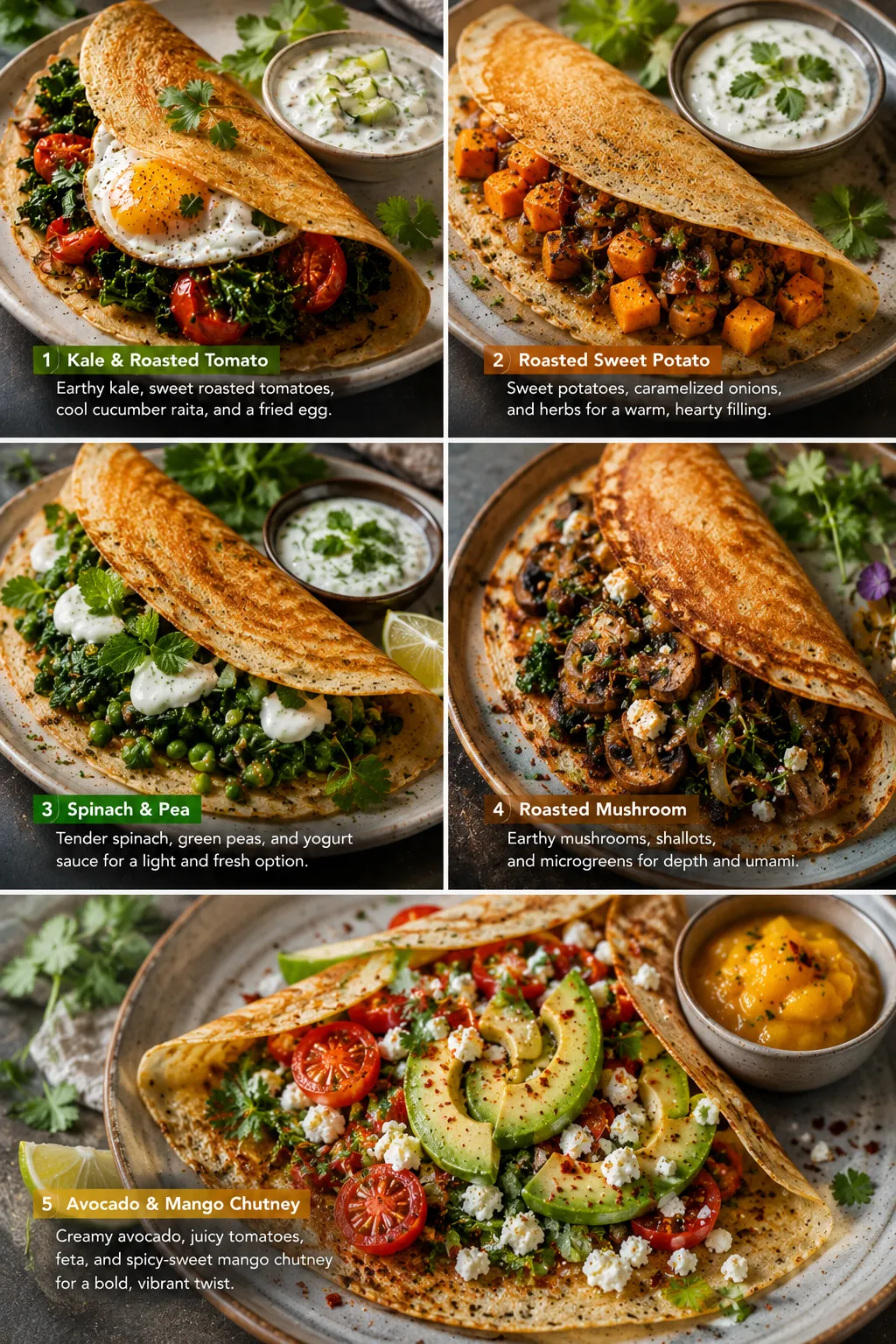
What’s interesting is how dramatically these small changes affect the overall experience. A version made with sweet potatoes feels more suited to autumn. Add fresh herbs and ripe tomatoes in summer, and suddenly the same recipe feels lighter and brighter. Even the choice of sauce can shift the mood of the meal. Some days I prefer the cooling effect of raita. Other times a spoonful of chutney completely changes the direction of the plate.
The fried egg can change things too.
Sometimes I leave it off entirely if I’m serving the dosa alongside other dishes. Other times it becomes the best part of the meal. There is something deeply satisfying about breaking the yolk and watching it mix with the vegetables underneath. It creates a sauce that wasn’t there a few seconds earlier.
The flexibility means the recipe rarely becomes boring. Every season offers a slightly different version. Every refrigerator suggests a different solution. That’s probably why recipes like this tend to survive for years instead of months. They leave enough room for personal preferences to develop naturally.
Eventually, everyone ends up creating their own version.
And that’s usually when a recipe becomes part of your regular cooking routine rather than something you simply tried once.
The meals we remember are rarely the complicated ones ❤️
Years from now, most people won’t remember exactly how much cumin went into the raita or whether the tomatoes roasted for eighteen minutes or twenty-two.
That’s not how food memories usually work.
What people remember is the atmosphere surrounding the meal. They remember who was sitting across the table. They remember the conversation that lasted longer than expected. They remember reaching for another piece of dosa when they weren’t even hungry anymore.
Some of my favorite food memories are attached to surprisingly ordinary meals. Not holiday feasts. Not expensive restaurant dinners. Just simple food eaten at the right moment. A bowl of soup during a rainy afternoon. Fresh bread shared with friends. Breakfast that somehow stretched well into lunchtime because nobody felt like ending the conversation.
This dosa belongs in that category.
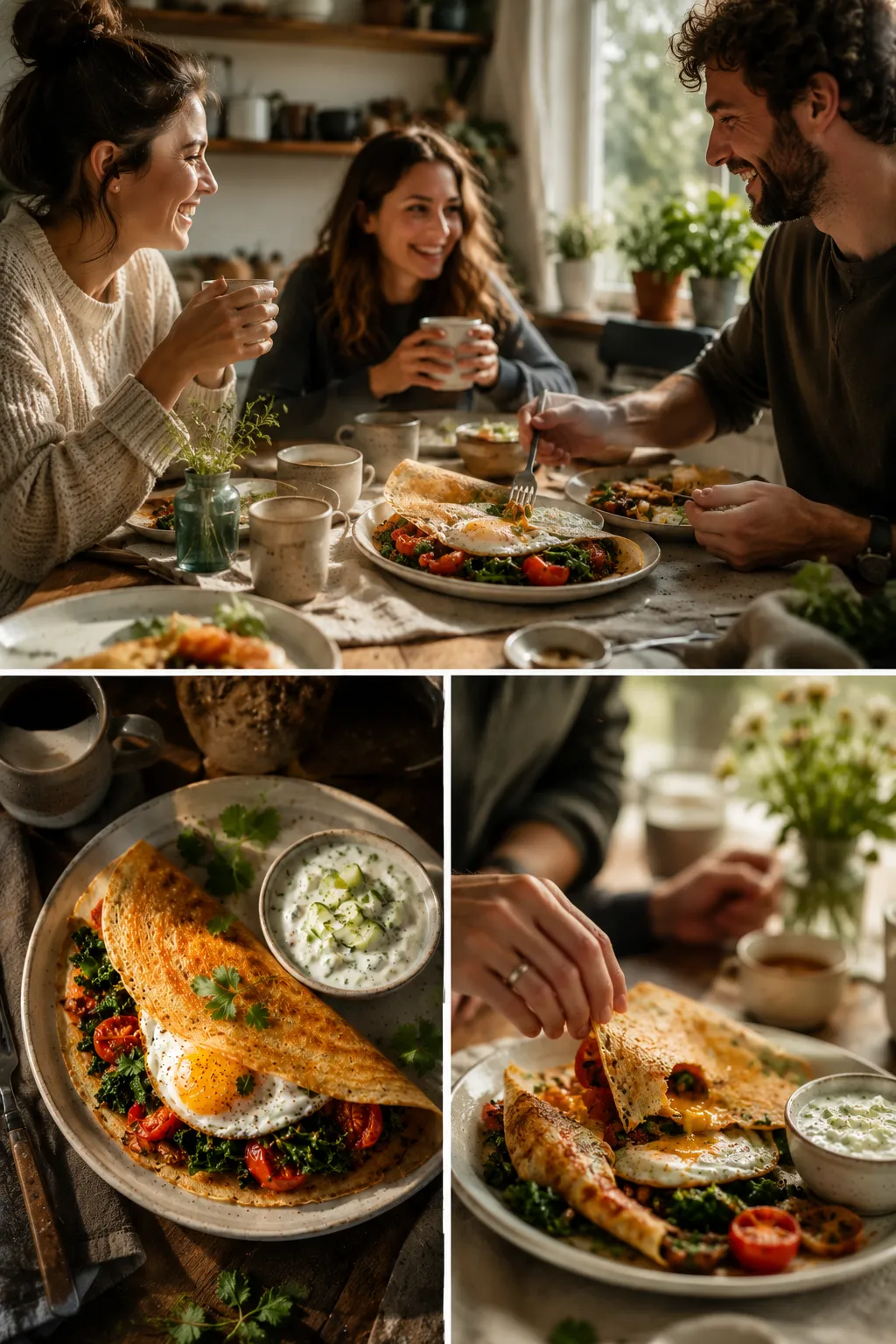
There’s something about it that encourages people to slow down. Maybe it’s the fermentation process that already requires patience before cooking even begins. Maybe it’s the way each dosa cooks individually, making it difficult to rush through the process. Or maybe it’s simply because the combination of warm vegetables, cool yogurt, and crisp dosa feels comforting without becoming heavy.
Whatever the reason, it creates the kind of meal that invites people to stay at the table a little longer.
The best home-cooked food often does exactly that. It doesn’t need dramatic presentations or expensive ingredients. It doesn’t need to impress anyone. Instead, it creates a moment where people feel comfortable enough to relax, eat slowly, and enjoy where they are.
I think that’s why recipes survive across generations. Not because they’re perfect. Not because they’re trendy. They survive because people associate them with good experiences. Family breakfasts. Lazy weekends. Meals shared with friends. Quiet mornings when there was nowhere important to be.
This dosa offers enough flavor to feel special, enough comfort to feel familiar, and enough flexibility that it never becomes repetitive. A year from now you might not remember every ingredient that went into it.
You might remember the smell of tomatoes roasting in the oven.
You might remember the sound of the batter hitting the hot pan.
You might remember someone asking if there was any raita left.
And honestly, those are probably the details that matter most.