You want meals that feel fresh, but not flimsy. Something light enough for a hot afternoon, but still satisfying enough that you are not hunting for snacks an hour later. A bowl of cold fruit is lovely, but sometimes your body needs more than sweetness and water. It needs protein, fiber, healthy fats, and a little salt too.
That is where healthy summer foods make life easier. The season already gives you so much to work with: juicy tomatoes, crisp cucumbers, sweet berries, leafy greens, peaches, carrots, beans, yogurt, eggs, oats, nuts, and all the simple ingredients that can turn into breakfast, lunch, snacks, and dinner without much fuss.
I like summer eating because it does not ask you to cook like a hero. You can slice tomatoes, boil a few eggs, stir berries into Greek yogurt, make overnight oats, toss beans with olive oil and lemon, or build a salad that actually keeps you full. Nothing needs to be dramatic. It just needs to taste good and help you feel steady through the heat.
In this guide, we will go through the best healthy summer foods to keep you energized, hydrated, and full, plus easy ways to use them in real meals. Not perfect meals. Real ones. The kind you can make when the kitchen feels too warm and your patience is already melting a little.
Why summer is the easiest season to eat better
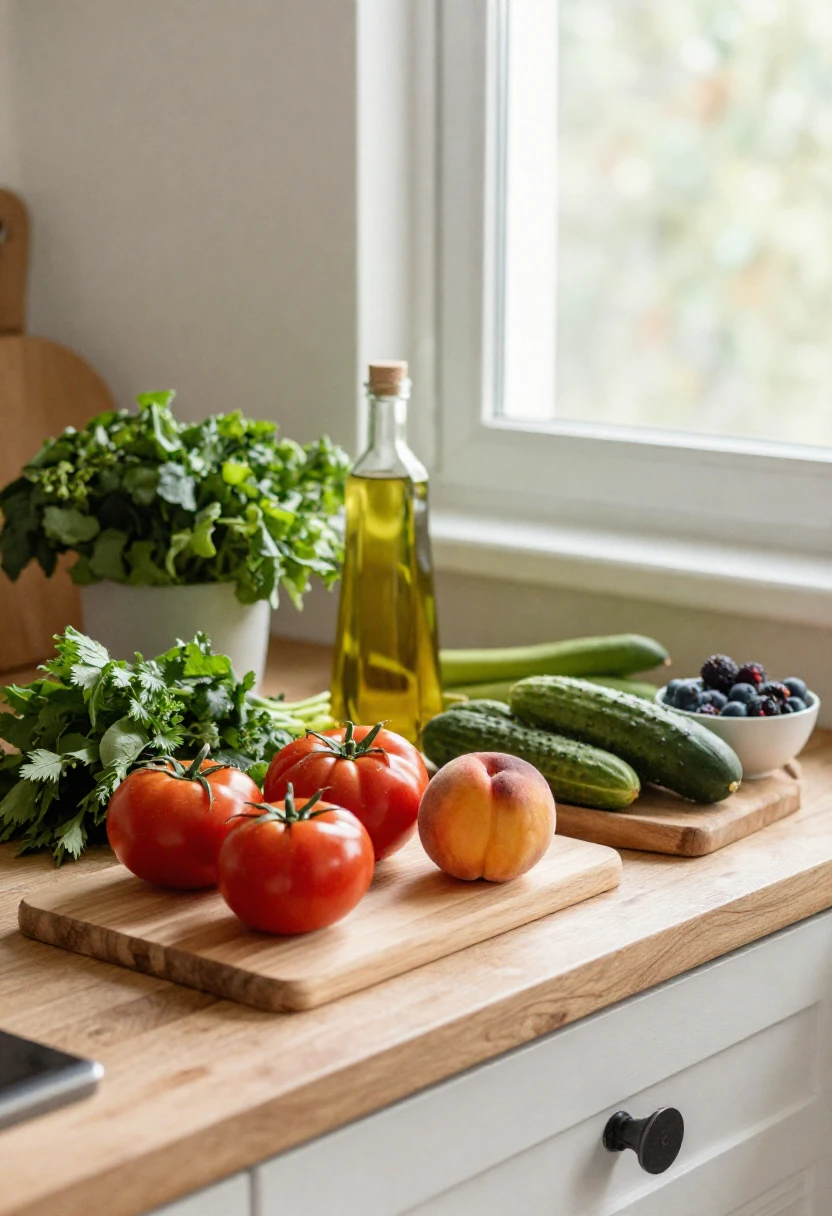
Summer is one of the few times when healthy eating can feel less like a project.
A ripe tomato with a little salt tastes like something. A peach does not need a recipe. Blueberries can go straight into yogurt. Cucumbers are crisp without doing anything impressive. Even a handful of fresh herbs can make a basic bowl of beans, eggs, or grains taste brighter.
That is the quiet advantage of summer food: fresh ingredients do a lot of the work for you.
You do not need heavy sauces or complicated cooking when produce is naturally juicy, sweet, sharp, and colorful. A simple plate of tomatoes, cucumbers, boiled eggs, olive oil, and whole-grain toast can feel like a proper meal, especially when the weather is too hot for anything rich.
Fresh food needs less effort
In cooler months, healthy meals often need more help. You roast vegetables, simmer soups, bake casseroles, or build flavor slowly because the food itself can feel heavier and quieter.
Summer is different.
You can make a good meal from things that barely need heat:
- sliced tomatoes with cottage cheese
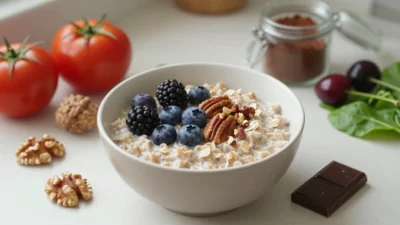
- Greek yogurt with berries and walnuts
- cucumber and hummus with boiled eggs
- bean salad with lemon, olive oil, and herbs
- overnight oats with peaches or blueberries
- avocado toast with tomato and a pinch of salt
These are not “diet meals.” They are just simple meals that happen to be fresh, filling, and easy to repeat.
And that matters, because the best healthy summer foods are the ones you will actually eat. Not the ones sitting beautifully in your fridge until they wilt.
Your body may want lighter meals
On very hot days, big heavy meals can feel like too much. I notice this most around lunch. A warm, rich dish that sounds lovely in October suddenly feels exhausting in July.
But eating lighter does not mean eating less carefully.
A good summer meal still needs some structure. If you eat only fruit for lunch, you might feel refreshed for twenty minutes and then oddly hungry, tired, or snacky. Add protein and fiber, though, and the same meal becomes much more useful.
Think:
- watermelon with feta and walnuts
- berries with Greek yogurt and oats
- tomato salad with eggs and beans
- cucumber wraps with hummus and chicken
- peach slices with cottage cheese
The food still feels cool and fresh, but it has more staying power.
The goal is not perfect clean eating
Summer can bring out a strange pressure around food. Everything is about “light” meals, “clean” meals, beach snacks, detox drinks, and salads that look beautiful but would not keep a bird full.
I do not think that is helpful.
A better goal is simple: eat more foods that help you feel good in the heat. More water-rich fruits and vegetables. More colorful produce. Enough protein. Enough fiber. A little healthy fat so your meal does not disappear in your stomach like air.
You can still eat ice cream. You can still have grilled food, pasta salad, sandwiches, and lazy dinners. Healthy summer eating works best when it fits into real life, not when it turns every meal into a rule.
Start with what the season already gives you. Then add enough substance to stay full.
Hydrating fruits and vegetables for hot days
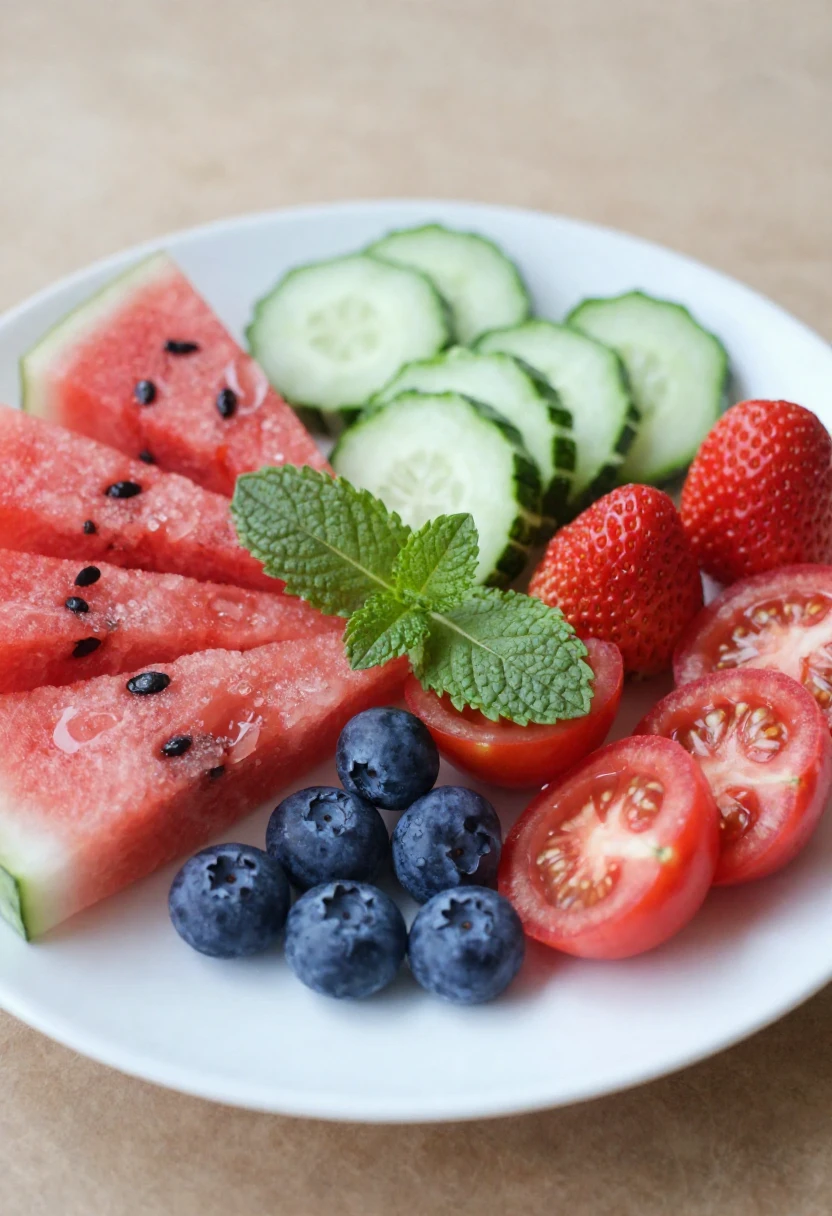
There is a reason cold watermelon tastes almost suspiciously good when it is hot outside.
Your body is asking for water, yes, but also for food that feels easy. Juicy fruits and vegetables can help with that because they bring moisture, crunch, sweetness, and color without making the meal feel heavy.
Water-rich produce will not replace drinking water, of course. But it can make summer eating feel better. A plate with cucumbers, tomatoes, berries, melon, or peaches simply feels different from a plate built only around dry crackers or heavy fried food.
Watermelon, tomatoes, cucumbers, and berries
Some summer foods almost feel like they were designed for hot days.
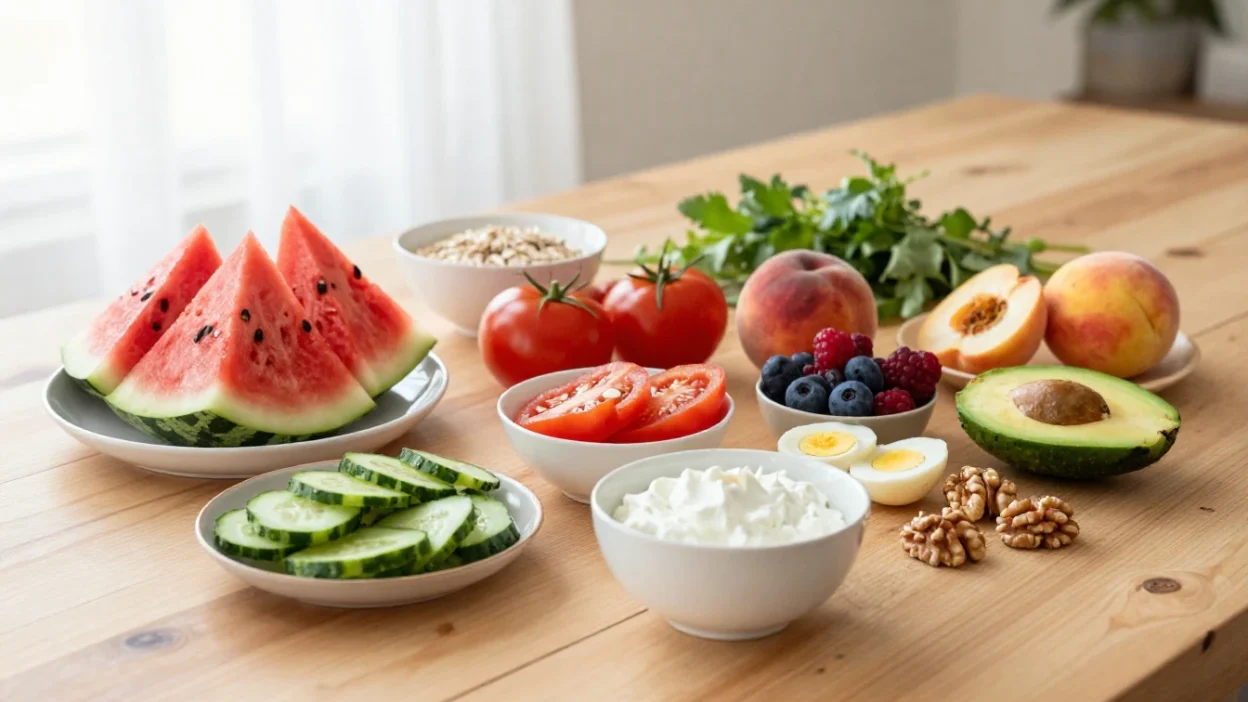
Watermelon is cold, sweet, and refreshing. Tomatoes are juicy and savory, especially when you add salt and let them sit for a few minutes. Cucumbers give you that clean crunch that works with almost everything. Berries are small, sweet, and easy to add to breakfast, snacks, or even salads.
These foods are especially useful when your appetite is lower than usual. You may not want a big cooked meal at noon, but you can still put together something fresh and nourishing.
A few easy combinations I like:
- tomatoes, cucumbers, olive oil, salt, and fresh basil
- watermelon with feta, mint, and a few walnuts
- blueberries with Greek yogurt and oats
- cucumber slices with hummus and boiled eggs
- strawberries with cottage cheese or ricotta
- tomato toast with avocado and black pepper
The trick is to avoid making these foods stand alone every time. A bowl of watermelon is refreshing. A bowl of watermelon with feta and walnuts is more satisfying. Tomatoes are delicious. Tomatoes with eggs, beans, or cheese become lunch.
Easy ways to eat more of them
You do not need to turn every fruit and vegetable into a recipe. Sometimes the easiest method is just to make them more visible.
Wash the berries before you need them. Cut a cucumber and keep it in a container. Put tomatoes on the counter where you can actually see them. Slice watermelon into pieces instead of leaving the whole thing sitting in the fridge like a project you keep avoiding.
Small preparation changes make a huge difference.
Try this:
- Keep cucumber sticks ready for quick snacks.
- Add berries to yogurt, oats, cottage cheese, or smoothies.
- Use tomato slices instead of heavy sauces in sandwiches.
- Make a quick salad with tomatoes, cucumbers, beans, and olive oil.
- Freeze grapes for a cold afternoon snack.
- Add watermelon cubes to a simple summer salad.
I also like building what I call a “cold plate” when cooking feels impossible. It might be cucumbers, tomatoes, hummus, boiled eggs, olives, fruit, and toast. Nothing fancy. Just enough different textures to make the meal feel complete.
That is the real beauty of healthy summer foods. They do not always need a pan, a timer, or a serious cooking mood. Sometimes they just need a knife, a bowl, and five quiet minutes in the kitchen.
Colorful produce for skin, eyes, and everyday energy
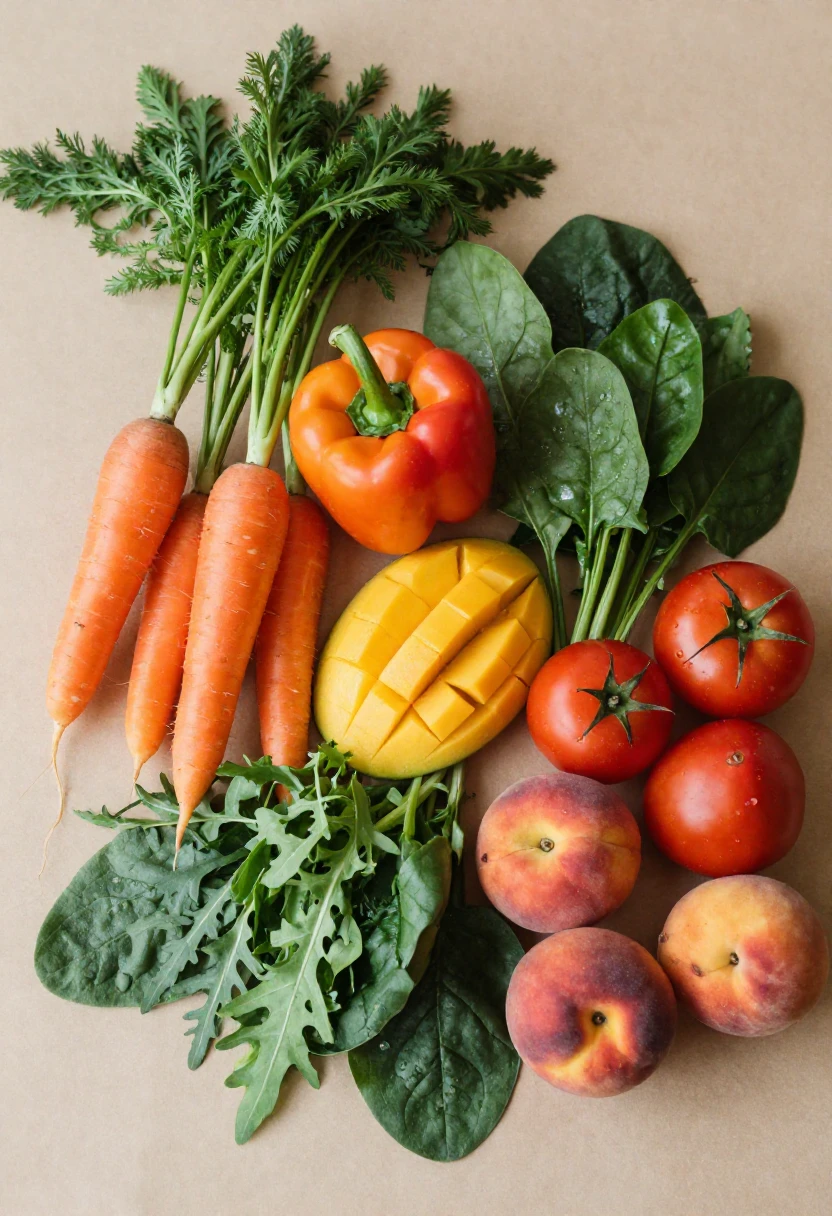
One of the easiest ways to make summer meals better is to stop thinking only in terms of “salad” and start thinking in color.
Carrots, bell peppers, tomatoes, mangoes, leafy greens, peaches, berries, and herbs all bring something useful to the plate. Some are sweet. Some are crisp. Some add acidity. Some make a bowl look like you put in more effort than you actually did.
And honestly, that helps. Food that looks fresh and colorful is often more appealing when it is hot and you are not in the mood for a heavy meal.
Carrots, bell peppers, mangoes, and leafy greens
Orange, red, yellow, and deep green foods are summer staples for a reason.
Carrots are easy to snack on and easy to add to wraps, slaws, grain bowls, and salads. Bell peppers give crunch and sweetness without needing to be cooked. Mango brings that juicy, sunny flavor that can make even a simple yogurt bowl or salsa feel more fun. Leafy greens give you volume and freshness, especially when you pair them with enough protein and fat.
A few simple ideas:
- shredded carrots in wraps with hummus or chicken
- bell pepper strips with cottage cheese dip
- mango salsa with black beans or grilled fish
- spinach folded into scrambled eggs
- arugula with tomatoes, peaches, walnuts, and olive oil
- romaine leaves used as crisp wraps for egg salad
The key is balance. A big bowl of greens can look healthy but feel disappointing if it has no substance. Add eggs, beans, yogurt dressing, chicken, cheese, nuts, avocado, or whole grains, and suddenly it becomes a meal.
How to make vegetables taste better
This is where many people get stuck. They buy vegetables because they want to eat better, then eat them plain, get bored, and wonder why healthy eating feels so joyless.
Vegetables need seasoning. Even the good summer ones.
Salt matters. Lemon juice matters. Olive oil matters. Fresh herbs can completely change the mood of a dish. A tomato with no salt is fine. A tomato with salt, olive oil, basil, and black pepper is something you actually want to eat slowly.
Try these small upgrades:
- Add lemon juice or vinegar when vegetables taste flat.
- Use olive oil so salads feel less dry.
- Sprinkle nuts or seeds for crunch.
- Add feta, cottage cheese, or yogurt sauce for creaminess.
- Roast carrots or peppers when you want deeper sweetness.
- Mix fresh herbs into almost anything: basil, parsley, dill, mint, cilantro.
One of my favorite lazy summer tricks is a quick yogurt sauce. Greek yogurt, grated garlic, lemon juice, salt, black pepper, and a little olive oil. Stir it together and spoon it over cucumbers, roasted carrots, boiled potatoes, grilled vegetables, or a simple bean bowl.
It turns “I guess I should eat vegetables” into something that feels like lunch.
Summer berries and fruits that make healthy snacks easier
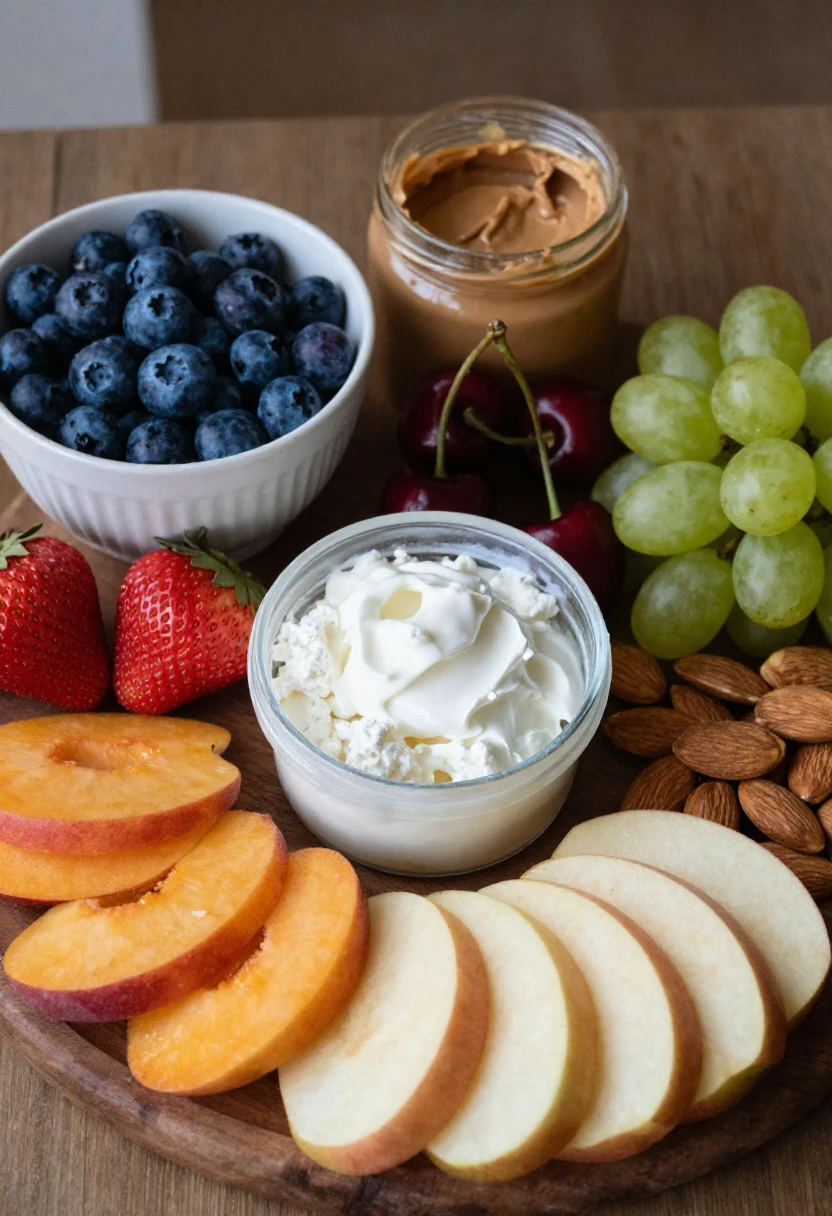
Summer is the season when fruit can do a lot of heavy lifting.
Not in a strict, “replace dessert forever” kind of way. I mean in the very normal way: you want something sweet, cold, and quick, and fruit is sitting right there. No baking. No mixing. No waiting for anything to cool.
Berries, peaches, cherries, apples, grapes, nectarines, melon — they make healthy snacking feel much less forced. The problem is that fruit alone does not always keep you full for long. That is not a failure. It just means fruit works better when you pair it with something creamy, crunchy, or protein-rich.
Blueberries, apples, grapes, peaches, and cherries
Blueberries are probably one of the easiest summer fruits to use. You can add them to yogurt, oatmeal, cottage cheese, pancakes, smoothies, or just eat them cold from a bowl. They are sweet, but they still feel light.
Peaches and nectarines are a little messier, which is part of the charm. A good peach over the sink is a summer snack all by itself. But sliced into Greek yogurt, added to overnight oats, or served with cottage cheese, it turns into something more filling.
Grapes are great when you want something cold and snacky. I like them chilled, but frozen grapes are even better on a hot afternoon. They become almost like tiny fruit sorbet bites.
Apples are not as “summery” as peaches or berries, but they are useful because they hold up well. They travel better, stay crisp, and work with peanut butter, cheese, nuts, or yogurt dip.
Cherries are the fruit I buy with good intentions and then eat standing in the kitchen. No regrets.
Pair fruit with protein or fat
Fruit gives you quick energy, water, fiber, and natural sweetness. Protein and fat help the snack last longer.
That is why a peach on its own may feel refreshing, while a peach with cottage cheese feels like an actual mini-meal. Same fruit, different result.
Try these easy pairings:
- blueberries with Greek yogurt and oats
- apple slices with peanut butter
- grapes with cheddar or walnuts
- peaches with cottage cheese
- cherries with plain yogurt
- strawberries with ricotta and a little cinnamon
- banana with almond butter
- melon with feta and mint
You do not need to overthink portions here. Just ask one question: Will this keep me full for more than twenty minutes?
If the answer is no, add something. A spoonful of yogurt. A boiled egg. A handful of nuts. A slice of cheese. A little cottage cheese. Even a piece of whole-grain toast on the side can make the snack feel more grounded.
This is especially helpful in summer because it is easy to graze all day without ever eating a real meal. A berry here, a cracker there, iced coffee somewhere in between. Then suddenly it is 6 p.m., you are tired, and dinner feels impossible.
Better snacks make the whole day smoother. Not perfect. Just smoother.
Protein-rich foods that still feel light
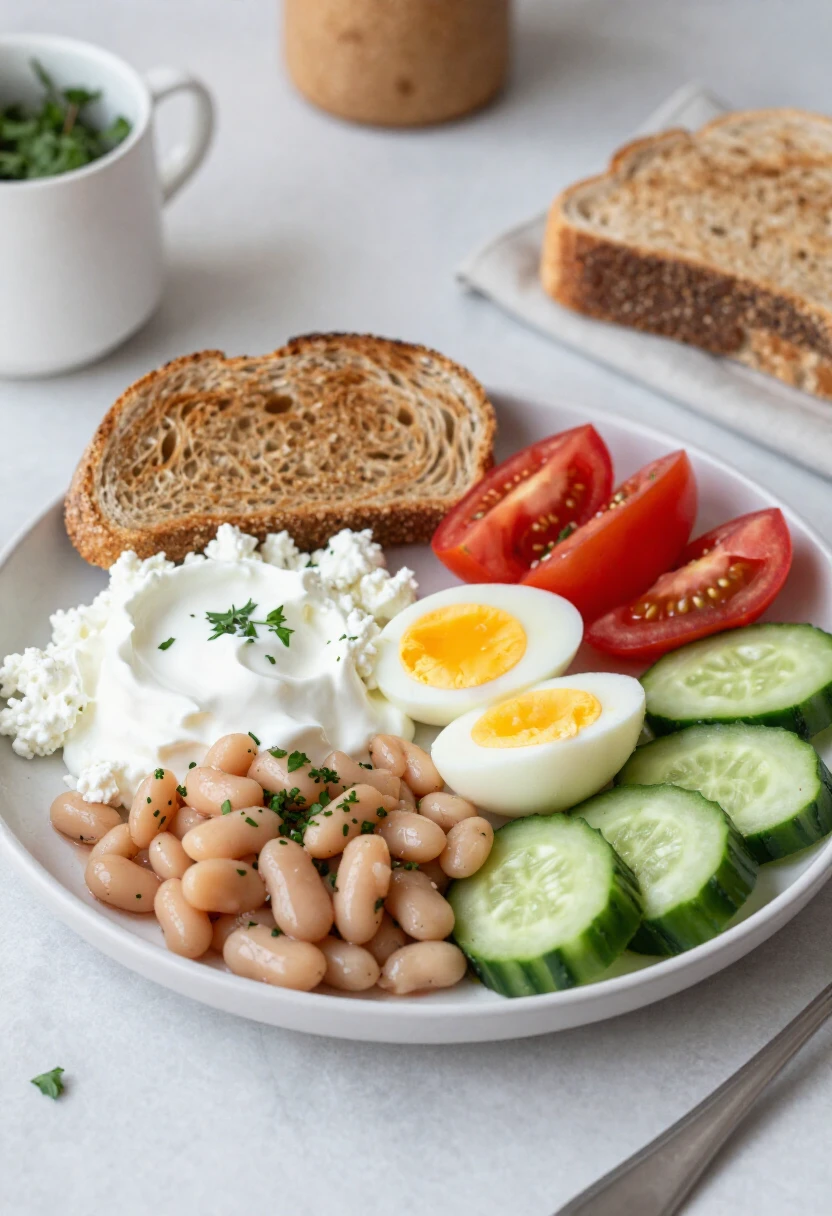
A lot of summer meals start with produce, which makes sense. Tomatoes, cucumbers, peaches, berries, greens, corn, peppers — they are the foods that catch your eye first.
But protein is what keeps the meal from fading too quickly.
This is the part I try not to skip, especially on hot days when I do not feel like cooking much. A salad can be beautiful, but if it has no eggs, beans, yogurt dressing, chicken, fish, tofu, cheese, or nuts, I know I will be back in the kitchen soon. Usually looking for something random and salty.
Protein does not have to mean a heavy dinner. It can be cool, simple, and very low-effort.
Greek yogurt, eggs, beans, and cottage cheese
Greek yogurt is one of the easiest summer protein foods because it works sweet or savory. You can add berries and oats in the morning, or turn it into a garlicky sauce for vegetables, wraps, and grain bowls.
Eggs are just as useful. Boil a few and keep them in the fridge. They can go into salads, sandwiches, snack plates, or quick breakfasts. I also like scrambled eggs with tomatoes and spinach when I want something warm but not heavy.
Beans are underrated in summer. They do not need much cooking if you use canned ones. Rinse them, add olive oil, lemon juice, salt, chopped cucumber, tomatoes, herbs, and maybe feta. That is lunch.
Cottage cheese is another easy one. It is cool, creamy, and works with both fruit and vegetables. Some days it is cottage cheese with peaches and walnuts. Other days it is cottage cheese with tomatoes, black pepper, and toast.
Simple, but it works.
Simple summer protein ideas
The best protein options for summer are the ones you can prepare once and use in different ways.
A few easy ideas:
- boiled eggs with cucumbers, tomatoes, and toast
- Greek yogurt with blueberries, oats, and walnuts
- cottage cheese with peaches or strawberries
- white bean salad with lemon, parsley, and olive oil
- black bean wraps with avocado and salsa
- egg salad in romaine leaves
- tuna or salmon salad with cucumber and herbs
- grilled chicken added to a cold grain bowl
- tofu cubes with sesame dressing and crunchy vegetables
You can also build a “protein plus produce” formula when you do not want to think.
Start with one protein. Add something juicy. Add something crunchy. Finish with fat or sauce.
For example:
Greek yogurt, berries, oats, walnuts.
Eggs, tomatoes, cucumber, olive oil.
Beans, peppers, herbs, avocado.
Cottage cheese, peaches, cinnamon, almonds.
None of these feel like a big cooking project. That is the point. Healthy summer foods should make your day easier, not turn lunch into an event.
Fiber-rich foods for better fullness and digestion
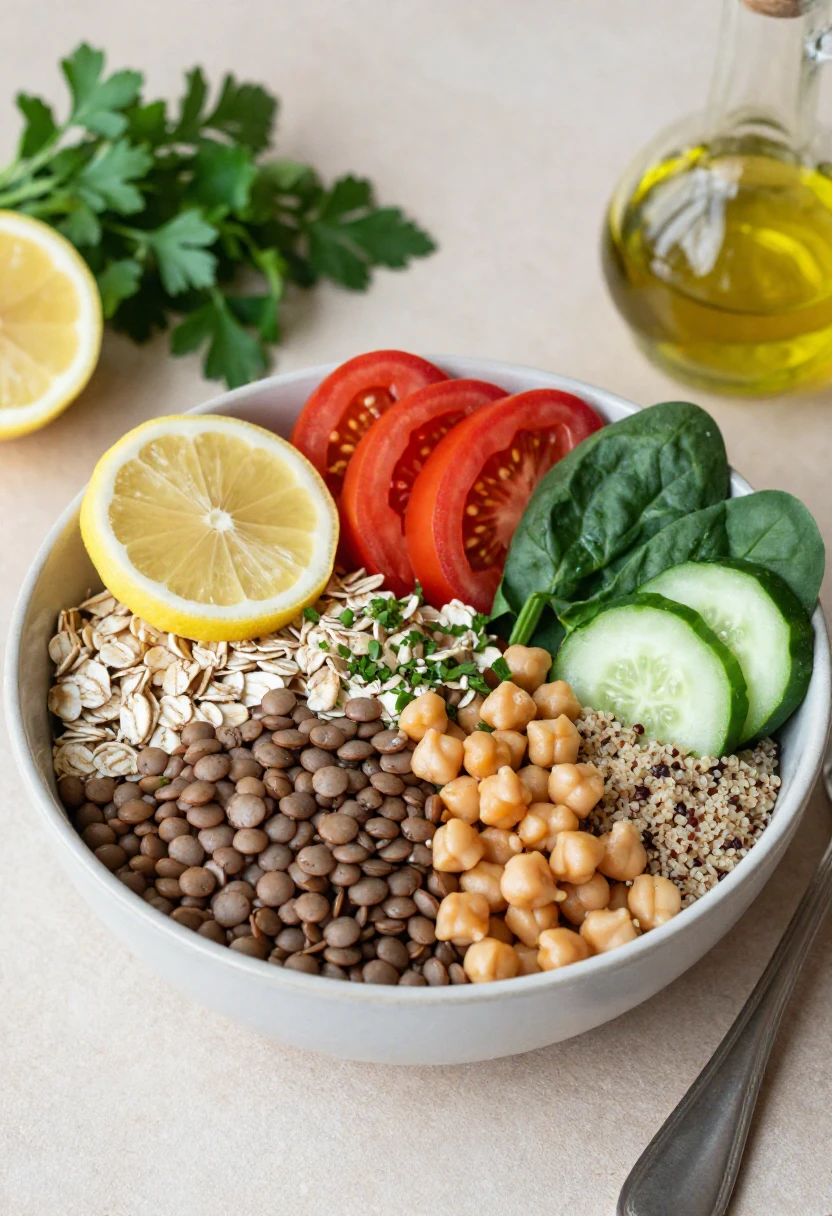
Summer meals can get a little too light if you are not careful.
A smoothie here, a bowl of fruit there, a few bites of salad, maybe an iced coffee that accidentally becomes lunch. It feels fine for a while, then the hunger catches up all at once. Fiber helps prevent that.
Fiber-rich foods make meals more filling, especially when you pair them with protein and enough fluid. They also give your meals more texture, which matters more than people think. A soft yogurt bowl is good. A yogurt bowl with oats, berries, and walnuts is better because it has chew, crunch, and staying power.
Oats, beans, lentils, and whole grains
Oats are a summer breakfast hero because they do not need heat. Overnight oats are especially useful when mornings feel sticky and rushed. Stir oats with Greek yogurt or milk, add berries or peaches, and let the fridge do the work.
Beans and lentils are just as helpful. They add fiber and plant-based protein, and they work beautifully in cold meals. Chickpeas, black beans, white beans, and lentils can turn a simple salad into something that keeps you full.
Whole grains help too. Brown rice, quinoa, farro, barley, and whole-grain bread give structure to summer meals. You do not need a giant portion. Even a small scoop of grains can make a bowl feel more complete.
Try using fiber-rich foods like this:
- oats in overnight oats with berries and yogurt
- chickpeas in cucumber tomato salad
- black beans in wraps with avocado and salsa
- lentils with roasted peppers and feta
- quinoa with spinach, tomatoes, and boiled eggs
- whole-grain toast with cottage cheese and tomato
These foods are not flashy, but they do the quiet work. They help you feel fed.
Easy no-heavy-meal ideas
Fiber-rich summer meals do not have to feel dense or wintery. The trick is to keep the base hearty and the toppings fresh.
A bowl of lentils can feel heavy if it is served hot with a thick sauce. But lentils with cucumber, lemon, parsley, olive oil, and crumbled feta? That feels like summer.
Same with oats. A hot bowl of oatmeal may not sound appealing in July, but cold oats with blueberries, yogurt, and a spoonful of nut butter can be exactly right.
A few combinations that work well:
- overnight oats with peaches, cinnamon, and Greek yogurt
- white bean salad with tomatoes, cucumber, basil, and olive oil
- black bean and corn salad with avocado and lime
- lentil salad with carrots, parsley, and lemon dressing
- quinoa bowl with spinach, boiled egg, and yogurt sauce
- whole-grain pita with hummus, cucumbers, and shredded carrots
One small thing I like to do: keep one fiber-rich base ready in the fridge. It might be cooked quinoa, a container of lentils, or a can of rinsed beans. Then lunch takes five minutes instead of becoming a whole emotional negotiation with the refrigerator.
Healthy summer eating feels much easier when the building blocks are already there.
Healthy fats that make summer meals more satisfying
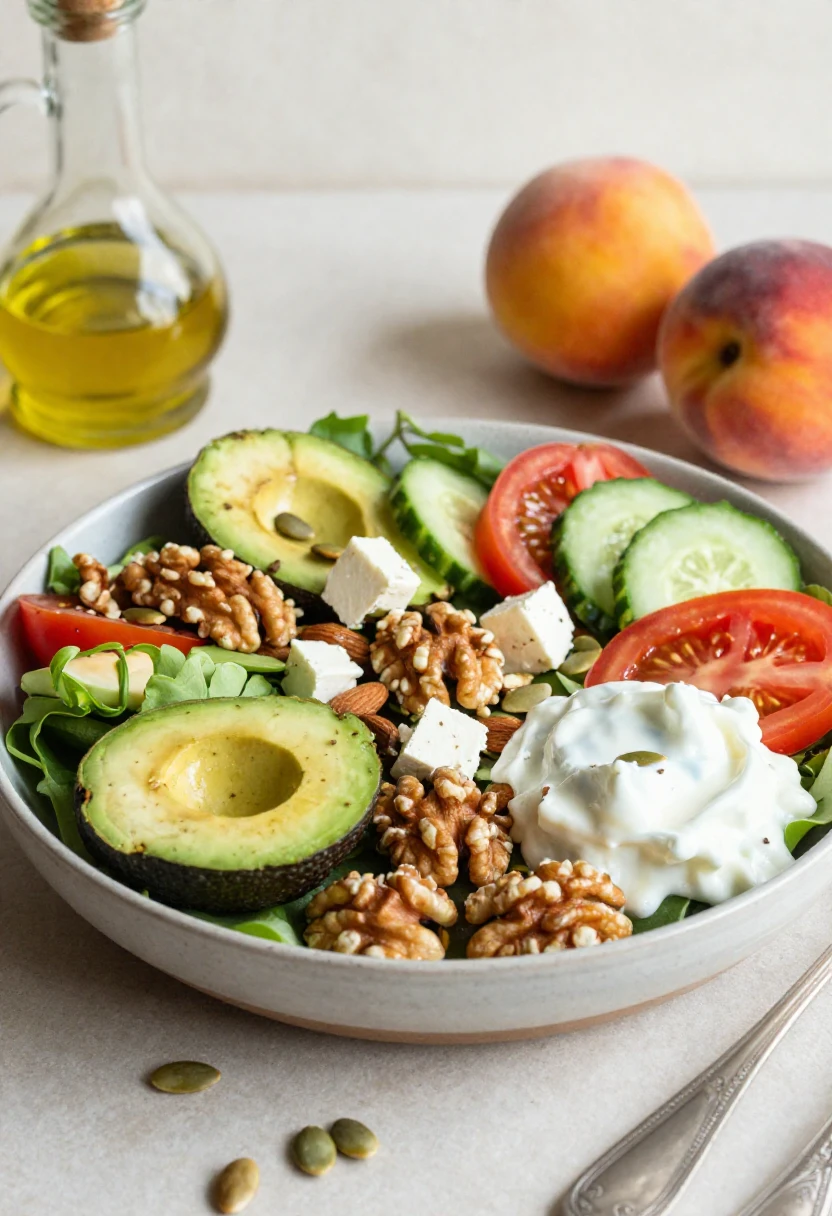
Healthy fats are the small detail that can change a summer meal from “fresh but not enough” to “yes, this actually works.”
You have probably felt the difference. A plain tomato cucumber salad is refreshing, but it may not hold you for long. Add olive oil, avocado, walnuts, feta, or seeds, and suddenly it feels more like food. The flavors soften. The textures get better. The meal stays with you longer.
That is especially useful in summer, when meals often lean watery and crisp. Water-rich foods are wonderful, but they need support.
Walnuts, almonds, avocado, olive oil, and seeds
Walnuts are one of my favorite summer add-ons because they bring crunch and a slightly bitter richness that works with sweet fruit and savory salads. Add them to yogurt with blueberries, toss them into a peach salad, or sprinkle them over oats.
Almonds are easy for snacks, especially with fruit. Apple slices and almonds are not exciting, maybe, but they are dependable. And dependable snacks save you from that “I am suddenly starving” feeling at 4 p.m.
Avocado makes wraps, toast, and bowls feel creamier without much effort. It pairs well with tomatoes, eggs, black beans, corn, lime, and crunchy vegetables.
Olive oil is the simplest one. A good drizzle can make tomatoes taste better, help herbs cling to vegetables, and turn a bowl of beans into lunch.
Seeds are useful too. Pumpkin seeds, sunflower seeds, chia seeds, hemp seeds, or sesame seeds can add texture to yogurt bowls, smoothie bowls, salads, and grain bowls.
Where to add them
The easiest way to use healthy fats is to add a little to meals that already have produce and protein.
For example:
- Greek yogurt, blueberries, oats, and walnuts
- tomato toast with avocado and egg
- cucumber salad with olive oil and feta
- black bean bowl with avocado and pumpkin seeds
- cottage cheese with peaches and almonds
- lentil salad with olive oil and sunflower seeds
- watermelon with feta, mint, and walnuts
You do not need a huge amount. Sometimes one spoonful of seeds, a few slices of avocado, or a small handful of nuts is enough.
I like to think of healthy fats as the “finish” of a summer meal. The thing you add at the end so the food does not feel thin. A drizzle of olive oil. A few walnuts. Half an avocado. A spoonful of tahini stirred into yogurt sauce.
Small move. Big difference.
And if you are building healthy summer foods into your daily routine, that difference matters. Because a meal that keeps you full is much easier to repeat than one that only looks healthy on the plate.
A simple summer day of eating
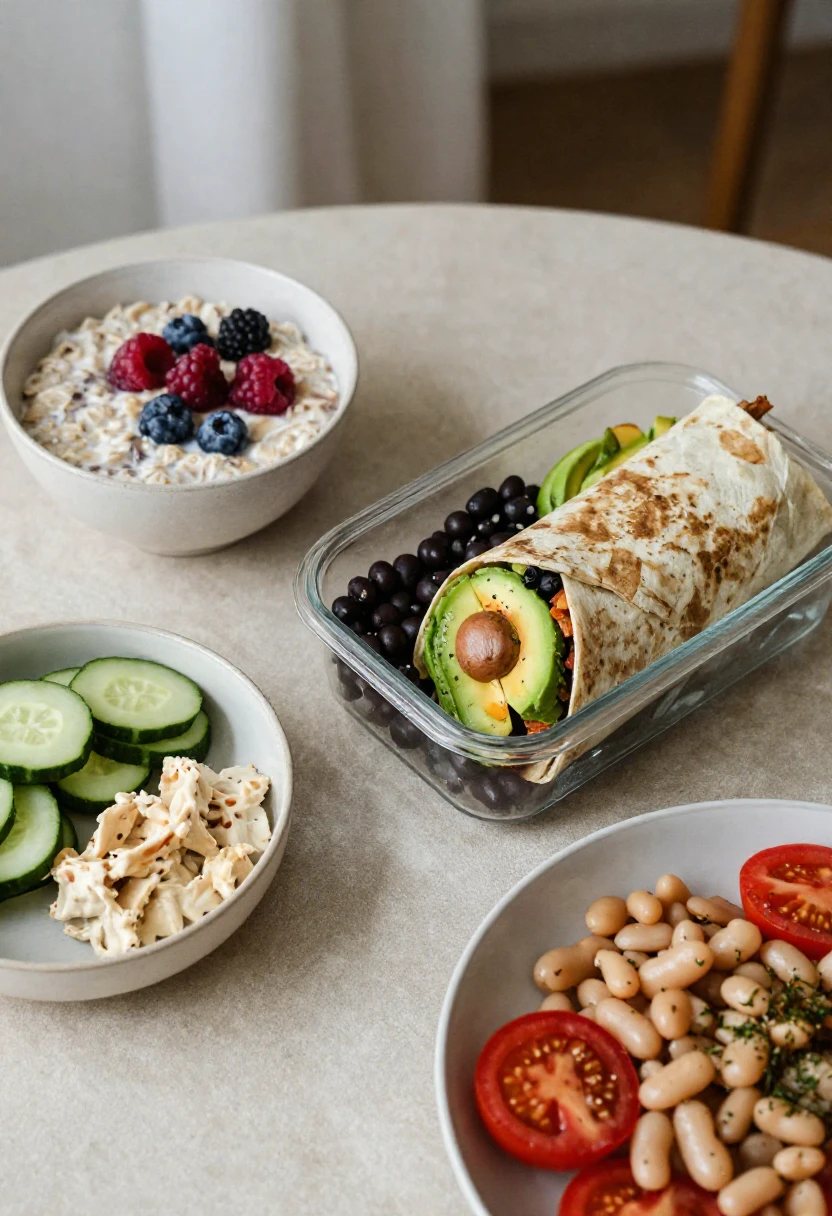
Sometimes the easiest way to understand healthy summer foods is to see how they fit into a normal day.
Not a perfect wellness day. Not the kind where every meal is plated like a magazine cover and nobody has dishes in the sink. Just a regular warm-weather day where you want food that feels fresh, gives you energy, and does not leave you heavy or hungry.
The basic idea is simple: start with seasonal produce, then add protein, fiber, and healthy fat.
That formula works almost anywhere.
Breakfast: cool, filling, and low-effort
A good summer breakfast should not make you feel like you need to lie down afterward. It should be easy to eat, easy to digest, and filling enough to carry you through the morning.
Overnight oats are perfect for this.
You can mix oats, Greek yogurt, milk, blueberries, and a spoonful of chia seeds the night before. In the morning, add sliced peaches or a few walnuts. The texture is creamy, the fruit keeps it bright, and you do not have to turn on the stove.
Other easy summer breakfast ideas:
- Greek yogurt with berries, oats, and almonds
- whole-grain toast with avocado, tomato, and egg
- cottage cheese with peaches and walnuts
- scrambled eggs with spinach and cherry tomatoes
- smoothie bowl with berries, yogurt, and seeds
If breakfast is usually where your day gets chaotic, keep it boring in the best way. Pick two breakfasts you like and repeat them. Summer mornings are not the time to prove anything.
Lunch: fresh but satisfying
Lunch is where summer eating can go wrong. It is easy to make something that looks fresh but does not have enough substance.
A bowl of greens with cucumber and tomato is nice. But add beans, egg, chicken, tofu, cottage cheese, avocado, or grains, and now it is lunch.
One of my favorite summer lunches is a black bean wrap. I mash black beans with lime juice, salt, cumin, and a little olive oil, then add avocado, tomato, shredded carrots, and greens. It takes a few minutes and tastes better than another sad handful of crackers eaten over the counter.
You could also try:
- tomato cucumber salad with white beans and feta
- egg salad in romaine leaves with fruit on the side
- quinoa bowl with spinach, tomatoes, cucumber, and yogurt sauce
- tuna salad with cucumbers, herbs, and whole-grain toast
- lentil salad with peppers, parsley, lemon, and olive oil
Lunch should feel light enough for the heat, but not so light that you spend the afternoon thinking about snacks.
Snack: sweet, crunchy, or creamy
Summer snacks are best when they feel simple.
Fruit is the obvious choice, but again, fruit works better with a little backup. If you are hungry, pair it with protein or fat. If you just want something cold and sweet after lunch, fruit alone may be enough.
Good snack combinations:
- apple slices with peanut butter
- blueberries with Greek yogurt
- cucumber sticks with hummus
- frozen grapes with a handful of almonds
- carrots with cottage cheese dip
- peach slices with ricotta
- boiled egg with tomatoes and salt
I like snacks that require almost no decision-making. If the fridge has washed berries, cut cucumbers, boiled eggs, and yogurt, you are already halfway there.
Dinner: light comfort food
Dinner can still feel comforting in summer. It just does not have to be heavy.
Think warm vegetables with a cool sauce. A grain bowl with herbs and lemon. Eggs with tomatoes and toast. Beans with avocado and salsa. A flatbread with spinach, ricotta, and roasted peppers.
One easy dinner: make a white bean salad with tomatoes, cucumber, olive oil, lemon juice, parsley, and feta. Add toast or a boiled egg if you need more. It is cool, salty, juicy, and filling without much cooking.
Other summer dinner ideas:
- grilled vegetables with Greek yogurt garlic sauce
- spinach and tomato flatbread with cottage cheese or ricotta
- black bean and corn bowl with avocado
- eggs with sautéed greens and tomato toast
- lentil salad with roasted carrots and feta
- chilled pasta salad with vegetables, tuna, and olive oil
A good summer dinner should leave you comfortable. Fed, but not weighed down. And ideally, with enough leftovers to make tomorrow’s lunch easier.
Mistakes that make summer eating harder
Summer eating sounds easy until real life gets involved.
You buy beautiful produce, then forget half of it in the fridge. You plan to make salads, but somehow they never feel filling enough. You snack on fruit all afternoon, then wonder why you are tired and hungry before dinner.
None of this means you are doing summer wrong. It usually means the meals need a little more balance and a little less wishful thinking.
Eating only fruit and calling it a meal
Fruit is wonderful. It is refreshing, colorful, naturally sweet, and easy to eat when the weather is hot.
But fruit alone is not always enough for a meal.
If you have a bowl of watermelon for lunch, you may feel great for a short time. Then your energy dips, and suddenly you want chips, cookies, or anything salty you can find. I have done this more times than I want to admit.
The fix is simple: keep the fruit, but add something that makes it last.
Try:
- watermelon with feta and walnuts
- berries with Greek yogurt and oats
- peaches with cottage cheese
- apple slices with peanut butter
- grapes with cheese or almonds
- mango with black beans and avocado in a salad
Fruit gives you freshness. Protein, fat, and fiber help turn it into real fuel.
Forgetting salt and minerals when it is hot
Hot weather changes what your body asks for. You sweat more, drink more, and sometimes eat lighter meals without noticing how little substance they have.
This does not mean you need fancy electrolyte drinks all day. For most everyday meals, it often starts with normal food: salted salads, beans, yogurt, eggs, soups, cheese, olives, whole grains, vegetables, and enough water.
A tomato salad with olive oil and salt may feel more satisfying than plain raw vegetables. A bean salad with feta, herbs, and lemon gives you more than a bowl of lettuce. A cool yogurt sauce with garlic and salt can make vegetables taste better and help the meal feel complete.
The small things count.
Salt your tomatoes. Add beans to the salad. Eat something with protein before you rely on iced coffee and fruit until dinner.
Making every meal too complicated
Summer is not the season for complicated meal plans unless you genuinely enjoy them.
When the kitchen is hot, the best meals are the ones you can almost make from memory. You need a few repeatable combinations, not a new recipe every day.
Think in simple formulas:
- yogurt + fruit + oats + nuts
- eggs + tomatoes + toast
- beans + cucumber + herbs + olive oil
- greens + protein + avocado + lemon
- whole-grain wrap + hummus + vegetables
- cottage cheese + fruit + seeds
That is enough.
Healthy summer foods work best when they are easy to reach, easy to assemble, and easy to repeat. Wash the berries. Boil a few eggs. Keep canned beans in the pantry. Slice cucumbers before you are starving. Make one sauce you like and put it on everything for three days.
It does not have to be impressive.
It just has to help you eat well when the weather is hot and your energy is not exactly in chef mode.
Conclusion
Healthy summer eating does not need to be strict, expensive, or perfectly planned.
Start with the foods that already make sense in hot weather: tomatoes, cucumbers, berries, peaches, watermelon, leafy greens, carrots, beans, eggs, Greek yogurt, oats, nuts, seeds, avocado, and olive oil. Then build simple meals around them.
The part that matters most is balance. Fruit is better with yogurt, nuts, or cottage cheese. Salads are better with beans, eggs, chicken, tofu, grains, or avocado. Vegetables taste better with salt, lemon, herbs, and a good drizzle of olive oil.
You do not need to cook complicated meals to feel good in summer. You just need a few fresh ingredients, a little protein, some fiber, and enough flavor to make the food worth repeating.
That is usually where healthy eating becomes easier. Not perfect. Just easier.
FAQ
What are the best foods to eat in summer?
The best summer foods are fresh, hydrating, and easy to turn into real meals. Good options include tomatoes, cucumbers, watermelon, berries, peaches, leafy greens, carrots, Greek yogurt, eggs, beans, oats, avocado, nuts, and seeds.
What should I eat in summer to stay full?
Pair water-rich fruits and vegetables with protein, fiber, and healthy fats. For example, try Greek yogurt with berries and oats, tomato salad with eggs and beans, watermelon with feta and walnuts, or a black bean wrap with avocado.
Are fruits enough for a summer breakfast?
Fruit can be part of a healthy summer breakfast, but it may not keep you full on its own. Add Greek yogurt, cottage cheese, oats, eggs, nut butter, chia seeds, or walnuts to make breakfast more satisfying.
How can I make healthy summer meals without cooking much?
Use no-cook or low-cook ingredients: canned beans, Greek yogurt, cottage cheese, boiled eggs, fresh vegetables, fruit, whole-grain toast, wraps, hummus, nuts, and seeds. A simple cold plate with protein, produce, and healthy fat can work as a real meal.