Fat has had a strange reputation for years. One minute it is blamed for every extra pound, every heavy meal, every “unhealthy” choice. The next minute everyone is pouring olive oil over salads, adding avocado to toast, and talking about omega-3s like they are magic.
The truth is less dramatic, and honestly, much more useful.
Eating fat is not automatically unhealthy. Your body needs fat. Your food often tastes better with it. A salad with a little olive oil feels like an actual meal, while plain lettuce and dry chicken can leave you staring into the fridge an hour later.
But the kind of fat matters. So does the amount. A handful of walnuts, a piece of salmon, or olive oil on roasted vegetables is very different from a plate of deep-fried food or packaged snacks made with poor-quality oils.
So instead of treating fat like the enemy, it helps to understand it. Which fats belong in your kitchen more often? Which ones should you limit? And how do you eat enough to feel satisfied without overdoing it?
That is where this guide starts.
Why your body actually needs fat
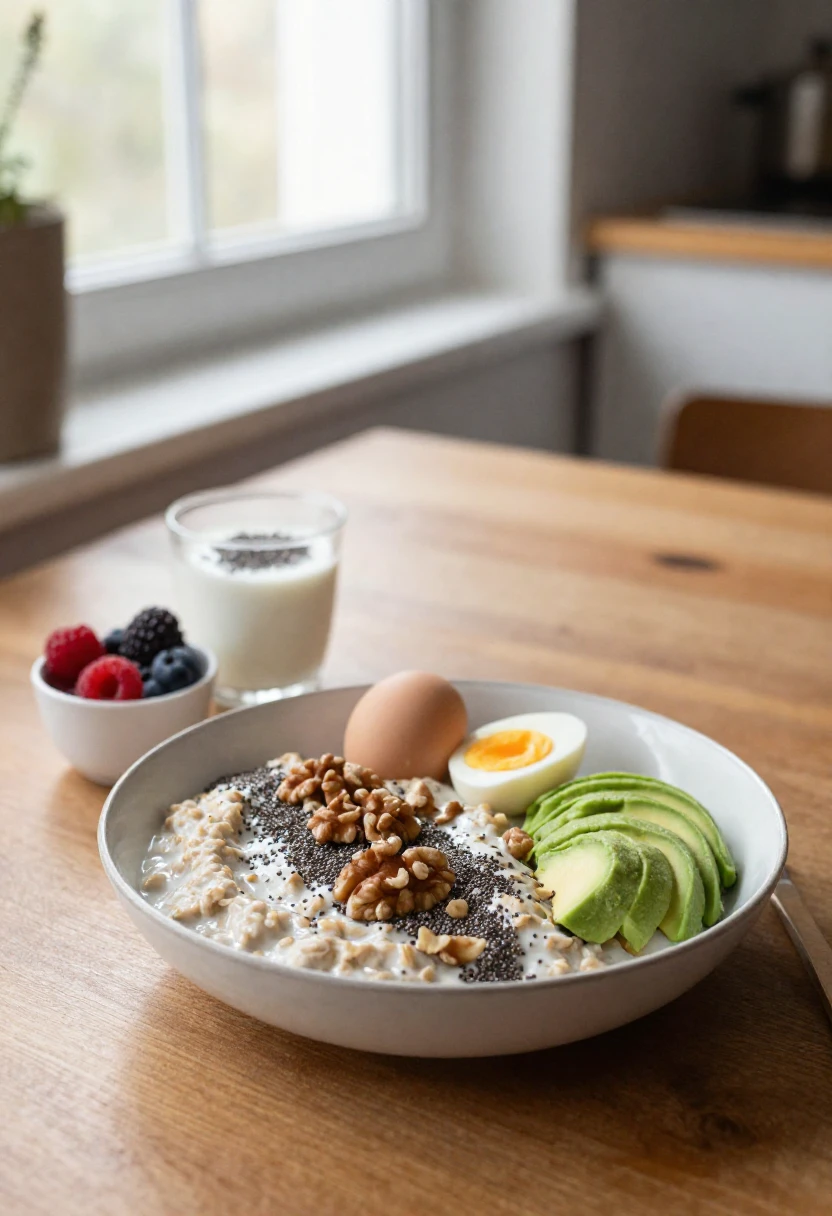
Fat is not just there to make food richer, although it definitely does that. It has real jobs in the body, and cutting it too low can make healthy eating feel harder than it needs to be.
I think this is where many people get stuck. They try to eat “clean” by removing almost all fat, then wonder why their meals feel flat, cold, or strangely unfinished. Food needs balance. Sometimes one spoon of olive oil does more for a bowl of vegetables than five different seasonings.
Fat helps your body absorb certain vitamins
Some vitamins need fat to be absorbed properly. These are the fat-soluble vitamins: A, D, E, and K.
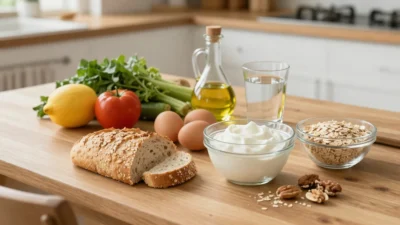
That means a bowl of raw vegetables with no dressing at all may not give you the same benefit as vegetables eaten with a little fat. A drizzle of olive oil on tomatoes, avocado with greens, or eggs with sautéed spinach can make the meal more satisfying and more useful nutritionally.
This does not mean every vegetable needs to swim in oil. It just means fat has a purpose on the plate.
Fat makes meals more satisfying
Fat slows the meal down. It gives food texture. It makes flavors linger.
Think about the difference between plain boiled potatoes and potatoes roasted with olive oil until the edges turn golden. Same basic food, completely different experience. Or Greek yogurt with a few chopped nuts compared with a thin, sweetened, fat-free yogurt that tastes good for three minutes and then disappears.
A little fat can help you feel full longer, especially when you pair it with protein and fiber. That could look like:
- eggs with vegetables and whole-grain toast
- oatmeal with walnuts or chia seeds
- salmon with potatoes and greens
- lentil soup finished with olive oil
- apple slices with peanut butter
None of these meals are “heavy” just because they contain fat. They are balanced.
Fat supports normal body functions
Your body uses fat for energy, cell structure, hormone production, and brain function. That does not mean more fat is always better, but it does mean fat should not be treated like something dirty or unnecessary.
The goal is not to remove fat from your diet. The goal is to choose better sources most of the time.
In everyday cooking, that usually means more unsaturated fats from foods like olive oil, nuts, seeds, avocado, and fatty fish. It also means being more careful with foods that are high in saturated fat or made with heavily processed fats.
Simple enough in theory. A little messier in real life, especially when butter, cheese, fries, and creamy sauces are involved.
And that is exactly why it helps to separate “good fats” and “bad fats” in a practical way, not a fear-based one.
Good fats vs bad fats: what the difference really means
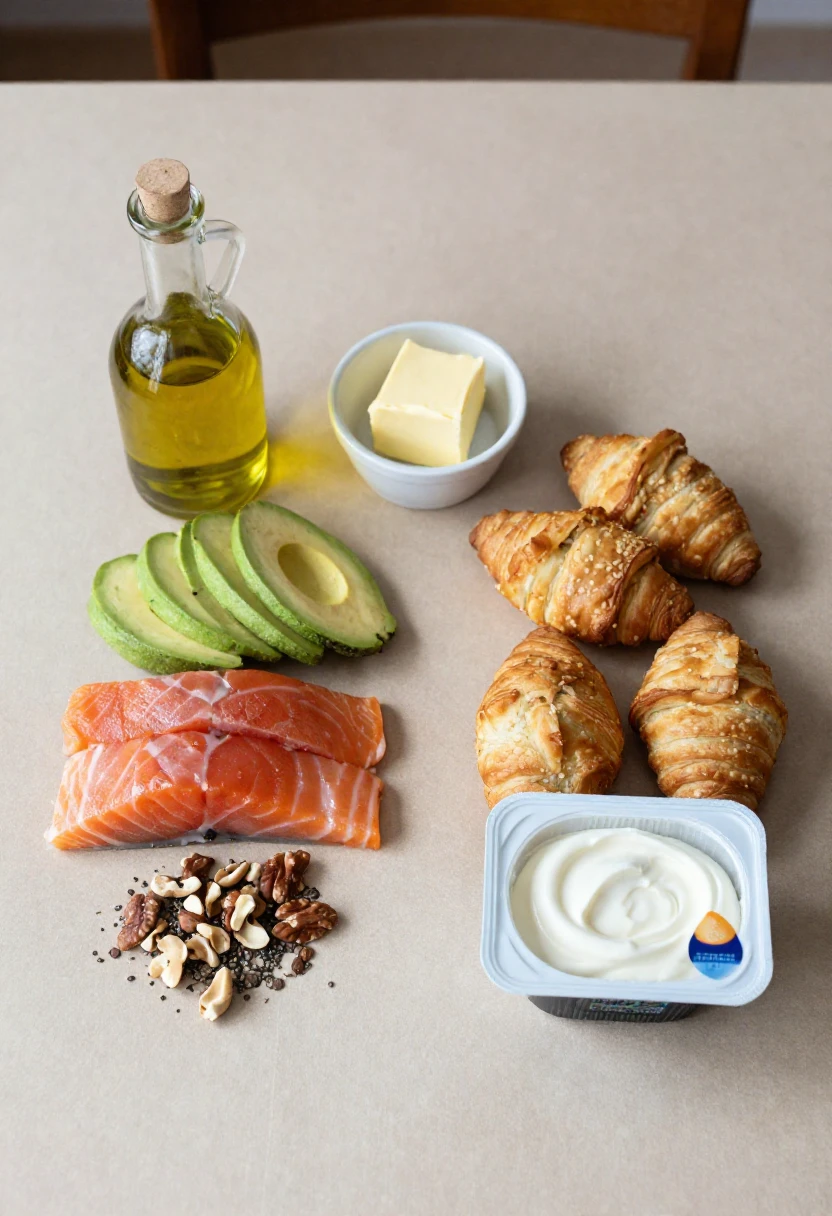
The words “good fats” and “bad fats” are useful, but only up to a point. Food is rarely that simple.
Olive oil is usually a better everyday fat than butter. A handful of walnuts is a better snack than a bag of greasy chips. Salmon brings more to the table than processed sausage. That part is easy enough.
But it still helps to understand why some fats are better for you than others, because then you can make choices without turning every meal into a nutrition exam.
Unsaturated fats: the ones to eat more often
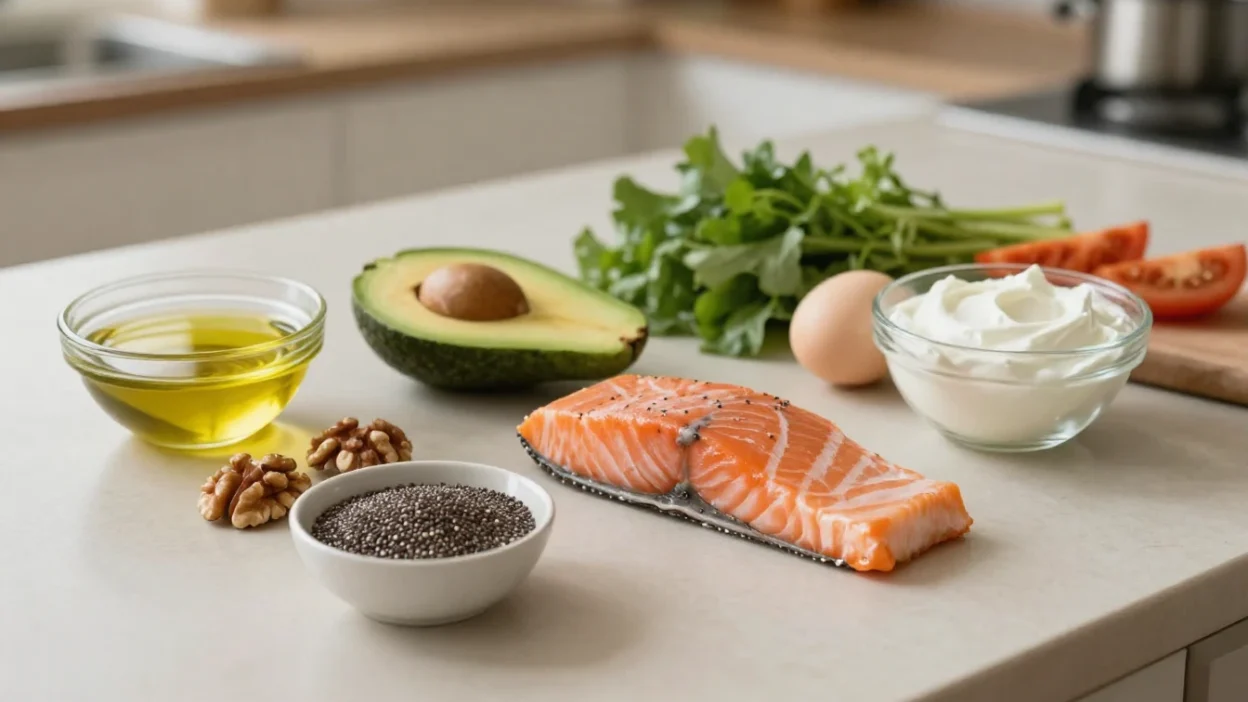
Unsaturated fats are the fats you usually want more of in your regular meals. They are found mostly in plant foods and fatty fish, and they tend to be liquid at room temperature.
You will find them in foods like:
- olive oil
- avocado
- almonds, walnuts, pistachios, and other nuts
- chia seeds, flaxseeds, pumpkin seeds, and sesame seeds
- olives
- salmon, sardines, trout, and mackerel
- natural peanut butter or almond butter
These foods do not just add fat. They add flavor, texture, and staying power.
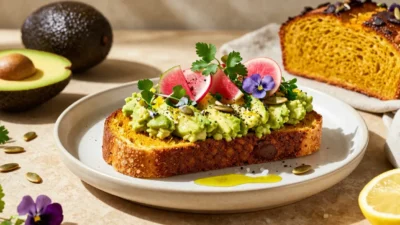
A salad with chickpeas, cucumbers, tomatoes, and a little olive oil feels completely different from the same salad without dressing. Toast with avocado and egg feels like breakfast, not punishment. Oatmeal with walnuts keeps you full longer than plain oats cooked in water and topped with nothing but hope.
That is the practical side of healthy fats. They make food easier to enjoy and easier to stick with.
The best part is that you do not need complicated recipes to use them. Add olive oil to roasted vegetables. Sprinkle pumpkin seeds over soup. Put sardines on toast with lemon. Stir ground flaxseed into oatmeal. Keep a jar of nut butter for quick snacks.
Small habits count here.
Saturated fats: not forbidden, but better in smaller amounts
Saturated fats are the ones people usually argue about. Some people avoid them completely. Others act like the concern was invented by diet culture and eat butter with heroic confidence.
I would put them somewhere in the middle.
Saturated fat is found in foods like butter, cheese, cream, fatty cuts of meat, bacon, sausage, full-fat dairy, coconut oil, and palm oil. These foods can absolutely be part of a normal diet, but they are not the fats I would build most meals around.
A little butter on toast? Fine. Cheese in an omelet? Also fine. A creamy pasta once in a while? Please enjoy it.
The issue is when saturated fat becomes the default all day long: buttery breakfast, processed meat at lunch, creamy sauce at dinner, packaged snacks in between. At that point, it is less about one food and more about the pattern.
A simple way to think about it: do not panic over saturated fat, but do not pretend it is the same as olive oil, walnuts, or salmon.
You can keep the foods you love and still make better swaps most of the time:
- use olive oil for everyday cooking instead of butter
- choose fish, beans, eggs, or poultry more often than processed meat
- use cheese as a flavor accent instead of the main event
- pick yogurt or kefir with simple ingredients instead of very sweet dairy desserts
- save creamy, buttery meals for when you really want them
That last part matters. If you are going to eat the creamy pasta, eat the creamy pasta. Make it good. Sit down. Enjoy it. Just do not let every meal quietly turn into the same thing.
Trans fats: the one category to avoid when possible
Trans fats are different. This is the fat category where “less is better” is not just diet noise.
Artificial trans fats are made when liquid oils are processed to become more solid. You may see them listed as partially hydrogenated oils, although many countries have restricted or banned them in food production. Still, it is worth checking labels, especially on older-style packaged snacks, shelf-stable baked goods, some margarines, fried fast foods, and cheap pastries.
The problem with trans fats is that they can hurt heart health in a way that is hard to justify nutritionally. They do not bring anything special to the meal. They are not like olive oil, where you get flavor and useful fats. They are not like nuts, where you get crunch, minerals, and fullness.
They are mostly there because they help processed foods stay shelf-stable and give a certain texture.
If you see “partially hydrogenated oil” on a label, that is a good reason to put the product back. Not because one cookie will ruin your health, but because there are better cookies. Honestly, there are always better cookies.
The food source matters more than the fat label
This is where people sometimes get confused. They hear “fat” and focus only on the number of grams.
But 20 grams of fat from salmon is not the same eating experience as 20 grams of fat from deep-fried fast food. A spoon of olive oil over lentil soup is not the same as oil absorbed into a pile of fried dough. A handful of almonds is not the same as a packaged snack that leaves orange dust on your fingers.
The food around the fat matters.
Ask a few simple questions:
- Is this fat coming from a whole or minimally processed food?
- Does this food also give me protein, fiber, vitamins, or minerals?
- Will this make the meal more satisfying?
- Am I adding this fat on purpose, or is it hidden in a processed food?
That last question is a useful one. Fat you choose intentionally is easier to manage. Fat hidden in pastries, fried foods, sauces, and snack foods can add up quickly without making the meal feel more nourishing.
So yes, fat can be healthy. But it works best when it comes from food that actually gives something back.
The low-fat trap: why “fat-free” is not always healthier
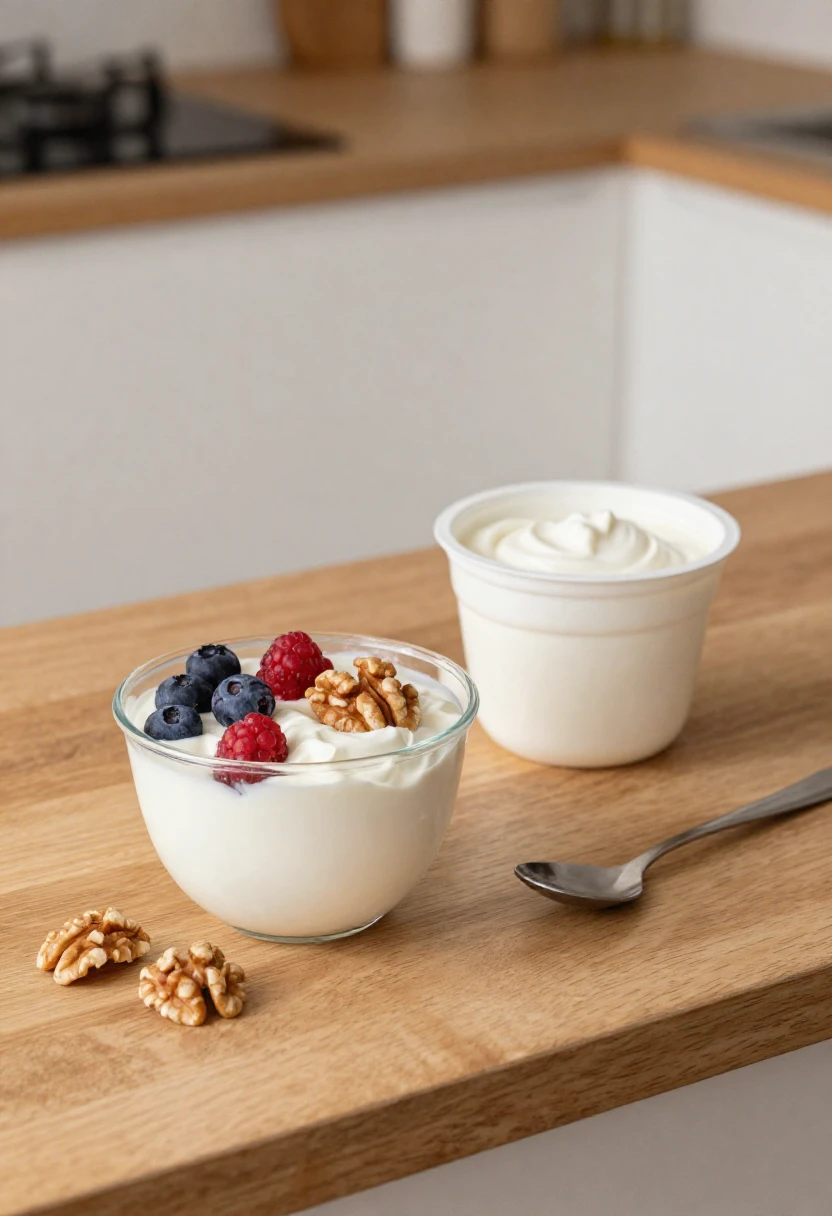
Low-fat foods can look sensible at first glance. The label feels reassuring. The calories may be lower. The package might even look cleaner and lighter, with pale colors and words that quietly suggest you are making the responsible choice.
Sometimes you are.
But “low-fat” does not automatically mean better. It just means the food has less fat than the regular version. That tells you one thing, not the whole story.
I learned this the boring way, standing in front of the yogurt section and comparing labels. One tub had more fat but simple ingredients. Another was fat-free, fruit-flavored, and sweet enough to taste almost like dessert. Technically, it had less fat. But was it the better everyday breakfast? Not really.
That is the trick with low-fat foods. When fat comes out, something often goes in to keep the food pleasant.
Some low-fat foods add more sugar or starch
Fat gives food body. It makes yogurt creamy, sauces smooth, cookies tender, and dressings rich enough to cling to lettuce instead of sliding straight to the bottom of the bowl.
When manufacturers remove fat, they may use sugar, starches, gums, thickeners, or extra flavoring to make the product taste good again. Not always. But often enough that it is worth checking.
Common examples include:
- flavored fat-free yogurt
- low-fat salad dressings
- “light” packaged desserts
- reduced-fat cookies or snack bars
- creamy sauces with added starches
- breakfast cereals marketed as lighter options
This does not mean every low-fat food is bad. Plain low-fat Greek yogurt, for example, can be a great choice because it still gives you protein and a thick texture. But a sweetened fat-free yogurt with a long ingredient list is a different thing.
The front of the package is marketing. The back of the package is where the useful information lives.
Look at the added sugar. Look at the serving size. Look at whether the food still gives you something valuable, like protein, fiber, or minerals. If the only benefit is “less fat,” that may not be enough.
Fat-free can make food less satisfying
A meal can be low in fat and still leave you unsatisfied.
You know that feeling when you eat something that should have been enough, but it somehow does not land? A dry salad. Plain rice cakes. A bowl of cereal that tastes good while you eat it but disappears from your stomach suspiciously fast.
Fat is not the only thing that keeps you full. Protein and fiber matter a lot too. But fat helps. It slows the meal down and makes food feel more complete.
That is why a breakfast with oats, Greek yogurt, berries, and walnuts often works better than a very low-fat breakfast made mostly from sweet cereal. It has more texture. More chew. More staying power.
The same goes for lunch. A salad with vegetables only may look healthy, but it often needs something else: beans, eggs, chicken, tuna, tofu, avocado, olive oil, nuts, seeds, or a grain like quinoa or brown rice. Otherwise, it can feel like you ate a side dish and called it lunch.
Fat does not need to dominate the plate. It just needs to be present enough to make the meal work.
Whole foods usually matter more than label claims
If you are choosing between a whole food that naturally contains fat and a processed food that advertises itself as low-fat, I would usually start with the whole food.
Not always, but usually.
An egg has fat, yes. It also has protein and important nutrients. Walnuts have fat, but they also give you crunch and make oatmeal more satisfying. Avocado has fat, but it turns a simple bowl of beans, rice, and vegetables into something creamy and filling. Salmon is not low-fat, but it brings protein and omega-3 fats to the plate.
Compare that with a low-fat cookie. It may have less fat than the original cookie, but it is still a cookie. That is fine when you want a cookie. It is just not suddenly a health food because the fat was reduced.
This is where eating gets easier if you stop chasing perfect labels.
Ask yourself what the food is doing in your meal.
Is it helping you feel full?
Is it bringing protein or fiber?
Is it adding flavor in a way that makes vegetables, beans, or whole grains easier to enjoy?
Or is it just wearing a “light” label and hoping you do not read too closely?
A little skepticism in the grocery aisle is useful.
Low-fat is not the same as balanced
There are times when lower-fat options make sense. Maybe you prefer low-fat milk. Maybe your doctor suggested reducing saturated fat. Maybe you are watching calories and want to use more of your meal on protein, vegetables, or grains.
That is all reasonable.
The mistake is treating low-fat as the final answer. A balanced meal is not built from one number on a label. It comes from the whole plate.
A good meal might include:
- protein, like eggs, fish, chicken, tofu, beans, lentils, or yogurt
- fiber-rich carbohydrates, like potatoes, oats, fruit, beans, or whole grains
- vegetables or fruit
- a small amount of fat that makes the meal taste better and feel complete
That could be a bowl of lentil soup with olive oil on top. Eggs with sautéed spinach and toast. Greek yogurt with berries and almonds. Salmon with roasted potatoes and a salad.
None of these meals are fat-free. They are also not careless.
That is the middle ground most people need more than another strict food rule.
The best healthy fat foods to keep in your kitchen
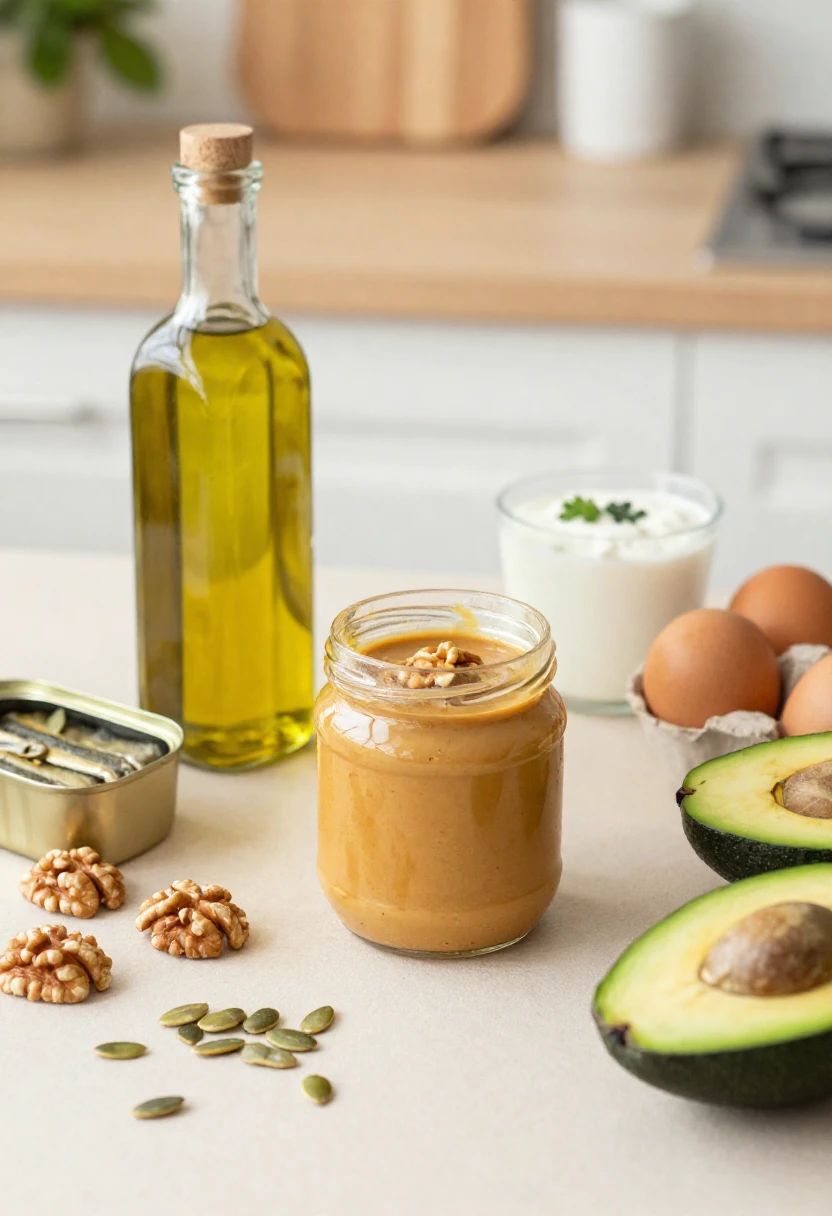
Healthy eating gets much easier when the right foods are already in the kitchen. Not in a “perfect pantry” way. I mean the simple stuff you can actually reach for when lunch is late, dinner feels annoying, or a salad needs something extra so it does not taste like wet leaves.
Healthy fats are useful because they make basic meals feel finished. A spoon of olive oil can save roasted vegetables. A few walnuts can make oatmeal feel less sad. Avocado can turn toast into breakfast. Sardines can become lunch in five minutes if you have bread, lemon, and a little nerve.
You do not need every “superfood” on the shelf. A few reliable choices are enough.
Olive oil for everyday cooking and salads
Olive oil is probably the easiest healthy fat to use often because it fits almost everywhere.
Use it for roasting vegetables, sautéing greens, dressing salads, finishing soups, or softening the sharpness of tomatoes, onions, and beans. It is one of those ingredients that makes healthy food feel less like effort.
A simple vinaigrette can be nothing more than olive oil, lemon juice or vinegar, salt, pepper, and a spoon of mustard. Shake it in a jar. Done.
I like olive oil most in meals that need a little roundness. Lentil soup tastes better with a small drizzle at the end. Roasted carrots look and taste better when they get glossy in the oven. Even canned beans become more interesting with olive oil, garlic, parsley, and lemon.
A few easy ways to use olive oil:
- drizzle it over roasted vegetables after cooking
- mix it with lemon juice for a quick salad dressing
- add it to hummus or bean dips
- spoon a little over tomato toast
- use it to sauté spinach, zucchini, mushrooms, or peppers
The only thing to remember is that oil is still concentrated. You do not need to pour half the bottle into the pan. Start with a spoon or two, then adjust.
Good olive oil should make food taste better, not greasy.
Avocado for creamy texture without much effort
Avocado is useful because it brings creaminess without needing much preparation. You slice it, mash it, or cube it. That is basically the whole job.
It works especially well in meals that are otherwise lean or dry. A rice bowl with beans, salsa, lettuce, and chicken becomes more satisfying with avocado. Toast with egg feels softer and richer. A salad with avocado needs less dressing because the avocado already gives you that creamy bite.
Try avocado with:
- eggs and whole-grain toast
- black beans, rice, and salsa
- chicken or tuna salad
- leafy greens and citrus
- tacos, wraps, or grain bowls
- cottage cheese with pepper and tomatoes
Avocado also helps when you are trying to cut back on heavier creamy sauces. It will not taste like mayonnaise or cheese, and pretending it does is unfair to everyone. But it can give a sandwich or bowl enough softness that you do not miss as much of the heavier stuff.
Portion matters here too. Half an avocado is often enough for one meal. If it is a small avocado, maybe the whole thing makes sense. If it is the size of a small melon, maybe share it.
Nuts and seeds for snacks and toppings
Nuts and seeds are the easiest healthy fats to overeat, which is annoying because they are also genuinely useful.
A small handful of nuts can turn fruit into a better snack. Seeds can make soups, salads, yogurt, and oatmeal more filling. Nut butter can save a rushed breakfast when you spread it on toast or pair it with apple slices.
The trick is to use them like an ingredient, not like background entertainment while you answer emails.
Good options to keep around:
- walnuts
- almonds
- pistachios
- pumpkin seeds
- sunflower seeds
- chia seeds
- ground flaxseed
- sesame seeds
- natural peanut butter or almond butter
Walnuts are great with oatmeal, yogurt, apples, and salads. Pumpkin seeds add crunch to soup. Chia seeds work in overnight oats or yogurt bowls. Ground flaxseed is easy to stir into porridge, smoothies, or pancake batter.
Nut butter is another good one, but it needs honesty. A spoonful is useful. Half the jar eaten directly in front of the fridge is something else. No judgment. Just information.
For everyday use, choose nuts and seeds that are plain or lightly salted most of the time. Honey-roasted nuts and chocolate-covered almonds are delicious, but they live closer to dessert than to a daily healthy fat choice.
Fatty fish for omega-3 fats
Fatty fish is one of the strongest examples of why “fat” is not automatically unhealthy.
Salmon, sardines, trout, herring, and mackerel contain omega-3 fats, along with protein. They make a meal feel satisfying without needing a heavy sauce or a lot of extra oil.
Salmon is the obvious choice, but sardines deserve more respect. They are affordable, shelf-stable, and ready to eat. I know they are not everyone’s dream lunch, but on toast with lemon, black pepper, and a few sliced tomatoes, they are much better than their reputation.
Simple ways to eat fatty fish:
- baked salmon with potatoes and greens
- sardines on toast with lemon and herbs
- trout with roasted vegetables
- canned salmon mixed with Greek yogurt, mustard, and pickles
- mackerel with rice, cucumber, and a quick vinegar dressing
If you do not eat fish, you can still get plant-based omega-3 fats from foods like chia seeds, flaxseeds, walnuts, and hemp seeds. The body uses them differently than fish-based omega-3s, but they are still useful foods to include.
And if fish smell puts you off, start gently. Try salmon baked with lemon and garlic, or canned salmon mixed into patties. You do not have to jump straight into sardines if your kitchen is not emotionally ready.
Eggs and dairy: where context matters
Eggs and dairy can be part of a healthy diet, but they are a good reminder that food does not fit perfectly into “good” or “bad” boxes.
Eggs contain fat, but they also bring protein and other nutrients. A couple of eggs with vegetables and whole-grain toast can be a solid breakfast. The same eggs fried in a lot of butter and served with bacon every morning are a different pattern.
Dairy works the same way.
Plain Greek yogurt, kefir, cottage cheese, and simple cheeses can fit into balanced meals. Sweetened yogurts, cream-heavy desserts, and cheese used in huge amounts are not the same thing just because they all come from dairy.
Better everyday choices might look like:
- Greek yogurt with berries and walnuts
- cottage cheese with tomatoes and pepper
- eggs with spinach and mushrooms
- kefir blended with fruit
- a small amount of feta or parmesan used for flavor
- plain yogurt as a base for garlic sauce or salad dressing
Cheese is where people get a little emotional, and I understand. Cheese makes food better. But it is easy to turn it from a flavor into the whole meal.
A little sharp cheese can do more than a large amount of bland cheese. Parmesan, feta, goat cheese, or aged cheddar often give stronger flavor, so you can use less and still feel like you got the point.
Keep a few healthy fats ready, not all of them
You do not need to buy every healthy fat food at once. That usually leads to expensive groceries and forgotten jars in the back of the cupboard.
Start with a small set that fits how you already eat.
If you make salads, keep olive oil, avocado, and pumpkin seeds.
If you eat oatmeal, keep walnuts, chia seeds, and ground flaxseed.
If you like quick lunches, keep eggs, canned salmon, or sardines.
If you snack a lot, keep apples and peanut butter, or plain nuts in a small bowl instead of the whole bag.
Healthy fats work best when they make your normal meals better. They should not feel like a separate project.
A bottle of olive oil, a bag of walnuts, a carton of eggs, and a can of sardines may not look glamorous. But on a busy week, they can do a lot.
How much fat should you eat in a day?
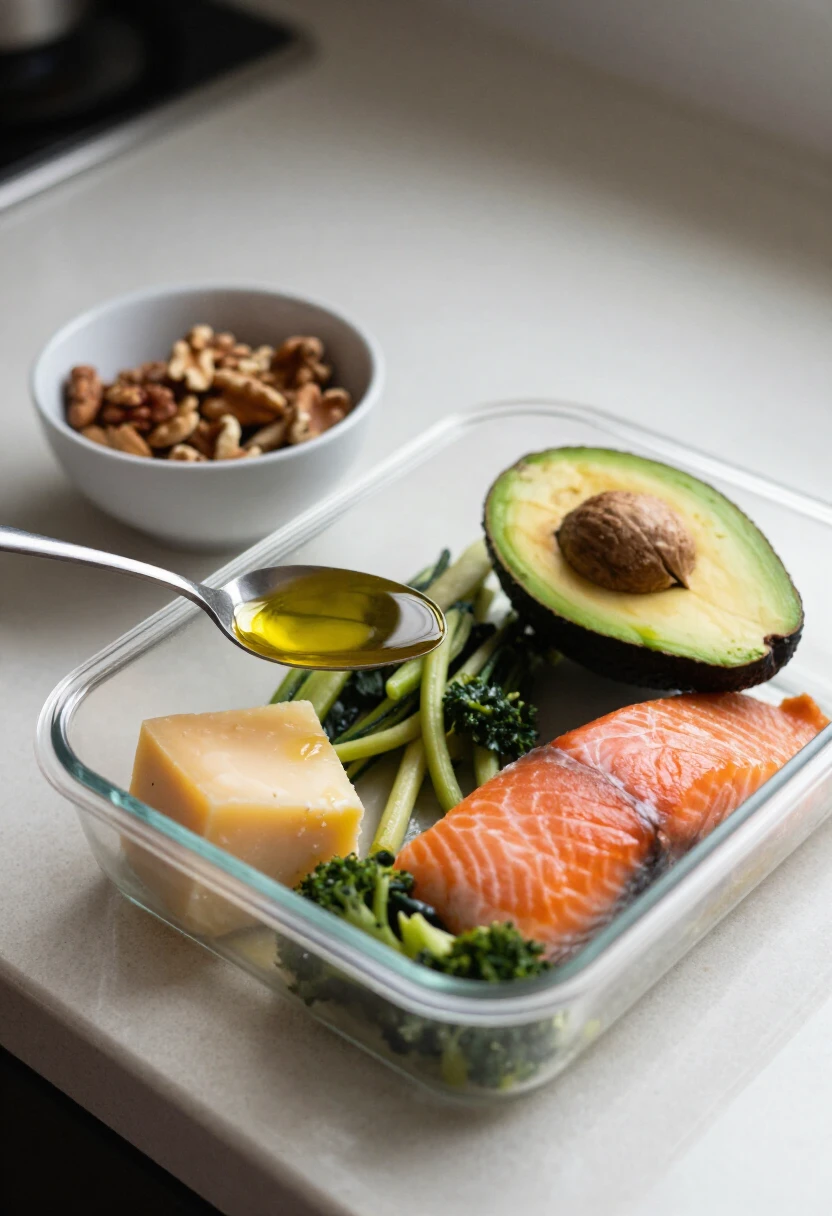
This is the part where people usually want a clean number.
How many grams of fat per day? How much olive oil is too much? Is half an avocado fine? What about nuts? What if you eat eggs and salmon on the same day?
I wish the answer fit neatly on a sticky note, but fat intake depends on your body, your appetite, your activity level, your health goals, and what the rest of your diet looks like. A person eating mostly whole foods, cooking at home, and adding olive oil to vegetables is in a different situation from someone getting most of their fat from fried foods, pastries, processed meat, and creamy takeout meals.
Still, you do not need to track every gram to eat fat wisely. Most people do better with patterns and portions.
There is no perfect number for everyone
Some nutrition guidelines talk about fat as a percentage of daily calories. That can be useful for dietitians, food labels, and meal planning, but it is not how most people think when they are making lunch.
Nobody looks at a bowl of soup and thinks, “Wonderful, this appears to contain 28% of my daily calories from fat.”
At home, it is easier to ask what role the fat is playing.
Is it helping the meal taste better?
Is it coming from a mostly whole food?
Is it replacing something less useful, like processed meat or fried snacks?
Or is it being added automatically, without much thought?
For many people, the best first step is not eating less fat. It is changing the main sources of fat.
That might mean more olive oil and less butter in everyday cooking. More nuts and fewer packaged snacks. More fish and less processed meat. More avocado or yogurt-based sauces and fewer heavy creamy dressings.
The amount matters, but the source matters first.
Simple portion cues that work in real life
Healthy fats are still calorie-dense, so portions can creep up. This is especially true with oils, nuts, nut butters, cheese, and avocado. They are easy to add, and then add again, and then somehow the “light” salad has become a full bowl of dressing, cheese, seeds, and avocado with a few leaves underneath.
I have made that salad. It was delicious. It was also not the small meal I pretended it was.
Here are practical portions that work for many everyday meals:
- 1 tablespoon olive oil for cooking or dressing
- a small handful of nuts
- 1 to 2 tablespoons nut butter
- 1 to 2 tablespoons seeds
- half a medium avocado
- a small piece of cheese used for flavor
- one serving of fatty fish, like salmon, sardines, trout, or mackerel
These are not strict rules. They are starting points.
If your meal is very lean, like vegetables with beans or chicken breast, a little more fat may make sense. If the meal already has cheese, avocado, nuts, and dressing, you probably do not need another big pour of oil on top.
That is the skill: noticing when fat is helping the meal and when it is just piling on.
When to be more careful with portions
There are a few foods that deserve extra attention, not because they are bad, but because they are so easy to overdo.
Nuts are the classic example. A small handful is a great snack. Eating straight from the bag while standing in the kitchen can turn into three servings before you notice.
Nut butter is the same. It looks innocent on the spoon. Then the spoon goes back into the jar. Then again. Suddenly this has become a private peanut butter event.
Oils are another one. Olive oil is a healthy fat, but it is still oil. If you pour freely into the pan, then add more to the vegetables, then add dressing, the total climbs quickly.
Cheese can also sneak up. A little feta over a salad adds salty flavor. A thick blanket of cheese changes the whole meal.
You may want to be more mindful with portions if:
- you are trying to lose weight
- you are managing cholesterol or heart-health concerns
- you eat out often
- you snack on nuts, cheese, or nut butter often
- you use a lot of creamy sauces, dressings, or fried foods
- you feel like your meals are “healthy” but still very calorie-heavy
This is not about fear. It is about paying attention.
Healthy fats are good additions. They are not magic. A food can be nutritious and still need a reasonable portion.
Look at your whole day, not one meal
One higher-fat meal is not a problem by itself. Maybe you had salmon with avocado salad for lunch. Great. Maybe dinner can be lighter, with lentil soup, vegetables, and a smaller amount of oil.
Or maybe breakfast was eggs, cheese, and buttered toast. That does not mean the day is ruined. It just means lunch could lean toward beans, vegetables, chicken, fish, yogurt, or whole grains instead of more processed meat and creamy sauces.
Balance usually happens across the day, not in one perfect plate.
A simple day with healthy fats might look like this:
- oatmeal with berries and walnuts
- salad with chickpeas, vegetables, and olive oil dressing
- salmon with potatoes and greens
- fruit with a small spoon of peanut butter
Another day might be:
- eggs with spinach and toast
- lentil soup finished with olive oil
- Greek yogurt with pumpkin seeds
- chicken, rice, vegetables, and avocado
None of this is fat-free. It is just intentional.
Do not let numbers replace common sense
Tracking fat grams can help some people, especially if they have specific health goals or medical guidance. But for everyday healthy eating, the bigger question is usually simpler.
Where is most of your fat coming from?
If the answer is olive oil, nuts, seeds, avocado, eggs, yogurt, and fish, you are probably starting from a good place. If the answer is fried food, pastries, processed meat, heavy cream sauces, and packaged snacks, the first move is obvious.
You do not have to remove fat. You have to upgrade it.
Start with one swap. Cook with olive oil more often. Add walnuts to breakfast instead of eating a sweet snack later. Use avocado or yogurt sauce instead of a heavy spread. Choose salmon one night instead of sausage.
Small changes are boring in the best possible way. They are the ones you can repeat.
Easy ways to eat more healthy fats without overdoing it
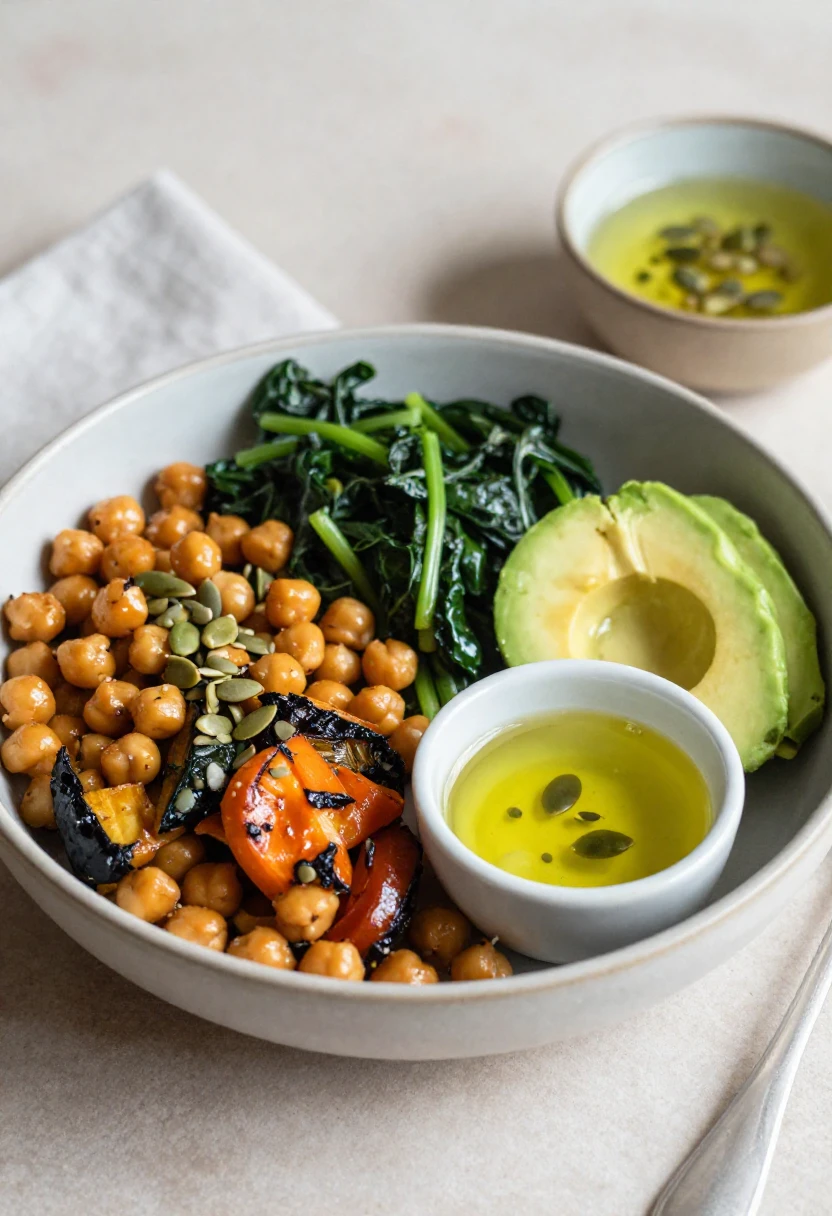
Healthy fats work best when they feel natural in your meals. Not forced. Not sprinkled on everything because someone online said chia seeds are important. Just useful.
The easiest approach is to add fat where it improves the meal, then stop before it turns into too much. A little olive oil can make vegetables taste better. A few nuts can make breakfast more filling. Avocado can make a bowl creamy enough that you do not need a heavy sauce.
The goal is not to make every meal high-fat. The goal is to make your meals more satisfying with better fat choices.
Add fat to vegetables so they taste better
Vegetables often need fat. Not always a lot, but enough to help with flavor and texture.
Raw vegetables with no dressing can feel like work. Roasted vegetables with olive oil, salt, garlic, and pepper feel like dinner. That difference matters, because the “healthiest” vegetable is usually the one you actually want to eat again.
A spoon of olive oil can help vegetables brown in the oven. A little vinaigrette can make salad taste fresh instead of dry. A few sesame seeds can make steamed broccoli feel less plain. Even a small amount of pesto can turn zucchini, tomatoes, or green beans into something you look forward to.
Try these simple ideas:
- roast carrots, cauliflower, or sweet potatoes with olive oil
- toss greens with olive oil, lemon juice, and salt
- add tahini sauce to roasted eggplant or chickpeas
- sprinkle pumpkin seeds over vegetable soup
- add avocado to a tomato and cucumber salad
- finish steamed vegetables with olive oil and herbs
This is one of the easiest ways to eat more vegetables without pretending you enjoy dry food.
And honestly, dry food is where many healthy eating plans go wrong.
Pair fat with protein and fiber
Fat is more satisfying when it is part of a balanced meal. On its own, it can be easy to overeat. Paired with protein and fiber, it does a better job.
Think of an apple with peanut butter instead of peanut butter eaten from the jar. Greek yogurt with walnuts instead of a handful of nuts grabbed randomly while standing in the kitchen. Salmon with potatoes and greens instead of just a rich fish dish with nothing fresh on the side.
Protein helps with fullness. Fiber gives the meal volume and keeps digestion steady. Fat brings flavor, texture, and staying power.
Good combinations include:
- Greek yogurt, berries, and walnuts
- eggs, spinach, and whole-grain toast
- salmon, roasted potatoes, and salad
- lentil soup with olive oil
- chickpea salad with avocado
- oatmeal with chia seeds and fruit
- beans, rice, salsa, and a little cheese or avocado
Meals like this feel complete. They do not depend on one ingredient to do all the work.
That is important because even healthy fats can become too much when the rest of the meal is missing structure. A bowl of pasta with olive oil and cheese can taste good, but it will work better with vegetables and protein. A salad with avocado and dressing is nice, but it becomes lunch when you add beans, eggs, chicken, tuna, or tofu.
Fat should support the meal, not carry the whole thing alone.
Swap instead of stacking
This is probably the most useful rule for eating healthy fats without overdoing it: swap, do not stack.
Stacking is when you keep adding fats because each one sounds healthy on its own. Olive oil, avocado, nuts, cheese, tahini, and salmon can all be good foods. Put them all in one bowl and suddenly the meal is much heavier than you planned.
Swapping is cleaner.
Use olive oil instead of butter for everyday cooking.
Use avocado instead of mayonnaise in a sandwich sometimes.
Use nuts instead of chips when you want a crunchy snack.
Use Greek yogurt instead of sour cream for a quick sauce.
Use seeds instead of croutons on a salad.
You still get flavor and texture, but you are not adding fat from every direction.
A good salad, for example, might have olive oil dressing and pumpkin seeds. It probably does not also need avocado, cheese, nuts, and a creamy sauce. A breakfast might have eggs and avocado, so maybe skip the extra cheese that day. Oatmeal with walnuts may not need a big spoon of nut butter too.
This is not about restriction. It is just kitchen math.
Choose the fat that makes the meal better. Let that one do its job.
Use strong flavors so you need less
Some fats bring a lot of flavor in small amounts. That can help you use less without feeling like the meal is missing something.
A little feta can make a whole salad taste salty and bright. Parmesan can wake up vegetables, beans, soup, or pasta with just a few shavings. Toasted sesame oil has such a strong flavor that a small drizzle is usually enough. Tahini mixed with lemon and water turns into a creamy sauce without needing much.
This is why bland “diet food” feels so frustrating. It removes fat, salt, acid, and texture all at once, then asks you to be excited about it. No wonder people quit.
Better idea: use small amounts of flavorful fats and balance them with acid, herbs, spices, and crunch.
For example:
- olive oil + lemon + garlic for salads
- tahini + lemon + water + salt for grain bowls
- Greek yogurt + herbs + olive oil for a quick sauce
- avocado + lime + chili flakes for toast
- feta + cucumbers + tomatoes for a simple side
- walnuts + cinnamon + berries for oatmeal
Fat does not have to be heavy to be satisfying. Sometimes it just needs help from something sharp, fresh, or crunchy.
Keep portions visible
One quiet problem with fats is that they are easy to pour, scoop, and snack without noticing.
Oil disappears into a pan. Nuts disappear from a bag. Nut butter disappears from a spoon, somehow repeatedly. Cheese disappears while you are cooking because “just one more slice” feels harmless.
Keeping portions visible helps.
Pour olive oil onto a spoon before adding it to the pan. Put nuts in a small bowl instead of eating from the bag. Spread nut butter on toast or apple slices instead of eating it straight from the jar. Crumble cheese over the finished dish instead of cutting pieces while you cook.
These are small habits, but they make a difference because they slow you down just enough to notice what you are doing.
You do not need to become strict. You just need to stop letting the highest-calorie ingredients operate in the background.
Build meals you actually enjoy
Healthy fats are not there to decorate a perfect wellness plate. They are there to make normal food better.
If olive oil helps you eat more vegetables, use it. If walnuts make oatmeal satisfying enough to keep you away from pastries at 10 a.m., that is useful. If avocado makes a bean bowl feel creamy and filling, great. If salmon once or twice a week helps you eat more fish and less processed meat, even better.
The best healthy fat choices are the ones that fit into meals you already like.
Start with your usual food and make one upgrade.
Add olive oil and lemon to vegetables.
Add seeds to soup.
Add nuts to yogurt.
Add avocado to beans and rice.
Add sardines or salmon to toast.
Add a yogurt-based sauce instead of a heavier creamy dressing.
Nothing dramatic. Just better meals, one small adjustment at a time.
Common mistakes people make with dietary fat
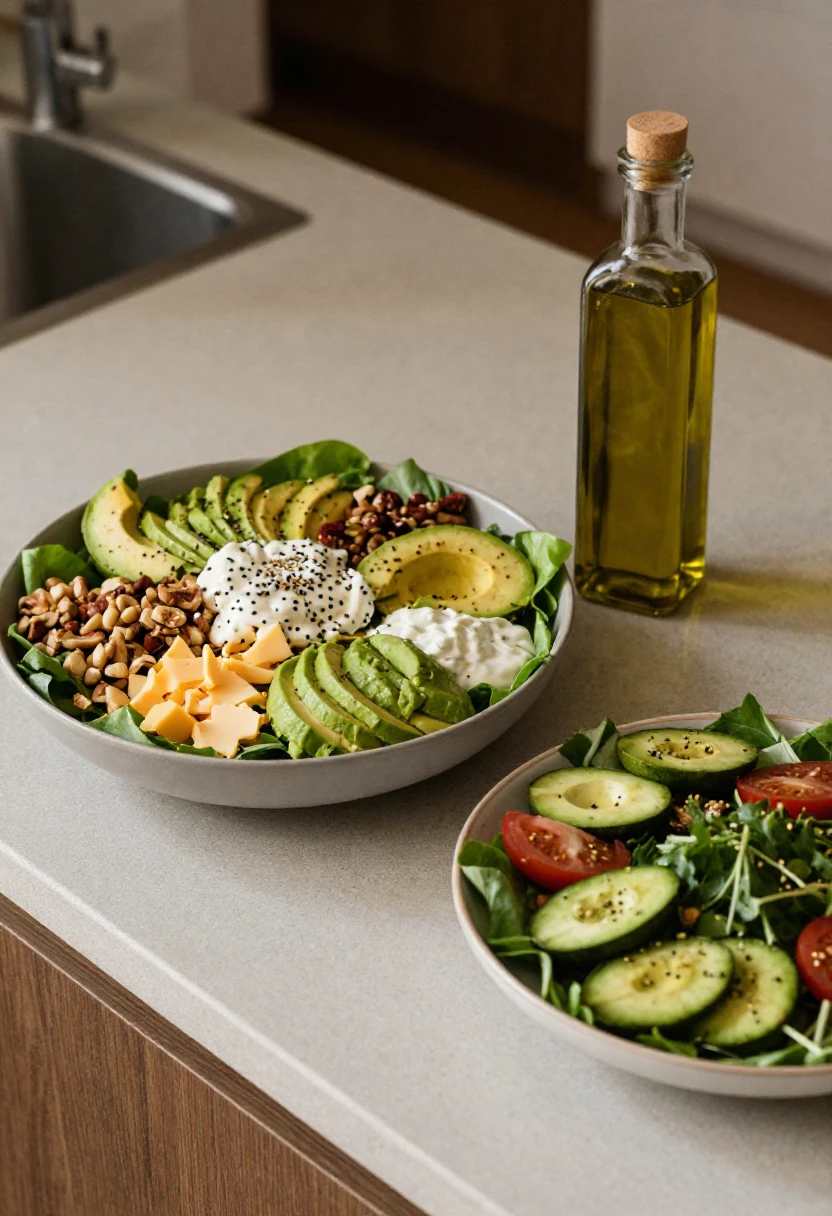
Dietary fat gets confusing because people usually swing too far in one direction.
Some avoid fat as if olive oil were a personal failure. Others hear “healthy fats” and start adding avocado, nuts, seeds, cheese, tahini, and oil to the same meal, then wonder why their “light lunch” feels like dinner for two.
The better place is somewhere in the middle. Fat belongs in your diet, but it needs context.
Thinking all fat is the same
This is the biggest mistake.
Fat from salmon, walnuts, and olive oil is not the same as fat from deep-fried fast food, processed sausage, or packaged pastries. They may all show up as grams of fat on a label, but your body and appetite do not experience them the same way.
The food source matters.
A meal with salmon, roasted potatoes, and greens gives you protein, omega-3 fats, fiber, and a lot of actual food on the plate. A meal built around fried snacks may give you plenty of fat and calories, but not much that keeps you feeling good afterward.
The same goes for oils. Olive oil used in a simple homemade dressing is different from mystery oil in a packaged snack. Butter on fresh bread is different from hidden fats in cheap pastries you barely enjoy.
That does not mean you can never eat fried food or dessert. Of course you can. But it helps to stop pretending all fats belong in the same mental category.
Some fats are everyday building blocks. Some are occasional pleasure foods. That distinction makes eating much easier.
Eating “healthy fats” without watching portions
Healthy fats can still add up quickly.
This is especially true with foods that are easy to snack on or pour: nuts, seeds, olive oil, nut butter, cheese, avocado, tahini. They are useful foods. They are also dense.
A handful of almonds is a good snack. Three handfuls while you are half-working, half-scrolling, and not really paying attention is a different thing. One spoon of peanut butter on apple slices is great. Several spoons straight from the jar can turn into a meal you did not mean to have.
I say this with affection because nut butter has fooled many good people.
The same happens with salads. A salad can start with greens, tomatoes, cucumbers, and grilled chicken. Then come olive oil, avocado, nuts, seeds, feta, and a creamy dressing. At that point, it may still be full of healthy ingredients, but it is not automatically light.
This is why portion awareness matters more than food guilt.
You do not have to measure everything forever. Just notice the foods that are easy for you to overdo. For some people it is cheese. For others it is nuts. For me, it is anything that can be eaten with a spoon while standing in the kitchen.
Keep those foods visible. Put nuts in a small bowl. Spoon oil before pouring. Slice avocado intentionally. Use cheese for flavor, not as insulation.
Tiny habits. Big difference.
Ignoring the rest of the meal
Fat does not make a meal healthy by itself.
You can drizzle olive oil over almost anything, but that does not magically balance the plate. A bowl of white pasta with oil and cheese can be delicious, but it still needs vegetables or protein if you want it to carry you through the afternoon. A smoothie with almond butter may sound healthy, but if it is mostly fruit juice and sweet add-ins, the healthy fat is doing a lot of public relations work.
Look at the whole meal.
A satisfying plate usually has some combination of:
- protein
- fiber-rich carbohydrates
- vegetables or fruit
- a reasonable amount of fat
- flavor that makes you actually want to eat it
That could be eggs, sautéed vegetables, toast, and avocado. It could be Greek yogurt, berries, walnuts, and oats. It could be beans, rice, salsa, greens, and olive oil. It could be salmon, potatoes, and a crisp salad.
Fat is one part of the meal. It should not be the only part doing the heavy lifting.
Treating low-fat foods as automatically better
Low-fat products can be helpful, but they are not automatically healthier than regular versions.
Sometimes low-fat means you are getting a useful food with fewer calories or less saturated fat. Plain low-fat Greek yogurt is a good example for many people. It still has protein, texture, and real usefulness in meals.
But sometimes low-fat means the fat was removed and sugar, starch, or extra flavoring stepped in. That happens often with sweetened yogurts, bottled dressings, packaged desserts, and snack foods.
The label “low-fat” can make people feel safe enough to eat more than they would have eaten of the regular version. That is where things get sneaky. A reduced-fat cookie is still a cookie. A fat-free dessert can still be very sweet. A light dressing can still be something you pour without thinking.
I am not saying to avoid all low-fat foods. Just do not let the front label make the decision for you.
Turn the package around. Check the serving size. Look at added sugar. Look at protein or fiber. Ask whether the food actually helps your meal, or whether it just sounds healthier than it is.
Cutting fat too low and then feeling hungry all day
Some people reduce fat so much that meals stop being satisfying.
Breakfast becomes dry toast and fruit. Lunch becomes plain salad. Dinner becomes steamed vegetables and lean protein with no sauce, no dressing, no richness, no joy. Then the evening arrives, and suddenly every snack in the house starts looking deeply meaningful.
That is not a willpower problem. Sometimes the meals were just not built well.
A little fat can make healthy food easier to keep eating. Add olive oil to vegetables. Add nuts to oatmeal. Add avocado to beans. Add yogurt sauce to chicken. Add tahini to roasted vegetables. These small additions can make a meal feel finished.
There is a big difference between eating light and eating in a way that leaves you quietly miserable.
Healthy eating should not feel like you are chewing through punishment. If adding a little good fat helps you enjoy vegetables, beans, grains, or lean protein, that is not a problem. That is a strategy.
Using fat as the only source of flavor
Fat makes food taste better, but it should not be your only flavor tool.
If every meal needs more cheese, more butter, more oil, or more creamy dressing to taste good, the food may be missing acid, salt, herbs, spices, or texture.
A squeeze of lemon can wake up olive oil. Vinegar can sharpen a salad. Garlic can make yogurt sauce taste like something you would choose on purpose. Smoked paprika can make roasted potatoes feel warmer and deeper. Fresh herbs can make a simple bowl of beans taste fresh instead of flat.
This matters because when you know how to build flavor, you do not need to keep adding fat until the meal finally tastes good.
Try this before adding more oil or cheese:
- add lemon juice or vinegar
- add salt, slowly and carefully
- add garlic, herbs, chili flakes, or spices
- add crunch with seeds or toasted nuts
- add freshness with tomatoes, cucumber, parsley, or greens
Fat works better when it has company. Olive oil with lemon is better than olive oil alone. Avocado with lime and salt is better than plain avocado. Yogurt with garlic and herbs is better than plain yogurt pretending to be a sauce.
Turning healthy eating into a moral test
This might be the most exhausting mistake.
Butter is not a sin. Avocado is not a virtue. A croissant does not make you a bad person. A salad with olive oil does not make you superior.
Food choices matter, but they are still food choices. They are not personality traits.
The point of understanding dietary fat is not to become afraid of your meals. It is to make better decisions most of the time and enjoy the richer foods when you choose them.
Use olive oil often. Eat nuts in reasonable portions. Add fish if you like it. Enjoy avocado. Be mindful with butter, cheese, processed meats, fried foods, and pastries. And when you do eat something indulgent, let it be worth it.
A good piece of cake enjoyed slowly is better than five “light” snacks eaten with resentment.
That counts too.
Продовжую наступний H2-блок. Тут обережно формулюю medical-sensitive частину: при heart-health concerns, cholesterol, gallbladder або digestive issues краще не влаштовувати самостійні жорсткі експерименти з жиром, а узгодити харчування з лікарем або дієтологом. AHA радить обмежувати saturated fat, Mayo Clinic також рекомендує замінювати saturated fats на nuts, seeds, avocado, fish і plant oils, а NIDDK окремо зазначає, що при gallstones важливі здорові жири, клітковина і менше refined carbs/sugar. (www.heart.org)
Who may need extra guidance with fat intake?
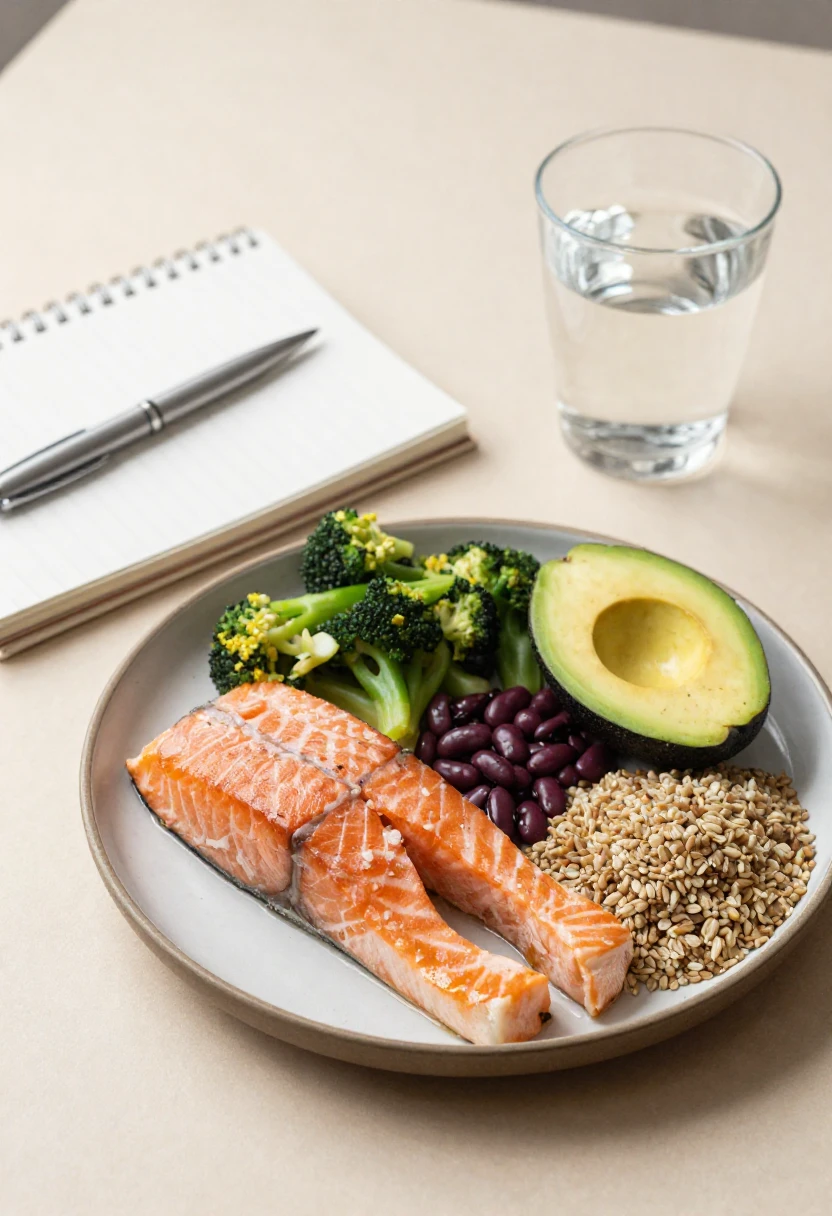
Most people do not need to be afraid of fat. They need better fat choices, reasonable portions, and meals that are not built around fried food, processed meat, and heavy sauces every day.
But some people should be more careful and more specific.
Not because fat is dangerous by default. Because your health history can change what “healthy amount” means for you. A food pattern that works beautifully for one person may not be right for someone managing cholesterol, digestive symptoms, gallbladder issues, or a medical condition that affects how they absorb or process fat.
This is where general advice has limits. A blog can help you understand the basics. Your doctor or dietitian can help you personalize the details.
People with heart health concerns
If you are managing high cholesterol, high LDL cholesterol, heart disease risk, or a family history of heart problems, the type of fat you eat matters more.
This does not mean your meals need to become dry and joyless. It usually means being more intentional with saturated fat and choosing unsaturated fats more often.
That might look like:
- cooking with olive oil instead of butter most days
- choosing fish, beans, lentils, tofu, eggs, or poultry more often than processed meat
- using cheese in smaller amounts for flavor
- limiting pastries, fried foods, bacon, sausage, and cream-heavy sauces
- eating more oats, beans, vegetables, fruit, nuts, and seeds
The shift is not “no fat.” It is better fat.
A heart-friendly plate can still taste good. Think salmon with roasted vegetables. Lentil soup finished with olive oil. Oatmeal with walnuts and berries. A bean salad with avocado, tomatoes, herbs, and lemon.
Those meals are not low-pleasure. They are just built differently.
If your doctor has given you a cholesterol goal or a specific saturated fat limit, follow that guidance. Personalized advice matters here.
People managing weight or calories
Healthy fats can support better meals, but they are still calorie-dense. This can be tricky if you are trying to lose weight or maintain weight.
The issue is not that olive oil, nuts, avocado, or nut butter are “bad.” They are not. The issue is that they are easy to underestimate.
A few extra pours of oil, a large handful of nuts, half a jar of almond butter over a few days, and generous cheese on everything can quietly push meals higher in calories than expected.
So the goal is not to remove healthy fats. It is to make them visible.
Try this:
- measure olive oil with a spoon until you get used to the amount
- portion nuts into a small bowl
- use half an avocado instead of automatically using the whole one
- add cheese after cooking, so you notice how much you use
- pair nut butter with fruit, oats, or toast instead of eating it straight from the jar
Small portions of fat can make lower-calorie meals more satisfying. A salad with grilled chicken, vegetables, chickpeas, and a spoon of olive oil dressing may keep you full longer than a very low-fat salad that sends you looking for snacks.
That is the balance: enough fat to enjoy the meal, not so much that the fat takes over.
People with gallbladder or digestive issues
Fat can be harder to handle for some people with gallbladder problems or certain digestive conditions. Symptoms vary, but some people notice discomfort after very fatty meals, fried foods, or heavy creamy dishes.
This does not always mean fat should be cut extremely low. In fact, the better approach often depends on the specific condition, symptoms, and medical advice.
For some people, the practical move is to avoid very greasy meals and spread fat more evenly through the day. Instead of one heavy dinner with fried food, cream sauce, and dessert, smaller amounts of healthier fats may feel easier.
Examples might include:
- olive oil on vegetables instead of deep-fried sides
- baked fish instead of fried fish
- yogurt-based sauce instead of heavy cream sauce
- avocado in a small portion instead of a very rich dressing
- soup, beans, grains, and cooked vegetables with modest fat
If you have gallstones, gallbladder pain, pancreatitis history, severe reflux, gastroparesis, or ongoing digestive symptoms, do not guess your way through it. Ask a clinician what level and type of fat makes sense for you.
Food advice gets very personal when digestion is involved.
People following very low-carb or high-fat diets
Some people eat high-fat diets on purpose, especially with low-carb or ketogenic-style eating. That can work for some people, but it is not automatically healthier just because sugar or refined carbs are lower.
A high-fat diet built around olive oil, fish, eggs, avocado, nuts, seeds, and vegetables is very different from one built around bacon, butter, processed meats, cream, and cheese.
Again, source matters.
If you eat this way, pay attention to:
- saturated fat intake
- fiber from vegetables, seeds, nuts, and low-sugar fruits
- cholesterol markers if your doctor tracks them
- digestion and energy levels
- whether the diet is sustainable for your real life
Some people feel great eating lower-carb. Others feel restricted, tired, or socially miserable. That matters too.
A diet is not only what it does on paper. It is also whether you can live with it without turning every meal into a negotiation.
People with a history of disordered eating
Fat can become emotionally loaded. So can calories, labels, “clean eating,” and food rules.
If you have struggled with disordered eating, strict dieting, binge-restrict cycles, or anxiety around food, be careful with advice that turns fat into another thing to control obsessively.
You may benefit more from structure than restriction. Balanced meals. Regular eating. Enough protein, carbs, fat, and fiber. Less label-checking if labels trigger spiraling. More support from a registered dietitian or therapist who understands eating behavior.
Healthy fats can be part of healing your relationship with food because they make meals satisfying and less punishing. Butter on toast, olive oil on vegetables, yogurt with nuts, avocado in a sandwich — these foods do not need moral labels.
They are just food.
And for some people, learning to eat them without fear is the healthier choice.
When to ask a professional
You do not need a medical appointment to put olive oil on vegetables or eat walnuts with oatmeal. But professional guidance is smart if fat intake connects to a health condition.
Consider asking a doctor or dietitian if you have:
- high LDL cholesterol or heart disease risk
- gallbladder disease or gallstones
- pancreatitis or liver disease
- ongoing digestive pain after fatty meals
- diabetes or metabolic concerns
- a history of disordered eating
- recent major weight loss or weight-loss surgery
- a very restrictive diet pattern
Good nutrition advice should make your life clearer, not more stressful.
For most people, the starting point is simple: eat more unsaturated fats from whole or minimally processed foods, limit saturated fat, avoid trans fats when possible, and pay attention to portions. For some people, the details need to be more personal.
That is not a failure. That is just how bodies work.
Conclusion
Fat does not deserve the scary reputation it still carries in many kitchens.
Your body needs fat. Your meals often need it too. A spoon of olive oil can make vegetables taste better. Walnuts can make breakfast more filling. Salmon, avocado, eggs, seeds, and yogurt can all fit into a healthy way of eating when the rest of the plate makes sense.
The real question is not whether fat is good or bad. It is where the fat is coming from, how much you are using, and what else is on the plate.
Choose unsaturated fats more often. Be mindful with saturated fats. Avoid trans fats when you can. And do not let “fat-free” labels trick you into thinking a food is automatically better.
A healthy diet does not need to be dry, joyless, or built around fear. Sometimes the best choice is simply a better fat, used with common sense.
FAQ
Is eating fat bad for weight loss?
No, eating fat is not automatically bad for weight loss. Fat is calorie-dense, so portions matter, but it can also make meals more satisfying. A salad with protein, vegetables, beans, and a little olive oil may keep you full longer than a very low-fat meal that leaves you snacking later.
For weight loss, focus on the source and amount of fat. Olive oil, nuts, seeds, avocado, eggs, yogurt, and fish can fit well. Fried foods, pastries, heavy sauces, and large portions of cheese or nut butter are easier to overdo.
What are the healthiest fats to eat daily?
Some of the best healthy fat foods to eat regularly include olive oil, avocado, nuts, seeds, fatty fish, olives, eggs, and plain yogurt or kefir.
You do not need all of them every day. Pick the ones that fit your meals. Olive oil for vegetables, walnuts in oatmeal, avocado in a grain bowl, or salmon once or twice a week can all be simple ways to improve your fat choices.
Is butter bad for you?
Butter is not something you have to fear, but it is also not the best fat to use heavily every day. It is high in saturated fat, so it makes sense to use it in smaller amounts and rely more often on unsaturated fats like olive oil, nuts, seeds, and avocado.
Use butter when it really adds something. On good bread, in a recipe where the flavor matters, or in a meal you truly enjoy. For everyday cooking, olive oil is usually the better default.
Are eggs and full-fat dairy healthy?
Eggs and full-fat dairy can fit into a healthy diet, but context matters.
Eggs give you protein and important nutrients, and they work well with vegetables, whole-grain toast, beans, or potatoes. Full-fat dairy can also be part of balanced meals, especially when it is plain and not loaded with added sugar.
The bigger issue is the overall pattern. Eggs with spinach and toast are very different from eggs with bacon, butter, cheese, and fried potatoes every morning. Plain Greek yogurt with berries and walnuts is different from a sweet dairy dessert.
Look at the full meal, not just one ingredient.