The first time I made samosas at home, I assumed they would be one of those recipes I’d save for special occasions.
There was something about those perfectly folded triangles that made them seem far more complicated than they actually are. Every bakery display and Indian restaurant menu made them look almost impossible to recreate in an ordinary kitchen.
I couldn’t have been more wrong.
Once you understand the basic folding technique, homemade samosas become surprisingly approachable. Better yet, baking them instead of deep-frying removes much of the mess while still delivering the crisp, golden pastry everyone loves.
No pot of hot oil.
No lingering smell of frying.
Just a tray of beautifully browned pastries coming out of the oven.
That’s one of the reasons I keep coming back to this recipe.
The filling is comforting without being heavy. Creamy potatoes, sweet peas, fragrant ginger, garlic, and warm spices come together in a way that somehow feels both hearty and light. Wrapped inside crisp pastry, every bite offers a wonderful contrast between the flaky exterior and the soft, flavorful center.
They’re also incredibly versatile.
I’ve served them as appetizers before dinner, packed them into lunchboxes the next day, and even made a double batch to freeze for busy weeks. They reheat beautifully, making them one of those recipes that’s almost as useful as it is delicious.
A few reasons these baked samosas deserve a place in your recipe collection:
- crisp, flaky pastry without deep frying 🥟
- warmly spiced potato and pea filling
- lighter than traditional fried samosas
- perfect for parties and family gatherings
- freezer-friendly and easy to reheat
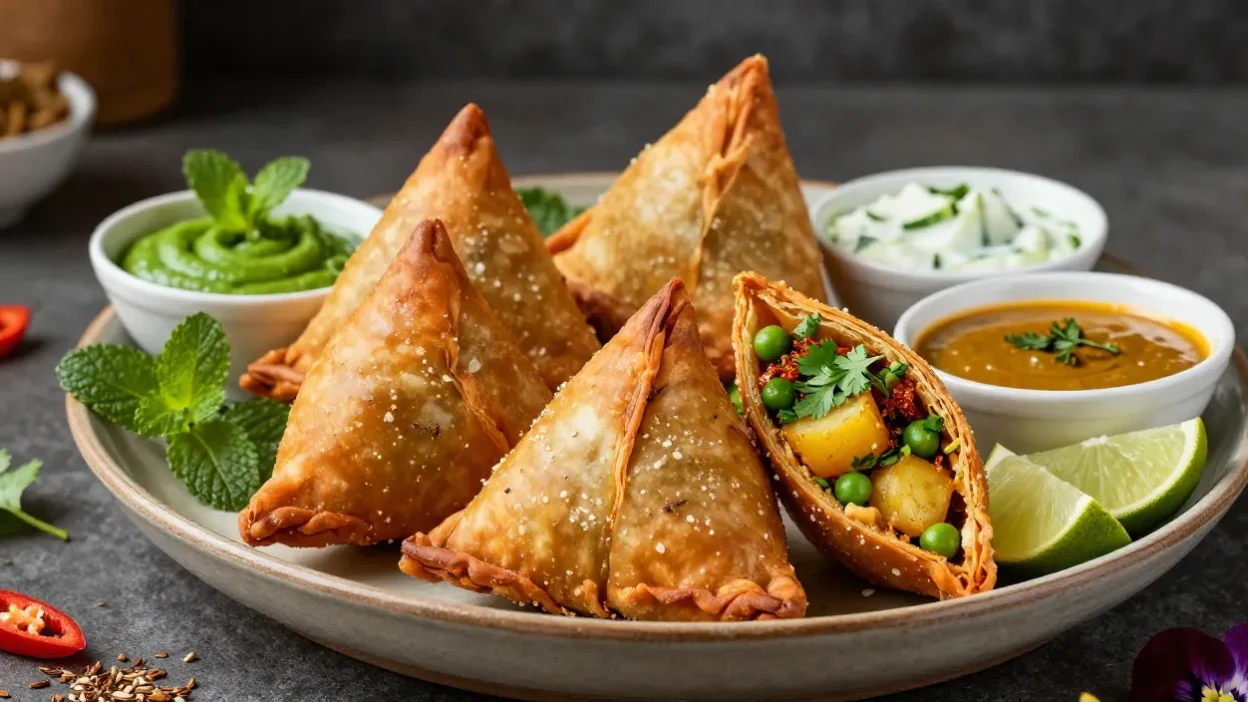
One thing I especially appreciate is how inviting they look when they’re arranged on a serving platter.
Their golden, triangular shape immediately catches everyone’s attention. Add a few bowls of chutney alongside them, sprinkle over a little fresh cilantro, and suddenly even a casual snack feels worthy of sharing.
That’s the charm of recipes like this.
They’re simple enough for an ordinary afternoon but impressive enough that people assume you spent much longer making them than you actually did.
🥔 The filling is where the magic happens
Ask anyone what they remember most about a really good samosa, and chances are they’ll mention the filling before they talk about the pastry.
The crisp shell certainly matters.
But it’s what’s inside that keeps you reaching for another one.
Potatoes form the heart of the mixture, creating a soft, creamy base that carries every spice beautifully. They’re mild enough to let the seasonings shine while still making each samosa feel hearty and satisfying.
Then come the peas.
They might seem like a small addition, but those little bursts of sweetness keep the filling from becoming too rich. Every now and then you bite into one, and it adds just enough freshness to balance the warm spices.
The spices do most of the heavy lifting.
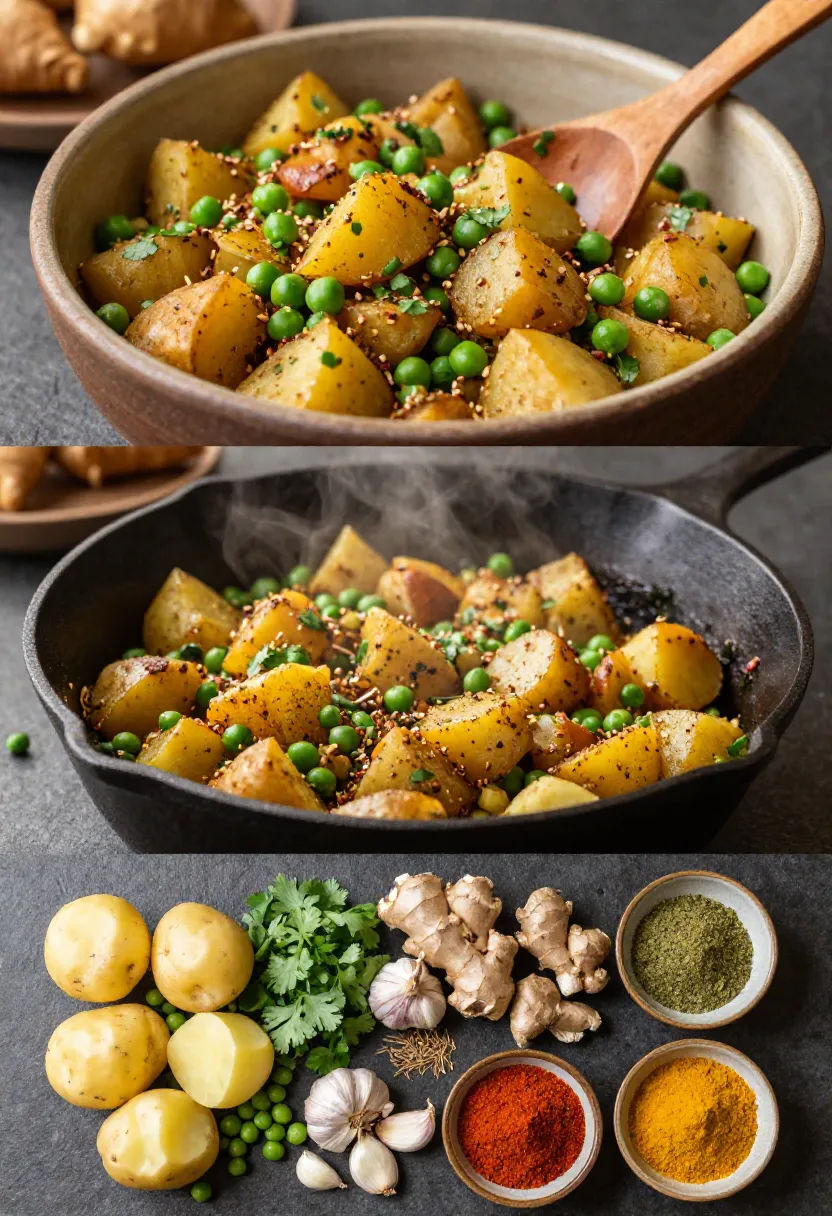
Garam masala brings warmth without overwhelming heat. Ground cumin adds its familiar earthy aroma, while coriander introduces subtle citrus notes that brighten the entire mixture. Fresh ginger and garlic create another layer of flavor that becomes softer and sweeter as everything cooks together.
Finally, chopped cilantro finishes the filling with a fresh herbal note that keeps the potatoes tasting lively instead of heavy.
Here’s how each ingredient contributes:
| Ingredient | What It Adds | Texture | Flavor Impact |
|---|---|---|---|
| Potatoes | Creamy foundation | Soft and fluffy | Mild comforting base |
| Green peas | Sweet contrast | Tender | Fresh pops of sweetness |
| Garam masala | Warm spices | Evenly blended | Aromatic depth |
| Ginger & garlic | Fragrant base | Soft | Bright savory flavor |
| Fresh cilantro | Fresh finish | Delicate | Herbaceous lift |
One thing I’ve noticed over the years is that the filling tastes even better after it sits for a few minutes.
The spices have time to mingle.
The potatoes absorb every bit of flavor.
Even the aroma seems to deepen slightly.
It’s one of those mixtures that’s difficult not to sample before it ever reaches the pastry.
I’ve definitely caught myself stealing more than a few spoonfuls while assembling the samosas.
And honestly, I don’t think I’m the only one.
✨ Simple techniques for flaky, golden samosas
Making samosas looks intimidating until you fold your first one.
After that, the process becomes surprisingly relaxing.
There’s something satisfying about turning a simple sheet of pastry into neat little triangles filled with warm spices. By the time you’ve finished a tray, your hands almost know what to do without thinking.
One thing that makes a noticeable difference is resisting the temptation to overfill them.
It’s easy to think that more filling automatically means a better samosa.
Usually, the opposite happens.
Too much filling makes the pastry harder to fold, more likely to tear, and much more likely to open while baking. A modest spoonful creates cleaner edges and a much crispier final result.
Sealing the pastry well is equally important.
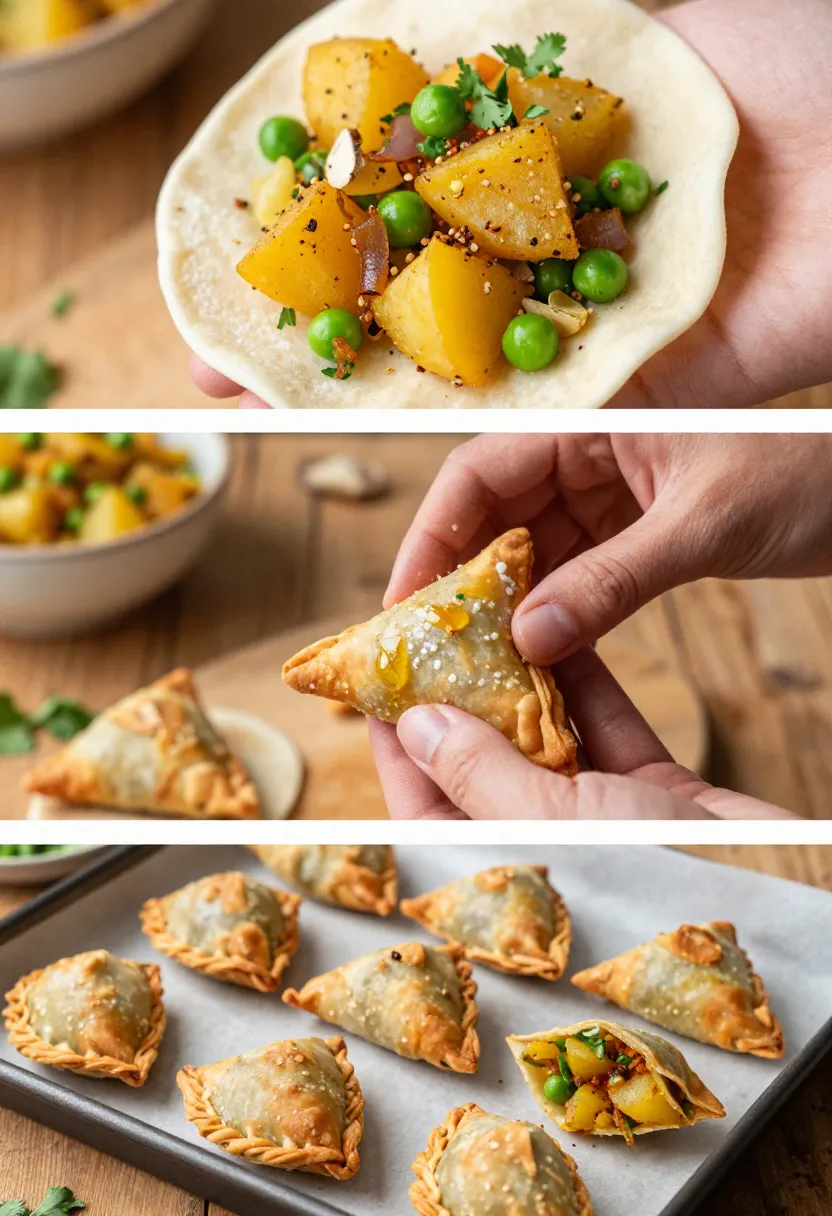
A little water brushed along the edges acts like glue, helping every triangle stay neatly closed as the pastry puffs and turns golden in the oven.
Then comes the finishing touch.
A light brush of oil or egg wash helps the pastry develop an even, beautifully browned crust without needing a deep fryer.
A few simple habits consistently produce better baked samosas:
- don’t overfill the pastry
- seal every edge carefully
- brush lightly with oil or egg wash
- leave space between each samosa 🥟
- serve while they’re still warm
One small detail that’s easy to overlook is spacing.
Crowding the baking tray traps steam, preventing the pastry from becoming as crisp as it could be. Leaving a little room around each samosa allows hot air to circulate, helping every side brown evenly.
When the tray finally comes out of the oven, you’ll notice it immediately.
Golden edges.
Flaky layers.
The warm aroma of toasted pastry and spices filling the kitchen.
That’s usually when it’s hardest to wait for everyone else before grabbing the first one.
🥟 Baked samosa recipe
There are some recipes that feel much more complicated than they actually are.
Baked samosas definitely fall into that category.
The crisp triangular pastry, fragrant potato filling, and beautiful golden color make them look like something reserved for restaurants or experienced home cooks. But once you’ve folded your first few, the process quickly becomes second nature. In fact, I often find making samosas surprisingly relaxing. Mixing the filling, folding each pastry, and arranging them on the baking tray turns into one of those slow kitchen projects that’s every bit as enjoyable as eating the finished result.
One of my favorite things about baking instead of frying is how effortless the cleanup becomes. You still get wonderfully crisp pastry with beautifully browned edges, but without a large pot of hot oil or the lingering smell of deep frying throughout the house.
The filling is comforting without feeling heavy. Soft potatoes carry the warm spices, sweet peas add little bursts of freshness, and ginger, garlic, cumin, coriander, and garam masala create layers of flavor that make every bite taste rich and satisfying.
They’re perfect as an appetizer, a light lunch, part of a larger dinner spread, or simply as an afternoon snack with a cup of chai and your favorite chutney.
And if you’re making them anyway…
I’d strongly recommend doubling the batch.
Future you will be grateful.
🛒 Ingredients
For the filling
- 1 tablespoon vegetable oil
- 1 small onion, finely diced
- 2 cloves garlic, minced
- 1 tablespoon fresh ginger, grated
- 2 teaspoons ground cumin
- 1 teaspoon ground coriander
- 1 teaspoon garam masala
- ½ teaspoon turmeric
- ¼ teaspoon cayenne pepper (optional)
- 3 medium Yukon Gold potatoes, peeled and diced
- ¾ cup frozen green peas
- Salt and freshly ground black pepper, to taste
- 2 tablespoons chopped fresh cilantro
- Juice of ½ lemon
For the samosas
- 10 to 12 sheets spring roll pastry or samosa wrappers
- 2 tablespoons vegetable oil or melted butter for brushing
- 1 beaten egg (optional, for extra golden color)
For serving
- Mint chutney
- Tamarind chutney
- Cucumber raita
- Lemon wedges
👩🍳 Instructions
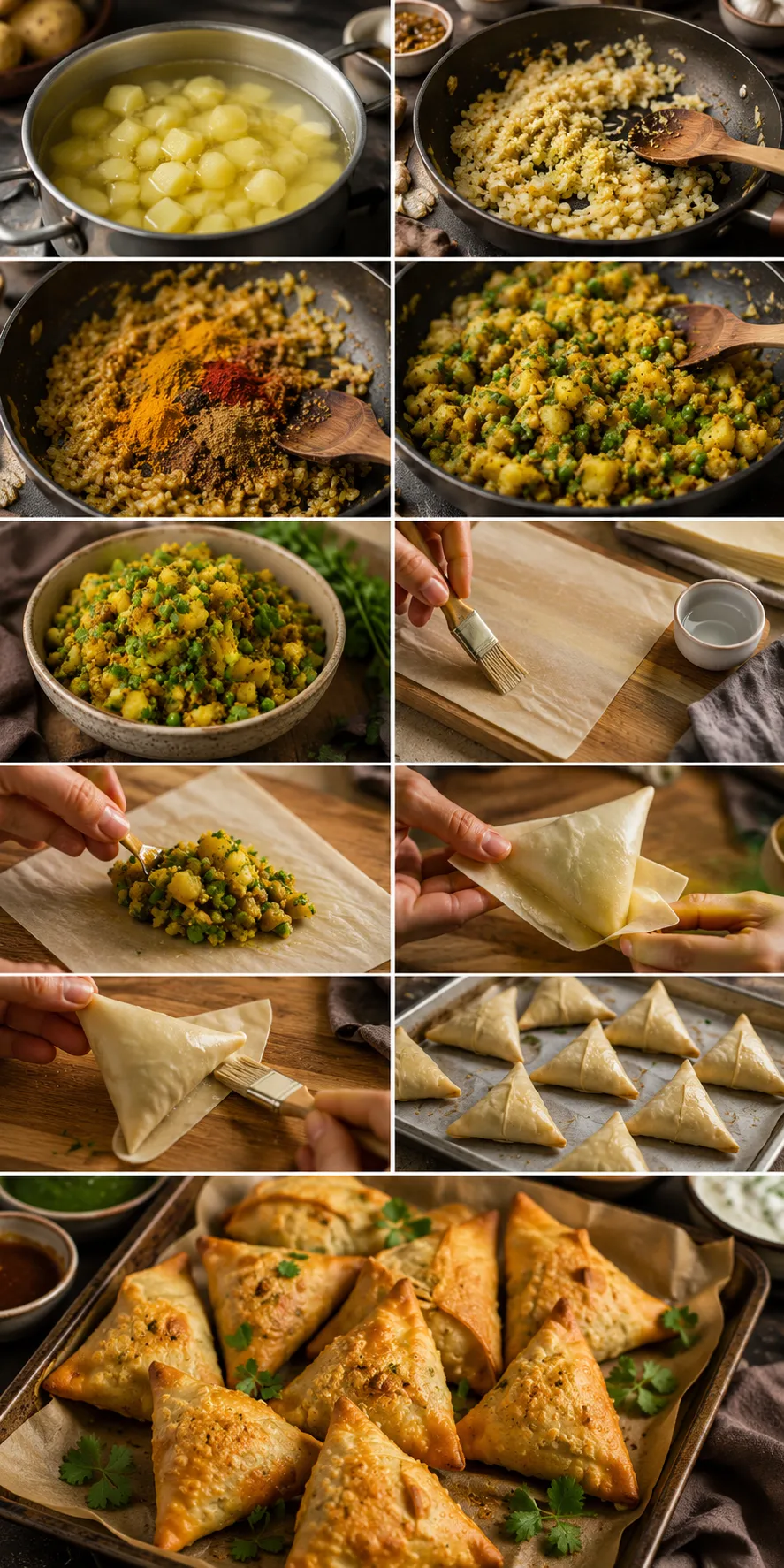
- Cook the potatoes.
Place the diced potatoes in a saucepan of salted water and bring to a boil. Cook for about 10 to 12 minutes, or until fork-tender. Drain well and lightly mash them, leaving a few small chunks for texture. - Prepare the aromatics.
Heat the oil in a large skillet over medium heat. Add the diced onion and cook for about 4 minutes until softened. Stir in the garlic and ginger, cooking for another minute until fragrant. - Toast the spices.
Add the cumin, coriander, garam masala, turmeric, and cayenne. Stir constantly for about 30 seconds. The spices should become wonderfully fragrant without burning. - Make the filling.
Fold the cooked potatoes and peas into the skillet. Stir gently until everything is evenly coated with the spices. Season with salt and black pepper, then remove from the heat. Stir in the chopped cilantro and fresh lemon juice. Allow the filling to cool slightly before assembling the samosas. - Prepare the pastry.
Lay one wrapper on a clean work surface. If using spring roll pastry, cut it into strips if needed according to the package instructions. Keep the remaining pastry covered with a slightly damp towel to prevent it from drying out. - Fill and fold.
Spoon about 2 tablespoons of filling near one end of the pastry. Fold into a triangle, continuing to fold back and forth until the entire strip is wrapped. Seal the final edge with a little water so it stays closed during baking. - Arrange on the baking tray.
Place each folded samosa onto a parchment-lined baking sheet, leaving a little space between each one. Brush lightly with vegetable oil or egg wash to encourage even browning. - Bake until golden.
Bake in a preheated 400°F (200°C) oven for 22 to 28 minutes, turning the samosas halfway through baking. They’re ready when the pastry is crisp, deeply golden, and beautifully flaky. - Let them cool briefly.
Remove the tray from the oven and allow the samosas to rest for about 5 minutes. The filling stays extremely hot, and this short rest also helps the pastry become even crispier. - Serve warm.
Arrange the samosas on a serving platter with bowls of mint chutney, tamarind chutney, or cucumber raita. Garnish with fresh cilantro and lemon wedges if you’d like an extra burst of freshness.
💡 Helpful Kitchen Tips
- Yukon Gold potatoes create a creamy filling without becoming watery.
- Let the filling cool before assembling to keep the pastry crisp.
- Don’t overfill the samosas or they’ll be harder to seal.
- Keep unused pastry covered with a damp towel so it doesn’t dry out.
- Turn the samosas halfway through baking for even color on every side.
- Freeze unbaked samosas on a tray, then transfer them to a freezer bag. Bake straight from frozen, adding about 5 to 8 extra minutes.
- Leftovers stay crisp surprisingly well when reheated in the oven or air fryer.
🥣 The best dips and sides to serve with baked samosas
One of the reasons I love serving baked samosas is that they’re incredibly easy to build a meal around.
Sometimes they’re nothing more than a warm afternoon snack with a cup of chai. Other times they become the centerpiece of a casual dinner table surrounded by colorful dips, fresh salads, and small plates that encourage everyone to help themselves. However you serve them, they have a way of making the table feel a little more inviting.
The beauty of samosas is that they already deliver so much flavor on their own.
The flaky pastry brings crispness. The potato filling is soft and comforting. The spices provide warmth without overwhelming the palate. Because of that, the best accompaniments usually focus on contrast rather than adding even more richness.
Something cool.
Something tangy.
Something fresh.
That’s usually all they need.
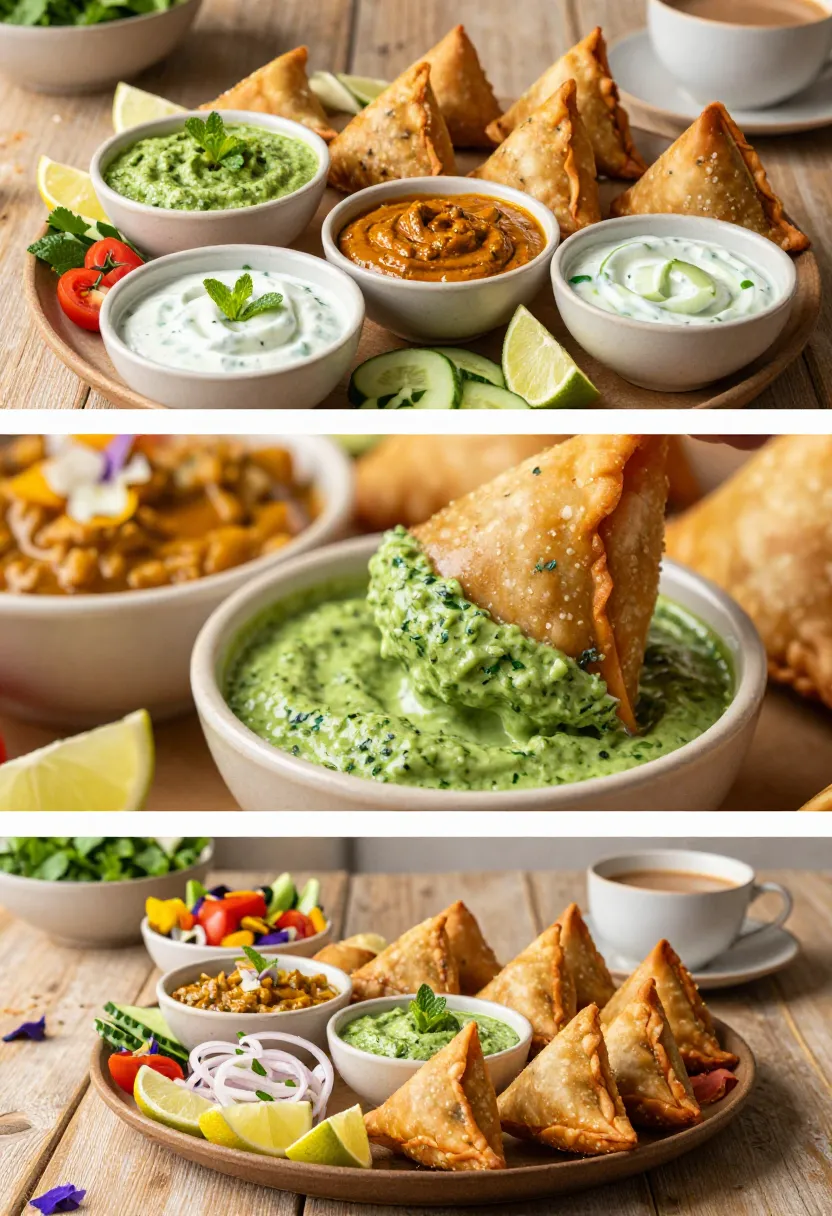
Some of my favorite pairings include:
- mint chutney 🌿
- tamarind chutney
- cucumber raita
- mango chutney 🥭
- masala chai
- fresh cucumber and tomato salad
- pickled onions
If I had to choose just one dip, it would almost certainly be mint chutney.
Its bright herbal flavor instantly wakes up the warm spices in the filling, while the fresh cilantro and mint create a cooling contrast that makes every bite feel balanced. It’s one of those combinations that’s so familiar it almost feels incomplete without it.
Cucumber raita deserves just as much attention.
The creamy yogurt softens the spices without dulling them, while cucumber adds a refreshing crunch that works especially well if you’ve added extra chilies to the filling. It’s simple, but surprisingly effective.
For parties, I like placing several small bowls of different chutneys around a large platter of samosas instead of choosing just one. Some people reach for the sweet tamarind chutney every time, while others prefer the freshness of mint or the cooling richness of raita. It lets everyone build their own perfect bite.
Add a pot of hot masala chai, a simple salad, and maybe a few fresh lime wedges on the side, and suddenly you’ve turned a tray of baked pastries into a meal that people are happy to linger over.
🌶️ Easy ways to customize the filling
One thing you’ll probably notice after making these samosas a couple of times is that the filling quickly becomes your own.
The classic potato and pea version is hard to beat, but it’s also wonderfully forgiving. Once you understand the balance of spices, it’s easy to start experimenting with different vegetables, proteins, or cheeses depending on the season or whatever happens to be waiting in your refrigerator.
That’s one reason homemade samosas never become boring.
Every batch can feel just a little different.
Sometimes I add cauliflower because I already have half a head left over from another recipe. Other times I’ll stir in crumbled paneer for a creamier filling or swap regular potatoes for sweet potatoes when I’m craving something with a little more natural sweetness.
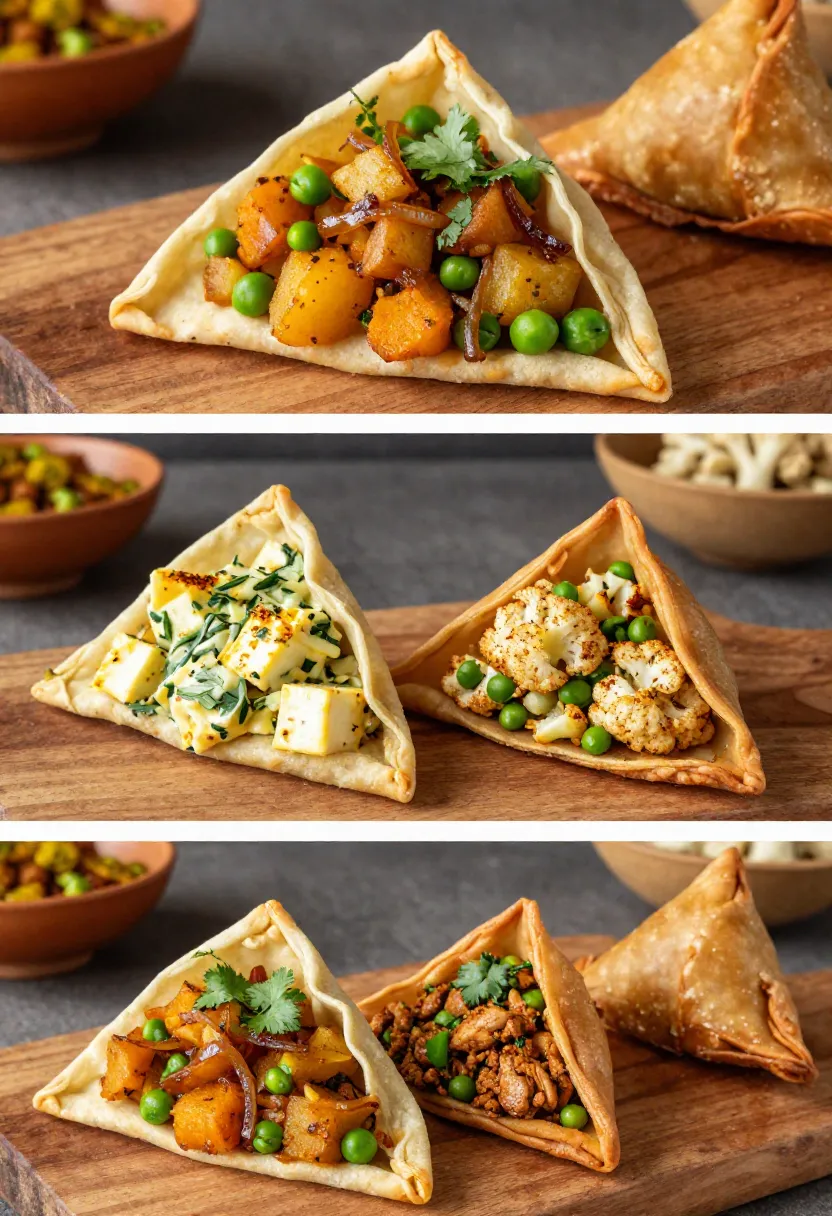
Here are a few delicious variations worth trying:
| If you like… | Try adding… | Flavor Result | Best For |
|---|---|---|---|
| More protein | Ground chicken | Rich and hearty | Dinner |
| Extra vegetables | Cauliflower | Earthy and tender | Everyday meals |
| More heat | Green chilies | Brighter spice | Spice lovers |
| Creamier filling | Paneer | Rich and mild | Entertaining |
| Sweeter flavor | Sweet potato | Soft natural sweetness | Autumn dinners |
Paneer has become one of my favorite additions over the years.
It stays soft during baking, absorbs the spices beautifully, and adds little pockets of creamy texture throughout the filling. Combined with potatoes, it creates a richer version that’s especially nice if you’re serving the samosas as part of dinner instead of a snack.
Cauliflower is another ingredient I use surprisingly often.
Finely chopped florets soften as they cook while keeping a little texture, making the filling feel lighter without sacrificing any of its comforting character. It’s also an easy way to stretch the recipe if you’re cooking for a larger group.
If you’re after something a little bolder, chopped green chilies bring a fresh heat that pairs wonderfully with the warm spices. And sweet potatoes create an entirely different personality—slightly sweeter, earthier, and especially cozy during the cooler months.
That’s what keeps recipes like this interesting.
You don’t have to follow them exactly forever.
Instead, they slowly evolve with your own kitchen, your favorite ingredients, and the meals you find yourself making again and again.
❤️ The appetizer everyone reaches for first
Some appetizers politely wait for the main course.
Samosas rarely have that kind of patience.
The moment a warm tray lands on the table, people instinctively reach for one. Someone grabs a small bowl of chutney. Another breaks open the crisp pastry to let the steam escape before taking the first bite. Before long, the platter already looks noticeably emptier than it did just a few minutes earlier.
I’ve seen it happen at family dinners, holiday gatherings, casual weekend lunches, and game nights with friends.
It never really changes.
The crisp pastry gives way to the soft potato filling, fragrant with cumin, coriander, ginger, and garam masala. The chutney adds a bright, tangy finish, and suddenly one samosa somehow turns into two… or three.
That’s usually the sign of a recipe worth keeping.
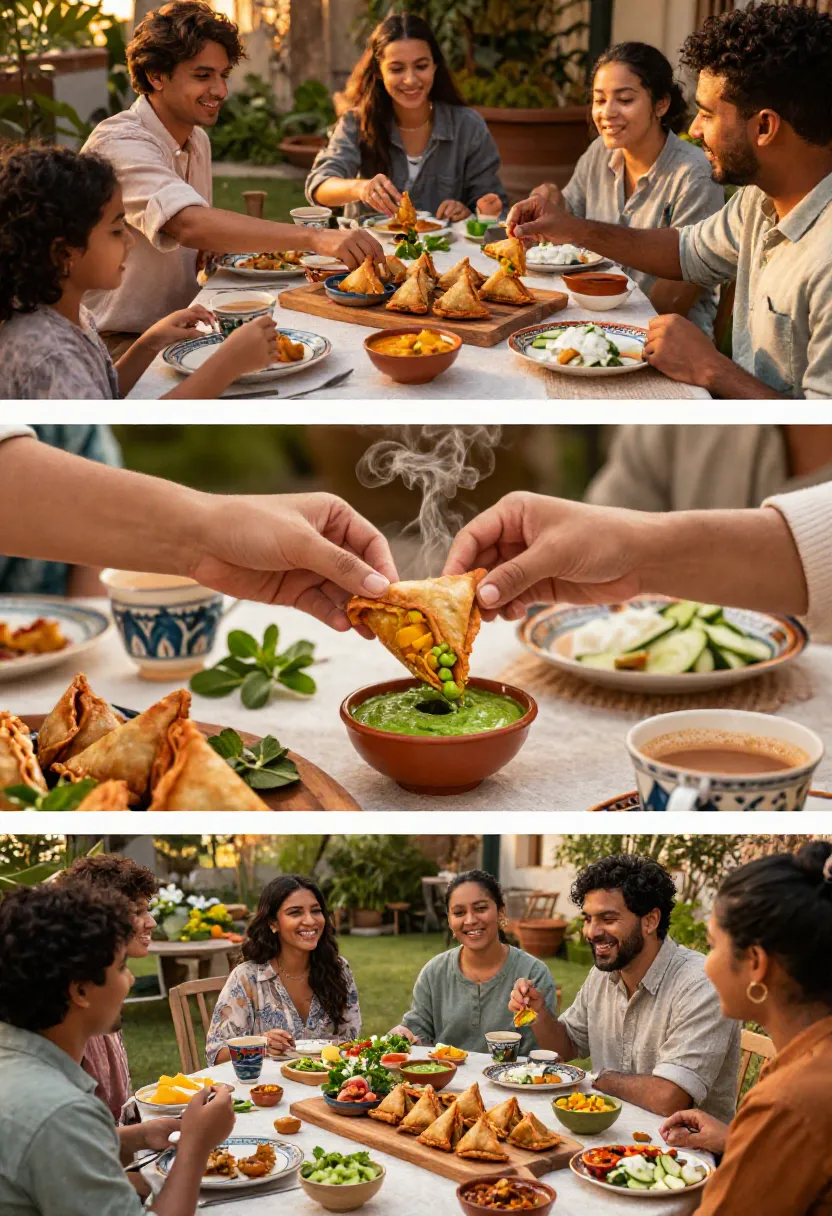
Not because it’s complicated or especially impressive, but because people genuinely enjoy eating it together.
There’s something wonderfully relaxed about serving food that’s meant to be picked up by hand, dipped into a favorite sauce, and shared around the table. It naturally slows the conversation, encourages people to linger a little longer, and somehow makes even an ordinary afternoon feel like a small occasion.
These baked samosas have exactly that kind of charm.
They’re crisp without being greasy, warmly spiced without being overwhelming, and substantial enough to satisfy while still leaving room for the rest of the meal. Better yet, because they’re baked instead of fried, they feel just a little lighter without losing any of the texture that makes samosas so irresistible.
So the next time you’re planning a party platter, looking for a comforting weekend project, or simply craving something warm and full of flavor, give these baked samosas a try.
Serve them straight from the oven while the pastry is still flaky, set out a few colorful chutneys, and let everyone help themselves.
Just don’t be surprised if you’re already thinking about making another batch before the last one disappears. 🥟✨