There are certain dinners that completely change the atmosphere inside the house while they cook, and saucy Asian meatballs absolutely belong in that category. The smell starts spreading long before dinner even reaches the table. Garlic warming slowly in sesame oil, soy sauce simmering gently inside the skillet, fresh ginger softening into the glaze while steam fogs the kitchen windows for a few seconds at a time. It’s the kind of smell that makes people wander into the kitchen pretending they “just wanted water” while secretly checking how much longer dinner still needs.
And honestly, the first thing most people remember afterward is always the sauce.
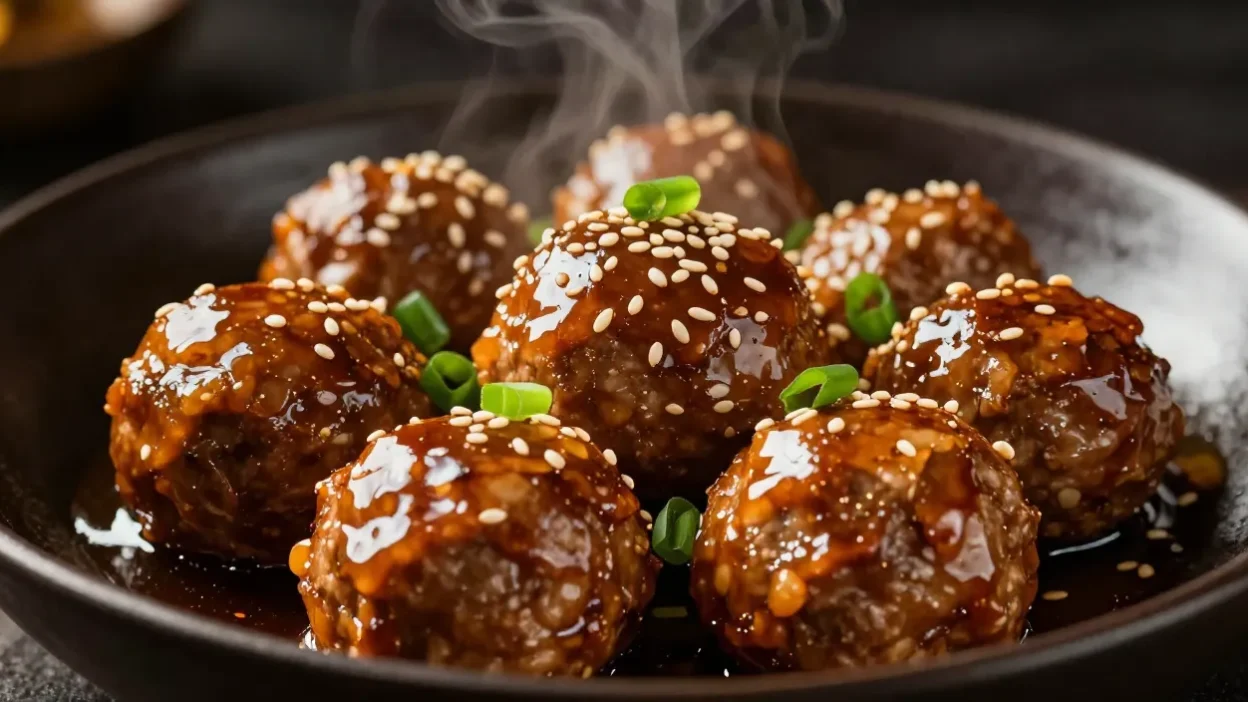
The glaze coats every meatball in this glossy sticky layer that somehow feels rich without becoming too heavy. Sweetness appears first, then saltiness from the soy sauce follows immediately afterward, while ginger keeps the flavor from becoming too deep or overly sweet. Once everything gets spooned over warm rice, the dish starts feeling like pure comfort food in the best possible way. Not fancy restaurant comfort either. More like the kind of dinner that makes people slow down for a while and quietly go back for second servings without announcing it.
The interesting thing about meatballs themselves is how universal they are. Almost every cuisine has some version of them somewhere. Italian kitchens slowly simmer giant meatballs in tomato sauce for hours. Swedish meatballs arrive beside creamy gravy and potatoes. Vietnamese soups often include seasoned pork balls with herbs and noodles. Chinese lion’s head meatballs become incredibly tender after long braising. Even though the flavors change depending on the region, the basic idea stays comforting almost everywhere.
This recipe lands somewhere between several influences without trying too hard to belong entirely to one tradition. And honestly, that’s part of why it works so well. The dish feels familiar immediately, even if someone has never made this exact version before.
The sauce especially gives the recipe most of its personality. Thin sauces disappear too quickly into rice, while heavy sauces become tiring after several bites. Sticky glazes sit right in the middle. They cling directly to the food instead of pooling underneath it, which somehow makes every bite feel warmer and more satisfying. There’s a very specific moment while the sauce cooks where everything suddenly changes too. At first it looks thin and slightly disappointing honestly. Then the bubbles slow down, the glaze starts coating the spoon properly, and suddenly the entire skillet smells like something from a tiny restaurant tucked into a crowded side street somewhere.
I actually ruined the first version of this recipe years ago because I rushed that exact step. The meatballs tasted completely fine technically, but the sauce never thickened properly. Instead of coating the meat, it slid directly into the rice underneath and disappeared. Small difference on paper maybe. Huge difference once you actually eat it.
Now I always give the glaze a few extra minutes.
That patience matters more than people realize. 🍯
Why the balance of flavors keeps the dish interesting 🥢
One reason these meatballs never become boring after a few bites is because several flavors arrive gradually instead of everything hitting at once. The sweetness from honey or brown sugar appears first, then soy sauce brings depth and saltiness afterward, while ginger cuts through the richness before things become too heavy. Sesame oil mostly works through aroma rather than strong flavor, but without it the entire dish somehow feels flatter and less warm.
That layering matters a lot more than people think.
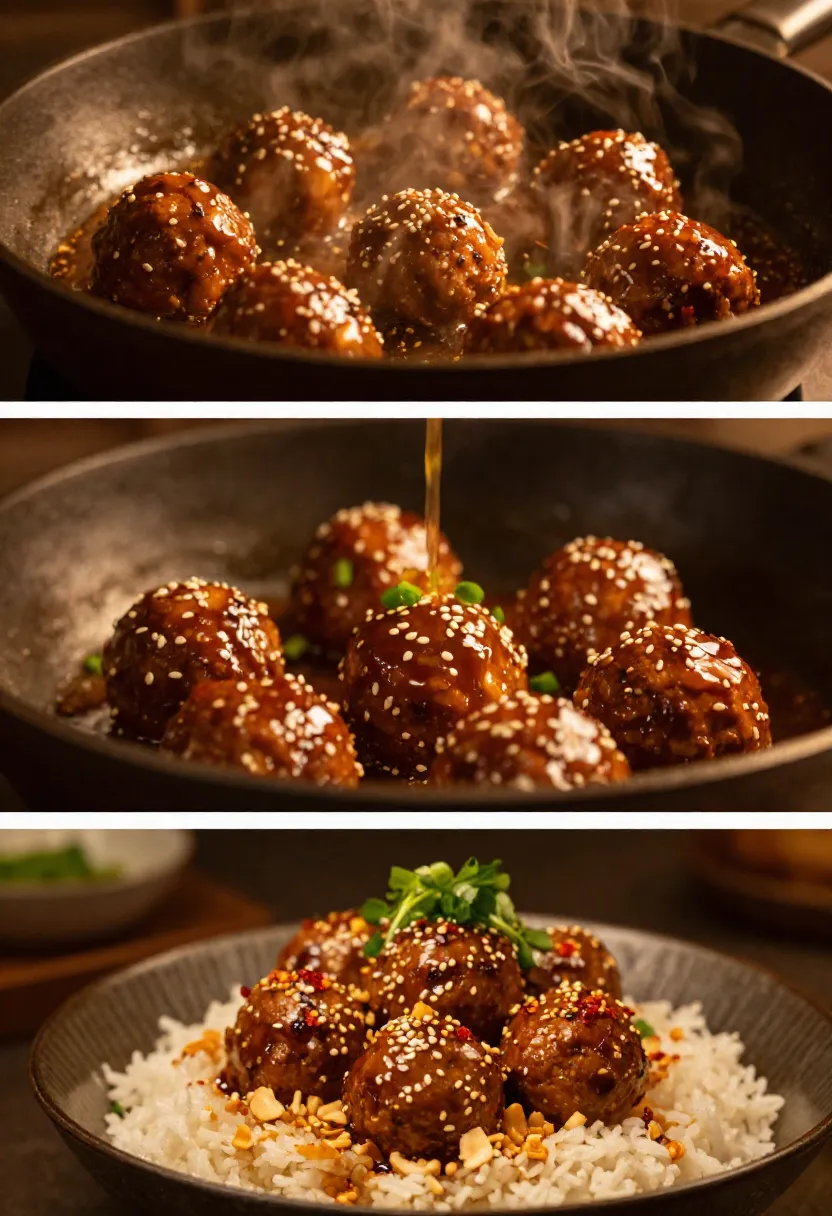
Good sauces usually depend on balance instead of intensity. Too sweet and the glaze feels sticky in a bad way. Too salty and everything becomes harsh after several bites. Too much sesame oil easily overwhelms the rest of the ingredients. Once the proportions settle correctly though, the sauce tastes smooth and comforting instead of sharp or overpowering.
| Ingredient | Main role in the dish | Flavor effect | Texture and cooking impact |
|---|---|---|---|
| Soy sauce | Creates the savory foundation of the glaze | Adds deep salty umami flavor and darker color | Helps the sauce stay smooth while balancing sweetness |
| Honey | Brings natural sweetness to the sauce | Softens the sharper salty notes from soy sauce | Creates the glossy sticky coating around the meatballs |
| Ginger | Keeps the glaze from tasting too heavy | Adds warmth and slight freshness at the end of each bite | Makes the overall sauce feel lighter and brighter |
| Sesame oil | Builds the warm aroma while cooking | Adds toasted nutty depth without overpowering the dish | Gives the sauce a richer finish and fuller mouthfeel |
| Garlic | Strengthens the savory flavor throughout the glaze | Becomes sweeter and softer while simmering | Blends directly into the sauce and thickens the flavor |
| Rice vinegar | Balances sweetness and richness | Adds slight acidity that sharpens the entire dish | Keeps the glaze from becoming overly thick or heavy |
| Brown sugar | Deepens the sweetness compared to honey alone | Adds mild caramel-like notes while cooking | Helps the sauce reduce into a thicker glaze |
| Panko breadcrumbs | Keeps the meatballs soft inside | Neutral flavor that absorbs seasoning evenly | Prevents dense texture and keeps meatballs tender |
The flavor actually changes while cooking too. Early on, the sauce tastes sharper and saltier because the ingredients haven’t blended fully yet. But after several minutes of simmering, the sugar dissolves more smoothly, garlic softens into the mixture, and the glaze starts tasting rounder and warmer overall.
I usually taste the sauce several times before serving because tiny adjustments completely change the final result. Extra vinegar brightens everything immediately. More soy sauce deepens the flavor and darkens the glaze slightly. Additional honey creates a shinier finish and softer sweetness. Garlic measurements honestly stop feeling scientific at some point and become emotional decisions instead.
And maybe that’s another reason recipes like this stay popular for so long. They leave room for improvisation without completely falling apart. Some people add chili crisp for heat. Others stir pineapple into the sauce for sweetness. Crushed peanuts work surprisingly well too because they add texture against the soft rice and sticky glaze.
The meatballs themselves matter just as much though.
Slightly fattier meat creates a softer texture once baked, while lean meatballs can become dry surprisingly quickly. Breadcrumbs help keep everything tender, especially once they absorb milk before mixing. I skipped that step once because I assumed it wouldn’t change much. It changed a lot actually. The meatballs turned noticeably denser and firmer afterward, almost sausage-like instead of soft and juicy.
Since then I never skip the breadcrumb step anymore.
Small details quietly shape the whole dish. ✨
The kind of dinner that naturally slows evenings down 🍱
Some meals disappear quickly because everyone is starving. Other meals somehow stretch the evening longer because nobody feels rushed once dinner starts. Saucy Asian meatballs usually belong in the second category.
Part of that comes from the serving style itself. A large skillet in the center of the table automatically creates a more relaxed atmosphere than individually plated restaurant-style portions. Bowls of rice nearby. Green onions scattered everywhere. Somebody reaching for extra sauce before sitting back down properly. The whole meal feels casual in a good way.
Actually, slightly messy serving almost improves dishes like this.
Perfect plating obviously looks beautiful in photos, but sticky glazed meatballs feel more satisfying once the sauce drips naturally into the rice and sesame seeds scatter across the table accidentally. Food that feels lived-in usually tastes better anyway.
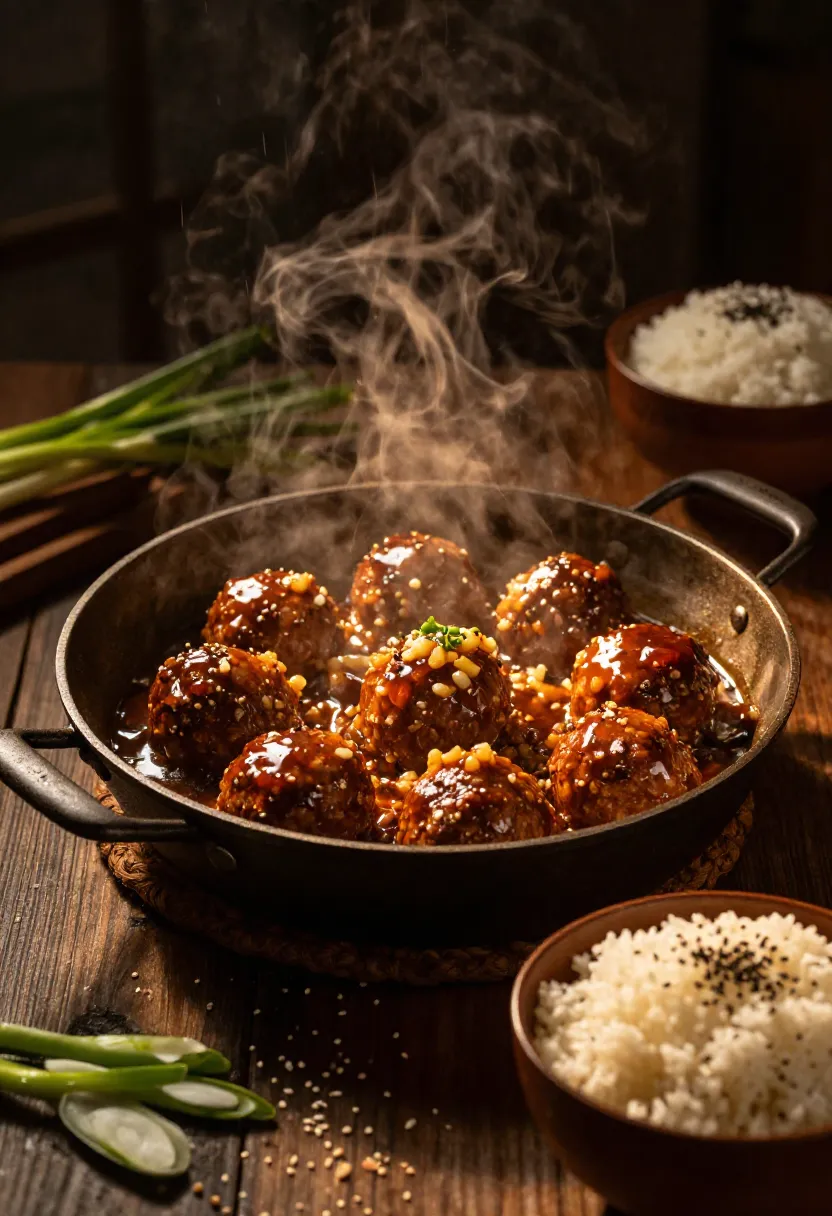
These meatballs also fit colder evenings especially well. Rain outside, warm kitchen inside, oversized sweaters, soft light over the stove, steam rising from fresh rice while the skillet stays warm in the center of the table. The dish creates that kind of atmosphere naturally without trying too hard.
I made these once during a long rainy weekend when friends stopped by unexpectedly. Everyone insisted they “weren’t that hungry,” which usually means the exact opposite honestly. The skillet hit the table, somebody grabbed extra rice immediately, and within maybe twenty minutes almost everything had disappeared already. By the end of the night people were scraping extra sauce directly onto leftover rice because nobody wanted to waste it.
That’s usually how recipes like this go.
And the leftovers somehow become even better the next day. The sauce settles deeper into the meat overnight while the garlic softens further and the glaze thickens slightly in the refrigerator. Reheating slowly in a skillet brings everything back properly, especially once the edges start caramelizing again around the pan.
Microwaves technically work obviously. But skillet reheating changes the texture completely.
The nice thing about recipes like this is how flexible they stay too. Ground chicken works for lighter meatballs. Hoisin sauce creates deeper sweetness. Serving everything over noodles instead of rice makes the dinner feel slightly different without much extra work. I even poured leftover glaze over roasted vegetables once and accidentally created another dinner entirely.
Those are usually the best kinds of recipes honestly. The ones that quietly become part of regular life because they’re comforting enough to repeat without getting tired of them. 🍜
Saucy Asian meatballs recipe 🍜
These sticky Asian meatballs are baked until juicy, then coated in a glossy garlic ginger glaze that clings to every edge before being served over warm rice. The sauce balances salty soy sauce, sweet honey, fresh ginger, garlic, and sesame oil in a way that tastes rich without becoming too heavy. While the meatballs bake, the glaze slowly thickens in the skillet until it turns shiny and smooth, filling the kitchen with the kind of smell that immediately makes people hungry.
What makes this recipe especially good for weeknights is how comforting it feels without requiring complicated cooking techniques. The meatballs stay tender inside thanks to breadcrumbs and a little milk in the mixture, while the outside develops slight caramelization once everything finishes simmering together in the sauce. Every spoonful ends up coated with extra glaze that drips into the rice underneath, which honestly might be the best part of the entire dish.
The recipe also sits somewhere between homemade comfort food and restaurant-style takeout. It feels casual enough for quiet evenings at home but still impressive enough to place in the center of the table when friends come over unexpectedly. The glossy sauce, scattered sesame seeds, sliced green onions, and warm steam rising from the rice make the whole dinner feel cozy in a very specific way, especially during colder evenings or rainy weekends when everyone wants something warm and filling. 🍚
Ingredients
For the meatballs
- 1 pound ground pork or ground beef
- 1/2 cup panko breadcrumbs
- 1 egg
- 2 tablespoons milk
- 3 garlic cloves, minced
- 1 teaspoon grated fresh ginger
- 2 green onions, sliced
- 1 tablespoon soy sauce
- 1 teaspoon sesame oil
- 1/2 teaspoon black pepper
For the sauce
- 1/3 cup soy sauce
- 2 tablespoons honey
- 2 tablespoons brown sugar
- 1 tablespoon rice vinegar
- 2 garlic cloves, minced
- 1 teaspoon grated ginger
- 1 teaspoon sesame oil
- 1 tablespoon cornstarch
- 2 tablespoons water
For serving
- Steamed jasmine rice 🍚
- Sesame seeds
- Sliced green onions
- Chili flakes or sriracha 🌶️
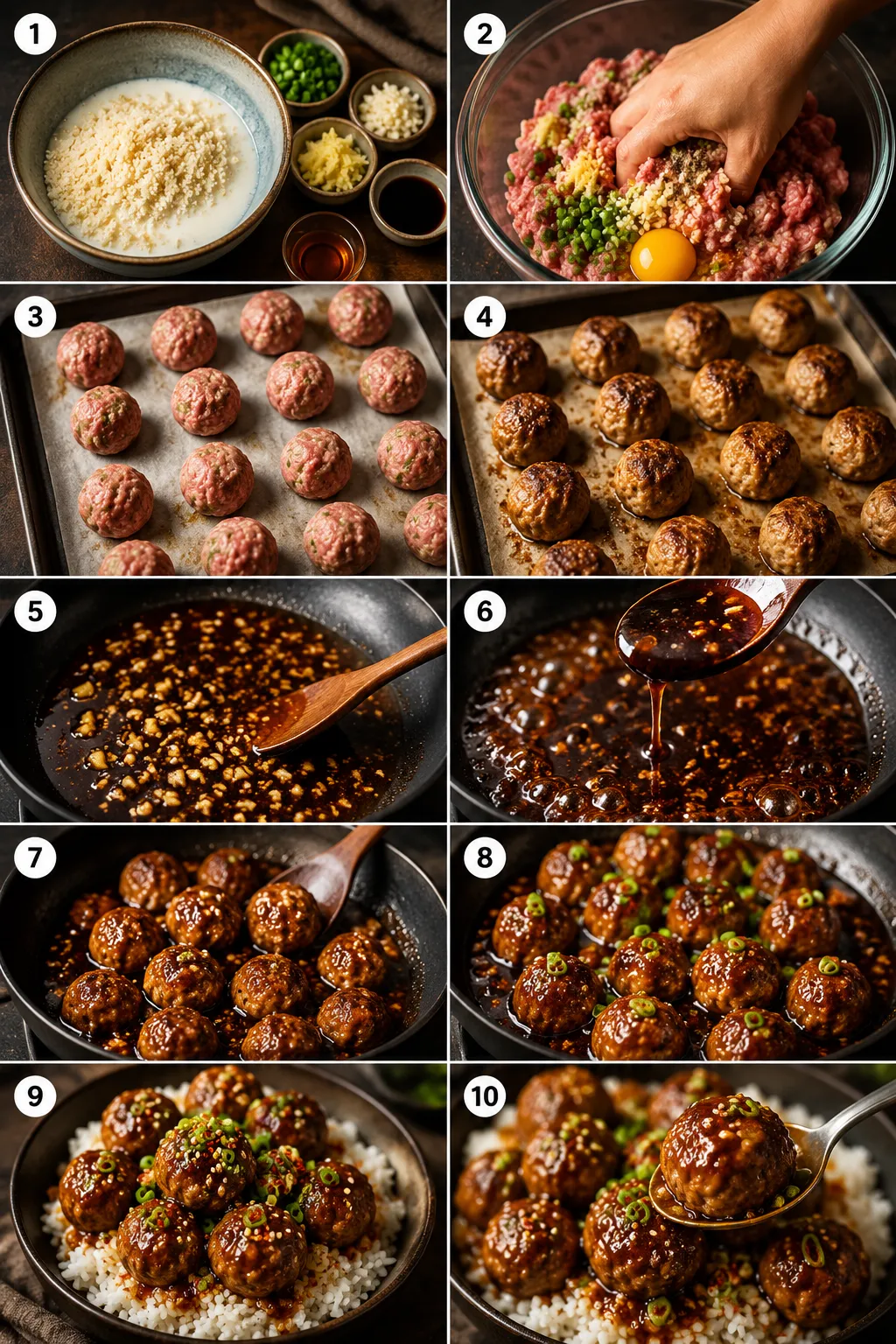
How to make saucy Asian meatballs 👨🍳
Small cooking tricks that quietly improve everything 👀
Little adjustments change recipes like this more than people expect.
- Fresh ginger works much better than powdered ginger because the flavor stays sharper and brighter.
- Slightly fatty meat creates softer meatballs after baking.
- Don’t rush the glaze reduction or the sauce stays watery.
- Let the meatballs rest briefly before adding them into the sauce.
- Extra green onions at the end make the dish feel fresher immediately.
And honestly, leftover sauce might secretly be the best part of the entire recipe.
Leftovers somehow taste even better the next day 🍱
Some foods completely lose their texture overnight. Crispy things turn soft, roasted vegetables become watery, and meat often dries out after reheating. These meatballs somehow do the opposite. They actually improve once they spend a night in the refrigerator.
The glaze settles deeper into the meat while everything rests, and the garlic becomes slightly sweeter and softer overnight. The ginger loses a little sharpness too, which makes the sauce taste warmer and smoother the next day. Once reheated slowly in a skillet, the edges caramelize lightly again while the glaze thickens around the meatballs for a second time.
That second-day texture honestly might be the best version of the dish.
Microwaves work if necessary obviously, especially during busy afternoons when nobody feels like standing near the stove. But reheating slowly in a skillet changes everything. The sauce loosens gradually while warming, steam starts rising from the pan again, and the sticky glaze rebuilds itself around the meatballs instead of turning watery.
The rice changes too. Cold rice from the refrigerator absorbs extra sauce while reheating, so every bite somehow tastes richer than it did originally. Sometimes I even add a splash of water or extra soy sauce directly into the skillet while reheating because it creates a little fresh glaze underneath everything again.
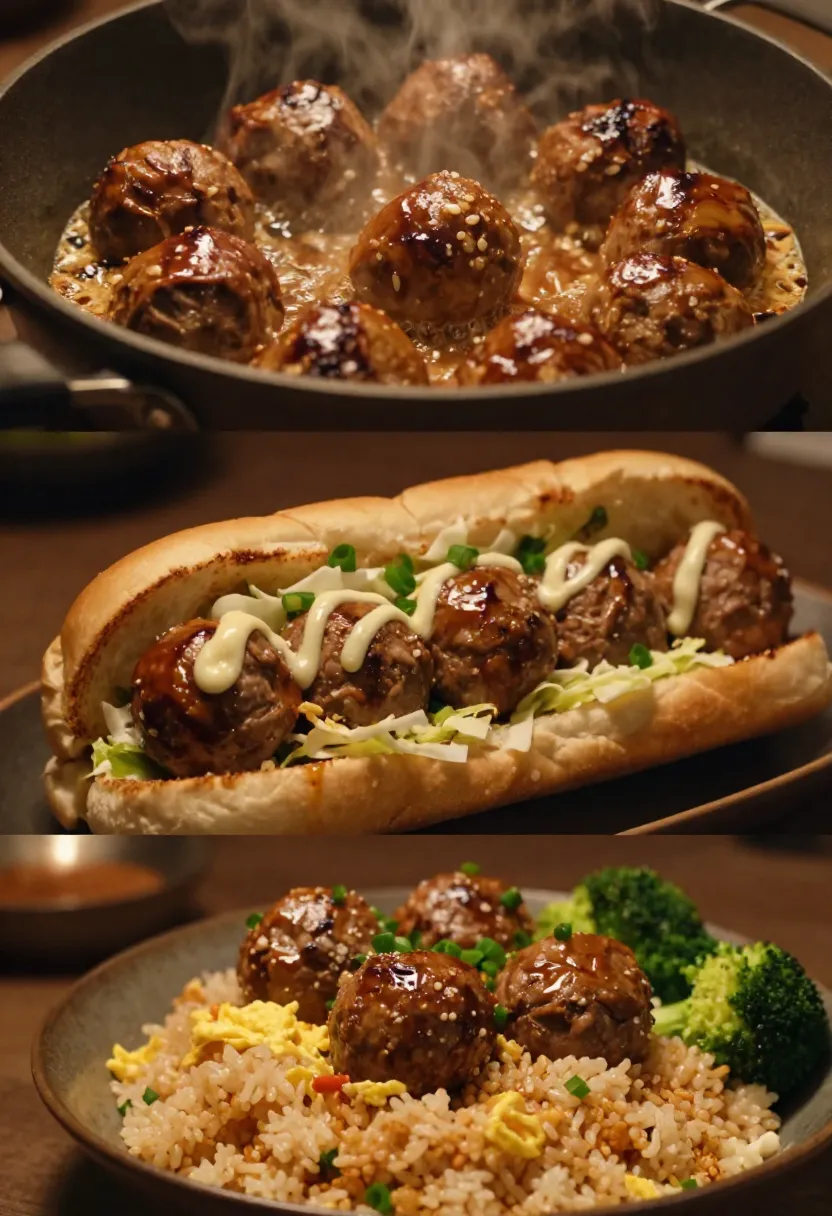
I made a double batch once before a long rainy weekend thinking leftovers would easily last several days. By the second evening almost everything had already disappeared because people kept reheating “small portions” and quietly returning for more fifteen minutes later.
That usually tells you whether a recipe deserves repeating.
The leftovers also become surprisingly flexible once they’re sitting in the refrigerator. The meatballs work over rice obviously, but after the first dinner they start turning into several completely different meals depending on what sounds good that day.
A few leftover ideas that actually work really well:
- Slice the meatballs and serve them inside toasted sandwich rolls with spicy mayo and shredded cabbage
- Toss them into noodles with extra soy sauce and green onions
- Add them to fried rice with scrambled egg and vegetables
- Serve them inside lettuce wraps for something lighter
- Reheat everything with roasted broccoli or bok choy for an easy second dinner
Honestly, leftover sauce might secretly be the best part of the whole recipe. I poured extra glaze over roasted vegetables once thinking it would simply keep them from tasting dry, and somehow it turned into another full dinner entirely.
Recipes that survive leftovers well usually become household favorites faster than complicated “special occasion” meals anyway, because real-life cooking depends a lot more on what still tastes good tomorrow afternoon than people sometimes admit.
Easy variations if you want to change the recipe 🌶️
One reason recipes like this stay popular for years is because they adapt easily without falling apart completely. The base recipe feels reliable, but there’s still enough flexibility to change ingredients depending on the season, mood, or whatever happens to already be sitting in the refrigerator.
Ground pork creates the juiciest texture in my opinion because the extra fat keeps the meatballs softer once baked. But ground chicken works surprisingly well too if you want something lighter. Turkey creates slightly firmer meatballs but still absorbs the glaze nicely, especially once everything simmers together for a few extra minutes.
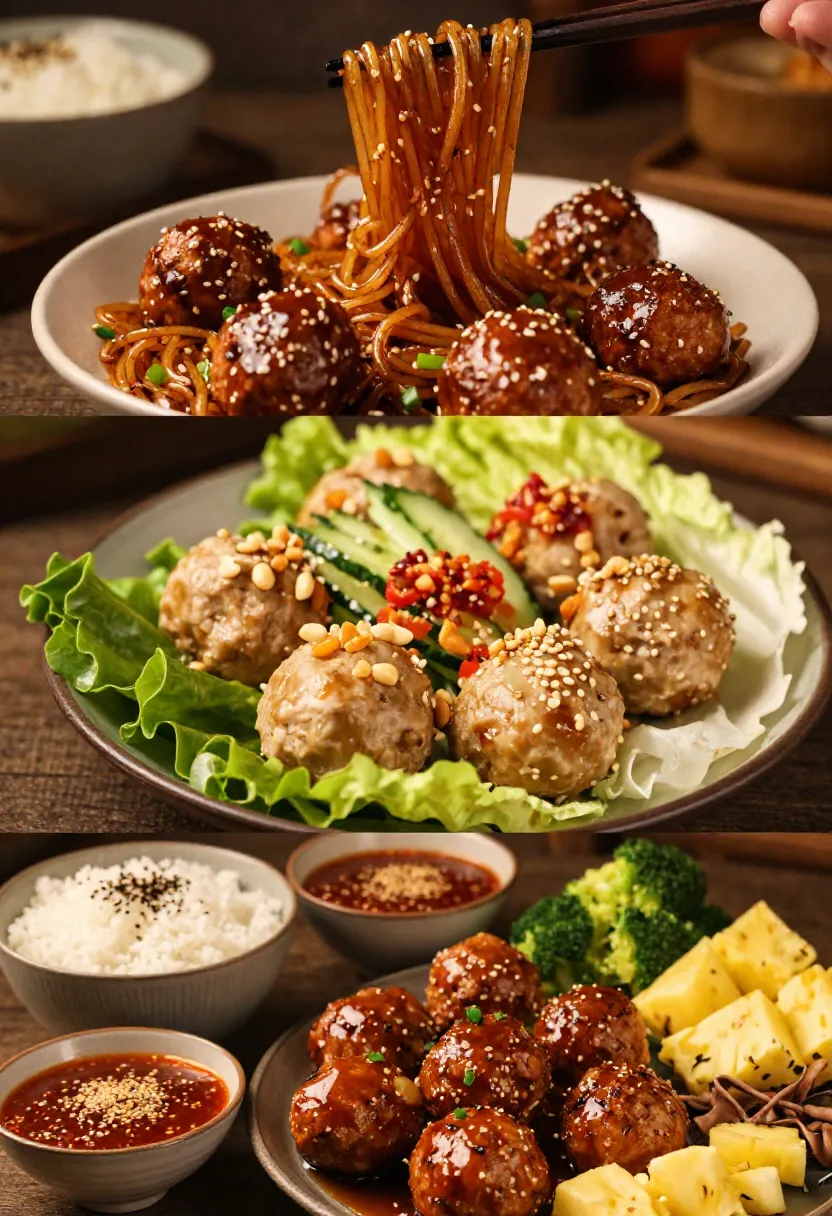
The sauce changes easily too. Hoisin sauce creates deeper sweetness and slightly thicker texture. Chili crisp adds heat almost immediately without needing extra ingredients. Pineapple sounds strange at first honestly, but once added into the glaze it creates this sweet-salty balance that works especially well during warmer months.
And noodles completely change the atmosphere of the meal compared to rice. Rice makes the dish feel cozy and grounding. Noodles somehow make it feel more casual and fast, almost like something from a tiny late-night restaurant where the kitchen stays open too long and everyone leaves smelling faintly like garlic and soy sauce afterward.
Texture additions help too because soft sticky meatballs naturally benefit from something fresh or crunchy nearby. Crushed peanuts add nuttiness and texture, while cucumber salad or steamed broccoli make the meal feel lighter overall.
Actually, this recipe works unusually well for casual hosting because people naturally customize their bowls differently once everything reaches the table. Somebody always adds too much chili sauce. Somebody piles extra sesame seeds onto everything. Someone else ignores rice completely and starts eating meatballs directly from the skillet.
That’s usually a good sign honestly.
Meals that allow people to eat casually and adjust flavors themselves tend to create more relaxed dinners automatically.
Why recipes like this keep people sitting at the table longer ✨
Some dinners disappear quickly because everyone is tired and hungry. Plates empty fast, dishes get stacked near the sink, and within twenty minutes the evening basically moves on.
Other meals somehow slow the entire room down.
These meatballs belong in the second category. Maybe it’s because the skillet stays warm in the center of the table while people keep spooning extra sauce onto rice throughout dinner. Maybe it’s because sticky comfort food naturally encourages slower eating. Or maybe warm savory meals simply create a calmer atmosphere once colder evenings start arriving again.
Whatever the reason, dinners like this usually stretch longer than expected.
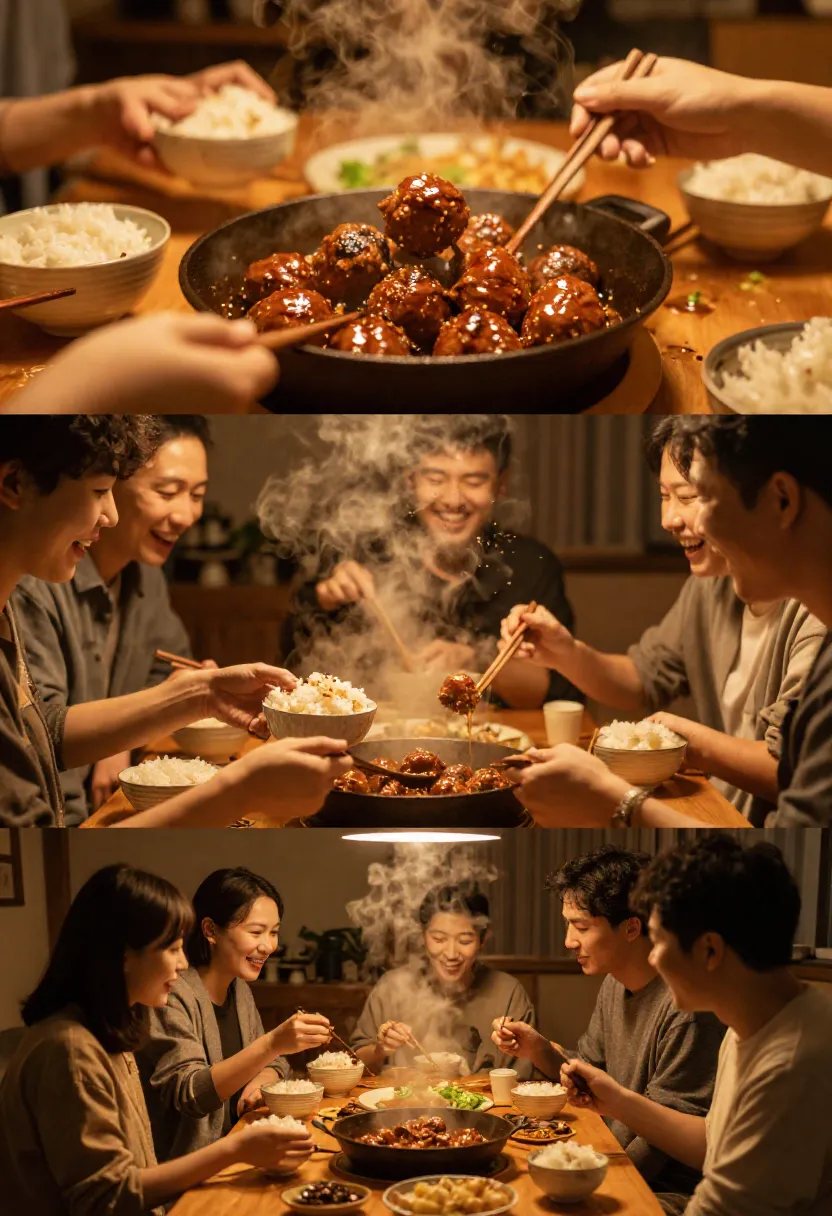
The dish also feels very connected to weather somehow. Rain outside, warm kitchen inside, steam rising from bowls of rice, cold windows near the table while the skillet stays hot enough that the sauce still bubbles quietly around the edges for the first few minutes after serving.
That atmosphere becomes part of the recipe itself after a while.
I made these once during a late autumn evening when everyone originally planned to “just stop by quickly.” Nobody left quickly. The skillet stayed in the middle of the table almost empty except for streaks of extra glaze, drinks kept getting refilled, and somehow the evening stretched several hours longer than anyone expected.
Actually, recipes like this often become attached to memories faster than complicated restaurant-style meals do. Maybe because they feel approachable instead of overly polished.
Sticky glazed meatballs served from a skillet don’t demand perfect presentation. The sauce drips onto rice. Sesame seeds scatter across the table accidentally. Someone grabs another meatball before sitting down properly. The whole dinner feels relaxed enough that people stop paying attention to appearances after a while and simply enjoy eating.
Food that feels lived-in usually creates stronger memories anyway.
And honestly, those are usually the recipes worth keeping long-term. 🍜