🍽️ Corned beef hash recipe
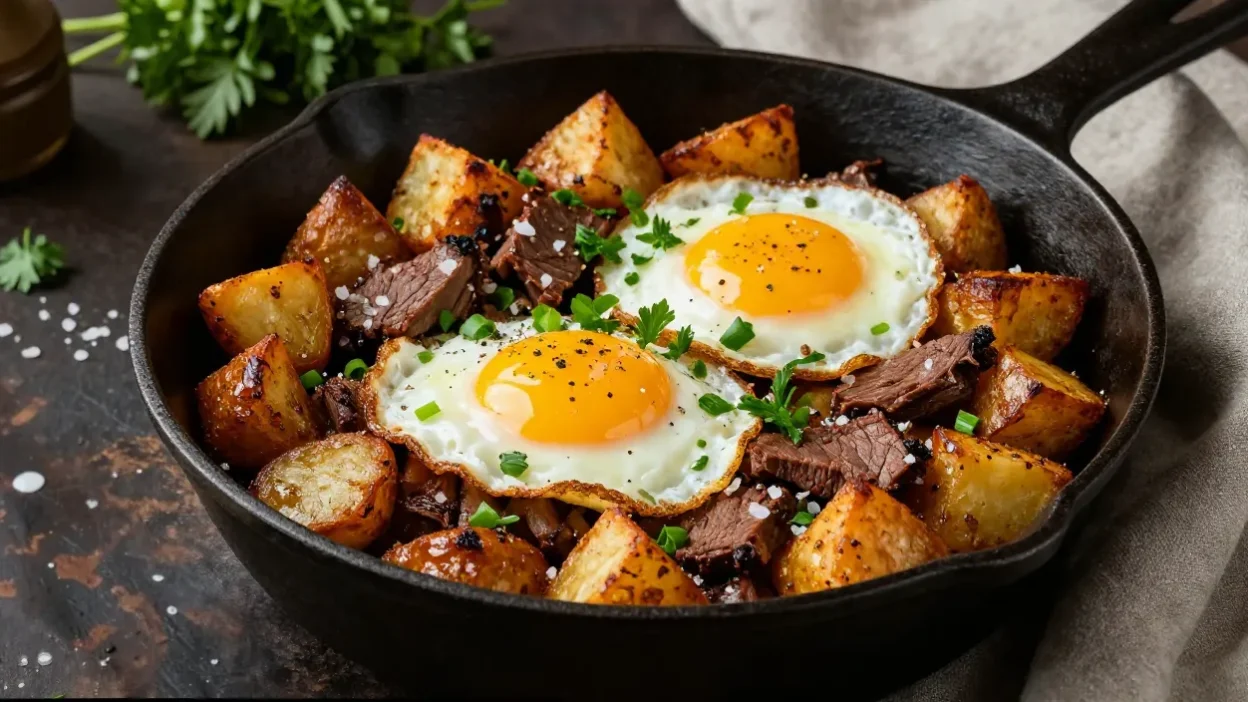
A really good corned beef hash should feel hearty and filling without crossing the line into something overly greasy or heavy. The balance matters more than people expect. The potatoes bring most of the structure and texture to the skillet, especially once the edges start turning deeply golden and crispy. The onions soften slowly into the butter underneath everything, adding sweetness that keeps the salty corned beef from becoming overwhelming. Then the beef itself melts into the pan little by little, spreading rich savory flavor through every bite while still holding enough texture to stand out from the potatoes.
What makes hash so satisfying is the contrast happening in almost every forkful. Crispy edges against soft centers. Salty beef mixed with sweet onions. A buttery crust underneath potatoes that still stay fluffy inside. The skillet never tastes completely uniform, and honestly, that’s exactly why people keep going back for another spoonful.
The dish also changes depending on how long you let everything brown together. Some people prefer lighter softer hash with only a little crispness around the edges, while others let the potatoes develop a much darker crust that almost sticks to the skillet before flipping everything over. Both versions work, but the deeper caramelization usually creates more flavor throughout the pan.
And once fried eggs land on top, the whole thing somehow becomes even better.
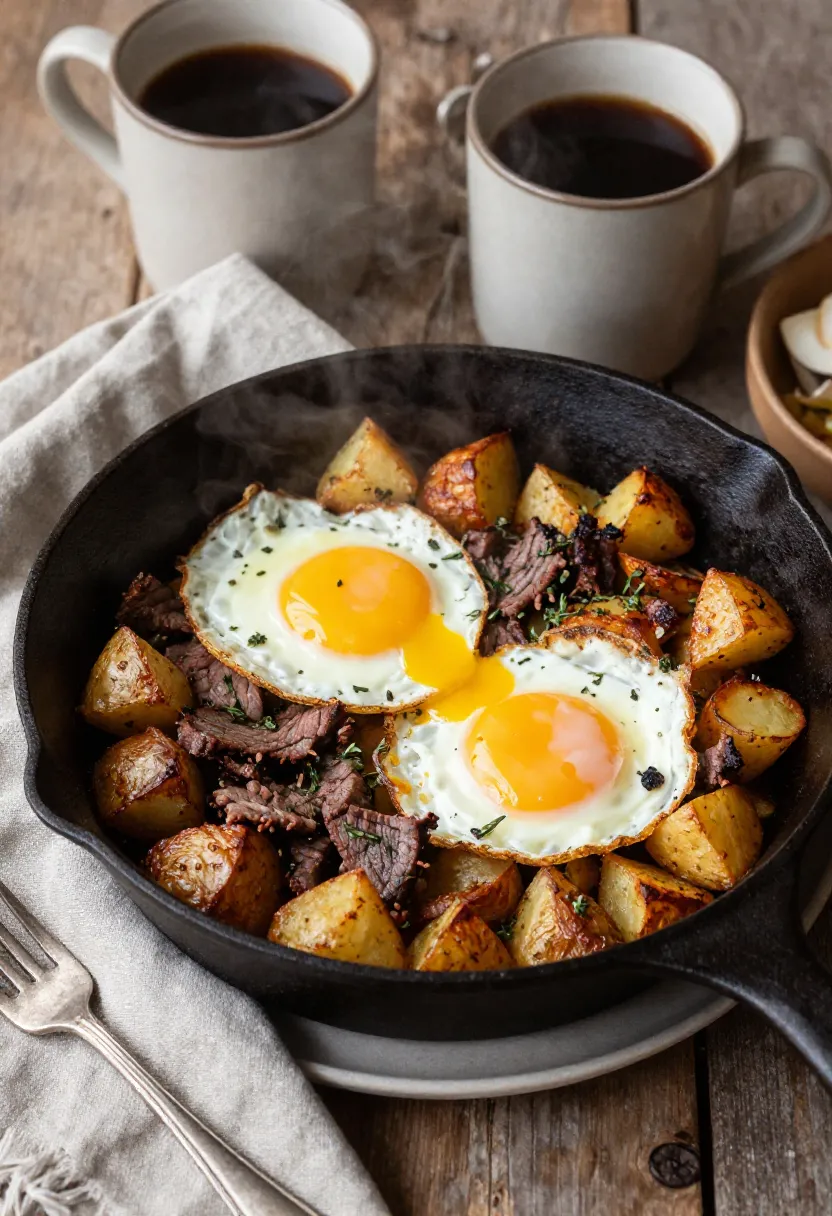
The moment the yolk breaks open and runs through the crispy potatoes underneath, the texture changes completely. The crust absorbs some of that richness while still keeping enough crunch to hold everything together. It turns the skillet into the kind of breakfast people eat slowly, usually while reaching for another cup of coffee halfway through.
Honestly, corned beef hash feels less like a recipe and more like the kind of breakfast people remember afterward because the whole kitchen smelled incredible while it cooked.
🛒 Ingredients
- 3 cups cooked corned beef, chopped
- 4 medium Yukon Gold potatoes
- 1 large yellow onion
- 2 garlic cloves
- 2 tablespoons butter
- 1 tablespoon olive oil
- 1 teaspoon black pepper
- Salt if needed
- Fresh parsley
- 4 eggs for serving
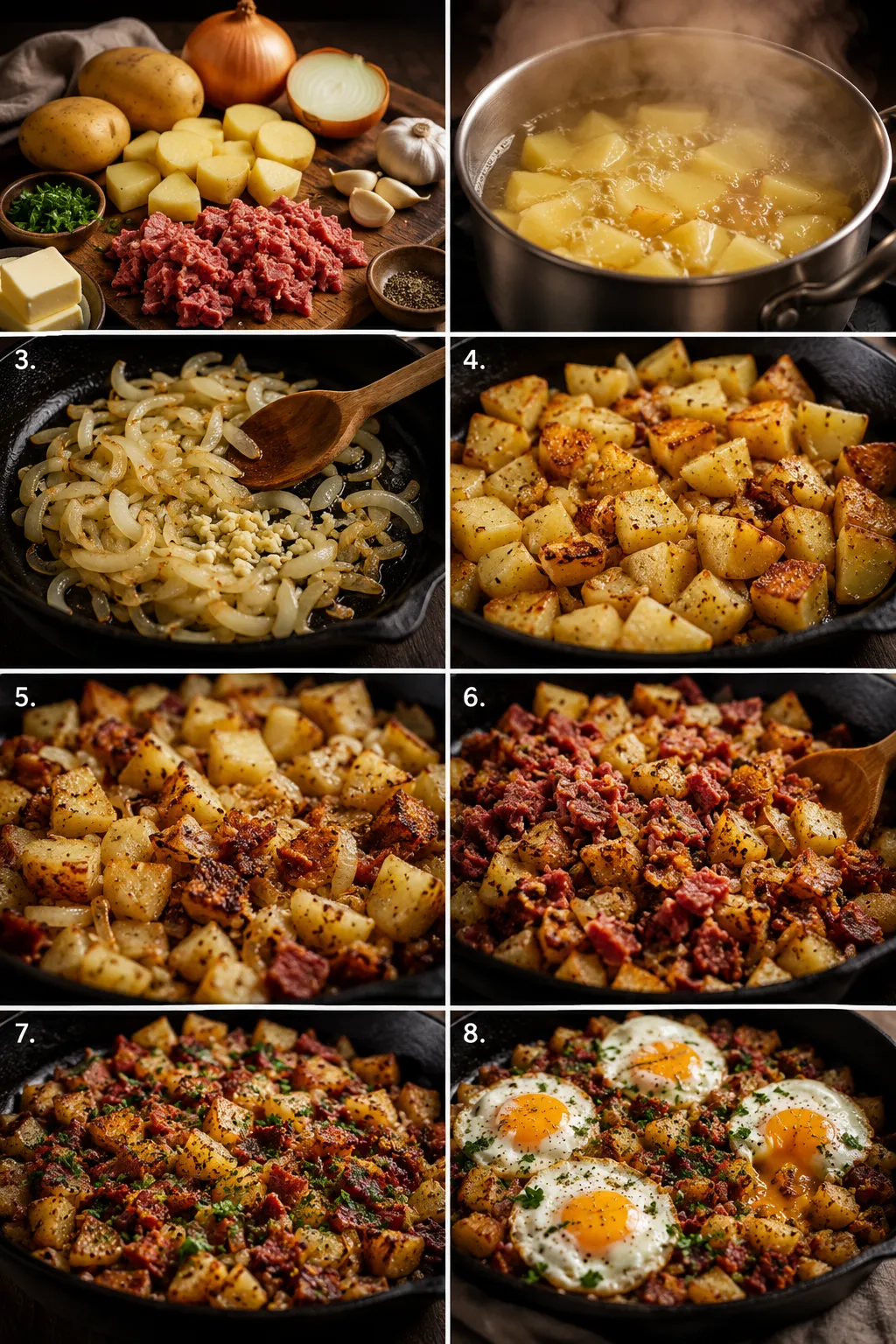
👨🍳 Step-by-step instructions
- Prepare the potatoes first
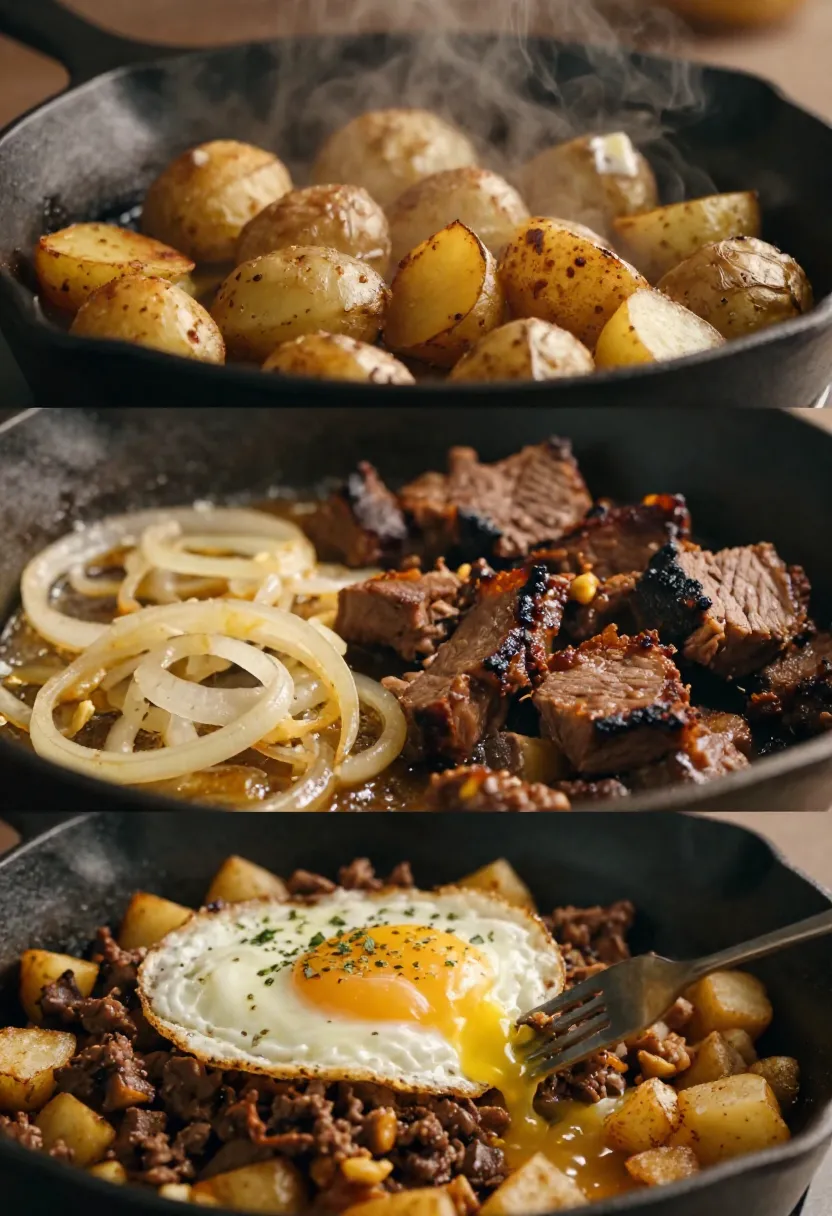
Cut the potatoes into uneven bite-sized chunks rather than perfect cubes. The rough edges actually help the potatoes crisp better later in the skillet. Place them into salted water and boil until they’re just fork-tender. You don’t want them fully soft here because they’ll continue cooking in the pan afterward. Drain them well and let them cool completely before using. Cold potatoes create a much crispier hash than hot freshly boiled ones. - Heat the skillet properly
Place a large cast iron skillet over medium-high heat and let it warm up for a minute or two before adding anything. Once the pan feels properly hot, add the butter together with the olive oil. The butter adds flavor while the oil keeps it from burning too quickly once the potatoes hit the skillet. - Cook the onions slowly
Add the sliced onions and spread them across the pan. Let them cook slowly for several minutes, stirring occasionally, until they soften and turn lightly golden around the edges. Don’t rush this step. The onions add sweetness that balances the salty corned beef later, and the flavor becomes much deeper once they start caramelizing slightly. - Add the garlic carefully
Stir in the garlic and cook for about 30 seconds, just until fragrant. Garlic burns quickly, especially in a hot cast iron skillet, so this part moves fast. Once you can smell it clearly, it’s ready. - Spread the potatoes into an even layer
Add the cooled potatoes to the skillet and gently press them down into the pan with a spatula. Try to keep them in a relatively even layer so more surface area touches the heat directly. This is where the crust starts developing. - Leave the potatoes alone for a while
This is the hardest part for most people. Don’t stir immediately. Let the potatoes sit untouched for several minutes so the bottom can properly brown and crisp. You should hear a steady sizzling sound while the crust develops underneath. - Flip sections instead of constantly stirring
Once the bottom starts turning deeply golden, carefully flip sections of potatoes rather than mixing everything aggressively. Some pieces should become darker and crispier than others. That uneven texture is exactly what makes homemade hash taste good instead of overly uniform. - Add the corned beef near the end
Fold the chopped corned beef into the skillet once the potatoes already have good color. Since the beef is already cooked, it only needs enough time to heat through and lightly crisp around the edges. Adding it too early can dry it out. - Let everything cook together briefly
Cook the hash for another few minutes so the flavors blend together and the beef starts caramelizing slightly in spots. At this point the onions, butter, potatoes, and beef should all smell rich and deeply savory together. - Prepare the eggs separately
While the hash finishes cooking, fry the eggs in another pan until the whites are set but the yolks stay runny. The soft yolk adds richness once it breaks into the potatoes. - Finish and serve immediately
Place the fried eggs directly over the hot hash and finish everything with fresh parsley and black pepper. Serve immediately while the potatoes are still crispy and the skillet is sizzling slightly underneath.
🔥 Small cooking tricks that actually improve the recipe
- Cold potatoes create a much crispier skillet than freshly boiled potatoes
Potatoes straight from hot water hold a lot of steam inside, which makes them soften in the skillet before the crust has time to form. Chilled potatoes from the fridge behave completely differently because the surface dries slightly overnight. That small change gives you deeper golden edges and a much better texture overall. - Cast iron pans hold heat better and help form a stronger crust
A heavy cast iron skillet keeps the temperature stable even after adding potatoes to the pan. That steady heat helps everything brown gradually instead of dropping into a softer steaming stage. It’s one of the reasons diner-style hash often tastes crispier than homemade versions cooked in thinner pans. - Don’t overcrowd the skillet or the potatoes will steam instead of brown
If too many potatoes are packed into the pan at once, moisture gets trapped between everything and the crust never develops properly. The potatoes need direct contact with the hot surface to caramelize. If necessary, it’s honestly better to cook hash in two smaller batches instead of forcing everything into one crowded skillet. - Add the corned beef later so it stays juicy
Since the corned beef is already fully cooked, it doesn’t need much time in the skillet. Adding it too early usually dries it out before the potatoes finish browning. Folding it in near the end keeps the meat tender while still allowing certain edges to crisp slightly against the pan. - A spoonful of Dijon mustard or hot sauce balances the richness really well
Hash is naturally rich because of the butter, potatoes, and beef, so something sharp or slightly acidic helps balance everything out. Dijon mustard adds a subtle tang that cuts through the heaviness without overpowering the skillet, while hot sauce gives the whole dish a little extra warmth and brightness.
☀️ Why this recipe feels perfect during colder seasons
There are certain meals that instantly feel connected to autumn and winter, and corned beef hash absolutely belongs in that category. Not just because it’s warm or filling, but because the whole process of making it changes the atmosphere of the kitchen. The smell of onions slowly softening in butter, potatoes browning around the edges, and corned beef crisping gently against the skillet creates the kind of comfort cold mornings almost seem designed for.
Hash also naturally slows people down a little. Unlike quick weekday breakfasts where everything happens between alarms, coffee, and rushing out the door, this recipe asks for patience. The potatoes need enough time to develop a proper crust. The onions need a few extra minutes before they become sweet enough to balance the salty beef. Even the sound of the skillet feels slower somehow — steady sizzling instead of aggressive frying.
That slower rhythm honestly feels built into the recipe itself.
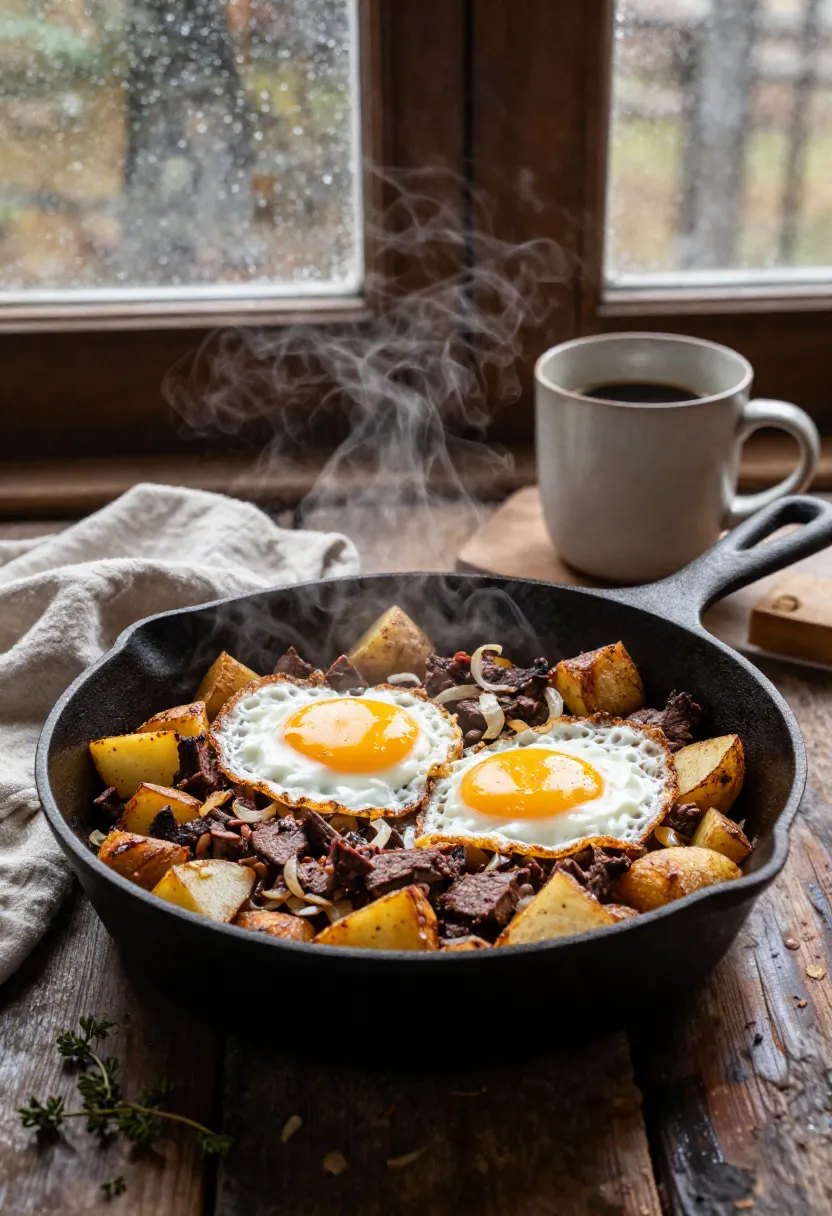
There’s usually a moment while making hash where people start hovering near the stove pretending they’re helping, but really they’re just waiting for the crispy potatoes to finish browning. Someone steals a piece directly from the skillet and burns their fingers slightly because they couldn’t wait another minute. Coffee gets poured again. Breakfast slowly turns into part of the morning instead of just something quickly eaten before moving on with the day.
And somehow the dish tastes even better when the weather outside is miserable. Rain tapping against the windows, gray skies, cold wind, maybe snow piled outside — hash makes all of that feel less annoying. The kitchen gets warmer while the skillet cooks, and the smell alone starts feeling comforting long before anyone actually takes the first bite.
It’s also the kind of breakfast that genuinely keeps people full. A bowl of cereal disappears in ten minutes. Toast barely feels like breakfast once temperatures drop. But corned beef hash has weight to it in the best possible way. Crispy potatoes, buttery onions, savory beef, and soft egg yolk all together create the kind of meal that makes cold mornings easier to deal with.
The skillet itself changes the mood at the table too. People rarely take one serving and stop there. Once the yolk starts running into the crispy potatoes underneath, everyone suddenly wants another spoonful. The pan usually stays in the center of the table while conversations continue around it, and somebody always ends up scraping the last crispy bits from the edges before breakfast is officially over.
Honestly, that’s probably one of the reasons the recipe survived for generations without needing constant reinvention. It doesn’t just feed people. It creates the kind of slow comfortable morning people actually want more of.
🌶️ Variations that genuinely work instead of feeling unnecessary
Some comfort foods completely fall apart the second you start changing ingredients. Corned beef hash isn’t really like that. The base is simple enough that small changes can shift the mood of the skillet without making it feel like an entirely different recipe.
And honestly, that’s probably one of the reasons people keep coming back to hash over the years. You can make it slightly different every time depending on what’s already sitting in the fridge, but it still feels familiar once everything starts crisping together in the pan.
Cabbage is probably the most natural addition, especially if there’s leftover corned beef and cabbage from dinner the night before. Once it cooks down with the onions and potatoes, the cabbage becomes softer and slightly sweet around the edges. It also makes the skillet feel a little lighter somehow without taking away that hearty texture people want from hash in the first place.
Spicy versions work really well too, especially during colder weather. A spoonful of chili crisp mixed into the potatoes changes the whole skillet almost immediately. The garlic, oil, and heat settle into the crispy edges while the richness from the beef stays underneath everything. Jalapeños give the dish a fresher sharper heat, while smoked paprika adds warmth without making the skillet aggressively spicy.
Cheese is one of those ingredients that sounds amazing until people add way too much of it.
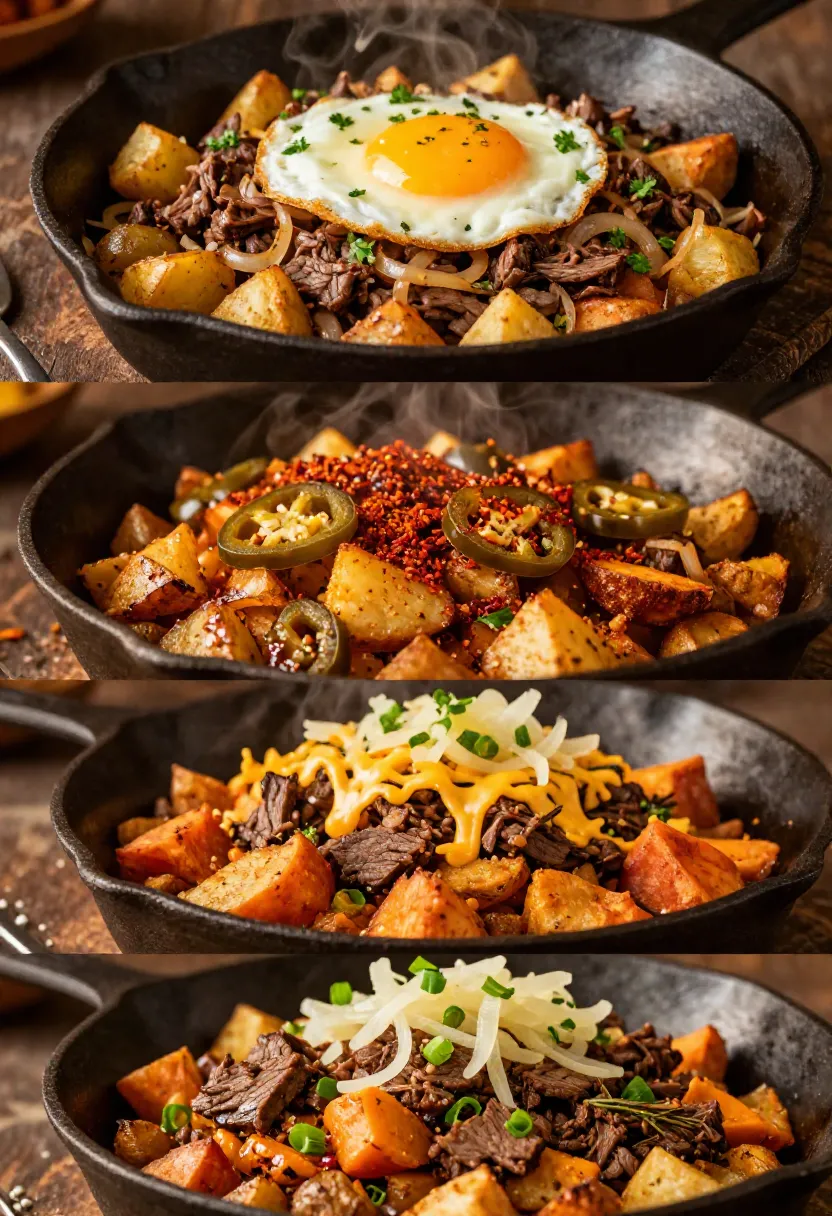
A little sharp cheddar melted into the potatoes can be really good, especially with eggs on top. Swiss works nicely too because it melts softer and doesn’t overpower the onions. But hash still needs texture to feel right. If too much cheese gets added, the skillet quickly turns heavy and greasy instead of crispy. Personally, I think hash tastes best when the potatoes still stay the main focus and the cheese just sits quietly in the background.
Sweet potatoes create another version that feels especially good in late autumn and winter. Using only sweet potatoes can make the whole skillet softer than it should be, but mixing them with Yukon Gold potatoes works surprisingly well. The sweet potatoes caramelize faster around the edges while the Yukon Golds hold enough structure to keep everything balanced.
And honestly, some of the best additions are the smaller ones people barely think about at first. Fresh thyme gives the skillet a deeper earthy flavor that feels especially good during cold weather. Green onions brighten everything at the end. A spoonful of Dijon mustard mixed into the potatoes cuts through the richness in a way that makes the whole dish feel less heavy. Even pickled onions on top completely change the balance once that sharp acidity hits the buttery potatoes underneath.
A few smaller additions that work especially well:
- Fresh thyme or rosemary
- Chili crisp or smoked paprika
- Sharp cheddar or Swiss cheese
- Green onions or chives
- Pickled onions
- Crispy bacon pieces
- Dijon mustard
- Roasted garlic
That flexibility is honestly part of the charm. Hash never feels overly strict or delicate. It’s the kind of recipe that adapts easily to whatever people already have in the kitchen, which probably explains why it stayed popular for so long in the first place.
🍂 The leftovers might actually taste even better the next day
This might honestly be the most surprising thing about corned beef hash. Most breakfast leftovers lose their texture almost immediately. Eggs become rubbery, toast turns stale, pancakes dry out, and crispy potatoes usually soften overnight.
Hash somehow improves.
The flavors settle deeper into the potatoes while everything rests in the refrigerator. The onions melt further into the butter and beef, while the potatoes absorb even more savory flavor overnight. Then the next morning, once everything gets reheated slowly in a skillet again, the crispy edges come back almost immediately.
Sometimes even crispier than the first day.
The reheating method matters a lot here. A microwave technically works, but it softens the potatoes too much and takes away most of the crust that made the dish good in the first place. A skillet brings everything back properly. The potatoes start sizzling again, the beef crisps lightly around certain edges, and suddenly the kitchen smells almost exactly like it did the first morning.
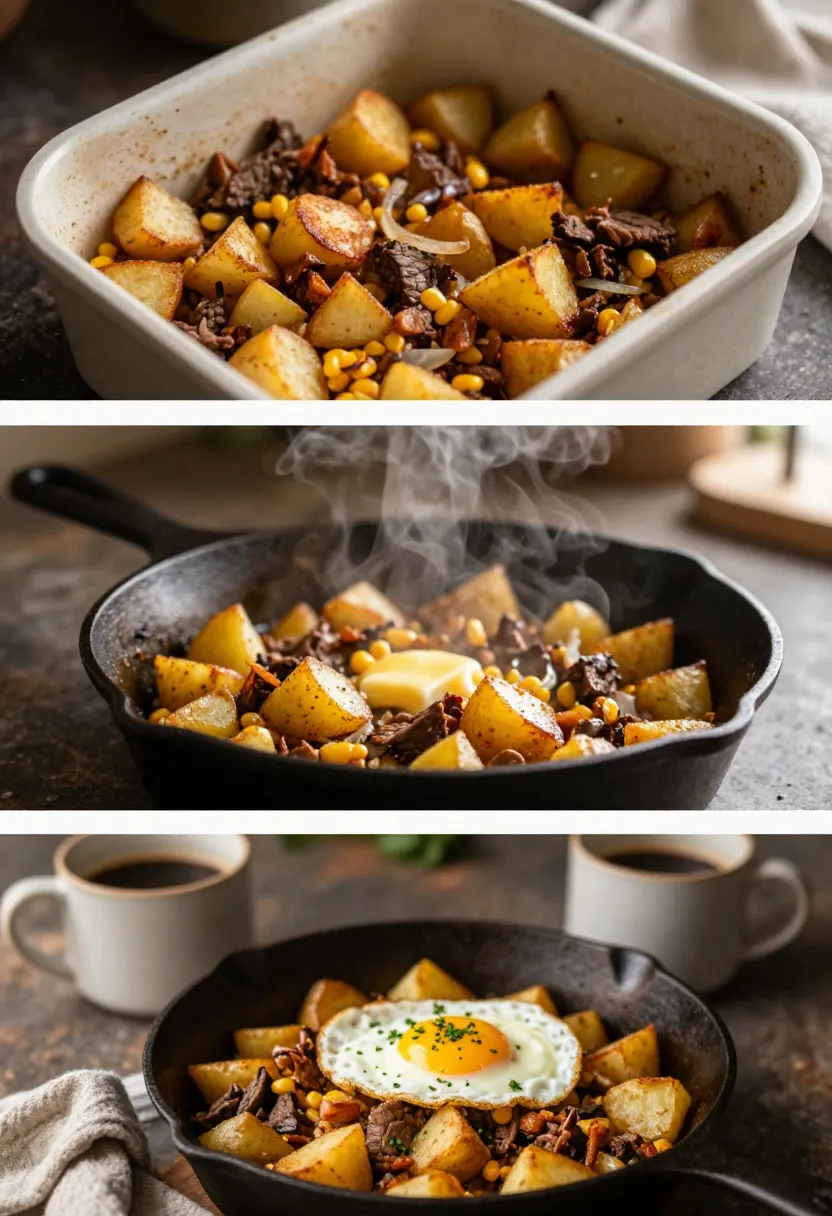
Some people actually think second-day hash tastes better because the flavors have had more time to settle together overnight. And honestly, they might be right. The onions become sweeter, the potatoes absorb more richness from the beef, and the whole skillet tastes slightly deeper the next day.
That’s also why leftover roasted potatoes work so well here. If potatoes already have browned edges before they even hit the skillet, the final crust becomes even better once everything reheats together.
There are mornings when I intentionally cook extra potatoes during dinner specifically because I already know tomorrow’s breakfast is going to become hash. It’s one of the few leftover meals that feels less like “using up food” and more like a completely separate recipe worth planning ahead for.
And maybe that’s part of why corned beef hash stayed around for so long. It’s practical without feeling boring. Rustic without trying too hard. Comforting without becoming overly heavy or complicated.
Even now, after all these years, a skillet full of crispy potatoes, onions, butter, and corned beef still creates the kind of breakfast people genuinely look forward to waking up for.