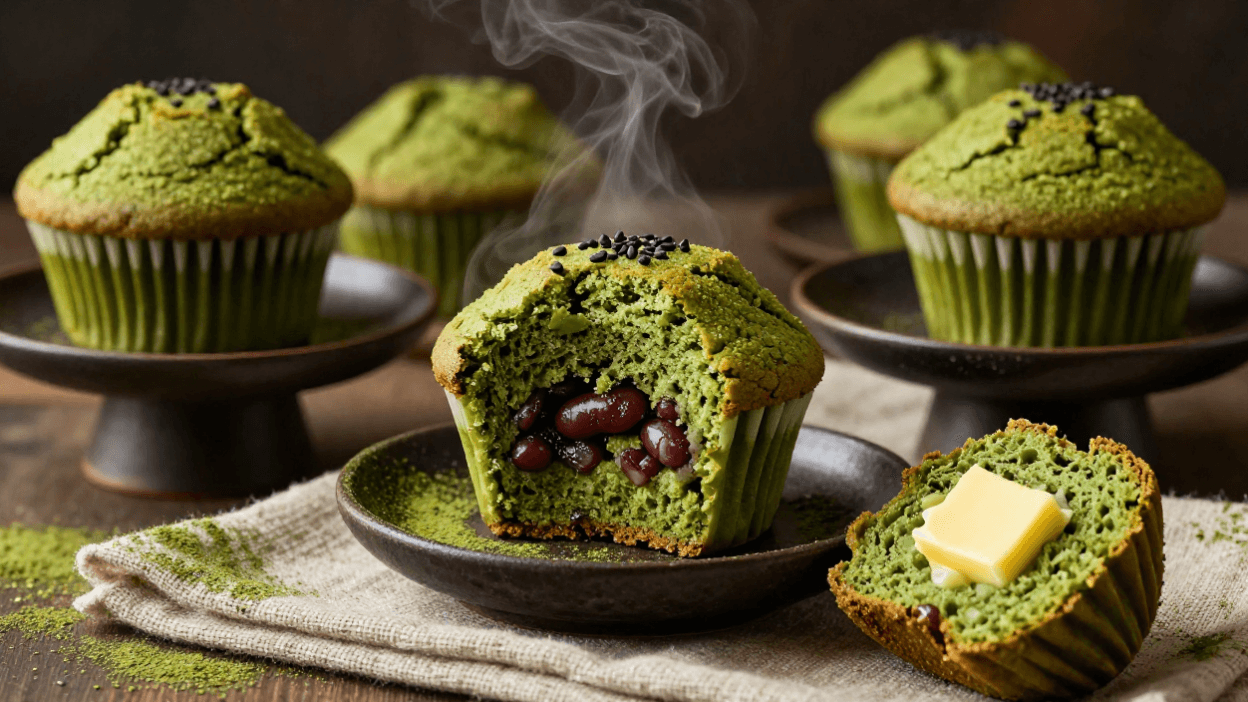
There are desserts that try very hard to impress people immediately. Thick frosting, overloaded toppings, too much sugar, dramatic layers stacked on top of each other. These muffins move in the opposite direction. They’re softer, quieter somehow. The kind of thing you notice slowly while drinking tea near an open window on a rainy afternoon. 🍵
Green tea muffins with sweet azuki beans sit somewhere between Japanese café baking and simple homemade comfort food. The matcha gives them an earthy bitterness that keeps the sweetness controlled, while the azuki beans soften everything from the inside. Every bite changes slightly depending on where the beans settle during baking. Some muffins end up sweeter in the middle, others lean more buttery and tea-forward.
That unevenness honestly makes them better. 🌿
The smell during baking feels almost nostalgic even if you’ve never made them before. Warm butter, vanilla, green tea, toasted flour. Not loud. Just steady and comforting in the background while the kitchen slowly warms up. The kind of smell that slowly drifts through the apartment and makes people ask what’s in the oven before they even walk into the kitchen.
And unlike oversized bakery muffins that taste heavy after two bites, these stay surprisingly light. You finish one and almost immediately start thinking about another without realizing it.
Part of that comes from the matcha itself. Matcha desserts usually avoid the aggressive sweetness common in Western pastries. Instead of trying to bury every flavor under sugar, they leave space for bitterness, warmth, and softer textures to exist together. That balance is probably why these muffins work so well with tea in the late afternoon or even as a quiet breakfast the next morning.
The texture changes slightly while they cool too. Fresh from the oven, the centers stay very soft and almost steamy once broken open. Later, after an hour or two, the crumb settles into something more delicate and structured. Not dry. Just calmer somehow.
I actually think they taste better once they’ve had time to rest a little.
Sometimes I make them specifically for the next morning because matcha flavor deepens overnight in a really nice way. The sweetness softens, the tea becomes slightly richer, and the beans blend into the crumb more naturally.
☁️ The reason matcha and azuki beans work together so naturally
This flavor combination has existed in Japanese desserts for years for a reason. Matcha on its own can feel sharp, grassy, even slightly dry inside baked goods if nothing balances it properly. Sweet azuki beans change that completely.
They don’t overpower the tea flavor. They round it out.
Azuki beans have a soft sweetness that almost reminds me of roasted chestnuts once baked into desserts. Mild, creamy, warm. When they melt slightly into the muffin crumb, the texture changes from simple cake into something softer and more layered.
The type of matcha matters too. Better culinary-grade matcha keeps more color and flavor after baking, while cheaper versions tend to lose brightness quickly once they hit the oven heat. You don’t need expensive ceremonial matcha here though. Honestly, using high-end tea for muffins feels a little wasteful.
What matters more is freshness.
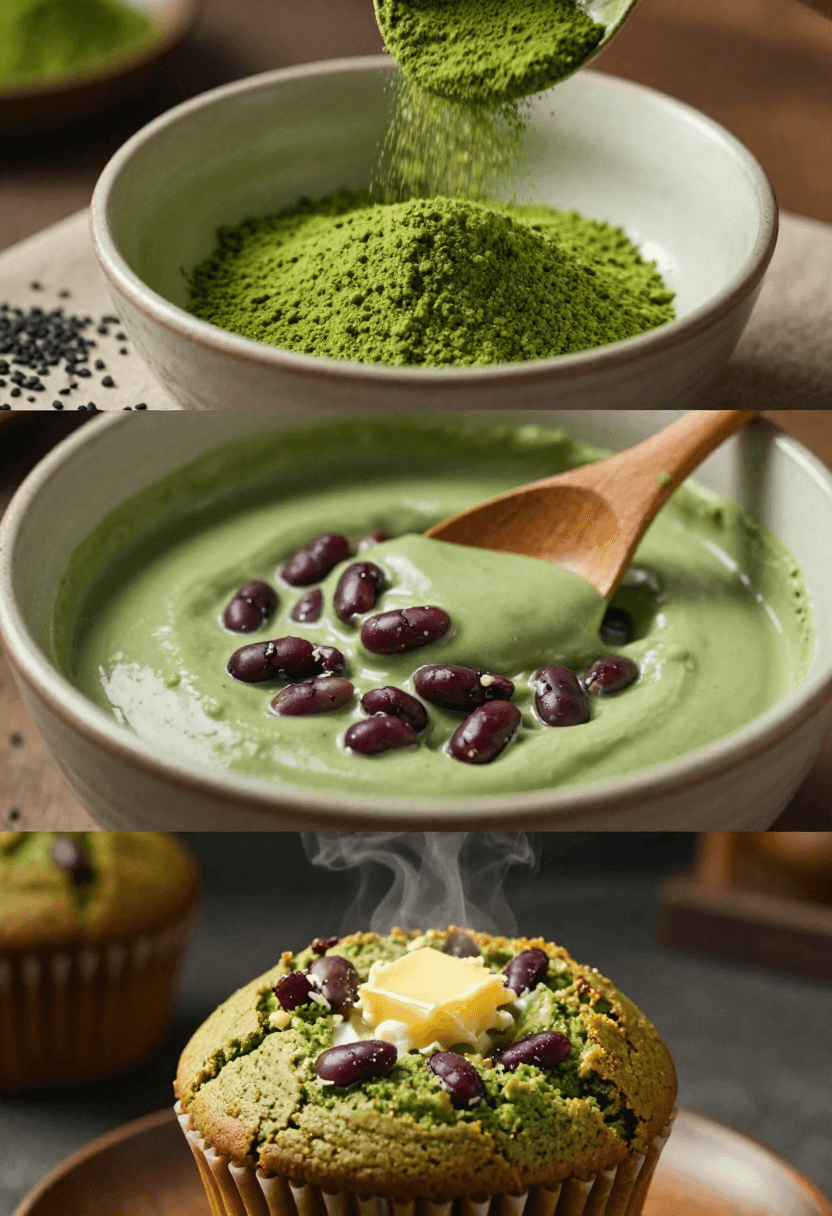
The powder should smell grassy and alive the second the package opens. If it smells dull before baking, the finished muffins usually taste flat too.
And matcha behaves differently from cocoa powder while baking. Cocoa usually becomes deeper and richer once heated. Matcha is more fragile. Too much oven time dulls both the color and flavor surprisingly quickly. That’s why slightly softer centers work better for these muffins than fully dry ones.
The beans matter just as much.
Very sweet canned azuki beans can sometimes overpower the matcha completely, especially if the batter itself already contains a lot of sugar. I usually prefer lightly sweetened beans because they let the green tea stay noticeable instead of turning the muffins into regular sweet cake with green coloring.
🍵 Ingredient balance inside the muffins
| Ingredient | Main flavor | Texture effect | Why it matters |
|---|---|---|---|
| Matcha powder | Earthy, grassy, slightly bitter | Creates soft but slightly dense crumb | Gives the muffins depth instead of simple sweetness |
| Sweet azuki beans | Mild sweetness with chestnut-like notes | Adds creamy pockets and extra moisture | Balances bitterness and keeps muffins soft longer |
| Butter | Warm, rich, slightly nutty | Creates tender texture and golden edges | Makes the muffins taste fuller without becoming heavy |
| Whole milk | Gentle creamy sweetness | Smooth batter consistency | Prevents dry texture and softens stronger matcha flavor |
| Eggs | Mild richness | Helps structure and lift | Keeps muffins stable while staying tender |
| Vanilla extract | Soft sweet aroma | No major texture effect | Smooths sharp green tea notes |
| Baking powder | Neutral | Gives light lift | Prevents dense heavy centers |
| Black sesame seeds | Toasted nuttiness | Adds light crunch on top | Works especially well with earthy matcha flavor |
One thing I learned after making these several times: slightly underbaking them actually works better than aiming for completely dry centers. Matcha baked goods continue setting while cooling, and overbaking removes a lot of their softness.
The batter itself shouldn’t be mixed too aggressively either. Overmixed muffin batter becomes tight and slightly rubbery once baked. I usually stop stirring while a few flour streaks still remain because the final folds naturally finish the job anyway.
Messier batter often makes softer muffins. Weird but true.
🌧️ These muffins belong to slow afternoons
Some recipes fit specific moods better than seasons.
These muffins feel made for rainy weekends, quiet mornings, late-night tea, or those colder evenings where everyone stays near the kitchen longer than usual because the oven keeps the room warm. They’re not flashy desserts. They’re comforting ones.
I made a batch once during a storm while the windows fogged from kettle steam and oven heat mixing together. The original plan was actually banana bread, but I noticed leftover sweet red beans sitting in the fridge and changed direction halfway through pulling ingredients out.
Probably the better decision.
The muffins disappeared before dinner even started. People kept casually grabbing another one while pretending they weren’t still hungry. That’s the thing about recipes like this. They don’t feel heavy enough to stop at one.
They also taste different depending on temperature.

Fresh muffins are softer and more buttery. A few hours later, the matcha flavor becomes deeper and slightly richer. The next morning the crumb tightens a little and feels closer to tea cake. Cold from the fridge with hot coffee? Weirdly excellent too.
Not many muffins improve overnight. These actually do.
And they somehow make kitchens feel calmer while baking. Maybe because the recipe itself doesn’t demand much attention once the batter is finished. There’s no frosting to decorate, no complicated filling, no difficult timing. Just mixing, folding, scooping, and waiting while the oven slowly fills the room with warm green tea and vanilla.
The tops usually crack slightly during baking too, especially if the batter stays thick enough. I actually love that look. It makes the muffins feel homemade instead of overly polished.
A few things pair especially well with them:
- hojicha tea
- dark roast coffee
- jasmine tea
- warm milk with honey
None of those drinks overpower the matcha flavor. They let it stay soft and noticeable instead.
The atmosphere around recipes like this matters almost as much as the flavor itself sometimes. Quiet music, rain outside, warm mugs sitting on the table, somebody reaching for a second muffin without asking if anyone else wants the last one first.
That kind of food memory stays longer than perfectly decorated desserts usually do.
🍵 Green tea muffins recipe with sweet azuki beans
These matcha muffins stay soft, lightly sweet, and full of earthy green tea flavor balanced by creamy sweet azuki beans. They work equally well as a quiet afternoon dessert, tea snack, or slow weekend baking project.
Unlike oversized bakery muffins loaded with sugar and frosting, these feel calmer and more balanced. The matcha brings a gentle bitterness that keeps the sweetness under control, while the azuki beans soften the flavor from the inside and add little creamy pockets throughout the crumb. Every bite tastes slightly different depending on where the beans settle during baking, which honestly makes the muffins feel more homemade and less overly polished.
The texture sits somewhere between a classic muffin and a soft tea cake. Warm from the oven, they stay buttery and delicate with steam still trapped inside the center. A few hours later, the crumb becomes slightly tighter and the green tea flavor deepens even more. By the next morning they almost taste richer somehow, especially with coffee or hot hojicha tea beside them.
The smell while they bake changes the entire atmosphere of the kitchen too. Warm vanilla, butter, toasted flour, and earthy matcha slowly fill the room without becoming overwhelming. It’s the kind of recipe that naturally slows people down for a while. Somebody usually wanders into the kitchen asking how much longer is left before the timer even rings.
These muffins also work surprisingly well because they aren’t aggressively sweet. Matcha desserts tend to leave more space for subtle flavors compared to heavier Western-style pastries. Instead of frosting or thick fillings, the focus stays on warmth, texture, and balance. That softer style makes them perfect for rainy afternoons, quiet mornings, or evenings where dessert needs to feel comforting instead of heavy.
And honestly, they pair with almost everything:
- green tea
- dark coffee
- roasted hojicha
- warm milk with honey
They’re simple muffins on paper. But once the matcha, butter, and sweet beans come together, they end up feeling much more memorable than expected.
🧈 Ingredients
- 2 cups all-purpose flour
- 2 teaspoons baking powder
- 1 tablespoon matcha powder
- 1/2 teaspoon salt
- 1/2 cup unsalted butter, melted
- 2/3 cup sugar
- 2 eggs
- 3/4 cup whole milk
- 1 teaspoon vanilla extract
- 3/4 cup sweet azuki beans
- Black sesame seeds for topping (optional)
👩🍳 Instructions
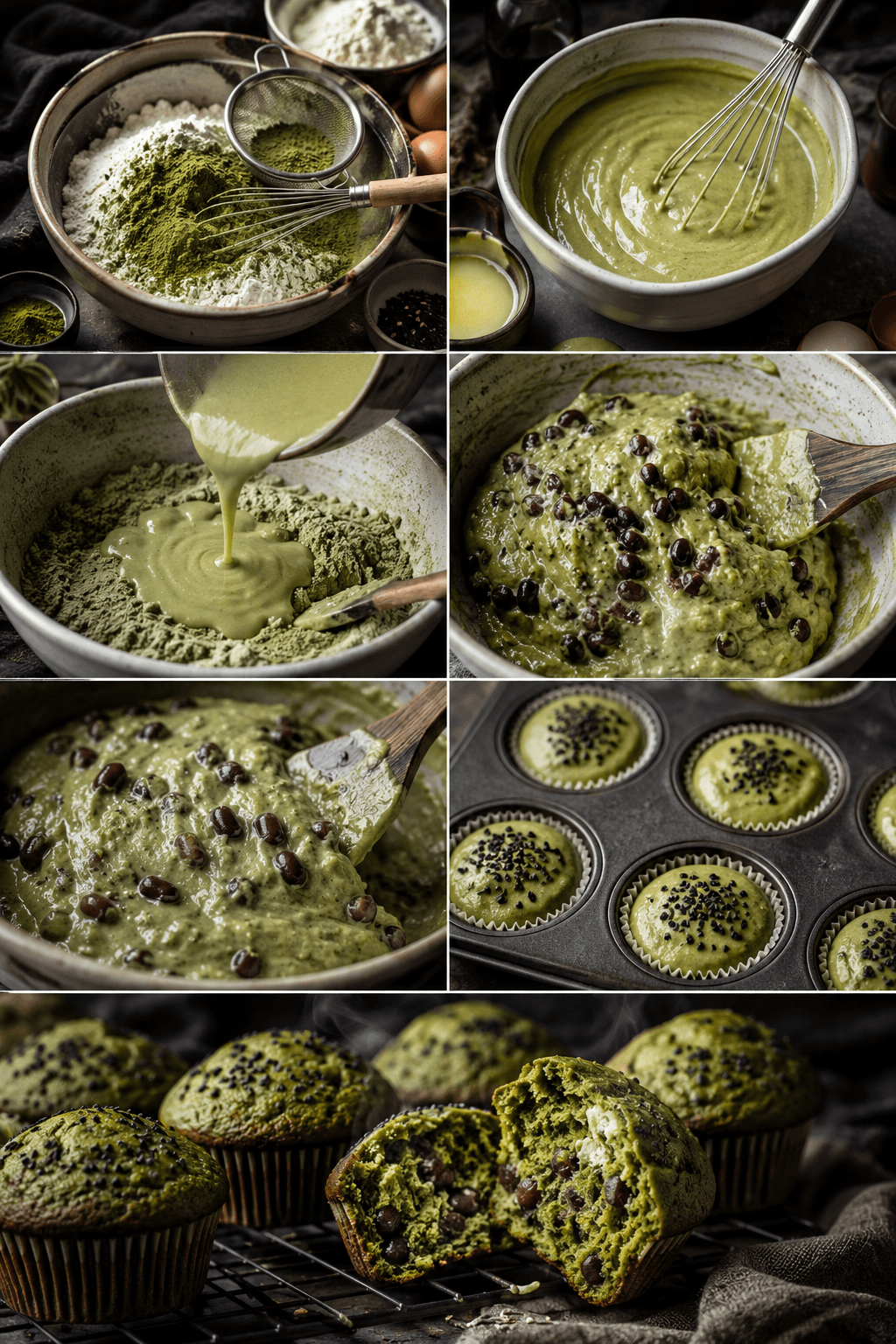
- Preheat the oven to 350°F (175°C). Line a muffin tray with paper liners or grease it lightly with butter. If you use paper liners, the muffins stay softer a little longer after baking. I usually grease the top surface of the tray too because muffin tops tend to spread slightly while rising.
- In a large bowl, whisk together the flour, baking powder, salt, and matcha powder. If the matcha looks clumpy, sift it first. Matcha absorbs moisture very quickly, so tiny lumps can stay bitter once baked. The dry mixture should turn a soft pale green before the wet ingredients go in.
- In another bowl, whisk the melted butter with sugar until smooth and glossy. Add the eggs one at a time, then pour in the milk and vanilla extract. The mixture should look creamy and slightly golden. If the butter begins to harden because the ingredients are too cold, just keep whisking gently until everything smooths out again.
- Pour the wet mixture into the dry ingredients and stir slowly with a spatula or wooden spoon. Don’t rush this part. The batter should stay slightly thick and not perfectly smooth. Small flour streaks are completely fine. Overmixing makes matcha muffins dense surprisingly fast.
- Fold the sweet azuki beans into the batter carefully so they don’t completely break apart. Some beans will naturally soften into the mixture while others stay whole, which gives the muffins a better texture once baked.
- Divide the batter between muffin cups, filling each around three-quarters full. The batter rises nicely in the oven, especially during the first half of baking. If you want taller muffin tops, let the batter rest for about 5 minutes before baking.
- Sprinkle black sesame seeds on top if using. Besides adding a little crunch, they bring out the nuttier side of the matcha flavor and make the muffins look more finished without much extra effort.
- Bake for 18–22 minutes until the tops spring back lightly when touched and the edges become slightly golden. The kitchen will start smelling strongly of butter and green tea around the 15-minute mark. Try not to overbake them. Matcha baked goods lose moisture quickly once they stay in the oven too long.
- Let the muffins cool in the tray for about 10 minutes before removing them. They continue setting inside while cooling, so pulling them out too early can make the centers fall apart slightly. Warm muffins feel softer and butterier, while cooled muffins bring out deeper green tea flavor.
- Serve slightly warm with tea, coffee, or even cold milk. The muffins taste good the same day, but honestly the flavor becomes even smoother the next morning once the matcha settles into the crumb overnight.
✨ Small cooking tips that help a lot
- Let the muffins cool slightly before eating because the texture keeps setting after baking. Fresh muffins straight from the oven can seem softer than they actually are.
- Whole milk works better here than low-fat milk because it keeps the crumb softer and balances the earthy matcha flavor more naturally.
- Slightly warm azuki beans blend into the batter more evenly than cold beans straight from the fridge. Cold beans can stiffen the melted butter too quickly while mixing.
- Sift the matcha powder before adding it to the flour. Matcha clumps surprisingly easily, and those little pockets stay bitter after baking.
- Don’t overmix the batter once the flour goes in. A few uneven streaks are completely fine. Overworked batter makes the muffins tighter and less tender.
- If the batter feels too thick, add a tiny splash of milk instead of stirring harder. The texture matters more than perfectly smooth batter.
- Slightly underbaking the muffins works better than overbaking them. Matcha baked goods dry out faster than chocolate or vanilla muffins once cooled.
- Black sesame seeds on top add more than decoration. Their toasted nuttiness works really well with earthy green tea flavor.
- Let the muffins rest overnight at least once before eating all of them. The matcha flavor becomes deeper and more balanced by the next morning.
- Store them in a sealed container instead of leaving them uncovered on a plate. Matcha muffins lose moisture fairly quickly if exposed to air too long.
- If using canned azuki beans packed in heavy syrup, drain them lightly first so the batter doesn’t become overly wet or sugary.
- Warm muffins pair especially well with butter melting into the center. It sounds simple, but it changes the texture completely.
🍃 Warm muffins with butter and tea
These muffins become especially good while still slightly warm. Split one open and add a little salted butter while steam still rises from the center. The butter melts almost immediately into the soft crumb, mixing with the earthy matcha flavor and the sweet pockets of azuki beans. It sounds simple, but that extra bit of richness completely changes the texture and makes the muffins feel softer and more comforting.
What I like most is that they never become overly sweet, even with the butter added. The matcha keeps everything balanced. Instead of tasting sugary or heavy, the muffins stay mellow and warm with just enough bitterness from the tea to keep you coming back for another bite.
The texture changes noticeably depending on when you eat them. Fresh from the oven, they feel delicate and buttery with a very soft center. A few hours later, the crumb settles and becomes slightly tighter, almost closer to a tea cake. The next morning the matcha flavor becomes deeper and smoother, especially once the muffins cool completely overnight.
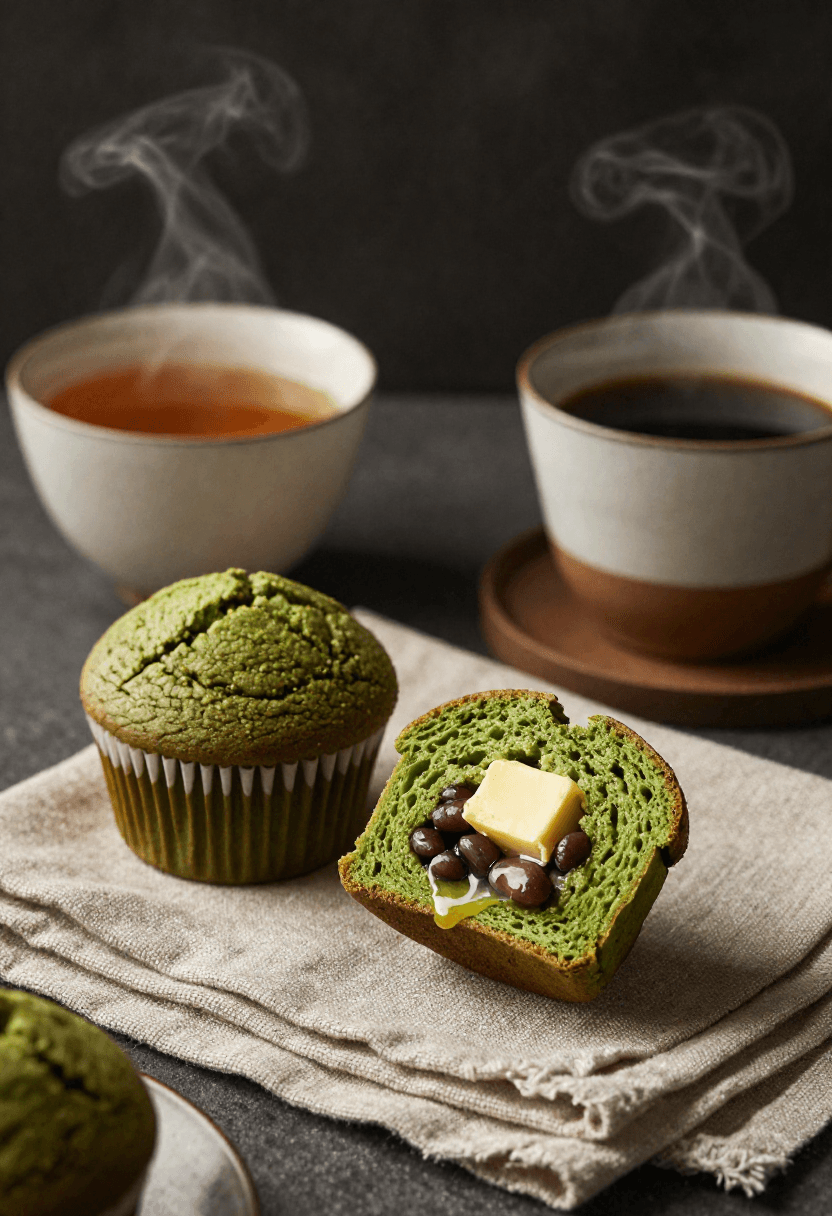
They pair especially well with:
- hojicha tea
- jasmine tea
- dark coffee
- iced milk tea
Dark coffee brings out the roasted side of the matcha flavor, while lighter teas make the muffins taste softer and sweeter. Hojicha might be the best pairing though because its toasted flavor works naturally with butter and sweet beans.
These muffins also fit a certain kind of atmosphere better than others. Rain outside, quiet music in the background, warm mugs sitting on the table while the kitchen still smells faintly of vanilla and green tea. They’re not really grab-and-go muffins. They feel better when eaten slowly.
Sometimes I warm leftovers the next day for a few seconds and add butter again even though they’re already soft enough on their own. Still worth it every time.
🌸 Easy variations when you want something slightly different
The base recipe changes surprisingly well without losing the calm, balanced flavor that makes these muffins good in the first place. Small adjustments work better than dramatic ones here because matcha can disappear quickly if stronger ingredients take over.
White chocolate is probably the easiest variation. A small handful folded into the batter melts into little creamy pockets and makes the muffins sweeter without completely hiding the green tea flavor. I still wouldn’t add too much though. Matcha works best when it stays noticeable instead of becoming background flavor.
Black sesame seeds change the muffins differently. Instead of sweetness, they add warmth and nuttiness. Once toasted in the oven, they deepen the earthy side of the matcha and make the tops look slightly more rustic and homemade.

Orange zest works surprisingly well too. Not enough to turn the muffins citrusy, just enough to brighten the flavor and make the matcha feel fresher. I usually prefer this version during spring or warmer weather because it lightens the overall feeling of the muffins.
A few variations that work especially well:
- white chocolate and matcha
- black sesame topping
- orange zest in the batter
- almond milk instead of regular milk
Almond milk creates a lighter texture, while oat milk makes the muffins naturally a little sweeter. Coconut milk technically works too, but honestly it starts pulling too much attention away from the matcha flavor for me personally.
The azuki beans can change the final result quite a bit as well. Store-bought sweet beans packed in syrup make the muffins richer and more dessert-like, while lightly sweetened homemade beans keep the flavor softer and more balanced. Neither version is wrong. They just create slightly different moods.
That flexibility is part of why the recipe stays interesting. The muffins never feel difficult or overly delicate, but small changes still make each batch feel a little different from the last one.
🕯️ Why these muffins feel memorable even though they’re simple
Not every recipe needs dramatic presentation to stay memorable. Sometimes the recipes people remember most are the quieter ones. The kind that slowly become associated with certain evenings, certain weather, or certain moments around the kitchen table.
These muffins have that kind of feeling.
The flavor itself is gentle compared to heavier desserts. Soft matcha bitterness, warm butter, sweet beans hidden through the middle. Nothing overly rich or overwhelming. Because of that, the muffins fit naturally into slower moments instead of becoming the center of attention.
I made a batch once late at night while rain hit the windows outside and the entire apartment smelled like vanilla and green tea for hours afterward. The muffins were gone by the next afternoon, but the kitchen still carried that warm smell the next morning when coffee started brewing again. Honestly, that’s the part I remembered most.

The muffins also look better when they stay slightly imperfect. Some tops crack more than others. Some muffins rise unevenly. Sometimes the beans settle lower into the batter or create darker spots near the edges. Those small inconsistencies make them feel homemade in a good way.
Perfect bakery symmetry would almost make them less charming.
And maybe that’s why recipes like this stay interesting. They don’t rely on decoration or complicated techniques. Instead, they create a certain atmosphere around themselves. Warm oven, quiet kitchen, tea slowly cooling beside the plate, somebody reaching for another muffin without even thinking about it first.
That kind of comfort usually lasts longer in memory than flashy desserts ever do.