Huevos a la flamenco is technically a very simple dish. Eggs baked in tomato sauce with peppers, onions, olive oil, and usually a little cured meat somewhere in the pan. That’s the short explanation anyway. But the first time you actually cook it, the dish feels much richer than the ingredient list suggests.
Part of it comes from the smell. Smoked paprika warming in olive oil changes the whole kitchen in about thirty seconds. Then the tomatoes start reducing, the peppers soften, and suddenly it smells like something that took far more effort than it actually did. 🍳
I think that’s why this recipe survives. It creates atmosphere without demanding perfection from the cook.
A lot of traditional Spanish food works like this. Ingredients that look ordinary on paper somehow become deeply comforting once they spend enough time together in a hot pan. And huevos a la flamenco definitely belongs in that category. It’s relaxed food. Food meant for passing bread around the table while somebody pours another glass of wine and nobody checks the time too closely. 🍷
The dish is usually associated with Andalusia, especially Seville, though there are dozens of variations floating around now. Some versions include peas. Some add potatoes underneath the sauce. Others lean heavily into chorizo and smoky spice. Honestly, none of those versions feel wrong.
That flexibility is part of the charm.
And maybe that’s the real reason people keep making dishes like this decade after decade. Not because they’re trendy. Not because they look dramatic on social media. Mostly because they make ordinary evenings feel slower and warmer. A pan of bubbling tomato sauce sitting in the middle of the table changes the mood almost immediately.
I’ve noticed that recipes like this tend to disappear quietly into people’s regular dinner rotation. Nobody announces it. Nobody calls it their “signature dish.” It just becomes one of those meals you start craving when the weather cools down a little or when dinner needs to feel comforting without becoming heavy.
There’s also something deeply practical about it. The ingredients are affordable. The technique isn’t intimidating. And the recipe leaves room for improvisation, which matters more in real kitchens than most food articles admit.
Some nights you add extra garlic. Some nights you use leftover roasted vegetables because they’re already in the fridge. Sometimes the eggs stay softer than planned. None of that ruins the dish.
Actually, those little imperfections usually make it better.
🥘 The sauce matters more than the eggs
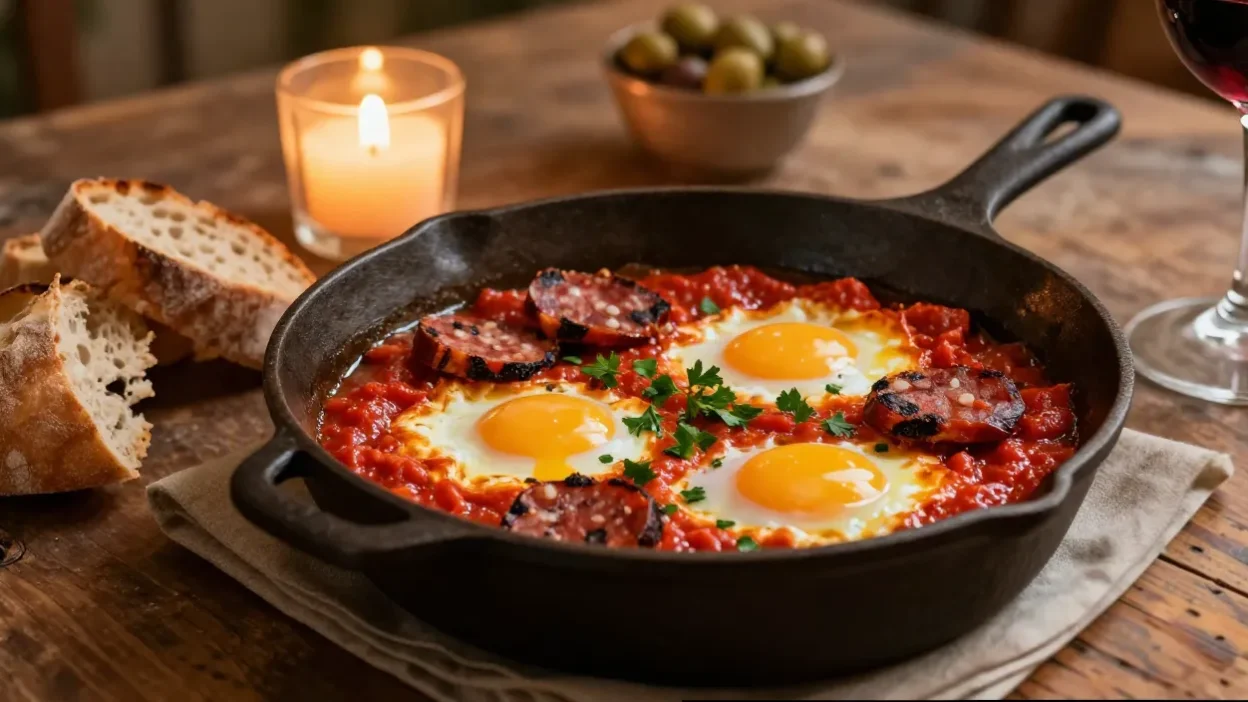
The eggs get all the attention because they sit on top looking dramatic with bright yellow yolks and fresh herbs scattered over everything. But the real work happens underneath.
Good huevos a la flamenco needs a sauce with depth. Not complicated depth. Just slow-cooked flavor that feels settled and warm instead of rushed.
The onions should soften completely before anything else happens. If they still taste sharp, the sauce never quite comes together. The peppers need enough time to turn sweet. Tomatoes should reduce until they stop tasting watery. And paprika — especially smoked paprika — needs oil to bloom properly. That tiny detail changes everything.
I’ve rushed this recipe before. It still tasted decent, but the difference is obvious when you let the vegetables cook a little longer.
The texture matters too. The sauce should feel thick enough to hold the eggs in place without turning dry. Somewhere between stew and pasta sauce. Thick, but still loose enough to scoop with bread. 🥖
And bread really is mandatory here. People say that about too many dishes, but this time it’s true.
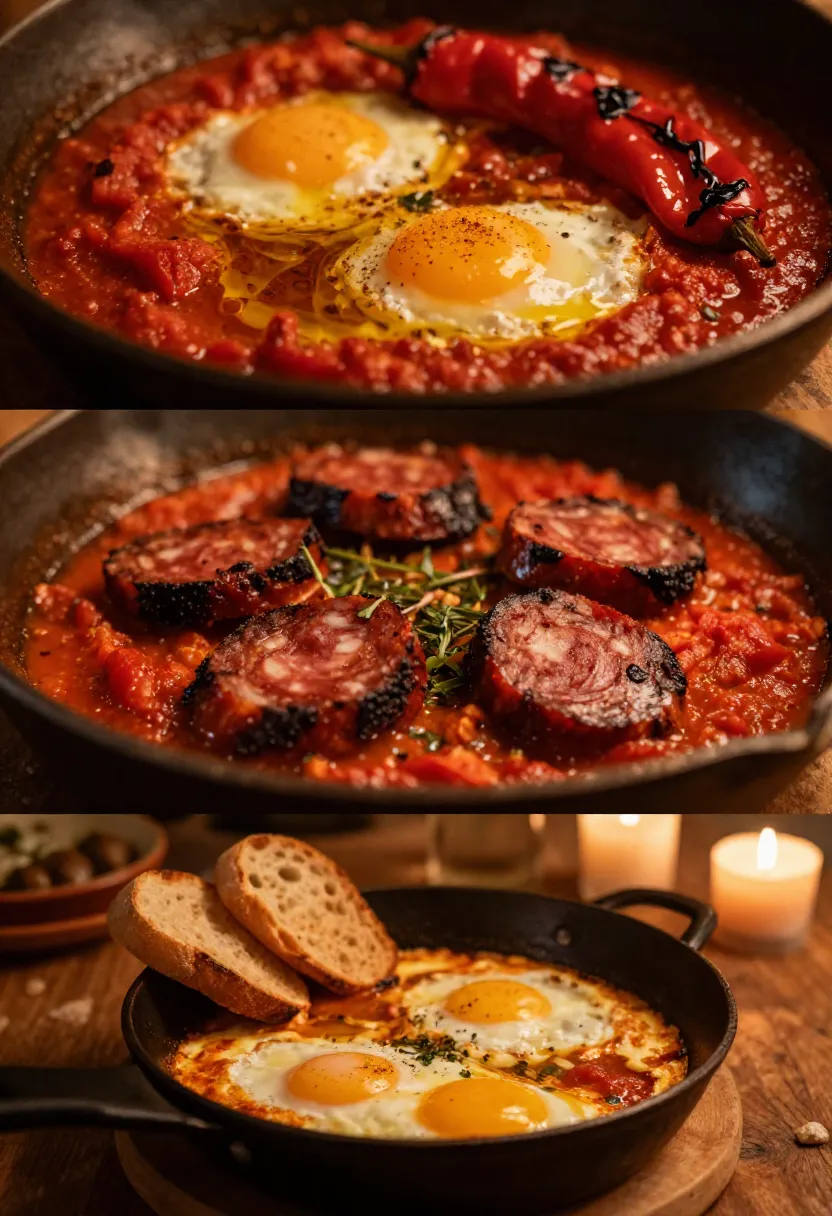
A rough piece of toasted sourdough or a warm baguette turns the sauce into the entire meal. Once the yolks break and mix into the tomatoes, the texture changes completely. Richer. Silkier. Almost creamy without adding cream.
That moment is probably my favorite part of the recipe.
There’s also a balance happening inside the pan that makes the dish work so well. The tomatoes bring acidity. Olive oil softens everything. Chorizo adds smoke and salt. Peppers become sweet after enough cooking time. Then the eggs calm the whole thing down again.
Nothing dominates too aggressively.
That balance matters because dishes with smoked paprika can easily become overwhelming if every ingredient pushes in the same direction. But huevos a la flamenco usually stays surprisingly gentle despite all the bold flavors involved.
And honestly, the smell alone while the sauce simmers is enough to make people wander into the kitchen asking when dinner will be ready.
🍅 A few ingredients quietly shape the entire dish
- 🧄 Garlic gives the sauce warmth underneath the tomatoes, but only if it cooks gently.
- 🌶️ Smoked paprika creates most of the recognizable flavor people associate with the dish.
- 🍖 Chorizo releases oils that blend directly into the sauce and deepen everything else around it.
- 🍅 Tomatoes carry the whole skillet and decide whether the final texture feels rich or watery.
- 🫒 Olive oil matters more here than people expect because the dish uses so few ingredients overall.
🍅 Why this dish works for real home cooking
Some recipes only work when you have energy. This one works when you’re tired too.
That’s probably why I keep coming back to it. You can make it with half a fridge and one decent pan. A few eggs, canned tomatoes, onion, garlic, peppers. Maybe chorizo if there’s some left from another dinner. Maybe not.
It’s also forgiving in a way that a lot of egg recipes aren’t. Slightly overcooked eggs? Still good. Sauce too thick? Add a splash of water. Too thin? Let it simmer another few minutes. Nothing collapses dramatically.
And unlike complicated dinner recipes that leave the kitchen looking destroyed afterward, this one stays manageable. Most of the cooking happens in the same skillet. You stir occasionally, taste the sauce once or twice, crack the eggs on top, and let the oven finish the rest.
That kind of cooking feels sustainable. Especially during busy weeks when elaborate recipes start sounding exhausting before you even begin.
I think people underestimate how important that feeling is. A recipe doesn’t become part of everyday cooking just because it tastes good. It becomes repeatable because it fits real life.
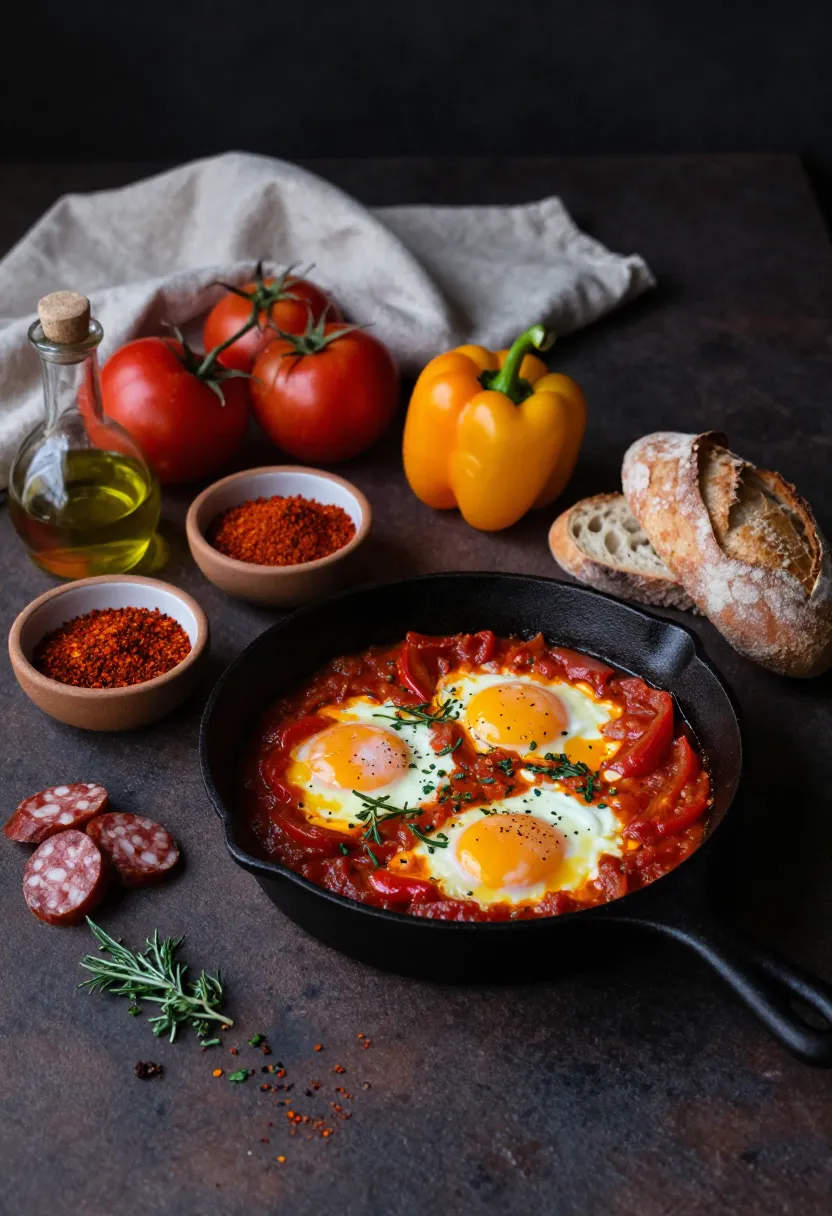
Some nights you don’t want twelve separate cooking stages. You don’t want special equipment. You definitely don’t want a sink full of dishes afterward.
Huevos a la flamenco avoids most of those problems naturally.
It also scales easily depending on the situation. You can make a smaller skillet for two people or stretch the sauce for a bigger table by adding potatoes, chickpeas, or extra vegetables. The dish adapts without becoming complicated.
And there’s something comforting about recipes that don’t panic when you change them slightly.
That flexibility makes the whole thing feel more human somehow. Less rigid. More lived-in.
📋 Ingredients and their role in the dish
| Ingredient | What it adds | Texture | Flavor profile | Helpful cooking note |
|---|---|---|---|---|
| 🥚 Eggs | Richness and creaminess | Soft yolks with delicate whites | Mild and buttery | Slightly runny yolks work best for dipping bread |
| 🍅 Tomatoes | Form the sauce base | Thick and slightly chunky | Sweet, acidic, savory | Canned whole tomatoes usually give better depth |
| 🌶️ Smoked paprika | Creates warmth and smoky depth | Blends into the sauce | Smoky, earthy, slightly sweet | Add it briefly in oil so it doesn’t burn |
| 🫑 Bell peppers | Bring sweetness and balance | Soft with a little bite | Sweet and fresh | Red peppers usually taste sweeter than green |
| 🧄 Garlic | Builds flavor underneath everything | Melts into the sauce | Sharp, savory, aromatic | Don’t brown it too much or it turns bitter |
| 🧅 Onion | Creates the foundation of the dish | Soft and silky | Sweet and mellow after cooking | Slow cooking matters more than high heat |
| 🍖 Chorizo | Adds spice and rich oil | Slightly crisp edges | Smoky, salty, spicy | The oil from chorizo flavors the entire sauce |
| 🫒 Olive oil | Helps everything cook gently | Smooth and silky | Fruity and rich | Use decent olive oil because you taste it |
| 🟢 Peas (optional) | Add freshness and color | Soft pop of texture | Slightly sweet | Stir them in near the end to keep color bright |
| 🌿 Fresh parsley | Bright finishing touch | Light and fresh | Herbal and clean | Add after baking, never before |
🍳 Huevos a la flamenco recipe
There’s something deeply comforting about a skillet full of bubbling tomato sauce with eggs slowly setting on top. Huevos a la flamenco isn’t complicated food, but it feels generous the moment it reaches the table. The sauce turns rich and smoky from paprika and chorizo, the peppers soften into the tomatoes, and the egg yolks melt into everything once you cut through them with a piece of bread. It’s messy in the best possible way.
What makes this dish special is how naturally the flavors settle together. The tomatoes bring acidity and freshness, while olive oil smooths everything out and gives the sauce a softer texture. Then the smoked paprika starts warming through the pan and suddenly the whole kitchen smells like something far more elaborate than a one-skillet dinner. That smell alone usually pulls people into the kitchen before the recipe is even finished. 🍅
Huevos a la flamenco also works for almost any kind of evening. It can feel rustic and casual on a quiet weekday when you need dinner without much effort, but it also looks beautiful enough for slow weekend lunches or relaxed dinners with friends. Bring the skillet directly to the table, add warm bread and olives nearby, and the meal instantly feels more social. Nobody rushes through this kind of food.
Another reason the recipe stays popular is flexibility. Some versions include potatoes layered underneath the sauce. Others add peas, spicy sausage, or roasted vegetables depending on the season. The core idea stays the same: eggs baked gently in a deeply flavored tomato base until the whites are set and the yolks stay soft enough to mix into the sauce.
And honestly, that final texture is probably the best part. Thick tomato sauce, smoky oil from the chorizo, soft peppers, and warm bread catching every bit left in the skillet. Simple ingredients, but they work together in a way that feels much bigger than expected.
This huevos a la flamenco recipe combines baked eggs with a rich tomato and pepper sauce finished with smoky paprika and slices of chorizo. Serve it directly from the skillet with warm bread, olives, or roasted potatoes on the side. It’s the kind of dinner that looks impressive without creating extra stress in the kitchen.
🛒 Ingredients
- 2 tablespoons olive oil
- 1 small yellow onion, finely chopped
- 3 garlic cloves, sliced
- 1 red bell pepper, diced
- 1 green bell pepper, diced
- 120 g Spanish chorizo, sliced
- 1 teaspoon smoked paprika
- 400 g canned whole tomatoes
- Salt and black pepper
- 4 large eggs
- Small handful of peas (optional)
- Fresh parsley for serving
- Crusty bread for serving 🥖
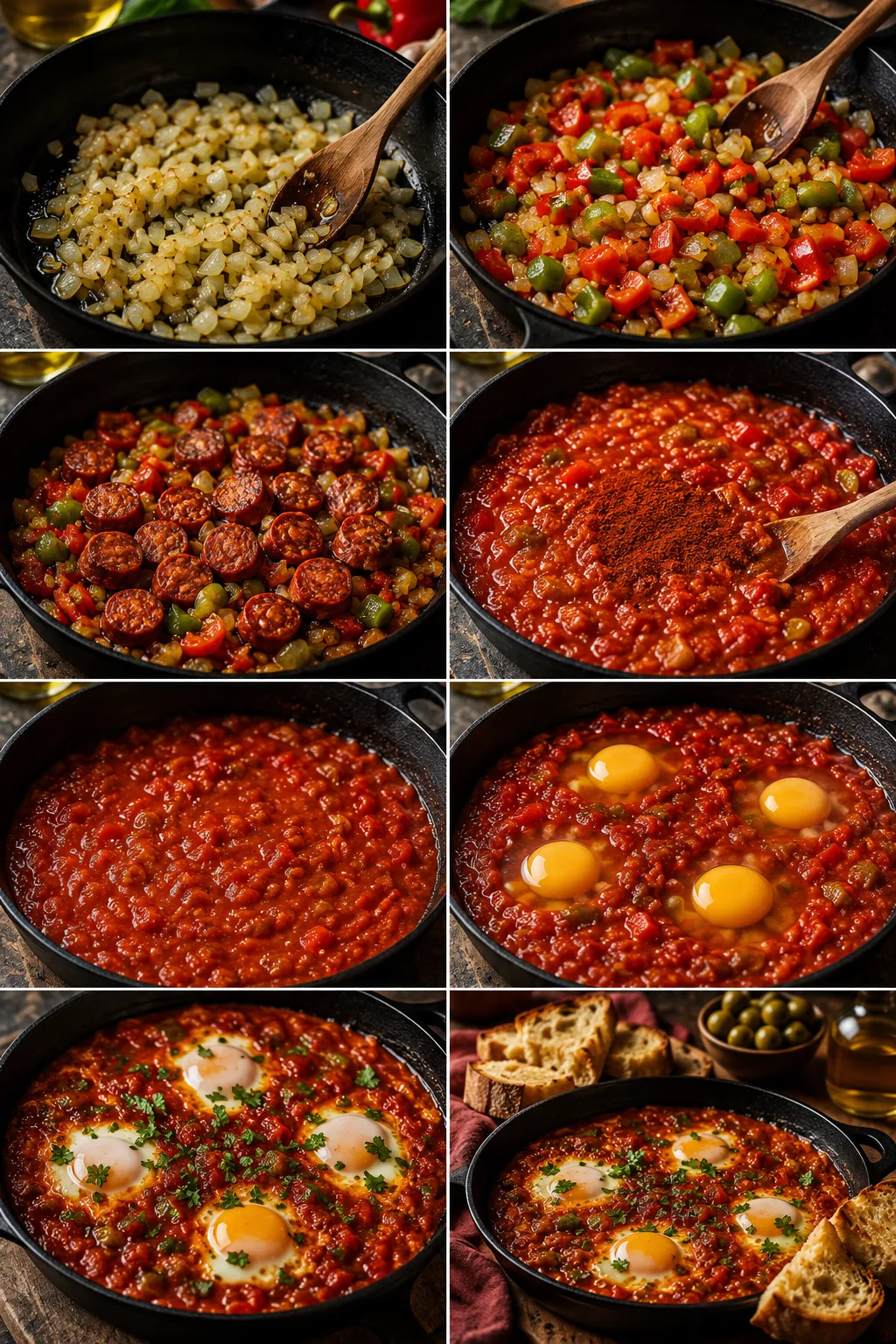
👩🍳 Cooking steps
- Heat the olive oil in a large oven-safe skillet over medium heat.
- Add the chopped onion and cook slowly for about 7–8 minutes until soft and lightly golden around the edges.
- Stir in the garlic and diced peppers. Cook for another 6–7 minutes until the peppers soften and everything smells sweet instead of sharp.
- Add the sliced chorizo and cook for several minutes until the oils begin to release into the vegetables.
- Sprinkle in the smoked paprika and stir quickly so it doesn’t burn.
- Crush the canned tomatoes with your hands or a spoon directly into the skillet. Stir everything together and let the sauce simmer for 10–15 minutes until slightly thickened.
- Taste the sauce and season with salt and black pepper. Add peas if using.
- Make four small spaces in the sauce and crack the eggs into them carefully.
- Transfer the skillet to a preheated oven at 190°C and bake for about 8–10 minutes. The whites should look set while the yolks still stay soft in the center.
- Scatter fresh parsley over the top and serve immediately with warm bread.
✨ Small cooking tips that actually help
- 🥄 If the sauce thickens too much before the eggs go in, add a splash of water or stock.
- 🍅 Fresh tomatoes work best in summer. The rest of the year, canned tomatoes usually taste better here.
- ⏲️ Watch the eggs closely during the final minutes. They go from soft to fully cooked surprisingly fast.
- 🫒 A little extra olive oil right before serving makes the sauce taste richer.
- 🌶️ Add chili flakes if you want more heat without overpowering the paprika.
🍷 This is the kind of dinner people linger around
Some dinners are over in fifteen minutes because everybody is starving and already thinking about dessert before the plates even hit the table. Huevos a la flamenco usually creates the opposite situation. People slow down without noticing it.
Part of that comes from the way the dish is served. The skillet arrives hot, the sauce still bubbling around the eggs, and suddenly nobody is in a hurry anymore. Somebody tears off bread before sitting down properly. Someone else immediately asks for another spoon because the sauce smells too good to ignore. It feels casual from the start, which is probably why the atmosphere around this dish changes so quickly.
I like recipes that create that kind of mood naturally. Not every dinner needs to feel carefully planned or overly styled. Sometimes a pan in the middle of the table works better than perfectly arranged plates.
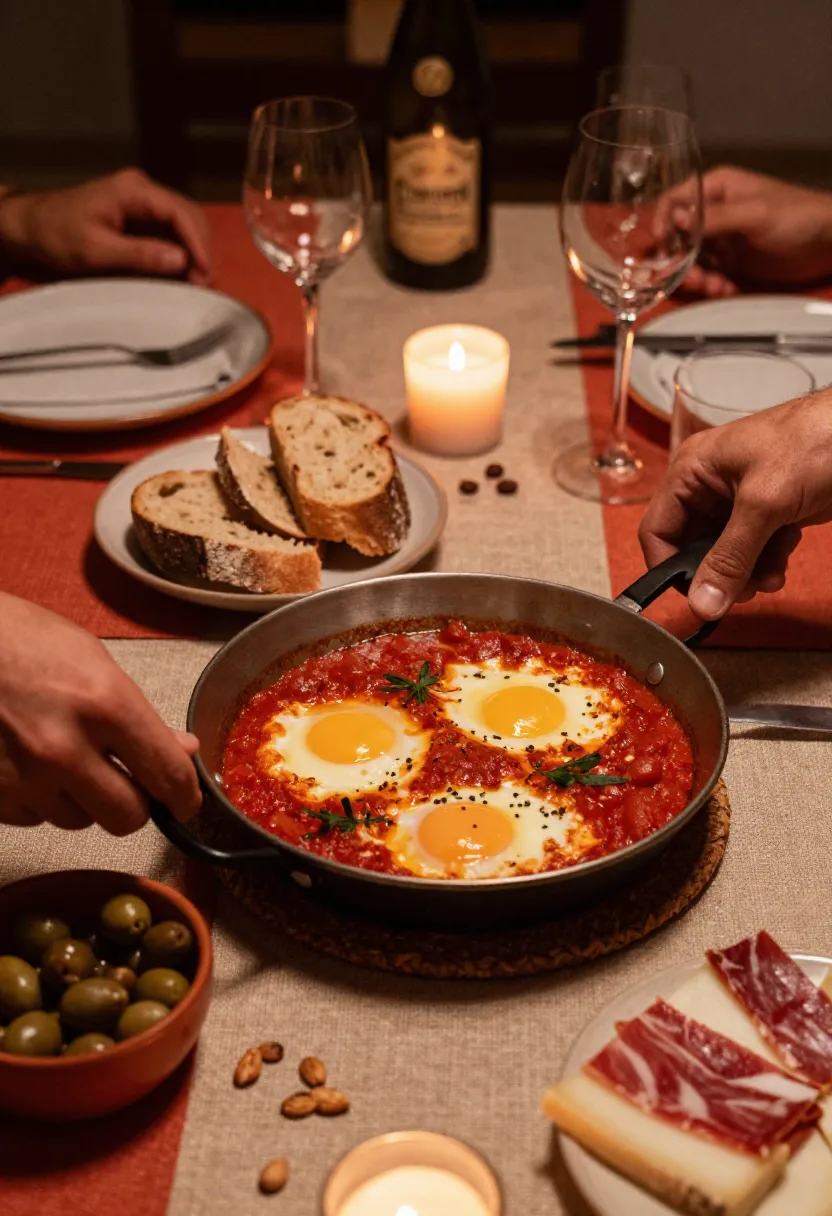
Huevos a la flamenco also fits surprisingly well into different situations. I’ve made it on quiet weeknights when the fridge looked half empty, but I’ve also cooked it for friends during long weekend dinners where nobody wanted the evening to end too early. The recipe somehow adjusts itself depending on the setting. Add olives, sliced manchego, maybe a green salad with sharp lemon dressing, and suddenly the table feels fuller without adding much extra work.
The bread matters more than people think too. Once the egg yolks break into the tomato sauce, the whole skillet changes texture. The sauce becomes richer and softer, almost creamy. Warm bread turns into part of the meal rather than something on the side.
And honestly, that’s probably the moment people remember most. Not the ingredients themselves, but sitting around a hot skillet while everybody keeps reaching back into the pan for “one last bite” three or four times in a row.
🧀 Things that work really well on the table beside it
- Warm sourdough or toasted baguette
- Marinated olives
- Manchego or parmesan
- A simple green salad with lemon dressing
- Roasted almonds or salted nuts
- Red wine or sparkling water with citrus slices
🥔 The best versions usually happen by accident
The funny thing about recipes like this is that they usually improve once you stop trying to follow them too perfectly.
One of the best versions I made happened because there wasn’t enough chorizo left in the fridge, so I added chickpeas almost by accident. Another time I threw in leftover roasted eggplant because it needed to be used before the weekend. Neither version tasted exactly traditional, but both worked incredibly well.
That’s normally how home cooking develops over time. Recipes slowly shift depending on what ingredients are available, what season it is, or honestly just how much energy exists that evening. Some nights people want a heavier dinner with potatoes underneath the sauce. Other nights a lighter version with extra peppers and herbs feels better.
Huevos a la flamenco handles those changes without falling apart.
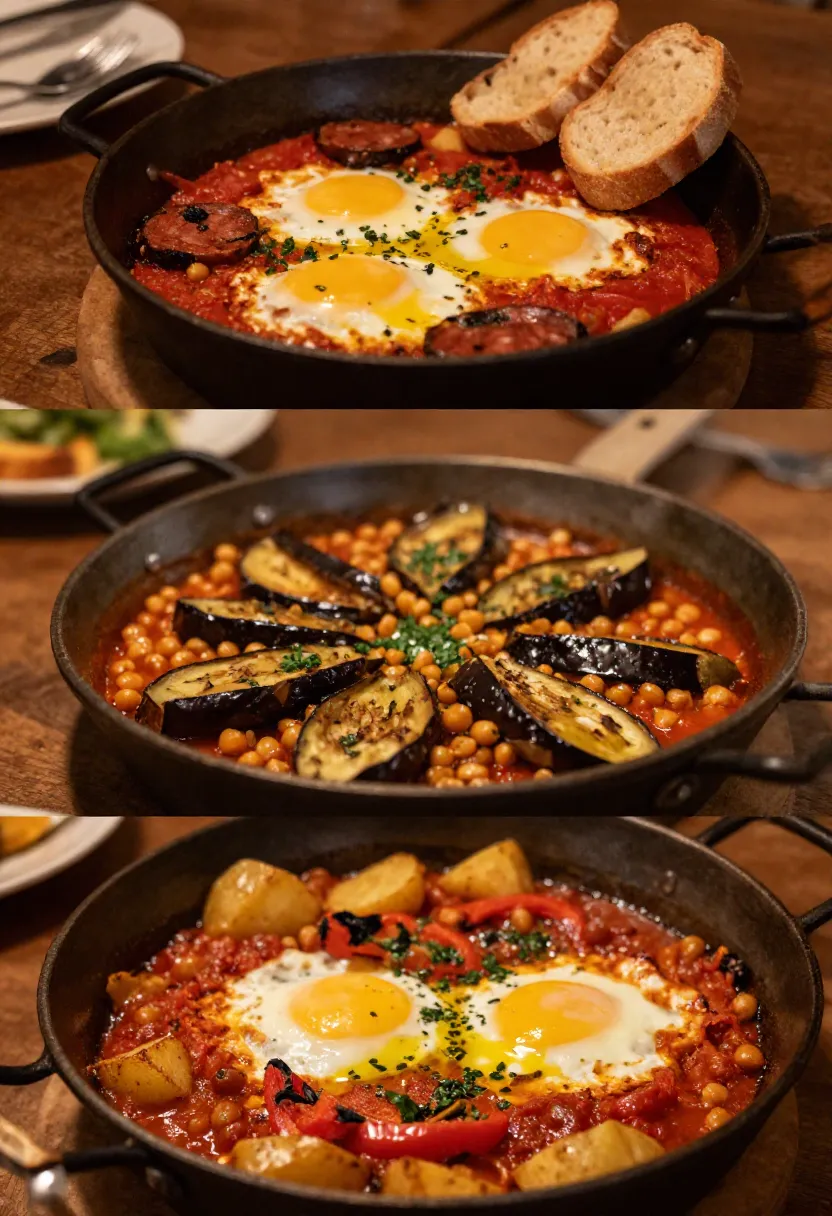
The sauce stays flexible enough to support different ingredients while still keeping the same overall character. Smoky paprika, tomatoes, olive oil, garlic, and eggs create such a strong base that small adjustments rarely hurt the final result.
I think that adaptability is one reason dishes like this stay popular for generations. Recipes that demand exact measurements and perfect timing often become tiring after a while. But recipes that leave room for improvisation tend to survive because people can actually keep cooking them long term.
Even the texture can shift depending on preference. Some cooks leave the sauce looser and brighter with barely set eggs. Others reduce everything longer until the tomatoes become darker and richer around the edges of the pan. Both versions feel right in different ways.
And to be honest, slightly imperfect skillet meals usually taste more personal anyway. A sauce reduced a little too much. Eggs cooked one minute longer than planned. Crispy edges where the tomatoes caught slightly against the pan. Those small details make homemade food feel real instead of overly polished.
Perfect food photographs are nice to look at, but they rarely feel as comforting as an actual dinner table.
🔥 Why simple skillet meals rarely go out of style
Food trends move fast now. One month everybody is folding pastry into impossible shapes. The next month social media is full of cottage cheese bowls or air fryer recipes that promise dinner in twelve minutes.
But skillet meals like huevos a la flamenco never fully disappear.
Probably because they solve everyday problems better than trend-based recipes do. They’re affordable, filling, easy to scale for different numbers of people, and they don’t require specialized equipment. Most importantly, they still feel comforting without demanding too much effort from the cook.
That balance matters more than people admit.
A lot of people cook while tired after work or while trying to handle three other things at once. Recipes that survive in real kitchens usually survive because they leave space for distraction, mistakes, and substitutions. Huevos a la flamenco does that naturally.
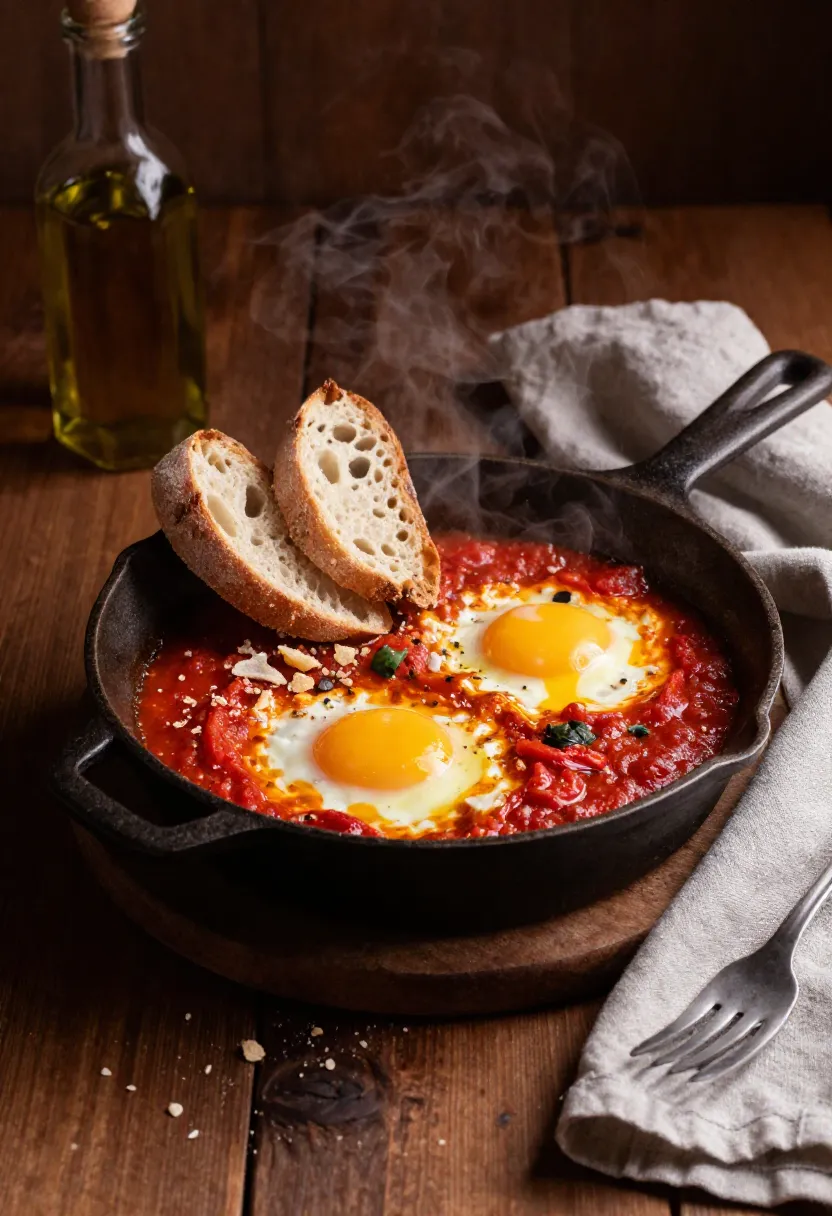
The ingredient list is simple enough that most of it already feels familiar. Tomatoes, eggs, onions, garlic, peppers, olive oil. Nothing complicated. But once everything cooks together slowly, the flavor becomes much deeper than expected.
There’s also something timeless about serving food directly from a skillet. It immediately makes dinner feel more relaxed. Nobody expects perfection from skillet meals. The sauce can spill slightly. The eggs don’t need identical shapes. Bread crumbs end up everywhere. That informality actually improves the experience.
And while the recipe definitely looks beautiful when the bright yolks sit against the red sauce, it never feels like food designed only for photographs. It still feels like something meant to be eaten immediately while it’s hot.
I think that’s why dishes like this continue surviving through every new food trend. They’re practical first. Comforting second. Beautiful almost by accident.
Not every recipe needs to become a performance.
Sometimes dinner just needs to taste good, feed people properly, and make the kitchen feel warm for an hour or two.