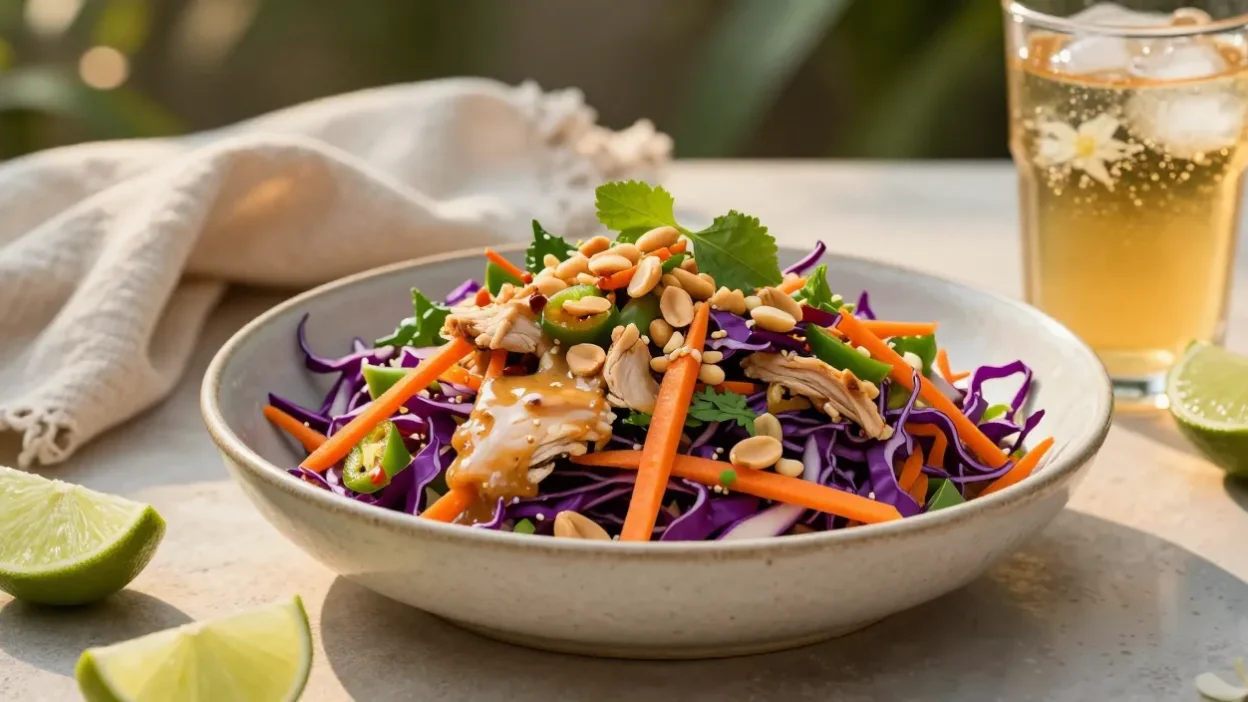
There’s a very specific moment every year when heavy comfort food suddenly stops sounding appealing. Usually it happens after the first genuinely warm evening of spring. The windows stay open longer, the kitchen feels brighter somehow, and the idea of standing over a bubbling pot of soup immediately loses its charm.
That’s when this Thai chicken salad recipe starts showing up again in my kitchen.
Not because it’s trendy or especially complicated. Honestly, the opposite. It’s the kind of meal that works when you’re tired, hungry, and unwilling to deal with a sink full of dishes afterward. Most of the effort comes down to slicing vegetables and whisking a dressing together. No long cooking process. No waiting around.
And despite being technically “a salad,” it actually eats like dinner. 🥗
The chicken gives it enough substance to feel filling, while the cabbage and peppers keep everything crunchy and fresh. Then the peanut dressing pulls the whole bowl together with that creamy-salty-lime combination that somehow tastes both rich and light at the same time.
The first few bites are always about texture for me. The cabbage snaps slightly when you bite into it, carrots stay sweet and crisp, and chopped peanuts add another layer of crunch right at the end. Even the herbs matter because cilantro and green onions stop the dressing from becoming too heavy or one-dimensional.
Some salads feel overly careful, almost decorative. This one doesn’t. Once everything gets tossed together, the bowl looks colorful, slightly messy, and much more inviting than perfectly arranged restaurant salads that nobody actually wants to eat for dinner. The dressing coats the cabbage, herbs end up everywhere, and the peanuts fall to the bottom of the bowl where someone inevitably tries to scoop up the last crunchy pieces.
It’s the kind of food that feels relaxed instead of polished.
I also love how forgiving the recipe is. Leftover grilled chicken works perfectly, but rotisserie chicken honestly makes this salad even easier on busy nights. Sometimes I add mango when it’s especially ripe because the sweetness works well with the salty peanut dressing. Other times I throw in cucumbers, edamame, or extra herbs simply because they need to be used before they disappear in the back of the refrigerator.
The structure stays solid no matter what direction you push it, which is probably one reason this recipe survives regular weeknight cooking instead of being made once and forgotten.
There’s also something satisfying about how colorful the finished salad looks once everything comes together. Deep purple cabbage, bright orange carrots, green herbs, creamy peanut dressing, chopped roasted peanuts scattered over the top. It doesn’t feel like restrictive “healthy food.” It looks generous and filling before anyone even takes the first bite.
The smell changes while you’re making it too. At first the kitchen mostly smells like fresh vegetables and herbs, but once the dressing comes together, the garlic, lime juice, soy sauce, ginger, and sesame oil start blending into something warmer and more comforting. Not heavy, just balanced.
I think that’s part of why this recipe works so well during warmer months. A lot of lighter meals end up feeling cold in every possible way. Technically refreshing, but not very satisfying. This salad avoids that problem because the peanut dressing gives the bowl enough richness to feel like an actual dinner while the lime juice and herbs keep everything tasting fresh.
Sometimes I make this salad for dinner and end up standing in the kitchen eating extra bites straight from the mixing bowl while cleaning up. Usually because the cabbage coated in dressing somehow tastes even better after sitting for a few minutes.
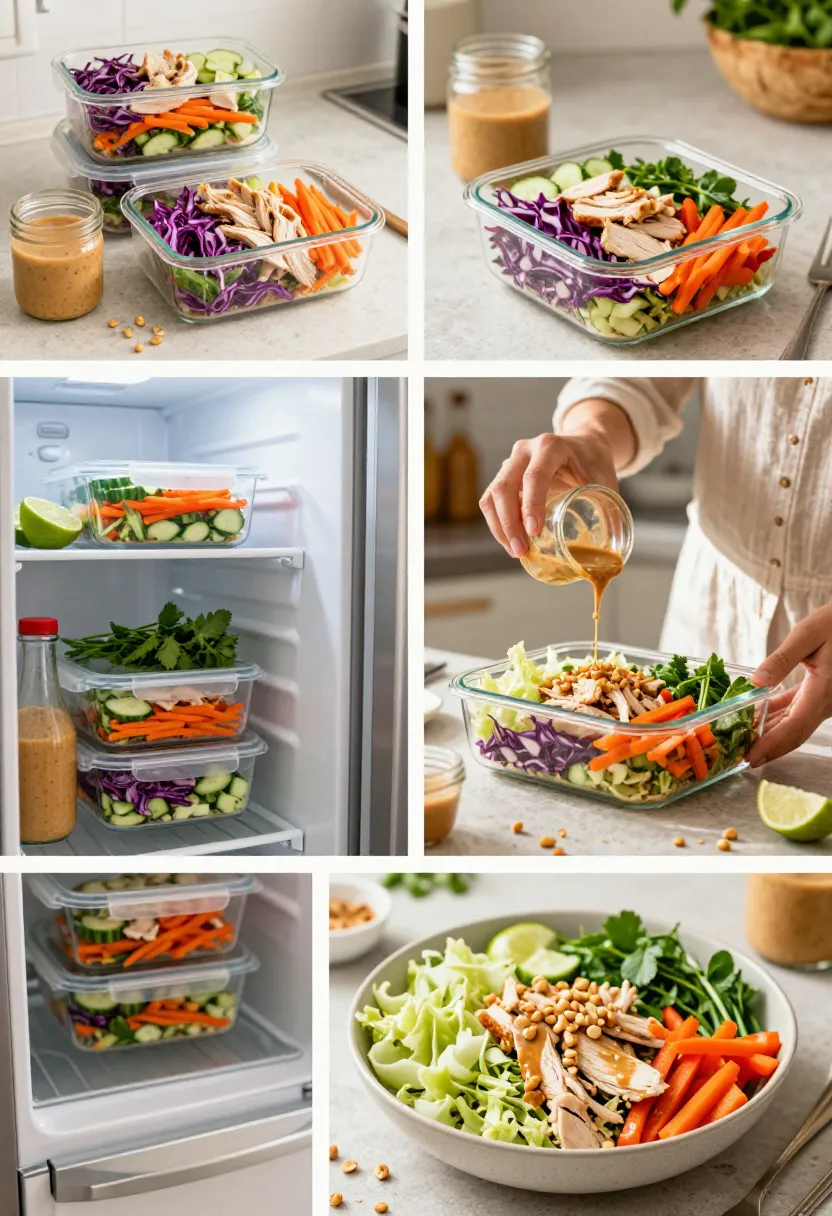
The leftovers hold up surprisingly well too, which honestly matters more to me now than impressive presentation. There’s something really convenient about opening the fridge the next day and realizing lunch is already handled, especially when the salad still tastes fresh instead of wilted and tired.
This recipe also changes depending on the mood or situation. On busy weeknights, I usually keep it simple with chicken, cabbage, carrots, herbs, and dressing. But for slower weekends or casual dinners with friends, I’ll sometimes add rice noodles, crispy wonton strips, mango slices, or extra peanuts on top for more texture.
A few additions work especially well:
- rice noodles for a more filling version
- mango for sweetness
- cucumbers for extra freshness
- crispy wonton strips for crunch
- chili crisp or sriracha for heat
That flexibility is probably why recipes like this last longer than most food trends. They fit regular life. Not perfectly planned life or carefully staged social media cooking. Actual weeknights where people are hungry, tired, and trying to make something fresh without turning dinner into a huge project.
🥜 Why the peanut dressing matters so much
Without the dressing, this would mostly just be shredded vegetables and chicken sitting in a bowl together. Good ingredients, sure, but nothing memorable.
The peanut dressing changes everything.
A good peanut dressing should coat the vegetables lightly instead of burying them. That balance is harder to get right than people think. Too thick and the salad suddenly feels dense halfway through eating it. Too sweet and the lime flavor disappears completely. Too much soy sauce and the whole thing leans salty instead of fresh.
This version lands somewhere in the middle.
The peanut butter gives the dressing body, while lime juice cuts through the richness immediately. Ginger adds warmth without making the salad spicy. Sesame oil stays mostly in the background, but you notice when it’s missing.
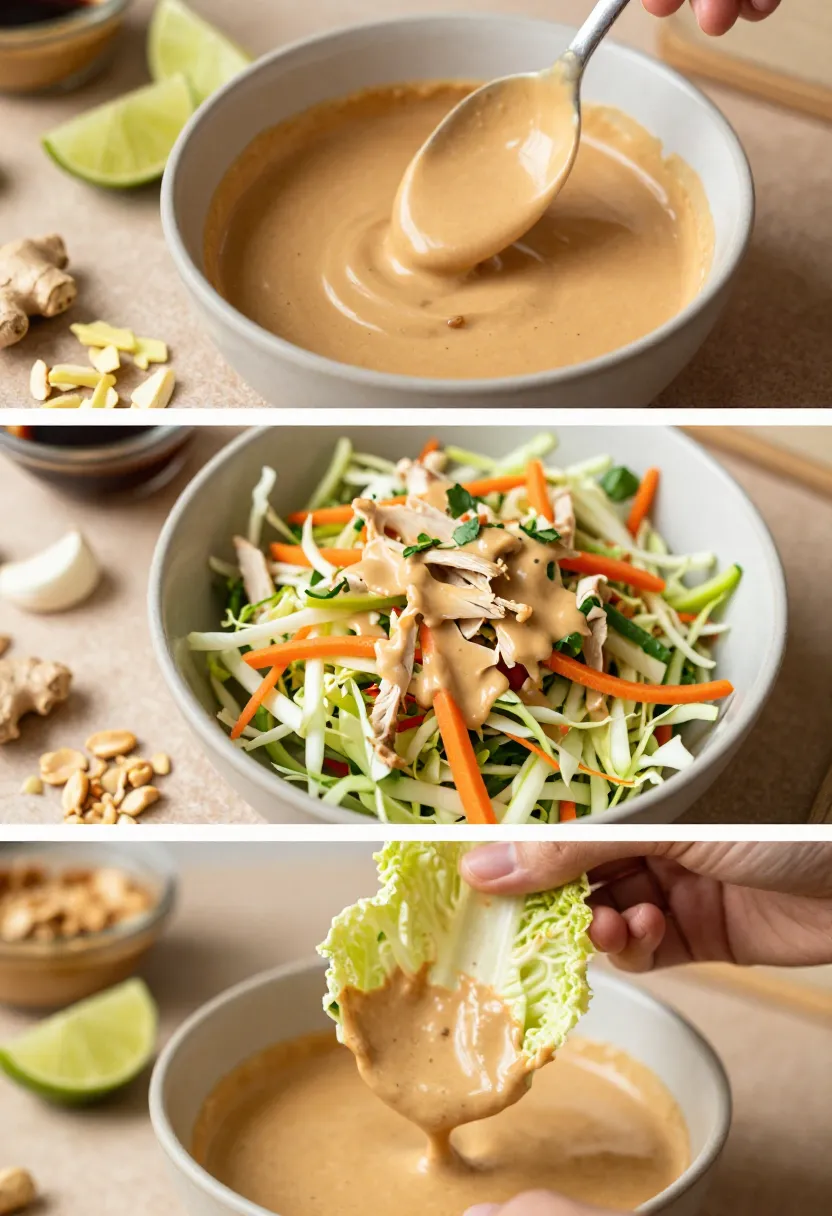
One thing I learned after making this recipe too many times to count: different peanut butter brands behave completely differently.
Some loosen immediately after adding lime juice. Others stay stubbornly thick no matter how much whisking happens. Warm water helps fix that problem, but it’s important to add it slowly. One spoonful at a time works best.
I made the mistake once of rushing the process and dumping in too much water at once. The dressing turned thin and slightly sad. Still edible, but not the creamy texture the salad needs.
Another thing people underestimate is salt balance.
Sometimes the dressing tastes flat even though technically all the ingredients are there. Usually it just needs another splash of soy sauce or an extra squeeze of lime. Peanut butter dulls flavors surprisingly fast, especially after sitting in the fridge overnight.
The dressing also gets better after sitting for ten minutes or so. The garlic softens slightly, the lime settles into the peanut butter, and everything tastes more connected instead of separate ingredients fighting each other.
That’s usually the point where people start dipping random vegetables directly into the bowl while pretending they’re still “testing” the flavor. Happens every time.
🥕 The ingredients create the balance
The ingredients in this Thai chicken salad recipe work because each one adds something different instead of repeating the same texture or flavor.
Red cabbage is probably the most important ingredient here because it keeps the salad crunchy even after the dressing is mixed in. Unlike soft lettuce, cabbage holds its structure longer and gives the salad that fresh crisp bite that makes the whole dish feel lighter.
Chicken adds the savory part of the salad and turns it into a proper dinner instead of just a side dish. I usually use rotisserie chicken because it’s faster, but grilled chicken or even shrimp work well too. If you want a vegetarian version, crispy tofu fits naturally into the recipe without changing the overall balance too much.
Carrots bring natural sweetness, which helps soften the saltiness from the soy sauce and peanut dressing. Bell peppers do something similar, although they also add moisture and freshness that keep the salad from tasting too dense. Thinly sliced peppers work best because they mix more evenly into the cabbage.
Fresh herbs completely change the personality of the salad. Cilantro gives the bowl a bright, sharp flavor that cuts through the creamy dressing, while green onions add a little bite without overpowering everything else. If cilantro isn’t your thing, mint or Thai basil work surprisingly well and make the salad taste even fresher during warmer months.
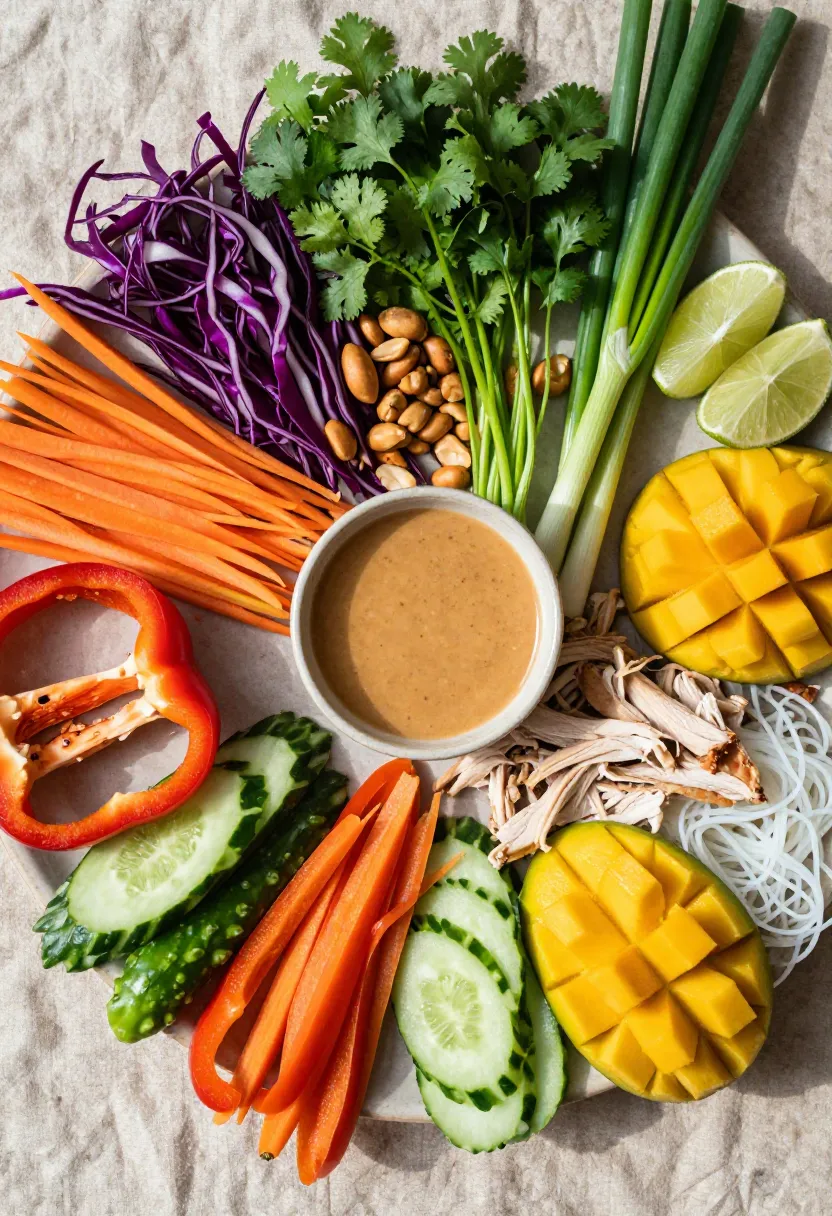
The roasted peanuts on top might seem small, but they matter a lot for texture. The peanut dressing is creamy, so the chopped peanuts add another layer of crunch that keeps every bite more interesting. Cashews or sliced almonds can work too, although peanuts give the salad its classic flavor.
The dressing itself depends on balance. Peanut butter creates the creamy base, but lime juice keeps it from becoming too heavy. Soy sauce adds salt and depth, while ginger gives the dressing warmth and freshness at the same time. Sesame oil stays mostly in the background, but without it the dressing tastes flatter and less rounded.
Honey helps soften the sharpness from the lime juice, especially if the citrus is particularly acidic. If needed, maple syrup works as an easy substitute.
Some optional ingredients can change the salad slightly depending on the mood or season. Mango adds soft sweetness that contrasts nicely with the crunchy vegetables, while cucumber makes the salad feel even cooler and lighter during hot weather. Rice noodles are another good addition if you want the salad to feel more filling for dinner or meal prep lunches.
| Ingredient | Flavor role | Texture role | Why it matters in the salad | Possible substitutions |
|---|---|---|---|---|
| Red cabbage 🥬 | Mild earthy flavor | Crunchy and firm | Keeps the salad crisp even after dressing is added | Green cabbage |
| Chicken 🍗 | Savory and slightly salty | Tender and filling | Makes the salad substantial enough for dinner | Tofu, shrimp, rotisserie turkey |
| Carrots 🥕 | Natural sweetness | Crisp texture | Balance the salty peanut dressing | Thin sliced snap peas |
| Bell peppers 🌶️ | Fresh and slightly sweet | Juicy crunch | Add brightness and color to the bowl | Mini sweet peppers |
| Cilantro 🌿 | Bright herbal flavor | Soft leafy texture | Cuts through the richness of the dressing | Mint or Thai basil |
| Green onions 🧅 | Sharp fresh flavor | Light crunch | Add freshness without overpowering the salad | Chives or red onion |
| Roasted peanuts 🥜 | Deep nutty flavor | Extra crunch | Give the salad a more satisfying texture | Cashews or almonds |
| Peanut butter 🥄 | Creamy, nutty richness | Smooth texture in dressing | Forms the base of the dressing | Almond butter |
| Lime juice 🍋 | Bright acidity | Liquid balance | Keeps the dressing from tasting heavy | Rice vinegar plus lemon juice |
| Soy sauce 🥢 | Salty umami depth | Thin liquid texture | Balances sweetness and richness | Tamari or coconut aminos |
| Ginger ✨ | Warm spicy freshness | Slight texture in dressing | Makes the dressing taste fresher and lighter | Garlic plus extra lime |
| Sesame oil 🖤 | Toasted nutty aroma | Silky finish | Adds deeper flavor in the background | Neutral oil with sesame seeds |
| Honey 🍯 | Gentle sweetness | Smooths dressing texture | Balances acidity from lime juice | Maple syrup |
| Mango 🥭 | Sweet tropical flavor | Soft juicy texture | Adds contrast to crunchy vegetables | Pineapple |
| Cucumber 🥒 | Cool fresh flavor | Watery crunch | Makes the salad feel lighter in hot weather | Celery |
| Rice noodles 🍜 | Neutral soft flavor | Chewy texture | Turn the salad into a larger meal | Thin soba noodles |
That combination of crunchy vegetables, creamy dressing, fresh herbs, and savory protein is the reason this salad works so well. Nothing completely dominates the bowl. Everything balances something else.
🍋 Thai chicken salad recipe
This crunchy Thai chicken salad recipe combines shredded chicken, crisp cabbage, carrots, bell peppers, fresh herbs, roasted peanuts, and a creamy peanut lime dressing. It works well for easy weeknight dinners, meal prep lunches, warm-weather gatherings, or casual weekend meals when heavier food feels exhausting.
The balance between crunchy vegetables and rich dressing keeps the salad satisfying without becoming overly heavy. Leftovers also hold up surprisingly well compared to most salads, especially if the dressing stays separate until serving.
What makes this salad stand out is the contrast between flavors and textures. The vegetables stay crisp and fresh, while the peanut dressing adds enough richness to make the whole bowl feel comforting instead of overly light. Lime juice cuts through the creamy peanut butter, fresh herbs brighten everything up, and roasted peanuts add another layer of crunch right at the end.
It’s also the kind of recipe that feels adaptable without becoming complicated. Some nights it stays simple with just chicken, cabbage, and carrots. Other times I’ll add mango for sweetness, cucumbers for extra freshness, or rice noodles if I want the salad to feel more substantial for dinner. The base recipe stays reliable no matter how many small adjustments happen around it.
Another reason this salad works so well is that most of the ingredients hold their texture longer than traditional leafy salads. Cabbage stays crisp even after sitting in dressing for a while, which makes the recipe especially useful for meal prep or packed lunches. You don’t open the container the next day and find a watery pile of wilted greens at the bottom.
The peanut lime dressing carries a lot of the personality here too. It’s creamy but not too thick, salty without becoming overpowering, and bright enough to keep the salad tasting fresh from the first bite to the last. Ginger and garlic add warmth in the background, while sesame oil gives the dressing a deeper flavor that slowly builds as you eat.
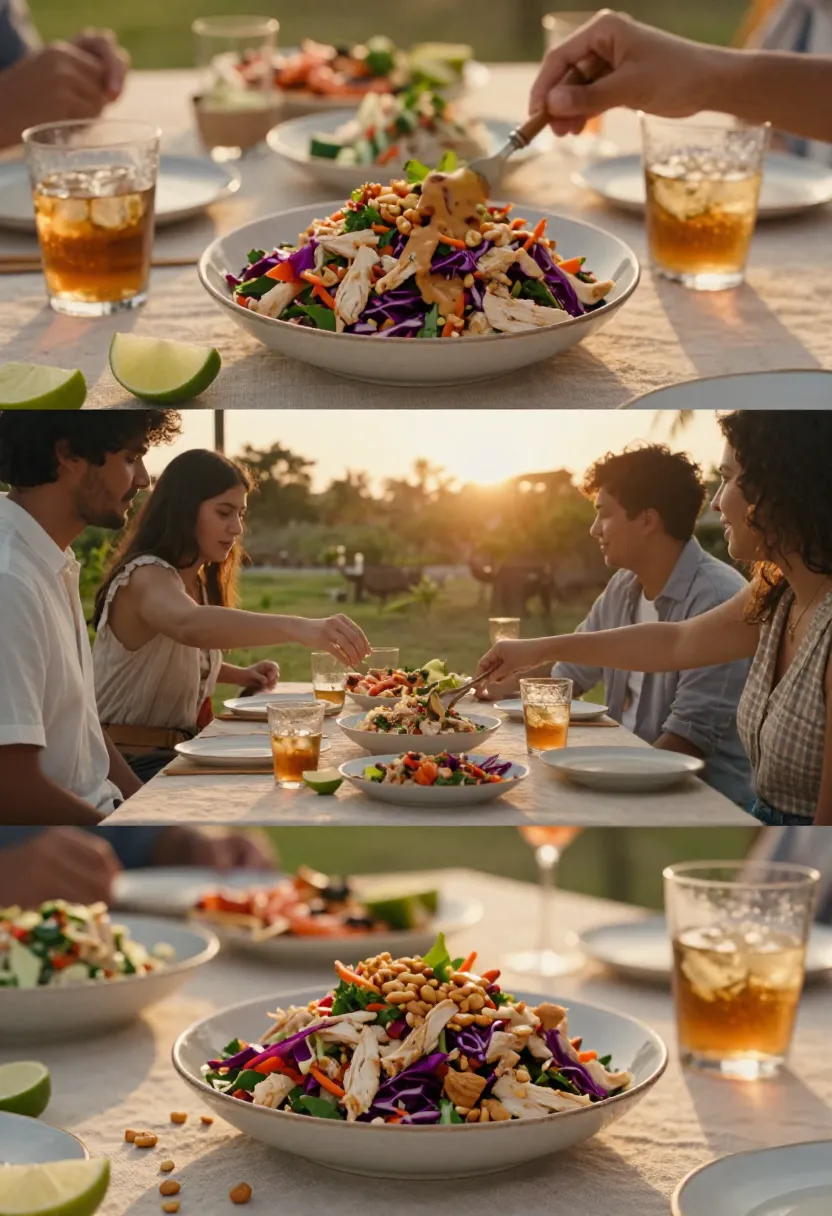
There’s also something very relaxed about this dish. It doesn’t need careful plating or complicated presentation. Most of the time it ends up served in a huge bowl in the middle of the table with extra lime wedges nearby and peanuts scattered over the top. People build their own portions, add extra dressing if they want it, and usually go back for seconds without much hesitation.
The colors make it feel even more inviting. Purple cabbage, orange carrots, green herbs, golden peanut dressing — everything looks bright and fresh before you even take the first bite. It’s one of those meals that immediately feels right for warmer evenings, open windows, and dinners that stretch a little longer because nobody’s in a hurry.
And honestly, recipes like this stay popular for a reason. They’re simple enough for everyday cooking but flavorful enough that you actually look forward to making them again.
Ingredients
For the salad
- 3 cups cooked shredded chicken
- 4 cups thinly sliced red cabbage
- 2 cups shredded carrots
- 1 red bell pepper, sliced thin
- 1 yellow bell pepper, sliced thin
- 3 green onions, sliced
- 1 cup chopped cilantro
- 1/2 cup roasted peanuts
For the peanut dressing
- 1/3 cup creamy peanut butter
- 2 tablespoons soy sauce
- 2 tablespoons fresh lime juice
- 1 tablespoon rice vinegar
- 1 tablespoon honey
- 1 teaspoon sesame oil
- 1 garlic clove, grated
- 1 teaspoon grated ginger
- 2–4 tablespoons warm water
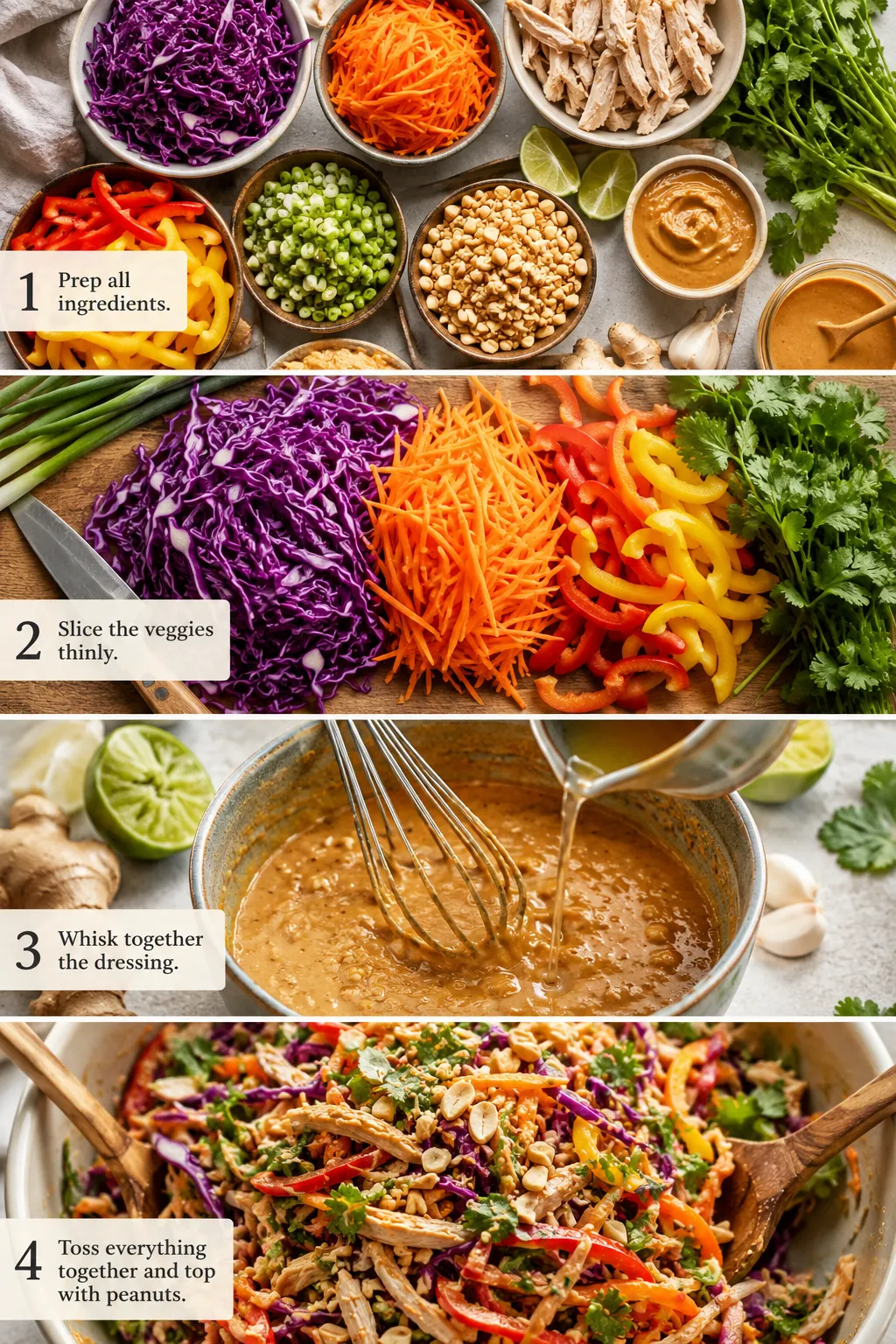
👩🍳 Steps
- Thinly slice the cabbage, bell peppers, and green onions. Shred the carrots if necessary. Try to keep everything fairly thin so the salad mixes evenly.
- Add the cabbage, carrots, peppers, green onions, cilantro, and chicken into a large bowl.
- In a separate bowl, whisk together peanut butter, soy sauce, lime juice, rice vinegar, honey, sesame oil, garlic, and ginger.
- Slowly add warm water while whisking until the dressing becomes smooth and pourable.
- Taste the dressing before adding it to the salad. Adjust with more lime juice or soy sauce if needed.
- Pour the dressing over the salad and toss everything thoroughly until evenly coated.
- Sprinkle roasted peanuts over the top right before serving.
- Let the salad sit for about 10 minutes before eating so the cabbage softens slightly while still keeping crunch.
🔥 Small kitchen tips and shortcuts
- Cold chicken shreds more easily than warm chicken.
- Store extra dressing separately for leftovers.
- Add peanuts at the end so they stay crunchy.
- If the dressing becomes too thick in the fridge, add a spoonful of warm water and stir again.
- Rotisserie chicken saves a huge amount of time on busy evenings.