I didn’t plan on keeping this recipe around. It started as one of those accidental dinners where the tomatoes needed using, the basil was already looking tired around the edges, and there was half a box of spaghetti sitting in the cupboard because there is always half a box of spaghetti somewhere in the kitchen.
But the recipe stayed.
Partly because it’s easy. Mostly because roasted cherry tomatoes do something unfairly good in the oven. They soften slowly, the skins wrinkle and split, the juices slide into the olive oil, and suddenly the whole tray starts looking less like ingredients and more like actual sauce. Not polished restaurant sauce either. Something looser, more relaxed. The kind of sauce that drips onto the counter while you toss the pasta too aggressively.
The oven does most of the work here, which honestly matters more than people admit. Some nights I don’t want dinner to become a project. I don’t want multiple pans going at once or ingredients that require “careful attention.” I want something that smells good halfway through cooking so it at least feels like the evening is improving.
And this pasta does that.
The smell is usually what gets me first. Garlic warming in olive oil. Tomatoes caramelizing around the edges. Basil sitting nearby waiting for the very end. It fills the kitchen fast, especially once the tomato juices start bubbling against the hot pan.
There’s also something strangely satisfying about watching the tomatoes collapse while roasting. At first they sit there looking neat and shiny. Then the skins split. Then everything starts sinking into itself. By the end, the tray looks chaotic in the best possible way 🍅.
This pasta fits those strange in-between evenings perfectly too. Too tired for complicated cooking. Too hungry for snacks pretending to be dinner. Maybe you open wine 🍷. Maybe you eat directly from the bowl while standing near the stove because waiting for the table feels unnecessary.
Honestly, both versions feel correct.
A few situations where this pasta somehow works especially well:
- late summer evenings when tomatoes actually taste sweet
- rainy weekdays when cooking energy is dangerously low
- casual dinners with friends where nobody expects perfection
- those random fridge-cleanout nights that turn out better than expected
- quiet weekends when you want cooking to feel slow instead of stressful
And unlike heavier pasta recipes, this one doesn’t leave you feeling exhausted afterward. The tomatoes keep everything lighter, brighter, less weighed down by cream or butter.
Not that I’m against butter. Obviously.
But roasted tomato pasta has a different mood entirely.
🔥 Why roasting changes the tomatoes completely
Raw cherry tomatoes can be wildly inconsistent. Some are sweet and almost fruity. Others somehow manage to taste watery and dry at the same time, which feels scientifically impossible but keeps happening anyway.
Roasting fixes most of those problems.
As the tomatoes cook, moisture slowly evaporates and the flavor concentrates. The sugars become deeper and slightly caramelized, especially around the edges where the juices hit the hot pan. The garlic softens too, losing that harsh sharpness it has when raw.
And the texture changes completely.
Some tomatoes burst early and melt directly into the olive oil, creating the base of the sauce. Others hold their shape longer and stay chunkier. That mix matters because perfectly smooth sauces can start feeling repetitive halfway through a bowl. Here, every bite changes slightly. One forkful tastes sweeter. Another has more garlic. Another gets hit with black pepper and basil 🌿.
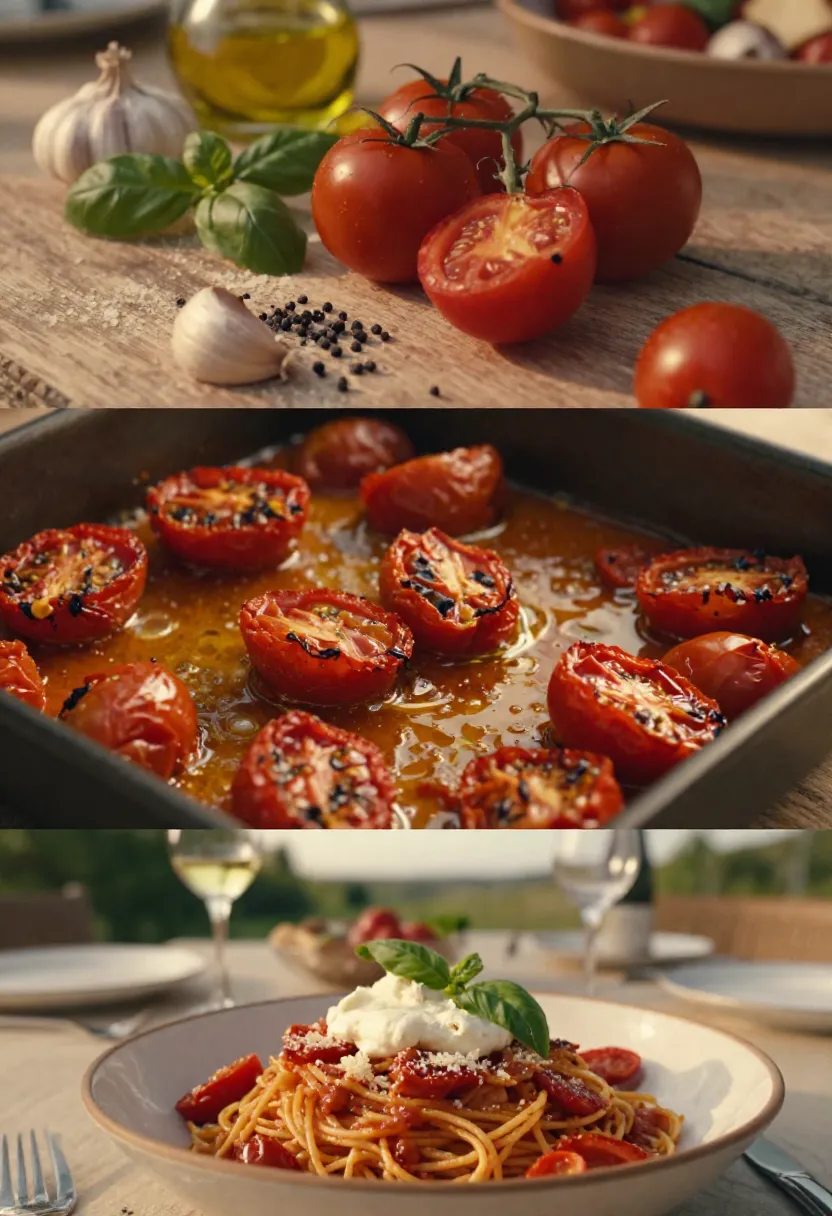
That unevenness is what keeps the sauce interesting.
I also think roasted tomatoes taste more “complete” somehow. Raw tomatoes can feel bright but unfinished on their own. Roasting rounds everything out. The acidity softens, the sweetness deepens, and the olive oil starts tasting infused instead of separate.
Even average grocery store tomatoes improve dramatically in the oven, which makes this recipe useful year-round instead of only during tomato season.
| Ingredient | Main flavor contribution | Texture effect | What happens during cooking | Why it matters in the final pasta |
|---|---|---|---|---|
| 🍅 Cherry tomatoes | Sweetness, acidity, freshness | Juicy and soft | Burst open and release juices | Create the entire base of the sauce naturally |
| 🧄 Garlic | Warm savory depth | Creamy when roasted | Softens and blends into oil | Makes the sauce taste richer without cream |
| 🫒 Olive oil | Richness and smoothness | Glossy finish | Combines with tomato juices | Carries flavor across the pasta |
| 💧 Pasta water | Saltiness and balance | Silky texture | Emulsifies the sauce | Helps the sauce cling instead of separating |
| 🌿 Basil | Fresh herbal brightness | Light contrast | Added at the end for freshness | Prevents the pasta from tasting too heavy |
| 🧀 Parmesan | Salt and umami | Slight creaminess | Melts into hot pasta | Adds depth and helps balance acidity |
| 🤍 Burrata | Mild dairy richness | Soft and luxurious | Gently melts from residual heat | Makes the dish feel more indulgent |
| 🌶️ Chili flakes | Heat and warmth | No texture change | Bloom slightly in hot oil | Cuts through sweetness from tomatoes |
| 🍋 Lemon zest | Sharp citrus brightness | None | Added fresh before serving | Makes the whole dish taste lighter |
| ⚫ Black pepper | Earthy warmth | Tiny spice bursts | Softens while roasting | Gives the sauce deeper flavor |
| 🧅 Caramelized onions (optional) | Sweet savory flavor | Jammy texture | Slowly soften and brown | Add richness during colder months |
| 🥬 Spinach (optional) | Mild freshness | Soft and silky | Wilts into hot pasta | Makes the dish feel slightly greener |
| 🐟 Anchovies (optional) | Deep savory flavor | Melt completely | Dissolve into the oil | Add complexity without tasting fishy |
One thing people underestimate here is seasoning. Tomatoes absorb salt aggressively while roasting. If the tray smells incredible but the pasta still tastes flat later, it usually needs another pinch of salt and maybe another grind of black pepper too.
Black pepper behaves differently in this recipe than in creamy sauces. I add it before roasting because the heat softens the sharpness and leaves behind something warmer and rounder. Hard to describe exactly. But noticeable once you try both versions side by side.
Another thing: don’t rush the roasting time.
Tomatoes that roast for only 20 minutes stay watery. You want the edges darkened slightly. You want juices bubbling thickly at the bottom of the tray. You want a few tomatoes collapsing completely into the oil while others barely hold their shape.
That’s where the flavor lives.
And honestly, the tray usually looks slightly destroyed by the end. Burnished edges, garlic smashed into the oil, tomato skins everywhere.
Perfect.
🍝 The pasta shape actually changes the experience
People love arguing about pasta shapes like there’s a single correct answer. There isn’t. But certain shapes absolutely change how this dish feels when you eat it.
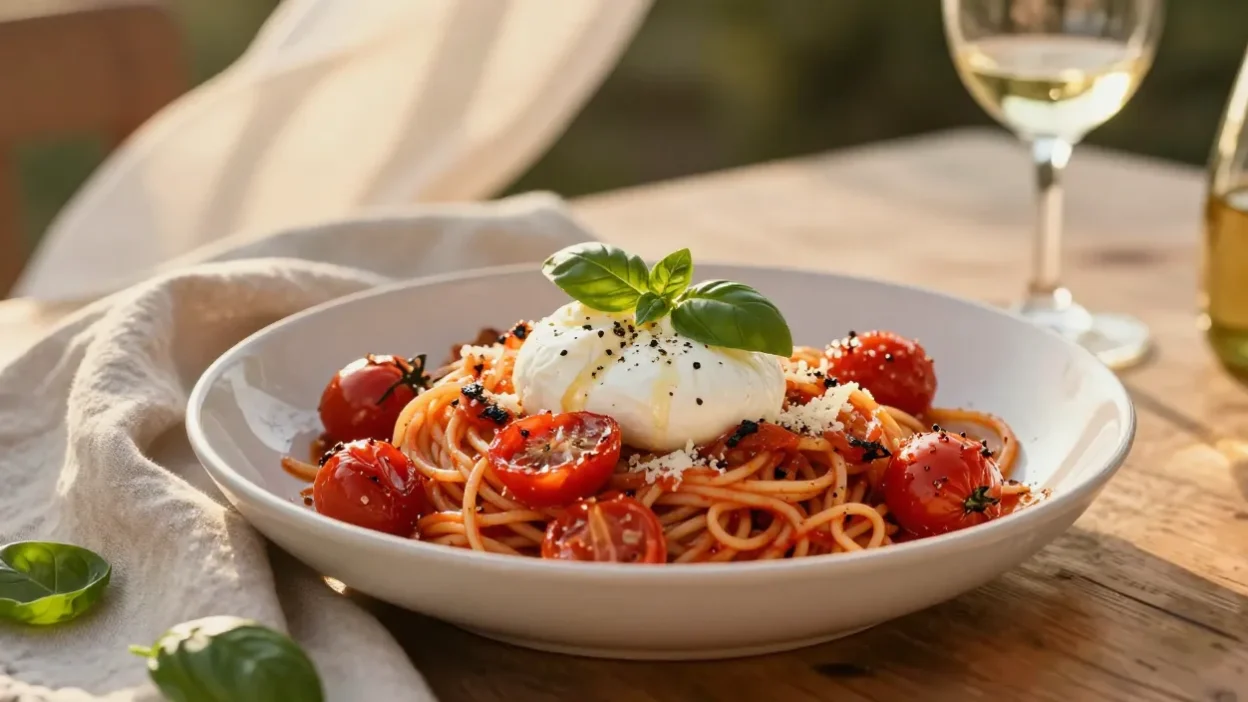
Long pasta looks dramatic. Twirled spaghetti coated in glossy roasted tomato sauce basically guarantees good photos. The strands drag through the oil and tomato juices in a way that feels comforting immediately, especially once parmesan starts melting over the top 🧀.
But shorter pasta often works better structurally.
Rigatoni catches pieces of roasted garlic inside the tubes. Fusilli traps little pockets of olive oil and tomato juices between the spirals. Penne keeps everything simple and dependable. Orecchiette almost scoops the sauce like tiny bowls.
The pasta shape changes how the sauce distributes too. With spaghetti, the sauce lightly coats everything. With rigatoni, you get concentrated bursts of flavor trapped inside the pasta itself.
And texture matters more here than people realize.
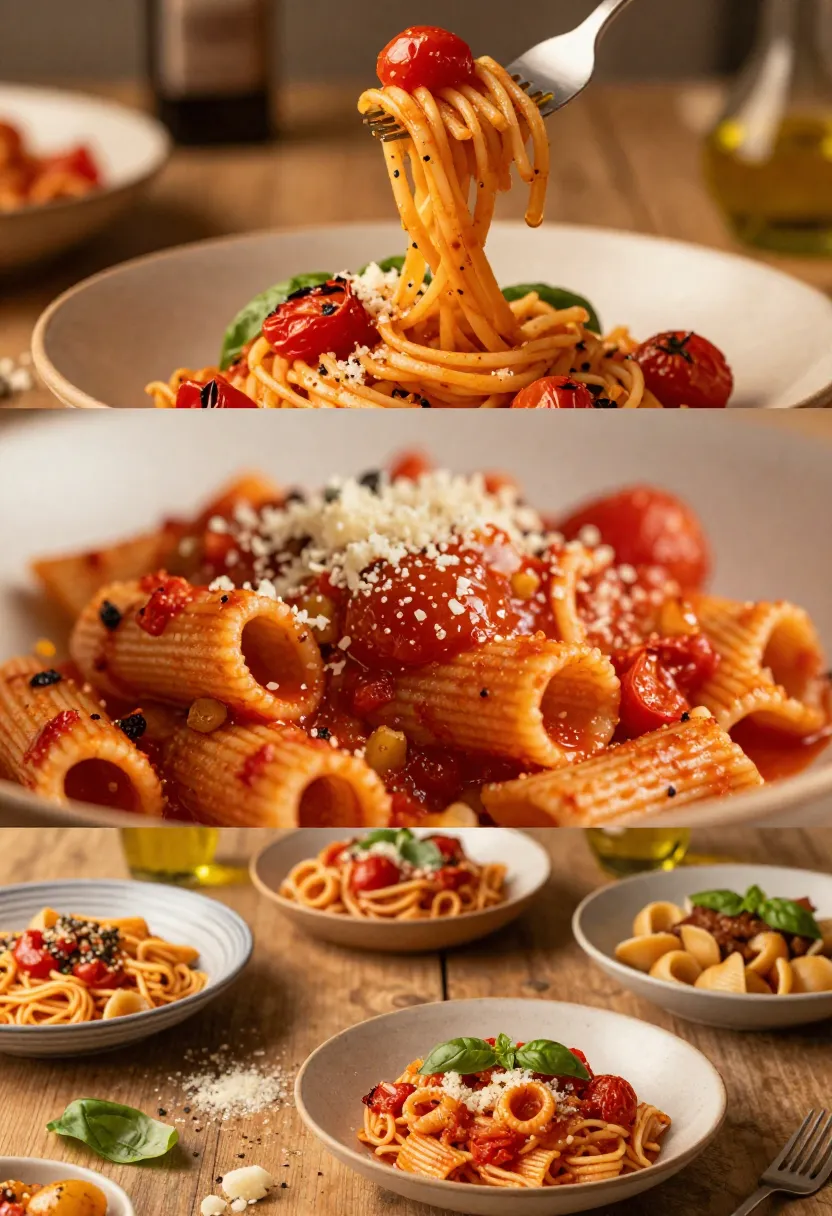
A roasted tomato sauce already has uneven texture from the tomatoes themselves. Pairing it with a pasta shape that catches sauce differently changes the entire rhythm of eating the dish. Some bites become extra garlicky. Others taste mostly like sweet roasted tomatoes. Others pick up basil and parmesan first.
That inconsistency actually keeps the pasta from becoming boring.
Still, I use spaghetti most often anyway.
Partly because it’s always around. Partly because tangled spaghetti with roasted tomatoes feels more relaxed somehow. Less intentional. More like real weeknight cooking instead of something overly planned.
And honestly, messy pasta usually tastes better 🍝.
| Pasta shape | Sauce coverage | Texture experience | Best reason to use it |
|---|---|---|---|
| 🍝 Spaghetti | Light coating across strands | Soft and loose | Feels classic and comforting |
| 🌀 Fusilli | Sauce collects in spirals | Extra saucy bites | Great for chunkier tomato sauce |
| 🧱 Rigatoni | Sauce traps inside tubes | Heavier and more filling | Best for garlic lovers |
| ✏️ Penne | Even sauce distribution | Balanced texture | Reliable pantry option |
| 🥣 Orecchiette | Holds tomato pieces directly | Slightly chunkier bites | Works well with burrata |
| 🍜 Linguine | Smooth sauce coating | Lighter overall feel | Best for simpler versions |
| 🧡 Farfalle | Sauce gathers in folds | Mixed soft and firm texture | Good for casual summer dinners |
| 🥄 Shells | Captures tomato juices | Very saucy bites | Great for leftovers |
A few pasta choices that work especially well depending on mood:
- spaghetti when you want something classic and cozy
- fusilli for maximum sauce in every bite
- rigatoni if you like chunkier texture
- linguine for lighter summer dinners
- shells when you know leftovers are happening tomorrow
Honestly though, this recipe is forgiving enough that almost any pasta works. Even slightly broken spaghetti from the bottom of the box. Especially that, actually.
Because this pasta was never supposed to feel perfect in the first place.
🧑🍳 Recipe: roasted cherry tomato pasta
This roasted cherry tomato pasta is one of those recipes that feels much bigger than the ingredient list suggests. A tray of tomatoes, garlic, olive oil, pasta, and cheese somehow turns into a sauce that tastes slow-cooked even though the oven does most of the actual work for you.
As the cherry tomatoes roast, they burst and collapse into the olive oil, creating a naturally silky sauce without cream or butter. Some tomatoes melt completely, while others stay whole enough to burst open against the pasta later. That mix of textures makes the whole dish feel more relaxed and homemade instead of overly polished.
The garlic softens until it almost disappears into the sauce, adding richness without overpowering the tomatoes. Fresh basil added at the end keeps everything tasting bright, while parmesan melts into the warm pasta and slightly thickens the sauce around the noodles 🍝.
What I like most about this pasta is that it works in completely different moods. It’s simple enough for a tired weekday dinner when cooking feels like a chore, but it also works surprisingly well for slow dinners with friends, especially if you put the roasting dish straight on the table with extra parmesan and warm bread nearby.
The sauce also changes depending on how long you roast the tomatoes. Shorter roasting keeps things fresher and lighter. Longer roasting creates deeper sweetness and darker caramelized edges around the pan, which honestly might be the best part. Those sticky roasted tomato bits mixed into the pasta taste ridiculous.
And unlike heavy cream-based pasta dishes, this one never feels too rich halfway through the bowl. The tomatoes keep everything balanced. Bright enough to stay fresh, rich enough to still feel comforting 🍅✨.
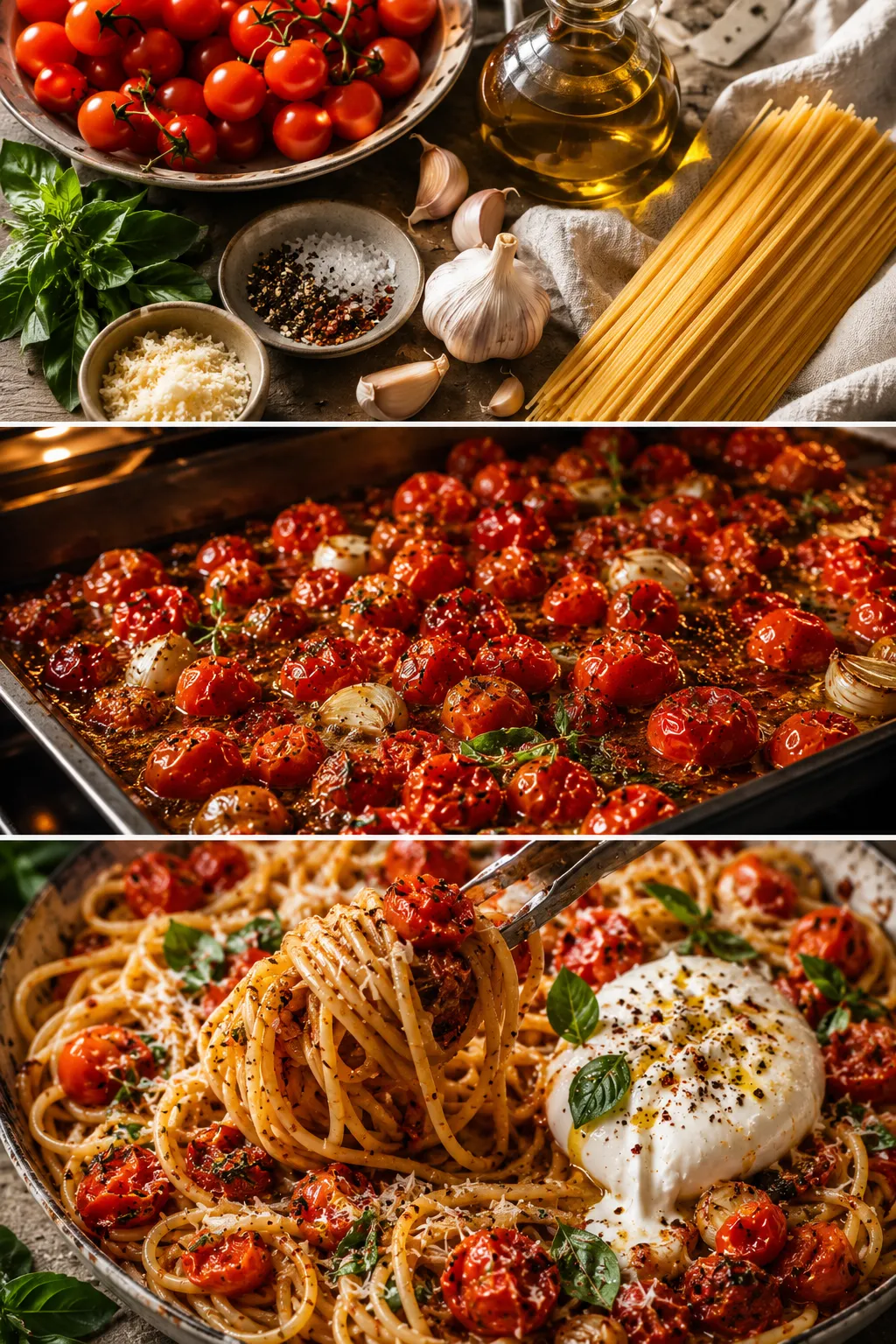
🛒 Ingredients
- 🍅 500 g cherry tomatoes
- 🍝 300 g pasta
- 🧄 5 garlic cloves, smashed
- 🫒 4 tbsp olive oil
- 🧂 1 tsp salt
- ⚫ Fresh black pepper
- 🌿 Handful of fresh basil
- 🧀 50 g grated parmesan
- 🤍 Optional burrata
- 🌶️ Chili flakes
- 🍋 Lemon zest
👩🍳 Instructions
- Heat the oven and prepare the baking dish
Preheat the oven to 200°C. Choose a shallow baking tray or ceramic dish rather than something deep, because the tomatoes roast better when they have space around them. Crowded tomatoes steam instead of caramelizing, and you want those darker roasted edges for flavor. - Season the tomatoes properly
Add the cherry tomatoes and smashed garlic cloves to the tray. Pour over the olive oil, then season generously with salt and black pepper. Toss everything together until the tomatoes look glossy and evenly coated. Some garlic should sit directly in the oil so it softens slowly while roasting 🧄. - Roast until the tomatoes fully collapse
Place the tray in the oven and roast for about 35–40 minutes. Around the halfway point, the tomatoes will start splitting open and releasing juices into the oil. By the end, the tray should look messy in the best way: wrinkled tomato skins, bubbling juices, caramelized corners, softened garlic, and slightly thickened oil. - Check the texture before removing from the oven
If the tomatoes still look pale or watery after 35 minutes, leave them another 5–10 minutes. Proper roasting changes the flavor completely. The juices should look thicker and slightly jammy instead of thin and watery 🍅. - Cook the pasta while the tomatoes roast
Bring a large pot of heavily salted water to a boil. Cook the pasta until just before al dente because it will finish cooking slightly once mixed into the hot sauce later. Stir occasionally so the pasta doesn’t stick together. - Save the pasta water before draining
Before draining the pasta, scoop out about one cup of the cloudy pasta water. This part matters more than people expect. The starch in the water helps the tomato juices and olive oil turn into an actual glossy sauce instead of separating at the bottom of the bowl 😭. - Break down some of the roasted tomatoes
Remove the tray from the oven and gently press some of the tomatoes and garlic with a fork or spoon. Don’t mash everything completely. Leaving a mix of broken and whole tomatoes gives the sauce better texture and makes the pasta feel more natural and less uniform. - Combine the pasta with the roasted tomato sauce
Add the hot drained pasta directly into the baking dish. Toss everything together carefully so the noodles coat themselves in the tomato juices and olive oil. Add small splashes of pasta water while tossing until the sauce becomes glossy and clings properly to the pasta instead of pooling underneath. - Add the cheese and basil at the end
Stir through the parmesan while the pasta is still hot so it melts slightly into the sauce. Tear the basil leaves by hand and mix them in right before serving 🌿. Adding basil too early dulls the flavor and turns the leaves dark. - Finish and serve immediately
Top the pasta with extra black pepper, chili flakes, lemon zest, or burrata if using. Serve immediately while the sauce still looks loose and glossy ✨. As the pasta sits, the sauce thickens naturally, so it’s best eaten right away while everything still feels warm and silky.
💡 Cooking tips
- Use a shallow tray instead of a deep dish so the tomatoes roast instead of steam.
- Don’t cut the garlic too small or it may burn before the tomatoes finish cooking.
- Add basil only at the end to keep the flavor fresh.
- Slightly over-roasted tomatoes taste better here than pale undercooked ones.
- Pasta water should look cloudy and starchy, not clear.
- Burrata melts quickly, so add it right before serving.
- If the sauce feels too thick, add another splash of hot pasta water before serving.
- Freshly grated parmesan melts better than pre-grated packaged cheese.
- Roasted tomatoes continue softening for a few minutes after leaving the oven, so the flavor deepens slightly while the pasta finishes cooking.
🥄 The small details that quietly make this pasta better
This recipe looks almost too simple on paper. Tomatoes, garlic, olive oil, pasta, basil, parmesan. Nothing unusual. But simple recipes are usually the ones where tiny details matter most, because there’s nowhere for mistakes to hide.
The olive oil changes more than people expect. You don’t need the most expensive bottle in the kitchen, but a flat, flavorless oil makes the sauce taste thinner somehow. Since the roasted tomato juices mix directly into the oil, you notice the flavor immediately in every bite 🍅. A richer olive oil gives the sauce more body and helps everything feel smoother once the pasta gets tossed together.
The baking dish matters too. A shallow metal tray gives darker caramelized edges and slightly more concentrated flavor because the tomatoes roast harder against the surface. Ceramic dishes roast more gently and hold heat longer, which makes the tomatoes softer and slightly jammier by the end. I switch between them constantly depending on mood, not science.
Timing changes the final texture more than the ingredients themselves. When the pasta sits too long after draining, the surface loses that glossy starch layer that helps sauces cling properly. But if the tomatoes finish roasting too early, the oil starts cooling and thickening before the pasta even reaches the tray.
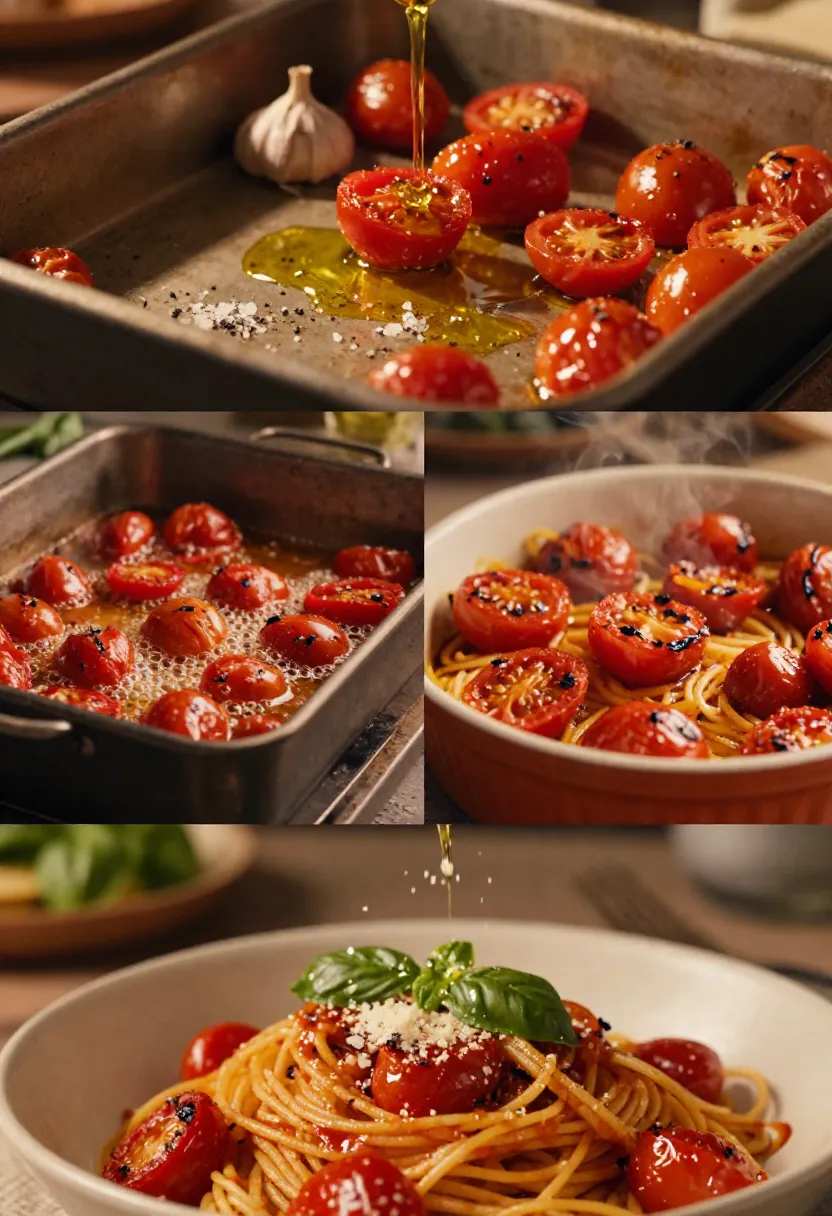
Ideally, both finish at almost the exact same moment ⏰.
Realistically, that almost never happens in my kitchen.
Some nights the pasta waits. Other nights the tomatoes sit too long while I forget to reserve pasta water and have to stand there regretting my life choices for thirty seconds. Dinner still works out anyway, which is honestly part of why this recipe survives week after week.
A few little things that improve the pasta without making it more complicated:
- roast the tomatoes longer than feels necessary for deeper flavor
- use freshly grated parmesan instead of packaged cheese if possible
- save extra pasta water because the sauce thickens quickly
- tear basil by hand instead of chopping it
- finish with lemon zest if the sauce tastes too rich
- let a few tomatoes stay whole for better texture
And maybe the biggest thing: don’t overthink it.
This pasta gets worse when it starts feeling overly controlled. The slightly messy sauce, the burst tomatoes, the uneven texture — that’s the good part.
🥗 How to serve roasted cherry tomato pasta without overcomplicating dinner
The pasta already feels complete on its own, especially once parmesan melts into the sauce or burrata starts softening over the top 🤍. But the right side dishes stretch the dinner out in a way that feels relaxed instead of heavy.
A sharp salad works best because roasted tomatoes become naturally sweet in the oven. Something peppery or acidic balances everything out. Arugula with lemon juice and olive oil is usually enough. Caesar salad works too, though that version turns dinner into something much richer and slightly chaotic in the best possible way.
Bread belongs here too. Absolutely.
Not tiny decorative slices either. Proper bread meant for dragging through tomato juices left at the bottom of the bowl 🥖. The kind where olive oil stains the plate afterward.
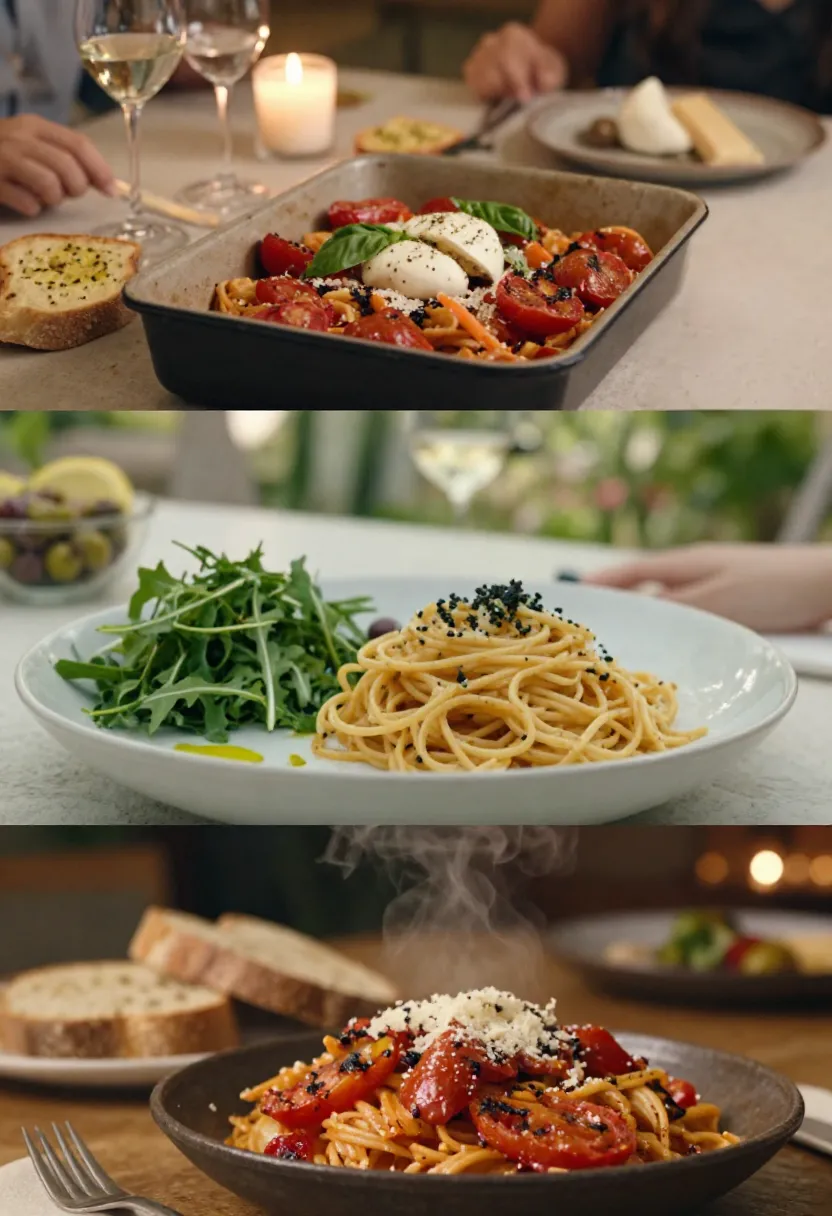
And honestly, this pasta works especially well for casual dinners because it looks better slightly messy. Perfectly arranged pasta somehow feels wrong here. I usually put the roasting tray directly on the table with extra basil, parmesan, black pepper, and maybe burrata nearby so people can build their own bowls.
That relaxed setup fits the recipe better than careful plating ever could.
| Side dish or add-on | Why it works with the pasta | Best time to serve it |
|---|---|---|
| 🥬 Arugula salad | Adds bitterness and freshness | Warm summer evenings |
| 🥖 Garlic bread | Soaks up roasted tomato juices | Casual dinners with friends |
| 🌿 Burrata | Adds creamy contrast | When the tomatoes roast extra deeply |
| 🍋 Lemon-dressed greens | Brightens the whole meal | Heavier pasta versions |
| 🫒 Marinated olives | Add saltiness and acidity | Small dinner gatherings |
| 🍷 Cold white wine | Cuts through olive oil richness | Slow weekend dinners |
| 🧀 Extra parmesan | Makes the sauce richer | Cozy colder evenings |
| 🌶️ Chili oil | Adds heat and depth | Winter versions of the recipe |
And leftovers? Weirdly good.
Cold roasted tomato pasta straight from the fridge at midnight tastes better than it has any right to.
🌦️ Why this recipe keeps working in every season
Summer versions of this pasta almost make themselves. Good cherry tomatoes roast faster, release sweeter juices, and need very little help from anything else. Sometimes during August I only add garlic, olive oil, basil, salt, and parmesan because the tomatoes already carry the whole dish on their own 🌿.
Winter tomatoes are different. Less sweetness, more water, less flavor overall. But the recipe still works because roasting improves even mediocre tomatoes. A spoonful of tomato paste deepens the flavor quickly, while chili flakes add warmth that distracts from bland produce surprisingly well.
The recipe shifts naturally depending on weather too.
In hotter months, I usually keep everything lighter. More basil. More lemon zest. Sometimes burrata if dinner feels slow and relaxed.
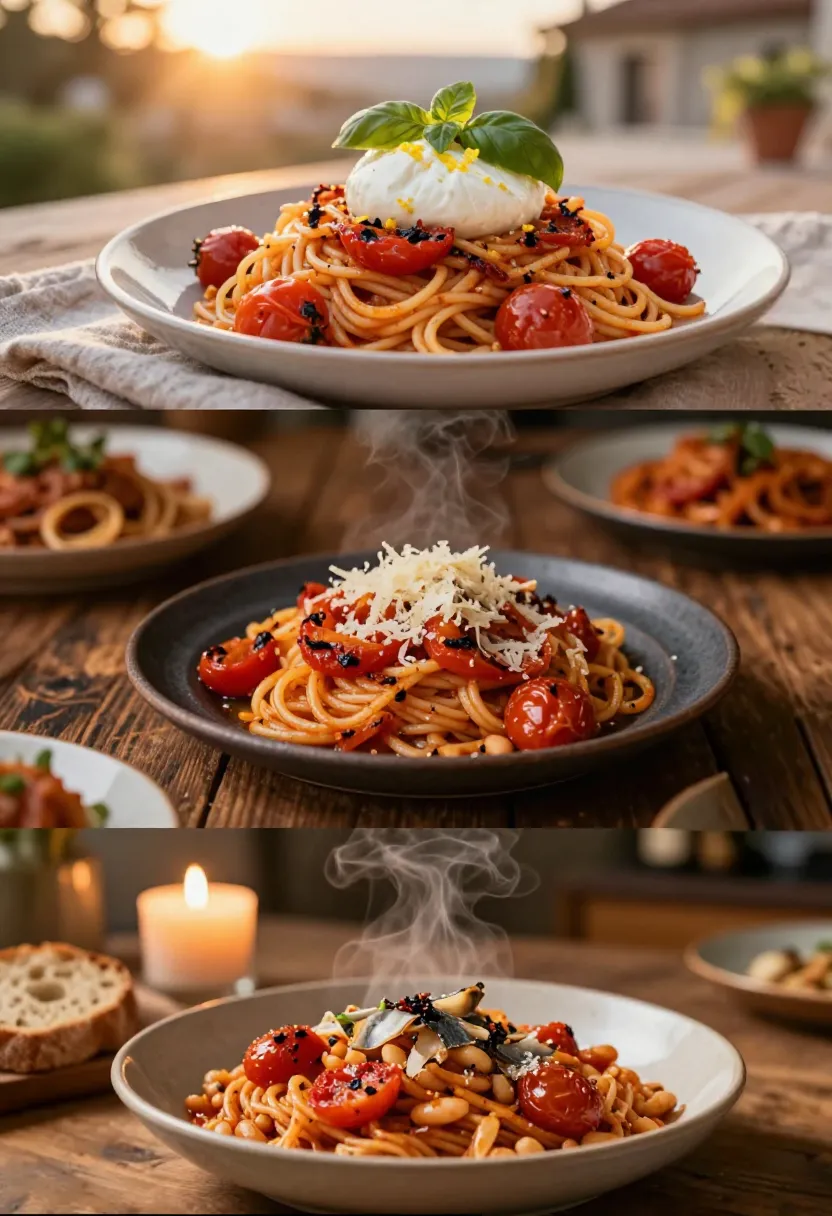
During colder months, the pasta starts leaning richer almost automatically. Caramelized onions work beautifully then. Anchovies melted into the olive oil create deeper savory flavor without making the pasta taste fishy 🐟. White beans turn it into something heavier and more filling.
That flexibility is probably why this recipe survives.
Some recipes are exciting exactly once. Then you never make them again because they require twelve ingredients, multiple pans, and emotional stability you simply do not possess on a Wednesday evening.
This isn’t that kind of recipe.
You roast tomatoes. You boil pasta. You toss everything together while the kitchen smells better than your actual effort deserves. Somehow that’s enough.
And maybe that’s the reason people keep returning to pasta like this. Not because it’s groundbreaking. Not because it reinvents anything.
It just understands what dinner sometimes needs to be 🍅✨.