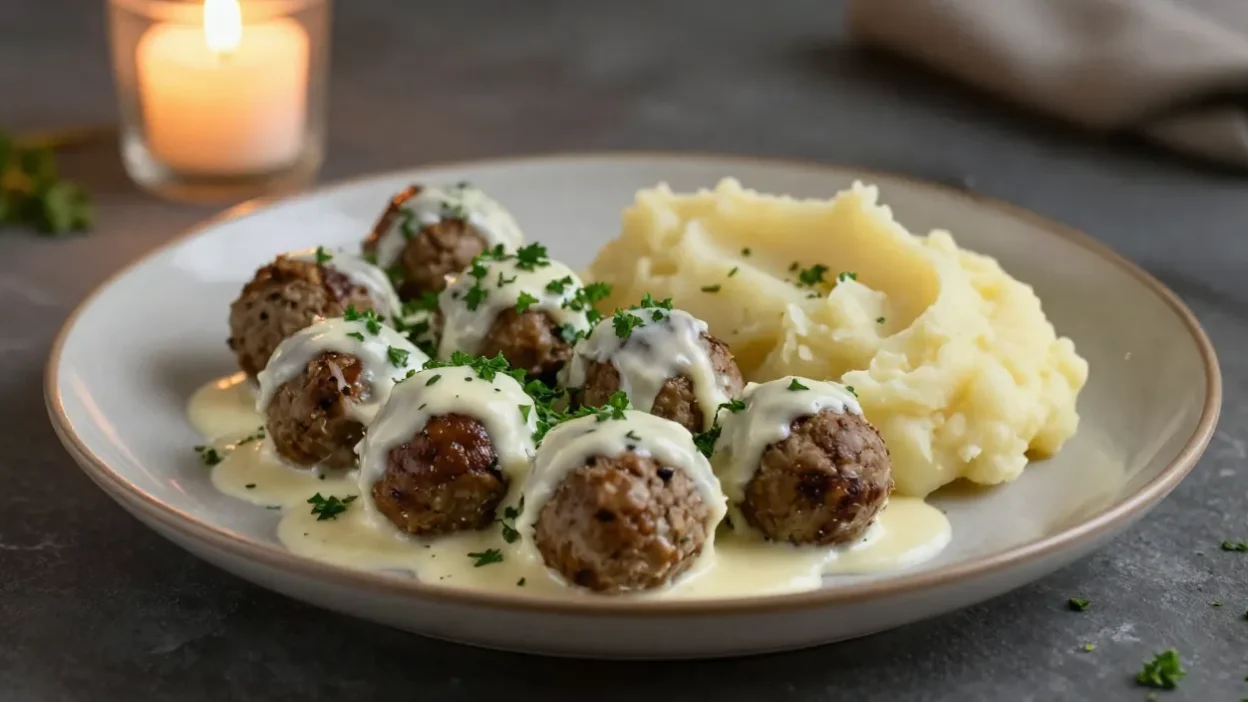
Some dinners immediately feel comforting before anyone even starts eating. Swedish meatballs do that almost unfairly fast.
The smell hits first. Butter warming in the skillet. Onion softening slowly in the pan until the sharpness disappears. Then the richer smell starts showing up once the meatballs begin browning — beef, pork, black pepper, little hints of nutmeg floating through the kitchen. And by the time the gravy comes together, the whole apartment smells like somebody has been cooking all afternoon even if dinner only took an hour.
There’s something about creamy gravy simmering quietly on the stove that changes the mood of the entire kitchen. The windows fog slightly. Somebody walks in asking if dinner is almost ready even though they weren’t hungry twenty minutes ago. Plates start appearing on the counter without anyone saying anything. Swedish meatballs somehow create that kind of evening naturally.
That’s probably part of why homemade Swedish meatballs never really disappear. They’re not trendy enough to dominate food videos every week, but they quietly survive every food cycle anyway because people keep craving the same thing: warm food that feels grounding after a long day.
And Swedish meatballs somehow manage to feel cozy without becoming too heavy.
The sauce is creamy, but not aggressively rich. The meatballs stay soft instead of dense. Even the seasoning feels gentler than most comfort food recipes. Nutmeg and allspice sit in the background adding warmth rather than obvious spice. You notice the flavor more after a second or third bite.
That balance is probably why the dish works so well during colder months. It feels filling without crossing into the kind of heavy dinner that immediately makes everybody want to lie down afterward. The cream softens everything, while the broth and spices keep the flavor from turning flat.
The first time I made homemade Swedish meatballs properly, I realized how different they taste from frozen versions. Frozen meatballs usually bounce back when you bite them. Homemade ones should almost fall apart gently with a fork. Soft, juicy, coated in glossy brown gravy that actually tastes like beef instead of powdered seasoning.
And honestly, the gravy matters just as much as the meatballs themselves.
A good Swedish meatball sauce should feel smooth enough to coat mashed potatoes without turning thick and gluey. It should cling lightly to the meatballs while still staying silky around the edges. Once the browned bits from the skillet melt into the sauce, the flavor deepens completely.
The pan itself does a surprising amount of work in this recipe. Every browned piece left behind after searing the meatballs eventually dissolves into the gravy. That’s where the deeper savory flavor comes from. You can smell the difference almost immediately once the broth hits the skillet.
And the texture matters more than people expect.
Bad Swedish meatballs usually fail in one of two ways: the meatballs become dense, or the gravy turns overly thick and heavy. Good ones stay soft all the way through, with sauce that coats everything gently instead of sitting on the plate like paste.
That’s why slowing down helps so much here.
Not in an overly romantic “slow living” kind of way. More in the practical sense that onions need time to soften properly and meatballs need space in the pan to brown instead of steam. The recipe becomes easier once you stop trying to rush it.
A few things quietly make the biggest difference:
- Slowly cooked onions instead of raw onions
- Meatballs browned in batches instead of overcrowding the skillet
- Enough fat in the meat mixture to keep everything tender
- Broth added gradually into the gravy instead of all at once
- Gentle simmering after the cream goes in
This is also one of those meals that makes people linger in the kitchen longer than usual. Someone tears off a piece of bread while the sauce finishes simmering. Somebody else steals a meatball directly from the skillet and immediately burns their mouth because they refused to wait thirty seconds. It has that kind of energy. 😄
And leftovers somehow taste even better the next day.
The gravy thickens slightly overnight, the spices settle deeper into the meatballs, and everything reheats into something even cozier than it was the first evening. I’ve made this recipe specifically because I wanted leftovers before. That probably says enough on its own.
But none of the cooking feels difficult.
That’s the nice part.
It’s simple food made carefully. 🕯️
🧈 Why Swedish meatballs taste different from regular meatballs
A lot of people assume Swedish meatballs are basically Italian meatballs with cream sauce poured on top. They’re actually built very differently from the start.
Italian meatballs usually lean heavily on garlic, parmesan, tomato sauce, oregano, basil. The flavors come forward aggressively and the texture often stays firmer because the meatballs are designed to hold up inside heavier sauces.
Swedish meatballs go in the opposite direction.
The texture stays softer. The seasoning stays warmer and more subtle. Even the size changes slightly since Swedish meatballs are usually rolled smaller than classic Italian-style meatballs.
The meat blend matters a lot here too.
Using only beef gives the meatballs stronger flavor, but the texture becomes firmer much faster during cooking. Pork changes that completely. The extra fat softens the interior and keeps the meatballs juicy while the outside browns in the skillet.
Breadcrumbs soaked in milk matter just as much.
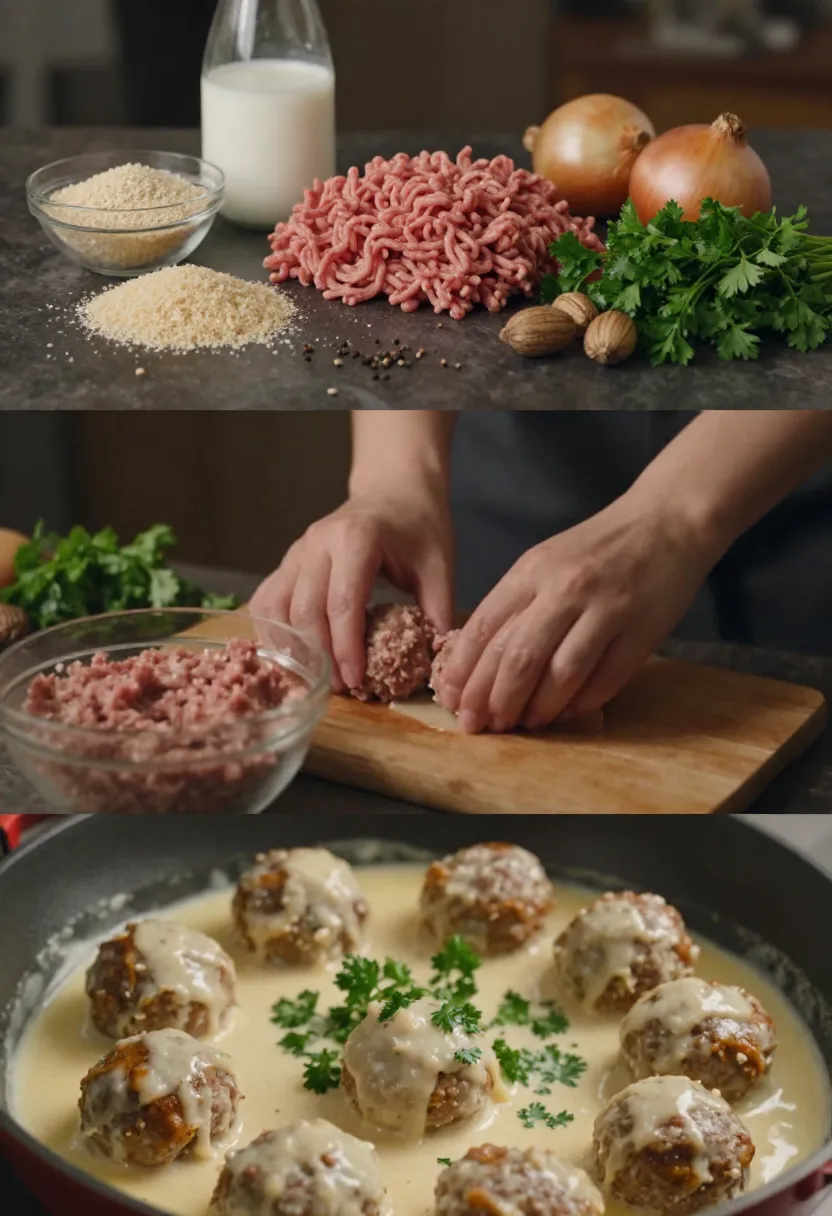
That mixture — technically called a panade, which sounds more dramatic than it deserves — traps moisture inside the meatballs while cooking. Without it, the meatballs tighten too much and lose the soft texture that makes Swedish meatballs recognizable.
Then there’s the onion situation.
Raw onions technically work, but cooked onions blend into the mixture much more naturally. I usually cook them slowly until pale golden around the edges. The sweetness develops quietly while the sharp raw flavor disappears completely.
And the spices are what really separate Swedish meatballs from everything else.
Nutmeg. Allspice. Sometimes white pepper. Tiny amounts, but enough to create that warm background flavor people instantly associate with Swedish meatballs even if they can’t immediately explain why.
Ingredient breakdown
| Ingredient | Purpose in the recipe | Texture impact | Flavor contribution |
|---|---|---|---|
| Ground beef | Creates the savory foundation | Adds structure | Rich meaty flavor |
| Ground pork | Adds fat and moisture | Keeps meatballs tender | Mild sweetness |
| Breadcrumbs | Hold moisture inside | Prevent dense texture | Neutral base |
| Whole milk | Softens breadcrumbs | Creates softer bite | Creamy richness |
| Onion | Adds moisture and sweetness | Helps softer interior | Savory depth |
| Egg | Holds the mixture together | Stabilizes shape | Minimal flavor |
| Nutmeg | Traditional Swedish seasoning | None | Warm spice note |
| Allspice | Adds background depth | None | Earthy sweetness |
| Butter | Used for browning and gravy | Smooth sauce texture | Rich buttery flavor |
| Flour | Thickens the gravy | Gives body to sauce | Mild toasted note |
| Beef broth | Builds the gravy base | Keeps sauce silky | Deep savory flavor |
| Heavy cream | Softens and enriches sauce | Velvety consistency | Creamy finish |
| Worcestershire sauce | Deepens savory flavor | None | Dark umami flavor |
| Black pepper | Cuts through richness | None | Gentle warmth |
| Parsley | Bright finishing touch | Light contrast | Fresh herbal flavor |
One thing I learned after making this recipe repeatedly: the meat mixture should feel softer than people expect before cooking. Not loose enough to collapse, obviously, but soft enough that you know the finished meatballs won’t turn rubbery later.
And medium-sized meatballs work best for home cooking. Tiny cocktail-sized ones look nice in photos, but rolling fifty miniature meatballs after work starts feeling personal very quickly. 😅
🥄 The gravy is where the recipe either wins or completely falls apart
People usually remember Swedish meatballs because of the sauce, even if they don’t realize it immediately.
The meatballs themselves are intentionally mild. The gravy carries most of the richness and ties the entire dish together. If the sauce tastes flat, the whole plate feels disappointing no matter how carefully the meatballs were cooked.
Good Swedish meatball gravy should look glossy and smooth, almost the color of coffee with cream.
Not too dark. Not pale beige either.
Most of the flavor starts with the browned bits left behind after searing the meatballs. That dark layer stuck to the bottom of the skillet might not look impressive, but it’s basically concentrated flavor waiting to become sauce. Washing the pan at that stage would erase half the recipe.
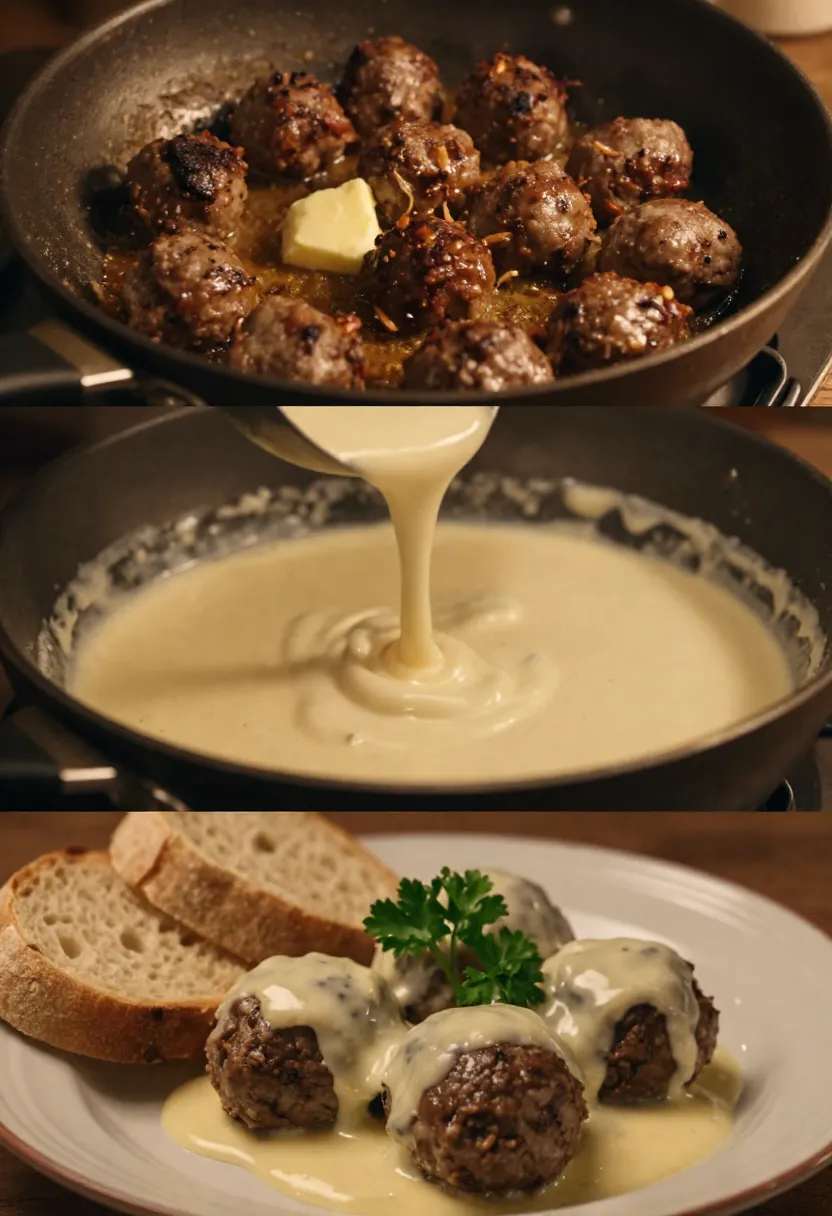
The butter and flour step matters more than people think too.
I rushed it once and the gravy tasted raw and strangely dusty underneath the cream. Now I always give the roux an extra minute or two. Once the butter and flour smell slightly toasted — almost nutty — the sauce develops a much deeper flavor later.
Then the broth gets added slowly while whisking constantly.
At first the gravy usually looks thin and questionable. A little uneven. Maybe even broken-looking. But after a few minutes of simmering, it smooths out beautifully and starts coating the spoon properly.
The cream softens everything at the end while Worcestershire sauce quietly deepens the savory flavor underneath. You shouldn’t specifically taste Worcestershire in the final sauce. It should just make the gravy taste fuller somehow.
And black pepper matters more than expected here. Not enough to turn the sauce spicy. Just enough warmth to balance the creaminess.
The finished gravy should make people immediately look around for bread before dinner even officially starts. 🍞
🍴 Swedish meatballs recipe
These homemade Swedish meatballs are soft, juicy, and covered in silky brown gravy that tastes deeply savory without becoming overly heavy. The meatballs stay tender thanks to the mixture of beef, pork, milk-soaked breadcrumbs, and slowly cooked onions, while the sauce turns rich and glossy from butter, broth, cream, and all the browned bits left behind in the skillet.
This is the kind of dinner that makes the kitchen feel warmer while it cooks. The smell changes gradually as the recipe comes together — first butter and onions, then browned meatballs, then the creamy gravy simmering around everything at the end. It’s comforting in a very real way, not in the exaggerated “restaurant-quality experience” kind of way food blogs sometimes try to push.
Swedish meatballs also work for more situations than people expect. They’re cozy enough for cold rainy evenings but still practical for normal weeknight dinners because the ingredients are simple and the leftovers reheat beautifully the next day. Sometimes the leftovers taste even better after the gravy settles overnight.
Serve them with mashed potatoes, buttered egg noodles, roasted potatoes, or thick slices of bread to catch every bit of sauce left on the plate.
And if you want the classic Scandinavian-style combination, add lingonberry jam on the side. The sweet sharpness cuts through the creamy gravy perfectly. 🕯️
Ingredients
For the meatballs
- 1 pound ground beef
- 1/2 pound ground pork
- 1/2 cup breadcrumbs
- 1/3 cup whole milk
- 1 small onion, finely diced
- 1 egg
- 2 tablespoons butter
- 1 teaspoon kosher salt
- 1/2 teaspoon black pepper
- 1/4 teaspoon nutmeg
- 1/4 teaspoon allspice
- 2 tablespoons chopped parsley
For the gravy
- 4 tablespoons butter
- 1/4 cup flour
- 3 cups beef broth
- 3/4 cup heavy cream
- 1 teaspoon Worcestershire sauce
- Salt and black pepper, to taste
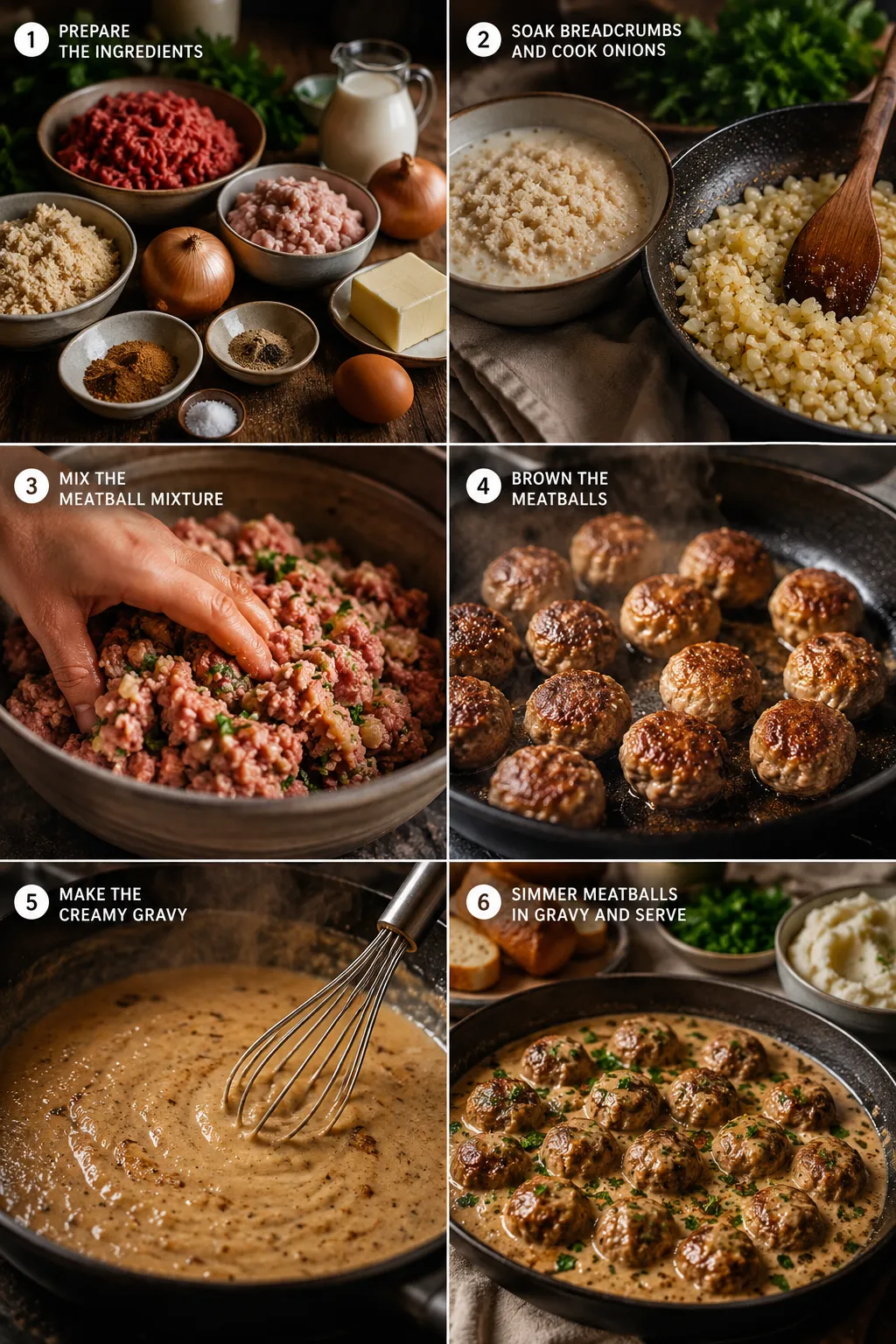
👩🍳 Instructions
Soften the breadcrumbs
Combine the breadcrumbs and milk in a small bowl. Stir everything together and leave the mixture alone for five to ten minutes.The breadcrumbs absorb the milk and soften completely during this step, which helps keep the meatballs tender instead of dense later.
Cook the onions
Melt butter in a skillet over medium heat. Add the diced onions and cook slowly until soft and lightly golden around the edges.Don’t rush this step. Properly cooked onions blend into the meat mixture much more naturally and add sweetness without sharp raw flavor.
Mix the meatball mixture
In a large bowl, combine the beef, pork, soaked breadcrumbs, cooked onions, egg, salt, pepper, nutmeg, allspice, and parsley.Use your hands if possible. Spoons never mix meatballs quite right. But mix gently. Once everything looks evenly combined, stop. Overmixing creates tough meatballs surprisingly fast.
Roll the meatballs
Shape the mixture into medium-sized meatballs, roughly 1 1/2 inches wide.If the mixture sticks badly to your hands, lightly wet your palms with cold water before rolling the next batch.
Brown the meatballs
Heat a large skillet over medium heat and cook the meatballs in batches. Leave space between them so they brown properly instead of steaming.Turn them carefully during cooking until deep golden color develops on several sides. They don’t need to cook fully yet since they finish later in the gravy.
Transfer browned meatballs to a plate.
Start the gravy
Using the same skillet, melt the butter for the gravy. Sprinkle in the flour and whisk constantly for about 2–3 minutes.The mixture should smell slightly toasted before moving forward.
Add the broth slowly
Pour the beef broth into the skillet gradually while whisking constantly. Scrape the browned bits from the bottom of the pan while the sauce loosens.At first the gravy might look thin or uneven. Keep stirring. It smooths out quickly once heated properly.
Finish the sauce
Add the cream and Worcestershire sauce. Stir everything together and let the gravy simmer gently until slightly thickened.Taste the sauce before adding extra salt because different broth brands vary heavily in saltiness.
Return the meatballs to the skillet
Add the browned meatballs back into the gravy and simmer gently for another 8–10 minutes until fully cooked through.The gravy thickens more during this stage because the meatballs release juices into the sauce while simmering.
Serve warm
Scatter parsley over the top and serve immediately with mashed potatoes, buttered noodles, roasted potatoes, or warm bread.And this is usually the point where everybody suddenly stops talking because the food finally hit the table. 🍽️
🔥 Cooking tips for better Swedish meatballs
- Keep the meat cold before mixing so the texture stays tender
- Cook onions slowly for sweeter flavor and softer texture
- Don’t overcrowd the skillet while browning meatballs
- Browned bits in the pan are essential for flavorful gravy
- Whisk broth slowly into the flour mixture to avoid lumps
- Simmer gently after adding cream so the sauce stays smooth
- Let the meatballs sit in the gravy a few minutes before serving
- Taste the sauce at the end because it often needs extra salt
- Add a splash of broth later if leftovers thicken too much in the fridge
🥔 What to serve with Swedish meatballs
Mashed potatoes are the obvious choice for a reason. The gravy sinks into every little pocket and turns the entire plate into comfort food immediately. Soft potatoes with creamy brown sauce just make sense together in a way that barely needs explaining.
But buttered egg noodles might actually be my favorite option.
They hold the sauce beautifully without making dinner feel overly heavy. Especially good during colder evenings when everybody wants something warm and filling without immediately needing a nap afterward. The noodles soak up just enough gravy while still keeping a little texture underneath.
Lingonberry jam also deserves its place here even if it sounds strange at first. The sweet tartness cuts through the richness perfectly. Once you try the combination, it suddenly makes complete sense. Cranberry sauce works surprisingly well too if lingonberries are impossible to find nearby.
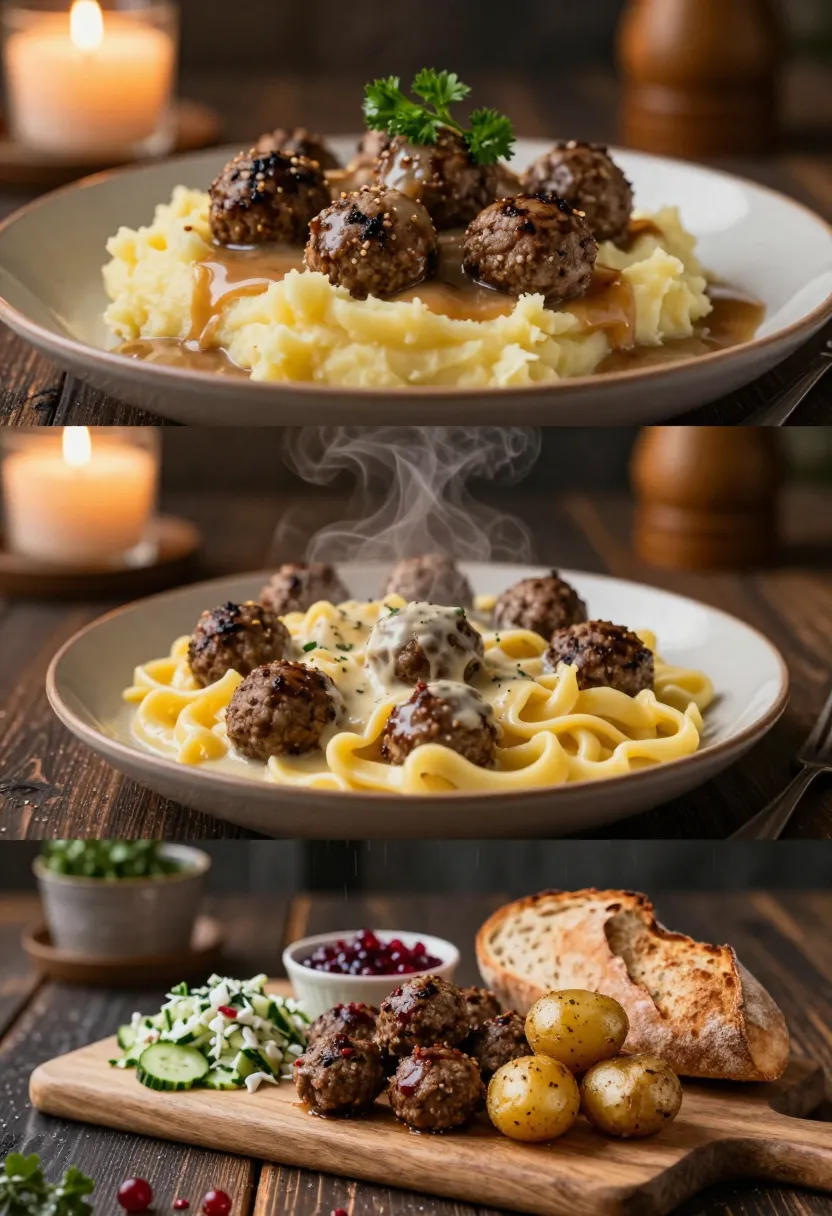
And honestly, Swedish meatballs become much better once you stop treating them like a side dish themselves. They’re the center of the plate. Everything around them should support the sauce instead of competing with it.
That’s why softer vegetable sides usually work best here. Sharp acidic salads can fight against the creamy gravy too aggressively. Roasted vegetables, green beans, or cucumber salad feel much more balanced next to the richness of the meatballs.
Side dishes that work especially well
- Creamy mashed potatoes
- Buttered egg noodles
- Roasted baby potatoes
- Lingonberry jam or cranberry sauce
- Steamed green beans
- Roasted carrots
- Cucumber salad
- Warm crusty bread
Bread deserves special mention honestly. Warm crusty bread next to Swedish meatballs feels borderline necessary once the gravy hits the table. Somebody always starts wiping the plate clean before dinner is even officially over. It happens every single time.
And if you’re serving this for guests, Swedish meatballs work surprisingly well because they stay warm longer than a lot of dinners. You can leave the skillet over very low heat while people refill plates, pour wine, and keep talking without everyone rushing through the meal before the food cools down.
This recipe also fits quieter evenings especially well. Rain outside. Music low in the background. Candles on the table even if nobody admits they specifically lit candles for meatballs. Somehow this dish creates that atmosphere naturally. 🕯️
✨ Small details that quietly improve the whole recipe
The more often I make Swedish meatballs, the more I notice how tiny adjustments completely change the final texture.
Cold ingredients matter more than people think. Warm meat mixtures become sticky quickly and harder to shape properly. Keeping the beef and pork cold helps the meatballs stay softer after cooking too.
Resting the rolled meatballs in the fridge for ten minutes before cooking helps more than expected as well. Not mandatory, obviously. But useful if your kitchen feels warm or if the mixture seems especially soft.
The gravy thickens after sitting, which catches people off guard constantly. Including me. If the sauce already looks extremely thick in the skillet, it may become too thick once served. A splash of warm broth fixes that immediately though.
Another important thing: don’t boil the gravy aggressively after adding cream.

Gentle simmering keeps the sauce smooth and glossy instead of separating or turning grainy around the edges. Once dairy sauces split, there’s really no elegant recovery plan.
The pan itself matters too.
A wide skillet browns meatballs more evenly because they have space to develop color properly instead of steaming together. Crowding the pan traps moisture fast, which makes the outside pale instead of golden brown.
And those browned bits left in the skillet afterward? That’s basically free flavor for the gravy.
Small adjustments that improve the recipe noticeably
- Use both beef and pork instead of only one type of meat
- Let the onions soften fully before adding them to the mixture
- Brown meatballs in batches instead of overcrowding the pan
- Whisk broth into the flour mixture slowly to avoid lumps
- Simmer gently after adding cream to keep the sauce smooth
- Let the finished meatballs rest in the gravy for a few minutes before serving
And leftovers? Honestly incredible.
The spices deepen overnight and the gravy settles into the meatballs even more by the next day. Sometimes I make extra intentionally just because the leftovers feel so good the following evening.
Swedish meatballs also reheat better than most creamy dishes. The sauce thickens slightly in the fridge, but loosens again once warmed gently over low heat. Add a splash of broth or cream if needed and everything comes back together surprisingly well.
I’ve absolutely eaten cold Swedish meatballs straight from the fridge at midnight before. Not necessarily recommending it. Just saying it happened. 😄
🕯️ Why this recipe keeps surviving every food trend
Food trends change constantly.
One year everybody makes baked feta pasta. Then suddenly cottage cheese appears in pancakes, dips, flatbreads, ice cream, and somehow even cookie dough. Every few months another “must-make dinner” takes over social media before disappearing again once people move on to the next thing.
Swedish meatballs mostly ignore all of that.
Because they already do exactly what comfort food is supposed to do.
They’re warm. Filling. Familiar without becoming boring. Rich enough for cold weather but still practical enough for ordinary weeknight cooking. And the ingredients are simple grocery-store ingredients, which honestly matters more these days than people always admit.

No specialty equipment. No complicated techniques. No ingredient that requires driving across town looking through three specialty stores.
Just careful cooking.
And maybe that’s why homemade Swedish meatballs still feel special even though they’re simple. Somebody stood near the stove for a while. Somebody browned onions slowly instead of rushing them. Somebody tasted the sauce repeatedly until it finally felt right.
You can feel that effort in the final plate. Not in an exaggerated romantic way. Just in the quiet difference between food that was assembled quickly and food that was actually cooked. 🍲
There’s also something reassuring about recipes that don’t need reinventing every six months to stay relevant.
Swedish meatballs don’t need trendy ingredients or dramatic presentation. Nobody’s adding edible flowers or turning them into “deconstructed comfort food bowls.” They survive because the combination already works exactly the way people want it to.
Soft meatballs. Creamy gravy. Potatoes or noodles underneath. Warm kitchen. Full plates.
That’s enough.
And honestly, recipes that know exactly what they are usually last the longest anyway. 🕯️