Some dishes are quick wins — you throw things together, eat, and move on without giving it much thought. They solve the immediate problem of “what’s for dinner,” and that’s usually enough. But if you try to remember them later, they tend to blur together. Nothing really sticks.
And then there are dishes like this one.
A proper game pie doesn’t belong to that fast, functional category. It sits somewhere else entirely — in a slower, more deliberate space where cooking feels less like a task and more like something you gradually get drawn into. You don’t rush through it, and oddly enough, you don’t really want to.
You might find yourself checking the oven more often than necessary, just out of curiosity. Not because anything is wrong, but because you want to see how it’s progressing. That small habit says a lot about the kind of dish this is. 🥧
Working with game meat adds another layer to the whole experience. It’s not as predictable as standard supermarket cuts. The texture can vary slightly, the flavor is deeper, sometimes stronger than expected, and it doesn’t try to adapt itself to every taste.
At first, that can feel unfamiliar. Maybe even slightly uncomfortable if you’re used to more neutral flavors.
But after a while, it starts to make sense.
Game meat has a kind of honesty to it. It doesn’t fade into the background — it shapes the entire dish. You notice it, and more importantly, you remember it. There’s a depth there that feels more natural, less processed, and definitely less forgettable.
If you had to describe what it brings to the table, it would be something like this:
- a deeper, more grounded flavor that feels slightly earthy 🌿
- a natural richness that doesn’t rely on heavy seasoning
- a texture that encourages slower, more mindful eating
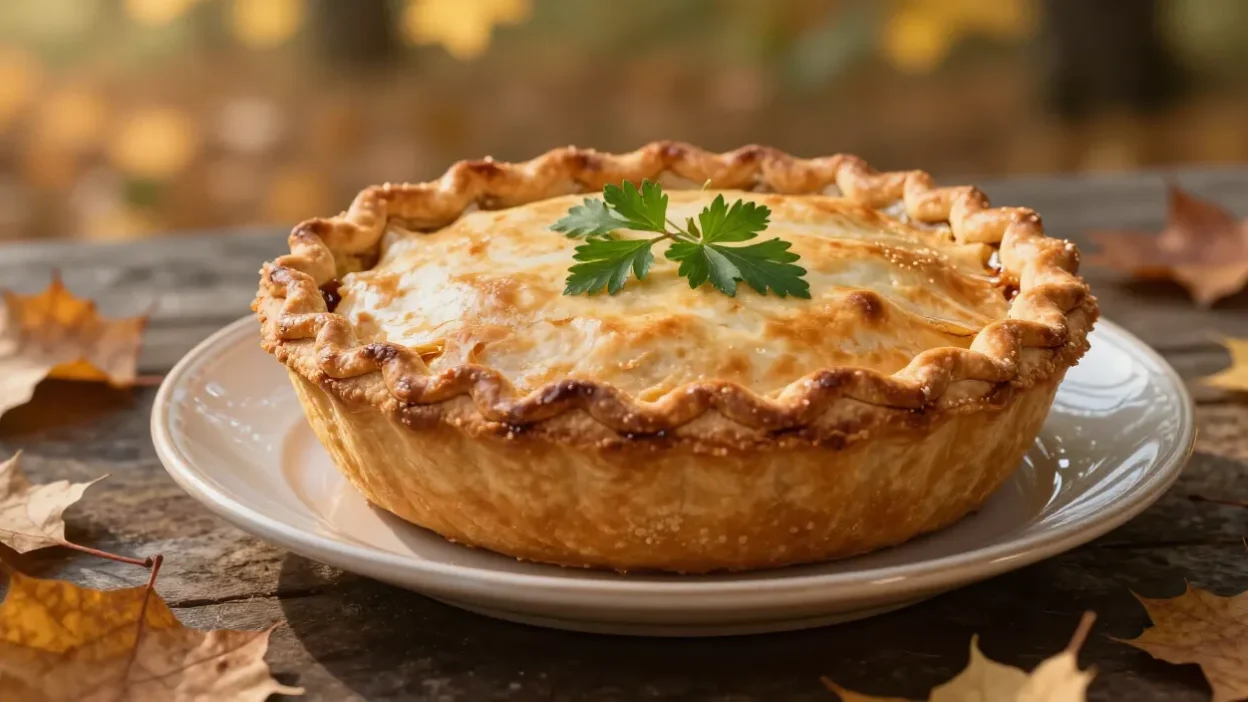
And when all of that is wrapped inside a firm, golden crust, the result feels complete in a way that quick meals rarely do. It’s not just about eating anymore — it’s about the experience that led up to it. 🍂
🌿 The Quiet Beauty of Slow Cooking
The pace at which we cook changes more than just the timing of a meal — it changes how we relate to it.
Fast cooking has its place, obviously. Most days demand it. But when you step into slower cooking, even occasionally, the difference becomes noticeable in ways that are hard to explain until you actually experience them.
This pie is a good example of that shift.
Technically, it isn’t difficult. There are no complicated techniques or precise, high-pressure steps. You don’t need professional skills to make it work. But what it does require is a different approach to time.
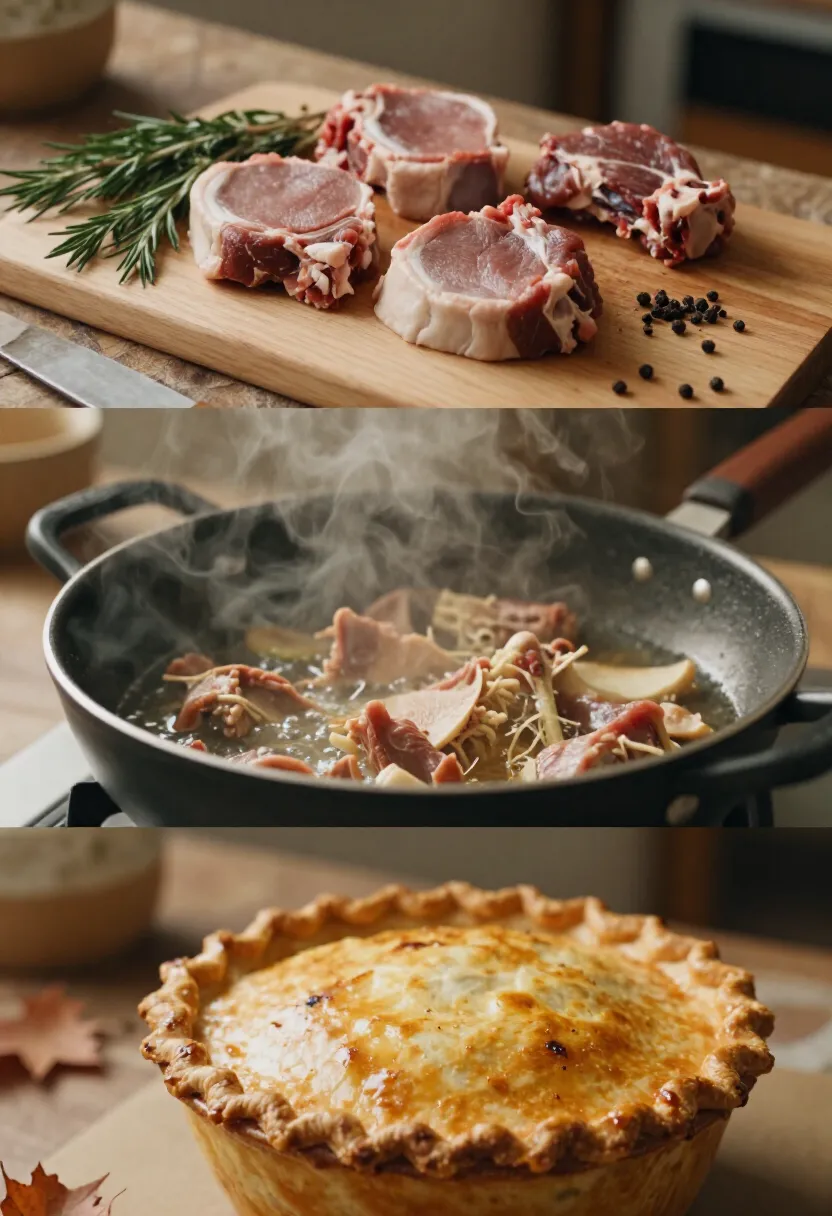
When something takes longer, you naturally start paying attention to details that would normally pass unnoticed. Not because you’re trying to be careful, but because you’re simply more present in the process.
You begin to notice small things:
- how the smell of spices changes as they warm up slowly
- how ingredients soften and blend instead of cooking aggressively
- how the overall aroma develops gradually, not all at once
There’s no urgency here, and that changes the entire atmosphere in the kitchen.
At the same time, it’s not about standing still and waiting. There’s a rhythm to it — moments of activity followed by moments where you step back and let things happen. That balance keeps the process engaging without making it exhausting.
What this kind of cooking really asks for is patience, but not in a frustrating or passive way. It’s more about allowing things to develop naturally instead of constantly instead of constantly interfering and trying to control every step.
And that’s where it starts to feel different.
You slow down a bit without forcing it. You focus more without even realizing it. And by the time the pie is ready, it doesn’t feel like you’ve just completed a recipe — it feels like you’ve been part of something unfolding.
It’s a subtle shift, but once you notice it, it’s hard to ignore.
🥩 Layers of Flavor That Actually Matter
What makes a game pie stand out isn’t just the ingredients themselves, but the way they come together over time.
This isn’t a dish where everything hits you at once. It doesn’t rely on a single dominant flavor or a strong first impression. Instead, it builds gradually, revealing different layers as you eat.
At first, you notice the richness. That usually comes from the venison — deep, slightly earthy, and quite satisfying without being overwhelming. Then the duck steps in, adding softness and fat, smoothing out the intensity and making the texture feel more balanced.
The lighter meats play a quieter role, but an important one. They prevent the filling from becoming too heavy and help keep everything from leaning too far in one direction.
Then there are the spices.
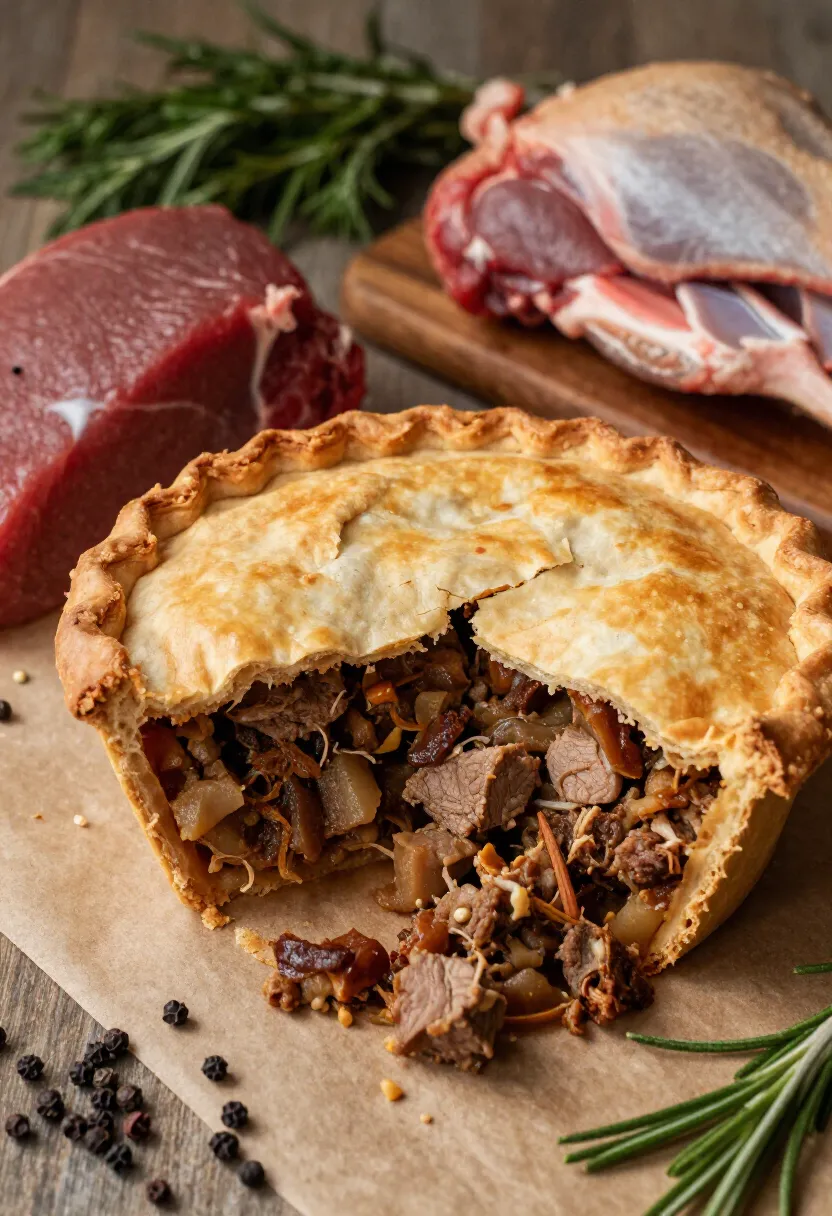
They don’t announce themselves immediately, and that’s intentional. Instead of dominating the dish, they shape it from the background. You might not be able to identify each one right away, but together they create a warmth and depth that ties everything together.
What makes this combination work isn’t complexity for the sake of it. It’s balance.
And that balance usually depends on a few key factors:
- mixing lean and fatty cuts so the texture feels neither dry nor overly rich
- seasoning in a way that supports the natural flavor rather than covering it up
- giving the filling enough time to rest so everything settles into a cohesive whole
Time plays a quiet but essential role here.
You can rush parts of the process if you really want to, but the result often feels slightly incomplete. The flavors don’t fully connect, and the texture doesn’t quite come together in the same way.
That’s why this kind of dish works best when you don’t try to control everything too tightly.
Instead, you allow the ingredients to interact at their own pace. You give them enough space to develop naturally, without forcing the outcome.
And when everything finally comes together, the result feels balanced in a way that doesn’t seem engineered — just… right.
🍽️ Recipe: A Rich and Rustic Game Pie
There’s something undeniably satisfying about a pie like this. Not just the end result, but the whole process leading up to it. It’s hearty, a little bold, and definitely not the kind of dish you make without thinking.
This game pie leans into deep, layered flavors and a texture that feels substantial in the best possible way. The filling is rich without being overwhelming, thanks to the balance between different meats and the slow way everything comes together. The crust, on the other hand, is firm and structured — it holds its shape, slices cleanly, and somehow manages to stay both sturdy and pleasant to eat.
What makes this pie stand out is how it changes over time. Right after baking, it’s already good. But give it a few hours — or even better, leave it overnight — and it becomes something else entirely. The flavors settle, the texture firms up, and everything starts to feel more cohesive.
It’s the kind of dish that works just as well for a quiet evening at home as it does when you put it on the table for other people. It doesn’t need much explanation — it kind of speaks for itself.
🧾 Ingredients
- 500 g venison (cut into chunks)
- 400 g duck meat
- 400 g pheasant or chicken
- 200 g bacon or fatty pork
- 3 leeks (sliced)
- 3 garlic cloves (crushed)
- 2 tsp salt
- 1 tsp black pepper
- 1 tsp crushed juniper berries
- ½ tsp nutmeg or mace
- 1 tsp allspice
- 2 tbsp tomato paste
- 500 g plain flour
- 120 g lard or butter
- 200 ml water
- 1 egg (for glazing)
- 500 ml stock (for jelly)
- Gelatine (optional)
👨🍳 Method
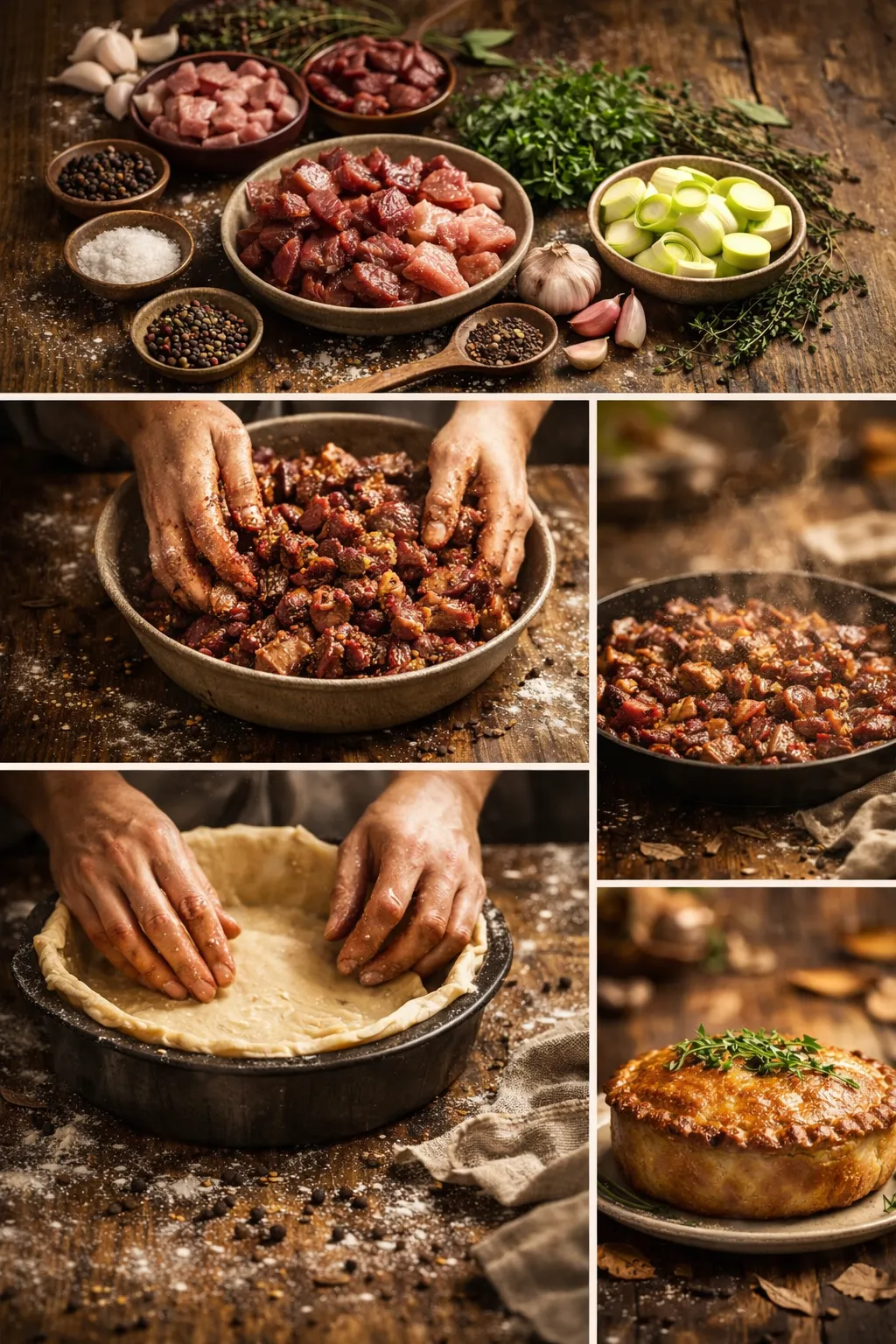
- Start by placing all the chopped meats into a large bowl. Add the salt, spices, and crushed garlic, then mix everything thoroughly. Don’t rush this step — you want the seasoning to be evenly distributed, not just sitting on the surface.
- In a large pan, cook the bacon or fatty pork over medium heat until it begins to release its fat. Once that happens, add the sliced leeks and let them cook slowly until soft. You’re not aiming for color here, just a gentle sweetness and a softer texture.
- Add the seasoned meat mixture into the pan. Cook it briefly, just until the outside of the meat starts to change color. It shouldn’t be fully cooked at this stage. Remove from heat and let the mixture cool — this part is important, even if it feels like an extra wait.
- For the pastry, heat the water and lard (or butter) together until fully melted. Pour this mixture into the flour and start combining it into a dough. Once it comes together, knead it lightly until smooth. It will feel different from regular pastry — softer at first, but quite workable.
- Roll out about two-thirds of the dough and carefully line your baking tin. Take your time here and make sure there are no cracks or thin spots, as the filling is quite heavy.
- Add the cooled meat filling into the crust. Press it down firmly to remove any air pockets — this helps the pie hold together better once baked.
- Roll out the remaining dough and place it over the top. Seal the edges well, then cut a small hole in the center. It might seem like a small detail, but it plays an important role later.
- Brush the top with beaten egg and place the pie into a preheated oven at 180°C. Bake for around 90 to 110 minutes, until the crust turns a deep golden color and feels firm.
- While the pie is baking or cooling, warm your stock. If needed, dissolve a bit of gelatine into it. Once the pie has cooled slightly (but is still warm), carefully pour the liquid through the hole in the top. Do it slowly — it takes a bit of patience.
- Transfer the pie to the fridge and leave it overnight. This step might feel optional, but it really isn’t. By the next day, the jelly will have set and the whole pie will feel more structured and complete.
💡 A Few Small Tips That Actually Help
- Let the filling cool before assembling — it makes a bigger difference than it seems
- Don’t skip the overnight rest; the texture improves noticeably
- If the dough feels too soft, give it a few minutes to rest before rolling
- Pour the stock slowly to avoid overflow or uneven distribution
🍷 The Moment You Finally Cut Into It
There’s always a specific moment with a pie like this — and it rarely happens straight out of the oven. More often, it’s the next day, when everything has had time to settle properly. You take it out of the fridge, maybe let it sit for a bit, and then, almost without thinking, you pause before making that first cut.
It’s not dramatic, but it does feel intentional.
As the knife goes through the crust, you can immediately tell whether things came together the way they should have. The pastry resists slightly, but not too much. It feels firm, stable — like it knows its job. When you lift the slice out, the filling doesn’t collapse or shift around. It stays in place, clean and structured.
That’s usually the first quiet sign that you got it right.
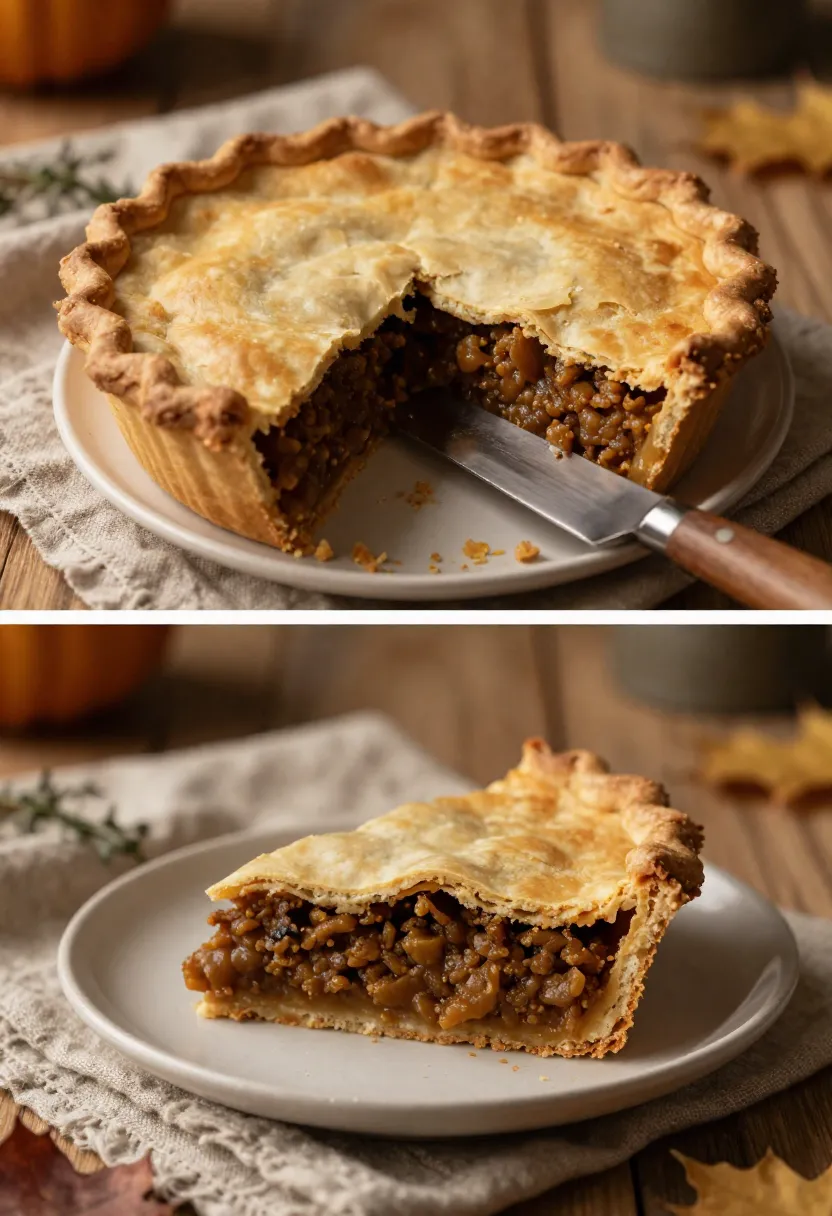
Visually, nothing about it is overly decorative. It’s not the kind of dish that tries to impress through appearance alone. But the longer you look at it, the more you notice how everything fits together. The layers aren’t forced — they’ve settled naturally. The filling looks dense but not compacted, and the crust holds everything without feeling heavy.
Then there’s the aroma, which is probably the most subtle part of the whole experience. It doesn’t hit you all at once. Instead, it builds gradually — a mix of warmth, richness, and something slightly earthy in the background. It feels familiar, even if the dish itself isn’t something you make often.
At this point, small details start to stand out more than you expect. The way the slice holds together on the plate. The clean edges. The fact that nothing leaks or falls apart. These aren’t things you actively aim for while cooking, but they become noticeable once everything is finished.
And that’s what makes this moment different.
It’s not about presentation or perfection. It’s about that quiet confirmation that the time you invested actually led somewhere. That the process worked.
🧠 Why This Kind of Cooking Still Matters
It’s easy to assume that dishes like this are outdated. Something from a time when people simply had more time to spend in the kitchen. And in a way, that’s true — modern cooking tends to prioritize speed and convenience, and for good reason.
Most days don’t leave much room for anything else.
But that doesn’t mean slower cooking has lost its value.
In fact, it offers something that quicker methods often don’t — a different kind of connection to what you’re making. Not in a sentimental way, but in a practical, noticeable one.
When you cook something like this, you naturally become more aware of each step. You notice how long things actually take, how ingredients behave at different stages, and how small adjustments can change the outcome. It’s not about being precise in a technical sense — it’s about being present enough to see what’s happening.
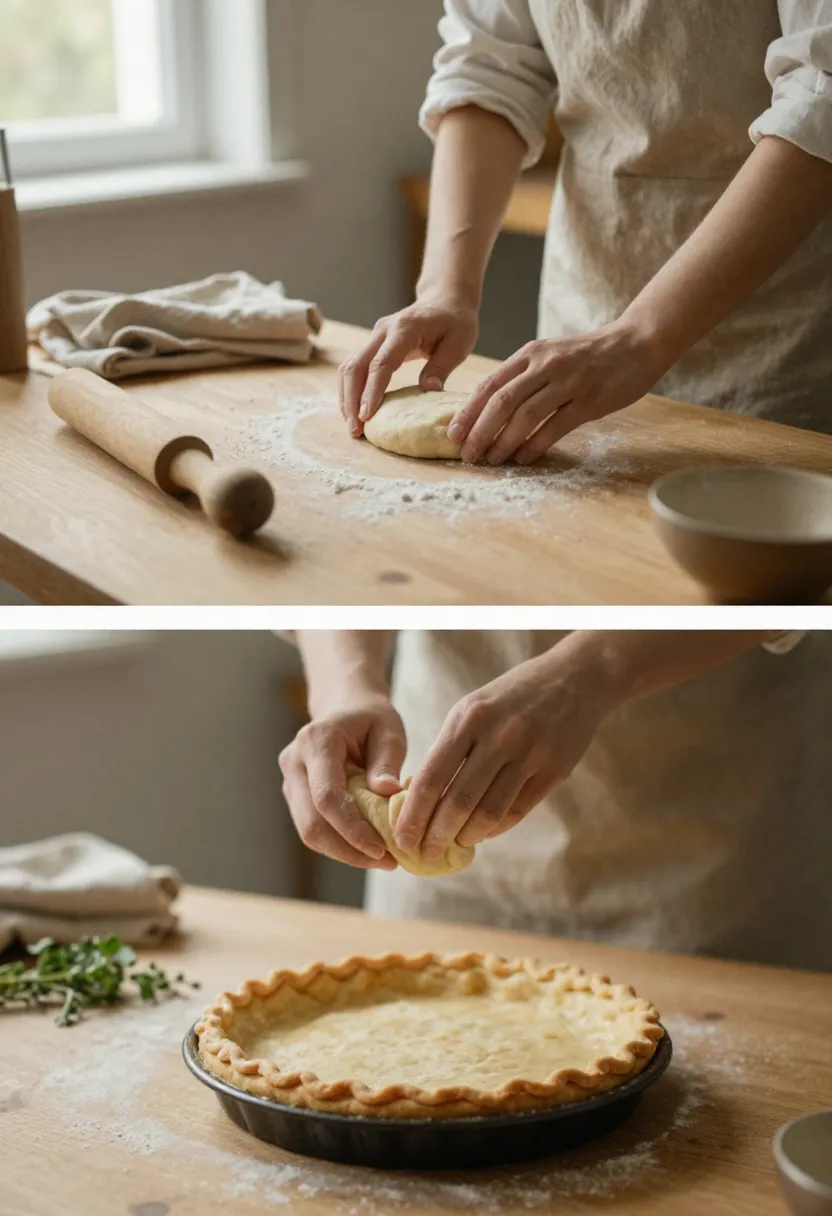
That shift in attention makes a difference.
Instead of moving quickly from one step to the next, you start allowing the process to unfold at its own pace. And once you stop trying to speed everything up, the cooking itself becomes more consistent, more predictable in a good way.
There’s also a certain level of trust involved. You rely less on shortcuts and more on timing, temperature, and simple observation. You learn that some steps can’t be skipped without consequences, even if they seem minor at first.
If you had to point out where this matters most, it would usually come down to a few things:
- giving the filling enough time to cool so the structure stays stable
- allowing the pie to rest so the flavors can fully develop
- not rushing the baking process, even if everything looks ready earlier
None of these steps are complicated, but they require patience. And that patience changes the final result in ways that are easy to notice once you’ve experienced it.
Even if you only cook like this occasionally, it leaves an impression. You start to see the difference between food that is simply prepared and food that has actually been given time to come together.
📊 What Makes This Pie Stand Out
| Element | Why It Matters | What You’ll Notice in Practice |
|---|---|---|
| Mixed meats | Combines different textures and levels of richness | A filling that feels layered, not flat or repetitive |
| Slow preparation | Gives ingredients time to develop gradually | Flavors feel smoother and more connected rather than separate |
| Jelly addition | Fills internal gaps and helps retain moisture | Clean slices that hold together without dryness |
| Firm pastry | Supports the weight of the filling without collapsing | A crust that stays intact and doesn’t become soggy |
| Overnight rest | Allows structure and flavor to stabilize | Noticeably better texture and deeper taste the next day |
| Balanced seasoning | Enhances natural ingredients instead of overpowering them | No single flavor dominates; everything feels integrated |
| Meat-to-fat ratio | Prevents the filling from becoming too dry or too heavy | A texture that feels rich but still comfortable to eat |
| Gentle cooking | Avoids overworking the ingredients and preserves their natural qualities | Meat stays tender rather than tough or overly compact |
✨ A Final Thought to Take With You
If you decide to make this pie, the most useful thing you can do is approach it without trying to rush through it. Not in a strict or overly careful way, but simply by letting each step take the time it needs.
It doesn’t have to look perfect, and realistically, it probably won’t. The edges might not be completely even, the top might have small cracks, and the overall shape might feel slightly rustic. But that’s part of what makes it feel genuine.
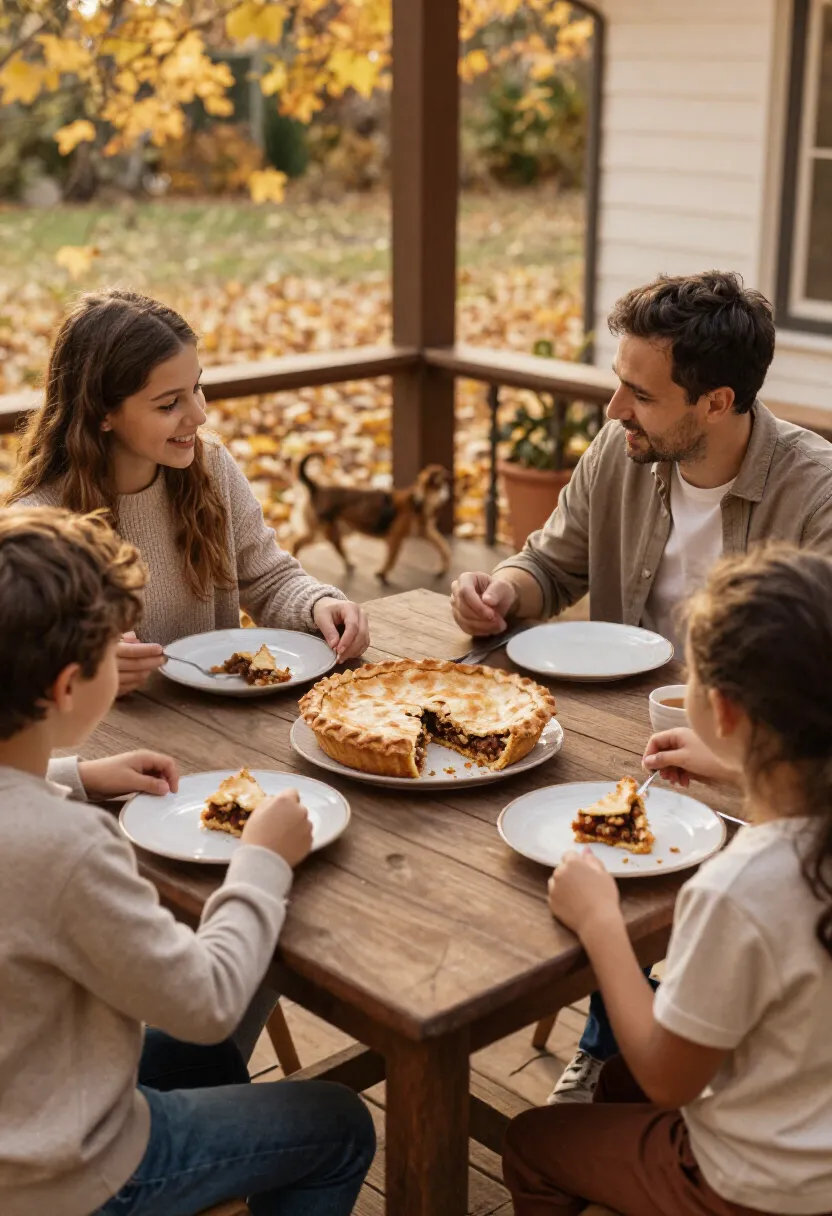
What matters more is how everything comes together in the end. The structure, the balance of flavors, the way the pie holds its shape when you cut into it — those are the details that stay with you.
And when you finally sit down with a slice in front of you, there’s a certain kind of satisfaction that’s hard to get from quicker meals. Not because it’s more complicated, but because it required a bit more attention, a bit more patience, and a willingness to let the process unfold.
That’s really what makes it memorable.
Not just how it tastes, but how it came together.