Some recipes arrive with expectations attached to them. People imagine a certain presentation, a certain reaction, sometimes even a certain kind of evening. Baked jalapeño poppers rarely carry that pressure. Most of the time they appear almost casually: a tray set out while dinner finishes, something to bring to the table while people are still pouring drinks, something warm to keep everyone occupied before the main meal. And then, almost without announcement, they become the thing people remember.
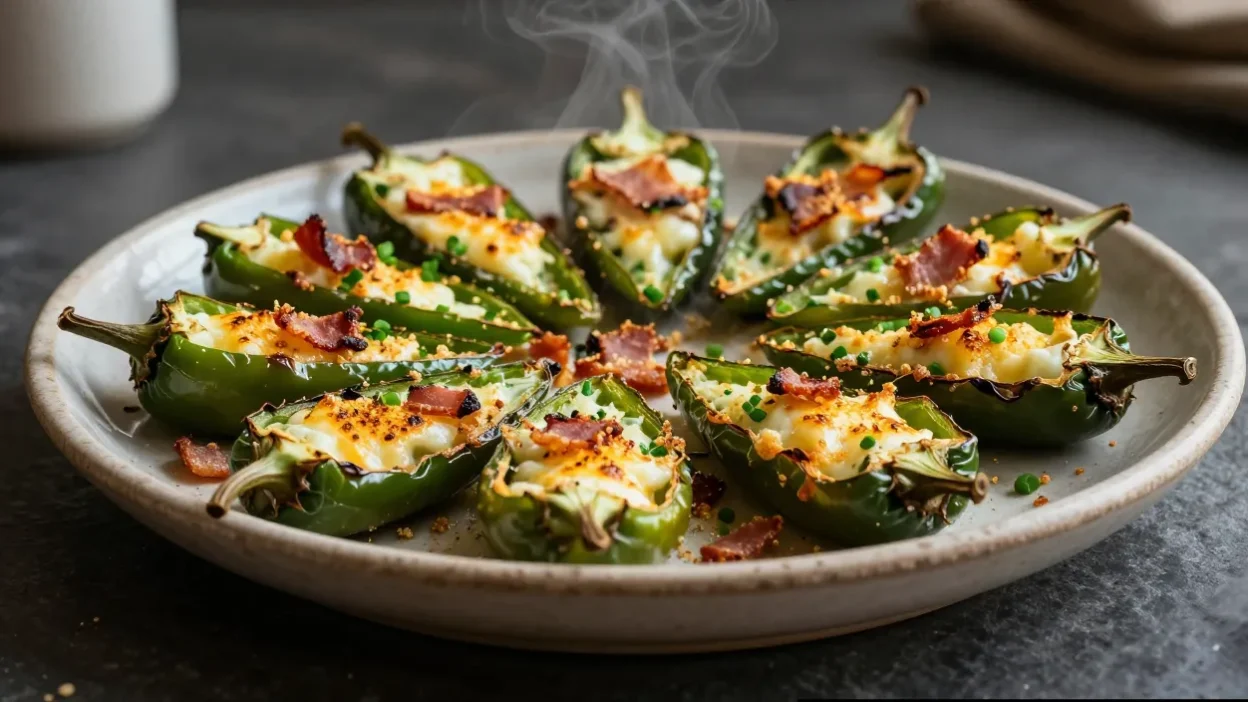
That shift happens because the recipe behaves differently than people expect. On paper, jalapeños, cheese, bacon, and breadcrumbs sound rich and intense. There’s an assumption that the result will feel heavy or aggressively spicy. But baking changes the entire personality of the dish. The peppers lose some of their raw sharpness and develop a softer, warmer character. Their heat becomes less direct and more integrated into everything around it. Instead of arriving first and dominating the bite, the spice settles into the background and leaves room for texture and balance.
That matters because the filling itself has enough richness to carry the recipe. Cream cheese creates structure rather than drama. It smooths edges and gives the center that soft texture people expect from a baked appetizer without making the dish feel dense. Sharp cheddar contributes more than simple cheesiness; once baked, it develops concentrated pockets of flavor and slightly darker areas around the edges where everything tastes deeper and more savory. Bacon brings salt and texture, but in a good baked version it never becomes the main event. It appears in small bites that interrupt the creaminess and stop the filling from becoming monotonous.
The ingredient that usually gets underestimated is the breadcrumb topping. It sounds like decoration until you compare versions side by side. Without it, the poppers can become too uniform. Every bite feels equally soft and eventually the richness starts blending together. Toasted panko changes that rhythm completely. The top develops a dry crispness that gives contrast before the filling turns smooth underneath. That one layer creates more balance than adding extra cheese ever could.
This is probably why baked poppers feel easier to repeat than fried ones. Fried appetizers often demand immediate attention. They want perfect timing and lose something quickly once they cool. Baked poppers are more forgiving. They stay enjoyable after sitting for a few minutes. The flavors become clearer instead of flatter. You notice more of the pepper, more of the herbs, more of the small differences between one piece and another.
And that flexibility changes the atmosphere around the table. Nobody waits for a formal serving moment. People take one while talking, then come back later for another. Someone always asks which pepper turned out hottest. Someone else starts choosing only the ones with darker cheese on top. Before long, the tray becomes part of the evening rather than something served during it.
How each ingredient changes the final result
| Ingredient | Role in the recipe | Flavor contribution | Texture contribution | Behavior during baking | Why it matters | If reduced or removed |
|---|---|---|---|---|---|---|
| Jalapeños | Main structure | Fresh pepper heat | Tender bite | Soften and become sweeter | Balance the richness | Filling becomes too heavy |
| Cream cheese | Filling base | Mild creamy flavor | Smooth interior | Melts without separating | Creates body | Texture becomes drier |
| Sharp cheddar | Flavor depth | Salty aged notes | Melted edges | Browns slightly | Gives complexity | Filling tastes flatter |
| Bacon | Contrast | Smoke and salt | Crisp pockets | Concentrates flavor | Breaks richness | Dish loses texture |
| Panko | Surface texture | Light toasted notes | Crunch | Turns golden | Creates contrast | Texture becomes too soft |
| Chives | Fresh finish | Gentle onion note | Light | Softens slightly | Brightens richness | Flavor feels heavier |
| Cilantro | Fresh balance | Herbal freshness | Delicate | Integrates into filling | Makes the dish feel lighter | Smoke dominates |
| Smoked paprika | Background warmth | Soft smoky depth | Invisible | Blends into cheese | Connects flavors | Less depth |
| Garlic powder | Savory support | Warm savory notes | None | Dissolves evenly | Rounds out filling | Flavor feels unfinished |
| Salt | Balance | Enhances everything | None | Evenly distributed | Keeps flavors clear | Ingredients compete |
The strength of baked jalapeño poppers isn’t that one ingredient stands out. It’s that every ingredient keeps enough of its identity to make the next bite feel slightly different from the last.
Why baked jalapeño poppers change once they leave the oven 🔥
People tend to treat baked appetizers like they have one ideal moment: straight out of the oven, eaten immediately, before anything cools down. Jalapeño poppers never really worked that way for me. They actually get more interesting after a few minutes.
Right after baking, they feel louder than they taste. The cheese is still bubbling and loose, steam rushes out when you pick one up, and the smell convinces everyone to reach for them too early. That first bite is hot, rich, and satisfying, but also slightly chaotic. You mostly notice temperature before you notice flavor.
Give the tray five or ten minutes and everything settles into place.
The filling firms up just enough to stop feeling molten and starts tasting creamier instead. The cheddar finally becomes noticeable as cheddar instead of disappearing into heat and melted fat. The peppers soften and develop more character too. You taste their sweetness first, then the heat comes in more gradually instead of punching through immediately.
That slower shift is probably why baked poppers stay easier to come back to than fried ones. Fried versions usually build everything around contrast: crunchy shell, exploding center, big first impression. Baked poppers work differently. The ingredients stay separate enough that you can actually notice them. Pepper tastes like pepper. Cheese still has shape and flavor. Bacon cuts through the richness instead of dissolving into it.
The filling matters more than people think.
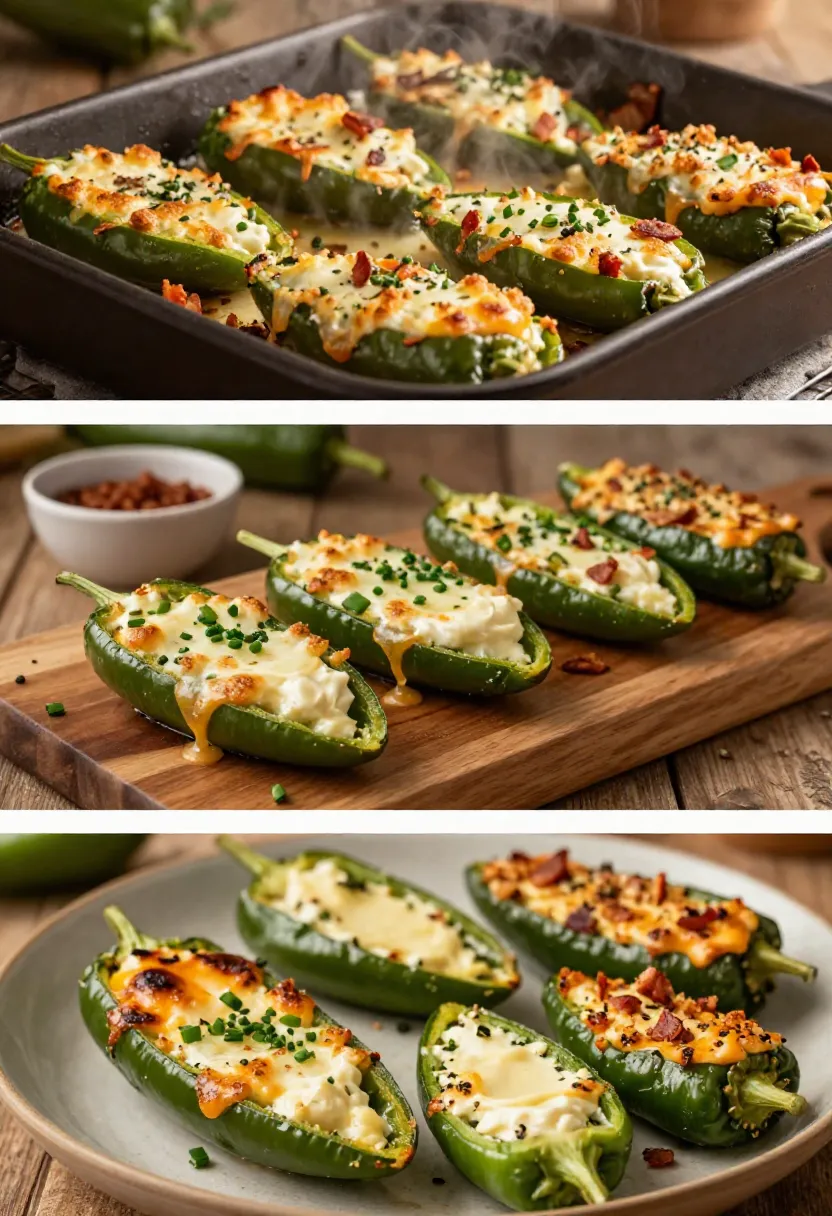
Cream cheese does most of the structural work but doesn’t demand attention. Cheddar brings sharper edges and salt. Bacon adds little interruptions, those occasional crisp bites that stop everything from becoming too soft. Fresh herbs do something quieter. They don’t make the dish feel fresh exactly, but they keep each bite from feeling heavier than the last.
That balance becomes obvious if you make poppers more than once.
The versions people remember are rarely the most symmetrical ones. Some peppers stay firmer. Some collapse a little and get extra browned around the edges. One inevitably ends up hotter than the rest and someone at the table becomes the unlucky volunteer. Another holds more filling than it should and suddenly becomes everyone’s favorite piece.
Those uneven moments actually help. Homemade trays feel better when they look slightly unpredictable. People stop eating automatically and start choosing. Someone starts hunting for darker tops. Somebody claims the bigger peppers. Someone else insists the smallest ones are always better.
And strangely, that’s usually when the tray disappears.
A few small things make the texture noticeably better without adding extra effort:
- Toast the breadcrumbs before adding them so they stay crisp instead of drying out.
- Let the cream cheese soften fully. Cold filling always mixes unevenly.
- Don’t pack the filling all the way to the edge or it spills before the peppers soften.
- Rest the tray for a few minutes after baking even if everyone complains.
- Add most fresh herbs at the end so they stay bright.
None of that is restaurant technique. It’s mostly learning that baked food keeps changing for a little while after it leaves the oven, and sometimes waiting a few minutes gives you the version you actually wanted all along.
Why recipes like this keep earning another tray 🧀
Recipes don’t usually become favorites because they’re extraordinary. Most of the time they become favorites because they quietly solve problems. They taste good, they fit into normal schedules, and they don’t create more work than people want to give. Baked jalapeño poppers fit into that category unusually well, which explains why they keep showing up even while food trends constantly change around them.
Part of that comes from flexibility. The ingredients are familiar and forgiving. There’s enough structure in the recipe to make it feel intentional, but enough room to adapt depending on what’s already in the fridge. Extra cheddar works. Different herbs work. Slightly different bacon textures work. You can prepare everything ahead and bake later without losing much quality, which makes the recipe practical in situations where timing matters more than complexity.
That flexibility becomes more valuable than originality over time. Most people don’t cook the same way they read recipes. They adjust. They substitute. They cook around leftovers and available ingredients. Recipes that survive tend to accept that reality instead of resisting it. Jalapeño poppers do that naturally because their success depends more on balance than precision.
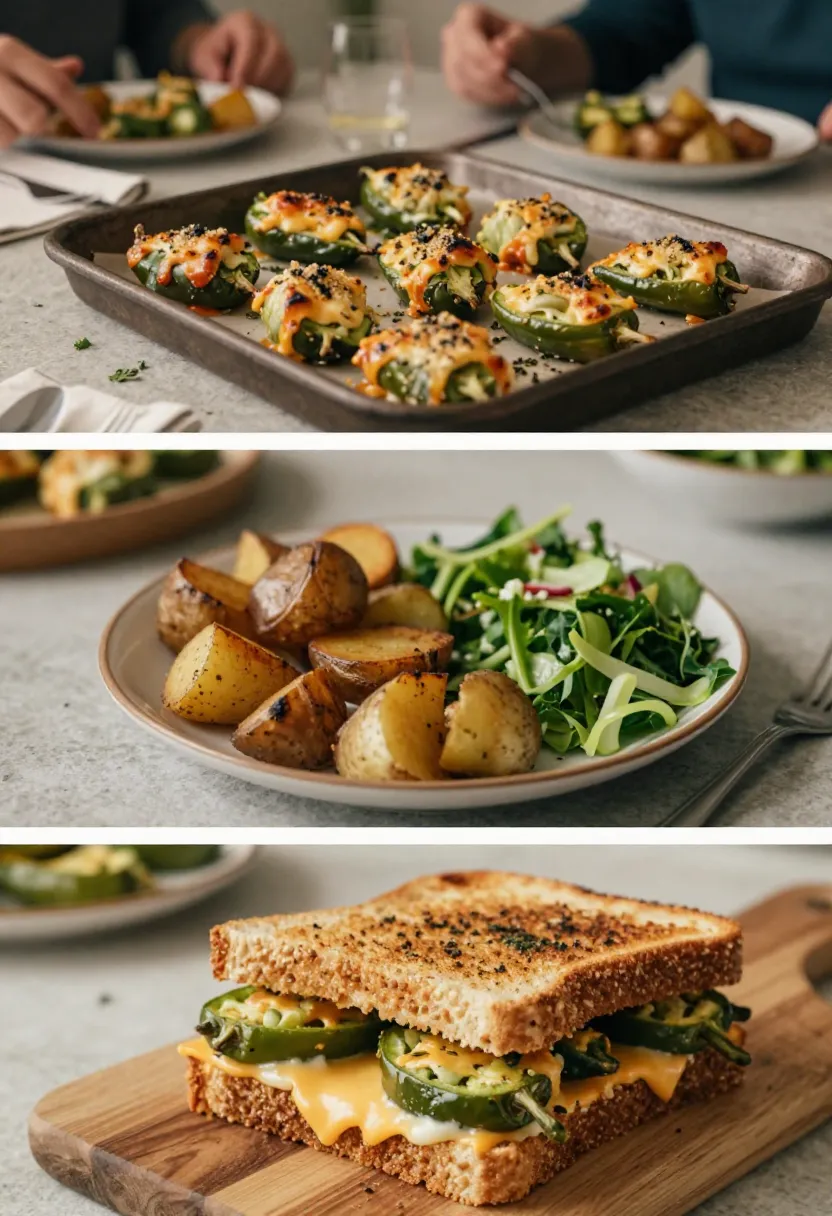
They also behave unusually well after serving. A lot of appetizers have a short life and feel disappointing once they cool. These don’t. The texture shifts instead of collapsing. The filling becomes denser and easier to taste. The peppers hold their shape. Even leftovers become usable in ways people don’t necessarily expect. Chopped into scrambled eggs, sliced into sandwiches, served beside roasted potatoes, added to grain bowls — none of those uses feel forced.
That adaptability changes how people think about the recipe. It stops being something tied to parties and starts becoming something worth making more casually. A tray for friends becomes a tray for movie night. A weekend recipe becomes something manageable on an ordinary evening.
And there’s another reason these recipes last: they create relaxed moments around food. Nobody needs instructions. Nobody waits for the official start. People eat while talking, walk back for seconds, compare which one turned out hotter, and eventually realize half the tray disappeared before dinner even started.
That kind of reaction doesn’t usually happen because a recipe is impressive.
It happens because people genuinely want another one.
Baked jalapeño poppers recipe🌶️
There are recipes that rely on novelty and recipes that survive because people actually want to make them again. Baked jalapeño poppers belong to the second group. They look familiar, use ordinary ingredients, and still manage to feel a little more special than opening chips and dip.
This version leans into contrast instead of excess. The jalapeños soften in the oven but keep enough bite to stay recognizable. Cream cheese turns smooth and rich without becoming heavy, while sharp cheddar adds a deeper cheese flavor and creates browned spots around the edges. Bacon brings small bursts of salt and smoke rather than dominating the filling. Toasted breadcrumbs finish everything with crunch and stop the texture from becoming one long stretch of melted cheese.
Another reason baked poppers work so well is that they stay relaxed. They don’t require frying, they don’t collapse if they cool for a few minutes, and they fit equally well into a weekend gathering or an ordinary evening when dinner somehow turns into snacks. Fresh from the oven they feel warm and rich. Ten minutes later they become creamier, the pepper flavor becomes clearer, and the whole tray somehow tastes more balanced.
They’re also one of those recipes people quietly remember. Someone usually asks for them again. Someone else starts experimenting with fillings. Before long, they stop feeling like party food and become part of the regular rotation.
Ingredients
For the poppers
- 10 jalapeño peppers, sliced lengthwise and seeded
- 8 oz (225 g) cream cheese, softened
- ½ cup shredded sharp cheddar cheese
- 6 strips bacon, cooked until crisp and finely chopped
- ⅓ cup panko breadcrumbs
- 2 tbsp fresh chives, finely chopped
- 2 tbsp fresh cilantro, finely chopped
- 1 tsp smoked paprika
- ½ tsp garlic powder
- ¼ tsp fine sea salt
For finishing
- Extra chopped chives
- Reserved bacon pieces
- Optional flaky salt
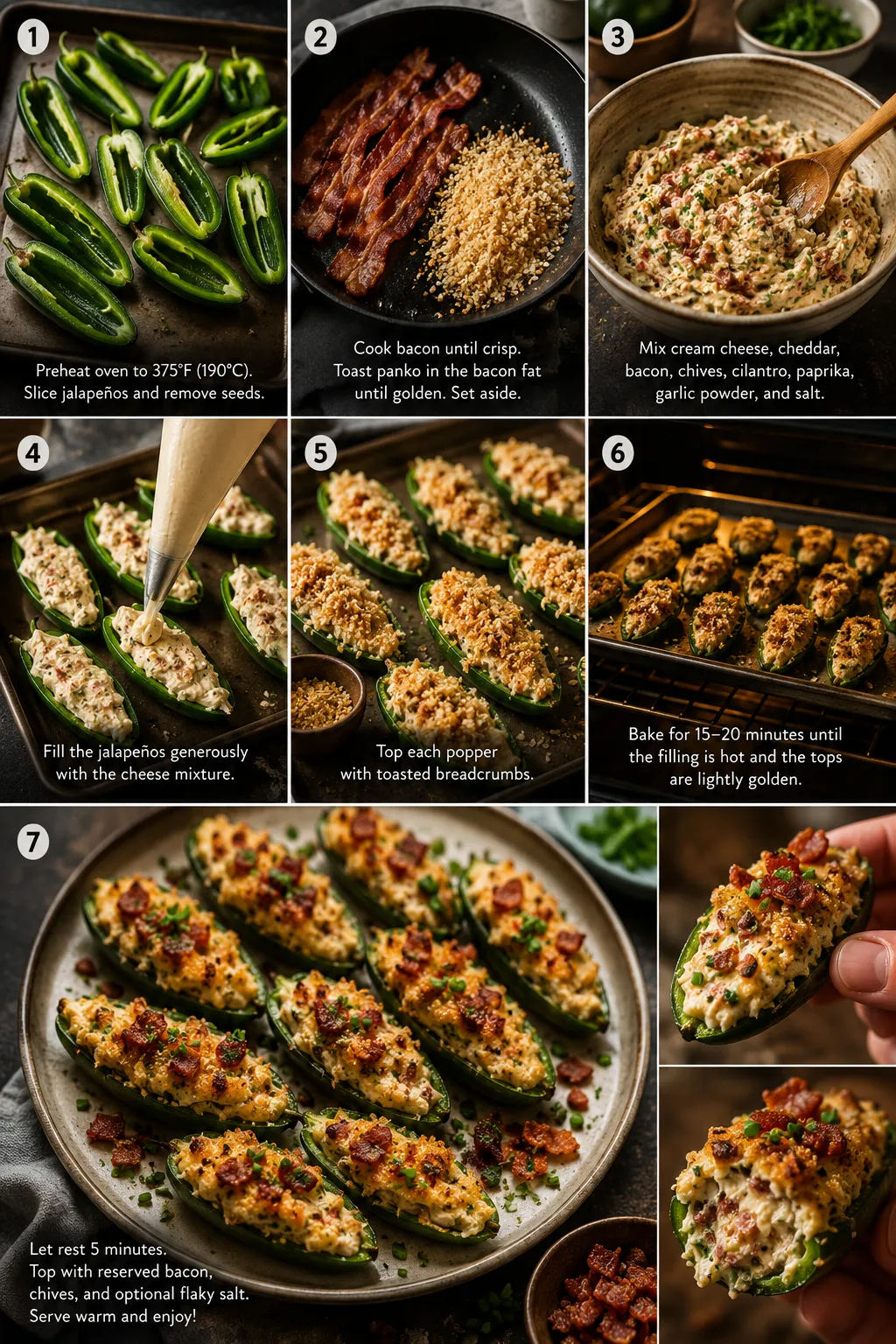
Step-by-step cooking instructions
- Prepare the oven and peppers
Preheat the oven to 375°F (190°C). Line a baking tray with parchment paper or lightly grease it. Slice each jalapeño lengthwise and remove seeds and membranes. For a milder result, remove everything inside; for more heat, leave a little membrane behind. Arrange the pepper halves cut-side up on the tray. - Cook the bacon and toast the breadcrumbs
Place bacon in a skillet over medium heat and cook until crisp. Transfer onto paper towels and keep about one tablespoon of rendered fat in the pan. Add panko breadcrumbs directly into the warm pan and toast for 2–3 minutes until lightly golden and fragrant. Remove and set aside. Chop the cooled bacon and reserve a small amount for finishing. - Make the filling
In a mixing bowl combine softened cream cheese, shredded cheddar, most of the bacon, chives, cilantro, smoked paprika, garlic powder, and salt. Stir until evenly mixed. The filling should stay thick but become smooth enough to pipe or spoon easily. - Fill the peppers
Transfer the mixture into a piping bag or spoon directly into the jalapeños. Fill generously but avoid pressing the mixture down too tightly. Leave a little texture on top instead of smoothing everything completely. - Add the topping
Sprinkle toasted breadcrumbs over each filled pepper. Press lightly so the crumbs stay attached during baking but still keep an airy texture. - Bake
Place the tray in the oven and bake for 15–20 minutes until the filling becomes hot and slightly golden and the peppers soften while keeping their shape. Watch for color more than exact timing. - Finish and serve
Remove from the oven and let the poppers rest for about 5 minutes. Scatter reserved bacon and extra chopped chives over the top. Serve warm while the filling stays creamy and the topping remains crisp.
Small baking tips
- Toast breadcrumbs before assembling for a better crunch.
- Use room-temperature cream cheese for smoother filling.
- Don’t overfill the peppers — the filling expands while baking.
- Let the tray rest briefly before serving for better texture.
- Make ahead by assembling everything and baking later.
Why texture is the reason people remember these poppers 🌶️
People usually talk about flavor as if that’s the only thing worth remembering in food. More spice, stronger cheese, more smoke, more heat. But dishes that people actually repeat tend to stay in memory for a different reason. They feel good to eat. Texture ends up doing more work than anyone notices.
Baked jalapeño poppers are a good example of that because the experience changes from bite to bite instead of staying exactly the same. Fresh from the oven, they feel generous and warm. The filling is soft, the cheese still looks almost liquid near the edges, and the peppers release steam every time one gets lifted from the tray. At that stage, everything feels rich and comforting, but the flavors still overlap.
After a few minutes, the recipe starts becoming more interesting.
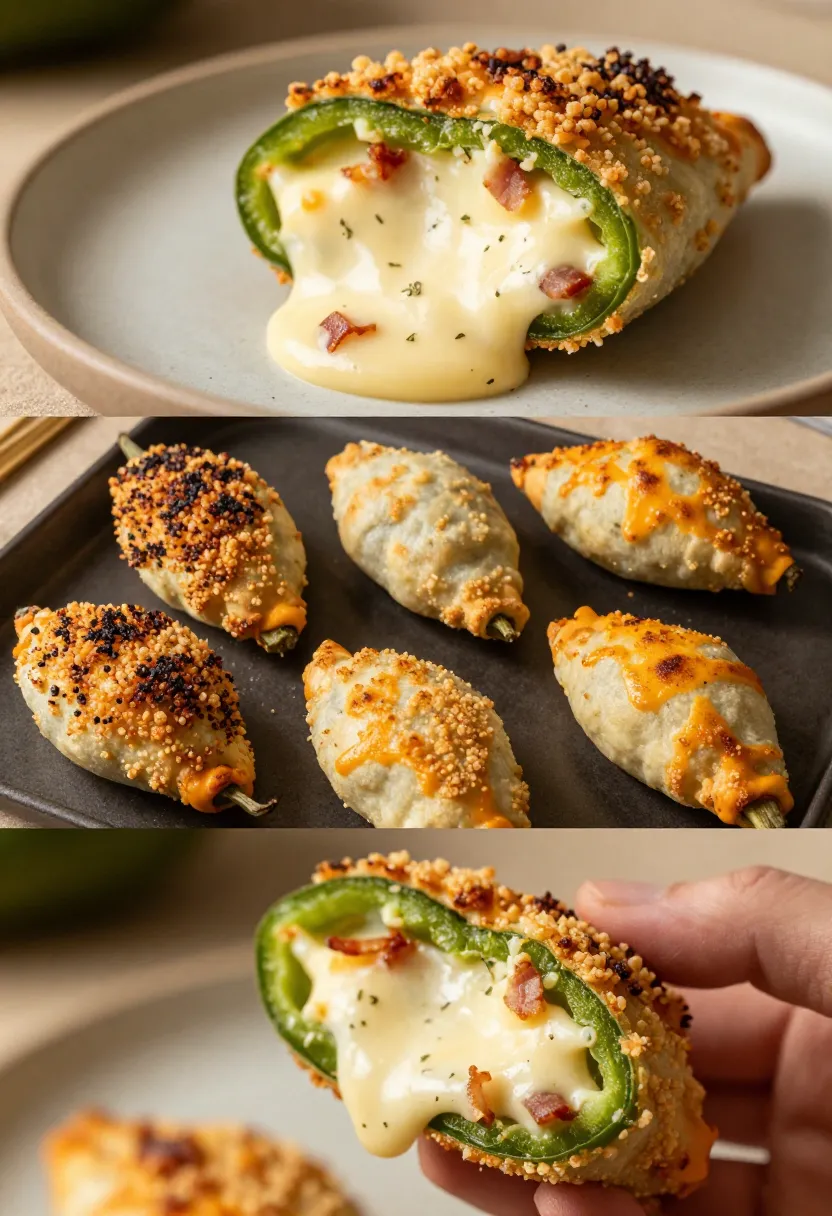
The cream cheese settles and turns smoother instead of simply hot. Sharp cheddar starts becoming more noticeable and develops those concentrated cheesy spots where the surface browned slightly. Bacon changes too. Instead of acting like a topping, it becomes texture hidden inside the filling — small salty interruptions that keep every bite from becoming predictable.
The jalapeños themselves probably change the most. Raw peppers can feel sharp and almost impatient. Baking softens that edge and turns the heat into something slower and rounder. The peppers still keep enough structure to remind you what you’re eating, but they stop fighting with the filling and start supporting it.
That balance matters because richness without variation gets tiring surprisingly fast. Food that tastes identical from beginning to end rarely becomes memorable. Good texture keeps creating small changes while people eat. One bite feels smokier. Another feels fresher because herbs landed differently. One pepper ends up unexpectedly hot. Another develops extra browned cheese around the edge.
Homemade food benefits from those inconsistencies more than people think. Perfectly identical appetizers often look impressive but feel forgettable. Slight variation creates little moments people talk about later. Someone always announces they found the best one while someone else immediately disagrees and starts searching for an even better piece.
Texture quietly becomes the reason the recipe survives. People talk about cheese and spice, but what they usually mean is contrast. And contrast is what makes people reach for one more popper even after they already said they were done.
How serving changes the entire experience of the recipe 🍽️
Some recipes only work if everything lines up: the table is set, people sit down together, and the food arrives at exactly the right moment. Baked jalapeño poppers aren’t that kind of recipe. They actually seem to get better once people stop treating them like something that needs a proper introduction.
Put a tray in the middle of the table and watch what happens.
Nobody waits for instructions. Someone grabs one while carrying a drink. Somebody else takes half of one “just to try it” and comes back ten minutes later for three more. Conversations keep going. People lean over each other a little. The food becomes background in a good way, which usually means people enjoy it more.
That’s probably part of why poppers work so well for casual gatherings. They don’t demand attention.
The interesting thing is that the recipe changes slightly while all of this is happening. Fresh from the oven, everything feels exaggerated. The cheese is soft and loose, the peppers are releasing steam, and the toasted topping gives you that immediate crunch. It’s satisfying, but also a little messy. You mostly register heat and richness first.
Wait a few minutes and the whole thing calms down.
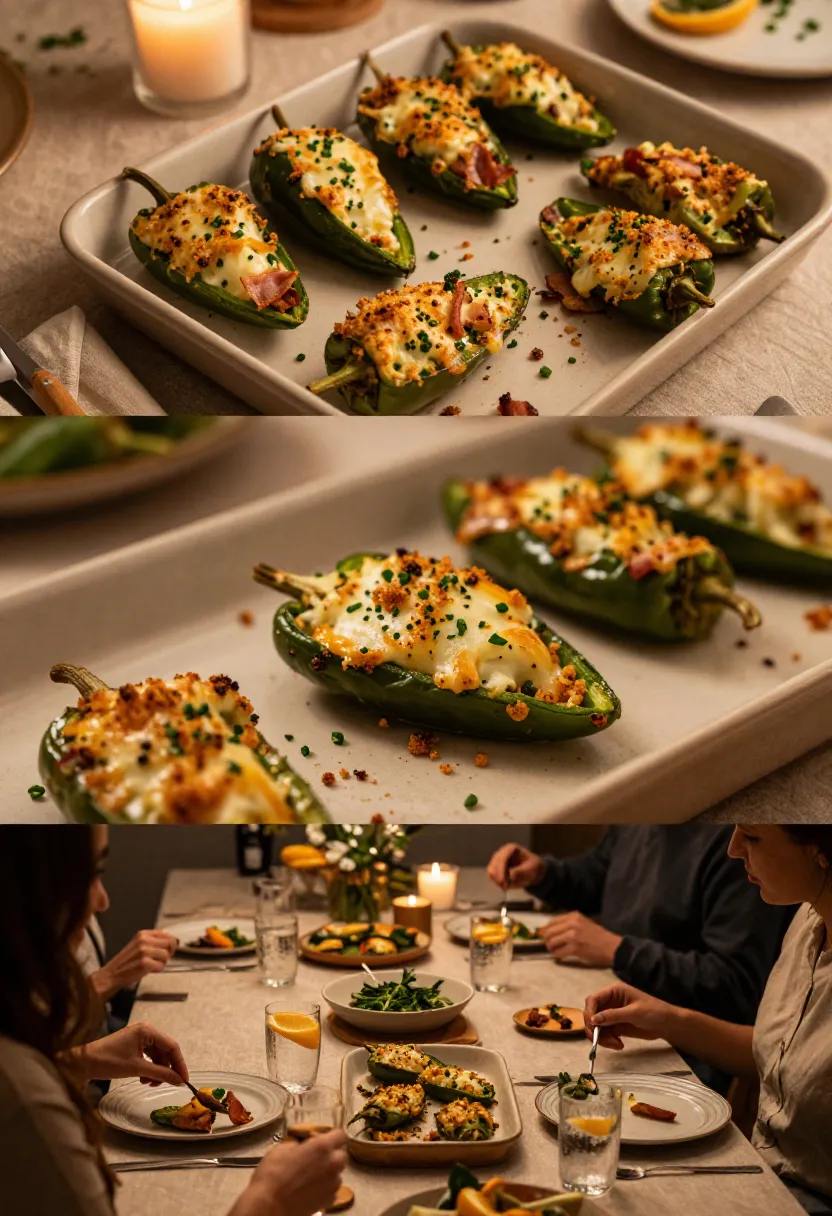
The filling thickens just enough to hold together without turning dense. Cream cheese stops tasting like temperature and starts tasting like actual cream cheese. Cheddar becomes easier to pick out. The peppers soften but keep enough bite to remind you they’re still vegetables and not just containers for cheese.
Even the heat behaves differently. Instead of showing up immediately, it builds slower and leaves more room for everything else.
That’s one reason baked poppers don’t suffer from sitting out the way people expect. There isn’t this dramatic two-minute window where they go from amazing to disappointing. They shift. Sometimes they actually land in a better place after resting.
And where you eat them changes the mood more than the recipe itself.
Outside next to grilled food, they somehow feel lighter. Indoors on a colder evening, they turn into comfort food without trying. Put them out before dinner and people suddenly stop asking when dinner is happening.
Presentation doesn’t need much help either.
Actually, trays that look slightly uneven usually disappear faster. Cheese escaping onto the baking sheet. Breadcrumbs getting darker in random spots. A few peppers leaning sideways because they were cut awkwardly. Those details make the food feel homemade instead of staged.
People respond to that without realizing it.
If you want to shift the mood a little without changing the recipe, small things do more than big upgrades:
- Serve cold sparkling water with citrus nearby to cut through the richness.
- Put out a quick yogurt dip with lemon and herbs instead of another heavy sauce.
- Add sliced cucumbers, radishes, or crisp vegetables beside the tray.
- Scatter fresh chives after baking so they stay bright.
- Leave the poppers where they were served instead of constantly rearranging them.
None of those things transform the recipe.
They just make the tray feel easier to stay around, and food that keeps people lingering usually wins over food that tries too hard to impress.
Why recipes like this become repeat recipes without trying ✨
People often describe favorite recipes as if they become favorites instantly. One dinner, one perfect evening, one memorable result, and suddenly the dish becomes part of someone’s life. In reality, most recipes earn their place much more quietly. They show up once because ingredients happen to already exist in the fridge, then appear again a few weeks later because someone remembered them, and eventually stop feeling like “that recipe” altogether.
They become something people make automatically when they want food that feels reliable, satisfying, and slightly more interesting than the usual routine.
Baked jalapeño poppers fit into that category surprisingly well. On paper they sound like party food: peppers, cheese, bacon, breadcrumbs. It’s easy to imagine them belonging only to game nights, casual gatherings, or weekends when people have time to cook for fun. But recipes rarely stay in the category they started in. Good recipes move into ordinary life, and this one does it naturally.
Once people realize the filling can be mixed ahead, the peppers can be prepared earlier in the day, and the tray doesn’t demand exact timing, the recipe starts becoming useful in situations that have nothing to do with entertaining.
That flexibility matters more than originality. Most home cooking happens under imperfect conditions. People cook after work, cook while distracted, cook with ingredients that need to be used, and cook while changing plans halfway through the process. Recipes that survive long term usually allow for that reality instead of fighting it.
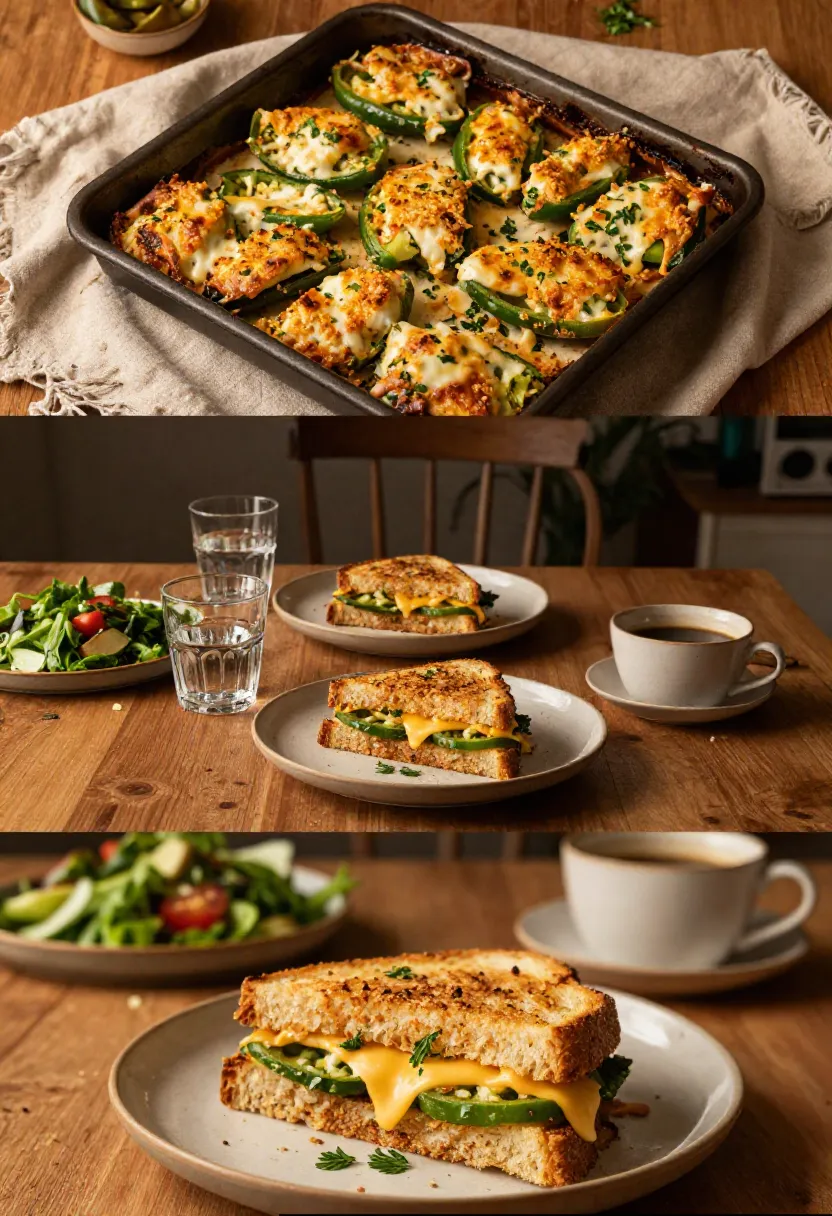
Baked jalapeño poppers leave enough room for adaptation without losing their identity. More cheddar still tastes right. Different herbs still work. A slightly hotter batch of peppers doesn’t ruin anything. The structure of the recipe stays recognizable even when small details change from one tray to the next.
Another reason these tend to stick around is that they continue behaving well after serving. A lot of appetizers exist in a very short window — they taste best immediately and feel disappointing once they cool. These change instead of collapse. The filling becomes denser and easier to notice, the peppers taste a little sweeter, and the flavors stop competing with heat and start separating naturally.
Leftovers often become something else entirely: added to eggs the next morning, tucked into sandwiches, served next to roasted vegetables, or eaten cold directly from the refrigerator while deciding what to make for lunch.
That ability to extend beyond a single moment is usually what turns recipes into habits. Nobody plans for that to happen. Nobody announces that a dish entered regular rotation. It just starts appearing more often.
Someone buys extra jalapeños without thinking.
Someone asks whether the tray should be doubled.
Someone remembers halfway through grocery shopping that cream cheese is already at home.
And eventually the recipe stops needing an occasion. It becomes one of those dishes people make because they already know exactly what kind of evening it creates: relaxed, easy to share, satisfying without feeling too heavy, and familiar without becoming boring.
Those recipes rarely feel impressive in the moment.
They simply keep getting made. ✨🌶️