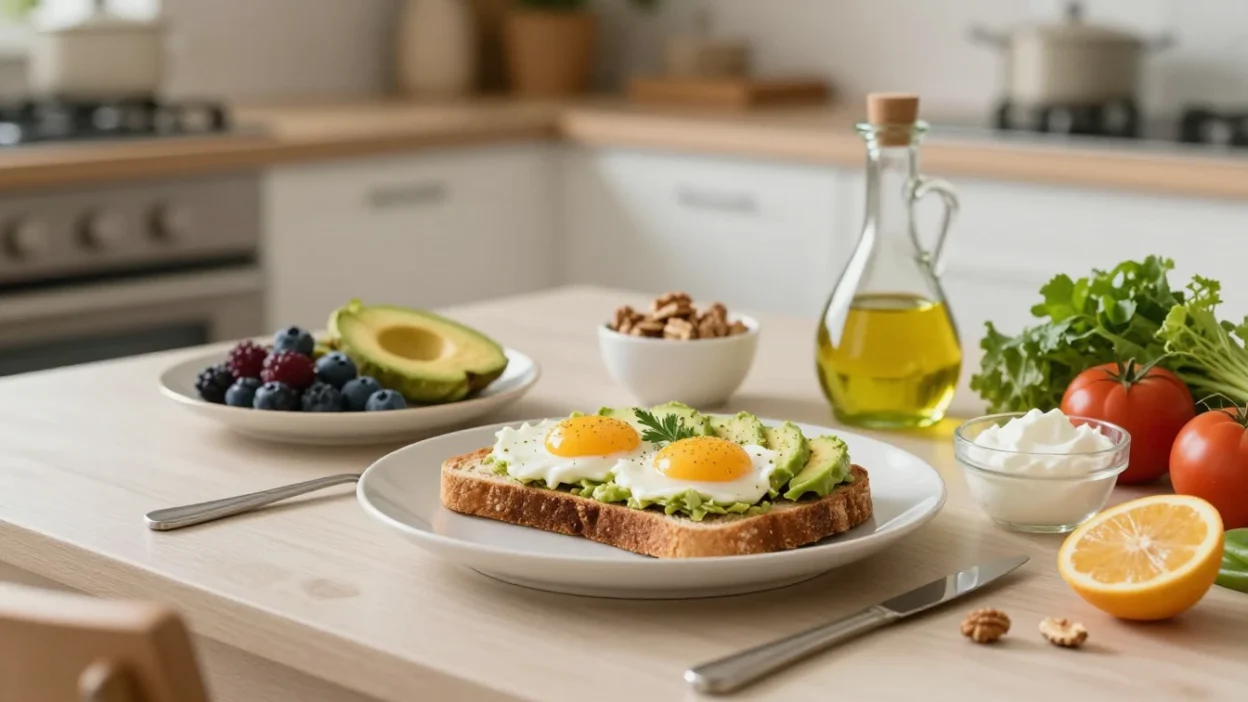
You can do everything “right” on paper and still feel confused.
You check the label. You count the calories. You choose the lower number, skip the extra sauce, maybe even feel a little proud for a minute. Then two hours later you are hungry again, thinking about snacks, coffee, or something sweet from the kitchen cabinet.
That does not mean you failed. It usually means the numbers did not tell you enough.
Healthy eating is more than counting calories because your body is not a calculator. It is chemistry. It is digestion, hormones, stress, sleep, movement, appetite, blood sugar, gut comfort, food texture, and even how rushed you were when you ate lunch. A label can tell you what is inside the package, but it cannot tell you exactly how your body will use that food once you eat it.
Calories still matter. Of course they do. But they are only one part of the story.
A 400-calorie pastry and a 400-calorie bowl with eggs, vegetables, beans, and olive oil do not feel the same after breakfast. One may leave you searching for another bite before noon. The other may carry you calmly into lunch without much drama. Same number. Different meal. Different chemistry.
That is where healthy eating becomes much more interesting than simple math.
It is not about throwing away food labels or pretending calories mean nothing. It is about putting those numbers in their proper place. They can guide you, but they should not be the only voice in the room.
Why health is not simple math
Food labels are neat. Real bodies are not.
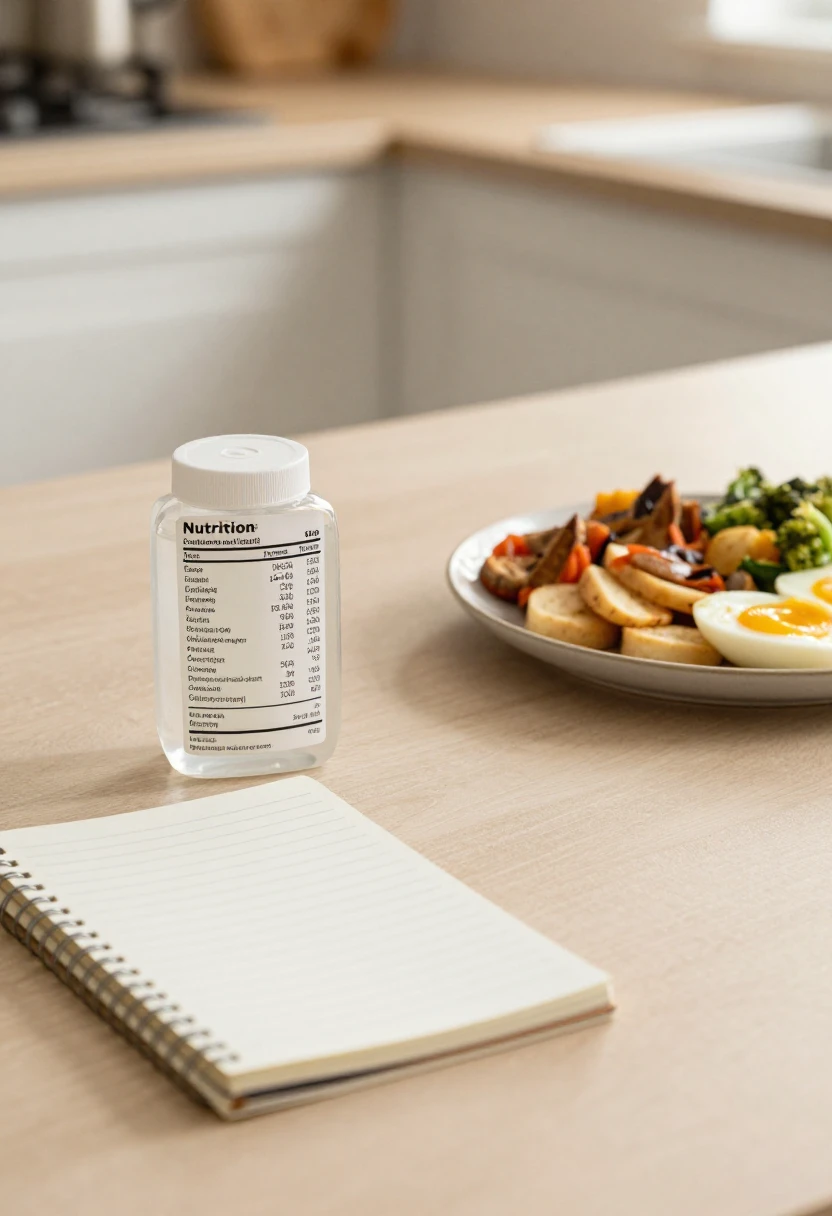
A nutrition label gives you calories, fat, carbohydrates, protein, sugar, sodium, and sometimes a long list of vitamins and minerals. It looks official, and in many ways it is useful. I use labels too, especially when comparing yogurts, cereals, sauces, or snacks that all look “healthy” from the front of the package.
But the label does not know you.
It does not know whether you slept five hours or nine. It does not know if you trained yesterday, skipped breakfast, sat at a desk all day, or ate while answering emails. It does not know your digestion, your stress level, your hormones, your age, your appetite, or whether that “light” lunch will make you raid the pantry later.
That is why health cannot be reduced to a tidy equation like:
fewer calories = healthier choice
Sometimes that is true. Sometimes it is not.
A smaller meal can be useful when you are not very hungry. But a meal that is too small, too low in protein, or missing fiber can leave you tired, irritated, and strangely snacky. And honestly, that is where many people get stuck. They are not lacking discipline. They are under-building their meals.
Nutrition is not only about what you subtract. It is also about what you give your body to work with.
Calcium needs the right conditions to be absorbed well. Fat-soluble vitamins need some fat in the meal. Protein is not just a number on an app; your body has to digest it, break it down, and use it. Fiber changes how full you feel and how quickly energy enters your bloodstream.
So yes, numbers are helpful.
But they are not the whole conversation. As the reference article points out, nutrition facts and calorie numbers are estimates, while digestion depends on the person and the situation.
Calories matter, but context matters more
Calories are simply a way to measure energy. That part is not wrong.
If your body takes in more energy than it uses over time, weight can go up. If it takes in less, weight can go down. This is why calorie tracking can be helpful for some people, especially when they want a clearer picture of portions, habits, or hidden extras that sneak into the day.
But the problem starts when calories become the only thing you see.
Because food is not just energy. Food also affects hunger, fullness, blood sugar, digestion, mood, cravings, and how easy it feels to make your next choice.
A bowl of oatmeal with Greek yogurt, berries, and walnuts may have more calories than a plain rice cake with low-fat spread. But which one is more likely to keep you full? Which one gives your body protein, fiber, fat, and slow-burning carbohydrates? Which one feels like actual breakfast?
This is where healthy eating becomes more than counting calories.
A calorie number can tell you how much energy is in a food. It cannot tell you whether that food will help you feel steady through the morning.
Why low-calorie eating can still leave you tired and hungry
Low-calorie meals often look good at first.
A plain salad. A small soup. A protein bar. A “light” yogurt. A few crackers and coffee. Technically, these choices may fit into a calorie goal. But if they do not contain enough protein, fiber, or fat, they can leave your body asking for more.
And the body usually asks loudly.
You may notice it as:
- hunger soon after eating
- cravings for sugar or salty snacks
- low energy in the afternoon
- feeling cold, shaky, or foggy
- overeating later in the day
This is not always about willpower. Sometimes your meal simply did not do its job.
A salad with only lettuce, cucumber, and dressing is more like a side dish. Add eggs, chicken, chickpeas, salmon, tofu, avocado, seeds, or a scoop of cooked grains, and suddenly it becomes lunch. Same “healthy” idea, but much better built.
That small shift matters.
Your body needs enough substance to feel safe and satisfied. If every meal feels like a negotiation, healthy eating becomes exhausting.
Why higher-calorie foods can still support a healthy diet
Some of the most useful foods in a healthy diet are not low-calorie at all.
Olive oil. Nuts. Seeds. Avocado. Eggs. Salmon. Cheese. Whole grains. Peanut butter. Dark chocolate, if you enjoy it in a normal, human way and not as a punishment substitute for dessert.
These foods can be calorie-dense, but they also bring texture, flavor, satisfaction, and nutrients. They help meals feel complete. They make vegetables taste better. They keep you from finishing dinner and immediately wondering what else you can eat.
I think this is where many “healthy” plans become too dry and joyless. They remove so much that the food becomes technically correct but emotionally useless.
A plate of steamed vegetables and plain chicken may be low in calories. Add roasted potatoes, olive oil, herbs, lemon, and a spoon of yogurt sauce, and now it feels like dinner. You are much more likely to repeat that meal because it tastes good.
And repeatable matters.
The healthiest meal is not the one that looks perfect in an app. It is the one you can make, eat, enjoy, and come back to without feeling trapped by it.
Body chemistry changes how you use food
Two people can eat the same meal and have completely different reactions.
One person feels full, calm, and focused for hours. Another person feels bloated, sleepy, or hungry again too soon. That can be frustrating, especially when a meal looks “balanced” from the outside.
But your body is not just receiving food. It is breaking it down, reacting to it, absorbing what it can, and deciding what to do next.
That process depends on a lot more than the number of calories on your plate.
Metabolism is personal
Metabolism is often talked about like it is one simple thing: fast or slow.
Real life is messier than that.
Your metabolism is affected by muscle mass, age, activity level, hormones, sleep, body size, health history, and even how consistently you eat. A teenager who plays sports, a pregnant woman, a stressed office worker, and an older adult may all need very different meals, even if they are eating the same “healthy” food.
This is why copying someone else’s diet can feel so disappointing.
Their breakfast may keep them full until noon. Yours may leave you hungry at 10:30. Their low-carb dinner may feel great. You may sleep badly after it. Their smoothie may be enough. You may need eggs or toast with it to feel normal.
None of that means you are doing something wrong.
It means your body has its own chemistry.
Stress can change digestion and hunger
You can eat the same lunch on two different days and feel completely different afterward.
On a calm day, a bowl of rice, chicken, vegetables, and sauce might feel perfect. On a rushed day, when you eat it in five minutes between messages, it may sit heavily in your stomach. Same food. Different body state.
Stress changes the way many people experience hunger and digestion. Some lose their appetite. Others crave quick sugar, salty snacks, or larger portions. Some people feel full but still want to keep eating because the craving is not really physical hunger. It is stress looking for comfort.
I do not say that in a judgmental way. Food is comforting. A warm meal after a rough day can genuinely help you feel human again.
The problem starts when we ignore the stress part and blame everything on calories.
Sometimes the better question is not, “How many calories did I eat?”
Sometimes it is:
- Did I eat too fast?
- Did I skip a real meal earlier?
- Did I sleep badly?
- Am I actually hungry, or am I tense and looking for relief?
- Would a more filling dinner make tomorrow easier?
That kind of awareness is not as neat as a number, but it is often more useful.
Nutrients often work together
Nutrition is full of partnerships.
Your body does not use every nutrient in isolation. Some nutrients work better when they arrive together. Some need the right conditions to be absorbed well. Some meals look healthy but are missing the piece that makes them satisfying.
For example, fat-soluble vitamins need some fat in the meal. That does not mean you need to pour oil over everything, but it does explain why a completely fat-free salad can feel flat and less satisfying. A little olive oil, avocado, nuts, seeds, cheese, or salmon can make the meal taste better and help it feel more complete.
Fiber also changes the way a meal behaves. Add beans, oats, lentils, vegetables, fruit, or whole grains, and the meal usually digests more slowly. You feel fuller. Energy feels steadier. The plate has more texture.
Protein matters too, not because everyone needs to turn dinner into a bodybuilding project, but because protein helps with fullness and repair. Eggs at breakfast, Greek yogurt with fruit, chicken in a salad, tofu in a stir-fry, lentils in soup — these small choices change the whole meal.
That is the part calorie counting often misses.
Food is not just a total. It is a combination. And the combination matters.
Why the same diet works for one person but not another
This is one of the most annoying parts of nutrition.
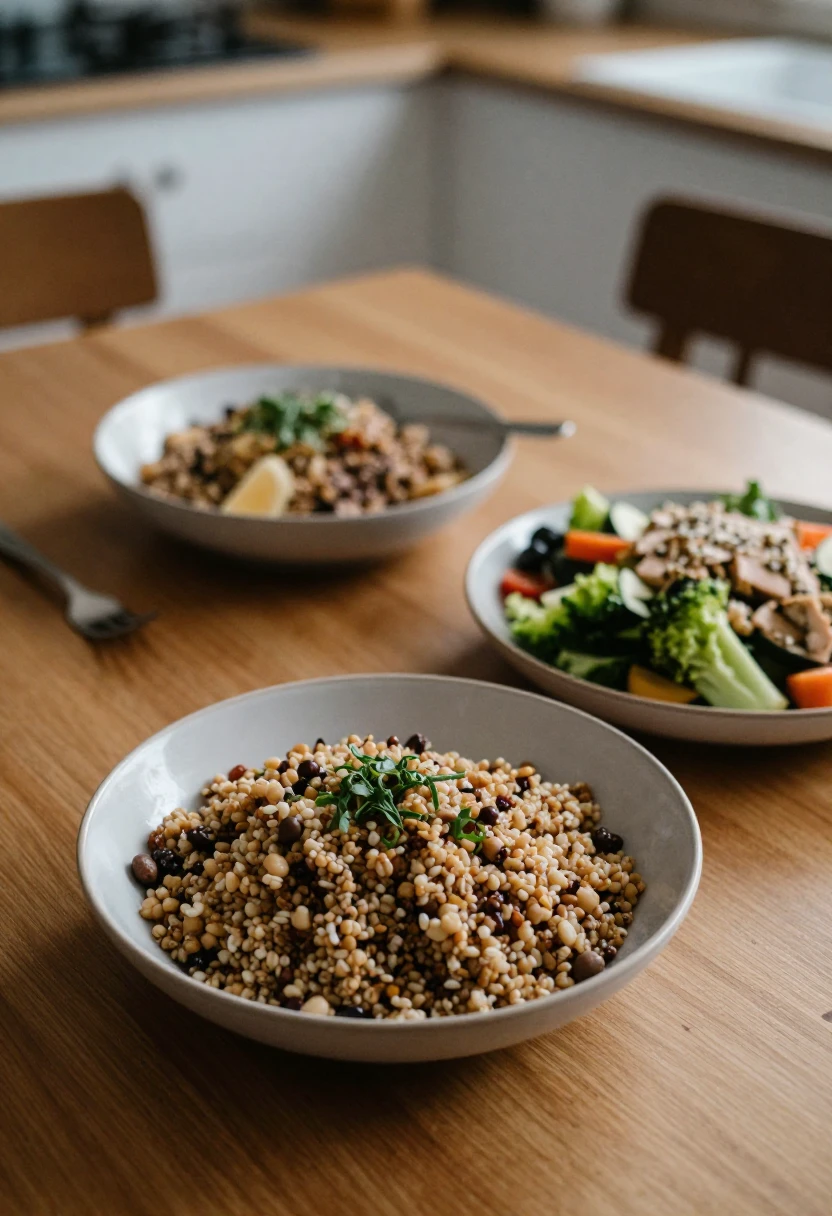
Your friend stops eating late-night snacks and feels amazing. You try the same thing and wake up hungry at midnight. Someone online swears by smoothies for breakfast. You make one, drink it, and feel like you had a snack pretending to be a meal.
Same advice. Different body. Different life.
That is why a healthy eating plan has to fit the person using it. Not the person selling it. Not the person posting before-and-after photos. You.
Your daily routine changes your food needs
Food needs change with your day.
A person who walks a lot, trains after work, carries heavy things, or spends hours on their feet will usually need more fuel than someone sitting at a desk most of the day. A parent chasing kids around after dinner may need a different rhythm than someone who eats quietly and goes straight to bed.
Even your own needs can change from one day to the next.
On a busy day with lots of movement, a light lunch may not be enough. On a slower day, the same lunch may feel perfectly fine. If you sleep badly, cravings can feel louder. If you skip breakfast, dinner may turn into a mini food emergency.
That is not weakness. That is your body responding to the day it had.
A healthy diet should have room for that.
Health goals are not all the same
People often talk about “eating healthy” as if everyone wants the same result.
But someone may be trying to lose weight. Someone else wants better energy. Another person wants fewer sugar crashes, better digestion, more muscle, steadier mood, or simply fewer chaotic food decisions during the week.
Those goals are not identical.
A person focused on muscle may need more protein and more overall food. Someone trying to support digestion may care more about fiber, meal timing, and which foods feel comfortable. Someone trying to reduce afternoon cravings may need a stronger breakfast or lunch, not another rule about avoiding sweets.
This is why one-size-fits-all diet advice often falls apart.
It sounds clean in theory. Then real life gets involved.
Your preferences matter more than perfect rules
A meal plan can be nutritionally perfect and still fail if you hate eating it.
I know that sounds obvious, but it gets ignored all the time. People force themselves into foods they do not enjoy because the foods are “clean,” “light,” or approved by whatever diet they are following that month.
But if you hate plain cottage cheese, eating it every morning is probably not your long-term answer. If you dislike kale, you do not need to build your identity around kale salads. If meal prep containers make you feel trapped by Wednesday, maybe you need flexible ingredients instead of fully cooked meals.
Healthy eating becomes easier when you stop treating preference like a problem.
You can build a good diet around foods you actually like:
- eggs, yogurt, oats, or toast for breakfast
- soups, bowls, salads, or leftovers for lunch
- pasta, potatoes, rice, beans, fish, chicken, tofu, or vegetables for dinner
- fruit, nuts, cheese, dark chocolate, or homemade snacks when you want something small
There is no prize for suffering through food you dislike.
The goal is to find meals that are nourishing enough, satisfying enough, and realistic enough to repeat. Because repetition is where healthy eating becomes a habit instead of a project.
A better way to think about healthy eating
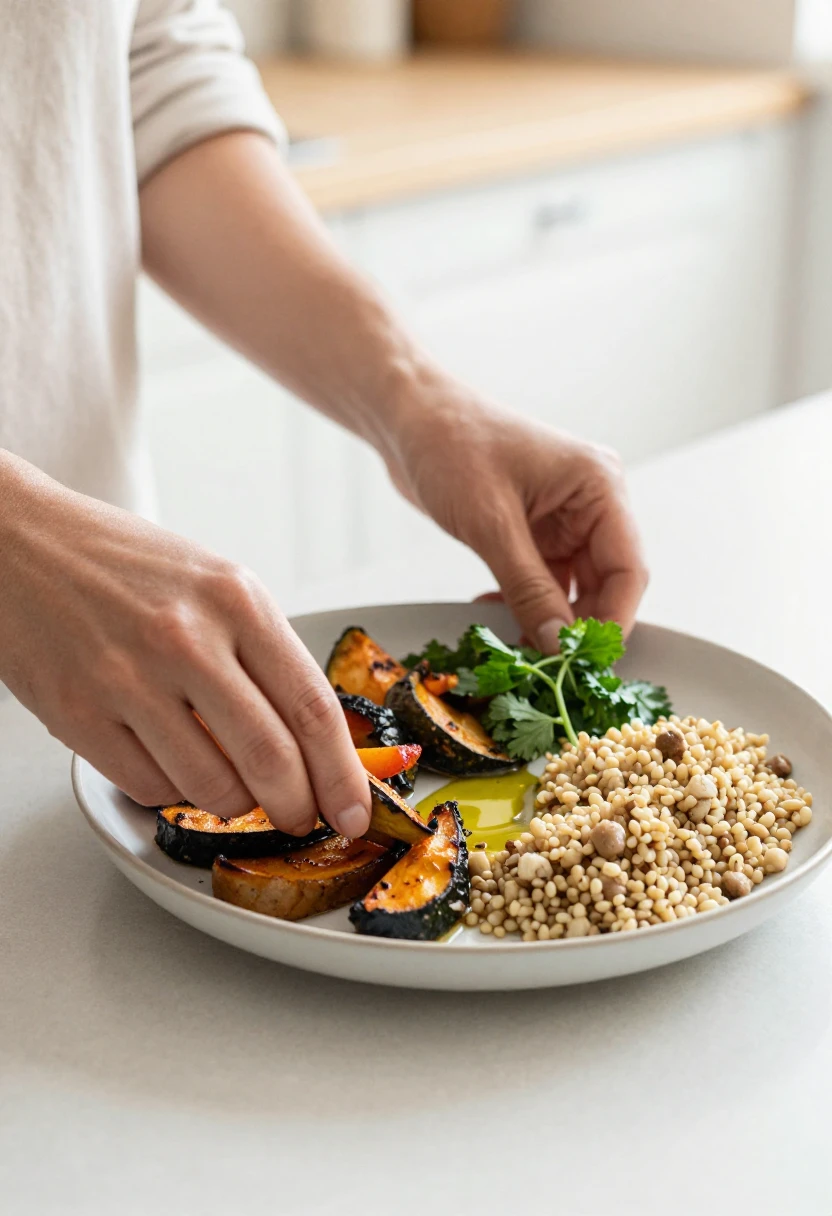
A better question than “How many calories is this?” is often “What is this meal doing for me?”
That does not mean you have to analyze every bite. Nobody wants dinner to feel like homework. But a small shift in thinking can make healthy eating feel much less tense.
Instead of looking at food as a set of numbers to control, look at your plate as something you are building. You are not just trying to make it smaller. You are trying to make it work better.
A good meal usually needs a few things: something filling, something fresh, something satisfying, and enough flavor that you actually want to eat it again.
That is not math. That is meal-building.
Build meals instead of chasing numbers
Most everyday meals become easier when you stop starting with calories and start with structure.
A simple plate can look like this:
- a protein source
- a fiber-rich carbohydrate
- vegetables or fruit
- a healthy fat
- something that makes it taste good
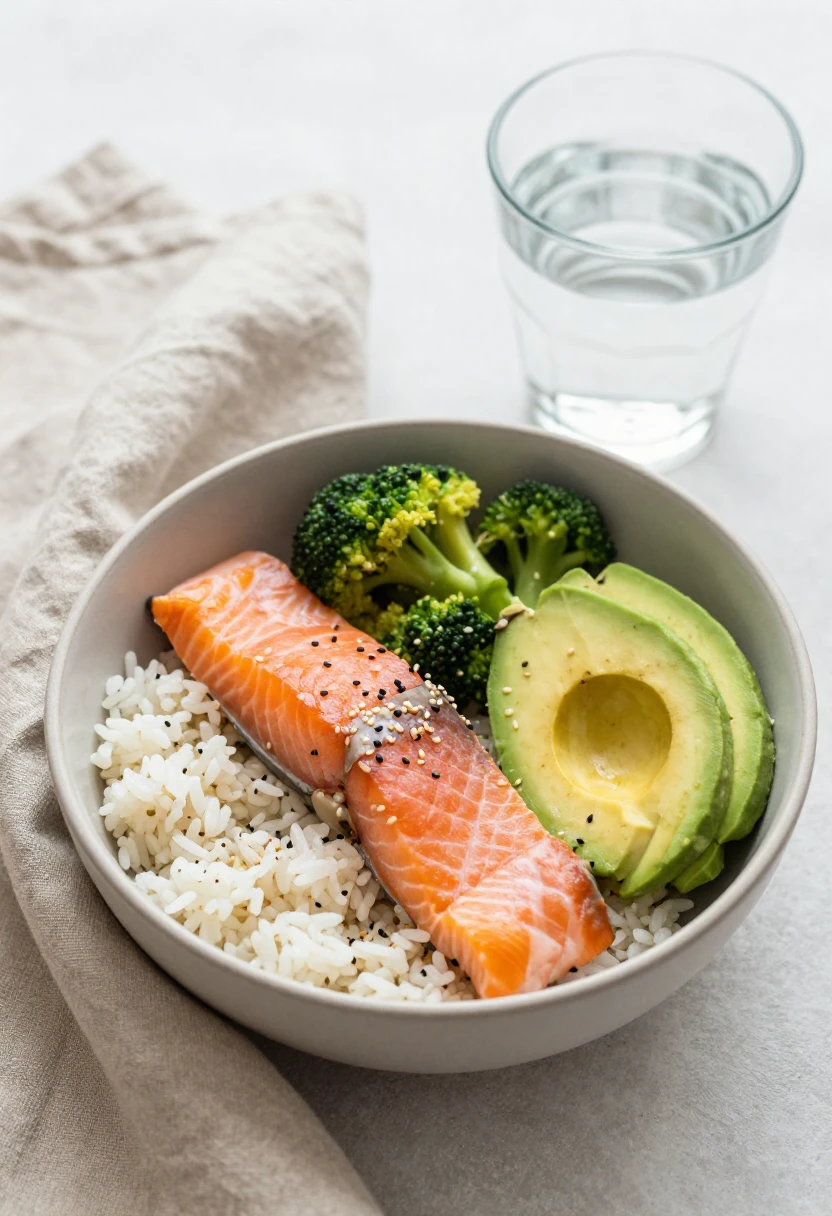
That might be eggs with toast, avocado, and tomatoes. Or rice with salmon, cucumber, edamame, and a quick soy-ginger sauce. Or lentil soup with olive oil, herbs, and a piece of bread on the side.
Nothing complicated. Just enough balance that the meal has a real job to do.
Protein helps with fullness. Fiber slows things down and supports digestion. Carbohydrates give energy. Fat adds flavor and satisfaction. Vegetables and fruit bring volume, texture, color, and micronutrients.
And flavor matters more than people admit.
A boring healthy meal is very easy to abandon. Add lemon juice, garlic, herbs, spices, yogurt sauce, pesto, salsa, mustard, tahini, or a good dressing, and suddenly the same basic ingredients feel like something you would choose on purpose.
That is the difference between “diet food” and food that supports you.
Pay attention to how food makes you feel
Your body gives you feedback all day.
Not in a dramatic way. Usually it is quiet. A little dip in energy. A heavy stomach. A headache after skipping lunch. A craving that shows up every afternoon around the same time. Hunger that returns too quickly after a meal.
It helps to notice patterns without turning them into another obsession.
After a meal, ask yourself:
- Did this keep me full?
- Did I feel steady or sleepy afterward?
- Was my digestion comfortable?
- Did I enjoy it?
- Would I eat this again?
- Did it make my next food choice easier or harder?
That last question is underrated.
A good breakfast does not just “fit your calories.” It helps you move through the morning without hunting for snacks every hour. A good lunch does not just look healthy. It helps you avoid that desperate late-afternoon feeling where anything sweet suddenly looks like a solution.
Healthy eating gets much easier when your meals support the next few hours of your life.
Use numbers as tools, not rules
Calories, protein targets, portion guides, and food labels can be useful. I do not think they need to be thrown away.
They can help you learn what is in your food. They can show you when a snack is more like a meal, or when a “healthy” product has less protein and more sugar than you expected. They can be helpful for people with specific goals.
But numbers should stay in their lane.
They are tools. Not judges.
If tracking makes you more aware and calmer, it may be useful for a while. If it makes you anxious, rigid, or disconnected from hunger, it may not be the right tool for you right now.
A calorie number can help you understand a meal. It should not decide whether you are allowed to enjoy it.
Because a healthy diet is not built from perfect daily totals. It is built from meals you can repeat, adjust, digest, and actually live with.
Simple habits that support your body chemistry
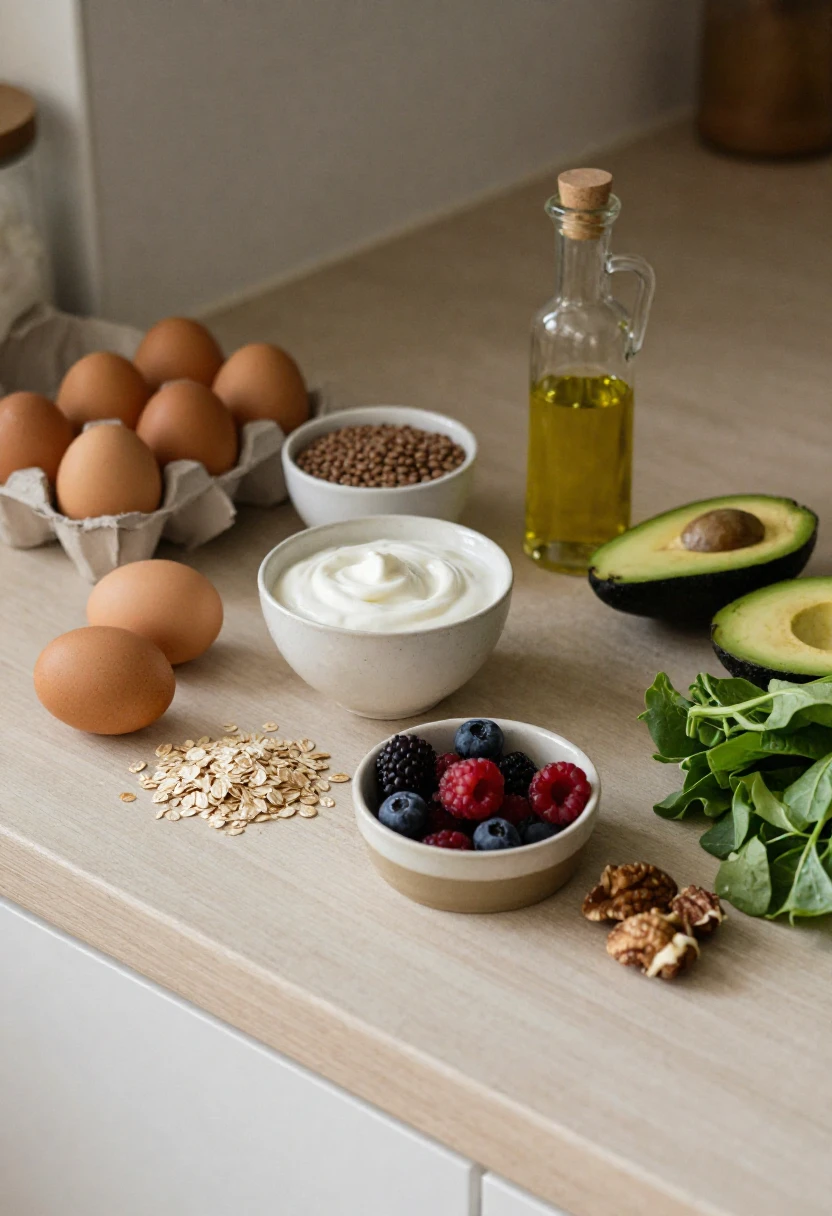
Healthy eating gets easier when the basics are strong.
Not perfect. Strong.
You do not need to rebuild your whole diet in one weekend or start making complicated bowls with twelve ingredients. Most people do better with small habits that make meals more filling, steady, and enjoyable. The kind of habits you can keep even when the fridge is not perfectly stocked.
The best ones are almost boring, which is usually a good sign.
Eat enough protein at most meals
Protein is one of the easiest places to start because it changes how a meal feels.
A breakfast with only toast and jam may taste good, but it often disappears quickly. Add eggs, Greek yogurt, cottage cheese, smoked salmon, tofu, or nut butter, and the same breakfast has more staying power.
Lunch works the same way. A vegetable soup can be lovely, but if it has no beans, lentils, chicken, fish, tofu, or yogurt on the side, it may not carry you very far. You finish the bowl, feel virtuous for twenty minutes, and then start looking for something crunchy.
Protein helps your body repair, maintain muscle, and feel satisfied after meals. It also gives the plate structure.
Simple protein options include:
- eggs
- Greek yogurt
- chicken or turkey
- fish
- tofu or tempeh
- beans and lentils
- cottage cheese
- lean beef
- hummus
- edamame
You do not need a huge portion every time. Just make sure the meal has a real protein source instead of hoping lettuce and good intentions will do the job.
Add fiber without overcomplicating meals
Fiber is not glamorous, but it is incredibly useful.
It helps meals feel more filling, supports digestion, and slows down how quickly some carbohydrates are absorbed. You usually notice the difference when you add it consistently, especially at breakfast and lunch.
The good news is that fiber does not require special products.
You can add it with normal food:
- oats with berries
- beans in soup
- lentils in a stew
- chickpeas in a salad
- apples with peanut butter
- vegetables in pasta
- avocado on toast
- brown rice or quinoa in a bowl
- chia seeds in yogurt
- roasted sweet potatoes with dinner
I like fiber most when it blends into food naturally. A handful of spinach in eggs. Lentils in tomato soup. Beans added to a rice bowl. Berries on yogurt. Nothing dramatic, just small upgrades that make the meal work better.
And if your body is not used to a lot of fiber, go slowly. Suddenly doubling your bean intake is a brave but not always peaceful choice.
Do not fear healthy fats
Fat has had a strange reputation for years. One decade it is the enemy. The next decade everyone is putting butter in coffee. Neither extreme is especially helpful.
Your body needs fat. Meals need fat too, at least if you want them to taste satisfying.
Olive oil on roasted vegetables. Avocado with eggs. Walnuts in oatmeal. Tahini in dressing. Salmon with rice and cucumber. A little cheese on a salad. These are not “bad” choices just because they add calories.
They often make the meal better.
Fat helps with the absorption of fat-soluble vitamins, and it makes food more enjoyable. It also slows the meal down a little, which can help you feel more satisfied.
The trick is not to fear fat or pour it over everything without thinking. Use it with purpose.
A salad with no fat can taste sharp and unfinished. Add olive oil, avocado, seeds, or a creamy yogurt dressing, and suddenly it feels like a real meal instead of a punishment.
Make digestion easier when life is stressful
Some days your body does not want a giant raw salad.
It wants soup. Rice. Eggs. Toast. Roasted vegetables. Something warm, simple, and easy to eat without a lot of effort.
That is not failure. That is listening.
When life is stressful, digestion can feel more sensitive. You may feel bloated more easily, crave quick foods, or struggle to recognize hunger until it becomes urgent. On those days, gentle meals can help.
Think:
- oatmeal with banana and yogurt
- rice with eggs and sautéed vegetables
- chicken soup
- baked potatoes with cottage cheese
- toast with avocado and egg
- lentil soup with olive oil
- pasta with vegetables and tuna
- warm bowls with grains, protein, and sauce
Also, slow down when you can. Even a few quieter minutes can change how a meal feels. Sit down. Put the food in a bowl. Chew like you are not trying to win a race.
I know that sounds almost too simple, but it matters.
Your body does not only react to what you eat. It also reacts to the state you are in while eating.
What to do instead of obsessing over calories
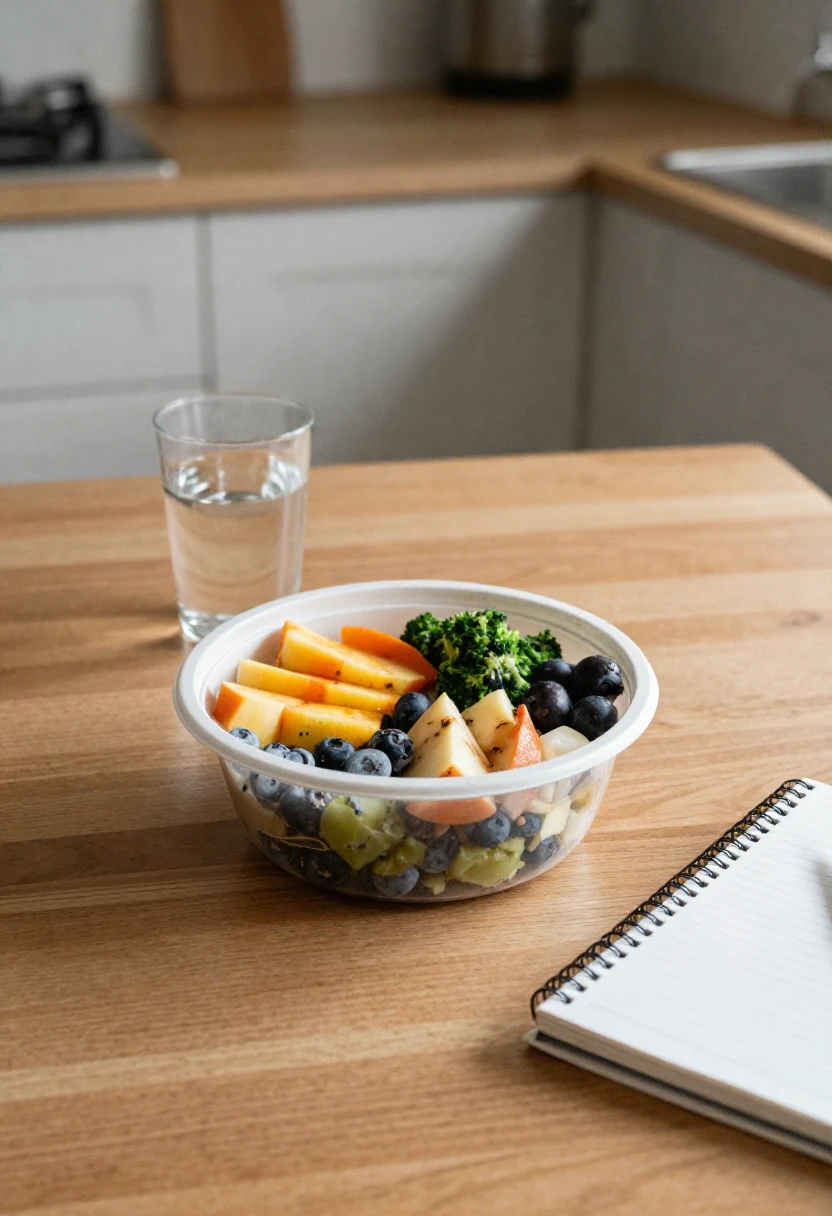
If calorie counting has helped you understand your habits, that is fine. There is nothing wrong with using numbers when they make food feel clearer.
But if counting makes every meal feel like a test, it may be time to step back.
Healthy eating should not require you to spend half your day negotiating with an app. At some point, you need a way of eating that works when your phone is not nearby, when dinner is homemade, when someone else cooked, or when you are simply tired and hungry.
The goal is not to ignore nutrition. The goal is to build trust with your meals again.
Start with one meal you can improve
Do not try to fix your whole diet at once. That usually turns into a dramatic Sunday plan and a very normal Wednesday collapse.
Start with one meal.
Breakfast is often the easiest place because small changes make a big difference. If your usual breakfast is coffee and something sweet, try adding protein. Greek yogurt with berries. Eggs with toast. Oatmeal with nuts. Cottage cheese with fruit. A smoothie with yogurt or protein, not just fruit and ice.
Lunch is another good place to start, especially if your afternoon energy always falls apart.
Instead of asking, “How can I make this lower in calories?” ask:
- Can I add protein?
- Can I add fiber?
- Can I add something fresh?
- Can I make it taste better so I actually enjoy it?
A sad desk salad becomes lunch when you add chicken, beans, eggs, tuna, avocado, chickpeas, lentils, seeds, or a real dressing. Soup becomes more filling with beans, rice, potatoes, chicken, or a piece of bread. Leftovers become a balanced meal when you add vegetables and a quick sauce.
One better meal can change the whole day.
Keep a loose food rhythm
Some people do well with three meals. Some prefer smaller meals with snacks. Some need breakfast right away. Others feel better eating later.
There is no perfect rhythm for everyone.
But having some kind of rhythm helps. It keeps hunger from turning into an emergency. It also makes cravings easier to understand because you can see patterns instead of reacting to every urge as if it appeared from nowhere.
A loose rhythm might look like:
- breakfast with protein
- lunch that is more than a snack
- a planned afternoon snack if dinner is late
- dinner that feels satisfying, not tiny
- something sweet sometimes, without turning it into a moral event
That last part matters.
If you constantly under-eat during the day, evening cravings can feel wild. Your body is not being dramatic. It is catching up.
A better rhythm gives your appetite fewer reasons to panic.
Notice patterns, not perfection
Healthy eating becomes more useful when you stop looking for one perfect rule and start noticing what repeats.
Maybe you always get hungry two hours after a smoothie. Maybe pasta feels better when you add chicken or lentils. Maybe raw vegetables bother your stomach, but roasted vegetables feel fine. Maybe skipping breakfast makes you snack all afternoon. Maybe a small piece of dark chocolate after dinner helps you feel satisfied, while banning sweets makes you think about them all night.
These details are not random. They are information.
You can learn a lot by paying attention to:
- which meals keep you full
- which foods feel heavy or uncomfortable
- what helps your energy stay steady
- when cravings usually show up
- whether you are sleeping enough
- how stress changes your appetite
- what meals you actually enjoy repeating
This kind of awareness is quieter than calorie counting, but it often lasts longer.
You are not trying to eat perfectly. You are trying to eat in a way that supports your real body, in your real life, with your real schedule.
That is where healthy eating finally starts to feel less like math and more like care.
Conclusion
Healthy eating becomes much easier when you stop treating your body like a calculator.
Calories can help. Labels can help. Tracking can help for a while too. But none of those things can fully explain hunger, energy, digestion, cravings, stress, sleep, hormones, or how satisfied you feel after a meal.
Your body is doing chemistry every time you eat.
That is why the best approach is usually simple and steady: build meals with enough protein, fiber, healthy fat, color, and flavor. Notice how food makes you feel. Keep what works. Adjust what does not. And do not let one number on a label decide whether a meal is “good” or “bad.”
Healthy eating should give you more trust in your body, not less.
FAQ
Is counting calories bad?
No, counting calories is not automatically bad. It can help you understand portions, eating habits, and the energy content of different foods. The problem starts when calories become the only thing you care about. A meal also needs to support your hunger, energy, digestion, and satisfaction.
Why do two people get different results from the same diet?
Because bodies are different. Metabolism, activity level, sleep, stress, hormones, digestion, age, muscle mass, and daily routine all affect how a person uses food. A diet that works well for one person may feel too restrictive, too heavy, or too hard to maintain for someone else.
Are nutrition labels always accurate?
Nutrition labels are useful, but they are still estimates. They can tell you what is in a food, but they cannot tell you exactly how your body will digest, absorb, and respond to it. Use labels as a guide, not as the full story.
What should I focus on instead of only calories?
Start with meal balance. Try to include protein, fiber-rich carbohydrates, vegetables or fruit, healthy fat, and enough flavor to make the meal enjoyable. Then pay attention to how you feel afterward: your fullness, energy, digestion, mood, and cravings.