You can care about healthy eating and still have days when dinner is a handful of crackers, two bites of cheese, and whatever is left in the fridge. Busy weeks do that. They make even simple food decisions feel heavier than they should.
That is why healthy eating for busy people has to be realistic. Not perfect. Not built around three hours of Sunday meal prep unless you genuinely enjoy that. Most people need something smaller: a few repeatable meals, a short grocery list, and backup foods that save you when the day gets away from you.
I think the biggest mistake is treating healthy eating like a personality change. You do not need to become the person with twelve glass containers lined up in the fridge. You just need enough structure so that, when you are tired and hungry, the easiest option is not always takeout or a random snack dinner.
A good busy-week food routine should feel almost boring in the best way. Eggs you can turn into breakfast or dinner. Rice that becomes a bowl. Frozen vegetables that rescue pasta. Greek yogurt that works as breakfast, sauce, or a quick snack. Nothing dramatic. Just food that is there when you need it.
And honestly, that is where healthy eating starts to work. Not when everything is clean, organized, and planned to the last bite. It works when your kitchen gives you a soft landing after a long day.
Why healthy eating feels harder when life is busy
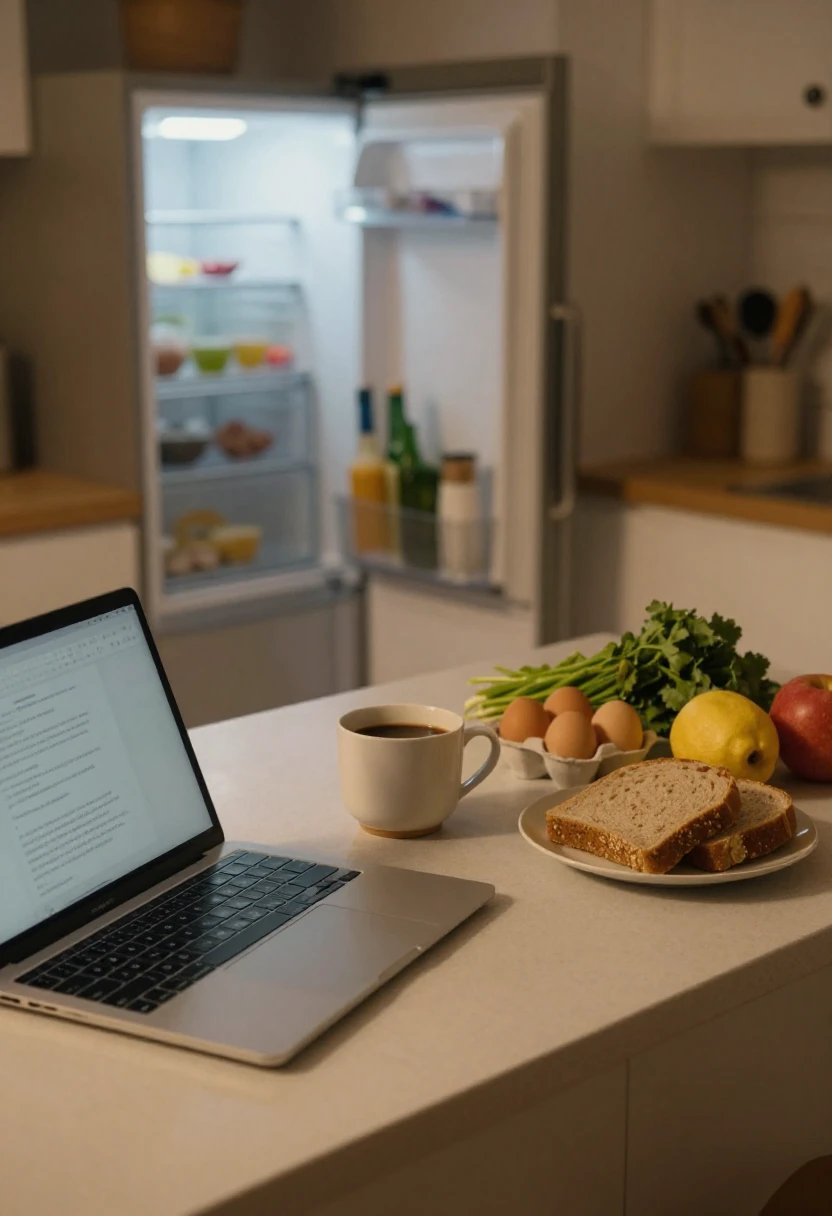
Healthy eating sounds simple until it is 7:40 p.m., your phone is still buzzing, someone needs an answer, and you realize you have not eaten a real meal since breakfast.
That is usually when the plan falls apart.
Not because you do not know vegetables are good for you. Not because you forgot that protein keeps you full. You know all that. The problem is that busy days shrink your patience. By the time you finally think about food, you want something fast, salty, comforting, and already made.
And that makes sense.
The problem is not lack of discipline
I do not love the way people talk about healthy eating as if it is mostly about discipline. Sometimes it is not discipline at all. Sometimes you are just tired.
A busy day creates the perfect setup for chaotic eating:
- You skip or rush breakfast.
- Lunch becomes whatever is closest.
- You drink coffee instead of eating something filling.
- You come home hungry enough to eat anything.
- Cooking feels like another task, not a break.
When that happens, your brain is not calmly choosing between salmon, roasted broccoli, and a drive-through meal. It is asking, “What can I eat right now?”
That is why the best healthy eating habits for busy people are the ones that reduce decision-making. You need fewer food choices, not more. A few easy defaults can do more for your week than a complicated plan you will never follow.
For example, if you always have eggs, whole-grain toast, Greek yogurt, frozen vegetables, canned beans, and rice at home, you already have several meals. They may not look impressive, but they work.
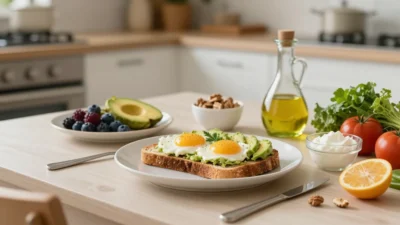
Scrambled eggs with toast.
Rice with beans and vegetables.
Greek yogurt with fruit and nuts.
A quick soup with frozen vegetables and lentils.
Simple food counts.
Convenience food wins when you have no backup
Convenience food is not just tempting because it tastes good. It is tempting because it asks almost nothing from you.
No chopping. No washing pans. No thinking.
That is hard to beat when your kitchen feels empty or your energy is gone. So instead of trying to “be stronger,” make your own healthy options more convenient.
Keep foods around that take five minutes or less:
- hummus and pita
- boiled eggs
- cottage cheese
- fruit
- nuts
- canned tuna or salmon
- microwave rice
- frozen vegetables
- pre-washed salad greens
- soup you can reheat
This is not glamorous, but it is the kind of food that saves you from getting too hungry and making a choice you did not really want.
One of my favorite lazy meals is a bowl with microwave rice, a fried egg, frozen vegetables, soy sauce, and a little sesame oil. It is not a recipe I would photograph for a cookbook. But it is warm, filling, and ready before I can talk myself into ordering delivery.
Build a small weekly food plan, not a perfect one
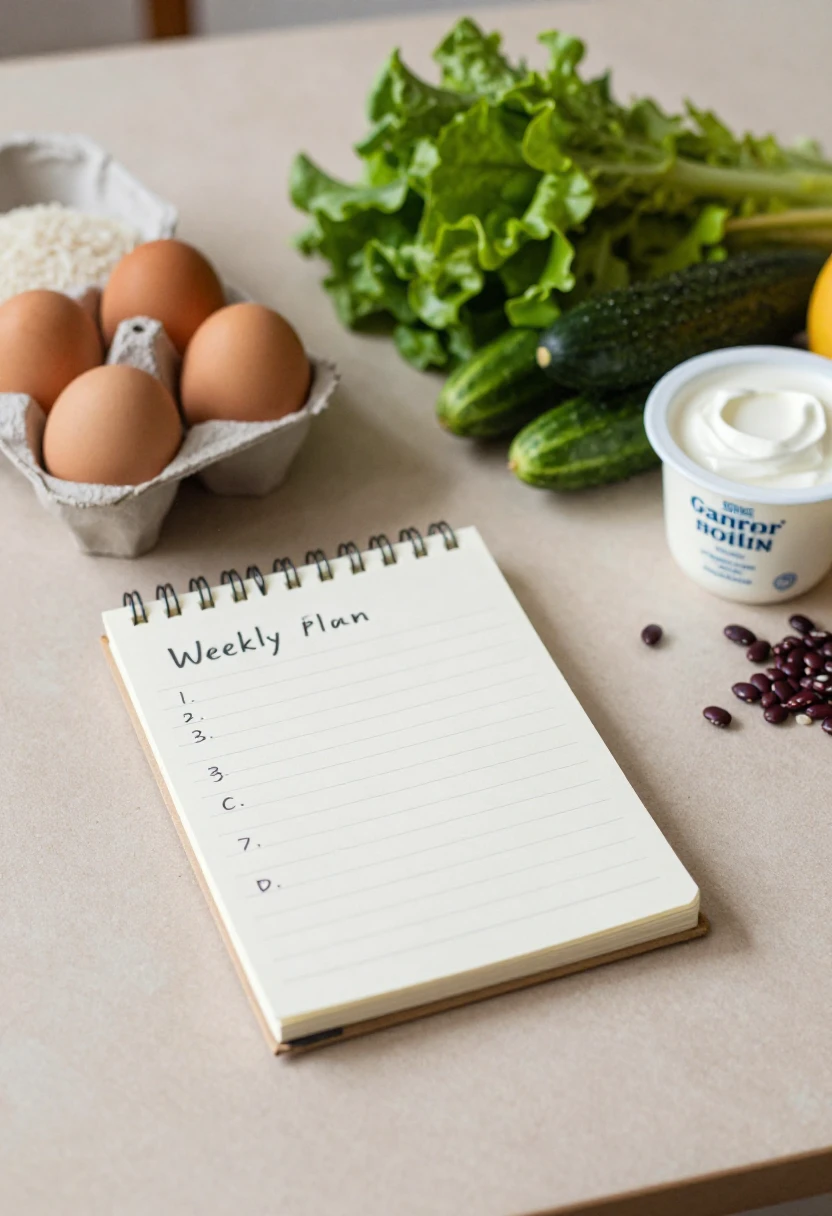
A perfect meal plan looks nice on paper. Monday: salmon and quinoa. Tuesday: turkey lettuce wraps. Wednesday: lentil soup with homemade stock. Thursday: something colorful with tahini.
Then real life happens.
You stay late at work. Someone eats the ingredients you needed. You forget to defrost the chicken. By Thursday, the plan feels like homework, and the takeout app starts looking very reasonable.
So I like a smaller plan.
Not “what will I eat every single day?”
More like: “What three things can I keep around so I do not panic when I am hungry?”
That shift makes healthy eating feel less fragile.
Choose 2–3 meals you can repeat
Busy people need repeatable meals. I know that sounds unexciting, but repeatable is useful. You should be able to make a few meals almost on autopilot, with ingredients you usually buy anyway.
Good repeat meals might be:
- scrambled eggs with toast and fruit
- chicken or bean rice bowls
- pasta with vegetables and tuna
- soup with lentils, frozen vegetables, and broth
- Greek yogurt with oats, berries, and nuts
- wraps with hummus, chicken, greens, and cucumber
Pick meals you actually like. That part matters. If you hate salad, do not build your whole plan around salad because it looks “healthy.” You will ignore it by Wednesday.
For healthy eating to work during busy weeks, the food has to feel like a relief, not a punishment.
I usually think in pairs: one breakfast I can repeat, one lunch or dinner I can throw together, and one emergency meal for nights when cooking feels impossible.
That is enough to start.
Use the same ingredients in different ways
One of the easiest tricks is buying ingredients that can move between meals.
Take a few basics:
- eggs
- cooked rice
- chicken or beans
- Greek yogurt
- cucumbers
- leafy greens
- frozen vegetables
- whole-grain wraps
That does not sound like much, but look what you can do with it.
You can make a rice bowl with chicken, vegetables, and yogurt sauce. You can turn the same chicken into a wrap with greens and cucumber. You can use eggs for breakfast, fried rice, or a quick dinner with toast. Greek yogurt can become breakfast with fruit or a creamy sauce with garlic, lemon, and salt.
This is the kind of cooking that saves time because you are not starting from zero every day.
And no, the meals will not all feel completely different. That is fine. They only need to feel different enough.
A sauce helps. A lot.
Lemon and garlic yogurt makes a bowl feel fresh. Soy sauce and sesame oil take rice in another direction. Salsa and avocado make eggs feel less boring. Even a spoonful of pesto can make leftover vegetables taste like you meant to cook them that way.
Leave room for messy days
A weekly food plan should include permission for messy days. Otherwise it breaks the first time your schedule changes.
Maybe you planned to cook, but you are too tired. Maybe lunch turns into a meeting. Maybe you eat pizza because that is what everyone ordered. Fine. One meal is just one meal.
The point is to have a way back.
A good busy-week plan might look like this:
- one cooked grain in the fridge
- one easy protein ready or quick to cook
- two vegetables you can use without much effort
- one sauce or dressing
- one backup freezer meal
- one snack that actually keeps you full
That is not a strict plan. It is a safety net.
When you have a safety net, healthy eating stops depending on having a perfect day. And honestly, that is much more useful.
Prep ingredients instead of cooking full meals
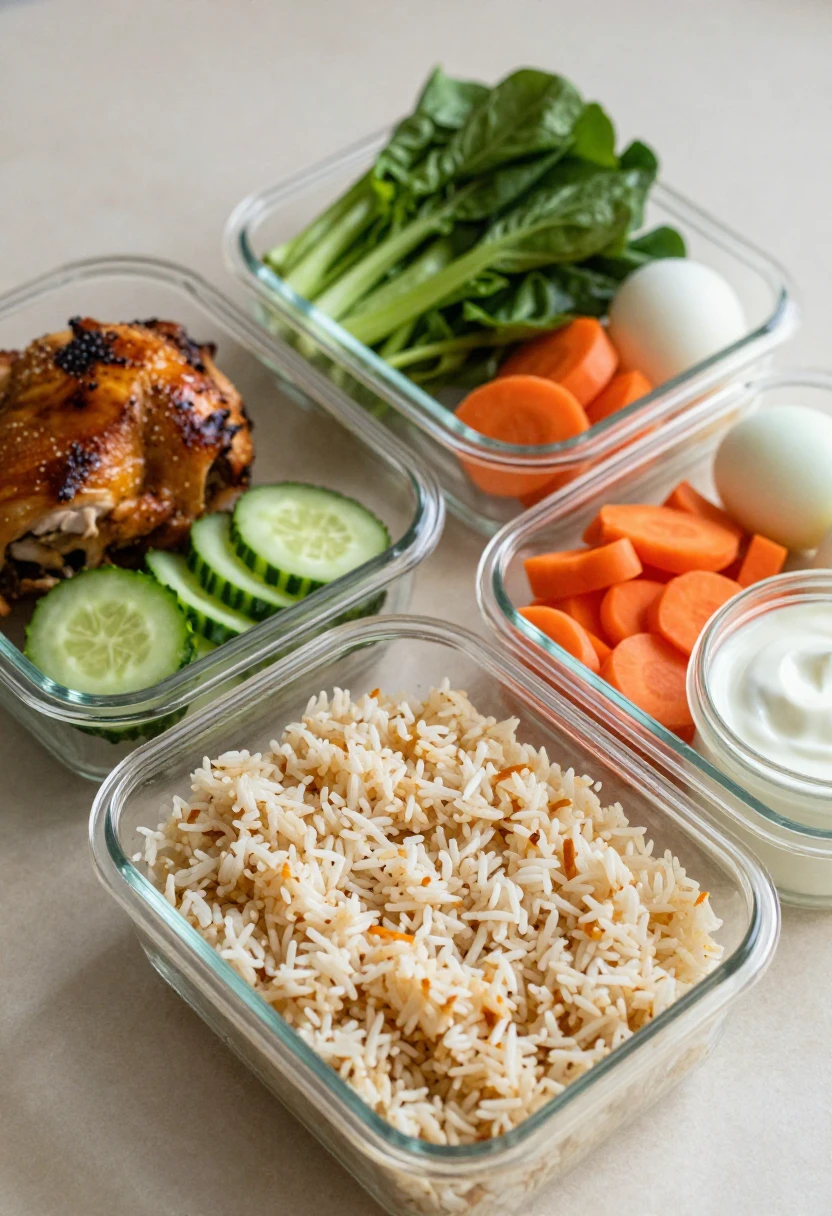
Meal prep gets a bad reputation because people picture a fridge full of identical containers. Chicken, broccoli, rice. Chicken, broccoli, rice. Chicken, broccoli, rice.
That works for some people. I respect it. I also know I would get bored by Tuesday.
A more flexible version is ingredient prep. You do not cook every meal ahead. You just prepare a few pieces that make meals faster later.
Think of it like giving your future tired self a head start.
Cook one protein ahead
Protein is usually the part that slows people down. Not because it is always difficult, but because it requires a little attention. You have to cook it safely, season it, and clean the pan afterward.
So if you can prepare one protein ahead, the rest of the week gets easier.
Good options:
- baked chicken thighs or chicken breast
- boiled eggs
- lentils
- chickpeas or beans
- turkey meatballs
- tofu
- canned tuna or salmon
- cottage cheese or Greek yogurt for no-cook meals
You do not need a complicated recipe. A tray of chicken with olive oil, salt, pepper, garlic powder, and paprika can become three different meals. Slice it for wraps. Add it to rice bowls. Serve it with vegetables and a quick sauce.
For plant-based meals, lentils are one of the easiest choices. They cook faster than most beans, keep well in the fridge, and work in soups, bowls, salads, and wraps. I like them because they do not demand much. Add salt, olive oil, lemon, and a little cumin, and they already taste like something.
Make one grain or starch
A cooked grain in the fridge can save dinner.
Rice is the obvious one, but it is not the only option. You can also use:
- quinoa
- couscous
- bulgur
- pasta
- roasted potatoes
- sweet potatoes
- farro
- whole-grain bread or wraps
I like rice because it is quiet. It does not fight with other flavors. You can take it in a dozen directions depending on what you add: eggs and soy sauce, beans and salsa, chicken and yogurt sauce, tuna and cucumber, roasted vegetables and feta.
Potatoes are another good one. Roast a tray, keep them in the fridge, then reheat them in a pan until the edges crisp again. Add eggs and greens, and suddenly it looks like you cooked a proper meal.
The trick is not to make the grain perfect. It just needs to be ready.
Wash and cut a few vegetables
Vegetables are often where good intentions go to die.
You buy them. You imagine yourself making fresh salads and colorful dinners. Then the week gets busy, the vegetables sit in the drawer, and by Friday the cucumber has become suspicious.
Washing and cutting a few things early helps.
Not everything. Just the vegetables you are most likely to use:
- cucumbers
- bell peppers
- carrots
- lettuce or salad greens
- broccoli
- zucchini
- cabbage
- cherry tomatoes
Keep them visible if you can. A container of sliced cucumbers and carrots at eye level gets eaten faster than a forgotten bag at the bottom of the fridge.
And if chopping feels like too much, buy shortcuts without guilt. Pre-washed greens, frozen vegetables, shredded cabbage, baby carrots, and steam-in-bag vegetables all count. Healthy eating does not become less real because someone else washed the spinach.
Make one sauce that makes everything better
This is the part people skip, but sauce is what keeps simple food from feeling sad.
A basic bowl of rice, chicken, and vegetables is fine. Add a good sauce, and it becomes something you might actually want to eat.
A few easy ones:
- Greek yogurt with lemon, garlic, salt, and black pepper
- olive oil, lemon juice, mustard, and honey
- soy sauce, sesame oil, and a little rice vinegar
- tahini with lemon, water, garlic, and salt
- salsa with Greek yogurt or avocado
- pesto thinned with olive oil or yogurt
You can keep it very simple. Even hummus loosened with a spoonful of water and lemon juice turns into a creamy dressing.
When your week is busy, flavor matters more than people admit. If the “healthy” food tastes flat, you will not keep choosing it. Make the sauce. It earns its place.
Keep healthy emergency foods at home
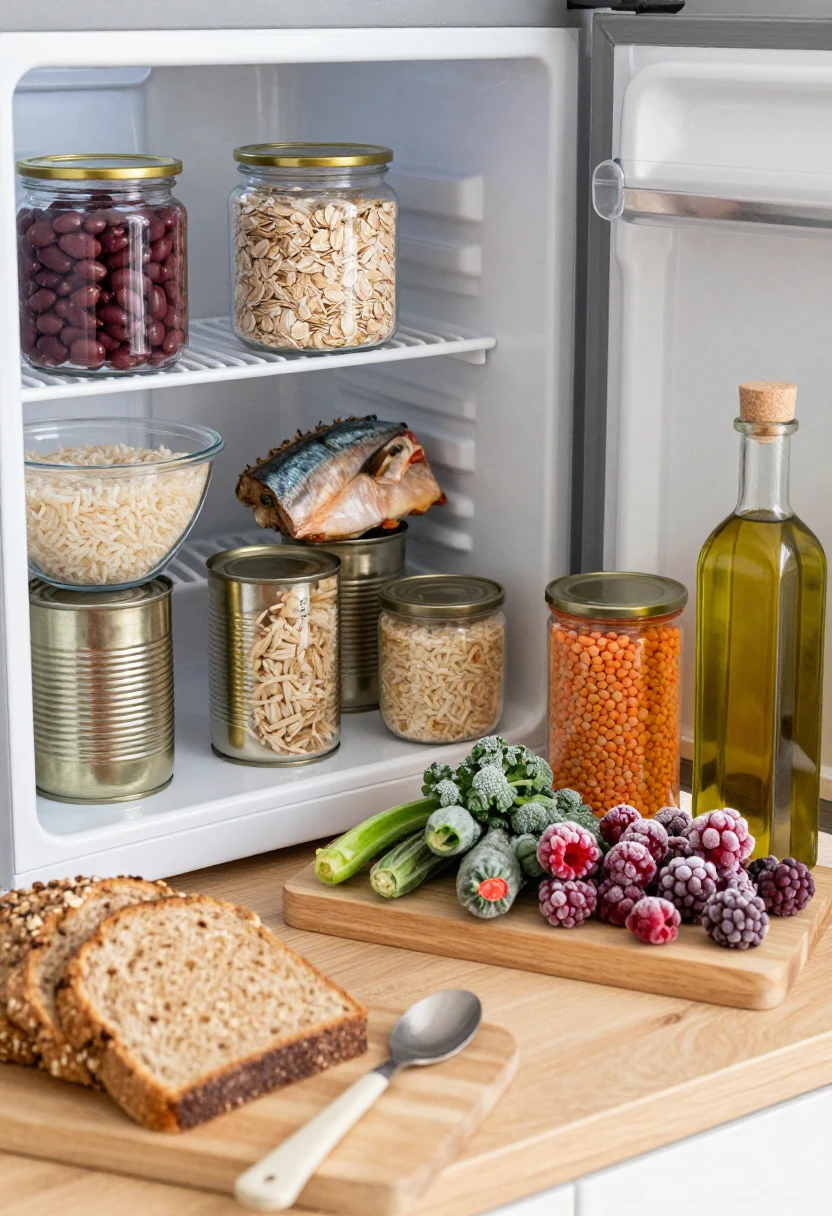
There are weeks when your best meal plan is not a meal plan at all. It is a shelf, a freezer drawer, and a few fridge staples that can turn into food when you have no energy left.
I call these emergency foods. Not because anything dramatic is happening, but because they stop the small daily emergency of being hungry with no idea what to eat.
This is where healthy eating for busy people becomes much easier. You do not need a perfect fridge. You need enough backup ingredients to make one decent meal without going to the store.
Pantry foods that save dinner
A good pantry is not about having fancy ingredients. It is about having foods that can sit there quietly until you need them.
Useful pantry staples include:
- canned beans or chickpeas
- canned tuna, salmon, or sardines
- canned tomatoes
- lentils
- rice
- oats
- pasta
- quinoa or couscous
- whole-grain crackers
- nut butter
- nuts and seeds
- olive oil
- vinegar
- broth or bouillon
- simple spices
With just canned beans, rice, olive oil, vinegar, and spices, you can make a quick bowl. Add canned tomatoes and lentils, and you have soup. Add tuna, pasta, olive oil, lemon, and black pepper, and dinner is suddenly possible.
It may not be the kind of dinner you planned in your head at the beginning of the week. That is fine. A warm, balanced, simple meal still counts.
One of the easiest pantry meals is chickpeas with rice. Warm the chickpeas in a pan with olive oil, garlic, paprika, and a splash of water. Add rice, then finish with yogurt, lemon, or whatever sauce you have. It takes less effort than waiting for delivery.
Freezer foods that still feel fresh
The freezer is underrated. People treat it like a place where food goes to be forgotten, but it can make busy-week cooking much easier.
Keep a few things that cook quickly:
- frozen vegetables
- frozen berries
- frozen fish
- chicken breasts or thighs
- shrimp
- whole-grain bread
- tortillas
- soups or stews
- homemade muffins
- cooked rice or grains
Frozen vegetables are especially useful because they are already washed, cut, and ready. You can add them to pasta, fried rice, soup, omelets, or a quick curry.
I always like having frozen peas or spinach around. Peas can make pasta feel less empty. Spinach disappears into eggs, soups, and sauces without much effort. It is not exciting, but it works.
Frozen berries are good for breakfast. Add them to oatmeal while it cooks, or warm them in a small pan until they turn soft and jammy. Spoon them over Greek yogurt with nuts, and it feels like you tried harder than you did.
Fridge staples for quick meals
Your fridge should have a few foods that do not need a full recipe.
Good options:
- eggs
- Greek yogurt
- cottage cheese
- hummus
- cheese
- pre-washed greens
- cucumbers
- carrots
- cooked grains
- leftover roasted vegetables
- salsa
- pesto
- tortillas
- fruit
Eggs are probably the most useful. They can become breakfast, lunch, or dinner in ten minutes. Scramble them with spinach. Fry one over rice. Boil a few and keep them for snacks or quick lunches.
Greek yogurt is another quiet hero. It works as breakfast with fruit and oats, but it also becomes sauce. Add garlic, lemon, salt, and pepper, and suddenly plain chicken, potatoes, or vegetables taste much better.
Hummus does the same kind of work. Spread it in a wrap, use it as dip, or thin it with water and lemon for a fast dressing.
The goal is to open the fridge and see possibilities, not a bunch of ingredients that each require a separate cooking project.
Make one “nothing in the house” meal list
This sounds almost too simple, but it helps: write down three meals you can make when you think there is nothing to eat.
For example:
- eggs on toast with fruit
- rice with beans, frozen vegetables, and salsa
- pasta with tuna, peas, olive oil, and lemon
- Greek yogurt with oats, berries, and nuts
- hummus wrap with cucumber, carrots, and cheese
- lentil soup with canned tomatoes and frozen spinach
Keep the list on your phone or inside a kitchen cabinet. When you are tired, you do not want to invent dinner. You want someone, even past-you, to tell you what works.
That is the whole point of emergency foods. They make healthy eating less dependent on mood, energy, and a perfectly planned week.
Make breakfast almost automatic
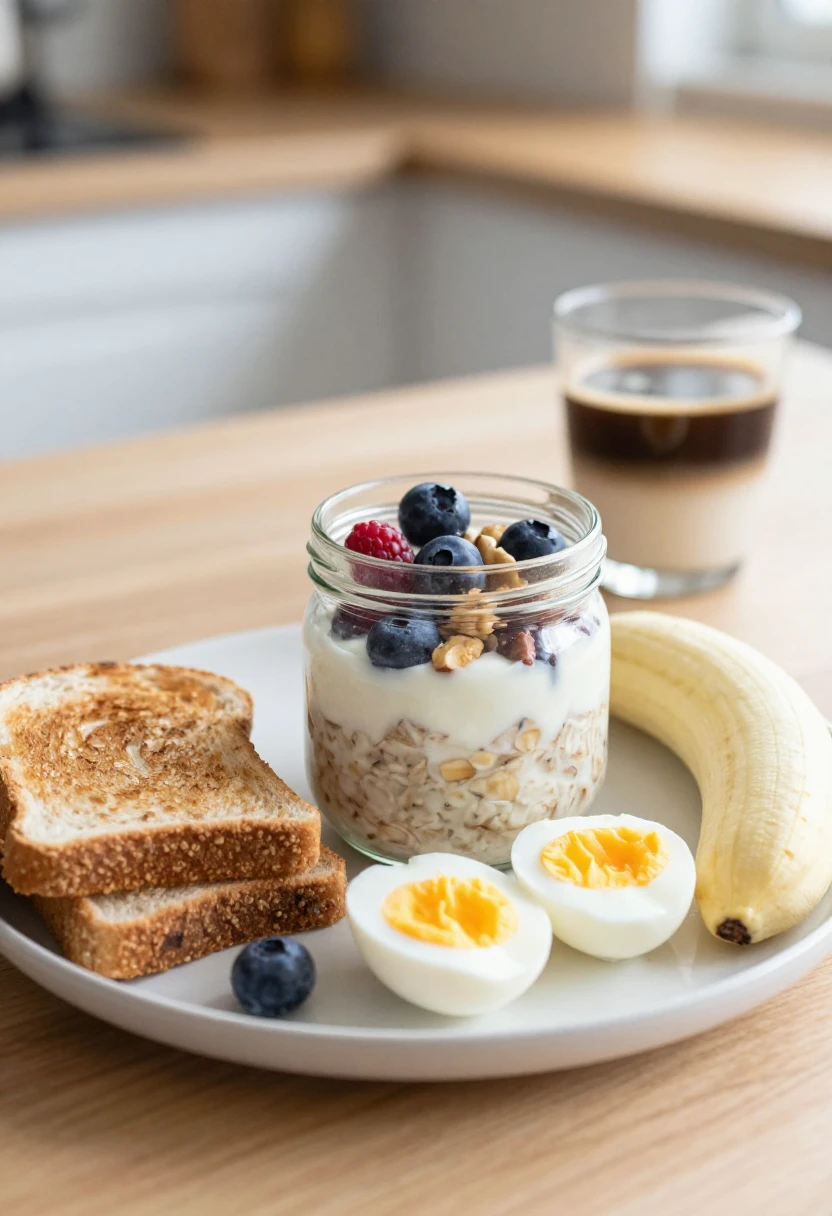
Breakfast is one of those meals that sounds easy until the morning actually starts.
You wake up late. The coffee takes priority. Someone sends a message before your brain is fully online. Suddenly it is almost noon, and you are running on caffeine and good intentions.
That is why breakfast should be the least creative meal of the day.
I do not mean boring in a sad way. I mean predictable. Easy. Something you can make without opening five cabinets and asking yourself what kind of person you want to be today.
Overnight oats, yogurt bowls, and eggs
The best busy-morning breakfasts usually have three things going for them: they are fast, filling, and easy to repeat.
Overnight oats are useful because you make them before the morning chaos begins. Add oats, milk or yogurt, fruit, and maybe chia seeds or nut butter. Put it in the fridge. By morning, breakfast is already waiting.
A basic version:
- oats
- Greek yogurt or milk
- berries or banana
- chia seeds or ground flaxseed
- a spoonful of peanut butter
- cinnamon
You can eat it cold or warm it up. I like adding frozen berries the night before because they soften into the oats and make everything taste a little brighter.
Greek yogurt bowls are even faster. Add fruit, oats or granola, nuts, and a drizzle of honey if you want it sweeter. The protein helps keep you full, and the texture feels more satisfying than grabbing a plain piece of toast on the way out.
Eggs are the other reliable option. Scrambled, boiled, fried, folded into a wrap, or eaten on toast. If mornings are rushed, boil a few eggs ahead and keep them in the fridge. Pair them with fruit, toast, or vegetables, and breakfast stops being a project.
What to grab when you are already late
Some mornings will not allow breakfast. Not the sit-down kind, anyway.
That is when grab-and-go food helps. The goal is not to create the world’s most balanced breakfast in thirty seconds. The goal is to avoid running on nothing.
Good options:
- banana with peanut butter
- Greek yogurt cup
- boiled eggs
- apple and nuts
- cottage cheese with fruit
- whole-grain toast with avocado or hummus
- smoothie with yogurt, berries, and oats
- cheese with whole-grain crackers
- homemade muffin with nuts or oats
A smoothie can be useful if you genuinely like drinking breakfast. Keep it simple: yogurt, frozen berries, banana, oats, and milk. You do not need ten powders and a blender that sounds like construction work at 7 a.m.
And if all you can manage is an apple and a handful of nuts, take it. That is still better than pretending you are fine until you are wildly hungry later.
Why skipping breakfast can backfire
Some people feel good skipping breakfast. If that works for you and your energy stays steady, fine.
But for many busy people, skipping breakfast is not really a plan. It is just what happens when the morning gets crowded.
Then lunch comes late. Hunger gets sharper. By afternoon, snacks start looking less like a choice and more like survival. You grab whatever is nearby, and dinner becomes harder to control because you are already running on empty.
A small breakfast can soften the whole day.
It does not have to be big. It can be yogurt with berries, toast with eggs, oatmeal with nuts, or a smoothie you drink while answering messages. What matters is that it gives your body something steady to work with.
Healthy eating gets much easier when you are not trying to make every food decision from a place of emergency hunger.
Eat better at work, on errands, and away from home
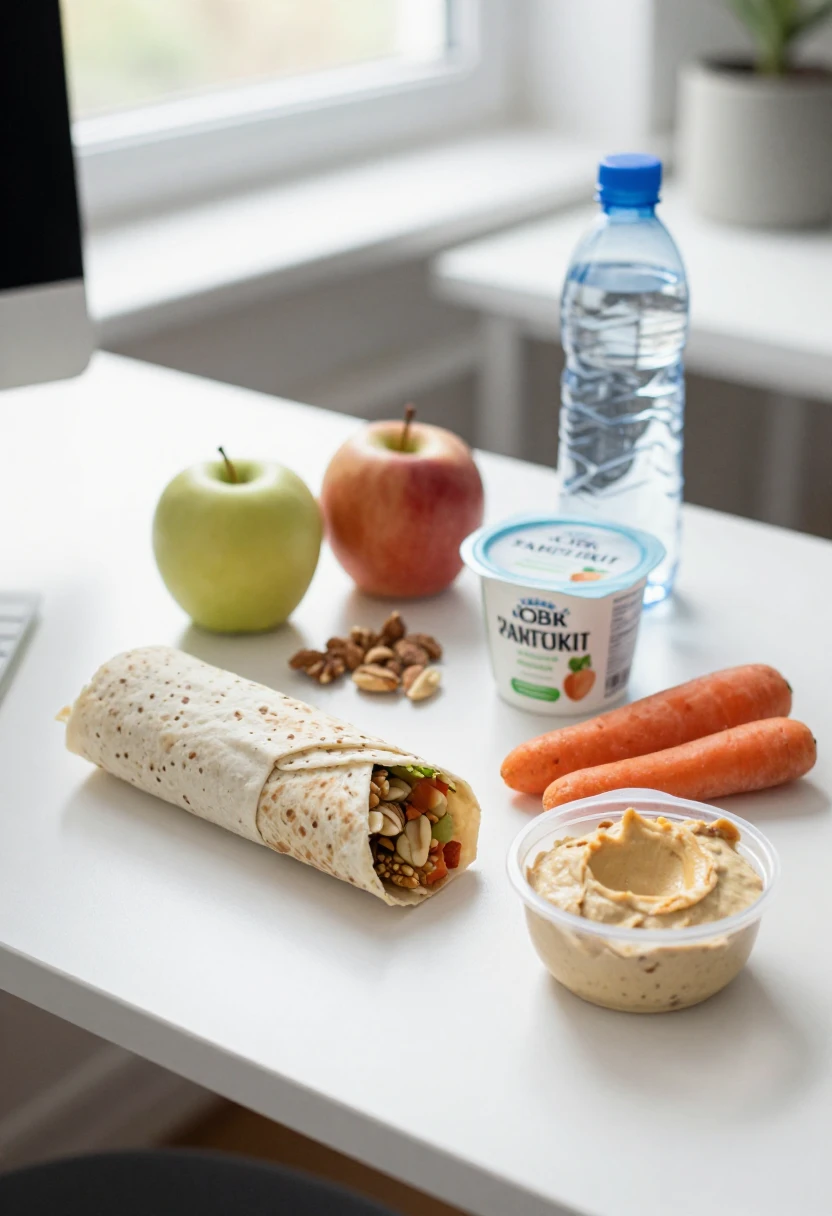
Busy eating does not only happen in your kitchen.
It happens in the car, at your desk, between meetings, while running errands, or standing in a grocery store trying to decide whether a bag of chips counts as lunch because technically potatoes are vegetables.
This is where a lot of healthy eating advice gets unrealistic. It assumes you are always home, always near your own fridge, and always able to cook something fresh.
Most people are not.
So the goal is not to avoid every café, restaurant, gas station, or takeout meal. The goal is to make better choices without turning food into a full-time job.
Pack one small thing, not a full lunchbox
Packing a beautiful lunch every day is great if you can do it. But if that feels like too much, pack one small thing instead.
One small thing can stop you from getting too hungry.
It could be:
- an apple and a handful of nuts
- Greek yogurt
- boiled eggs
- a banana with peanut butter
- cottage cheese
- hummus with carrots or crackers
- a simple turkey or hummus wrap
- a protein bar you actually like
- roasted chickpeas
- cheese and whole-grain crackers
This does not need to replace lunch. It just gives you a buffer.
I think of it as the “bridge food.” Something that gets you from one real meal to the next without turning you into the kind of hungry where everything sounds good and nothing feels satisfying.
A small snack in your bag can save you from buying something random just because it is nearby.
Read menus before you are starving
Restaurant and takeout choices get harder when you are already too hungry.
If you know you will be eating out, check the menu earlier in the day if you can. It takes two minutes, but it makes the choice calmer. You can decide before your brain is yelling for fries, extra sauce, and the biggest thing on the menu.
Look for meals that have some kind of balance:
- protein
- vegetables or fruit
- a filling carb
- sauce or fat that makes it satisfying
That might be a grilled chicken bowl with rice and vegetables. It might be sushi with edamame. It might be a soup and sandwich. It might be a salad with salmon, beans, eggs, cheese, or chicken, not just leaves and regret.
The important part is choosing something that will actually feed you.
A plain side salad is not always the “healthy” choice if you are hungry and need energy. Sometimes the better choice is the bowl with rice, protein, vegetables, and dressing because it keeps you full and stops the snack spiral later.
Better takeout choices for busy nights
Takeout is not automatically a failure. It depends what you order, how often it happens, and whether it leaves you feeling good afterward.
Some easier takeout options:
- Mediterranean plates with chicken, hummus, salad, and rice
- sushi with miso soup or edamame
- burrito bowls with beans, vegetables, salsa, and protein
- grilled fish or chicken with potatoes and salad
- pho or broth-based soups
- Thai or stir-fry dishes with vegetables and protein
- salads with real toppings, not just greens
- omelets or egg-based meals from cafés
- rotisserie chicken with a bagged salad from the grocery store
You can also adjust what you order without making it complicated.
Ask for sauce on the side if restaurants usually drown the food. Add extra vegetables. Choose grilled when fried does not matter to you. Get rice or potatoes if you need something filling. Skip the giant sugary drink if you do not really want it.
But also, if you want the fries, get the fries and move on.
Healthy eating for busy people is not about making the cleanest possible choice every time. It is about having enough better choices in the week that one takeout meal does not carry so much emotional weight.
Use grocery stores like fast-food backup
A grocery store can be the easiest “healthy fast food” option if you know what to grab.
Quick combinations:
- rotisserie chicken + salad kit + whole-grain bread
- hummus + pita + cucumbers + cherry tomatoes
- Greek yogurt + berries + granola
- tuna pouch + crackers + fruit
- pre-made soup + side salad
- cottage cheese + fruit + nuts
- boiled eggs + vegetables + hummus
- smoked salmon + whole-grain toast + cucumber
This is especially helpful when you are traveling, working late, or too tired to cook but still want something that feels decent.
You do not have to make everything from scratch for it to count. Sometimes dinner is just assembling food that someone else already washed, cooked, sliced, or packed.
That still counts as taking care of yourself.
Simple meal formulas for busy people
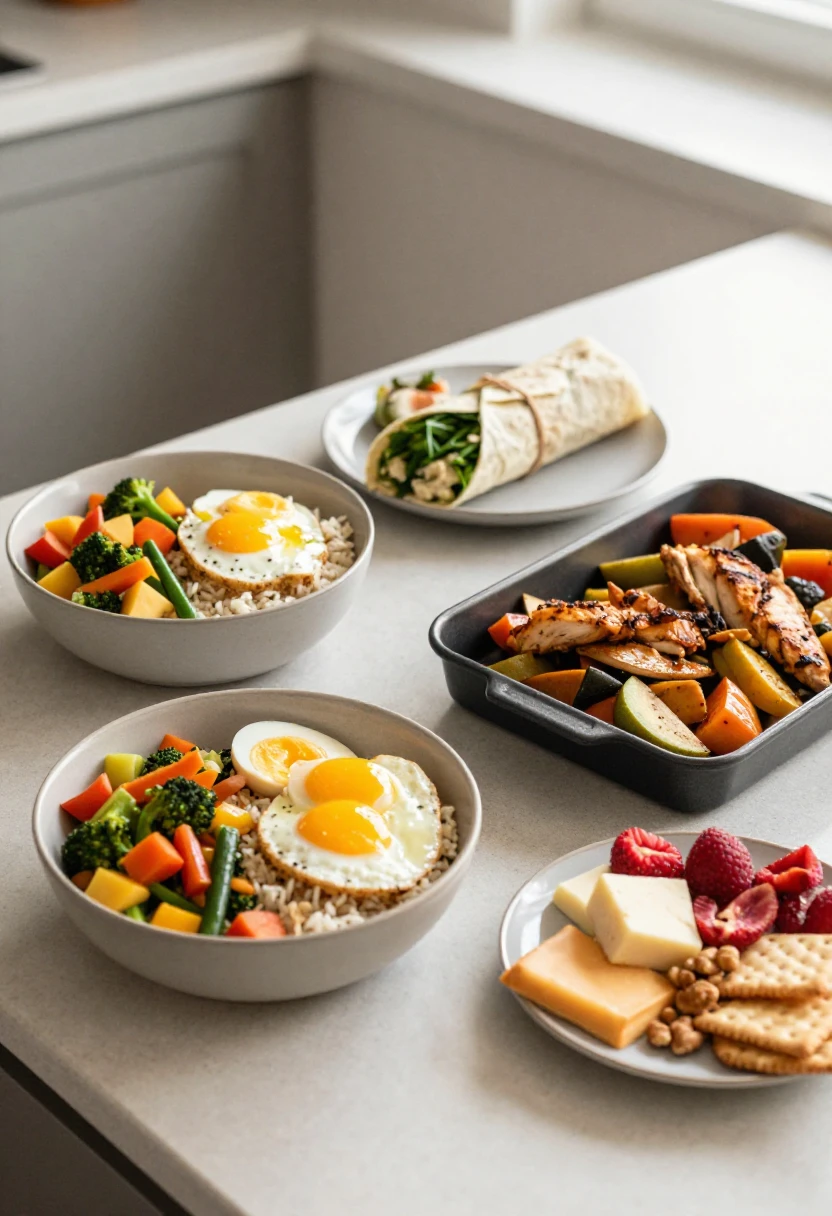
Recipes are helpful, but formulas are faster.
A recipe asks you to check ingredients, follow steps, measure things, and hope you remembered everything at the store. A formula is looser. It gives you a shape for the meal, and you fill it with whatever you have.
That is exactly what busy weeks need.
Once you know a few basic meal formulas, you can stop asking, “What should I cook?” and start asking, “What do I have that fits?”
Much easier.
The bowl formula
A bowl is probably the most forgiving healthy meal. It can be warm or cold, fresh or leftover-based, planned or thrown together in ten minutes.
Use this simple formula:
grain or starch + protein + vegetables + sauce
That might look like:
- rice + chicken + cucumber + yogurt garlic sauce
- quinoa + chickpeas + roasted vegetables + tahini dressing
- potatoes + eggs + spinach + salsa
- couscous + tuna + tomatoes + olive oil and lemon
- rice + tofu + frozen vegetables + soy-sesame sauce
The sauce is what makes it feel like a meal instead of a pile of leftovers.
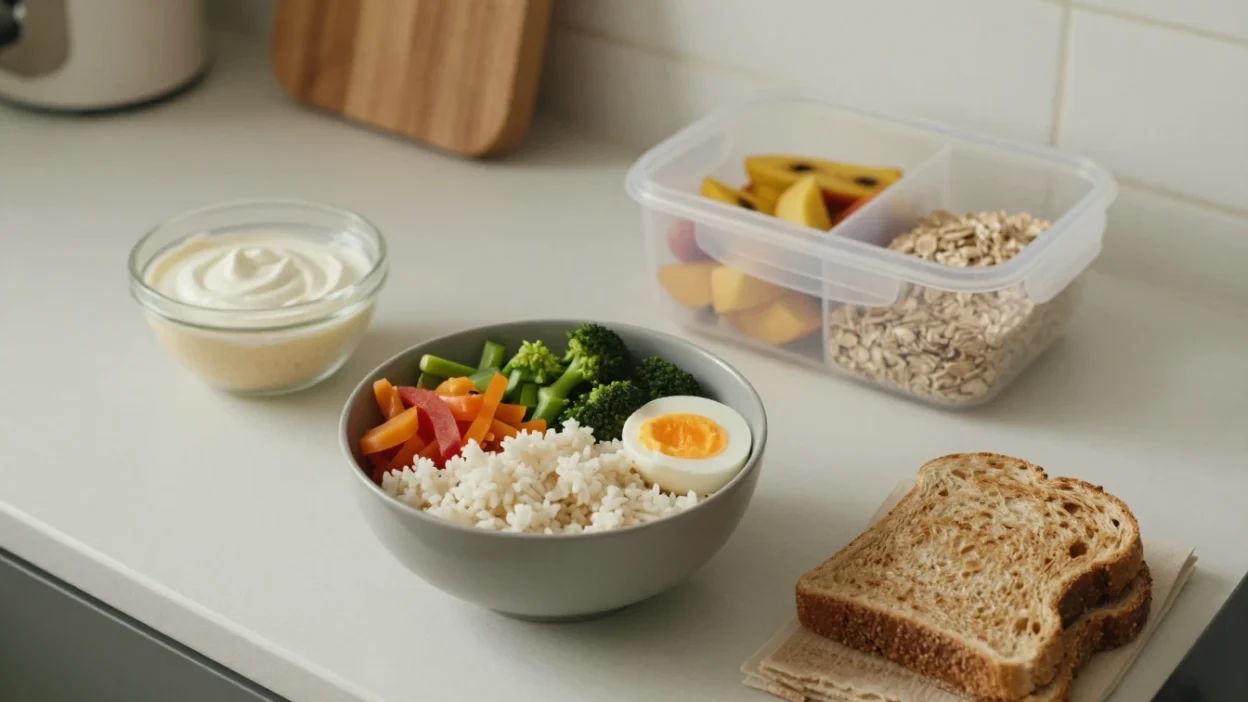
If I have cooked rice in the fridge, I can usually make some kind of bowl without thinking too hard. Add beans, frozen vegetables, a fried egg, and something salty or creamy on top. It is quick, filling, and much better than picking at random snacks while standing in the kitchen.
Bowls also work well for lunch because they pack easily. Just keep the sauce separate if you do not want everything getting soft by noon.
The wrap formula
Wraps are perfect when you want something fast but do not want another salad.
Use this formula:
wrap + spread + protein + crunch + something fresh
A few easy combinations:
- whole-grain tortilla + hummus + chicken + cucumber + greens
- tortilla + Greek yogurt sauce + eggs + cabbage + tomato
- pita + tuna + avocado + lettuce + pickles
- tortilla + beans + cheese + salsa + shredded cabbage
- flatbread + turkey + hummus + carrots + spinach
The spread matters. Hummus, avocado, Greek yogurt sauce, pesto, or cream cheese helps hold everything together and makes the wrap taste less dry.
Crunch helps too. Cucumber, cabbage, bell pepper, carrots, or pickles make a simple wrap feel fresher.
This is also a good way to use small leftovers. One piece of chicken is not enough for a full dinner, but it is enough for a wrap. A spoonful of beans, a little cheese, half a cucumber, some greens. Done.
The sheet-pan formula
Sheet-pan meals are for nights when you want real food but do not want to babysit the stove.
The formula is simple:
protein + vegetables + oil + seasoning + oven
Good combinations:
- chicken thighs + potatoes + carrots + garlic and paprika
- salmon + broccoli + sweet potatoes + lemon and olive oil
- tofu + bell peppers + zucchini + soy sauce and sesame oil
- sausage + cabbage + potatoes + mustard and black pepper
- chickpeas + cauliflower + carrots + cumin and olive oil
The trick is cutting ingredients so they cook at about the same speed. Hard vegetables like potatoes and carrots need smaller pieces or a head start. Softer vegetables like zucchini, bell pepper, and broccoli cook faster.
And do not crowd the pan too much. If everything is piled up, it steams instead of browning. Browning is where the flavor is.
A sheet-pan dinner also gives you leftovers without much extra work. The next day, put the roasted vegetables and protein into a bowl, wrap, or salad. Future-you will be grateful.
The snack plate formula
Some nights, a full cooked dinner is not happening.
That does not mean dinner has to become cookies over the sink. A snack plate can be a perfectly decent meal if you build it with enough protein, fiber, and fat to keep you full.
Use this formula:
protein + fruit or vegetables + carb + fat or dip
Examples:
- boiled eggs + carrots + whole-grain crackers + hummus
- cottage cheese + berries + toast + nuts
- cheese + apple + crackers + olives
- Greek yogurt + banana + oats + peanut butter
- tuna + cucumber + pita + avocado
- hummus + cherry tomatoes + bread + feta
This is the kind of meal that feels almost too easy, but it works. No cooking, very little cleanup, and you still get something more balanced than a random handful of snacks.
It is especially useful after a long day, when you are tired but not in the mood for takeout. Put the food on a real plate if you can. It sounds small, but it makes the meal feel more intentional.
The soup formula
Soup is one of the best meals for busy people because it gives you leftovers and forgives imperfect ingredients.
Use this formula:
aromatics + protein or beans + vegetables + broth + seasoning
That could be:
- onion + lentils + carrots + broth + cumin
- garlic + white beans + spinach + broth + lemon
- chicken + frozen vegetables + noodles + broth + herbs
- canned tomatoes + chickpeas + zucchini + broth + paprika
- miso + tofu + greens + noodles + soy sauce
You do not need homemade stock. Boxed broth, bouillon, or even water with enough seasoning can work.
A pot of soup can become lunch for two or three days. Add bread, rice, potatoes, or pasta if you need it more filling. Finish with lemon juice, herbs, yogurt, or a little olive oil so it does not taste flat.
Soup is also a good place for tired vegetables. Carrots that have gone a little bendy, celery that is not pretty anymore, spinach that needs using today. Into the pot.
That is the beauty of formulas. They give you enough structure to cook, but not so much that you feel trapped by a recipe.
How to stop all-or-nothing eating
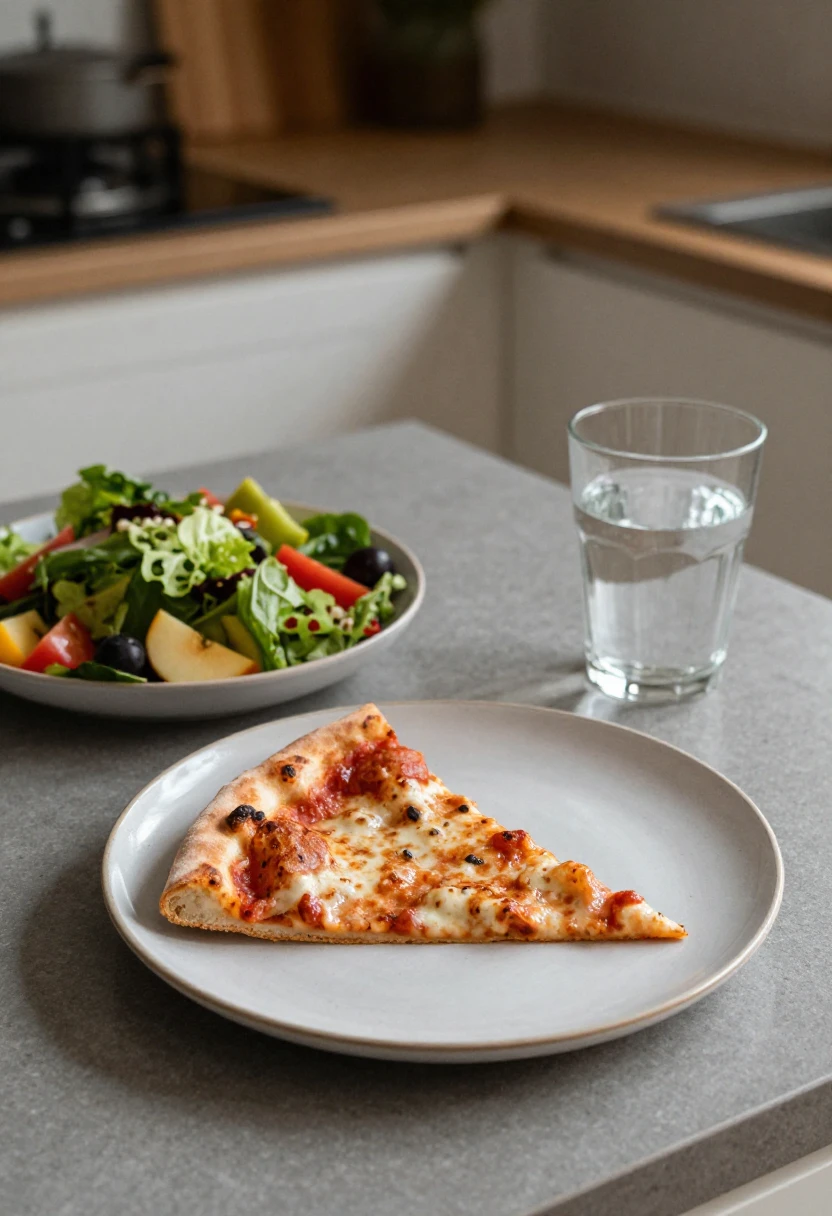
One of the fastest ways to make healthy eating harder is treating every meal like a test.
You ate a donut at work, so the day is “ruined.”
You ordered pizza, so the week is “off track.”
You missed meal prep, so now you might as well start again Monday.
I get why people think this way. It feels clean. You are either doing well or not doing well. But food does not work like that, and real life definitely does not work like that.
Busy people need a softer approach. Not careless, just less dramatic.
One fast-food meal does not ruin the week
A single meal has less power than we give it.
If you grab fast food because your day went sideways, that does not erase the yogurt you had for breakfast, the salad you packed yesterday, or the dinner you might make tomorrow. It is just one meal.
The problem usually starts after the meal, with the story you tell yourself.
“I already messed up, so why bother?”
That thought does more damage than the burger.
A better response is boring, but useful: eat the meal, move on, and make the next choice a little steadier. Drink some water. Add fruit later. Make eggs for dinner. Put frozen vegetables into pasta. Nothing extreme.
You do not need to compensate. You just need to continue.
Add something useful instead of removing everything
A lot of healthy eating advice starts with what to cut out.
Cut sugar. Cut carbs. Cut snacks. Cut late-night eating. Cut anything that makes food enjoyable, apparently.
For busy people, this often backfires. When life already feels full, a long list of food rules can feel exhausting. So instead of starting with subtraction, start with addition.
Add protein to breakfast.
Add vegetables to pasta.
Add fruit to your afternoon snack.
Add a glass of water before your second coffee.
Add beans to soup.
Add Greek yogurt sauce to a bowl so it actually tastes good.
This works because it does not require you to overhaul your whole day. You are not ripping meals apart. You are making them more useful.
Ordering pizza? Add a salad, or eat it with sliced cucumbers and hummus if that is what you have. Making instant noodles? Add an egg and frozen vegetables. Having toast? Add peanut butter, cottage cheese, avocado, or eggs.
Small upgrades count. They are often what keep a busy week from turning into a string of random snacks and takeout.
Make the better choice easier, not perfect
Healthy eating gets much less stressful when you stop aiming for the best possible choice.
The best possible choice might be grilled fish, roasted vegetables, and a homemade dressing. Lovely. But if you are tired, hungry, and standing in the kitchen at 8 p.m., the better choice might be eggs on toast with fruit.
That is still food. That still supports you.
The better choice is the one you can actually make:
- microwave rice instead of skipping dinner
- frozen vegetables instead of no vegetables
- store-bought hummus instead of no protein
- a grocery-store rotisserie chicken instead of another delivery order
- yogurt with berries instead of eating cookies because you waited too long
Perfect choices are fragile. Easy choices last longer.
Keep your “reset meal” simple
A reset meal is not punishment food. It is not a tiny salad after a heavy dinner or some sad bowl you eat because you feel guilty.
A reset meal is just something that makes you feel steady again.
For me, that usually means eggs, soup, rice bowls, or Greek yogurt with fruit and nuts. Something simple. Something I do not have to think about too much.
A few good reset meals:
- scrambled eggs with spinach and toast
- lentil soup with lemon
- rice with beans, salsa, and avocado
- Greek yogurt with berries, oats, and walnuts
- tuna with crackers, cucumber, and hummus
- baked potato with cottage cheese and vegetables
The point is not to “undo” anything. You are just returning to food that feels good in your body.
That mindset changes everything. Healthy eating becomes less like walking a tightrope and more like having a path you can step back onto whenever you need it.
Conclusion
Healthy eating for busy people does not have to look polished. Most of the time, it looks very ordinary.
A bowl of rice with eggs and vegetables.
Greek yogurt with berries when the morning is rushed.
A wrap made from leftovers.
Soup from pantry ingredients.
A snack plate on a night when cooking feels like too much.
That is not failure. That is the kind of flexible routine that actually survives a busy life.
Start small. Keep a few useful foods at home. Repeat meals without apologizing for it. Make one sauce you like. Pack one snack before leaving the house. Choose the better option when you can, and do not turn one messy meal into a whole story about discipline.
Healthy eating works best when it gives you support, not pressure. And on busy weeks, support is exactly what food should do.
FAQ
How can I eat healthy if I have no time to cook?
Focus on foods that are quick to assemble rather than full recipes. Keep eggs, Greek yogurt, canned beans, tuna, frozen vegetables, cooked rice, hummus, fruit, and whole-grain bread at home. With those basics, you can make bowls, wraps, toast, snack plates, soups, and fast breakfasts without cooking from scratch every time.
What are the best healthy foods for busy people?
The best foods are the ones that are easy to use in more than one meal. Eggs, oats, Greek yogurt, rice, beans, lentils, frozen vegetables, salad greens, canned fish, hummus, nuts, fruit, and whole-grain wraps are all practical choices. They help you build simple meals quickly, even when the week is crowded.
Is meal prep necessary for healthy eating?
No. Full meal prep helps some people, but it is not the only way. Ingredient prep is often easier. Cook one protein, make one grain, wash a few vegetables, and prepare one sauce. That gives you enough structure to make fast meals without eating the same container meal every day.
What should I eat when my fridge is almost empty?
Look for a basic combination of protein, carbs, and something with fiber. For example, pasta with tuna and frozen peas, rice with beans and salsa, eggs on toast with fruit, oatmeal with nut butter, or lentil soup with canned tomatoes. These meals are simple, but they can still be filling and balanced.
How do I stop ordering takeout every night?
Do not start by banning takeout. Start by making home food easier. Keep two or three emergency meals ready, like eggs and toast, rice bowls, hummus wraps, or frozen soup. When you do order takeout, choose meals that include protein and vegetables when possible. The goal is not perfection. It is having more nights where eating at home feels easy enough.