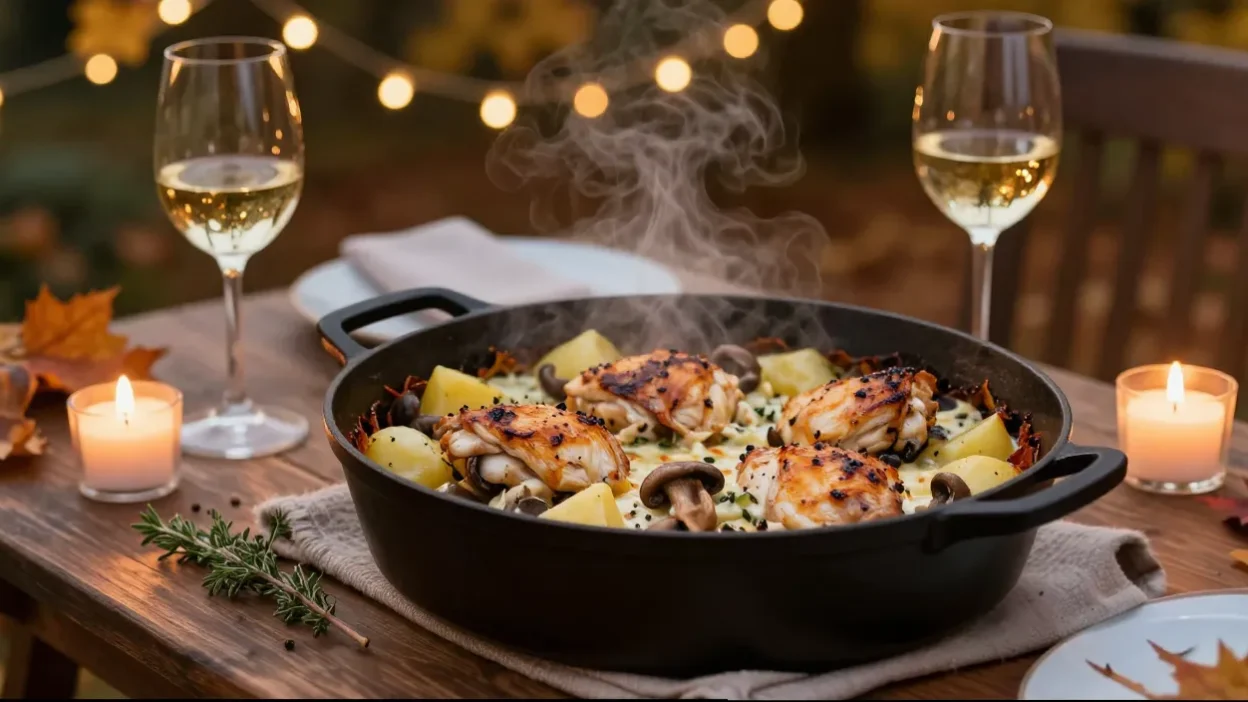
There are recipes people cook because they need something quick after work, and then there are recipes that completely change the atmosphere in the house while they are cooking. French-style chicken casserole belongs in that second category almost immediately.
The moment chicken hits a hot Dutch oven, the kitchen starts smelling different. Butter melts into olive oil, garlic softens, onions begin turning sweet around the edges, and the wine mixed with thyme and bay leaves fills the room with that deep, slow-cooked smell people usually associate with weekends or family dinners.
That is probably why casseroles like this never really disappear, even when food trends change constantly online. Fast dinners are useful, obviously. Everyone needs recipes that take twenty minutes sometimes. But people rarely remember those meals afterward. Slow casseroles stay in memory because they create a whole atmosphere around dinner instead of simply solving hunger.
You notice it while the recipe cooks. Somebody walks into the kitchen asking what smells so good. Bread gets sliced long before dinner is actually ready. People hover near the stove pretending they are helping while secretly stealing mushrooms from the pot.
And honestly, part of the charm is how uncomplicated everything feels. This is not delicate restaurant food. There are no stressful techniques hiding halfway through the recipe. Most of the flavor comes from allowing simple ingredients to cook together slowly until everything tastes connected.
The chicken releases juices directly into the broth while cooking. Potatoes absorb stock and herbs instead of plain water, which completely changes their texture by the end. Carrots become softer and sweeter over time, and the onions practically melt into the sauce.
That slow transformation is what makes casseroles comforting in a way faster recipes usually are not.
There is also something satisfying about food that does not require constant attention every few minutes. Once the casserole goes into the oven, the kitchen finally becomes quiet again. You can clean slowly, sit down for a while, pour wine into a glass instead of into the pot for once, and let dinner continue working in the background.
Modern cooking does not always leave space for that kind of rhythm anymore, which is probably another reason people keep coming back to recipes like this.
🍄 The sauce matters more than the chicken sometimes
People usually talk about casseroles as if the meat is the main event, but honestly, the sauce decides whether the dish feels average or deeply comforting.
A good French-style casserole sauce should feel rich without becoming heavy. It should coat the potatoes lightly, cling to the chicken properly, and still stay loose enough for bread to soak up afterward. That balance sounds technical, but it mostly comes down to patience.
I used to rush this recipe constantly because I assumed longer cooking only mattered for tougher cuts of meat. I kept the lid sealed tightly the whole time, pulled the casserole from the oven too early, and wondered why the broth always tasted thinner than I wanted.
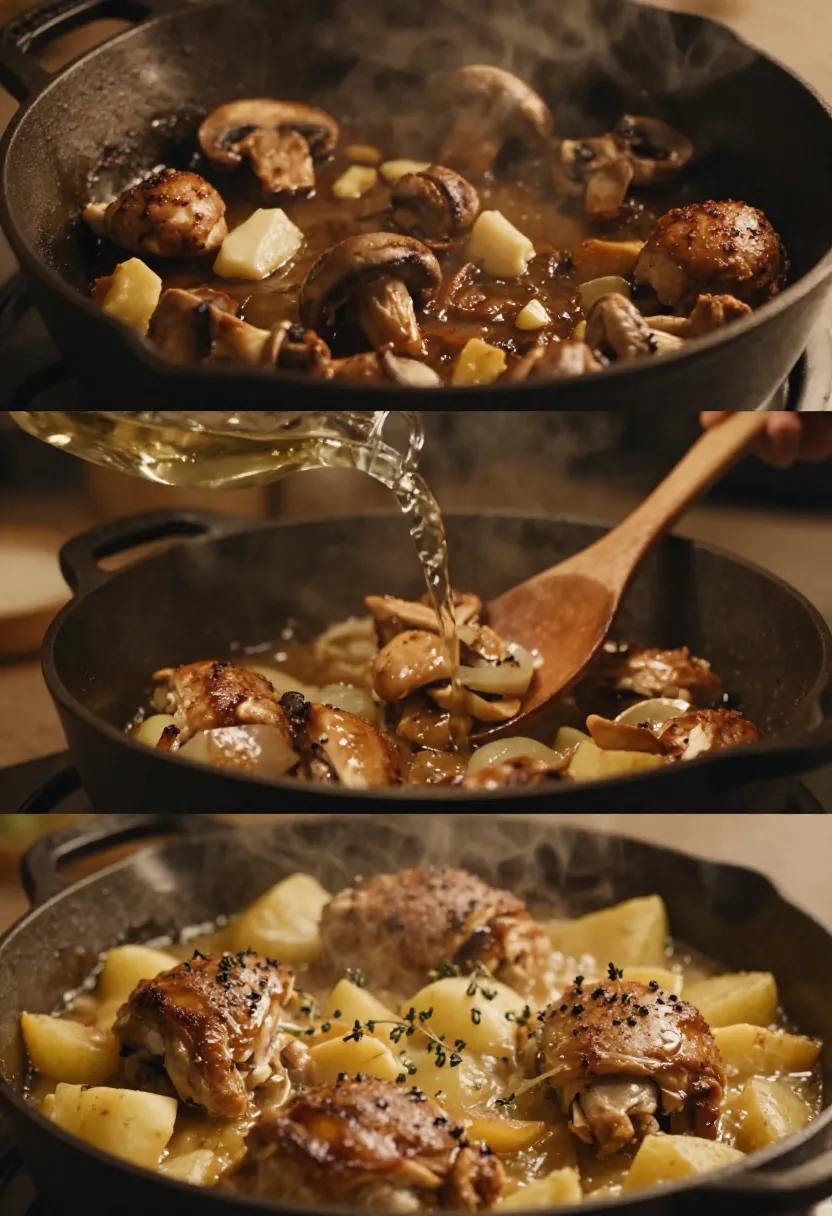
The biggest improvement came from uncovering the pot during the final stretch of cooking. Once the liquid reduces naturally, the texture changes completely. The onions soften into the sauce instead of floating separately, the chicken juices blend into the broth properly, and the wine loses its sharpness and turns softer and deeper.
The mushrooms quietly do a lot of work too. 🍄
If they are browned properly before the liquid gets added, they create a deeper savory flavor underneath the entire casserole. If they steam instead of caramelizing, the dish still works, but it loses some of that slow-cooked richness that makes it feel satisfying.
That is one thing I like about casseroles in general. They are flexible without falling apart. Sometimes I add extra mushrooms because they looked good at the store. Sometimes the sauce reduces longer because dinner got delayed. Sometimes I throw in more garlic because cold weather somehow makes garlic feel necessary.
The recipe still works because casseroles are built around gradual cooking rather than strict precision.
Another detail people underestimate is the browned bits left at the bottom of the pot after cooking the chicken. Once wine gets poured in, all of that dissolves directly into the broth and creates the base flavor underneath the entire dish.
Without that step, the casserole tastes cleaner but flatter. And honestly, casserole is supposed to feel rich and a little rustic. That is part of the appeal.
🥔 Why this casserole works so well during colder months
Some recipes naturally belong to certain seasons, and French-style chicken casserole absolutely feels tied to colder evenings.
Summer cooking usually revolves around speed and freshness. Salads, grilled vegetables, cold pasta, citrus, quick seafood. Nobody wants a heavy Dutch oven heating the kitchen for two hours in August.
But once evenings get colder, people start craving completely different textures. Soft potatoes become more appealing than crisp vegetables. Warm broth sounds better than cold vinaigrettes. Slow-cooked onions suddenly feel comforting in a way raw onions never could.
This casserole fits that mood perfectly because everything about it feels warm and relaxed. The potatoes turn creamy in the center after sitting in broth for over an hour. Carrots soften and sweeten gradually. Chicken thighs become tender enough to almost fall apart with a fork.
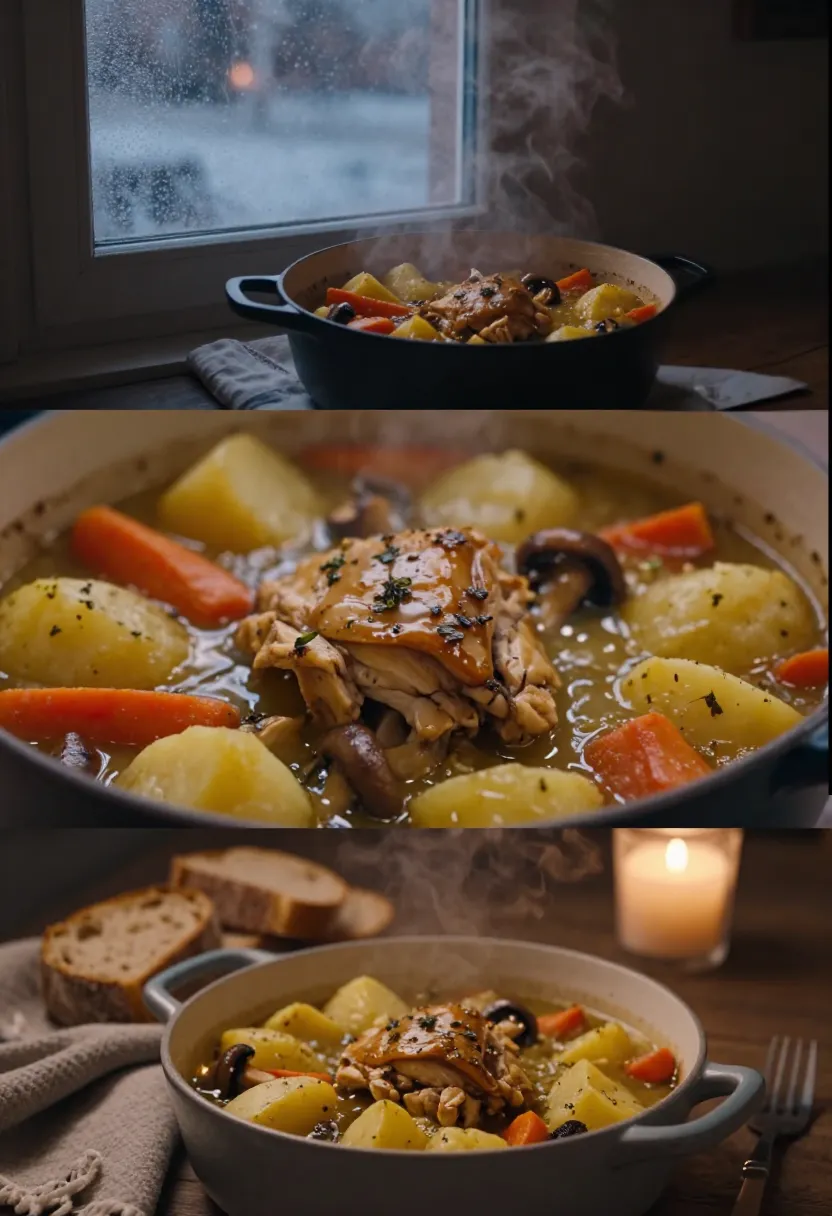
Even the sauce changes personality while cooking. At the beginning the wine smells sharp and slightly aggressive, but after enough time in the oven everything becomes smoother and rounder. The herbs spread through the broth more evenly, and the butter stirred in at the end gives the sauce a softer finish.
And honestly, this recipe tastes even better the next day.
A lot of dishes claim that leftovers improve overnight, but this casserole genuinely changes after resting in the fridge. The broth thickens slightly, the vegetables absorb more flavor, and the chicken somehow tastes richer after sitting in the sauce longer.
I usually reheat it slowly on the stove with a small splash of stock added back in. Within minutes the kitchen smells exactly like the previous evening all over again.
That second bowl after a cold day might honestly be the best part of making the recipe in the first place.
🍲 What each ingredient quietly brings into the casserole
| Ingredient | Main flavor | Texture | What happens while cooking |
|---|---|---|---|
| 🍗 Chicken thighs | Rich and savory | Tender, juicy | Slowly release juices into the broth |
| 🍷 Dry white wine | Bright and slightly sharp | Keeps sauce lighter | Reduces and softens into the casserole |
| 🍄 Mushrooms | Earthy, deep flavor | Soft with slight bite | Brown first, then absorb stock |
| 🥔 Potatoes | Mild and comforting | Creamy centers | Soak up broth while softening |
| 🧅 Shallots or onions | Sweetness | Almost melt away | Blend directly into the sauce |
| 🧄 Garlic | Warm depth | Completely soft | Loses sharpness while cooking |
| 🌿 Thyme and bay leaves | Herbal aroma | Mostly invisible | Slowly flavor the entire broth |
| 🥕 Carrots | Gentle sweetness | Soft and silky | Balance richer flavors naturally |
The smell during cooking is honestly half the appeal. Slow casseroles fill a house gradually instead of all at once. First garlic, then herbs, then wine reducing into stock. By the final half hour the whole kitchen smells warm enough that everybody suddenly becomes hungry again, even if they claimed they were not earlier.
And maybe that is part of why recipes like this survive for so long. They are not dramatic or trendy. They just make people feel comfortable, which matters more than most food trends anyway. 🤍
🍗 French-style chicken casserole recipe
This French-style chicken casserole combines browned chicken thighs, mushrooms, potatoes, carrots, garlic, fresh herbs, stock, and dry white wine into one deeply comforting slow-cooked dinner that feels especially perfect for colder evenings. The sauce becomes rich and glossy without needing cream, mostly because the chicken slowly releases flavor into the broth while the wine reduces gently in the oven.
What makes this casserole stand out is how everything cooks together long enough to stop feeling like separate ingredients. The potatoes absorb stock and herbs until the centers turn creamy, the carrots soften and become sweeter over time, and the onions practically melt into the sauce by the end. Even the mushrooms change completely once they brown properly and sit in the broth for an hour.
The whole dish feels rustic in the best way possible. Nothing complicated. Nothing overly polished. Just one heavy pot filled with slow-cooked flavors that become deeper and softer while the kitchen gradually fills with the smell of garlic, thyme, butter, and wine.
It is also the kind of recipe that somehow tastes even better the next day. The sauce thickens slightly overnight, the herbs spread deeper into the casserole, and the chicken becomes even more tender after resting in the broth longer.
Honestly, this is the type of dinner people keep coming back to because it creates atmosphere as much as flavor. It turns ordinary evenings into slower evenings. The kind where bread gets sliced before dinner is ready and everyone keeps wandering into the kitchen asking when they can finally eat. 🍷
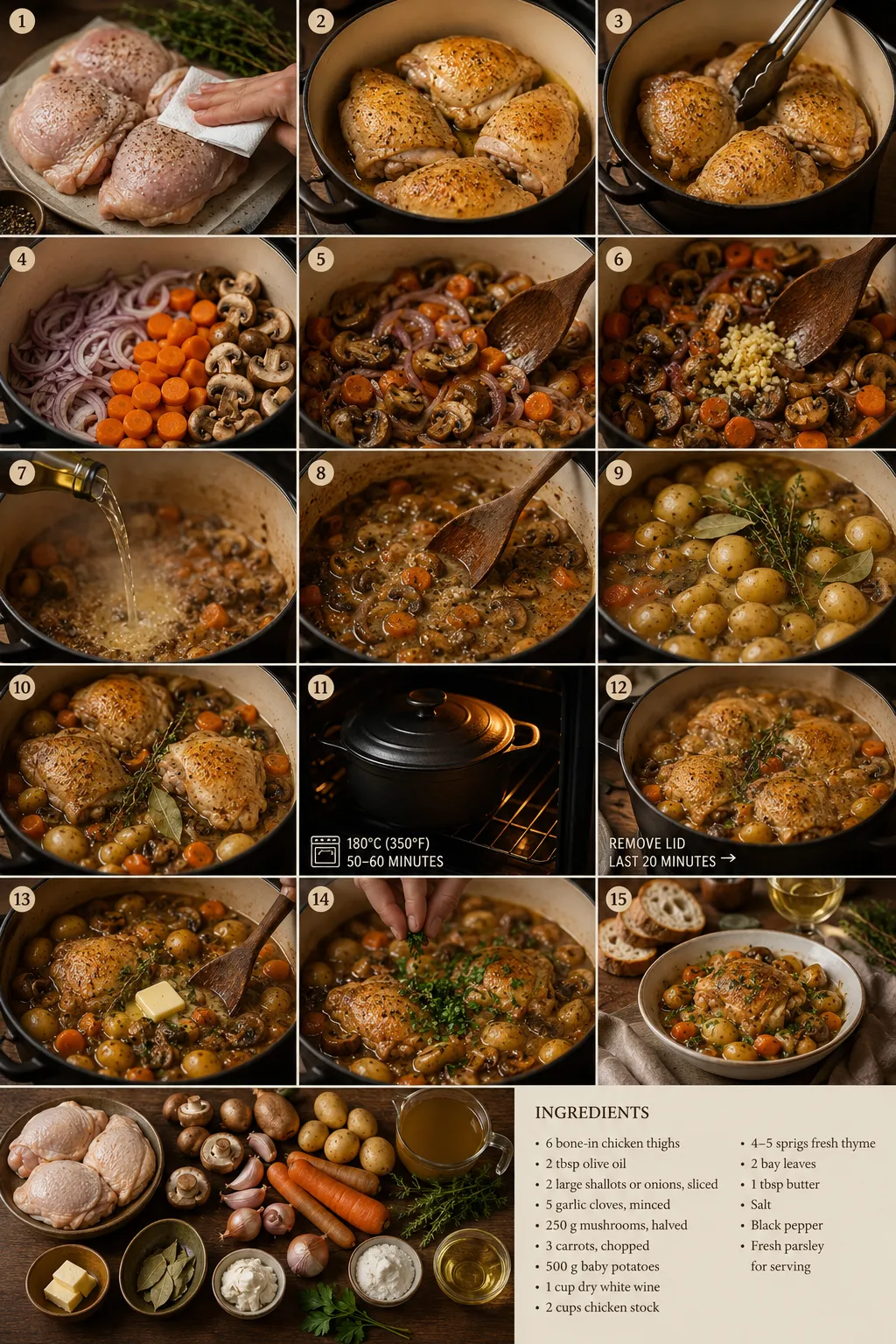
🛒 Ingredients
- 6 bone-in chicken thighs
- 2 tablespoons olive oil
- 2 large shallots or onions, sliced
- 5 garlic cloves, minced
- 250 g mushrooms, halved
- 3 carrots, chopped
- 500 g baby potatoes
- 1 cup dry white wine
- 2 cups chicken stock
- 4–5 sprigs fresh thyme
- 2 bay leaves
- 1 tablespoon butter
- Salt
- Black pepper
- Fresh parsley for serving
👩🍳 Cooking instructions
- Pat the chicken thighs dry using paper towels, then season generously with salt and black pepper.
- Heat olive oil in a large Dutch oven or heavy casserole pot over medium-high heat.
- Place the chicken skin-side down and cook until golden brown, about 5–7 minutes. Flip and cook another few minutes. Remove the chicken from the pot.
- Add mushrooms, carrots, and shallots into the same pot. Cook until softened and lightly browned.
- Stir in the garlic and cook for about 30 seconds until fragrant.
- Pour in the white wine and scrape the bottom of the pot with a wooden spoon to loosen the browned bits.
- Let the wine reduce for several minutes.
- Add potatoes, chicken stock, thyme, and bay leaves.
- Return the chicken to the pot, skin-side up.
- Cover loosely and bake at 180°C (350°F) for about 50–60 minutes.
- Remove the lid during the final 20 minutes so the sauce can reduce naturally.
- Stir in butter before serving for a smoother sauce.
- Sprinkle with fresh parsley and serve hot. ✨
💡 Small kitchen tips that help a lot
- 🍗 Brown the chicken properly before adding liquid. Pale chicken creates a weaker sauce.
- 🍄 Let the mushrooms sit undisturbed for a few minutes so they caramelize instead of steaming.
- 🍷 Use dry white wine instead of sweet wine. The sauce tastes more balanced.
- 🥄 If the sauce feels thin at the end, simmer uncovered for a few extra minutes.
- ❄️ The casserole tastes even better the next day after resting overnight in the fridge.
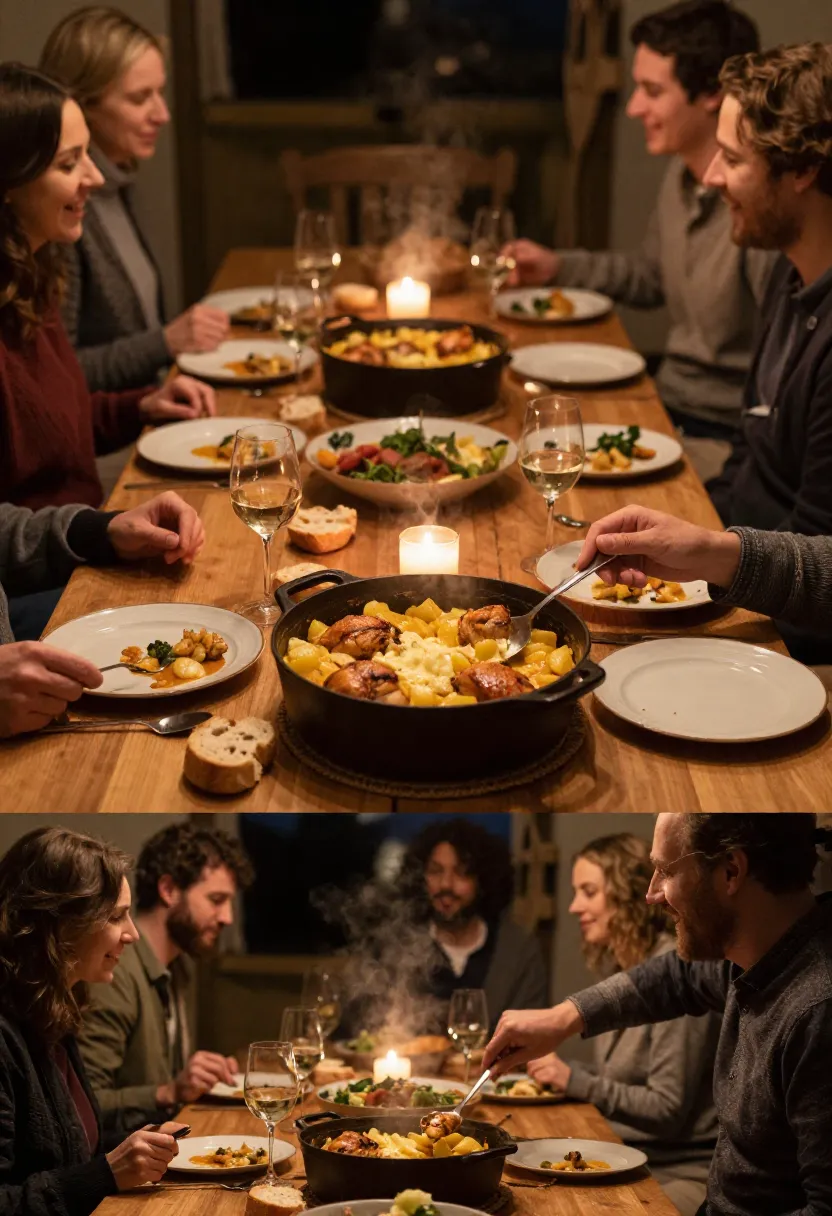
🥖 This is the kind of meal people stay at the table for longer
Some dinners disappear almost immediately after serving. People eat quickly, carry plates to the sink, check their phones again, and move on with the evening without really noticing the meal itself. Casseroles like this tend to create the opposite effect.
Part of that comes from the sauce, honestly. Nobody wants to leave a good sauce behind, especially one that has been slowly building flavor for over an hour. Bread keeps getting torn apart almost automatically. Someone reaches back into the pot for “just a little more” even after insisting they were already full ten minutes earlier.
But the atmosphere around slow-cooked food matters just as much as the actual flavor.
This recipe changes how the kitchen feels while it cooks. The oven stays warm for hours, the windows fog slightly when the weather outside is cold enough, and every time somebody walks past the kitchen they stop for a second because the smell keeps getting deeper as the evening goes on.
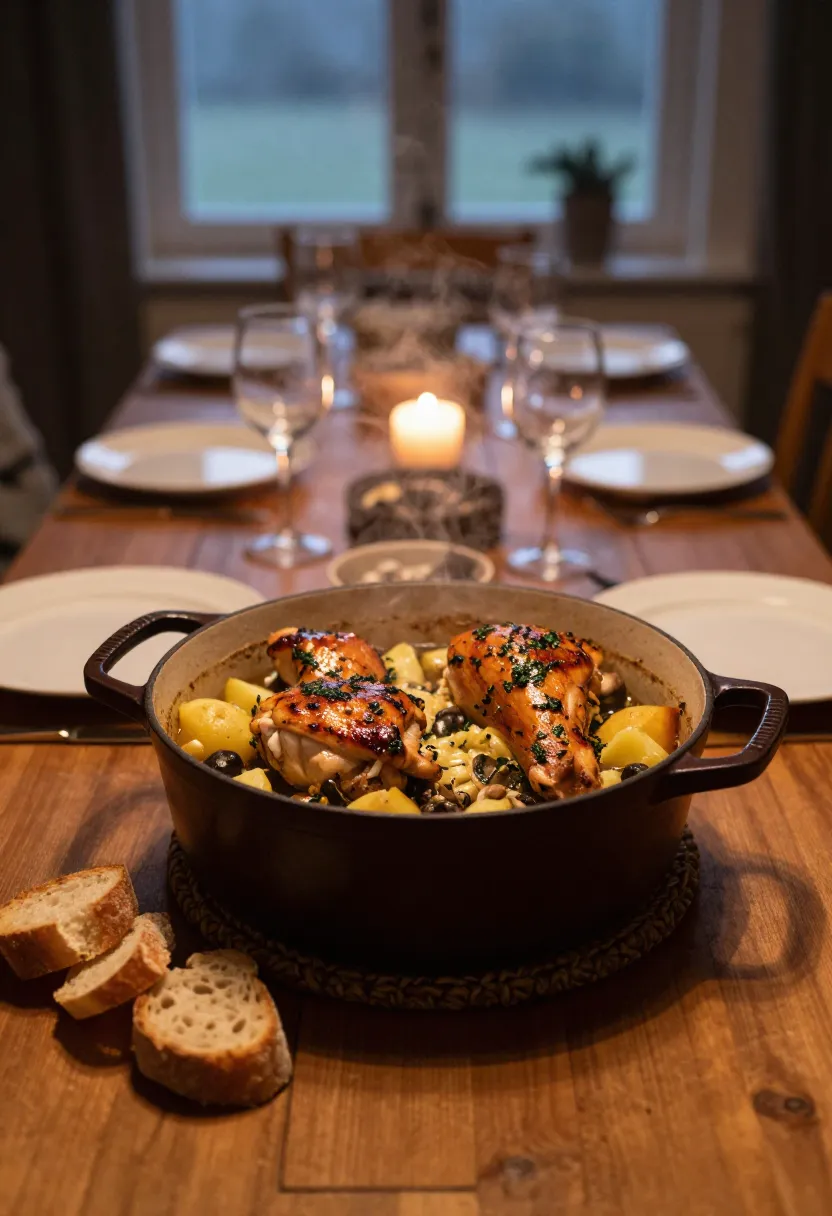
The funny thing is that casseroles create anticipation differently than faster meals do. Quick dinners usually smell good for ten or fifteen minutes right before serving. Slow casseroles build gradually. First garlic and onions. Then butter and herbs. Later the wine softens into the broth, and by the final stretch of cooking the whole house smells warm enough that people start wandering into the kitchen without even realizing why.
That is probably why recipes like this feel connected to colder months so strongly. They naturally fit evenings when nobody is in a rush to leave the table.
And honestly, casseroles make casual dinners feel better too. You do not need guests or holidays or anything particularly special happening. A rainy Thursday somehow feels calmer when there is a heavy pot bubbling in the oven for half the evening.
I think people underestimate how comforting repetitive kitchen rituals can feel sometimes. Stirring sauce slowly. Pulling bread from the oven. Tasting broth and adding a little more salt near the end. Those tiny things create the feeling of home much more than expensive ingredients ever do.
There is also something refreshingly unpretentious about serving a casserole directly from the pot. No careful plating. No stacked restaurant presentation. You just place the Dutch oven in the middle of the table and let everyone help themselves.
That relaxed feeling changes dinner immediately.
Nobody worries about perfection with food like this.
And honestly, that is probably part of why people stay at the table longer afterward. 🕯️
🍲 Leftovers might honestly be the best part
A surprising number of comfort food recipes lose quality overnight. Pasta turns soft, roasted vegetables dry out, sauces split, crispy textures disappear completely. But casseroles like this somehow improve after resting in the fridge for several hours.
This happens because the ingredients continue interacting with the broth even after cooking stops. The potatoes absorb more flavor overnight, the herbs spread deeper into the sauce, and the chicken becomes even more tender while sitting in the liquid.
The entire casserole feels more connected the next day.
I actually think the broth changes the most. Fresh out of the oven, the sauce still has some separation between the wine, chicken juices, herbs, and stock. After resting overnight everything settles together into a smoother, deeper flavor.
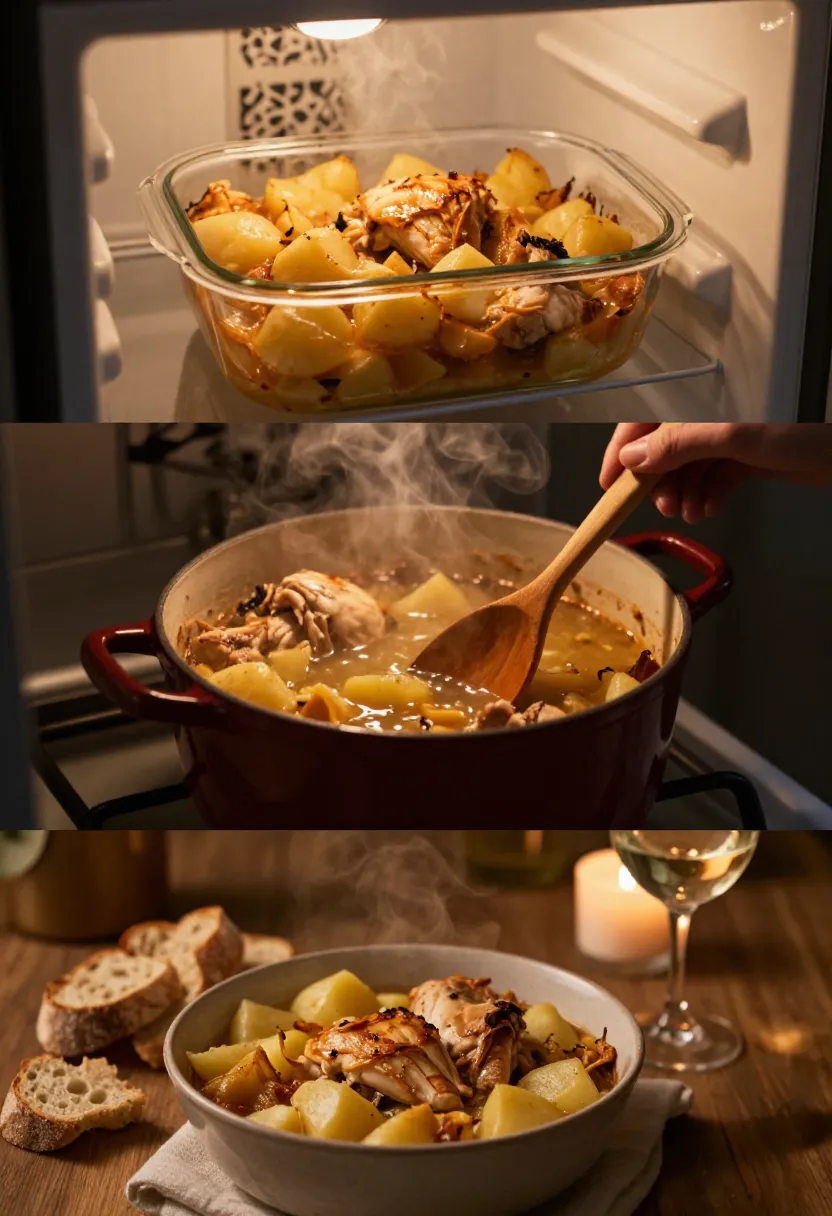
That second bowl the following evening tastes calmer somehow. Richer too.
And reheating slowly matters more than people think.
Microwaving works if necessary, obviously, but warming the casserole gently on the stove keeps the texture much better. I usually add a splash of stock while reheating because the potatoes absorb quite a bit of liquid overnight. After a few minutes the sauce loosens again and the smell filling the kitchen feels almost identical to the first night.
Honestly, leftovers are one of the biggest reasons recipes like this stay useful in real life instead of just looking good online.
There is something deeply satisfying about opening the fridge after a long day and remembering there is still casserole waiting inside. Especially during colder months when cooking another full dinner sounds exhausting.
A few things actually improve after overnight resting:
- 🍗 the chicken softens even more without drying out
- 🥔 the potatoes absorb extra broth and herbs
- 🍄 the mushrooms develop deeper savory flavor
- 🍷 the wine blends more smoothly into the sauce
- 🌿 the thyme and garlic spread more evenly through the casserole
And honestly, the leftovers create their own little ritual too. Reheating the pot slowly. Cutting fresh bread again. Standing in the kitchen with a spoon while the broth warms up because tasting “just one bite” somehow turns into several.
A lot of recipes promise good leftovers because recipe websites feel obligated to say it. This one genuinely delivers on that promise.
Maybe even more than the original dinner sometimes. 🤍
🍂 Why recipes like this never really disappear
Food trends move incredibly fast now. Every few weeks there is another recipe suddenly covering social media feeds before disappearing almost immediately afterward. One month everybody is making baked feta pasta. Then dense bean salads. Then cucumber ribbons. Then something involving hot honey or cottage cheese.
Most of those recipes fade because they are built around novelty first.
French-style chicken casserole survives because it was never trying to feel trendy in the first place.
At its core, this recipe is based on a few things people probably will not stop wanting anytime soon: warm kitchens, affordable ingredients, slow cooking, and food that feels comforting without requiring complicated techniques.
There is nothing especially modern about it honestly. And maybe that is exactly why it keeps working generation after generation.
People still want dinners that make the house smell good for hours.
People still want meals that feel filling and calming during cold weather.
People still want recipes that can feed several people without turning dinner into a stressful production.
Casseroles quietly solve all of those problems.
They also fit real life better than a lot of modern food trends do. You can adjust ingredients based on what is already in the kitchen. Add extra mushrooms. Swap carrots for parsnips. Use more garlic because the weather feels cold enough for it. The recipe stays flexible without falling apart completely.
That adaptability matters more than people realize.
The best comfort food recipes are usually the ones people stop measuring too carefully after making them a few times. They become familiar enough that cooking feels automatic. A splash of wine here. Extra herbs there. Maybe a little more broth if dinner gets delayed.
Those small adjustments are part of what makes recipes feel personal over time.
And honestly, there is something reassuring about food that does not depend on internet trends to remain appealing. A good casserole still works whether or not anybody is posting it online.
Because in the end, people are not really searching for viral dinners every night anyway. Most evenings they just want food that feels warm, filling, comforting, and reliable after a long day.
This recipe quietly does all of that without trying too hard. 🍷