Modern life rarely gives us a real reason to slow down. If anything, it constantly pushes us in the opposite direction. Most daily routines are built around efficiency — quick meals, instant solutions, and a steady movement from one task to another. At some point, food quietly turns into just another item on that list. Something to deal with rather than something to actually experience.
It happens almost without noticing.
You grab something quick, eat while checking your phone, maybe answer a message or two, and then move on. It works, it saves time, and in many cases it feels necessary. But at the same time, it removes something from the process. Meals become functional. They do their job, but they don’t leave much of an impression.
Cooking at home interrupts that pattern in a surprisingly natural way 🍝
It doesn’t require a major lifestyle change or a sudden decision to “start living differently.” The shift begins the moment you step into the process. When you prepare a meal yourself, your pace adjusts automatically. You can’t rush boiling water. You can’t fully automate chopping. And you definitely can’t skip everything and still expect something that tastes good.
What’s interesting is that this slower pace doesn’t feel inconvenient. In many cases, it feels like a relief.
Instead of constantly switching between tasks, you stay with one thing for a while. You begin to notice details that usually pass unnoticed — the smell of garlic warming in oil, the texture of vegetables as you cut them, the way ingredients change as they cook. These are small moments, but they anchor your attention in something real.
Even a short cooking session creates a kind of pause in the middle of a busy day. Not a complete reset, not a dramatic break — just a shift that gives your mind a moment to settle. And sometimes, that’s enough.
There’s also a sensory side to cooking that plays a bigger role than people expect. When you work with fresh ingredients, you’re not just following steps — you’re interacting with textures, smells, sounds, and visual changes. That kind of engagement is very different from opening a package or reheating something prepared in advance.
Over time, these small experiences start to add up. Cooking stops feeling like a task you need to complete and starts functioning as a way to reset your focus. It doesn’t necessarily take more time, but it changes how that time feels.
And that difference, while subtle, is actually important.
🍽️ Food as a Practical Expression of Care
Food has always carried meaning beyond basic nutrition. Across different cultures and traditions, cooking has been one of the most direct ways to show care. It doesn’t rely on words or explanations — the effort itself communicates everything that needs to be understood.
When you cook for someone else, the process becomes visible. Even if the dish is simple, there is a clear sense that time and attention were involved. You chose the ingredients, prepared them, and created something with a specific person in mind. That alone changes how the meal is received.
At the same time, this idea often gets lost when it comes to cooking for yourself.
In everyday life, it’s easy to prioritize efficiency. You eat what’s available, what’s quick, what requires the least amount of effort. This approach makes sense, especially during busy periods, but over time it shifts your relationship with food. Meals become something to get through rather than something to engage with.
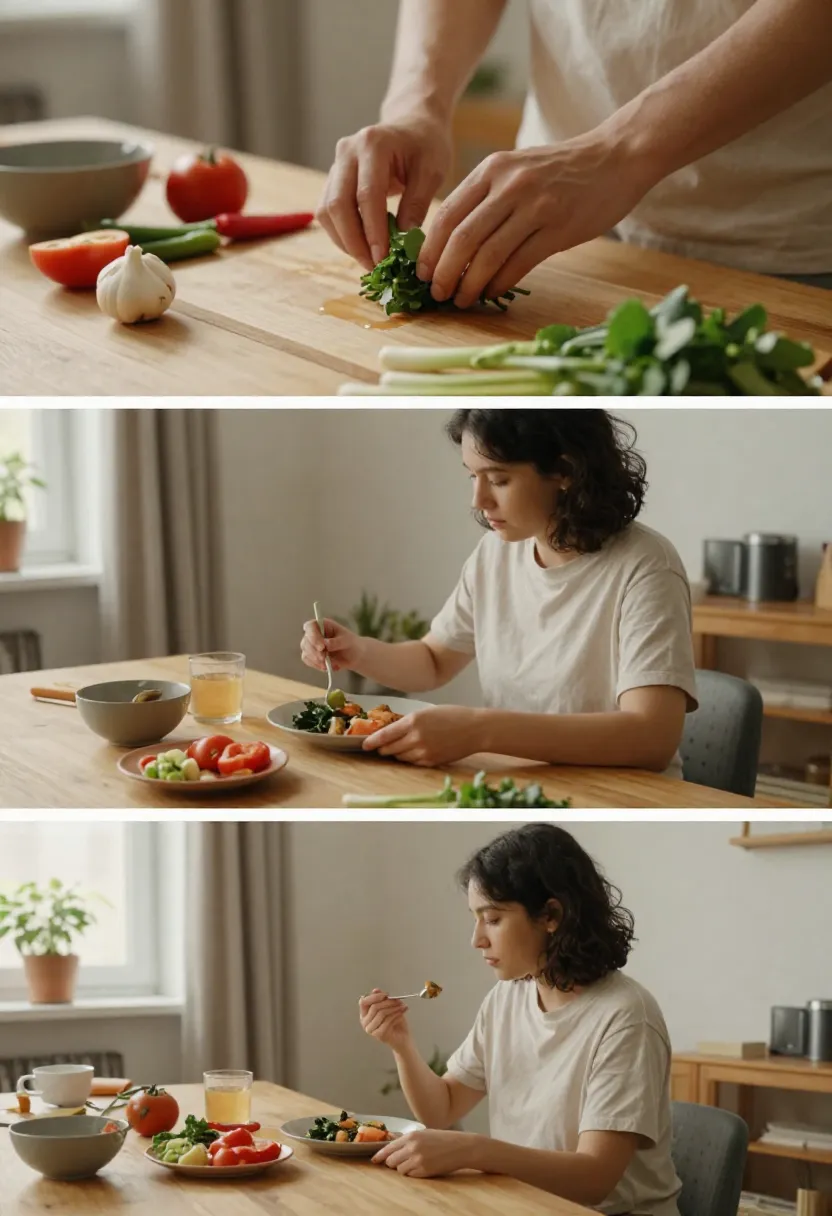
Taking the time to cook, even in a simple way, brings that sense of care back into your routine. It doesn’t need to be elaborate or time-consuming. The key difference is intention.
You decide to prepare something instead of just assembling or reheating it. You give the process a bit more attention. And as a result, the meal itself feels more complete.
This shift can show up in small, practical ways:
- choosing a few fresh ingredients instead of relying entirely on ready-made options
- allowing yourself a bit of extra time to cook instead of rushing through it
- sitting down to eat without distractions, even if only for a short while
None of these actions require significant effort on their own. But together, they change how food fits into your day.
Over time, cooking becomes less about motivation and more about consistency. You don’t need to convince yourself every time — it simply becomes part of how you structure your routine.
And once that happens, it feels much less like an obligation.
🍲 Why Simple Recipes Work Better in Real Life
There’s a common assumption that good cooking requires complexity. Long ingredient lists, precise measurements, and advanced techniques are often seen as signs of quality. While that can be true in certain contexts, it doesn’t always translate well into everyday life.
For most people, complexity is difficult to maintain.
Simple recipes offer a more practical alternative. They don’t require extensive preparation, specialized ingredients, or perfect timing. More importantly, they are easier to repeat, and repeatability is what makes cooking sustainable.
When a recipe is straightforward, you’re much more likely to come back to it. After making it once or twice, you start remembering the steps. You rely less on instructions and more on your own experience. Small adjustments become natural — a bit more seasoning, a slightly different cooking time, a substitution based on what you have available.
At that point, cooking becomes more flexible.
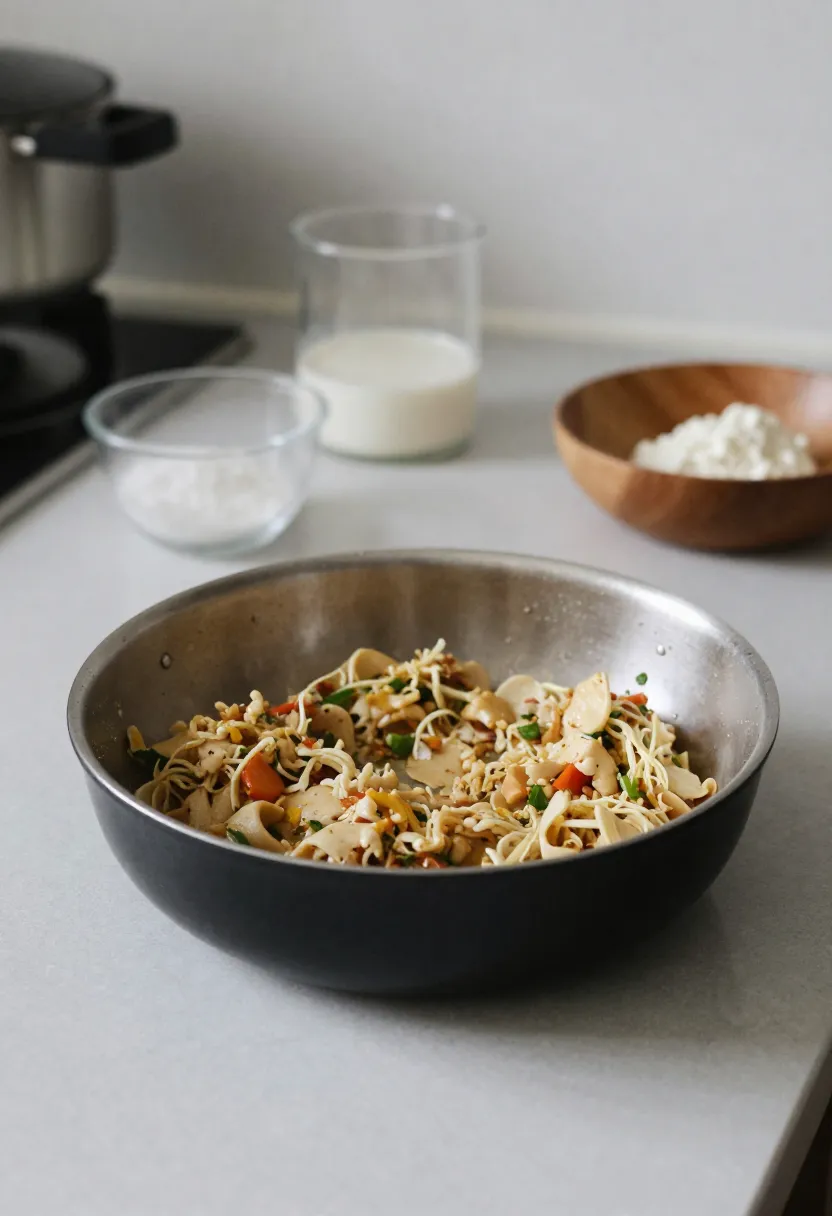
Another advantage of simple meals is that they allow ingredients to stand out. Without too many layers, you begin to notice how flavors actually work together. You start paying attention to details — how garlic behaves depending on how long it cooks, how salt enhances flavor, how texture changes the overall experience of a dish.
This kind of understanding builds gradually, and it tends to come from repetition rather than complexity.
There’s also a practical benefit that often goes unnoticed: reducing decision fatigue. Instead of constantly searching for new recipes or ideas, you develop a small set of meals that you know you can rely on. These become your default options, making daily cooking much easier to manage.
For example, many people naturally build a rotation that includes:
- a pasta dish that is quick and adaptable
- a protein-based meal that requires minimal preparation
- a lighter option focused on vegetables or simple combinations
Having these go-to meals removes a lot of unnecessary thinking. You don’t have to start from scratch every time — you already know what works.
In the end, simple recipes create a balance between effort and result. They fit into real schedules, adapt to changing circumstances, and still provide satisfying results.
And for most people, that balance is exactly what makes cooking something they can actually maintain over time.
🍲 Creamy Garlic Chicken Pasta Recipe: A Reliable and Satisfying Meal
Creamy garlic chicken pasta is one of those dishes that quietly earns its place in your regular rotation. It doesn’t try to impress with complicated techniques or unusual ingredients, but it delivers exactly what you want from a homemade meal — comfort, balance, and a sense that it was worth the time.
At its core, this dish is built on a combination that rarely fails. Tender pieces of chicken provide richness and protein, while a smooth garlic cream sauce brings everything together with a soft, slightly savory depth. The pasta acts as the base that absorbs all those flavors, turning simple ingredients into something that feels complete.
What makes this meal especially practical is how flexible it is. You can adjust the amount of sauce, change the type of pasta, or even slightly modify the seasoning depending on what you have at home. It works just as well on a busy weekday when you need something reliable, as it does on a slower evening when you want to cook without rushing.
There’s also something reassuring about dishes like this. They don’t require perfect timing or constant attention, but they still give you a result that feels complete. It’s the kind of meal you can come back to without thinking too much — and it will still turn out well.
🧾 Ingredients
- 250–300 g pasta (penne, fettuccine, or spaghetti)
- 2 chicken breasts
- 4 cloves garlic, finely chopped
- 200–250 ml heavy cream
- 60 g Parmesan cheese, freshly grated
- 2 tablespoons olive oil
- 1 tablespoon butter
- Salt and black pepper, to taste
- 1 teaspoon dried herbs (oregano, basil, or Italian mix)
- Optional: chili flakes for mild heat
- Fresh parsley for garnish
- Optional: lemon juice for finishing
👨🍳 Step-by-Step Preparation
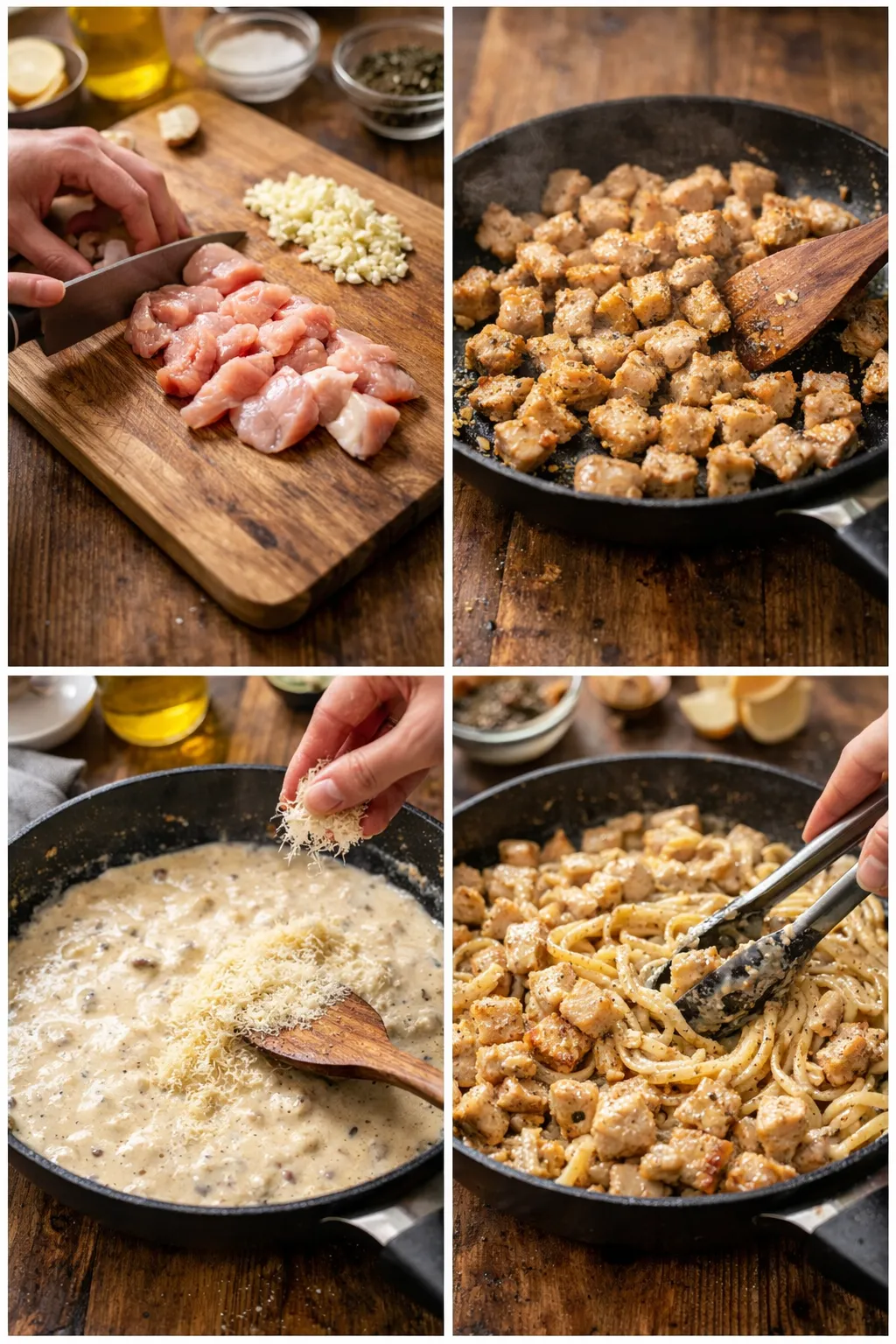
- Fill a large pot with water, add a generous pinch of salt, and bring it to a boil. Cook the pasta according to the package instructions until al dente. Before draining, reserve about half a cup of the pasta water — this will be useful later for adjusting the sauce.
- While the pasta is cooking, prepare the chicken. Slice it into evenly sized strips or bite-sized pieces so that it cooks uniformly. Season with salt, pepper, and dried herbs.
- Heat olive oil in a large pan over medium heat. Add the chicken and cook it until it develops a light golden color on the outside and is fully cooked through. Remove it from the pan and set aside.
- In the same pan, lower the heat slightly and add butter. Once it melts, add the chopped garlic. Cook for about a minute, stirring continuously. The goal is to release the aroma without letting the garlic burn.
- Pour in the cream and gently stir, making sure to incorporate any flavorful bits left in the pan. Let the sauce simmer for a few minutes until it begins to thicken slightly.
- Add the grated Parmesan cheese and stir until the sauce becomes smooth and cohesive. At this point, you should have a creamy base that is not too thick but not too runny either.
- Return the cooked chicken to the pan and mix it into the sauce, making sure each piece is well coated.
- Add the drained pasta directly into the pan. Toss everything together so the sauce evenly covers the pasta.
- If the sauce feels too thick, gradually add small amounts of the reserved pasta water. This helps loosen the texture without reducing the flavor.
- Taste the dish and adjust the seasoning if needed. A small squeeze of lemon juice can help balance the richness if the sauce feels too heavy.
- Serve immediately, topped with fresh parsley and extra Parmesan if you like.
💡 Small Tips & Kitchen Hacks
- Don’t overcrowd the pan when cooking chicken — it helps it brown instead of steam
- Add pasta to the sauce while it’s still hot so it absorbs more flavor
- If the sauce thickens too much, a splash of warm water works just as well as pasta water
- Taste before serving — small adjustments at the end make a big difference
- A tiny pinch of chili flakes can add depth without making the dish spicy
🌿 Cooking as a Structured Daily Habit
At first glance, the idea of cooking every day might sound a bit overwhelming. It often feels like something that requires extra time, planning, and energy — things that are already in short supply during a typical week.
But in reality, cooking doesn’t have to be a big commitment every single time. It becomes much more manageable when you stop treating it like a task that needs motivation and start seeing it as part of your routine.
That shift changes everything.
Instead of asking yourself “Do I feel like cooking today?”, it becomes more like “What am I making today?” — a small but important difference.
Consistency is what makes this work.
When you cook regularly, even in a simple way, you begin to rely less on decisions and more on patterns. You already know which ingredients you tend to buy, how long certain meals take, and what works for your schedule. There’s less hesitation, less second-guessing.
Over time, the process becomes smoother.
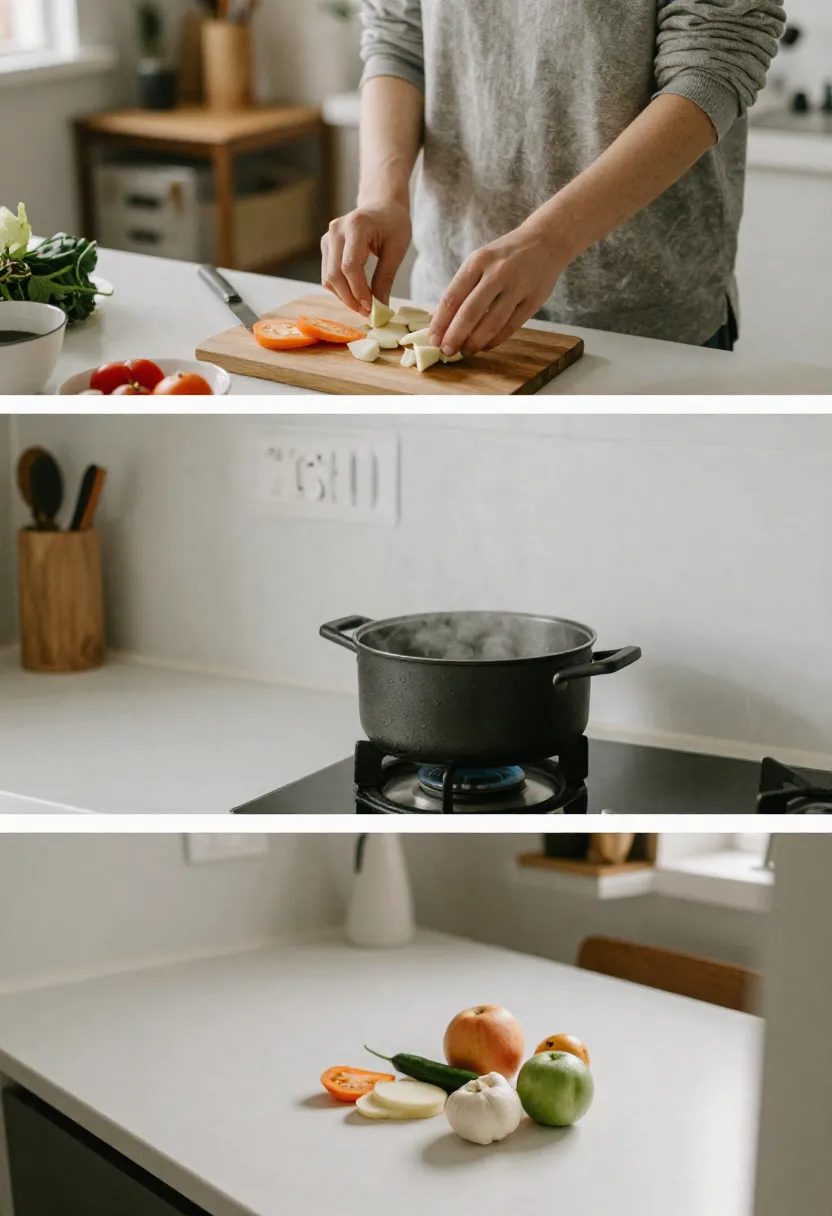
You don’t think about every step anymore. You just move through it:
- you start boiling water without checking the time
- you know roughly how long chicken needs in the pan
- you adjust seasoning almost automatically
It’s not about perfection — it’s about familiarity.
And that familiarity builds confidence in a very natural way. You stop depending on recipes for every detail and start trusting your own judgment. Sometimes you change things slightly, sometimes you keep them the same, but either way, it feels more relaxed.
Another thing that often goes unnoticed is how cooking affects your overall sense of organization.
When you cook regularly, even simple meals, you begin to structure your day a bit differently. You plan ahead just enough — not in a strict way, but in a practical one. You know what ingredients you have, what needs to be used soon, and what kind of meal fits the time you have.
It creates a quiet sense of order.
📊 How Cooking Fits Into a Daily Routine
| Situation | Typical Choice | Cooking-Based Alternative |
|---|---|---|
| Busy weekday evening | Order food or skip cooking | Make a quick 20-minute meal |
| Low energy after work | Eat something random | Cook a familiar “go-to” dish |
| No clear plan for dinner | Scroll for ideas | Use a small set of trusted recipes |
| Limited time | Choose fastest option | Prep simple ingredients in advance |
This kind of approach doesn’t require perfection — just a bit of awareness.
Instead of feeling like an extra responsibility, cooking starts to support your routine. It becomes one of those small, stable parts of the day that you can rely on — something predictable in a schedule that isn’t always predictable.
And in a way, that’s where the balance comes from.
Cooking on your own has its advantages — it’s flexible, it fits your schedule, and it allows you to focus entirely on what you need in that moment. But when you share a meal with someone, the experience changes in a way that’s hard to replicate.
It becomes less about the food itself and more about the time around it.
Meals create a natural space for interaction without forcing anything. You don’t need a plan, an agenda, or even a long conversation. Just sitting at the same table, eating the same dish, is often enough to shift the atmosphere.
There’s a certain ease to it.
People talk more naturally, pauses don’t feel awkward, and time moves a bit slower. Even a simple dinner — something you put together without much effort — can feel meaningful when it’s shared.
This becomes especially important in everyday life, where schedules don’t always line up perfectly. Work, responsibilities, and different routines can make it difficult to spend time together in a consistent way.
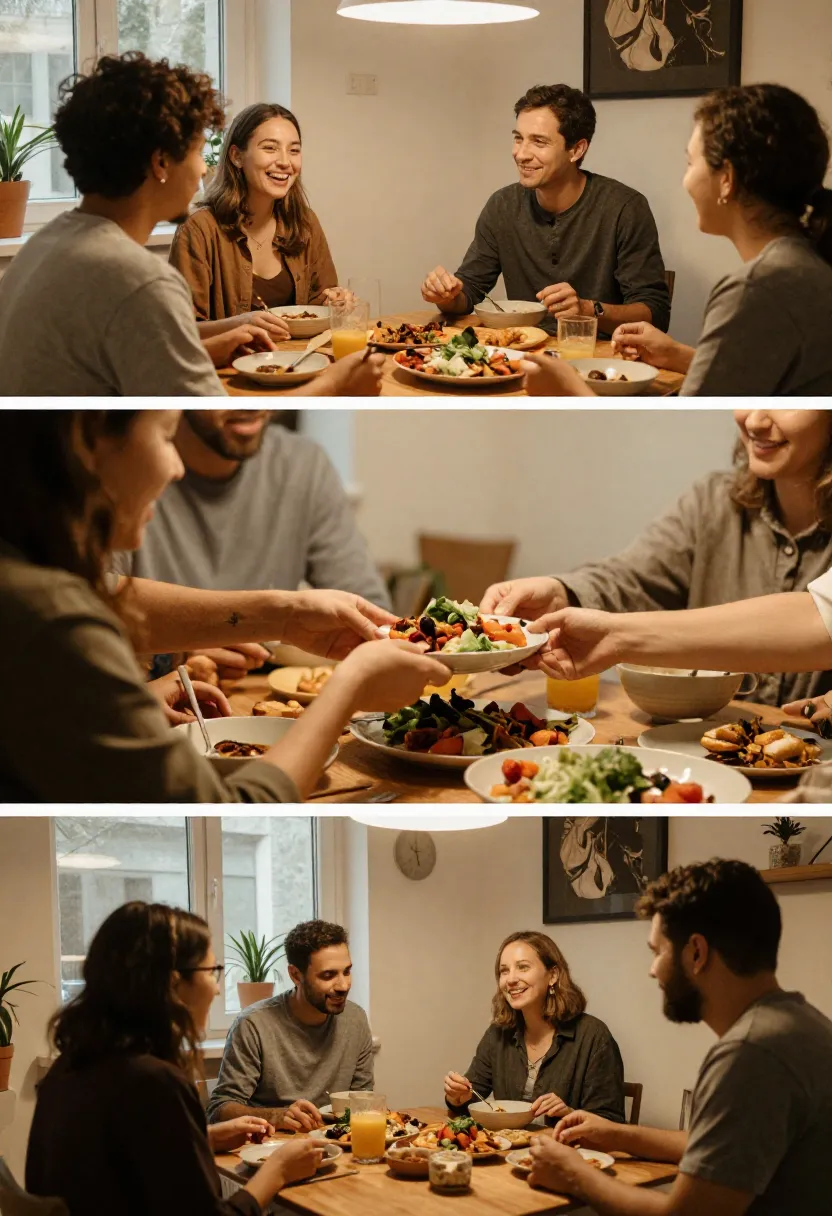
A shared meal, even a short one, creates a moment where everything else pauses.
And interestingly, it’s rarely about the quality of the food.
Most people don’t remember exactly what they ate. What stays with them is something else:
- the conversation that happened
- the atmosphere at the table
- the feeling of being present with someone
That’s what turns an ordinary meal into something memorable.
Over time, these shared moments build a kind of rhythm in relationships. Even if everything else is busy or unpredictable, there’s a point in the day where people come together, even briefly.
And that consistency matters more than it seems.
✨ Why Cooking Still Matters Today
With everything becoming faster and more convenient, it’s easy to assume that cooking is slowly becoming less relevant. After all, there are plenty of ways to eat without preparing anything yourself.
But despite all that, cooking hasn’t really lost its value.
If anything, it has changed its role.
Today, cooking is less about necessity and more about choice. It’s something you can do because it adds something to your day — not just in terms of food, but in terms of how you spend your time.
It also remains one of the most practical skills you can have.
Being able to cook gives you a certain level of independence. You’re not fully reliant on what’s available outside or what can be delivered. You can adjust meals to your preferences, control ingredients, and make decisions based on what you actually want to eat.
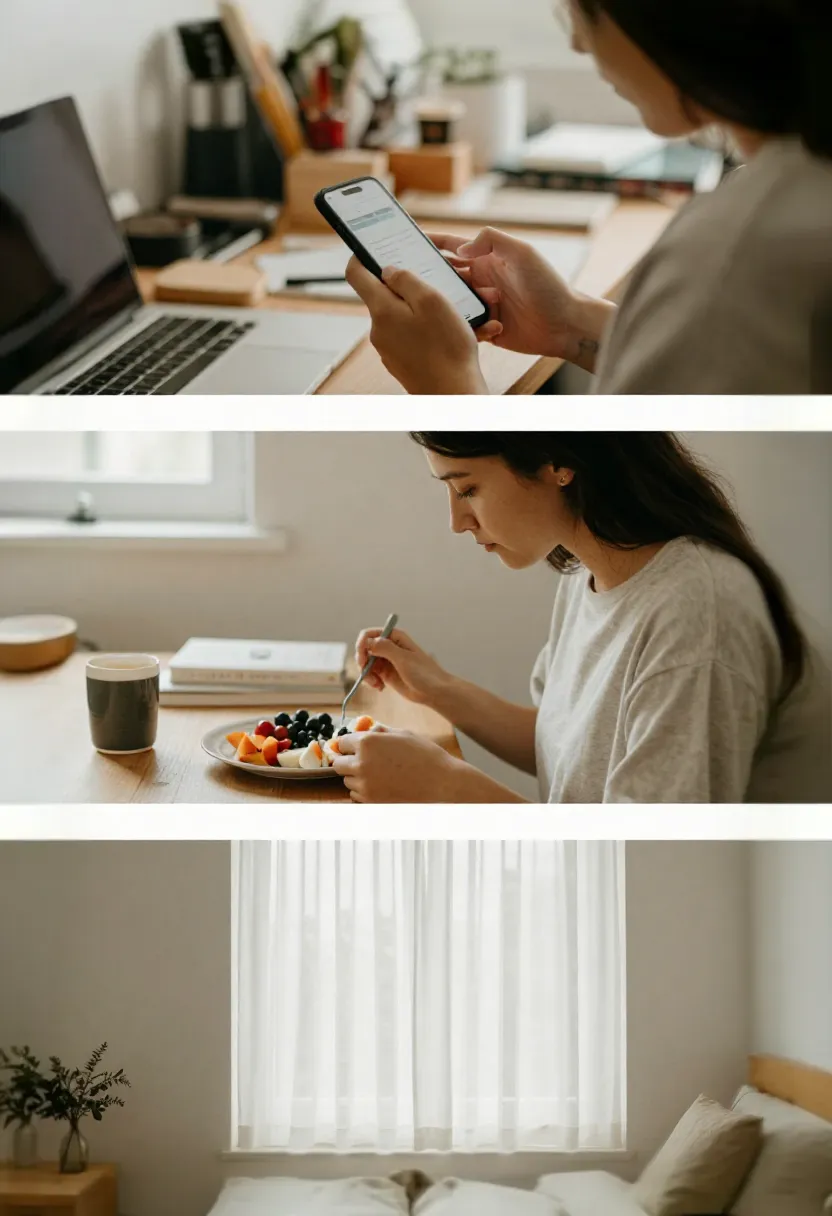
At the same time, cooking supports healthier habits without requiring strict rules. When you prepare food yourself, you naturally become more aware of what goes into it. Not in a restrictive way — just in a more conscious one.
Another important point is that cooking doesn’t have to compete with convenience.
There will always be days when quick solutions make more sense. Busy schedules, low energy, unexpected plans — all of that is part of real life. The goal isn’t to avoid convenience completely.
The goal is to avoid depending on it all the time.
A simple balance usually works best:
- cook when you have the time and energy
- keep meals simple so they’re easy to repeat
- use convenience when you actually need it, not by default
In the long run, it’s not about perfect meals or strict routines.
It’s about having a skill that supports you — something practical, flexible, and real.
And in a world that moves as fast as this one, that kind of balance becomes more valuable than it first seems. ✨