Some recipes stick around because they’re quick. Others survive because they’re cheap, convenient, or easy to throw together on a busy weeknight.
Corned beef and cabbage soup has managed to stick around for a different reason.
People genuinely enjoy eating it.
That sounds obvious, but it’s probably the simplest explanation. Long before anyone was talking about comfort food or slow cooking trends, people were already making meals like this because they worked. A piece of corned beef, a handful of vegetables, some broth, and enough time for everything to cook together. Nothing fancy. Nothing particularly modern. Just ingredients that happen to get along surprisingly well once they’ve spent a few hours in the same pot.
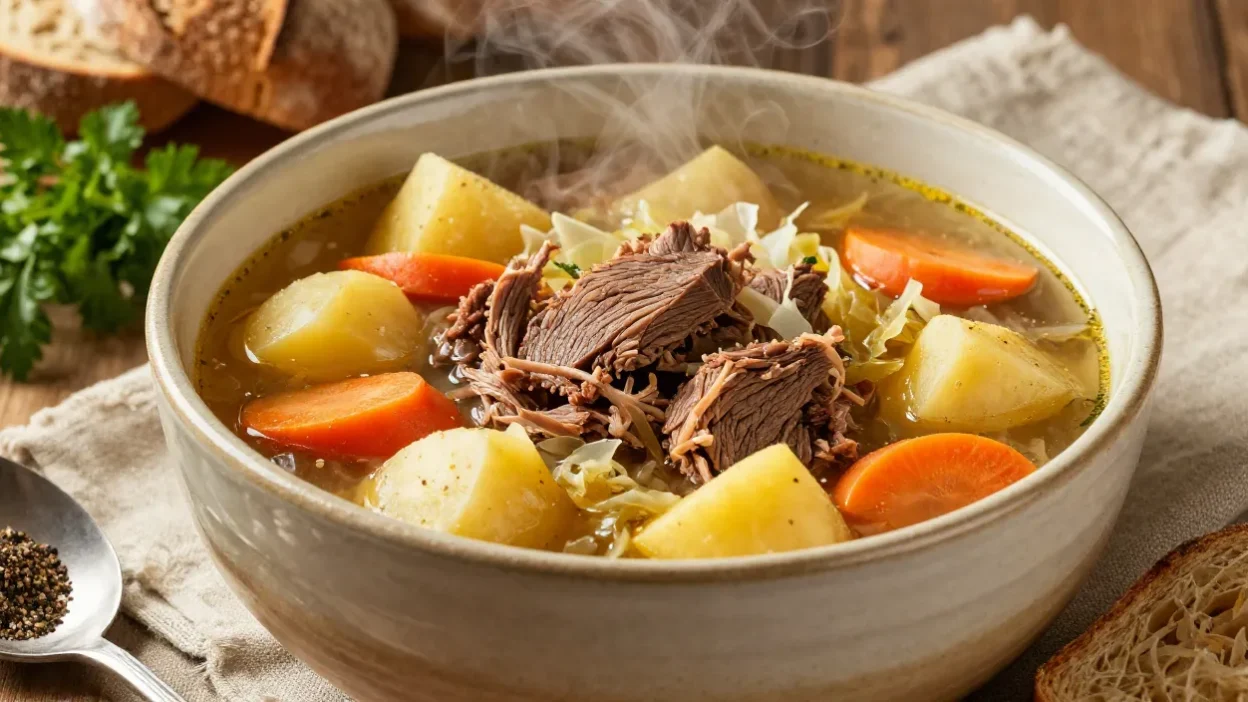
One thing I’ve always liked about this soup is that it doesn’t pretend to be anything else. It isn’t trying to reinvent a classic recipe or surprise you with unexpected ingredients. When you lift the lid, you get exactly what you were hoping for: tender beef, soft vegetables, and a broth that’s picked up a little bit of flavor from everything around it.
And honestly, that’s part of the appeal.
There are plenty of recipes that demand attention from start to finish. This isn’t one of them. The ingredients do most of the work themselves. The potatoes slowly soften, the carrots become sweeter than they were when they went in, and the cabbage loses that sharp edge that sometimes puts people off. Even people who claim they don’t really like cooked cabbage often seem perfectly happy to eat it here.
I’ve seen that happen more than once.
Someone starts by picking around the cabbage, then halfway through dinner they stop paying attention and eat it anyway because everything in the bowl tastes like it belongs together.
That’s probably the biggest strength of this soup. No single ingredient needs to carry the entire meal. The corned beef is important, of course, but without the vegetables the broth would feel flatter. Without the broth, the vegetables wouldn’t be nearly as interesting. Everything depends on everything else a little bit.
Maybe that’s why recipes like this keep surviving every food trend that comes along. New dishes become popular every year, but somehow there’s always room for a big pot of soup that has been quietly doing its job for generations.
🥕 Why slow cooking works so well for corned beef
I’ve made corned beef a few different ways over the years, and I keep coming back to the slow cooker for one simple reason: it’s difficult to mess up.
Corned beef isn’t particularly complicated, but it does ask for patience. If you rush it, the meat can stay firmer than you want. Give it enough time, though, and something interesting starts to happen. The texture gradually changes from dense and slightly stubborn to tender enough that a spoon can pull pieces apart without much effort.
The first time I made corned beef in a slow cooker, I remember checking it far too often.
Every hour I’d lift the lid, look inside, and convince myself something dramatic should be happening. Of course, it never was. Slow cookers aren’t exciting. They don’t provide instant gratification. Most of the transformation happens so gradually that you barely notice it until the end.
Then dinner arrives and suddenly the beef looks completely different from when you started.
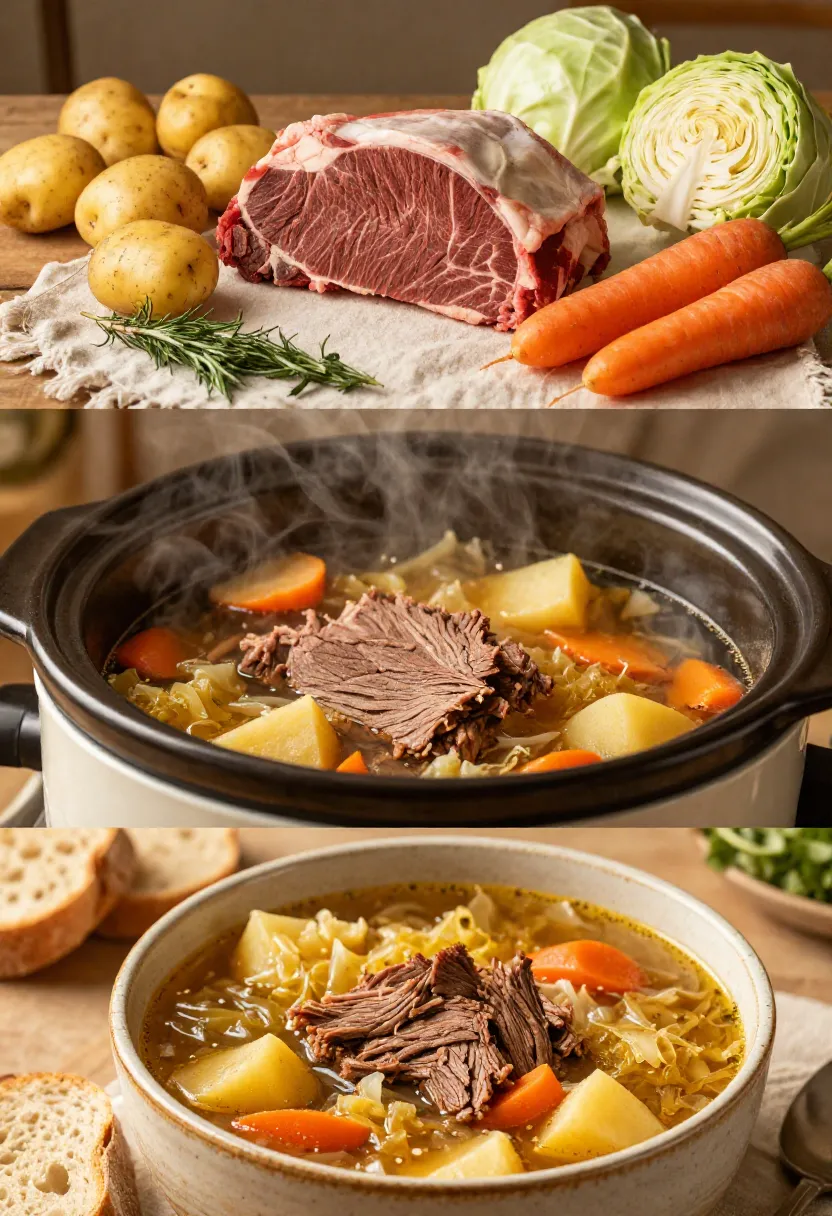
The vegetables go through a similar process. Potatoes absorb some of the seasoned broth while still holding their shape. Carrots soften and become noticeably sweeter. Cabbage changes the most. Early on it can seem like too much cabbage, if we’re being honest. Then several hours later it becomes silky, mild, and far less assertive than people expect.
I think that’s one reason this soup wins over so many cabbage skeptics.
The cabbage never dominates the bowl. It becomes part of the background, helping build flavor without constantly demanding attention.
Here’s how the main ingredients contribute to the finished soup:
| Ingredient | What it adds | Texture | Flavor contribution |
|---|---|---|---|
| Corned beef | Richness and protein | Tender, shreddable | Savory and salty |
| Cabbage | Body and softness | Silky | Mild sweetness |
| Potatoes | Hearty texture | Soft but substantial | Earthy and comforting |
| Carrots | Natural sweetness | Tender | Balances the broth |
Another thing I’ve noticed is how much the broth changes throughout the day.
At the beginning, it’s mostly liquid with a few seasonings floating around. Nothing particularly memorable. But after several hours, every ingredient starts contributing something. The potatoes release a little starch. The carrots add sweetness. The cabbage softens into the broth. The corned beef seasons everything around it.
By dinnertime, the broth tastes like it has been cooking far longer than it actually has.
And the nice thing is that you didn’t have to stand over the stove all day to make that happen.
🍀 A soup that feels tied to certain times of year
Some recipes can be made at any time and somehow feel exactly the same in every season. This isn’t really one of them.
For me, corned beef and cabbage soup has always belonged somewhere between winter and spring. Not during the coldest stretch of the year when everyone is craving thick stews and heavy casseroles, but during those unpredictable weeks when the weather can’t seem to make up its mind. One afternoon feels almost warm enough to leave the jacket at home, then the temperature drops again the next morning and suddenly a bowl of hot soup sounds like the best idea in the world.
This recipe seems perfectly suited to that transition.
The broth keeps it lighter than many winter dishes, but it’s still hearty enough to feel satisfying on a chilly evening. The vegetables help too. Potatoes make the soup filling, while the carrots and cabbage prevent it from feeling overly rich. By the time everything has spent several hours in the slow cooker, the balance feels just right for that awkward period when winter is starting to loosen its grip but spring hasn’t fully arrived yet.
I suspect part of the connection comes from tradition as well. A lot of people grew up seeing corned beef appear around the same time every year, so the smell alone can trigger memories before the first bowl even reaches the table.
It’s funny how that works.
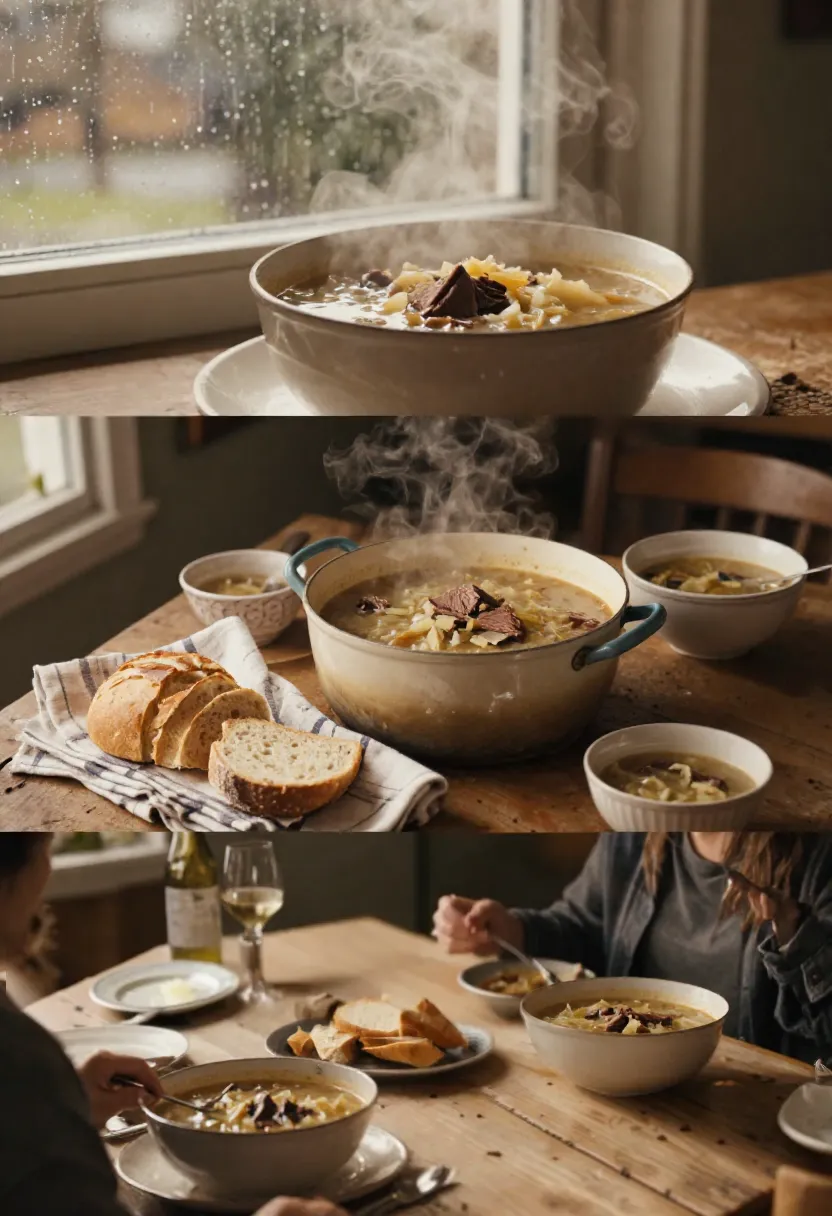
Most people couldn’t tell you exactly how a family recipe was made twenty years ago. Ask them how much cabbage went into the pot or what spices were used, and they’ll probably have no idea. But they often remember everything surrounding the meal. They remember who was there, what the weather was like, or whether the kitchen was crowded because everyone kept wandering in to see what was cooking.
I’ve caught myself doing the same thing.
There are meals from years ago that I remember clearly, yet if you asked me to recreate the recipe from memory, I’d struggle. What stuck wasn’t the ingredient list. It was the atmosphere. A rainy afternoon outside. A family gathering that lasted longer than expected. Somebody slicing bread while the soup finished cooking.
That’s one reason recipes like this tend to survive.
They become attached to ordinary moments that repeat often enough to matter.
A bowl of corned beef and cabbage soup isn’t usually the centerpiece of some major celebration. More often, it’s dinner on a weekend when everyone happens to be home, or a meal prepared because the weather turned cold again after a few promising spring days. Those occasions don’t seem particularly important at the time, but years later they’re often the ones people remember most clearly.
Another thing I appreciate about this soup is how well it handles leftovers. In fact, I usually expect to have some left over because the recipe naturally makes a generous batch. That’s never felt like a problem. If anything, it’s one of the advantages.
The next day, the broth seems a little deeper and more developed. The vegetables absorb additional flavor overnight, and the corned beef becomes even easier to shred into smaller pieces. Every time I make this soup, somebody ends up opening the refrigerator the following afternoon and immediately deciding what they’re having for lunch.
I’ve even had family members admit they prefer the leftovers.
After trying both versions more times than I can count, I’m not entirely convinced they’re wrong.
🍲 Slow cooker corned beef and cabbage soup recipe
I’ll be honest, this isn’t the kind of recipe that would have excited me a few years ago.
If someone had described it as “corned beef, cabbage, potatoes, and carrots in a slow cooker,” I probably would have pictured something heavy, old-fashioned, and mostly interesting to people who already grew up eating it.
Then I actually made it.
The first surprise was the broth. I expected something much richer and heavier. Instead, it ended up somewhere in the middle — flavorful enough to feel satisfying, but still light enough that finishing a bowl didn’t leave me feeling like I needed a nap afterward.
The second surprise was the cabbage.
Cabbage can be a difficult sell for some people. I’ve known plenty of people who automatically push it to the side of the plate whenever it shows up. In this soup, though, it behaves differently. After spending hours in the broth, it softens, absorbs flavor from everything around it, and stops feeling like a separate vegetable entirely. It just becomes part of the soup.
That’s probably true for most of the ingredients here.
Nothing is trying to stand out on its own. The potatoes become creamier, the carrots get sweeter, and the corned beef slowly falls apart into tender pieces that end up in almost every spoonful. By the time dinner is ready, the whole pot feels less like individual ingredients and more like one complete meal.
I also appreciate how little attention it needs once everything is cooking.
There are recipes that seem to require constant involvement. Stir this. Check that. Adjust the temperature. Taste again in twenty minutes.
This isn’t really one of those recipes.
Most of the work happens during the first few minutes while you’re chopping vegetables and getting everything into the slow cooker. After that, the soup mostly takes care of itself while you get on with the rest of the day.
And honestly, those are often the recipes that end up staying in regular rotation.
Not because they’re the most exciting.
Because they make life easier without feeling like a shortcut.
The only small downside is that leftovers tend to disappear faster than expected. Every time I make a large batch thinking it’ll last several days, somebody always seems to come back for another bowl.
Ingredients
- 2 pounds corned beef brisket
- 1 tablespoon olive oil
- 1 large yellow onion, diced
- 4 cloves garlic, minced
- 6 cups beef broth
- 3 cups water
- 4 medium carrots, sliced
- 4 medium Yukon Gold potatoes, diced
- 4 cups green cabbage, chopped
- 2 bay leaves
- 1 teaspoon dried thyme
- ½ teaspoon black pepper
- Seasoning packet from the corned beef (if included)
- Salt, to taste
- Fresh parsley, for serving
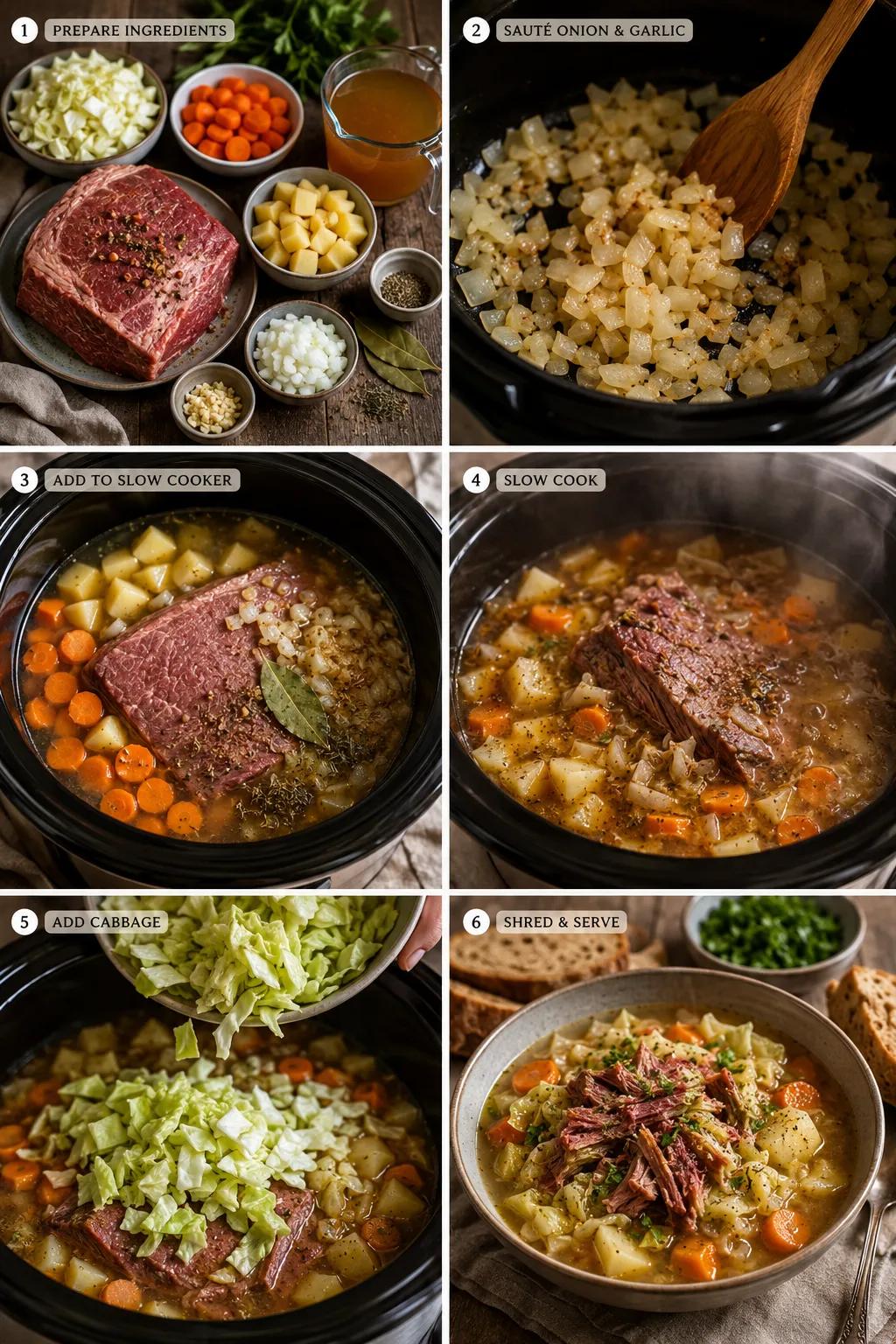
Instructions 👩🍳
- Remove the corned beef from its packaging and rinse it briefly under cool water. Some people skip this step, but I usually do it because it helps remove a little of the excess surface brine. Pat the meat dry and set it aside.
- Heat the olive oil in a skillet over medium heat. Add the onion and cook for 4–5 minutes until it begins to soften. Stir in the garlic and cook for another minute. This step isn’t absolutely necessary, but it gives the broth a little more depth later on.
- Transfer the onions and garlic to the slow cooker. Pour in the beef broth and water, then add the bay leaves, thyme, black pepper, and the spice packet that came with the corned beef if your brisket includes one.
- Place the corned beef into the slow cooker. It doesn’t need to sit perfectly flat. Once it starts cooking, it will settle naturally into the broth.
- Add the carrots and potatoes around the meat. Try not to pile everything directly on top of the brisket. Giving the vegetables some contact with the broth helps them cook more evenly.
- Cover and cook on LOW for 7–8 hours or HIGH for 4–5 hours. The exact timing depends on the size of the brisket, but you’ll know it’s ready when a fork slides into the meat without much resistance.
- About 60–90 minutes before the cooking time ends, add the chopped cabbage. I prefer adding it later because it keeps a little more texture. If cabbage cooks all day, it tends to become much softer than I personally like.
- Once the corned beef is fully tender, carefully transfer it to a cutting board. Let it rest for a few minutes before slicing or shredding. While it’s resting, remove the bay leaves from the soup.
- Slice the corned beef against the grain or shred it into bite-sized pieces using two forks. Return the meat to the slow cooker and stir everything together gently.
- Taste the broth before adding any extra salt. Corned beef already brings quite a bit of seasoning to the pot, and some batches need very little additional salt. Adjust if necessary.
- Ladle the soup into bowls and finish with fresh parsley. Serve hot with crusty bread, soda bread, or simply on its own. 🥖
✨ Small tips that make a big difference
- If the broth tastes a little too salty, add an extra potato during cooking. Potatoes absorb some of the excess salt surprisingly well.
- Yukon Gold potatoes hold their shape better than russets in long-cooked soups.
- Don’t add the cabbage too early if you prefer a little texture in the finished soup.
- A splash of apple cider vinegar right before serving can brighten the broth without making it taste sour.
- This soup stores beautifully in the refrigerator for up to 4 days and often tastes even better on day two.
- If you’re planning for leftovers, keep a little extra broth on hand. The potatoes tend to absorb liquid overnight.
🥖 Small changes that can completely change the soup
One thing I’ve noticed about recipes like this is that nobody makes them exactly the same way forever.
The first few times, people usually follow the recipe closely. Then something happens. Maybe there are extra carrots sitting in the refrigerator. Maybe somebody accidentally buys too many potatoes. Maybe a bunch of parsley needs to be used before it goes bad. Little by little, the recipe starts changing.
That’s probably how most family recipes evolve in the first place.
The first time I added parsnips to this soup wasn’t part of some grand plan. I had bought them for another meal, forgotten about them for several days, and suddenly needed somewhere to use them. They ended up in the slow cooker almost as an afterthought.
The funny thing is that they worked so well that I’ve added them several times since.
They become incredibly soft during the long cook and add a gentle sweetness that fits naturally with the carrots and cabbage. The soup still tastes like corned beef and cabbage soup. It just gains another layer of flavor that feels like it was always supposed to be there.
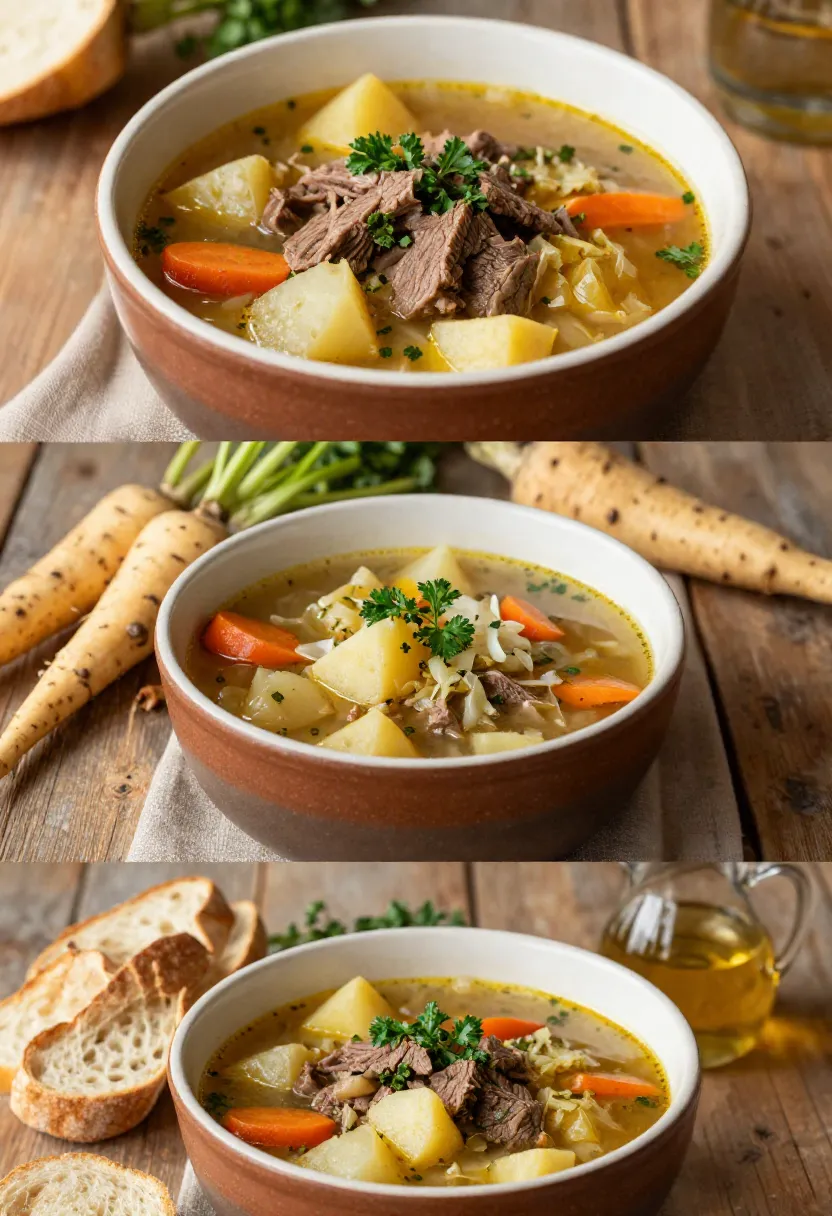
I’ve had similar experiences with turnips, extra garlic, and even leftover celery. None of those ingredients completely transform the recipe. What they do is nudge it slightly in a different direction.
The same thing happens with herbs.
Some days I want the broth to stay simple and let the beef do most of the work. Other days I throw in extra thyme because the weather feels particularly cold and somehow thyme always seems to suit cold weather meals. I can’t really explain why.
Fresh parsley at the end makes a bigger difference than people expect too. After staring at a slow cooker full of beige and golden vegetables for eight hours, those little green flecks suddenly make the whole bowl look more alive.
A few additions that work particularly well include:
- Parsnips for extra sweetness 🥕
- Turnips for a deeper earthy flavor
- Celery for additional aroma
- Extra garlic cloves
- Fresh thyme
- Chopped parsley
- A small splash of apple cider vinegar before serving
- Extra potatoes for a heartier bowl
What I like most is that the soup remains recognizable no matter what you add. Some recipes completely change the moment you start experimenting with them. This one is surprisingly forgiving. Even after a few adjustments, it still feels like the same comforting soup people have been making for years.
🍽️ The kind of meal that naturally gathers people around the table
There are plenty of dinners that require a surprising amount of coordination. You spend time thinking about side dishes, cooking times, presentation, and whether everything will be ready at exactly the right moment. By the time people sit down to eat, you’ve already spent half the evening managing the meal.
This soup is about as far from that experience as possible.
Once everything is in the slow cooker, most of the work is finished. The soup quietly takes care of itself while you go about the rest of your day. By the time dinner arrives, there isn’t much left to do beyond slicing some bread, setting out bowls, and deciding where to put the ladle.
One thing I’ve noticed is that people usually smell this soup long before they see it.
After several hours of cooking, the aroma tends to drift through the entire house. At some point during the afternoon, somebody inevitably wanders into the kitchen under the pretense of checking on dinner. They’re not really checking on anything. The soup has been doing exactly what it’s supposed to do for hours. Most of the time they’re just curious about how much longer they have to wait.
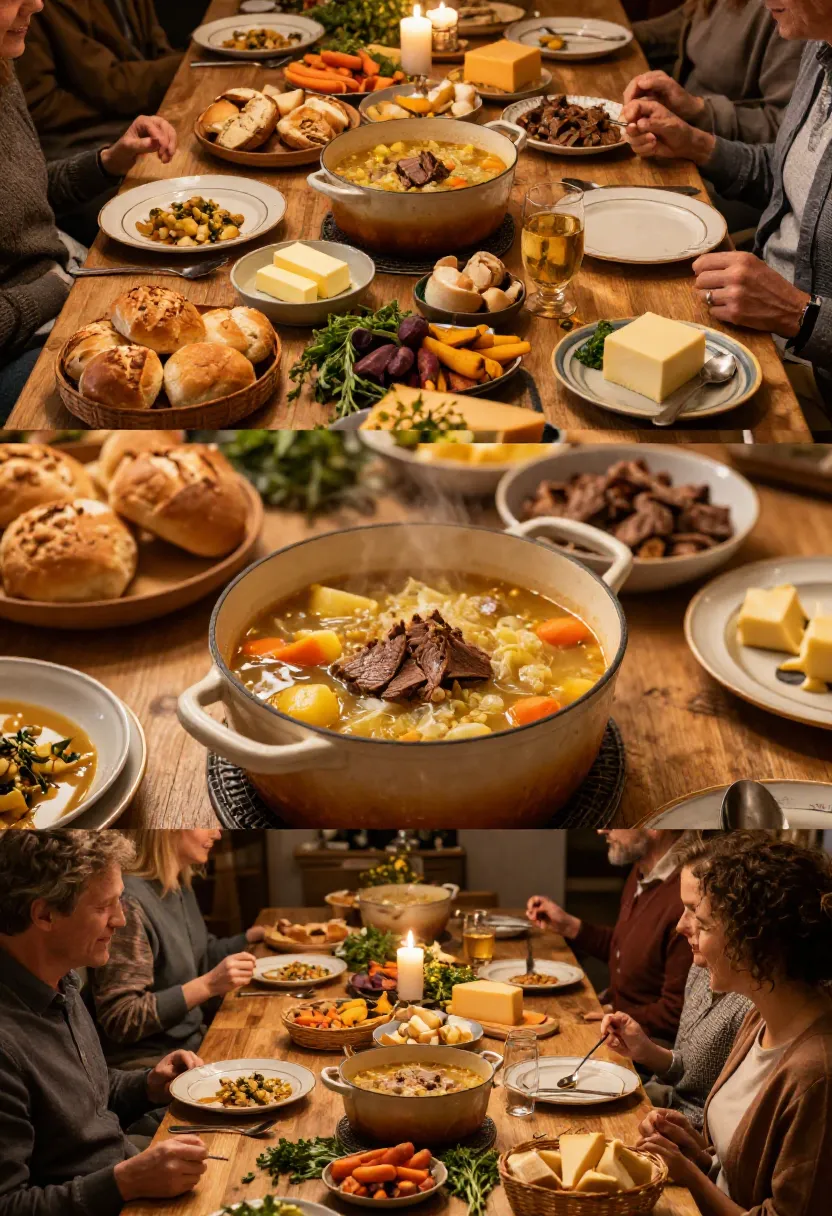
I’ve lost count of how many times somebody has asked when we’re eating while the slow cooker is still happily bubbling away in the background.
Bread almost always ends up on the table too. Not because the soup absolutely needs it, but because good broth and good bread seem to find each other naturally. Somebody tears off a piece and starts dipping. A few minutes later everyone else is doing the same thing. Before long, half the loaf has disappeared and dinner has barely started.
A few things pair especially well with this soup:
- Warm Irish soda bread 🥖
- Crusty sourdough
- Salted butter
- Sharp cheddar cheese
- A simple green salad
- Roasted root vegetables
- Sparkling cider
- Pickles or mustard on the side
What I like most about meals like this is the atmosphere they create. People rarely rush through a bowl of hot soup, especially when there’s plenty left in the pot. Dinner tends to move at a slower pace. Conversations drift from one topic to another, someone gets up for more bread, and the person who originally insisted they only wanted a small serving somehow ends up going back for seconds.
Those are usually the meals I remember best.
Not because the table looked perfect or because the recipe was particularly impressive. More often it’s because everyone felt comfortable enough to linger for a while. A slow cooker on the counter, a basket of bread in the middle of the table, and enough soup for anybody who wants another bowl — sometimes that’s all a good dinner really needs.
🍀 Why soups like this become part of family memories
I’ve always found it interesting how certain recipes become tied to particular periods of life. Not necessarily because they’re the best meals you’ve ever eaten, but because they keep appearing during moments that matter.
Corned beef and cabbage soup feels like one of those recipes.
Nobody usually talks about it the way they talk about a holiday feast or a special restaurant meal. Yet years later, people often remember it surprisingly well. Not because of the exact ingredients, but because of everything that happened around it.
I was thinking about that recently and realized I couldn’t tell you the precise recipe for some of the soups I grew up eating. I honestly have no idea how much cabbage went into them or whether they simmered for six hours or eight. What I do remember is coming home and smelling dinner before I even opened the kitchen door. I remember rainy afternoons, cold evenings, and family members wandering in to check what was cooking even though there wasn’t really anything left to do.
That’s usually how food memories work.
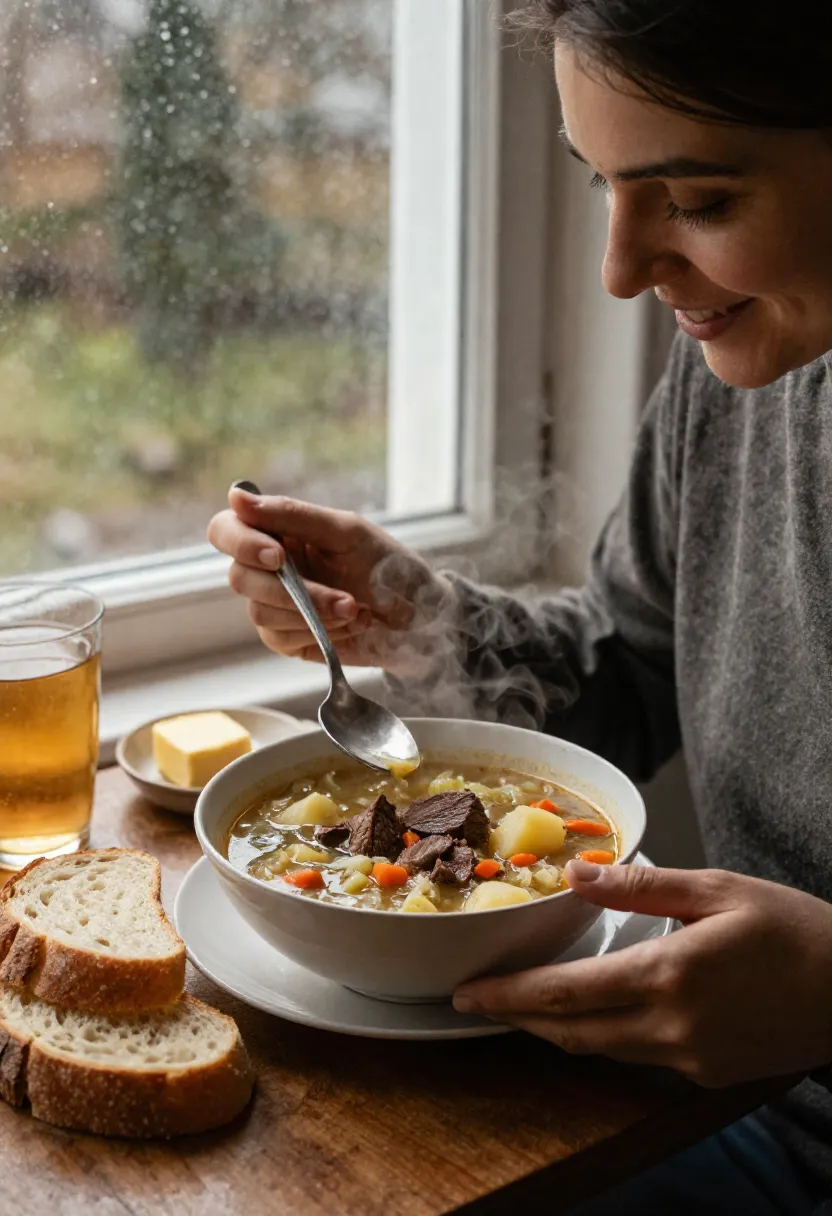
The recipe itself becomes tangled up with the rest of life. After enough years, it’s difficult to separate the meal from the people who were eating it, the conversations happening around the table, or even the weather outside.
This soup fits particularly well into that kind of memory because it isn’t reserved for special occasions. It shows up during ordinary weeks. It’s the sort of thing people make when they want a dependable dinner without spending the entire evening cooking. Over time, those ordinary dinners start adding up.
One thing I’ve noticed is that soups often create their own small traditions without anyone planning them. Maybe somebody always serves bread alongside the bowls. Maybe one family member insists on extra black pepper every single time. Maybe everyone automatically checks the refrigerator the next day because they know the leftovers will be there.
Speaking of leftovers, I genuinely think this is one of those soups that improves overnight.
The broth seems to settle down and pull everything together. The vegetables absorb more flavor, the beef becomes easier to shred into smaller pieces, and somehow the entire bowl tastes a little more complete. Every time I make a large batch, somebody ends up claiming the leftovers are better than the original dinner.
Honestly, they might be right.
Maybe that’s the real reason recipes like this stick around for so long. They fit naturally into everyday life. They’re filling, reliable, easy to make in large batches, and usually appreciated by everyone at the table. That’s not the kind of thing people get excited about in food magazines, but it’s exactly the kind of thing that keeps a recipe alive for decades.
Long after the exact recipe has been forgotten, people still remember that there was always a pot of soup on the stove, plenty for seconds, and usually enough left for tomorrow too.