There’s a point where heavy food just stops hitting the same way. You don’t notice it right away. It kind of builds—one rich dinner, then another, then something similar again. And at some point you sit there thinking, “why does this feel like too much?”
Not because you ate a lot. Just because it feels… heavy in a way that lingers.
It’s not about wanting less food either.
It’s more like you want something that still feels like a proper meal, but doesn’t slow you down after. Something with real flavor, something filling—but without that “I need a break” moment halfway through.
That’s harder to get right than it sounds.
And that’s why this lamb salad works in a way you don’t really expect at first.
Because if you just hear “lamb,” you probably picture something rich, slow-cooked, maybe even a bit heavy. The kind of meal you sit down for and don’t move much after. Not exactly what you’d call light.
But the way it’s handled here changes everything.
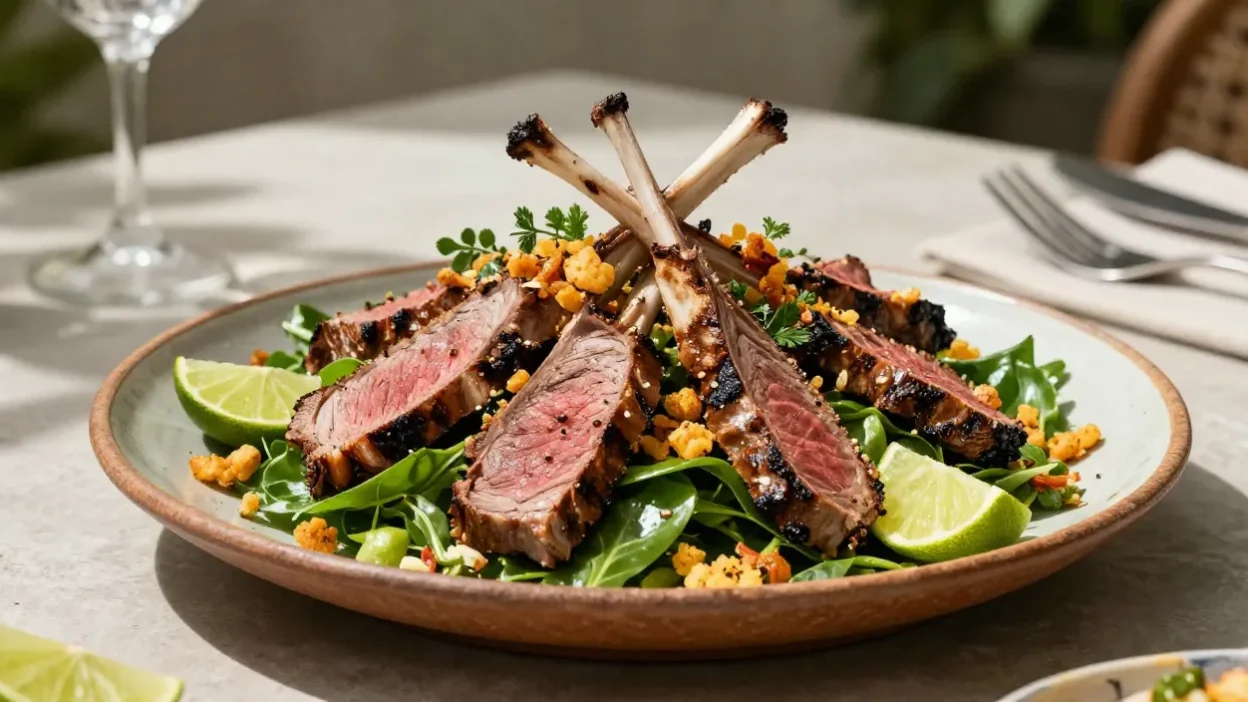
Put it on a grill instead of roasting it, and the flavor feels cleaner, more direct. Slice it thin instead of serving big pieces, and suddenly it doesn’t weigh down the plate as much. Add herbs, citrus, something with a bit of crunch—and the whole thing shifts into something that actually feels balanced.
It stops feeling like “lamb dish” and starts feeling like something else entirely.
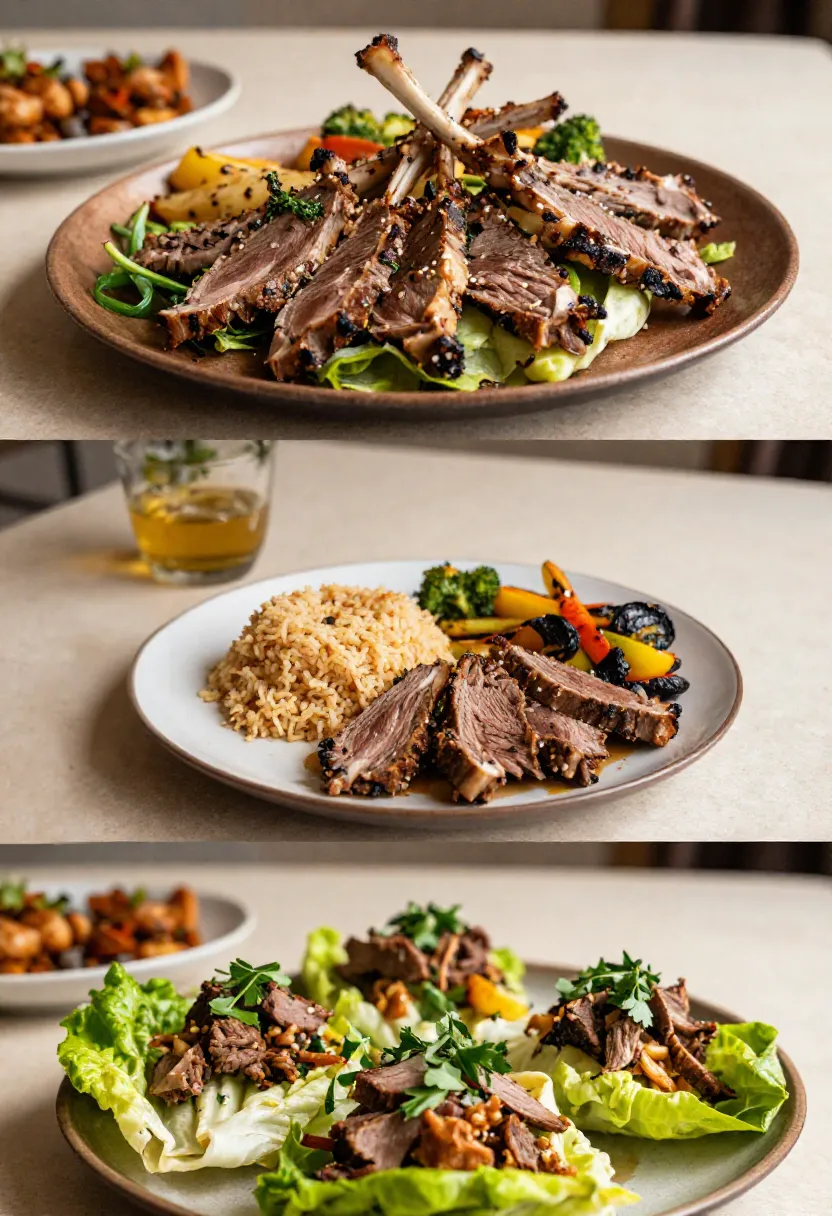
Even the way it looks plays a role. When it’s a bit loose, colorful, not perfectly arranged, it already feels easier to eat. You don’t go into it expecting heaviness, so you don’t experience it that way.
And that carries through the whole meal.
You still feel full, but not slowed down. You don’t hit that sudden point where you’re done halfway through. It just… keeps working, bite after bite.
And that’s probably the best way to describe it.
It doesn’t try to be light. It just doesn’t get heavy in the way you expect.
🔥 Why Grilled Lamb Works So Well Here
Grilling ends up doing way more work in this dish than you’d expect. It’s not just about cooking the lamb—it’s what makes it actually fit into something lighter without losing that “this is still lamb” feeling.
The difference shows up right away.
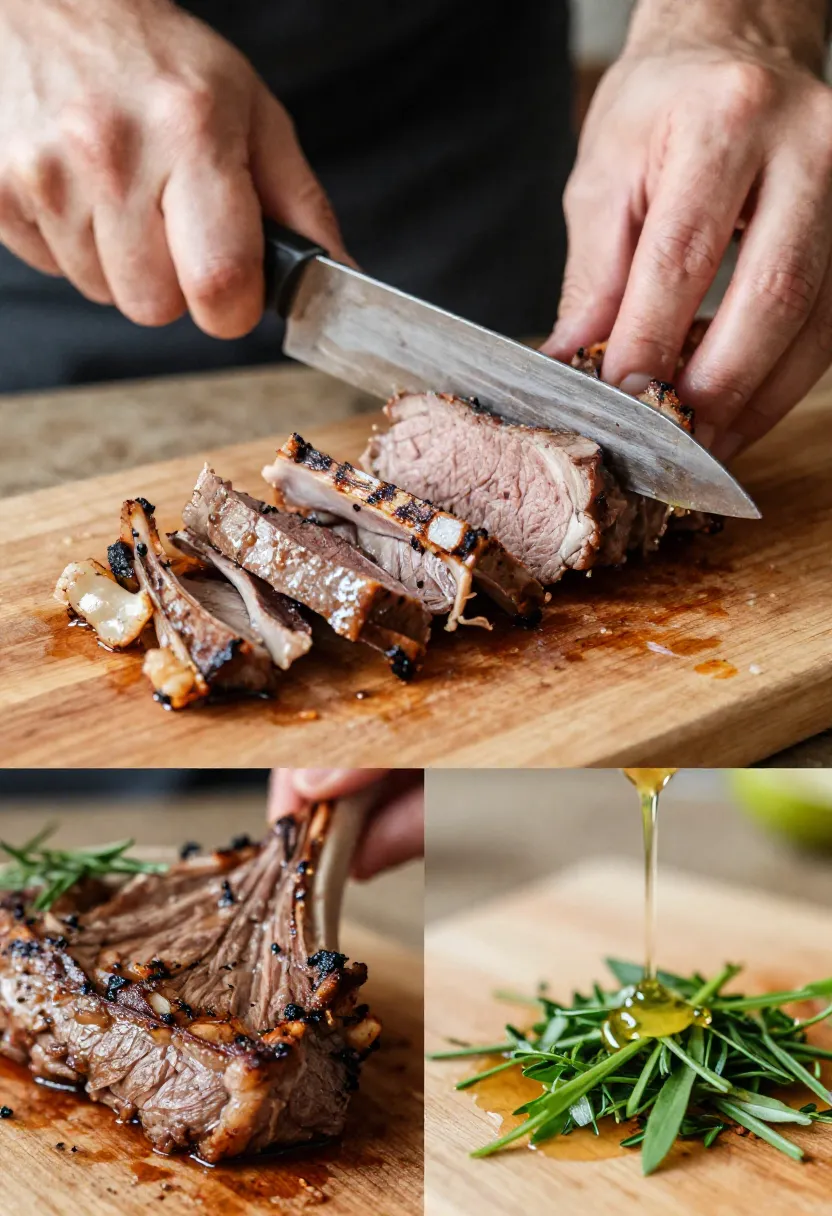
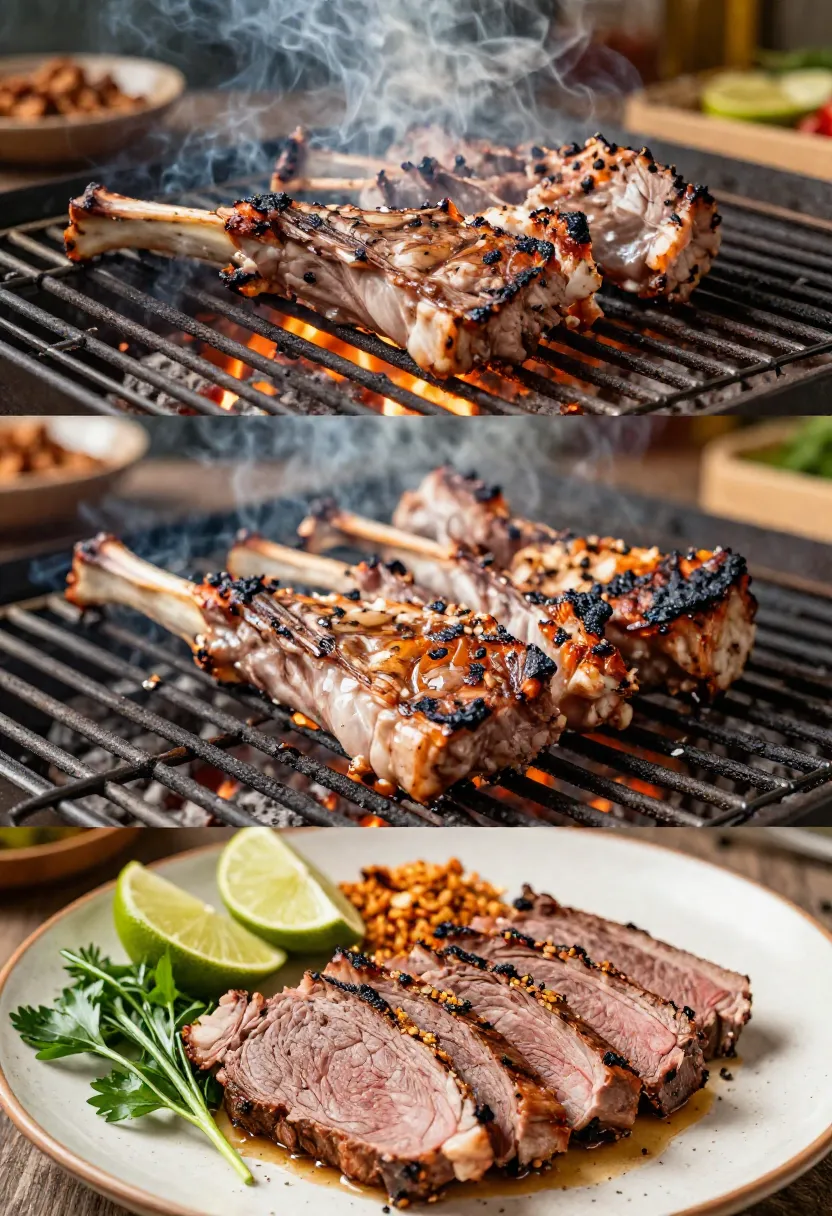
On the grill, the heat hits fast. The outside gets a bit of char, slightly crisp in places, while the inside stays juicy. That contrast is what saves it from feeling heavy. If everything were soft all the way through, it would get tiring pretty quickly. This way, every bite has a bit of texture to it.
Flavor changes too, but in a pretty straightforward way.
You get that light smokiness from the grill, a bit of char—nothing aggressive, just enough to give it depth. And because of that, you don’t really need much else. No heavy marinades, no complicated spice mixes. The heat does most of the work, and it keeps the whole thing cleaner.
What I like is that the lamb doesn’t take over the plate.
That sounds weird for lamb, but it’s intentional here. It’s not trying to be the centerpiece you build everything around. It just sits in the mix with everything else—herbs, citrus, whatever crunch you’ve added—and that’s what makes it feel balanced instead of heavy.
If you break it down, each part is doing its own job:
- the grill gives the lamb structure and that slightly smoky edge
- citrus cuts through the richness so it doesn’t build up
- herbs keep things fresh and stop it from feeling flat
- crunchy bits make sure you don’t get bored halfway through
There’s also a point where doing less actually helps.
Lamb can handle bold flavors, sure, but if you go too far with marinades or spices here, it just muddies everything. You lose that clean contrast between the meat and the fresh elements. Keeping it simple works better.
And slicing—this is one of those details people skip over, but it matters.
If you leave the lamb in big pieces, it feels like a separate thing on the plate. Slice it thin, and it mixes in with everything else. You get a bit of lamb, a bit of herbs, maybe some citrus, all in one bite.
That’s the moment where it stops being “lamb with salad” and starts feeling like one dish.
🌱 The Role of Herbs and Freshness
The herbs are what stop this dish from sliding back into something heavy. Without them, you’d still have well-cooked lamb—but after a few bites, it would start to feel slower, denser, a bit harder to keep going.
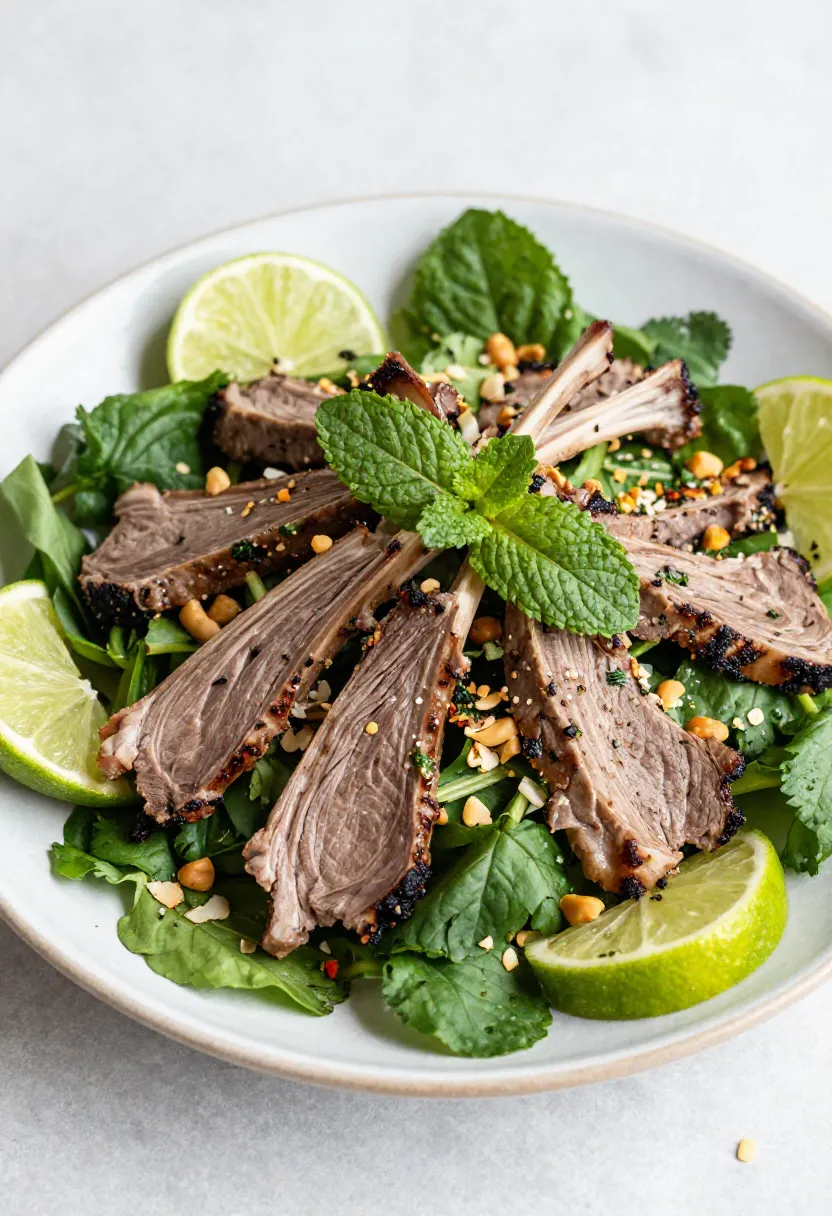
Mint is the first thing you notice.
It hits right away—that cool, fresh note against the warm lamb. And it doesn’t take over, it just keeps resetting things. You take a bite, and instead of the richness building up, it kind of clears the way for the next one.
Basil and coriander come in a bit quieter.
Basil softens everything slightly, almost like it rounds off the sharper edges. Coriander adds that light, almost citrusy lift. You don’t always think about them individually, but together they keep the flavor from feeling flat.
Lemongrass is the one you almost don’t notice.
It sits in the background, but if you leave it out, the dish suddenly feels simpler. Less complete. It blends into the lamb and gives it that extra layer you don’t quite name, but you feel.
And then there’s the dressing.
Without it, everything kind of sits next to each other instead of coming together. With it, the meat, herbs, and textures actually feel like one dish. It’s not just about flavor—it’s what connects everything.
If you break it down, each part is doing something small but important:
| Component | Flavor Profile | Texture Contribution | Functional Role | If Missing | Practical Tip |
|---|---|---|---|---|---|
| Mint | Cool, fresh, slightly sweet | Soft, leafy | Refreshes palate, balances richness | Dish feels heavier and less dynamic | Add at the very end to keep it vibrant |
| Basil | Mild sweetness, rounded herbal notes | Soft | Smooths sharper flavors | Flavor feels less balanced | Tear by hand instead of chopping |
| Coriander | Bright, slightly citrusy | Light | Adds lift and freshness | Dish loses brightness | Use stems too for extra flavor |
| Lime | Clean, sharp acidity | Liquid | Cuts through fat, adds clarity | Dish feels flat or slightly greasy | Adjust gradually to avoid overpowering |
| Lemongrass | Subtle citrus, slightly floral | Integrated into meat | Builds background complexity | Flavor feels simpler | Finely chop for even distribution |
| Peanuts | Nutty, slightly salty | Crunchy | Adds contrast and structure | Texture becomes softer | Crush roughly, don’t overprocess |
| Coconut flakes | Light sweetness, toasted notes | Crisp/light | Adds variation and gentle sweetness | Dish feels less layered | Toast lightly for better aroma |
| Chili | Heat | Minimal | Adds intensity and contrast | Flavor feels calmer | Add gradually to control heat |
| Dressing | Balanced acidity and sweetness | Coating element | Connects all components | Dish feels disconnected | Taste and adjust before serving |
What’s interesting is that nothing here is strong on its own.
But together, they keep the dish moving. One bite is a bit richer, the next feels fresher, then you get some crunch—it keeps shifting just enough so you don’t get tired of it.
That’s also why it doesn’t feel overbuilt.
Nothing is trying to stand out too much. And because of that, everything ends up working better.
🍽️ Recipe: BBQ Lemongrass Lamb Salad with Mint Dressing
This dish kind of sits in between a proper main and something you’d put in the middle of the table to share—and that’s exactly why it works so well.
At the center of it is the lamb. Grilled, slightly smoky, juicy inside, with just enough char on the outside to give it some texture. Nothing complicated there, but it sets the tone.
What makes the whole thing feel different is what happens around it.
Instead of building on that richness, everything else pulls in the opposite direction. Herbs, citrus, a lighter dressing—it all keeps the lamb from feeling heavy. You still get that savory, satisfying bite, but it doesn’t stick with you in a way that slows you down.
The texture is what really keeps it interesting.
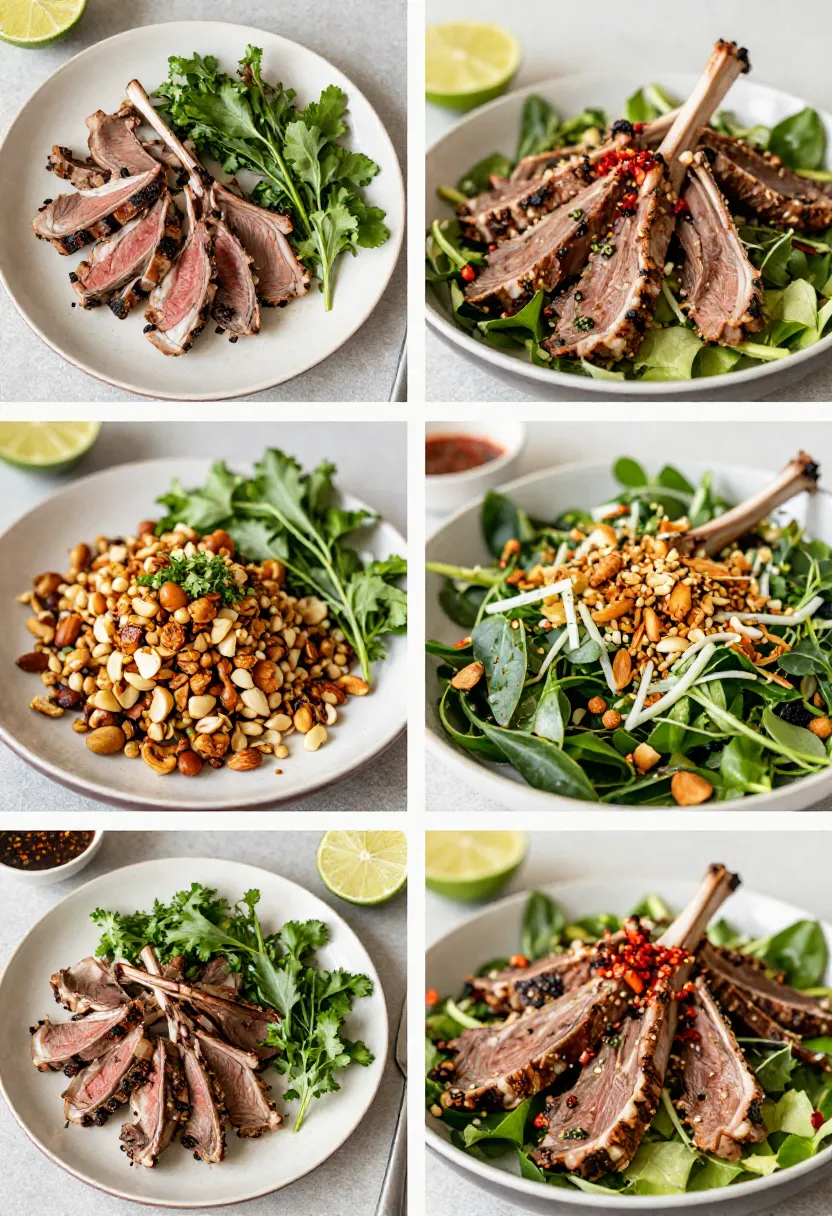
You get the softness of the lamb, then something crunchy from the peanuts, a bit of crispness from the coconut, and that fresh hit from the herbs. It keeps changing slightly from bite to bite, so you don’t get that moment where everything starts to taste the same.
It’s also not the kind of dish that needs to look perfect.
If anything, it’s better when it doesn’t. The lamb’s a bit uneven, the herbs are scattered, the dressing ends up wherever it lands. It looks more natural that way—less like something styled, more like something you actually want to eat.
And it’s flexible in how you serve it.
You can bring it out straight off the grill while the lamb is still warm, or let it sit a bit and serve it closer to room temperature. It works as a main if you’re keeping things simple, but it also fits right into a bigger table without taking over everything else.
It’s also one of those recipes that looks more complicated than it really is.
You make it once, and the next time you don’t really need to think about it anymore. Which usually means it’s going to stick around.
🧾 Ingredients
For the lamb:
- 1 butterflied leg of lamb (about 1.5–2 kg)
- 1–2 stalks lemongrass (finely chopped or grated)
- 2 tablespoons olive oil
- salt and freshly ground black pepper
For the mint dressing:
- a large handful of fresh mint leaves
- juice of 2–3 limes
- 2 tablespoons vinegar (rice or white wine vinegar)
- 1–2 tablespoons sugar or honey
- 2–3 tablespoons water
- a pinch of salt
For the salad:
- ½ cup toasted coconut flakes
- ¼ cup roasted peanuts (roughly crushed)
- mixed fresh herbs (mint, basil, coriander)
- 1 red chili, thinly sliced (optional 🌶️)
- crispy fried garlic or shallots
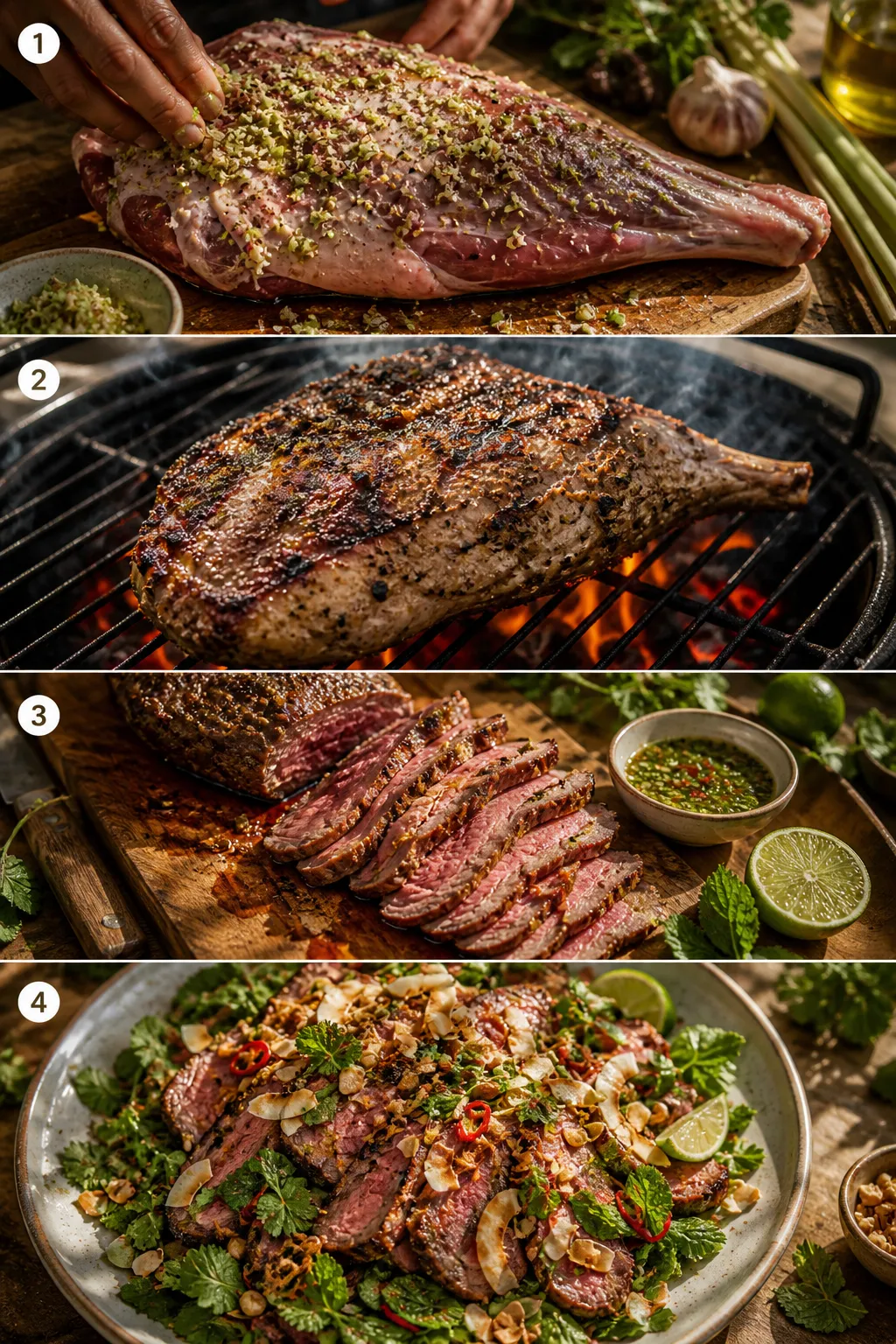
👨🍳 Cooking Instructions
- Prepare the lamb
Remove the lamb from the refrigerator about 30–40 minutes before cooking. Rub it evenly with olive oil, then add the finely chopped lemongrass, salt, and pepper. Let it sit to absorb the flavors. - Make the dressing
In a bowl, combine lime juice, vinegar, sugar, water, and a pinch of salt. Stir until the sugar dissolves. Add the mint leaves and blend or finely chop until the dressing is smooth but still fresh. Taste and adjust if needed. - Preheat the grill
Heat your BBQ or grill pan to medium-high. Make sure the surface is properly heated before placing the lamb on it. - Cook the lamb
Place the lamb on the grill, starting with the fat side down. Cook for about 15–25 minutes, turning occasionally, until the outside is nicely charred and the inside reaches your preferred doneness. - Rest the meat
Remove the lamb from the heat and let it rest for at least 10–15 minutes. This step helps keep the meat juicy. - Prepare the salad base
In a large bowl, combine coconut flakes, peanuts, fresh herbs, chili, and crispy garlic or shallots. - Slice the lamb
Cut the lamb thinly against the grain. This improves tenderness and helps it mix better with the salad. - Assemble the dish
Arrange the sliced lamb on a serving platter. Drizzle with the mint dressing and scatter the salad mixture over the top.
💡 Small Tips & Kitchen Hacks
- let the lamb rest properly — skipping this step usually leads to drier meat
- add dressing gradually instead of all at once
- slice thinner than you think you need — it really improves texture
- lightly toast coconut flakes, but don’t let them get too dark
- always taste the dressing right before serving, it can change slightly over time