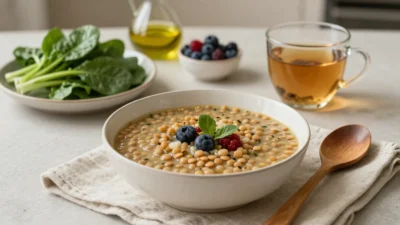
Iodine deficiency can sneak up in a surprisingly ordinary way.
Maybe you switched to flaky sea salt because it looks prettier on the counter. Maybe you do not eat much seafood. Maybe dairy does not sit well with you anymore, so milk and yogurt quietly disappeared from your fridge. None of those choices are “bad.” They are normal food choices. But together, they can lower the amount of iodine in your diet more than you might expect.
Iodine is a tiny mineral with a big job. Your thyroid uses it to make thyroid hormones, which help regulate metabolism and support normal growth and development. During pregnancy and infancy, those hormones are especially important for brain and bone development. (Office of Dietary Supplements)
That is why iodine matters so much. Not because it is trendy. Not because you need to panic-buy supplements. But because your thyroid depends on a steady supply, and your body cannot make iodine on its own.
The tricky part is that low iodine symptoms can feel vague. You might feel tired, cold, foggy, constipated, or just not quite like yourself. Those signs can come from many things, so this is not something to self-diagnose from a blog article. Still, it is worth knowing how iodine deficiency works, who is more likely to need extra attention, and which foods can help you cover the basics.
In this guide, we will talk about the connection between iodine and thyroid health, the common signs of low iodine, why pregnancy and breastfeeding increase iodine needs, and the everyday foods that can support a healthy intake. Think iodized salt, seafood, dairy, eggs, and a careful word about seaweed.
Small mineral. Big ripple effect.
Why iodine matters for your thyroid
Your thyroid is a small gland at the front of your neck, but it is busy all day. It helps control how your body uses energy, how warm or cold you feel, how your digestion moves, and how steady your energy feels from morning to night.
Iodine is one of the main raw materials your thyroid needs to make thyroid hormones. The two big ones are called T4 and T3. You do not need to remember the names, but here is the simple version: without enough iodine, your thyroid may struggle to make enough of these hormones. NIH describes iodine as an essential part of thyroid hormones, which help regulate metabolism and other important body functions. (Office of Dietary Supplements)
What iodine does in the body
I like to think of iodine as one of those tiny kitchen ingredients you barely notice until it is missing. Like salt in soup. You do not always taste it directly, but without it, everything feels flat.
In your body, iodine helps with:
- thyroid hormone production
- normal metabolism
- growth and development
- brain and bone development during pregnancy and infancy
That last point matters a lot. During pregnancy and early life, thyroid hormones help support normal brain and bone development, which is why iodine needs become more important during pregnancy and breastfeeding. (Office of Dietary Supplements)
Why your body needs iodine from food
Your body cannot make iodine by itself. You have to get it from food, iodized salt, or, in some cases, supplements.
That sounds simple, but modern eating habits can make it a little less obvious. A person might cook with sea salt, drink oat milk instead of dairy milk, skip seafood, and rarely eat eggs. Again, none of those choices are automatically wrong. But if several iodine sources disappear from your plate at the same time, your intake can drop.
This is why iodine deficiency is often less about one dramatic mistake and more about small habits stacking up quietly.
Why deficiency can feel confusing
Low iodine can affect thyroid hormone production, but the symptoms are not always clear-cut. Tiredness, feeling cold, dry skin, constipation, or brain fog can come from many different things: poor sleep, low iron, stress, under-eating, medication changes, thyroid disease, and more.
So, no, you should not look at one symptom and decide you have iodine deficiency.
But you can use your symptoms as a reason to pause and ask better questions:
- Am I using iodized salt, or just sea salt?
- Do I eat seafood, dairy, or eggs regularly?
- Am I pregnant, breastfeeding, vegan, or on a very restricted diet?
- Have I had my thyroid checked recently?
If something feels off for more than a couple of weeks, especially if you notice neck swelling, unusual fatigue, or big changes in weight, temperature sensitivity, or digestion, it is worth talking with a healthcare provider. Testing is much more useful than guessing.
How iodine deficiency can happen in everyday eating
Iodine deficiency does not always come from an extreme diet. Sometimes it starts with very normal kitchen choices.
You buy a prettier salt. You swap cow’s milk for almond milk. You stop making tuna sandwiches because you got bored of them. You eat eggs only once in a while. Little by little, the foods that used to bring iodine into your diet are not showing up as often.
That is the part people miss. Iodine is not something you usually track the way you might track protein or fiber. It is quiet.
Using non-iodized salt
This is one of the easiest details to overlook.
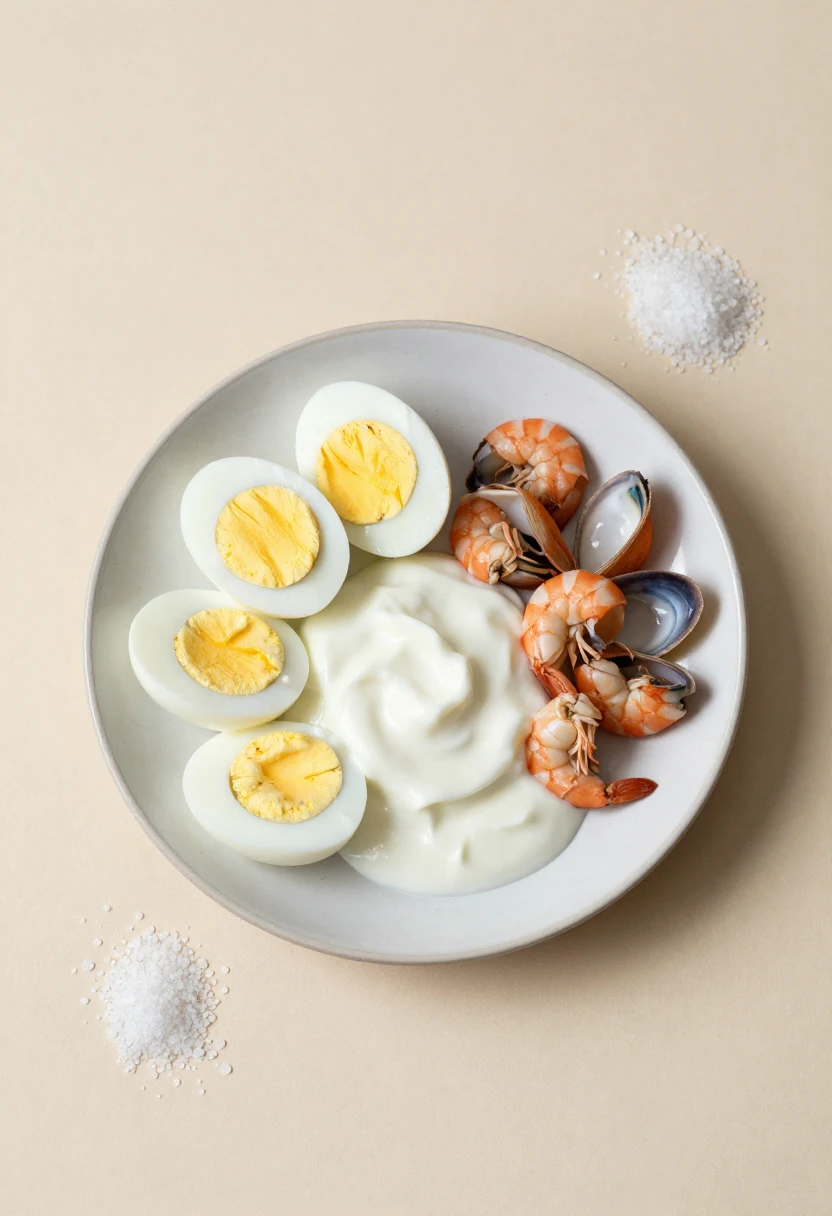
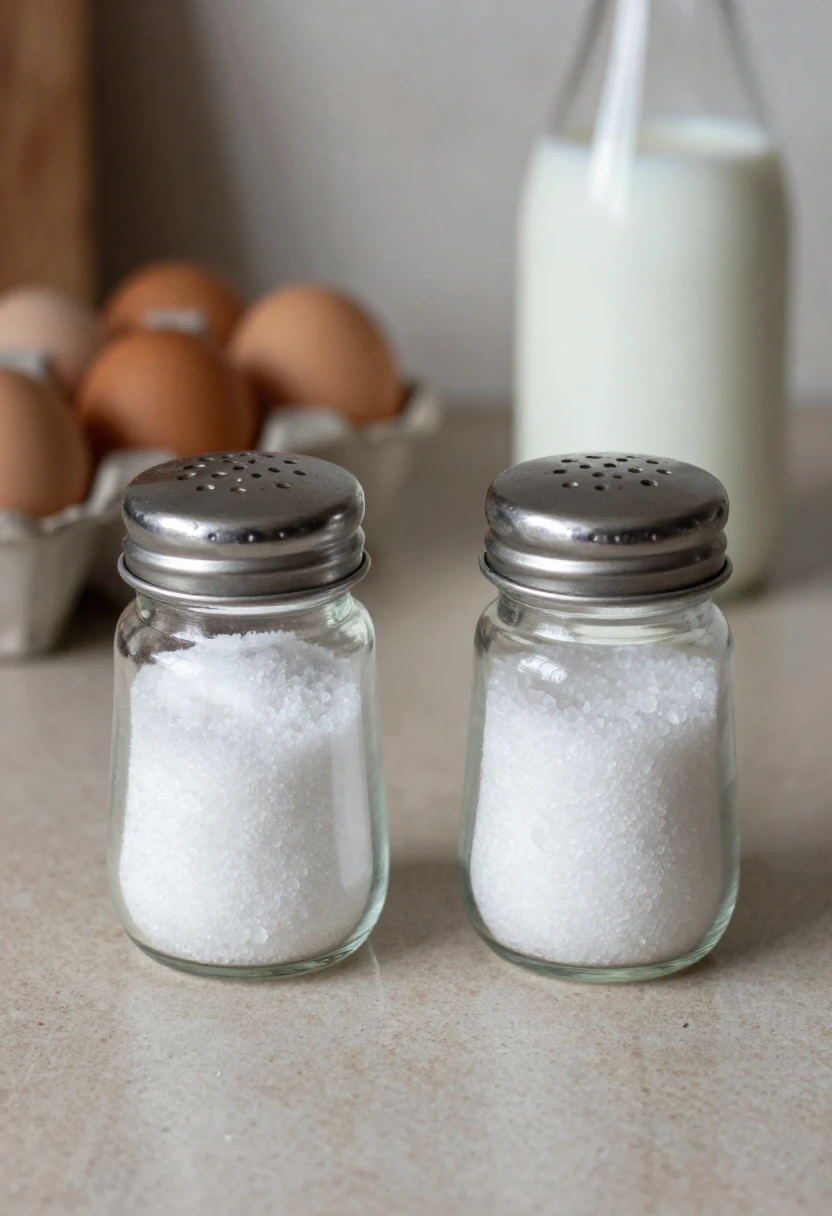
Many people assume all salt contains iodine, but it does not. Iodized salt has iodine added. Sea salt, kosher salt, Himalayan salt, and flaky finishing salts are often not iodized unless the label clearly says so.
And yes, those salts can taste lovely. I keep flaky salt around too because it makes tomatoes, eggs, and roasted vegetables better. But for everyday cooking, it is worth checking whether your main salt is iodized.
One small note: this does not mean you should eat more salt. It means that if you already use salt at home, choosing iodized salt can help support your iodine intake without changing the whole way you eat.
Eating little seafood or dairy
Seafood and dairy are two common iodine sources in many diets. If you eat them regularly, you may be getting more iodine than you realize.
But if they are rare on your plate, intake can dip.
This can happen if you:
- rarely eat fish or shellfish
- avoid milk, yogurt, or cheese
- use plant-based milks that are not fortified with iodine
- rely mostly on packaged foods, where the salt used is often not iodized
I have seen this happen with people who are trying to eat “cleaner.” They cook more at home, buy mineral salts, cut back on dairy, and choose plant-based swaps. Again, not bad choices. But iodine can slip through the cracks.
Following vegan or very restricted diets
A vegan diet can be healthy and balanced, but iodine needs a little planning.
That is because many familiar iodine sources come from animal foods: dairy, eggs, fish, and shellfish. If those are off the table, you usually need to be more intentional with iodized salt, fortified foods, or a carefully chosen supplement.
Seaweed sounds like the obvious answer, but it deserves caution. Some seaweed contains moderate iodine. Some contains a lot. Kelp, especially, can be extremely high. That does not make seaweed “bad,” but it does make it hard to use casually as your only iodine strategy.
A few sheets of nori with rice? Usually a different story than daily kelp tablets.
Pregnancy and breastfeeding
Pregnancy changes the iodine conversation.
Your body needs more iodine because thyroid hormones support your baby’s growth and development. During breastfeeding, iodine also matters because breast milk is the baby’s iodine source.
This is where food habits become more important. If someone is pregnant, avoids seafood, does not eat dairy, uses non-iodized salt, and takes a prenatal vitamin without iodine, there may be a gap.
And that last part is worth checking. Not every prenatal vitamin contains iodine. You have to read the label.
If you are pregnant, trying to conceive, or breastfeeding, do not guess your way through supplements. Ask your healthcare provider what fits your situation, especially if you have thyroid disease or take thyroid medication.
Signs your body may not be getting enough iodine

Iodine deficiency can be a little frustrating because it does not always announce itself clearly.
You do not wake up one morning with a flashing sign that says, “Your iodine is low.” More often, you feel slow, chilly, tired, or foggy, and it is easy to blame sleep, stress, winter weather, or just a busy week.
And sometimes that is exactly what it is.
But since iodine helps your thyroid make hormones, and thyroid hormones affect many body systems, low iodine intake can sometimes show up in ways that feel broad and easy to miss.
Thyroid-related symptoms
When iodine intake stays too low, the thyroid may not make enough thyroid hormone. This can lead to symptoms that overlap with hypothyroidism, or an underactive thyroid.
Possible signs may include:
- tiredness that does not match your day
- feeling cold more often than usual
- dry skin
- constipation
- slower heart rate
- weight gain or trouble losing weight
- hair thinning
- low mood
- brain fog
- muscle weakness
None of these symptoms proves iodine deficiency on its own. That is the annoying part, honestly. A person can feel tired because of low iron, poor sleep, stress, too little food, thyroid disease, or a dozen other reasons.
So the goal is not to panic. The goal is to notice patterns.
If you have several symptoms at once, especially if they last more than a couple of weeks, it is worth bringing them up with a healthcare provider. A simple conversation and the right lab tests can tell you much more than guessing.
Goiter or neck swelling
One of the more visible signs of iodine deficiency can be a goiter, which means the thyroid gland becomes enlarged.
You might notice fullness or swelling at the front of the neck. Sometimes it feels like pressure. Sometimes it is only visible in the mirror when you swallow.
This happens because the thyroid is trying to keep up. When there is not enough iodine to make thyroid hormones easily, the gland may grow larger as it works harder.
Neck swelling should always be checked by a healthcare provider. Do not wait it out if you have trouble swallowing, breathing, or speaking, or if the swelling appears suddenly.
Pregnancy-related concerns
During pregnancy, iodine matters for both the mother and the baby.
Your baby depends on thyroid hormones for normal brain and nervous system development, especially early in pregnancy. If iodine intake is too low, thyroid hormone production may be affected, and that can become serious.
This does not mean every tired pregnant person has iodine deficiency. Pregnancy itself can make you tired in ways that feel almost unfair. But it does mean iodine should not be ignored, especially if you avoid seafood and dairy or use non-iodized salt.
If you are pregnant, trying to become pregnant, or breastfeeding, check your prenatal vitamin label and talk with your healthcare provider about iodine. Look for the actual word iodine, often listed as potassium iodide.
Iodine and pregnancy: why needs go up

Pregnancy asks more from your thyroid.
That is not a dramatic statement. It is just biology. During pregnancy, your body needs to make enough thyroid hormone for you and to support your baby’s development, especially early on. Iodine becomes more important because your thyroid uses iodine to make those hormones. (Office of Dietary Supplements)
This is also why iodine is one of those nutrients that can feel easy to ignore until pregnancy enters the picture. You might have gone years without thinking about it. Then suddenly every prenatal label, seafood choice, and salt container feels like it matters more.
And honestly, it does matter more. But it still does not need to become a source of panic.
How much iodine is recommended
For adults, the usual recommended intake is 150 micrograms of iodine per day. During pregnancy, the U.S. RDA rises to 220 micrograms per day, and during breastfeeding it rises to 290 micrograms per day. (Office of Dietary Supplements)
WHO uses a slightly different number and recommends 250 micrograms per day for both pregnant and lactating women. (Office of Dietary Supplements)
That little difference can look confusing, but the main message is simple: iodine needs are higher during pregnancy and breastfeeding than they are before pregnancy.
And just to be clear, we are talking about micrograms, not milligrams. That detail matters because iodine is needed in tiny amounts, and high-dose supplements can be risky.
Why prenatal vitamins need a label check
Here is the part that surprises people: not every prenatal vitamin contains iodine.
You can buy a prenatal that has folate, iron, vitamin D, and a long list of other nutrients, but still no iodine. So the front of the bottle is not enough. You have to turn it around and read the supplement facts.
Look for:
- iodine
- potassium iodide
- sometimes sodium iodide
The American Thyroid Association has recommended that prenatal vitamins for pregnancy and lactation include 150 micrograms of iodine. (American Thyroid Association)
That does not mean everyone should grab extra iodine on their own. It means the label is worth checking, then discussing with your doctor or midwife, especially if you already have thyroid issues.
Why breastfeeding keeps iodine needs higher
Iodine needs do not drop back down the minute the baby is born.
If you breastfeed, your baby gets iodine through your breast milk. That means your iodine intake helps support your baby’s iodine intake too. NIH notes that people who are nursing need more iodine than most adults, with an RDA of 290 micrograms per day while breastfeeding. (NCBI)
This is one of those quiet postpartum nutrition details that can get lost in the chaos. You are healing, feeding a baby, maybe eating toast over the sink at 2 p.m., and trying to remember where you put your water bottle. Iodine is probably not the first thing on your mind.
Still, it belongs on the list.
A simple place to start is checking whether your prenatal or postnatal supplement contains iodine and whether you use iodized salt at home.
When to ask your doctor first
Iodine is important, but more is not automatically better. That is especially true if you have a thyroid condition.
Talk with your healthcare provider before taking iodine supplements if you:
- have hypothyroidism or hyperthyroidism
- have Hashimoto’s disease or Graves’ disease
- take thyroid medication
- have had thyroid surgery
- are pregnant or trying to conceive
- are breastfeeding
- already take a prenatal vitamin and are considering adding another supplement
This is one of those cases where food choices can be practical and gentle, but supplement decisions should be personal. Your thyroid history matters. Your labs matter. Your prenatal label matters too.
Best iodine-rich foods to add to your plate
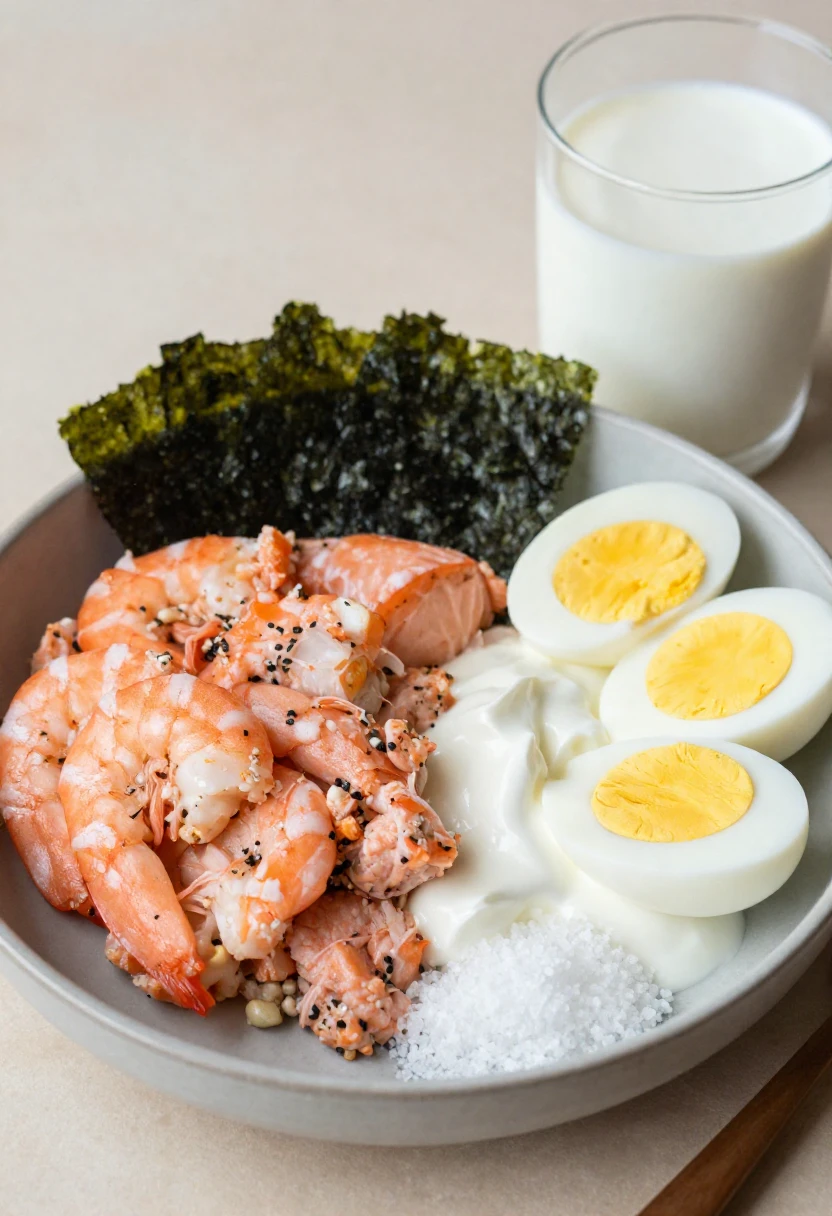
The easiest way to think about iodine is this: you do not need a complicated “iodine diet.” You need a few reliable foods showing up often enough.
For most people, that means some mix of iodized salt, seafood, dairy, eggs, and maybe small amounts of seaweed. NIH lists seafood, eggs, milk, and milk products among the best iodine sources, and notes that people who eat little or none of these foods may not get enough iodine. (Office of Dietary Supplements)
The goal is steady intake, not a heroic seaweed smoothie. Please do not make a heroic seaweed smoothie.
Iodized salt
This is probably the most practical iodine source in a home kitchen.
If you already cook with salt, check the label on the container you use most often. You want it to say iodized. If it does not, it may not be giving you meaningful iodine, even if it is expensive, mineral-rich, pink, flaky, or harvested from some windswept coastline.
I like keeping two salts around:
- iodized salt for everyday cooking
- flaky or coarse salt for finishing food
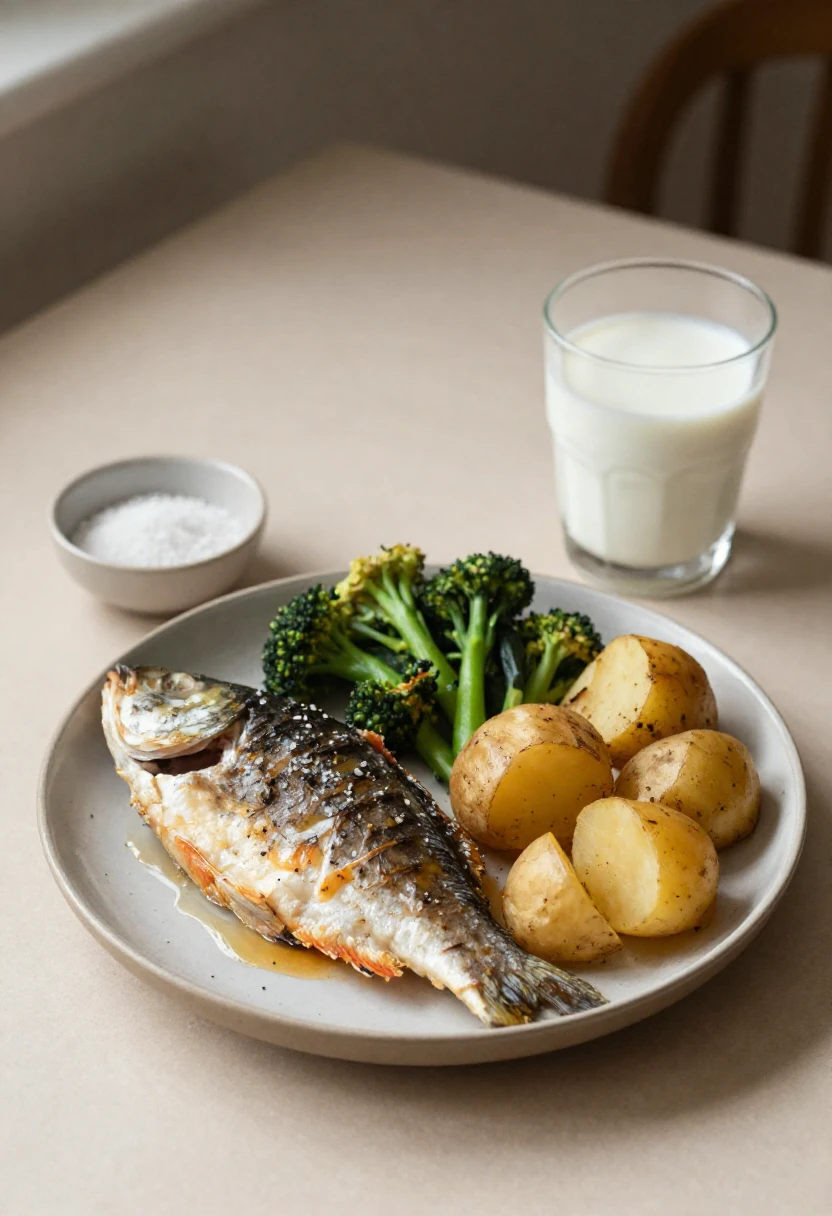
That way, you still get the little crunch on sliced tomatoes or roasted potatoes, but your regular meals have a more dependable iodine source.
One catch: iodized salt is still salt. It can help with iodine, but it is not an invitation to use more sodium. Use a normal amount, and let the label do the quiet work.
Seafood and shellfish
Seafood is one of the more natural iodine-rich food groups because fish and shellfish come from the ocean, where iodine is present.
Good options can include:
- cod
- shrimp
- tuna
- salmon
- sardines
- scallops
The exact iodine amount can vary, so it is better to think in patterns instead of perfect numbers. A fish dinner once or twice a week, shrimp in a rice bowl, or sardines on toast can all help add iodine to the diet.
If you are pregnant or breastfeeding, seafood advice gets more specific because of mercury. The FDA and EPA recommend 8 to 12 ounces per week of a variety of seafood from lower-mercury choices for people who are pregnant or breastfeeding. (US EPA)
That usually means choosing options like salmon, shrimp, sardines, cod, tilapia, and trout more often, while avoiding high-mercury fish. It is one of those nutrition rules that sounds fussy at first, but it gets easier once you have a short list of safe go-to fish.
Dairy foods
Milk, yogurt, and cheese can contribute iodine, especially in diets where dairy is eaten regularly. This is one reason iodine intake can drop when someone switches away from dairy and does not replace it with another iodine source.
A few simple ideas:
- plain yogurt with berries and oats
- milk in oatmeal or smoothies
- cottage cheese on toast
- cheese in an omelet or breakfast wrap
I would not force dairy if it does not agree with you. Some people feel awful after milk, and no nutrient is worth spending the afternoon bloated and miserable. But if you do tolerate dairy, it can be a useful and very normal iodine source.
For plant-based milks, check the label. Some are fortified with iodine, many are not. Almond, oat, soy, and coconut drinks can look similar on the shelf, but nutritionally they are not always interchangeable.
Eggs
Eggs are easy to forget in an iodine conversation, but they can help. Most of the iodine is in the yolk, so this is not the moment for an egg-white-only habit unless you have another reason for it.
Eggs also fit into real life nicely:
- boiled eggs with toast
- scrambled eggs with spinach
- egg fried rice
- omelet with cheese and vegetables
- soft-boiled egg over a grain bowl
I like eggs here because they are not dramatic. You do not need a special recipe. You can boil a few, keep them in the fridge, and suddenly breakfast or lunch has more staying power.
Seaweed
Seaweed is the tricky one.
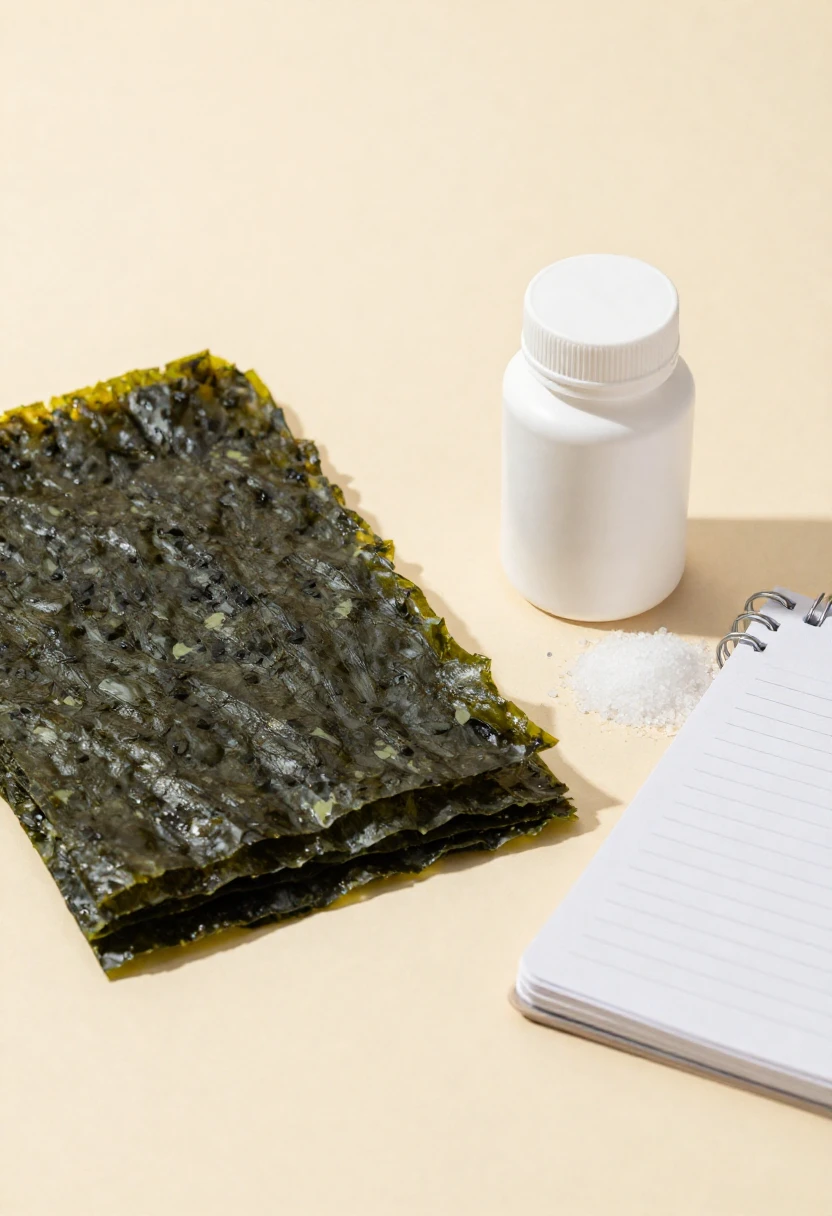
It can be a strong iodine source, but the amount varies wildly depending on the type. Nori, the seaweed used for sushi rolls, is usually more moderate. Kelp can be extremely high. NIH notes that iodine-containing kelp supplements are available, and specialty salts are not usually iodized unless the label says so. (Office of Dietary Supplements)
This matters because too much iodine can also cause thyroid trouble in some people. So seaweed is not something I would treat like a daily “more is better” wellness hack.
A few practical guardrails:
- Use nori casually, like in sushi bowls or rice snacks.
- Be careful with kelp, especially kelp powders and supplements.
- Avoid stacking seaweed plus iodine supplements unless your clinician recommended it.
- If you have thyroid disease, ask your healthcare provider before using seaweed as an iodine strategy.
A little seaweed can be lovely. Kelp tablets every day without guidance? Different story.
Fortified foods and supplements
Some foods may be fortified with iodine, but you have to read the label. Do not assume.
This is especially true with:
- plant-based milks
- multivitamins
- prenatal vitamins
- meal replacement drinks
- some breads made with iodate dough conditioners
Supplements can help when there is a real gap, but they are not automatically safer or better than food. Iodine is one of those nutrients where the dose matters. Too little is a problem. Too much can be a problem too.
If you are pregnant, breastfeeding, vegan, avoiding dairy and seafood, or dealing with thyroid issues, supplements are worth discussing with a healthcare provider instead of guessing in the vitamin aisle.
How to get enough iodine without overdoing it
Iodine is a little like seasoning.
Too little, and your body may not have what it needs. Too much, and things can go sideways, especially if your thyroid is sensitive. The sweet spot is not dramatic. It is steady, normal intake from everyday foods.
That is why I would not build your whole iodine plan around kelp powders, high-dose drops, or a supplement you saw online at midnight. Start with the boring stuff. Boring is often safer.
Use iodized salt in a normal, balanced way
If you already use salt in cooking, switching your everyday salt to iodized salt is one of the simplest steps.
Not more salt. Just the right kind of salt.
Use it in places where salt already belongs:
- soup
- eggs
- roasted vegetables
- rice or potatoes
- homemade sauces
- beans and lentils
Then keep your flaky sea salt or coarse salt for finishing food if you like it. That little sprinkle on avocado toast or tomato salad does not need to carry your whole iodine intake.
One thing to remember: packaged foods are not a reliable iodine source. Even if they taste salty, manufacturers often use non-iodized salt. So chips, crackers, frozen meals, and fast food should not be counted as “iodine support.”
Build a simple iodine-friendly plate
You do not need to eat the same food every day. Just keep a few iodine-rich foods in rotation.
A simple day might look like this:
- oatmeal made with milk, or fortified plant milk if the label includes iodine
- eggs with toast and fruit
- yogurt with berries
- tuna or salmon salad
- shrimp rice bowl
- baked cod with potatoes and vegetables
- a small nori snack or sushi bowl now and then
Nothing about that feels like a medical diet. It is just regular food with a little more attention.
If you avoid dairy, seafood, and eggs, you can still plan around iodine. You will just need to be more deliberate. That might mean iodized salt, iodine-fortified foods, or a supplement your healthcare provider approves.
Be careful with high-dose supplements
This is where I get a little firm: do not treat iodine like a wellness booster.
Your thyroid does not need a flood. It needs enough.
High-dose iodine supplements, kelp capsules, and iodine drops can push intake too high. NIH notes that getting too much iodine can cause some of the same symptoms as iodine deficiency, including goiter, and in some cases can lead to thyroid inflammation or thyroid cancer. Very high intakes can also cause burning in the mouth, stomach upset, fever, weak pulse, or coma. (ods.od.nih.gov)
That sounds intense because it can be. Most people are not going to reach that point from normal meals, but supplements can change the math quickly.
Be extra cautious if you:
- have thyroid disease
- take thyroid medication
- are pregnant or breastfeeding
- already use a prenatal vitamin with iodine
- eat a lot of seaweed
- take kelp or “thyroid support” supplements
Food-first does not mean supplements are never useful. It means you should know why you are taking one, how much it contains, and whether it fits your thyroid situation.
Can you get too much iodine?
Yes, you can get too much iodine. And this is where the internet can make things messy.
A little iodine supports thyroid hormone production. A huge dose does not magically make your thyroid “stronger.” Your thyroid is not a phone battery. You cannot charge it to 200%.
For adults, the tolerable upper intake level for iodine is 1,100 micrograms per day, including from food and supplements. That is the highest daily amount considered unlikely to cause harm for most adults, including pregnant and breastfeeding women. (The Nutrition Source)
Most people will not hit that number from normal meals. The bigger concern is usually high-dose supplements, kelp capsules, iodine drops, and heavy seaweed habits.
Why excess iodine matters
Too much iodine can irritate the thyroid instead of helping it.
In some people, high iodine intake can contribute to thyroid problems, including hypothyroidism or hyperthyroidism. NIH also notes that excess iodine can cause some symptoms similar to iodine deficiency, including goiter. (Office of Dietary Supplements)
That is the annoying twist: too little iodine can be a problem, but too much can also push the thyroid out of balance.
This is especially true for people who already have thyroid disease. If your thyroid is sensitive, inflamed, overactive, underactive, or managed with medication, iodine is not something to experiment with casually.
Foods versus supplements
Food is usually gentler because the amounts are more moderate and spread out.
A meal with eggs, yogurt, fish, or iodized salt is very different from taking a kelp tablet that may contain a concentrated amount of iodine. The American Thyroid Association advises against iodine and kelp supplements that contain more than 500 micrograms of iodine daily for children, adults, and during pregnancy or breastfeeding. (American Thyroid Association)
Seaweed is the one food category that deserves extra caution. Nori is usually more moderate. Kelp can be extremely high. And with seaweed products, the iodine amount can vary a lot from one brand or batch to another.
So yes, seaweed can be useful. But it should not become a daily “thyroid hack.”
Who should be extra careful
Be more cautious with iodine if you:
- have Hashimoto’s disease or Graves’ disease
- have hypothyroidism or hyperthyroidism
- take thyroid medication
- are pregnant or breastfeeding
- use prenatal vitamins that already contain iodine
- eat seaweed often
- take kelp capsules, iodine drops, or “thyroid support” blends
I would be especially careful with supplements labeled as thyroid support. Some are vague about iodine amounts, and some combine iodine with other ingredients that may not fit your situation.
A boring label check can save you a lot of trouble.
A simple way to think about it
For most people, the best iodine plan is not extreme.
Use iodized salt in normal cooking. Eat iodine-rich foods you actually enjoy. Check fortified foods and prenatal labels. Be careful with kelp. Ask your healthcare provider before adding iodine supplements, especially if pregnancy, breastfeeding, or thyroid disease is part of the picture.
Enough is the goal. Not maximum.
When to talk to a healthcare provider
Food choices can help you protect your iodine intake, but symptoms need more than guesswork.
This is especially true with thyroid symptoms because they overlap with so many other things. Low iron can make you tired. Stress can mess with digestion. Poor sleep can make your brain feel like soup. Perimenopause, pregnancy, medication changes, and autoimmune thyroid disease can all blur the picture too.
So if your body keeps sending the same signal, do not try to solve the whole thing with salt, seaweed, or supplements. Get checked.
Symptoms that deserve testing
It is worth talking to a healthcare provider if you notice symptoms like:
- persistent fatigue
- feeling unusually cold
- dry skin that does not improve
- constipation that is new for you
- unexplained weight changes
- hair thinning
- low mood or brain fog
- muscle weakness
- swelling or fullness in the front of the neck
- trouble swallowing or pressure in the throat
- fertility concerns
- symptoms during pregnancy or breastfeeding
Neck swelling deserves special attention. A goiter or thyroid nodule is not automatically dangerous, but it should be examined. The American Association of Clinical Endocrinology notes that if a provider finds a goiter or thyroid nodule, they may order blood tests and sometimes imaging, such as an ultrasound, to learn more. (Асоціація клінічної ендокринології)
What testing may involve
For thyroid concerns, providers often start with a blood test called TSH, or thyroid-stimulating hormone. The American Thyroid Association describes TSH as the best initial test for thyroid function because it can act like an early warning sign when thyroid hormone levels are too high or too low. (American Thyroid Association)
Depending on your symptoms and history, your provider may also check:
- free T4
- sometimes T3
- thyroid antibodies
- iron or ferritin
- vitamin B12
- vitamin D
- other labs that fit your symptoms
That last part matters. If you feel exhausted, the answer is not always iodine. A good provider will look at the bigger pattern.
What about urine iodine tests?
You may see urinary iodine mentioned online. It is a real tool, but it is not always used the way people think.
Urinary iodine concentration is commonly used to assess iodine status in groups or populations, not as a perfect one-person diagnosis. WHO describes urinary iodine as an indicator for assessing iodine deficiency at the population level. (World Health Organization) Endotext also notes that spot urinary iodine is not useful for individual assessment because it reflects recent intake and can vary from day to day. (NCBI)
In plain English: what you ate yesterday can affect the result. That makes it less straightforward for one person trying to understand vague symptoms.
Bring your food and supplement details
Before your appointment, take a quick look at what you actually use at home.
Check:
- whether your salt is iodized
- whether your prenatal or multivitamin contains iodine
- whether you take kelp, seaweed, or “thyroid support” supplements
- how often you eat seafood, dairy, and eggs
- whether your plant-based milk is fortified with iodine
You do not need a perfect food diary. Just bring the basics. A photo of your salt label and supplement label can be surprisingly useful.
The main thing is this: iodine deficiency is fixable, but thyroid symptoms deserve proper testing. Your body is giving you clues. Let someone help you read them.
Conclusion
Iodine is easy to overlook because it does not feel like a “main character” nutrient.
You hear more about protein, fiber, vitamin D, magnesium. Iodine sits quietly in the background, doing its job through your thyroid. But when your intake gets too low, especially over time, your body may start to feel it: lower energy, cold sensitivity, dry skin, constipation, brain fog, or thyroid changes.
The good news is that iodine intake often comes down to ordinary food habits. Check whether your salt is iodized. Notice how often you eat seafood, dairy, or eggs. Read the labels on plant-based milks, prenatal vitamins, and supplements. Be careful with kelp and high-dose iodine products, especially if you have thyroid disease.
You do not need to obsess over iodine. You just need to make sure it has a steady place in your diet.
Small habit. Big support for your thyroid.
FAQ
What is the best food source of iodine?
There is no single “best” food for everyone, but reliable iodine sources include iodized salt, seafood, dairy foods, eggs, and some seaweed. For everyday use, iodized salt is one of the easiest options because it fits naturally into home cooking.
Seaweed can be high in iodine, but the amount varies a lot. Kelp, in particular, can contain very large amounts, so it is not something to use heavily without guidance.
Is sea salt a good source of iodine?
Usually, no.
Sea salt, kosher salt, Himalayan salt, and flaky finishing salts are often not iodized unless the label says they are. They may contain tiny natural traces of iodine, but not enough to count on as a steady source.
If you use salt at home and want it to support iodine intake, look for the word “iodized” on the label.
Can iodine deficiency cause weight gain?
Iodine deficiency can affect thyroid hormone production, and low thyroid hormone levels may contribute to weight gain or make weight harder to manage.
But weight changes can happen for many reasons: sleep, stress, calorie intake, medications, hormones, water retention, and thyroid disease unrelated to iodine. If you have unexplained weight gain along with fatigue, cold sensitivity, constipation, or dry skin, it is worth asking your healthcare provider about thyroid testing.
Should pregnant women take iodine supplements?
Pregnancy increases iodine needs, but supplement choices should be made carefully.
Many prenatal vitamins contain iodine, but not all of them do. Check the label for iodine, often listed as potassium iodide. If your prenatal does not include it, ask your doctor or midwife what makes sense for you, especially if you have thyroid disease or take thyroid medication.
Do not add high-dose iodine, kelp tablets, or thyroid support supplements during pregnancy without medical guidance.