Most of us fall into a pretty familiar routine when it comes to cooking. Either we rush through it because we’re tired and just want to eat, or we treat it like a project — something that requires time, attention, and maybe even a bit of planning. What’s interesting about this tray bake is that it quietly sits somewhere in the middle.
It doesn’t demand much from you, but it still feels like real cooking. Not assembling, not reheating — actual cooking.
There’s a natural flow to it. You turn on the oven, take a few ingredients out of the fridge, and start prepping without overthinking every step. Maybe your cuts aren’t perfectly even. Maybe you pause halfway through to check your phone or make tea. Nothing falls apart because of that.
And that’s kind of the point.
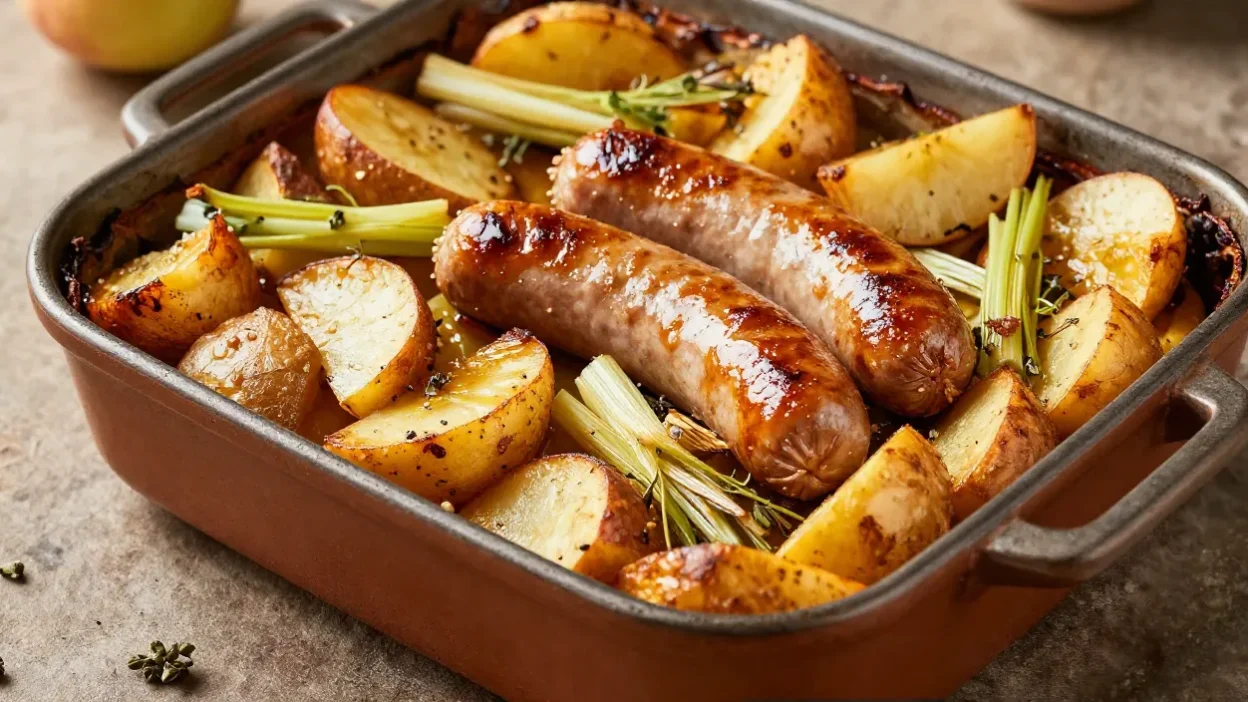
As the tray goes into the oven, something shifts. At first, it’s just heat. Then slowly, you start to notice the smell changing — sausages beginning to brown, apples softening, fennel releasing that slightly sweet, almost warm aroma. It builds gradually, without demanding your full attention, but enough to make you look forward to what’s coming.
It’s not dramatic. It’s not one of those “wow, this changed everything” moments. But it’s steady, reliable, and quietly satisfying.
And maybe that’s why this kind of meal works so well on an ordinary evening. You don’t need a reason to make it. You just want something good, something warm, something that feels complete without requiring too much from you.
Why These Ingredients Work Better Together Than You’d Expect
At first glance, the combination might not feel obvious. Sausage, fennel, apple, potatoes — it’s not exactly a classic trio people talk about all the time. But once everything starts roasting together, the logic becomes pretty clear.
The sausages are doing a lot of heavy lifting here. As they cook, they release fat and juices that coat the tray and everything on it. That’s where the depth starts building. Without that base, the dish would feel a bit flat and disconnected.
Apples, on the other hand, bring contrast. They don’t overpower the dish with sweetness, which is important. Instead, they soften, lightly caramelize, and add just enough balance to cut through the richness of the meat. It’s subtle — you notice it more after a few bites than immediately.

Fennel tends to be the ingredient people are unsure about. Raw, it can be quite sharp and even slightly bitter. But once roasted, it changes completely. The texture softens, the flavor becomes milder, and it develops a gentle sweetness with a slightly aromatic, almost warm quality. It doesn’t stand out aggressively — it blends in and rounds everything out.
Potatoes might seem like the simplest part, but they’re actually doing an important job. They absorb the juices, carry flavor, and add structure to the dish. When they’re done right, they give you that contrast — crispy edges and soft centers — which makes the whole thing more satisfying.
If you look at it a bit more closely, each ingredient brings something specific to the table:
| Ingredient | Main Role | Texture After Roasting | Flavor Contribution | Why It Matters in the Dish |
|---|---|---|---|---|
| Sausages | Base & richness | Juicy inside, browned outside | Savory, slightly salty, deep | Creates the foundation everything builds on |
| Apples | Balance & contrast | Soft, lightly caramelized | Mild sweetness, slight acidity | Prevents the dish from feeling too heavy |
| Fennel | Aroma & subtle complexity | Tender, slightly silky | Gentle sweetness, light herbal note | Adds depth without overpowering |
| Potatoes | Structure & texture | Crispy outside, fluffy inside | Neutral but absorbs flavors | Ties everything together |
| Glaze (optional) | Finish & cohesion | Sticky, slightly glossy | Sweet, tangy, sometimes sharp | Brings all elements into one final layer |
What makes this combination work isn’t just the ingredients themselves, but how they interact. Nothing is competing for attention. Instead, everything supports everything else.
It’s balanced in a way that doesn’t feel engineered — more like it naturally fell into place.
The Appeal of Cooking Without Overthinking It
One of the biggest reasons this dish becomes a repeat recipe for many people is how forgiving it is. It doesn’t punish small mistakes. In fact, it barely notices them.
You don’t need to measure everything precisely. You don’t need to cut ingredients into identical shapes. If something is slightly overcooked, it often just means more color and more flavor.
That kind of flexibility takes the pressure off, especially on days when you don’t have the energy to focus too much.
It also fits well into real-life cooking, where things aren’t always perfectly timed. Maybe you step away for a bit longer than planned. Maybe you forget to flip something exactly halfway through. The dish still turns out good.
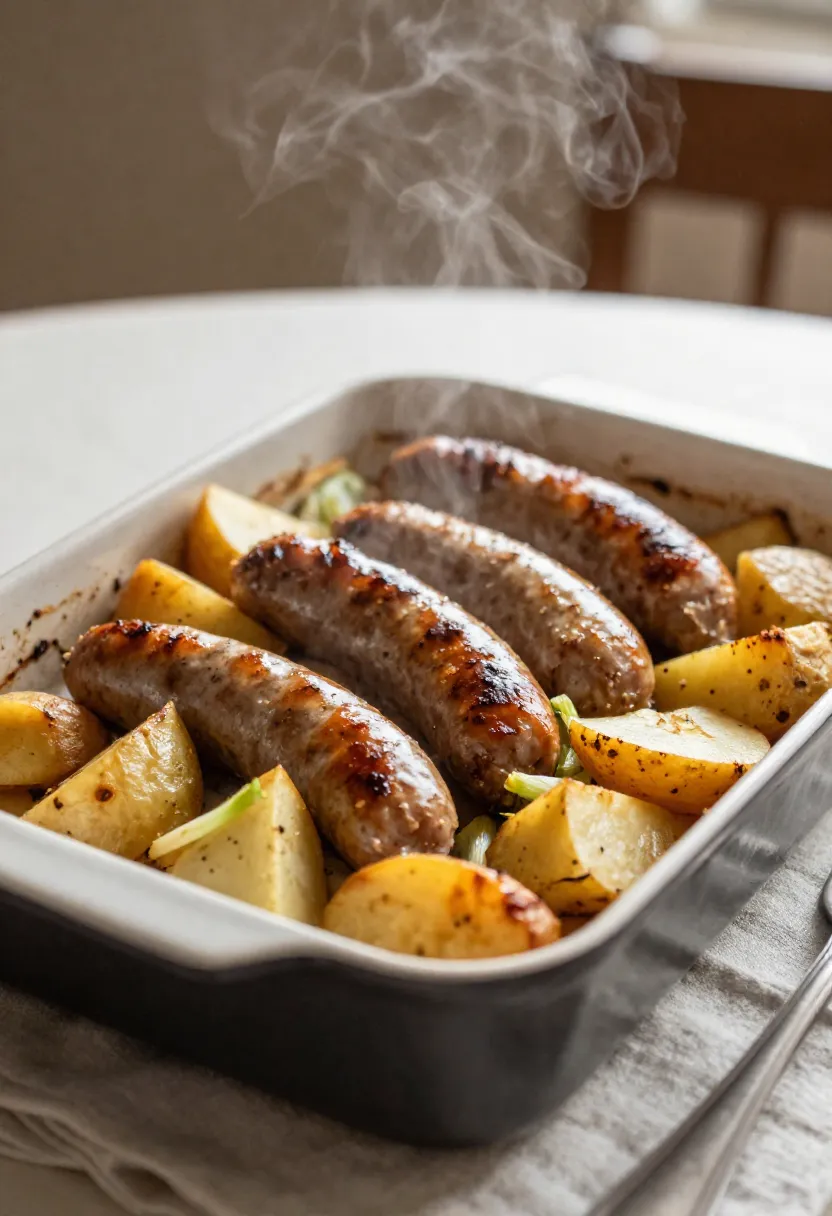
From a practical perspective, it’s also very efficient. Everything cooks on one tray, which means fewer dishes and less cleanup afterward. You’re not juggling multiple pans or trying to coordinate several components at once.
And while it’s simple, it doesn’t feel like a shortcut. When you bring it to the table, it still looks and smells like a complete meal — something you actually made, not just assembled.
A few small habits can help you get consistently good results:
- give ingredients enough space so they roast instead of steam
- don’t be afraid of higher heat — that’s where flavor develops
- turn or mix things once during cooking to avoid uneven browning
These aren’t strict rules, more like small adjustments that make things work better.
In the end, what stands out is how natural the whole process feels. You’re not trying to control every detail. You’re just guiding it a little and letting the oven do the rest.
And sometimes, that’s exactly the kind of cooking that people enjoy the most — simple, flexible, and quietly rewarding.
🍽️ Sausage, Fennel and Apple Tray Bake Recipe
There’s something a bit unexpected about this dish. On paper, it’s very straightforward — sausages, a few vegetables, some apples, everything roasted on one tray. Nothing complicated, nothing that sounds particularly fancy.
And yet, once it’s in the oven, it turns into something that feels a lot more thoughtful than the effort you put in.
Part of it is the smell. About halfway through cooking, the kitchen starts to fill with this mix of savory and slightly sweet aromas — the sausages browning, apples softening, fennel becoming mellow and fragrant. It’s not overwhelming, but it’s enough to make you check the oven a bit earlier than you need to.
Texture plays a big role too. You’ve got those golden, slightly crispy edges on the potatoes, the juicy sausages, the soft apples that almost melt into the dish, and fennel that becomes tender and subtly sweet. It’s not just one texture repeating — every bite feels a little different.
What makes this recipe especially appealing is how low-effort it is compared to the result. You’re not layering flavors step by step or standing over the stove. Most of the work happens quietly in the oven, and you just guide it along the way.
It’s the kind of meal that works when you don’t feel like cooking… but still want something that tastes like you did.
Ingredients
- 500 g good-quality sausages (pork works best, but others are fine)
- 8–10 baby potatoes
- 2 fennel bulbs
- 2 firm apples (such as Fuji, Gala, or Honeycrisp)
- 2 tablespoons olive oil
- Salt, to taste
- Freshly ground black pepper
- 1/3 cup plum sauce, balsamic glaze, or honey-mustard mix
- Optional: a few sprigs of thyme or rosemary
Instructions
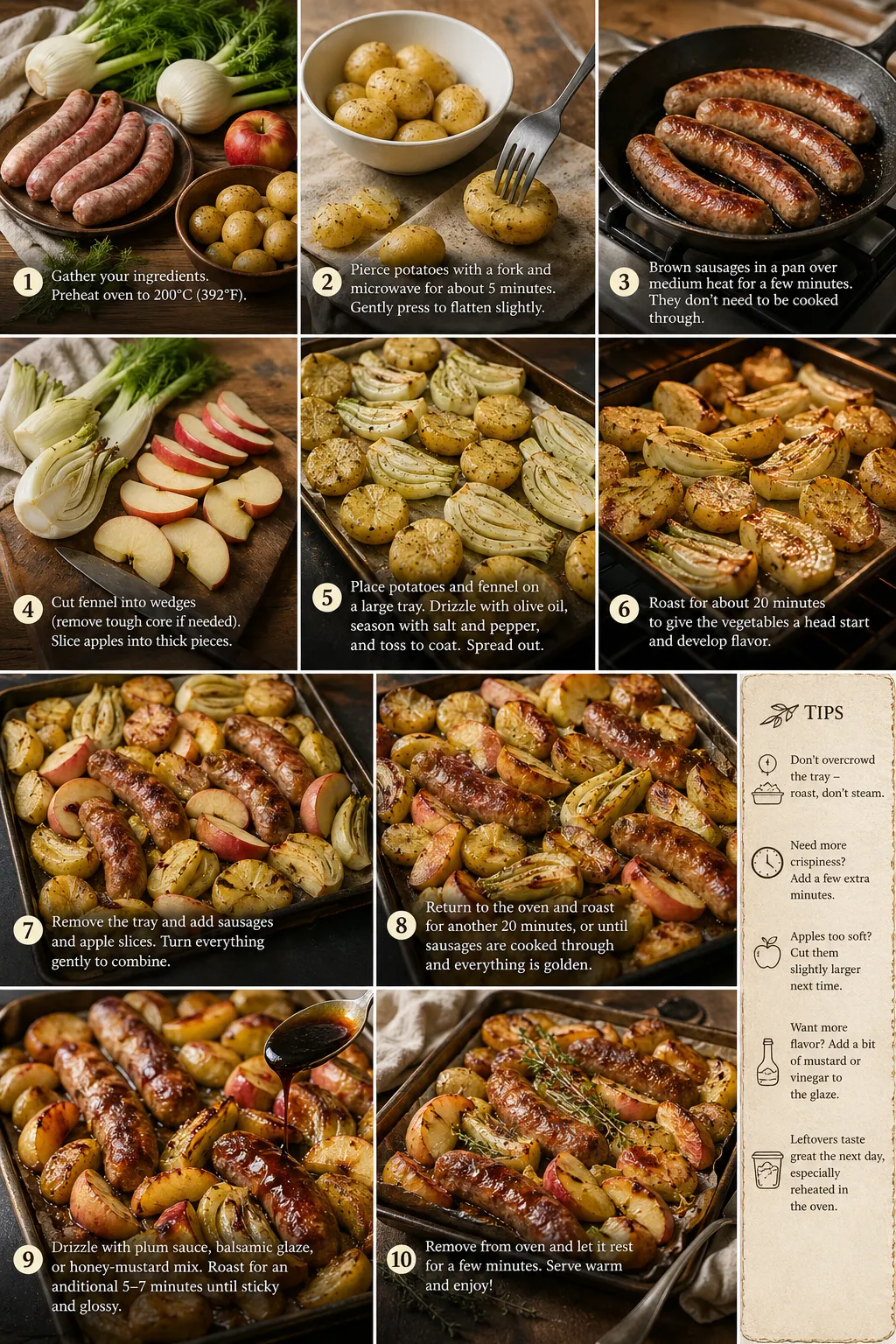
- Preheat your oven to 200°C (392°F). It’s worth waiting until it’s fully heated — starting in a hot oven helps everything roast properly instead of just slowly warming up.
- Prepare the potatoes by piercing them with a fork and microwaving for about 5 minutes until they’re slightly tender. Then gently press them to flatten just a little. It might feel like an extra step, but it really helps them crisp up later.
- Heat a pan over medium heat and brown the sausages for a few minutes until they get a light golden color. You’re not cooking them through yet — just building some flavor on the outside.
- Cut the fennel into wedges, removing the tougher core if needed. Slice the apples into thick pieces. Try not to go too thin here — thinner slices tend to break down too much in the oven.
- Place the potatoes and fennel on a large baking tray. Drizzle with olive oil, season with salt and pepper, and toss everything together so it’s evenly coated. Spread it out so the pieces aren’t crowded.
- Roast this first layer for about 20 minutes. This step gives the vegetables a head start and helps develop that slightly golden, roasted flavor.
- Take the tray out and add the sausages and apple slices. Give everything a gentle turn so it cooks evenly.
- Return the tray to the oven and roast for another 20 minutes, or until the sausages are cooked through and everything looks nicely golden.
- Drizzle your chosen sauce over the tray and place it back in the oven for an additional 5–7 minutes. This final step gives the dish a slightly sticky, glossy finish that ties everything together.
- Remove from the oven, let it sit for a few minutes (even if you’re tempted to dig in immediately), and serve warm.
A few small tips that make a noticeable difference
- don’t overcrowd the tray — if everything is packed too tightly, it will steam instead of roast
- if your potatoes aren’t crisp enough, give them a few extra minutes at the end
- taste one apple piece before serving — if it’s too soft, next time cut them slightly larger
- if you like stronger flavor, add a bit of mustard or vinegar to the glaze
- leftovers actually taste great the next day, especially if reheated in the oven
Small Details That Quietly Change Everything
At first, this dish seems almost too simple to think about in detail. You chop a few ingredients, put everything on a tray, and let the oven handle the rest. But once you’ve made it a couple of times, you start noticing that small things really do shift the final result.
It’s not about technique in a strict sense. It’s more about little habits that build better flavor without making the process harder.
Take the potatoes. Skipping the pre-cook step won’t ruin the dish, but you’ll notice the difference. Without it, they tend to stay a bit firm inside. With it, they become soft and fluffy in the center while developing those golden edges that are slightly crisp and much more satisfying. It’s one of those small changes that doesn’t feel important… until you try it both ways.
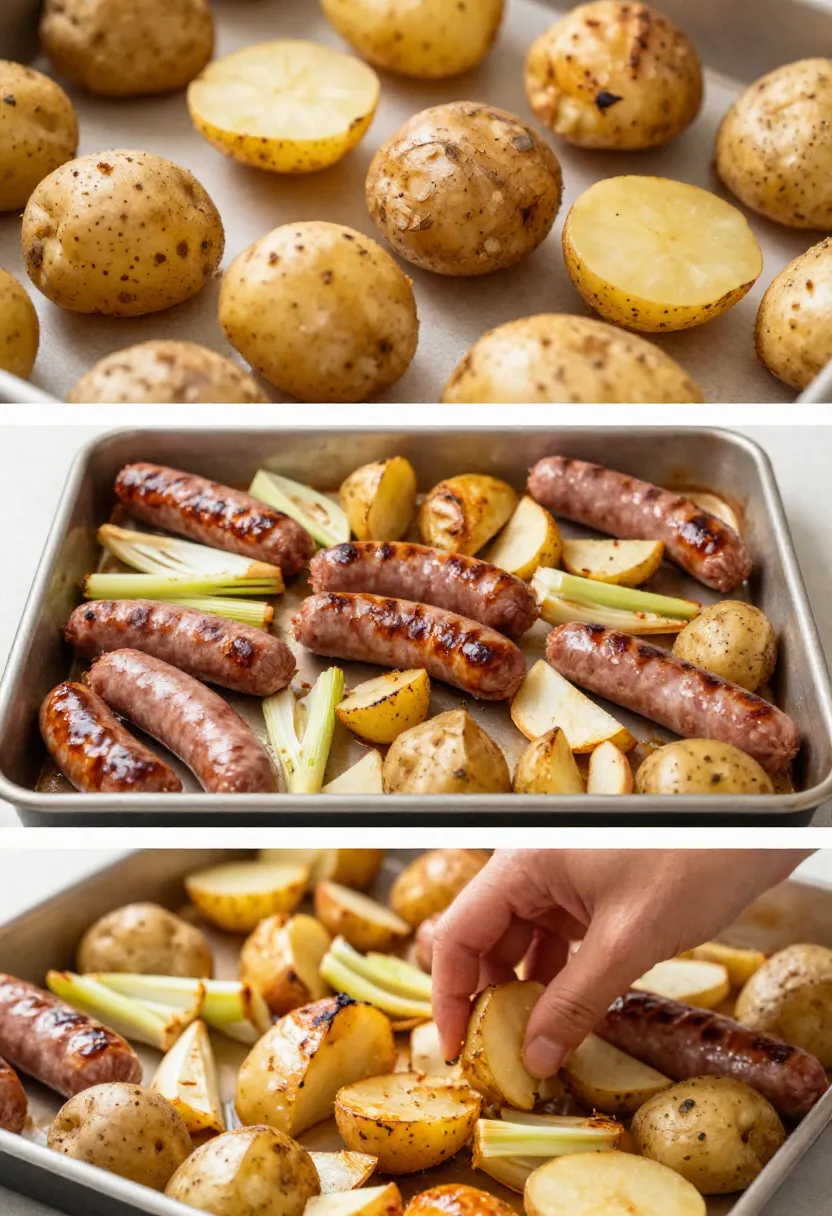
Spacing on the tray is another thing people underestimate. When everything is piled too close together, moisture gets trapped, and instead of roasting, the ingredients start to steam. The color stays pale, the texture softer, and the flavor less developed. But once you leave a bit of space — not perfectly arranged, just not overcrowded — the heat works differently. You get caramelization, slightly darker edges, and a deeper taste overall.
Even turning things halfway through cooking, while optional, makes a noticeable difference. It helps everything cook more evenly, especially if your oven has hot spots. But the key thing here is — you don’t have to be precise. If you forget, the dish will still turn out fine.
What makes this approach nice is that it doesn’t feel strict. These aren’t rules you have to follow. They’re just small adjustments that quietly improve the outcome without adding stress.
A few simple things that tend to help:
- give potatoes a short head start for better texture
- avoid overcrowding the tray so ingredients actually roast
- let some edges brown — that’s where flavor develops
- turn things once if you remember, but don’t worry if you don’t
- let the dish rest briefly after cooking so everything settles
After a while, you stop thinking about these things. They just become part of how you cook.
Serving It Without Making It Complicated
One of the best parts about this dish is how easy it is to serve. You don’t need to plate it carefully or add multiple sides to make it feel complete. It already works on its own.
There’s something very natural about bringing the tray straight to the table. It still sizzles slightly, smells warm and inviting, and looks exactly like what it is — simple, honest food. People tend to serve themselves, take what they want, maybe go back for more without even thinking about it.
That said, adding something small on the side can change the overall feel of the meal. Not in a dramatic way, but enough to balance things out or add a bit of contrast.
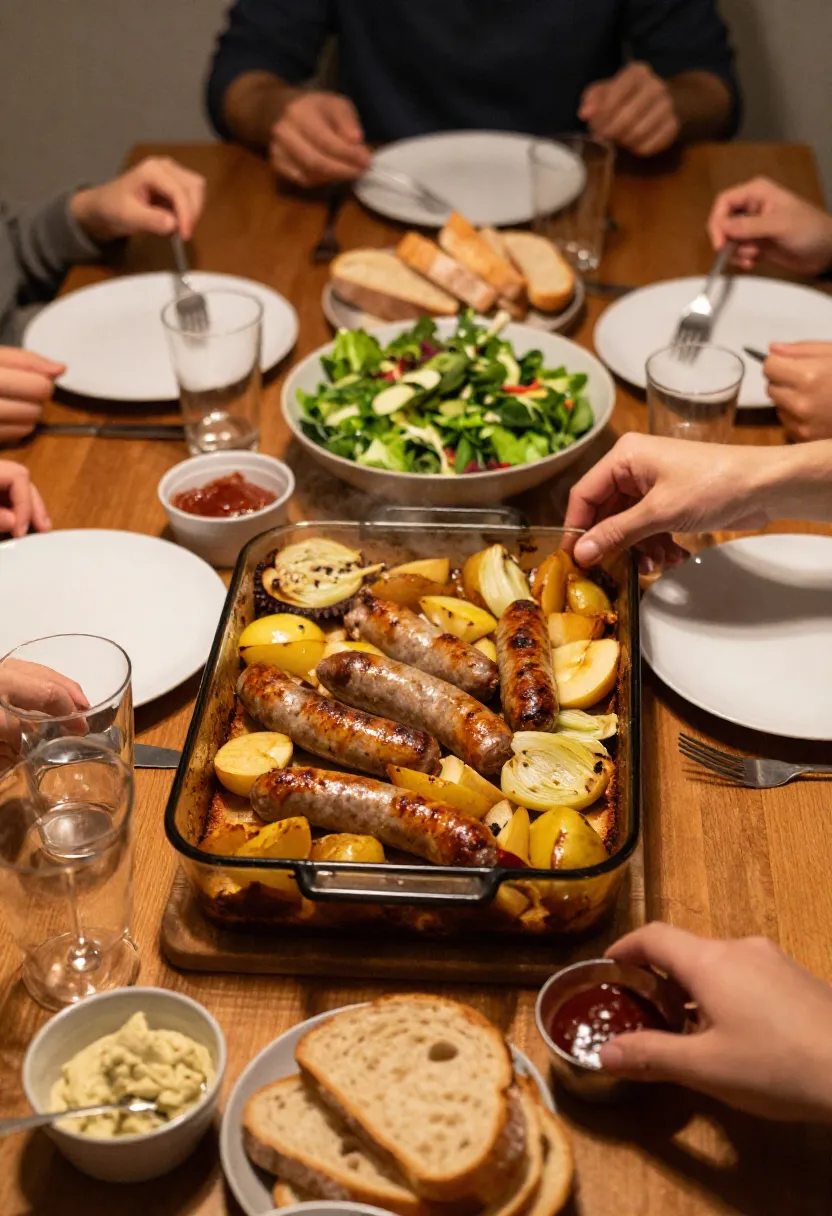
Freshness is usually what’s missing from roasted dishes, so something crisp works well. A simple green salad with a light, slightly sharp dressing can cut through the richness of the sausages and make everything feel a bit lighter.
Bread is another obvious addition, but for a good reason. The juices that collect on the tray — the mix of fat, glaze, and roasted flavor — are too good to leave behind. Having something to soak that up just makes sense.
If you want a small contrast in temperature and flavor, adding something cool and slightly tangy can help. It doesn’t need to be anything fancy. Even a spoonful of yogurt with a bit of seasoning works surprisingly well.
Simple additions that usually work without overthinking:
- a light green salad with a bit of acidity 🥬
- crusty bread to soak up the tray juices 🥖
- a small yogurt or mustard-based dip for contrast
- something refreshing to drink to balance the richness
Or you can skip all of that and just eat it straight from the tray. Honestly, that’s often the best version of this meal.
Making It Your Own (and Why That Matters)
What makes this recipe stick isn’t just the flavor — it’s how easy it is to adapt. After making it once, most people don’t follow it exactly again. They adjust things based on what they have, what they feel like eating, or what’s already in the fridge.
Leftovers are a good example of how flexible it is. If you have any, they keep well and still taste good the next day. The flavors settle a bit, everything blends together more, and it often feels like a slightly different dish rather than just reheated food. Reheating in the oven brings back some texture, while the microwave makes everything softer — both options work, just in different ways.
The ingredient list is also more flexible than it looks. You don’t need to stick to it strictly. If something is missing or you simply want to change things, the structure of the dish still holds.
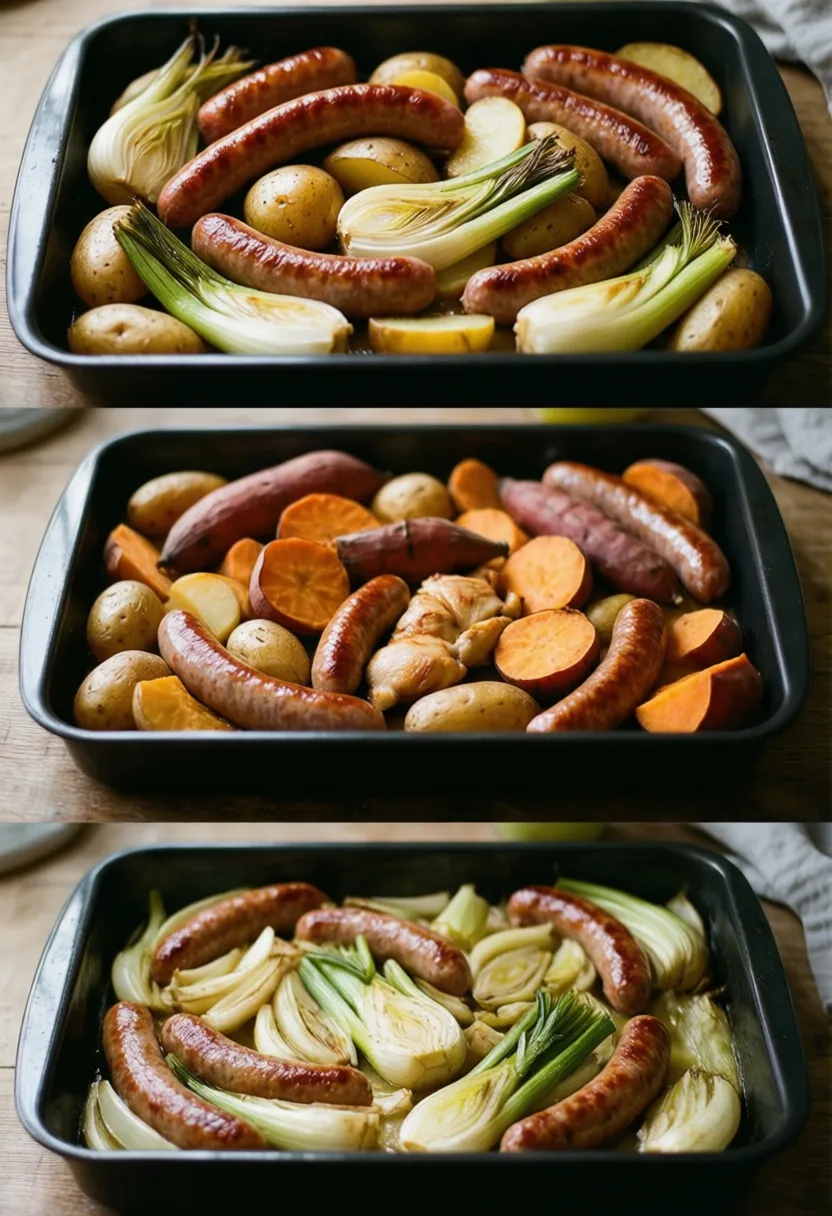
Some easy ways to adjust it:
- swap regular potatoes for sweet potatoes for a softer, slightly sweeter base
- use chicken or plant-based sausages if you want something lighter
- replace fennel with onions or leeks if you prefer a milder flavor
- try different glazes, or skip them entirely for a more savory result
At some point, it stops being a recipe and becomes more of a method. You get a feel for how long things cook, how they should look, how the smell changes when everything is ready.
And that’s usually when cooking becomes more enjoyable — when you’re not following instructions step by step, but just working with what you have and trusting the process a bit more.
It’s simple, flexible, and doesn’t expect perfection. And for everyday cooking, that’s exactly what makes it work ✨