
Some desserts are simply good. You try them, enjoy them, and move on without thinking too much about them later. And then there are desserts that stay with you a bit longer. Not because they’re overly complex or fancy, but because they carry something else—something you don’t immediately notice at first bite.
Qatayef falls into that second category.
It’s one of those dishes that feels a little different from the start. You take a bite expecting something familiar, maybe similar to a pancake or a filled crepe. But instead, there’s a contrast that catches you off guard in a good way. The outside has a light crispness, just enough to give structure, while the inside stays soft and slightly elastic. Then comes the filling, warm and flavorful, followed by syrup that ties everything together without completely overpowering it.
What makes it interesting is that the sweetness isn’t flat. It builds gradually. First texture, then filling, then aroma. It’s layered in a way that feels intentional, even though the ingredients themselves are quite simple.
There’s also something about qatayef that feels connected to a certain type of moment. It’s not really a “grab-and-go” dessert. It fits better into slower settings—an evening at home, a table where people aren’t in a rush, maybe a conversation that keeps going longer than expected. You don’t have to have grown up with it to recognize that kind of atmosphere. Most people have experienced something similar, just with different food.
🏺 More Than Just a Dessert
Qatayef has a long history, and you can feel that when you start looking into it. It’s been made for generations, passed from one kitchen to another, often without strict measurements or written instructions. That kind of longevity usually means one thing: the recipe works, and people care enough to keep it alive.
What’s interesting is how it changes depending on where you are. It’s widely known across the Middle East, but there isn’t just one “correct” version. Instead, there are variations that reflect local preferences, available ingredients, and even small habits that families develop over time.
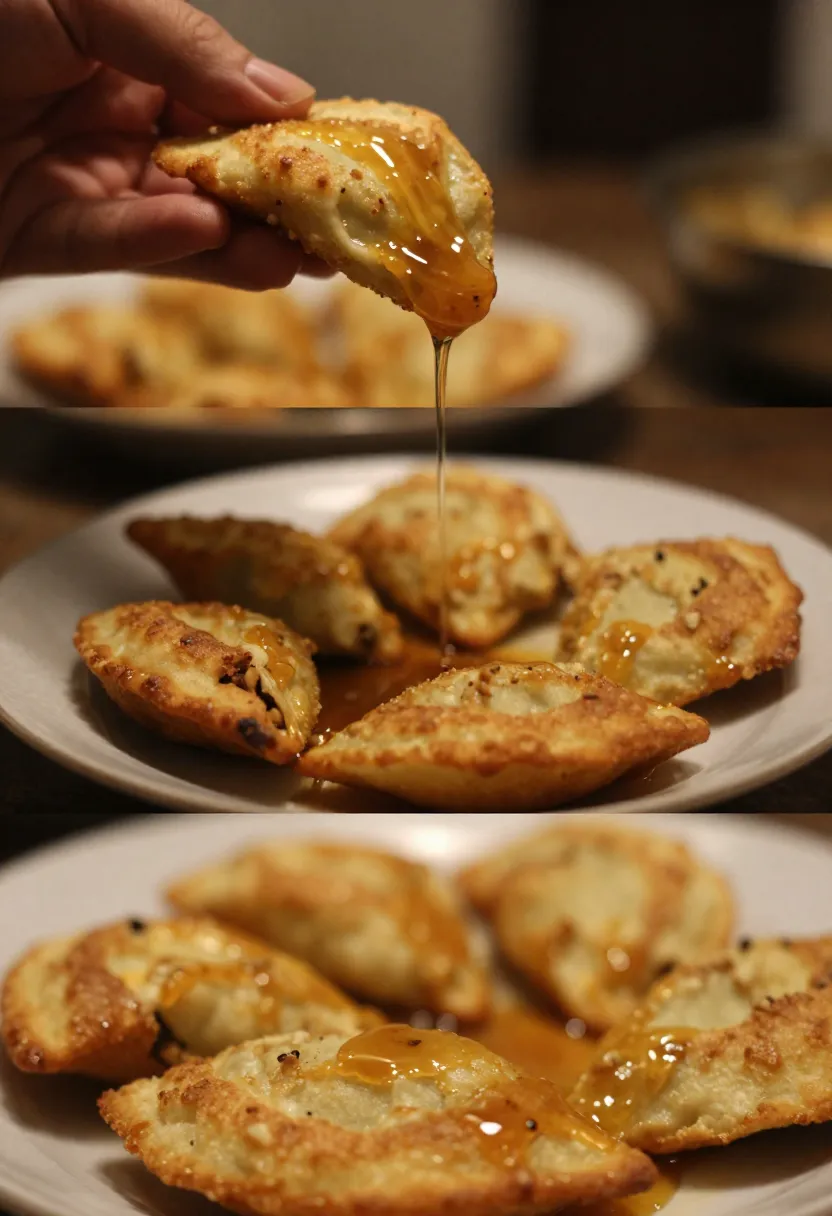
To make things clearer, here’s a more detailed look at how qatayef can vary:
| Element | Variation Type | What Changes in Practice |
|---|---|---|
| Filling base | Nuts / Cheese / Cream | Walnuts bring crunch and warmth, cheese adds a mild salty contrast, cream versions feel lighter and softer |
| Nut mixtures | Spiced / Plain | Some include cinnamon or even a bit of sugar syrup inside, others keep it simple and let the syrup do the work |
| Cheese choice | Traditional / Substitute | Authentic versions use Middle Eastern cheeses, but many people use mozzarella or ricotta at home |
| Cooking method | Fried / Baked | Fried is crispier and richer, baked is lighter but slightly less intense in flavor |
| Syrup intensity | Light / Heavy soak | Some dip quickly for a subtle sweetness, others soak longer for a more saturated result |
| Syrup flavoring | Plain / Floral / Citrus | Orange blossom and rose water are common, but some skip them or add lemon zest instead |
| Pancake thickness | Thin / Medium / Thick | Thinner pancakes crisp more, thicker ones stay softer inside |
| Size | Small / Medium / Large | Smaller ones are easier to handle and serve, larger ones feel more indulgent but harder to seal |
| Shape | Fully sealed / Open edge | Most are closed like a half-moon, but some are left slightly open (especially cream-filled versions) |
| Texture preference | Crisp / Soft | Depends on frying time and syrup exposure—some people prefer a crunch, others a melt-in-mouth feel |
| Sweetness level | Mild / Medium / High | Adjusted through syrup quantity and filling sweetness |
| Oil usage | Deep fry / Shallow fry | Deep frying gives even color, shallow frying is more controlled but takes longer |
| Serving style | Fresh / Pre-made | Best eaten immediately, but sometimes prepared ahead and reheated slightly |
| Garnish | Pistachios / Sugar / None | Pistachios add texture and color, but some prefer a simpler presentation |
| Occasion | Ramadan / Everyday treat | Traditionally linked to Ramadan, but increasingly made year-round at home |
When you look at it like this, you start to realize that qatayef isn’t a single fixed recipe—it’s more like a framework. The base stays recognizable, but there’s plenty of room for small decisions that change the final result.
Another detail that stands out is the pace of making it. Qatayef isn’t something people usually rush through. The process naturally slows you down a bit. You prepare the batter and let it rest. You cook each piece individually. You fill them one by one. There’s repetition, but it doesn’t feel mechanical—it feels steady.
In a way, the process becomes part of the experience. You’re not just making food; you’re stepping into something that has been repeated for generations, with just enough flexibility to make it your own.
✨ Why It’s Worth Making at Home
At first, qatayef might look like something that requires a lot of skill. The folding, the frying, the timing—it can seem like there are too many steps to get right. But once you actually try it, the difficulty level feels much more reasonable.
The ingredients are basic, and the technique, while specific, isn’t complicated. What matters more is understanding how the process works rather than aiming for perfection on the first try.
One thing people often notice is how quickly the routine starts to feel natural. After a few pancakes, you stop thinking about each step and just follow the flow. The batter spreads, bubbles form, you remove it at the right moment almost without checking too much.
There’s also a certain satisfaction in seeing the transformation happen in stages. You start with a liquid batter, which turns into soft rounds, then into filled shapes, and finally into golden, finished desserts. It’s a visible progression, and that makes the process more engaging.

Another advantage of making qatayef at home is flexibility. You’re not limited to one version, and you don’t have to follow tradition strictly if you don’t want to. You can adjust things based on your taste or what you have available.
For example, you can:
- reduce the sweetness of the syrup if you prefer something lighter
- experiment with different fillings instead of sticking to just one
- control the size and thickness of each piece
- try frying or baking to see which texture you prefer
Store-bought versions are consistent, but they’re also predictable. Homemade qatayef, even when slightly uneven, tends to feel more personal. The small variations in shape or color don’t take away from the result—in most cases, they make it better.
And maybe that’s the main reason it’s worth trying. Not because it’s the easiest dessert or the fastest one, but because it offers a balance between simplicity and involvement. It asks for a bit of your attention, but it gives something back in return—not just in taste, but in the process itself.
🍯 Qatayef Recipe (Traditional Stuffed Pancakes)
There’s a reason this version of qatayef has stayed popular for so long—it just works. It doesn’t rely on complicated techniques or unusual ingredients, but somehow the final result feels much more special than the effort you put in.
What you’re making here is essentially a soft, slightly yeasted pancake that behaves very differently from the ones most people are used to. It’s cooked only on one side, which creates that signature surface full of tiny holes. Those little details actually matter more than they seem—they help the pancake absorb just enough syrup later without turning soggy.
Once filled and fried, everything comes together in a way that’s hard to describe until you try it. The outside becomes lightly crisp, the inside stays tender, and the filling adds its own texture and flavor. Then comes the syrup, which doesn’t just add sweetness—it ties everything together and gives qatayef that recognizable finish.
It’s also one of those desserts that changes slightly depending on how you handle it. Fry it a bit longer, and you’ll get more crunch. Use less syrup, and it feels lighter. Add more filling, and it becomes richer. There’s no single “perfect” version—just different balances depending on what you like.
And maybe that’s why people keep coming back to it. It’s consistent, but never boring. Familiar, but still interesting every time.
🥄 Ingredients
For the Batter
- 2 cups all-purpose flour
- 1/3 cup fine semolina
- 2 tablespoons sugar
- 1 teaspoon instant yeast
- 1 teaspoon baking powder
- 2½ cups warm water
- Pinch of salt
For the Syrup
- 2 cups sugar
- 1 cup water
- 1 tablespoon lemon juice
- 1 teaspoon orange blossom or rose water
For the Walnut Filling
- 1½ cups crushed walnuts
- 2 teaspoons cinnamon
- 3 tablespoons sugar
For the Cheese Filling
- 300 g soft, unsalted cheese
For Frying
- Vegetable oil
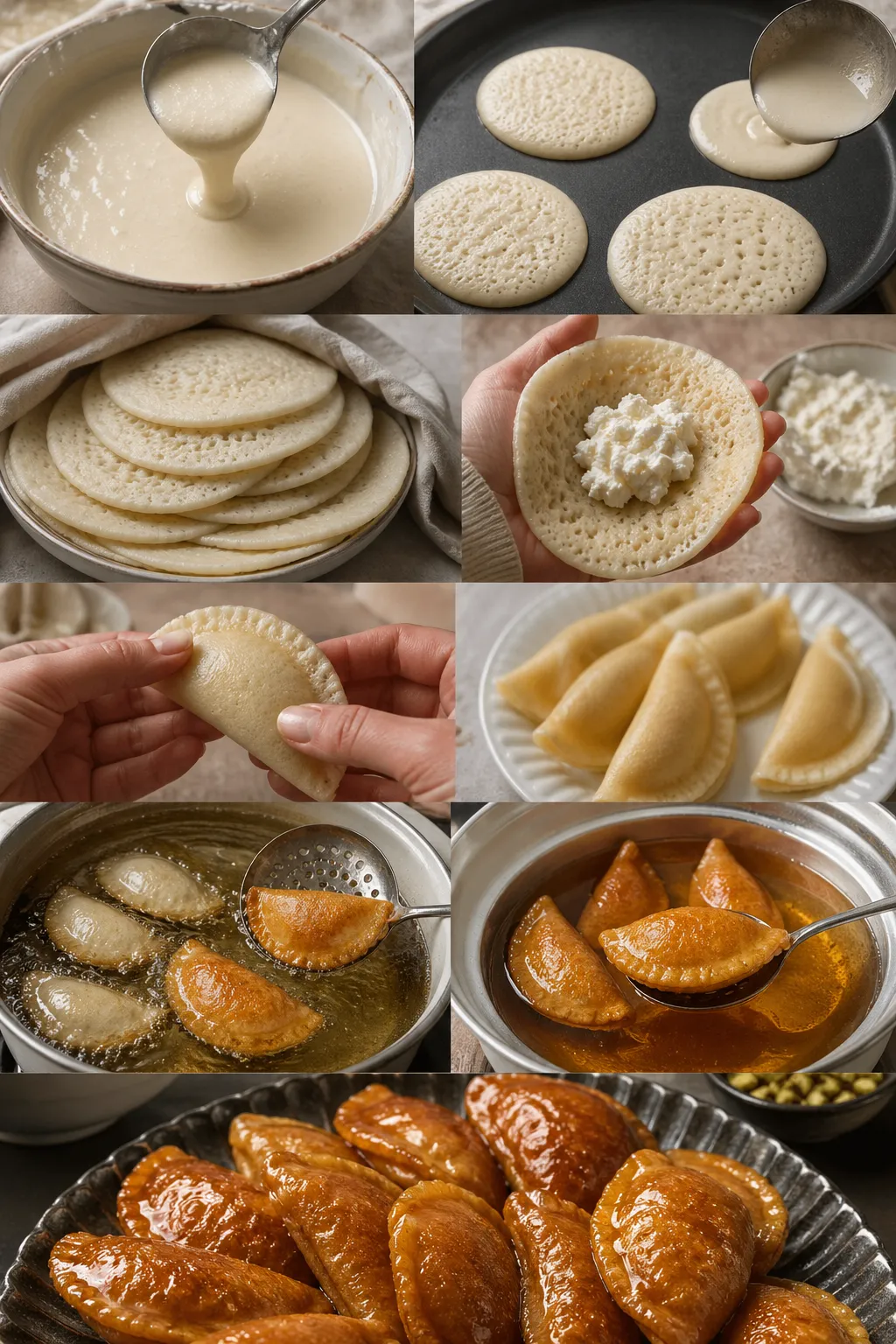
👩🍳 Cooking Instructions
- Start with the syrup. Combine sugar, water, and lemon juice in a saucepan. Bring it to a boil, then lower the heat and let it simmer for about 10 minutes. Add orange blossom or rose water at the end and set aside to cool completely.
- In a large bowl, mix flour, semolina, sugar, yeast, baking powder, and salt. Gradually pour in warm water while stirring. Keep mixing until the batter is smooth and has no lumps. Cover it and let it rest for 20–30 minutes, until small bubbles start to appear on the surface.
- Heat a non-stick pan over medium-low heat. Pour small rounds of batter onto the pan. Let them cook without flipping. You’ll notice bubbles forming and the surface slowly drying out—this is your sign they’re ready. Remove and keep them covered with a towel so they don’t dry out.
- Take one pancake, place a spoonful of filling in the center, and fold it into a half-moon shape. Press the edges gently but firmly to seal.
- Heat oil in a deep pan over medium heat. Fry the filled qatayef in batches until they turn golden brown on both sides.
- Remove them from the oil and transfer immediately into the cooled syrup. Let them soak for a short time, then place them on a serving plate.
💡 Small Tips That Actually Help
- Don’t rush the batter resting time—those bubbles make a real difference in texture
- If the batter feels too thick, add a little water; it should pour easily
- Keep cooked pancakes covered, otherwise they’ll dry out and won’t seal properly
- Avoid overfilling—they’re easier to close and fry evenly this way
- Make sure the syrup is cool before dipping hot qatayef (this one really matters)
- Fry on medium heat, not high, so they cook through without burning
🔥 Small Details That Change Everything
The difference between qatayef that’s just “okay” and qatayef that people keep reaching for usually comes down to a handful of small details. Nothing complicated, nothing technical—just things that are easy to overlook if you’re doing it for the first time.
Take the batter, for example. On paper, it’s simple. But in practice, the texture can shift quite a bit depending on how you mix it and how long you let it rest. Ideally, it should feel somewhere in between thick cream and a light pancake batter. Not runny, but not heavy either. If it’s too thick, it won’t spread properly on the pan, and you’ll miss those tiny bubbles that give qatayef its signature texture. Too thin, and the pancakes can turn fragile, making them harder to handle later.
Another thing people often underestimate is timing. Not in a strict, “count every second” kind of way, but more in terms of paying attention. When the batter hits the pan, you’ll notice bubbles starting to form gradually. That’s your cue. If you remove it too early, the surface stays too soft and sticky. Too late, and it dries out, which makes sealing more difficult. It’s one of those moments where you kind of learn by watching rather than following a timer.

Heat control is another quiet but important factor. A pan that’s too hot can ruin a batch faster than you’d expect. The pancakes will cook too quickly, often before the bubbles fully develop. On the other hand, if the heat is too low, they sit there too long, losing moisture and becoming slightly rubbery instead of soft. Medium-low heat usually works best, but even then, it might need small adjustments depending on your stove.
Sealing the qatayef is probably the part where most beginners hesitate a bit. It looks simple—fold and press—but there’s a bit of feel to it. You don’t need to press hard, just enough to make the edges stick together. If the pancake surface has the right texture, it should seal without much effort. If it doesn’t, it’s usually a sign that something earlier in the process needs adjusting.
And then there’s frying. It’s tempting to rush it, especially once you’ve filled a whole batch and want to see the final result. But frying works best when the oil temperature is steady. Too hot, and the outside browns too quickly while the inside doesn’t heat through. Too cool, and they absorb more oil than they should. Somewhere in the middle is where you get that golden color and balanced texture.
None of these things are difficult on their own. But together, they make a noticeable difference. And once you’ve done it once or twice, you start to pick up on these small signals without really thinking about them.
🍽️ Serving, Pairing, and Enjoying
Qatayef is one of those desserts that really shows its best side when served at the right moment. Technically, you can eat it later, even after it cools down—but it’s just not quite the same. When it’s warm, fresh from the syrup, that’s when everything feels balanced. The outside still has a bit of crispness, the inside stays soft, and the syrup hasn’t fully settled in yet.
Presentation doesn’t have to be complicated, but a few small touches can make it look and feel more complete. A light sprinkle of crushed pistachios is probably the most common choice. It adds a bit of color and a subtle crunch that works nicely with the soft texture of the dessert. Some people add a bit of powdered sugar, though that’s more optional.

If you want to go slightly further, you can serve qatayef with a small bowl of extra syrup on the side. Not everyone will use it, but it gives people the option to adjust sweetness to their liking, which is always a nice detail.
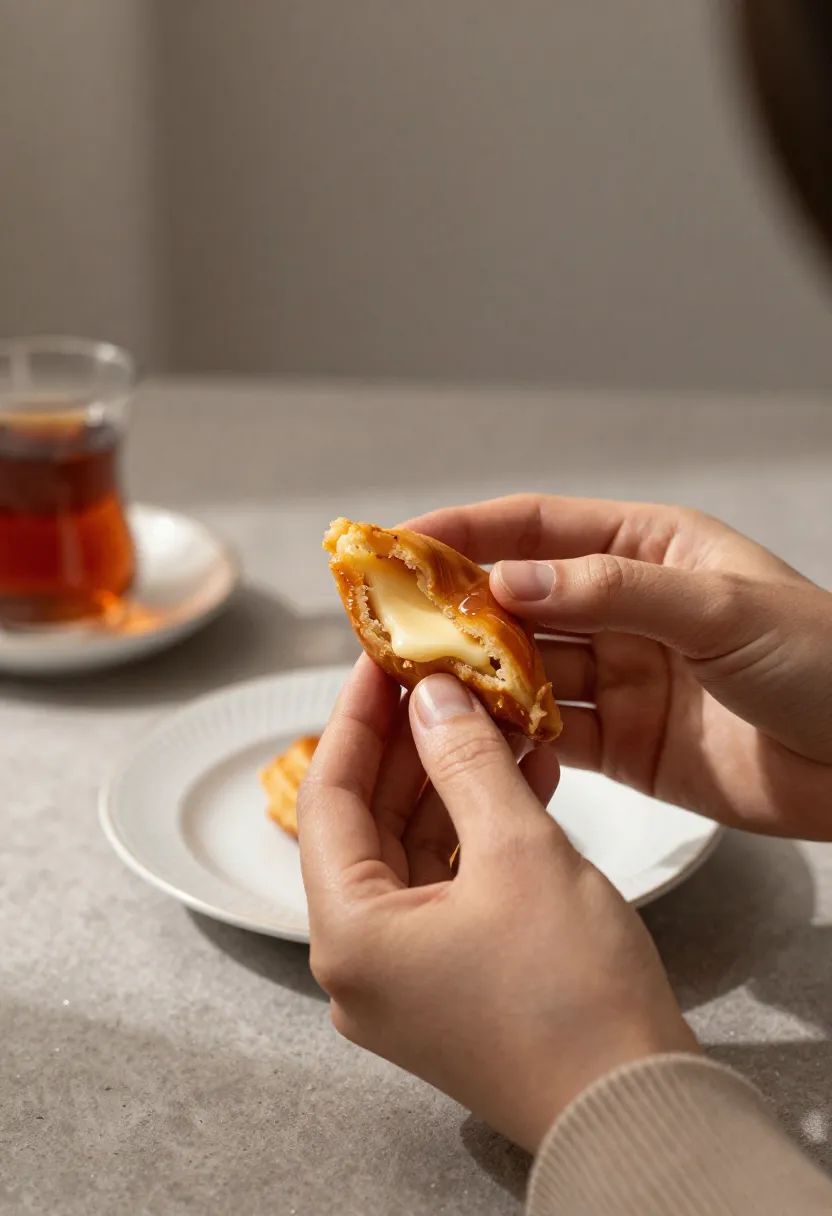
When it comes to drinks, something warm usually works best. Tea is a natural pairing—especially black tea or something with mild spices. Coffee also works well, particularly if it’s not too sweet. The slight bitterness helps balance out the syrup and keeps the whole experience from feeling too heavy.
Qatayef also fits into different kinds of settings more easily than you might expect. It can be part of a larger table during a gathering, sitting alongside other desserts. But it also works just as well in a quieter setting, maybe after dinner, when things have slowed down and there’s no rush to move on to something else.
It’s not a dessert that demands attention—but once it’s there, people tend to come back for another piece without thinking too much about it.
🌟 Making It Your Own
One of the things that makes qatayef interesting over time is how adaptable it is. The basic idea stays the same, but once you’re comfortable with the process, it opens up quite a bit of room for variation.
You don’t have to change everything at once. Even small adjustments can shift the result in noticeable ways. For example, changing the filling slightly—adding a bit of spice, mixing textures, or adjusting sweetness—can make the same recipe feel new again.
Some people prefer to experiment with how the qatayef is cooked. Frying is traditional, but baking is an option if you want something lighter. The texture won’t be exactly the same, but it can still be good in a different way. Air frying has also become more common, especially for smaller batches.
Flavor is another area where there’s plenty of flexibility. While the classic syrup uses orange blossom or rose water, you don’t have to stick to that if it’s not your preference. A bit of vanilla, a touch of citrus zest, or even something like cardamom can shift the flavor profile without changing the structure of the dish.
If you like experimenting, here are a few simple ideas to start with:
- mix a small amount of honey into the syrup for a deeper sweetness
- combine nuts with a bit of dried fruit for added texture
- try a chocolate-based filling for a more modern version
- add a pinch of spice (like cinnamon or cardamom) to the batter itself
The key is not to overthink it. Qatayef doesn’t need to be perfect to be enjoyable. In fact, part of its charm is that slight variation from one piece to another.
At the end of the day, it’s a recipe that gives you a structure but doesn’t lock you into it. You can follow it closely, or you can adjust it over time based on what you like and what works in your kitchen.
And maybe that’s what makes it worth coming back to. Not just the taste, but the fact that it evolves a little each time you make it. ❤️