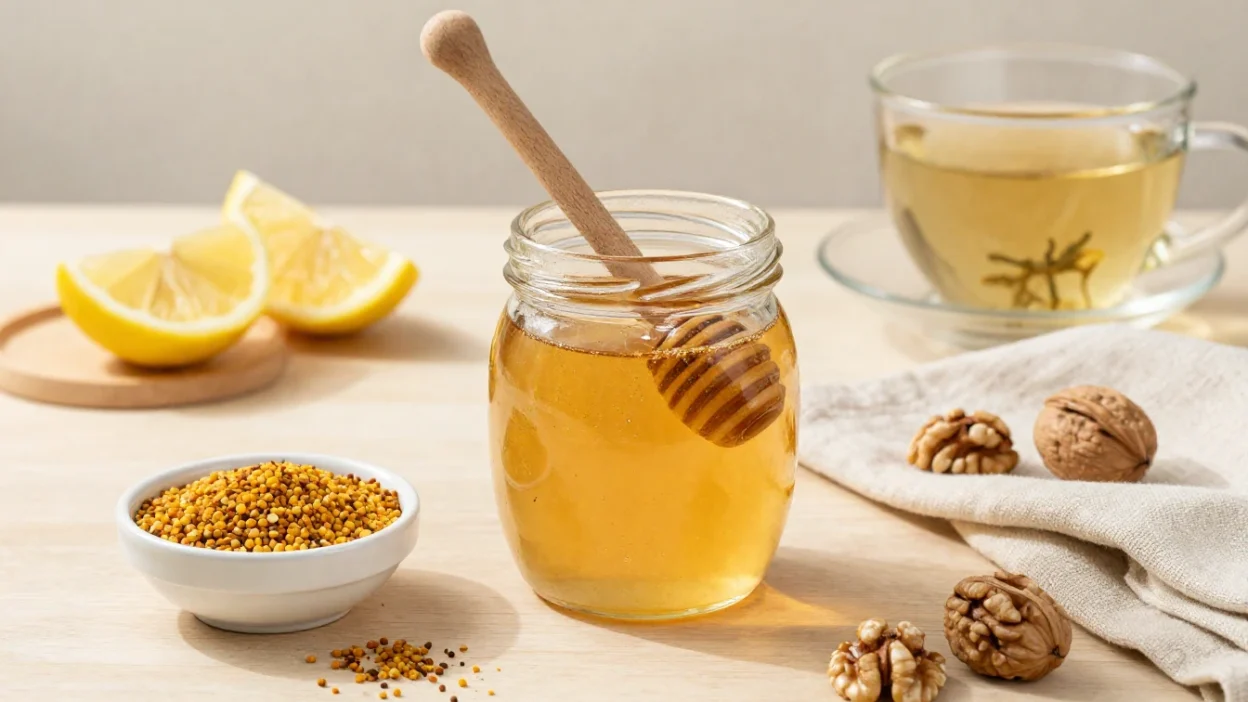
Honey has a way of making food feel a little softer around the edges. A spoonful in warm tea. A thin drizzle over Greek yogurt. That sticky line of gold running over toast when the butter has just started to melt.
It feels simple. Familiar. Almost old-fashioned in the nicest possible way.
But are honey and bee products healthy, or are we giving them too much credit because they seem natural? The honest answer is somewhere in the middle. Honey can be a lovely ingredient, and some bee products, like propolis, bee pollen, and royal jelly, are genuinely interesting. Still, they are not magic. They can also be risky for babies, people with allergies, and anyone who needs to watch blood sugar carefully.
I like honey most when it is treated as food, not medicine. A little honey can make oatmeal taste warmer, balance a sharp salad dressing, or soothe a scratchy throat when you are curled up with a mug of tea. That is useful enough. We do not need to turn it into a miracle cure.
In this guide, we will look at honey and the most common bee products in a practical way: what they may offer, what to be careful with, and how to use them in everyday meals without overdoing it.
What makes honey different from regular sugar?
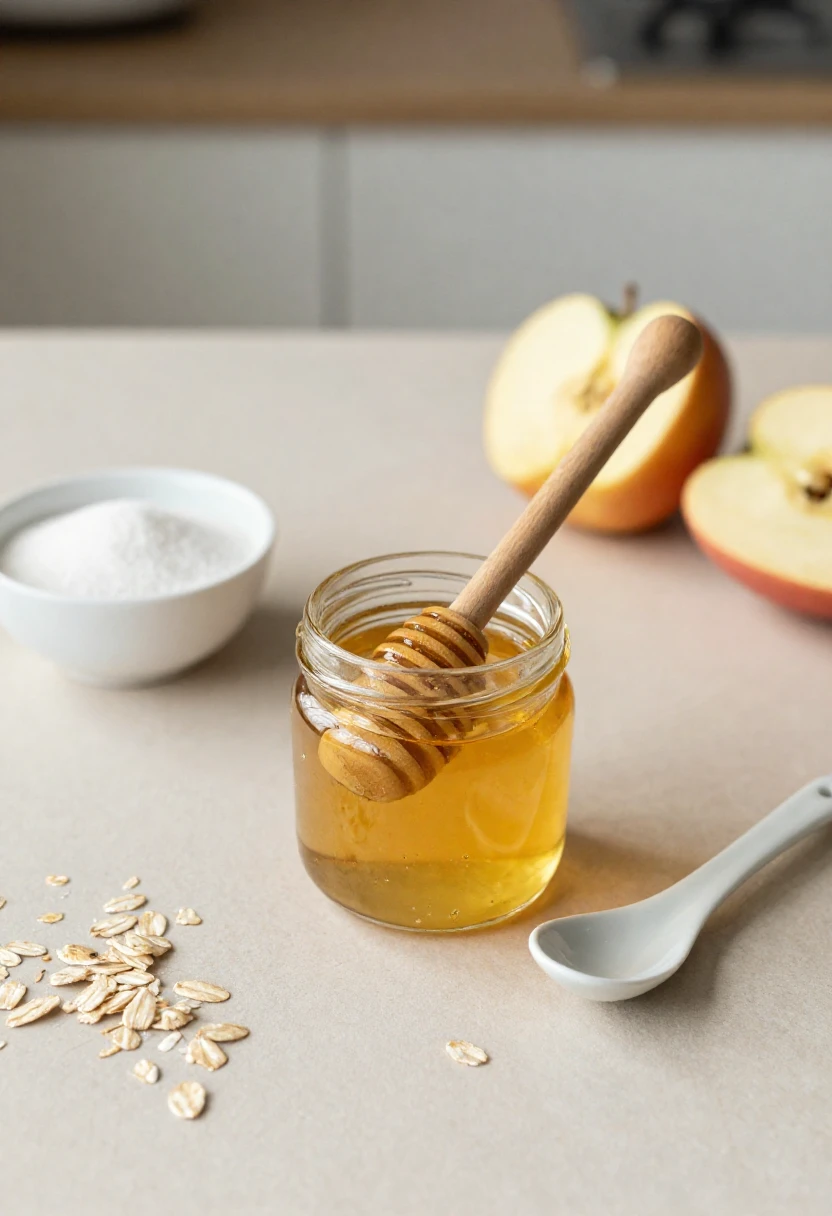
Honey is sweet, yes. Very sweet. So it is easy to put it in the same mental box as white sugar, maple syrup, agave, and all the other things we add when food needs a little lift.
That is partly fair. Honey still counts as added sugar in your diet. Your body does not ignore it just because it came from bees instead of a sugar bowl.
But honey also has a few things that make it different from plain refined sugar: flavor, aroma, texture, and small amounts of natural compounds from plants. Those differences matter more in the kitchen than people realize.
A teaspoon of honey can do a lot because it brings more than sweetness. Depending on the type, it may taste floral, grassy, malty, dark, almost bitter, or lightly fruity. That means you may need less of it to make food feel satisfying.
Honey is still sugar, but it is not only sugar
Most of honey’s calories come from natural sugars, mainly fructose and glucose. That is why it tastes sweet, why it gives quick energy, and why it can still raise blood sugar.
This is where people sometimes get disappointed. They hear that honey contains antioxidants or plant compounds, then assume it is automatically “healthy sugar.” I would be careful with that idea.
Honey is better understood as a flavorful sweetener with some extra character. It may contain small amounts of minerals, enzymes, organic acids, and polyphenols, but you are not eating honey for vitamins in the same way you would eat berries, leafy greens, beans, or nuts.
The best use of honey is not to pour it freely because it sounds wholesome. It is to use a small amount where the flavor really counts.
Try it in places where plain sugar would taste flat:
- stirred into plain Greek yogurt with walnuts;
- drizzled over oatmeal with cinnamon and apples;
- whisked into mustard, lemon juice, and olive oil for dressing;
- brushed lightly over roasted carrots near the end of cooking;
- added to warm tea when your throat feels dry.
That is where honey earns its place. Not as a free pass, but as an ingredient with a little personality.
Raw honey vs processed honey
Raw honey usually means honey that has not been heavily heated or filtered. It may look cloudy, thicker, or less polished than the clear honey you see in squeeze bottles. Sometimes it has tiny bits of pollen, wax, or natural particles left in it.
Processed honey is often filtered and heated to make it smoother, clearer, and slower to crystallize. That does not automatically make it “bad.” It just makes it more consistent and shelf-friendly.
Raw honey often has a deeper flavor. I notice it most in simple foods. Put a strong wildflower honey on plain yogurt and you can actually taste the meadow-like notes. Use a mild processed honey in baking, and it mostly disappears into sweetness.
Still, raw does not always mean safer. Honey is not recommended for babies under 12 months, whether it is raw, pasteurized, organic, local, or mixed into another food. That rule is not about quality. It is about infant botulism risk.
For adults and older children, the choice between raw and processed honey usually comes down to taste, texture, and how you plan to use it.
Raw honey works beautifully when the flavor stays noticeable:
- yogurt bowls;
- toast;
- fruit plates;
- tea that is warm, not boiling;
- cheese boards;
- simple dressings.
Processed honey can be practical for:
- baking;
- marinades;
- sauces;
- recipes where honey is mostly there for sweetness;
- households that prefer a smooth, pourable texture.
If you buy raw honey, look for a producer you trust. Local honey can be wonderful, but “local” on its own is not a guarantee of purity or safety. The label should be clear, the jar should be sealed properly, and the honey should smell pleasant, not fermented or sour.
Why honey crystallizes
Crystallized honey can look a little suspicious if you are not used to it. One day the jar is smooth and golden, then suddenly it is grainy, pale, and thick enough to bend a spoon.
That does not mean it has spoiled.
Crystallization is a normal thing honey does. Some types crystallize faster than others because of their natural balance of glucose and fructose. Temperature also matters. A cool pantry can speed things along, while very warm storage can affect flavor over time.
Actually, I like crystallized honey on toast. It spreads almost like soft sugar butter, especially if the bread is warm. But if you want it runny again, use gentle heat.
Place the closed jar in a bowl of warm water and let it sit. Stir if needed. Keep the heat mild and patient. Aggressive heating can dull the flavor, and microwaving honey in a plastic container is not a great idea.
A few simple storage rules help:
- keep honey tightly closed;
- store it at room temperature;
- keep water out of the jar;
- use a clean spoon;
- do not refrigerate it unless the label specifically says to.
Honey lasts a long time because it has low moisture and high sugar, but it still deserves basic kitchen care. If water gets into the jar, fermentation becomes more likely. That is when honey can smell boozy, sour, or yeasty.
For everyday use, a small glass jar in a cabinet is perfect. Close it well, keep it dry, and do not worry if it turns cloudy or grainy. Most of the time, your honey is just changing texture.
Main health benefits of honey
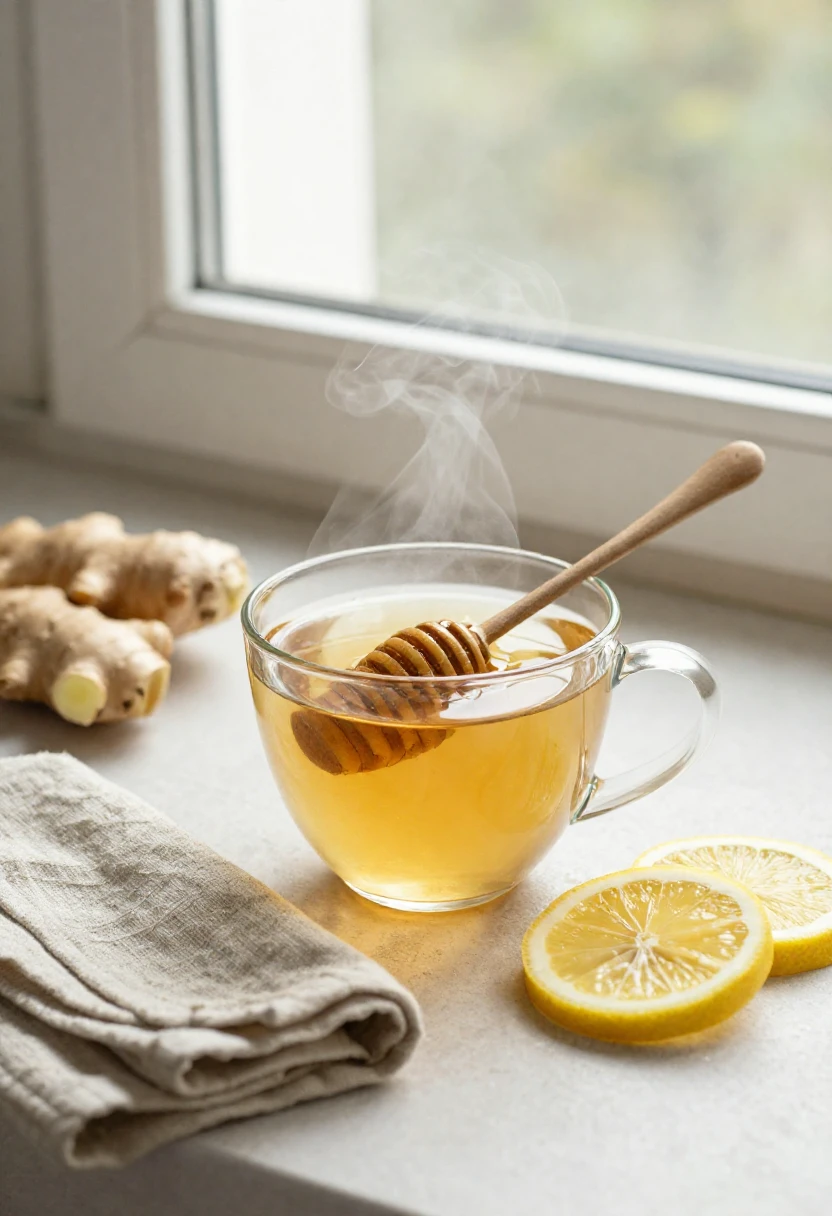
Honey is one of those ingredients that sits in a funny place between food and home remedy. Most of us have seen it used both ways. Your grandmother may have stirred it into tea when someone had a cough. You may use it now in yogurt, salad dressing, or a quick marinade when dinner needs help.
Some honey benefits are practical and easy to feel right away, like how it coats the throat or balances sharp flavors. Others are more subtle, like its antioxidant content. The important thing is to keep the claims realistic.
Honey can support a healthier kitchen routine, but it should not replace medical care, prescribed treatment, or the everyday basics that matter more: enough protein, fiber, vegetables, sleep, movement, and hydration.
Honey may soothe a sore throat and cough
This is probably honey’s most familiar wellness use, and it is the one I find easiest to understand from real life. When your throat feels scratchy, honey does not “fix” the cold, but it can make the irritation feel less harsh for a while.
The texture matters. Honey is thick and smooth, so it coats the throat in a way plain tea does not. That small layer of sweetness can calm the dry, raw feeling that makes you want to cough every few minutes.
My favorite version is simple: warm water or tea, a spoonful of honey, and a squeeze of lemon. Not boiling hot. Just warm enough to feel soothing. If the drink is too hot, you lose some of honey’s delicate flavor anyway.
For children over age 1 and adults, honey is often used before bed to help with nighttime coughing. For babies under 12 months, honey is completely off the table. Not in tea, not baked into a snack, not “just a tiny taste.” The risk is rare, but serious enough that the rule is very clear.
A practical honey drink for a scratchy throat:
- Add 1 teaspoon honey to a mug.
- Pour in warm water or mild herbal tea.
- Add lemon if you like the sharpness.
- Sip slowly while it is warm.
It is not fancy. That is the point. When you feel run down, simple things are usually the ones you actually do.
Honey contains antioxidants
Honey contains small amounts of antioxidant compounds, including polyphenols that come from the plants bees visit. This is one reason darker, stronger-tasting honeys often get attention. Buckwheat honey, for example, has a deep, almost molasses-like flavor that feels completely different from pale acacia honey.
But this is where I like to be careful. Yes, honey can contain antioxidants. No, that does not mean a spoonful of honey replaces berries, leafy greens, beans, herbs, nuts, cocoa, or tea.
Think of honey as a small bonus, not the main source.
Where honey works beautifully is in helping you enjoy foods that already bring more nutrition to the table. A little honey can make plain yogurt more appealing. It can soften the bitterness of tahini dressing. It can make roasted vegetables taste caramelized and cozy without turning them into dessert.
A few good pairings:
- Greek yogurt, honey, walnuts, and berries;
- oatmeal with apples, cinnamon, and a small honey drizzle;
- roasted carrots with olive oil, thyme, and honey;
- green salad with honey mustard vinaigrette;
- cottage cheese toast with honey and sliced figs.
That is the sweet spot. You are not eating honey by the tablespoon because it has antioxidants. You are using a little honey to make nourishing food taste better.
Honey can support wound care, but only in the right form
You may have heard that honey can help wounds heal. There is truth behind this, but the details matter a lot.
Medical-grade honey is used in some clinical settings because it is prepared and sterilized for that purpose. It is not the same as opening a kitchen jar and spreading breakfast honey on a cut. Regular honey can contain particles, spores, or contamination from handling, and it is not made to be used as a sterile wound product.
So yes, honey has a long history in wound care. But for everyday life, I would not treat your pantry honey like medicine.
If you have a burn, deep cut, slow-healing wound, infection, or anything that looks swollen and angry, that is not a DIY honey moment. Get proper medical advice. It is much better to be boring and safe here.
The kitchen use of honey is where most of us should stay: tea, dressings, marinades, breakfast bowls, and baking. Leave wound care to products made for wounds.
Honey can make healthy eating more enjoyable
This benefit sounds less dramatic, but honestly, it may be the most useful one.
A lot of healthy eating advice fails because the food is technically nutritious but not very enjoyable. Plain oatmeal. Plain yogurt. Dry roasted vegetables. A salad dressing that tastes like punishment. Nobody wants to live like that for long.
Honey can help. A small amount brings sweetness, aroma, and roundness. It makes bitter, acidic, or earthy foods feel more balanced.
I use honey most often in sauces and dressings because it does a quiet job there. It smooths out mustard. It softens vinegar. It helps garlic and lemon taste less sharp. In marinades, it helps food brown faster, especially on salmon, chicken, tofu, carrots, or sweet potatoes.
Try this quick honey mustard dressing:
- 1 tablespoon olive oil;
- 1 teaspoon honey;
- 1 teaspoon Dijon mustard;
- 1 teaspoon lemon juice or apple cider vinegar;
- a pinch of salt;
- black pepper.
Whisk it with a fork and taste. If it feels too sharp, add a touch more honey. If it feels too sweet, add more lemon. This is the kind of small kitchen skill that makes healthy meals easier to repeat.
And that matters. Food you enjoy is food you are more likely to keep making.
Honey gives quick energy, but that can be a benefit or a downside
Because honey is mostly sugar, it digests quickly. That can be useful sometimes. A small spoonful before a workout, a honey-sweetened snack during a long hike, or toast with honey when you need something easy on the stomach can make sense.
But the same quick energy can be a downside if you use honey heavily throughout the day.
A honey latte in the morning, honey granola at lunch, honey dressing at dinner, and honey tea at night can add up without feeling like much. It is still added sugar, even when the jar looks rustic and beautiful on the counter.
For everyday use, I would treat honey like a strong flavor ingredient. Use enough to notice it, then stop.
A teaspoon can be enough for a bowl of yogurt. A small drizzle can finish oatmeal. A thin glaze can make roasted vegetables shine. You do not need to drown the food.
That is probably the most balanced way to enjoy honey: with pleasure, with common sense, and without pretending it is something it is not.
Types of honey and how to choose one
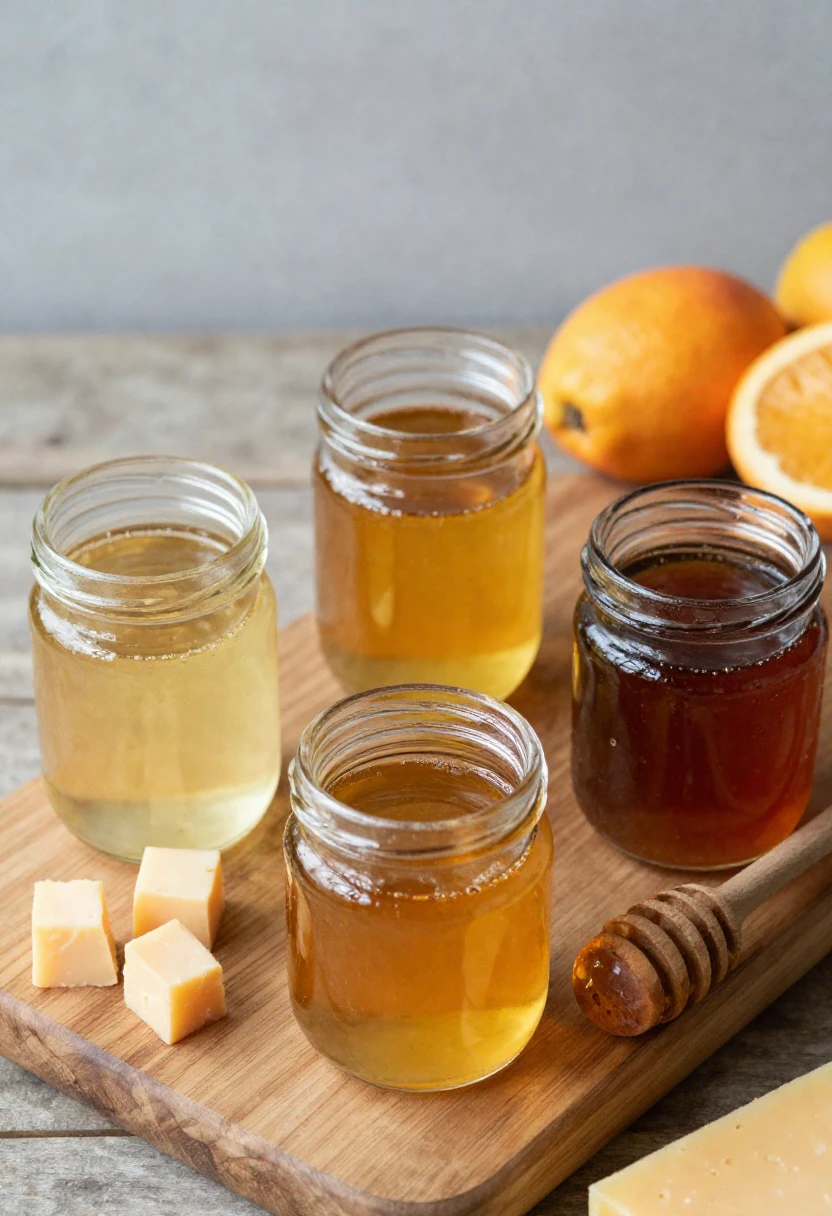
Buying honey sounds simple until you stand in front of the shelf and see clover honey, acacia honey, wildflower honey, buckwheat honey, manuka honey, raw honey, organic honey, creamed honey, and a few jars that cost more than you expected.
It can feel like wine, but stickier.
The good news is that you do not need to become a honey expert to choose a good jar. Start with how you want to use it. A mild honey works better in tea and baking. A darker, stronger honey can handle cheese, roasted vegetables, marinades, and savory dishes.
Color, texture, and floral source all change the way honey tastes. That is what makes it fun.
Clover, acacia, buckwheat, wildflower, and manuka honey
Clover honey is probably the easiest everyday honey. It is mild, sweet, and familiar. If you want one jar for tea, toast, yogurt, baking, and quick dressings, clover is a safe place to start.
Acacia honey is usually pale, light, and delicate. It stays runny for a long time compared with many other honeys, which makes it nice for drizzling. I like it with foods where you do not want honey to take over: ricotta toast, fruit, mild cheese, or green tea.
Wildflower honey is more unpredictable, in a good way. Since it comes from a mix of flowers, the flavor depends on the region and season. One jar may taste floral and bright, another may taste deeper and more herbal. If you buy from a local beekeeper, wildflower honey is often the one that feels most tied to the place.
Buckwheat honey is dark, bold, and not shy. It can taste malty, earthy, and almost molasses-like. Some people love it right away. Some people need a minute. I would not use it in a delicate cup of tea, but it is excellent with plain yogurt, rye toast, roasted squash, baked beans, or a strong cheese board.
Manuka honey comes from New Zealand and Australia, and it is often sold at a much higher price because of its unique compounds and grading systems. It has a distinct taste: earthy, medicinal, slightly bitter, and rich. If you are buying it for flavor, use it simply. If you are buying it for wellness reasons, read the label carefully and do not treat it like a cure-all.
A simple way to think about honey types:
- use light honey when you want sweetness without too much flavor;
- use medium honey when you want everyday balance;
- use dark honey when you want honey to be part of the taste;
- use specialty honey when you have a specific reason to pay more.
For most kitchens, one mild honey and one stronger honey are enough.
How to match honey with food
Honey is not just something you add at the end. The type you choose can change the whole mood of a dish.
Mild honey is best when the food is gentle. Think warm milk, herbal tea, oatmeal, yogurt, pancakes, cottage cheese, baked apples, or a soft slice of bread with butter. You want the honey to sweeten the food without shouting over it.
Stronger honey works better when the food already has big flavors. Buckwheat honey with blue cheese. Wildflower honey in a mustard dressing. Dark honey brushed over roasted carrots with thyme. A richer honey in a marinade with garlic, soy sauce, ginger, and lemon.
Honey also helps with browning. That is useful, but it can catch quickly. If you are roasting or grilling, add honey closer to the end or mix it with oil, acid, or mustard so it does not burn too fast.
Here are a few pairings that usually work:
- acacia honey with ricotta, berries, or mild tea;
- clover honey with toast, oatmeal, yogurt, and baking;
- wildflower honey with dressings, cheese, and roasted vegetables;
- buckwheat honey with rye bread, strong cheese, and winter squash;
- manuka honey by the spoonful, in warm drinks, or with plain yogurt.
If a honey tastes too strong on its own, do not throw it away. Use it in savory food. Garlic, mustard, vinegar, lemon, and chili can handle stronger honey beautifully.
How to spot better-quality honey
A good honey label should not make you squint and wonder what you are actually buying.
Look for clear information: the floral source if available, country of origin, producer or packer, and whether it is raw, filtered, creamed, or blended. None of these terms automatically makes honey good or bad, but clear labeling tells you the seller is not hiding behind vague language.
Be cautious with honey that is extremely cheap, especially if the label gives very little detail. Honey fraud and adulteration are real issues in the food market. That can mean honey mixed with cheaper syrups or products labeled in a way that makes the origin unclear.
You do not need to panic about every supermarket jar. Just buy with the same common sense you would use for olive oil, spices, or coffee.
A few buying tips:
- choose honey from producers you trust;
- check the ingredient list, especially on flavored or blended products;
- avoid “honey syrup” if you want pure honey;
- compare prices, but do not chase the cheapest jar every time;
- try local honey when you can, especially if the producer is transparent.
If the jar says “pure honey,” the ingredient list should be simple. If it contains corn syrup, glucose syrup, flavorings, or other sweeteners, it is not the same thing as pure honey.
Also, do not judge quality by crystallization. Real honey can crystallize. That grainy texture does not mean it is fake, old, or ruined.
Raw, organic, unfiltered, and creamed honey
Honey labels can be confusing because the words sound similar, but they do not mean the same thing.
Raw honey usually means the honey has not been heated heavily. It may be strained but not finely filtered. It often has a stronger aroma and a more natural texture.
Unfiltered honey may contain more tiny particles from the hive, such as pollen or wax. It can look cloudy and may crystallize faster.
Organic honey depends on certification rules, which can vary by country. It usually refers to how the bees are managed and where they forage, but bees do not read property lines. That is why organic honey can be more complicated than organic vegetables.
Creamed honey is honey that has been controlled so it crystallizes into a smooth, spreadable texture. It is not cream, and it does not contain dairy unless something unusual has been added. Good creamed honey is lovely on toast because it does not run everywhere.
My honest kitchen opinion: choose raw or unfiltered honey when you want the honey flavor to stand out. Choose regular filtered honey when you need something smooth, predictable, and easy to pour. Choose creamed honey if you are tired of honey dripping down the side of the jar every morning.
There is no single “best” honey for everyone. There is only the jar that fits how you actually eat.
How much honey is reasonable?
This is the part people like to skip, but it matters.
Honey may feel more wholesome than white sugar, but your body still treats most of it as sugar. That means portions count. A tiny drizzle on yogurt is very different from three tablespoons in a smoothie.
For most everyday meals, start with 1 teaspoon. Stir, taste, then decide if you need more. You may be surprised how often that is enough, especially when honey is paired with cinnamon, vanilla, lemon, nuts, or fruit.
A practical way to use honey without overdoing it:
- 1 teaspoon in tea;
- 1 teaspoon over yogurt or oatmeal;
- 1 to 2 teaspoons in a homemade dressing;
- 1 tablespoon in a marinade for several servings;
- a light drizzle over roasted vegetables.
If you are trying to reduce added sugar, honey can still fit, but treat it like a flavor accent. Use it where it makes the biggest difference and skip it where you will not really notice it.
For example, I would rather have a little good honey on plain yogurt than a sugary granola where honey is buried among ten other sweet ingredients. You get more flavor for the same sweetness.
And if you have diabetes, insulin resistance, or specific blood sugar goals, honey is not automatically a safer sweetener. It is still something to count and discuss with your healthcare provider if needed.
Propolis: the resin-like bee product people use for immunity
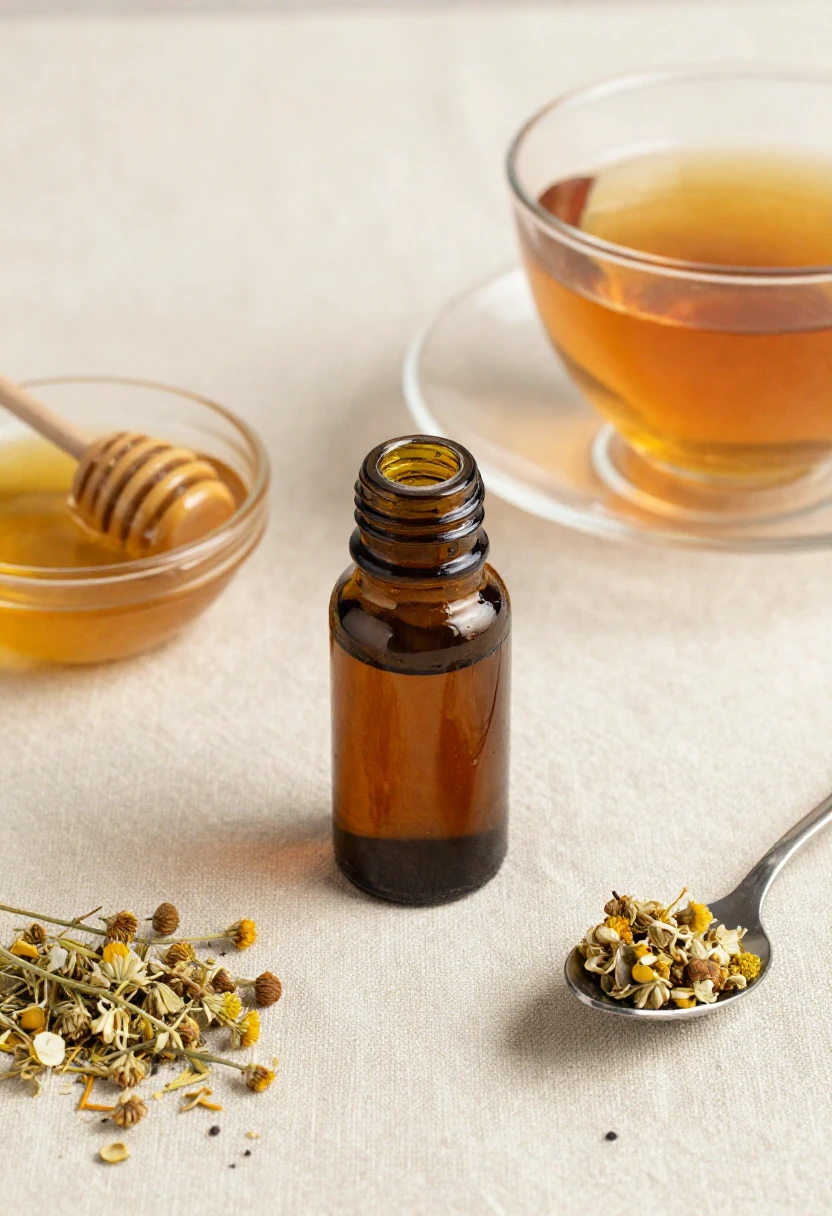
Propolis is one of those bee products that sounds a little mysterious until you picture what it actually is.
Bees collect resin-like material from trees and plants, then mix it with wax and their own secretions. Inside the hive, they use it almost like a sealant. It helps close tiny gaps, smooth rough spaces, and protect the hive environment.
That is why propolis is sometimes called “bee glue.” Not the most glamorous name, but honestly, it explains the idea pretty well.
For people, propolis is usually sold as drops, throat sprays, lozenges, capsules, or mixed into honey. It has a strong smell and taste. Resinous. Bitter. Herbal. Sometimes a little medicinal. If honey is soft and golden, propolis is the serious cousin wearing a dark coat.
What propolis is commonly used for
Most people reach for propolis during cold season, especially when their throat feels irritated or they want extra support for the mouth and upper respiratory area.
You will often see propolis in:
- throat sprays;
- tinctures or drops;
- lozenges;
- capsules;
- mouth rinses;
- honey blends.
The traditional use makes sense from a flavor and texture point of view. A propolis throat spray can feel strong and warming, especially when it is mixed with honey or herbs. But I would be careful with the word “immunity” here.
Propolis may contain plant compounds that researchers are interested in, including flavonoids and phenolic acids. Some lab studies have looked at antimicrobial and anti-inflammatory activity. That does not mean propolis cures colds, prevents flu, or replaces treatment when you are actually sick.
For everyday wellness writing, I would put it this way: propolis is an interesting bee product that some people use for throat comfort and oral care, but it is not a guaranteed shield.
How propolis tastes and how to use it
If you have never tried propolis before, do not expect it to taste like honey. It can be intense.
A propolis tincture may taste sharp and bitter, especially if it is alcohol-based. A spray can feel strong in the mouth. Capsules avoid the taste, but then you lose the sensory part that many people actually want when using it for throat comfort.
The easiest way to try propolis is to follow the product label exactly. That sounds boring, but with concentrated bee products, boring is good.
A few practical tips:
- start with a small amount;
- do not mix several new bee products on the same day;
- avoid using more than the label suggests;
- stop if your mouth, throat, lips, or skin feels irritated;
- be extra cautious if you already react to pollen, bees, or honey.
I would also avoid adding propolis drops casually to every drink just because it feels “natural.” Concentrated extracts are different from adding a teaspoon of honey to tea.
Who should be careful with propolis?
Propolis can trigger allergic reactions in some people. That risk is higher if you already have allergies to bee products, pollen, balsam of Peru, certain tree resins, or related plant substances.
Reactions can be mild, like itching or irritation. They can also be more serious. Mouth swelling, wheezing, hives, dizziness, or trouble breathing are not “detox symptoms.” They are warning signs.
People with asthma or a history of strong allergic reactions should be especially careful. The same goes for anyone who has reacted badly to bee stings, bee pollen, royal jelly, or propolis-based cosmetics.
Alcohol-based propolis tinctures can also be irritating for sensitive mouths. If your throat is already raw, a strong tincture may sting more than expected.
Propolis may not be the best thing to experiment with if you are pregnant, breastfeeding, taking regular medication, or managing a chronic condition. In that case, ask a healthcare professional before using concentrated supplements or tinctures.
A simple food-first approach
If your goal is everyday wellness, I would not start with propolis capsules. I would start with the basics first: enough sleep, warm fluids when you feel run down, nourishing meals, and a kitchen that makes it easy to eat well.
Then, if you are curious, propolis can be something you try carefully.
A gentler way to use it is in a honey-propolis blend from a trusted producer. The honey softens the bitterness, and the product is easier to take than plain drops. Still, read the label. Some blends are meant to be eaten by the spoonful, while others are more concentrated.
For a scratchy throat, you might prefer:
- warm tea with honey;
- a propolis lozenge used as directed;
- a honey-propolis blend in a small amount;
- a throat spray if you already know you tolerate propolis.
Do not use propolis as a reason to ignore symptoms that need attention. A sore throat with high fever, trouble swallowing, breathing problems, severe pain, or symptoms that keep getting worse should not be handled with pantry remedies.
Propolis is interesting. It may be useful for some people. But like many concentrated natural products, it deserves a little respect.
Bee pollen: nutrient-rich, but not for everyone
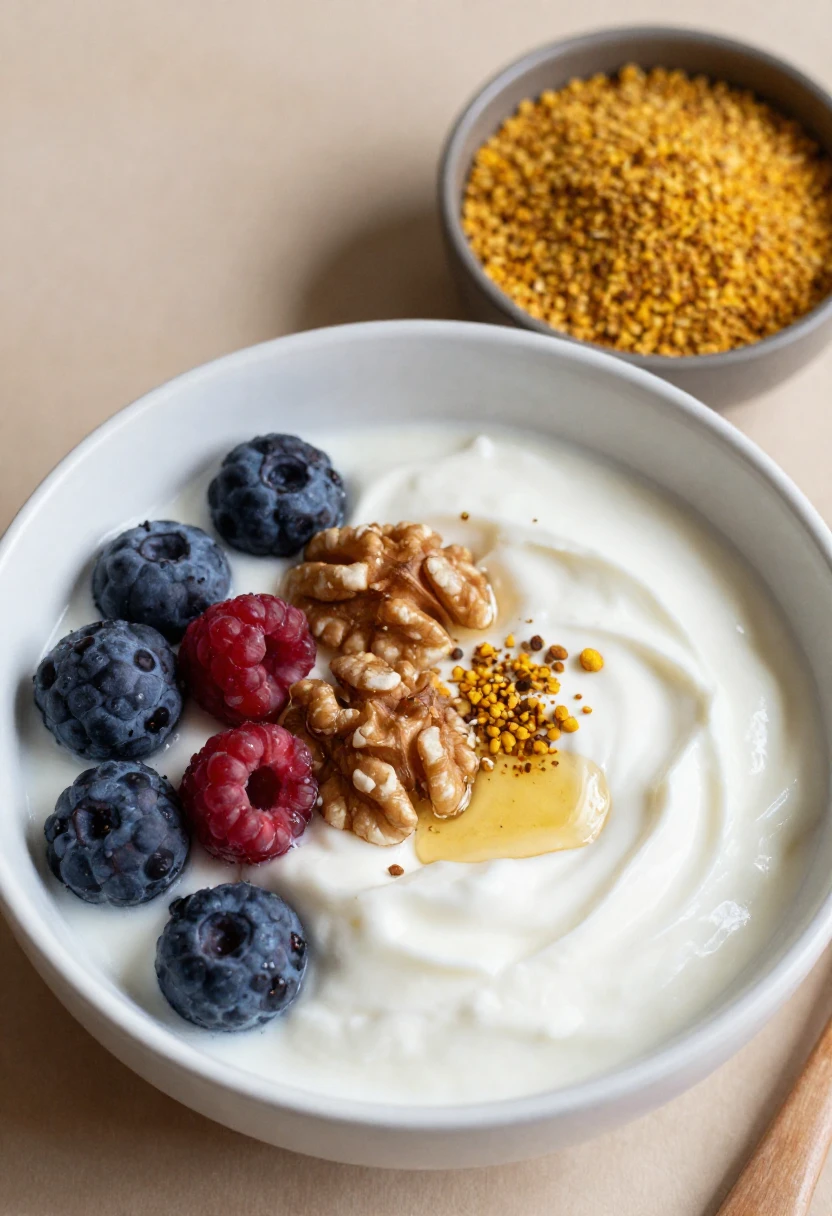
Bee pollen has a prettier reputation than it probably deserves. Those tiny golden granules look so wholesome sprinkled over a smoothie bowl that it is easy to forget what they are: concentrated pollen collected by bees.
That does not make bee pollen bad. It can be interesting, flavorful, and nutrient-dense. But it also means allergy risk is not a small detail. It is the main thing to think about before trying it.
If honey is an easy everyday ingredient, bee pollen is more like a supplement-food hybrid. You may see it in health food stores, tucked beside powders, capsules, and jars of raw honey. Some people add it to breakfast for texture and flavor. Others take it because they have heard it helps with energy, immunity, or allergies.
I would keep the expectations modest. Bee pollen can add nutrients and a floral taste to food, but it is not a proven cure for fatigue, seasonal allergies, or anything more serious.
What bee pollen is
Bee pollen is made from flower pollen that bees collect and pack into small granules. It also contains nectar and bee secretions, which help hold those tiny pellets together.
The exact composition changes depending on the plants, region, season, and how the pollen is collected. That is one reason bee pollen is hard to study neatly. One jar may not be the same as another jar from a different place.
In food, bee pollen usually comes as:
- small granules;
- powder;
- capsules;
- mixed into honey;
- added to bars, blends, or wellness products.
The granules can be yellow, orange, brown, or even slightly greenish. The taste is not always sweet. Sometimes it is floral and pleasant. Sometimes it is earthy, chalky, or bitter around the edges.
The first time I tried bee pollen, I expected something like honey dust. It was not that. It tasted more like flowers, dry grass, and a tiny bit of bitterness. Not bad, just different.
Why people add bee pollen to food
Bee pollen contains a mix of protein, carbohydrates, fats, fiber, vitamins, minerals, and plant compounds. That is why it gets marketed as a “superfood,” although I always find that word a little slippery.
A spoonful of bee pollen is not going to transform your health. But a small sprinkle can add texture and a mild floral note to foods you already eat.
It works best with creamy or juicy foods because the granules can be a little dry on their own.
Try bee pollen with:
- Greek yogurt and berries;
- smoothie bowls;
- oatmeal after cooking;
- cottage cheese with fruit;
- chia pudding;
- fruit salad;
- toast with nut butter and banana;
- a simple breakfast bowl with yogurt, walnuts, and honey.
Add it at the end, not during cooking. Heat can flatten the flavor, and bee pollen is usually used as a finishing ingredient.
I would start with a tiny pinch, not a full spoon. Taste it first. See how your body reacts. Then decide whether it is something you actually enjoy or just something that looks pretty in photos.
Bee pollen and energy claims
Bee pollen is often sold as a natural energy booster. I understand why the idea is appealing. Tiny granules from flowers, collected by bees, full of nutrients. It sounds like something that should make you feel bright and energetic.
But that is not how food works for most people.
If you feel tired because you skipped breakfast, slept badly, are dehydrated, or have been living on coffee and snacks, bee pollen is not the missing puzzle piece. A real meal will help more: yogurt with oats and fruit, eggs with toast, lentil soup, salmon and rice, or whatever fits your life.
Bee pollen may add a small nutritional boost, but it should not carry the whole wellness story.
Use it because you like the taste and texture. Use it because it makes your breakfast feel a little more interesting. But do not expect a sprinkle of pollen to fix low energy that has deeper causes.
Bee pollen risks and allergy concerns
This is the part to take seriously.
Bee pollen can trigger allergic reactions, especially in people who are allergic to pollen, weeds, grasses, flowers, or other bee products. Reactions can range from itching and swelling to wheezing, hives, dizziness, and anaphylaxis.
That is not meant to scare everyone away from it. It is just the reality of concentrated pollen.
Avoid bee pollen unless your healthcare provider says otherwise if you:
- have a known pollen allergy;
- have had a serious allergic reaction before;
- have asthma that is triggered by allergies;
- react to honey, propolis, royal jelly, or bee stings;
- are pregnant or breastfeeding;
- are giving it to a child;
- take medications and are unsure about interactions.
If you are trying bee pollen for the first time and do not have allergy concerns, start very small. A few granules are enough for a first taste. Do not add it to three meals in one day. Do not combine it with propolis and royal jelly at the same time. If something feels off, stop.
A natural product can still be too strong for your body. “Natural” is not the same as harmless.
How to buy and store bee pollen
Bee pollen quality depends on sourcing, freshness, drying, and storage. Because it is a food product with moisture-sensitive compounds, you want it from a producer who takes handling seriously.
Look for bee pollen that has:
- clear origin information;
- a sealed package;
- a fresh smell;
- no signs of moisture or clumping from dampness;
- storage instructions on the label.
Some bee pollen is sold refrigerated or frozen. Some is dried and stored at room temperature. Follow the label. Once opened, keep it tightly sealed and away from heat, light, and moisture.
If it smells sour, musty, or fermented, I would not use it.
And one more thing: do not buy a huge bag the first time. Buy a small amount, try it carefully, and decide whether it belongs in your kitchen. Plenty of “wellness” ingredients end up forgotten in the back of a cabinet because people bought the idea before they knew if they liked the taste.
Royal jelly: what it is and why it is popular
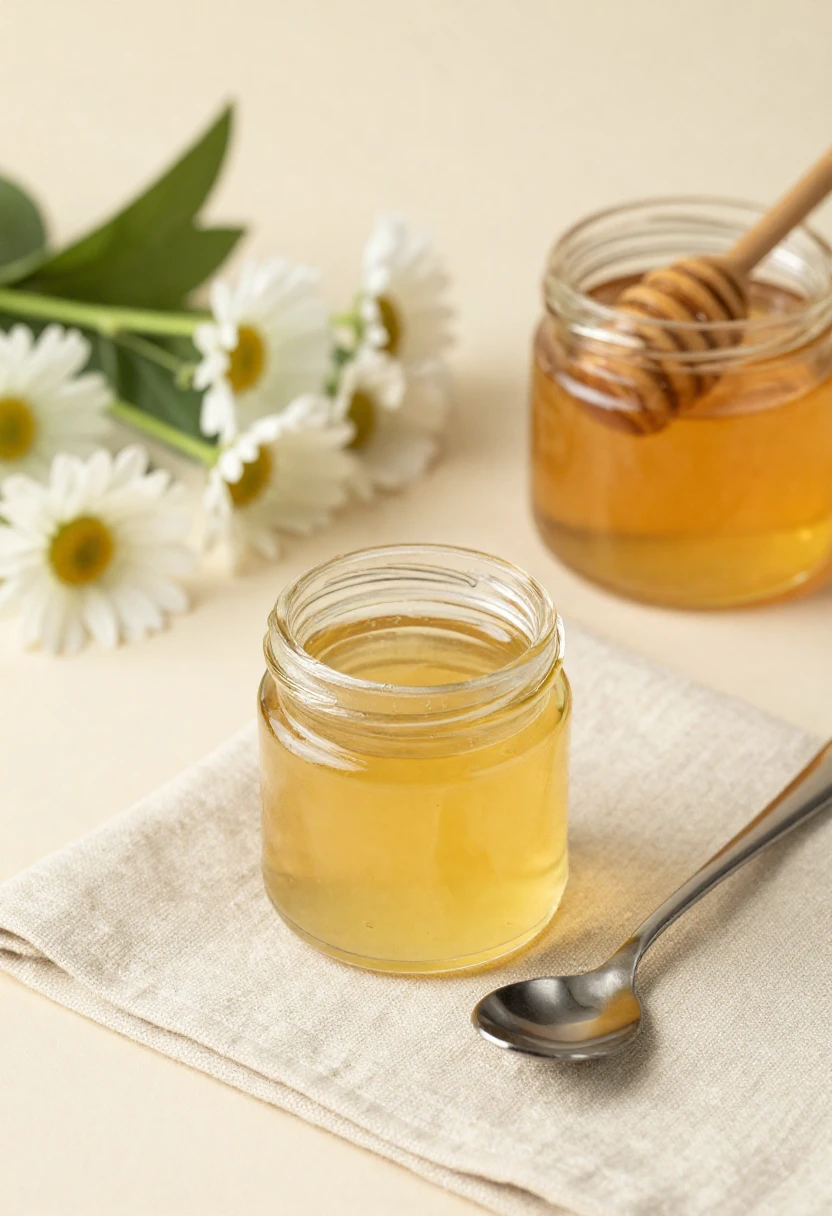
Royal jelly sounds luxurious before you even know what it is. The name does half the marketing by itself.
It is a creamy substance made by worker bees and used to feed bee larvae. Queen larvae receive royal jelly in a special way, which is why the product has picked up so many big claims around energy, beauty, fertility, hormones, and aging.
That story is fascinating. It is also exactly why royal jelly gets overhyped.
Royal jelly contains proteins, sugars, fatty acids, vitamins, minerals, and plant compounds. Researchers have studied it for several possible effects, including antioxidant and anti-inflammatory activity, cholesterol, blood sugar, skin health, and symptoms related to menopause or PMS. But the human evidence is still mixed and often based on small studies. In normal kitchen language: interesting, not proven enough to treat like medicine.
What royal jelly tastes like
Royal jelly does not taste like honey. That surprises people.
Fresh royal jelly can be tangy, sour, slightly bitter, and a little sharp. It has a creamy texture, but the flavor is more medicinal than dessert-like. Some people take it straight. I understand the commitment, but I cannot say it is the most pleasant spoonful.
That is why royal jelly is often sold in easier forms:
- capsules;
- softgels;
- small fresh jars;
- freeze-dried powder;
- ampoules or tonics;
- honey blends;
- skincare products.
If it is mixed into honey, the flavor becomes softer and more approachable. The honey covers some of the sourness, although you may still notice a slight tang.
Why people use royal jelly
Royal jelly is usually marketed as a wellness supplement, not a regular food. People take it for energy, skin, healthy aging, hormonal balance, fertility support, or general vitality.
I would be cautious with all of those claims.
There is some research interest around royal jelly, and it does contain biologically active compounds. That does not mean it will noticeably change how you feel. Supplements can look very convincing on a label, especially when the ingredient has a beautiful natural origin story.
For everyday use, royal jelly is best treated as an optional supplement, not a foundation of health. It should sit far behind the basics: food you can repeat, enough sleep, daily movement, stress management, and medical care when you need it.
A spoonful of royal jelly will not fix a lifestyle that is running on three coffees, five hours of sleep, and random snacks. I wish it worked that way. It would be convenient.
Royal jelly and skin claims
Royal jelly appears in creams, masks, serums, and “glow” products. This makes sense from a marketing angle because it sounds rich and nourishing.
Some people like royal jelly skincare because it feels creamy and soothing. Others may find it irritating, especially if they have sensitive skin, eczema, pollen allergies, or reactions to bee products.
If you try a royal jelly skincare product, patch test first. Apply a tiny amount to a small area of skin and wait. Do not start with your whole face the night before an important event. That is how bathroom regrets happen.
Also, be careful with homemade royal jelly face masks. Food ingredients can still irritate skin, and fresh bee products are not the same as a properly formulated cosmetic product.
Safety notes for royal jelly
This is the most important part of the royal jelly conversation.
Royal jelly can cause allergic reactions. In some people, those reactions can be serious. There are published reports of asthma symptoms and anaphylaxis after royal jelly use, and allergy-focused research warns that people with asthma, allergic rhinitis, eczema, or other allergic conditions should be cautious.
Avoid royal jelly, or speak with a healthcare professional first, if you:
- have asthma;
- have eczema or strong seasonal allergies;
- react to pollen, honey, propolis, bee pollen, or bee stings;
- have had anaphylaxis before;
- are pregnant or breastfeeding;
- are giving it to a child;
- take regular medication, especially for blood thinning, diabetes, hormones, or immune conditions.
Stop using it immediately if you notice itching, hives, swelling, wheezing, throat tightness, dizziness, or trouble breathing. Those are not normal adjustment symptoms.
With royal jelly, “start small” is not enough advice for everyone. If you have a history of allergies or asthma, skipping it may be the smarter choice.
How to try royal jelly carefully
If you are healthy, not allergic, not pregnant or breastfeeding, and still curious, keep it simple.
Choose a product from a reputable brand with clear storage instructions. Follow the label. Do not combine royal jelly with bee pollen, propolis, and new herbal supplements all at once. If you react, you will not know which product caused the problem.
Fresh royal jelly often needs refrigeration. Capsules and freeze-dried products may be shelf-stable, but the label should tell you exactly how to store them. If a fresh product smells strange, looks moldy, or has been left warm when it should be chilled, do not use it.
A honey blend may be the easiest first option because the taste is gentler. Still, check the concentration. Some blends are mostly honey with a small amount of royal jelly. Others are more potent.
Royal jelly is not something I would add casually to a child’s breakfast or recommend as a daily habit for everyone. It is a concentrated bee product with possible benefits, possible risks, and a lot of marketing wrapped around it.
Curiosity is fine. Just keep your common sense in the room.
Easy ways to use honey and bee products in everyday food
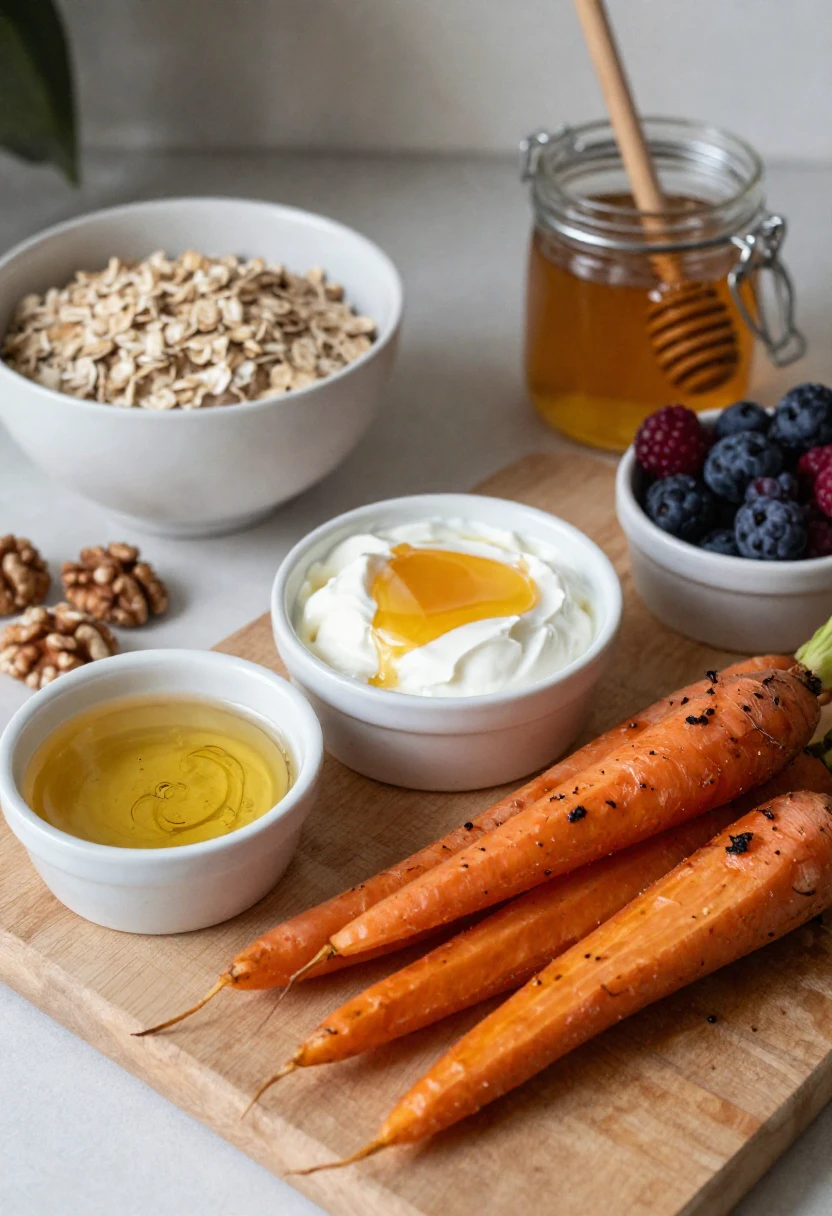
The best way to use honey is not complicated. You do not need a special wellness routine or a shelf full of tiny jars with expensive labels.
Start with food you already eat.
Honey works because it makes simple things taste better. It rounds out acidity, softens bitterness, helps browning, and adds that warm floral sweetness you do not get from plain sugar. Bee pollen, propolis, and royal jelly are different. They are stronger, more concentrated, and better used carefully, if you use them at all.
For most people, honey is the everyday ingredient. The others are optional.
Honey in breakfast
Breakfast is probably where honey feels most at home. It takes plain, slightly boring foods and makes them feel more finished.
Plain Greek yogurt is the obvious one. Add berries, walnuts, and a small drizzle of honey, and suddenly it tastes like something you actually want to sit down with. The honey softens the tang of the yogurt. The walnuts add crunch. The berries bring brightness. It is simple, but it works.
Oatmeal is another easy place to use honey. I like adding it after cooking, not while the oats are still bubbling on the stove. That way the flavor stays clearer.
A few breakfast ideas:
- Greek yogurt with honey, walnuts, and blueberries;
- oatmeal with apples, cinnamon, and a teaspoon of honey;
- cottage cheese toast with sliced peaches and honey;
- ricotta toast with honey and black pepper;
- chia pudding with honey and berries;
- banana toast with peanut butter and a light honey drizzle.
The trick is to use honey where you can taste it. If you add it to an already sweet cereal or flavored yogurt, it just becomes extra sugar hiding inside extra sugar. But on plain yogurt or oats, even a teaspoon can change the whole bowl.
Bee pollen can also work at breakfast, but start small. A tiny sprinkle over yogurt or a smoothie bowl is enough at first. It adds a floral, slightly earthy note and a little texture.
Do not cook bee pollen into oatmeal. Add it at the end if you tolerate it and like the taste.
Honey in drinks
Honey and warm drinks are an old pairing for a reason. Honey melts easily, coats the throat, and makes herbal tea feel softer.
The mistake is using boiling water. Boiling water can flatten honey’s delicate aroma, especially if you are using raw or floral honey. Let the tea cool for a minute or two, then stir in the honey.
Simple honey drinks:
- warm lemon honey water;
- ginger tea with honey;
- chamomile tea with honey;
- black tea with milk and honey;
- warm water with honey and a slice of orange;
- turmeric milk with a small amount of honey.
For a scratchy throat, I usually keep it very plain: warm water, honey, lemon. If I have fresh ginger, I add a few slices and let them sit for a bit. It tastes stronger, but in a good way.
Propolis sometimes appears in throat sprays or drops, and some people add it to warm drinks. If you do this, follow the product label. Propolis is not the same as honey. It can be bitter, concentrated, and irritating for some people, especially if it is alcohol-based.
Royal jelly is sometimes mixed into tonics or honey drinks too. Again, this is not something to throw into your tea casually if you have never tried it before. Taste and tolerance matter.
Honey is gentle in drinks. The other bee products deserve more caution.
Honey in savory cooking
This is where honey becomes genuinely useful in the kitchen.
A little honey can balance mustard, vinegar, lemon juice, soy sauce, chili, garlic, and bitter greens. It can also help roasted or grilled foods brown nicely. That makes it perfect for dressings, glazes, marinades, and quick sauces.
One of the easiest ways to use honey is in a vinaigrette. Oil and vinegar can taste sharp on their own. Add a teaspoon of honey, and the dressing suddenly feels smoother.
Try a simple honey mustard dressing:
- 2 tablespoons olive oil;
- 1 tablespoon lemon juice or apple cider vinegar;
- 1 teaspoon Dijon mustard;
- 1 teaspoon honey;
- a pinch of salt;
- black pepper.
Whisk everything together and taste it. If it is too sharp, add a little more honey. If it is too sweet, add more lemon or vinegar.
Honey also works beautifully with roasted vegetables. Carrots, sweet potatoes, squash, onions, parsnips, and Brussels sprouts all love a little sweetness. Add honey near the end of roasting so it does not burn.
A quick roasted carrot idea:
Toss carrots with olive oil, salt, pepper, and thyme. Roast until they start to soften and brown. In the last few minutes, drizzle with a little honey and return them to the oven until glossy. Finish with lemon juice if they taste too sweet.
That tiny bit of lemon matters. It keeps the carrots from tasting like dessert.
For proteins, honey pairs well with:
- salmon, garlic, soy sauce, and lemon;
- chicken thighs with mustard and rosemary;
- tofu with ginger, soy sauce, and chili;
- shrimp with lime and garlic;
- pork tenderloin with apple cider vinegar;
- halloumi with lemon and herbs.
Just remember that honey browns quickly. If your pan is too hot or your grill is aggressive, the honey can go from golden to burnt before you have time to feel proud of yourself. Add it later, dilute it in a marinade, or cook over moderate heat.
Honey in baking
Honey can replace some sugar in baking, but it is not always a simple one-to-one swap.
It adds moisture, sweetness, flavor, and browning. That can be lovely in muffins, quick breads, granola, oat bars, and cakes. But too much honey can make baked goods heavy, sticky, or overly brown around the edges.
If you are adapting a recipe, start by replacing only part of the sugar with honey. You may also need to reduce the liquid slightly, because honey brings moisture.
Honey works especially well in:
- banana bread;
- oat muffins;
- granola;
- honey cake;
- whole wheat bread;
- cornbread;
- baked apples;
- nut bars;
- yogurt cakes.
For granola, honey is almost perfect because it helps the oats clump. Mix oats, nuts, seeds, cinnamon, oil, and honey, then bake slowly until golden. Let it cool before breaking it apart. That cooling time is what gives you clusters.
One small warning: honey can make baked goods brown faster than sugar. If something looks dark too soon, lower the oven temperature slightly or cover the top loosely.
Baking with honey is a little less predictable, but the flavor can be worth it.
How to try bee pollen gently
Bee pollen is best used as a finishing sprinkle, not a main ingredient.
Think of it like a strong topping. You would not cover your whole breakfast in black pepper the first time you tried it. Bee pollen deserves the same restraint.
Start with just a few granules. Taste them. Wait and see how you feel. If you tolerate bee pollen well and enjoy it, you can use a small pinch over food.
Good pairings include:
- yogurt bowls;
- smoothie bowls;
- oatmeal after cooking;
- fruit salad;
- cottage cheese with berries;
- toast with nut butter and banana;
- chia pudding.
The flavor can be floral, earthy, bitter, or slightly grassy. It is not for everyone, and that is fine. No ingredient deserves a permanent place in your kitchen just because the internet made it look pretty.
If you have pollen allergies, asthma, or a history of allergic reactions, bee pollen is not something to experiment with casually.
How to use propolis without overdoing it
Propolis is usually not a cooking ingredient. It is too bitter and resinous for most recipes.
People tend to use it in sprays, tinctures, lozenges, capsules, or honey blends. If you buy propolis, use it exactly as the label says. More is not better. More may simply irritate your mouth or throat.
A honey-propolis blend is often easier than plain drops because the honey softens the taste. You might take a small amount from a spoon or stir it into a warm drink, depending on the product instructions.
Do not add propolis to every tea, smoothie, and breakfast bowl just because you bought a bottle. Try it separately first. That way, if your mouth tingles, your throat feels tight, or your skin reacts, you know what caused it.
Also, check whether the tincture contains alcohol. Some do, and they can sting.
How to use royal jelly carefully
Royal jelly is more of a supplement than a food ingredient. You may find it fresh, freeze-dried, in capsules, or mixed into honey.
If you use fresh royal jelly, storage matters. Many fresh products need refrigeration. Follow the label and do not take chances with a jar that smells strange or has been stored badly.
Royal jelly mixed with honey is usually easier to taste. The honey covers some of the sour, sharp flavor. Still, it is not something I would add casually to a child’s breakfast, a family smoothie, or a shared dessert without knowing everyone tolerates it.
If you want to try it, keep the first use separate and small. Do not take royal jelly on the same day you try bee pollen and propolis for the first time. That is asking for confusion if your body reacts.
The calmer approach is better:
- choose one bee product;
- start with a small amount;
- follow the label;
- watch for reactions;
- stop if anything feels wrong.
Honey can be a normal kitchen ingredient. Bee pollen, propolis, and royal jelly require more thought. They may be useful or interesting, but they are not required for a healthy diet.
And honestly, a bowl of yogurt with walnuts, berries, and a small spoon of good honey is already doing plenty.
Who should avoid or limit honey and bee products?
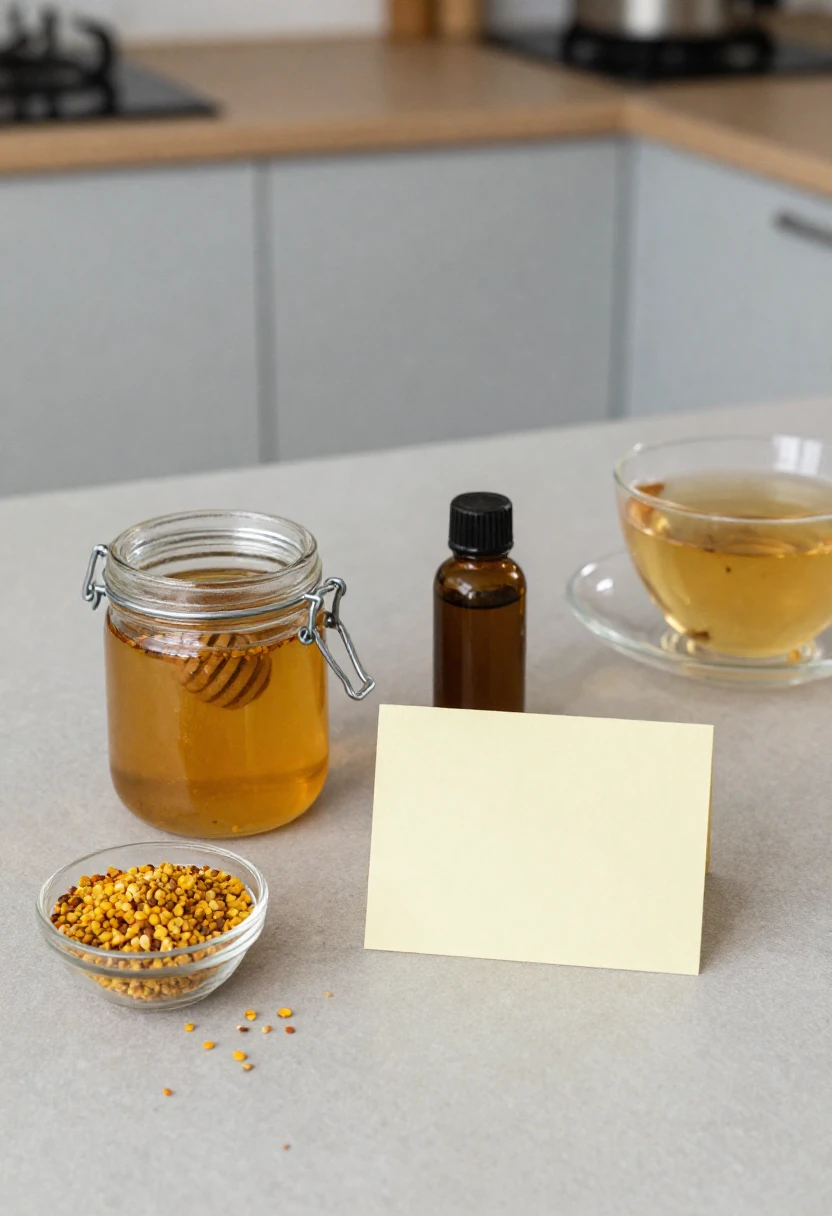
Honey has a warm, gentle image. Bee pollen looks pretty. Royal jelly sounds fancy. Propolis feels like something you would buy when you want to take better care of yourself.
But bee products are still active natural products. Some are sugary. Some are concentrated. Some can trigger allergies. A few are simply not safe for certain people.
This does not mean you need to be afraid of honey. It means you should match the product to your body, your age, your health needs, and your real risk level.
Babies under 12 months
This rule is simple: babies under 12 months should not have honey.
Not raw honey. Not pasteurized honey. Not honey in tea. Not honey baked into homemade snacks. Not a tiny taste from a spoon because someone in the family says they did it years ago and everything was fine.
The concern is infant botulism. Honey can contain spores that an older child or adult can usually handle, but a baby’s gut is not ready for them. The risk is uncommon, but the possible outcome is serious enough that it is not worth gambling with.
Once a child is over 12 months old, honey can usually be introduced like other sweet foods, assuming there are no allergy concerns. But even then, it should be used lightly. Toddlers do not need honey as a daily habit. A small amount in food is enough.
People with diabetes or blood sugar concerns
Honey may feel more natural than white sugar, but it still raises blood sugar.
That is the sentence to remember.
If you have diabetes, prediabetes, insulin resistance, gestational diabetes, or specific blood sugar goals, honey needs to be counted as a sweetener. It is not a loophole. It is not “free” because it came from bees.
Some people may find that a teaspoon of honey in a balanced meal works fine for them. Others may notice a bigger glucose response, especially if honey is added to tea, toast, smoothies, or snacks without protein, fiber, or fat.
A more blood-sugar-aware way to use honey:
- keep the portion small;
- pair it with protein or fiber;
- avoid drinking large amounts of sweetened beverages;
- use it where you can actually taste it;
- do not use honey to “healthify” desserts that are still very sweet.
For example, plain Greek yogurt with walnuts, berries, and a little honey is very different from a sweetened yogurt cup with granola and more honey on top. The first gives you more balance. The second can quietly turn into dessert.
If you monitor blood sugar, your own readings matter more than general advice. Honey is still sugar, but your body’s response is personal.
People with pollen, bee, or propolis allergies
This is where bee products get tricky.
People with pollen allergies may react to honey, bee pollen, royal jelly, or propolis. The risk is not the same for everyone, but it is real. Bee pollen is especially important to treat carefully because it is concentrated pollen, not just a sweet topping.
Possible allergy symptoms can include:
- itching in the mouth or throat;
- swelling of the lips, tongue, or face;
- hives;
- rash;
- wheezing;
- coughing or chest tightness;
- dizziness;
- nausea;
- trouble breathing.
Mild tingling is not something I would brush off with bee products. If your body is telling you no, listen early.
If you have had a serious allergic reaction before, especially anaphylaxis, do not experiment with bee pollen, royal jelly, or propolis without medical guidance. The same goes if you have asthma that gets worse with allergies.
Honey itself is usually easier for many people to tolerate than concentrated bee products, but “usually” is not the same as “always.” If you already know you react to honey or bee products, avoid them.
People with asthma, eczema, or strong seasonal allergies
Royal jelly and propolis deserve extra caution for people with asthma, eczema, allergic rhinitis, or strong seasonal allergies.
This does not mean every person with hay fever will react. Many will not. But the overlap between bee products, pollen exposure, and allergic sensitivity is enough to take seriously.
I would be especially careful with concentrated forms:
- royal jelly capsules;
- fresh royal jelly;
- bee pollen granules;
- propolis tinctures;
- propolis sprays;
- multi-ingredient “immune” blends;
- bee product supplements mixed with herbs.
The more concentrated the product, the less it behaves like normal food.
If you are very allergy-prone, a spoon of honey in tea may be one thing. A capsule containing royal jelly, propolis, bee pollen, and herbal extracts is another. If you react to that kind of blend, it can be hard to know which ingredient caused the problem.
Simple is safer.
People who are pregnant, breastfeeding, or taking medication
Pregnancy and breastfeeding are not the best times to casually test concentrated bee products.
Normal food amounts of honey are usually treated differently from supplements, but bee pollen, propolis, and royal jelly are often sold as concentrated products. They can vary widely in strength and composition. Some tinctures also contain alcohol.
If you are pregnant, breastfeeding, trying to conceive, or taking regular medication, ask a healthcare professional before using bee product supplements. This matters even more if you take medication for blood thinning, diabetes, immune conditions, hormones, allergies, or asthma.
The same goes for children. Honey is not safe under 12 months, and concentrated bee products are not something I would casually add to a child’s routine without pediatric guidance.
People with wounds or infections
Honey has a long history in wound care, and medical-grade honey is used in some healthcare settings. But that does not make your kitchen honey a wound treatment.
Do not put pantry honey on deep cuts, burns, infected skin, surgical wounds, or slow-healing sores. Regular honey is not sterile in the way a medical wound product needs to be. It may also be contaminated after the jar has been opened and used in the kitchen.
If a wound is red, hot, swollen, painful, leaking fluid, spreading, or not healing, skip the DIY approach and get proper care.
There is a place for honey in medicine. Your breakfast jar is not that place.
Anyone who tends to overdo “healthy” sweeteners
This one is less medical, but still important.
Honey can become a sneaky source of extra sugar because it feels wholesome. A spoon in tea. A drizzle on yogurt. Honey granola. Honey mustard dressing. A honey snack bar. Another spoon before bed because your throat feels dry.
None of those things are bad by themselves. Together, they add up.
If you are trying to reduce added sugar, do not replace every sweet thing with honey and call it solved. Instead, choose the places where honey gives the most flavor.
Keep the honey where it matters:
- a small drizzle on plain yogurt;
- a teaspoon in warm tea;
- a little in homemade dressing;
- a thin glaze on roasted vegetables;
- a small amount in baking for flavor.
Skip it where you barely notice it.
That is the easiest way to enjoy honey without letting the “natural” label do too much work.
How to store honey and bee products properly
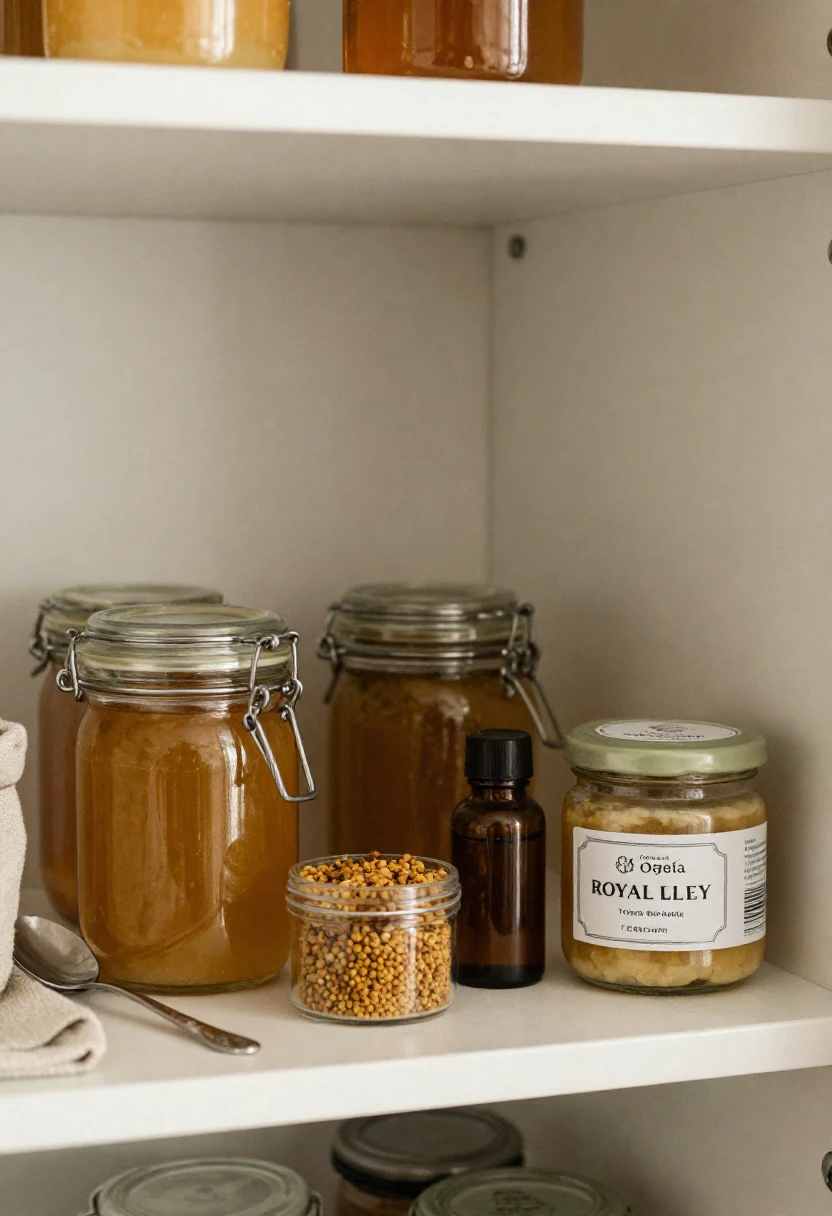
Honey is forgiving. That is one of the reasons people have kept it in kitchens for so long. It does not need much attention, and it does not behave like fresh fruit, milk, or herbs that start looking tired after a few days.
Still, storage matters. Not because honey is delicate, but because the way you store it affects texture, flavor, and freshness. Bee pollen, propolis, and royal jelly need even more care, especially if they are sold fresh or concentrated.
The short version: keep honey dry, keep bee products sealed, and always respect the label.
How to store honey
Honey should usually be stored at room temperature in a tightly closed jar. A cabinet or pantry is perfect. It does not need the refrigerator.
Actually, the fridge can make honey thicker and speed up crystallization. That is not dangerous, but it can be annoying when you want a quick spoonful for tea and the jar feels like sweet cement.
The biggest enemy of honey is moisture. Honey naturally has low water content, which helps it last. But if you keep dipping wet spoons into the jar, you can introduce water. Over time, that may encourage fermentation.
A few easy habits help:
- close the jar tightly after each use;
- use a clean, dry spoon;
- keep the jar away from steam near the stove;
- do not store honey in direct sunlight;
- avoid leaving crumbs, butter, or yogurt in the jar.
That last one sounds obvious, but breakfast chaos happens. One spoon goes into yogurt, then into honey, then back into yogurt. Suddenly your clean jar has dairy and crumbs in it. Not ideal.
If your honey smells pleasant and looks normal apart from crystallization, it is usually fine. If it smells sour, alcoholic, yeasty, or fermented, I would not use it.
What to do if honey crystallizes
Crystallized honey is not spoiled. It is just honey changing texture.
Some honey crystallizes quickly. Some stays liquid for months. The speed depends on the floral source, sugar balance, temperature, and how the honey was processed.
If your honey turns grainy or cloudy, you have two choices.
You can use it as it is. Crystallized honey is excellent on toast, biscuits, warm bread, or stirred into oatmeal. It spreads instead of running everywhere, which can be a nice change.
Or you can soften it gently.
Place the jar in a bowl of warm water and let it sit. Stir occasionally if the honey is in a wide-mouth jar. Keep the water warm, not boiling. The goal is to loosen the crystals without cooking the honey.
Avoid aggressive microwaving, especially if the honey is in plastic. Too much heat can flatten the flavor and damage the texture. It can also create hot spots, which is never fun when you are handling sticky sugar.
Patience works better here.
How to store bee pollen
Bee pollen is more sensitive than honey. It can absorb moisture, lose freshness, and develop off smells if stored badly.
Always check the label first. Some bee pollen is dried and shelf-stable. Some is sold refrigerated or frozen. Storage depends on how it was processed.
Once opened, keep bee pollen tightly sealed. Store it away from heat, light, and humidity. If the label recommends refrigeration, follow that. If it says to freeze it, do not assume your pantry is good enough.
Bee pollen should smell fresh, floral, grassy, or slightly earthy. If it smells musty, sour, damp, or fermented, skip it.
I would also avoid buying too much at once. Bee pollen is one of those ingredients people buy with big intentions, sprinkle on yogurt twice, then forget for six months. A small jar makes more sense unless you already know you use it often.
How to store propolis
Propolis usually comes as a tincture, spray, capsule, lozenge, or honey blend. Each form stores a little differently.
Tinctures and sprays are often shelf-stable, but they should still be kept tightly closed and away from heat. Capsules usually belong in a cool, dry place. Honey blends can be stored like honey unless the label says otherwise.
Because propolis has a strong resin-like character, it can stain or stick. Close bottles carefully. Wipe the rim if drops collect around the cap. Otherwise, the bottle can become unpleasantly sticky very fast.
Also, keep propolis products away from children unless the product is specifically meant for them and approved by a pediatric professional. Concentrated bee products are not the same as a jar of honey in the pantry.
If a propolis product changes smell, color, texture, or develops mold, do not use it. And with tinctures, check the expiration date. Alcohol-based products may last longer, but they are not immortal.
How to store royal jelly
Royal jelly needs the most attention.
Fresh royal jelly is often perishable and may require refrigeration or freezing. That depends on the product, so the label matters. Do not guess.
If royal jelly should be refrigerated, keep it cold consistently. Do not leave it sitting on a sunny counter, in a hot car, or near the stove. Fresh royal jelly can lose quality quickly when stored poorly.
Capsules, freeze-dried powders, and honey blends may be easier to store, but they still need protection from heat, light, and moisture. Keep lids closed tightly and avoid dipping wet spoons into honey blends.
Fresh royal jelly has a sharp, sour, tangy smell and taste, but it should not smell rotten, moldy, or unpleasant in a spoiled-food way. If something seems wrong, trust that instinct.
With royal jelly, I would rather throw away a questionable jar than take a chance. It is too concentrated and too allergy-sensitive to treat casually.
How long do honey and bee products last?
Honey can last a very long time when stored well, but quality still changes. Over time, flavor can fade, color can darken, and texture can shift. That does not always mean it is unsafe, but it may not taste as good as it once did.
Bee pollen, propolis, and royal jelly are different. They usually come with expiration dates or best-before dates, and those should be taken more seriously.
Use these as general kitchen rules:
- honey lasts longest when kept dry and sealed;
- bee pollen is best bought in small amounts and used while fresh;
- propolis products should be stored according to form and label;
- royal jelly needs careful storage, especially when fresh;
- any bee product with mold, strange odor, or damaged packaging should be discarded.
I know it is tempting to keep expensive wellness products forever because they cost real money. But if a bee product smells off or has been stored badly, it has already lost the argument.
A simple storage setup
You do not need a complicated system. Just give each product the right spot.
Keep your everyday honey in a pantry or cabinet. If you have a second special honey, maybe a dark buckwheat or manuka honey, keep it sealed and use it slowly where the flavor matters.
Keep bee pollen in the fridge or freezer if the label says so. Keep propolis drops or sprays in a cool cabinet unless directed otherwise. Keep fresh royal jelly refrigerated or frozen according to the package.
And write the opening date on products you use slowly. A small piece of tape and a pen can save you from the classic kitchen mystery: “Did I buy this last month or last year?”
Good storage is not glamorous. But it keeps the flavor better, reduces waste, and makes bee products safer to use.
Conclusion
Honey and bee products can absolutely have a place in a healthy kitchen, but they work best when you keep them in the right category.
Honey is food. A beautiful, flavorful sweetener, but still a sweetener. Use it where it actually improves the meal: in warm tea, over plain yogurt, in a mustard dressing, or brushed lightly over roasted vegetables. A small amount can do a lot.
Bee pollen, propolis, and royal jelly are different. They are more concentrated, more allergy-sensitive, and often sold with bigger wellness promises than the evidence can comfortably support. Some people enjoy them. Some people should avoid them completely.
The safest approach is simple: start with good honey in real food, keep portions reasonable, and be careful with concentrated bee products if you have allergies, asthma, chronic health conditions, or take medication.
Nature gives us useful things. It does not always give us harmless things. Honey is lovely, but common sense still belongs at the table.
FAQ
Is honey healthier than sugar?
Honey has more flavor than plain white sugar and may contain small amounts of antioxidants and plant compounds. But it is still mostly sugar, and your body still counts it as added sweetness.
If you use honey, use it for flavor. A teaspoon in yogurt or tea can be enough. Do not treat it like a sugar-free food.
Can I eat honey every day?
Many adults can enjoy a small amount of honey daily, especially as part of balanced meals. The key word is small.
A teaspoon in tea, oatmeal, yogurt, or dressing is very different from using honey several times a day in drinks, snacks, granola, desserts, and sauces. If you are watching your blood sugar or added sugar intake, keep portions modest.
Is raw honey safe?
Raw honey can be safe for many healthy adults and older children, but it is not safe for babies under 12 months. That rule applies to all honey, including raw, pasteurized, organic, local, and baked-in honey.
People with pollen or bee product allergies should also be cautious. Raw honey may contain more natural particles than heavily filtered honey, which some people like for flavor, but it can be a problem for sensitive people.
Can honey help with cough?
Honey may help soothe a cough or scratchy throat for adults and children over age 1. It coats the throat and can make irritation feel less harsh, especially in a warm drink.
It does not cure the cause of the cough. If symptoms are severe, long-lasting, or come with breathing trouble, high fever, chest pain, or worsening illness, get medical advice.
Who should avoid bee pollen, propolis, or royal jelly?
People with pollen allergies, bee product allergies, asthma, eczema, a history of anaphylaxis, or strong seasonal allergies should be very careful with bee pollen, propolis, and royal jelly.
Pregnant or breastfeeding people, children, and anyone taking regular medication should ask a healthcare professional before using concentrated bee product supplements. These products may be natural, but they can still cause reactions.