Some dinners exist mostly to get food on the table quickly. You cook them almost automatically, barely paying attention, and twenty minutes later everyone eats before moving on with the evening. Braised sausages with pear and potato is not really that kind of meal. It’s slower. Heavier in atmosphere. The sort of dinner that quietly takes over the kitchen for an hour while the pan bubbles away and the smell starts drifting into every room nearby.
And honestly, that’s part of why I like it so much.
This dish feels deeply tied to colder weather. Rain outside, slightly fogged windows, socks instead of shoes, bread warming near the stove. The ingredients themselves are simple enough — sausages, potatoes, onions, pears, stock — but once they cook together slowly, the flavor turns into something much richer than the ingredient list suggests.
I actually stumbled into the pear version by accident. Apples are the obvious choice with sausages, and most people stop there. But one evening I had a few pears on the counter that were already too soft to pack for lunch and just barely holding themselves together. Throwing them away felt wasteful, so they went into the pan almost as an afterthought.
Turns out pears work differently from apples in a braise. Softer texture. Less acidity. More mellow sweetness that slowly melts into the sauce instead of standing apart from it. Apples stay more noticeable. Pears disappear slightly into everything else, and that’s exactly why the dish works.
The first time I made it, I expected the sweetness to overpower the savory side of the meal. It didn’t. The pears balanced the richness instead. The sauce became rounder somehow, softer around the edges without losing depth.
That’s the thing about slow braised dishes when they’re done well. Nothing sticks out aggressively. The ingredients settle into each other over time.
And despite how comforting the final result feels, the actual cooking process is pretty relaxed. There’s no difficult technique hiding here. No complicated timing beyond adding the pears later so they don’t completely collapse. Most of the recipe is just letting heat and time do their job properly.
Which honestly makes it even better for weekends or long evenings when nobody feels like rushing dinner.
This is also one of those meals that changes the atmosphere in the house while it cooks. Some foods smell good for a moment. This one slowly builds over time. First onions in butter. Then sausage fat browning in the pan. Then stock, mustard, thyme, and eventually the pears softening into the sauce. By the end, the whole kitchen smells warm and savory with just enough sweetness floating in the background to make people wander in asking when dinner will be ready.
I’ve had people hover near the stove while this cooks more than once.
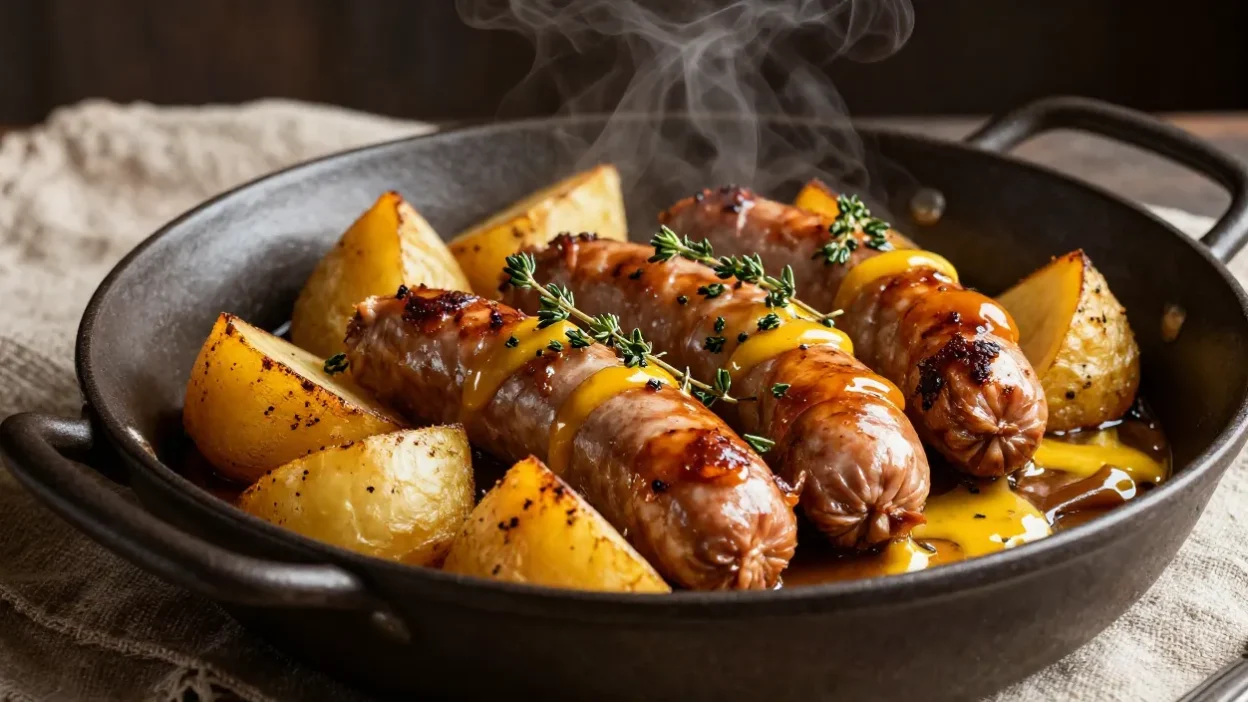
And the finished dish looks exactly like the kind of food you want during colder months. Deep golden potatoes, browned sausages, onions almost melting into the sauce, soft pears tucked between everything. Nothing carefully styled or overly polished. Just proper comfort food.
🥔 Why pears work surprisingly well with sausages
Most sausage recipes lean hard into salty, savory flavors. Mustard, onions, garlic, beer, maybe cabbage if the recipe goes in a more traditional direction. Fruit usually sounds like a strange addition at first because people assume sweetness automatically pushes a dish toward dessert territory.
But pears don’t really behave that way once they cook slowly.
Instead of staying bright and fruity, they soften into something warmer and more subtle. Their sweetness becomes gentler after simmering in stock and sausage juices for a while, especially once mustard and onions are involved. Rather than dominating the dish, the pears quietly balance the heavier flavors already in the pan.
That matters because sausages naturally release a lot of fat during cooking. Good fat, obviously, but still rich. Without something softer to cut through that richness, braised sausage dishes can start tasting heavy halfway through the bowl.
Pears fix that problem without making the dish feel sharp or acidic.
Texture matters too. The pears soften enough to almost melt into the sauce while still keeping just enough shape around the center. Potatoes stay firmer. Sausages remain juicy. Onions collapse completely into the broth. You end up with multiple textures in the same bite instead of everything feeling uniformly soft.
Actually, texture is probably one of the biggest reasons this dish feels satisfying instead of just heavy. Slow braises need variation. If every ingredient breaks down the same way, the whole thing turns dull after a few bites no matter how good the flavor is.
Timing changes everything here.
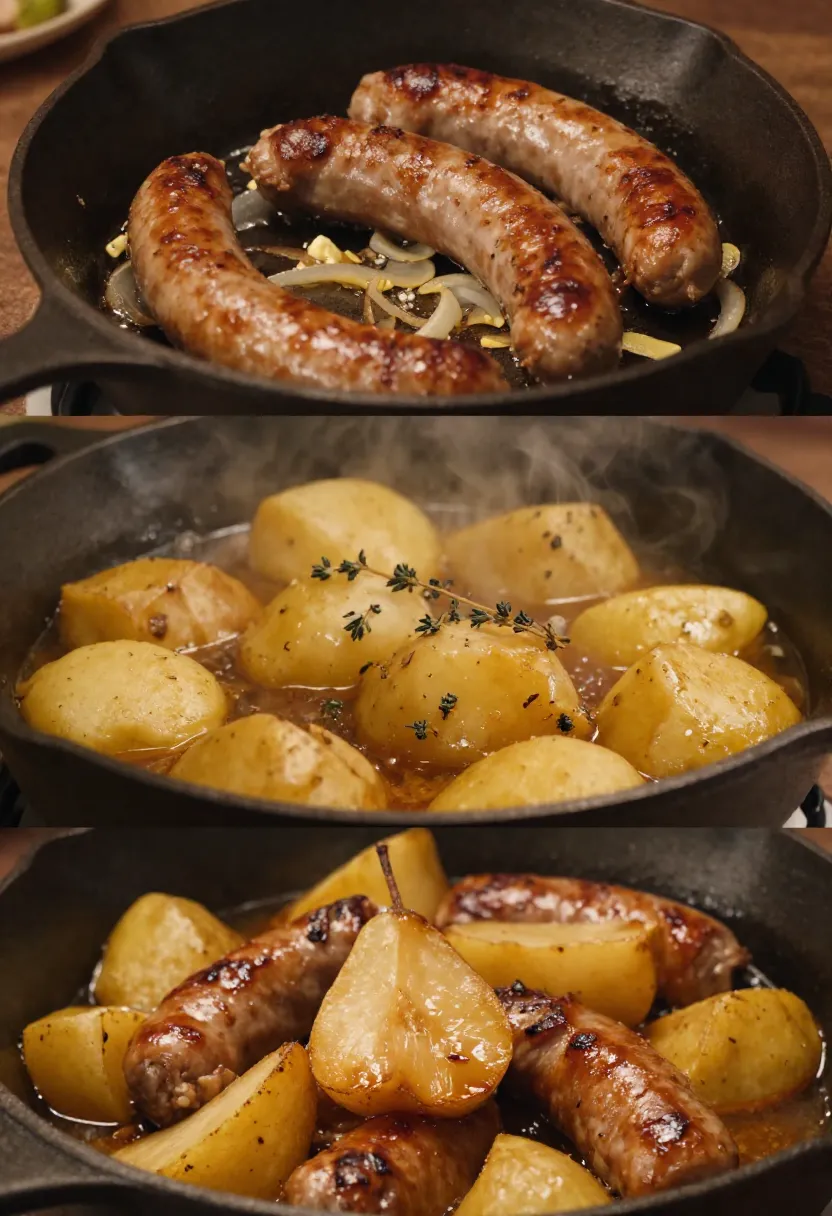
The sausages need proper browning first or the dish tastes flatter later. Potatoes need enough simmering time to absorb the broth without falling apart completely. Pears go in near the end because they cook much faster than the potatoes. Onions need patience more than anything else. If they don’t soften properly at the beginning, the sauce never develops the same depth later on.
That’s why this recipe works best when you don’t rush it.
Not because it’s difficult. Because slower cooking simply makes everything taste fuller.
And honestly, it’s hard to mess up badly unless you crank the heat too high. Even slightly imperfect versions still turn out comforting because the ingredient combination itself already works so well together.
Here’s how each ingredient changes while cooking:
| Ingredient 🍴 | Flavor role | Texture after cooking | Cooking tip |
|---|---|---|---|
| Pork sausages | Rich, savory base with salt and fat | Juicy center with browned exterior | Brown slowly before braising |
| Pears 🍐 | Soft sweetness that balances richness | Tender and buttery | Add during final simmer |
| Potatoes 🥔 | Makes the dish filling and hearty | Creamy inside with softened edges | Use waxy potatoes for structure |
| Onions 🧅 | Sweetness and depth in the sauce | Almost melts completely | Cook low and slow |
| Whole grain mustard | Sharpness and slight acidity | Blends into broth | Stir in before adding stock |
| Thyme 🌿 | Earthy background flavor | Fragrant and subtle | Fresh thyme gives better aroma |
The nice thing is that none of these ingredients are expensive or difficult to find. This isn’t one of those recipes built around specialty products or trendy techniques. Most of the ingredients are things people already buy regularly during colder months anyway.
And the dish leaves room for small adjustments depending on what’s sitting in the kitchen already.
Sometimes I use cider instead of wine because it pairs naturally with the pears. Other times I add extra onions because they cook down into the sauce beautifully. I tried adding carrots once too, which actually worked surprisingly well even though the dish became sweeter overall.
That flexibility makes the recipe feel more human somehow. Less rigid. More like real home cooking instead of something built to look perfect online.
Small ingredient details that improve the final result
- Slightly ripe pears work best because they soften faster 🍐
- Sausages with more fat create a richer sauce
- Fresh thyme smells noticeably brighter than dried thyme 🌿
- Baby potatoes hold shape better during braising
- Whole grain mustard adds texture the sauce would otherwise lose
- Butter added with the onions makes the broth silkier later
And maybe the most important thing honestly: don’t overthink the appearance while cooking.
The pan looks messy halfway through. The sauce seems thin at first. The onions almost disappear completely. Then suddenly everything comes together near the end without much effort.
That’s usually how good braised food works anyway.
🍳 The smell alone makes this worth cooking
One of the best things about this recipe is how the kitchen smells while everything cooks together. At first it’s mostly onions and butter, then the sausages start browning and the whole pan becomes much richer and more savory. Once the cider or wine goes in, the smell changes again because all the browned bits from the bottom of the pan mix into the sauce.
A little later the thyme and mustard start coming through, and by the time the pears soften, the entire dish smells warmer and slightly sweeter without losing that deep savory flavor underneath.
It’s the kind of dinner that slowly fills the house while it cooks.
I made this during a rainy weekend once while trying to do other things around the apartment, and I kept wandering back into the kitchen every ten minutes just to check the pan. Not because the recipe is difficult — it’s actually very low effort once everything starts simmering — but because slow braises naturally pull attention toward the stove.
That slower cooking process is part of why dishes like this feel so comforting during colder months. You’re not rushing through dinner in twenty minutes. The sausages brown slowly, the onions soften properly, and the potatoes absorb the broth over time instead of being boiled quickly and forgotten.
And the smell changes throughout the cooking process in a way fast meals usually don’t.
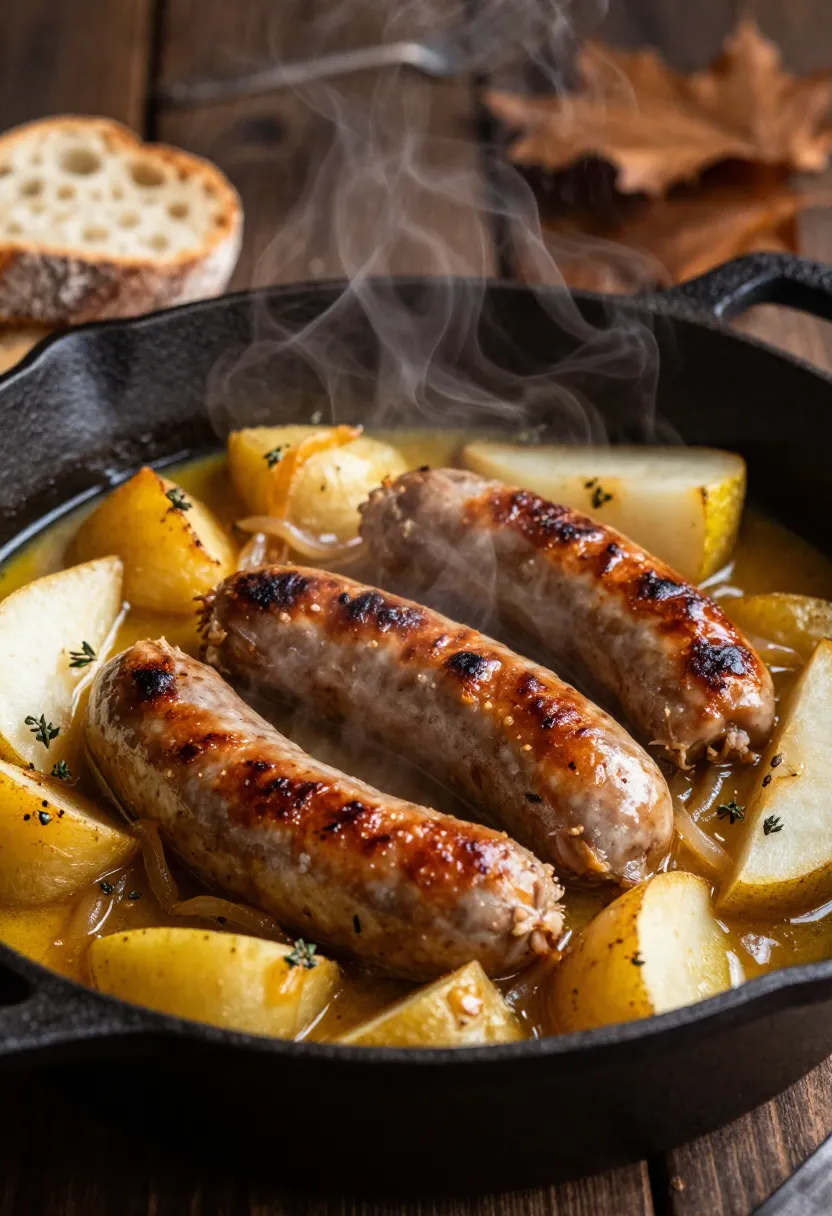
At the beginning, the aroma is sharper from the onions and mustard. Later it becomes deeper once the stock reduces slightly and the sausage juices mix into everything. Near the end, the pears mellow out the sauce and add a softer sweetness that balances the richness from the meat and potatoes.
By the time dinner is ready, the broth has thickened slightly, the potatoes are tender, and the pears almost melt into the sauce around the edges.
The smell somehow makes the whole meal feel even more filling before anybody actually starts eating.
Warm bread on the table helps too. Especially if you use it to soak up the sauce left at the bottom of the bowl.
And honestly, this recipe might smell even better the next day. Overnight the potatoes absorb more flavor, the mustard softens, and the pears blend further into the broth. Reheating leftovers the next afternoon somehow feels richer and more comforting than the original dinner did.
Not every recipe improves after sitting overnight, but this one definitely does.
🍐 Braised sausages with pear and potato recipe
This braised sausages with pear and potato recipe feels like the kind of dinner people accidentally stay at the table longer for. It’s warm, rich, a little rustic, and honestly perfect for evenings when the weather outside looks miserable and nobody feels like cooking anything complicated.
The sausages slowly release flavor into the sauce while the onions soften down almost completely. The potatoes absorb all the broth, mustard, and sausage juices, and the pears bring just enough sweetness to keep the whole dish from feeling too heavy. Not sugary sweetness either. More like a softer background flavor that balances everything out without stealing attention.
I like recipes like this because they don’t require constant effort once the pan gets going. You brown the sausages properly, let the onions cook slowly, pour in the stock, then mostly leave everything alone while it simmers. Meanwhile the kitchen starts smelling incredible somewhere around the moment the cider hits the pan.
And the texture is what really makes it work. Juicy sausages, soft onions, potatoes that turn creamy inside, pears that almost melt into the sauce but still hold together slightly around the edges. It feels hearty without becoming overly rich.
This is also one of those meals that somehow tastes even better with a chunk of bread nearby and absolutely no rush to eat quickly.
🛒 Ingredients
- 6 pork sausages
- 2 ripe pears, sliced into wedges 🍐
- 500 g baby potatoes, halved 🥔
- 1 large onion, sliced thinly
- 2 garlic cloves, chopped
- 1 tablespoon whole grain mustard
- 1 cup chicken stock
- 1/2 cup dry cider or white wine
- 2 tablespoons olive oil
- Small knob of butter
- Fresh thyme sprigs 🌿
- Salt
- Black pepper
👩🍳 Instructions
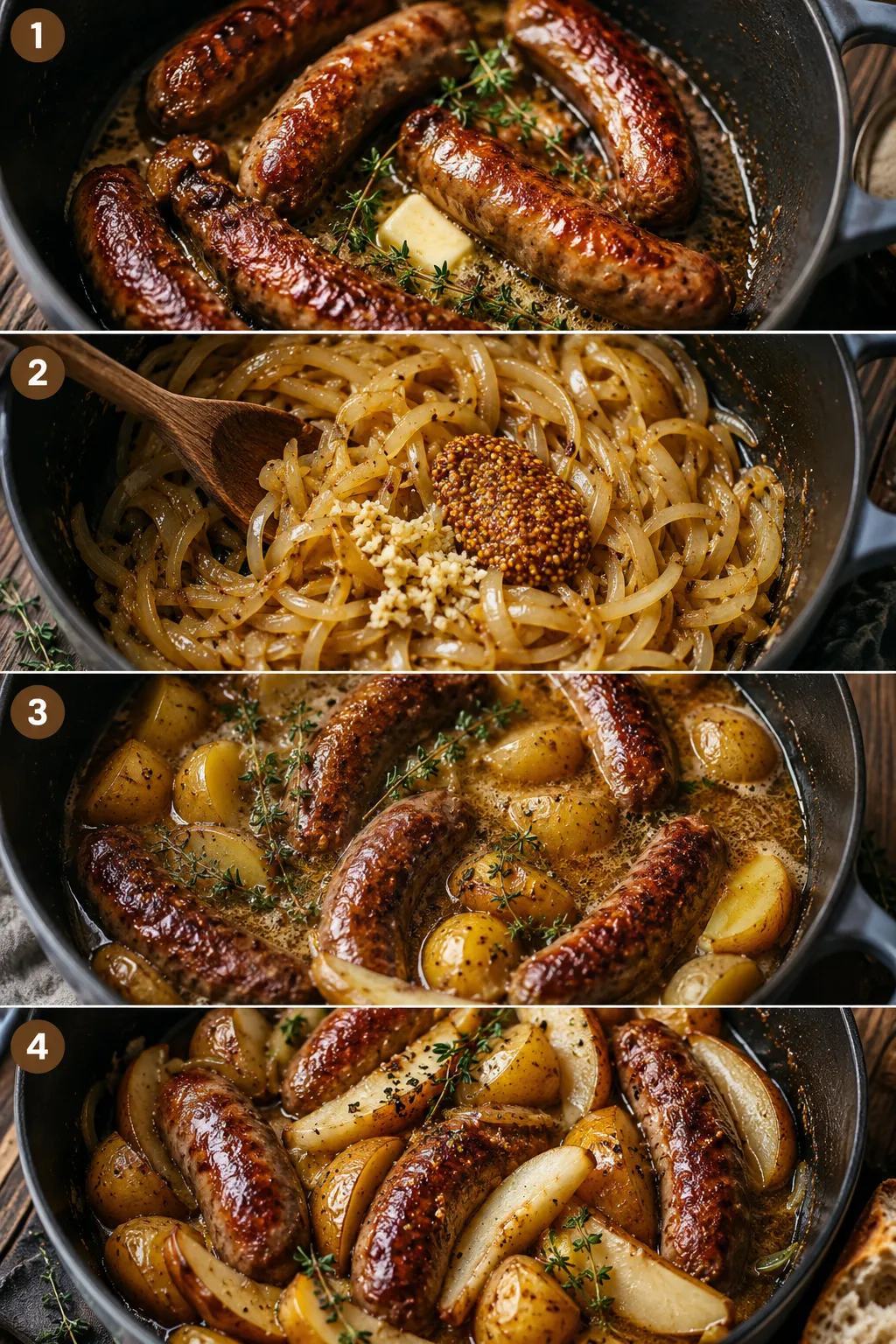
- Heat olive oil in a large heavy pan or Dutch oven over medium heat. Add the sausages and cook slowly until deeply browned on all sides. Try not to move them too much at the beginning so they develop proper color.
- Remove the browned sausages from the pan and set them aside on a plate.
- Add butter to the same pan, then stir in the sliced onions. Cook slowly for about 10 minutes until soft, glossy, and lightly golden.
- Add the garlic and whole grain mustard. Stir for another minute until fragrant.
- Toss the potatoes into the pan and cook them for several minutes so the edges start picking up color. Season lightly with salt and black pepper.
- Pour in the cider or white wine and scrape up all the browned bits from the bottom of the pan. That’s where most of the flavor is hiding.
- Add the chicken stock, fresh thyme, and browned sausages back into the pan.
- Bring everything to a gentle simmer, partially cover with a lid, and cook for about 25 minutes until the potatoes start becoming tender.
- Add the pear wedges during the final 10 minutes of cooking. This keeps them soft without letting them completely fall apart into the sauce.
- Taste the sauce and adjust with extra salt or black pepper if needed.
- Serve the braised sausages with plenty of sauce spooned over the potatoes and pears. Warm bread on the side works especially well for soaking up the broth.
💡 Helpful cooking tips and little kitchen hacks
- Slightly ripe pears work much better than firm ones because they soften faster 🍐
- If the sauce reduces too much, add a splash of extra stock near the end
- Whole grain mustard gives better texture than smooth mustard
- Browning the sausages properly at the start changes the entire flavor of the dish
- Waxy potatoes hold their shape better during long simmering 🥔
- Fresh thyme smells noticeably better than dried thyme once the steam hits the table 🌿
- Let the dish rest for 5 minutes before serving so the sauce thickens slightly
- Leftovers taste even richer the next day because the potatoes absorb more flavor overnight
- A small squeeze of lemon at the end can brighten the sauce if it feels too heavy
- Crusty bread is almost mandatory here honestly 🥖
🍞 What to serve alongside it
Braised sausages with pear and potato already feels like a complete dinner on its own because the potatoes make it filling and the sauce pulls everything together into one proper cold-weather meal. Still, a few simple sides can make the whole thing feel more balanced, especially if you’re serving it for a longer weekend dinner where people stay at the table talking long after the plates should probably be empty.
Bread is the obvious choice here, but honestly it’s almost necessary rather than optional. Once the sausages simmer with the stock, onions, mustard, and pears, the sauce at the bottom of the pan becomes too good to waste. Thick slices of sourdough or rustic bread work best because they hold up well when dipped into the broth instead of turning soggy immediately.
I’ve tried serving this with softer sandwich bread before and regretted it almost instantly.
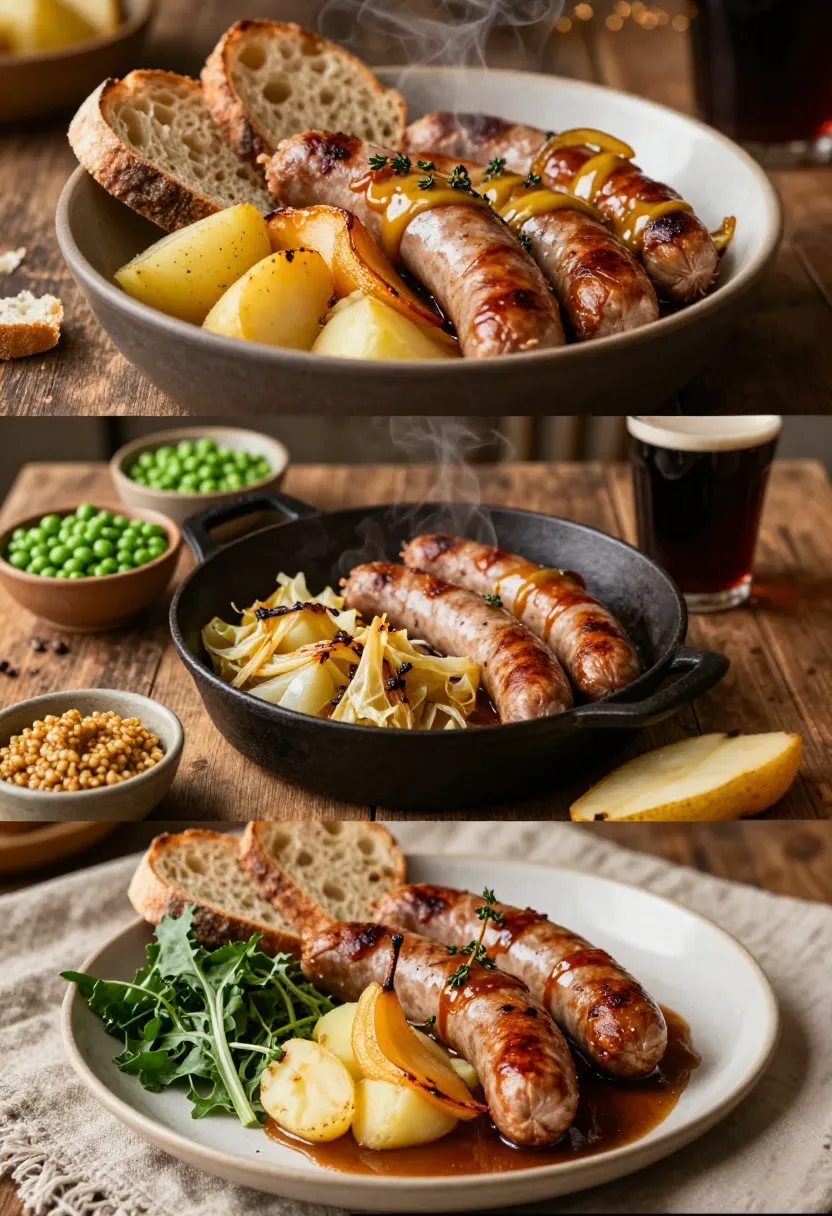
Something fresh on the side helps too. The dish leans rich and savory, so adding a little acidity keeps everything from feeling too heavy halfway through the bowl. Usually I keep the salad simple because the braise itself already has enough going on. Bitter greens with lemon dressing work especially well since the sharpness cuts through the richness from the sausages.
Roasted cabbage is another good option. It sounds plain, but cabbage caramelizes beautifully in the oven and matches the rustic feel of the dish better than anything overly delicate would. Buttered peas also work surprisingly well because they add freshness without competing with the sauce.
Good pairings for this recipe:
- Crusty sourdough bread 🥖
- Roasted cabbage with black pepper
- Buttered peas
- Sharp mustard on the side
- Bitter greens with lemon dressing
- Warm cider or dark beer 🍺
- Pickled onions if you want extra sharpness
And honestly, drinks matter more here than people sometimes realize. Cold cider works especially well because it mirrors the sweetness from the pears without making the meal feel heavier. Dark beer gives the dinner more of a winter pub-food feeling, especially if the weather outside is miserable enough that nobody plans on leaving the house afterward anyway.
I also think this dish works best when served casually. Big bowls instead of carefully plated portions. Bread sitting directly on the table. Maybe the pan itself brought over straight from the stove while the sauce is still bubbling slightly around the edges.
It’s not elegant food in the polished restaurant sense, and trying to force that usually makes it less appealing instead of more.
The slightly messy look is part of the charm. Potatoes coated in sauce, onions melting into the broth, pears soft enough to break apart against the spoon. It’s the kind of dinner that feels more relaxed once everyone stops worrying about presentation.
And honestly, those are usually the meals people end up enjoying the most.
🌧️ Why this recipe works so well in colder weather
Some recipes naturally belong to warmer months. Fresh tomato salads, grilled vegetables, cold pasta dishes, seafood with lemon, all the lighter meals people crave once standing near a hot stove starts feeling unbearable.
Braised sausages with pear and potato belongs firmly on the opposite side of the year.
This is the kind of dinner that feels right when it’s raining outside before sunset, when the windows fog slightly from cooking steam, or when everyone walks into the kitchen already cold and hungry. The dish has enough richness to feel comforting without crossing into the territory of overly heavy winter food that leaves you wanting to immediately lie down afterward.
Part of why it works so well during colder months comes from the cooking process itself. Slow braises naturally change the atmosphere in the kitchen. The onions soften gradually instead of cooking aggressively fast. The sausages brown slowly and release flavor into the pan over time. Potatoes absorb the broth little by little while the pears soften quietly into the sauce near the end.
The smell builds in stages too, which somehow makes the whole meal feel more comforting before anybody even starts eating.
At first it smells mostly like onions and butter. Then the sausages start browning and the savory smell becomes deeper and richer. Once the cider hits the pan, everything changes again because the steam carries the thyme, mustard, stock, and sausage juices through the kitchen all at once. Finally the pears soften enough that the broth picks up a gentler sweetness around the edges.
By that point people usually start wandering into the kitchen asking when dinner will actually be ready.
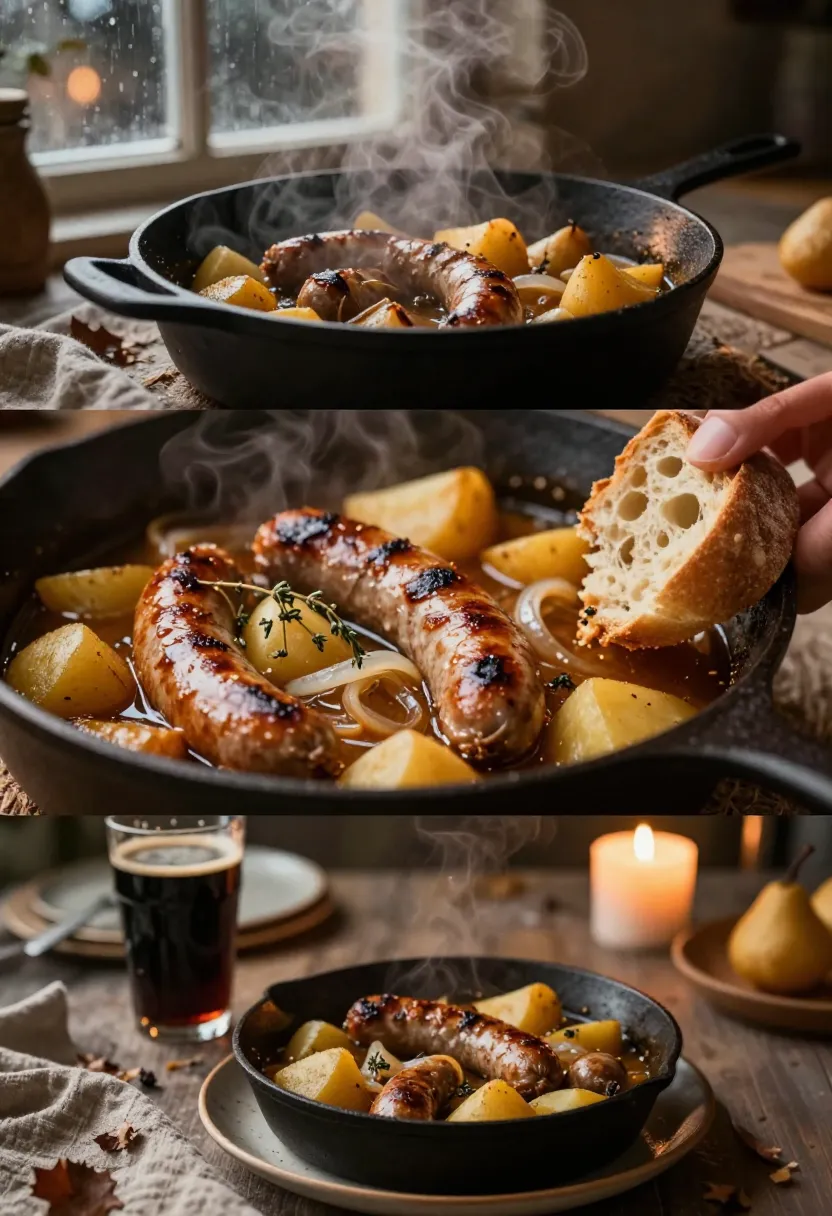
And despite the slow-cooked feeling of the final dish, the recipe itself stays pretty low effort once everything starts simmering. That’s probably another reason it works so well for colder evenings. You don’t spend hours actively cooking. Most of the time the pan just quietly bubbles away while you do other things nearby.
I made this once during a rainy Sunday while supposedly cleaning the apartment and ended up abandoning most of the cleaning halfway through because I kept drifting back toward the stove to check the potatoes and steal pieces of bread dipped into the sauce.
That kind of thing happens with braised food.
The pace naturally slows down around it.
And honestly, meals like this feel increasingly valuable during busy weeks because they force dinner to become more than just quickly eating something between other tasks. You sit longer. The kitchen stays warm longer. The leftovers wait in the fridge for the next day already tasting better than they did originally.
Because this recipe absolutely improves overnight.
The potatoes absorb more broth, the mustard softens further into the sauce, and the pears practically melt into everything by the next afternoon. Reheated slowly over low heat, the whole dish somehow tastes deeper and calmer the second time around.
Not every comfort meal survives reheating well. This one almost feels designed for it.
🍐 Small details that make the dish noticeably better
Recipes like this don’t rely on difficult techniques or complicated ingredients, but a few small decisions during cooking make a huge difference in the final result. Most of them are simple enough that they barely add extra work, yet they completely change the texture and flavor once everything finishes braising together.
The sausages matter first.
Using sausages with decent fat content gives the sauce much more depth while keeping the meat juicy during simmering. Lean sausages technically work, but they tend to dry out faster and don’t release the same richness into the broth. Slightly fattier pork sausages hold up much better once the cooking time stretches past half an hour.
The pears matter just as much.
Slightly ripe pears are ideal because they soften properly without immediately collapsing. Very firm pears stay oddly separate from the dish even after simmering, while overly soft pears dissolve too quickly into the sauce. Somewhere in the middle works best — soft enough to smell sweet already, but still firm enough to slice cleanly.
Cutting them into thicker wedges helps too. Thin slices disappear almost completely by the end of cooking, while larger pieces hold their shape and give the finished dish better texture overall.
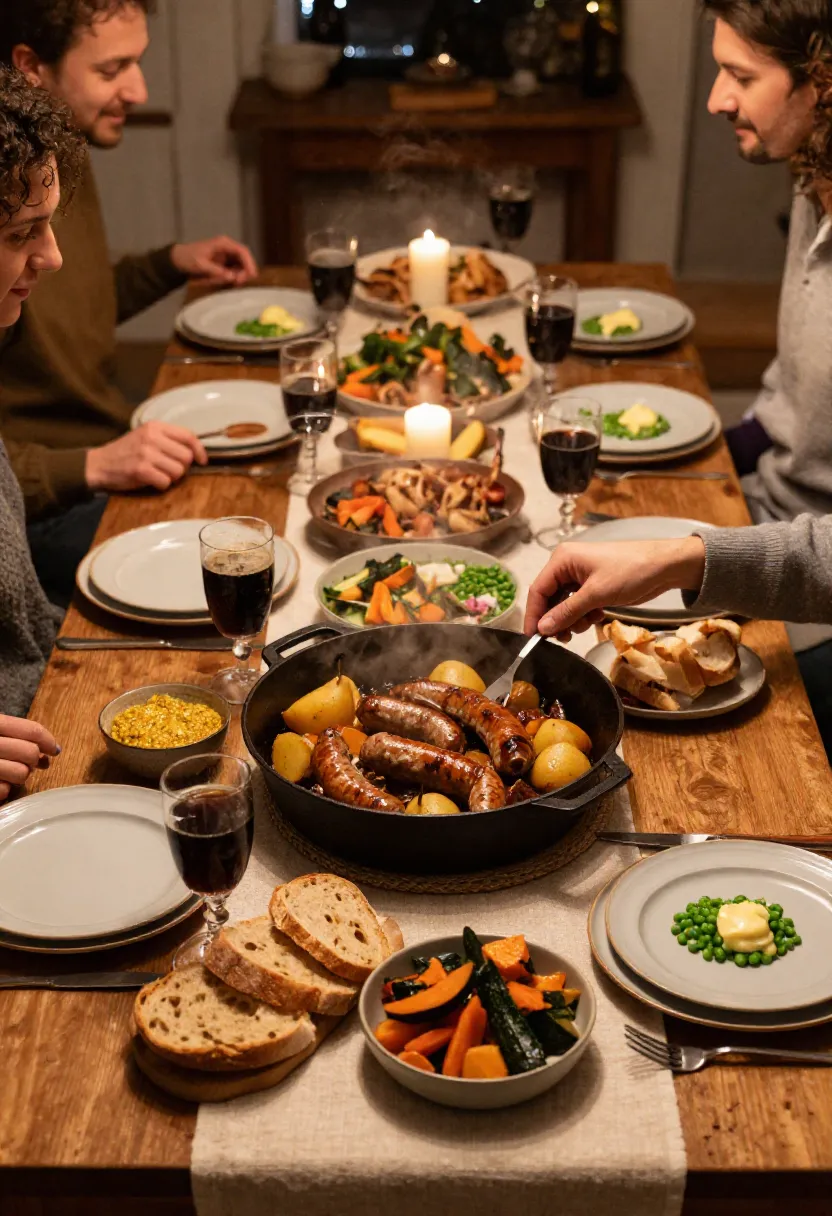
Potatoes are another detail people underestimate. Waxy potatoes hold together better during braising and absorb flavor without turning grainy or falling apart. Softer potatoes can still work, but the broth becomes cloudier and heavier once they start breaking down.
A few other things help more than expected:
- Brown the sausages deeply before adding liquid
- Cook onions slowly instead of rushing them
- Add pears during the final stage of cooking 🍐
- Use fresh thyme if possible because the aroma becomes much brighter 🌿
- Add extra stock gradually if the potatoes absorb too much liquid
- Let the dish rest for 5–10 minutes before serving
- Reheat leftovers gently over low heat instead of boiling them hard
And honestly, one of the biggest improvements comes from simply not overcrowding the pan at the beginning. If the sausages steam instead of browning properly, the entire flavor of the dish ends up flatter later no matter how good the ingredients are.
The resting time at the end matters too.
Right after cooking, the sauce sometimes feels slightly thinner than expected. Give it a few minutes off the heat and everything settles naturally. The broth thickens a little, the potatoes absorb more flavor, and the pears soften just enough to blend into the sauce better.
That short wait improves the texture more than people think.
And maybe the most important thing overall: don’t try to make the dish look too perfect.
Braised food should feel relaxed and slightly rustic. The onions should almost disappear into the broth. The pears should soften unevenly around the edges. Sauce should pool naturally at the bottom of the bowl instead of sitting in neat little circles.
Trying to make comfort food overly polished usually removes the exact thing that makes it appealing in the first place.