You know that snack feeling.
It usually shows up somewhere between lunch and dinner, right when your energy dips and the kitchen starts whispering. Maybe there is a bag of chips in the pantry. Maybe there are cookies on the counter. Maybe you open the fridge three times hoping something new has appeared.
That is exactly where heart-healthy snacks need to be practical. Not perfect. Not bland. Not the kind of snack that makes you feel like you are “being good” while secretly wishing you had something else.
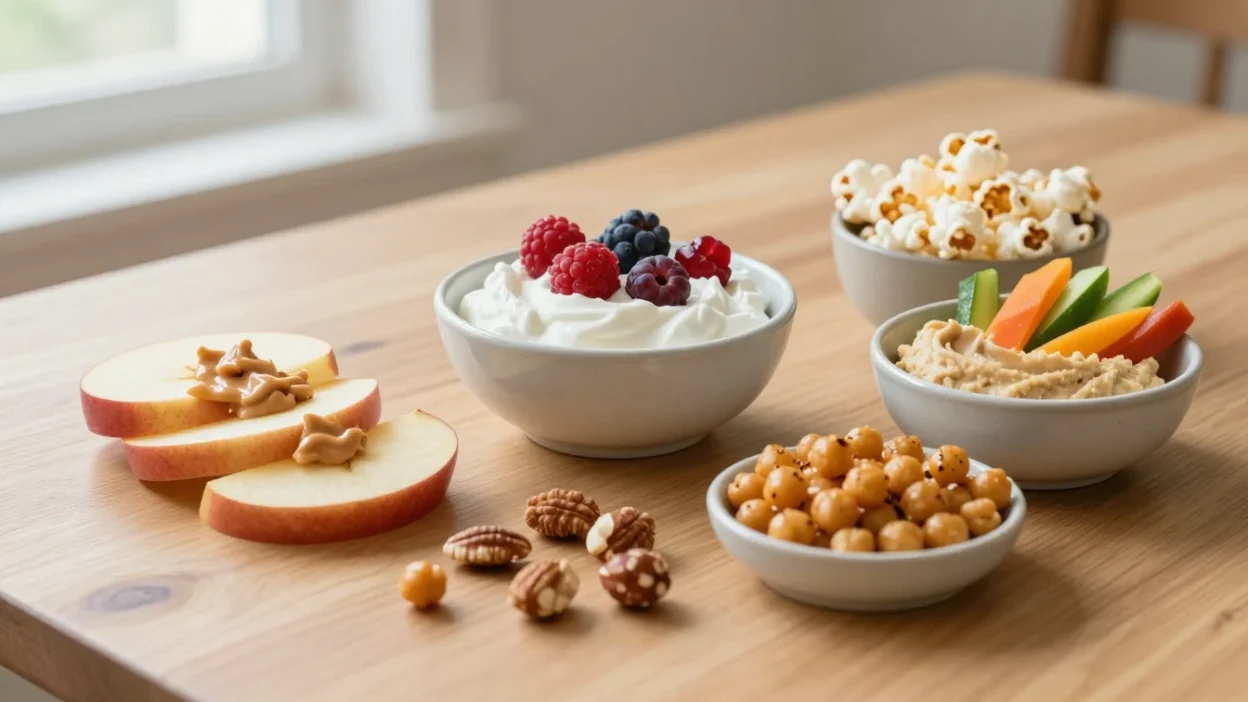
A good heart-healthy snack should do three things: satisfy your craving, keep you full for a while, and give your body something useful. That might be apple slices with peanut butter, Greek yogurt with berries, roasted chickpeas, a small handful of walnuts, or crunchy vegetables with hummus.
Simple food. Real texture. Enough flavor that you do not feel punished.
And honestly, that matters. Because the snacks you keep around are often the foods you reach for when you are tired, busy, or not in the mood to think. If the better option is easy, you are much more likely to choose it.
So this is not a list of “sad desk snacks.” We are talking about heart-healthy snacks that actually taste good: creamy, crunchy, sweet, salty, and easy enough to make on a normal day.
What makes a snack heart-healthy?
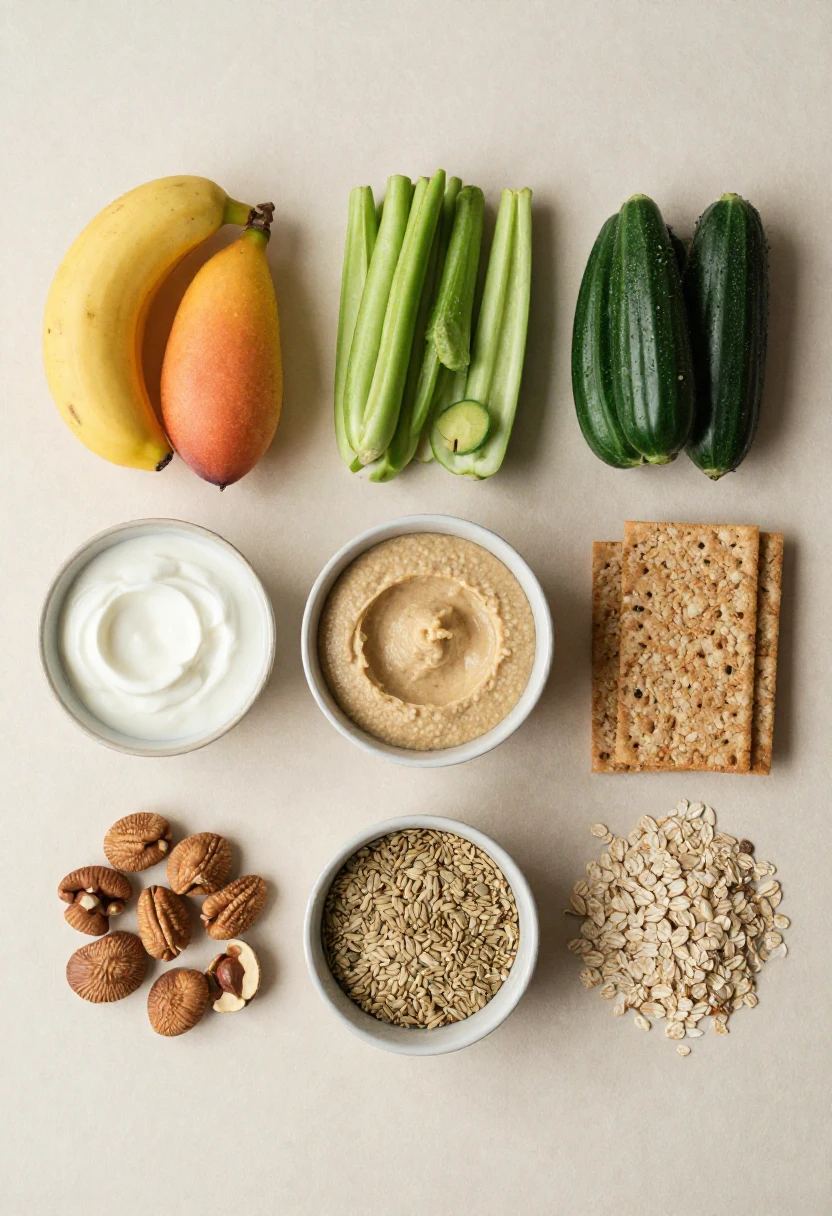
A heart-healthy snack is not just a “light” snack. That word can be sneaky. Plenty of snacks look light, but they leave you hungry ten minutes later, which is how you end up going back for a second snack, then a third.
For me, the best snacks have a little staying power.
They usually include:
- Fiber, so the snack feels more filling
- Protein, so you are not hungry again right away
- Healthy fats, so the snack tastes satisfying
- Less sodium and added sugar, especially if it comes from a package
The American Heart Association recommends checking packaged foods for sodium, added sugars, and saturated fat, which is especially helpful with snack foods because the “healthy” label on the front does not always tell the full story. (www.heart.org)
It has fiber that helps you feel full
Fiber is one of the quiet heroes of good snacking.
You do not taste it the way you taste cinnamon, peanut butter, or sea salt, but you notice what it does. A snack with fiber tends to sit with you longer. An apple feels more satisfying than apple juice. Oats keep you fuller than a sweet granola bar with barely any oats in it. Roasted chickpeas have more staying power than a handful of plain crackers.
Good snack-friendly fiber sources include:
- Apples, pears, berries, and bananas
- Carrots, bell peppers, cucumbers, and snap peas
- Oats and whole-grain toast
- Beans, lentils, chickpeas, and hummus
- Air-popped popcorn
- Chia seeds, flaxseed, and nuts
Fiber-rich foods are also part of a heart-smart eating pattern. CDC notes that foods high in fiber and low in saturated fat, trans fat, and cholesterol can help support healthy cholesterol levels. (CDC)
A simple way to use this: start with a fruit or vegetable, then add something creamy or crunchy. Apple with peanut butter. Carrots with hummus. Berries with Greek yogurt. Nothing complicated.
It includes healthy fats, not heavy saturated fats
Fat is not the enemy of heart-healthy snacking. The type of fat matters.
A snack with a little healthy fat can taste much better and keep you satisfied longer. Think walnuts, almonds, pistachios, avocado, chia seeds, ground flaxseed, peanut butter, almond butter, or hummus with olive oil.
A plain apple is fine. An apple with peanut butter is the snack I actually want to eat.
The trick is to lean more often toward unsaturated fats from plant foods and fish, and go easier on snacks built around butter, cream, processed meats, or lots of cheese. The American Heart Association suggests choosing whole grains, lean and plant-based proteins, fruits, and vegetables while limiting salt, sugar, animal fat, processed foods, and alcohol. (www.heart.org)
That does not mean you can never have cheese and crackers. It just means your everyday snack rotation should not depend on cheese, salami, and buttery crackers every afternoon.
It keeps sodium in check
Salty snacks are the hardest ones for me to ignore. Chips, pretzels, crackers, salted nuts, cheese puffs, all of it. They are designed to make you keep reaching back into the bag.
But sodium adds up quickly, especially with packaged snacks. Too much sodium can raise blood pressure and increase the risk of heart disease and stroke, according to the CDC. (CDC)
This is where small swaps help.
You do not have to eat plain cucumber slices and pretend they are chips. Try:
- Air-popped popcorn with olive oil, garlic powder, and smoked paprika
- Roasted chickpeas with cumin and a small pinch of salt
- Unsalted nuts mixed with dried fruit
- Whole-grain crackers with tuna or avocado
- Edamame with lemon juice and black pepper
- Hummus with crunchy vegetables
Flavor does not have to come only from salt. Lemon, vinegar, garlic, smoked paprika, chili flakes, cinnamon, herbs, and toasted seeds can all make a snack more interesting.
It gives you enough protein to avoid grazing all afternoon
You know those snacks that taste good for three minutes and then disappear from your memory? A sweet cookie. A few crackers. A handful of cereal straight from the box.
They are not “bad,” but they often do not hold you very long.
Protein helps a snack feel more complete. You do not need a huge amount, just enough to make the snack act more like a bridge between meals.
Easy protein ideas:
- Greek yogurt
- Cottage cheese
- Hummus
- Edamame
- Boiled eggs
- Tuna or salmon on whole-grain crackers
- Peanut butter or almond butter
- Nuts and seeds
My favorite formula is simple: fiber + protein + something you enjoy.
That might look like Greek yogurt with berries and oats. Or hummus with peppers and whole-grain pita. Or a slice of whole-grain toast with peanut butter and banana.
It should taste like a snack, not a homework assignment.
The easiest heart-healthy snacks to keep at home
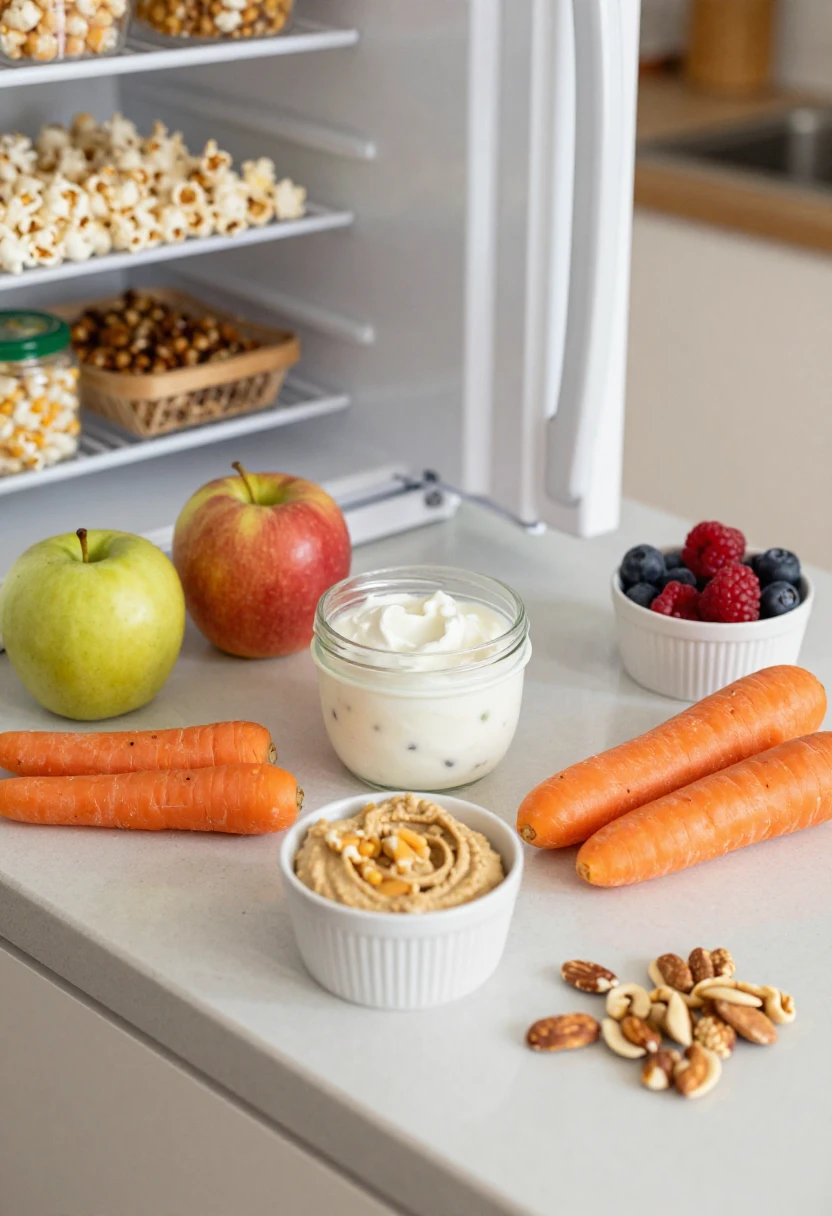
The best snack is usually the one you can make before your patience runs out.
That is why I like keeping a few reliable ingredients around: apples, Greek yogurt, hummus, nuts, popcorn kernels, carrots, berries, whole-grain crackers. Nothing fancy. Just the kind of food that saves you when you are hungry enough to make questionable choices.
You do not need a perfect fridge. You need a few snacks that are easy to repeat.
Apple slices with peanut butter
This is one of those snacks that feels almost too simple to mention, but I make it all the time.
Slice a crisp apple, spread a little peanut butter on each piece, and add cinnamon if you want it to feel more like dessert. The apple gives you crunch and fiber. The peanut butter adds healthy fat and a little protein, so the snack feels more satisfying than fruit alone.
A few easy upgrades:
- Add chia seeds or ground flaxseed on top
- Use almond butter if you prefer a milder flavor
- Add a few crushed walnuts for extra crunch
- Sprinkle with cinnamon instead of adding honey
I like this snack most with a cold apple from the fridge. It has that clean, juicy crunch that makes peanut butter taste even better.
Greek yogurt with berries and oats
Greek yogurt is one of the easiest heart-healthy snacks because it can go sweet or savory, but the berry version is the one I come back to most.
Add Greek yogurt to a bowl, then top it with berries and a spoonful of oats. If the berries are tart, add a small drizzle of honey or a few slices of banana. You get creaminess, fiber, protein, and a little natural sweetness in one bowl.
This also works well when you want something that feels like a small meal. I like it in the afternoon when lunch was too light and dinner is still a few hours away.
Try it with:
- Blueberries and rolled oats
- Strawberries and chopped almonds
- Raspberries and chia seeds
- Banana slices and cinnamon
- Frozen berries warmed for 30 seconds until juicy
That last one is surprisingly good. Warm berries over cold yogurt make the whole thing feel more intentional, like you did more than you actually did.
Veggies with hummus
Vegetables are easier to eat when there is a good dip involved. That is just the truth.
Hummus works because it is creamy, savory, and filling enough to turn raw vegetables into a real snack. Chickpeas bring fiber and some plant-based protein, while tahini and olive oil add richness.
Good vegetables for hummus:
- Carrot sticks
- Cucumber slices
- Bell pepper strips
- Cherry tomatoes
- Snap peas
- Celery sticks
- Radishes
If you get bored with plain hummus, stir in a little lemon juice, smoked paprika, chopped parsley, or roasted garlic. Even store-bought hummus tastes fresher with a squeeze of lemon and a tiny splash of olive oil.
This is also a good snack to prep ahead. Wash and cut the vegetables once, store them in a container, and suddenly the healthy option becomes the lazy option. That is the sweet spot.
Air-popped popcorn with olive oil and spices
Popcorn can absolutely fit into a heart-healthy snack routine, especially when you make it yourself and control the salt.
Air-popped popcorn is light, crunchy, and whole grain. It gives you that snacky hand-to-bowl feeling without needing a bag of greasy chips. The trick is flavoring it well.
Try popcorn with:
- Olive oil and garlic powder
- Smoked paprika and black pepper
- Cinnamon and a tiny pinch of salt
- Nutritional yeast for a cheesy flavor
- Chili powder and lime zest
I would rather have a bowl of popcorn that tastes like something than a “healthy” snack that feels like punishment. A little olive oil helps the seasonings stick and makes it more satisfying.
A small handful of unsalted nuts
Nuts are easy to love and easy to overeat. Both things can be true.
A small handful of unsalted nuts is one of the simplest heart-healthy snacks to keep around. Walnuts, almonds, pistachios, pecans, and cashews all work. Walnuts are especially nice with fruit because they have that slightly earthy, buttery taste.
A practical portion is about a small handful. Not a cereal bowl. I say this because I have absolutely eaten nuts straight from the bag and then wondered where half the bag went.
To make nuts feel more like a snack, pair them with something juicy or fresh:
- Walnuts with apple slices
- Pistachios with orange wedges
- Almonds with strawberries
- Pecans with pear slices
- Cashews with cucumber slices and hummus
For a quick snack mix, combine unsalted nuts with plain air-popped popcorn and a few pieces of dried fruit. It feels a little more fun than plain nuts, and it is still easy enough for a normal Tuesday.
Heart-healthy snacks when you want something sweet
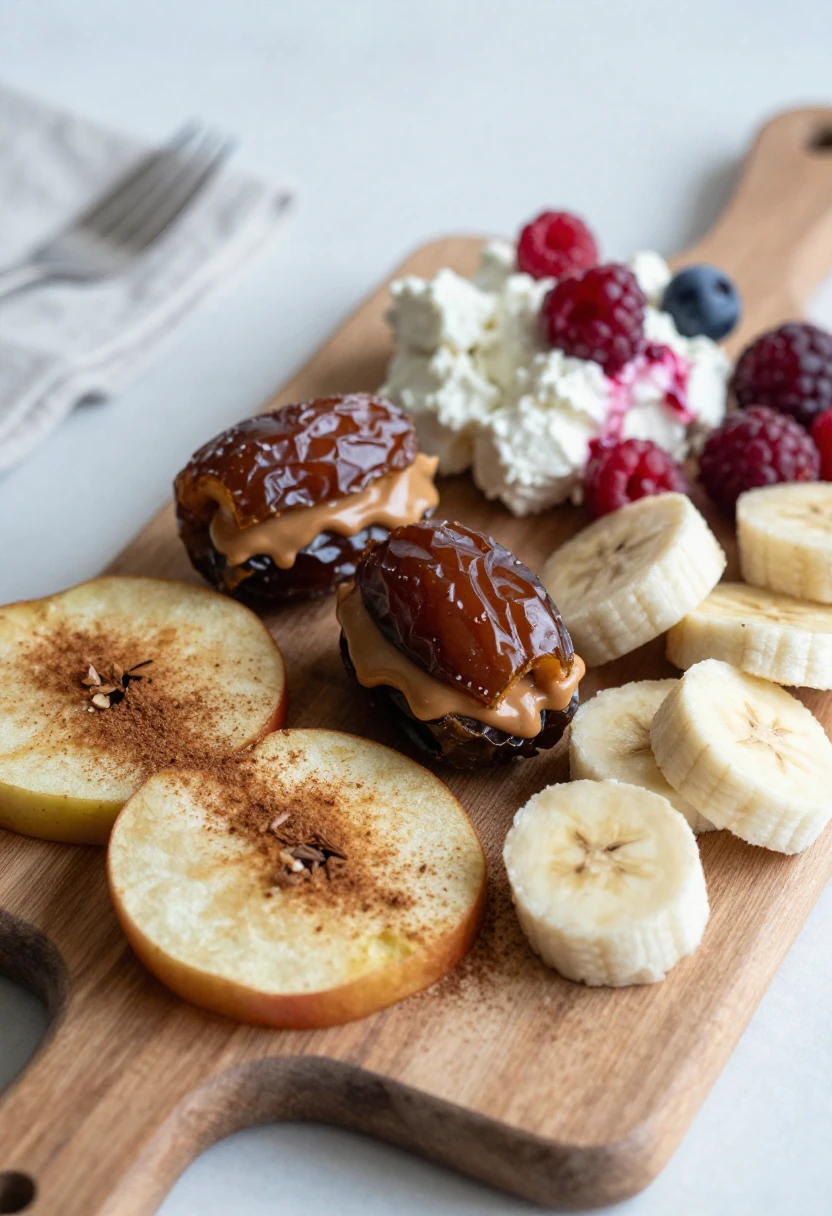
Sweet cravings are not the enemy. They are usually just a sign that you want something cozy, creamy, fruity, or a little dessert-like.
The mistake is pretending you do not want sweetness at all. That never works for me. I would rather build a snack that tastes sweet on purpose, but still gives me fiber, protein, or healthy fats along the way.
Baked apple with cinnamon
A baked apple is the snack version of apple pie without the whole production.
Slice an apple, sprinkle it with cinnamon, and warm it until the edges soften and the juices start to smell like fall. You can do this in the microwave if you are tired, or in the oven if you want the kitchen to smell better than it has any right to.
Try this:
- Slice 1 apple into wedges or chunks
- Add cinnamon and a tiny splash of water
- Microwave for 1–2 minutes, or bake until soft
- Top with chopped walnuts or a spoonful of Greek yogurt
The texture turns soft and jammy, especially if you use a sweet-tart apple. I like it when the apple still has a little bite in the middle, not fully collapsed into applesauce.
Dates stuffed with nut butter
Dates are sweet. Very sweet. That is why they work so well when you want something that feels like candy but has a bit more going on.
Cut a date open, remove the pit, and fill it with almond butter, peanut butter, or tahini. Add a walnut half if you want crunch. A tiny pinch of cinnamon also works.
This snack is rich, so one or two dates may be enough.
Good combinations:
- Medjool date + almond butter + walnut
- Date + peanut butter + cinnamon
- Date + tahini + sesame seeds
- Date + cashew butter + chopped pistachios
I like keeping dates in the fridge because they get a little chewy and caramel-like. Not exactly a candy bar, but close enough when you want something sweet after lunch.
Cottage cheese with peaches or berries
Cottage cheese has made a comeback for a reason. It is creamy, high in protein, and surprisingly good with fruit.
Spoon it into a bowl and add sliced peaches, berries, pineapple, or chopped pear. If you want more texture, add a few crushed almonds or a spoonful of oats.
This snack works especially well when you want something sweet but not sugary-sweet. The fruit brings brightness, and the cottage cheese keeps it filling.
Try:
- Cottage cheese with peaches and cinnamon
- Cottage cheese with strawberries and chopped almonds
- Cottage cheese with blueberries and oats
- Cottage cheese with pear and walnuts
- Cottage cheese with pineapple and chia seeds
Use the cottage cheese you actually like. Some brands are creamier, some are saltier, and some taste like they were made to ruin your afternoon. A good one makes all the difference.
Frozen banana bites
Frozen bananas are one of those small freezer tricks that feel almost too easy.
Slice a banana into coins, spread a little peanut butter between two slices, and freeze them on a plate. Once firm, move them into a container. When you want something cold and sweet, grab a few.
They are creamy, naturally sweet, and just messy enough to feel fun.
You can keep them simple or add:
- A sprinkle of chopped peanuts
- A dusting of cinnamon
- A thin smear of almond butter
- A few chia seeds
- A tiny drizzle of melted dark chocolate, if you want a more dessert-like snack
The best part is that frozen banana bites slow you down. You cannot inhale them the way you can with cookies from a package. They are cold, a little creamy, and satisfying in a quiet way.
Heart-healthy snacks when you want something salty
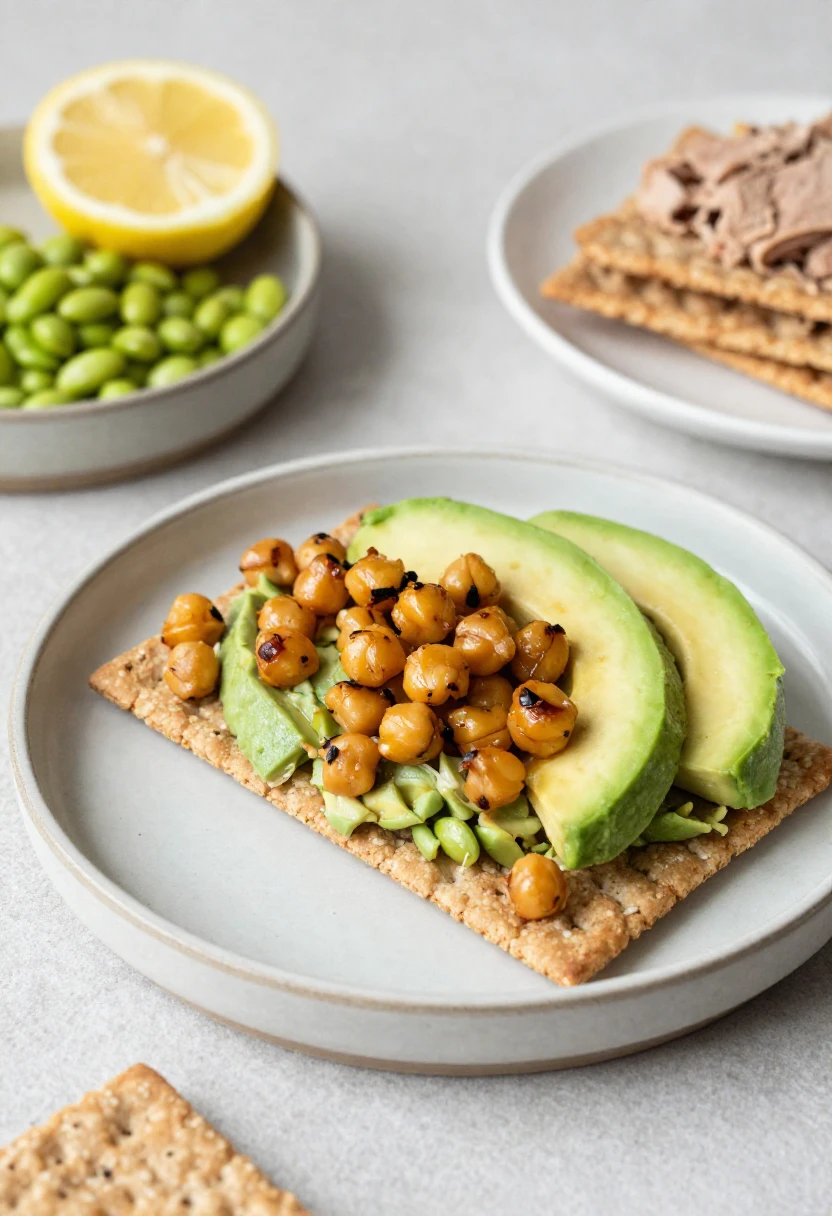
Salty cravings usually want crunch. At least mine do.
This is why “just eat some fruit” does not always work when your brain wants chips. Fruit is great, but it does not give you that same crisp, savory, snacky feeling. So instead of fighting the craving, it helps to give it a better option.
Something crunchy. Something seasoned. Something you can eat with your hands.
Roasted chickpeas
Roasted chickpeas are one of my favorite salty snack swaps because they actually crunch when you roast them long enough.
Drain and rinse canned chickpeas, pat them very dry, then toss them with olive oil and spices. Roast until they turn golden and crisp around the edges. They are best warm, but I will still snack on them at room temperature if they are sitting on the counter.
Good seasonings:
- Smoked paprika and garlic powder
- Cumin and black pepper
- Chili powder and lime zest
- Curry powder
- Cinnamon and a tiny pinch of salt for a sweet-savory version
The key is drying the chickpeas well before roasting. If they go into the oven wet, they steam instead of crisping. I learned that one the soggy way.
Whole-grain crackers with avocado
Avocado on whole-grain crackers is fast, creamy, and salty enough to feel like a real snack.
Mash a little avocado with lemon juice and black pepper, then spread it onto crackers. Add sliced tomato, cucumber, chili flakes, or everything-bagel seasoning if you like that flavor.
This snack works because you get:
- Crunch from the crackers
- Creaminess from the avocado
- Fiber from the whole grains
- Healthy fat that keeps the snack satisfying
Choose crackers with whole grains near the top of the ingredient list. Some crackers look rustic and healthy on the box but are mostly refined flour and salt.
A quick trick: if the avocado tastes flat, it probably needs lemon. Not more salt. Lemon wakes it up.
Edamame with lemon and black pepper
Edamame is one of the easiest salty snacks if you keep a bag in the freezer.
Steam it, microwave it, or boil it for a few minutes, then add lemon juice and black pepper. If you use salt, keep it light. The lemon gives you brightness, and the pods make the snack slower to eat, which is nice when you want something to pick at.
You can season edamame with:
- Lemon and black pepper
- Garlic powder and chili flakes
- Rice vinegar and sesame seeds
- Smoked paprika
- A tiny drizzle of toasted sesame oil
Edamame has plant-based protein and fiber, so it feels more filling than crackers alone. It is also a good snack when you want something warm but do not want to cook.
Low-sodium tuna on whole-grain crackers
This is the snack I make when I am actually hungry, not just snacky.
Mix low-sodium tuna with Greek yogurt or a little mashed avocado, then add lemon juice, black pepper, and chopped celery if you have it. Spoon it onto whole-grain crackers or cucumber slices.
It tastes fresh, salty, and filling without needing much effort.
Easy add-ins:
- Chopped celery
- Dill or parsley
- Lemon zest
- Dijon mustard
- Cucumber cubes
- A few capers, if you like briny flavors
Tuna is more of a mini-meal snack, which is exactly what you need some days. Especially when lunch was too small and dinner is not happening anytime soon.
Heart-healthy snacks for work, school, and errands
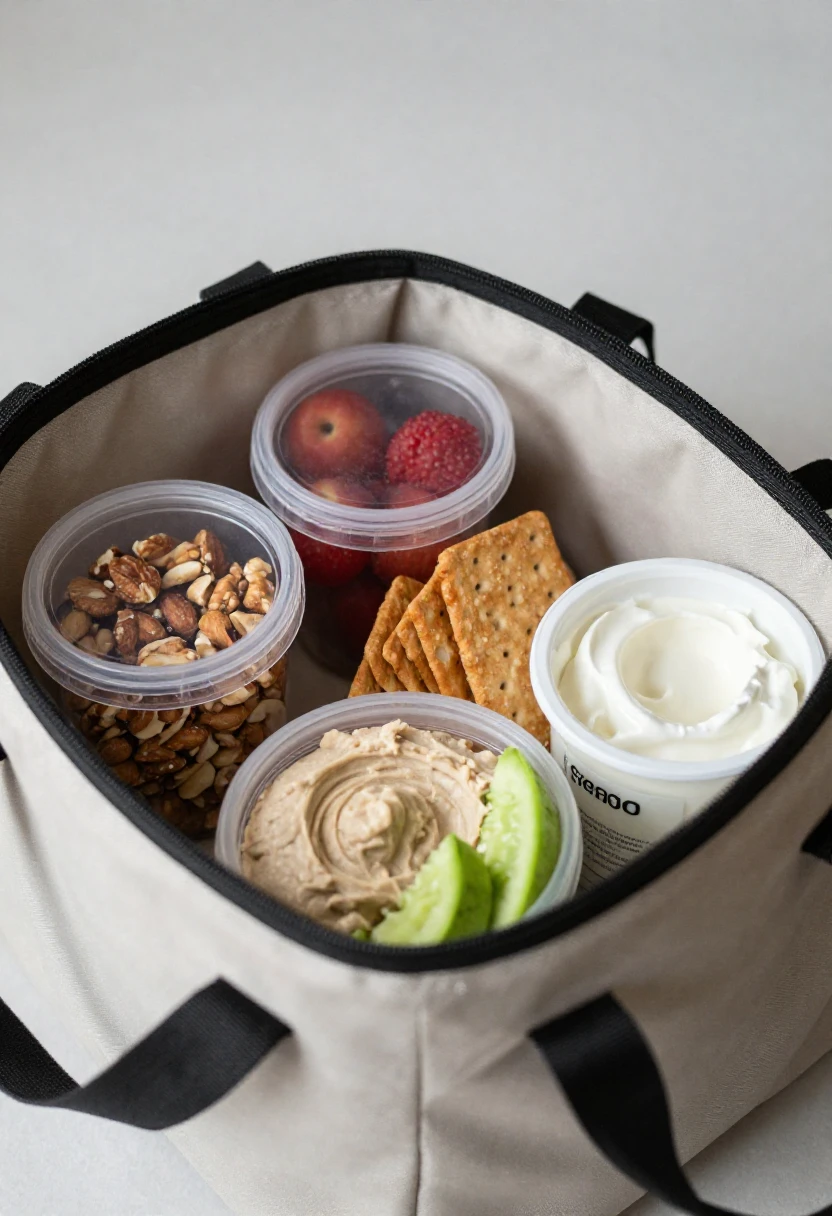
Snacks outside the house need to be a little tougher.
A yogurt bowl is lovely, but it does not help much when you are in the car, at your desk, or running errands with no spoon in sight. This is where portable snacks matter. They keep you from reaching for whatever is closest, which is usually something salty, sweet, and not very filling.
I like having two kinds of snacks ready: shelf-stable snacks for bags and desk drawers, and cold snacks for days when I can bring a lunch bag.
Snacks that travel well
These are the snacks you can pack without thinking too much. No fridge, no reheating, no drama.
Good options include:
- Unsalted almonds, walnuts, pistachios, or mixed nuts
- Apples, pears, oranges, or firm bananas
- Roasted chickpeas
- Plain popcorn
- Whole-grain crackers
- Dried fruit with no added sugar
- Nut butter packets
- Homemade trail mix with nuts, seeds, and a little dried fruit
The trick with travel snacks is to portion them before you leave. A small container of nuts feels like a snack. A giant bag of nuts in your tote bag feels like a challenge you may accidentally accept.
For a quick mix, try walnuts, pumpkin seeds, a few dried cherries, and plain popcorn. It gives you crunch, a little sweetness, and enough texture to keep it interesting.
Snacks to pack with an ice pack
Some heart-healthy snacks are better cold. If you have a lunch bag or small cooler, you get more options.
Packable cold snacks include:
- Greek yogurt with berries
- Cottage cheese with fruit
- Hummus with vegetables
- Boiled eggs with whole-grain crackers
- Edamame
- Tuna salad with cucumber slices
- Overnight oats
- Apple slices with peanut butter
If you pack cut fruit, add a little lemon juice to apples or pears so they do not brown as quickly. For vegetables, keep them as dry as possible before packing. Wet cucumber slices sitting next to crackers is not a happy situation.
I also like packing hummus in a small container instead of buying single-serve cups all the time. It is cheaper, and you can make it taste better with lemon, paprika, or a few chopped herbs.
Emergency snacks for your bag
Emergency snacks are not glamorous, but they are useful.
These are the snacks you keep in your bag, desk, car console, or gym tote for the moment when hunger catches you off guard. The goal is not perfection. The goal is having something better than a vending machine candy bar when your blood sugar starts getting dramatic.
Try keeping one or two of these nearby:
- A small pack of unsalted nuts
- A fruit-and-nut bar with simple ingredients
- Plain roasted chickpeas
- A nut butter packet
- Whole-grain crackers
- A small box of raisins or dried apricots
- Air-popped popcorn in a small bag
When you choose packaged bars, check the label. Look for bars with nuts, seeds, oats, or dried fruit near the top of the ingredient list. If the first few ingredients are sugar in three different outfits, it may taste good, but it probably will not keep you full for long.
A good emergency snack should be boring enough that you do not eat it just because it is there, but good enough that you are grateful for it when you need it. That is the balance.
How to build a better snack plate
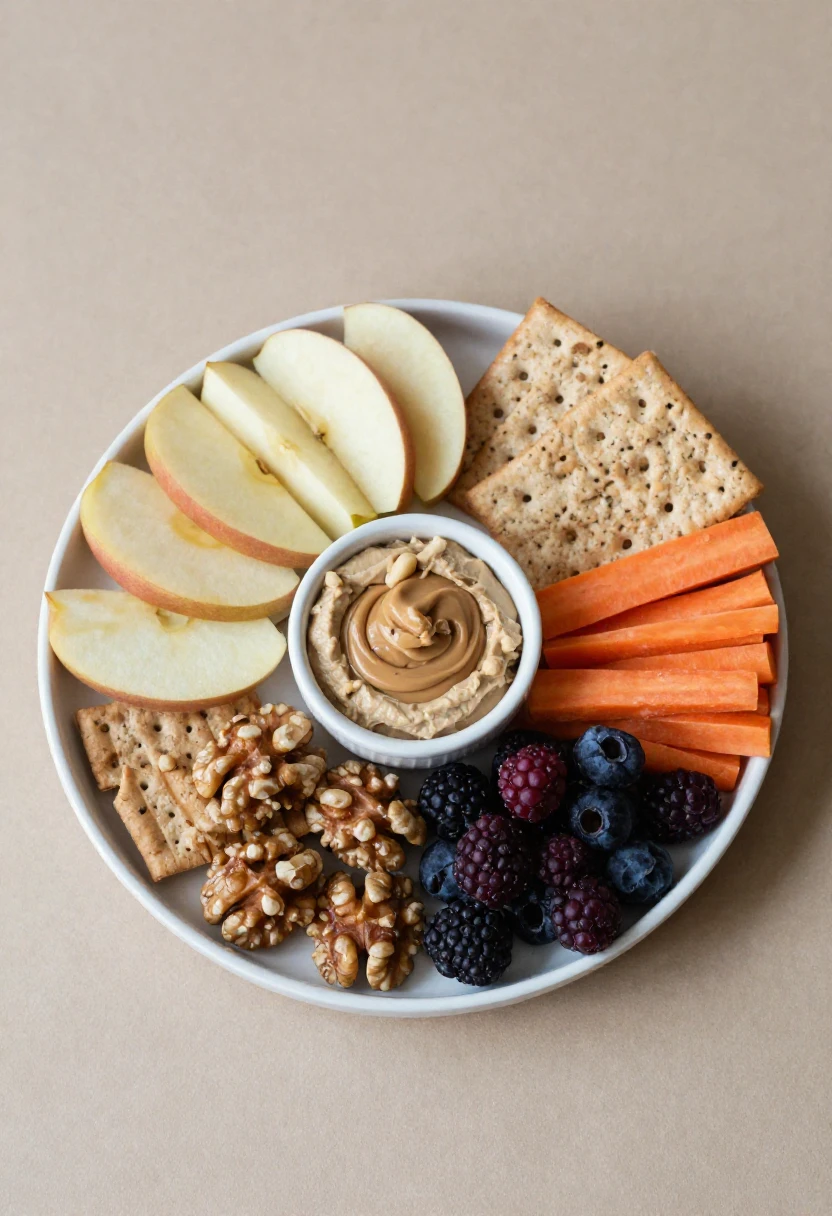
A better snack plate is not about making your snack look like it belongs in a magazine.
Most days, it is just a small plate with something crunchy, something creamy, and something that keeps you full longer than ten minutes. That is enough.
The easiest way to think about it is this: pair fiber with protein, then add flavor so you actually want to eat it.
The American Heart Association recommends a healthy eating pattern built around vegetables, fruits, whole grains, legumes, nuts, low-fat dairy, fish, and plant oils, while limiting highly processed foods with extra sodium, added sugar, and saturated fat. That is a useful guide for snacks too, not just meals. (www.heart.org)
Pair fiber with protein
Fiber and protein are the snack couple that makes everything work better.
Fiber gives the snack more volume and helps it feel satisfying. Protein gives it staying power. Put them together, and you are much less likely to wander back into the kitchen twenty minutes later looking for “just a little something.”
Easy pairings:
- Apple slices with peanut butter
- Greek yogurt with berries
- Hummus with carrots and bell peppers
- Cottage cheese with peaches
- Whole-grain crackers with tuna
- Edamame with fruit on the side
- Oatmeal with walnuts and cinnamon
- Pear slices with almond butter
This is why a plain rice cake usually disappoints me. It has crunch, yes, but not much else. Add peanut butter and banana, though, and suddenly it becomes a real snack.
Add crunch so the snack feels satisfying
Crunch matters more than people admit.
A snack can have perfect nutrition on paper and still feel boring if the texture is flat. That is why I like adding something crisp whenever possible: raw vegetables, toasted nuts, seeds, popcorn, whole-grain crackers, or roasted chickpeas.
A few texture upgrades:
- Add pumpkin seeds to yogurt
- Sprinkle chopped walnuts over cottage cheese
- Eat hummus with carrots instead of soft bread
- Pair avocado with crisp whole-grain crackers
- Add roasted chickpeas to a small snack plate
- Use apple slices instead of eating nut butter from a spoon
Not that I have ever done that last one. Obviously.
Crunch slows you down a little, too. A snack that takes a few minutes to eat usually feels more satisfying than something sweet and soft that disappears in three bites.
Keep it small enough to still enjoy dinner
This part sounds obvious until you accidentally eat a dinner-sized snack at 5 p.m.
A snack should help you get to your next meal, not replace it by accident. That does not mean tiny portions or counting every almond. It just means being honest about what you need.
If you are a little hungry, try:
- Fruit with a spoonful of nut butter
- A small yogurt bowl
- Vegetables with hummus
- A handful of nuts
- Air-popped popcorn
If you are truly hungry, make the snack more like a mini-meal:
- Tuna on whole-grain crackers
- Cottage cheese with fruit and oats
- Boiled eggs with vegetables
- Avocado toast on whole-grain bread
- Greek yogurt with berries, oats, and nuts
There is a difference between a craving and real hunger. Some days you need crunch. Some days you need protein. Some days you need something warm because the day has been long and annoying.
That counts too.
Snacks to limit if you are eating for heart health
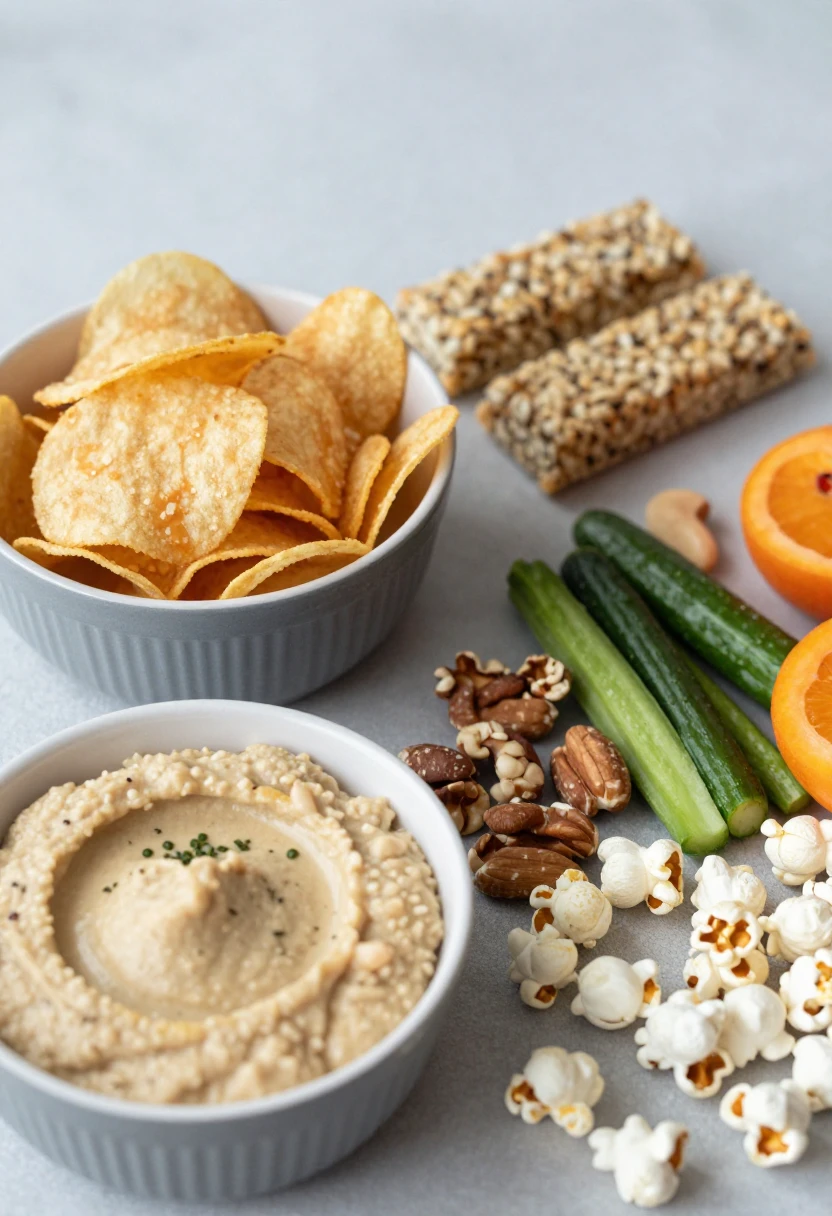
This is not the part where I tell you never to eat chips again.
That kind of advice sounds clean on paper and falls apart in real life. Sometimes you want the chips. Sometimes you eat the cookie. Fine. The goal is not to turn snacks into a moral test.
But if you are trying to make your everyday snacks better for your heart, a few foods are worth keeping in the “sometimes” category.
Very salty chips, crackers, and pretzels
Salty packaged snacks are easy to overdo because they do not ask much from you. Open the bag, sit down, and suddenly a “few handfuls” becomes half the bag.
The main issue is sodium. Many chips, crackers, pretzels, cheese snacks, and flavored popcorns are loaded with it. And because they are not very filling, you can eat a lot without feeling satisfied.
A better approach is to keep the salty-crunchy feeling but improve the snack itself.
Try:
- Air-popped popcorn with olive oil and smoked paprika
- Roasted chickpeas with garlic powder
- Unsalted nuts with a few whole-grain crackers
- Cucumber slices with hummus and black pepper
- Whole-grain toast with avocado and lemon
You still get crunch. You still get flavor. You just get more fiber, more texture, and less of that “why am I still hungry?” feeling.
Sugary snack bars that look healthier than they are
Some snack bars are useful. Others are basically candy bars wearing hiking clothes.
The front of the package might say “natural,” “protein,” “whole grain,” or “energy,” but the ingredient list tells the better story. If the bar has a lot of added sugar and very little fiber, it may give you a quick lift and then leave you hungry again.
When choosing a snack bar, look for:
- Nuts or seeds near the top of the ingredient list
- At least a little fiber
- Some protein
- Not too much added sugar
- Ingredients you recognize
I like bars that are chewy and nutty, not bars that taste like frosting pressed into a rectangle. If it feels more like dessert, I treat it like dessert. No drama.
Creamy dips made with lots of saturated fat
Creamy dips are tricky because they make vegetables more exciting, which is good. But some dips are built mostly on sour cream, cream cheese, mayonnaise, or lots of cheese.
That can add a lot of saturated fat before you even count the chips or crackers.
You do not have to give up creamy dips. Just rotate in lighter, heart-friendlier options more often.
Good swaps include:
- Hummus with lemon and paprika
- Greek yogurt dip with garlic, dill, and cucumber
- Mashed avocado with lime and black pepper
- White bean dip with olive oil and rosemary
- Salsa with whole-grain crackers or vegetables
Greek yogurt dip is one of the easiest. Stir Greek yogurt with lemon juice, grated garlic, chopped herbs, and a pinch of black pepper. It tastes fresh, takes five minutes, and does not feel like a compromise.
“Low-fat” snacks that are mostly sugar
Low-fat snacks can sound like the smart choice, especially if you grew up hearing that fat was the thing to avoid.
But some low-fat cookies, yogurts, granola bars, and snack packs make up for the missing fat with extra sugar or refined starch. The result is a snack that tastes sweet but does not keep you full.
A better snack does not need to be fat-free. It needs balance.
For example:
- Plain Greek yogurt with berries beats a sugary low-fat yogurt cup
- Apple with peanut butter beats low-fat cookies that leave you hungry
- Whole-grain toast with avocado beats a sweet snack pack
- Cottage cheese with fruit beats a low-fat dessert cup with barely any protein
Healthy fats from nuts, seeds, avocado, and olive oil can help a snack feel more satisfying. That matters because a snack that actually satisfies you is easier to stop eating.
Simple heart-healthy snack swaps
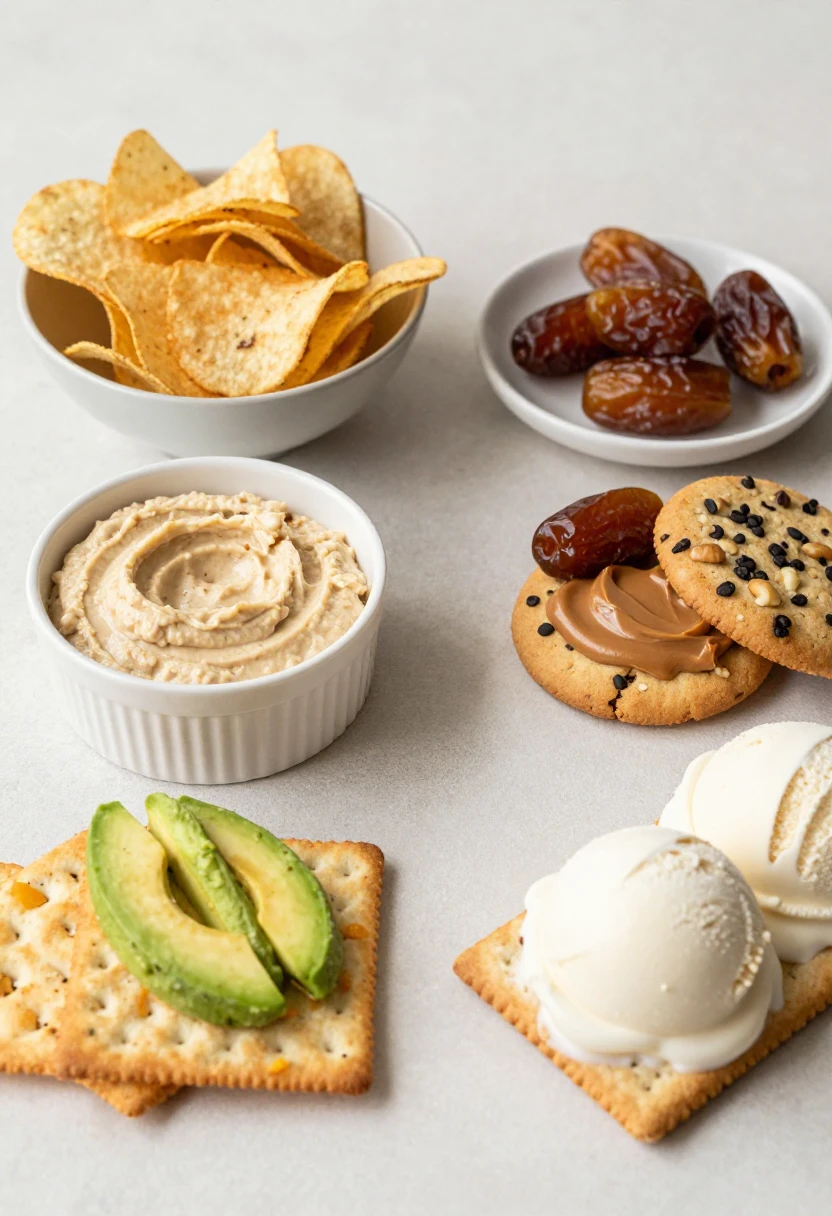
Snack swaps work best when they do not feel like a downgrade.
Nobody wants to trade chips for plain celery and pretend everything is fine. The better move is to keep the thing you actually want, like crunch, salt, creaminess, or sweetness, and build a snack that gives you more fiber, protein, or healthy fats along with it.
Instead of chips and dip
Try vegetables with hummus or whole-grain pita with Greek yogurt dip.
You still get something creamy to scoop, which is half the reason chips and dip are so hard to resist. Hummus gives you chickpeas, tahini, and a little plant-based protein. Greek yogurt dip brings creaminess with more protein than most sour-cream-based dips.
Good combinations:
- Bell pepper strips with hummus
- Carrots and cucumbers with white bean dip
- Whole-grain pita wedges with Greek yogurt dill dip
- Snap peas with avocado mash
- Cherry tomatoes with hummus and black pepper
If you still want chips sometimes, have the chips. But put them in a bowl and add something filling beside them, like hummus and vegetables. A snack plate usually works better than pretending one craving will disappear because you ignored it.
Instead of cookies in the afternoon
Try dates with nut butter or Greek yogurt with berries.
Afternoon cookie cravings are usually about energy, comfort, and habit. I get it. There is something very specific about wanting coffee and something sweet at 3 p.m.
Dates stuffed with almond butter can help because they are sweet, chewy, and rich. Greek yogurt with berries works when you want something creamy and cold. Add oats or chopped nuts if you need it to last longer.
Try:
- Medjool dates with peanut butter
- Greek yogurt with blueberries and walnuts
- Cottage cheese with peaches and cinnamon
- Apple slices with almond butter
- Banana with peanut butter and chia seeds
The goal is not to make a “fake cookie.” It is to choose something sweet that does not leave you hunting for another snack right away.
Instead of cheese-heavy crackers
Try avocado toast bites or tuna with whole-grain crackers.
Cheese and crackers are delicious, but they can turn into a lot of saturated fat and sodium pretty quickly, especially if the crackers are salty and the cheese keeps getting “evened out” with more crackers. We have all been there.
For a more heart-friendly version, keep the crunch and add a filling topping.
Try:
- Whole-grain crackers with mashed avocado and tomato
- Whole-grain toast cut into small squares with hummus
- Low-sodium tuna on crackers with lemon and celery
- Cucumber rounds with avocado and chili flakes
- White bean spread on whole-grain toast
These snacks still feel savory and satisfying, but they bring more fiber and protein to the plate.
Instead of ice cream every night
Try frozen banana bites, baked apples, or yogurt bark.
Ice cream is not banned. It is just not always the best everyday snack, especially if the habit is more about needing something sweet after dinner than truly wanting ice cream.
Frozen banana bites are creamy and cold. Baked apples are warm and cinnamon-scented. Yogurt bark gives you that break-into-pieces freezer snack feeling, which is honestly half the fun.
Easy yogurt bark idea:
Spread Greek yogurt on a parchment-lined tray. Add berries, chopped nuts, and a little cinnamon. Freeze until firm, then break into pieces and store in a container.
It is not ice cream. I will not lie to you. But it is cold, creamy, lightly sweet, and nice to have waiting in the freezer.
A quick heart-healthy snack list to save
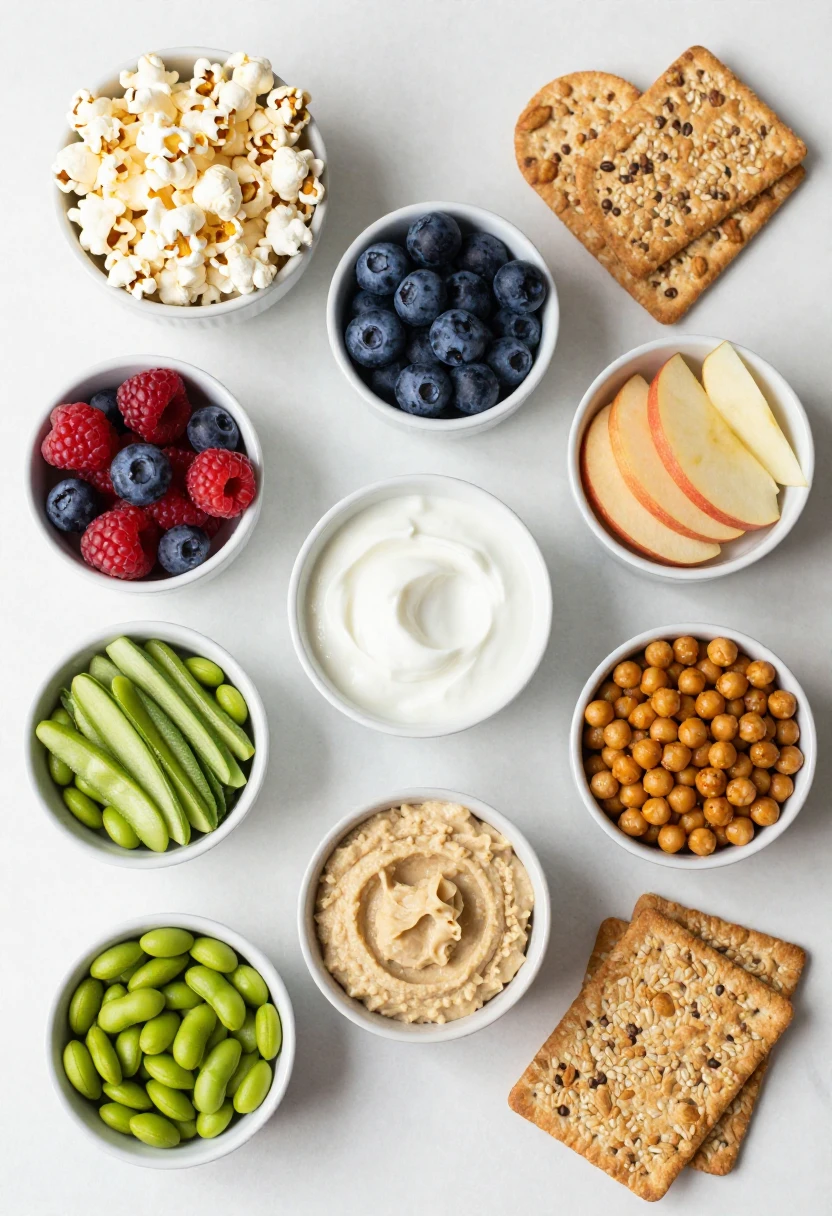
Some days, you do not need a full explanation. You just need ideas.
Here is a simple list of heart-healthy snacks you can keep on your phone, pin to your fridge, or use when you are making a grocery list and your mind goes completely blank in the snack aisle.
- Apple slices with peanut butter
- Greek yogurt with berries and oats
- Carrots, cucumbers, or bell peppers with hummus
- Air-popped popcorn with olive oil and spices
- A small handful of unsalted walnuts or almonds
- Cottage cheese with peaches or berries
- Roasted chickpeas
- Edamame with lemon and black pepper
- Whole-grain crackers with avocado
- Low-sodium tuna on whole-grain crackers
- Banana with almond butter
- Pear slices with walnuts
- Baked apple with cinnamon
- Dates stuffed with peanut butter
- Whole-grain toast with mashed avocado
- Overnight oats with berries
- Hummus with whole-grain pita
- Plain yogurt with chia seeds and fruit
- Cucumber rounds with white bean dip
- Frozen banana bites
- Trail mix with nuts, seeds, and dried fruit
- Boiled egg with cherry tomatoes
- Yogurt bark with berries and nuts
- Orange slices with pistachios
- Popcorn mixed with unsalted nuts
The easiest way to make this list useful is to choose three snacks you would actually eat this week.
Not twenty-five. Three.
For example:
- One sweet snack: Greek yogurt with berries
- One salty snack: roasted chickpeas
- One emergency snack: unsalted nuts with dried fruit
That is enough to start. Once those become normal, add a few more.
Heart-healthy snacking gets much easier when the food is already in your kitchen, already washed, already portioned, or already waiting in the freezer. Future you is much more likely to eat the apple with peanut butter if the apples are visible and the peanut butter is not hiding behind six jars of forgotten condiments.
Conclusion
Heart-healthy snacks do not need to be plain, dry, or painfully “responsible.”
They can be crunchy roasted chickpeas eaten warm from the pan. Cold apple slices with peanut butter. A bowl of Greek yogurt with berries that burst a little when you stir them in. Popcorn with olive oil and smoky spices. Dates stuffed with nut butter when you want something sweet after dinner.
The real trick is keeping better options close enough that you will actually reach for them.
Start with two or three snacks you already like. Keep the ingredients visible. Prep a few things when you have ten spare minutes. And do not make it too precious.
A snack that tastes good, fills you up, and supports your heart is the one you will come back to again.
FAQ
What is the best snack for heart health?
There is no single best snack, but a good heart-healthy snack usually has fiber, protein, and healthy fats. Apple slices with peanut butter, Greek yogurt with berries, hummus with vegetables, and unsalted nuts with fruit are all easy choices.
Are nuts good heart-healthy snacks?
Yes, nuts can be a great heart-healthy snack, especially when you choose unsalted nuts and keep the portion moderate. Walnuts, almonds, pistachios, and pecans pair well with fruit, yogurt, or whole-grain crackers.
What salty snacks are heart-healthy?
Good salty options include air-popped popcorn, roasted chickpeas, edamame with lemon, whole-grain crackers with avocado, and vegetables with hummus. Use spices, lemon juice, garlic, herbs, or smoked paprika so you do not have to rely only on salt for flavor.
What sweet snacks are better for heart health?
Try Greek yogurt with berries, baked apples with cinnamon, dates stuffed with nut butter, cottage cheese with fruit, or frozen banana bites. These snacks still taste sweet, but they bring more fiber, protein, or healthy fats than many packaged desserts.