There’s a certain kind of craving that shows up at the worst possible time. Not when you’re planning to eat, not when you’re actually hungry—just when the day is basically over and you don’t have energy left for anything complicated.
And somehow it always lands on the same thing. Something sweet. Usually chocolate.
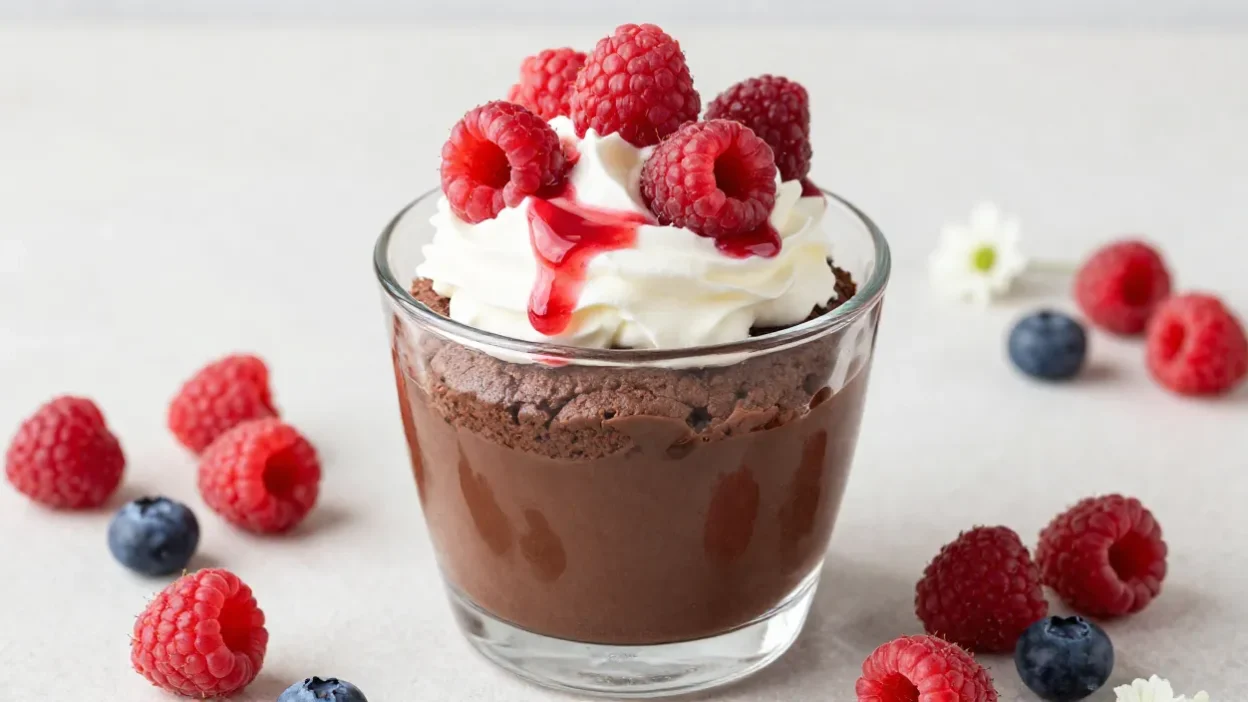
The funny part is, it’s not really about grabbing whatever is easiest. You could eat a cookie from a package or something quick from the cupboard, but it doesn’t quite do it. What you actually want is something warm. Something soft. Something that feels like it was just made, even if it took five minutes.
There’s a difference there, and you feel it immediately.
A soft center, maybe a bit gooey, still warm—that changes everything. It slows you down without trying to. You sit for a minute, take a few bites, and it feels like a small reset. Not a big deal, just enough to break that end-of-day fog.
If you try to put it into words, the craving usually comes with a few quiet rules:
- it has to be warm, or at least feel fresh
- it can’t take too much effort
- it shouldn’t be a huge portion
- and it has to match your mood, not fight it
That’s why single-serving desserts make so much sense, even if you don’t think about it that way.
It’s not just about convenience. It’s about not wanting to commit to something bigger. You don’t want to bake a whole tray of anything. You don’t want leftovers. You just want one portion, right now, without turning it into a whole process.
And that’s what makes these kinds of recipes stick.
They’re small, quick, and kind of low-pressure. But at the same time, they give you something that feels a bit more intentional than just opening a package. Just enough effort to make it feel like you did something for yourself.
And sometimes, that’s all you really need at the end of the day.
The Quiet Magic of Small, Personal Desserts
There’s something nice about desserts that don’t try too hard. Right now, everything feels like it has to look perfect—layers, decorations, clean cuts, the whole thing. And then you have something like a mug cake, which just… doesn’t care about any of that.
It’s not trying to impress anyone.
That’s kind of the point.
Mug cakes sit in a completely different lane. They’re not competing with a proper baked cake, and they’re not trying to replace it either. It’s just a different experience—quicker, more personal, and honestly more satisfying than it probably should be for something you make in a few minutes.
The way you eat it changes things too. You’re not slicing anything or thinking about how it looks. Most of the time, you’re just sitting somewhere comfortable, eating it straight from the mug. No plates, no presentation, no extra steps. And because of that, your attention shifts—you actually notice how it feels more than how it looks.
That first spoonful kind of says everything.
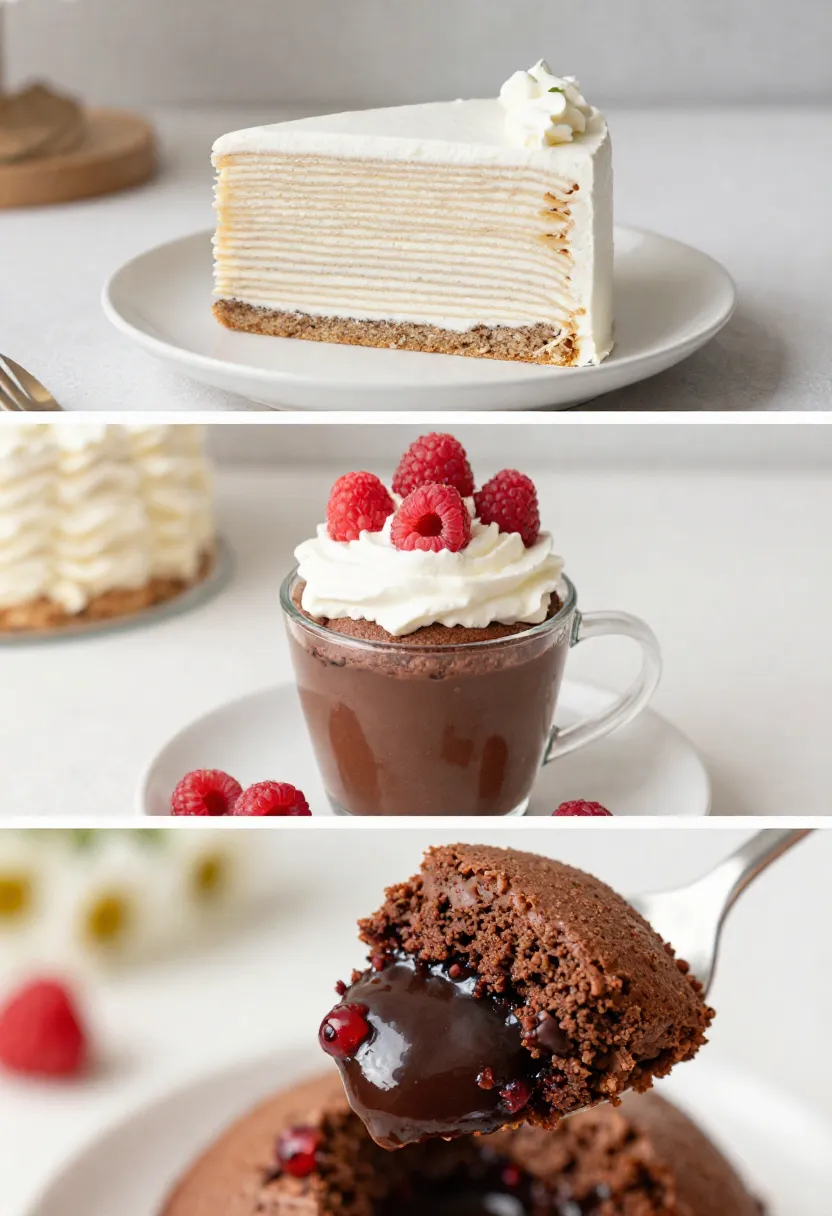
It’s still warm, soft in the middle, and the chocolate is slightly melted. Not in a dramatic way—just enough that it feels right. You don’t really analyze it, but you notice it. It lands exactly where you need it to.
And then it’s gone.
That’s another thing that makes it different. A regular cake hangs around. You slice it, come back to it later, maybe forget about it for a day or two. The texture changes, it dries out a bit, and it slowly becomes less interesting.
A mug cake doesn’t have time for that.
You make it, you eat it, and that’s it. It only exists for that one moment.
If you put them side by side, the difference is pretty clear:
| Big Cake Experience 🍰 | Mug Cake Experience ☕ |
|---|---|
| Typically prepared for multiple people or occasions | Made for one person, with no expectation of sharing |
| Requires planning, ingredients, and time investment | Can be made spontaneously with minimal effort |
| Emphasis on presentation, layers, and appearance | Emphasis on warmth, softness, and immediate enjoyment |
| Served in slices with plates and utensils | Eaten directly from the mug, often in a casual setting |
| Remains in the kitchen for several days | Exists only for a short period of time |
| Texture and flavor can change as it sits | Always consumed at peak freshness |
| Encourages repeated servings over time | Naturally limited to a single portion |
| Requires cleanup of multiple tools and surfaces | Minimal cleanup, often just one mug and a spoon |
| Often associated with social or shared experiences | Feels personal and individual |
| Can become routine or overlooked after a while | Feels intentional each time it is made |
| May be prepared to impress others | Made purely for personal satisfaction |
| Involves multiple steps and attention to detail | Focuses only on essential steps and outcome |
It’s a small shift, but it changes everything.
Instead of something that hangs around, it becomes a short moment. You make it, you enjoy it, and then you move on. Nothing left sitting in the kitchen, nothing to come back to later.
And honestly, that’s where most of the appeal comes from.
Why Chocolate and Raspberry Feel Like a Perfect Match
Some flavor combinations just work, even if you don’t immediately know why. Chocolate and raspberry is one of those. You’ve probably had it before, liked it, and didn’t really question it beyond that.
But if you think about it for a second, it’s all about balance.
Chocolate, especially in something warm like a cake, leans pretty heavy. It’s rich, a bit intense, sometimes even slightly bitter depending on what you use. That’s great at first—but after a few bites, it can start to feel like a lot.
That’s exactly where raspberry steps in.
It’s not as sharp as something like lemon, so it doesn’t cut through everything aggressively. Instead, it adds just enough brightness to lift the chocolate without fighting it. You still get that contrast, but it feels smooth, not jarring.
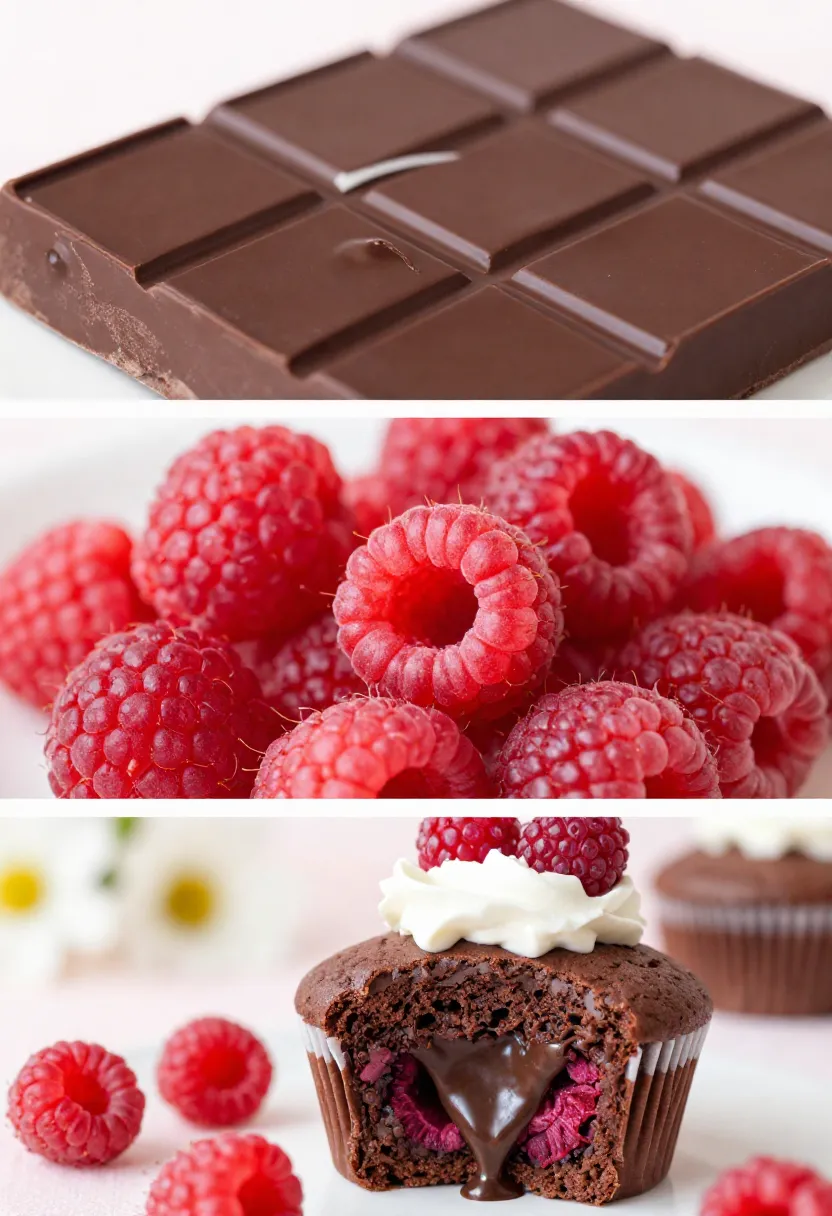
When they come together in a warm cake, it’s even more noticeable. The chocolate melts into everything, soft and dense at the same time. Then you hit the raspberry—usually a bit looser, slightly jammy—and suddenly there’s a shift. Different texture, different flavor, same bite.
That’s what keeps it interesting.
If you break it down, it’s actually pretty simple:
- chocolate gives you depth, richness, that slightly heavy, satisfying feel
- raspberry adds a bit of lightness and a subtle tart edge
- together, they stop the dessert from feeling flat or overly sweet
And the key thing—neither one is trying to take over. It’s not chocolate with a hint of raspberry, and it’s not fruit trying to dominate the dessert. They just balance each other out in a way that feels natural.
If you took the raspberry out, the cake would still be good. Just heavier. Sweeter. A bit more one-note.
With it, you don’t really think about any of this while eating.
It just tastes right.
🍓 Chocolate Raspberry Mug Cake Recipe
At first glance, this doesn’t look like anything special. The ingredient list is short, everything is familiar, and the whole process takes a few minutes. You’d expect something quick and decent—nothing more than that.
And then it comes out of the microwave.
It doesn’t feel like a shortcut dessert. The edges are soft and set, but the center stays slightly under—warm, a bit molten, exactly in that sweet spot where it’s not raw but not fully firm either. That contrast is what makes you stop after the first bite.
The chocolate melts into the batter while it cooks, but not completely evenly. Some parts are smooth, others still feel slightly melted, like you caught them at the right moment. It’s not perfectly uniform, and that’s actually what makes it better.
The raspberry in the center changes too. The jam loosens as it heats, turning into something closer to a warm sauce. When you hit that part with a spoon, it cuts through the richness of the chocolate just enough to reset everything.
You notice it right away.
And the texture—this is the part that makes it interesting. It’s not the same all the way through. One bite leans more chocolate, another has that brighter raspberry note. It keeps shifting slightly, so it never feels flat.
What’s surprising is how intentional it tastes.
Even though it takes five minutes and almost no effort, it doesn’t come across as rushed or thrown together. It feels like you made a choice to have something warm, something fresh—something better than just grabbing whatever was closest.
And that’s exactly why it works.
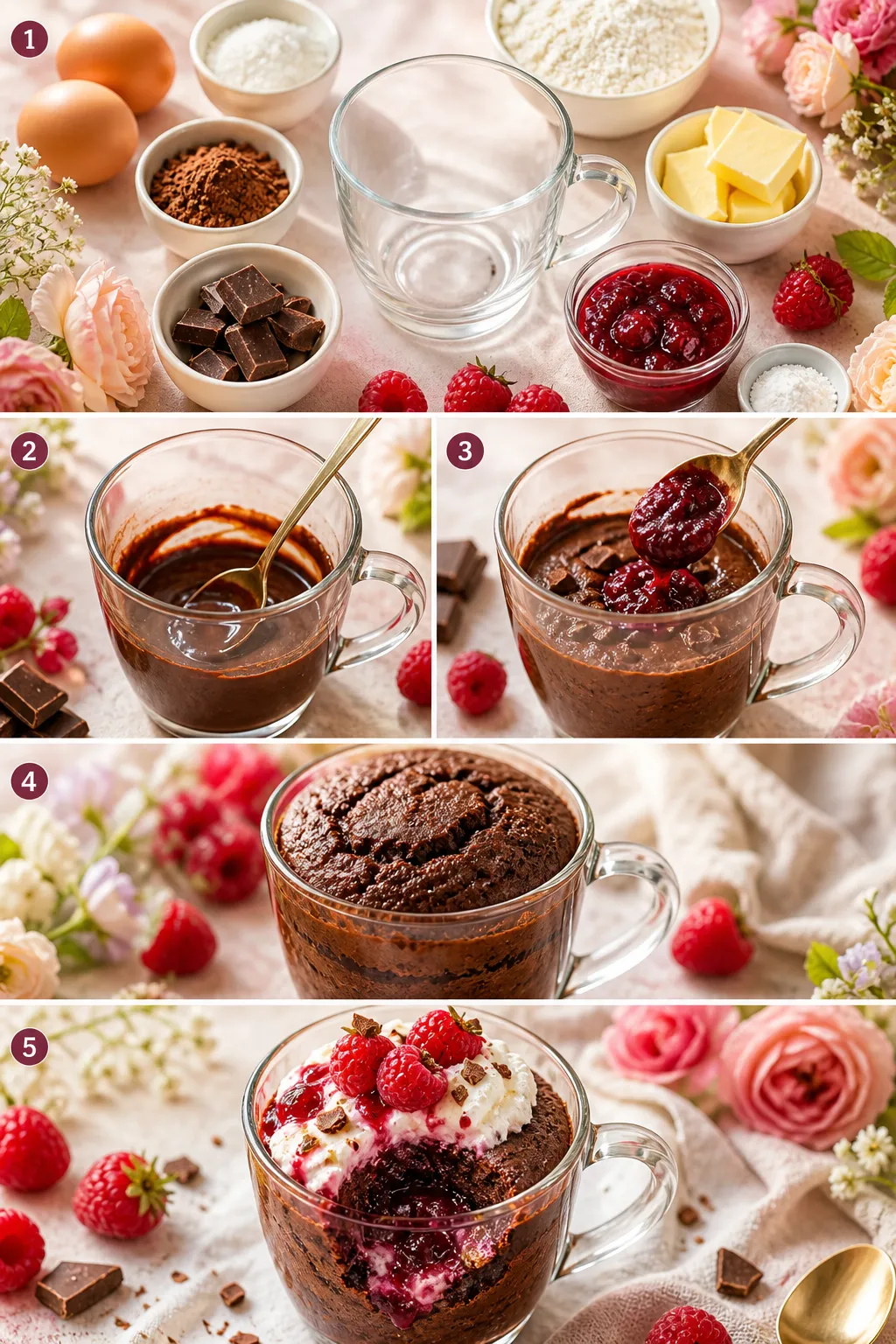
Ingredients
- 4 tablespoons unsalted butter
- 2 large eggs
- 1/4 cup sugar
- 1/4 cup all-purpose flour
- 2 tablespoons cocoa powder
- 1/2 teaspoon baking powder
- a small pinch of salt
- 2 teaspoons vanilla extract
- about 2 oz dark chocolate (chopped into small pieces)
- 1/4 cup raspberry jam
Instructions
- Place the butter and half of the chopped chocolate into a microwave-safe mug or bowl. Heat gently until melted, then stir until smooth and glossy.
- Let the mixture cool slightly, then add the sugar, eggs, and vanilla extract. Stir until everything is fully combined and slightly thickened.
- Add the flour, cocoa powder, baking powder, and salt. Mix carefully until a smooth batter forms, avoiding overmixing.
- Fold in the remaining chocolate pieces, distributing them evenly throughout the batter.
- Spoon the batter into your mug if needed, then add the raspberry jam directly into the center. Do not stir it in — it should stay as a filling.
- Microwave on high for about 90 seconds to 2 minutes. The top should look set, while the inside remains slightly soft.
- Let the cake rest for about one minute before eating. This allows the texture to settle while keeping the center tender.
💡 Small Tips That Make a Big Difference
- Don’t overcook it — even an extra 20–30 seconds can dry out the center
- Use a slightly larger mug than you think you need to avoid overflow
- If your microwave is strong, start checking closer to 90 seconds
- Add the jam right in the center, not mixed in, for that soft filling effect
- Let it sit for a minute before eating — it actually improves the texture
🍽️ Making the Most of Every Bite
There’s a noticeable difference between eating this straight out of the microwave and actually taking a minute with it. Most of the time, you’ll just grab a spoon and start eating right away—and honestly, that’s fine.
But if you pause, even briefly, it turns into something slightly different.
Right after it cooks, the cake is in that in-between stage. The top looks set, but underneath it’s still soft, almost unstable. Not undercooked—just… not fully settled yet. The chocolate is still warm and a bit fluid in spots, and the raspberry center is looser than it will be a few minutes later.
It’s kind of the best moment to eat it.
That’s also when small additions start to matter more than you’d expect. Throw a few fresh raspberries on top, and suddenly the whole thing feels less heavy. That slight acidity cuts through the chocolate right away, especially while everything is still warm.
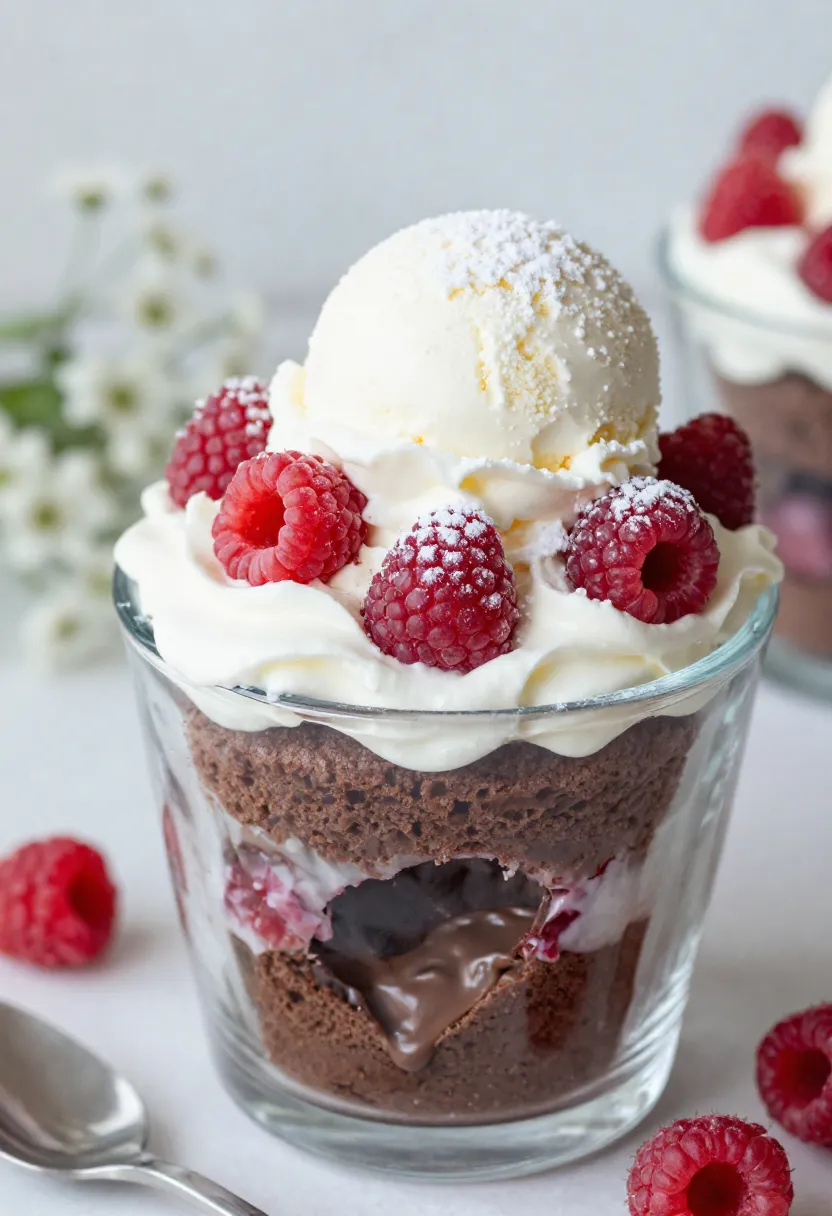
Powdered sugar is similar. It looks like it’s just there for presentation, but it actually softens the overall flavor just a bit. Nothing dramatic—just enough to smooth things out.
And then there’s the ice cream.
It’s optional, obviously, but it’s also the thing most people end up repeating once they try it. You put a scoop on top, and within seconds it starts melting into the cake. Warm and cold, soft and creamy, all mixing together as you eat—it’s simple, but it works almost too well.
Even the way you eat it changes things. If you rush through it, it’s just a quick dessert. If you take smaller bites, dig into the center where the jam is still softer, notice how the edges are a bit firmer—you get a completely different experience.
Nothing about it is complicated.
But it stops feeling like something you just threw together.
🔥 Small Details That Shape the Final Result
One of the reasons this dessert turns out so good is also why it can go slightly wrong if you’re not paying attention. It’s not a hard recipe at all, but it reacts to small changes pretty quickly. And usually, when something feels ‘off,’ it’s because of small details.
Cooking time is the biggest one.
Microwaves are all over the place in terms of power, and even a small difference can change the texture. If you stop a little early, the center stays soft and slightly gooey—that’s usually the sweet spot. If you push it too far, it firms up, dries out a bit, and you lose that contrast between the soft middle and the edges.
I’ve definitely overcooked it before. It’s still edible, just not nearly as good.
The mug matters too, more than you’d think. If it’s too narrow, the batter doesn’t rise evenly. Sometimes it even overflows, or the middle ends up a bit dense. A slightly wider mug just works better—it gives everything space to expand and cook more evenly.
Mixing is another easy place to overdo it. It feels like you should get the batter perfectly smooth, but that actually works against you here. The more you mix, the heavier the cake gets. Just bring everything together and stop there—it doesn’t need to be perfect.
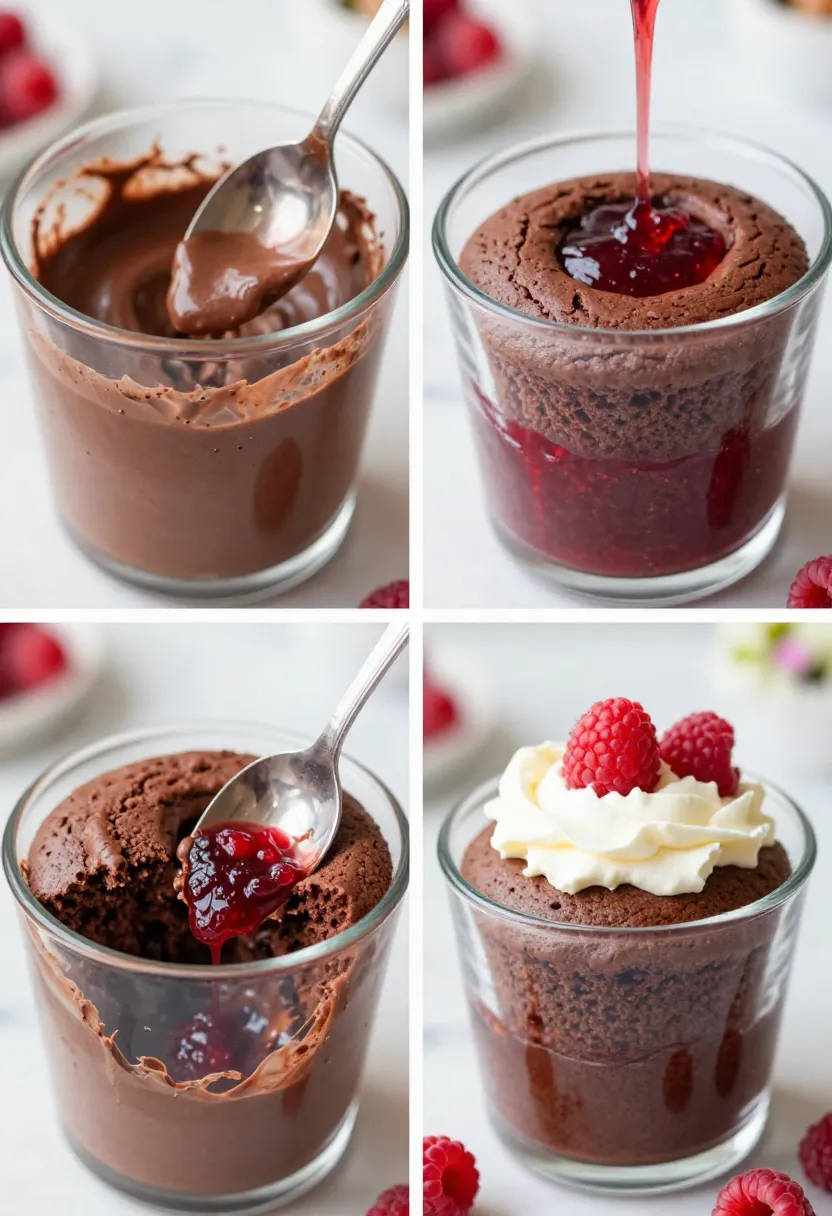
And then there’s the part most people skip: letting it sit for a minute.
Right out of the microwave, it’s still shifting. The heat is moving through the cake, the center is settling, everything is coming together. If you go in immediately, it can feel a bit messy, like it hasn’t fully decided what it is yet. Give it a minute, and it’s noticeably better.
If you had to keep just a few things in mind, it would be these:
- stop a little early rather than overcooking
- use a mug with enough space so it doesn’t crowd the batter
- don’t overmix—just combine and leave it
- let it rest, even if it’s just a minute
- adjust the timing to your microwave, not just the recipe
None of this is complicated. It’s just the kind of stuff you figure out after making it once or twice.
And once you do, the result becomes a lot more consistent—and a lot more satisfying.
❤️ Turning It Into Something Personal
What makes recipes like this stick isn’t just that they’re easy—it’s how quickly they slip into your routine without you really noticing.
The first time, you treat it like a recipe. You measure things, check the time, look at it halfway through and think, “is this how it’s supposed to look?” It feels a bit like you’re testing it.
Then a couple of tries later, you stop doing that.
You eyeball things instead of measuring. Add a bit more chocolate because why not. Use less jam one time, more the next. Skip something because you ran out—and realize it didn’t actually matter that much.
That’s usually when it becomes yours.

Maybe you like the center a bit softer. Maybe you cut back on the sweetness. Maybe you’ve already swapped the filling a few times—strawberry, cherry, something random—and figured out what you prefer.
At that point, you’re not really following anything anymore.
It’s just something you know how to make.
And there’s something nice about how contained it is too. No leftovers sitting around. No “I’ll finish this tomorrow.” No quiet guilt about going back for another slice.
You make it, eat it while it’s still warm, and that’s the whole story.
And honestly, that’s probably why it stays.
Not because it’s the most impressive dessert you’ve ever had. But because it shows up exactly when you need it to. No pressure, no effort—just something that works.